Experts

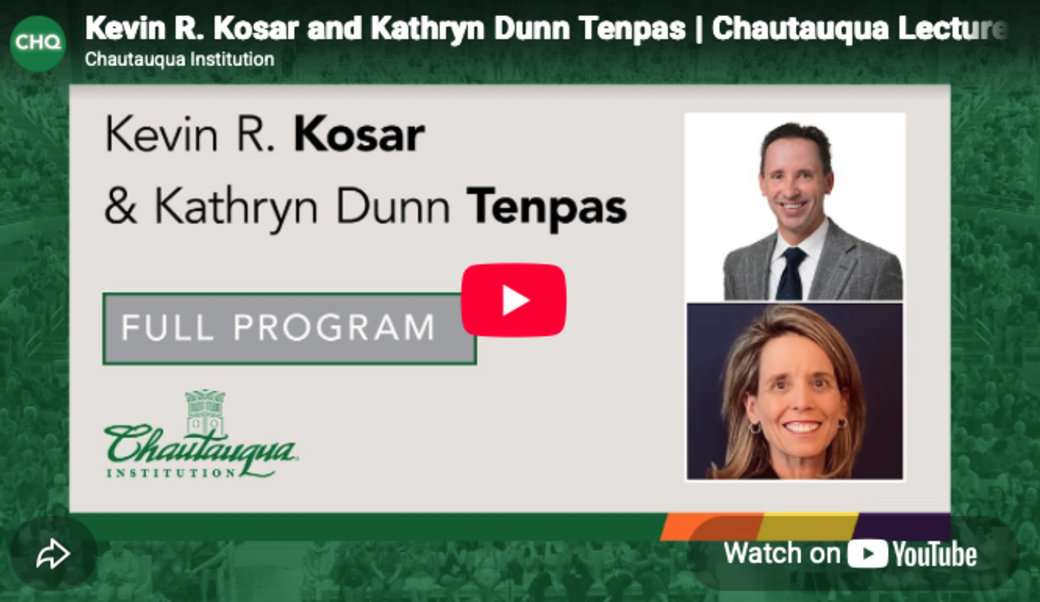
Kathryn Dunn Tenpas

Fast Facts

  • Director, Initiative on Improving Interbranch Relations and Government and visiting fellow with Governance Studies, Brookings Institution
  • Host, Democracy in Question podcast, Brookings Institution
  • Advisory board member, White House Transition Project 

Areas Of Expertise

  • The First Year
  • Governance
  • Elections
  • Leadership
  • Politics
  • The Presidency

Kathryn Dunn Tenpas is director of the Initiative on Improving Interbranch Relations and Government and a visiting fellow with Governance Studies at the Brookings Institution. She is also an advisory board member of the White House Transition Project.

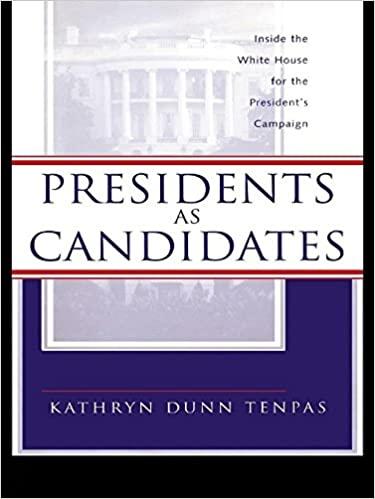
A recent recipient of a Packard Foundation grant, Tenpas is a scholar of the American presidency focusing on White House staffing and turnover and presidential transitions. She also studies interbranch relations, particularly the complex relationship between federal courts and Congress. She is the author of Presidents as Candidates: Inside the White House for the Presidential Campaign and has published more than 80 articles, book chapters, and papers on these topics.

Tenpas earned her BA degree from Georgetown University and her MA and PhD degrees from the University of Virginia.

Kathryn Dunn Tenpas News Feed

"A president's approval ratings are never higher than they are in the first year," Kathryn Dunn Tenpas, a presidential and congressional scholar at the University of Virginia Miller Center, told DW. "Over time, a president's ratings tend to fall in part because they've made such outlandish promises and they can't fulfil them. And at the same time with President Trump, I think what we've had [is that] Americans care a lot about the state of the economy and the state of their own pocketbook."
Kathryn Dunn Tenpas DW
President Trump is only the second president in American history to have two first years in office. Like all presidents, he had to staff a White House and cabinet and move forward on domestic and foreign priorities. Panelists assess how his second try compares to his first. They also discuss themes raised in the Miller Center’s 2025 Conference on the American Presidency, including President Trump’s record-setting use of emergency powers, how he is navigating a Congress controlled by his own party (including the longest government shutdown in history), and his efforts to improve government performance.
Everett Eissenstat, Chris Lu, Kathryn Dunn Tenpas, and William Antholis Miller Center Presents
One year into this second Trump presidency, high level staff and Cabinet turnover is significantly lower than it was during the same period in 2017. That's according to a new analysis from Brookings Institution visiting fellow Kathryn Dunn Tenpas, shared exclusively with NPR.
Kathryn Dunn Tenpas NPR
Russell Riley, a presidential historian at the University of Virginia’s Miller Center, acknowledged the nation’s long history of expanding presidential authority. But, he added, “we have an equally robust history of cramming the presidency back into its constitutional box once war or economic crisis has passed.”
Russell Riley, Kathryn Dunn Tenpas The New York Times
Our overview reveals that en bloc voting will not significantly speed up the overall process, but can have an impact at the final stage, the floor vote.
Kathryn Dunn Tenpas The Brookings Institution
Of the president’s 98 Senate-confirmed appointees to the administration’s most senior leadership roles in its first 200 days, only two percent are Black, according to statistics compiled for the Brookings Institution by Kathryn Dunn Tenpas, a senior fellow at the University of Virginia’s Miller Center.
Kathryn Dunn Tenpas The New York Times