Experts

Robert Strong

Fast Facts

  • Emeritus professor, Washington and Lee University
  • Fulbright Scholar, University College Dublin (2013-14)
  • Former associate provost, Washington and Lee University
  • Expertise on the presidency, U.S. foreign policy, Jimmy Carter

Areas Of Expertise

  • Foreign Affairs
  • American Defense and Security
  • Governance
  • Elections
  • Political Parties and Movements
  • Politics
  • The Presidency

Robert (Bob) Strong is emeritus professor at Washington and Lee University and was a Fulbright Scholar at University College Dublin for the 2013-14 academic year. In 2005, he was a visiting scholar at the Rothermere American Institute at Oxford University.

Strong earned his PhD at the University of Virginia and before W&L taught at Tulane University and the University College of Wales. 

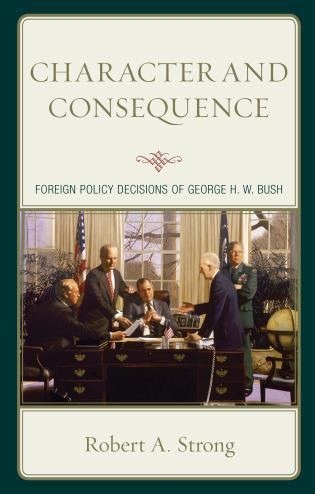
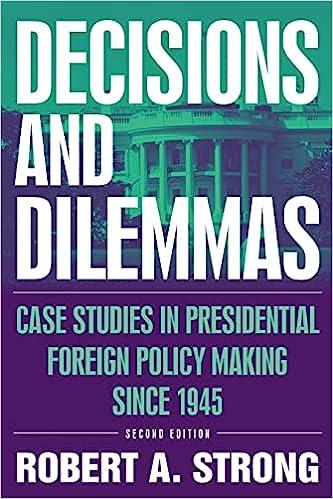
Strong's research involves national security issues and presidential foreign policy decisions in the modern era. His book publications include Character and Consequence: Foreign Policy Decisions of George H. W. BushWorking in the World: Jimmy Carter and the Making of American Foreign Policy and Decisions and Dilemmas: Case Studies in Presidential Foreign Policy Making Since 1945.   

From 2008 to 2013, Strong served in senior administrative positions at Washington and Lee, first as associate provost and then as interim provost. He has published essays in a variety of journals and national newspapers.  His recent speeches and op-eds can be found here.


Robert Strong News Feed

In November 1992, George H. W. Bush was a lame duck president with only a few weeks left in his administration. Given his waning presidential power, he did something remarkable: He ordered a large-scale military intervention in Somalia for the purpose of protecting the delivery of humanitarian supplies. He did so against the advice of Dick Cheney, his secretary of defense, and Colin Powell, the chairman of the Joints Chiefs of Staff. Bush made his decision in the days just after his mother’s passing and just before the Thanksgiving holiday.
Robert Strong Notes from the Miller Center
People trying to understand politics in the United States today often turn to history for precedents and perspective. Are our current divisions like the ones that preceded the American Revolution or the Civil War? Did the dramatic events of the 1960s generate the same kind of social and political forces seen today? Are there lessons from the past that show us how eras of intense political turmoil eventually subside?
Robert Strong The Conversation
Washington’s confidence in the general health of the union was tempered by his worries about dangers that lay ahead – worries that seem startlingly contemporary and relevant 229 years later.
Robert Strong The Conversation
Robert Strong points to Washington's prescient warnings about extreme partisanship
Robert Strong The Conversation
"The most lasting impact of this term will be felt in the damage done to the reputation of the United States as a safe harbor where the rule of law is king and where the Constitution is as sacred a national document as any country has developed."
Mara Rudman, Bob Strong, Andrew Rudalevige, and Russell Riley The New York Times
For 50 years, the Miller Center has convened bipartisan groups of scholars and practitioners to enrich scholarly research and help shape public policy. Join us for a roundtable discussion on public policy in three critical areas: healthcare, national security, and executive branch reform. Each policy area will feature an historian paired with an experienced government practitioner to discuss perspectives on responsible and effective public policy.
David Leblang, Bob Strong, Marc Selverstone, Rachel Potter, Guian McKee, and Mara Rudman Miller Center Presents