The Fall of Saigon
April 29-30, 1975: The end of U.S. involvement in Vietnam
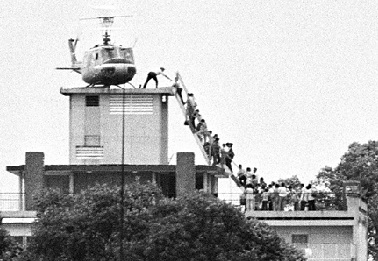
The photograph is easily recognizable, showing people standing on a roof and climbing up a ladder into a helicopter to be evacuated out of Saigon (now known as Ho Chi Minh City), the capital city of South Vietnam, on April 29, 1975. The location is often mistakenly believed to be the U.S. Embassy, but it is actually the roof of the Pittman apartments on what was 22 Gia Long Street, about a half mile from the embassy, which housed many CIA operatives. Hubert van Es, a Dutch photographer, took the famous photograph, which came to symbolize the desperate rush to flee the city before the North Vietnamese army and the Viet Cong marched in and took it over.
The Paris Peace Accords
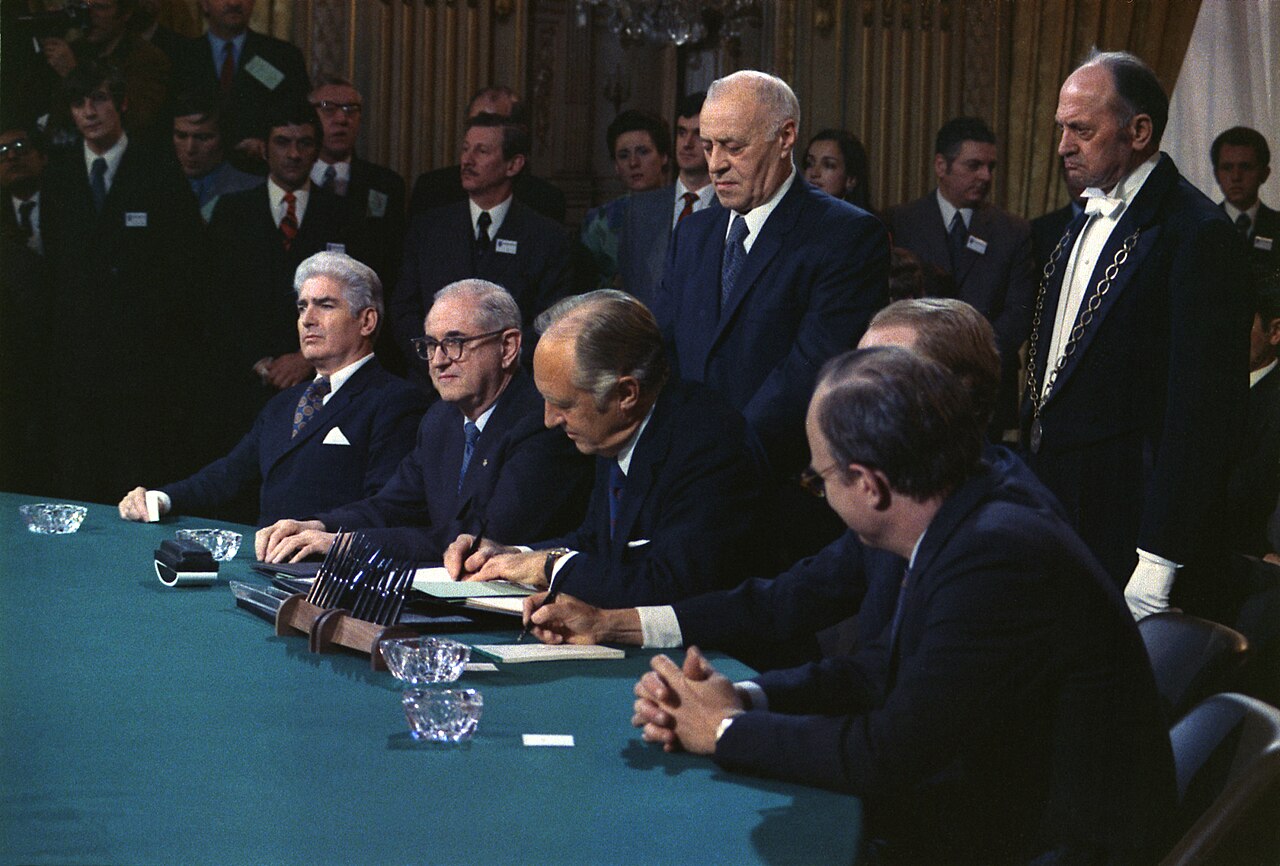
The fall of Saigon took place from April 29 to 30, 1975, but the roots of the American evacuation began years earlier. On January 27, 1973, the United States signed the Paris Peace Accords with representatives from North Vietnam, South Vietnam, and South Vietnamese communist forces, ending the U.S. military role in the Vietnam War. Per the terms of the accords, the United States agreed to withdraw its forces, except for about 5,000 Americans including diplomats, CIA agents, and soldiers stationed as guards around the U.S. Embassy in Saigon.
As the administration of President Richard Nixon negotiated with North Vietnam in Paris, President Nixon and National Security Advisor Henry Kissinger privately recognized the weakness of the South Vietnamese government and the likelihood that it would not stand for long against the North following American military withdrawal. Since 1969, the consensus of their military, diplomatic, and intelligence advisers had been that South Vietnam could not prevent a Communist takeover “without U.S. combat support in the form of air, helicopters, artillery, logistics and major ground forces.” The goal for Nixon and Kissinger was to ensure that there was a “decent interval” between the signing of the peace treaty and the collapse of the South Vietnamese government.
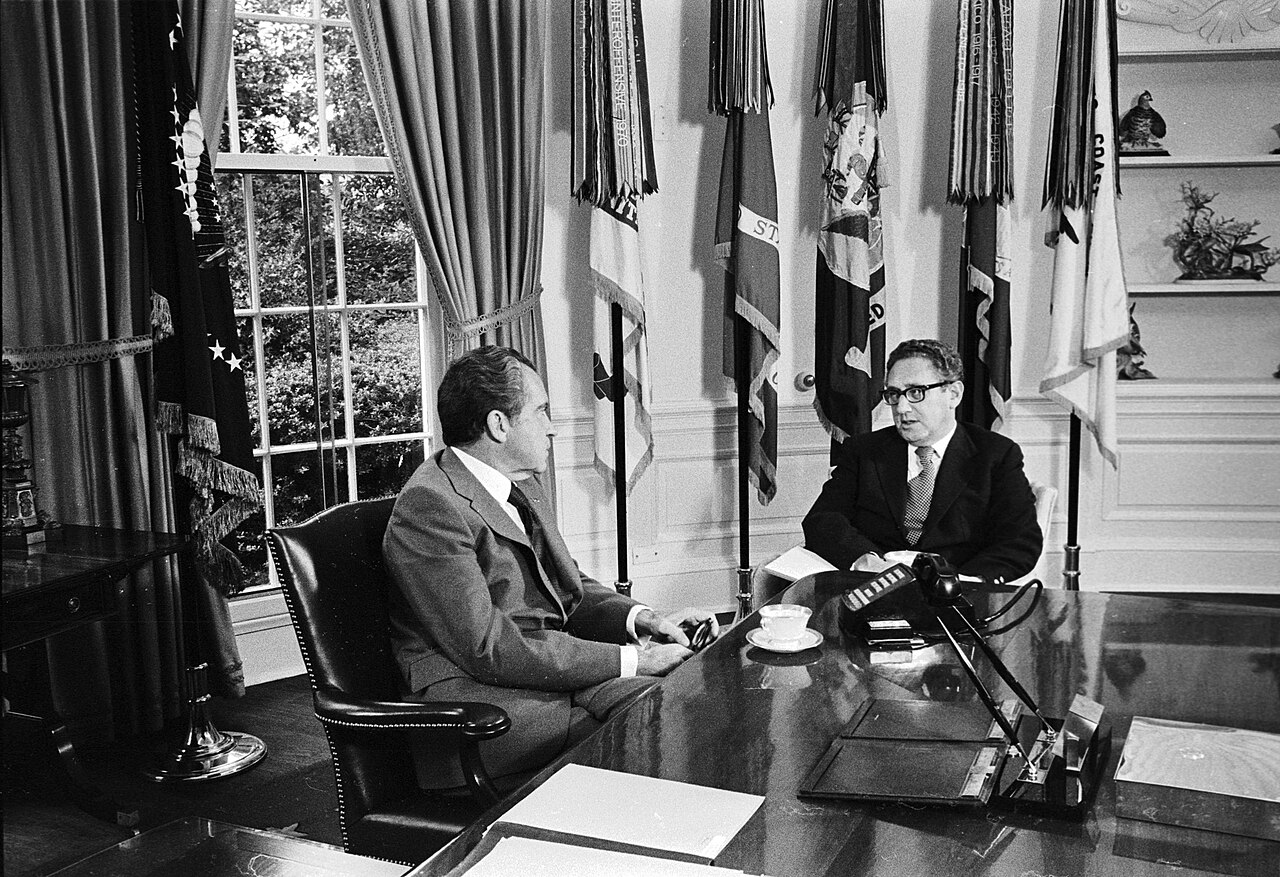
On August 3, 1972, President Nixon and Kissinger discussed the collapse of South Vietnam with Nixon noting, “South Vietnam probably is never going to survive anyway.”
Nixon and Kissinger wanted to reach an agreement that would allow South Vietnam to survive for a face-saving period after the 1972 presidential election, maybe for a year or two, by which time they hoped that the American public would have moved on from the Vietnam War. Their prediction that North Vietnam would swallow up South Vietnam was correct, although the Nixon presidency collapsed before South Vietnam.
The Ford Administration
President Nixon resigned from office on August 8, 1974, brought down by the Watergate scandal. When Vice President Gerald Ford became president, he inherited the administration’s policy toward Vietnam. He came into office aware of how contentious the war had been, costing the lives of more than 58,000 Americans and creating distrust in government. President Ford was mindful of trying not to reopen the divisions within U.S. society.
The North Vietnamese were betting that once the United States left South Vietnam, it would not reengage in the conflict. This was a safe bet, since Kissinger had secretly assured the Chinese and the Russians that the United States would not intervene to stop a takeover as long as the North waited a year or two after Nixon withdrew American troops.
After 1973, North Vietnamese troops continued to push down into the south with the hopes of taking over the entire country. The U.S. Congress responded by granting South Vietnam $700 million in military and humanitarian assistance, an amount that was far less than Nixon’s original request of $1.47 billion. During the spring of 1975, much of the Ford administration focused on trying to get additional funding from Congress for South Vietnam. But Saigon needed more than American aid to survive, as Nixon and Kissinger had realized years earlier.
On January 6, 1975, North Vietnamese troops launched a major offensive and captured a southern provincial capital. President Ford decided not to intervene. Two years earlier, at Nixon’s suggestion, Ford, as House Minority Leader had led congressional efforts to prohibit American military intervention in Vietnam, Laos, and Cambodia. With Nixon’s backing, that combat ban passed the House and Senate with both Democratic and Republican support. As President, Ford did not advocate American military intervention to prevent the North’s takeover of the South.
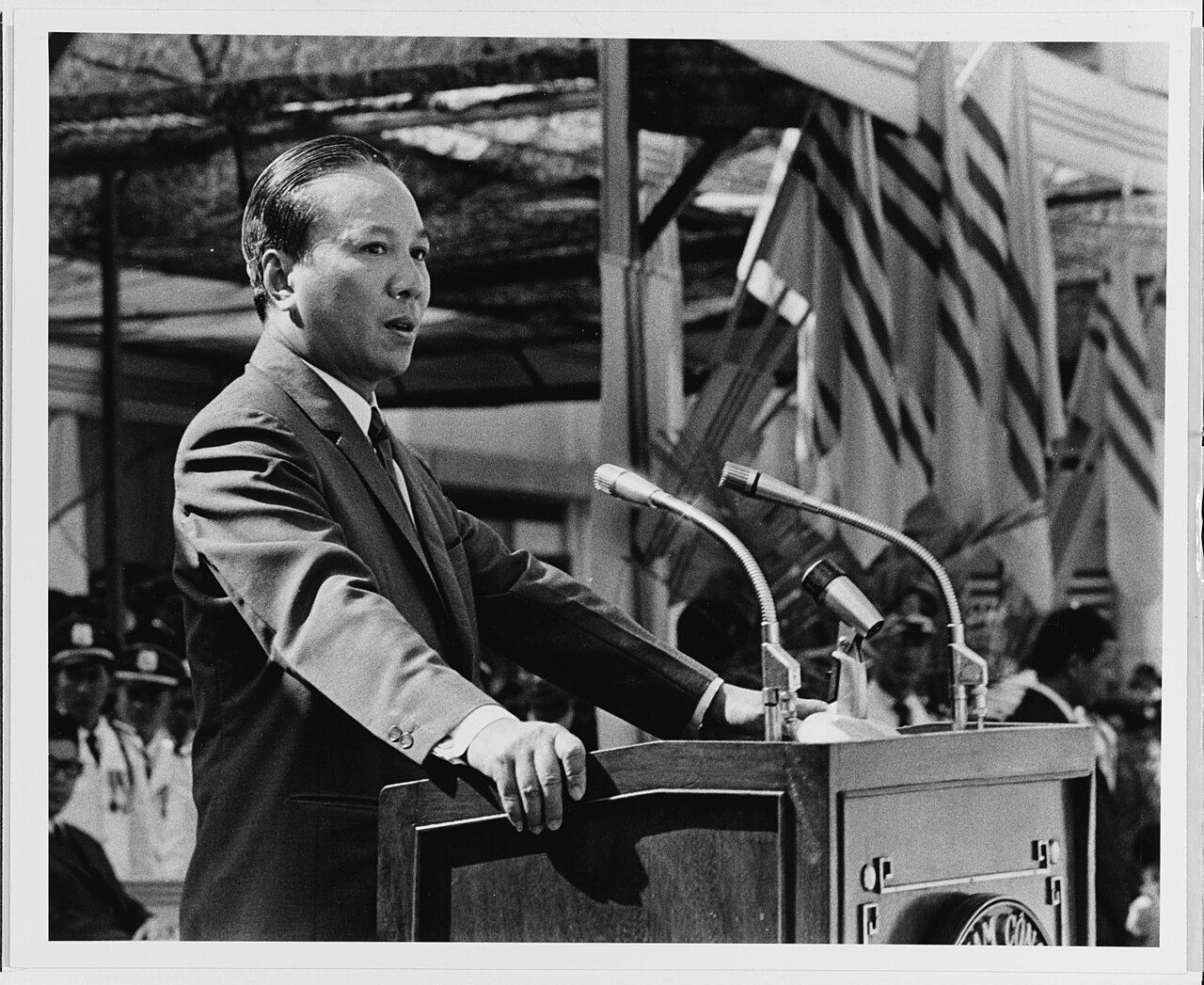
South Vietnamese president Nguyen Van Thieu withdrew his forces into Saigon, abandoning other areas of the country. By March, North Vietnamese troops controlled more than fifteen southern provinces. Many American officials believed that South Vietnam would fall but few anticipated how quickly it would happen.
Deteriorating Situation
As the situation in South Vietnam deteriorated, the United States urged non-essential personnel and dependents to leave the country. Evacuations of American personnel, Vietnamese allies, and their families began in March. Other countries also began to evacuate their personnel from Saigon.
Embassies around the world are prepared with evacuation plans in place, but in Saigon, the plan took on increased importance. It had multiple contingencies in case of changing situations on the ground. The original plan involved using C-130 aircraft to evacuate people out of Vietnam via the airport.
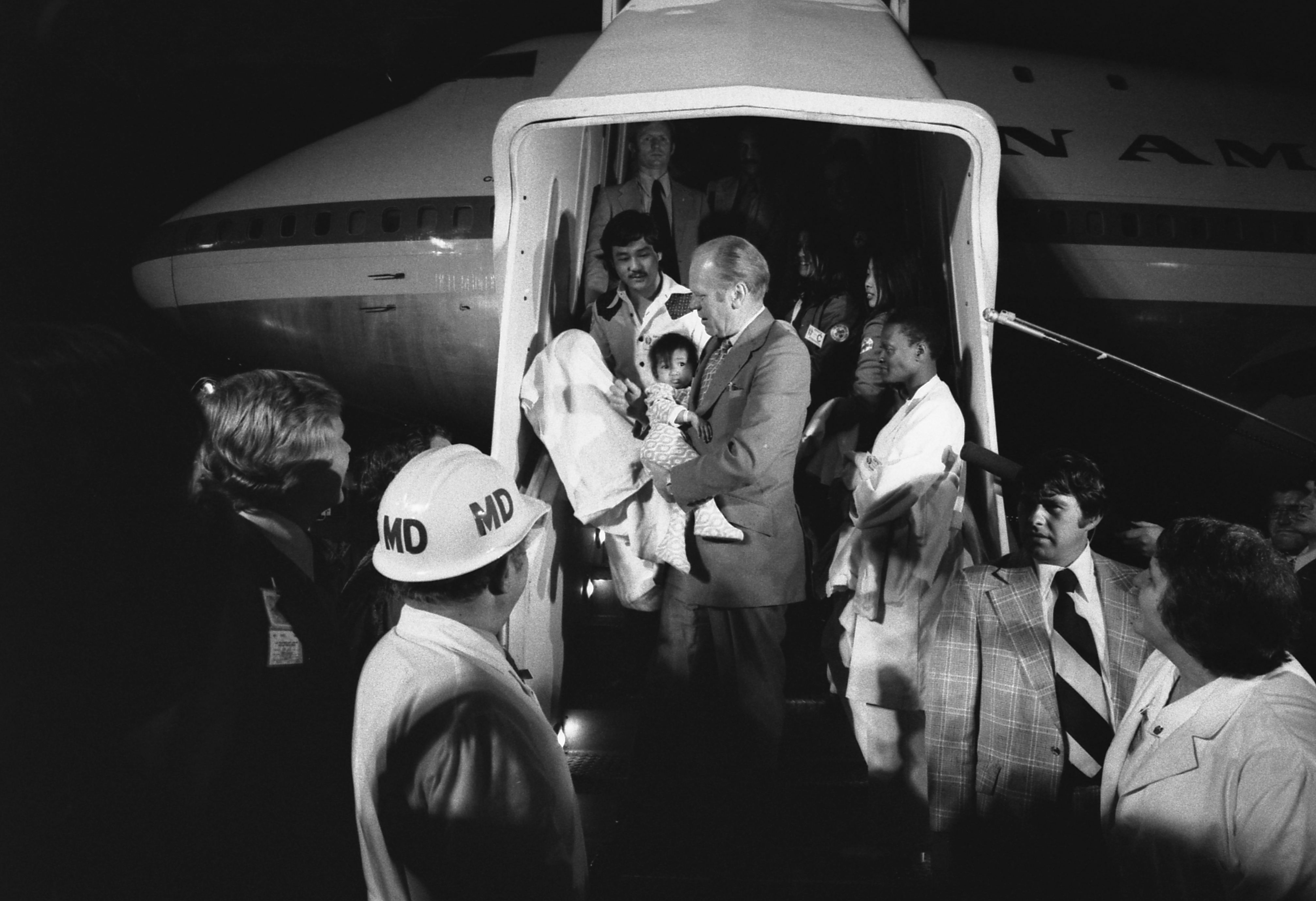
On April 3, 1975, President Ford authorized “Operation Babylift,” the evacuation of Vietnamese orphans from South Vietnam to the United States. Estimates of the number of orphans flown out of the country varies from about 2,000 to 3,300.
Trying to get a better sense of the situation, President Ford sent a fact-finding delegation to Saigon, led by U.S. Army chief of staff, General Frederick C. Weyland. Traveling in South Vietnam from March 28 to April 4, General Weyland submitted a memorandum for the president with the subject line: Vietnam Assessment.
He concluded that the current military situation was critical and South Vietnam could probably push back against the North if it had more U.S. money and materiel. He also said that using U.S. military airpower to “blunt the North Vietnamese invasion” would be helpful but he recognized “the significant legal and political implications” of that decision.
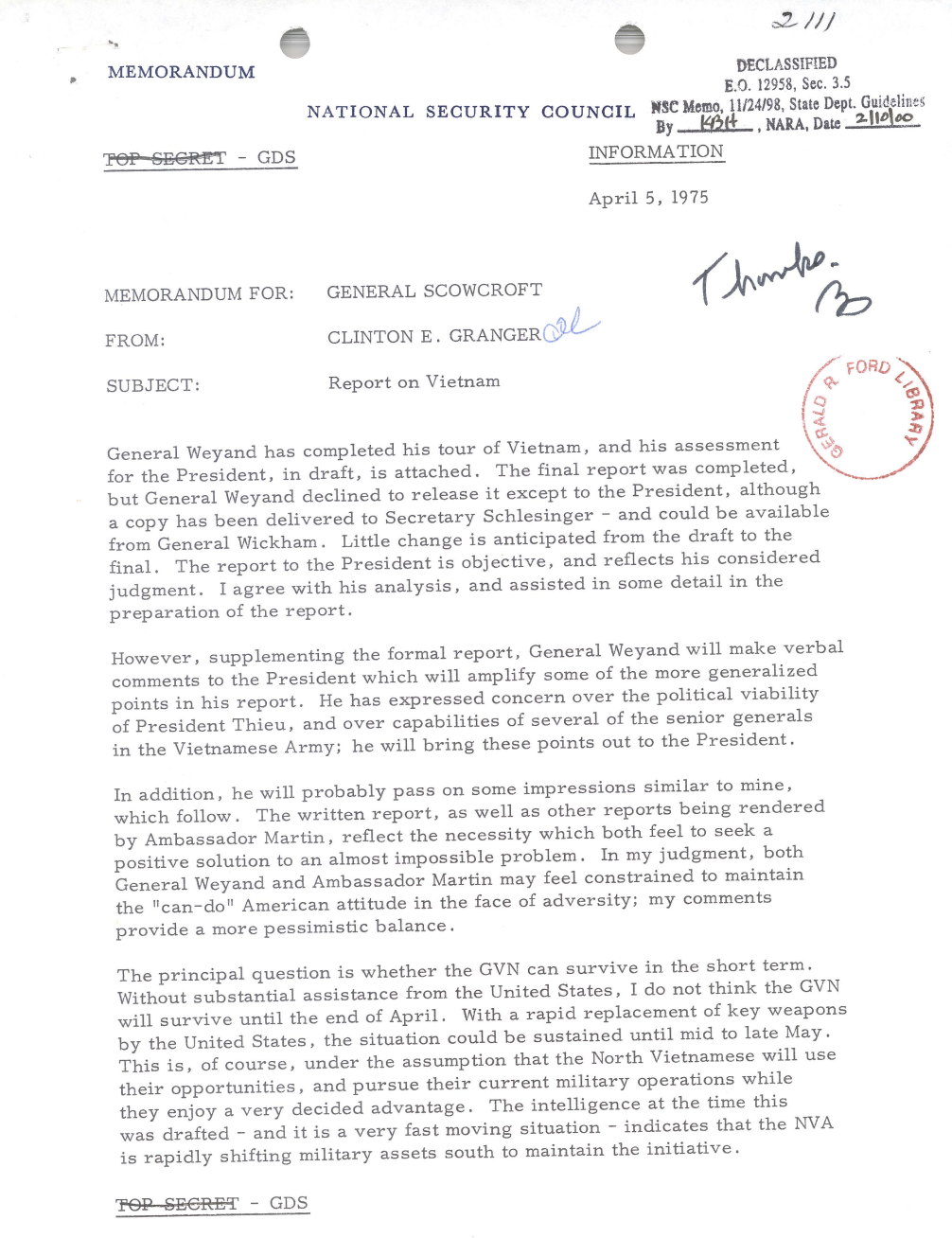
A second opinion on the status of South Vietnam was offered by Clinton E. Granger who accompanied General Weyland and wrote to Deputy National Security Advisor, General Brent Scowcroft, on April 5, 1975, with his own views. His assessment was blunter: “I do not think the GVN (Government of Vietnam) will survive until the end of April.”
President Gerald Ford addressed the U.S. Congress on April 10, 1975, to outline his vision for U.S. foreign policy.
He detailed the declining situation in South Vietnam and pledged to recommit U.S. support, declaring, “I am therefore asking the Congress to appropriate without delay an additional $722 million for emergency military assistance and an initial sum of $250 million for economic and humanitarian aid for South Vietnam.” Congress did not act on Ford’s request for additional military aid on top of the $700 million it had already approved.
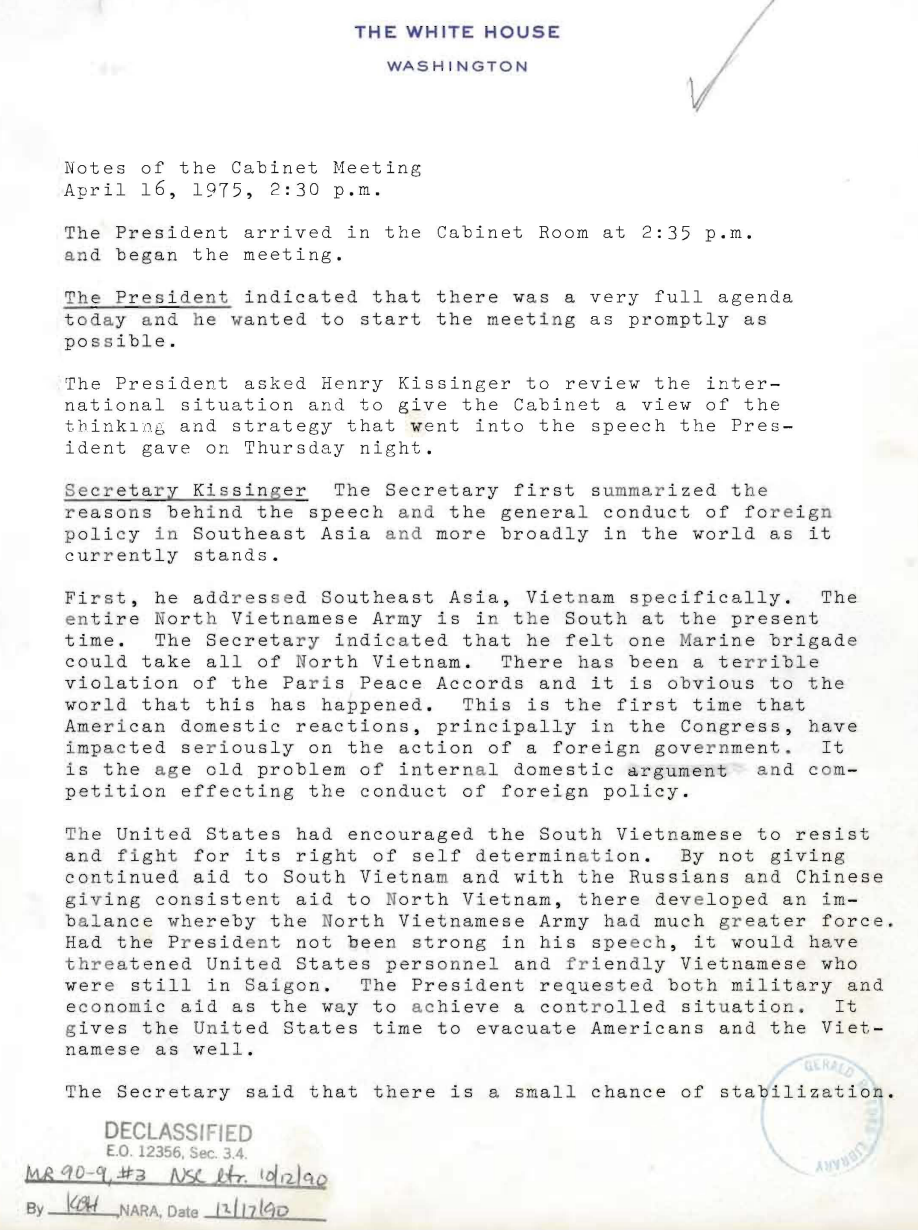
In a cabinet meeting on April 16, 1975, Secretary of Defense James Schlesinger noted that the evacuation of Saigon would be “very difficult because of the Viet Cong infrastructure throughout the city.”
The next day, Secretary Kissinger sent a message to the Ambassador of South Vietnam, Graham Martin, that “the sentiment of our military, Department of Defense, and CIA colleagues was to get out fast and now.” He urged Martin to speed up the evacuation of Americans out of Saigon without setting off a panic in the city. In a subsequent cable, Kissinger deferred to Martin about the exact numbers of Americans left in Saigon as long as they could all be evacuated in a single helicopter.
On April 21, President Thieu resigned and left the country a few days later. He was replaced by his vice president, Tran Van Huong. As the North Vietnamese continued to move closer to Saigon, it was clear that the situation was deteriorating, and the Ford administration pressed Ambassador Martin to speed up the evacuation.
The administration continued to try to balance the need to get Americans out of country without setting off a panic throughout the city. They knew that once word spread that the Americans were leaving, many Vietnamese who had helped and supported the United States throughout the war would try to leave for fear of reprisal from North Vietnam.
On April 23, President Ford gave a speech at Tulane University in New Orleans, Louisiana, in which he stated that, American pride “cannot be achieved by refighting a war that is finished as far as America is concerned,” signaling that the United States would not intervene militarily to prop up South Vietnam against the incursion from the North.
Operation Frequent Wind
In the early morning of April 29, the North Vietnamese bombed Tan Son Nhut International Airport, damaging the runway, making it too dangerous to land airplanes. Ambassador Martin then ordered the final evacuation of the city, and Operation Frequent Wind was underway. The Armed Forces Radio began to play Bing Crosby’s “White Christmas” and announced that “the temperature in Saigon is 105 degrees and rising.” Those two details were the signals that people should move to the evacuation sites.
The evacuation plan switched to helicopters, picking up evacuees from the U.S. embassy as well as the defense attaché compound, and nearby hotels and apartment buildings. As people moved toward their evacuation sites, many Vietnamese flocked to the embassy, crowding around the compound with the hope of getting out before the North Vietnamese arrived. The U.S. military had to stand on the walls around the embassy to prevent people from scaling in.
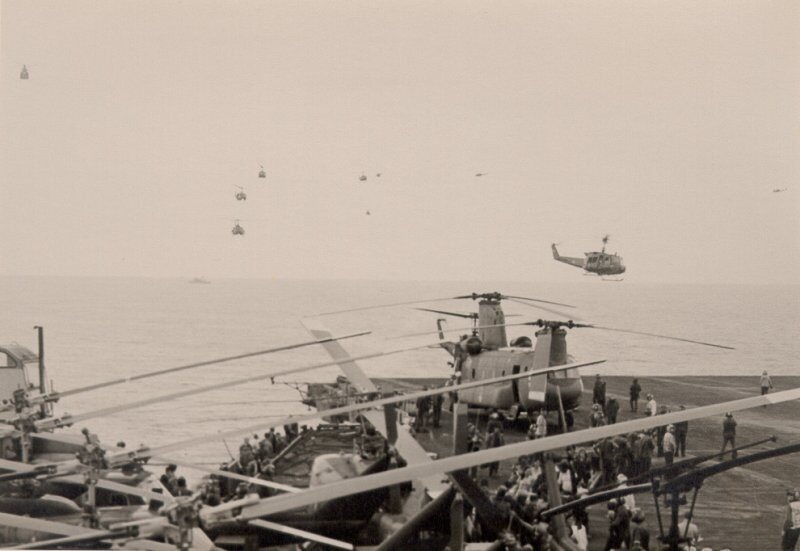
The helicopter flights were the last phase of evacuation out of Saigon. The U.S. military and Central Intelligence Agency used helicopters to evacuate Americans and U.S. allies out of the city, flying them to U.S. military ships in the South China Sea. About 1,400 Americans and 5,600 Vietnamese were evacuated out of Saigon in the last two days.
In other places in South Vietnam, Americans and Vietnamese boarded boats and barges to follow rivers out to the sea. Once they were in the sea, they were picked up by U.S. Navy ships. Overall, about 140,000 Vietnamese were evacuated out of South Vietnam, many to Guam, and eventually about 130,000 resettled in the United States.
On April 30, 1975, the People's Army of Vietnam and the National Liberation Front of South Vietnam captured Saigon, ending the experiment in nation-building that was South Vietnam after 21 bloody years.