Events

The presidential pardon power

image of Monopoly card get out of jail free

The presidential pardon power

Saikrishna Prakash, Neil Eggleston, Liz Oyer, Rachel Augustine Potter (moderator)

Friday, February 13, 2026
4:00PM - 5:00PM (EST)

Event Details

REGISTER FOR IN-PERSON

REGISTER FOR ONLINE

In a new book, The Presidential Pardon: The Short Clause with a Long, Troubled History, Miller Center senior fellow Saikrishna Prakash examines one of the most powerful and controversial authorities granted to the U.S. president and its impact on law, justice, and democratic accountability. In this event, participants will trace the historical origins and constitutional meaning of the presidential pardon power and how pardons have been used, abused, and debated across American history. 

A book sale and signing will follow this event.

When
Friday, February 13, 2026
4:00PM - 5:00PM (EST)
Where
The Miller Center
2201 Old Ivy Rd
Charlottesville, VA
&
ONLINE
Speakers
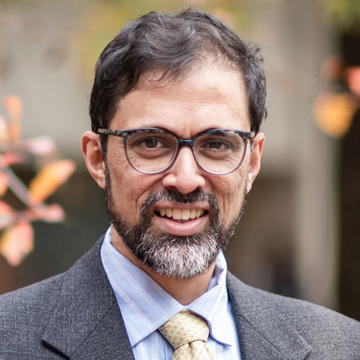
Sai Parakas headshot

Saikrishna Prakash

Saikrishna Prakash, a Miller Center faculty senior fellow, is the James Monroe Distinguished Professor of Law and Paul G. Mahoney Research Professor of Law at the University of Virginia Law School. His scholarship focuses on separation of powers, particularly executive powers. He teaches constitutional law, foreign relations law, and presidential powers. Prakash clerked for Judge Laurence H. Silberman of the U.S. Court of Appeals for the District of Columbia Circuit and for Justice Clarence Thomas of the U.S. Supreme Court. He is the author of The Living Presidency: An Originalist Argument Against Its Ever-Expanding Powers (2020) and Imperial from the Beginning: The Constitution of the Original Executive (2015).

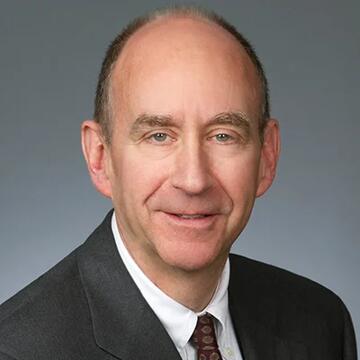
Neil Eggleston

Neil Eggleston

Neil Eggleston is a litigation partner in the Washington, D.C., office of Kirkland & Ellis LLP. He has a distinguished record of public service and has held a number of senior government roles. He was White House Counsel to President Obama from 2014 to 2017, during which he advised the president on all legal and constitutional issues across a broad spectrum of domestic and foreign policy matters. Eggleston’s practice focuses on enforcement defense including at the U.S. Department of Justice, U.S. Securities and Exchange Commission, and other enforcement agencies. Earlier in his career, he served as Associate Counsel to President Clinton from 1993 to 1994. He also served as Deputy Chief Counsel, U.S. House of Representatives Select Committee Investigating the Iran/Contra Affair (1987–1988); Assistant U.S. Attorney (1981–1987); and Chief Appellate Attorney for the Southern District of New York (1986–1987).

liz oyer

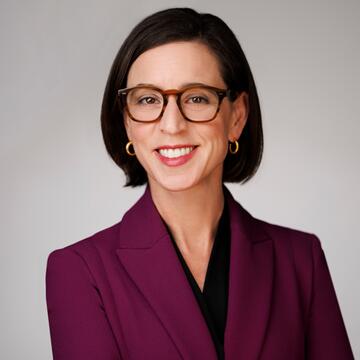
Liz Oyer

Liz Oyer is an experienced attorney and justice advocate. From April 2022 to March 2025, Oyer served as United States Pardon Attorney, the senior career official in the Department of Justice responsible for advising the President on the exercise of his constitutional clemency power. Oyer and her team completely overhauled the clemency application process for the first time in decades to make it more user-friendly; conducted extensive community outreach and education; and made recommendations to the President in over 15,000 pardon and commutation cases, prioritizing relief for those sentenced under outdated laws and policies. Prior to joining the Justice Department, Oyer served for 10 years as a Federal Public Defender. After her departure from the Justice Department, Oyer created Lawyer Oyer LLC, an independent media company producing multimedia content to educate the public about threats to the rule of law.  

Rachel Potter headshot

Rachel Augustine Potter (moderator)

Rachel Augustine Potter, a Miller Center faculty senior fellow, is an associate professor of politics at the University of Virginia. Her research focuses on the hidden politics of procedure and process in American political institutions, with a particular focus on bureaucracy and regulation. Her book Bending the Rules: Procedural Politicking in the Bureaucracy (University of Chicago Press, 2019) received the American Political Science Association’s (APSA)Theodore Lowi Award for the best first book in any field of political science, APSA’s Richard Neustadt Award for the best book on executive politics, and the National Academy of Public Administration’s Louis Brownlow Award for the best book on public administration.