Fast Facts
- Randolph P. Compton Professor and director of policy research at the Miller Center
- Studies global migration and international investment and the spread of democracy
- Expertise in international political economy, politics, economic policy, financial crises
Areas Of Expertise
- Foreign Affairs
- Immigration
- Economic Issues
- Finance and Banking
- Trade
- Political Parties and Movements
David Leblang is the Miller Center's Randolph P. Compton Professor and director of policy research. He is also the Ambassador Henry J. Taylor and Mrs. Marion R. Taylor Endowed Professor of Politics and a professor of public policy at the University's Frank Batten School of Leadership and Public Policy. He holds courtesy appointments at UVA’s School of Data Science and in the College of Arts and Sciences’ Jewish Studies Program.
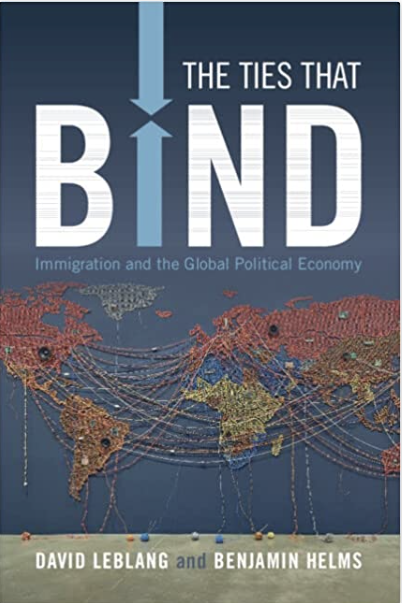
Leblang specializes in the international political economy and has written extensively on international migration, global financial markets, and international economic crises. He is currently working on projects that connect globalization, AI exposure, migration, and democracy, both globally and across U.S. history. His work has appeared in prominent outlets such as the American Political Science Review, the American Journal of Political Science, International Organization, World Politics, and Economics and Politics. He has published two books, The Ties that Bind: Immigration and the Global Political Economy (with Benjamin Helms) and Democratic Processes and Financial Markets: Pricing Politics (with William Bernhard).
Prior to arriving at the University of Virginia in 2008, Leblang held teaching positions at the University of Colorado, the University of North Texas, and the College of William and Mary. He has been a visiting scholar in the research department of the International Monetary Fund and in the European Commission's Directorate of Economics and Finance, and a visiting fellow at the Ecole des Hautes Etudes en Sciences Sociales in Paris, the Centro Studi Luca d'Agliano in Milan, and the Interdisciplinary Center in Herzliya. In 2015, Leblang received the Outstanding Faculty Mentoring Award from the University of Virginia, and in 2016 he received the Outstanding Mentoring Award from the Society of Women in International Political Economy of the International Studies Association.
Featured Publications
David Leblang News Feed