Experts

Robert Strong

Fast Facts

  • Emeritus professor, Washington and Lee University
  • Fulbright Scholar, University College Dublin (2013-14)
  • Former associate provost, Washington and Lee University
  • Expertise on the presidency, U.S. foreign policy, Jimmy Carter

Areas Of Expertise

  • Foreign Affairs
  • American Defense and Security
  • Governance
  • Elections
  • Political Parties and Movements
  • Politics
  • The Presidency

Robert (Bob) Strong is emeritus professor at Washington and Lee University and was a Fulbright Scholar at University College Dublin for the 2013-14 academic year. In 2005, he was a visiting scholar at the Rothermere American Institute at Oxford University.

Strong earned his PhD at the University of Virginia and before W&L taught at Tulane University and the University College of Wales. 

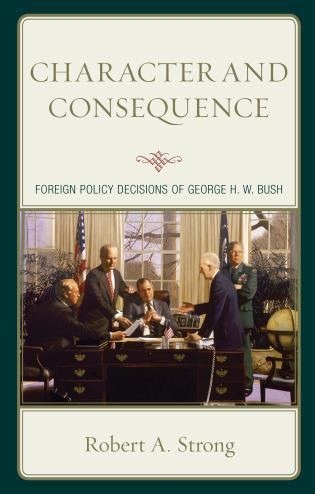
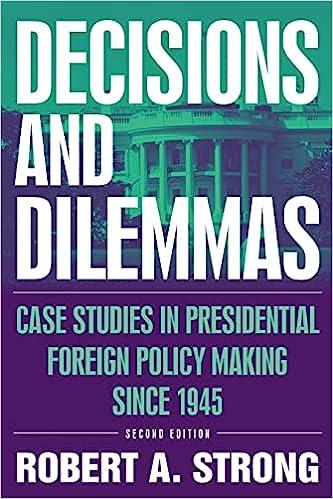
Strong's research involves national security issues and presidential foreign policy decisions in the modern era. His book publications include Character and Consequence: Foreign Policy Decisions of George H. W. BushWorking in the World: Jimmy Carter and the Making of American Foreign Policy and Decisions and Dilemmas: Case Studies in Presidential Foreign Policy Making Since 1945.   

From 2008 to 2013, Strong served in senior administrative positions at Washington and Lee, first as associate provost and then as interim provost. He has published essays in a variety of journals and national newspapers.  His recent speeches and op-eds can be found here.


Robert Strong News Feed

“He is not a president who is drastically expanding his powers abroad, because he already had those powers. The question is whether he will use them judiciously,” notes Robert Strong, professor emeritus at Washington University and Lee University, in a videoconference organized by the Miller Center at the University of Virginia.
Robert Strong El País
The United States’ recent military intervention in Venezuela and the arrest of Venezuelan President Nicolás Maduro have drawn comparisons to the 1989 U.S. invasion of Panama and the arrest of Manuel Noriega.
Robert Strong UVA Today
The Trump administration’s military intervention in Venezuela and the arrest of Nicolas Maduro is understandably being compared to the 1989 invasion of Panama under President George H. W. Bush and the arrest of Manuel Noriega. Though the two events have much in common, the differences between them are also significant.
Robert Strong Miller Center Presents
“Some consider him to be the nation’s greatest former president,” wrote Robert A. Strong of the Miller Center, a nonpartisan affiliate of the University of Virginia that focuses on presidential scholarship.
Robert Strong Atlanta Magazine
Jimmy Carter, the 39th president of the United States, who tirelessly championed peacekeeping and humanitarian causes after leaving the Oval Office, died on Sunday. He was 100.
Robert Strong The Chronicle of Philanthropy
In November 1992, George H. W. Bush was a lame duck president with only a few weeks left in his administration. Given his waning presidential power, he did something remarkable: He ordered a large-scale military intervention in Somalia for the purpose of protecting the delivery of humanitarian supplies. He did so against the advice of Dick Cheney, his secretary of defense, and Colin Powell, the chairman of the Joints Chiefs of Staff. Bush made his decision in the days just after his mother’s passing and just before the Thanksgiving holiday.
Robert Strong Notes from the Miller Center