Transcript
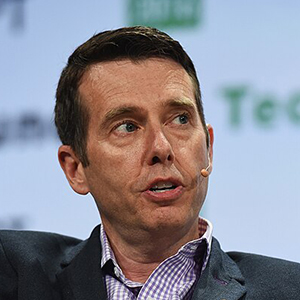
Barbara A. Perry
Hello, David. Welcome virtually to Charlottesville [Virginia] and the University of Virginia’s Miller Center. It’s great to see you.
David Plouffe
Great to see all of you.
Perry
Thank you. I’m Barbara Perry, and I’m the co-chair of the Presidential Oral History Program at the Miller Center. Political scientist by trade. We were thrilled to know about your going back to [University of] Delaware, to Blue Hen, your political science background. I’ll let my colleagues Bob [Robert Strong] and Elizabeth [Rees] speak to you just to say quickly who they are, but Bob has been with us for decades doing oral history, so we’re glad that he’s joining us today. Bob, do you want to say a quick few words?
Robert Strong
Well, I’m a longtime teacher of American government and the presidency, recently retired from Washington and Lee University, but as Barbara mentioned, off and on I’ve been working with the Miller Center on these presidential oral histories since Jimmy Carter [Oral History Project].
Plouffe
Well, thanks for doing that. It’s invaluable.
Perry
It sure is. Elizabeth?
Elizabeth Rees
Yes, so, I’m Elizabeth. I’m actually very new. I’m from the U.K., as you can probably tell from my accent. I did my DPhil [doctor of philosophy degree] at Oxford [University], at the Rothermere American Institute there, and I’m a historian. I think I’ve been here about six weeks and prior to that I was a postdoc [postdoctoral fellow] at SMU [Southern Methodist University] in Dallas [Texas]. I’m just thrilled to learn from great mentors like Barbara and Bob and also to hear all about your service and ask you about that. I’m very excited to speak to you.
Plouffe
Excellent.
Perry
We loved your memoir and have all read it cover to cover. And we always start with those who’ve done memoirs, particularly one is as good and enlightening as yours, just to say, at the time that you wrote it and published it, did you have to leave anything on the cutting room floor that now you look back and think, Oh, I wish I could have put that in, I wish I could have included that?
Plouffe
Well, obviously I had to get approval of then-Senator [Barack] Obama and soon to be President Obama to do it. His view was, one, it’d be nice for someone to record the history before we all forget it. He said, “Eventually I’ll get to that, and I’ll obviously write a much better book than you will,” [laughter] he said, obviously in jest. But obviously, since we were running for reelection, sure, I didn’t put everything in there. But what I’ve learned is that the world just moves so quickly, generally, and in politics specifically, that what was true in 2008 would be of little consequence by 2012. What I tried to do was really capture his story and the story of the volunteers and the young staff that were kind of the heroes of that campaign.
Rees
And could I hop in and ask, could you tell us a little bit about the decision-making process behind that? Not necessarily the book, but deploying the information you, said, “We decided it wasn’t necessary.” Could you just tell us a little bit more how you weighed that?
Plouffe
Well, I decided it wasn’t necessary, but given the fact that he [Obama] was in the presidency, obviously I shared drafts and manuscripts with him and with other senior leaders who were in the White House. Not that they had veto rights, but I wanted to make sure everybody improved the product—because there are things I might have forgotten or ways that they said, “Hey, have you thought about telling the story in that way?”—but also to make sure there wasn’t anything that would have caused undue agitation. My editor and I retained final decision rights, but definitely, the product was improved by the input of him and others.
Perry
Was there anything that the president said, not for purposes of size or length, but, “Please don’t say that?”
Plouffe
Well, I think the only thing, his advice to me was, “Hey, it’s such a personal decision to pick a vice president.” Because I talk about that in there, he said, “I think it’s fine for you to talk about your role, David Axelrod’s role, how you prepared for it,” but obviously, “Let me talk about my thinking,” which is fine. What I’ve learned is it is the most personal decision a presidential candidate makes, and advisors are of limited value. They’re [the presidential candidate is] going to make a decision. It’s kind of a gut decision, even if you have data informing it. So that was one piece of feedback he had: Let me handle what I thought about Evan Bayh and Tim Kaine and Joe Biden. You can talk about the process. That’s the one area I remember getting some direct feedback from him on.
Strong
On this question of information the campaign may have had about John McCain, you make it perfectly clear in the book that Obama didn’t like it when the campaign did something that looked like “going low.” And I wonder, would he have been opposed to using some of that information in a campaign?
Plouffe
Yes. Listen, I think I write about it in the book. It’s been so long. But, yes, we released a video about McCain’s role in the Keating [Five] scandal, which we had kind of developed and put on, I guess the old term would be “the shelf,” but we put it in a content drive, “Break if needed.” We talked a lot about releasing it because even though the Keating Five had gotten a lot of attention, there were a lot of voters in this [2008] election who didn’t know about it.
We were faced every day with an economic crisis, in part due to folks not being tough enough when it comes to regulation and folks in Washington [D.C.] being too cozy with the big banks. We thought it was relevant. But when we released it—I’m sure I told him we had done it—but we were getting attacked by Sarah Palin and others in the McCain campaign for Bill Ayers, if I recall, you know, the Weather Underground figure. At that point, we were like, Well, we think we’ll fire back with this, try and get on this, which is more relevant to voters, quite frankly, than this tangential Ayers thing. I think he was unhappy that we didn’t have a discussion about that. And quite frankly I probably knew what the result of the discussion would be, so I made a decision to ask for forgiveness later.
He’s [Obama is] a Chicago politician but definitely has velvet gloves and sometimes you need the brass knuckles a little bit. I think—listen, the whole thing about it, different kind of politics and kind of appealing to people’s best nature, and giving people the benefit of the doubt. In our 2012 campaign, one of our most effective ads, I’m sure you guys have seen it, it was called “Firms.” It was Mitt Romney kind of singing over a list of all of his investments overseas, Cayman Islands and whatnot. It was a devastating ad. And we fought tooth and nail about that. He just didn’t think it was fair. He’s like, “I sing at times, I say things at events. This is completely out of context. I don’t think it’s fair to him.”
And I remember the discussion as if it was yesterday because I said, “Listen, I wish we didn’t have to do this, but it’s the best way to get voters to pay attention to this side of Romney, which is, yes, he’s had some financial success, some economic success, but it’s the wrong kind of success for a president.” And even back then, it’s not the attention economy of today, but it was heading in that [direction]. So it’s like, Something like this, which will be seen as a little bit controversial, will get more eyeballs. That’s an example of him just feeling like—there were things that I think most candidates would just not think another minute about, that he got quite exercised about.
We released an ad in that ’08 campaign about John McCain using a computer. We didn’t think it was anything he would really care about. He thought it was a little unfair. So that was kind of a constant. He had a more, I would say, cautious boundary around advertising and content than the rest of us, but certainly more than most candidates most of us have been around.
Strong
And I presume that the information you had about McCain and the Keating Five was accurate and true. By today’s standards, that’s hardly a dirty political deed.
Plouffe
Well, the rules have changed, obviously. I mean, I think this is one of the challenges for people who still work in politics who’ve been doing it for a while. There kind of is no truth anymore. There are no boundaries anymore. And I think that the Democratic Party in particular, and plenty of Republicans still, they’ll struggle with, Well, can I really say that? Is that fair? Even Kamala Harris would ask, “Well, it was in every one of his budgets and he’s talked a lot about cutting Medicare and Social Security, but he says he’s not going to do it, so can we say it?” Right?
Those are not discussions that happen in [Donald J.] Trump world. They don’t happen in Nigel Farage world. There’s no thought of it. It’s like, What do we say to damage to our opponent? To advantage our position? And quite frankly, at the end of the day, What will get the most virality and the most clicks and the most eyeballs? It makes me super sad in terms of AI [artificial intelligence] and all the turbocharging of false content. We’re all going to be swimming in this certainly by ’28, if not by ’26.
Strong
Would it make you reluctant to do the same kind of campaign commitment you had in 2008 in the current political environment?
Plouffe
Well, listen, I think the most successful campaigns are authentic to the person leading the campaign. The candidate, right? It generally doesn’t work, and with some exceptions which we’ve talked about, some of them, we built this campaign solely at his direction. And what kind of campaign did he want to run? Very focused on the grassroots, very focused on a positive vision, not going into the gutter, which, despite the computer ad and the Keating Five video—I mean, those are tame—we largely, I think, stayed true to that.
That being said, I think it’s hard for candidates like that to survive these days. I think you have to be willing to go places you might not have previously thought you’d go. And you’ve got to be able to—I don’t think you should just make stuff up, but I think as we talk about the damage of, whether it’s tariffs or health care or the deficit, I think you have to think about talking about those things in very evocative ways. You have the [Jeffrey] Epstein files. I think that Democrats for the most part, here in the States—and I think this is true for liberals and progressives around the globe—are at a disadvantage because I don’t think we come to that naturally. We believe in institutions. We believe in rules.
What’s so interesting about this is there’s a daily fusillade—I think, done quite strategically—by the Right to say the Left doesn’t believe in rules, that we just lie and we make things up, and we steal elections, and we use institutions to go after opponents. And that is done quite deliberately to give them a wide berth. In a way, Obama can seem quaint. I mean, I saw a couple of excerpts from his podcast he did with Marc Maron, and it does seem quite quaint, which is, we should kind of slow down, and nuance is important, right, and character is important, and it’s not all about getting attention and being famous. And sadly—I mean, I think that’s a really important message—but I think the ship has largely sailed.
I think the corrective will come from young people. There was a recent study that said social media usage is down. basically in every country around the globe except ours, with young people. To me, that’s super heartening. Obama has mentioned that in conversations I’ve had with him, which is, the young people seem to be course-correcting a little bit outside the [United] States. Hopefully, that’ll happen here.
Rees
I just have some thoughts that have been raised by this. I can’t help thinking about how you reflect on the fact that often the social media content that’s being put out there now isn’t necessarily even about the issues. It’s just about attacking the personality, ad hominem attacks. But then Democratic candidates and people like Gavin Newsom are kind of trying to adopt the social media strategies of the Right, and where does that leave us? I suppose, it kind of brings us back to your point that young people have to decide to change from that.
But just in terms of the long view of this that you have had, from your experience on the campaign and to where we are now, social media was such a force for good in your campaign. Now it seems to be so difficult for people to actually come back to talking about the issues rather than just making it a meme, basically.
Plouffe
Well, right. First of all, what Newsom’s doing is really just on Twitter [X, social media platform]. And I think it’s important to understand Twitter is an elite audience that really does not infiltrate many core swing voters, so it’s kind of its own unique playground. I’m not sure that, on TikTok and on Instagram and on Facebook, you would take a similar approach. I think voters still like—you look at Obama. His social media posts, whatever the platform, still perform pretty well, and they tend to be very measured and very thoughtful and even have some degree of nuance. What I would say is I still think you can and should talk about issues. I just think that back in ’08, we were an “internet first” campaign. By 2012, we were kind of Facebook first, Facebook and internet first.
Now radio, TV, it all had its view. But I think one of the reasons we were successful is we understood that there’s a direct way to reach voters that doesn’t necessarily need to be through the prism of the press. Press is critical, and we did a lot of interviews and spent money boosting news. That term is really important. Right? There are a lot of people who, you’d like a voter to see a piece of local news content, but they might not have done it, so now you can spend money to make sure they have it. I think now the issue would be ’25, ’26, and maybe ’27, ’28. The problem is, I would say, most Democratic and Republican politicians, but certainly almost all Democratic politicians, if they have anything they want to say, they think about, What’s my press release? What’s my statement? What’s the interview I’m going to give? And that’s completely backwards.
You have to think about, What’s my 10-second video for TikTok? What’s my version of that for Instagram Reels, which is different than the TikTok version? What’s my post on Facebook/ What’s my YouTube play? Right? You just have to. I’ve talked to a lot of people who are currently running for office, thinking about running for office in this country and others, and I say, “Listen, if you don’t have at least two hours blocked out every day to produce content, you’re making a mistake.” And for people, it’s like, “Well, what town am I visiting, and what interest group am I meeting with, and what town hall am I doing?” That’s important. But you’ve got to be producing content every day. I think Obama was always good about that. He understood that these new ways to communicate with people were direct.
And I’m sure in your research and in talking to people, you’ve seen this. We got deeply criticized by not just the media but by Democratic political insiders for utilizing these platforms. But I will tell you, he never, ever questioned that. He was just like, “Reddit AMA [real-time question-and-answer session]? Great. YouTube? Great. Build our own social networking site? Great.” He got it. In part, that was his generation, and in part, he was an organizer. Now he doesn’t think as naturally today about TikTok, for instance, as he did then. But I think, Elizabeth, that is going to be the question: Who emerges that thinks about, if I have something to say about anything, whatever it is, positive, negative, comparative, I’ve got to think first about short-form video, and then, Is there a three-hour podcast I can go do?
You think about the decathlon skills required to be a successful presidential candidate these days. Not everybody is good at all the events, but you’ve got to be decent at most of them. And now I think the most important political skill will be the ability to be interesting and compelling in super-short-form video, but also being willing to have an interesting conversation, like a normal human being, on a podcast with somebody where you may not agree on everything. You can talk about sports and movies and whatever. That’s different than who can do a good op-ed interview or who can give a good speech. Those are still important, but I think they’re secondary in a way. It makes me sad. I don’t think that’s a good development, but it’s the development.
So, Obama, in ’08 and ’12, he really just naturally understood and gravitated to the new ways that people were getting and sharing information. It wasn’t something where it’s like, we gave him a briefing and he’s like, “Well, I don’t really understand it, but I’ll do it.” He would often push us, like, “Why are we not using Reddit more?” He just would. “What’s going on in YouTube? Why are the Republicans doing better on YouTube?” That’s the kind of stuff he paid attention to.
Perry
How much input did he have on the content itself?
Plouffe
Basically, I would say, this is true in—OK, so first of all, let’s talk about the campaigns.
Perry
Yes.
Plouffe
Anything that was him direct-to-camera—and you’ve probably looked at a lot of the ads, we did a lot of direct-to-camera ads—he was heavily involved in those, and that was by his desire. Someone would draft a spot. One of our ad makers, Axelrod, I’d be involved, others, and then he’d spend time with it, almost always improve it. And he would then, I think, deliver it more compellingly because he was involved in the drafting of it.
Any ad that was a positive ad, or about something we were talking about in the campaign, or a comparative ad that was strictly issues, he didn’t need to see it. If it was a negative ad that was just like, “Mitt Romney wants to cut taxes for the wealthy, which will hurt the middle class,” he didn’t need to see it. But anything that was—in this case, it would be about his [Romney’s] private equity career—he would want to see stuff that was of a more personal nature. And he’d also want to see stuff that was around foreign policy because he wanted to make sure that was being dealt with appropriately.
In the White House, as you’ve talked to some of our speechwriters, he was heavily involved in most speeches. Now if there was a minute video to give, “Sorry I couldn’t make the Democratic dinner in Michigan,” he would generally edit that while he was delivering it. There were plenty of those. But anything that was a significant speech—and that doesn’t just mean State of the Unions, I mean, it was unveiling a new economic idea or talking about climate change—he would get very involved. And so that was an internal process necessity, to make sure we built in enough time to get his input on the front end, speechwriters could go do their thing, get him a draft. As you’ve heard, it’s not a myth that everything came back not with Word-document [digital] edits; it was all handwritten. And that was the process.
I think it worked for a few reasons. One, he’s obviously a fabulous writer. Two, he generally was surrounded by great writers. And so that was a really great synergy, to see him bouncing off them, and he would generally improve things. And then, three, it was better delivery. You know, now there are a few times—the race speech back in ’08 in Philadelphia, he basically wrote that. There were a few ads he wrote completely, kind of ignored what he was given. The direct-to-camera stuff.
But his level of involvement in the campaign was much less than a [William J.] Clinton or a Trump, historically, or a Carter. I think it was more akin to George W. Bush. He didn’t really get into the weeds. He wasn’t that interested in seeing polls every day. He relied on a core group of people to keep him informed. And that’s the way he liked it, particularly running for reelection, where you don’t really have time to do both jobs. You have to do the presidency job. The campaign is, in many respects, a burden.
He was definitely not an “in the weeds” guy in terms of polling, in terms of, What’s our budget? He would just want to have a discussion about it and then wouldn’t get into details necessarily, unless we were having a moment where we’re like, “Hey, we’re struggling, so we got to cut something. Do you have a view on what that would be?” Or “We’ve got more money than we thought, so we’re thinking about expanding an effort. How does that sound to you?”
But he was a joy to work for in that way, just because he kind of knew what he should be involved in and what he shouldn’t be involved in. And like everything else with him, he didn’t revisit stuff like that, so it was a very healthy environment. He knew his role. He knew what he was going to delegate, and he was never one of those, “Well, why did we do that? Let’s have a meeting about why the thing we decided to do didn’t—” Yes, we’d have course-correction meetings, and I’ll talk about those. But he was not one to like, Woe is me. That led to, I think, a really healthy environment. Really normal.
I mean, that’s the thing about him. Super normal. Like, I’ve led myself, I’ve worked for a lot of leaders. There really wasn’t the weirdness you get with leaders because they’re human beings where it’s like, Well, they didn’t sleep well so it’s going to be a shit day. Or it’s a really bad story, so they’re going to be in a bad mood all day. Right? He would just deal with stuff, and it was a joy to problem-solve in that arena because there was none of the weirdness of, Where did that come from? What the heck’s going on here? He seems a lot different than yesterday. We just didn’t have that. And that’s not propaganda. That just wasn’t him.
Perry
And where does that come from? Sorry to interrupt. Where does that come from, given that he had what most people would have considered an abnormal life and upbringing?
Plouffe
I think it’s Hawaii. I really do. I mean, just super chill.
Rees
The Hawaii state of mind.
Plouffe
Yes. That’s always been my view.
Strong
It’s also the most diverse state of the nation, and the place that has been that way the longest.
Plouffe
[nodding] Yes.
Strong
Can I ask a question about the old-fashioned way in which video played an important role, allegedly, in presidential campaigns? And ask about 2008. Hillary’s [Rodham Clinton] tears in New Hampshire, or Obama’s, “You’re likable enough.” When a candidate says something, does something—Michael Dukakis rides in a tank with a silly hat—that becomes viral in the old-fashioned way, repeated news over and over again, and then seen by most voters, talked about by many. Were those things important in 2008? In a couple of places in the book, you suggest they might be. In a couple of places you say, “Oh, the media pays too much attention to those things. They’re not nearly as important as we assume.”
Plouffe
Well, yes. Moments have always mattered in presidential campaigns. I think this is true outside the U.S. as well. And you can try and manufacture a moment, but for the most part, they just happen. And do you seize an opportunity, or do you make a mistake at an inopportune moment? What I would say on the second question, Bob, is, I can’t tell you the number of times in my career—it’s probably in the tens of thousands—that a journalist or a donor or somebody in my party has said, “You either have a political problem or you’ve been given a political gift.” And my answer to that is, if you’re telling me on scale that a significant number of people are now going to vote differently, either against us or for us, because if something that just happened, you’re right. But for the most part, those moments are few and far between. And the atmosphere they happen in matters.
The New Hampshire moments, the two you mentioned, we were losing in New Hampshire all the way up to Iowa. Iowa gave us a bounce. It was only five days. And I think at the end of the day, New Hampshire voters are historically kind of gatekeepers, contrarian. And I think that while we moved, Hillary was very popular. We had taken a lead in most polls, including our own, with her, fave–unfave, like, I don’t know, 80–20. So, popular figure. McCain was doing really well.
A large percentage of the independents up there who can choose which party primary to vote in went to the Democratic side because we were more interesting. Had that not happened, I think we probably would have won the New Hampshire primary—I’m sorry, those independents went to McCain because he needed to be kind of bailed out. Right? We were obviously going to do very well with independent voters, better with independent voters than with Democratic voters. So McCain’s kind of “last stand” there became a magnet for a lot of the independent voters we would have been counting on.
And I think there was a sense amongst people who were going to vote in the Democratic primary, which is, “OK, this Obama guy’s exciting, but this is happening awfully quick.” I think that Hillary’s moment was the most humane moment she had during that campaign, and it reminded everybody what they liked about her, and maybe, Well, let’s see this go on. And then Obama’s “likable enough” moment, I think, was much less important than Hillary’s emotion the night before. It definitely was the comment of someone who was not an insurgent candidate and was kind of a dismissive candidate thing, which I don’t think—that didn’t ring true with voters. That didn’t seem like who Obama was. But it was like, OK.
My point is, Hillary showed great emotion. You have independents flocking more to the Republican primary than had been anticipated. You have Obama not having a great debate moment. And you got a lot of voters saying, “You know what? We like Obama. We like Hillary. Let’s see this thing continue.”
And then you had [John] Edwards hanging in there. If Edwards had dropped out, obviously we would have won New Hampshire quite comfortably because most of those Edwards voters—people forget, it wasn’t 51–49, it was 39–36. So a quarter of the vote went elsewhere, and I think we would have gotten a lot of that. Those moments mattered. And in a way, in New Hampshire, people watch [W]MUR [TV station], and they watch the Boston stations, so I think a lot of voters saw that moment, Hillary’s moment. Had we been in a real social media age, she probably would have benefited even more from it because it would have been easier for people to access it.
I think the thing about moments is they matter if they change the voter behavior. Right? And not many moments qualify for that. But those that do are kind of historical, right? Because they remind us that maybe not a whole campaign can change, but the trajectory of a campaign can be adjusted by these big moments. And we keep having them in our presidential elections, time and time again. The debates are still very important, obviously. A little less so because the audience consumption is much more bite-sized now than the percentage of people who watch the whole thing. I think we were at a disadvantage in ’24, in part, on the Harris side, because of that.
But listen, video. I think how he [Obama] handled the economic crisis on video, talking about being able to walk and chew gum was a big moment. I think the videos coming out of Europe on our trip were a big moment, even though, I think, we were too sensitive to the criticism from the McCain campaign that we were just a big, empty-suited celebrity. I think the moment in ’07 during the primary debate, when he was the only one that would say he’d go into Pakistan and get [Osama] bin Laden, was a moment that did matter to people. When you stand apart like everybody else—Trump is a good example of this—those moments matter to people, and there’s a visual nature to it that’s quite powerful.
Strong
And he [Trump] feels compelled to produce one every day.
Plouffe
Well, he gets it. I mean, he’s putting on a show. And he just intuitively understands it, the power of visual, the power of presentation, the power of blunt-force messaging. By the way, it’s something I think the vast majority of Republican politicians can’t pull off, and Democratic politicians—both, back to authenticity—but he can. And his approval rating was at 43 percent of the vote. He never got 50 percent of the vote, twice. Once. He ran for president three times. But he was able to get enough people, I think, in part because he has a good understanding of how people consume information, how they share information, and kind of what’s “sticky,” right?
Obama is very much about language. I think Trump is much more about visuals. Those have always mattered a great deal to him.
Strong
And I have a quick question about 2008. We were impressed with your book. What books impress you? Is there a journalist, an author, a scholar, who has done very good analysis of 2008?
Plouffe
You know, it’s interesting. I really don’t read books about stuff I was part of. [laughter]
Strong
That’s probably a good idea.
Plouffe
Obviously, I read David Axelrod’s book, which is in part about that race. I read the president’s book, of which the campaign played a significant role, in his first volume anyway. So, no, I did not read books about ’08 or ’12. You know, for me, the presidential books that have mattered most to me are What It Takes [1992] by Richard Ben Cramer, the [Theodore H.] Teddy White books, from that period of time [1960–80]. I read books about both Clinton campaigns, about the Gore–Bush races. I’ve read a lot about the 1972 and 1968 races. I learned from all those. But having lived it, I don’t read it. Just kind of a practice.
Strong
And one more question. Oh, go ahead, Barbara.
Perry
No, go ahead, Bob, and then I’ll follow you.
Strong
In your book, you say, I think in more than one place, every campaign is important for three factors: the candidate, the strategy, and the electorate. And I think in the final analysis in your book, you give the most credit to the candidate you have. But I want to ask you about the electorate. They kept surprising you with how many volunteers showed up, how many small donations showed up, how many people showed up, overseas in Germany, but all across the United States. Was Obama making waves or riding them?
Plouffe
Oh, no, I think, obviously, I mean there was in ’08—and ’12 is different, I’m sure we’ll talk about that—there was just a dramatic desire for change. Now some of that was because the economy was starting to weaken throughout ’07. Obviously, Iraq was the dominant issue in ’07. It was the aftermath of [Hurricane] Katrina. But it wasn’t just a desire for change in terms of switching horses from Bush. There was also desire for change of the Democratic Party. You know, Howard Dean kind of tapped into that in ’04. I think that there was an atmosphere existing that Obama was able to tap into.
So the electorate is one thing. And I think—you guys are obviously political scientists. There was a really healthy debate for a long time in political science that there were no swing voters anymore, some maintained. And I would say, well, there are not many, but we keep having these back-and-forth elections and they’re not all turnout-based, so there are plenty of swing voters. There are not a lot of them, but they tend to move in one direction.
Strong
Or you bring in new voters, and that makes a huge difference.
Plouffe
Or new voters. But you look back at history in America—and if you look, really, from ’06 to now, we’ve had a lot more turbulence in our elections, a lot more swings, than we historically had. And I think, yes, some of that’s new, some of that’s turnout, some of it’s candidate. But I think a lot of it is, you’ve got this group of voters who are perpetually dissatisfied with the economy, with Washington, and they kind of bounce around. So that’s the electorate.
When you think about the volunteers who propelled us, that was really a relationship between Barack Obama and his volunteers, and it was natural. We in the campaign couldn’t manufacture that. We were just there to facilitate it. And I wrote about this in the book, I’ve talked about it interviews about 2012: When he bombed in his first debate in 2012, the thing he was most concerned about was that he felt he let his volunteers down. He said, “Listen, this isn’t ’08. We’re asking people to do something a lot harder, and people are out there busting their asses”—I mean, that’s what he would say—“giving me time and money that they don’t have, and I laid an egg. And what I won’t do is, I don’t care if you tell me I laid an egg, but I don’t want to, after the second debate, go into a campaign office and feel like I’ll let people down.” That was his whole thing.
In ’08, in ’12, he’d be out on the road doing an event, and I can’t tell you the number of times I got a call saying, “Hey, I met with the local precinct captains, and they said you guys are stiffing them on X, Y, or Z.” OK? That’s what he cared about. And so I think it was this magical relationship between a group of Americans, millions of them—some of them people long-time involved in politics, many not, many young—who believed in him, and he believed in them. That’s why we were able to win the nomination. That’s why we were able to win states like Indiana, North Carolina, Virginia, which back then seemed like a stretch, at least from a conventional-wisdom standpoint. And it was their ability to go register voters, and go talk to voters, and kind of stretch our capabilities to make that happen. I think Obama had a unique appeal to the electorate in ’08 and in ’12 that enabled him to win both of those tough races.
And I think without him, you didn’t have the change of the electorate. He was core to that. But it was the volunteers who then made it possible. It’s like conception and execution. You can’t talk about one without the other. That’s what made it happen. And it was real. Most candidates say they want that, but they either don’t really mean it, or they don’t have that kind of connection, or they don’t invest in it.
Strong
Or it’s smaller.
Plouffe
Or it’s smaller, right. Trump had it.
Strong
He did.
Plouffe
Biden and Hillary to a lesser extent, although Biden was able to win. So, to your point, everyone has it. Everyone’s got volunteers. The question is, the way I have always thought about it is, yes, it’s scale: Do you have enough volunteers to do anything you could think about that would help you win? We did. Extraordinary. But when somebody who has never volunteered in politics does, and they talk to their neighbors and try and get them to vote or volunteer, that matters because people aren’t expecting it from that person.
It was the composition of our volunteers in both races that was so unique. It was both the scale and the composition. [Robert F.] Bobby Kennedy had it, Ronald Reagan had it, Donald Trump had it, we had it. I think those are the best examples of people who had that kind of organization that was this interesting composition but also had a large enough scale that it really expanded your idea of what was possible. For instance, we probably wouldn’t have targeted Florida in 2012 without some sense of the scale of what our ground operation was going to be, because it was going to take enormous voter registration to do it, and it was going to take enormous persuasion door to door. It wasn’t going to be done by TV ads.
Strong
And maybe this is a final question about 2008. If you were working with someone like Elizabeth, getting ready to do dissertation research, what would you want them to look at in 2008 that isn’t adequately understood?
Plouffe
Well, it’s interesting. One, I think just given where we are in the country, study attitudes of race. Right? I think in ’08—I mean, you’ve probably seen, I don’t know if you don’t have access to all of our ads, I imagine—but we’d run ads with white guys in flannel coats and gun racks basically saying, “It’s kind of surprising I’m going to vote for Obama, but I am. He’ll both protect my gun and he’ll protect my job.” It was like a permission structure. And then ’12, some of that was turnout, but a lot of it was that enough swing voters said, “You know what? We want to see him finish the job.”
I think what surprised me was, OK, ’08 maybe was magic in the bottle. Was America ready for a black president? Then in ’12, with unemployment very high, they rehired him. But I think there are a lot of voters where—not necessarily the voters that voted for us, although maybe some small percentage—it unleashed something out there, and it turns out that a lot of Americans kind of weren’t ready for it, I think. That’s one thing which is less about ’08, it’s connected to now. Let’s talk about that. I don’t think there’s been nearly enough research done about that. People will comment on it, but what’s really statistically going on?
The other thing I think would be how this Obama, people on the ground, volunteers, technology, crude though it was, how that all worked. I think there are still lessons to be learned for today. Part of it was we were definitely very focused on who swing voters were, who registration targets were, opening up all these offices, having enough staff. It was very surgical. But we really did. It wasn’t just propaganda. We kind of trusted these people on the ground to organize themselves and do what was best. I think that that’s something all candidates can learn from, which is, don’t be afraid of one volunteer saying the wrong thing. Be happy that 99 are saying the right thing. So, that’s something.
The other thing I think is, because it’s connected to the discussion today, which is, is it possible for Democrats to get back to being competitive in places like Iowa, Ohio, and Indiana? What really was behind that, for the black skinny guy from Chicago to dominate with white working-class voters, particularly women, in all those states? What was it about that? A lot of it was him. Some of it was the time. Some of it, of course, is there’s been some pretty significant change where non-college[-educated] voters are aligning with the Republican Party. But that to me is interesting.
The Indiana campaign, the Ohio campaign, the Iowa campaign. I think obviously Democrats have to be able to compete and win in Arizona and Georgia starting in the next decade if they have any hope of winning. But there’s not just one route. There’s also getting Florida back to being competitive, and there’s making sure those northern states don’t fully slip away from us.
So, anyway, I don’t know. There’s a lot about it that I think is interesting, but those would be some thoughts. But the race thing to me is clearly—I don’t think we properly understand, maybe you guys do—but, what happened there? And as much as a little over half the country showed that they were ready for a black president, I think it intensified the 46 or 47 percent who were like, What the fuck are we doing?
Strong
How often did Obama talk about race? And I don’t mean in the public parts of the campaign and the famous speech in Philadelphia and the rest. I mean, how much did he talk to staff, to people close to him?
Plouffe
Well, first of all, this is just true. I mean, it’s like, OK, we don’t know if the Democratic Party is ready for a black candidate. We don’t know if America’s ready for a black candidate. And there’s very little we could do about that except run the best campaign we could, so that was kind of our early discussion. Obama was quite good about that. I think that when the black community was going through trauma—obviously, there’s day-to-day trauma, but Trayvon Martin or other violence—he would have a point of view on that and really want to make sure that the anguish in the community was properly understood.
I tell you, around education, as you know, he was supportive of merit pay and school of choice and even charter experimentation. And we got criticism from some unions for that. We got a lot of criticism from white liberals. But he’d say that what people don’t understand is, When I’m in these black communities, there’s a real hunger for a different approach to public education. Like, why should people in the South Carolina “Corridor of Shame,” as it’s called, endure public education that’s not working for their kids? What are we doing here? He would really be quite pointed about that when he felt like people were taking positions, presumably on behalf of the African American community, when in fact they were either going to harm or not help.
I write about this in my book. I mean, there was a moment where things weren’t going well in the campaign, and John Lewis endorsed Hillary Clinton. He later retracted that. It’s one of the most interesting, toughest conversations I ever had with him [Obama]. It lasted well over an hour, maybe two, where he was just like, “What if this doesn’t work?” What if we don’t win Iowa? And I’ve ignored the African American community in other states. Should we at least think about an insurance policy here, so if I don’t win, I haven’t overly antagonized what should be my base? Right? And by the end of it, he kind of recommitted to our strategy of “Iowa or bust.” But that was hard for him to see Hillary winning polls, by big margins, by African American candidate leaders in California, New York, even his home state of Illinois, thinking we’re ignoring them.
We had to be very focused. That was really hard. And so he would talk about that in personal ways. But as it related to him and the electorate, I think he was like, Either people are going to accept me or they’re not. And in many respects, I think people are surprised by that. But I think his view was, “I’m either going to meet the moment and those voters will come to me, or I won’t.” And by the way, for us, in the beginning, that wasn’t just white voters. That was older black voters, too, who were very recalcitrant to support him. Our view was, you perform well, you win early, you open some minds and hearts that might not have been open to you, and then you’re able to compete more fully across the electorate. And I think he really not just bought into that, that was kind of his view and dictate to us, which is, I can’t change who I am, and we’ll see. Either people will accept me and they are ready for someone like me, or they’re not.
Perry
Can I ask you, David, and I think this will focus a bit on 2008 but also get us to governing, eventually. And that is, under the heading of pros and cons, could I add in the topic of outsider? The pros and cons of running as an outsider in 2008 in the primary and in the general, and then the pros and cons of running as a “hope and change” candidate both for 2008, governing, and then reelect in 2012?
Plouffe
Well, I think, we see over and over again, we keep having “change” elections, so it helps to be the most change-y candidate. I think in ’08, you probably recall, he would quote what people said about John [F.] Kennedy. He would often talk about—particularly in the fall, as the economy was really beginning to unravel—talk about people, the same old experience isn’t going to fix this. We need somebody who’s going to look at these issues afresh. Foreign policy was a place where I think being an outsider, being one of the few people on the national political stage who opposed the Iraq War, was a huge benefit and also was exciting as a candidate.
I think one of the things that made ’12 such a challenging race was he was the incumbent. But he was still seen as a different enough figure where I think even though we weren’t like as outsider-y as we were in ’08, we were more outsider-y than Romney. I think that helped.
In terms of governing, listen, I think the Republicans—[Mitch] McConnell, most famously, but others—they saw, from their standpoint, the threat that Obama posed being an outsider, someone who was talking about things through kind of a postpartisan lens, someone who was appealing to people’s best interests, someone who didn’t seem like a radical to people, had common-sense ideas. That’s why they kind of wanted to kill him in the cradle, and the discussions that are now lore, about them meeting even before he put his hand on the Bible to say, We’re not going to help him do anything. We’re going to turn him into the “other,” turn him into more liberal than he is. And they were quite effective at that.
I think it’s one of the challenges we had, that when you’re governing—and by the way, this is true for the old “govern in prose and campaign in promises”—you’re making hard compromises. You’re not getting everything done. You don’t have a campaign behind you to communicate. Most of the coverage of you is negative, and challenging, and all the things that you’re messing up or not doing. So I think, yes, we definitely lost some altitude in ’09 and ’10, largely because of the economy and the pressures people were under. But I think he didn’t seem like an outsider. He seemed like an insider having to make compromises on things and get involved in the sausage making.
I think that’s one of the lessons of ’09 and ’10, and even ’11 and ’12, I think we improved. He began to communicate more like an executive in Washington than an outsider astride the political world in America. And that took away one of his superpowers.
Perry
Do you think that, as the Miller Center has been noting in some of its presidency conferences—we just had another one several weeks ago to celebrate our 50th anniversary. Our executive director, [William J.] Bill Antholis, will often note—maybe to your point about how we keep having change elections—it seems a benefit to be change-y, that that increases people’s expectations of the president and the candidate and the presidency as in office.
Do you think, as someone who’s an expert on polls—Bill always points out that we have maybe more powerful presidents than ever and yet they are below and underwater, under 50 percent [approval]. Biden tended to be. Certainly, Trump, as you point out, has been. Is that one of the drawbacks of promising change? And hope, for that matter?
Plouffe
It’s interesting. Biden was a different kind of change, right? That was basically the classic voters just saying, “I want stuff to settle down a little bit.” It was less like this exciting new figure, like a Reagan, like an Obama, like a Trump, like a Clinton. My sense is, the moment you are elected president of the United States, or you become prime minister of the U.K., or chancellor in Germany, president of France, you’re on probation. And the truth is, we have more people than not in all of those countries dissatisfied with their economic situation, worried about AI now, political dysfunction. And so you immediately kind of fall to Earth.
I think Trump now, some of it’s just that natural political gravity. But what’s clear in the research polling is that people don’t think he’s paying enough attention to the reason they voted for him, which is the economy, lowering prices. And he’s also telling people prices are fine. But what makes health care reform so hard is everybody’s involved in the health care system. Everybody’s got a view on it. And even voters who say, “I’d really like a lot of change,” oftentimes the thing they fear more is, they’ll take the broken status quo over the change that they’re told to fear. The same thing is true with the economy. Everybody, every day, is buying stuff. And so Trump, I think, is really playing with fire here when you’re telling people not to believe your own credit card receipts and your grocery bill.
But, yes, I just think that at the end of the day, it’s hard to say. I mean, Obama had periods where he’d get into the high 50s, but not very often. He left office at what, 54, 55 [percent]? That’s hard to do. I mean, I think if you’re at 50 percent approval rating in any Western democracy for any length of time, you are defying political gravity. And so I think that one thing Trump benefits from is this sense of, He’s always doing something, so at least he’s trying to do stuff. Now that can be a cutting-edge sword. Sometimes people say it’s too much. But generally, there’s a sense that he’s active. I think Biden paid a price for people thinking he wasn’t astride things enough.
I think things that are big change, people can get their arms around. That’s what made the beginning of the Obama term so hard. It’s like, We just have to bail out the economy. The stuff people are super excited about came after that. Wait, we’re bailing out more banks, we’re bailing out the auto industry? What the hell’s going on? And he knew it. It’s like, This is going to really hurt me politically, but got to do it.
Perry
And that was coming from Democrats and progressives, as I recall, right? Many were saying, “Oh, happily, he is going forward with the top of his agenda, as promised on health care,” but things have changed, even since the middle of the campaign.
If I could also add to that part of what was happening, Bob mentioned early on that he participated in the Carter interviews with President Carter, and President Carter said to the Miller Center in his oral history that he, of course, was an outsider. That’s what got him the nomination, got him elected in 1976. And he says, “I’m a pretty quick study. I’d been governor of Georgia. I thought I knew how to work with the legislature. I thought I knew how to work with lobbyists, thought I knew how to work with the press.” But he said it was very different in Washington, and it took a while and he recognized that.
Could you talk about what it is like to be an outsider going in, but going in then with this particular issue? The economy has collapsed. We’re about ready to go off the cliff and freeze up our entire financial structure, but also wanting to work on the top aspect of the political and campaign agenda of ’08, health care.
Plouffe
Well, I think it was Franklin Roosevelt’s famous quote, even back then, when the bureaucracy was much worse: “I thought I was going to manage Washington, but it turns out Washington is managing me.” [laughter]
Perry
Another outsider in terms of having come in as governor.
Rees
And that might be a moment for me to add in. These historical examples, Carter, the FDR quote that you just brought up, how resonant were any of these figures in your minds when you’re having these discussions, to just add that in with Barbara’s point as well?
Plouffe
Well, I think Obama is a student of history. I think all of us around him at a certain level were students of history. So, you see, Carter’s a great example. Or even Reagan is. He obviously stabilized and was a two-term president but struggled mightily in ’81 and ’82. So you see the history. It’s kind of like incumbent presidents bomb their first debate. They all do. And every incumbent president—Bill Clinton’s the only exception, I think. That’s a little bit because of the pro dynamic. But other than that, everyone has bombed it. And I know Joe Biden was talked to about that. I personally talked to Barack Obama. It’s like, they know it, but then they bomb it. Right?
Perry
And why is that?
Plouffe
I think it’s, one, they’re very busy. I’ll connect that back to your question. So, they’re very busy. They don’t have the time to put into it. Their challenger is spending a lot of time preparing for that first debate. The presidents tend to blow off debate time or their head’s not in it. Even when they’re at debate camp, they’ve got to go do a call with a world leader or something, so they’re not as focused. Two, they’re proud of what they’ve done, and they tend to fall into a trap of defending their record as opposed to making a case for a second term. And I think they get very annoyed that, Hey, I’m president of the United States, and I got this chucklehead next to me attacking me on everything, and that’s annoying to me. OK? I mean that’s what it is.
I always tell people, hey, debates are interesting for many reasons, but for me, at the top of the list, is these are human beings up there, and you never know what’s going to happen. Tim Walz is a great example of that. The debate he delivered was so far away from the debate prep that we had. It was 180 degrees different. He just went up there and decided to call different plays, and it was a disaster. And so, Obama, I would say our practice wasn’t great. We didn’t prepare him great. He was not interested in preparing well. But he went down all these different paths just because he wanted to basically have a very Ivy League discussion about the nuances of health care instead of making a simple case that, Hey, Romney’s going to take your health care away, and here’s what I want to build on in a second term. I know it’s terrible. So, that’s it.
I think what happens is—Trump, by the way, might be an exception to this, although I think he would say he fell prey to it in the first term. He now is just about communicating every day. But people, when they’re campaigning, they care deeply about their country, about the world, their stuff they want to get done, crises happen. And it’s like, The campaign was that. I’m here to be president, and make decisions, and hire good people, and deal with the nuance and the stuff I wasn’t expecting. And their focus is not every day on, How are we communicating a message? They’re just not. And listen, even staff can fall prey to that.
Here’s the thing you learn in the White House—and by the way, this is true in big cities. It’s certainly true for governors, but certainly in the White House. It’s like, you have the stuff that’s on your agenda, you ran on, you want to get done, but the world has a way of intruding. And so you end up, more days than not, the main image people have of you is you’re not focused on the thing you said you’re going to be focused on because something happened in the world and you’ve got to respond to it. Number one.
I think the outsider thing for us was particularly hard. I mean, you’ve talked to people about this, I’m sure. But even though I was in the White House, I used to come in for a lot of meetings during this time, a lot of them on health care. And in ’08, in the campaign, we opposed the employer mandate. Get in, and all the health care experts say, You’ve got to have it. I remember we showed, in the Roosevelt Room, all the ads we ran opposing the employer mandate to all the White House staff who weren’t part of the campaign, saying, “Just know, this is a core commitment he made, and one of his attributes with the electorate is they trust him.” And he ultimately had to make a tough decision. That’s an example of something like that.
I mean, yes, health care was important, but he didn’t get around to that until ’14 and passing it. It was, Washington’s gotten too close to the big banks. There’s not enough regulation. We need to rein them in. And eventually he passed Wall Street reform. But in the beginning, people’s sense was, Wait, we elected this guy, and we’re spending more of our taxpayer dollars on the banks, on the auto industry. As revered as the American auto industry is, I believe the polling for the bailout of the auto industry was like, 12–88. 12–88! Yet he did it. Had to. So he started by doing a bunch of things that were unpopular, people didn’t quite understand how they were going to help them, and seemed not very inspirational. He seemed like a firefighter, not someone out there who was a pioneer.
There’s no doubt that the ordering of what he had to do damaged us because it was not what people thought they voted for. And even the Iraq war, eventually that wound down, but that took a long time. I personally had some pretty fierce debates with my colleagues inside the White House about it when I was there, which was like, Of all the things that Barack Obama said he would do, making sure that the Iraq War is finally ended and we don’t have troops there is at the top of the list.
And there’s just an inertia, as you know. There’s process, and there’s the Pentagon and there’s generals, there’s agencies on the domestic side, there’s Congress. And it’s really, really hard to basically slow that stuff down, turn it into a different direction, tell people the thing that can’t be done has to be done. I think Obama got better and better at that. But definitely, the reality of the world and the inertia collide pretty intensely with the poetry of the campaign.
Perry
Bob, did you have a question coming up?
Strong
Well, I wanted to follow up on something you just touched on, about what you were doing in the first two years of the administration, when you’re on the outside. You said you were brought into meetings to talk about health care. What kind of contacts were you having with people in the White House and with the president during that period? Were they giving you assignments? Were you telling them what you’re seeing and hearing on the outside? What was your role?
Plouffe
This was kind of a pre-agreed period where my second child was born three days after the election, so, at least as my wife and I saw it, I wasn’t going to go directly into the White House. I said I’ll come in at 2011, and the idea was that Axelrod would then head to Chicago. This was a discussion. And actually, I had to have it with the president, even though you want to jinx anything like September and October because you’re beginning to put together ideas for different staff. But I wanted to be pretty clear that I was not going to be part of the day to day.
For me, we had Organizing for America on the outside. I was helping work with Mitch Stewart and Jen O’Malley Dillon on that. There would tend to be weekend strategy meetings in the White House. I was asked to come to many of those, like Saturday mornings. Sometimes I would meet the president, sometimes not. I don’t know if you’ve heard about this, but David Axelrod also used to host a Wednesday meeting in his apartment with some of the folks who had worked on the campaign. I’d be part of that.
So you stay in touch. And I’d talk to the president a lot just because he’d want to check in and get a temperature on things. And sometimes I’d be asked to talk to a member of Congress on the Democratic side who was being a recalcitrant vote.
Strong
That would keep you busy. [laughter]
Plouffe
Yes, right? But for me, it was all just basically getting ready to come back in, in ’11. And I think we took that reelect very seriously, both for the stakes of the country but also for him to get reelected as an African American president, it was very meaningful. It would kind of ratify this experiment as opposed to it was a one-off. And it was also just incredibly challenging. I mean, Nate Silver gave us, I think, a 17 percent chance to win back in the fall of ’11 because of the economy. So it mattered a lot.
For me, I just had to put my family first, but also making sure that—because that’s a brutal job. I mean others have had it. [Karl] Rove had it, Harold Ickes had it. Basically, you’ve got your White House responsibilities, but then you have your campaign responsibilities. And the president basically tasked me with overseeing the campaign even though I was not in Chicago day to day.
I’m actually glad I had a couple years to have a little bit more semblance of reality because four straight years, I wouldn’t have done a good job had I been working 18 hours a day in ’09 and ’10. There’s just no question about that. And many of my colleagues stuck it out the whole way. I don’t know how they did it, but that was important. The reelect was looming, and we knew it was going to be incredibly challenging and very different than the race we’d run in ’08.
Perry
I think, David, that Elizabeth has a question, a follow-up when you mentioned Karl Rove, but before we get to there, I think it was one of the pieces in the briefing book, it might have been a press profile of you. It mentioned, and I wanted to see if this was accurate, that you weren’t necessarily a basketball buddy with the president or, I don’t know, whether you played golf with him. But when I read that, I wrote out into the margin, “Ted Sorensen.” And you know, it was always said Ted Sorensen was the alter ego of President Kennedy, and obviously the wonderful speechwriter, but that he wasn’t in the inner circle in terms of socializing or the relaxation of President Kennedy. Any thoughts about that?
Plouffe
Well, yes. I never played basketball, I think because they were discriminating against me based on height.
Perry
[laughs] That’s fair enough.
Plouffe
I have played golf. No, no, I think particularly during ’11 and ’12, when I traveled with him on most of his trips, it would generally be he and I in the limo together when we would have some work to talk about. But he’s a fanatical sports fan, as am I, so we’d talk a lot about sports. And I mean, we were and still are quite close, but he has a group he played basketball with. Then he also had his Spades [card game] group, which I like Hearts [card game]. But honestly, those guys just played Spades all the time. Jay Carney used to be like, “I can’t get any work done because I’m playing Spades.” I would come in while they were playing Spades on the plane and kind of secretly be happy that I was not playing Spades because I had work to do.
But it was very important for him to have people around. Valerie Jarrett obviously played this role. I was able to do this. Axelrod. People who had known him for a long time, who he could have real conversations with, he could have gallows humor conversations with, which is super important to be able to get through any tough experiences, to be able to make fun of yourself a little bit in the situation. And people he knew were vaults, so he could really let down his hair because he’s a very funny guy. It’s like he wants to talk about the health care speech seven times a day. We’ll have that. And then he’ll want to talk about, like, “Oh, Katy Perry is going to be at the event. Let’s maybe listen to her album.”
And then sports. He’s just a fanatical sports fan. ESPN [sports channel] would just be on TV around him on the plane, not CNBC or MSNBC or CNN [news channels]. I felt bad for people, actually, who did not know a lot about sports around him because that was such an orientation. It just was. I mean, he’d want to talk first thing in the morning about the football game or the basketball game or whatever, the baseball game. And that’s an outlet. For me personally, that’s an outlet. It’s how I kind of decompress. I was very fortunate that he was, and Axelrod was as well, just fanatical about it.
But his basketball crew, you know, he had a crew. Reggie [Love] was obviously part of it, Marvin [Nicholson] occasionally, Marty [Nesbitt], Arne Duncan, these were really good basketball players. They took it very seriously. Occasionally, they’d let people come in. I played basketball through, what, eighth grade, so I can pass OK and I can shoot. But at these guys’ level, they don’t want to, like, pollute their game with charity invitations. [laughter]
Perry
Actually, just a sidebar. I’ve sat next to someone at a wedding dinner recently, and he was the fellow who accidentally hit the president in the mouth and caused a bloody mess and stitches.
Plouffe
Big bloody mess. Yes. But that tells you, people do not take it easy on him.
Perry
Yes, he was playing for keeps.
Plouffe
I watched some of them. I mean, they were intense, man. They were intense.
Perry
I was just going to say, too, it worked. I well remember that when you were traveling—you were not, I guess, part of the trip that was traveling with the entourage. But the European trip in summer of ’08, wasn’t that when he just turned and hit the three-pointer as he was walking off the court? Talk about being cool.
Plouffe
Yes, he did that when he was campaigning for Biden in ’20 as well, with a mask on [during the COVID-19 pandemic], if I recall. So he’s a good shooter. But that’s an important thing to know about him, which is he needed outlets—some of them physical, some of them conversations, some of them people—that would allow some decompression. The other thing about him is he’s an introvert, and to be an introvert in this business is hard. He needed some recovery time. He’s not alone in that regard. We’ve had other introverts succeed at the highest level of politics. But particularly dealing with politicians, that just wasn’t his favorite way to spend time.
Perry
And that takes a lot of energy, doesn’t it, to be on stage playing the role of an extroverted, charismatic politician, if that’s not your nature.
Plouffe
Right, no question about that. I mean, a thing he really did enjoy, and I think this goes back to his campaign part of him, there are people like Bill Clinton that are renowned as “retail politicians,” and he was. Obama was really good too because he liked people. That never drained him. Going to a diner, going to a bowling alley, going to a bar, talking to people, sometimes those conversations would be about what’s happening in Washington, sometimes family, sometimes sports. He liked that. And he never complained about that. In scheduling terms, they’re called OTRs, off-the-record stops. Anytime we did an off-the-record stop where he was mixing it up with just average Americans, he loved it.
Perry
But to your point about politicians, we just did a retrospective on [George H. W.] Bush 41. I think it was Fred McClure, his legislative director, who was saying—in part because Bush 41 had served a brief stint in the House, but also eight years as vice president—he knew so many people in Congress, and he knew that they had been upset that in the Reagan years they didn’t get many invitations to come, particularly to the [Executive] Residence and have a cocktail. So he told Fred, 535 people, they don’t have to come individually, but groups, try to reach out to all 535. And I think our sense from reading is that would not have been the way to spend the evening for President Obama. I’m sure you’re going to say, Yes, that’s true.
Could I just ask, in his conversations with you, did he just talk about family? I know you, in your book, talk about when Michelle [Obama] would join you, but did you see him with family, with his children?
Plouffe
Yes, I mean, that is part of any conversation with him, which is, How are the kids doing? I think what he has said publicly was true, is what he’d say privately, which is, “Actually, I see my kids now a lot more than I have since ’04 because I’m just here a lot unless I’m on a foreign trip.” They had kind of a routine around dinner that was great. Obviously, having Mrs. [Marian] Robinson [Mrs. Obama’s mother] there was amazing. You talk to both Obamas, and they would say they [the kids] are making friends, and friends come over and spend the night or hang out. I think Michelle was understandably worried about adjustment because they had a really great community in Chicago, a great school that they liked, and obviously she spent a lot of her time and attention to make sure that transition went well.
I think for him, particularly having served two terms at the end of the day, his kids kind of grew up in the White House. And obviously he traveled a fair amount and would have to work deep into the night, but he saw them a lot, and so I think that mattered. Now the truth is, he was good about saying, “And I want that to be true for all of you, too,” but it’s a little bit easier for the president to say, “Hey, I’m going to skip out, and I’ll be back in an hour and a half,” than the rest of us who had to keep plugging away. I think it was definitely a family-friendlier setup for him than when he was in the Senate or even in Springfield [Illinois Capitol], because he was traveling a lot when he was a state senator. It was actually kind of the most ordinary, I think, setup for him vis-a-vis his family that, really, he hadn’t had. So, oddly, that’s what happened there.
Perry
Yes, Mrs. [Jaqueline] Kennedy said that too, that she dreaded it, but then, as it turned out, obviously she did a lot of traveling, but she was able to see her husband more in the White House than any time prior to that. And they had married in 1953.
So, back to Elizabeth.
Plouffe
And I think back to your question—
Perry
Oh, yes, sure.
Plouffe
—would Mitch McConnell have behaved differently if Barack Obama and he had dinner every week? Of course not. I’m sure you’ve talked to others, so I don’t have to belabor it, but the whole effort at a long-term deficit reduction package back in ’11 came from John Boehner and he playing golf and [unclear] on the Truman Balcony. But in retrospect, should we have done more of that? Should he have had more Democratic senators over more? Of course. Part of it was a casualty of the firefighting that was happening in ’09 and ’10. But you’re right, that was not his—he’s a very logical guy, kind of Spock [Star Trek character], like, We’ve got a problem, we’re trying to get it done, and let’s just think about what are the right levers to pull.
He himself is not a person seeking attention. And it’s easy to say, “Well, of course he’s the president.” But even before that, that’s just not how he was wired. I think it comes more naturally—like Biden. You know, it came more naturally to Biden. He was a creature of that place. I mean, I’d listen to phone calls he would have with senators, and he just kind of spoke the language in a way that comes from being there for so long. So, I think, in retrospect, I’m not sure what it would have changed. And I’m a very results-focused person, which is, OK, so tell me what would have changed? But you’ve heard enough people say we didn’t do enough of it, that we probably should have done more of it.
Rees
I guess that’s tough, though, especially if you’ve built part of your brand, the essence of that is that you are a D.C. outsider, then going in and embedding yourself in that system and doing the Biden kind of model, where you’ve been there for such a long time and, obviously, as you just mentioned, that history that he had clearly made a difference. That’s obviously got to be a difficulty in terms of how you approach that, shifting from campaigning to governing, if you’re outside as a candidate and you’re now in the White House.
Plouffe
Well, it’s just a lot of discordance. We would have conversations often in that first year of ’09—I mentioned health care, there were other examples—where there were maybe a couple of exceptions, where we said weren’t going to hire any lobbyists and they made a couple of exceptions. This was a source of great tension between Rahm [Emanuel] and some of those who weren’t part of the campaign and those of us who were. And it’s like, Well, got it, but this is what we have to do.
I even remember, we sent out a solicitation sometime after the ’08 campaign to our list of supporters to contribute to Hillary’s debt. I guess that was part of the discussions about her coming in. It wasn’t contingent on it, but it’s like, Rahm’s like, “Let’s help.” And a lot of supporters were like, “Wait, what is this?” And it wasn’t about Hillary. It’s like, Why are you asking us? We don’t want to be asked through you to do something like that. By the way, I think plenty of people did because they liked Hillary, she was going to serve in the administration.
My point is, there were many instances where, in the beginning, it was like, This doesn’t seem like what you pledged, or what you committed or how you’re going about it. And I think those in the White House—not all, I think Axelrod definitely tried to be a keeper of the campaign flame. He did. I mean, that was a central role he played. It was kind of a lonely role. I would help him when I was in the building, but there was a sense, Hey, we got real problems, and, All that stuff, the campaign, that was nice, but we’ve got stuff we’ve got to do, and we get that it’s not ideal, but we just have to do it. I think there was not as much thought given to the kind of narration that needed to continue coming out of the campaign.
Now, again, a lot of that was just a circumstance you’re dealing with—literally, you’re on the brink of maybe a Great Depression, so you have to throw a lot of stuff out the window—but there’s definitely tension there. And Reagan felt it. Carter felt it. Kennedy felt it. I think Trump felt it. Our most notable presidential outsiders of the last couple of generations all ran into that tension of, OK, wait, there are commitments, or the way you communicated, the way you went about things seemed to be intentioned, not entirely, but episodically with some things in terms of how you’re governing. And that was definitely a source of tension and complexity and was definitely an added burden.
Perry
Well, certainly, David, as well, speaking of Bush 41, the least outsider of our more recent presidents, and we know the “no new taxes” pledge and that he had to deal with the realism of writing a budget, working with the Democrats on that. I think it would be helpful if more Americans understood that, but I don’t know how we can get to that.
Plouffe
You do understand, though, it’s just never that neat. Right? And I think this current administration, particularly the second term, is the exception to this, and it makes me incredibly sad and concerned and distraught, but I really think, really—even in the [Richard] Nixon White House, because in a way they kind of cabined the Watergate cover-up—you’ve just got to deal with hairy, hoary, tough stuff that might be completely diametrically opposed to what you want to deal with on any given day.
But there’s a responsibility of being president and the staff who work in that building. And I think there was a connective tissue, really for as long as recorded history, of presidents who just had to do tough, unpopular things that might even be discordant or even sometimes diametrically opposed to what they said in the campaign because it was what they thought needed to be done. I’m not suggesting that somehow we should have been so faithful to the outside image of the campaign that we didn’t do some of the tough stuff that kind of countermanded that. But that, I think, has just been a history in America.
One of my reflections is, not all journalists, but I think among a lot of journalists and a lot of commentators, there’s a view that everything is politically calculated. And I never found that to be true. I think it is now, with this current administration. It’s like, No, actually, we just had to choose between arsenic and hemlock, and we chose arsenic. And there wasn’t any greater political strategy at play.
Rees
Well, I feel like it’s that quote about, you have a plan, and then when you get in the ring and you get hit in the face, the plan goes out the window. Right? And presumably, you’re reactive.
Plouffe
All the time. You want to be as proactive as you can, but you have to be reactive because the world and the country can be a messy, dangerous, crisis-filled place. So I think that’s exactly right. On a campaign, you’ve got your opponent, but you’re largely able—if you’re running a good campaign—to chart your own course about what you want to talk about as it relates to yourself, your opponent, the country. But when you’re in office as president of the United States, the world comes to your doorstep, and anything that comes to that floor of the West Wing is, by nature, hard, complicated, thorny, because if it could have been solved elsewhere, it was.
Every day, you just get on the carousel, and it’s like, What is going to happen today?
Strong
I wonder, were you a different kind of presidential advisor for the two years, or not, with day-to-day White House assignments? Were you more useful, or useful to the president, in a different way during those two years than you were when you went into the White House?
Plouffe
No, I think that there’s no substitute for people who are all in, and they’re in the foxhole 24/7 [all the time] with you. Right? To the extent I provided value to him, I think it was much more during that period because you just have much more influence on things when you’re in every meeting. And I think the value I might have played in ’09 and ’10 was just a little bit of altitude.
Also, I think working in the White House is like working in a submarine that’s at sea for two years. You rarely see the surface. And you can get consumed with, like, this article about what’s happening on this piece of legislation on the Hill [Congress]. I think those of us on the outside were able to—and David Axelrod played this role in ’11 and ’12—you’re just not as consumed by that every day. It’s like, Let’s talk about where this might be going, or let’s talk about the stuff that really matters. Let’s not get too in the weeds on the sausage making of the Ways and Means Committee.
But when you’re in the White House, it’s like, Oh, this just happened. This person gave a speech, what are you going to say about it? And I think when you’re outside, like, OK, let’s not overly focus on that. I think it’s always good for presidents to have some voices on the outside, but they’re no substitute for the people who are day in and day out in the foxhole with them.
Perry
David we are just a little past our halfway mark. Do you need a break for a tech check or anything?
Plouffe
I’m good, but if you guys do.
Perry
I’m good to go. We’ll continue?
Strong
Good.
Perry
Excellent. Elizabeth, you’re OK?
Rees
Yes.
Perry
Excellent. Thank you for that. David, I have a question about something that happened here in Charlottesville. And it’s not 2017 [Unite the Right rally], though we can talk about that as we move on. But it was either in 2011 or 2012. I do know it was before the reelect, and the word kind of went through the university that the president had reached out, or his people had reached out, to the university to have the president come here and give a speech. And if it was ’12, it was certainly a warm-up. It would have been at the end of August—I just have a feeling it was in ’11, however, and if it was, I kind of viewed it at the time and since as a kickoff, kind of an unofficial kickoff, getting into the reelect.
The word that we then heard, which I felt embarrassed for the university by, was that the then-president of the university said, Oh, the date that you want to come is the first day of classes at UVA [University of Virginia], and you can imagine what would be required. It would be in our amphitheater on the main “Grounds,” as Mr. [Thomas] Jefferson called the campus, And it would be so disruptive. We’d have to cancel classes for the first day, so we’re not going to do that. I thought, Really? The President of the United States wants to come to the university, and you can’t find a spot or a time at the university for this? And it also took me back to Bush 41’s trip here for a big summit on education, FDR’s 1940 graduation speech for the law school at the beginning of the war [World War II].
And so, what happened was the White House put us down in the amphitheater on the Downtown Mall [off campus]. I went, and it was a huge crowd, and it was just wonderful. And the President was great. He would say something about the Republicans, and people would boo and he’d use his line, “Don’t boo, vote.”
Do you have any memories of that or what went on? Or even if you weren’t involved in that, how do you handle something like that?
Plouffe
Well, I remember being in Charlottesville with him, so it must have been, I don’t know, that sounds to me like it might have been 2012 because we were hitting some college campuses in that period pretty aggressively. If it was ’11—no, it would have been ’12.
Perry
OK.
Plouffe
I think obviously we, I’m sure, wanted to be on the campus both because it would be easier to attract students, and we were always trying to do organizing around those events. That’s an opportunity for students who were just arriving as freshmen to get registered, to sign up to volunteer. It’s an organizing moment for us as much as a message moment.
So, because the mall is such a great visual, too, I’m sure that we adjusted. There might have been other places, by the way, other campuses where we wouldn’t have adjusted because the alternative was not as compelling. Back to visuals, they do matter. But it was close enough, too, that a lot of students could come. So, that would have been, I think, trying to get students organized, mobilized, lay out the choice between him and Romney, the stakes in the election.
He would often tell young people during that campaign in ’12, “Listen, I always said change wasn’t going to be easy. It’s sometimes ugly, it’s small, it can be frustrating. But we have to stay the course because the difference in the visions are so profound.” I think that particularly resonated with young people around women’s health care, around the economy, around foreign policy. Romney wanted to stay in Afghanistan, for instance. That had resonance across the electorate, but young people in particular felt pretty strongly about those distinctions.
But Virginia was a core battleground again in ’12, and so that would have been part of, I think, a series of college events we would have done late August, September. But Obama always felt really comfortable in Virginia and North Carolina. Those were two states that just, they’re beautiful, the seasons are amazing, big college sports areas. I mean, he loved all the states. But I think Virginia and North Carolina, he just loved campaigning in them. Very diverse states. There are also states that back in ’07 and ’08, people told us we couldn’t win, so there’s also a little bit of, We’ll show people that we can put this together. And they were kind of, to me, the best examples of the Obama coalition, Virginia and North Carolina, both. But that would have been that.
That’s a logistical thing where Alyssa Mastromonaco would have been driving that with her colleagues on the campaign on Chicago. And there probably would have been an email that goes around saying, “Hey, they’re saying they won’t let us on campus. Should we go somewhere else or should we make it work on the mall?” Right? And so, as important as Virginia was to us, as important as that area of Virginia was to us, as important as UVA is in terms of its size to us, I think we would have said, “Let’s go to plan B, even though it’s not our preferred alternative.”
Perry
Right. And it turned out to be great. In fact, the lineup to get into the Charlottesville Pavilion ran the entire length of the mall from that pavilion on one end—I mean, obviously it’s a small town, so it’s not huge—but it went all the way to the Omni Hotel at the opposite end of the mall. And so, I apologize for UVA’s response, [laughs] though I had nothing to do with it.
Elizabeth, Bob?
Strong
I have a couple places, but go ahead, Elizabeth, please.
Rees
Oh, no, Bob, please, you go.
Strong
In 2010, were you following the prospects for the midterm closely? And when did you realize what they might bring?
Plouffe
Well, I remember election night ’08. Again, it was historically quite unusual for a party to have two successive landslide elections, which is what the Democrats had in ’06 and ’08. And I remember that, telling the president-elect, “Well, you better enjoy this majority while you can because we’re going to lose a lot of it.” And why did I say that? Well, we had won so many seats in states on hostile turf that, in a neutral environment, you’re going to give a lot of that back. And then, two, it’s clear we’re going to be presiding over a terrible economy. We had spent most of the fall, obviously, every day, he and we would be on calls with economic experts, and everyone said, “This is a financial market meltdown. It’s going to take a long time to recover.”
One of the things that really kind of surprises me and infuriates me to some degree is just what I believe to be a very careless narrative that, Oh, look at all the House seats and Senate seats that we had in ’08, and we gave a lot of that back. It’s like, we won everything you could win in ’06 and ’08. Politics doesn’t work that way. You’re going to give a lot of that back once you go from an exceedingly positive electoral atmosphere to neutral, and you add in a negative electoral, which is not because Obama had bad messaging. It was because the economy was terrible in ’10.
So I think that ’10 was unfolding, certainly, the way I thought it was going to unfold. And you know, the polling obviously was not great, although the bottom really did fall out by the end. But Democratic enthusiasm was down. A lot of the voters that voted Democrat in ’06 and ’08 were saying they were considering voting for Republicans. The unemployment rate heading into ’10 was still extraordinarily high. People’s confidence in the economy was low. They didn’t like the bailouts. So you were just headed to catastrophe.
The thing that’s amazing to me is—because, remember, the Affordable Care Act passed pretty deep into that legislative cycle. A lot of the House members—Tom Perriello, in your neck of the woods, being at the top of the list—had a pretty good sense what was going to happen and that voting for health care probably added to the likelihood that they would be short-term members of Congress, yet they did it anyway. I think that for most members of Congress who are Democrats, one of the major reasons that they got involved in public life and sought office was to reform the health care system. They also knew the history, which is if the Affordable Care Act didn’t pass, maybe we’d come back to it in 2034, 25 years later. So people kind of muscled up and took tough votes. And I think everybody knew that there would be no positive from the Affordable Care Act in terms of real impact for years.
All of it was adding to a sense of, Hey, you’re not focusing on the economy, you’re adding something else that doesn’t seem to be our priority. It was a gruesome set of circumstances. But I think the most important thing as it relates to ’10 was when you have basically won—what do we have, 60 Senate seats?
Perry
Yes.
Strong
Yes.
Plouffe
—and 250-plus House seats, and you’ve done that on the backs of two landslide elections in a row, there’s going to be a return to normalcy. And then that was exacerbated by the terrible economic situation. Right? I also think we as a party, it really accelerated after ’16, but you were starting to see that Democrats—that’s when we had all the Dakota senators, we had senators in Louisiana, in Arkansas, and we were beginning to see Democrats become less competitive as we went through that period. And that’s where we are today.
To me, the central challenge right now for the Democratic Party is not just winning in ’26, as important as that is in ’28. If we don’t get back to the place where we reliably can compete in Iowa and Ohio and maybe even some Plains states, it’s going to be really hard for us to win the presidency, and probably the most senators we could ever hope to have is 52. That’s just not sustainable. To me, that suggests if we don’t do that, you run the risk of the [Supreme] Court being 8–1 in the next 10 years. These are the stakes.
And listen, back to the question about race, I don’t know how much Obama’s election intensified and accelerated some of that dynamic in some of those states, but my sense is it has something to do with it.
Perry
Could you also connect, just in that period, the rise of the Tea Party? I know all of us here want to talk about that and connect it to the subtitle of your memoir [The Audacity to Win: How Obama Won and How We Can Beat the Party of Limbaugh, Beck and Palin], about [Sarah] Palin, [Rush] Limbaugh, and Glenn Beck.
Plouffe
Well, that was for the paperback edition. We needed to have a way to refresh it, and I thought that was the most interesting thing going on. What I would say is, I think if you look back at the last 15 years, I’d say two things. I think the Tea Party and the movement that sprung out of that cost the Republicans many Senate seats. They didn’t do this in Virginia, Ed Gillespie would be an exception to this, but in many states they nominated the most extreme Tea Party–like candidate. And many Democratic senators and even a fair number of House members survived because of that.
So, on the one hand, I think the Tea Party was a destructive force over a period of election cycles for the Republican Party. It definitely provided energy to the Republicans in 2010. It also kind of defined everything Obama was trying to do, and the Democrats were going to do, as “big government.” In reality, the ACA [Affordable Care Act] solution was built on Romney’s Massachusetts solution, market based, in part because that’s where the votes were. You couldn’t pass a single-payer health care plan in the Senate or House, even though we had big majorities. That’s the other thing, people were like, “Well, Obama gave up on the single payer.” It’s like, the votes weren’t there. They weren’t even close to being there. This was the most he could get done.
But everything else, it was just under this “big-government liberal” umbrella, which I think was pretty effective. And you know, the other thing is I think that wing of the party obviously provided a lot of the energy for Trump in ’15 and ’16.
So, what is the verdict on the Tea Party? I think it helped define what Obama and the Democrats were trying to do in a kind of inaccurate, nefarious, but effective way. It provided some of the seeds for Trump’s rise, but it also hurt the Republicans consistently by having Tea Party nominees for the Senate in particular. As you know, this would drive McConnell crazy, which was, they probably should have held the Senate for at least four more years than they did during the last 10 years. And they certainly, right now, would be at a higher watermark, more like 55, 56 [percent]. I mean, you guys remember, it’s like Missouri, Indiana, Delaware, all these races that seemed like absolute locks for the Republicans, but the Democrats were able to survive because they nominated—
I think the history of the Tea Party is complicated, but it was, from my standpoint, pretty meaningful.
Perry
Bob? Or Elizabeth?
Rees
Well, I’m just interested more in terms of the throughline that we’ve been talking about. Obviously, you’ve said that it hurt the Republicans, but as you’ve also said, it really does lay the seeds in terms of Trump. But not only that. I think there’s another element, and I would be interested in your comments on this in terms of maybe the departure, as well, from the traditional Democrat–Republican Party identity to that of the person. Right? Obama, Trump, and very much completely polar-opposite characters. But in the same way, it is, again, a move to the person and—I hate to say it—celebrity, certainly for Trump.
Maybe if you have any thoughts or comments connected to this Tea Party discussion around the move from the party to the individual candidate, where are we now?
Plouffe
Well, I think this has been true for a long time, but certainly it’s intensified, that parties are defined by their leaders, not by the party. And I think that that’s especially true when you have a president of your party. Reagan defined the Republicans of that era. Clinton did the Democrats—not all Democrats, but many Democrats. Obama did that. Trump did that.
I think that trust in parties is obviously anemic right now. People don’t get motivated to go give $25 that’s hard for them to give, or four hours to volunteer that’s hard for them to give for a party. Most people do it for a person that they get motivated by. I think that the Reagan coalition, the Obama coalition, the Trump coalition are unique to them. And not only is it hard, it’s impossible for them to be replicated fully by other candidates. Some candidates may tap into it better than others.
The only constant is change, whether that be the alignment of voters, the Electoral College, obviously. I often will tell students to pull up the 1976 Electoral College map just to show, well, Carter won the South and Ford won New England and the western states. Think about that. It’s polar-opposite where we are today. It’ll change again dramatically, no doubt, over the next generation. I think that—people often asked, “Well, how does the Democratic Party recover from where it is today?” And the recovery or lack of recovery will come from candidates. Do we have candidates and leaders emerge in ’26 that are compelling and show the way? Most importantly, do we have a presidential nominee who’s able to rebuild trust and strengthen parts of our coalition that have been weakened, and maybe add some voters to it? That’s not going to come from the party.
I mean, it’s hard to argue that right now, we don’t have a degree of market failure, where most of the electorate says they’re not satisfied with either choice. Of course, what’s interesting is most people still are pretty dug into their choice—not super happy about it. And so, what a Trump does, what an Obama does, what a Reagan does is, it’s interesting to people, they seem different. They don’t seem like lifelong political creatures. They speak very differently—Trump kind of, almost in an alley fight way. Obama more lofty, but doesn’t seem like a traditional politician. Reagan had that too. Kennedy had that too. So, I think it’s the individual.
I remember that was definitely—you probably remember this or you’ve reread it, but back in ’09 and 10, but certainly after 2012, there was a lot of commentary that says demography is destiny and the Democrats are never going to lose. And that coalition in ’12, many Democrats benefited from it, but it was Barack Obama’s electoral coalition. Somebody else has to put together a different coalition. In 2020 was Trump’s coalition. We even saw Trump performed much more strongly than most Senate candidates. So the Senate candidates beneath him could not put together—and this is in battleground states. Outside of Pennsylvania, whether that’s Wisconsin, Arizona, Nevada, they weren’t able to replicate Trump’s electoral coalition. Had they been able to, the Senate would be 56, 57 [percent] Republican right now.
Now that, to me, is not getting enough attention in terms of thinking through what that means for ’26 and ’28. We just had an election where Democrats were deeply unpopular, and yet Trump was able to put something together, and I’ve talked to some people, like, “Well, it’s only a point difference.” Well, a point in these battleground states might as well be a thousand points. That’s all that matters. Right? That speaks to those voters who are voting for Donald Trump, not Republicans writ large. And a lot of those voters now have gone south on him, if you believe approval ratings. So where do they end up? We don’t know. We know they’re dissatisfied with all their options. Maybe some of them decide not to vote at all in ’26. We’ll see. But that to me is the most important question going on now.
Perry
David, speaking of coalitions and coming after the 2012 reelect, could you comment please, on the GOP [Republican] autopsy, the famous autopsy, that their thoughts of the leaders in the wake of the Mitt Romney defeat were, We better expand the tent or we’re never going to reclaim the White House, and, We’ll have to reach out to women and people of color and immigrants, which we haven’t been doing.
My thought is that Trump in 2016—whether this was a specific strategy or not, I don’t know. But it seems that given, I think it’s correct, that 96 to 98 percent of Republicans who voted at the top of the ticket in 2016 voted for Trump—maybe some holding their noses—but they were conservatives and they weren’t going to vote for Hillary. Even baggage aside, just they were conservatives, they weren’t going to vote for a liberal. And Trump then also solidified what turned out to be this MAGA [Make America Great Again] group as well. What are your thoughts about that at the time and then coming forward?
Plouffe
Well, I still think, at the end of the day, I think about it as—Chuck Schumer recently said something along the lines of, “Well, we’re weak, but they’re weaker.” You probably saw this, right? So, We’re going to do well in ’26. To me that’s insanity. Can you think of any football team that would be like, “Well, we kind of stink, but they stink more.” I often think Democrats certainly need to have a little bit of Michael Jordan’s mentality, right? He goes in the locker room and they’re up 6 [points], and he’s mad that they’re not up 12. So.
Would the Republican Party have been better off in ’16 and ’18, and ’20, and ’22 and ’24 if they were a little bit more welcoming? I think they would have been. I think it would have helped Trump in his primary because it’s not just Latino voters—we’ll come down to that in a minute. It’s the signal to white suburban voters, and—
And so, in ’24, I think you could make the argument that Trump should have won that race by a much larger margin. He didn’t in part because there are some headwinds on him despite some of the gains that he was able to put together in his coalition. To me it’s just like, Well, we didn’t need to do that. The autopsy was wrong, and our kind of anti-immigrant messaging, look, Trump won in ’16, won in ’24. And it’s like, well, you had bads in ’18 and ’22. I look at it as, shouldn’t you try and maximize every vote you can get, every electoral win you can get?
And so, I think in many respects, Trump’s two wins are kind of clouding over the fact that the Republican Party still has major challenges. Just as I think Democrats are like, Well, ’16 was super close, ’24 was super close, and Trump won’t be able to win in ’26. Like, maybe. But is there any argument that the best candidates in ’26 and ’28 will be Democrats who criticize their own party, who are critical about policy leadership, too many older people hanging on, I’m not sure who I’d vote for as a Democrat? Of course they would be. Voters want to hear that. Voters are tired of people defending their own side at any cost.
That being said, in ’24, which precincts did Donald Trump most improve his performance over ’20? The precincts were those with the highest numbers of immigrants. It shocks people. Where did Kamala Harris improve most over Biden? There weren’t many places. Communities that are kind of defined as wealthier white retirement communities. [laughs]
Perry
The Villages [Florida].
Plouffe
Like, Whoa, what’s going on? [laughter] Or college towns, right? What’s interesting is, I don’t think it’s permanent. Trump made big gains amongst male Latino voters in particular, in part because they share the same views on immigration that he does. But I think with suburban voters, with college-educated voters, Trump continues to hurt himself and the party. So, it’s complicated, but I generally think that parties that are trying to secure the most votes, that are in a constant pursuit of growth and addition, will be the most successful over time.
Now Trump, right now, is preventing a lot of Republicans from doing that. That’s a problem for them. My view is there are a lot of Democrats, with some exceptions—maybe James Talarico is a good example of this.
Perry
A favorite of Elizabeth.
Rees
I’m a big fan of James Talarico.
Plouffe
Yes, with good reason. He’s super talented. But to basically be like, “Well, we’re not as bad as them.” That is not a recipe for maximal growth.
I think part of the reason the autopsy happened—listen, Republicans were stunned that they lost in 2012. They really thought Romney was going to win. The economy was bad. I mean, remember when Romney conceded to Obama, he said, “Wow, you guys really surprised us with the turnout in the inner cities.” When I saw Paul Ryan on the dais of the [U.S.] Capitol on Obama’s Inauguration Day in 2012, he said the same thing to me. I think there was a belief that we wouldn’t get the turnout we needed because Democrats were going to be dispirited compared to ’08. But Democrats, really, Obama’s base stuck with him. It was less the giddy days of ’08. It was more like a steely, We need to see this through. I think that surprised a lot of people.
We had a great organization, great volunteers. It all came together again for us. But I think that they were shocked by that. And so some people think, I remember it was [air quotes] “ACORN [Association of Community Organizations for Reform Now] and we stole the election.” I mean, much less prominent than now. I think the big thing was, There had to be one reason for this. And the reason was, because we did 70 percent-plus in the Latino community, 95 percent-plus in the African American community, those are mathematically unrelenting realities. And so there’s an argument that, well, what did Trump do in ’16? Actually, unlike ’24, he got killed in those communities too, but he did better with rural whites than Romney or McCain or even George W. Bush did.
And so my argument to Republicans is, Yes, so you overperformed there. What if you had actually been able to do a little bit better in those communities? Like, ’16 would have been a bigger win. You would have won more Senate seats, ’18 wouldn’t have been as bad. That’s my point. It’s like, yes, you just want to get 50 percent of the vote, but when you’re just shooting for 50, I think you kind of have to figure out, What’s the 55 or 56 percent of that that’s available to me? I’m not going to get all that, but over time, that’s going to accrue to my benefit. And I think that right now the Republican Party is stuck with—
Now, what complicates that is we see ’24 as, Oh, Trump was able to actually hold onto those rural white margins. If you just look in Iowa, Ohio, Wisconsin, the difference between 2012 and 2016, some of those rural counties moved 40 and 50 points. I mean, it’s unheard of.
Perry
From Obama to Trump.
Plouffe
Yes, which is what most polls miss. And it’s why I thought that he couldn’t win because, yes, he’s going to do better than Romney and McCain did, or even George W. Bush, but is he going to win some counties 90–10 that they won 65–35? He did. And Biden won a little bit of that back, but not much. Those tended to be the blue-collar counties. That’s kind of the state of American politics, which is there are a lot of our smaller rural counties—Virginia’s a place where this is true, too—that are now almost like [Vladimir] Putin-like margins. But if you’re a Republican, what you should say is, “OK, that’s good. By the way, that might not hold forever politics, but even if it does for a while, we’ve got to do better in suburban areas. We’ve got to do better in African American areas beyond just this moment in 2024.”
That’s what’s interesting to me. I think both parties, in a way, are shooting not to lose, as opposed to—because again, when you have market failure, voters are clearly saying, “Hey, man, I am open to new alternatives.” It seems to me that you want to be the party that’s providing that. And that can be new candidates, new language, new messaging, new policy, surprising voters a little bit.
I think more Democrats should become the ones talking about deficit reduction. We can do it consistent with our values and morals, but put Republicans on the defensive. I think we should be the party that talks a lot less about people going to college and a lot more about the trades. And again, some of our candidates are doing a pretty good job of that, but I don’t think that’s the image of the party writ large. I think we’re seen as an elite party. Republicans are seen as kind of an exclusionary party. Something’s going to change there, and I’d like to see the Democratic Party seize that.
Long answer, but I still think the autopsy had a lot of things that the Republicans should have pursued. I think Trump’s strength in rural white communities, in many respects, put that on hold.
Perry
Yes.
Plouffe
Now it may be that Marjorie Taylor Greene and others, Joe Rogan, there are lots of big figures in the Republican Party who are criticizing the way immigration enforcement is happening. You might see some Republicans get back to kind of more sane ground on that. We’ll see. But I just think about, again, the Republicans should have held and should hold many more Senate seats than they do. And a lot of the reason they don’t is, I think, they nominated people who were seen as too extreme. Just because Trump was able to navigate that doesn’t mean that that’s the pathway forward for that party.
Strong
What did the rural white voters like about Obama?
Plouffe
I think they liked that he was an outsider. I think they liked that he spent a lot of time in Kansas. I think they liked the fact that he seemed to understand their lives. When he talked about the rural economy, it didn’t look like he was reading off a talking point that somebody sent him. He talked about farms, he talked about small communities. We spent a lot of time in small communities. An underappreciated part of both ’08 and ’12 is we made sure we got into small communities because those visuals are really powerful. There’s a connection that connotes you’re hungry for votes. It’s really important to go to places where you’re going to get your ass kicked, but just try and keep that margin down. There’s a respect that shows, like, I want your support. And I think those voters got a sense that he was on their side.
Perry
And he had done that, did he not, do I remember correctly in his Senate race, going into downstate Illinois towns and farms and, from what I hear and read, impressing people.
Plouffe
We did that. Obviously, it was a big part of the Iowa caucus strategy, South Carolina. But even in ’08 and even in ’12, it’s harder when you’re president, just logistically, because there are fewer airports that support your air travel and all the complications. But this is one thing I did. I mean, so Alyssa Mastromonaco and I spent probably a week—not every hour of that week, but a week—we’d run through every schedule of George Bush in ’03 and ’04. I think we looked at Clinton too, but it was mostly Bush. And what really jumped out to you is like, Man, he was going to a lot of small communities.
Now you say, well, that was part of his electoral strategy, to run up the margin in places like that, Ohio being the most famous example of that in the race against [John] Kerry. But for us, it was no less important. Even though we weren’t trying to run up the margin, we need to hold our losses down. And so I remember talking to Ken Mehlman about that, and he’s like, “Yes, for us, there was math behind it.” But also, when you go to Pittsburgh or Philadelphia or Cleveland, it’s still an event but they’ve seen a lot of presidents. When somebody sees a president maybe for the first time in 20 or 30 years, it matters. So, we did a lot of that.
But he [Obama] just had a connection with those voters that was quite strong. And he did better in most of those communities than [Al] Gore did or Kerry did. Even though those were close races, we won, they lost, I think it surprised people because here’s this skinny black guy from Chicago doing better. And in blue-collar communities, even more so. I mean, Obama, the Erie counties of the world, the WOW [Waukesha, Ozaukee, and Washington] counties in Wisconsin, Marshall County in Iowa, Dubuque County in Iowa, these were places where Obama did exceedingly well because I think there was a sense that, OK, I may not agree with everything. He’s a Democrat. I’m kind of getting a little more concerned about the Democrats, but he just seems like he’s on the side of working-class people, people who work with their hands, right? To put a fine point on it. And I think that’s why.
And so, really, the two riddles of American politics today, I think, are non-college[-educated] voters of color, particularly male noncollege voters of color: Are they on this exodus, or was ’24 kind of a speed bump and more of them will come back home to the Democrats? And then can Democrats get back in some of these rural areas to losing by 30 points as opposed to 60 points? I mean some of those Virginia counties now are 90-plus, outside of Roanoke. That, historically, has never been the case. So that’s a great example of like, wow. And those counties are small, but they all add up, basically turn into a big city that you’re winning by a lopsided margin. So, think about that.
It used to be like, Oh, Democrats can win Philly 90–10. Great. But when the Republicans are winning all these small counties 90–10, it kind of is a checkmate or at least a strong counterbalancing force.
Perry
This is a completely hypothetical question, David, but it does relate to your mentioning of the blowback against Obama and speculating on race in part, so it must enter into birtherism and, of all people, Trump. I’ve often wondered, I don’t think it would have mattered so much for the ’08 election or maybe even for ’12, but for the blowback and the racism, the rising racism, you mentioned Kansas, that he was from Kansas. If his mother and maternal grandparents had lived and been out on the stump with him or been in the White House as well, do you think that that would have blunted any of the racist blowback and the birtherism?
Plouffe
Well, so I’d start by saying he did win the presidency twice. Right?
Perry
Exactly.
Plouffe
Meaning that, sure, there were some voters who might otherwise have voted for a Democrat but didn’t. But I think that group is small. And so the country showed that they were ready for Barack Obama and, I guess by connection, a black president. My sense is that what has triggered some of this is that Obama represented not the kind of traditional view of America. There were 53 percent in 2008 and almost 52 percent in 2012 of Americans, clear majority, who voted for him. That’s positive. But I think that for the folks that didn’t, and plenty of them don’t have any issue with race, they might have disagreed with him on a particular issue.
But I think what it did for some segment, it fueled a sense of like, this was someone who was not looking out for [air quotes] “regular Americans,” as “we” define them, the Make America Great Again [movement]. I mean, Stephen Miller is very clear about this. It’s kind of a 1950s view of America: Immigrants from Western Europe are OK if they’re white; anybody else is not. We’re losing our culture. And I think for a lot of people, Obama represented an acceleration of that. Even though I think it’s hard sometimes when you ask people to articulate, “Well, what exactly did you like that he didn’t do?” There’s not much there. So, to me, this is an area I’d like to see a lot more examination of.
It didn’t prevent him from winning the presidency twice. It didn’t prevent him, I think, from being the most popular figure in America today outside of entertainment, for having a successful presidency, so we shouldn’t overstate it. On the other hand, clearly there was something beneath the surface that, I think, his rise as an American president really was a fuel for people who thought that this not who an American president should be. Those things very much, I think, contradict each other.
On the one hand, he got a green light from enough voters and still very popular with big segments of the American population today. But on the other hand, I think there’s an element of the MAGA movement or certainly the Republican Party that does see Obama in a way that Sarah Palin tried to portray him, as like the “other,” right? He was raised in madrasa, or He’s here to do the bidding of Islamists, all this stuff that, by the way, was mainstream back then. It wasn’t just in the dark corners of the internet. It was on Fox News and other things. I think that is some of the fuel. So it’s a contradiction, which is, right now—again, he is an incredibly popular figure amongst all Americans, incredibly popular figure amongst Democrats, won 50 percent of the vote twice, which Trump never did. So we shouldn’t overstate it.
The way I’ve thought about it is, for some Americans, it was just wildly premature for them. Some Americans would never like someone like Barack Obama to be president. Some might say, “Yes, but it just,” I don’t know. It has driven some dark impulses, I think, because quite frankly, I never thought I’d live in a country where you’d have the [great] replacement theory, and “pure American culture,” and We want the right kind of people here. I never thought that would happen in my lifetime. But that is now, I think, at least a cornerstone of large segments of the Republican Party, but it’s probably a majority right now. That’s a significant change in our politics.
What Obama had to do with that, probably not a huge part of it, but I do think that’s where so much of the antagonism comes from. It’s less around policies. I think it’s more around the sense of, for some people in America, they don’t see somebody who looks like him, with that name, being who they envision in the screenplay of who should be an American president.
Perry
Bob, did you want to jump in?
Strong
Oh, yes, in lots of places.
Perry
Oh, please.
Strong
Is what we are seeing in part a reaction to the growing diversity in the United States? We’re going to be a “minority majority” nation in the 2040s, and it doesn’t matter how many people you deport. That’s what’s going to happen to our demographics. The positive side of that, that was attributed to Obama, is, well, the Democratic Party has shown that they are going to be the leaders of this new, emerging, more diverse nation. And the backlash of people who don’t want that, or are surprised by it, can’t accept it—
I know Trump voters hate to be told they’re racist, and in many cases, in their lives, with their neighbors, they’re not. But is there something to a broad-based national resistance to the degree of change we are in the middle of? Is that fair, and does that mean it will pass because we’ll eventually get used to our new reality?
Plouffe
Well, it’s also a generational thing, which is most young people—
Strong
Correct.
Plouffe
—they have a diverse set of friends online, offline. It’s the most natural thing. I’ve always believed that the actuarial table will probably be pretty important here in terms of not just grudging acceptance, but just people shrugging their shoulders, like, “So, what? Yes, I’ve got a friend who’s Asian, I’ve got a friend who’s Hispanic, I’ve got a friend who’s white, whatever.”
So, I’d say a couple things. One is, I don’t think it’s necessarily that deadline looming out there, in terms of majority minority. And there’s no doubt that just flat-out racism is a part of this—a small part of it, I think. But for others, I think there’s a sense that, it seems like whether it’s entertainment, culture, celebrations, holidays, language, there was a sense that it was all moving really fast. And listen, I think it’s fair to say that for a lot of voters, the Democratic Party in part became defined by that, as opposed to kind of fighting for everybody and trying to lift all boats. Now what frustrates me about this is, well, all of our history, the only reason that things change in terms of people who’ve been discriminated against or persecuted is that you point that out. So we have to continue, I think, to point out where, whether it’s housing or the economy or health care or our criminal justice system, there are disparities. You have to do that.
But I think there was a sense—I think this is particularly true for a lot of the young Latino and African American voters who voted for Trump. They are not intolerant. I think what kind of drove their vote was, first, prices hit them more than anybody else. People who are just starting life, they have no savings. It hurts them more than it does someone who’s a little bit older in life, number one. Number two, I think there is a gender thing here, which is there was a sense from male voters that it seemed like they were not a focal point of attention. They’re almost expected to be successful, like, There’s programs for everybody but me.
I don’t have a lot of tolerance for that, given the benefits that men in America start out with. But when you listen to those voters talk, you at least have a sense of where they’re coming from, which is, it seemed like all the effort, all the money, all the fault was on everybody but me. Right? That is not the hardcore MAGA base. That, I think, is people who are kind of struggling with some of these questions. They want diversity. They themselves might be diverse as we define it, but they have other priorities. And as important as diversity is, paying the bills is first and foremost.
I think for some in the MAGA base, there’s just flat-out racism. That’s part of it. But I think probably there’s a bigger portion that just wants America to be the way that they thought it was going to be, which is no black presidents, and basically boards of directors who can be all guys, and no superheroes that are lesbians, or whatever. And I think some of that is comfort. Some of it is darker impulses. Some of it is there’s a zero-sum game as the clock is ticking, as you mentioned, in terms of becoming majority minority country, that eventually it’s going to happen, so, We might as well make sure that we are prioritized more than recent entrants to the country.
But what’s of course so infuriating about it is our country is in part—now, obviously, we had ugly periods around immigration from Asia back in the 1910s and ’20s. We’re not new to this. But obviously, you look at the dynamism of our economy both in terms of just the workforce generally, where so many of our entrepreneurs have come from, business leaders. What we’re doing with deprioritizing wind and solar right now, at a time where we’re going to need to use more energy than ever before because of data farms, is just historically stupid. And the other thing, given that we have an aging population—as does China, as do a lot of economic competitors—is to be turning away talent. It’s just, it’s so infuriating.
Bob, I think it’s a great question. I think there’s a lot that goes into it. But what’s interesting to me is Stephen Miller is the best example of the comfort with kind of mainstreaming the fact that there are the “right kind of people” to be in America and the “wrong kind of people.” A lot of that is based on color of skin, clearly. And I think that Donald Trump and Stephen Miller clearly believe that images of brown-skinned people being thrown into cars and being beaten is helpful to them politically. I think they’re wrong about that, but I think that’s what they believe. Again, if you had told me post-2012 that we would be here, I would have expressed great surprise at that.
Strong
Well, I think you’re right about where they’re coming from, what they believe. I have, like you, real difficulty understanding how that wins majorities. I understand that it would be there. I understand that it would be a powerful force in society. But is that really what the nation as a whole wants? I don’t think so. Are there distortions in our electoral system that give prominence to those views that need to be reexamined, reformed, that are part of the story?
Plouffe
Maybe. I mean, we’ll see, ultimately. Some of the most compelling reporting and storytelling out of what’s happening in terms of the immigration approach from the Trump administration is in rural communities where people are saying, “Wait, wait, OK, somebody who’s part of a gang, who’s a violent criminal, that’s one thing, but I didn’t think I was signing up for getting rid of workers who’ve lived here for 30 years and the person who runs the bakery that I’ve gone to.” And so it could be that that’s part of the adjustment that happens over time in some of these rural areas, that there’s a sense that the Republicans and Trump went too far, both morally but also in terms of the economy, because rural economies are getting hurt.
Listen, I believe that there are certainly exceptions to this [unclear] election, but I think generally, in the long arc, acceptance, Trump’s hate, open arms defeat closed fists. It’s really close right now. I wish that was a 60–40 question. It’s probably a 52–48 question now. And that’s true. I just think at the end of the day, particularly if prices continue to rise, Trump fails on his core offering—these tariffs, obviously, are continuing to hurt businesses big, large, and small, no matter what he says—it’s like, Well, you failed on your core priority, and you handled this immigration in a way that makes us all uncomfortable. If you’re an optimist, you would say that those things may come to fruition, but we’ll see.
But I agree. I mean, I think that most people—I’m not saying Trump’s hardcore 43 percent, but let’s say for the people who took him from 43 to 49 [percent], prices were at the top of the list. They occupied one, two, and three on the dance card. Dissatisfaction with Biden was connected to that, but it’s more than that. And then, as related to immigration, yes, but what they thought they were getting was stopping the flow, which they have gotten, and deporting criminals. All you have to do is listen to some of the qualitative research that’s happening now with some of these voters who are saying, “Hey, this is not what I voted for. I did not vote for taking somebody who’s been here for 30 years, who’s been working and paying taxes, away from their family.”
What’s interesting about that is Trump kind of understands that. You’ve probably seen, a few times, he’s talked about this and tried to soften it. But back to the bureaucracy, the next day, [Tom] Homan and Miller are expanding the blast radius. Here’s an example of an American president, clearly, left to his own devices—maybe I’m giving him too much credit, but I don’t think this is necessarily what he would design because he’s hearing from too many businesses, too many farmers, but he can’t control the apparatus. [pause] He could, but he’s not.
Strong
How do you assess Trump’s political talents and skill set?
Plouffe
Can I talk about them?
Strong
Yes. If the public’s not getting—I think you’re right, I hope you’re right—not getting what they thought, not getting what they want, why is he a successful candidate for the presidency?
Plouffe
Well, he won pretty narrowly in ’24—
Strong
Absolutely.
Plouffe
—when atmospheric conditions probably suggested a pretty convincing win, so he has some limitations even though he won. I think what you see now is his base is 42, 43 [percent]. I don’t think we should overstate his electoral strength. That being said, he has the following gifts as a communicator. He does a great job of, there’s a villain and there’s a hero in every story.
He is frenetic in terms of activity level. Now, there can be a downside of that when people think, like during COVID, he wasn’t making any sense, he wasn’t—but there’s a sense that he’s working hard, he’s doing a lot of stuff. I think there’s some value there. People want that in their executive. I think voters probably would like it to be a little less diverse and a little more focused on them, but they like that activity.
He gets memes, he gets GIFs [animated images], and he’s very focused on visuals, both the visuals of events he’s at but also things like memes and GIFs. I think that there is some value there.
I think that he never sells himself short, even though a lot of times it’s dishonest, what he’s trying to do, who he’s trying to do it for, what he accomplished. At least for his base, they buy it. A lot of times you’ll see Democratic and Republican presidents be a little more modest, which generally I prefer, but it works for his base. Right? It’s all good news all the time.
And he doesn’t speak in political language, which is probably far and away his biggest gift. The things that some people think are his gaffes, voters laugh off or even embrace, which is crazy, that Donald Trump of all people is seen as someone who could be one of them. But he’s pulled that off. And voters—when I say voters, I don’t overstate it again, but his base, certainly, and episodically, in the two elections he won—enough voters are like, “Yeah, man, he’s change. He’s different. He talks about things in the same way I do. You know, he’s not perfect. He’s not in the Ivy League debating club. He says what he thinks.” And that kind of authenticity is valuable currency. Saying what you think, exactly the way you want to say it, and not being concerned about gaffes or political correctness, that resonates with a lot of voters.
Strong
Also not being concerned about truth.
Plouffe
Well—
Strong
He can get millions and millions of people to believe that he won the 2020 election and that it was legitimate to assault the Capitol.
Plouffe
By the way, my view is—
Strong
And I don’t want to exaggerate how many people believe that, but way more than I would have thought or predicted believe it.
Plouffe
Well, my view is I’ve always believed that Trump himself has convinced these things to be true. It’s why he can communicate about them so powerfully, is he’s convinced himself they’re true. The election was stolen. Hunter Biden was all the things they said he was. He was very, as you know, focused in ’24 around how he’s just furious that he was running against Kamala, that it was some plot that was designed a year in advance.
I think he’s convinced himself that Barack Obama was a terrible president. I always believe that, electorally, if I were Trump in ’16 and ’20 and ’24, I would have actually said, “Hey, you know what? I don’t agree with a lot of what Obama did, but he’s totally normal compared to these crazy, extreme liberals today.” Think how easy that would have been. And a lot of voters would have been like, “Yes, maybe there’s something to that.” But he couldn’t do it because he’s filled with such animus, because no one can compete with his greatness. And the truth is—
I just read this book called Gods of New York, about the 1980s in New York, and it’s about a lot of different people. It’s a great book. But Trump, because he was astride the city during that time, is a big part of it, and it is a thousand percent consistent with the person we see today in terms of the things he says and how he makes decisions. Right?
Strong
But if you’re a narcissist and believe things that aren’t even remotely true, it does make you a more convincing, more effective communicator. It ought to disqualify you from the ability to hold any office.
Plouffe
Well, it should. Again, I think what we’ve seen is in his approval ratings in the ’20 election, a lot less than I’d like, but there’s north of 50 percent of the people that kind of don’t buy into it. They voted for him in part out of desperation in ’24—’16 was kind of a black swan event. I still think it’s surprising he pulled that off, but again, he was the outsider. There had been eight years of Democratic presidents. You know, you look back in 1988, Michael Dukakis was up by 19 points for a reason that summer. After two terms of Reagan, that’s kind of where people wanted to go. And Bush ran a great campaign. Dukakis ran probably the worst campaign ever; I hate to say it. He’s such a great guy.
I think what is true is that narcissism, that dangerous narcissism, it kind of makes his base unshakable. And that matters because it means many Republicans, cowardly though they may be, you can understand why they say, “I just can’t get on the wrong side of this guy, because this base that will decide my primary will never, ever—” The only time there were signs was [Jeffrey] Epstein, but that was less about actual erosion. It was more about the chatter. Right?
Strong
Yes.
Plouffe
And 43 [percent] is not 50, but 43, when it’s rock solid, is a really powerful force in your party. I’m not sure we’ve seen someone with this kind of hold on their party, maybe ever.
Strong
Go ahead, Elizabeth. Please, go ahead.
Rees
Well, I was just going to say—I mean, I don’t want to take us too far off the topic that we’re on right now, but you mentioned the [George W.] Bush campaign, and Karl Rove is obviously someone who pops up a lot in terms of analysis of your campaigns. I was just wondering if you had any thoughts about “the Architect” and reflections on your relationship with him. Any insight into that that might be interesting in this context?
Plouffe
Well, I’ve gotten to know Karl relatively well post-Obama. Here’s what I’d say: All of us in the leadership of the Obama campaign had great respect for Karl, the races they ran, and so we paid attention to everything they had done. Not that we were going to replicate it, but they’re smart folks who took in ’04 and won a really tough race, 2000 close. Now Karl obviously got involved in his group [American] Crossroads [political action committee] to try and beat us, so we weren’t very thrilled about that. [laughter] And because of that, we all took great relish in 2012 when he got really upset when Fox called Ohio, because it was Karl. He was kind of this respected but dark figure, and he had spent a lot of money trying to defeat us.
But I’ve enjoyed getting to know Karl subsequently. And listen, I was on some media with him, did some events with him back in ’13 through ’16, and he was really nasty to Obama. That was hard for me because I didn’t want to be nasty to Bush, so I would take some shots. We had some really tense exchanges, pretty nasty, where I’d attack him for the U.S. attorney stuff and some of the ads they ran against Max Cleland back in 2002. [2:52:09] But since then, he’s clearly no fan of Trump, and I’ve gotten to know him a little bit better. And he’s a student of political history, so I like talking to him about trends he’s seeing.
But we respected the Bush team. I mean, I worked very closely with Ken Mehlman on gay marriage issues, so got to know him really well. I certainly wasn’t talking to Karl during that period of ’11 and ’12, but Ken would talk to me. Now, he was calling, like, Listen, I’m not saying I’m going to vote for you guys, but the professional advice, I’m happy to give what I can. I think I talked to Karen Hughes, the same thing.
The one thing they did well was, organizationally, they had a core group—it wasn’t a big group—who were kind of the core strategists. It was Karen, Karl, Mehlman, I think Dan Bartlett. Oh, and Joe Wall makes it five people. And we had, I don’t know, ours might have even been smaller. But anyway, the point was, you can’t let anybody else in. It gets too big. If you want to add somebody, you’ve got to get rid of somebody. And that was really smart advice, which is, you want to keep your core decision-making group tight.
We voraciously studied everything they did. I mean, I personally tried to study everything going back to maybe [Harry] Truman, even Roosevelt. But more recent campaigns give you, I think, a better sense of—just with technology, and the way communication changes, and also the electorate changes over time. But I always would have liked to have faced off against that team.
Now I’d like to face off against the Trump team with Obama, but the sort of dream scenario, those fantasy baseball or football, [laughter] the ’16 Packers versus the ’85 Niners. By the way, what they did in 2004, particularly in the state of Ohio, deserves to be in a political hall of fame in terms of the numbers they put together in that state, it was extraordinary. I mean, don’t forget, John Kerry and his campaign exceeded their vote goal in Ohio and thought they were going to win, but Bush won the state relatively comfortably just because they turned out every possible human being in the state of Ohio. I always admired that.
But I think you have to do that: I think you’ve got to study what happened in Republican campaigns, Democratic campaigns, good, bad, or indifferent. Even though every election is different, particularly people who’ve won the presidency, there’s a lot to learn from them. And I never, ever turned down an opportunity to talk to somebody who had a role in leadership in a presidential campaign in a White House and read everything I could about them. I just think that’s smart to do because we certainly adjusted some of our thinking based on some of that research.
Perry
David, knowing what you know now, if you could turn back the hands of time to the White House Correspondents’ Dinner in late April of 2011, would you urge the president not to do the jokes at the risk of upsetting Donald Trump sitting there in the audience?
Plouffe
No. I’ve always believed, my view is, it’s ridiculous. Donald Trump didn’t run for president because of that dinner. He was going to run for president. He’s talked about it forever. By the way, he was very involved in our national politics at that moment because of the birtherism. And the notion that somehow, OK, if you believe that—that is not the reason he ran. Now, some people say it is. I just don’t believe that, like, this is his life. OK? Secondly, I don’t think there was a big chunk of voters that voted for him because of that. Of course not.
And then, three, the only other argument would be, Well, at 3:00 in the morning after a tough day when he wanted to pack it in, he was only remembering that dinner that kept him going. [laughter] He kind of led the Republican primary the moment he got in. Maybe [Ben] Carson had his moment, but these outsiders clearly had all the energy. That was the thing that was interesting in 2015. It’s like, Something’s happening here. Carson and Trump consistently have 50 to 60 percent of the vote. So I don’t know. I don’t believe, I think, the mythology that that’s why he ran. I don’t believe the mythology that somehow it was secret fuel for him. I don’t believe the mythology that somehow it helped him win.
I think he was going to run for president. He had talked about it for a very long time. And I think Trump sensed that the Republican Party was hungry for an outsider. And I think he wasn’t impressed by the ’16 primary field. He thought they were all weak. And by the way, that was demonstrated. I mean, if you watch those debates from ’15 and ’16, other than maybe one time Newt [Gingrich] stood up to him, he had his way with those people, and in part because they were preparing for a traditional political debate and he was preparing for Mad Max: Fury Road. [laughter] And he understood the assignment.
Perry
At the time, the first person I heard say, “I think he’s going to get the nomination,” was Jim Lehrer, who had just joined our Miller Center board in the summer of 2015. And he asked a luncheon of professors, “How many of you have watched a Trump speech all the way through?” And no one raised a hand. He said, “Well, I can see him winning the nomination. I’m not at this point predicting he’ll win the election, but I could see him winning the nomination.” One of our top historians, who’s now retired, burst out, “Oh, that will never happen.” But I took Jim seriously.
I said I hadn’t really listened carefully to an entire speech, but I’d be reading the paper, and I’d have it on the background—and I’m Roman Catholic by background. I said there’s something liturgical about a Trump speech, with the kind of call and response that, actually, Obama did really well, but he did it in a different way. And I said, there’s a rhythm to it that I can see charges people up. Not to mention the demagoguery, but still.
Plouffe
Well, yes, I think you’re right about that. Listen, Obama and Clinton, there was a sense from voters that they enjoyed what they were doing, there’s no place they’d rather be than out on the campaign trail, they were having fun. And I think with Hillary, there was a sense that she was enduring that campaign, and I think that hurt her. I was, I think, on the record and fairly early saying that I thought Trump could win. But I was famously wrong about ’16, and I think there’s a lesson there, which is, having come through two presidential races and knowing all I knew about those states and the electorate, I just didn’t see a mathematical pathway for someone like Donald Trump.
I think what I misread was the rural erosion. I did not think, mathematically, that was possible, even though I knew that Hillary would not do as well as we [Obama] did. And the desire for change ended up being a bigger driver than people’s discomfort with him. But there’s an interesting lesson there, which is, I’d come out of two presidential races. We were successful in both. I’m not sure there are many people in the country who probably understood the electorate and Electoral College better than me, yet I was fundamentally wrong about his ability to win that election. Part of it was I just didn’t think, particularly after the Access Hollywood thing [tape of Trump making lewd comments] came out, I just didn’t see that there would be enough Americans, even if they wanted change, even if they had concerns about Hillary, that they would swallow that.
And in a way, ’24 was more pronounced, which his voters would say, “I’m not sure I want to repeat, but the economy was not bad under him. I really don’t blame him for COVID, and it’s terrible now. And if these are my two options, that’s what I’ll choose.” In ’16, because the economy was relatively stable and strong, it was less that, but there was such a desire for change that—now let’s not, he got 46.1 percent of the vote—46.1. One battleground state is 47. That’s why I say it’s a black swan event. Without [James] Comey [FBI investigation of Hillary Clinton’s email]—by the way, her illness and the way that they handled that, I think, was a big problem for her. Everyone talks about Comey, and they should, but I think that was not unimportant.
And the other thing is, Trump closed well. His most effective, consistent, on-message time was his last 20 days. The Clinton campaign clearly did not, and they talked about this. They talked about asking for a fourth debate because they felt like they were losing altitude. But he campaigned well, and she obviously had Comey, she had the health thing. So it’s striking to me. But that call and response to having fun—“the weave,” as he put it—people were like, “Great. He looks like he’s having fun. He doesn’t look like he’s working off a song sheet. He’s saying what exactly comes to mind.” And it worked for him. It wouldn’t work for everybody. It wouldn’t work for most people.
But there is something there about—think about Reagan, think about Clinton, think about Kennedy, think about Obama, think about Trump. Generally, the person who’s having the most fun out there tends to succeed. Now, Kamala, I think actually was having fun, and I think campaigned. But there was kind of this overhang of the Biden stuff and how it happened. Biden, I think, ran the race he should have won. It was different because of COVID, so that’s an exception for a lot of reasons. You know, George H. W. Bush, I guess, would be an exception, but that was like, Dukakis–Bush, people are not—
So, there is, as you think about Obama and Trump, yes, they’re outsiders. Yes, they built their own coalitions, but they also were enjoying themselves out there. I mean, Trump could still have the meanness, and making fun of people, and attacking people. I wish that hurt him more than it did. But there was a general sense of, there’s nowhere he’d rather be than wherever he was.
Perry
And it was fun for him and fun for people listening to him.
Plouffe
Right. And I think Obama also, people got a sense that, like, there’s nowhere he’d rather be. He’s interested in being here with us. He’s making a case. He cares about the country. As we think about ’28, we’ll see who emerges, but to me, that’s a very inelegant category. It’s like, Who’s change? Who’s more change? Who’s also the biggest departure from the party, as voters see it? Their party. And then I think there’s this excitement element, which I think is just mandatory now—Obama had it in his era, Trump had it—because otherwise, people aren’t going to see you. They’re not going to consume and share your content. You have to be a compelling figure these days.
Perry
Could Biden have won in 2016?
Plouffe
Well, we don’t know. I think that—
Perry
And did you talk to the president about his endorsing Hillary?
Plouffe
Well, listen, there’s a bunch of issues with the dateline on this, which is Joe Biden said in the end of ’14, beginning of ’15, he wasn’t going to run. Beau [Biden] is sick, Beau dies. It’s Bernie [Sanders] and Hillary. By the time Joe Biden says, “Maybe I’ll think about it,” it’s, if I recall, July, August, or something. And surprisingly but true, Hillary was at 40 [percent] and she wasn’t going to lose her 40. And Bernie was at 40. By the way, Hillary was much stronger with black voters than Biden, which ended up being his salvation in ’20. So this notion that somehow Obama chose Hillary over Biden and kept Biden out of the race?
I will tell you, I talked to Biden many times during this period. What I would say is, “Listen, sir, first of all, I’m concerned about you as a human being. I’m not sure you’re in a state to run. But if this was six, seven months ago, it’s a different conversation. There’s no room. There’s just no room for you. Iowa is a tough state for you. New Hampshire is a tough state for you, Bernie’s going to win. And South Carolina, Hillary’s going to clean up there. There’s just no room for you. And by the way, Hillary’s not going to implode. Maybe she’ll struggle, she’s not going to implode. And Bernie, surprisingly, is—he’s not going to implode.”
Perry
How did he react to that?
Plouffe
You know, I think he ultimately accepted it, but I think it was more a couple of people around him. They really got him stirred up because part of it was, “Well, donors are telling us to run.” I’m like, “Well, I know these donors. Let’s talk about them.” It was a couple guys in California. I’m like, “That’s not a campaign. I get that Hillary is struggling in this campaign vis-a-vis Bernie. That’s true. But there’s no room for you in part because of that. Bernie and Hillary both are guaranteed 80 percent of this electorate.” And I believe as strongly about what I just said as anything I’ve ever said.
Now, so fictitiously, if Biden had gotten in beginning of ’15 and ran and beat Hillary and Bernie—I don’t think he probably could have because I think Hillary was stronger with black voters, but let’s say he did—yes, I think he probably could have beat. He would have struggled with Trump as anybody would; he’s a strange guy to run against. But he [Biden] didn’t have the trust and character issues that Hillary—I would say, unfairly—but that she has with the electorate. So there would have been less energy there. And my guess is he would have done maybe a couple of points better in the large blue-collar areas where Trump—like Erie County, Pennsylvania, being the best example of that. And my guess is in the rural areas, maybe he would have done two or three points better.
He wouldn’t have done as well in some of the suburban areas as Hillary. She had some strength there, outsized, more than Biden would have had. But yes, I think so. But to me, it’s like saying, “Hey, if Michael Jordan’s 1988 Bulls had gotten past the Pistons, would they have beat the Lakers?” Well, maybe, but they couldn’t get past the Pistons, and there just wasn’t any room. I mean, so there’s a mythology. And I get it, it’s compelling. It’s like, Poor Joe. And my view is, listen, Biden’s career was over. Obama picked him to be vice president. And Biden was very clear he wasn’t going to run even before Beau [died]. But once Beau happened, of course you’re like, there’s no way it’s to going run.
By the time he [Biden] kind of kicked the tires on this, we were just fully developed, two incredibly strong, vote-getting candidates. And Biden’s natural lane, white working-class, working union guys were kind of split between Sanders and Clinton, but they both had strong support. And then the black vote was with Hillary. And it’s tragic because, yes, I think Biden—would Bernie have beaten? I don’t know. I think that maybe, maybe not. Maybe, maybe not. But in 2024, I think had we had a primary, whoever emerged from that could have beaten Trump. I’m not saying they would have because the atmospherics were really challenging.
I was surprised because we did a lot of research with young voters, in particular during the Harris thing. On the one hand, it’s like, OK, she’s in the race and people won’t care as much about how it happened. But boy, we heard all the time from voters saying, “Wait, wait, there’s this argument that Trump’s going to destroy democracy.” And here’s what voters would say—and when I say voters, these are swing voters: “One, the country’s still standing and he was there for four years. Two, I was kind of doing better off then. And three, all these Democrats talk about democracy. They have somebody running for president who wasn’t part of a process.” It really bothered voters more than I thought it would and kind of undercut any kind of authority around the danger Trump posed.
And by the way, all these Democrats, as they saw it, had covered up Biden. And so, you put that together, which is Kamala kind of being installed in there and then the cover-up on Biden, as voters saw it. I mean, I don’t think the party has fully come to a full reckoning on that. I don’t think we should belabor it, but I think every Democrat should obviously say, Of course he shouldn’t have run. We know that now. A good president shouldn’t have run. And we should never again have a nominee that isn’t fully vetted by the voters and chosen by the voters. A pretty simple thing to say, and I think most will say it. But again, we wouldn’t have had that had Biden gotten out in ’23, I guess, and we had a normal primary. Whoever came out of that would have been stronger.
Anyway, it was great to talk to you.
Perry
I know, David, you have already gone past your time. Thank you for your generosity. As you can imagine, we could go on for another three hours with you. But thank you for your service to our country, and you are still continuing that, so we are grateful.
Plouffe
Good luck completing everything.
[END OF INTERVIEW]