Transcript
Russell L. Riley
This is the Margaret Williams and Evelyn Lieberman interview as a part of the Clinton Presidential History Project. Let me begin by thanking both of you for coming down to Charlottesville. We’re grateful that you saved us a trip out of town. We find the setting here is more conducive to reflective answers and you’re much less likely to be interrupted by the telephone.
There are a couple of things we do at the beginning of each session. The first is to reemphasize the confidential nature of the proceedings. The two of you are the only ones in the room who are allowed to repeat anything that takes place in the proceedings until you sign off on the transcript. You will be given the opportunity to place stipulations or redactions of those documents at the appropriate time. We just had a very lengthy discussion outside reviewing these ground rules, and everyone at the table understands the importance in this instance.
The second thing is an aid to the transcriber and this is a voice identification. My voice will be easy to pick up in the room, for obvious reasons. But I need to go around the table and ask everybody to say a couple of words and say who you are so the transcriber will know who is speaking at the moment. Jill [Abraham] is going to be roughly taking a list of the sequence of interventions but is also going to be a full-scale participant in the interview because of her special expertise in the First Lady’s office. So I’m Russell Riley and I’m an associate professor here at the Miller Center and have been running the Clinton Presidential History Project.
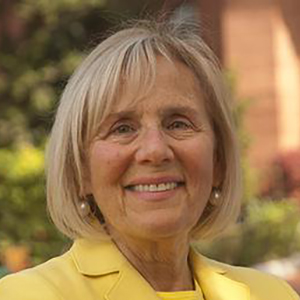
Evelyn Lieberman
My name is Evelyn Lieberman. I am director of communications and public affairs at the Smithsonian Institution.
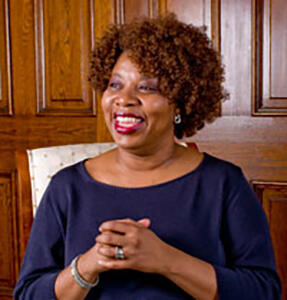
Margaret Williams
I am Maggie Williams and I am a partner in GriffinWilliams, a management consulting firm.
Darby Morrisroe
I’m Darby Morrisroe, I’m an assistant professor with the Presidential Oral History program.
MaryAnne Borrelli
MaryAnne Borrelli, associate professor of government at Connecticut College.
Jill Abraham
I’m Jill Abraham. I’m a researcher here at the Miller Center.
Riley
I reminded Maggie before we got started that I had a telephone conversation with her a couple of years ago in which she indicated she felt confident that people who had worked with President Clinton would be very eager to participate in our program because of concerns about record keeping and making documents during the course of the White House. I thought maybe before we got into the biography, I’d ask you about that and see if you couldn’t tell us a little about your perceptions of that issue and therefore the value of getting oral recollections from this administration.
Williams
Very early on in the Clinton administration, there was a point in ’94 when we had several Cabinet members under subpoena, special counsel scrutiny, and there was a sense that everything that was written or everything that was talked about would somehow end up in court, before Congress, or something. Very early on this was a sense. We didn’t know that it would haunt us the entire time. But very early on those of us who had some concern about keeping records of the administration and what it did were concerned about it because we weren’t keeping notes.
After ’94, when there were so many people under subpoena, you could never speak to anybody about anything. You couldn’t even reflect on the situation and what it was like to work in an institution that was under siege, which would have been a pretty useful conversation. We were always concerned about the history part. Many of us in the Clinton administration felt that the way we deliberated, as a group, on many issues—it would have been worth it to have those conversations because the deliberations were so fascinating. Even as someone listening to them, because you had a part in the discussion or some responsibility to pay attention. But if you ever got outside of yourself, you’d think, My God, this is some of the most fascinating stuff I’ve ever heard. Wow, why are we talking about it like this? I never once thought about it like this.
But all of that seemed to get lost. So when we had our discussion, I thought people would be eager because we felt we couldn’t ever write anything or discuss anything or—there was no way to preserve what we thought was the right recipe for policy making in that administration. We felt very much at a loss about it.
Lieberman
I’ll give you an illustration. I learned very early on as press secretary that you never say anything or write anything that you don’t want to see on the front page of the New York Times. This is early paranoia for all the obvious reasons. All the time in the White House I never wrote anything, just didn’t. You’d be hard-pressed to find an email or anything, just because, as Maggie says, we became concerned very early on.
When I became Deputy Chief of Staff, I was overseeing scheduling. I think Stephanie Streett was the scheduler at the time. They were trying to schedule these very famous fund-raising coffees if you remember. She said, “Harold [Ickes] and Leon [Panetta] are giving us—we’re having a hard time, you need to write something. Just write a draft to them that supports our efforts and what we’re trying to do.” I said, “I don’t do that.” They said, “Look, you have to support us, you have to show the flag.” And I love these girls. That’s the other thing. You get very close to the people you’re working with, for all the obvious reasons.
I said, “Okay, draft something from me. But stamp ‘DRAFT’ all over it.” They did and I gave it to Leon and Harold. Now, for me to give them a memo was ridiculous. I’d talk to them 20 times a day. So I did and that was the end of that and whatever happened happened. Of course two weeks after I left the White House I was on vacation in Florida and I got a call from Cheryl Mills. She said, “Did you see the paper today?” Of course, there’s this one memo I wrote splashed all over the Times. I was out of the White House by that time, but it made everybody there even more reluctant to write things down.
Williams
Without interpretation and without context. It’s pretty interesting now as, I don’t know if there’s a Microsoft program that can erase your draft. A couple of months ago I had circulated to me this whole thing about how to get rid of your drafts, because having a draft—your initial thoughts were as bad as your final conclusions. If you ever thought this and you ended up with a different final product, your motives were as suspect as if the draft stood.
So in our White House, the idea that you would write anything just became crazy. We couldn’t record really interesting things like our own internal debate about whether or not Hillary Clinton went to the women’s conference in Beijing during the Harry Wu issue, which was a fascinating debate. But we wouldn’t dare record it. So we felt people would be interested in doing this.
Riley
You were certainly right. We’ve gotten an enormous degree of cooperation from people. We’ve heard basically the same story throughout with just a few exceptions.
Did you come into the White House with that fear? You said you’d had some experience working with the press before. I’m wondering if it’s something that was on-the-job training, maybe you weren’t attentive to it early and then because of the experience you come to—
Lieberman
When you’re in the press business, as both Maggie and I were, that’s Press 101.
Williams
But the degree. It’s one thing to get it in the New York Times, but your threshold of what bothers you totally changes. So getting it in the New York Times or the Washington Post almost starts to be secondary in terms of having it lead to another inquiry by a special counsel. I think the paranoia about writing things—and people would say jokingly, “This would have been great if we could write it down.”
Lieberman
It got to the point where it was ridiculous. If you look at any White House, that’s the first draft of history, the things you produce there.
Riley
That, of course, is of great concern to people—scholars, historians, and political scientists—who are accustomed to looking at a written record as the source of information, and the great concern is that that’s not going to be there in this case. That’s why we do what we do.
Lieberman
But the other thing is, and obviously we’ve talked about this a lot, the price we pay for not talking to the press, which neither of us has done, or cooperating with any of the books that have been written, is that it’s everybody else’s history or everybody else’s take that gets written. What I said to you before when we were talking about mistakes that I’ve seen in articles or in books, and occasionally I would call my lawyer and say, “Wait a minute, this is—” He’d say, “Okay, I’ll call them. Are you ready to tell the real story?” “No, it’s none of their business.” He’d say, “Well, okay then, that’s the end of it.”
A lot of things out there have a different slant than what is necessarily the truth. I know they are other people’s perspectives, and everybody tells their own history in a way that makes them look better. I understand all of that. But the other sadness, I was going to say the other irony, it’s not as much an irony, because of what happened in the White House with the President about things that people would never have believed could happen, people now believe anything. So if you can believe that, well, what’s wrong with some of these other things we’re hearing?
Sometimes we’re so shocked by what we hear, the stuff that gets out in the ether, that this becomes the reality because we don’t want to tell. I don’t want to tell, Maggie doesn’t want to tell. A lot of people who are in that don’t want to open the door to talk about things that, frankly, in many cases are not anybody’s business. I’m not talking about for historical record, for all that. I’m talking about a lot of personal things that are just that: personal things.
So you live with a lot of “Do you believe this?” There’s a lot of calling back and forth. “Do you believe this?” But there’s nothing to do about it, nothing to be done about it.
Riley
Maggie, did you use email?
Williams
Not at all, not once. I think every couple of months my assistant would come in and delete everyone who had written me anything because I never read it. I just took the philosophy that if it was really important, someone would come and have a conversation with me. Otherwise, I would have totally missed it.
Riley
And Evelyn, you said you didn’t use email.
Lieberman
Remember, in ’92, it was just the cusp of—especially when I was in Maggie’s office. Maggie would draft. But we shared an office. And my Aunt Ida always used to say, “Get up, walk around sometimes during the day. If you’re not sitting on your behind all the time, you get a little bit of exercise.” So I would get up and walk into somebody else’s office. Also because I didn’t want a piece of paper extant either, even then. But it was less noteworthy than it may be now, because not everybody used it.
Riley
Sure. Did the counsels or lawyers have conversations with you about this or was this just street smarts about the record-keeping business?
Williams
No, not in the beginning.
Lieberman
No, they would have. When you came to the White House you had ethics training. It was not even ethics training, it was just things that show why being in the White House was different. They would say things to you like, “When you’re outside, put your badge in your pocket.” “Even casual conversations in restaurants are overheard.” Things like that. Then of course they talked about gifts and tickets and things like that.
But one thing that is so interesting is that we became quick to understand— Now, Maggie and I were friends before we came in so it was much easier. We always said to each other, “Whoever we take away from here, be very nice.” If we find somebody who is—but we remembered where we were. It’s a unique society, but it led us quickly to understand why cops hang around together and can talk only to each other. Not only because of the confidentiality, but because nobody would understand. There is no way to explain some of the things that go on. There’s a different language, a different schedule. You don’t have time to do anything. So the circle becomes smaller and smaller. But what can be said becomes less and less.
Abraham
Did you turn anything over to the archives?
Williams
Yes.
Abraham
What kinds of things would you turn over to them, what will be in the Maggie Williams or Evelyn Lieberman papers? Are these important or useful things?
Williams
Are they important or useful? Yes, we did turn over. We had so much paper in our office and so many requests. There’s all kinds of stuff like that, responding to people, responding to constituents, responding to friends. Trying to explain some things to people. There’s lots and lots of correspondence like that.
There’s also our own set of—this is the thing I found most fascinating when we got to the subpoenas. If we kept a newspaper clip it was required to be turned over because it would give some indication as to—I don’t know.
Lieberman
Your interests.
Williams
Your interests or whatever. In a way it’s criminalization of the institution. But every single thing. So there will be stuff that’s related to special events. There may be healthcare memos, organizing memos. Half of my life was around organizing and managing. There’s that kind of stuff, how should we be doing this, what should the procedures be, what is the process for this? Probably what is still in there is anything that was ever subpoenaed from me. What’s public record anyway is back in that box. But I wouldn’t spend a lot of time.
Abraham
Do you think your papers would reflect what was going on in the administration or give a—
Williams
I think they might be reflective of the issues that were before us because the issue work in the Clinton White House, for all of us, was the thing. The view of the President was that the rest of this was distractions. We had a long road way before we got to Monica [Lewinsky]. It’s fascinating to me, because I was out of the country during this period, that what I thought of as Whitewater was all of the Cabinet Secretaries and all of the staff, all of the issues from Travelgate to all those gates.
But running parallel was that the work never stops. It was not unusual to get up in the morning, go to a grand jury, and then come in and start doing your work. I assume that some people who have the grand jury experience get to go out and have a couple of drinks. But we would go right back to work. I remember once getting out of my car and the President was coming down from the Old Executive Office [Building; OEOB]. He said to me, “Are you just getting here?” I was like, “Excuse me! Don’t even come at me. I’m sorry, I had a grand jury today.”
His attitude was, “Okay, now you’re here.” I’m like, Is he living on the same planet? But I think the papers would be somewhat reflective of what policies, what was happening, because there’d be schedules and there probably would be give-and-take about some of those things. But more procedural than anything.
Riley
Let’s go back to the period of the Children’s Defense Fund [CDF]. Is that when the two of you first got to know one another and I’m assuming that your exposure to the Clintons also first came?
Williams
You go back the furthest with them.
Riley
Is that right? Evelyn, let’s go back to your—
Lieberman
I started in the Children’s Defense Fund in 1981. Hillary was chairman of the board then and that’s how I knew her. I think in ’83 or ’84, I don’t remember, Maggie was working in ’83 for the Center on Budget and Policy Priorities. The reason I tell you that is that they convened a meeting for all the bleeding heart groups, all the nonprofits, because they had a great idea. They were going to start a radio program. At the meeting, there were six or seven or eight of us, and Maggie made a presentation. People were talking. I had never seen her before.
At the end of the meeting I said, “Why don’t you come and talk to me? I’d like to see you.” A couple of days later she came to see me at the Children’s Defense Fund and she started to give me this pitch about the radio. I said, “Are you kidding? I wouldn’t give [Robert] Greenstein a penny.”
Williams
We’re going to have to take that out.
Lieberman
I like him. I said, “I wouldn’t give him five cents. I have my own budget.” She looked at me and she said, “Hmm, then what did you call me here for?” I said, “Why don’t you come and work for us? We’re doing a teen pregnancy project, it’s a stand-alone project. You don’t have to do any of the other things. You don’t need the press work or anything else, just go and take that.” She thought about it. Then when we saw—I had been flipping through a book of ads. Every year you get an annual, who gets the Clio awards. There was one ad I just loved. It was a picture of a lot of headstones with all the rock stars’ names, and in the middle, it said, “Use drugs and you too could have a monument built to your name.”
So I said to Maggie, “Go talk to these people.” It was a firm in Minneapolis. She said, “Who are they?” I said, “I haven’t got a clue. You need to tell them you want them to work for us and that we have no money, we can’t pay them.” She said okay. She called them, they were very resistant. Finally, just to get Maggie off his neck, this guy said, “Okay, I’m passing through, I have a one-hour stopover in Washington on my way back to Minneapolis” from wherever he was. Maggie came back from the meeting and she said, “Okay, they’re doing it.” So it took her one hour to get these people. I think in the end they gave us $4 or $5 million worth of free work, and that’s how we met each other. Me saying, “Oh, go do this,” as if it were nothing, and Maggie coming back and delivering. That’s when we became friends.
Riley
Is that your story too, Maggie?
Williams
I’m sticking with it.
Riley
You said you had known Mrs. Clinton in advance of this?
Lieberman
Yes, because Maggie didn’t come to Children’s Defense Fund until ’84 and of course we used to sit in on board meetings. That’s how I met Hillary because senior staff used to sit in on the board meetings. You get to know people. Donna Shalala was also on the board then.
Riley
Did you know anything about her husband at the time?
Lieberman
I knew he was Governor. Had he become Governor again? I don’t remember the years.
Riley
Eighty-two.
Lieberman
But I didn’t meet him—we went to that meeting, maybe it was ’87. I didn’t know him, but Marian [Wright Edelman] and Hillary and the President were very good friends for a very long time. When we were doing state work Hillary was always, of course, in Arkansas doing a lot of the child health and childcare and all of that and was an advocate even before then. I think she was doing the Governors Education Project as well. So it’s just by association. You chat with people, you become friendly with people. Once in a while Marian would say, “Oh, Hillary’s coming. Would you pick her up at the airport?” You get a chance to know people.
Riley
Did you have any perceptions of her at the time as somebody who was particularly set aside as being—
Williams
Loyal.
Lieberman
And she supported the staff.
Riley
Is that right?
Williams
Always supported the staff.
Lieberman
Right, she was very good about things like that. She appreciated the staff. She was one of the very few people I met, not unlike Marian Edelman who was the personification of hard-nosed advocate, doing what’s right, and believing, as so few people do, that her actions could absolutely make a difference for how people—in this case kids—live their lives or were enabled to live their lives. This was an eye-opener to me, even though I had come from the National Urban Coalition. I had come from a lot of these, this was a civil rights group, the urban group. But these were two of the most determined, tenacious women, convinced of the rightness of their ways. Not unlike my grandma, my mom. You can do whatever it takes. In many ways, Marian and Hillary, more Marian because we were with her day to day, made us understand that what we did really made a difference and not only that, you had a responsibility to do it. I don’t care how scared you were or how nervous you were.
Williams
Hillary did this one thing for me, which I will always remember, because this project on teen pregnancy, while Evelyn and Marian had accepted it, the rest of the Children’s Defense Fund staff thought it was a bunch of malarkey because they were researchers, they were attorneys. Here we were asking for and getting money to run an advertising campaign around teen pregnancy. In those days, no foundation paid you anything to do this kind of work.
I remember sitting at a board meeting where I had to make a presentation of some very graphic ads that we thought were—for the kids they tested well. That was our target. Our board was totally freaked out by these ads and the idea that we would be using them. At the time Hillary was the chair and she said, “Wait a minute. What is our purpose? These are not ads to get us to change our minds, these are ads to get kids to change their minds.” She was 100 percent more eloquent than I could have been. Incredibly forceful about getting to the core of this issue.
First of all, I felt that I had been totally saved from this board of all—every board member we had at the time was a star. Henry Hampton from Eyes on the Prize, Dr. Dorothy Height. You have this really intense group of people who basically have said that what you’ve worked on for the last couple of months is trash. She just stepped up. As a staff person obviously I was eternally grateful, but she also made such a decisive argument about it. It was a set of arguments I later adopted myself in trying to sell this project.
That was my first face-to-face and I knew her husband was the Governor of a state, but he was truly known to us as Hillary’s husband. That’s how I thought of him.
Lieberman
All of us did.
Williams
He’d be coming to pick her up, or they would come to do work together. We would say, “Oh, Hillary’s husband is picking her up.” She was our focus.
Riley
Did it strike you as odd that this woman was coming out of Arkansas with this kind of forceful personality and liberal—
Lieberman
She wasn’t coming out of Arkansas.
Riley
Okay.
Lieberman
She was coming from Illinois via Wellesley via Yale, where she worked for Marian.
Williams
She had all this other history. It was just by fate of marriage that she was in another state.
Morrisroe
But it is something important that she would take public advocacy positions when you have a political husband in the South.
Williams
In retrospect, in context, yes. But at that time—
Lieberman
In our ignorance.
Williams
Yes, our ignorance.
Lieberman
We thought it was the most natural thing.
Williams
Right, it was, and she was even then wearing a headband is the other thing that struck me. It was a perception, it was a part of a whole perception we had of her. I have one other striking memory, and it’s almost my favorite one.
The Children’s Defense Fund had a huge conference every year at the Hilton or someplace, and these things would wear us out for a few days. I think this may have been my first conference. At the end of it someone said to me, “Hillary is having a party after the conference in her suite.” I thought, Oh, this is a good idea. I remember getting up there, knocking on the door, going in the suite, and there was a group of people sitting on chairs and on the floor having a discussion about some policy. I of course thought, Oh, this can’t be the party, this is not really, and I just remember—
Riley
There was no music.
Williams
There was no music, there was no nothing except people in earnest. I remember Peter Edelman was there. I don’t know if Marian had been up yet, but Hillary was there and that’s the first time I half focused on Governor Clinton being there. Other people were there, clearly having a public policy discussion. I remember going outside again to look at the number and then going back in and thinking, This is like no other party I’ve ever seen.
Years later, in telling Hillary, I thought, This is the Clinton idea of a party. It always stuck with me because in a lot of ways, it was their idea of a party.
Lieberman
Exactly. For both Hillary and Marian having a good time means doing exactly that. It got to the point when Marian would say to us sometimes, “Come for dinner, we’re going to have a few people over. It’s really going to be fun.” The two of us would do it almost automatically, “Please don’t make me.” Because we knew.
Williams
That was the first sense I had about how this whole—the discussion of public policy problems was clearly an ongoing discussion for these two people and their circle of friends in a way I had not encountered even though I had lived in Washington for a while. I mean, a party was still a party. This was how they used their time. It was so symbolic for me when we were in the administration and you would be in a healthcare discussion, I would always think, This is their idea of a party, and it was, it truly was.
Morrisroe
What were your impressions of then Governor Clinton on that occasion?
Williams
I feel so awful that I paid no attention to him. I wasn’t overly blown away. He seemed smart but I expected her to be with someone smart. For me, she was the focus. I had a personal relationship, and she actually was quite fun outside of the—she was somebody who could tell a joke, she’s pretty raucous. She was really my connection. I never fully connected with him until, my gosh, I was watching the campaign on television. I was one of the last people to join the campaign. I held out because I actually thought Mario Cuomo was going to run. I was in graduate school and I thought if I did anything, I’d probably work for Mario Cuomo. So I followed the campaign, and I could sense excitement about the campaign and I was watching it on television as an interested observer.
It wasn’t until I was actually in Arkansas in the last three months of the campaign that I was at the Governor’s mansion and opened the kitchen door. He was sitting on a stool watching television and eating, and I was like, oh, wow, this is the President. But he came into focus for me very late.
Riley
Was Mrs. Clinton’s influence within the Children’s Defense Fund, to your mind, primarily a function of the power of her own intellect and personality, or was some of this also attributable to the fact that she was a close friend with Marian?
Lieberman
I think both.
Williams
Both.
Lieberman
This was not a rubber stamp board by any means. They were hand picked by Marian. They were all of like mind obviously. Some of them were there for different reasons. Some of them were people with money, although less so at that time. They were much more policy people. Now it’s different. But there the discussions were substantive and smart and much different from any discussion I’ve seen almost anywhere outside of this group of people. Hillary was, of course, the chair, but everybody was very engaged.
Williams
There were no slouches on the board. You have Donna Shalala, you have all these people on this board. For someone who was working around the edges of advocacy in a way, it was to me how one might use—there was a real intellectual core. It wasn’t just advocacy based on feelings—this emotional thing, which I’d been more used to. It was a really intellectual core. How to think about these things and how to solve complex problems. It was a very complex place for an advocacy group.
Lieberman
It was the first time any group had drawn attention—I disparagingly referred to Greenstein before, the Center for Budget and Policy Priorities. I didn’t mean it—we were competitive organizations.
Riley
Oh, it’s going to be years before this is seen.
Lieberman
It’s nothing I haven’t told him myself, I assure you. But it was the first time anybody had used the budget as a tool for helping people understand the budget process and what it meant for kids. This was a huge undertaking. By the end of February, whenever this book came out, we called it the Green Book, we would all be lying on the floor exhausted. But it’s a publication that in the first I would say five years, the most incredible coverage and attention because nobody had ever done this before.
We also had one genius on the staff who Marian said would be the last person standing. We would all be fired as long as Paul Smith remained because he was able to take the most arcane information and make it relevant to kids’ lives. He used to do the same thing with the census. It was those statistics that we used to make our argument, because if you could bring it down to people’s pocketbooks and to one kid that people could understand, of course you make a much more compelling argument.
We learned at the feet of the master how you tell your message, how you give a story. We knew the process when we came in, we knew how to do press. Maggie more politically than I, but then we learned how to not just get a story but how to get a story turned into action, which was quite the education.
Riley
The budget is an important issue at this time. This is the [Ronald] Reagan period when money that had not been a problem in previous administrations, now they’re doing things to the budget that had not been done. Do you recall having discussions about Presidential politics and whether you’re going to be able to get this turned around at some point in the future? What were your own perceptions and commitments with respect to Presidential politics during the 1980s?
Williams
I had worked for Jimmy Carter in Chicago. I’d always been surprised that Reagan got elected. At the time I was very surprised, because I couldn’t really figure out what his philosophy was. I could never get to what his philosophy was. I felt he was a very optimistic person and that by comparison to Jimmy Carter, he was just so optimistic. But I thought Jimmy Carter was always a practical person. I just thought it would be practical. So I was very surprised by the election of Reagan. I thought what he sold was optimism. It was the first time I’d ever thought about optimism as a product that could get you elected. Because I couldn’t be clear about the policy agenda.
I do remember that this was a strategic movement to the budget because the Children’s Defense Fund earlier had been made up of—you know more about this—lawyers. There were lots of lawyers. It was like a huge advocacy law firm. There was a different bent to how they did things. This move to the budget because of the attacks on the budget and the destruction of what Marian and Hillary considered the framework wasn’t even so much getting the money in, it was the framework piece of it that concerned people.
So it was a strategic shift to the budget. That’s where I think this thinking person’s advocacy movement was. But I remember hearing Marian talk about holding on to the framework, if not the money.
Lieberman
Also we were a 501(c)3 so we were very limited in what we could do as far as lobbying. However, we were not limited in what we could do with education. I keep pointing to the work on this document because that was the product that came out of all this. It was such an amazing document, it was the first time Members of Congress had seen anything done like this, and they were very anxious to use this also. It was what lobbyists do. It was literally an education tool.
But Marian was very smart in that she felt you keep your friends close, your enemies closer. She formed great friendships with the likes of Orrin Hatch, people who were natural opponents, but tried to show why these issues were important to all of them. They helped us. You know we always said laughingly that it was much easier to get things done during the Reagan administration when it was clear who our enemies, for want of a better word, were.
Even though we weren’t allowed to do lobbying, we had a very strong government affairs office and members from both parties would call us.
Williams
Yes, it was big on both parties.
Lieberman
To ask us how to interpret things for their state. The first year it was just the federal budget, and then we did a state-by-state breakout. So not only did we have the national coverage we wanted, we would constantly get calls from reporters who, of course, were based in Washington, but they were stringers and they wanted to localize things. Washington, of course, has huge bureaus of other newspapers. So the press kept going and going. Because of that we were able to form state advocacy groups to work on some of these issues because people saw how it became relevant to them.
Marian was very smart because she would always say, “Let’s do childcare because all kids need childcare and middle-class moms are really interested in this.” She would take issues like prenatal care and childcare, which of course were of interest to white women, and then all the poor kids and the black kids were brought in under this rubric. But Marian understood, as did Hillary, that if they were going to get people to act on things, they could not make this a poor or black issue. Poor, black, please, who’s interested? But if you made it about something that white people were concerned about, these issues were going to get much more traction, and they did.
Riley
You were proscribed from doing anything official politically, but did you—
Lieberman
Cheat? No.
Riley
But were you personally involved in, say, the ’88 Presidential campaign?
Lieberman
No, when Maggie came on, she said to me—
Williams
Who was it in ’88?
Lieberman
Who was ’88? [Michael] Dukakis.
Williams
I was so not involved in that.
Lieberman
But when Maggie came on, one of the stipulations of her employment was that she go to the Democratic Convention because she always worked that and on the midterm. Why don’t you talk about that?
Williams
Yes, I was always working the conventions in some way, usually in some kind of management area. I was always doing the conventions.
Borrelli
Both parties?
Williams
No. Democratic Party, although I did go as an observer to the Republican Party. When you work in politics over time, you’re not just on the policy side, there’s a certain professionalism that exists between the parties. One of the things that was often done is we would go to each other’s conventions to look at how security was being run, how the stage was set up. You’re always exchanging ideas at a technical level. The least partisan people tended to be at a technical level in politics. I was going to say, even my last year at the IOP, the Institute of Politics, where, once again, all your practitioners come, right? So you’re sitting there with Ken Mellman and you’re out with all the [George H. W.] Bush techies and pollsters. You all say, “God, we would have used the lifestyle data this way if we had done it.” It really is an opportunity, at those kinds of levels, where there’s still a degree of nonpartisanship that allows people to talk about the evolving techniques.
So I was also on the technical side of the conventions, which turned out to be actually much more political than one can imagine. I was taking time off.
Riley
You went in ’84?
Williams
I went in ’80, I went to ’84. In ’80 I was actually at the DNC [Democratic National Committee]. In ’79-’80 I was at the DNC in the press. Then in ’82 I did a midterm in Philadelphia. Then in ’82 I did [Robert] Torricelli’s first campaign.
Lieberman
That was before CDF.
Williams
Before CDF. In ’84 I did a convention. Yes, I went to a fair number of them.
Borrelli
You all are working with Mrs. Clinton in the ’80s on children’s issues, and during this time she of course has a young child. Did you have any perceptions of Hillary Clinton as a mother during this period? Did you ever meet Chelsea [Clinton] at all?
Williams
I really didn’t come to know Chelsea until the campaign. I’d heard about Chelsea. Chelsea, Chelsea, Chelsea, from Hillary and also from Marian who had three kids. They were both concerned about each other’s kids and what they were doing. Marian, of course, as the older person, was always offering advice, but I didn’t even come to know Chelsea until the ’92 campaign.
Borrelli
Did you ever think that Hillary Clinton or Marian Wright Edelman were bringing their own experiences as mothers of young children to bear on their work at the CDF?
Williams
Absolutely.
Lieberman
Of course.
Borrelli
Can you give us any examples?
Williams
I don’t know if it was an original thought with Hillary or whether she picked it up from Marian, but they both would talk about “what I would want for my children I would want for other children.” There was a constant refrain, “I wouldn’t just take care of my child’s physical health and not care about the education.” They used stories about their own children to talk about children in general. It was moving from the specific to the general. I have every belief that they did. I think Hillary’s book, It Takes a Village, is clearly a lot of her own philosophy about what worked and what didn’t.
I always had this feeling that there are some things that after she became a mother she thought, Oh, this works all right. But that book, in my view, is so full of her experience as a parent, it runs so parallel to her policy prescriptions. She talks about the nurse, and still being able to be in contact with the hospital after a child is born and what that meant. Having these in-home nurse visits. It was so clearly tied in that. It’s almost a perfect parallel to what she found out.
Borrelli
I’m just curious because the usual CEO is very distanced from the staff, and oftentimes the head of the organization is taking great care to make sure that that distance is sustained. You’re describing a pattern of communication that was frequent, and it sounds as if it wasn’t even collegial, it was friendly, it went beyond being collegial in other words. We’ve talked about the CDF work in the context of the political time and her policy actions. How do you see CDF as fitting into Hillary Clinton’s political development? She pulled so many people out of her CDF network later, was this— I’m not suggesting that she was milking it, that’s not what I’m saying. Was she at a point in her political socialization where she was looking for a network and in return was she also giving and building a network?
Williams
She had a huge network when she got there.
Lieberman
I would say no, and I’ll say this for a number of reasons. The kind of work we were being asked to do was so intense and a lot of it so new. CDF has grown so much and is a totally different institution from what it was in the early ’80s. It was almost as if we “band of brothers,” we few, it was so personal and so intense, the kinds of things you had to do to make this thing work, that if you weren’t like-minded and trusting each other and really caring about each other, it was not going to get done. Of all the places we’ve ever been, including Hillaryland, which was pretty personal, it was the most personal. Marian knew that in order to get from this group what she wanted, she had to be part of this group. One of the things I tried to do when I came in was to get her to be more as you describe, more of the typical CEO, not involved in the day-to-day as much.
Borrelli
This is Hillary.
Lieberman
No, I’m talking about Marian now. Go make speeches, go raise money. But she was intensely involved in the day-to-day. A lot of the reason Hillary was brought in was that she and Marian had had this same relationship from working on things, it was at Yale—
Williams
When CDF was in Boston.
Lieberman
It was something else, it wasn’t called CDF.
Williams
It was called something else, but it started in Boston where Marian and Peter both were.
Lieberman
You can’t do the things that we were asked to do, it was a mission, it was a calling. You didn’t go to work saying, “Oh, I came here at quarter to eight, I can leave at a quarter to five.” It was nothing like that. So Hillary was doing what she had been doing with Marian way prior to coming. They had the same philosophy and the same understanding, and they brought in people who were like-minded people because of what they wanted to get done.
So I don’t think Hillary was— First of all, wherever she went, Hillary still has her friends from high school.
Williams
I was going to say, these people keep their friends. I do tend to be extremely cynical having been in politics for so long, and when I first went there, I was extremely cynical. Even as I went to work on the Clinton campaign, all this “Friends of Bill” and “Friends of Hillary,” these FOBs and FOHs, I just thought this is—
Lieberman
Please, yes.
Williams
In fact, these people kept their friends from all parts of their lives. Really kept them. Their network was an extraordinary network of people. It’s a thing I can’t ever quite get over.
I don’t know if part of it has to do with the times in which they lived. They were people who were much more political, because of either the Vietnam War or the civil rights movement, and these were the people whom they captured as their friends. But I can tell you three of Hillary’s high school friends right now, and these people are still in communication. I could go to Hillary’s house and she would say, “I was just talking to Betsy [Johnson Ebeling].” So she came with a network that was Yale Law School, Yale Child Development Center, Boston, Wellesley—
Lieberman
Park Ridge, was that the name of it?
Williams
Yes, Chicago. She came fully loaded with a network.
Riley
Just to be clear about this, you said you had a cynical view of these people collecting a network?
Lieberman
No, this was later, not at CDF.
Williams
Not at CDF.
Lieberman
Maggie is talking about the campaign.
Williams
At the campaign, when people would say they’re an FOB, they’re an FOH, it just seemed so rah, rah to me. But it was rah, rah. Right then it was real rah, rah.
Lieberman
It was sincere rah, rah. The Arkansas travelers.
Williams
Yes, the Arkansas. You just sit and see those connections. But if you took Hillary’s Arkansas connections, all of her Yale, Wellesley, Park Ridge connections and then you added them to Marian Edelman’s connections, you would end up with Andy Young and Johnnetta Coles and Henry Hampton, Dr. [Robert] Coles at Harvard and Robert Moses. You started to have this incredible network.
Hillary had her network, and Marian had another kind of network. Marian was absolutely the most generous person with anyone she knew. It was, “Call this person, he can help you get the job done.” You call that person and you’re thinking, How can I be calling this person? But she had an incredible network and she was generous with it. You could see, in the CDF board and the CDF retreats and the CDF events, and with Hillary as the head of that board, there was a spiraling out and there was a lot of press element. You’d see a lot of press element.
Borrelli
That also means you have a situation in which the leader of the organization is also accepting of the CEO coming in and being a part of the organization and not just a visitor who consults periodically.
Lieberman
You’re making it sound typically hierarchical, appropriately hierarchical. It was so not that. When I went to CDF in 1981, we were in a townhouse, 1528 New Hampshire Avenue. You would not believe this place. We are talking dump. There maybe were 20 of us in this organization. I was so thrilled that I had a window in my office. It had been a closet and someone just put a shelf in there and I used it as a desk. I hate to use this word because I know how it sounds, but it was much more familial, it was much more of a family than it was a real organization.
Marian was there every day when she wasn’t traveling. Mind you, she had three young kids. If she didn’t have somebody to watch the kids and we needed to have a meeting, we would do something at the house. It was really everybody in everybody else’s lives. Hillary was never brought in as what you see as a typical chairman. It was a natural extension of the things they had been doing for the last ten years. CDF was just a continuation of that.
Williams
If you look at advocacy organizations, especially ones that start small and then expand, they really do start as mom-and-pop shops, right? You get a few people who are interested. This was the super expansion of the super mom-and-pop shop in a lot of ways. It would just be mind boggling that you would say, “We need to get some person to come and do this for us.” Then Marian would pull down somebody and it would be Coretta Scott King, and you think—but that was her reach, that was from all of her work.
She knew the Kennedys very well. This was from her times in Mississippi. She had this big thing. Hillary had her big thing and then there was a lot of co-mingling—not to mention what we later learned was Bill Clinton’s big thing—of networks.
Borrelli
From the story you gave earlier of the rock stars and “you too can have a monument,” it seems it also bred a certain style of networking that would, as you were saying, spiral upward.
Lieberman
But there was nobody Marian didn’t know. If she didn’t know them, she would know them. Marian was the first black woman to pass the Mississippi Bar. She’s very smart, very charismatic. I remember when she used to go on television and hold up the Green Book, we would cringe because she would do all these statistics. First of all it’s seven o’clock in the morning, you’re on the Today Show. Nobody is looking at you because you’re black, nobody is looking at you because you’re a woman, nobody is looking at you because you’re talking a thousand miles a minute. So by the time she’s off, it takes people ten seconds to adjust that first they’re looking at what you look like, then they’ll listen to you, and who wants to hear that in the morning? But she could talk to anybody. She could convince anybody of anything.
She wrote a proposal for foundations like—nobody has ever been able to write like Marian, the good news and the bad news. Because until 15 minutes before we went to press, we were editing this stupid book because she kept making changes. She was a brilliant writer. But everybody loved her for the same reason we loved her. This is a woman who lived her life to do right. For the right reasons. But she had other strong, smart parts of her life. She opened up her life to you. We knew her family. It’s an experience that formed us in many ways, and we weren’t kids then. But to see the example she set, and the people around her were all infused with the same— I know we sound like evangelicals, but you can’t imagine what it was like in those days. It was the longest I ever held a job, seven and a half years, at the Children’s Defense Fund. Just because every day was different, and you knew it made a difference whether you came to work in the morning. You can’t say that about a lot of jobs.
Morrisroe
Do you think the nature of CDF as an organization of nonhierarchical, committed individuals, do you think her experience at that organization played a role in how she chose to organize her own staff?
Lieberman
I’m going to let Maggie address this because she did much more of the formation of the individuals, but what I’ll tell you is that that same kind of personal feeling, and that you’re here because you’re a part of something important, was definitely part of Hillaryland in a way it wasn’t a part of the rest of the White House. Why don’t you talk about that?
Williams
When we were thinking about the staff, we had a real sense of purpose. Who would be good at this? When we first started this, we didn’t know we would be doing healthcare. But we knew we would have some role in policy. There was no way she was not going to be involved in at least the children and families side. In that range of issues, from healthcare to education, it could be anything, and we didn’t know what it would be.
So a lot of what she was thinking of was, “Who do you think would really be good at—?” That was the question. Who would be good at doing it? A lot of political hiring goes on where you’ve got to hire this person because you’ve got to hire this person. You probably have it in academia a lot, I’m sure.
Riley
Not as much as we might like.
Williams
But I would have to say with the core of our staff, we were always thinking who would be good at it, even down to our press staff. One of the young women I hired on the press staff, Karen Finney, was a woman I’d met when we did an event at Spelman [College], a campaign event. I just remembered that this woman was smart and outgoing. She was very good with the press. I’d never met her before. We were sitting there and I was saying, “We should get some more young people. We should get some more young people.” We both said we were not going to do this without Melanne [Verveer]. Melanne had to come with us because Melanne had done a lot of church politics, she’d done a lot of policy work, so we were naming all the characteristics of Melanne. I said, “We need some young people. I met this incredible young woman at Spelman. She’s great and she’s smart, let’s try to get her. I think she’d be great doing this.”
So it was really thinking through, it was purpose. We didn’t really know what our purpose would be. I remember the hiring of Ann Stock as social secretary. It was after Ann had been hired, she was totally Chaneled down and we were having a meeting in Arkansas and the President said, “Let me guess which one is the social secretary.” But even Ann brought, she had worked at Bloomingdales. She was a manager, a very creative person. She’d worked in politics. Everything was thinking through who would be really good at this. It wasn’t that far off from how Marian would go through her network. She was always excited about new talent. It was the same with Hillary.
If you told her somebody was really smart and good and did this and did this, that was all you had to say to merit an audience with her because that was what she was looking for. People would now call it, if you looked at Steve Jobs and the Apple people who just did the iPod, you’d think of them as a high performance team. What makes a high performance team? Even though we didn’t have that language, in fact what she was looking for was a high performance team and people who could trust each other. And loyalty. Loyalty and trust.
Riley
We’ll want to spend a significant amount of time on this. Let me see if I can dial back through and follow the chronology. Do you recall speculation about Bill Clinton running for President in ’88 or between ’88 and ’92 where you were?
Williams
I cannot tell you what a blank slate I was on Bill Clinton. He did not figure for me in my politics because he was coming up through the NGA [National Governors Association]. Of course, we saw him give that horrible speech. I’ll never forget feeling so sad in Atlanta. I was in Atlanta watching it on television. The Children’s Defense Fund was going to both of the conventions that year to get people to focus on children as a part of the future and as part of the party platforms. We had a program for each of the conventions. We would stay on the campus of Spelman and that night I was sitting there watching television and saw Bill Clinton giving the speech. I remember thinking, He has to be stopped. It was the most unbelievable thing I’d ever seen in my life in terms of killing yourself politically. It was so horrible. It was the most horrible thing I’d seen. I felt so humiliated and for no reason other than I knew who he was and I knew who his wife was. I just remember that. I never once thought the guy had any real future in politics. Never.
Lieberman
I had left to go to work for [Joseph R.] Joe Biden [Jr.]. So in June of ’88, I’d started with him when he had his aneurysm. Then preparing for him to come back in September, but I think a lot of what I started to do as press secretary was to rehabilitate his reputation from the bad campaign exit, which in retrospect saved his life. But I wasn’t paying attention to that at all.
I don’t even think we went to the convention that year. He was out. He wasn’t there for the first few months I was there. I used to talk to him by phone and we would meet at the house occasionally, but I wasn’t involved at all with this.
Riley
You had left the CDF for good by that time?
Lieberman
Yes, I had left in probably April. I took a few weeks off and then went and worked in June to start in Senator Biden’s office.
Borrelli
I’m just curious about what drove you to grad school. I remember reading in the briefing materials that you were fed up with politics and you wanted— I’m always curious what drives people to grad school.
Lieberman
Maggie’s going to tell you one story. I’m going to tell you the true story.
Borrelli
Okay.
Riley
That’s why you’re here.
Williams
I was fed up with politics. I have to say, I was down on them. I do remember the one thing I left that I’d been thinking about was why do we have to argue so hard with Congress for everybody to have immunizations? How long do we have to do this? It seemed more and more nutty. It seemed to be the same with the press. It was harder and harder to press forward on any of these things that made so much common sense. We’d had an incredible time in childcare. It was one of the hardest-fought things we did about standards in childcare. We used to say there were more standards for the zoos in America than there were for childcare in America. It just seemed so nuts. I was sick of it. I also knew that I would be there until I died if Marian had her way.
In her view this was a fight, no matter how tough and how awful it seemed. She was fed up too. You worked so hard, you spent so much money. We used to call Orrin Hatch our love god. I think his story was that he had a daughter who was recently divorced, and he had a grandchild and childcare was important. He had a complete change of heart about childcare. He fought his colleagues brilliantly on standards and everything. He was the one person we were clinging to and still didn’t get quite what we thought we needed. So I left, one, because it just seemed to get crazier and crazier in Congress, and two, if I didn’t leave, I might be there for the rest of my life.
Lieberman
One of the downsides to working in this kind of group is how could you leave? It’s like a family member departing, so we had to go through—I remember when I got the job with Joe, I called Maggie and I said, “You must come over immediately.” Maggie was already getting restless too. I said, “You must stay for a minimum of six months,” because you weren’t allowed to leave without saying how it was going to work. I said, “After that I don’t care what you do, you just have to give me this window.” So of course when I went to Marian I saw her at the house, and she said, “What do you mean, you’re going to work for Joe Biden? He didn’t do this, this, and this.”
I said, “Marian, I’m going to do this.” And she said, “And who is taking your job?” I said, “Please don’t worry. Maggie is going to do it.” I didn’t say for six months. But Maggie was right, the only way— What would Marian think it was okay to leave for? And the only thing she could come up with short of the ministry—
Williams
Well, the ministry was almost my first choice.
Lieberman
The second was going to school. “If I go to school it can only help you.” So to Marian, that’s how ridiculous it was when you had to—we exaggerate, but not by much. The other thing you need to know when you work for Marian Edelman, you never don’t work for Marian Edelman. To date.
Williams
There’s a lot of that.
Riley
You went to Penn [University of Pennsylvania]?
Williams
I went to Penn. A very good person I had once hired at a convention had become the dean of the Annenberg School [for Communication], Kathleen Hall Jamieson. Kathleen had been trying to get me into graduate school since she had been in Texas, then Maryland, and then Penn. I was ready and I thought Annenberg sounded like a good place. I got there and I really loved it.
Borrelli
Were you thinking of an academic career at this point?
Williams
Yes, very much so. I had finished the master’s program and been accepted into the PhD program at Annenberg. In good faith I had taken the extra stat courses to get them out of the way early. I’d already been through one stat, had taken another stat. I was so excited that I had gotten rid of the things I hated most going into the PhD program. I really liked it and I had been teaching, so the whole thing seemed like a good idea.
Riley
But there are larger developments looming on the horizon.
Williams
After I spent part of my time watching the confirmation of Clarence Thomas with her, she was a press person during the Clarence Thomas confirmation, for Biden.
Lieberman
He was chair of the committee.
Williams
I remember watching that in the summer and thinking, I am so glad I am not—
Lieberman
Maggie called me up one day, I think the first or second day of the hearing, the first day of the hearing, and she said—Ed Lieberman is my husband. She said, “Ed’s out of town, isn’t he?” I said, “How do you know?” She said, “Because he would never let you out of the house wearing that outfit.”
Williams
It was very bad. Other than being a sometime consultant, by watching television, that seemed to be the way to go in politics. So I had had a couple of calls from Hillary where she had left messages and I had—
Riley
Forgive me for interrupting, this is before—
Williams
This is in grad school.
Riley
Before they had announced?
Williams
No, they were in it. I thought, Oh, my God, she can’t possibly be asking me to come and work for them. For Bill Clinton.
Morrisroe
Do you remember when this was?
Williams
I don’t know when it was although I do remember a turning point when I felt more kindly toward her and it was when I saw the cover of U.S. News & World Report, the tea-and-cookies remark. I remember there was this huge, two-page, a big picture of her and then the story about the tea-and-cookies remark. I don’t know if it was hyped on the cover, it must have been, because I remember walking down the street and seeing it, picking it up and turning to the story and saying, “Oh, my God, they do not know this woman.”
Borrelli
This was in March of ’92 and she had, as you know, made two other comments right before then that had received a lot of publicity. And January of course, the buy one, get one free, she of course didn’t make that remark, and then also the Tammy Wynette comment.
Williams
That was in the 60 Minutes deal.
Borrelli
That was also in January. Were you observing those?
Williams
I was totally observing.
Borrelli
What did you think about it at the time?
Williams
It was the U.S. News & World Report that in some ways got me to call her back because I was gratefully missing—you know, calling her and not getting her. But I read that and I was just hysterical because I thought, They just do not understand this person. I remember calling her back and talking to her a little and her telling me she was going to be in Philadelphia and I should come and see her.
I went to see her and we talked a little, mostly about the campaign. But I most remember that she had been to some kind of festival and she’d gotten ribs and wrapped them in tinfoil. She knew I was coming and she pulled these ribs out of her purse. It was like, “They had ribs, I thought you’d be—” I’m from Kansas City, it’s a big rib place, we used to talk about it. I remember having all these good feelings about her. We talked about this remark. She said, “This is what I meant, but I don’t really have the support I need in the campaign. Would you consider coming?” “Not really.”
Then later Susan Thomases called me. I’d known her before the Children’s Defense Fund because she had worked for [William] Bradley. She had been a big advisor.
Riley
Chaired his campaign.
Williams
I had almost worked for Bradley in the Senate long before I went to CDF. So I had known Susan. Susan said, “You’ve got to get down there, she needs help.” Blah, blah, blah. I said, “Why don’t I try and get her some help?” At some point I think I went to the convention for a day, I interviewed some people. Lisa Caputo was hired. Another person, Joyce Kravitz, a friend of mine. I got both of them in sync, they both agreed to go to Arkansas. Later I got Neel Lattimore, whom I had known. I don’t know if it was, I think maybe before. So I felt that I had gotten her three people down on the ground in Arkansas, and I would just return to school and what I was doing.
Riley
Maggie, let me interrupt you. Who was working with her up to this time? Did she have anybody permanently assigned to her?
Williams
Brooke Shearer was traveling with her.
Riley
Family friend.
Williams
She was Strobe Talbott’s wife, which was great because finally somebody was traveling with her. On the ground she had Patti Solis Doyle, who had been her first hire, her first scheduler. I’m trying to think of who else she had, but not much of a press—
Lieberman
Who was Franklin?
Williams
Oh, there was a young woman by the name of Jody Franklin who had done some work for her.
Lieberman
I didn’t know her.
Williams
She was quasi–chief of staff or chief advisor or something. I didn’t know Jody. I actually had worked for Jody’s mother in another life.
Riley
But when she said she didn’t have the kind of support she had, there were people who had come to work but they didn’t have the savvy or—?
Williams
I think she did not expect to have the kind of media attention, so she wasn’t staffed for media attention. That was not where she thought it was going. So Joyce was a communications person, Lisa had been Tim Wirth’s press secretary, and Neel we had known from the DNC, and lots of other communications persons. I think she was really looking for—and then Melanne was in and out doing some work but mostly stayed in Washington, but nobody in Arkansas. The long and short of it is that I ended up going to Arkansas and saying I would go for three months and take off the first semester.
Riley
Did she call you and ask you to do this? Was it in person?
Williams
We had a couple of phone calls where I was saying no. Then of course she sent in her backup, Susan Thomases. And then Melanne. Then when I talked to Kathleen, she said, “You’ll be back, your programs will be interesting, go do it.”
Lieberman
Remember, there was nobody down there who Hillary knew, with the exception of Brooke.
Williams
Yes, Melanne was in D.C., Susan was in New York.
Lieberman
And Brooke wasn’t a close friend. I think the President knew Strobe better than Hillary knew Brooke. There was nobody personally who knew her down there.
Riley
And Brooke was traveling?
Williams
Traveling, and all of a sudden, she was on a different schedule than the President on the campaign, pretty typical. You needed somebody there to talk to some of the people helping. Like a companion, otherwise the woman is just traveling out there, big crowds, advance people on the ground who would be volunteering if anything. So that’s where they were.
Hillary said, “You should come to the convention, you can observe.” I’m thinking, I’ve been to every convention since ’80, I know how they go pretty much. There was so much activity in her office. She addressed different delegations, people were asking for her left and right to come and speak. I barely saw her, and I just focused on trying to get more staff people. After the convention I gave in and said I’d go down for three months, for the end of the campaign, to work on communications basically, to work on press stuff.
Riley
Going into the convention, things didn’t look too good. In the polls, before [Ross] Perot drops out in the middle of the convention, he’s running third in the polls. So you probably weren’t thinking that this was going to work, were you?
Williams
I took the long view. I didn’t know if it would work but I basically—first of all Cuomo dropped out. For my politics that was pretty much where we were.
But from my perspective, I just thought she was getting the short end of the stick, and it seemed to me they were going after her.
Borrelli
You’re talking about the Republican Convention?
Morrisroe
Yes, tell us your observations about the Republican Convention.
Williams
I found it unbelievable that they would pay so much attention to her.
Borrelli
That was the whole family values themed convention?
Williams
Right, and that was early enough where, I had seen enough conventions to know that it was odd, but I knew enough about politics to say that their polling was telling them this was what they had to do because there’d be no reason to just attack this woman. I thought it was so crazy that I was in a way motivated to set the record straight on her to some degree if I could, because I knew her.
So I moved to Little Rock and they were putting people up with all their friends. My first night there I stayed in a motel that all the truck drivers stayed in. Actually my father was a truck driver so I didn’t care. But I had left Philadelphia and I was here in this motel and I kept thinking, This is just crazy. The next day they assigned me to a family, living with strangers. The whole idea of it, it seemed so—
Lieberman
A bit foreign exchange student.
Williams
But that’s the campaign in Arkansas. One of the big things, if you get George [Stephanopoulos] or any of those people who were down there, they will tell you that being in Arkansas was fabulous, because it was extended family in most of Arkansas. People were putting people up because they needed the money. You couldn’t put that money into hotels. You had to put up James Carville. You couldn’t put that money into hotels.
I actually got so lucky with family friends of Hillary. These people had a pool and kind of a Frank Lloyd Wright house. The guy was an architect and they were just great. I walked in and they said, “This is your room, this is your bath, this is your key, and we’re not really going to talk to you.” I thought it was just the best setup. Then we were in the campaign. The way the campaign was laid out was incredible. It was like no campaign I had seen. People will tell you about it, but the geography was everything.
We were all sitting there. On the far end were the President’s scheduling and press people and then there were Tipper’s [Gore] press people and scheduling and then there were Hillary’s and then on the other end were the Al Gore people and we were in this old news building. There were people on the third floor doing research and strategy. The whole communications effort was this one big floor. People would be yelling across, “We can’t make it into Texas. Can you guys make it into Texas?” People would say, “I’ll trade you Texas if you take—” It was the most exhilarating thing I’d ever seen in a campaign. I’d been in a few of them and none of them looked like this.
Morrisroe
Did you find it effective?
Williams
I found it extremely effective. So much so that when they asked me if I wanted to be upstairs where the research people were, and I think George and Gene Sperling was up there, I thought, No, I want to be downstairs because that’s where all the action is. It was the best kind of working thing. Then we set out to think about what was happening with Hillary’s press. A lot of what we did had to do with her not just doing event after event after event that were public events, but we added private events to what she was doing.
Riley
Right after the convention you’re talking about?
Williams
Yes, September. It was just incredible. It was like a fight. From the time the attacks came from the Republican Convention, people were all over her, wanting to know every single thing. Did they live together? Were they married when they lived together? Every kind of personal thing, the peeling back, the peeling back. So the campaign was really, there’s really just not enough time to talk about that campaign, and there are better people who can do that.
Riley
Did you have any piece of the bus tour or did you start after that?
Williams
No, I started after that and watched it. There were televisions all across in the big room. I remember that we had a 7:00 meeting, most people hadn’t gone home before 2 or 3 because wherever they were in the country, you were still on the clock. Marian’s son, Jonah [Edelman], came down to work on the campaign. He actually became my main writer. But it was an incredible campaign and it was a fighting campaign. It was such a smart campaign. It was like nothing I’d ever seen in politics in my time.
Morrisroe
How would you characterize Hillary Clinton as a campaigner? What were her strengths and weaknesses in that arena?
Williams
Never tired, which was the biggest thing you need. Never tired. And the things that were the most interesting to her were the private meetings. We’d go and visit a site, you might go to a childcare center or whatever you do in a campaign. Some people thought this was a mistake, but I think her scheduler was smart and we were very smart. She’d go to a private event where she would sit down behind closed doors and maybe talk to the parents and really talk about what she had just seen, closed to the press, which would freak them out.
On the other hand, she would think, As long as I’m here, I might as well really know about it. When the time is so important, saying that you’re going to give an hour to sit and talk to the nurses at a place. It’s really a big deal. In the White House it became part of her signature, of wanting to really talk to the people. You could never do an event that was just an event without getting underneath it and what was really going on for her.
Riley
This was good for her in the way of helping sustain her through the campaign?
Williams
I always thought it was good for her in helping to sustain her in the campaign. She’s an awfully good campaigner, but I felt she really liked these meetings. She liked talking to these people and she liked learning things. I think in her mind, if she’s going to go all around the country, nearly 50 states, she might as well really talk to some people about the stuff she was interested in.
We never said it was, but I do think it had something to do with what kept her going. She was a great campaigner. She could do a big stem winder of a speech, although people more and more were saying, “She can’t be doing that, that’s for the candidate to do, that’s for Al Gore to do.” But people wanted her to do those. So we were always trying to figure out what was the best mix.
That’s why I say that, if you don’t talk to anybody else from Hillaryland, you must talk to the scheduler because that really is the heart of the politics. This logistics thing is not to be underestimated, the strength of it in this work that we do. All right, so blah, blah, blah, all this stuff happens. We keep going and I won’t go through all the campaign, but then they win.
Riley
I’ve got to stop you and ask you a couple of questions more about the campaign.
Williams
Okay, gladly.
Riley
Blah, blah, blah is too quick for oral history purposes.
Lieberman
Our minds are blah, blah, blah.
Riley
Especially given what happens later, do you find that the First Lady’s operation is well integrated into the overall scope of the campaign or is it the fact that working with Mrs. Clinton makes you in some way a second-class citizen and you’re having to claw and scratch to get the resources you need or—
Williams
Not in the campaign, although there is a hierarchy of need in a campaign. You don’t get the good plane, and you really are taking on what the Presidential candidate can’t get to, and you are the stand-in. Over and over again. There is a hierarchy of need and resources. Although it was clear that the presence she was bringing to the campaign demanded that people start to take it into account. It wasn’t as if we were left all alone to figure out everything she was going to do. Sometimes you’d have George or James or somebody saying, “We think it would be great if Hillary would do this.” Having some real planning for her.
In terms of resources, the resources all went to the President and the Vice President. There was a hierarchy in that way. But in terms of being integrated into the campaign, that geography did so much for us, for integration. I cannot emphasize how much the geography was important to our integration in the campaign. We weren’t off in some little cell, we were right in the heat of what was happening.
Riley
These are two people, Bill and Hillary Clinton, who have a personal relationship and a professional relationship that is very interlinked throughout all their professional lives. Then in the course of a campaign, by design, they have to be apart from each other a great deal. Did that work okay or were there ways that you had to work to make sure that they saw each other X number of times a month or that they talked on the telephone? How did you manage the personal dimension there?
Williams
In the last three months I think people just had to go where they had to go. But there was always the Chelsea factor. The Chelsea factor, for both of them, at least in my last three months, was reason enough that they had to come together and be together. It made sense from that perspective. In the White House, whenever I would walk in in the morning and he wasn’t there, she was on the phone with Bill Clinton, and in the evening, she was on the phone with Bill Clinton. Or she’d be someplace and say, “I have to get off the phone, Bill’s calling.” Or someone would yell across the room, “Bill’s looking for Hillary. Who knows where she is?” They were constantly in communication by phone. I also know that they made efforts, just because Chelsea was there, although they had pretty good coverage in that Hillary’s mom and her father were still alive then. The President’s mother, Virginia [Kelley], everybody—Arkansas was where family was and friends, girlfriends of Chelsea’s, spending nights, all the kinds of stuff that people do. But it was pretty interesting.
So they were in telecommunication. She knew every minute what was going on in the campaign. Al Gore knew every minute what was going on in the campaign. And Tipper knew what was going on in the campaign. It was a real effort, and it was easy because of this geography thing.
Riley
Two more questions. One, do you recall any significant differences of opinion or conflicts between the First Lady’s operation and the Presidential campaign?
Williams
Oh, yes, we could have a difference of opinion with just about anybody. Sometimes it was how long she was going to be in some place, an event we thought should be like this, they thought it should be like this. We were always arguing the details because we were trying to shape it to her. It’s very interesting because you’re going to have people who have done campaigns, done campaigns, done campaigns, and it’s pretty classic how they get done, it’s pretty classic what the spouse does. But clearly people knew for some reason, like I said, I’d only been down there three months, but clearly people knew that we had a say in how it was going to work out.
Some of that I think had to do with Susan Thomases, who ostensibly worked for the President. She was his main scheduler, but she certainly knew how things ought to be working out on our end, and we had very good relations with the Gore people and with Tipper’s people. But we would argue about events and how they looked, and the shape, and who did we forget, were the politics right? You should invite this one. These may be the normal political people, and we’d think how about this person they’d never think of but who would be on our list in that state.
Riley
But nothing that was beyond the level of just tactical deployment of resources.
Williams
It was always clear, as it was in the White House—I guess it was the President who did the buy one, get one free deal—but it was always clear that Bill Clinton was THE PRESIDENT. It was always clear that Bill Clinton was THE CANDIDATE. Even if we disagreed or if Hillary disagreed, the end of it would be, “Those are Bill’s people, this is Bill’s campaign.” It was always clear in an argument around the staff people, his people would prevail. But there was also a common understanding that they just couldn’t blow us off.
Riley
Very good. My other question is a lot more mundane. A lot of us on the outside, if we’re learning about the campaign, one of the natural places to turn is the film that was done, The War Room. I’m curious about your perceptions of that film.
Williams
I was literally there much too late for the war room. By the time I got there, people had long-established relationships. They’d been working this campaign for a hundred years and I basically sailed in at the end of it. I remember the first meeting I went to, there were George and Mandy [Grunwald] and Stan Greenberg, and Hillary said, “This is my friend Maggie and I’m going to try and get her to come, she’s at the Annenberg School,” and it was a big ho-hum. We’ve been doing this for two years.
I think I missed out on the war room deal, but I experienced it once I was there. It’s something to get people revved every single day, and Carville and [Paul] Begala did it, every day they did it. And how they did it was very strategic.
Anything they’ve probably told you about James is true, that’s probably it. But I was there too late to really be in the mix.
Riley
But from your perception it is a fairly accurate portrayal of what you experienced.
Williams
Fairly accurate.
Morrisroe
I have one real quick one on the campaign. What can you tell us about Hillary Clinton’s personal relationships with Tipper and Al Gore?
Williams
Great on the campaign. Really great. There are things that you think about, that you never think about, later in the White House you think about things like what colors are you wearing. There are things you never even think about that are really crazy things. But the campaign is a totally different animal than once you get into the White House. Now you’re governing and now you have the power.
The campaign couldn’t have been a better campaign from my perspective, and I first saw it from the convention perspective when I saw them together. The campaign look that they had of being pals and fun and all that. That was a true look at least in the last three months. I remember the evening he won and we were waiting. They were like peers. It was like having your best friends around. The campaign piece of it, I think, was absolutely true to form, I think it was what it looked like.
Borrelli
If you could take a minute and explain what you meant when you said there was an integration in the campaign organization, even allowing for the hierarchy of need and recognizing that Bill Clinton was the candidate, you thought there was still an integration?
Williams
I felt there was not a time I couldn’t go back to the political director and say, “You know what I think? This is what we’re really going to need on the ground in So-and-So.” Or “We’re thinking about this.” Or “We’re already in Missouri, can we please stop in Arkansas? We think that it makes a lot of sense.” You would be paid attention to. They wouldn’t give you their political reason why it couldn’t be done or they wouldn’t start working on it. I wasn’t the big boss, but I worked for Hillary.
Borrelli
You had credibility.
Williams
There was credibility. But I think there was also credibility—obviously, Al Gore’s person could say the same thing, but there was not a sense that I couldn’t go and represent what I thought ought to happen to anybody. It was the same thing, if anything came up with Hillary in the media or in the news. I didn’t feel like I had to wait, I’d go and see George and I’d say, “What are we going to do about it? This is what we think, what do you all think?”
In many campaigns there’s a barrier, there’s a certain set of people who are always on the inside. It’s not like we didn’t have a certain set of people on the inside like James and George and all those people. But there was a way into it for different parts of the campaign. You didn’t feel shut off from making a case. I was just thinking of Eli Segal, who died recently, who was the overall administrator, big kahuna, and everything. I remember the first day I got there. It was like, “Okay, how do we set you up in business?”
I’ve been in some campaigns where you could sit there for two weeks and no one would come along unless you went somewhere. But there was a real sense that this person is here, let’s get her in. That even happened with people who came in at the very last minute. There was a responsiveness in this campaign that made you feel like you could get into it. There was a way into the campaign, and I came really late.
Riley
Let’s take five minutes and we’ll come back and talk for a while longer.
[BREAK]
Riley
I said I had two questions, but I thought of one more follow-up.
Borrelli
May I ask one follow-up?
Riley
Sure, that’s what we’re here for, infinite follow-ups. Maggie, was the fact that you’re an African American woman an issue in the course of the campaign at all?
Williams
No. There were other black people down there. It’s the same thing we had in the White House. What I loved about the Clinton administration, ultimately—in fact, it’s not like you had one black person representing the entire Clinton administration. You could call Ron Brown, there was Alexis Herman down the hall. It wasn’t like you were picking and choosing, like you had to have one. There were enough black people and Latino people around that you didn’t feel in any kind of isolation in that campaign. It wasn’t that they came up with one of each. They knew black people. They knew black people they could call up to say, “Come help in this campaign.”
It truly wasn’t that kind of an issue. When you get to the White House, it’s about people’s response to it. But in that campaign, it was not an issue because we weren’t alone.
Riley
Was Arkansas strange for you?
Williams
My mother is from McGehee, Arkansas, a place where I spent probably a day, then we demanded to leave. But it was really a small town, everyone knew everyone, and everyone was staying with people who all knew each other. You really didn’t know quite how to take that. People would come and bring food to the campaign. There’s this woman, Connie Fails, who had a great clothing store. She knew we never went out so she would open up the store at 11 o’clock so people, if they wanted to shop— There was a sense that the city was pulling for you. Let me tell you, it was a boon to the little economy there.
The New York Times was down there full time when it looked like—so it worked out for everybody in the city. If there had been an issue about being African American, I think the economic issues overtook that. There were a lot of people, Bob Nash, Rodney Slater was down there, Helen Robinson. All these African Americans who worked in the Governor’s office, many of whom came on in the campaign.
Lieberman
And Finney, the one Maggie brought on, was black. The one we were impressed with.
Williams
In the campaign it was not an issue.
Borrelli
You said earlier that one of the reasons you joined the campaign was because you wanted to set the record straight so that people really knew who Hillary was. You didn’t think her media coverage was doing her justice. Do you think that by the end of the campaign you had—?
Williams
No, no, because we didn’t get it then, or I didn’t get it then. This was going to be the beginning of a concerted effort. This values issue and her being the—I can never say the word, the kind of “anti-values” person. We didn’t see it coming, I didn’t see it coming. I just thought they saw their polling, they went after it, they did it, and it would be over with.
Lieberman
Compartmentalizing—
Williams
I’m putting it in the campaign. I didn’t really have a broader sense about it.
Borrelli
Did you have any communication strategies to counteract that image during the campaign?
Williams
Just to get her out there. We thought if we could get her out there—
Borrelli
She could overcome—
Williams
The other thing was we trusted local media more than the national media because they wrote in packs. So if it was cookies and tea this week, it would be cookies and tea in U.S. News & World¸ it would be in Time, it would be in the Washington Post. They’d write in packs. Our goal was to go out every time she went out and to conquer the local media market, to consume it with our images of her and her talking, her speaking, and other people’s views of her. We were very focused on the local media.
Riley
Did that create any tension with the national media?
Williams
Later, yes. We can talk about that in the Press Office. But at the time, on the Hillary side, I don’t think it did because in some ways they had already decided what they were going to write about her. They had a story line, it was a good story line, it was an interesting story line. So it worked. They came at her. It was almost irresistible as the story to have. But I think it later caused an issue with the President, it was an issue in the campaign.
Riley
I raise the question because one of the things I’ve begun to detect among our colleagues who are writing about the Clinton Presidency and even the journalistic accounts, John Harris’s book for example, deals with this question of whether the Clintons’ relationship with the press was salvageable at any point. One of my criticisms of Harris’s book is that he tends to date the decline in relations with the press corps to the first year of the administration, and I’m more inclined to think that it predates that period to the campaign.
If you want to comment, I’d like to hear your observations on it. But I’m particularly interested in knowing what Mrs. Clinton’s perceptions of the press were by the time you joined. Had she completely soured on the press corps? Was she still open to dealing with the national press corps on an even basis?
Williams
I do think she was a lot more careful, but that was probably because we were advising her to be a lot more careful. I certainly was saying, “It’s not like you have to do anything more on the national press side, right?” They’re going to take whatever story, I would prefer that they take their lead from local media and that’s where she was. We weren’t going to give any long, rambling interviews. In a way, our view was that it wasn’t even our domain. We put ourselves in it to a certain degree, from the 60 Minutes stuff. You’d have to live with that fact.
On the other hand, as a campaign strategy, there was no need, and I certainly didn’t advise her that she needed to sit down and do a lot of national press interviews. It was more important to us what the Cincinnati paper was saying about her. That was the relationship, we thought. I don’t know if you think that that changed inside the Press Office.
Lieberman
I’d have to think about it.
Riley
Were you involved in the campaign?
Lieberman
Not at all. I tried as hard as I could not to be involved in the ’96 campaign. I can’t bear them. I remember having to go with Joe to the ’92 convention because he was—
Riley
In New York.
Lieberman
First of all, I couldn’t stand the crowds, but we had set up a lot of things before. I carry a big grudge. The one thing I can’t stand about Hillary or the President or Joe Biden, for that matter, is that they don’t carry a grudge.
Williams
I’m sure the national press corps hated moving to Arkansas.
Lieberman
I also think that accounts for a lot of the pack—
Williams
Pack mentality.
Lieberman
They all used to sit at the hotel and drink at night after it was over.
Riley
All right. So he gets elected and you go back to the University of Pennsylvania and finish your PhD, right?
Williams
Yes.
Borrelli
Were you still cynical at this point?
Williams
I could not believe he’d been elected. I was wild. I was so excited.
Borrelli
So the campaign wiped away the cynicism?
Williams
Yes, I had toured those last—the debate you could really get into, plus the country was enthusiastic. You couldn’t watch that campaign on television and not be for it. He wasn’t my husband then, but my husband talks about just crying with joy that Bill Clinton had been elected. People were so happy because they had so much hope and he held so much promise for people. So yes, I was very psyched and very excited that he had won.
Morrisroe
What was election night like in Little Rock?
Williams
It was just crazy, the streets were full. They had a little place for us to go hang out inside the State House. I was kind of there but mostly I was just wandering the streets, looking at everything. It was like a huge carnival.
Riley
There’s your party at last.
Williams
It was unbelievable. It was great.
Riley
Was there much talk before election night about what you were going to do after it’s over? Are you going to go to the White House?
Williams
No. I guess I was among the ones—until it was done, I couldn’t believe he had won.
Riley
Okay, so are you involved in the transition period? Tell us what happens the next day. I know about the excitement of that night.
Williams
The next day Joyce Kravitz and I drove to Hot Springs and did the sauna. We went to Hot Springs where they have that great big old hotel. Then I talked to Hillary, and her rationale was that as long as it’s November, and I can’t go back to school until January, why don’t I just stay and do the transition? That seems totally reasonable. We start working on the transition and thinking about people.
Riley
We being?
Williams
Hillary and I.
Riley
Just the two of you, nobody else?
Williams
Talking about her office.
Riley
Right, but I didn’t know whether there might have been somebody else around. Melanne, I guess, is still in Washington.
Williams
Right. Melanne doesn’t know that she has been tapped. So we talk about different people. Then I say to her, “Some of these decisions should be left for the Chief of Staff.” Then she’d say, “You should be the Chief of Staff. If you do just one year and then you go back to grad school because I really need it.” All that stuff. She’s the new First Lady.
Lieberman
Funny, that’s the same line Maggie gave me—one year.
Williams
Well, clearly it worked.
Riley
Chief of Staff for the White House or the First Lady?
Williams
The First Lady’s office. By then the people who are around thinking about things, the President has started to name people, like Donna Shalala. Little by little, Carol Rasco. Harold Ickes and Mike Berman and Susan Thomases are the people I know are really thinking about the transition and the staffing to some degree. I can’t remember if Anne Bartley was involved, Anne Bartley is from Arkansas. She is a good friend of Hillary’s and the President’s. She has suggestions.
I remember having a conversation with Carol Rasco and Donna Shalala and Hillary about our staffing and other staff that had to do with children and families, at both Donna’s shop and Carol’s shop, Domestic Policy, about people they thought would be good, who they should talk to. Just lots of collecting of names and buzzing around. But we pretty much had an idea. There were some people we were taking from the campaign for Hillary’s staff, other people we were looking at. But we had an order very early of what we thought it would be like.
Borrelli
In her memoirs Hillary Clinton says that after the campaign she needed you more than ever to be her Chief of Staff. Why did she think that? What about your leadership style or your personality do you think she needed?
Williams
I don’t think she had anything specific.
Borrelli
Why did she talk to you to be Chief of Staff? What did she think you could bring to the position?
Williams
I think she trusted me and she had known me for a long time. We were always direct. There was not a time when she didn’t say what she thought. There wasn’t a time when I didn’t say what I thought. I think she thought that was a good relationship to have. But I think it was longtime trust. I don’t think it was bad to have been in communications.
Lieberman
Also they had worked on the same issues. Smart.
Williams
I definitely didn’t want to do just a media job. I wouldn’t have taken that. I said I’d rather do some work and manage something, where I have more stuff to do.
Lieberman
It’s also hard to have the combination that Maggie has, which is communications, policy, and the media. That’s a pretty powerful combination. Most people are pretty much segmented in one or the other. I like when Maggie says, “I told her what I thought, she told me what she thought.” If you think about it, fewer and fewer people now feel that they can do that. So it was very important to have someone in the key place who yes, trust and loyalty, but someone who was going to speak truth. It became an increasingly valuable commodity.
Williams
Yes, it just seemed to work. We had been thinking about the same people in a lot of ways.
Lieberman
Maggie doesn’t get—she’s unflappable. You could tell her the worst piece of news and she’ll be completely calm about it and be smart about trying to think about it. She may go later into a room and scream into a pillow, but they don’t see her sweat. So they know that no matter what, they can count on her not to be hysterical and to quickly start to think about how to deal with it. She also makes decisions very quickly and smartly.
Williams
Sometimes.
Riley
Is that different from Mrs. Clinton?
Lieberman
No.
Riley
Does Mrs. Clinton have those same characteristics or—?
Williams
I think she’s really unflappable.
Lieberman
She’s unflappable. The one thing Hillary has that Maggie does not is that Hillary is indefatigable. A bit less so now, but most of us die at a certain point in the day. She’s—
Williams
Second wind.
Lieberman
She’s energized by it also. But Hillary has one characteristic I’m very jealous of. She can look at you and no matter if she likes you or doesn’t like you, she can figure out the one thing you do well that is useful and helpful, and the personal doesn’t really— I’m not talking about the people who are close to her, the people on staff. If I say, “Ah, I can’t stand that person.” She says, “Yes, but—”
Williams
“She can do this and she can do this.”
Lieberman
Right, and we need all the help we can get. And remember, she needed all the help she could get because I think you only had 13 people on staff?
Williams
I forget what our slots were. We tried to have the same as Mrs. [Barbara] Bush.
Lieberman
Big mistake, big.
Williams
She’s very unflappable and she’s also a problem—she’s an easy one to say, “This is not working, what are we going to do?” There’s not a lot of hemming and hawing, which is a great way to work.
Riley
Was the President that way?
Williams
More hemming and hawing.
Riley
Flappable? If that’s a word.
Williams
Depends. A lot has been written about him having a short fuse, but if you say short fuse, I’d say two seconds and then he’s back on. He is really the supreme non-carrier of a grudge, right?
Riley
Evelyn is nodding.
Lieberman
Absolutely.
Williams
I used to find this disturbing because one of my favorite Presidents is Lyndon Johnson, and partly because I felt he was a great power user. He was, “I’m going to be President, this is my time to be President. And if you don’t agree, get out.”
Borrelli
And there’s work to be done.
Williams
The President gets over—everyone you say you dislike he likes, he finds—he really likes Newt Gingrich, thought he was one of the brightest people he ever met, thought he was courageous in some ways. He can make that kind of political call about a person. Most of how we feel in politics is very visceral, especially as polarizing as it has gotten. But he could still make that call. I think I sometimes liked it and sometimes I thought, Let’s be clear about our enemies.
Borrelli
Was Mrs. Clinton clearer about her enemies? Was she a non-grudge holder too?
Williams
She’s a non-grudge holder except when we got deeper into Whitewater and she could see patterns. Started to see patterns and we started to see what was being funded and how things were being funded and where the money was going. Then it got clearer in a way that hadn’t been clear. We didn’t know we were in the middle of what had been a strategic buildup of the conservative movement since [Barry] Goldwater and we were the recipients of that movement. It could have been anybody. It didn’t have to be Bill Clinton, but we came to this later. Because you’re living part of it, you’re not looking at it historically. But she started looking at it historically earlier than most.
Lieberman
She is amazing at making connections between the most disparate things. She’s a very disciplined thinker and a very creative thinker. She reads voraciously of strange and wonderful things, but she thinks like no one I’ve met before. I think the President, President Clinton does that too. For the purpose of this discussion, the President will be President Clinton. He does the same thing and has a broad—but sometimes she’s scary in the way she does that.
Borrelli
That can also be her training, Wellesley and—
Lieberman
And law school too.
Williams
Tell me what Wellesley—
Lieberman
What do you mean by that?
Borrelli
Wellesley emphasizes the approach that the disciplines are in some senses artificial, they’re present for convenience and for organizing, but they shouldn’t be taken as a way of structured thinking. They’re a crutch and you should be very careful how you use a crutch because it’s useful, but it can breed a dependency. As a result, I think the people who graduate often have a better ear for the symphony and the concerto than they would for a solo piece.
Williams
That’s interesting.
Lieberman
She got an A in that course. That’s interesting, I never realized that. But it’s that creative—when we were talking about the Children’s Defense Fund and these creative approaches to doing things must have been born in part from that too.
Williams
Reinforced.
Lieberman
I also think imagining, I don’t mean this to sound like an opera, but imagining the impossible. Trying to make what for all logical reasons doesn’t work and then putting the pieces together to make sure it works.
Borrelli
One simply has to bend the universe at times.
Lieberman
That’s a good way of saying it.
Borrelli
That’s exactly what that school is about.
Riley
I’m fascinated by this discussion because so many people tell us that the President’s mind works the same way, that he has an extraordinary ability to connect the unconnectable. How would you assess their two ways of thinking?
Lieberman
In one way, there are so few people who can talk to each other that way, if you think about it. People underestimate their connection. Maggie and I have this discussion all the time. Maggie is a very linear thinker. She can describe things to you in great order. I take one from here and one from here and if I’m feeling a little senile that day and don’t remember this part, put them all together. You put them together and somehow it works. But it’s a big struggle to get there. I’m exaggerating to make a point.
They know so much because they’re interested in everything and they remember everything. Once we went to the State House in Louisiana, he was talking to the State House. I was the senior person at the time on the trip. We went into the building, and these people greeted us and did whatever. He said, “Before I talk, I want you to take Evelyn in to see Huey Long’s office. She really is fascinated with him. She loved All the King’s Men, so just show her around.” I’m looking at this guy and I’m thinking, Maybe I said it five years ago. Is he from another planet? This is exactly what he’s like, which of course is what makes him so attractive to people too. He really makes things personal.
Maggie was talking about Eli Segal who was the head of AmeriCorps who died a few weeks ago. I was talking to Susan [Berger], Sandy’s [Samuel Berger] wife, and she said, and you actually said the same thing to me, “There were 800 people in that room and every single person thought he or she was Eli’s best friend.” That’s how the President makes you feel. Joe Biden does that too.
Williams
Good ones.
Lieberman
They’re very close and charismatic, and really care about you. Hillary, because of what has gone on, is like us, much more reserved. So the President is much more expansive. But what I started to say is that they’re so smart about the way they come to things, that it’s almost—you find a soul mate on the basis of things like that.
Williams
They’re in their own private party.
Lieberman
They really are.
Williams
The way they can communicate.
Riley
What about the distinctions? Is Mrs. Clinton more disciplined?
Williams
People always say that, and it’s so interesting. Hillary may be more disciplined, I always say, in the mortal world—
Lieberman
And more practical.
Williams
In the mortal world, she’s mortal. But he is in some, and I didn’t know this as well as I know it now, but he is more disciplined in the nether world because he’s such a visionary. This is my cynical self again—the bridge for the 21st century. If I heard that one more time, I thought I would have a fit! Then I think about it and I think that a lot of the policies, we were just thinking of them as policies, he really was thinking about what we need in the 21st century.
Of course, he would scare his staff if he said, “What do we need in the 21st century?” But that’s really, all these kinds of protections, the environmental protection. It was the realization that the world was getting more global. Even though that may be a bad dynamic for us in some ways with jobs leaving, there was going to be so much stuff that would be so different, it was like him trying to set us up for that. His thinking—he’s totally precise about how to get to a vision, what it would take to get there.
I think she’s disciplined in the mortal world because she’s highly analytical. She’s used to solving complex problems and determining what it would take to get there. I have this one picture of her in my mind from healthcare. If someone said, “Give me the picture of Hillary Clinton from healthcare,” I have a picture of her with her hair pulled back, her big thick glasses on, a pencil in her ear, and holding this many books in the elevator.
Riley
A stack two feet high.
Williams
Books, briefing books, because this is her night’s work. That is a picture I always have of her, the student. I think people always think of her as more disciplined, because she is a student in that she works at it. She is a gatherer of data. She is a gatherer of data both here and out in the world. We used to say in healthcare that you could have all the experts in the world talking about healthcare, and Judy the nurse could come and destroy the whole thing for you, because they met Judy somewhere out there and Judy says that everything in this book is wrong. You can have your team of experts from Harvard and Hillary would be saying, “But Judy says. But Judy says. I met these two people and they said that it didn’t work like that.”
She is such a gatherer of fact. That’s why these things on the campaign where she would sit and talk with people were such a big deal for her. She’s always putting it together for some time. In that regard she’s disciplined. But I always thought the President wasn’t sitting down reading stacks of books because he’d already read them. He’d already read them and he’d remembered them all.
Lieberman
I kept saying he had an eidetic memory, but he says no. I also accused him of having a photographic memory and he said no.
Williams
It’s a different kind of intelligence, but they can get to the same place.
Lieberman
She’s less easily distracted than he is.
Riley
You talked about the importance for her of getting information from people. Did she prefer to get information in written form or verbally?
Williams
Both. She’d take it all however you got it.
Riley
The President was the same way, you think?
Lieberman
Both, but he was better if he could talk to people. One of the reasons so many people came to brief him, when I would come in and I would see, this was when I wasn’t Deputy Chief of Staff, and I used to see the briefing room, the anteroom to go into the Oval to brief him, I’d say, “What the hell are all these people doing here? What are you all doing here?” First of all, he liked a lot of people around, he was comfortable with a lot of people. He thought these people were very smart and he wanted to hear what everybody had to say. It was very democratic. There was a lot of back-and-forth and it was a much more engaging conversation, and much, much, much more time consuming.
So when everybody was calling me names for not letting the briefings be so big, a lot of it was also in the interest of time. I remember once somebody came to brief him one morning. It was someone new to staff. The President was signing something or writing on a paper and the person was just standing there frozen. I said, “Go ahead, you can begin.” Of course, the person expected the President to look, but he was trying to get something done, and it was early. I said, “Go ahead, start talking. I promise you he’s listening to you.”
So he did and was briefing brilliantly, very smart. Nervous, but it’s understandable. In the middle of this the President picked up his head and in a very friendly way asked the one question that you know in a million years, no matter how brilliant this guy was, he never thought about. Wasn’t trying to embarrass him, was trying to provoke a discussion. What happened many times is that people would freeze.
We talk about this all the time. It is the President of the United States, it’s a big deal for people to walk into the Oval Office, and we have to remember that. Sometimes people were uncomfortable doing that, but for the people he worked with all the time there was no compunction. There was a little too much freedom as far as I was concerned, a little too long a discussion on things that had to be decided.
Riley
I very recently read an article that was published, I think, in the London Times during the transition period where somebody had gone back and interviewed some of Clinton’s professors at Oxford. There was one who said he always thought Bill Clinton was better at argument than with his written work. It resonates with what I’ve heard here and also in other places, meaning that he was exceptional at give-and-take as a way of getting something out of a classroom.
Lieberman
Except if you’ve seen a piece of paper that has come back with comments.
Williams
Oh, yes.
Lieberman
With questions, comments.
Riley
How did he and Mrs. Clinton differ in terms of the kind of feedback you’d get?
Williams
We had routines for feedback. Hillary would have a stack of things she’d looked at or read or needed feedback on, and we had a couple of ways of doing it. We met once a week or a couple of times a week, Hillary, Patti Solis, the scheduler, and myself, where we discussed everything that was happening, going to happen, as it related to what we called her pile. Then we had what were ostensibly scheduling meetings where people would get immediate feedback. She’d be picking up things and saying—it would be like playing cards all afternoon because you’d be getting something. It could be a response to something or it could be “Read this,” or “I thought you’d be interested in this.” “Can someone follow up on this? I got this.” So you’d have—it would almost be immediately.
Then we had our “Chix” meetings where it would be immediate. She’d been thinking about things. If you gave her a bunch of things you could count on getting it back soon. Like I said, we had a process for getting things back.
Lieberman
But you also ended, you talked to her—
Williams
Every day.
Lieberman
Every evening. Well, some days 20 times a day. But also Maggie would try to end, if Hillary wasn’t at some event, they would talk and Maggie would have a checklist of things that she would report on or ask or something like that. That’s how they would usually close their contact for the day. It doesn’t mean Maggie went home after that, but that tied things up. Very often the same thing in the morning.
Riley
Those checklists would be in the archives?
Williams
Probably. Some of them may, probably not. It depends on what they were. We’d have everything, running the gamut from our own internal issues to larger issues in the White House, to policy issues she was concerned about and wanted some interest in. “Is anyone thinking about this? Can you call Carol Rasco? Ask Bob Rubin. Is anyone thinking, has anyone thought about?” Or it would be political issues. “What’s going to happen here? Are we going to be in New Hampshire? What are we going to do?” It would be a broad range of issues. Some I just needed an answer to and some I needed to say it was okay, but it was very—it wouldn’t be everything because it couldn’t possibly be everything. So I would always try and think, On this list, what would be the most important thing to know? Then if I thought I needed no direction, because a lot of times I thought I needed no direction, but sometimes we would say, “Do you have anything to say to me?” “No.” “Do you have anything to say to me?” “No. Okay, bye.”
Riley
I’m going to go back to the chronology. This has been fascinating, we’ll pick up on some of this later. Evelyn, how did you get brought into this bunch?
Lieberman
I knew Melanne, I knew Maggie. I didn’t know the rest of the people on the staff. Maggie said, “I told Hillary I would do this for a year. Why don’t you come and be my assistant for a year?”
Williams
But first you said, “Let’s try and find somebody else.”
Lieberman
Right.
Williams
We started making lists of other people. We ruled out people for different reasons. There was always something bad about them that I couldn’t take or she talks all the time, whatever it was. I said, “If you could just do this for one year.”
Lieberman
And, as a bonus, I’ll give you a $30,000 cut in salary.
Riley
Oh, you are persuasive.
Williams
I felt that was the worst thing to say. “We’ll have to cut your salary.”
Riley
This was during the transition period, I take it, before inauguration, you’re setting all this up.
Williams
Right before.
Lieberman
Before inauguration and before Maggie moved into my apartment. Where we were living after having just sold our house.
Williams
I had moved from Philadelphia to Arkansas and then I had no place to live in Washington. So I moved in with Evelyn and her husband until I could find a place to live.
Lieberman
But I assure you, it didn’t make a difference because there was no homelife from the beginning. It just so happened that we sold our house much more quickly than we thought, so we found an apartment within walking distance of the White House needless to say, not for that reason. But there was a separate suite. So it was great.
Williams
And rent-free.
Lieberman
The price was right.
Riley
Wait a minute, you didn’t charge her, despite the fact that you’re taking a $30,000 pay cut?
Lieberman
It didn’t really make a difference. You can come and go quite easily. Only one night she was locked in, we kept hearing this little [knocking sound]—
Williams
I couldn’t get out of my suite.
Lieberman
But we worked together, we went early in the morning, we didn’t come home until a hundred o’clock at night. Maggie worked most Saturdays, I worked some. Sunday you couldn’t move. On the days that she wasn’t on the phone with Hillary or doing whatever it was, you just had to regroup in some way to be able to face, to be able to get to the next—
Williams
It’s what the President always said. I’ll never forget. He said, “Maggie, the country is open 24 hours.” Every day there’s something else.
Lieberman
Hillary always used to say, “I can’t promise you Saturday, but I’ll really try hard for Sunday.” That’s why we laugh when we see this administration and the administration prior to us where they go in 9 to 5. If you try to call an office there at 5:30, you can forget it. And no weekends. Those look like halcyon days to me.
Riley
You were set up there. One of the matters that our colleagues often focus on is the transitional difficulties. This White House staff was, outside the First Lady’s dimension, very slow to come together. Do you have any experience with this?
Williams
They spent a lot of time picking the Cabinet. I remember that because I remember thinking, Boy, this Cabinet must be really good, because it did look good. There were great people in it and they spent a lot of time. The White House staff was selected late. I went to a couple of meetings where they were talking about different White House positions and people were thinking it over and mulling it over and thinking about it. It didn’t gel right away.
Mack [Thomas] McLarty wasn’t a Washington person, although I actually thought it was a plus. He had met all these people only recently and all of a sudden, he’s the Chief of Staff. It was just hard to get it together. We did have the advantage that most of us knew each other, most of us had worked together. I had been working on the transition. Hillary had been driving to get to the end of the staffing. So we were in a much better position, and we had a much smaller staff than the rest of the White House.
There is some exaggeration about how cool we were because we had it all together, but they were late in putting that whole thing together. I think when Mack came, he had to find his way around too. It was such a culture shock. All of a sudden, we had doors and walls, which was really tough, because we had been a campaign where people hadn’t been so walled off. All of a sudden people had to think about offices.
I remember Hillary saying, “In some ways it’s really tough to have people thinking about what offices they have and all this kind of stuff. We didn’t even think about that before. We were just thinking that we have to get in and do it the way we need to do it.” But the White House itself, the structure of it—there are these huge offices. I remember walking into my office in the Old Executive Office Building. It was ridiculous for one person to be in this. I couldn’t stop laughing, it was so nutty.
Of course, Evelyn was going to be in my office with me, and Melanne had a person in her big office. There was not a sense, to any of us, that we wouldn’t be sharing these offices for this space, and how many people you could get in there. On the other side people were still thinking about the offices and how it was going to work.
Lieberman
We also had four senior people, in both age and Washington experience, on our staff.
Williams
Yes.
Lieberman
That was not the case in the West Wing. Because of Mack and some of the other people who were there, I think it was a little bit harder start.
Borrelli
Just for the purposes of clarification, when January 20 rolls around, the First Lady’s staff is totally selected?
Williams
Yes, I think—
Lieberman
I’m not there until the next week, I think.
Williams
Yes, but we know you’re coming.
Lieberman
Right.
Williams
I think we had everyone. We had Finney, we had Lisa, we had Neel, we had Melanne.
Lieberman
[Eric] Hothem.
Williams
We had Bartley. We had a holdover from Mrs. Bush’s staff, a woman who had been the admin person.
Borrelli
Anne Stock.
Williams
We had Anne Stock.
Lieberman
We had Capricia [Marshall], Patti.
Williams
We had Capricia, we had Patti. Sara Grote Cerrell, scheduling office was in place.
Borrelli
So you guys are in place on January 20.
Lieberman
Most of us.
Williams
In fact, not only were we in place, it’s so interesting how power passes. We never have a big coup, hopefully we won’t fall into that, but power passes so peacefully in this country. Karen Finney stood outside the door on January 20, waiting to get into our offices, but she couldn’t go until after the President had been sworn in, she couldn’t even get into the offices. I remember Finney was talking about how cold it was because she was waiting to get into the Old Executive Office Building. We were always trying to say, “Why don’t we get in there earlier? It’s not like these people are going to be there.” But you can’t get in.
When we went in, we had an idea of how it was going to look because I had the plan. I had spent some time with Mrs. Bush’s Chief of Staff, Susan Porter Rose, who in the end turned out to be quite a good friend and supporter. Because of those early meetings with her, we really did have a sense of what we had to do and we had a sense of the ups and downs, what we were up against on the East Wing.
Riley
Which ball did you go to, do you remember?
Williams
I think I went to the Arkansas ball.
Riley
That would have been the big one.
Lieberman
Have any of you ever been to an inaugural ball?
Riley
I was at the Tennessee ball that night.
Lieberman
So you know what they’re like. They are in these cold, cavernous rooms, maybe there’s a cash bar.
Riley
Maybe.
Lieberman
There are a million people there. The President and the First Lady come for maybe ten minutes—
Williams
They have to go to 40 parties.
Lieberman
Then they’re gone, and so was I.
Williams
But the inauguration is big.
Lieberman
That was great.
Williams
You really feel like you’re part of a country. We can say what we want about government not working and all this kind of stuff, but it really is pretty incredible to watch how power changes in this country. Over and over it happens. I was swept away by the inaugural, just watching it happen.
Riley
You were up on the—
Williams
Totally.
Lieberman
Not I. Remember, I had not been in the campaign. I was a peasant.
Riley
Were you standing out in the crowd?
Williams
And $30,000 short.
Riley
And a houseguest.
Lieberman
And my boss mad at me. And a houseguest.
Riley
That’s right. You were with Biden until then?
Lieberman
Yes.
Riley
Tell us about that conversation.
Williams
We said it was only for a year.
Lieberman
I said I was leaving. He’s a darling, he really is, and I was very upset about it needless to say. It wasn’t just that I was leaving, I was leaving soon. So when I talked to him, gracious as always, he said, “I know this is important for your career. I understand.” I said, “I don’t really have a career.” I wasn’t trying to be smart, but I don’t think he was pleased with that. After the first few weeks it was fine. I think I had to make it up more with his wife than with him. But they knew the inevitability of it, because they knew I had known Hillary before.
Riley
One of the big things that happens here, from the outside perspective, is that there’s some office space in the West Wing. I’m assuming you were involved in the decision to do this.
Williams
It actually wasn’t—people say we pressed the case, but it’s not like we really had to stand on our heads with this. There had been conversations, I believe, before I was there, about offices and so forth. No one knew what Hillary’s role would be, including Hillary at the time, but there was a sense that she’d be involved in Domestic Policy in some way.
Riley
Just to clarify. You said there were conversations before you were even there.
Williams
Yes, I think it was before I was ever officially on transition. I can’t believe the office space question hadn’t been broached or that people were just generally receptive to the idea. But I just had this, it wasn’t a big thing. I remember being in a room and I want to say Harold was there, maybe Susan, maybe Mike Berman, I’m not clear.
We knew she would have some kind of Domestic Policy focus, and it seemed that she ought to be near the Domestic Policy people. In that hallway there was Domestic Policy. The councils that the President had established. There was the [National] Economic Council [NEC] and I guess Laura Tyson. Was Laura Tyson there or was Bob Rubin there?
Riley
Bob Rubin was first.
Williams
What was he?
Lieberman
NEC? But there was another.
Riley
Council of Economic Advisors was Laura.
Williams
Council of Economic Advisors, and then Carol Rasco, and then the counsel’s office was on the corner. On the other side of the hall was Legislative Affairs and I forget—
Lieberman
Public Liaison.
Williams
Public Liaison was up there. Anyway, people started talking about our office space. We knew we were going to be in the West Wing. That we knew. We knew we had offices in the East Wing. That we knew. So the only undecided piece seemed to be this space upstairs. There was a discussion about how much space and all of that. I thought, Hillary needs an office, I probably need an office, or the girls were so open to the sharing, maybe we could share. We’re going to need an office on the policy side because we’ll probably be interacting with Carol and Bob and all these people. So that did not seem—people talked about it. I think it was that group. It just seems to me it was Harold and Berman and Susan. I’m not sure if Mack was in there or not. I remember them looking at the floor plans and Harold or Mike saying, “You should probably have an office there too, because it makes sense. So how about these offices?” We were looking at them. I thought, I think this makes sense and we should do it.
I felt like I had won pretty easily. It wasn’t a big fight. The external discussion about it was probably longer than the internal one that we had. While I knew that it was history-making from the newspapers, I didn’t get how much focus the press was putting on it and what it said about her power.
Borrelli
Why not?
Williams
You know how I looked at it? First of all, I knew this woman had been working in policy for a long time. She worked in it in Arkansas. She’d worked in it at the Children’s Defense Fund and everything she had done. Part of me thought that if they’re doing policy on the second floor of the White House, and she’s going to be doing some kind of policy, she should probably have an office there.
Borrelli
Geography.
Williams
Geography. It made sense that that’s where it ought to be. I often think about this. If someone had said to me, “She needs to be on the first floor next to Bill Clinton at his side,” I would have said, “Why? That doesn’t make any sense.” But it just seemed like all the people who were doing Domestic Policy should probably be in the same place, especially those who would be leading it. At the time we had no idea that she was going to do healthcare. But she had said to me, “`I’m probably going to be involved in some kind of policy, I don’t know what it’s going to be yet, it hasn’t been decided, but I’m going to be doing some kind of policy.” So that knowledge for me, and the discussion about space, meant, okay, where are people doing policy?
Borrelli
From an outside perspective it seemed sometimes as if this was an expenditure of political capital, vis-à-vis the public and the media. Did it have to be spent? Couldn’t she have done it, stayed with the traditional East Wing and maybe the OEOB, and saved the political capital that now had to be spent on explaining and excusing?
Williams
It’s so interesting. In retrospect you’d think so. I can think about it retrospectively, but literally when we were making these kinds of decisions, we were not thinking about it as spending political capital. We were not thinking about it that way. We understand that it got translated that way and that we had fought and we were making a statement about who she was and what she was going to do.
But, literally, we were making a statement about geography. And geography had been a very big thing for me, both in that campaign and in my own thinking about how you manage anything. It was also, even when we looked at the West Wing space, because I had an opportunity—and I was thinking, Where do we need to be? The Vice President’s office is upstairs, where’s Tipper going to be, where are the rest of the media people going to be? We talked about that with respect to the West Wing and how much space we needed and what space we thought we needed.
I also wanted it to be close enough that I envisioned Hillary coming over to the West Wing. No one else had envisioned her. I always envisioned that she would go back and forth, that she’d be over there. I wanted to be close enough to the staff that she could get in. I thought about these things. It was a part of me not being my full political self, and taking casually this whole notion that she was just standing on her head and rocking the boat and that’s how everybody thought. I literally went into this thinking about how we were going to work.
As I said, retrospectively there are so many things I wish I had been smarter about, and this would have been one of them. If there’s any kind of a list, this would have been one of them, but I didn’t look at it as capital.
Lieberman
If you think about CDF and the way we worked at CDF, what was pretty typical is that everybody was together and I think mistakenly believing—it’s what I started to say, when people stopped talking, people began to be afraid to be as forthcoming as they had been. So while Maggie and Hillary were still thinking the same way of, Okay, this is great, everybody could work collegially, the people from the outside, as you say, are putting Hillary back in this traditional role and saying, “What the hell is going on here?”
Williams
Some people internally too. After the fact we heard blowback about it. I thought, Oh, wow, wasn’t really thinking like that.
Borrelli
While we’re on the subject, can I do a follow-up from before? You mentioned that you had talks with Susan Porter Rose and she gave you a sense for what would be coming at you and that that was really helpful. I wonder about the sense of where the structure of the office came from, in the sense of understanding what kinds of positions you would need, what kinds of skills you would need.
It seems to me you’ve identified three sources. There’s the campaign, there’s the way Hillary works and thinks, and then there are all of the different kinds of socialization processes that come with both of those sources. Then there’s this other one of Susan Porter Rose or no?
Williams
Susan didn’t give us a sense about how we were going to work in the White House as a staff, but she did give a lot of information about how you work in this institution, the White House. She said, “You’ve got to have a certain amount of authority to get things done. I didn’t really have the authority.” She was talking about it in relation to titles. Because from car service to WACA [Wireless and Cable communications], the mikes, to this thing, if you weren’t in a certain place, you might not get the respect.
What I learned from her, which people don’t think about as my job, was how to live in an institution. How do you make this institution work for this particular woman? I never really thought there was any issue. I was reminded about how it’s like a military complex.
Lieberman
You have military rank when you’re a Deputy Assistant to the President.
Williams
It wasn’t something I had really thought—I’m going to go work at a base. It’s not how you’re thinking, if you’re thinking politically or if you’re thinking about how you used to work or whatever. That’s not what you’re thinking about. But she was the one who really told me about life inside the institution of the White House and getting things done, and whether or not you could move things, and waiting around.
I hadn’t even thought about it. It’s a military complex, and people will respond to you if you have some kind of authority.
Borrelli
So she’s going way beyond tasks then.
Williams
Yes, we talked about tasks and how they were organized. We knew that what happened in the social office, we knew what they did in the social office. We also knew that our construction of the social office would be much broader because we understood that there was a social secretary, but we also understood that this was probably the most political office there is. Who sits beside whom and when and how? All that stuff required us to think broadly. We knew the President would be involved in that. We had a sense of that from how he had worked at the Governor’s mansion.
So some of the things she was sharing, and some of the people then, I forget the woman, Laurie Finkelstein, some things we knew we were just going to do differently because we knew we were going to do them differently. We knew about her special projects person and working on literacy and what she was doing. But we also knew that we were going to have a much broader thing in policy. We were probably not going to have a special projects person.
We knew what their blueprint was, and there were things in it that made sense to think about. But for me the breakthrough was this whole thing about thinking of living in the institution, and I hadn’t even thought about it.
Riley
Was this the origin of your elevation to assistant?
Williams
Yes and no. I think she may have said it. I was trying to think if she said it to me, or Hillary had gotten the word somehow, or Mack had decided it, but it seemed clear—Hillary was right there saying, “You’re going to be an Assistant to the President and my Chief of Staff.”
Riley
That was because of this rank?
Williams
I think it partly was and I don’t know how it generated, but I really do have to give the woman a lot of credit for helping me think about the institution. Some of it probably came from me saying, “Okay, we’ve got to get things done here for ourselves.” Some of it partly came from Hillary saying, “We’re going to work all together, an integrated staff.” Probably some of it came from Mack.
Morrisroe
How important was having that title to securing respect in the building?
Williams
Big time.
Lieberman
It was a big deal.
Williams
It was a big deal. It did make a difference. The biggest difference was going to the morning meeting and knowing what was happening inside the entire White House. Knowing whether she fit into it or not. But I had a portfolio that was other than Hillary, which is something I really wanted. I still wanted to have colleagues. I was first and foremost Hillary’s person. But a lot of times people just thought, She’s her own person. That title gave you a little bit of that, because you then were open to other assignments.
Morrisroe
Did your title help you when you were setting up shop? Were you fighting for resources at the time, were you fighting for computers or technology, was that an issue?
Williams
I don’t think we were fighting for computers or anything like that. But you do wait in line for different things. You can wait in line to get a car, you can wait in line to get something fixed. Getting WACA to do an event that the First Lady is doing. People answer your call. It helped.
Riley
Maggie, the striking thing from your discussions is that we might be misled from the existing accounts into thinking that there were some significant pushes to get this done, and yet from your testimony it’s sort of—
Williams
They must have happened before me, and maybe I just got people on a good day.
Morrisroe
Part of it may have been coming from the President.
Williams
But I didn’t feel like—I was in a conversation where I said, “This is what we really would like, guys,” and there wasn’t a lot of pushback. But it was how we wanted to work.
Riley
Of course.
Williams
This is what we think we’ll need to do this work, whatever it is going to be.
Borrelli
It served the purpose.
Williams
This is what we need. But the simple wisdom of it maybe didn’t escape Hillary, maybe it did escape her, but I have to tell you, I felt stupid when I would read all these accounts and I thought, Damn, I didn’t even think of that. The first First Lady with the first office. I just thought, What, were they short offices before?
Lieberman
But the other thing was that because of the way we had all worked, we didn’t realize the significance of a lot of these things. So when I became Deputy Chief of Staff and somebody said I was a three-star general, I laughed. Well, there had been people following this stuff in the White House, a lot of the President’s staff had been following this stuff for—I think I got my first commission when I was Deputy Press Secretary. I remember [Ronald] Klain saying to me, “Oh, you’re this and you get this and this and you get this big certificate, you get a commission certificate.” All of which is beautiful, but our naiveté about some things was helpful because we weren’t worried about all that stuff in the same way some of the other people who had been paying more attention to it were.
Morrisroe
You weren’t counting who had Mess privileges in your negotiations and discussions with people.
Williams
Right, but one of the first things Bill Clinton did was open the Mess, so everybody’s privileges went to nothing because—
Lieberman
Which killed some people.
Williams
I remember him saying, “These kids are here all night, they should be able to eat right.”
Lieberman
What you’re also going to hear a lot of— I’m laughing when you say, “That’s not what we heard.” But as we were talking before and I said a lot of these accounts of things out there just stay there because we’re not willing to correct them.
Williams
Like I said, I don’t want to say that I don’t understand the symbolism in retrospect and how it must appear. I’m just saying that when I was doing it, it wasn’t, “We’ve got to make this statement that this is the woman who is going to get the first—” It was just not the issue.
Lieberman
We should state at the outset that we are responsible in the First Lady’s office for anything that ever went wrong in the White House. Should we state that for the record? [laughter]
Riley
That we’ve heard actually.
Williams
We know.
Borrelli
If it makes you feel better, somebody actually did say that of the First Lady’s office in one of the administrations, not the Clinton administration.
Lieberman
That makes us feel better.
Williams
My God, how could that have been?
Borrelli
They went on the record.
Williams
I can’t think of one where that could have been.
Lieberman
Nancy [Reagan]?
Williams
I mean other than ours?
Riley
You think you were the first?
Lieberman
We may not have been the first, but we had the most.
Riley
We’re actually at a pretty good stopping point here. We’re five minutes from where we wanted to be. So if it’s okay with you, why don’t we go ahead and wrap up today?
March 24, 2006
Riley
Usually the first thing I do after we’ve had a break overnight is ask if anything occurred to you overnight that you wished you had said.
Williams
No, I think what happens is I wish I hadn’t said that, not I wish I had remembered.
Riley
That’s exactly the wrong answer. I should state for the record we had a very fun and lively dinner last night. I wish I’d had the tape running for that because there were certain things said about me that I would love to have. Specifically I tried to recount them to my wife last night and couldn’t get it exactly.
Lieberman
If I can find a few minutes to insult you during this session I’ll try to do that.
Riley
Thank you so much, Evelyn, I’d consider it a privilege. You had indicated, Maggie, that when you first moved into the Oval Office you understood Mrs. Clinton would have some kind of Domestic Policy role, but that you didn’t know, at the time of inauguration, that she was about to inherit this big portfolio in healthcare.
Williams
That is correct.
Riley
So I thought maybe the best way to start today is by asking what you know about how that came about and how the news was presented to you. Then we’ll talk about healthcare for a little while.
Williams
Boy, that could take a while. I don’t know this for a fact, but as I understood it the President and Hillary discussed this and made a decision. I don’t know that a lot of people were consulted. I wasn’t consulted about it. I remember Hillary calling and saying something like, “Well, I’ve talked to the President,” which she always called him now. From the moment he became President, she called him the President. “I talked to the President and it looks like I’m going to be working on healthcare. I want to talk to you about it later today, but I just want to give you a heads up that that’s coming. We’re talking about an announcement and I’ll get back to you on it.” It’s kind of fuzzy, because we were getting ready to face our first big dinner in the White House, which was the National Governors Association. They meet annually, and they annually go to the White House. You probably know that.
I had been slightly preoccupied with this dinner coming up because it was our first one and a big one. So I heard this and I don’t know if I said something to you like, “Looks like we’re doing healthcare” or something, because I couldn’t quite—
Lieberman
In the neighborhood.
Williams
I couldn’t figure out what that was going to be, but I figured I would sit down later and I’d hear more about the idea. I don’t know exactly if there was a meeting or a series of meetings, but I know shortly afterward there was a discussion. I don’t quite know how Ira got pulled into it. Ira Magaziner was a friend of the Clintons and a really interesting person.
I think Hillary had met him when she was in Arkansas and they were working on education standards. Ira has always had kind of a curious business. He’s a consultant, a business consultant, really a brilliant guy. The way his business worked at that time was that he spent two years making money, and every third year he would turn his staff over into a nonprofit operation to undertake some particular issue or social concern. He had a very fascinating model. But he was big on public service, big at helping businesses with complicated issues.
I didn’t know Ira at the time but met him shortly thereafter. The way it was described to me, which always stuck with me later, is there seemed to be some conflict between whether or not the President’s budget and economic agenda would take priority over the healthcare agenda. As it was explained to me, trying to get healthcare costs down and coverage up was an important part of the budget package because the costs in healthcare were out of control. If you were going to do anything in the economic package you had to get healthcare under some kind of control. So doing healthcare had been explained to me primarily in the context of what needed to be done around the budget and the President’s economic strategy.
Then, very quickly, maybe a little too quickly, a press release went out saying that Hillary would have a task force working with Ira on the healthcare plan.
Morrisroe
Did the task force come out of your office or did the President issue it?
Williams
The press release came out of the press operation. The overall press operation. It’s kind of a jumble now but then quickly thereafter, I think Mandy Grunwald, who had worked on the campaign, and Stan Greenberg, who was the President’s pollster, and Ira, Bob Boorstin, and Jeff Eller, who had run our press operation from Texas during the campaign, and Gene Sperling I think, were all together talking about what this would look like. Ira had some immediate ideas about how it would be built and what it would look like.
Riley
It being the task force or the reform bill itself?
Williams
No, not the reform bill itself. The reform bill came later. It was the process for getting there, what it might look like. It was just so “instant” is all I remember feeling. I kept thinking, I’d like a couple more months. I always felt it needed a couple more months. But it was just “whoosh” in a way.
Later, after the healthcare legislation had not gone anywhere and people had talked about why we had rushed to do it, I remembered a conversation where I was listening, not really involved in it. The President was talking about not knowing whether he would have a second term and that he had to do healthcare in the first one. He had to get as much done as he could in the first one. That it would be piling on, it would be crazy, but you never know if you’re going to get a second term. That seemed to be the main reason for piling it on.
Later I understood that other people had talked to him about how big a project this would be and that it had felt, over and over again, people hadn’t taken it on. It wasn’t something you’d want to take on, especially in a first term. But the President had been adamant about doing it because of not knowing the future, about whether or not he’d be there.
I don’t know if I’ve blocked it out—but organizing the healthcare was really incredible. First of all, Hillary wanted to make sure that this project cut across disciplines and that all the Cabinet members should be involved because they all had a piece of it somewhere. The first discussion we had was on the need to get all the numbers in sync. Everybody had different numbers about both the need and possible costs to meet the needs. Every single department trying to get numbers, it was a big issue. All the numbers across the government were so different. I remember her being incredulous: “Isn’t there one place where everyone reconciles these numbers?” It was an incredible idea that you were working with people who were trying to address the same issue in many cases, and all of them had different numbers.
The other issue that came up, our notion in funding the task force was that all the Cabinet departments would chip in. Veterans would chip in, HHS [Health and Human Services] would chip in, everybody would chip in. But there was some kind of rule about a crosscutting task force or working group like this.
Lieberman
One agency is not allowed to give money to another agency, I think is the rule.
Williams
Once again, we kept thinking, Wow, how does anything get done? Because we now were really burrowing down into all this minutiae of how the government actually worked. It defied common sense. In the end we got Treasury to pay. I just remember that it was a breakthrough, they stepped up to the plate. I’m not sure that Senator [Lloyd] Bentsen was saying, “Hey, let me pay.” But we did have some good people over there. We had Roger Altman at the time and a lot of our appointees who prevailed. But somebody needed to do it and Treasury was able. Those were the beginning things that I remember.
From my standpoint, I became less focused on how they were going to put together the policy and really focused on the mechanics and logistics of making it work, because nobody had thought how this thing would work physically. I’m always into how people meet, how they talk to each other, how it happens, how we get them there. How does it happen?
In those beginning days in the White House, it was a fight to say, “We’ll need this much space, we’re going to need phones, we’ll need—” It was like pulling teeth. At that point I remember spending a lot of time going over to see Mack McLarty and saying, “This is crazy. This is one of the President’s major initiatives, we’ve got to get it lodged somewhere. We need stuff to get this going.” I spent a fair amount of time trying to make it happen while Ira was looking at personnel issues and Hillary was focused on the process and how to include the other Cabinet members. She spent lots of time with Carol Rasco, lots of time with Donna Shalala. It was an enormous undertaking.
In the meantime, somewhere in there, we had this Governors’ dinner. I remember they put Hillary’s picture on the front page of the New York Times. She had done an interview for the Times for what we assumed would be the style section or whatever. I remember she had on a Donna Karan dress, which was probably her first entrée in the world of a designer dress of any kind. Even for the inaugural she had picked a young woman from Arkansas who designed the inaugural ball gown. Then her good friend from Arkansas, Connie Fails, who was a designer and a seamstress, and had done most of her clothes for the inauguration, including, jumping ahead, a black coat that had—
Lieberman
The dragon on the back.
Williams
Either a dragon or some kind of caterpillar.
Lieberman
Maybe a serpent.
Williams
But I remember this coat because there was a big thing during the inauguration at the Kennedy Center for children. It was for children and families in the afternoon. I remember Hillary had talked to Connie and said, “Okay, I’m going to need a coat, but I want something fun and something great the kids might like. Something on the back of it, something colorful, whatever.” Connie had designed this coat.
Fast-forward, many months, years later. Hillary goes to the grand jury, first appearance at the grand jury. We’re sitting there, George, Ann Lewis, me, and Harold Ickes. Were you in there when she did that? She goes to the grand jury and we’re watching the coverage on television. She comes out, and she has on that coat. This woman has worn this coat like a million times. The press went crazy, talking— “She has some kind of symbol on this coat. Is it in defiance of the grand jury? I think it’s some kind of serpent, no, I think it’s some kind of—”
Lieberman
I love the way Maggie says caterpillar and I say dragon, which gives you an idea of the discussion that went around.
Williams
Right, it was so—I bring this up because I would have these flashbacks around people’s impressions and how things would get crazy out of hand because there was so much myth associated with her and people building myths around her. I just remember this coat. I remember how it came back to haunt us and how it was first described as something that if kids saw it, they would delight in it because it would be funny and interesting.
At any rate, Connie Fails and all of the Arkansas designers aside, for the first dinner she had a Donna Karan dress on that came slightly off the shoulders.
Lieberman
She looked gorgeous.
Williams
It was put on the front page of the— It was her first dinner and she was showing what the place settings would be, which is actually fairly typical of what we do in this deal. Her showing this in this dress was put on the front page of the New York Times with a story that basically we had set this up and we were trying to make the news that she really was interested in the state dinner. You don’t have to be interested in a state dinner to have to do it if you’re the First Lady, it’s a part of what you do.
But it was a whole big thing. Although I’m not completely sure about the story, if it discussed the healthcare task force in any length, but afterward these two images were juxtaposed and we had done it on purpose and it was strategic thinking. We got so much credit for a strategy. I thought it was hilarious that we seemed so smart when, in fact, we weren’t that smart about it. In the midst of the healthcare stuff was the NGA dinner. I remember that this would happen all the time. We had quite parallel lives in that White House.
She was preoccupied with the house and the bouquets and the dishes and the guests and all of that. She could get consumed by it in a second. In another second she would be working on policy. What I would always try to explain to reporters—when I was talking to reporters—who would say, “First she’s doing the state dinners and then she would switch over to healthcare.” I would say, “Well, are you married? Does your wife work? Does she come home and make dinner and then go to work the next day?” It’s really not that much different. This is how people live. But I do remember that seemed to just throw people for a loop that somehow we were trying to make these dual statements.
The healthcare thing was exhilarating and madness. Ira is a very complicated person. He had a very complicated system for getting the information from people, testing all kinds of hypotheses. At the same time they were talking to people on the Hill, Senator [Daniel Patrick] Moynihan and other people that you really had to move. [Robert] Dole and others. It was a never-ending process. We would have these, to my mind, huge group meetings that would have the President, the Vice President, Hillary, and Tipper all at a table with key advisors discussing one facet of healthcare.
Borrelli
Were these the closed-door meetings?
Williams
No, they weren’t the closed-door meetings, they were actually the White House staff meetings. I would argue with the closed-door meetings, the task force.
Lieberman
Yes, I’d object to that too.
Williams
I read the piece on the FACA [Federal Advisory Committee Act] situation, which—this is one where it would be great if Vince Foster were alive because he really was the FACA expert. Hillary was very close to Vince from the law firm, but a big part of the reason we all got very close to Vince very quickly was that he was working on FACA and very much involved in a lot of the healthcare issues, legal issues.
So these particular meetings with the White House staff and the four principals were really discussions about directions. They were discussions about things that had worked and had not worked. They could be discussions about politics. They were fascinating times. The idea that early on you could get all four principals in a room for this kind of discussion and debate was quite remarkable. For those of us who hadn’t lived in another White House, we had the feeling that this was how it worked.
Lieberman
Little did we know.
Williams
Little did we know that this was their own recipe of how you discuss policy ideas and get the best from them. Around this time we also started an incredible effort for Hillary to go out and talk to people about healthcare and solicit suggestions. The limit, every facility, every expert, those who would be for it, those who would be against it, physicians’ groups. The task force itself and the different groups that were a part of it. Task force is kind of a misnomer. There were all kinds of groups that would meet on different pieces.
Lieberman
Subgroups.
Williams
Subgroups all over the place. You could have 20 people on this, 20 people on this. It could be made up of people who were both for and against and some industry people, some political people. It was the most extreme way that one might try and find out every corner.
Lieberman
Try anything. Talk about anything. I think that was part of it. When Maggie is talking about setting Hillary up to take all these trips, of course everybody thought that there was no way she could really be interested in listening to all these people. There was always some sort of other motive attached to what was a sincere effort to start learning. But by that time, there was nothing—we realized early on that we were not going to change people’s already-made-up minds no matter what.
Williams
Like I said, she was always the subject of everyone’s myth making. Not that we didn’t make our mistakes and not that she wasn’t a fully mortal being, which she was. We made mistakes. But the task force and her travel were really efforts to try and figure out what this was about. What could we think about?
Because the healthcare system in this country is so connected to everything else, she and Ira were hellbent on finding every link and connection, and asking the question, “And then what happens? And then what happens, and then what happens? If we address just this, then what happens?” So it was really quite a remarkable undertaking. Healthcare itself, I don’t even know how you get underneath what we did for it. I really do hope that Ira comes, because as related to Hillary he has the clearest picture of the process and the policy development.
But my primary job was, as I thought my primary job was throughout, making the institution, the White House, work for her. That would be cajoling people for extra space. It would be making sure that we could get Ira staffed up. It would be borrowing staff, trying to organize, borrowing staff across each of the Cabinets—
Lieberman
Get details from—
Williams
Horse trading.
Lieberman
Get people detailed from the agencies.
Williams
“Would you like a seat at the state dinner? We really need a detail.” It was really just trying to get it done, to build the machine that could do this work. I cannot go through—Hillary sat in meeting after meeting after meeting, big group, small group, Cabinet members, people bitching and moaning, industry leaders. Her schedule would be filled. I assume that at the Clinton Archives Patti has most of her scheduling book. But when you look at those days and what she did, it’s just incredible, including the travel.
We paid a lot of attention to correspondence. It was one thing she cared about, her letters and that her letters were getting answered. Our mail was the closest we came to constituent services. She was serious about it and our people were serious about it. The first person who did our mail was a really brilliant young attorney who organized it. She could send us all kinds of diagrams about the mail, where it came from, how much was for this, how much—Hillary was very interested in the data points around the correspondence, because it told her so much about what was happening out there.
When we started healthcare, we had to add more people and more volunteers on the mail because the correspondence around healthcare—people sending her their health insurance policies.
Lieberman
Their bills.
Williams
Can you review this, I know you’re a lawyer. Do I have the proper coverage? It was just this outpouring. It was the whole thing. Healthcare was so mystifying to people. If they had enough or how they got it, or what got looked at, what didn’t get looked at. It’s mystifying. We had this outpouring from people. A woman in a hospital asking for a robe, “These gowns are so demeaning. Can she get me a robe?”
Lieberman
Some of it was heartbreaking.
Williams
Heartbreaking. It was around that time that Hillary or Mandy or somebody, Lisa Caputo in our shop, decided that one of the big events we would have would be reading people’s letters. Because no matter what we said about the need, there was nothing that was more illustrative than the letters of the people who had written us. It was out there, it was like healthcare fever. Everyone was talking about it. It was as if you were having a big kitchen table discussion at Thanksgiving, only you had all of America. That’s how it felt to us. That really is how it felt to us. It was overwhelming, just overwhelming.
Lieberman
Maggie and I were talking about this the other night. We talked about healthcare. Even though people were saying this thing was such a failure, this venture was such a nightmare, the reality was that it was the first time in this country that everybody, and I mean everybody, began to understand the issues surrounding healthcare and health insurance and how many people were uninsured. It was the first time publicly across the country that the deficiencies in the systems were exposed. So I take issue with people who call it a failure because it was almost like sending the message that smoking is bad. You know it takes 20 years for something to not only get into the environment but then to get some action on it. So I take issue with that. Maybe the kind of legislation that was hoped for wasn’t passed, but it was certainly a public education campaign at the highest level. Not without pain, no pun intended.
Abraham
What was your job during the healthcare?
Lieberman
Doing everything Maggie couldn’t. I did all of the day-to-day operations of the staff, and literally what Maggie couldn’t I just picked up.
Williams
This was almost a full-time focus.
Lieberman
What I really did was run interference. When people wanted to come in and talk to her, I wouldn’t let them unless it was something only she could deal with. One of the things that had happened during the campaign, during the three months Maggie was down there, it became evident immediately, not only to all of the people who worked for Hillary, but all the people who worked for the President’s staff, that Maggie was in a class by herself. Hillary would listen to what she said, she had total access anytime, anywhere, but also the kids, and they were kids, would be able to come to Maggie and she would try to soothe their wounds or do a lot of— We called it, “Mommy, am I pretty?” That kind of—and I wouldn’t let them do it. So a lot of that hand holding, and you can see how sympathetic I am.
Williams
“Mommy, am I pretty?” “No.” [laughter]
Lieberman
“It’s yes, now go back to work.” A lot of that. It was also very helpful that I was sitting in the same office. This way I could take Maggie’s temperature all the time, see when things were starting to get too much, when the hours got too much, all of that. Also fielding all the calls. What happened is that people began to realize that if they needed something done quickly that wasn’t a major policy decision or something, I would do it. I would get it done for them, because in the two minutes that Maggie was shoving a sandwich in her face or something I would say, “Okay, I told this one this and this one this.” So it was more a shorthand than anything else. But that’s what I was doing, and gaining weight.
Williams
It was really very collaborative and it worked for us. Our offices in the Old Executive Office Building were like railroad station flats, they just opened onto each other, all the way. Most of the time we kept all of our doors open so you could walk straight through from my office to Melanne. Then it was Ann Bartley, then I think Shirley Scott was there for a while, Melanne, and then straight then into all the press offices and straight into Lisa’s office. People were always in and out.
Lieberman
Scheduling was across the hall.
Williams
Scheduling was across the hall, which was a pretty big operation for us. On the healthcare front, Melanne, as the policy person, was focused on policy and doing some of the Hill work because Melanne, in another life, had certainly been on the Hill and knew it, so she easily folded into that. Our press secretary and our press people worked almost full time on healthcare and the events. It was a collaborative effort, in my view, for a long while in the White House, and then it wasn’t.
Lieberman
That’s a good way to say it.
Williams
It was a collaborative effort between the East Wing and the West Wing for a long time in that we would certainly be talking to the press people all the time. In our beginning efforts in laying the groundwork we would have most of the West Wing folks over, whoever it was. For a long time we worked like that a lot on healthcare.
Then the budget fights and also about that time, I don’t even know which thing came first, on what we call Whitewater, under all that stuff. All of that started at once and people were distracted. The energy and the momentum that we had at the very beginning of this fell to us to keep it going.
Lieberman
Now, mind you, at the same time, the press was getting wind of all this and they were very angry that they weren’t involved in it. Of the committees Maggie is describing, there were huge, monumental egos as you can imagine. Certain things were being leaked and it’s the same thing. You know that if you and your significant other are having a fight in private, you can resolve it and not worry about certain things that are said and just say, “This is part of getting everything out there,” which was in large measure why the decision was made not to open it because then all you’d be doing is feeding the press.
But as it began to, I don’t want to use the word break down, but become more diffuse and lose some of the momentum, of course, the West Wing, then it became, “This is Hillary’s problem, this is Hillary’s fault.” Because they were concerned with other things, once this was a very—this press operation was very sensitive to the press—obviously, everybody is, but it was a lot for them to handle. So then it became Hillary’s healthcare as opposed to—
Riley
I wanted to ask you about one particular component of this. You said once the budget fight started there was a point at which a decision was weighed and then refused to include healthcare reform in the original ’93 budget package. I wonder if you were involved in those discussions and can illuminate for us—
Williams
Yes. I probably can’t illuminate, but I was involved in those discussions. The Clinton White House was run in a very democratic way, where people would say what they thought was the most important thing we ought to be doing and what the issues were. A lot of people have talked about—I’m sure some of my colleagues have said that on healthcare people didn’t say everything they wanted to say because they didn’t want to offend Hillary, but boy, that was way down the line because there was a lot of offending of everybody when people would talk about what we ought to do. From the Vice President’s office to the Vice President to our office, to the President, everyone had their opinions about how to move forward.
Our legislative people, especially, were feeling the burden of carrying all this stuff. We had gays in the military right out of the box. Everything that you wouldn’t necessarily want to lead with in terms of your politics was out there. Then this push on the budget. Let’s face it, all those people from the campaign who had been saying, “It’s the economy, stupid,” were like, “Look, this is a part of our promise and we’ve got to step out here.”
So the idea that we couldn’t manage both the healthcare issues and what we needed to with the budget was in a huge, constant conflict. I don’t think it was that people felt we shouldn’t do healthcare. I honestly believe, because I think our legislative people—of course, I have to say this now because Pat [Griffin] is my partner, but Howard Paster in the early days, I honestly believe these guys really had no dog in the fight over which policy. They just felt that realistically Congress wouldn’t withstand what we were going to put on their plate.
They also had complained that the President had not really built good relationships with Congress. They didn’t have a lot of good will going in there, so how much could they carry? Yes, there were a lot of discussions about this. I remember one time being in a room with a chart. It was a really small discussion. It had healthcare and the budget and reinventing government. Everything was out there. People were circling reinventing government and saying, “Yes, but this is a part of the whole package.” It was just like wow. There were lots, and this was a key discussion.
Morrisroe
Did you think there was enough leadership in the White House in prioritizing among those? In terms of from the top about what it should be.
Williams
I think in the end the President always takes the decision. I never saw him not take a decision. I saw him sit through a lot of meetings that I personally would not have sat through. But he was really interested in hearing it all and he would listen and he would hear it all. Then, in the end, he went with his economic people.
Lieberman
Are you talking about staff leadership more than Presidential leadership?
Morrisroe
Yes.
Lieberman
I think that’s what the question was.
Morrisroe
In allowing all of these circling of different priorities among the staff.
Williams
I think there were really only three or four, but we’d be kidding ourselves if we didn’t say we had an incredible set of principals. There was the President, there was Vice President Gore who was certainly no chump on his issues. Then we had Hillary pulling her weight on healthcare. Let me tell you, Tipper could jump in pretty good on the mental health side and demand more money. So it’s not like we had any retiring, shy people there and their staffs pretty much reflected their interests. But in the end, it was the President’s call.
The tradition we have with modern First Ladies is that they go off and they do a project. To some, Hillary was doing a project. Like healthcare was a project. That was my read on this. They think this is a project.
Lieberman
Lady Bird’s [Johnson] flowers.
Williams
They think this is a project because it is in her bailiwick and under her leadership. There was, in my view, that kind of mindset. I don’t blame anyone for having it, because it is what people were used to thinking. But this was not a project.
Riley
Sure.
Borrelli
Can I ask about that? That whole project label is a mask, frankly. Rosalynn Carter had a project director and she was effectively chairing the President’s Commission on Mental Health. Lady Bird’s flowers were a mask for urban redevelopment programs, rural development programs, you can go through that whole list. So this is a term that makes something that would otherwise be controversial apolitical, nonpartisan, it’s just the First Lady. Then the First Lady goes ahead and gets things done. What I’m wondering is, during Hillary Clinton’s tenure as First Lady, she not only didn’t use the masks, she challenged them directly.
Williams
She did have projects though, and they were projects in the real project sense. She was very serious about the greening of the White House. She worked very hard at it, whether it was installation of windows, new air conditioning. At one point they had to move out of the house to do this. So she had projects.
I understand the theoretical groundwork around this project, but whether or not First Ladies’ projects have been used to mask real work, in the minds of the American people, and I would dare say certainly in the minds of lots of the people who worked in the White House with these First Ladies, they put them in the mold of having a project, no matter how extensive or no matter what the work actually was. In their minds they were doing a project.
I’m saying if you look at it, not as code, because when I looked at projects, they were things that she had a bug in her bonnet about. She had a bug in her bonnet about energy conservation in the White House and that it ought to be a model. She was serious about it and she worked on it. She had a bug in her bonnet about not using Jackie Kennedy’s garden. She started the sculpture. She said, “We ought to be doing something with sculpture, we ought to be doing something—” Not that she was possessed by it, but it was on the list of things she felt she needed to do. This was one of them. There were several things for her that really looked like projects. But when you say that she challenged, I guess as scholars and people, when we step back retrospectively, we can say that. But did she think, I’m going to challenge this? I think she thought, I’ve worked on policy before, I’ve done this most of my life. This is a continuation of doing what I normally do.
One of the things I think in some respects disappointed her is that she was very comfortable dealing with men in her work, and having back-and-forth with her colleagues where people would challenge her and yell at her. She didn’t think anything of yelling back and saying it ought to be like this and whatever. I think one of the things she found inhibiting was that she felt people kept looking at her in the West Wing. I note in some of the quotes from some of the articles, “What are you going to do? She’s the President’s wife.” Her view was, “When I’m doing healthcare, I’m like a grownup professional person doing healthcare. If I wasn’t his wife, I would have been picked to do this job anyway.” In her view, that was it. The one thing that she did challenge her colleagues on was this whole idea of the kid gloves and not saying what you thought.
She had lived in a world where her colleagues, where the males said what they thought. She was not used to people saying, “It’s the President’s wife so we can’t say this.”
Riley
You mentioned this yesterday, the business of shooting straight. Your value to Hillary was that she knew you would shoot straight with her.
Lieberman
Because once the election came, fewer and fewer people were willing to do that. I also listened to you use the word “project,” which in itself is demeaning, not the way you use it, but the way we think about it. These are small one-off things, you do it and then you pop off. Hillary’s project was that this was the first White House that didn’t allow smoking. It became a smoke-free place. But so much about this was not only frustrating to Hillary because there was nothing she could do about some of this, but also how surprised she was at how people were behaving toward her. If she did behave as she normally did, well, of course, she was the witch. She had a bad temper. This was common discourse. You argue back and forth with the people you’re working on a project with.
It’s also funny how democratic the White House was, and certainly the campaign, but how, when many of the people got into the White House, even the young ones, and there were many, started to fall into the more traditional roles. The President is the man, the First Lady’s office does the girl’s stuff, and that’s the way it is. People who had been on the campaign and understood very well the intermingling of all of this. Maggie talked about the four principals, but when, in history, did the Vice President’s wife ever sit in a meeting and say, “Mental health is important, let’s talk about this.”
Williams
Yes, it was like her project. It wasn’t like she would be sent off to a television show to say this one day. She would be in a meeting, and she would say, “What are we going to do about it?”
Lieberman
“Wait a minute, this is really important.”
Williams
“This is how I think it ought to be looked at.” In a discussion, a give-and-take with people. So I think this whole idea that every single, that if someone had a disagreement with her, she would immediately go and talk to the President and have it changed, was just so psycho. Point of fact, that’s the last thing she would do. She would feel, hey, I can argue this out, we can get someplace with it. There were people who had no trouble with that. I think about Bob Rubin in particular, who had, I think, an incredible relationship with her and who, pushing on the economic side, on the budget stuff, versus the healthcare, he definitely did and he definitely thought healthcare should wait and he told her so. He’s such an elegant man. He doesn’t have to jump on tables. But he never shied away from saying what he thought. There was a weird dynamic on this healthcare and on the decisions.
I was personally very disappointed that the President seemed to have made a choice on the budget when we worked so hard on healthcare in that it had been a part of the discussion about the budget. That’s how I heard healthcare, in that context. So I didn’t really get it. I must say, I wasn’t all that happy with it because we’d put in all that work. But I had to say, “Hillary, this is how the President wants to go. We’ll keep on pushing, we’ll get our turn next go-round. Let’s just keep going.”
Lieberman
By the way, much to our dismay sometimes, that was what she did about everything. In the end, he’s the President, whether we like it or not. We did not like it.
Williams
But it’s pretty interesting because, look, we women fall into the same traps of these roles. I’d say, “You could talk to him tonight when he got home. We could really get this done.” “Sometimes, I just have to be the wife, okay? This is our work deal.” I’m thinking, You could make this work for us.
Riley
Let me bounce something off you. One of the things the after action reports often included was the notion that the administration’s plan was devised without due attention to sentiment on Capitol Hill.
Lieberman
You’re talking about healthcare.
Riley
Healthcare, exactly. Do you agree with that assessment? Can you help us understand why that perception arose?
Williams
I think there are a couple of reasons. Let me give the ones first that make us look the best and then I’ll give you the other ones. There was a lot of courting of Hillary by the Congressional people, both Republicans and Democrats. Some of them were totally into the “Yes, Hillary, we will do it, we will try and make it work.” It was more “This is the President’s wife.” There was a lot of that. I do honestly believe that she mistook some of that as real assent.
Lieberman
For sincerity.
Williams
Yes, I think she did. She would come back from a meeting with a certain Senator or whatever and say, “Look, this is where we disagree, but I think we’re going to have him.” Meanwhile, our legislative people were saying, “You do not know these guys.” Our response would be, “She just talked to them and this is what they say.” They’d be like, “You do not know how these guys operate. What are they going to say, ‘No, Mrs. Clinton’?” They were feeling something totally different on the Hill. It would always amaze me when Howard would come back, you know Howard is this kind of—you guys do Howard?
Riley
We’ve talked to him.
Williams
Howard is hardball, call it as you see it. He’s not a fake person, there’s nothing about him that’s not real. So to hear from Howard that we were completely out to lunch was really dismaying to me.
Riley
Was he making the rounds with her or who was her—
Williams
She didn’t really go up on the Hill. Mostly people would come to the office. If she went on the Hill, she’d either have Melanne with her—sometimes Ira, but less and less Ira because Ira would be a fount of statistics. Ira could go and he would just say, “In 1970, blah, blah, blah, and in your state, blah, blah.” And people didn’t want to hear it. It wasn’t the best dynamic on the Hill for Ira. Usually she would go with Melanne on the Hill.
Riley
Chris?
Williams
Chris, right. Chris Jennings on the Hill. I think one other person that she would go with, if she went up on the Hill. But a lot of them came to her, [George] Mitchell, Dole. A lot of them came to the White House. I think we were hearing two things, and it did seem at times to me irreconcilable because I trusted Howard but I thought, How could we have just had Senator So-and-So in this office saying he thought we could get this done? Some of them would even say it publicly. But I think there was a political dynamic too that was going on all along. First of all, I now know, this is at my most partisan thinking, that no one ever would have given Bill Clinton the healthcare victory. It was implausible that Congress would have given him that kind of a victory.
If you did healthcare, if you’re the party that leads to dealing with one of the most complex problems we have, whether it was terrorism or healthcare or whatever, it really does put you in a good way with the American people.
Lieberman
They’re not making him into any Franklin Roosevelt, let’s put it that way.
Williams
In retrospect, thinking about all of it and looking at all of it and then taking what was happening in Whitewater, what was happening in the growing conservative movement, and what was happening with his increased popularity, it seemed impossible. I don’t know how you set about doing that in an organized way on the other side. But clearly he was not going to get that.
Lieberman
At the same time, I think in the late spring, Hillary’s father got very sick, if I’ve got the chronology right?
Riley
That’s correct.
Lieberman
So look at these, and she was gone for a while.
Williams
That was a tough period.
Morrisroe
Do you recall how the First Lady responded to these reports that were coming from Paster?
Williams
I think she would challenge them, she would listen to them, she would double check, she would follow up. She would do her own follow up, ask someone else to follow up.
Lieberman
Hope for the gaining of wisdom.
Williams
But I have no doubt that Howard was frank with her about what he thought. I come back to what both Howard and Pat have said. The President did not have good will, did not have enough good will on the Hill, as much as he thought. We weren’t actually winning anything from the press either.
Morrisroe
You described that over time the closeness and the integrated decision-making on healthcare became more dispersed and the divisions arose. Do you recall that there were people in the West Wing who were go-to people for you, who were still on board with the kind of original, not so much organizational approach—
Abraham
Dynamic.
Williams
I think people were less willing to put their weight behind it, but I think people were always willing to talk. Even among people who I think had moved, whether it was Rubin or George, you could always call any of them and get them to show up or do whatever you wanted. But it was clear that strategically priorities had changed. It’s not like these guys weren’t talking to us. As our guys went, we had some of the best guys. Even Howard Paster and those guys would still show up if we said we need to have a meeting to do such-and-such. They would do it. But they knew it wasn’t a strategic priority for them. So their door was not closed. There were people like Roger Altman who hung tough, who believed strongly in healthcare and really wanted to see it through.
But it wasn’t people’s priority. It didn’t make them less responsive if they were needed to do something on it. Could you? Yes, we will. We didn’t get a backhand, I’ll say that. But it was clear that their priorities had changed.
Morrisroe
Was the tension between the budget, economic issues, and healthcare inevitable, or was it an outgrowth of the type of healthcare reform that the task force was moving toward?
Williams
I thought it was Congressional. There was only one thing to be had. I think it was too much for the system. We were getting those signals, I believe, long before we had completed the whole legislation, which was huge. The attacks on it were somewhat ingenuous about how big it was and how complicated. We look at just this little piece that these guys have done on drugs, you talk about the complications. But from Hillary’s point, it was meant to be comprehensive. It was meant to show the links. That was it. This is connected to this and this and if you do this in the system here, this happens over here in the system.
Riley
Is that a Wellesley perspective there?
Williams
I can see her nodding saying, “Yes, that’s how it should have been done.”
Borrelli
You don’t do something halfway. Furthermore, it’s interesting to me that the consultative process you describe is also very bring it in, have the discussion, and then present a coherent, comprehensive proposal, which you can then discuss but let’s not nibble it to bits, because it’s comprehensive.
Williams
We thought when it went to Congress obviously it would be different. But she wanted to show what would happen systemically. This was a systemic problem. It was huge, but it was comprehensive.
Then, between the FACA suit, the Republicans pulling away, the industry very strong, and good attacks, it just started falling apart and we could see that it was falling apart.
Riley
Was there any point at which it could have been salvaged?
Williams
No. I don’t think so because I do think there was a Congressional dynamic that was overriding anything we could have done. Even if we had cut the bill into one-sixteenth, I don’t think that was it. Because if you go to the Hill now and you go to any legislative office that has anything to do with healthcare, they have the Clinton healthcare plan. It’s like the encyclopedia. Most people are pulling out the different health initiatives and how they work from the Clinton healthcare plan because it’s so—
Lieberman
That’s the reason I don’t think it’s a failure.
Williams
It’s so encyclopedic in its coverage. In fact, a lot of what the President did in his last term around healthcare, he started pulling pieces out of the Clinton healthcare piece, which led Hillary to say, when people said, “You really screwed that up. What would you have done differently?” She said, “I should have been more incremental, I guess. The system couldn’t take it.”
Lieberman
Also because we weren’t telling the story, the story was being written for us. These were meetings without press. Notice I didn’t say closed. But these were meetings without press, because whoever was in the meeting and talking about it in the press, writing from their own perception, and because the White House Press Office was being mostly defensive as opposed to coming out with any kind of a story, the perception became the reality, as it so often does when you don’t plan for how you want to talk about it.
One of the reasons we didn’t want to talk about it at the beginning was that you didn’t want to cast anything in stone immediately. Everything was up for discussion. So the point was, they were going to come with open arms and listen to everybody. The way Washington works just doesn’t allow that. It’s too big for people to understand.
Abraham
Speaking of the closed meetings, I read somewhere you were also involved in trying to resolve Hillary Clinton’s legal status?
Williams
Yes, actually less me and more Vince. It was a surprising development, to say the least. It seems like as soon as we put one thing to bed something else came up that we would never imagine. It was whether or not she was an employee of the government, a federal employee of government or a volunteer. She had a task force and if it did, I guess the sunshine laws applied. People had all kinds of ways. We didn’t call it FACA, we called it something else, but you can imagine what we called it.
Lieberman
There was also the question, if you don’t have status how do you convene? How do you call people from other agencies if you’re not a real person?
Williams
I have to tell you that the FACA fight, alongside everything else that was going on, actually seemed like a good fight. It was like, of all the fights, let’s do FACA. Everything else that was happening, it was getting tougher and tougher. At least this kind of fight was a fight where there were some legitimate concerns, and you could take a fair fight and you could have interpretations and different interpretations. It was like a great intellectual discussion as opposed to some of the other fights we were having. If you were picking a fight, you’d say, “Give me FACA.”
Lieberman
That’s how desperate we were.
Williams
In the hierarchy of fights to have. But yes, that was a part of it. Like I said, we didn’t do healthcare in a vacuum. Have you talked to Harold Ickes?
Riley
Yes.
Williams
We finally got Harold back in the White House. I take personal responsibility, I say it on the record, of making him come down to work on healthcare. We felt that healthcare needed some political power. Ira wasn’t necessarily a political person, which he’d readily admit to, and I could only think of one person, if you were in trouble, whom you would want. It would be Harold. Harold was in healthcare for maybe two weeks and then he was in Whitewater where he remained until he left.
Riley
Let’s back up. You touched on two things that were major personal blows to Mrs. Clinton during the first year. One was her father’s passing away and the other was Vince Foster. I wonder if you could tell us a little about how she managed to deal with those things personally as all of these political things were raging around her.
Williams
I think it’s hard to say how people do it. You have clues, but you don’t really know how they do it. First of all, Hillary is a person of enormous faith. I’m not just saying that she’s a person who is spiritual. She is a person who believes in a set of principles that are based on her Methodist upbringing. It’s a big part of who she is. She is also a person who works on herself, which is one of the things I like the most about her. If I could think of anything good to say about her, and I have also bad things I could say about her, but when I think of even the bad things that I know about her, I know she’s working on them. She is a person who says, “I’m not good at this, I’m bad at this,” or she used to come in the office and she’d come back from an event and she’d say, “I really screwed this one up. What are we going to do now, where do we go?”
We don’t have to argue with her that she made a mess of it. You don’t have to tiptoe around that because she comes in and says, “I just totally screwed it up. What are we going to do about it? Now what?” If you get to the now what, then she is a person who works at the now what. She thinks about how to get past it. She works at improvement. I’m not a Methodist, but I assume, from what I know of the Methodists, that this is one of those hard work will solve it, be honest with yourself, as I imagine what the Methodists must be thinking. She’s got that.
I think a big part of how she gets through is this, how do I make myself ready to take this on? How can I work at it? I know that’s a big, big deal of it. So I think her father passing was a really big deal for her.
Riley
She was very close to him, right?
Williams
Yes. From everything I know and everything I’ve read, it sounds like he was tough to live with. Hard on them all. Republican and pull yourself up type of person and no nonsense. I met him during the campaign and it seems to me the way she described him in her book was pretty much how it was. But it was a big part of who she was, sort of the sturdy, Midwestern, keep your chin up, keep moving. That’s a lot of who she is. Keep your chin up, keep moving.
Even in my bad times, when I could have thrown all of them out the window, she kept saying to me, “You have to embrace your adversity. You can’t run away from it, you have to embrace it, take it all in, walk into it. It’s much better that way, and you’ll get through it.” I thought, This woman is totally—embrace my adversity? It’s costing me by the hour here. But that’s her. She is a chin-up person. She is a person who gets mad at herself if she doesn’t embrace her adversity. That’s how she gets through. She doesn’t run away, she just walks into fire. It’s how she handles it.
I’m not saying she’s the only person like that. I think in her father’s generation and my mother’s generation, there’s a generation where that’s very typical. This is what life has given us, this is what we do. But because she is a person who must make endless mental notes, when she comes through something, I think she makes a mental note about how not to do it next time or how she will do it next time. “Fool me once.” I think that’s how she got through it.
The father thing was tough. I think she felt the worst for her mother, that she’d be alone.
Lieberman
Remember, she’s doing this all under a spotlight, a microscope even more than a spotlight. So there’s no way to grieve personally and quietly. Everybody is examining every entrail, which of course, makes it much harder. They’re watching you sit at a meeting—there’s no place she goes where people aren’t laser focused on her. But during that period having to be public at the same time was very hard.
Williams
That was tough. I think the Vince Foster thing was incredibly tough because he was a person who was much like her, a kind of “get through it” person. You can only really know about Vince, describing him— First of all, every woman in the White House, I believe, swooned every time he walked past.
Lieberman
He was very cute.
Williams
He was tall.
Lieberman
Sweet.
Williams
Just a sweet and kind person.
Lieberman
Also that reduced by one the very small population of people with whom Hillary could feel comfortable.
Williams
And who would be straight with her. I think that was just devastating.
Riley
Did you know Vince was having trouble?
Lieberman
I only knew Vince peripherally. Maggie knew him.
Williams
No, I didn’t. If something like this happens you go back and you think, Oh, that could have been a sign, was that a sign? But I didn’t have any clue, although he was a person of great integrity. When he was in Little Rock, where I first met him, talk about a big fish in a little pond, and his reputation was everything. In places like that, Little Rock, I think his reputation was everything.
I do think that no matter how much people say that that note he left about his reputation—and that for sport, people try to destroy it—I believe he felt he just couldn’t deal. I think we were shocked beyond belief, in a state of shock. That was tough for all of us. The event was tough, but then the other events where so much was made of it, as if that too was a part of the political intrigue, were even tougher. The funeral is one day and the next day it’s like, for me, you’re stealing documents for Hillary, you’re asking to rumble through Vince’s stuff the day after he commits suicide. It just seems so far-fetched. But there wasn’t a missed beat in making it all a part of the intrigue.
Lieberman
Right. The next day, I couldn’t believe the calls I was getting, speculation on him that was being delivered as fact. That was the other part of this. So much was coming at us at once. We were saying, “Ridiculous. Who would even think that?” Things that became magnified and greater and ultimately things that we had to deal with were subpoenas or hearings or investigations of one sort or the other. That’s why I called it the getting of wisdom. Who could believe it? Well, start believing it.
The other thing was, because healthcare was so early, there wasn’t really time to start with good relationships on the Hill. I think that was part of it too. Even though we understood why the President wanted to do it so quickly in the first term and all of that, I think the combination of that and the fact that so many of the people who were in the West Wing were not of Washington, even though the legislative staff pretty much was.
Williams
That’s why they were so realistic about it. They were.
Lieberman
When Maggie said I went to Mack and I said, “Look, we have to get the phones and all of this IT [information technology] running and all of that.” It wasn’t that he was trying to be resistant necessarily, but here was a man who knew zero about Washington who was just learning his job. His greatest qualification was his intimate knowledge of Bill Clinton. Not good, not bad, just what is. But I’m saying while other White Houses have had the time to get themselves up and stumble, “Oh, they’re just getting started,” the honeymoon—
Williams
There was no honeymoon.
Lieberman
There was none, from Day One. Even those of us who were from Washington, who had been there for a very long time and had worked in politics, were a little surprised at the intensity and the vigor and the organization, which of course we learned about later—
Williams
Of the attacks.
Lieberman
Again, we’d been in politics for a very long time. But all of this was new.
Williams
It was new.
Lieberman
And brilliant.
Williams
We came on the edge of Matt Drudge. We were the first Matt Drudge victims.
Lieberman
From the alternative media.
Williams
Just getting going in the kind of echo chamber effect. I do remember James Carville— I don’t know if he had to go on television or he was making a speech, but he had hand drawn a chart called “Follow the Money,” where he had drawn all the links between David Brock and Regnery Publishing and the Scaife Foundation. He had used this chart to say when you follow the money, you have to know this is an organized attack, an organized political attack. There’s something happening here, people. It’s not necessarily about us. If Bill Clinton had lost and another Democrat had—we would still have. Of course James talked about the special opportunities that lay with Bill Clinton for mishap.
Lieberman
But how prescient about this thing that started. As I’m thinking about this, how accurate and prescient he turned out to be.
Williams
James sometimes seems like someone from the lunatic fringe.
Lieberman
So nuts that you discount some of the stuff he says.
Williams
But he got this immediately. He said we were looking at the wrong place. He said, “You need to look at where the money is coming from and once again see what those links are.”
Lieberman
Remember, he wasn’t in. He did not come in. He was one of the—
Williams
Stayed out.
Lieberman
He always said those who run campaigns should not govern.
Williams
I’m sure James was correct.
Lieberman
Again prescient.
Riley
Maggie, do you recall what happened after Vince’s death? I know you’ve been over this—
Williams
Many times, this is true. I won’t say from better inquirers than you. I’ve had the professionals, the rip out your heart ones.
Riley
If those accounts are what need to stand—
Williams
They’re awfully correct as far as I know. I have to say it was an incredible night when I heard. It was just incredible. When I’m feeling really uncharitable, I’m very pissed—it was taken out of context.
Lieberman
Hillary called Maggie, Maggie called me. I went to pick her up. We went to the White House. For no other reason than we didn’t really know what to do. As we walked through some of the offices, people had done the same, people who knew him, had worked with him, and were sitting in shock, just absolute shock. However it has been characterized in the press, and then having to go and talk about it—was that the hearing? That guard.
Williams
The guard who said I took documents out in a hatbox.
Lieberman
And that I came in a sack dress.
Williams
You didn’t look that good, but I don’t think you had on a sack dress.
Lieberman
Who would remember something like that? If I even owned a sack dress. Did you ever wear a sack dress? Well, we did wear shorts when we went in that night. So it’s as if there were so many distortions about this that became truth that it was very hard to—it became he said, she said. It was ugly.
Riley
For those of us on the outside who are trying to make sense of this, I guess what we’re trying to figure out is, how do you get these disparities in he said, she said.
Williams
I think it’s pretty simple on the disparity front. We were in the heat of Whitewater. The idea that the Clintons were holding back, from that first time when they didn’t release all the documents to the media. So we were in an environment where people suspected the worst. What was the worst? A dead man’s office with the secret files containing the answers to everything. It’s just a classic suspense story.
I could go into Vince’s office that night. Patsy [Thomasson] and I forget who else, I can’t think of who else was in there. I know Patsy was. I was just horrified. I was horrified for myself and horrified for Hillary and for Vince’s family and for Vince.
Riley
Over dinner last night you mentioned something about a conversation you had with Cheryl Mills. It might be worth repeating that here.
Lieberman
She’ll kill you.
Williams
Why? She said it. We were talking about how the experience of the White House and Whitewater had changed us. From my perspective, every public servant who thinks or has ambitions to serve at the highest level of government better know a lawyer or two, because at some point or another this could happen to you. Then you talk to other people, and there are people on the other side like Margaret Tutwiler who will say pretty much what I say about it.
But Cheryl was presenting to a class that I was running. She is at NYU [New York University] now and she was talking about the impact this has had on her. There had been a spate of suicides at NYU in the past few years, and her first inclination would always be to do the human thing, to worry about the family and think about the roommates or just what’s the most human thing you would do in something like this. But her experience in the White House taught her that she better be thinking about the lawsuit against NYU, and she better make sure that the photos are all taken and any pieces of paper that need to be there are there. There’s a whole host of things that have to be anticipated that move the human thing way down in terms of what you should be concerned about. She did not talk about it as if it was a good thing. She talked about it as a loss.
Lieberman
Even today we call Cheryl if we need a cold read on something, and she’s a very good friend of ours. But she is able to look at something.
Williams
Just tear it apart and go through—you can have the most emotional, distressing thing and she basically will say, “At what time? And then what happened? Was the car blue or green?” You’re like, “Oh, my God.”
Lieberman
Pretty amazing.
Williams
It’s something we weren’t prepared for. I’d be prepared for it now. I’d do things a hundred different ways.
Riley
I don’t know how you prepare for something like that. In the history of the White House it was unprecedented.
Lieberman
The veil comes down.
Williams
The veil comes down and you start to deal with things.
Lieberman
And you pretend it’s not you also. So you’re talking about it from a much different perspective. You do all the personal and emotional stuff—
Williams
Toward the end of my deal there, I really had a sense that, as a well-known Republican Senator told me, he wasn’t on one of my committees but he said, “You know it’s not personal, it’s just politics.” Well, it was pretty personal to me.
Lieberman
But change the name, it would be anything. It was not about us.
Williams
He was trying to cheer me up actually. To this day I appreciate it, it was a kind call. It’s okay, you’re being beaten up, it’s not personal.
Riley
Just track this through. How Whitewater and the Foster investigation and how the whole investigative thing begins to affect you from late summer to early fall and beyond. Can you talk about that?
Williams
Everything that happened became Whitewater. That’s the weirdness of it. The Foster investigation, all of a sudden you talked about—you counted your grand juries. Between the grand juries and the Congressional inquiries and the—
Lieberman
FBI [Federal Bureau of Investigation] investigations. I was under oath but just with a few people.
Williams
The FBI investigations.
Lieberman
And the staff committees before the—
Williams
Depositions. It just seemed crazy.
Morrisroe
So much of your time is occupied.
Williams
In the Clinton White House, everybody worked until 11. If you came in at 11 in the morning, you could get in a full day of working, but it became a part of your life and you got into the swing of it because it was inevitable. There were some moments that seemed to be more punctuated than others. Your first grand jury is not good. You can hardly believe you’re going to a grand jury, but by the time I had a third one, I packed my water bottle, I had a little thing with gum in it. I had my grand jury kit.
Lieberman
And her lawyer at her side, with the clock ticking.
Williams
Yes.
Lieberman
But part of the MO [modus operandi] of all these investigations was to stop work because if you were responding to the subpoenas and packing up files and finding everything they wanted, which took an enormous amount of time, that’s great. Even if you were just looking for dreck, as we were, as Maggie said, if there was an article in our files for something, that was subpoenaed as well. It was a huge distraction. But I think people redoubled their efforts—
Williams
We didn’t stop working.
Lieberman
We weren’t going to let them—
Williams
That’s what the President said, “Just keep working.”
Lieberman
Of course, it was a terrific, enormous physical and financial cost. But we were really there for the same reason we were at Children’s Defense Fund. We were there because we really thought we could make a difference and do something. But it was hard. It took a big toll on everybody.
Williams
On everybody.
Riley
How much did your lawyers cost?
Lieberman
A lot.
Riley
On an hourly basis.
Lieberman
A lot.
Williams
We couldn’t do it on an hourly basis. I know the lawyer I hired thought it would be for the weekend.
Lieberman
A one-shot pop. I think two years later he was saying, “Who could have realized?” [laughter] I asked a neighbor of mine who was actually a labor lawyer to help me because I thought it just needed legal work that anybody could do. He was intrigued by it and he knows that I trust maybe four people in the world and he was lucky to be one of them, so why not? Also, Ed Lieberman is a lawyer so of course I was always looking there first. Between the two of them, they got me through the eight or nine first things until the very end—I only went to the grand jury once for the Lewinsky thing. I think you were in Paris at the time.
Williams
Yes.
Lieberman
And they would prepare me before everything. They would do murder boards, which I’m sure you know about, and ask me the really ugly questions. I would say, “Stop it, you’re making me feel like a criminal.” He said, “That’s the purpose of this.” I said, “I didn’t do anything wrong.” He said, “I know. But you need to—” Everybody was having a very similar experience with this. But when the Lewinsky thing was coming, he said, “I can’t be your lawyer anymore. You really need to hire a criminal lawyer.” I was wild. I said, “Why? I didn’t do anything.” He said, “It’s just not my area.” I said, “I don’t care. Are you refusing to do this?” He said, “No, of course not.” I said, “I don’t want different counsel.”
Williams
Fake it.
Lieberman
Look for more things, do more, whatever. So I used him throughout. But it required a lot, lot, lot of time. I was just talking to Maggie about the frustration of it. When we went to do, maybe it was talking about Vince, when we went before [Alfonse] D’Amato, when we were talking about [Michael] Chertoff.
Williams
We once had a hearing together. It was hilarious.
Lieberman
It was a Senate committee, Senate special committee. I think it was on—it was on Whitewater and other related matters.
Williams
That’s what they called it.
Lieberman
In anticipation of this I was trying to find out the right names of these things and it was ridiculous. I don’t know if I should say this on tape, but I can always excise it. We’re sitting there and we’re looking at these people. Most of the Democratic Senators had been there for a while. I’m looking at these people and I’m saying, “Who are these schmucks that I have to start talking to them?” There was this one particularly offensive, [Duncan] Faircloth, who was badgering Maggie and badgering Maggie and saying, “Well, did you talk to Mrs. Clinton about this, did you talk to Mrs. Clinton?” Maggie kept saying, “I don’t remember, I don’t remember.” He said, “If I had a talk with Mrs. Clinton I would certainly remember.” Finally I said, “Senator, you would talk to Mrs. Clinton rarely.”
Williams
Never. That would be never.
Lieberman
I didn’t want to say that. I said, “Maggie talks to her 20 times a day. It’s not an event when we speak to her.” And of course he kept insisting that Maggie was Hillary’s secretary.
Williams
Yes, he thought I was assistant in the classic sense of the word.
Lieberman
If it wasn’t so horrible—
Williams
It was hilarious because it was just so not related to anything real. That was the biggest thing I had to overcome, because I had worked for Congressman [Morris] Udall. The Congress I knew was very real, and I come from a family where in your darkest moments you have to trust American institutions. My mother constantly says, “Even through all this we believe in our institutions. If we don’t have our institutions, we don’t have anything.” So you have to believe in your institutions.
I approached my first hearings like they were SAT [Scholastic Aptitude Test] preps, which meant read through everything, try and understand it, make notes, try and remember things, really work hard on it. If you work hard on it and people know you’re cooperating, then it will be just fine because Congress has the right to oversight. It was such a sham in terms of the politics that I could literally barely take it.
Lieberman
To show how cynical even the people at the White House had become, Maggie started to—we sat about this far from each other. Maggie started to cry at one point and I just did this, just as a person would normally do.
Riley
Put your hand on her shoulder.
Lieberman
When we got back, this person said to me, “That was a very nice touch.” As if—and I said—
Williams
Are we all in this crazy mood?
Lieberman
This is how nuts we had all become, that this then became theater.
Williams
That’s what I mean, I think you’re teetering—this is the thing I think Hillary did a good job of and the President did a good job of. You teeter very close to losing your sense of humanity in these things. It’s very dangerous to get to that line. That’s what we were fighting.
Riley
At that point, are you reliant only on personal resources or is there still camaraderie among the bunch that you can rely on?
Williams
We did a really smart thing. When I had the occasion to try to counsel people about crisis management in institutions, the Clinton White House, I don’t care what they say about it, was full of really, really smart, creative people.
Lieberman
Good people.
Williams
Once we got it, between James Carville and Harold, who suspects everyone, and I worked with Harold on this, our view was “Shut the rest of the White House off from this. Everybody go back to work.” Before if something like this would come down, people from eight different departments, it could be the focus of our strategic morning meeting for the entire morning. It was crazy. The President kept saying, “We have the world. We can’t make this our focus.”
So we put together this team to do damage control and literally locked everybody out of it except for the six or seven people who were assigned, who would dip into the White House when needed. But the veil came down. We hired another spokesperson, so [Michael] McCurry wasn’t the person who had to talk about Whitewater. We had another person so that the face of the White House was the face of the White House doing business in the White House. You wanted to find out about this, you had to talk to Mark Fabiani. We literally brought the veil down because it was essential to this. Evelyn alluded to this. Part of the idea was to just stop work.
I remember when they subpoenaed Hillary’s baby nephew. It was subpoena crazy.
Riley
Did I hear that correctly?
Williams
Yes.
Lieberman
These people lost their minds.
Williams
They wanted to know who was in the room during a certain meeting and I think it was in the White House, this kid was there.
Lieberman
They wanted to wire him is actually what the truth was.
Williams
He got a subpoena too. That’s how over the top it was. You were struggling to give the process some respect, but it got very hard to respect the process. We could see where it was going.
Lieberman
Even though, for certain Congressional investigations, the White House would provide a lawyer, there was always a lawyer assigned to one or another of these things, and we loved them. They were very sweet people, they were very helpful. They couldn’t have been nicer. But the reality was, we were not their client, the White House was their client. It’s like what Cheryl was describing. Even though they helped us I always, always had my own lawyer going to everything.
My lawyer and the White House lawyer who was assigned to me for most of these things ultimately became very good friends. I forget his name, he was a sweet boy. But you had to protect yourself. And they understood it. They understood it.
Riley
The network of lawyers was also consulting with one another about how the grand jury was proceeding?
Lieberman
Whatever they were allowed to do.
Williams
I guess they did.
Lieberman
I would always say, “Why are you calling him?” He said, oh, if he would have a meeting with me or we would talk to somebody he would say, I’m going to go—I think it was Lanny Breuer.
Williams
Maybe.
Lieberman
Who is Sandy’s lawyer now, I think. I would say to my lawyer, Charlie, “Why are you talking to him?” He said, “I just spoke to this person and I have information that might have bearing on the—” But it was all—
Williams
I don’t know how it worked.
Lieberman
It was totally kosher, totally within—
Williams
First of all, the lawyer boom in Washington at that time—
Lieberman
Yes.
Williams
If it wasn’t so sad, it would be kind of funny. Every lawyer I knew in town was working for someone I knew in town.
Lieberman
Or wanted a White House client. That’s the other irony. That had some cachet.
Williams
It was a tremendous waste of our money, our taxpayer money and our personal resources, when there was so much to do in the country. Like I said, I did not oppose Congressional oversight. I’m for it really, and I felt that by doing the Congressional thing it made sense. Let’s do it and let’s—but the kinds of questions. I got one, an intern who didn’t have to testify had disagreed with something I had said, but disagreed and they quoted him and the guy said, “Are you saying that this intern is lying?” I said, “I didn’t say that.”
He said, “Do you know he went to Harvard?” Really, in my own transcripts I’ve circled the things I found the most unbelievable. My mom came to a couple of the hearings. She was constantly kicking the back of my chair to keep me from literally getting up and saying, “These people are crazy.” Constantly kicking. It was insane. Some of the questions, though hard, were questions that if I were on the other side I would have been asking. And even though D’Amato was kind of my nemesis, I have to say, as a committee chair, he was probably the most serious about the questioning. You can feel that these questions are horrible and I hate you and all of this, but a reasonable person would have to say that he asked questions a reasonable person might ask in the situation. But he was in the minority.
Then you had a whole other kind of group, Faircloth, the guy who lost his—
Lieberman
Not Kit Bond, who’s the other one?
Williams
That was my Senator from Missouri, and of course afterward my mother went up and told him he would be out of office shortly. But it was an embarrassment to watch it.
Riley
Did you think a lot of this was staff driven on the Hill?
Williams
It was staff driven and it was party driven. There were people who got called up as a panel who would get only one question. Diane Blair, one of Hillary’s best friends, was a teacher and she had to leave in the middle of exams or something. They brought her up there and they asked her one question that was totally unrelated to anything. But it was to try and have a picture of all of the Hillary people who were involved.
Lieberman
Some of this I do think was staff driven with zeal.
Williams
But look at the people they brought on, David Bossie, who had worked for Scaife, Viet Thin who had come out of the Heritage Foundation. There were people who were added to committee staff for the purpose of this work.
Lieberman
A couple of times when I went for staff depositions on the House side for one committee or the other, I remember this person asking me the most ridiculous questions. Oh, he had a pile, literally this high, of memos, and they were all written by Ickes. Of course I was on the distribution list. It was Leon, me, Maggie, whoever it was.
Williams
Harold never saw a memo he couldn’t write.
Lieberman
As much as we weren’t writing, he would do “To file.” Even if it was to file, we were all copied. At that time I was Deputy Chief of Staff. This person said to me, “Do you see these memos?” I said, “Yes.” He said, “Did you read them?” I said, “I have no idea.” He said, “Do you remember what’s in them? How can you say that you haven’t read these?” I said, “If I spent my time during the day only reading Harold’s memos, no other work would get done.” They find this impossible to believe. At one point I think my lawyer, Lanny Breuer, was a little upset. During the break I said to this person who was asking the questions, “How old are you?” He said, whatever, maybe 30. I said, “You should not do this anymore. You’re going to look back on this and be very embarrassed about having gone through this. I know you’re young and you don’t understand it, but stop it.”
Lanny was looking at me. But you know what, at that point, I didn’t care anymore. I was so sick of this constant, “Oh, let me just find one thing. Let me get this woman out of the office for two hours so she’s not doing whatever it is.” Of course, the press was having a field day with all of this. Maggie was right, it just got to the point of “Okay, let’s just do another one.”
Because you’re testifying under oath or something, I don’t remember, they take your fingerprints. Wherever we were, in whoever’s office.
Williams
FBI.
Lieberman
Was it the FBI? I can’t remember.
Williams
Yes, the FBI.
Lieberman
It’s a very long and involved process, very humiliating and whatever. Okay, fine. About five years later, for some reason, maybe it was grand jury, I don’t remember. I was having my fingerprints taken again. I said, “Look, I’m sure you have them on file somewhere.” They said, “No, we just like to do it. It’ll just take a second.” Came over here and he did this and in two seconds it was done. I said, “Wait a minute. This is something new? This is great. How long have you had this? This must be brand-new.”
He said, “No, we’ve had this for ten years or so.” I said, “Does everybody use it?” He said, “Yes.” I said, “Well, what’s the deal with—?” He said, “Oh, that’s how they try to psych you by making you go through this.” So there are ways they have to try to break you down. I don’t mean to sound like they have us under big spotlights and all of that.
Riley
Maggie, there was a point, I want to say in the fall of ’93 when there was a great deal of internal discussion in the White House about whether to turn over documents to—
Williams
The Washington Post.
Riley
The Washington Post. Were you a part of those discussions?
Williams
Let me say for the record, this was like the first afternoon I had free. I was at a mall. I couldn’t believe it, and I got a call from David Gergen. He said, very seriously, “Maggie, do you have a minute to speak?” “I’m at a mall. I just want to have a couple of hours to shop.” “Well, this is pretty serious. I need to talk to you. We want to get the documents and we want to turn them over, we really have to discuss this.”
I heard this and I wasn’t there. But I either got there or got back to the White House. I knew Hillary did not want to turn them over. [David] Kendall did not want them turned over. The lawyer did not want them turned over. He said, “We don’t know where all the documents are and we need to look through them ourselves.” Besides which, why would we turn them over to the Washington Post and not wait and turn them over to some kind of official body?
We really didn’t know that this was going to go on for a long time. But Hillary and Kendall and the lawyers, Bernie Nussbaum, their instincts were much better than those of us on the public relations, political side. I didn’t understand why they had all these documents for starters. Who keeps documents nine or ten years? I once asked her about that. “Why do you have all these documents? Who keeps them?”
She said, “Bill is in public life and I always wanted to have a record of everything we did if we ever had to have them.” It’s so funny, the irony of it. They had been kept in case anyone had ever questioned any of their dealings or whatever, these documents would show since he was in public life.
Riley
It’s why [Richard] Nixon had a taping system.
Williams
I always thought, Who keeps these documents? When she said it, it made sense to me although I kept thinking, Just throw out the documents. Who cares? But my feeling was, as were George’s and David’s, there was probably a whole lot of nothing in the box and who cares. Give it to them. Let them pore over it, try to figure it out, who cares really?
Riley
Had you had conversations with Mrs. Clinton about what was behind all of this stuff?
Williams
You mean in the documents?
Riley
What all the questions about Whitewater were.
Williams
It all started with Whitewater, it was just about this land deal in Arkansas. I remember sitting in a room with Mark Gearan, Carville, I forget who else. There was a television report on Whitewater. It was the day of or the day before the President wrote asking for a Special Prosecutor—it showed Whitewater, showed the land, showed what it was. We were sitting there, we’d never seen it before. We were like, “We should just give them the money for this. This is ridiculous, what can it cost? Ten bucks.” We couldn’t believe that what was just kind of—
Riley
All the fuss over this little piece of nothing.
Williams
It was less than a piece of nothing. It was no place you would ever, it just seemed incredible to us. Literally, we were almost laughing so hard we were crying. We just thought, This is what we’ve been talking about? As we understood it, it was the filing papers for the land, the tax papers, because the taxes hadn’t been paid. All of these papers about this. That’s what we understood the papers to be.
I understood from Kendall that his view was, “Let’s find all the papers, wherever they are, storage, campaign papers, I want to go through every paper and then we’ll see.” Hillary agreed with him. We just thought whatever boxes we had we should give to them.
Riley
You mentioned the decision to designate an independent counsel. I suppose it was the question about reupping the statute, right?
Morrisroe
It was requesting that Janet Reno name—
Williams
That’s how it got—if you read the President’s book, if you can. He says the worst decision was asking for it. They asked for it. They sent a letter requesting it. Gratefully I can say I wasn’t a part of this decision.
Riley
That was my question.
Williams
Gratefully I say I had nothing to do with that decision, but heard the arguments, which, as it turned out, with Bernie Nussbaum saying, “You get a Special Prosecutor, under the statute they have unlimited money, unlimited—they will dig and dig, it can easily become a partisan witch hunt. Why don’t you let the Justice Department look at this and decide whether it merits?” Janet had already said that it didn’t meet the standard. Then the President forced her hand and said, “Do it.”
Riley
Then there was the reupping of the statute at some time. Were you involved in the discussions about whether—
Williams
No.
Morrisroe
I have a question about the Whitewater response team. There was Fabiani, Ickes, and others were members. Who was the First Lady’s office liaison or representative to that group?
Williams
It wasn’t like a liaison, it was just like I had the most to do with it.
Morrisroe
So you were the person designated essentially to handle those issues within the First Lady’s office.
Williams
By default. But it depends. If it had something to do with Hillary, Hillary and I were virtually cut off from talking about Whitewater at all. It was so eerie.
Morrisroe
Because you would be subpoenaed about those conversations.
Williams
You’d be subpoenaed about any conversation with her. So in those matters David Kendall, the private lawyers, would have access to that group.
Morrisroe
How did Kendall and the private lawyers who touch on this in other areas, what were their points of contact within the administration? Would they be free to call anybody in the White House or were they going through the counsel’s office?
Williams
It was such a lawyer-to-lawyer thing. I could get Kendall on the phone about setting up an appointment. “I’m going to need this much of Hillary’s time.” Or “It looks like Hillary is going to go to the grand jury, you guys might think about getting an advance person up there to look.”
I was still involved in the logistics. I would talk to Kendall about logistics or anything like that. But on any substantive matter, he would, I assume, be dealing with White House counsel. We had designated counsel in the Whitewater response team. So all the privilege issues had been worked out because it was clear everything had to be privileged.
Morrisroe
Were the counsels designated on the Whitewater response team people who were tasked from the counsel’s office, or are these people who were brought in new to deal with Whitewater?
Williams
Most brought in.
Borrelli
The idea of the Whitewater response team is credited to a variety of individuals.
Williams
It was a variety of individuals. I think people knew, wherever we were sitting in the White House, there was a sense that it couldn’t keep going on like this. The divided attention just couldn’t keep going on like this. So from Mack to—I was feeling it, Harold could never go to anything on healthcare anymore. McCurry totally barraged. It was just this feeling. I think that kind of “making it happen,” how it would look, Harold and I really worked a lot on that.
Riley: [John] Podesta was involved in this too?
Williams
Podesta is one of the smartest people there in the White House. If something came up, there was really no place in the whole White House to go. Podesta would have it as a one-off assignment. He tended to know a lot. But he was not really involved in the White House response team in a focused way. He had done some one-off assignments on various and sundry—what became Whitewater related which were not, like Travel Office, Filegate, was there something else?
Lieberman
I’m sure there were—
Williams
In a kind of one-off way he would take an internal look and generally just reported to Mack.
Riley
Travel Office, I have to ask you.
Williams
Another bizarre incident. I came to the Travel Office kind of late. All I remember is that Harry Thomason and Rahm [Emanuel] were somehow involved. I think Rahm had asked Harry to come in, thinking of ways to make the White House more efficient. I don’t quite know. One of the things he looked at in the Travel Office was, I think it was the amount of money that news reporters had to pay in order to travel with the President. We had been at some kind of White House press dinner, and Hillary had heard the head of the White House traveling press corps talk about how much it cost. But the people who were in the bureaus weren’t really complaining about it because they could afford it.
So the big bureaus would travel with the President and whatever, but if you were NPR [National Public Radio] or something, it cost too much to do it. Harry had an idea that if you brought in this travel agency, because we had done it in the campaign. I think Eli was responsible but Harry too because I think we used somebody from Arkansas. Anyway, the long and short of it is that we had had so much success in cutting cost in the campaign by using a travel agency and not doing it in house as every campaign had done it, that Harry said we could save a lot more money by outsourcing it or whatever, which would lead to—and then someone was asked to make, I don’t know, a third cousin or fourth cousin of the President’s—
Lieberman
What’s that girl’s name, the blond, Catherine [Cornelius]?
Williams
She was asked to make some report about how it was running. She had a bad report as far as I could tell. Somehow, Harry’s suggestion converged with this report—so they decided they should fire people in the Travel Office. Also they had somebody, not McKinsey [& Company] but some accounting firm look at the books and found out that money hadn’t been accounted for and whatever. They thought they would fire them. Since everyone in the White House really serves at the pleasure of the President—
Lieberman
Some of the press were long in paying their bills, it became an issue. When I became Deputy Press Secretary, I think that was part of it too.
Williams
I didn’t realize it. But these guys, trying to fire the heads became a big deal because the press loved these guys. They could pay late, they’d been there for a long time.
Lieberman
They ordered luxurious meals.
Williams
They ordered the best, and they arranged for, which is a big thing, shipping, on foreign trips. If you were the press and you went and bought a hundred rugs, they’d get them back for you if you were on a trip with the President. So there was a lot of investment in having these people stay on behalf of the press. Hillary and, I’m trying to think of who else, maybe Eller was involved, the press guy, Mack, thought it would be a good thing to get rid of them, have lower prices, more people could fly with the press. She thought it was a good idea. Harry stopped by one day to tell her of this great idea and she said, “Oh, that’s a really good idea. The press will be happy about that.” The press were not happy about it and they were pissed about it, and it became a cause célèbre.
Lieberman
And who can write about it as well.
Williams
It was a debacle. That was one where a report was written. Mack ordered a report about how it happened and all of this stuff. Then it went to Ken Starr.
Lieberman
Why do I think Podesta was involved?
Williams
Yes, Podesta was involved because Mack asked him to write an internal report. I remember reading it and saying, “Oh, it really happened.” Clearly Hillary is not down there working on the Travel Office. I’m sure she said it was a great idea, I’m sure she encouraged it, I’m sure she said, “Yes, get them out—” But she’s not down there in the Travel Office.
Riley
There was a question about revealing an FBI investigation inappropriately at some point, I think.
Lieberman
Who?
Riley
I’m trying to remember, it may have been George.
Lieberman
With respect to the Travel Office? I don’t remember this at all.
Riley
Am I getting this crossed with something else? I think that may have been how Starr inherited it.
Williams
They had an FBI investigation?
Riley
There was a question about whether—
Morrisroe
There was going to be a criminal investigation because of potential fraud because—
Lieberman
There was some skimming.
Williams
There was skimming.
Riley
And that was made public at a time when evidently it wasn’t supposed to be—
Morrisroe
The White House wasn’t supposed to reveal the content of investigations.
Williams
If only that had been the main stuff in the press. This is where you get—but it came off that Hillary the shrew wanted to fire these poor press people, the poor people who had been running the office for 36 years.
Riley
And to put her buddy—
Williams
Harry, in there. Which, quite frankly, if we had wanted to, we could have, because there’s nothing illegal about it. This is one thing that ran through all the Whitewater investigations and the reporting. This whole idea that people would write, nothing illegal was done but it seemed inappropriate.
Lieberman
Appearances.
Williams
This always struck me because—I kept wondering whose standard of inappropriate, and if it’s not illegal, it’s not illegal. But if you’ve looked through the stories of these things in particular, you find this “inappropriate” word. Inappropriate, inappropriate.
Lieberman
That’s why I’m so jealous of the people in office now, because whatever the press writes or tries to press, they say, “Drop dead, we don’t have to tell you anything.” And they’ve been allowed, pretty much until now, to get away with it. But we were not allowed to get away with anything and part of it was our own behavior as well.
Riley
As we discussed last night. There were different times with an opposition Congress and with the existence of an independent counsel statute that’s not there anymore.
Lieberman
And the exploding media.
Riley
You don’t have the sand in the gears.
Williams
No gears.
Riley
Let me go back on a policy track. There was a period after the budget gets through in the fall of ’93 when the question is, what are we going to do next? NAFTA [North American Free Trade Agreement], you mentioned reinventing government as something that has been floating around, healthcare was there. Did you have to push hard to get healthcare in the queue at that point?
Williams
Yes, because the next step was NAFTA. It was ridiculous. It wasn’t ridiculous, after we’ve finally gotten this—this is kind of a personal thing for me. After we’d finally gotten this healthcare war room up and it’s all situated and it’s working and all the phones and everything, they decide, “We’re going to do NAFTA now, and we’re going to need the healthcare war room.”
Lieberman
I forgot that.
Williams
I was scraping for every pencil. We finally get it set up and people were there and they’re happy and they’re working and we’ve got the right monitors up, the fax, everything is rolling. Then they say they’re going to need it for NAFTA for a while but not long. Actually it was a short burst, but it was—then there was NAFTA. Not only did they need the healthcare war room, they called and they wanted us to start scheduling Hillary for NAFTA.
Lieberman
Right.
Riley
How did that go over?
Williams
We did our part, up to a point. We felt we gave NAFTA the attention it deserved. [laughter]
Riley
Okay.
Lieberman
It’s ironic. They’re realizing that the West Wing is also realizing, healthcare notwithstanding, what a powerful tool she is. Tool is the wrong word.
Williams
But tool is how they felt.
Lieberman
But what a powerful advocate she is. There is so much attention on her, if she gets out there and says anything, people are listening.
Riley
Is this one of the occasions when Mrs. Clinton had to say, “It’s his call, we have to—”
Williams
On every occasion. We could all be grumbling, which we were a lot, and she would always say, “It’s the President’s call.”
Lieberman
That’s a very important point. You need to remember, no matter who you talk to, anybody in the White House, as Maggie says, much to our dismay, very often, in the end, even when it was counter to what she may have thought herself, he was the President.
Williams
That was it. That’s where she drew the hard line even with her staff.
Lieberman
With us, which killed us many days.
Riley
Why don’t we take a break?
[BREAK]
Riley
The President gives a national address in September of ’93 on healthcare. Were you involved in the decision to make the address or the content of the address?
Williams
We knew that one of these addresses was going to be a healthcare one. I guess the President had pretty much decided it was healthcare. They start early enough, even though the President works on his speech up until the time he gets on the podium. It’s not like the White House process for coming up with the speech doesn’t start early enough anticipating what it would be like. So we went through the process and then we took a first, a second read at it. It didn’t seem to do what we thought it should do.
I think we got Ira and some other people to take a second look and do something different with it. But like I said, the process starts pretty early for something like this. Even though Bill Clinton is working on the speech literally until he gets there. I’ve seen him keep working on it. We knew one of these speeches was going to be about healthcare. We got it content-wise to where we thought it should be and then the President got it to what he wanted it to say, and we also used Hillary’s box to make our points in healthcare. I forget what we did. I did the box for every State of the Union, trying to figure out what would be the best way to illustrate.
Morrisroe
So it’s normal for the First Lady’s office to be one of the offices for every major speech to be reviewed? Was that typical?
Williams
The speech?
Morrisroe
Was it typical for the First Lady’s office to be involved in every major speech of this type or is it because it’s healthcare that—
Williams
Well, with healthcare we were definitely more involved. But when you’re a part of that strategic group, you would be involved in fleshing out themes and what was going to be in it. I was invited to a lot of the communications meetings and things around the speeches. Although, I have to tell you, I tended to be less interested in the other speeches, other than getting them early enough and thinking through who should be in the box with her.
Lieberman
These are for the State of the Union speeches.
Williams
So I was always involved in that way. I’d talk to Gergen or Gearan or whoever it was at the time. People would have suggestions. We’d have our own suggestions about who it ought to be. But on the healthcare speech, I clearly had more interest and just felt we had more to offer on this.
Riley
I have some vague recollection from reading the materials that there was a discussion of delaying the speech at one point?
Williams
Yes. Right.
Riley
NAFTA must be going on at the same time.
Williams
Yes, well, Bill Clinton can squeeze a bunch of stuff into a State of the Union speech himself, but it is a question of emphasis and every speech did have an emphasis. Yes, there was discussion of whether or not we would do healthcare. This was the time. People certainly had other ideas about it. My own view was that this was the speech.
Riley
I’m trying to remember, it was either in this speech or the State of the Union where he has the—
Williams
The card?
Riley
The card, but I was thinking the veto pen.
Williams
Yes. Who thought of that?
Lieberman
When it’s good it’s us, and when it’s bad—
Williams
I think I’m going to give that to Bob Boorstin, I think I’m going to move that over to Bob Boorstin. I would have never thought of a prop. I’m mixed up on which one it was, but yes, the pen. I’m going to put that in the Bob Boorstin/George Stephanopoulos pot.
Riley
That’s not something you thought was a great idea?
Williams
I don’t think I even thought that much about it. I was more focused on getting the content and context right. For my money, I was tired of healthcare being seen as a one-off, because I do go back to my initial thing. The rationale was that it was part of the economic package. Get those costs down and get the care up. It just had gotten so isolated. I was unhappy about it. On the pen, I have to say I was agnostic and I probably didn’t even realize until he did it. Then when he did it, I probably thought—something like that would have struck me as overly dramatic. But I don’t think I really had a problem. I was concerned that we get that healthcare speech.
Riley
I know MaryAnne has some organizational questions. You get to the point where you, I guess by August or so of ’94, it’s clear that—
Williams
God, are we only in ’94?
Riley
Yes, we’re not really—I just went from September of ’93 to August of ’94 in two questions.
Lieberman
You skipped a year. We’re grateful.
Riley
Exactly. Partly because I would like to go ahead and finish off healthcare. There are decisions taken in the Senate where it is clear that nothing is going to happen on it. Tell us about the internal reactions. Was it a fait accompli at that point? You knew before August that it was a dead issue?
Williams
No. I don’t know if Hillary knew that or not, but we were still really hopeful. I even remember when I got the first copy of the legislation, and we got it at night.
Lieberman
That was pretty exciting actually.
Williams
It was such an emotional moment to have that document, and I remember thinking, Oh, my God, it’s finally here. It’s a big deal. Whether or not Hillary was facing the realities of where it was politically versus what our staff thought, and whether she did it on our behalf or whatever, we were still always hopeful that something could happen. If you asked Howard and Pat and George and those guys, I’m sure they would have said that it was done, and they knew it was done, and they were just going through the ends of the motions. But I didn’t know early that it was completely done.
Riley
Once the Senate takes its action, is this a depressing period or are you geared up to say okay, we’ll start again after the midterm elections?
Williams
Those midterm elections were pretty sobering.
Riley
Well, you know that afterward, but I assume you’re not expecting that to happen.
Williams
No. We’re not expecting it to happen, though I wasn’t overly surprised about it actually. I didn’t hold out much hope after the Senate.
Morrisroe
How did the First Lady respond to the news?
Williams
Hillary is a real team leader so she’s always trying to buoy everybody up. Ira was just desolate. But she was still trying to keep everybody up about it. There are possibilities for some of it, kind of the rah, rah. But privately I think she was probably much more of a realist about it.
Riley
MaryAnne, you have a few questions?
Borrelli
I was wondering what conception of the First Lady’s office and position Mrs. Clinton entered office with and how her experiences over the first 12, 18, 24 months would have shaped and changed that conception.
Williams
You mean how it was organized?
Borrelli
Her post, her roles, and then, as it continued, the office that she built in support of that post and those roles.
Williams
We did very little to change the office. Throughout the time I was there, we did very little to change how the office was set up. It was set up in a way, not just how the office was set up, but the processes we had, the meetings and the ways of communicating with her, because we found that the more deeply we got into this thing, the more we had built in it, the support systems actually were working as what we needed. We did other things that were social, that had to do with kind of pumping up. We always felt we were in public service. We had the sense that we were in public service. There were things we did for each other and for our families that worked very well in the context of how we had organized things.
We had our Most Valuable Spouse award that we gave every year at Christmas to the most valuable spouse. There was a lot of discussion about this. To qualify you couldn’t be a boyfriend, you really had had to marry somebody. But because we worked such long hours and people were away from their families for a lot of time, we felt it was really important to recognize the other half. We did it dutifully throughout the time I was there.
So it stayed the way it was, it worked for us. How we had organized it in the beginning worked exactly as it should have for us, and then the things that we added to it worked for us. The meetings, the expanding meetings—
Lieberman
Speechwriter, hiring a speechwriter.
Williams
Yes, I think that was probably the big thing. We hired her when she was—
Lieberman
Pregnant with twins.
Williams
Three months, four months. We hired her and then she left. She said, “I need to tell you.” We said, “We’ll hire you anyway.”
Borrelli
It’s interesting that in a time period when there were so many unexpected developments, the office routines remained consistent.
Williams
You needed to have them remain consistent because people needed to have some rock. When things were going bumpy and crazy, I felt we should keep as much routine as possible. All over the White House, as led by the President’s example, he was keeping as much routine as possible. Adding the Whitewater unit in the White House was another way we tried to keep things—by keeping it away from people. So that in a staff meeting we could announce, “We know everyone has gotten a subpoena, so let’s go over what we have to make sure we’re organized about how to do it.” It could be an agenda item in our staff meeting that we had to deal with the subpoenas because we were trying to keep a certain level of calm. I thought sticking to the routines was critical to making things work.
Lieberman
The expansion of what was going on in the First Lady’s office, as more other pieces were put in place, was in Maggie’s duties and then having to be the liaison to all of these. So it was more an imposition on, imposition is the wrong word.
Williams
No, I think imposition is about right.
Lieberman
Imposition on her time, to a lesser extent on Melanne’s because Melanne was much more—
Williams
Policy, more focused.
Lieberman
So the static nature of the staff, certainly for the first year and a half, was very important, because we all had context. You didn’t have to bring in and keep posted somebody who didn’t know what was going on. So actually that, and as Maggie describes the routines, and frankly, the intimacy of the office, which was possible because there were so few of us, were critical in enabling us to be viewed as a much better functioning organization, because there weren’t so many cats to herd.
Borrelli
I’m wondering also if the fact that so many folks came from the campaign into the White House would have been a source of strength in that regard because you mentioned, when you were listing the qualities that were required of a staff member, the ability to trust one another. That kind of trust was already in place and had already been tested under tough circumstances.
Williams
Not just in the campaign, but Hillary and Melanne and Evelyn and I all knew each other. The most senior people there, prior to the campaign, knew each other. Neel, who was in the Press Office, and Shirley Sagawa. I knew Shirley Sagawa from the Hill, she worked for Teddy Kennedy, who worked later on AmeriCorps and some policy-related things. In fact, a lot of us, the heart of us, knew each other before the campaign. I didn’t really know Lisa prior to the campaign, I didn’t know Karen Finney until prior to the campaign. I didn’t know Ann Bartley and Katy Button and some of the other people.
Between campaign and personal relationships, we had a pretty tight network of people who knew each other. We added new people in correspondence, although we started with people from the campaign. We added new people in Hillary’s personal office, Pam Cicetti whom we hired. We didn’t know her, but she was an older woman who had done a lot of work in politics.
Borrelli
The other thing I just wanted to insert at this point is—the Cheryl Mills reference about humanity being dropped. Are those past relationships and that kind of trust the other reason you could sustain the emphasis on relationship and humanity and support systems?
Williams
I definitely think that’s a part of it, but I like to think that the people we added on, like in correspondence, Alice Pushkar, Pam Cicetti, whom none of us knew before. Those people were able to jump in. Then we added a lot of people who were a part of the healthcare thing. Ira for all intents and purposes was ours. Chris Jennings was ours. A lot of people from healthcare whom we were dealing with every day became a part of our—our Christmas parties expanded to include the people who were key in the healthcare. I think a combination of having good leadership at all fronts—because when I was off and away it was Evelyn and Melanne people knew. I just think the new people thought, Man, this is a good deal in this office.
Borrelli
It is striking that under such pressure and going through such sacrifice, subpoenas, lawyers’ bills, and so forth, the informal culture didn’t become more brittle or break down.
Williams
Actually it didn’t. Part of the credit for that belongs to Hillary. All you would say to Hillary is, “It would be good if you’d come over and hang out with the staff today.” Or she would say, “Let’s make sure we all get together to do such-and-such.” We did have some people who were leaving, the natural evolution of things. But really, I think we stayed together. Those meetings we had where we’d come together for an afternoon and go over what we had to do.
Lieberman
You’re looking at it as a very emotional time, you used the word “brittle.” It became actually the business of the day. It was just something you added on to what you had to do. I’m not minimizing it, but I’m saying, “Okay, we’re here, this is part of the life,” and you continue to do—
Williams
There wasn’t anything you could do about it. It was there. No one was quitting, no one was leaving. The President wasn’t bringing everyone together and going, “Oh, my God, this is a horribly tough time.” I remember once Alexis and I were walking through the hall and the President was coming down. He said something like, “You girls look beautiful this morning.” He was in a happy mood and I turned to Alexis and said, “Has he read the paper this morning?” He clearly is out of touch because it was a sense that, duty, right? I never really understood this whole thing about what you do if a President asks you to do something, your Commander in Chief. All of that is really, in my experience, very alien stuff, and as a cynic a lot of stuff about America, the idea that this man is the Commander in Chief. But I’m telling you, if you live in the White House your sense of duty is so elevated. It’s because you know what’s going on in the country. It makes you do things you probably wouldn’t ordinarily do. Your business is to do stuff for the country.
Even if you’re a total egomaniac, you can’t get away from the fact that your job is to do stuff for people in the country. It’s a sense of duty. I think we had a tremendous sense of duty. Hillary had a tremendous sense of duty. You just do it.
Morrisroe
This might be a good time to talk about the weekly Chix meetings and how that came about and what function it served beyond what a staff meeting would do, its value to the group.
Williams
I think in part because we had support inside, but we also talked earlier about the Hillary network. We had a lot of support from the outside too. There were people who weren’t inside the White House who were so important to us: Anne Lewis, Betsy Ebeling, Hillary’s friend from Chicago. People from Arkansas. Connie Fails would come up every once in a while and send boxes of clothes for people to look at from her shop.
Lieberman
You wanted to buy something. That’s how ridiculous it was, because you couldn’t get out to shop.
Williams
We had so much support from outside, it was really important. I also thought we could get too insular, like psycho. Part of it was to hear what people said from the outside about things, and how it looked from the outside, and what we should be doing. Mandy, who then, she wasn’t on the inside, but who can be brutally critical, was the perfect person to come, and Susan Thomases, same thing, brutally critical. And other people. So what we thought we needed in addition to our own circle was for our own leadership, and Hillary sometimes too, to get together with people who were living on the outside to give us some sense about what they were hearing, how we were doing, and to shake us up a bit.
People are always saying, and I think it’s such bullshit. No one is saying that, this is what they’re saying. It was just a check in some ways. And it was a kind of strategic head because we had to have support from the outside. How do we activate our network on the outside if we need something done? If we need some public support, how would we do that?
Borrelli
What would spur you to call one of the Chix meetings? Were they set or—?
Williams
Sometimes they were set, sometimes they weren’t set. Sometimes an event might—we would think we should get Anne in here to talk about—and we’d get everybody in.
Borrelli
But these weren’t once a month you’d sit down—
Williams
They could be twice a month. We could get a couple of people on the phone. But it was better when people came.
Riley
They sound like they have such a big payoff. Why couldn’t you do this among the guys in other offices?
Williams
What do you mean?
Lieberman
You mean to have the President’s office do this or to include them in it?
Riley
Not include them, but if it’s such a great idea and it works for you, one might think okay, it’s a great model, maybe we’ll have George and David Gergen and have some similar meeting.
Williams
Never came up. [laughing]
Riley
I didn’t think it did. I’m asking why—
Williams
Why we didn’t? I didn’t even think about it. I don’t know.
Lieberman
First of all, it’s a much smaller universe. Second, there’s a much greater intimacy. Part of what I was talking about last night was my husband saying, “I’ve never worked with women before.” But what’s more wonderful than talking to women who speak true and who talk about things that men don’t usually talk about?
Also, when this particular group of women met, there’s a lot of the human side of it that you just don’t get when men meet. I also think in that environment it would be who’s going to be left out and why isn’t this one being invited? Who needed it? It wasn’t only strategic and smart, it was also, I don’t want to use the word therapeutic, but in some ways it was cathartic when you were able to talk about things and get a reality check with people who were not of us. It’s a terrible bubble you live in, and it’s very important to get feedback from people who are not living the day-to-day of the White House. It’s critical.
One of the reasons Maggie wanted these people to come in was because these people were doing other things in the real world. Even though we didn’t realize it at the time, we were completely not in the real world, so we needed that splash of water in the face sometimes. By the way, that’s one of the reasons both Hillary and the President used to love to go out, because they could see who—
Williams
That was their reason for going. They just felt like they needed to go on the road. As we used to say, they felt like they needed to go and talk to the Americans. Every once in a while, they just had to go and talk to the Americans. I would laugh. It was like having this, the alien people. Every once in a while to go out and talk to these Americans because this is why we were trying to do this.
One thing I want to say about the boys and the girls. I had, Evelyn had, Melanne had, Lisa too. We had great good will with the guys on the West Wing side. We had our own good will. I think you would be hard-pressed to hear any of these guys think of Hillary’s leadership as screamers, people they didn’t want to be around, totally bitchy. Blindly loyal to Hillary. We didn’t always agree, but there was really nowhere we couldn’t go.
I always thought it was in part due to our own good will. I’d have people telling me, “I think Hillary is really wrong about this, Maggie, and I’m not kidding you, and I’m telling you—” People felt they could say that to me and I wouldn’t blow them up. I could say, “I agree with you on this, I might talk to her about this,” or “You’re totally screwed on this point, no way.” Hillary knows this. In her dealings, I think part of what was disappointing to her is that she had had such a good history in her career of working with men who were true, who could be on the same plane with you. I think she built around her all of us who were used to dealing with men. We weren’t in an enclave, because we couldn’t be.
She knew that a part of accomplishing the kinds of things she needed to get done depended on us being able to go out, to get out, to be out, to be able to talk. I used to go have lunch with Roger Altman. I could always go see Rubin. She always felt she could send her folks out and people would not close the door.
Lieberman
To represent her.
Williams
And would think that they were ultimately reasonable. So while they could mistake about Hillary being the President’s wife and what that was like and what she could do to them when she was talking to them, the one thing that they couldn’t do was mistake about us. A lot of these guys we knew from other lives.
Lieberman
Before.
Williams
In politics.
Riley
Did you ever detect any frustration among the women outside Hillaryland? There were some fairly well-placed women elsewhere. Sometimes the vibrations we get from them are a little different. Why would that be the case?
Williams
I think some people absolutely disagreed with what she was doing, or felt she should be speaking for them in a way that she wasn’t speaking for them. “She should be doing more of this.” We heard it. Melanne actually is the best person because she heard a lot of it. But it would be nothing for someone to call me up and say—where I’m holding the phone like this—
Riley
A foot away from your ear.
Williams
“What is Hillary doing? She gave a speech the other day and she didn’t even say—what is she doing?” We heard that over and over and over again, in all kinds of different areas. On some of it we tried to fix it because we were in error. And on some of it we had to say, “This is how she feels. What can we say? This is how she feels.” We got a lot of that. That’s why I find it so fascinating now—this is the only now I’ll talk about. People talk about her moving to the right or moving to the left, moving in between. I look at these positions and they’re some of the same things we had people screaming at us about when I was in the White House. Some of the same exact things. People were unhappy about it and we heard it.
Riley
Let me refine the question.
Lieberman
You mean internally.
Riley
Women internally in the White House. You had some people on the White House staff who were not part of Hillaryland, and you get the sense in talking with some of those folks that because they weren’t one of the guys, they didn’t quite have the gravity.
Williams
They didn’t.
Abraham
In other words, do you think there was a white male ring of power around the President that excluded women?
Williams
In American politics? I think there’s always a ring of white males around the Presidency. But I do think that in the Clinton White House Ron Brown was awfully powerful. I think Henry Cisneros before he was totally screwed was awfully powerful in this White House. We had people who had never been powerful before who really were able to have the President’s ear.
On the outside, on any given day you could have Vernon Jordan walk in and have all meetings stop to hear his advice. So, yes, a lot of white men. In a lot of ways a very traditional-looking circle around the President, but real gains were made in breaking up what that looked like.
Lieberman
And remember, Dee Dee [Myers] was the first woman press secretary irrespective of how that ultimately went. A lot of the girls were jealous. I come back to the organizational part of this. Because of our size, Maggie was able to do a lot, and the intimacy among us—
Borrelli
The girls who?
Lieberman
A lot of the women in the West Wing who had lesser positions saw us as a closed enclave. I think because they were in offices where there was not as much team building or—
Williams
Or support.
Lieberman
Right. It was harder for them.
Williams
It’s like the old way.
Riley
Sure. There was some jealousy, right?
Lieberman
Yes, that was the first thing I said. I think there was huge jealousy. If anything went awry with any of us, there was always a place we could go and tell. I don’t think a lot of the other women in the White House had that. There was no foreplay, for want of a better word. You went, you did what you had to do, and you went back to your office and your job was carefully—
Williams
Although we carried a lot of water for a lot of women all over the administration.
Lieberman
That’s what I was going to say too.
Borrelli
Can you elaborate?
Williams
No. I think it would be really hard, but we fought hard for a lot of women in a lot of places when people didn’t want them to be there.
Lieberman
Even symbolically, when we weren’t so sure—
Williams
—that they should be there.
Lieberman
We knew how important it was, for all the reasons you all know, and we did it.
Williams
We did it quietly and we did it effectively where we thought it wasn’t turning out right. We had women from all over the administration, at different times, call us for help when something wasn’t going right. Even inside the White House. “This is happening, this is not right, this is happening.” In those cases, where we could push people around a little bit, we pushed people around a little bit.
Lieberman
And remember, we were constrained by not being able to say that Hillary told us to do this. Maggie would very often say, “Look, I don’t want to talk to Hillary about this. Let’s see if we can just work this out.”
Williams
Do it.
Lieberman
Not even as a threat, but trying to say, let’s do this quietly and confidentially.
Williams
Let’s not get her in it.
Lieberman
Right.
Abraham
So you would rarely use her as a tool of persuasion to fix the problem.
Williams
There’s a halo effect. I would be quick to say, “I’m not going to involve her in this, but let me see what I can do. Let’s see if we can do it without her. She’s a big gun, let’s save it if we need it.”
Riley
Was Dee Dee’s case one where you intervened?
Williams
Dee Dee’s case is a totally different case. I intervened at the end. But you know—
Riley
At the end when she was saved for a period? She got fired and it was kind of rescinded.
Williams
Not going there. We were not strangers to intervention.
Abraham
Can you recall any other cases?
Williams
I can recall a lot of cases.
Abraham
Do you want to tell us about any of them?
Williams
No.
Morrisroe
Are these of a type, can you go through the type if not a particular instance? Are these personnel matters, are these policy disputes?
Lieberman
Everything.
Williams
We did everything when we thought it meant something, a lot of times because it was the right thing to do. I think in a lot of ways, we used not so much “women’s power” in terms of maybe demanding things but maybe real women’s power in terms of taking complex, awful situations and being creative and trying to give everybody a piece of win-win. The kind of approach we might make to somebody in the West Wing would be, “Is there any way we can do something about this?” A little stronger approach would be, “Boy, it would be horrible if it got out that this was the kind of thing you would be doing. Nobody would like to see that. We would not like to see that.”
Borrelli
This reminds me of the conversation we had yesterday about integration, when you were talking about integration as a form of credibility. On the one hand, Hillaryland does seem quite separate, and on the other hand there’s a leverage factor you’re talking about that really brings them into the West Wing on another plane as well as the policy plane.
Lieberman
Except for one thing: what Maggie leaves out. When she’s doing these negotiations and I think a lot of us did the exact same thing, is not just say, “You need to do this, this has to be done,” but we tried, as Maggie said, to show it as a win-win. Tried to show how it would be an advantage for that person too.
Borrelli
But that’s an ultimate kind of credibility, that somebody would believe you, that you’re describing their situation.
Lieberman
I think we were totally credible because of the way we had been operating all along.
Williams
That’s what I mean. I don’t think anybody thought we were going to dump on them. I think people got very clear in the beginning when I went to meetings that my main role there wasn’t to leave the meeting and report to Hillary every little thing that happened. I think in the beginning people thought they had to be circumspect. Toward the end people said whatever the hell they wanted, including what they wanted to say about Hillary. There was a sense that I’d be an honest broker, and on the other hand, I didn’t think she was asking me to go and report back to her. That wasn’t what I felt my instruction was.
But my instruction was to carry our point of view if we had one. I think we were able to be persuasive. I know for a fact, when Evelyn was the Deputy Chief of Staff, there were many instances where we had to get stuff done around something with a woman, something we thought wasn’t—and Evelyn had the weight to go in. Evelyn could tell the President he had a bad tie, to take it off. Then I think she pretty much had the weight to—
Lieberman
When Maggie started to go to those 7:30 meetings from the very beginning by virtue of her title, people around the institution who did not know her began to recognize that she was a fair and honest broker. However, they also realized she was someone who could make decisions quickly. What began to happen is that all these tough, senior guys from across the road, what was that street called?
Riley
Executive Avenue.
Lieberman
West Exec, whatever it was, would find their way into Maggie’s OEOB office, trying to get her to solve a problem for them. In a lot of cases, it was personal. Remember, I sat in the other half of the room, on the other side of the room, so I was listening to a lot of this, sometimes in horror, sometimes with dismay, but sometimes saying, “I knew you’d crawl your way here sometime, you little piece of dog food.” In many cases, from the highest to the very highest, they made their way over to OEOB 100 to get Maggie to solve something. It wasn’t intervention with Hillary. It was their own, how they did the job and what they needed to get, where they needed to go next.
Riley
That’s a very interesting role. What you’re describing is people’s expectation was that you were essentially a conduit. You were there to move information back and forth. But, in effect, you’d become a more effective agent for the First Lady by having your own independent identity as a decision maker and as a conduit when necessary.
Lieberman
And there is no decision that was made by Mack or anybody else, I include Leon in this, that Maggie was not included in, and not for Hillary’s voice. Just because of sense, reason.
Williams
Also sometimes you want to make sure that Hillary has the right—sometimes she’s not in the mix and she has a different view of what’s happening. You always want to be able to say, “He really didn’t say that; that’s not what he’s talking about. You’ve missed what he’s trying to get across. This is what his issue is.”
Riley
Do you recall any instances where she called you down or overruled you on—
Williams
Oh, yes. Lots. There’d be some policy stuff. She’d say, “Maggie, we’re not going to do it that way. I just think we shouldn’t do it that way.” There are so many times, but she would say this even in our scheduling meetings. Someone would say, “We think we ought to go here.”
Lieberman
It’s really important.
Williams
“Then after that we should go there.” She’d say, “I just don’t think so. How can we do this like this? What are we thinking of? Did you think about this? Did you think about—?” In typical Hillary fashion. It made us all better thinkers. Other times she would say, “Maybe this is better than what I had.” But that’s how we were in our regular work.
Riley
But the overruling didn’t happen so frequently that it undermined your ability to deal with—
Williams
No, plus that would just be crazy for her. I would never take a decision that I’d think she should think was nuts, especially if it had an impact on something she would say. Like, this is what I want to do.
Riley
Sure.
Borrelli
In November of ’93 there are some press reports about you being offered a Deputy Chief of Staff position. Do you think your reputation as an independent decision maker—was this true first of all, and if it is, do you think your reputation as an independent decision maker led to it?
Williams
Two fold. Part independent decision maker and part, wouldn’t it be nice to have Hillary’s person in this mix? Of all the crazy people we could have who might come from Hillary, we’d just as soon have Maggie. Later we sent Evelyn. But you get down to—there was a little of that. I can’t say it was totally that they woke up one morning and said, “It has to be Maggie.” But I think Mack felt that the work we were doing, especially during healthcare, was highly integrated. Why don’t we have a person from Hillaryland here, officially doing this?
Riley
You do leave. This sounds like a wonderful place to work.
Lieberman
I told Maggie I’d be there for a year. It was a step back for me.
Williams
She needed to pick up that $30,000.
Lieberman
Not only that, remember, I go from Maggie’s boss. We keep hiring and firing.
Williams
Right.
Lieberman
I said, okay, fine, and after a year and a half I think Maggie is pretty settled.
Williams
That I’m okay.
Lieberman
She’s into the rhythm of it. She has the support she needs and then I get a call from Joe, who says, “I need you to come back and be chief of staff.” I had been the press secretary before.
I said, “Oh, that sounds interesting.” I was talking to Maggie about it and she said, “Look, do what you want, but you need to talk to Hillary. This can’t be a discussion among you, Ed, and me.” So I went across to Hillary. We met in the kitchen and had iced tea and she said, “What are you doing?” I said, “Hillary, I’m going to leave.” She said, “What are you talking about?” I said, “I’m going to be Joe Biden’s chief of staff.”
She said, “For the last year you have sat and complained to me about the Press Office and how the Press Office is being run, and now you’re just going to walk out? You go across the street and fix it.” So I went across the street. I think I came at the time, you probably know better, I think it was the end point, Dee Dee was there for a while.
Williams
Yes, the end of Dee Dee’s tenure.
Riley
She was sort of hung out to dry, right? She had been basically fired but then salvaged.
Lieberman
Right, and then they were talking about McCurry coming in.
Williams
Right.
Lieberman
So I was there with Dee Dee for I think the month before she was leaving. She could not have been nicer, she could not have been kinder. But I went over as Deputy Press Secretary for Operations. I didn’t want to be press secretary anymore. I said, “I’ll run the place and do whatever it is I have to do, I just don’t want to be on the record.” Then we kept seeing all these stories about McCurry, that he was going to be—finally I went to Leon. By that time I was going to the 7:30 meeting, sitting in the back row, the second tier.
I said to Leon, “What’s up with you, why don’t you just do this already? Why do I keep seeing these stories?” McCurry wasn’t doing it, it was just that this was such a high-profile job and there was such speculation. He said, “Every time I see this it turns me off, I don’t want to just do—and I don’t want him coming in to see that it’s like an interview.” He didn’t want the press being so involved.
I said, “Okay, I’m going to call McCurry. Why don’t you come over on Saturday morning to my house? I’ll tell him to come over and you two can talk there.” That’s exactly what happened. I think Panetta came over with his wife, Sylvia [Panetta], whom I love. He and McCurry talked upstairs for a couple of hours. Then I went upstairs and talked with them for a bit, just to talk about the more operational part of it and the deed was done. Then he came in.
Riley
You knew Mike from before?
Lieberman
No, I think Caputo knew him.
Williams
I knew him from [Bruce] Babbitt.
Lieberman
You all know everybody from drifting past each other.
Williams
Plus, he gave the best press conferences at State.
Lieberman
That’s where I also knew him from, State. When he came in, I loved him and I said, “I’ll do whatever needs to be done, but the minute you cross me, we’re going to have problems here.” He said, “Okay, okay.” I said, “I just don’t want you—if you want me to run the staff,” because McCurry was the worst manager in the history of the universe, as so many of them are. I said, “If you want me to take the responsibility, you have to give me the responsibility.”
There was this one guy here who shall remain nameless, who asked me about something and I said no. He went to McCurry and McCurry countered what I had said. This was very early on. I walked in and said, “Okay, so we had to have one test case. I’m going back and I’m doing whatever it is and don’t do that anymore.” He said, “Okay.” It wasn’t even a fight or anything. “Because anything that you do, I don’t have to do it anymore, then you have to do it. You want to do personnel, you can do personnel.”
Because McCurry hated any kind of management and hated going to the meetings, he would come in in the morning and take all his briefing stuff, take a pack of cigarettes, and go hide somewhere. It was the Secret Service gym if I’m not mistaken, to study, to prepare himself for the briefing. He would do a gaggle at 9:00, which is, as you know, when the press comes into his office and they talk about what’s going on during the day. He would go and study for two hours. He would send me to any meeting he had because at 12:00 they had a call with State and Defense. McCurry, Jamie Rubin, and Ken Bacon, the three of them would get on the phone, and the NSC [National Security Council]. I can’t remember the person from the NSC. Each briefed individually. They talked about the messages and what they were going to do.
McCurry went out and did his briefing. Usually had a bowl of soup or something after that and spent the rest of the afternoon dialing for dollars, constantly talking on the phone. He wasn’t interested in all this other stuff. He would send me to all the meetings around the organization, which is why, when it came time to choose a Deputy Chief of Staff, I was somebody everybody was familiar with. Leon was comfortable with it. Harold was comfortable. They all knew me. It wasn’t as if they had to go outside and get somebody, to train somebody, but it was also somebody who knew the rhythm of the place and all of that.
But I think had McCurry been more interested in the day-to-day operational things—in some ways he acted like Maggie. “That’s fine. You go do it so I don’t have to pay attention to it.” That greased the way for me into the other job.
Riley
Evelyn, what was it about the operations of the Press Office before you got there that had you so agitated? Was it operationally or was it message management?
Lieberman
It was all. I think the first thing George did when he came was close the door. I’m sure you all remember that. Hugely bad symbol. He opened it almost immediately. George, who was so excellent doing the press during the campaign, was not necessarily the right person for the job. Even though it was exciting to have a woman be out there as the first White House press secretary, you can’t be out there with these big ball earrings. People can’t be distracted by who is—there’s a reason most of these White House press secretaries and the State Department too, with all due respect, are these pasty-faced white guys. [laughter] That’s how people see them. So there’s nothing to have to get through. You’re seeing something you see all the time, white men of a certain age get automatic respect when they’re viewed on television and that’s just the way it is. Not good, not bad, it’s what is.
I think there was a lot of trying to figure out the message, arguing about the message. The one thing McCurry did that was very smart was to make sure that even though everybody might have different opinions—and he was a very good consulter. He was not unlike Maggie, he would listen to what people had to say, but he didn’t just drop it there. At the end he would say, “Okay, here’s what we’re going to say.” He has heard everybody, but in the end there was going to be one spokesman, one unified message. I don’t think it worked that way when either George or Gearan were there because they all had the campaign habits. They didn’t realize there is a difference from the way you operate in a campaign to the way you operate—
Williams
You govern.
Lieberman
In this august institution. But McCurry recognized this right away because he had come from the State Department where, even more than the White House, one word amiss can cause an international incident. So it was interesting to me.
When he came in, he was also crazy that people were leaving stuff on their desks. When I was Under Secretary at State, I learned the Marines would come around at night and you would get penalized if you had stuff that was unlocked. Security was so careful. So McCurry was horrified by all of that, but of course his reaction was okay, go fix it. That was fine. That was my job.
One of my biggest accomplishments at the White House was that everybody would have sticks outside, cameras, you always see the stand-ups with the reporters doing the 6:00 news outside the White House. It used to drive me crazy when I would come out there because everyone would put these plastic bags, you know the big garbage bags, it was disgusting. So all the tourists were looking in and they were thrilled to see all the reporters, the White House correspondents, but when the day was over and you’d walk by the White House it was all these—so we worked with the White House Correspondents Association. There’s this group of people with whom I met regularly and I made them buy green canvas covers, so it looked like trees, with zippers. So everybody had the exact same cover over the—
But they would complain constantly. I assume some of you have been in the briefing room. It’s this big. We were always worried about them leaving their food there, chips all over, stupid things like that. Also people wanting to come in and see McCurry, which was fine, and McCurry would say yes to anybody, and I would say no to anybody. There was something in between. When people wanted to see him, they said, “Oh, McCurry told me to come and watch the news with him” and whatever. Everyone was looking to him to be social because he is so engaging. He’s a beautiful man. But he has three little kids, he has to go home, why are you sitting there bullshitting, watch the news and get out. If you need to call, you call later. But of course he, like everybody else, got into it with staying, staying, staying because you just couldn’t help it.
Riley
We’ve got a few minutes before we need to break, and we may not be able to completely exhaust this subject, but I want to ask about the period at the end of ’94. It’s a bad period in the White House I would think, especially in your shop, because you’ve just lost healthcare and the midterm elections. What’s the mood like in November and December of ’94?
Williams
It’s bad.
Riley
How do you get yourselves back together and on your feet and moving ahead?
Williams
I want to wrap up one thing here on this side. A lot was made of the Clinton White House being such a young White House, the “kiddie White House” and no respect for the institution. On the First Lady’s side, that was a really big deal for us. We had to be keepers of the protocol, and respect for the House was a big thing. We talked about it all the time, “respect for the institution, for the White House.” We had so many young, brilliant people who came to the White House that some of them didn’t quite understand that this was like no other place. I think part of how you explain the things you did and why Hillary wanted you over in the Press Office is that there was a sense that people were losing respect for the House, for the institution. Whether it was the young people or the press people or whoever.
It was something that never got on anybody’s plate, but it was on Hillary’s plate constantly. I think part of what Evelyn also did as Deputy Chief of Staff had to do with this whole idea of respecting the House and keeping some protocols about the House.
Lieberman
Which I started to do as soon as I came over to the West Wing. It didn’t make a difference what my title was. It became very clear to everybody that it just made me wild. The way the kids dressed also. I know many of these kids came from college or graduate school to campaign and then came into the White House. Most of them didn’t even have clothes. I understood that.
Williams
Not even J. Crew.
Lieberman
They did not understand that you don’t dress that way, you don’t act that way. There was this one particular guy and I heard him say to somebody, “Do you know who I am? I’m such-and-such at the White House.” I walked over and said, “Who do you think you’re talking to?” And of course it turned out he was trying to make a reservation at a restaurant. I said, “You’re going to be out of that job so fast, you’re not going to know what hit you.”
But I began to realize two things. One, they did not know what the work world was like, forget the White House, which is unto itself, but I was sorry that so many of these young kids started their work lives there, because this is the most exhilarating experience you will ever have. There’s no question about it. Forget all the misery and all the heartache and all of that. But most of them do not know how to process this and understand that that is not the real world, and some of them have had a very hard time. Even the good ones, not the stinky ones to whom I’m saying, “I told you, I told you.” But it was a very hard transition for a lot of the kids because they were so young. Some of them are still struggling now from not having gotten over that experience because they didn’t know how to look at it in the right way.
Remember Maggie and I said at the beginning, “Okay, we’re going in together, we’re coming out together. If we pick up a couple of people along the way, that will be great, but we have to recognize this.” Because it’s very important to keep your head about you in this kind of—everybody is smiling, everybody is kissing your ass, and they think this is the most glamorous place in the world and how fabulous. They don’t realize—
Williams
Power changes.
Lieberman
Number one, and number two, the day-to-day is the last thing from glamorous you will ever experience. I remember one Christmas we were so exhausted that Maggie’s husband and her mother, and my husband and my mother-in-law went to this Christmas party in our stead because we couldn’t get it together and get there. Just couldn’t. The President and Hillary were great. Of course, they’re wonderful with everybody’s family, everybody’s parents. It’s at times like that that they’re so fabulous, they’re so wonderful, because they were always great about things like that. But it was so exhausting so much of the time that a lot of the pleasures about the place you just couldn’t participate in. But I’m sad for some of these kids, some of whom I still talk to about how this experience is very hard.
But by sheer force of personality, when I was seeing some of these things and telling—that was another thing Harold and Leon were comfortable with, I was not afraid to say anything to anybody. Things that they could say but they just wouldn’t. So we started to clean it up a little because they were very young. I think that was a lot of what was going on in the Press Office as well. That was much more “public young” being out there.
Williams
I think that was a big thing for Hillary and I think that’s a whole other chapter. I really hope you get Stock in here to talk a bit about protocol in the White House.
So we lost.
Morrisroe
Shall we take a lunch break?
Riley
I’ll tell you, I looked twice at my shoes before I came in yesterday after having read about your reputation. Let’s take a break.
Williams
Is that what it says about you?
Riley
Shoes shined, short skirts, what else?
Lieberman
You look great.
[BREAK]
Morrisroe
We’re in that period when there was a leadership transition within the White House. It might be an opportune time to ask you about the management style of Mack McLarty, his strengths and weaknesses. You touched on that somewhat before. The transition to Panetta and how that affected the White House.
Williams
Mack McLarty was a really loyal friend to Bill Clinton to take on this job. I don’t know if you’ve talked to Mack, but I have to believe he had some big reservations about doing this job. I think his primary asset was that he knew Bill Clinton and Bill Clinton trusted him. I also think that he developed, over time, good relationships with people on the Hill. I think he developed that as a strength.
Lieberman
I think that’s true, he was great.
Williams
That’s what happened. But I think Mack will tell you that he didn’t know or fully understand how the whole government worked, and we were in charge of a big piece of the government. So to get him up to snuff literally took the time that he was there. I think his primary weakness was that the government is a big thing and understanding how it worked was a big thing. Mack had an open-door policy. There was never any sense that you couldn’t go talk to Mack. You talked to him about anything. But he did inspire in others the need to make decisions for yourself, which we came to do.
I had known Leon. I knew him as the OMB [Office of Management and Budget] guy. One, he had a great sense of humor and two, he understood how the government worked. The other thing is he wasn’t a Clinton yes person by any degree. I thought him coming on was a good thing. I was really happy to see it.
Lieberman
It was Maggie’s idea.
Williams
It wasn’t fully my idea.
Lieberman
It was.
Williams
He was a person we thought could do it. There were several other people. People talked about Bob Rubin doing it, people talked about different configurations of what could be done. Gore had real input in this too. So the biggest strength was he knew how the government worked and having been budget director, he knew the parameters. He managed against the parameters. Like any manager there were some things he preferred not to do, and he let you do them. I don’t think he was big really on confrontation or anything like that. But Evelyn did a lot of that.
Riley
Are you big on confrontation, Evelyn?
Lieberman
I’m not big on confrontation, but I’m not afraid to speak directly to people. I think most politicians are very uncomfortable doing that.
Williams
I also think Panetta was good on Congress. He’d been in Congress and he really knew what it was like to be there. He also brought a host of relationships with him, and I think it was really important for the President at that time to have somebody people considered a first-class emissary to the Hill. That was a really, really big deal. Those were the basics as I see them, the differences.
Morrisroe
Did the move under Panetta’s leadership change in any way the nature of your relationship with the Office of the Chief of Staff or the President?
Williams
Not at all. I had a strong relationship with Harold, with Evelyn. In a lot of ways, my people were over there. Leon, whom I came to know and adore, was really very smart about a whole host of things that we never even thought about because he understood how government worked. He was one of the few people there who really, really knew. I think a great part of that had to do with what he did on the budget. So it was fine for me.
Borrelli
You mentioned earlier that the First Lady’s office and the West Wing worked together for a long time and then they didn’t. How does that fit into the Chief of Staff?
Williams
They worked together for a long time on healthcare and then they didn’t because they got distracted. But we always worked together because that 7:30 meeting held us all together. There are two kinds of meetings. There are hundreds of little meetings, but the two meetings that really held the West Wing and the East Wing together were being at that 7:30 strategic meeting and having a presence at the President’s scheduling meeting. It happened, I don’t know, every two weeks. I don’t know when they ran them. Sometimes I would come, but my scheduler, Patti Solis, would go or someone from our office. But between those two meetings they pretty much knew what we were doing, what kind of direction we were taking, and we pretty much knew what they were doing and what kind of direction they were taking.
We were trying to get the President’s time too. It wasn’t just about Hillary’s time, it was about getting the President’s time. It’s so interesting because I think the people who went before us weren’t in line to get the President’s time. Basically the President said to the East Wing, “This is what we need you to do.” We did that. But we also had stuff where we thought we’d like the President to be there because we thought that would carry it for us. Whether it was around adoption or using Defense’s technical expertise for helping women with breast cancer. There were things we thought were important to get the President involved in. On reflection, this whole idea that we got to vie for the President’s time and fight for it on things we thought were critically important really put us at the table in a way that I’m not sure my predecessors were involved in to the degree that we really could get his time.
We had certain things we lobbied for that weren’t necessarily out of our shop, like AmeriCorps. It was something we thought was important. It wasn’t ours but we thought it was important and we pushed on it. There were things happening at the State Department around women’s issues or whatever, and we’d get in there and try to get it on the President’s foreign trip schedule, that he would do something. Those two meetings kept us in the loop.
Riley
Did you have a foreign policy person on your staff?
Williams
No, we actually didn’t need to have one. Melanne did a lot of the policy work and did a lot of the foreign trips. So Melanne would actually be there. I did a lot of the logistical work and the pre-work on the trips. Then we had two National Security people who were totally in sync with us, Tony Lake and then Sandy. Both of them understood our agenda.
Lieberman
And knew it would enhance their own work.
Williams
In foreign policy, and they got it. About women and girls, and they had a big part in planning her trips because they felt it was in sync with their agenda. I think Melanne was good at this, I think Hillary was great at this, which was presenting once again why we thought it strengthened the President’s program to have this dimension.
Abraham
That leads into a question I’ve been meaning to ask. After the healthcare defeat, after the ’94 midterm elections, in the press and in her memoirs, you have the sense that she’s wondering what to do next. Then in the spring of ’95 she goes on a trip to India and Pakistan, which seemed to be, on reading her memoirs, a turning point for her, a point maybe where the depression lifts a little bit. Would you say that’s accurate, or how would you characterize her during that period?
Williams
We’d been thinking about that trip for a while. We had also been, I was going to say internationalist—but I have to say, for a long time people were saying, “women overseas.” Who’s our guy who does all the micro finance work, can’t think of his name, you’d know his name instantly. So we weren’t not tuned in to this picture of women and girls and international outreach, but we certainly hadn’t been able to get to it. Let me just tell you, even though we were driven by healthcare, we talked about a lot of different things. Where we could put our hand in, we put our hand in.
So after our defeat, everybody was—that’s where the sack dress comes in. Sackcloth and ashes. Everybody felt awful. There was a hell of a lot of analysis of the role we played in the defeat, whether it was the President or Hillary. It wasn’t as if people were walking around saying, “God, how did that happen?” People were really trying to think about what the role of the White House had been and particularly what about healthcare, what about Hillary, and what about the President and his relationships. So this wasn’t hiding your head in the sand. It was about trying to figure out what to do about it.
The thing we had to think about was that we were going to keep on doing a lot of stuff we were already doing, including healthcare. This whole idea of doing stuff incrementally is pretty much reflected in what we did, the different places we went in healthcare. So we didn’t give up the ghost on healthcare, but we knew we had to fashion a different vehicle for getting done the different things we thought ought to be done, especially around policy.
A big part of that, which is really interesting, and Hillary discusses it a little bit in her book, but I actually absolutely remember a discussion we had one day. It was one of those days that literally we were just sitting around, taking a break. We didn’t have a notebook, we didn’t have anything in front of us. We were just talking. We were talking about what it meant to be a symbol and how powerful symbols could be in our country and how she had resisted this kind of symbolic stuff. We were talking about it, because she was an advocate and advocates do stuff. They deliver, they go out and they do it.
The symbol stuff she always thought was for somebody else. But she was really thinking about how, when she went to talk about healthcare, people had said to her, “You really represent our future.” She said she used to answer something like, “I’m really working on trying to get coverage for—” That’s at the level she felt you delivered. So we were talking about this whole thing about symbolism and inspiration and how you are able to make change in that fashion. It was a fascinating conversation because she was saying, “I’ve got to use this post symbolically. I have to work on that and I’m going to have to figure out how to make that kind of transition. I still want to do, but I’ve also got to use this other thing.”
We had this particular conversation and then as usual it broke into a Chix meeting and a lot of beating the chest and saying, “How did we screw up? What did we need to do? What can we do differently?” Out of this came the idea that we would keep working on healthcare but we would—since we were working across all the departments we could easily talk about immunization and we could easily talk about veterans’ healthcare. All we needed to do was flip through the Clinton healthcare plan and figure out what we were going to work on. We knew we’d have to do it incrementally. I think Melanne and her crew and Chris, for as long as he was there, really worked on what could happen. Once again, getting the President and the President’s people to focus on these as an important part of the President’s package.
When we started our international travel, we thought about this whole symbolism thing and what we were going to do. One of the things we were big on, it reminded me when you were talking about when they went to your hometown and they said, “Here we are in the most depressing place in the world.”
Lieberman
Economically.
Williams
Depressed, right. One of the big things we said when we thought about this is, “You know what? Let’s try to find things that are working.” We don’t want to go around the country or the world and humiliate people and make them—let’s try and lift up what they’re doing. If I stand behind it as a symbol, I can say that this is our goal. So we really worked at looking at what people were doing and what was good about what they were doing. This is when we forged what a foreign trip with Hillary Clinton looked like.
Let me shoot to the end of the Clinton administration. One of the last trips Hillary made was to Morocco, and I was living in Paris. I went to Morocco to do press advance for the Morocco trip. I actually had to be with the press. I was talking to a guy from the Washington Post and he said, “After all these years of watching Hillary Clinton, we know what a Hillary Clinton trip is like. First of all, the Peace Corps site is what we’re going to see. We know we’re going to see women being successful. We know what the Hillary Clinton trip is like.”
I remember in that first trip having to educate our foreign diplomats, our embassy, that the Hillary Clinton trip was different from the Presidential trip because we were doing something different. One, we weren’t the President so they didn’t have to give us a big deal. We fought it at every turn.
Two, the ambassadors were used to having their own program and almost from the first we said, “We have our own program. These are the people we want. We want the AID [Agency for International Development] people at the table, we want the Peace Corps people at the table. We want to know who is doing health. We want to know who the local women are.” I remember in our first discussion with our Ambassador in India, who shall remain nameless, he basically said, “This is what we’ll be doing.”
I said, “This is not a Hillary Rodham Clinton trip. This is what we’re interested in and this is what we think will be important. When the President comes you let him do all that stuff, but this is what we’re doing.” After that the Peace Corps people, the AID people, the World Bank people were like, “Let us get a Hillary Clinton trip and show what’s going on.” It really changed the face of who got to be at those tables. I remember the President saying on that last trip he went on to Senegal, “Why can’t I have a trip like Hillary’s? Why can’t I meet the people?”
Lieberman
That’s public diplomacy at its best.
Riley
He actually talks about that in his book, doesn’t he?
Williams
Does he?
Riley
Maybe Hillary does. I think there was a sense that he was jealous.
Williams
But I know that, and we just couldn’t do the same kind of thing. We didn’t need to have 45 cars. We didn’t have that kind of baggage with us. We could spend three hours and drive in the middle of nowhere. The kinds of things we did were just so terrific. There’s this one place, I want to say outside of China, I can’t remember exactly where we were, but such a mind-blowing thing. I went ahead of her.
On one side of the street, up on a hill, were really nice houses and everybody had motorcycles, and these were the people who had sold their sisters and their daughters into prostitution to reap the benefits. Then living in this gully were these people who were really destitute. Their kids were learning how to sew or they were keeping them home, but they wouldn’t send their kids away. It was almost an even divide. In our advance trip, we went from house to house to house to house on this street. When she went, she visited all the people who had kept their daughters, and the people on the hill were going, “Come, Miss Hillary, Miss Hillary.” Symbolic to say that these people had done the right thing for their kids and they had suffered for it, but they were honored for it.
Those were the kinds of trips we were putting together. They were just so incredible. She understood that she could be symbolic, but it was hard for her.
Borrelli
Can I ask why? We’re not talking symbol in the sense of window dressing, we’re talking symbol as in rich in ritual and meaning.
Williams
I think it was because meaning for her came from doing, from actually producing. She learned how to mesh the two, but the meaning for her was in getting it done. She’s a getting it done kind of person. She’s like, “Let’s get it done, let’s get it done, let’s get it done.” So it was in activity that led somewhere that she knew exactly where it led. In this you didn’t necessarily know where it would go. Although she would sneak in, “Let’s try to get some AID money here.” She would always be trying to sneak in the budget or—
Borrelli
Her speeches were very substantive on these trips.
Lieberman
Always, yes.
Williams
But it was a different way of us working because we started to work up high. We still had all our group of advocates, we’re still trying to attach what we could, but we also knew what we were learning was a big deal. So that was a difference, it was a transition. It was a real transition. It was a real thought through transition and it was different in the second half than the first. But the two things we kept doing were healthcare and we did it incrementally, we couldn’t give it up. We had such an investment in it, we knew so much about it. We knew everybody who was anybody in healthcare, from the baby doctors to the Surgeon General, [C. Everett] Koop was our best friend. Anybody who was in the healthcare business was there. But we knew we were going to have to work incrementally if we wanted to get any legislation passed.
Riley
As a follow-up to this, how was it learning how to deal with a different Capitol Hill? My wife had worked for Jim Sasser at the time and they went from expecting to be the Senate majority leader to being unemployed in a matter of a few weeks. It was an earthquake.
Williams
It was an earthquake. Let me just tell you.
Lieberman
That’s why you have that Sasser letter there. I said, “Where the hell did he get this?” Now I understand. In my bio there’s a Sasser letter about when he called to complain to me at VOA [Voice of America].
Morrisroe
I think we already knew that.
Riley
No, no. The research assistant—that was completely independent. That is my wife. We don’t talk about everything, work we never talk about.
Williams
Dealing with the Hill was, if they wanted to see us, we went to see them. But keep in mind, a lot of our dealings with the Hill were still around Whitewater. These were not the happiest of times. So our dealings on the Hill, from my perspective, from Hillaryland, stayed consistently bad. Except for what we did on healthcare incrementally where we could actually do stuff with people. We did stuff with Tom Delay on foster care when we were in the White House. It wasn’t my happiest moment, but even then she was saying, “Look, if we can get this done and we can get it done with Tom Delay because of the realities, let’s get it done with Tom Delay.”
She’s very opportunistic in looking at these issues where there seemed to be common ground.
Lieberman
Very practical.
Williams
Very practical about it. While I’m sure she had a bad taste in her mouth for these Congressional hearings, which were just driving her staff insane, I know she felt awful for me that I had to spend so much time on it. But it was very opportunistic and we just went our own way.
I think Leon helped so much in our relationships with the Hill. Because he was so experienced in it, he helped to guide the President more. The President at this point was willing to do anything he could. He just flat out, “What do I need to do?” I think we all felt pretty chastised about it.
Riley
Is it around this time that the midweek Residence meetings began? It seems like it’s got to be sometime in there.
Williams
I don’t know.
Riley
Dick Morris comes in—
Williams
The political meetings? We were starting these meetings before Dick Morris came.
Riley
Is that right?
Williams
I don’t think they started with Dick Morris. I can’t quite remember when they started.
Riley
But there’s a period when Morris is “Charlie,” and there aren’t a whole lot of people who know he’s coming in.
Williams
Yes, but that’s only a brief period. That’s not even a couple of weeks. Keeping Dick Morris a secret—
Lieberman
I think Panetta said, “You cannot do this. Either he’s here or he’s not here.” They didn’t want to go through that.
Williams
That’s exactly right.
Lieberman
We’re not doing parallel universes.
Williams
They had a history with Dick Morris. We talked about that last night. They had a history with Dick Morris. I had no idea who he was. No clue. I just remember Hillary saying to me, “Dick Morris is coming in. He worked with the President. A lot of people don’t like him, but I would really like for you to meet him and just talk to him and see what you think.” So I met him. I didn’t really think anything.
From my point of view it was actually less important what I thought because he was really going to be more, in my view, a part of the President’s political operation. It was a courtesy visit as far as I was concerned. I knew about him very early on, before, I think, everybody knew about it. But it was only a couple of weeks, it seems like, before it was open.
Riley
But you both were, at least at some point—
Lieberman
When I became Deputy Chief of Staff I started attending.
Riley
You started attending the political meetings. Can you tell us about those?
Williams
They were exactly what they were called, political meetings. Ultimately, they focused more on the election. But at the beginning they were political meetings because they really were, “How do we get our politics back in shape given what happened in the House and Senate?” They were a combination of message meetings and political outreach meetings and shaping our relationships. They had a broad sweep in the beginning as I remember them.
Then there was just a lot of talk around, you had the pollsters, what are we doing, what are people thinking about what we’re doing, why we do this.
People said, “What does the President see in Dick Morris?” There was also a lot of talk between the President and Dick Morris because both of them, in their own right, have these incredible, historical memories. The President would say, “This reminds me of the time when the Russian czar did such-and-such.” Dick Morris could say, “Ah, absolutely right. When that happened, remember when.” We’d be sitting there going, “People.” But they did connect at a historical level and I think in terms of his governing, the President always thought about history and when it worked and when it hadn’t, what the issues were. In that way I think he found Dick Morris especially valuable to him.
Borrelli
I know around this time, 1995, the Office of Women’s Initiative and Outreach was established. Was that a product of these meetings? I read somewhere that you had something to do with setting it up.
Williams
I can’t think that we just had the idea. Melanne may have had a kernel of the idea, somebody else may have, people in the Small Business Administration may have. But I think in the end, the idea got clearer and Betsy Myers, Dee Dee’s sister, was the first director, right?
Lieberman
Yes.
Williams
The idea got clearer and once again we did what we could to make it work. When I said we did what we could, I’m not trying to be coy, but a lot of these things required—
Borrelli
You mean the First Lady’s office?
Williams
Yes, required trying to touch base with a lot of different people who might wonder about this, ask what it was about, why it was needed. We tried to be advocates for it and support it. Then there was always an issue of funding it. We would work hard on it. It wasn’t a one-shot deal. It wasn’t like one of these things where you say, “Mr. President, we need to have this office and let’s have it by Tuesday.”
I think in a lot of ways Hillary respected and wanted to protect his internal politics. She really wasn’t one to go mucking around in it, but if she could get it done and get it all lined up, we could say, “This one is okay, this one is okay, this one is okay. All it really needs is a little push. All these people think it’s a good idea.” She would never consider bringing anything not pulled together.
Lieberman
She also never went to the Oval Office, never. You never saw her walking around the West Wing.
Williams
I think once when Robert Redford was there, she was able to get down.
Lieberman
There’s this sense that she was always there and hovering over him. Never there, very rarely.
Riley
She made the trip to South Africa for Nelson Mandela’s inauguration. Did you get to go on that trip?
Williams
Yes.
Lieberman
Yes.
Riley
Can you tell us about it?
Williams
We were so excited. We had a delegation. One of the big things I remember was that after the ceremony we were waiting for the bus to take us back to the hotel, and Colin Powell was there and Maya Angelou and Alexis and some of the others. I’m trying to think of the other African American Congressmen who were there. They started singing old Temptations songs. The kids came and they started dancing in the street. It was great. It was a beautiful day and it was so awesome. The ceremony itself was unbelievable. I can’t even speak to the ceremony except that I bought a hat to wear. That was a big thing, lots of people had on hats.
I can’t even describe it, it was so exhilarating. That evening there was a big party, and the next day I went to meet Vice President Gore and Tipper because they were doing an African safari trip. I left South Africa and went with the two of them for the rest of the African trip. I went to all the talks with the Vice President. It was just a great, great trip.
I think the President has told this story and he has told it in the context of his own personal life, but both he and Hillary were so impressed that Mandela had invited his jailers to his inauguration. That was the story they told over and over about the power of forgiving one’s enemies, about the power of going on. It could be the most casual setting and the President would start talking about, “And he forgave his jailers.” It was like a big deal, that piece of the inaugural for them. Yes, that was a great time.
Riley
You mentioned Gore in this context. One of the things that sometimes emerges from these interviews is that there are different spheres of activity within the White House. You’ve got the Chief of Staff’s sphere of activity, you’ve got Hillaryland, and we’re often told that there’s a separate sphere of activity for the Vice President.
Williams
Yes.
Riley
You seem to be confirming that.
Williams
Yes.
Riley
Were your sphere and the Vice President’s sphere in sync?
Williams
Sometimes they were in sync, sometimes they weren’t. I had great relationships with both of his Chiefs of Staff. His first one, Roy Neel, was just, we were inseparable. We always knew what each other was doing. We did have different things, even on healthcare, we had different focus. We were particularly close to Tipper during healthcare because of the mental health thing.
Hillary was keen on having this be a part of it and supported Tipper in this and really worked it and so did Tipper, that this would get prominence in the healthcare plan. But the Vice President was pushing things on his agenda. We had things we were pushing, and other people had things they were pushing. Rubin. In terms of the First Lady, it’s probably unlike a lot of White Houses, but there are always centers of power where people have different agendas.
We knew what their agenda was and I also think because I had a great relationship with Jack Quinn, we always put our cards on the table. We would do things like say, “We won’t say anything here if you guys don’t say anything there.” It was an accommodation. We felt as if it was an accommodation. I will say that the Vice President was very supportive of Hillary in the toughest of times. Unlike a lot of people.
Lieberman
I had worked with his third Chief of Staff, Ron Klain, in Biden’s office, so we were good friends when I became Deputy Chief of Staff. There were a couple of times when I forgot to close the loop, that he was unhappy with me. But the only time he was really angry with me was when I tried to mess with the Thursday lunch. That was very important to Gore. They had done it for a number of years, but sometimes it just wasn’t possible, particularly as this was heading into a political year. But he and I mostly got along very well.
Williams
I think that was our big thing. I cannot tell you that the relationship thing was such a big deal. Because if there’s anything happening, Roy or Jack or somebody would call and say, “Did I hear right that Hillary is doing—? Did I hear that right?” We’d say, “Yes.” “Well, here’s what we’d like to see.” “Okay, let’s see if we can get it together.” Or we’d say, “Okay, let me tell you something, we’re not going there.” But the relationships at the staff level kept it. In the newspaper there was always this fighting, and actually, it’s a good story, it is a good story.
To say that there was no movement in terms of thinking, Okay, does she have more power than he does? There was this constellation thing. But in real life it didn’t happen enough for it to mean anything. Did it happen sometimes? Yes. Was it consistent enough to say that there was a power struggle? No. Most of the power struggles on this kind of stuff happened at the staff level anyway.
Lieberman
When we were up in those weekly political meetings, here was the President and here was Gore. There were the two sofas down this way and then the chairs behind. But he sat equally with the President.
Williams
Right, and we only had me from Hillary’s office.
Lieberman
And Ron from the Vice President’s office.
Williams
But it was clear that the politics were being run by the President and Gore.
Riley
Getting raw material from Morris and I guess it was Mark Penn also.
Williams
Yes.
Lieberman
[Douglas] Schoen mostly.
Williams
Yes, Schoen was there. Penn came too.
Lieberman
I don’t remember Penn so much. If he was there, he was silent.
Williams
He was always silent. He was always quiet. Doug Schoen always talked. Those were the old days.
Riley
One question I wanted to pose to you, and it’s better to do this one when everybody is together, is about Mrs. Clinton looking after her family in the White House. This is a very close family coming in from Arkansas. We read where they considered it the crown jewel of the federal penitentiary system. How hard was it—
Williams
Is that what they called it?
Riley
I’ve seen it written—I don’t know whether they called it or maybe—
Morrisroe
[Harry S.] Truman had said that it’s the crown jewel of the federal penal system, but they’d shared that assessment.
Riley
How hard was it for her to sustain a decent family life in this environment?
Williams
I think she had the same pressures we had only she could go upstairs and go home. There’s a lot to be said for living above the store. One thing is you can go home in a hot second, and she did when she had to. Their focal point for family was Chelsea, totally Chelsea. If they had the option of being at home with Chelsea, that was the option they took, every time. They kept having a steady stream of Chelsea’s Arkansas friends up for weekends. She truly was their family life. They tried, in the very beginning, to eat dinner together.
There are enough stories about how she made them a family kitchen because most of the time you would eat down on the first floor in the family dining room, or you’d eat in the big dining room on the second floor with the bad wallpaper.
Riley
Bad wallpaper?
Williams
The bad wallpaper. But then she wanted to have something even more intimate where they could be, which was the family kitchen. There were only four seats.
Lieberman
But they could not get out of the house. That was the problem. There was no place you could go unaccompanied. It was not as if she could go to Woody’s [Woodward & Lothrop] and buy a pair of stockings. The nature of having people do this for you is not because you don’t want to, it’s because you can’t. Occasionally she would go incognito with Secret Service behind her, taking a walk somewhere. But those times became less and less frequent.
Williams
I think it’s very hard. They worked on it. Let me tell you, they had enough relatives to work on it, because the relatives came. When your relative is the President, you visit. In some ways I think it was great for Chelsea. She had extended family, grandmothers, uncles, play aunts, play uncles, that whole group of people. They were constantly seeing people from Arkansas. But Evelyn is right. The hardest part is you don’t really go anywhere.
Riley
Did they ultimately reach an accommodation with the constraints around them? There was all this noise about the ushers early on, for example.
Williams
The biggest accommodation I think they made was with the Secret Service, which was basically to have them a little bit more outside of the Residence. You could walk out of your bedroom and there would be these people there. Just there, not working.
Lieberman
This is how ridiculous it was. They had a goodbye party for me upstairs in the Residence. And I loved the two guys who ran the President’s detail, because they really cared about him, they were worried about—and a lot of times with respect to other staff who were planning trips, they’d be very angry with me because they said I always caved to [Lewis] Merletti. But I knew they were the ones who if they had to, God forbid, would take a bullet for this guy. So I didn’t care what event they were thinking about.
Maggie invited them to my party. And it was the first time the Service had ever been invited to a political party. You know they’re totally separate. We were up there and the President was serving cake to people. They had cut the cake and he was serving the cake, and Brian [Henderson] kept following him around. Finally he turned to him and said, “Hey, you’re a guest, you’re not working.” He said, “I’m sorry, I’m sorry. I’m never up here, I can’t believe we’re here.”
Williams
So funny.
Lieberman
One of the ways they got me up there as a surprise, Maggie told Merletti to call me and say that Hillary was having a problem with the Service because the Service wanted to go back and be closer than the Clintons wanted them to be. Of course I ran upstairs, I was wild.
Riley
Got you all wound up at your own party.
Williams
We had to work on that. The other thing is that their routine was very different than the first Bush Presidency. They went to bed at a certain time, they were normal. But here you had a President who could be up all night reading. He could be walking around—they had a different kind of life. It didn’t lend itself to, both for the ushers and for the Secret Service, this predictable, this is what will happen and then this is what will happen.
Lieberman
Therein lay the origins of this because they never had this number of guests, this number of events, this number of dinners. Through all the preceding years they had been there it had been a very quiet, regular place.
Williams
So you could call it. Or he might in the beginning get up early and go jogging, or he might decide to start something. It would be a totally different thing. They also hadn’t had a young person there for the overnights. Later she was more of a teenager, people coming in, making sandwiches. It was a different life. They wanted some privacy in that life.
Lieberman
And also wanted Chelsea to have as much normalcy as possible within the confines of this place.
Riley
Was Camp David used very much for these purposes? Did the family like to go up there to get away?
Williams
Toward the end but not in the beginning. They rarely went. I kept thinking, Gosh, why can’t they go to Camp David?
Riley
Trying to get them out of your hair?
Williams
I thought it would be pleasant for them. In the beginning they didn’t because he was working every weekend. In those first years, around healthcare, she was working every weekend. So it was hard to think about getting away. I think they did more of it in the third year and they used it to bring more staff up and use it as a place to have meetings, that kind of stuff. They got much better at going. I think it was pretty desolate in the very beginning.
Riley
You said the President would sometimes stay up all night reading. Did the First Lady keep that same kind of schedule? Does she stay up all night reading or is she somebody who is more mortal?
Williams
It totally depends. You know the White House schedule, it totally depends. The amount of travel they did made it hard to predict their habits. The travel is ridiculous. Someone did the numbers on trips in an article. We used to keep these kinds of numbers ourselves. They were just incredible.
Lieberman
I was so thankful when I had to do a trip. It was Panetta or Harold or me who had to go, one senior person had to be on the plane at all times. Of course, after the election, neither of them wanted to go on this 12-day trip to Thailand and the Philippines and somewhere else. But when I used to travel with him by myself, and by 12, 1 o’clock I was dying after a day. He would want to play cards. I never learned how to play Hearts. That was the one thing I refused to do.
Riley
Were women allowed in the Hearts game?
Williams
Oh, yes, if you could play, you were in. But nobody wanted to play.
Riley
Equal opportunity suckers.
Williams
Right, nobody wanted to play because it would be all night.
Lieberman
You’d be up.
Williams
“You play Hearts?” All the time, “You play Hearts? Sit right over here.”
Lieberman
Thank God Bruce [Lindsey] was on the trips because when I would die of sheer exhaustion, he would be the last man standing, he would play Hearts. But no matter how late he went up, when I went in in the morning to get him started for whatever we were doing, bring the clips, talk about what was going on or whatever, he got up, he did what he had to do. He was tired but he did what he had to do.
Williams
Same thing with Hillary. They just did it.
Riley
But I would think that part of the job of a scheduler and a Chief of Staff is to know the limits beyond which you cannot push someone without putting them at risk. Not health risk but at risk of making bad decisions.
Williams
I think that’s true, but I also think as much we have what we think would be the limits, both of them were in some ways, at some times, chronic self-schedulers.
Riley
Interesting.
Williams
The last call that you think is made is not the last call really because they’re thinking of four other calls they’re going to make. The last person is not the last person.
Lieberman
It took a long time to get them to understand that they’re never allowed to say yes or no. Never refuse.
Williams
That’s why I said chronic self-schedulers.
Lieberman
All you have to say is, and who would not believe them, because it was true, “You need to call Maggie or call Patti.”
Williams
Hillary got pretty close because she was so teachable. We would say, “Please do not do that.” On the other hand, if she could, she would. She’s much more reasonable, she’s not going to stay up until two or three o’clock unnecessarily.
Riley
The trip to Beijing comes up in September of ’95. Is that a case where the foreign policy, you mentioned earlier that the NSC people were some of your best friends. Did the rest of the foreign policy community seem terrifically friendly in this instance?
Williams
No. We had the Harry Wu deal and then we had everybody and their mother writing us saying, “You can’t go. You can’t go to Beijing.” It was a big deal. We were back and forth with Sandy or Tony.
Lieberman
Tony.
Williams
We were certainly back and forth. They were thinking, We’re not sure this is what you ought to do. It was a complete turnabout. We even had factions in our own office about her going or not going. She wanted to go and she thought it was important that she go but the Wu thing was making us crazy.
We screwed around and screwed around on this. I actually believe I was in some foreign country when it finally happened. I had something planned and I was going. But I do remember that we started thinking about the speech, not knowing whether or not she’d actually be there and what the speech might be about. I remember Lissa [Muscatine] and Melanne maybe and somebody else and I started thinking about what the speech might be even if she went.
I have to say on what actually happened, but I hope you have a chance to ask Melanne, because I actually believe I was in The Hague when it got worked out, and I was so happy not to have been there and happy when they called to tell me that it was happening, that she was going to go.
Borrelli
During their Jackson Hole, Wyoming, vacation, or is this—
Williams
Maybe it was vacation time. She was on vacation and I was taking a vacation. I know I was somewhere else and I was glad to go. The Wu thing was just driving me crazy because there were all these op-ed pieces about it. Like I said, Tony wasn’t sure. I don’t know how it resolved itself, but Melanne was there and I remember getting a call from Lissa saying, “We’re going.”
Lieberman
Yes, they were pretty excited.
Williams
I don’t know how it worked out, but this was one where even in our own office we were divided.
Riley
Your own personal disposition was?
Williams
I thought we had to listen to Tony. It was a big thing for her to come for the rest of the women of the world and let’s face it, we’d been going around the world, being a symbol. Here we were at one of the most symbolic forums and the possibility that we weren’t going to be there was nuts. This was her point. On the other hand, we had the whole international community. It was one of these, what is it, Hobson’s choices? You couldn’t—it was just a horrible thing.
Lieberman
No, a Hobson’s choice is no choice, you just take the horse by the door. No choice.
Williams
Whatever it was, it was between two bad things. I remember somebody saying, “If she is the wife of the leader of the free world, she’s got to pay attention to the international community.” But then someone said, “But if she is just Hillary Rodham, she can probably go.”
Lieberman
Notice how we lopped off her last name for the purpose of that argument.
Williams
We had this discussion among us. I was inclined to listen to Tony but Tony—Tony or Sandy, I don’t know who it was, but they hadn’t decided. They were waiting to see. And it was smart that we didn’t come down one way or the other, we kept it up in the air for a really long time.
Riley
Did you go with her?
Williams
No, I wasn’t there. But I saw it through the miracle of television. I think Lissa went.
Lieberman
Probably to refine the speech.
Riley
I’m just looking down through the timeline here on some pieces. The [Yitzhak] Rabin assassination occurs about a month later. We know how close the President was to Rabin. Did that also carry over to the First Lady?
Williams
Yes, and it was a really sad day. It was a really sad day. I can never remember whether she went down to his office or he came up to her office on the third floor, but I always remember his face and her face and them being together, talking about how horrible this was and what a personal loss it was. That was a really horrible day.
Lieberman
I was in the Press Office. Rita Braver came up and told me. But this is one instance where Maggie tried to change the book. When they were writing the speech, I remembered from Hebrew school that the expression chaver means friend. They were looking for an ending. I went in to Tony who was with Nancy Soderberg and I said, “Why don’t you just say, ‘Shalom, chaver,’ ‘Goodbye, friend’?” And they said great, great, great. We’ll use it.
The President liked it and he used it and all of a sudden in Israel it became this huge thing. People were sending me T-shirts with it on it or books that were talking about it, because it was a very funny use of the word. Chaver means friend, but it’s also done much more in terms of comrade and what was so funny is how I knew this was this song. There was a song “Shalom, Chaverim” by Pete Seeger and the Weavers that we used to sing in Hebrew school, and who was more pinko than—
So all of this was going on. Then I heard a little later that one of our colleagues was taking credit for it. Despite my personality here, I’m very much behind the scenes. I try never to do anything that makes me public, but this is one thing I was really happy about. The only thing, ever, in eight years of the administration that I wanted to take credit for. As Maggie is looking through the book—
Williams
I’m reading the President’s book. And I see this and I say, “This is not how it happened. This is another one of those—”
Lieberman
But he told me he wrote it.
Williams
But he had a whole other story. I said, “No, this is how it really happened.” So I think we neutralized.
Lieberman
He took his name out, because he couldn’t believe this guy would lie to him. And he said, “Let’s just say my Jewish staff helped me with it.” Maggie and I know this guy’s wife.
Williams
Talk about settling scores.
Lieberman
Talk about carrying a grudge. We once talked about it a couple of years ago. She said, “I know, I know. Once when we were somewhere and he said it, I said, ‘That is not true.’” He put his head down and whatever, whatever. But—
Riley
I’m certainly glad to have the record straight on this.
Williams
Finally.
Riley
But as Jim [Young] says, we come in here with no predisposition.
Lieberman
The only thing that I ever cared about and Ed Lieberman keeps saying, “Oh, please, get over yourself, let it go, let it go. You know you did it.” I do, but—
Williams
I know.
Lieberman
Right. So this is not for 25 years from now, just this one.
Riley
Evelyn, when did you move into the Chief of Staff’s office?
Lieberman
January ’96. I was there for the last year of the campaign, the political year, and then left in January ’97 to go to the Voice of America because Erskine [Bowles] was coming back. I liked Erskine fine, but my feeling was that he should choose who he wanted to work with and I should choose who I wanted to work with. Leon said, “Just tell me what you want to do.” I talked to the President about running the Voice of America because of my family that had been—knew a lot of people who came over and all of that. I was in communications, but the truth was I wanted to see if I could run something. I had been a staffer all my life. This was a small enough agency that I knew a little about, and I wanted to see if I could run it. Obviously, it helped me a lot. It changed me from being a staff person to that.
I came, because of what I said before, actually I saw Erskine on the steps when he was leaving and he was saying, “Now who’s going to take it? Why don’t you take the Deputy Chief of Staff job? Why don’t you take my job?” I went to Maggie. I told her what Erskine said. She said, “That’s a great idea. Let me talk to Hillary and let me talk to Panetta.” So Leon called me in for some fake interview, because he totally knew me.
Williams
I’m sure he didn’t think it was fake.
Lieberman
I was already doing his dirty work. It was great and the President said fine. Because I was a known commodity. I had already proved that people would listen to what I said, irrespective of my title. I was Maggie’s assistant and I was able to get done what needed to get done. Harold supported it and that was obviously very important. They were delighted that there was going to be somebody who could do the dirty work. And I don’t mean that pejoratively actually.
The other thing was, what was more wonderful than to have the first woman Deputy Chief of Staff in an election year. Let’s talk politically here. The symbolism was great. As I said before, you didn’t have to teach anybody anything. Even though I remember the first day I went to work. Leon and Harold had their offices in a suite over there and then a little down the hall was mine and then was whoever was in the anteroom to the Oval, I think George was leaving by then. Then it was the President’s office.
The first morning I’m standing at the door and I see Leon and Harold walking down the hall with their folders, and I thought, Oh, what am I supposed to do? I thought about it for a second and I picked up my stuff and followed them. They were in already and I knocked on the door and walked in. Both of them and the President looked at me, not to say what are you doing here but where were you? So I got thrown into it and learned as I went. The other thing is, you don’t just learn as you go, you make up what you want to change.
Riley
If you hadn’t been assertive at that moment you might not have been—it wouldn’t have become a part of your routine.
Lieberman
And he’s very good, the President, about this kind of stuff. If you’re supposed to do something, fine, just go and do it. Tell him what to do, tell him where he needs to be and all of that. But because there were so many troops that year Leon would do the legislative, Harold would do the political, I would do mops and brooms and other duties as assigned that they didn’t want to do. It was scheduling and administration and all of that. Even though obviously there were very good people running this. If you asked me today how to do budget I really can’t. But there were very smart people there.
It was a lot of travel. Leon of course was not that interested in traveling, and he was doing the policy stuff. Harold traveled a lot, but there was no way one person could do all this. I remember the first thing. I think Barbara Jordan had died early on and they said, “Okay, you’re going to be on the funeral.” There were going to be guests on Air Force One. We were taking down a delegation. I really didn’t know what to do.
Harold called me in and said, “Here’s the drill. The President goes up the front steps, you go up the front steps right after him. Everybody else goes up the back steps. You sit here.” He showed me everything. And he said, “After everybody is settled, you go back and greet the guests. First go in and talk to the President, make sure he has what he needs. Go back and greet the guests. Find out when the President is ready to walk back.” On this group he would definitely walk back and say hello to people. “Show them how to get off.” All of that. So I was grateful. Because who knew about plane protocol?
But then it becomes very easy. I would say that travel with the President is very easy. I did the three-day train trip. Of course, neither of them wanted to do it. I had the most wonderful time. I remember going out and just waving. Chelsea was with us the first day with one of her friends. But I said to them, “I’ll do the train, but I’m not going to do the convention.” I told you I don’t like this.
So I said, “I will deliver him by helicopter to the field in Chicago, where he will do a rally. But I want a car there to take me back to the airport so I can go home.” Everybody was dying to go to the convention, that was the greatest. I went back and minded the store and watched the convention from the luxurious perch of my bed. The only thing that happened on that trip was, of course, Dick Morris.
Riley
You get the phone call?
Lieberman
No, McCurry and I were traveling. I think the President was giving a speech and we were getting ready to fly into Chicago. We were maybe in Indiana. Evan Bayh was Indiana. It was this beautiful setting where he was doing this speech and McCurry came over and said, “This is what happened.” I said okay. He said, “You have to tell the President.” I said, “Why don’t you?” He said, “You’re Deputy Chief of Staff.”
So when the President finished his speech he got in the car and you don’t usually—he’ll invite you to ride in the car. Usually you drive in the staff van right behind. But when he sees me getting in the car, he knows I have to, and he’ll never say, “What the hell are you doing here?” He said, “Oh, what’s up?” I told him. No, I will not recount the conversation.
Riley
That’s too bad.
Lieberman
Bruce was with us and we talked about it a little. When we got to Chicago, if I’m not mistaken Erskine spoke to you. In the face of anything bad where he knew it was hard for someone to do, the President was great. I used to be liaison with the Secret Service. The one thing I instituted in the White House is when you get a call at three o’clock in the morning, first of all your heart’s racing anyway. You know it’s not good news. Then they would say, “Ma’am, is this Deputy Chief—” They would go through this whole thing. I said, “Wait a minute, wait a minute, is the President okay?” “Oh, yes, ma’am, yes, ma’am, the President is fine.”
So after two or three of these I said to Merletti, “I don’t care if your guys call me—” because they’re always nervous about calling me too. “They should always call, no matter what, but when I pick up the phone, I want them to say, ‘The President is fine.’ Then they can say anything they want.” They instituted that because it was nauseating, literally nauseating. Then they would tell me what happened.
Williams
Except if it’s the President calling.
Lieberman
Right. I would say, “Do you think it’s worth a call?” I would ask their advice. I would usually take it because they pretty much knew, they’d worked with him for a long time. But when I called him and I would talk to him he got up immediately. He was alert immediately. At the end he would always say, “I appreciate your calling” because he didn’t want to make it so that it was so hard to call him. The few times I had to call were things that were important to call about. Once he gets called at night, he’s there very early the next morning, and you just go in immediately and you brief on what’s going on. You keep following up during the day and telling him what’s happening.
Riley
We’ve got about five more minutes.
Morrisroe
You mentioned that you were ready and willing to speak and you hadn’t spoken elsewhere. There were things you’d read over the past many years that you did not find accurate or that you wish to correct. Are there things we haven’t discussed, things that would be important for history to know or understand about your role or the First Lady’s?
Riley
I’m proceeding on the assumption that I’m going to track you down again at some point.
Lieberman
You can track me down. I have to think about that. I don’t know if I’m ready for that. Maybe Maggie can answer it differently.
Williams
No, I was just looking at the notes I made when I was reading off this.
Lieberman
Thank you for lopping off this time for us.
Riley
I understand.
Lieberman
I don’t know how you all do this. You’re not the one who is talking, but still, listening is very hard.
Williams
That’s worse.
Riley
When I recruit someone to help with the interview, I tell them there are very few things you do in life that require your undivided attention for eight hours in a row. It can be draining, but I know it’s worse for you guys.
Borrelli
It’s very interesting.
Riley
It’s fascinating, that’s why we do it.
Lieberman
It’s also interesting to hear us together. For us, because we haven’t, we didn’t do a rehearsal on this. And always, Maggie is here, and I’m with the more practical.
Williams
I’m sure there are things—it was a hard experience, but it was a good one. They’re two of the most fascinating people in the entire world, I think, and from this century and to the next, they probably will remain two of the most fascinating people.
Lieberman
We were at Camp David for the last weekend and people were kind of blue and nostalgic and just thinking about all of this. I went over to both of them separately and said, “I want to thank you for the ride of my life. This was a fantastic adventure.” He said, “We did have a good time, didn’t we?” I said, “It was a little expensive, but we had a good time.” It was. It was an amazing time.
There’s an old Weavers song again, called “Wasn’t That a Time” and that’s all I keep thinking about. Of course, it’s much better in retrospect than it was while you were doing it. I remember after I decided that I was going to take some time off. We had bought a house the first year of the administration and I was looking at something in the house and I said to my husband, “What is that? I never saw that before.” He said, “You were never home in the daylight before, and when you were home in the daylight you were so exhausted you were sleeping.”
Riley
We know that it is exhausting revisiting this. We’ll assume that we’ll catch up and get the final pieces of the story at an appropriate time. If we had to stop here you’ve given us an extremely rich body of information. I think all of us sitting around the table feel privileged to have a front row seat at history. I think I’ve got one of the greatest jobs in the world.
Williams
You do.
Riley
We’re talking about two of the most interesting people in the world and the kinds of people they attract are interesting people in their own right, extremely brilliant folks who get the purpose of what we’re doing. That’s why we keep doing it. It can be a little tiring, but at the same time it’s exhilarating while it’s going on.
I tell people frequently when the interviews are going well, as this one has, you can’t imagine that there’s any place in the world you’d rather be than right here at this table. So thanks for what you’ve given us and for being willing to come.
Lieberman
A good group. I think we kind of knew, once we saw our lives pass before our eyes. Thank you, you were very inspiring.
[END OF INTERVIEW]