Experts

Ken Hughes

Fast Facts

  • Bob Woodward called Hughes "one of America's foremost experts on secret presidential recordings"
  • Has spent two decades mining the Secret White House Tapes
  • Expertise on Lyndon Johnson, Richard Nixon, Secret White House Tapes, abuses of presidential power, Watergate, Vietnam War

Areas Of Expertise

  • Foreign Affairs
  • American Defense and Security
  • Governance
  • Leadership
  • Political Parties and Movements
  • Politics
  • The Presidency

Bob Woodward has called Ken Hughes “one of America's foremost experts on secret presidential recordings, especially those of Lyndon Johnson and Richard Nixon.” Hughes has spent two decades mining the Secret White House Tapes and unearthing their secrets. As a journalist writing in the pages of the New York Times Magazine, Washington Post, and Boston Globe Magazine, and, since 2000, as a researcher with the Miller Center, Hughes’s work has illuminated the uses and abuses of presidential power involved in (among other things) the origins of Watergate, Jimmy Hoffa’s release from federal prison, and the politics of the Vietnam War. 

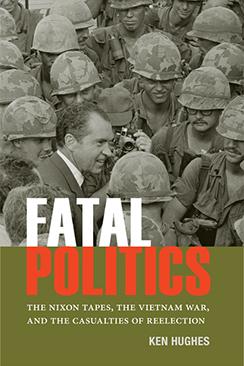
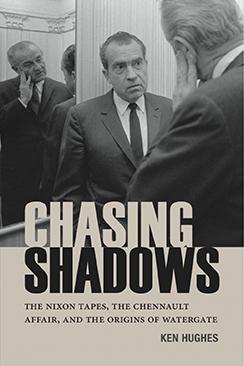
Hughes has been interviewed by the New York Times, CBS News, CNN, PBS NewsHour, Los Angeles Times, Associated Press and other news organizations. He is the author of Chasing Shadows: The Nixon Tapes, the Chennault Affair, and the Origins of Watergate and Fatal Politics: The Nixon Tapes, the Vietnam War and the Casualties of Reelection.

Hughes is currently at work on a book about President John F. Kennedy’s hidden role in the coup plot that resulted in the overthrow and assassination of another president, Ngo Dinh Diem of South Vietnam. 


Ken Hughes News Feed

No matter how much success he achieved, Richard Nixon's need for approval was never fully met. He could never shake the sense that all he had worked for might be taken away, and that those who came from more privileged backgrounds looked down on him. This sense was so strong, it filled Nixon with hatred—a hatred with which, in his own words, he eventually “destroyed himself.”
Tom van der Voort Miller Center
Ken Hughes talked about the anniversary of the Watergate break-in, which took place 45 years ago, and its impact on American politics.
Ken Hughes C-SPAN Washington Journal
“It's going to be forgotten.” That was President Richard Nixon's first assessment of the Watergate break in on June 20, 1972, three days after five men were apprehended at Democratic National Committee headquarters. And just less than five months later, on November 7, 1972, 23.5% more Americans voted to reelect the president than to replace him with Democrat George McGovern
Tom van der Voort Miller Center
Why it feels like we're fast-forwarding through Watergate—and why congressional committees must subpoena any and all Trump tapes.
Ken Hughes Ken Hughes
“The big question hanging over the hearing is whether the president committed obstruction of justice. The focus will be not just on every contact and conversation Trump had with Comey on the Russia investigation, but what Comey made of them at the time. Did he think the president was trying to influence the investigation? To protect National Security Adviser Michael Flynn? To clear his presidential campaign of suspicion? To remove a potential sore point in U.S. relations with Russia?"
Ken Hughes UVA Today
At 12:30 a.m., Frank Wills “cut all lights out in hall” and began to investigate. When he found a door taped open, he called the DC police. It was just before 2 a.m. So began the biggest scandal in presidential history.
Tom van der Voort Miller Center