Fast Facts
- Professor of public policy, UVA Frank Batten School of Leadership and Public Policy
- Executive director, National Security Institute
- Founding director, National Security Policy Center at the Batten School
- Expertise on national security, China, war and international conflict
Areas Of Expertise
- Foreign Affairs
- American Defense and Security
- War and Terrorism
- Asia
- Politics
Philip Potter is the executive director of the National Security Institute, the University of Virginia’s sixth university-level institute. A professor of public policy and the founding director of the Frank Batten School's National Security Policy Center, Potter’s decades of research have focused on U.S. foreign policy, military affairs, data analysis, and international security. He serves as a university expert for the intelligence community and a senior advisor in the Department of Defense. He is an active voice in both academia and government on national security research and policy.
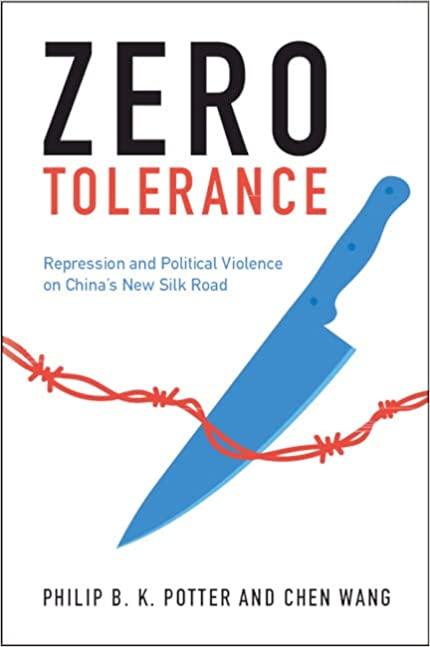
Potter’s latest book with Chen Wang, Zero Tolerance: Repression and Political Violence on China’s New Silk Road, was released by Cambridge University Press in October 2022. Drawing on extensive original data, Potter and Wang demonstrate that China’s harsh policies are driven by deep insecurities about the stability of the regime and its claim to legitimacy. These perceived threats to core interests drive the ferocity of the official response to Uyghur aspirations. The result is harsh repression, sophisticated media control, and selective international military cooperation. The implications of the regional conflict are, however, global.
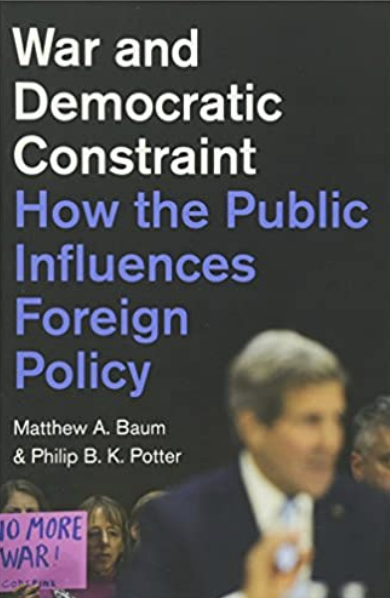
Potter’s 2015 book with Matthew Baum, War and Democratic Constraint, was named a CHOICE academic title. Potter has published in a wide array of peer-reviewed and popular outlets. He has served on the editorial boards of the Journal of Politics and the Journal of Global Security Studies and is an associate principal investigator for Time-Sharing Experiments in the Social Sciences (TESS). Potter has been a fellow at the Modern War Institute at West Point, Harvard University, and the University of Pennsylvania.
Featured Publications
Philip B. K. Potter News Feed