Transcript
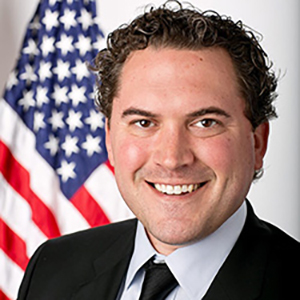
Barbara A. Perry
This is the Cody Keenan interview for the Barack Obama Oral History Project at the University of Virginia’s Miller Center. Welcome, Cody. We’re so glad to have you.
Cody Keenan
Thank you for having me.
Perry
We apologize for the little electronic glitch as we started this morning, but we got to talk about other things that we won’t be talking about today on record. We often will say this to folks who’ve written, as you did, a wonderful book—about a portion, a small portion but a really important time, with the president—and yet we also say, as you wove in your memoir, are there things that you wanted to say but, for length or whatever reason, that were left on the cutting room floor? Think about that as you go along. Think about things that expand on a story because we don’t want you to have to repeat exactly what you said in the book.
We always start with you, and we start with where you came from, and we know that you have a family now. You had a family, obviously, who raised you. We know what your parents did for a living, but any discussions about politics as you were growing up? Any interest that you were having, even in grade school or high school? Because you go on to major in political science. What got you interested in that as a young person?
Keenan
A couple of different things. There was no lightning strike. I was born and raised in Chicago—Chicago proper, not the burbs [suburbs]; that came later. And some of my earliest memories were we had the Chicago Tribune paper edition delivered every day. That’s on the table at breakfast. My dad’s reading it. And that’s the type of thing that I tried to pass down to my kids, this, What is he reading and why is it important? It’s hard now, but I still subscribe to the paper, The New York Times, and my daughter sees me reading it. She’ll pick it up and pretend to read it, and things like that matter. So I grew up realizing that the news was important.
Perry
Watching the news [on TV], as well?
Keenan
They usually got home too late from work, but it was the newspaper, for me. Weekends, I remember, they would watch the NBC Nightly News, with [Tom] Brokaw when I was growing up, whoever was before Brokaw. And they argued about politics a lot. It’s not like today’s political arguments, but he was a Republican from California, which isn’t that far right at the time.
Perry
[Ronald] Reagan Republican?
Keenan
Yes, he voted for Reagan, but he’d been a Republican before Reagan came around, not the full [Barry] Goldwater type. He didn’t have any fringe views, really. It was just, back then, you could sum up the Republican Party in six words: lower taxes, smaller government, strong defense. That made sense to him. Mom was a liberal from Indiana, of all places. She volunteered on [Edward M.] Ted Kennedy’s 1980 presidential campaign in Indiana. No, where was she then? No, she was in Chicago then. I know she worked on—sorry, I got that wrong. She volunteered on [George] McGovern’s [1972 presidential campaign] and met Ted Kennedy, who was out campaigning for McGovern. That was it.
Perry
We say “Indiana, of all places,” but Birch Bayh would’ve been the senator—
Keenan
Yes, yes.
Perry
—and Vance Hartke, I think, both Democrats.
Keenan
Birch Bayh, who pulled Ted Kennedy out of the airplane when he broke his back.
Perry
Indeed.
Keenan
So they fought a lot at the dining room tsable, but it was never mean or nasty or personal. Well, now it feels old-fashioned, right?
Perry
Quaint.
Keenan
Yes, quaint, because it wasn’t a fight that would carry on past dinner. It was one that you could have in front of your children. I think my first political memory was we did a straw poll in third grade for [George H. W.] Bush versus [Michael] Dukakis.
Perry
For whom did you vote?
Keenan
I remember I voted for Bush because my dad was going to vote for Bush, and because I was eight [years old], so I wasn’t really into the issues yet. And then my next real kind of formative memory was the [William J.] Clinton impeachment years. For me, it was high school. I think that’s when I really started to pay attention to politics, around the later Clinton era, and then in college.
I went to Northwestern [University], just north of Chicago, and I wanted to be premed [path to medical school]. They didn’t offer premed as a major, but I wanted to be a surgeon, and you still had to take a bunch of courses from a bunch of different buckets, like your classical liberal arts education. And over the years I just noticed—well, two things happened. One is that you had to take a full year of chemistry and then a full year of organic chemistry before you got to biology, which is all I really liked. They do that on purpose to weed people like me out. And then I also noticed that I’d been loading up on political science courses to satisfy all the other requirements. It just kind of clicked that this is obviously what I enjoy and care about, and I’m doing it without even really realizing it. I think I exhausted the whole political science catalog there.
Perry
As two political scientists, that’s what we like to hear.
Keenan
Yes, and now I’m back at Northwestern teaching “Poli Sci 394” [undergraduate political science course], so time is a flat circle.
Perry
What were your favorite topics and subjects?
Keenan
Believe it or not, here’s another clue: the presidency, Poli Sci 375. Patricia Conley was my professor. I think she’s now at the University of Chicago, still. But I loved that class, and I took it in the fall of 2000, which was a fascinating time. Obviously, the election lasted an extra two months, right? And then 9/11 [September 11, 2001, terrorist attacks] happened my senior year, and by then it just felt like all the pieces fell into place. It was like, I need to go work in government and serve somehow.
Perry
Right. Any internships while you were in college?
Keenan
At America Online [AOL; internet web portal], not political. This was when the internet was booming in the ’90s. I interned at AOL in New York City for two summers because, by then, my family lived in Connecticut, so it was an easy commute. And then I went and interned at AOL Spain because I was fluent in Spanish, and they were looking for somebody who could help—I wasn’t smart enough to start AOL Spain—but who could kind of be a translator at the company, who was versed in both the language of AOL and English and Spanish. I took off most of my junior year to go do that and came home two weeks before 9/11.
Perry
Bob?
Robert Strong
No, no.
Perry
No? Anything?
Strong
No, go ahead.
Perry
OK. So, also, in addition to your course on the presidency, were you reading any biographies or memoirs of—
Keenan
Oh, I was doing all of them. I was doing all of them. I was the college nerd who read The Agenda, which was the book about the Clinton health care battle in ’93 and ’94. I had my paperback copy of The Agenda. I would consume them all. I don’t remember at this point what books came out when, but I was consuming presidential memoirs, and I think 1776 came out when I was in college or maybe the year after. But any time one of them hit, I was one of those people who went out and bought on pub [publication] day and got the hardback, and then read it on campus rather than—I would party at night but read during the day. I was just always fascinated by it.
And then, I don’t want to get too far ahead, but going from there to go get a job in Washington, I didn’t know—I loved my time at Northwestern, I loved my degree, but I didn’t know what to do next, right? I was still young and naive, and I didn’t realize that you could go to City Hall, you can go to the State House, you can go work for an advocacy organization. In my mind, it was just, You have to go to Washington.
And keep in mind, too, this is when The West Wing TV show was at its zenith, at its peak. I think it started my senior year, maybe my junior year. I’m not sure, maybe even before that. And every Wednesday night, I’d sit down, in college, and watch this show about the White House and idealistic people who worked there. And it's funny, all through our time in the Obama White House, usually people from the far left would say it kind of mockingly, or in disdain, as if we all thought we were living in a [Aaron] Sorkin fantasy. No, we understand the difference between scripted television and real life, I promise, but I will say, earnestly, that that show inspired a lot of people to go into public service, that show coupled with 9/11.
There were a lot of people who ended up working in the Obama White House, in the Obama administration, who were moved to serve their country after 9/11, and wanted to find something that was inspiring, and then have a sense of purpose around it, and work with people who kind of felt that same way.
Strong
Was Obama a fan of that show?
Keenan
That’s a great question. I don’t know. I never asked. I would say to the critics of the time, it’s not like I walk into a bar and say, “This doesn’t look like Cheers [TV show] at all.” [laughter] We understand the difference between TV, movies, and real life, but you can want things to be that way, and you can work to try and make things that way, to try to raise the level of discourse in this country. That was literally our job as speechwriters.
So all that sort of pushed me toward Washington, and [George W.] Bush was in office, 9/11 had happened, he’s got a 90 percent approval rating, Republicans sweep both houses. There’s not really anywhere for me to go, really, but the minority.
At the time, too—I’m just really dating myself here—it’s 2002, LinkedIn [job-related social media] doesn’t exist, social media doesn’t exist. Everyone was going to—there was this website called HillZoo.com, where somebody would post open jobs in Washington, and I saw one for an internship. They don’t tell you who it is, as if they’re being coy—“Democratic ranking member,” “influential senator”—but they include the phone number, so I’m just going to search for the phone number. I see it’s Ted Kennedy’s office, and I was like, Wow. I don’t have any Massachusetts ties, but the opportunity to work for a member of the Kennedy family would be everything.
So I call the number—I’m 21 years old, this is just how I assume everything works—and I ask to speak with the chief of staff, Mary Beth Cahill. [laughter] Somebody answers the phone up front, and I’m trying to picture what it might look like in my head, and I say, “Hi, may I have Mary Beth Cahill, please.” “Oh, who may I ask is calling?” “Cody Keenan.” “OK, one second.” I’m like, “Great.” [laughter] And I don’t have any connections. I don’t know anybody in D.C. Literally, I knew one person, and he was doing Teach For America. He was a fraternity brother of mine, and I ended up moving in with him in D.C., but I didn’t know anybody who was like, “Sure, I can help you get a job.” My parents weren’t donors. They actually both liked John McCain a lot at the time—my liberal mother, too.
And so I hear the phone—I’m getting bounced around a little bit. Finally, a gruff voice answers, “Hello?” And I started saying, “Yes, hi, I’m holding for Mary Beth Cahill.” And he’s like, “Who are you?” And it turns out it’s her assistant, who is an ex-Marine named Patrick O’Brien. And I have never been cut off midsentence that quickly before. I hear the phone ring again, and this woman picks up, and I’m trying to explain what’s going on, “And it’s for the internship.” She goes, “Great, can you start Monday?” And I was like, “Well, yes. Yes! Sure can!” Finally, Somebody sees my worth.
I got the real story later on, of course. I had called and it was Friday at five o’clock, and there’s not a chance that the chief of staff’s assistant is going to let her talk to some kid looking for an internship, so he put me through to the internship coordinator. She had no interest in talking on the phone because it was Friday at five o’clock and she was about to go home, so she was like, “Can you start Monday?” And the reason it was easy for her to say is because there were 50 of us. There were 50 interns for the summer.
Perry
And you were going to be number 50, perhaps?
Keenan
I was definitely the last one starting. A bunch had started because—Northwestern got out about a month late, so I was the last one to start. There were like 10 of us in the mailroom, very cramped. There was one computer that we all had to share. The rest of the time you were running errands for people. You were sorting mail into the mailboxes. The rest are scattered throughout the committee offices. But I was the only one who had already graduated college, so I was determined to make—the first time there was a job opening, that’s mine. I’m going to work really hard. I’m going to get that. I’m going to be the best at making copies. I’m going to be the best at getting sandwiches, walking the senator’s dog, whatever.
And then, that September, one opened up. One of the two staff assistants who sat up front got promoted to go be an assistant on the health and education committee [Senate Committee on Health, Education, Labor, and Pensions], or—no, where did he go? Yes, the health staff, and I took his job. So I’m now answering phones and giving tours, for the princely sum of $18,500 a year, and it was great. It was great because you’re in the Russell [Senate Office] Building. He [Kennedy] had the best office. You’ve got this enormous balcony overlooking the [U.S.] Capitol. And the most fascinating people came to visit Ted Kennedy, and they’d come to the front office, and you’d get to see them all.
Perry
What was the first—? Oh, go ahead, Bob.
Strong
Did he give time to interns? He sat down and talked to them?
Keenan
Yes. Yes, he would, he would. And we got to interact with him, too. They didn’t keep him sequestered away. There’s a back office, the “power center.” At the time, it was Beth [Huaghland Dupuy], who was his personal assistant; it was Mary Beth, the chief of staff; Patrick, her assistant; Scott Fay, the scheduler; and then there would be new people over time, but that’s the nerve center. You don’t just walk in there and go into the senator’s office, but they wouldn’t lock you out of there, either, if it was something that you were helpful enough to work on.
Perry
What was it like the first time you met him?
Keenan
I’ll talk later about the first time I met Barack Obama, but I was not intimidated to meet Senator Kennedy. I was excited, and I had spent all this time brushing up on—well, I already knew about his brothers, of course. I’d read Jack, one of the biographies about him. Bobby [Robert F. Kennedy] was always the one I was most fascinated by because he had this real and genuine kind of anger against injustice, and he always came across to me as sort of the most honest. And then Teddy I knew the least about, at the time; now I know the most about him. But I just remember being excited.
And he was the type of person who said thank you. The first time you ever wrote a memo [memorandum] to him that would go into the briefing book, no matter how simple it was, you got it back with a note on top saying, “Thanks, and welcome to the team.” He also had a funny habit of giving out gold stars on memos that were good, like you were in school, right? If you get back a memo with questions, he’d always write questions and comments, but if you got a gold star you’re like, [claps] I wrote a good memo.
Also, he had a driver, but his wife did not, and so when she needed to go to the airport or something like that, it would fall to one of the two staff assistants to go out to the house and drive her to the airport. So I actually spent a lot of time with Mrs. Kennedy.
Perry
This is Vicki [Victoria] Reggie Kennedy.
Keenan
Vicki, yep. And you spent time in the house, too, waiting for them to get ready, or when you drop them off. And they had a cook at home, and a housekeeper, and we’d just sit around, and they were always kind enough to us lowly grunts. They would make us little meals, give us leftover food.
There was one time, for example, my cellphone rang, and I was trying to be quiet. I was like, “Hey, I’m in the senator’s house. I can’t talk.” It was my best friend, and he had just gotten into the grad [graduate] school he wanted to get into. I was like, “Oh, dude, that’s awesome, congrats [congratulations]. All right, we’ll party when I get home. I got to go.” And the senator was just walking in, and he goes, “What’s awesome?” [laughter] So I was like, “No, I’m sorry, sir, that was just one of my friends.” He’s like, “What’s awesome?” So I told him. I was like, “My friend just got into grad school.” And he was like, “Oh my God, Delme”—that was one of the housekeepers—“give him a bottle of wine. Give him a Pouilly-Fuissé to take to his friend.” I was like, All right, sweet.
But they were good like that. There was no imperiousness to him, right? He was always the one who was kind of more alive to others, and the plight of people, and wanting to get to know you a bit. He was not out to lunch on that stuff.
So I spent a few months as a staff assistant—and we called it the “front office” there—until I got promoted to go be the assistant to the staff director on the Health, Education, Labor, and Pensions Committee. It was a man named Michael Myers. The senator was the ranking member then, so basically all domestic legislation came through Senator Kennedy’s office, pretty much, and it was like drinking from a firehose.
I tell students now who ask me for advice on grad school, I’m like, Listen, you don’t have to go to grad school. If you want to be a lawyer—yes, of course you do—but for me, your first job can basically be as important as a graduate school education.
I am watching how “the sausage is made”—not just how a bill becomes a law but what happens before that, and bringing in the advocates, meeting, hashing things out, negotiating, genuine bipartisanship. That is something that runs through every speech I ever wrote for President Obama about the Senate, about Ted Kennedy, and the fact that Teddy Kennedy could be the boogeyman that everyone on the Right held up to win elections, but then they were all working with him on stuff. All these bills that went through, Orrin Hatch and Ted Kennedy were working together; John McCain and Ted Kennedy were working together. I just learned so much those several years that shaped the way I thought about politics forever.
I stuck with the senator for, I think, three and a half years total, and one of the more formative things that happened was in 2004. The Democratic National Convention was in Boston, the senator’s hometown, so we were all going to go up there and help because he was basically a principal at the convention. He went to six events a day, and he had a speaking role, and he needed a support staff.
We basically took over a full floor of the Fairmont [Copley Plaza Hotel]. We had office spaces in hotel rooms, and because of the Hatch Act [Act to Prevent Pernicious Political Activities], we had to take a week off of work. This was volunteer capacity. You’re not allowed to mix politics and governing. But our reward for that week of service up there was we got a floor pass to the convention. Everybody got one for one night, and it was just at random. Mine was—I’m pretty sure it was Tuesday. And the keynote speaker was this guy named Barack Obama, so I am on the floor watching him give this speech that made him famous.
I always tell people, the power of a good speech—he walks into the Fleet Center anonymous and walks out a global megastar 19 minutes later. And you could’ve heard a pin drop in there for half of it. People were just transfixed by, first of all, Who is this guy?—this state legislator, for crying out loud—and, What did I just hear? That’s the first time I was like, I want to be a speechwriter. That’s what I remember as the first time I wanted to be a speechwriter. I’d always been good at writing. I’d always enjoyed it. It came easy. And because of that, I often procrastinated a lot in college or wrote my papers at the last second because it was easy.
Perry
Does that come, you think, that talent, from your parents in the ad [advertising] business, as I recall?
Keenan
It comes from reading. I was a voracious reader as a kid. I read everything. And that could, maybe, all come back to the example my parents set, not just with the newspaper but having books for us. I spent my summers in the public library, trying to win that competition for which kids could put the most leaves on the tree on the wall. Every book was a leaf. I tell them [my students] now, the first step to being a good writer is being a good reader. You are not just reading about different issues and viewpoints but different people’s lives, ways of being, ways of experiencing the world.
And so it was shortly after that—I must have talked about it a lot, because my boss—Senator Kennedy didn’t really have a dedicated speechwriter. If he was going to go give a floor speech on disability rights, [Constance] Connie Garner, who worked on disability policy, would draft it, right? If he was going to give a speech on health care, someone in health policy would draft it. But if he was going to give a big kind of “set piece” speech on something, it was usually Michael who would draft it. And so he asked me one night, ducked his head around the corner, he was like, “Hey, can you write a speech?” And I don’t know, to this day, I never asked him if he meant “do you know how” or “do you have time to.” [laughter] It didn’t matter. The answer is, “Yes. Yes, I can.”
And so I stayed up all night long. The senator wanted to do a floor speech about secrecy from the [George W.] Bush administration after torture and wiretapping and Iraq, so I just kind of crammed my heart out and wrote a speech that’s not very good, but I only had one night to do it, and I still have the gold-leaf copy that the senator wrote, “Welcome to the speechwriting team.”
Perry
And when you look at it now, why do you think it’s not very good?
Keenan
Well, I didn’t speak with the senator first. I didn’t get his take on it. It was mostly just Michael’s download. I also didn’t know how to write a speech, so it’s just—it’s stream of thought. I was a good writer, but it’s not necessarily well structured. It doesn’t have a lot of the components that I would put in a speech about it today. It doesn’t really tell a story, most importantly. It’s basically just a list of “here’s all the bad things that the Bush administration has done,” and then “here’s what we need to do to set it right.” So it was like half a speech.
Strong
Can I go back to Obama?
Keenan
Of course.
Strong
It really is rare for someone to get the national stage by giving a speech.
Keenan
Yes.
Strong
Usually, you get it by winning an election or by having an appointment to a prominent position and then using your office to be at the center of some issue that the country is paying attention to. To become a national figure by going to a convention and giving a speech—is there anyone else in the modern group of political leaders who did that?
Keenan
That’s a good question. There has to be, and it’s escaping me right now. Maybe it’s one of those things I’ll add later, but who else has just come out of nowhere like that? Lots of speeches—there’s a woman running for Senate now in Michigan, Mallory McMorrow. She gave a speech on the floor of the Michigan legislature that went viral. I think that’s probably where most come from now, something that goes viral. In 2004, that doesn’t exist yet, but to be given that opportunity and then knock it out of the park, that’s pretty rare. To be given the keynote address when nobody knows who you are and then more than live up to it—that’s rare.
Strong
Who chose him?
Keenan
I should know the answer to this. It’s escaping me right now. I’m sure [David] Axelrod—Axelrod was working with him at the time, and I’m sure Axelrod pushed for it. It also may be the campaign that’s going to do that, the [John] Kerry campaign, that’s going to make that overture, but I don’t remember how it came about.
Perry
So dig down a little bit—I’m going to go back to the speech. As you said, someone who’s unknown and doesn’t necessarily have a memorable name, because it’s so different, but it’s so different that people know it’s something different, maybe special.
Keenan
Well, it’s also Barack Hussein Obama, three years after Osama bin Laden attacked the United States, and we went after Saddam Hussein. It’s a rough combination.
Perry
Yes, as he said, how fortunate that he would end up in the Oval Office. I do remember watching it on television and saying to friends, “I can see the bumper sticker: Obama ’08.” I was not thinking about his middle name. And he looks different, obviously, from the run-of-the-mill speech giver, even at a Democratic convention. He’s a brilliant writer, as we know from his book and things that he contributed to speeches. He wrote that [2004 speech], he says, himself—
Keenan
Yes.
Perry
—which I think seems obvious because it’s so heartfelt, so him. But in the room, as you said, you could hear a pin drop, then lots of cheering. What was it about his persona and his delivery that made it so memorable, so inspiring? Not just the content, but you have to know how to give that speech.
Keenan
Sure, yes. Well, I want to seize on something you said, which is that his name was different and he looked different. He turned those things into strengths with that speech. The whole speech was built around how he introduces himself to the country by inextricably tying his story to the American story and, Only in a place like this could somebody who looks like me, with a name like mine, be asked to give a speech like this.
Perry
And that’s the story, as you said.
Keenan
That’s the story. That’s the story. And to this day we joke that the most boring parts of that speech are the parts where he has to pay his dues to John Kerry and John Edwards and convince people to vote for them. It’s like three paragraphs, and you’re like, Oh, God, cut these. [laughter] Get back to the good stuff.
The megawatt smile helps. Being attractive helps. But it is—and I’ll probably come back to this over and over today—it is being comfortable in your own skin. It’s something that is so rare in politics. I don’t just mean being confident. He has this level of comfort in who he is that was hard-earned because he’s somebody who grew up looking different in places where that wasn’t always welcome. Not a lot of mixed-race kids without a father in Hawaii. Not a lot of black kids in Indonesia. He always kind of had to navigate on his own.
And the time he put into writing his first book, Dreams from My Father, as someone who’s written a book, that act does help you figure out who you are in ways you might not have known before. You’re taking years to write, rewrite, and really think. And so being alone for a lot of his childhood like that, without a father figure, with a mom who was absent a lot, being raised by your grandparents, being different—he has this sense of comfort in his own skin, with who he is, that shows onstage, even when you’re giving the biggest speech of your entire life by a factor of a hundred, and it shows throughout his time in the White House.
Unlike someone like Bill Clinton, who famously was on the phone all night long, Obama didn’t need that. He liked being alone at night, and Michelle [Obama]—sorry, the First Lady—would retire around 9:00, I think, and Obama would stay up for the next six hours, reading the briefing book, working on speeches, thinking, watching SportsCenter [TV show]. He did not need an army of people to tell him he was right, or smart, or good. It was this innate thing that is so absent from our politics.
I think we have two main problems with most of our elected officials—and then I’ll get back on topic. One is the absence of a sense of shame, which is getting more and more pronounced. It used to just be like if you did something wrong or stupid, you apologized. Now there is no shame. And the other is I think a lot of people are not comfortable in their own skin in the way that he is, and it comes across. It’ll be expressed through meanness, pettiness, a lack of touch with ordinary Americans—that someone like Ted Kennedy had, who had never been an ordinary American his entire life; that someone like Barack Obama had, who didn’t have an ordinary experience. That sense of comfort in your own skin is something that I think Obama and Kennedy shared, and it was hard-earned on both accounts, and it made them both better politicians.
Perry
And so have you thought about—I mean, I know you thought about it—why Ted Kennedy chose him [Obama] to say, “This is your time. Don’t wait any longer. Go ahead in ’07”?
Keenan
I think that’s probably part of it. I’m trying to remember who else was lined up to run in 2008. There were, like, nine. And Kennedy, he waited to endorse until February ’08, which was still an enormous deal. I’ll get back to your question, sorry. That was an enormous deal for us because, at that point, it was purely Hillary [Rodham Clinton] and Barack. For Ted Kennedy to come out at American University with Caroline [Kennedy] and pass the torch like that—and there was an op-ed in The New York Times that morning that really injected us with something that we needed—that was a brave decision on Kennedy’s part. He knew it would burn bridges with the Clintons. He knew they wouldn’t forgive him for that.
But to tell Obama in his [Kennedy’s] office—and I’ve heard this from Obama firsthand. When I went with President Obama the day that the Edward M. Kennedy Institute [for the United States Senate] opened, I was with him when he was looking at the replica of the senator’s office, which is identical, freakishly so. It took my breath away. Down to the three tennis balls for the dogs next to the fireplace. Identical. Staggering. And I told President Obama how accurate it was. He goes, “Oh, I know.” He goes, “I sat on that couch when Teddy told me to run.”
And to answer your question, he said—I don’t remember the exact words, but it was basically, Opportunities like this don’t come along often. Trust me, you’ve got to grab it when you can. And Teddy was grappling, Senator Kennedy—why do I keep short-handing everybody? Senator Kennedy was grappling with running in ’72 and again in ’80. Obviously, Jack and Bobby were [unclear]. I think all that conspired to have the senator say, “Let’s—”
And also, one of his best friends, [Christopher J.] Chris Dodd, was running for president, and Senator Kennedy is still telling Obama—I’m making this up now, but—For you to sit in the Senate for 6 years, 12 years before running, that’s not going to make you a better presidential candidate. It’s actually going to make it harder for you because you’ll be tied down by votes and positions, the compromises that you have to make in politics. At this point, Obama had been a senator for two years. Get out of here. Go. Do something bigger.
Perry
To go back to the comfort in his own skin, for both of those people, but particularly since we’re talking about Obama, and therefore—I never use this term, but “authenticity,” that he’s completely authentic because he’s comfortable in his own skin, and back to where you were saying, that he was always different in the environments, in the contexts in which he was growing up. Does it happen, then—?
Some people who aren’t as grounded somehow could become terribly insecure or maybe try to be somebody else to fit in. He does the opposite. Do you think, then, that he fashions what he is because he’s comfortable being that person? I’m trying to figure out, how does he get to be so comfortable in his skin and therefore so authentic that comes through?
Strong
And can I add on to this?
Perry
Sure.
Strong
I’m mulling over—I can think of a number of presidents, presidential candidates who were very comfortable with who they were but terrible communicators. [laughter] Jimmy Carter was very comfortable with who he was—
Keenan
Yes.
Strong
—and that was sometimes a fault. But his ability to show that to the world was very strong.
Keenan
That’s a great point. Great point. Empathy always enters into this equation, too. I think Jimmy Carter had a lot of empathy, which made him able to connect with people on a human basis, not necessarily as a speechmaker. Obama had that quality. He’s also an extraordinary speechmaker because he’s a good writer and thinker. Those are all prerequisites for it. And he had a great sense of humor. [laughter] But he would be the first person to tell you, as he still tells me, he’ll be like, “You know I wrote that 2004 speech myself, right?” I’m like, “I know. You say that all the time.”
What was your question? I’m sorry.
Strong
Well, it, again, had to do with comfort level.
Perry
Yes, how did he overcome, again, what could have turned someone else into a highly insecure person, by having been in so many settings where he was the odd person out, or just odd, and so either somebody might have become insecure, or somebody might have created a persona that maybe they weren’t comfortable in or wasn’t authentic, and people saw that? What was it about his personality that caused him to be able to do that?
Keenan
Well, I should say, I’m doing a lot of kind of armchair psychology here, right? I don’t know if he ever actually took the time to think, OK, I’m finally comfortable in my own skin. How do I become comfortable—? I think it’s purely living in a bunch of different worlds as the same person, but also things that might seem odd to us are reality for entire other groups.
Obama, he’s a student at Columbia [University]. The police would ask him for his ID [identification] as if he wasn’t supposed to be there. That may never happen to you or me, but there are millions of people who are like, Yep, I know exactly what that’s like. I know exactly what it’s like to be on Michigan Avenue in Chicago trying to flag down a taxi and they won’t stop, right? So things that may seem odd to us are reality for other people, so he could navigate all those different worlds. And because he grew up with a few different identities—and he's written about this, I’ve written about this, this is not groundbreaking—he was mostly raised by his white grandparents. His mom was off a lot. Dad was never around.
Perry
His white grandparents from Kansas, who ended up in Hawaii, right?
Keenan
Yes, but they were his role models growing up. They and their friends were the people he grew up with.
So one funny story that I always liken it to is, I was with President Obama when he visited Ireland for the first time as president and went to the little town of Moneygall, where people had traced his ancestry. His great-great-great-grandfather, Falmouth Kearney, came from this tiny town of Moneygall that everybody used to just bypass, and now it’s home to the Barack Obama Plaza, which you can go visit.
But he was in the home where his great-great-great-grandfather grew up, walking on the same floorboards. I’m sure the floorboards have been since redone. But there was that kind of sense of wonder in him still, that he was walking on the same earth, on the same floor that one of his ancestors did. And people always kind of giggle, chuckle a little bit about Barack Obama’s Irish ancestors, but why is that any different than any of the rest of us?
Again, he grew up raised by the people in that lineage, his white grandparents. So he can go into a VFW [Veterans of Foreign Wars] hall in southern Illinois and speak that language without it being weird. And then he can go to a black church on the South Side [of Chicago], speak that language without being weird, code-switching from his own experience, unlike Hillary Clinton going to a black church in the South and dropping her G’s. That comes across as inauthentic. And Obama’s never had to work to be authentic. He’s just himself, right? But he is fluent in a whole bunch of different worlds.
Perry
Did he ever speak to you about his mother? And I’m thinking, as I know, that they didn’t spend all that much time together, as contrasted with grandparents in Hawaii. But she certainly seems, from what I’ve read, to have been a free spirit and comfortable in her skin. Would that be accurate? And, as I say, did he ever speak about her, and how that may have impacted him?
Keenan
It was so rare that when he did, it was kind of exciting. The one that stands out most is I opened the State of the Union address in 2015 by telling the story of this young couple from Minnesota who had written Obama a letter, and it was this beautiful letter. It was so good that I just, it was the only time that—we call them [makes air quotes] “real people”—it was the only time that there was just one real person in the State of the Union address, not a whole array of people in the gallery. And she was young, had young kids, a young husband. I got to meet them a couple times. We’re actually—my wife and I are still friends with them.
But when she came into the Oval Office to meet with Obama—no, sorry, the first time he met her in Minnesota, he went up and she introduced him for a speech there. I was talking with him after, and he said, “Yes, she reminded me of my mom.” And that was rare for him to just so casually talk about his mother. He said, “Yes, she reminded me of my mom, someone who’s just kind of doing her best to make things work out for her kids when it’s tough, when circumstances are tough.” And that’s about as deep as he got.
We’d sometimes deploy his mom as a story device in speeches, whether it was she was dying of cancer, talking about health reform; when it was about the power of education; a speech about women’s rights, talk about how he would help sell her batik, help teach women in Asia how to make batik so they could become self-sufficient. But all those were kind of in service to a larger message, really, so he was not really profound about his mom.
Perry
How about his dad? He ever—
Keenan
Never.
Perry
He never spoke of him—
Keenan
No.
Perry
—or any regrets?
Strong
If you’re self-confident, do you talk less about yourself to the people around you?
Keenan
Actually, I think so. It was so rare that he would insert himself that we had to really dig. Commencement addresses were tough because—I mean, they’re fun and easy to write, I love commencement addresses—but I would constantly be pumping him for stories, and he’d be like, “Nah.” He was also kind of a loner in college, I think, most of the time. Stories we would pull—these are all public—at Occidental [College], his first couple years there is when he really became aware of apartheid and gave his first speech—that, to this day, he says was a lousy speech—about ending apartheid.
Perry
In South Africa.
Keenan
In South Africa. The speech was as a student at Occidental, obviously. And then in New York, he was just kind of a—this I’m just getting from books about him, and what he’s written about himself. He doesn’t really talk about it, to me, at least. He was just kind of a bookish loner who read constantly, and read philosophy. [smiles] He did not have a big [unclear], as far as I know, as a student who’d go out and party, but rather—I think he’s described himself as humorless in those years.
Keenan
Did he talk about books with you? “I’m reading a great one,” or, “What have you read?”
Keenan
He did sometimes, but you know what I usually did was I asked his assistant Ferial [Govashiri], maybe once a month if I was there. There’s a room right outside the Oval Office—it’s called the Outer Oval Office. “Ferial, can you find out what books are on his nightstand?” I always sought out what he was reading and would try to read it myself. I stopped doing that once—I told him that once, and he was both impressed, and he was like, “Yes, but sometimes I just read for fun, and sometimes I read bad books on purpose, so you don’t have to do all that. I’ll just tell you what I’m reading.” I was like, “All right, great.” [laughter] But yes, he would.
He’d send us stuff, too, and tell us to read books. He’d send us letters that people had written him. He’d say, “Did you read such-and-such today? Did you read such-and-such?” And I would immediately go do it.
Perry
You mentioned about—and I think it is great advice, since both Bob and I have been professors and advised students. It is great advice to say you don’t have to go to graduate school unless you want, in our field—if you want to go law school and be a lawyer, first of all, why do you want to do that? But second, you can learn, particularly in your first job, and you’ve explained very well how to do that. What, then, prompted you to go to the JFK School [John F. Kennedy School of Government at Harvard] and get an MPA [master’s degree in public administration]?
Keenan
Yes, I’m sure they’re delighted when I say that.
Perry
Or a master’s in public policy, MPP?
Keenan
MPP. Well, I don’t regret it. I loved my time there. It was great. I still got to kind of immerse myself in this Kennedy-esque vision of service at the John F. Kennedy School in public service. I’ll freely admit, it was a letter from Ted Kennedy that helped me get in, but I also had all the right requisites.
But I asked him for a letter, and he goes, “I’ll tell you what.” He didn’t know the name of the GRE [Graduate Record Examination], but he was like, [in Boston accent] “You’ve got to take that test to get in, and if you get the Harvard average or better, I will write you a letter.” So I had to look up what that is. I’m like, all right, I have to get a 590 or above on the GRE. So I just crammed for the GRE. I think I got a 590, dead on, [laughter] and so he wrote his letter.
Perry
By the way, great Boston accent imitation. Well done.
Keenan
Thank you, thank you. I can only imitate him. “Oh, good, oh, good.” So he wrote me a letter, and I’m pretty sure that’s what got me in the Kennedy School. But I also worked really hard there, and it was fun to—I took classes from people who became my colleagues a couple years later. I had no idea—I went to the Kennedy School in 2006—I had no idea that I would end up joining the Obama campaign and working in the White House so quickly, but, you know, Samantha Power was one of my favorite professors and also became a good friend.
Perry
And you took a speechwriting class, that I’ve read.
Keenan
Yes, it wasn’t quite like the one I teach now that’s just purely speechwriting. It was more about public communications, so it was also advocacy letters and just, How do you communicate policy effectively?
Perry
What did you learn? That you feel like you could apply, or did you?
Keenan
Yes. No, the importance—and at this point I’d just barely begun my career as a speechwriter, only writing for Senator Kennedy. At the time, Jeanne Shaheen, who’s now senator for New Hampshire, was the dean of the Kennedy School, and I asked her as a student, I was like, “Can I write a speech for you?” Just any way to kind of learn more about this. And she was very gracious about it, especially because I don’t think those were very good, either. [laughter] I hadn’t even started my internship at the campaign.
But if I do remember anything from—it was Professor Marie Danziger—if I do remember anything from her class, it was storytelling. We talked about storytelling. Marshall Ganz was a professor at the Kennedy School at the time, too, and he was one of the ones who kind of helped Obama figure out community organizing and how that translates into building political campaigns. So I got to kind of inhale everything, or learn by osmosis, from great people, and obviously the friends I made there I wouldn’t change for the world.
But I think my general stance on grad school now is, obviously, there are professions that require it, and that’s fine, but if you’re someone like who I was—I’d been in the senator’s office for three and a half years. I finally had my own legislative portfolio. I was working on disability policy, mental health, HIV/AIDS. And the first time I went to a meeting with my counterparts from other Senate offices, I got my ass kicked because I had no idea what I was doing. These were people who’d been doing this for decades. And I immediately went right back and told my boss, I was like, “I am not ready for this. I didn’t know what I was doing in there. I’m worried I made the senator look stupid. So I relinquish this or need more help.”
And Michael, my boss at the time, he didn’t “bigfoot” me [take control], but he brought in somebody else to kind of shepherd me through this stuff. But I was also thinking, I’m the only legislative aide on Senator Kennedy’s staff who doesn’t have a professional degree. We had lawyers. We had a molecular biologist. We had PhDs. He had the best staff on the Hill [U.S. Congress]—it was crazy—and I didn’t want to be the one who kind of brought that down.
Perry
And what did you see in that meeting that made you realize, I am not up to this? What were these other people doing and saying?
Keenan
Well, they had 20 years of experience on the issue. They knew all these advocates I’d never heard of. They knew how to maneuver. They knew how to persuade. It was just all these things that I—they knew budgeting. They knew appropriations. And I was just like, You can’t fake this. I can’t go home and read a book that can teach me all this. This is learned on the job. And yet somehow, I didn’t take that to think, Keep at it. I figured I was the only one without an advanced degree, I’ve got to go get an advanced degree.
And the first year at the Kennedy School is mostly quantitative-based. You have to take economics, statistics, accounting, all these important budgetary things, appropriations, things that I hadn’t done in college because I was just averse to numbers. Probably why I like being a writer. So I figured, all right, I’m going to go get an MPP and then I’ll come back. And that was my deal with the senator, too. He said, “Come right back, you’ll have a job here.” And then that’s when I fell into the campaign, when I went.
So for me that turns out that wasn’t the right answer. I’d probably do it the same way because it worked out fine, but I didn’t need to go to Harvard and spend $100,000 to learn in two years what I could have learned by staying. If I’d kept going to that meeting, if I’d kept asking questions, if I’d kept my eyes open, I would have learned all that, too. That’s what I tell my students now: Don’t discount that first job or your second job. Those are actually the best learning experiences, rather than getting into mountains of debt to figure out how to do something. Just go make $20,000 a year and figure it out.
So I didn’t need it. It certainly helped; it wasn’t harmful. And then while I was at the Kennedy School, that’s when I joined the Obama campaign.
Perry
Tell us about that.
Keenan
Again, it was a fluke. Well, that’s not entirely true. I say that to be self-deprecating, and there was a lot of luck involved in it, but you also make that. My advice for young people is very simple: Just work hard, don’t be a jerk, and stay in touch with people. It’s not very profound advice, but it works. You’ve got people on your teams who are just genuinely hard-working—first to arrive, last to leave, turn in good product—well, you want them for more stuff. Nobody likes working with jerks. There are plenty of jerks in Washington, of course, but if you have a choice between two hard workers and one is nice and one’s an A-hole, you’re going to pick the one who’s nice. And then staying in touch with people is always, obviously, very important, and that’s what got me the job.
The great thing about the Kennedy School is you got people coming through every day. World leaders were coming through every day, CEOs, people who’ve been working on the Hill forever, governors, and it’s part of the mission of the institution to make them available. So I just saw a flyer one day that Stephanie Cutter was coming to speak. She was an old colleague. She was Ted Kennedy’s communications director, Harry Reid’s communications director, worked on the [John] Kerry campaign, ultimately worked in the Obama White House. We’ve been good friends all these years, but she had been a mentor of mine in Kennedy’s office.
I will always remember what Michael Myers, my boss, said about her: He said that she has the ability to see around the corner, see around corners. I was like, Cool, I want that. I want someone to say that about me someday, that I could see around corners. What a cool thing to say about someone.
So I shot her an email. I said, “Hey, I see you’re going to be on campus this week. Do you want to go get a beer?” She was like, “Yes, sure.” And so we went and got a beer, and she said, “What are you going to do this summer?”—in the summer in between [semesters]. I had applied for a job in the city of Chicago, working for Mayor [Richard M.] Daley’s office on Chicago’s “green roof” [environmental] program. It just sounded interesting. What a cool thing to do, to make all the roofs of Chicago green. Helps with climate change. Could be fun.
She goes, “Don’t do that.”
I was like, “Why not?”
She goes, “You should join the Obama campaign.”
And I actually laughed out loud at her. I was like, “That’s preposterous.” Right? “Why? What would they want me for? What would I even do? I don’t know anybody there.”
She goes, “Well, I do.” She goes, “I actually got—” I think she took too much credit for this, but she said something like, I got Jon Favreau his job with the Kerry campaign. And there had been a staff shake-up on the Kerry campaign in 2004, after the Iowa caucuses, where half the staff was fired and everybody else got elevated, including Jon as a speechwriter. And she said, “I’ll connect you guys.”
And she did. And in echoes of that first call getting the job in Kennedy’s office, I didn’t really know what I was doing, and it was nice of Jon to take the call. But he was drowning in work. The campaign had just begun. It was, like, February ’07. He had been Obama’s Senate speechwriter for two years at that point, his only speechwriter, and he was just drinking from a firehose. He was like, “Listen, I need all the help I can get. I know you wrote for Ted Kennedy. Stephanie speaks very highly of you.”
We connected over the phone, over—I don’t remember the name of the event, but there was this big event in the Senate, probably in the Russell Caucus Room—or, no, the Kennedy Caucus Room—after [Hurricane] Katrina. Kennedy was speaking to give a big award—I can’t remember the name of the award—to somebody who was instrumental in helping people recover after Katrina in New Orleans, and Obama spoke at the same thing. Obviously, Obama’s speech was far superior.
I remember telling Jon how nervous I was to watch Ted Kennedy read something that I’d written and that I was standing against the back wall watching. “Dude, me, too. I think it was one of the first speeches I wrote for Senator Obama, and I was standing against the back wall, too.” And we bonded over that, of our shared terror of speechwriting.
And he asked me to come out and be the intern. He was like, “We can’t pay you. We don’t really have many people yet, and everything we’re spending is in Iowa, but if you’re willing to come be a summer intern, come on out.” And so to get to be a speechwriter on the Obama campaign, in the city where I grew up, was the coolest thing that had ever happened to me. And the worst, most agonizing decision I ever made was at the end of the summer, to go back and finish school rather than stay. I was just terrified all year long that I’d made the wrong decision.
I went back to finish up my second year at Harvard and missed all of the primaries and caucuses. Who knew it was going to go through all 57 of them. It’s funny: People would make fun of Obama on the campaign trail because once, in an exhausted, late-night speech, he talked about how the battle had gone through “all 57 states,” and there are 57 primaries and caucuses. You’ve got Guam, and Americans abroad, and whatever the rest are, but it’s one of those things that people made fun of him for forever.
But I remember at the end of that summer internship in Chicago, [Daniel] Dan Pfeiffer, who was running communications for Obama at the time, said, “Listen, again, all of our money is going to Iowa. All of it. And if we win there, we’re still alive. If we lose there, it’s over. But I can promise you this: As soon as we win the nomination, you will be my first hire. You’ll be the first person I pick. But you’ve got to stick around.”
That was the really, really hard part. My parents were apoplectic. They did not think Obama could win. They didn’t think America would elect a black guy. And the idea that I would walk away from a Harvard education to join this doomed campaign, they were just really displeased, to say the least. I ultimately did it, and to this day I still feel like I made the wrong decision, even though it all worked out, because I missed out on the camaraderie of all 57 primaries and caucuses. I stayed in touch with everybody there, talked to them constantly, and I had this terror that I had just iced myself out of a rocket ship.
Fortunately, it went the entire way. I went and spent Christmastime in Iowa, knocking on doors, doing my part there. And Hillary conceded the night before I graduated the Kennedy School, and then Favs [Jon Favreau] was like, “How soon can you get here?” And, true to their word, they hired me. My title was deputy speechwriter, which, at the time, sounded amazing. Now it’s like, well, I wasn’t even a full speechwriter, I was just a deputy speechwriter. And I got paid this time, 35-grand [$35,000] a year, even though it was only going to be for a few months. Just worked my butt off. By then, the speechwriting staff had grown to include Adam Frankel, Ben Rhodes, and a few weeks later—and Kyle O’Connor, Charlotteville’s [Virginia] own Kyle O’Connor, as the “new me.”
Perry
UVA’s [University of Virginia’s] own, as well.
Keenan
UVA’s own Kyle O’Connor, yes. I’m having dinner with him tonight, actually.
Perry
Oh, good.
Keenan
He was now the lowest speechwriter on the totem pole. He was now the intern. And we would add Sarah Hurwitz, who was Hillary’s speechwriter, a couple weeks later. And it was just so much fun, just an incredible rocket ride. Now he’s the nominee.
Perry
Can I back up one minute—
Keenan
Please.
Perry
—to ask about Hillary Clinton? First of all, from your hometown. What were you hearing about her on the Hill, if anything, in your position working for Senator Kennedy?
And then, what were your thoughts about the head-to-head between Obama and Hillary? We know that you were taken by Obama in ’04 and that your parents didn’t think he could win, but what were you hearing about her? And what were your own thoughts about her as you watched her go head to head with Obama?
Keenan
Yes, it’s funny. I don’t remember hearing anything about her in the Senate.
Perry
Good or bad.
Keenan
Don’t read anything into that. She was on the committee, the Health, Education, Labor, and Pensions Committee. That’s not really where her interests seemed to lie. She was definitely interested in all that stuff. She and President Clinton worked on—she was the point person for health reform in the ’90s, so she was interested in all of it, but everybody knew that she was positioning herself to run in ’08.
She was more focused on national security, foreign policy, because that’s what the country was kind of focused on in ’04, ’05. When the economy fell apart in 2008, that made Obama a wiser pick. It happened after he won the nomination, of course, but—so she was mostly focused on foreign policy and national security, which ultimately came to doom her because she had voted for the Iraq War and he had not. He voted against it. That helped him win the primaries.
I had always admired her, as not just a former First Lady but a hands-on First Lady. Right? One of my early political memories was the whole “Cookiegate” thing, where—what was the line? “What am I supposed to do, stay in the White House and bake cookies?” I was on her side with that. I was like, Yes, that’s ridiculous. But when you’re on a campaign, it changes things. We hated the Clintons, and they hated us. [laughter] I mean, there was a real loathing there, I’m pretty sure, between the boss [Obama] and Secretary Clinton, too. In fact, I know there was. There was a real, real hatred between campaigns, and there were protracted negotiations after for her to concede, basically. There was a point once the math was just impossible, no matter what happened for the rest of the time, and then [David] Plouffe started—
There was real public sniping between the campaigns, but then they had to start kind of this process of negotiations to get her endorsement, in the aptly named town of Union, New Hampshire, to even get her to campaign. We also had to take on a bunch of their staff as part of those negotiations. When they first showed up, including Sarah, there was a lot of mistrust on everybody’s part, but you get over that quickly once you’re all on the same team. She was obviously secretary of state, did a great job.
Perry
Were you surprised at that offer, or did you just see that as—
Keenan
No.
Perry
—part of the deal?
Keenan
No. There’s nobody luckier than Doris Kearns Goodwin when it comes to selling books because Team of Rivals was a hot book that year, and then to make Hillary Clinton your secretary of state nominee? I remember seeing “team of rivals” written in every news story about it. Lord knows how many books Doris sold out of that. It did not surprise me, no. That’s kind of true to who he is.
Perry
And from what you were seeing on the inside, does that work?
Keenan
Yes, yes.
Perry
Incorporating the rival—
Keenan
Yes.
Perry
—both its staff, and the team, and the principal—
Keenan
Mostly.
Perry
—and then, in that case, into the Cabinet.
Keenan
Mostly. Sarah Hurwitz became indispensable to us and, ultimately, to the First Lady, as her key speechwriter for eight years. We can get to how amazing it was that so many of us stayed all eight years. I’ve never met anyone who—foreign policy and national security wasn’t really my sphere, even when I was chief [White House director of speechwriting]. Ben Rhodes kind of always did that, thank goodness. It made my job easier. I’ve never heard him say a bad word about Secretary Clinton. I’ve heard him say plenty of bad words about candidate Clinton.
But by every account I’ve ever heard—and I met her a few times, but we just didn’t work on the same stuff—she knew her stuff. She would never get out in front of the president on anything. She was a delight to work with. Staff level, you always butt heads a little bit, and part of that is because they knew she was going to run again someday, so they still have to try to protect her, as well, in addition to serving the president, so—
Perry
And we do hear and read about “Hillaryland” in the State Department, versus the White House, and maybe White House versus Hillaryland. It sounds like that was the case, that there were two camps, even though, generally speaking, I think people think that this team of rivals model worked, at least for the two principals.
Keenan
Yes, I’m not hiding anything here. As far as I know, Hillary was always a team player. Hillaryland, of course, yes, different, but never to the point where—I can’t remember specific ones, but I remember there would be leaks in the press, and you could tell it was someone in Hillaryland kind of trying to get out around something. But as far as I know, she never sanctioned that, and, in fact, I remember her once kind of cracking down on it. She was a team player when it came to the president.
Then you’ve got members of her team that saw themselves in the West Wing someday. No, you know what? I don’t want to assign, impugn motives. That’s one of the most important life lessons the president ever gave me. I don’t know that. Probably, but I don’t know that.
Strong
When you’re working on the campaign for Obama, are you reading what Hillary is saying?
Keenan
Yes. Oh, yes.
Strong
And did you have a view of her speechwriting staff or the rhetorical strategies she was using?
Keenan
I did not know her speechwriting staff at the time. I love Sarah to death, would never say a bad word about her. Hillary just wasn’t a great public speaker. People know that. And we had real animosity. After Obama won Iowa, convincingly, by 8 points, and suddenly the conventional wisdom becomes, Well, if he wins New Hampshire, this thing’s over early. And that’s when Hillary worked up the tears in that New Hampshire diner. She started crying and saying, “I just don’t want to see this country fall backwards.” And we’re all like, “Oh, bullshit!” [laughter] And it worked, and then it went through all 57 contests. There was no love lost on the trail.
Perry
So I wanted to compare and contrast. I have a sense that Secretary Clinton may be the opposite of how you’ve described President Obama. And maybe as a woman, I’m more sympathetic to the fact that she was trying to break through the glass ceiling, and there were very few models for her to follow, and she was always being criticized for what she wore, or her hairdo, or whatever.
Keenan
Yes. She’d been through it for 20 years at that point.
Perry
Exactly. So that while we’ve met her here [at the UVA Miller Center], just in dinner settings and things like that, what people say about her is that—I found to be true—in those small settings, she’s wonderful.
Keenan
Yes.
Perry
Great sense of humor, and seems very genuine.
Keenan
Yep.
Perry
But somehow, on the stump, not so much. Did you see that?
Keenan
Yes, and I don’t think my answer is any different than how you set up the question. I think—again, this is just armchair psychology—the few times I met her, she couldn’t have been warmer and more gracious. She was great. We didn’t overlap a ton because I was still a junior speechwriter while she was secretary—I didn’t take over until Kerry was secretary—but the few times I met her, she couldn’t have been warmer, nicer, kinder. And then you get out in public, and my guess is she has to put this armor up, or at least it’s just ingrained behavior at this point from everything she’d endured over 20 years as a public figure.
Perry
Yes, and I wasn’t even mentioning the impeachment issues and the marriage situation.
Keenan
That, too. And I think the impeachment and whatnot actually got her a lot of support and sympathy from people. I remember her approval ratings were very high, very high. As soon as you start running for office, your approval rating tanks because now you’re the person, right? I remember even when she was secretary of state in our first term, she was up in the 60s [percent approval], I think, and then you run for president and that falls real fast. But she’s gone through periods where everybody really liked her.
Perry
Anything else about the campaign that you want to share?
Keenan
I could talk about the campaign for all eight hours.
Perry
Oh, good. [laughs]
Keenan
This is what I push my students to do now, especially now, when everyone’s hunched over their phones constantly. Me, too. We all have an iPhone [smartphone] addiction. But my students now, especially post-COVID [coronavirus pandemic], it’s like they’re just not as outgoing as my pre-COVID students were. They’re a little more anxious. They’re more on their phones, whereas we—and I don’t want to sound like an old curmudgeon here—
And they’ll complain about politics, and they’re cynical. If you don’t like your candidate, go make one. We manifested a guy. Obama made himself senator, but all these young people from across the country flooded into Iowa to campaign for a guy they’d never met, in a 99 percent white state. You’ve got Asian kids—and I’m thinking of specific people here—you’ve got Asian kids moving to an all-white town, and then not just organizing the town but also becoming the Little League coach while you’re doing it and getting invited to dinner from people.
Young people went and spent an entire year living away from everything they knew, embedding themselves in Iowa, to go up and tell people to vote for a black guy named Barack Hussein Obama, and it worked, right? We just went out and manifested this guy that we wanted, and then you go to all 50 states. I was dating somebody during the campaign who bounced around to eight different states—from Iowa to Idaho to North Carolina, to—with no guarantee that you’re going to get a White House job after, and very little money to do this work. And sometimes you’re knocking on doors and it is not a nice person answering the door. I cannot put myself in their category because I was only in Ames, Iowa, for two weeks, but there were times when I would answer the door and the person—I’d hear the N-word [racist epithet]. Just awful.
But there were also incredible people who invited me in, and made me a cup of coffee, and asked if I wanted to use the bathroom, and asked real questions. Real questions. They said, “All right, well, I don’t agree with him on this. Tell me, am I wrong? What does he really think about this?” And at first you’d be like, I don’t have time for this. I have a whole list of a hundred people I have to go see today. And then it’d be like, You know what? I do have time for this. And it would be fun. And then on caucus night in January, you see that person that you spent an hour with, and you see them go stand over in Obama’s corner, and you’re like, Yes, I did it.
And these are people who become best friends for life. What I tell my students is, look, right now you are broke, except for your energy. You have limitless energy. You don’t need sleep. Now is when you need to go work on a campaign. You’re going to go live in some generous family’s basement for free. You’re going to go knock on doors. You are going to work 16-hour days, but with people who are your age and passionate about the same things you’re passionate about. You’re going to learn about a whole bunch of different issues. You’re going to learn what different people are like in this country, how people talk about things, how they see things.
And if you win, there could be a really cool job on the other side. And if you lose, as long as you’ve worked really hard, somebody on that campaign is going to grab you for the next campaign. You’re going to go work somewhere else. You’re going to keep doing this until you end up where you want to be.
Perry
So what is their response to that, your students?
Keenan
Some of them go, some of them do it, and I have never talked with anyone who regrets that decision. The bummer is both what society makes us want, what social media makes us want, and what student loans make us want is money, so I also have plenty of students who decide to go into consulting instead, finance. It’s disappointing, but it is what it is, and I don’t know why they’re doing it. Sometimes the allure of money is more exciting, but I tell them, too, that’ll come. You don’t have to go make six figures [more than $100,000] at 22 [years old].
The people I know who made six figures at 22 usually hated what they were doing and can barely explain it, whereas the rest of us knew exactly what we were doing, even if we’re barely making anything to get by, but at the end of the night we would all go to a bar together, an actual bar. We didn’t have social media yet. Right? The iPhone didn’t exist. Twitter [social media] didn’t exist. Facebook [social media] existed on laptop, as long as your email address ended in “.edu” [college student account].
We’d work until it was no longer cool to call people at home—I think that usually nine o’clock was the cutoff. Then we’d get ready for the next day, and then go to a bar for, like, two hours to decompress, actually talk to people, go outside and have cigarettes, do all the things that young people did, fall in love with each other, and then the next day you’re back at work at 7:00 a.m. with no hangover and you’re not tired because you’re invincible. You’re 22 years old and you’re invincible. And now we’re all married to each other, and now we all know people who are doing incredible things.
I still regret not being there for all the primaries and caucuses. I can’t replace that, no matter how closely I followed it, no matter how closely I kept in touch with those guys. I really regret not being there for all of it. Getting to go back is the luckiest thing that ever happened to me.
Perry
And for future speechwriters, based on what you’ve been saying about being tied to the phones now, how are you finding their writing? And do they read books?
Keenan
Great question. Some are better writers than others. Every year, I usually have two or three students where I’m genuinely impressed.
Perry
And that’s stayed steady through your time of teaching.
Keenan
Yep, yep.
Perry
So that hasn’t dropped off.
Keenan
Yes, that doesn’t mean there aren’t other good ones, but there are usually two or three where I’m genuinely impressed and say, “I’m going to get you a job out of this. I am not ashamed to recommend you with my name.” And then you get some that it’s like, You learned to write by reading the internet, just not good, but I’ll spend extra time working with them.
Probably the best thing that ever happened to me as a writer was when my English teacher junior year of high school gave me a C [grade] on one of my first papers and just marked it up to heck. And I remember being kind of a snot-nosed punk, and going up to her after class, saying, “How dare you? What is the meaning of this?” And to her credit, Kathy Wassall sat me down and she walked me through every single edit she made. No one had ever done that before, so I didn’t know I was wrong. I didn’t know I was using a semicolon wrong. I didn’t know what I didn’t know, and she took the time to teach me.
She probably made me a better writer than anybody else on the planet, so much so that when my book did come out a few years ago, I held an event in my high school hometown at the public library, and she was the moderator. I asked her to do it. She was like, “I just can’t believe one of my students wrote a book.” [laughter] So I’ll do that with my students now. I’ll be like, You’re not going to like the way this looks, but let me explain to you how to make this better.
Perry
I’d said, too, I want to come back when you get to the White House. Do the regrets that you have now about not having been there in Iowa and through all 57 of the primaries and caucuses—does that make you different or stand out from the ones who did go through?
Keenan
Great question. No. No, because I’d at least—well, maybe there are some people that felt that way, but at least I had been back. I’d been there the entire summer of ’07, and then again from June through November, and then again on the inaugural campaign. I’m sure there are some political speechwriters, Washington speechwriters, who were always upset that people as young as us were in there, for sure.
Were there any people who—? Yes, I’m sure there were, people who gave it everything on the campaign, who went to every state, who did everything they were told, and then ended up with a job that they didn’t really want or love. Probably. But I think Obama always set the tone from the to. And eventually there would be rifts between people who had been in the White House from the beginning and been on the campaign, and new people that came in halfway through, but what are you going to do about that? You can’t have everybody together.
Strong
I’m not sure how to frame the question exactly. From other people who worked for Obama, from things you read, he’s this extraordinary candidate. He’s a great writer. He’s a phenomenal public speaker. You hear the positive picture of the campaign he ran, and the [unclear]. I want to ask the opposite: What was wrong with Democratic Party rhetoric and candidates before Obama came along?
Keenan
[pause] The same thing that’s wrong with it now. [laughter]
Strong
I was going to ask that question, also. So he’s bracketed by a collection of political actors who aren’t as good as he is, and I want to know more about what they lack rather than what he possessed.
Keenan
I’m thinking about Ted Kennedy telling him on the couch, “Go now.” I think the longer you’re a Washington politician, the more you tend to speak like you’ve been based in Washington, with acronyms, caveats, and poll-tested language, and “consultant speak,” where you just forget how to talk like a human, to tell a good story. You get divorced from the reason you ran in the first place.
And this is me speaking with the broadest possible brush, right? A lot of times you just become afraid of—you gave everything to get this job, and now you’re afraid to lose it, so you’ll do whatever it takes just to get elected again. And by that I don’t mean breaking the law or doing unethical things. I mean making the conscious decision not to say anything.
Strong
By the way, all those policy experts you met on Capitol Hill who knew health care better than you did—I’m sure they did.
Keenan
For sure.
Strong
They also knew why you couldn’t do anything.
Keenan
Right.
Strong
And it’s sometimes helpful to come along and say, Well, maybe we can.
Keenan
Yes.
Strong
That expertise can be constraining as well as empowering.
Keenan
Yes, and the fresher you are, the more frequently you’ll ask, “Why not?”
Perry
When you said that you could speak about the campaign for all of our time, what else do you want history to know about what you did and what you saw? Especially if it’s not in the book, which, obviously, focused on a different time—though, just for all, read this book—because it not only weaves your memoir of your own life, and broader than the 10 days or so that you cover here. But other things that you want us to know about what made it a winning campaign? Maybe the financial collapse, how you were having to write about that?
Keenan
Sure. Again, I was nothing on the campaign in the scheme of things. Again, I was a deputy speechwriter, which is just a nice way of saying the lowest speechwriter.
Perry
Maybe also what you were learning, then, at that level, from Favs and others.
Keenan
Oh, everything. That campaign, again, we weren’t—in Chicago, we weren’t knocking on doors. We were in a cushy skyscraper in downtown Chicago. We were still doing 12-hour, 14-hour days. Sometimes you pull an all-nighter on a speech because, again, we were young and we could. But I was drinking out of a firehose again, learning about—as speechwriters, you learn a little about everything rather than everything about one thing. You have to be just conversant enough in every issue to be able to write a speech about it that doesn’t suck. So when I’m not actively writing, I am trying to get up to speed on everything I can.
But I’m also learning how to write for him [Obama]. It is a real challenge to—this guy was suddenly one of the best speakers, certainly in the party, but in a long time in politics, and I’m really new to speechwriting. So when I drove out from Boston to Chicago the first time, I listened to both his books on CD [compact disc]—right, we had CD players in our cars. I listened to Dreams from My Father and The Audacity of Hope, for two reasons: one, to internalize those stories, because you end up using them in speeches to introduce him to each new audience.
Strong
Is he the reader on those CDs?
Keenan
He is, yes, and that’s a great segue to number two, which is to try to get down his voice and cadence, the way he talks.
As I was speaking just then, I remembered something else that writing professor at the Kennedy School taught me that stuck with me. She said, “Always write a speech as if this is the only time this audience will ever hear you.” And that doesn’t mean every single speech has to be an introduction of who you are. It means do your best because this audience may never see you or hear you again. That’s especially true with the president. You can watch TV all the time—the president is on TV—but if he comes to your small town somewhere, you’ve got these people coming out and seeing a president of the United States for the first time, so what do you want them to know about you? Write it in a way that you send them home saying, Wow.
So I’m driving out, listening to those CDs for both those reasons, for the stories but also for the way he tells them. Even then, I’m writing the smallest stuff. Favs is writing the biggest things. Adam Frankel is writing big things. Ben Rhodes is writing all the national security and foreign policy stuff. I’m filling in the gaps. I’m doing talking points, statements, backyard speeches, stuff like that. And I remember it feeling a lot like mimicry because I haven’t been doing this long, I’ve never met him, and so it’s just I am writing what I think Barack Obama sounds like. It’s mimicry, and then Jon would edit it until it was what he sounds like. And that was my understanding of speechwriting at the time.
Obviously, it changed over the years, and not to jump too far ahead, but I wouldn’t meet Obama—and I started on the campaign in June of 2007—I didn’t meet him until January 2009. When he was in Chicago, which I think was only three times the entire time I was there, he would say something to all staff, as one, and then he would do meetings with Plouffe, Axelrod, Valerie [Jarrett], fundraising, and then take off somewhere else because the election wasn’t won in Chicago. It was won out in all the states. The first time I met him was in the Oval Office, so until then, it was purely mimicry and then learning from Jon’s edits, much like my high school teacher, and trying to get better that way.
Perry
I was just going to say, it seems like a completely inauthentic exercise, in the sense that you, who are not Barack Obama and don’t have anything in common with him except—well, I shouldn’t say “except.” You’re a man; you have Chicago ties; you are a former quarterback, right, in high school; you like sports. But otherwise, you’re trying to write, as you say, mimicry.
Now, I did see that you have a really good ear for the Boston accent. Does that help? Some people are great imitators—Stephen Colbert, for example. That was the first time I saw you on TV, when your book came out. But I am always just stunned by how he can imitate anyone, and it sounds exactly like them. And then there are obviously people who do that for a living onstage. So does that help, to have a really good ear, almost like for a language, like foreign language?
Keenan
Yes, it does, and it’s funny you say that. I’m fluent in Spanish because I started doing it from an early age. I’ve likened writing for him—the first time I really got it was the first time I dreamed in “Obama voice,” and it was like when I lived abroad in Spain for nine months in college. I remember the first time I dreamt in Spanish, waking up, Whoa. And the same thing for Obama. The first time I had a dream that was in Obama voice—
Perry
I’m not a Jungian [psychologist], but whose voice in the dream was Obama’s voice? Your voice? You were speaking and it sounded like Obama in your dream?
Keenan
I don’t know. I can’t remember. [laughter] I don’t want to get that deep into it, but I’d liken it to when I was living in Spain. You would eventually start thinking in Spanish, not all day but a little bit at a time, because there was no one else. I wasn’t part of a program. I lived alone. I rented out an apartment. I worked a job at AOL Spain, where everybody spoke Spanish. So you find yourself kind of thinking in Spanish because that’s what’s about to come out of your mouth. When I would do my interior monologues at night, that was always English.
The same was true with Obama. As I was writing a speech, I would start hearing it in my head, probably having some anxiety dream, which I still get every once in a while, about a speech not being done. You think that’s a cliché, but boy, it’s true.
So, yes, that’s how I approached writing on the campaign: learning from better people, contributing when I could. But what I want people to know it is exactly what I tell my students: that we were a selection of young people that often had no business being in these jobs.
There were probably lots of Democratic speechwriters who were furious that it was just a bunch of people in their mid-twenties writing for this guy and that got to go to the White House and keep doing it. We were always aware of that, and it kept us grateful for the chance. But that came from Obama. That was Obama and Plouffe from the beginning, saying, we are going to throw young people into this and give them way more responsibility than anyone else would give them at this stage in their lives and careers because we believe that they can do it, and we did. And I hope that’s what modern campaigns, even though there are now all these new tools and whatnot, took away from it too: that you can actually send these young people into different states to deliver, and trust them to do it, and have these young kids who—
Getting back to the point you were just making, what do we know about anything in our twenties? One thing that linked all of us as speechwriters is that we were all young, and white, and upper-middle-class backgrounds, so we never had to worry about anything. We never suffered through hardship. What was my college essay about, where it’s like, “Describe a hardship”? It was probably about tearing my knee playing football and having to rehab [rehabilitate]. This ain’t real stuff.
To be a speechwriter—this ties back to being a good reader, being a great reader—it also requires having a great sense of empathy, putting yourself in somebody else’s shoes, walking around in their skin. That’s how you write for somebody who’s different than you. That’s how you help him or her speak to audiences that are different than ones you might have grown up in, because you’re not going to find me a speechwriter who knows what it is like to grow up in a lot of different places, in a lot of different ways, who knows what it’s like to be poor, and gay, and a veteran, and upper-middle-class white, and a farmer.
This comes from reading. It comes from listening. It comes from talking to people. You can write for anybody, but what really matters is if you build a bond with that person where they trust you to give them a draft that’s close to what they want to say, to help them get somewhere where they want to be. Obama is far beyond the others, not just because he can write well and deliver it well, but it’s also this depth of thought that makes for a good speech, too, breadth of world experience. These are things that he had.
He would often run circles around us, but there were a few times where we made him better. I remember—I don’t want to get too far ahead, but—when he asked me to be chief, I asked, “Why? There are definitely better people.” I even said, “Do you want a black speechwriter?” He said, “I’m my own speechwriter, and I can handle that. I chose you because you’ve already put a lot of time and effort in. You understand me. You know what I want to say, and why. It doesn’t really matter who you are. You can already talk to some audiences really, really well, and you can help me reach the other ones.”
Strong
Can I double back to Iowa for a minute? What did you learn from some of those surprising people who were attracted to Obama? They were from a small town. They were white. They might’ve been conservative, I don’t know. What was it they were seeing that led to his success?
Keenan
I learned viscerally not to judge a book by its cover. You don’t know what people believe when you meet them. I still remember a retired Air Force guy was one of the ones who invited me in and talked with me for a long time about foreign policy, and national security, and ultimately ended up caucusing for Obama. There’s a whole confluence of factors there. It’s not just me and my brilliant skills of persuasion.
People had been through eight years of Bush, and they were exhausted. The economy already wasn’t doing well, even though the bottom didn’t fall out until September ’08. We’d been through several years in Iraq, Katrina, torture, a lot of things that kind of ate away at who we are, and here comes this guy who represents what we can be. So I think people were willing to give him the benefit of the doubt, not just because of him but also because of the circumstances.
We also didn’t have social media yet, so disinformation was not quite as easily spread. Fox News was basically the only place you could go get it, where if you wanted somebody to tell you that this guy was educated in a madrasa, not born in America, you can go get that there, but that’s the only place. So we weren’t walking into just a buzzsaw of nonsense, rumors, outright lies every day. You got some of the big picture stuff, like, “I heard he’s not born here.” “No, actually, he was. He was born in Hawaii.” “OK, great.” People wouldn’t argue. They’d be like, “Oh, OK.”
Perry
Rush Limbaugh, that was the first time—I heard a student say—
Keenan
That’s right, that’s right.
Perry
I just heard her say to someone that Obama wasn’t born in the United States, and I thought she didn’t know when Hawaii became a state, [laughter] so I said, “No, no, Hawaii was a state when he was born,” and then she went on to say he wasn’t born here. I said, “Where did you hear that?” “My mother told me.” “Where did she hear it?” This was ’08. She said, “Rush Limbaugh.”
Keenan
Yes. Could it happen today? Could someone like him win today? I don’t know. Circumstances are so different. There are also tools you can use to [unclear]. I have no idea. But he has always said, throughout his entire career, that there is more that makes us similar than makes us different, more about us that we have in common than our politics suggests. And every year that feels more and more quaint, and more and more false, but, really—and it is when you get on Twitter and cable news—but it is still true, and we saw that in Iowa.
Would it happen now? No, Iowa’s far gone. Iowa’s not a 50–50 state, even if it was then. You know, I will always believe that you can still walk into someone’s living room, if they invite you in, and have a good conversation. I’m sure people would call me naive for that, but that’s also the world that I want to live in. I refuse to surrender to thinking that that’s impossible because then that’s how it does become impossible.
Perry
May I ask, as a contrast to speechwriting for an empathetic speaker—and I think you’ll know where I’m going with this—because we now have a successful politician, now president, who has been said not to have any empathy. And I’m going to then go to the next step to say a demagogue, who appeals, maybe—well, you tell me. How does a person who wants to be a president and seems to have no empathy, do they have to go to demagoguery—the definition of “demagoguery”— in order to reach the people? By appealing to their base instincts and ginning up their fears?
Keenan
It’s an easier way to win. We went out and won by bringing people in. Addition, not division. And those were real landslides, if you look back on them now. You can also win votes through fear and intimidation, and convincing your base and just enough people in the middle that the person you’re running against is going to destroy everything they hold dear, or doesn’t represent you, or somehow may be even un-American. That works, too. None of us ever said it didn’t. But does it lead to success beyond winning an election?
Well, I’d argue the first [Donald] Trump presidency didn’t accomplish anything other than passing a massive tax cut for rich people, so if that’s what you wanted, you got that, at least. He wasn’t reelected, and he was impeached twice. Never broke 50 percent once, so how effective is it? This time around, different. They’re just kind of doing whatever they want, and breaking, shattering every single norm and everything that, ironically, has always made America great. If that’s your definition of success then, yes, you could argue that not having any empathy and turning people against each other is a successful tactic. It’s not the way I define success.
Perry
Election night. Describe that feeling, ’08 election night.
Keenan
As a Chicago Cubs fan, I have never been someone who rests on their laurels. You’ve got to run through the tape. I will never say, “We’ve got this.” And I didn’t feel that way that day either. What’s cool about Election Day is there’s nothing left to do. You’ve just got to turn out the vote, and that comes down to people out in the states, so for candidate Obama, he did a bunch of drive-time radio, did a bunch of black radio, literally reminding people, “Go vote.” He played basketball, because he’s superstitious. But you’re just sitting around and waiting, because everything you’ve done for the two years before that sets up what’s going to happen today. You’re just trying to run up the vote at that point.
We had to finish the election night speech, and Jon was the lead author there. Not even close. We did not write a concession speech—that was actually more out of laziness [laughter] than superstition, you know? We just figured, why do that? If we lose, then we’ll just bang something out quickly, but then who cares?
And we’d also learned an important lesson from the New Hampshire primary night. We—and I was back at school at that point, so I just say the royal “we” as a speechwriting team—Jon, Adam, and Ben had only written a victory speech for New Hampshire too, and then Hillary won. And all they did was add a new first paragraph congratulating Hillary on winning. The rest of the speech, that was supposed to be a victory speech, remained intact, and that became the “Yes, We Can” speech that was memed into song and as a rallying cry for the rest of the campaign.
We learned from that, too. We were like, All right, well, if we lose on Election Day, let’s do the same thing, still give people hope, make them feel good about what they’ve done. The things we fought for, that’s not going anywhere, but we’ll just add a paragraph at the top congratulating Senator McCain.
Fortunately, we did win, and we actually won so early that none of us were really ready for the party in Grant Park [Chicago], which attracted 250,000 people. I went to a bar right near Grant Park with four or five other people from the campaign around, I think, 9:00, 8:00. I don’t remember the time zones. We were just waiting. We didn’t have anything else to do. There was no Twitter, so we’re just on our Blackberries [personal digital assistant device] reading news clips.
There was someone in the “boiler room” who was sending out the latest vote counts, but we were all just like—we didn’t believe in those anymore as actual, reliable bellwethers because, remember in 2004, everybody’s watching the vote out of Cuyahoga County [Ohio] to see if Kerry is going to win. We were like, We’ll know when we know. Then we get an email from David Plouffe being like, “We know.” It’s like, Oh my God, we have to race to the entrance we have to go through, and get magged [scanned for security], and be ready.
I think they called it right at ten o’clock Eastern. There was no waiting, and we had just gotten in there. I still have all these pictures from my old digital camera, because I still didn’t have an iPhone [smartphone]. I think it came out during the campaign, but I wasn’t wealthy enough to buy one. There are all these great, grainy photos of people just losing their minds and waving American flags—there’s a big jumbotron by the screen with CNN [Cable News Network] on it, and when they declared him [Obama] president, people lost their minds. There was hugging, screaming, crying.
We all got to bring one or two extra people, so I brought my sister, who lived in Chicago, and a couple buddies, and we were all just sitting there hugging each other, and people saying, “I can’t believe it.” Nobody knows what this means now, right? We didn’t even know if we had jobs, where we’re going, and it didn’t matter. It was just we’re going to watch him give his speech, celebrate this moment, then I’ll see you at the office tomorrow. We all partied pretty late, but then we were back the next morning, and people got their marching orders, whether it was to go to the Inaugural Committee [Joint Congressional Committee on Inaugural Ceremonies] or the transition team.
Perry
And you went to the Inaugural Committee?
Keenan
I went to the Inaugural Committee, which was not like a compliment of any sort. It was because the good speechwriters went to the transition team, because there were actually going to be a bunch of speeches for Obama to deliver. On the Inaugural Committee, I was just responsible for written content, anything that went out under his name or the Inaugural Committee’s name, official booklets, whatever. I did contribute—I found the ending for the inaugural address from Thomas Paine [The American Crisis, December 1776] and [George] Washington in winter, because it wasn’t lost on us that we were now careening towards a depression that none of us were expecting, and this guy’s got to lead the country out of it. So we gave an intentionally somber inaugural address.
Perry
And Inauguration Day itself?
Keenan
Inauguration Day itself, I was working on the Inaugural Committee still, so I was in the main inaugural zone, but we had to stay in our offices for it, just in case anything went haywire. So we were basically watching out the windows—it was a federal building, really, really close to the Capitol, on the south side of it. We could see the crowd, and we could actually hear the speech through the windows, but we were watching it on TV. And I made sure my mom got a ticket. She got stuck in the “purple tunnel of doom” with everybody. I don’t know if anybody’s talked about that yet. But then I caught up with her after the actual speech. We had lunch, and then we all—
Perry
I wanted to ask you, speaking of your mother, and both your parents: you’d said that they admired and supported Senator McCain. At what point were they convinced—or were they—that Senator Obama could win, and did they vote for him instead of Senator McCain?
Keenan
He’s the first Democrat my dad ever voted for. Yes, they both voted for him. When they were down on me about my decision in August of 2007, Hillary was up 40 points in Iowa—not just nationwide, but in Iowa. We were screwed. The only people who were convinced Obama was going to win this thing were the Obama staff. My dad did have a very strong loathing of Hillary Clinton, though, so that helped bring him around.
Perry
Just as a Republican?
Keenan
Yes.
Perry
Yes, but was there something about her specifically he couldn’t abide?
Keenan
I think just our general—I’ll never say a bad word about my father, he’s the best—but kind of the general, ingrained bias that all of us have as humans, and the misogyny that’s built into our politics. He just didn’t like her. He just didn’t like her. Whitewater [Clinton real estate controversy]. He could rattle off anything. And he wasn’t a kook. He was a CNN and newspaper guy, so not a Fox News guy.
But after Obama won the nomination, he started to see it. Actually, no, I think after he [Obama] won Iowa, he started to see it, when he started to see that it could be real. It’s not like they didn’t like him; they were trying to protect their son. They just said, “There’s no way America’s going to elect a guy like this, and I don’t want you to get hurt,” was basically their stance to it. I think Iowa changed that for them. So they voted for him both times, of course, and now my dad is a rabid Democrat. It’s great. It’s great. He’ll give me Bernie Sanders-esque screeds, [laughter] and I’m like, “Great, come on, give me more, give me more.”
But yes, on Inauguration Day, we all had tickets to inaugural balls, too. Just whatever ones we were given, we were happy for. We got dressed in our best rental tuxes [tuxedos] and went to the Inaugural Ball. And then those of us who knew we had jobs, we staggered in by the day, because you can’t have 2,000 people come into the White House Complex the same day.
Perry
And when did you know you were going to be in the White House? As of when?
Keenan
Because Jon is a man of his word, I very nervously asked Jon Favreau out to beers, even though we’d been working together for over a year at this point. I asked him out to beers one day in November, postelection, and basically made my pitch to take me to the White House speechwriting shop. And I promised him, I said, “Look, I promise you, if you take me, I will stay and turn off the lights at the end of eight years.” And he very patiently listened to the whole pitch, and he was like, “Did you think you weren’t coming?” [laughter] And I was like, “Well, I didn’t want to assume.” He’s like, “Of course you’re coming. You’re on my speechwriting team.” And I’ve never breathed a bigger sigh of relief.
My start day was, I’d have to triple check, but it was either January 21st or 22nd. It was early. I remember I got in earlier than some of the other speechwriters, which was scary, because I was like, Hold on, you guys are better than me. I need you there to write about the financial collapse of America. I can’t do this.
The first speech I wrote for him in the White House was the announcement of his second pick for commerce secretary, Judd Gregg. It was kind of a cursed position because he picked Bill Richardson first, and then there was some tax scandal or snafu—quainter times, like not paying a driver or something. Second was Judd Gregg, who was going to be kind of the Republican in the Cabinet. I drafted that, submitted it through the process, so we’re all learning at the time. You’re learning where the bathroom is, let alone how to write a speech and get it to the president of the United States.
Perry
And who determined that process? Favreau?
Keenan
The staffer, or who wrote what?
Perry
No, who determined the process of writing at that point, when everything was so new?
Keenan
Jon. Yes, it was Jon Favreau.
Perry
OK, so he said, “This is how this process is going to work. Do this. You do this.” And then so, for example, that set of remarks went where?
Keenan
Yes, so this next part is something we were all learning at the time. There was something called the Staff Secretary’s Office, which none of us knew, that manages the paper flow to the president. We can get deeper into that in a second.
Our speechwriting shop was different than the ones that had come prior, based on everything I know, in terms of our level of access. My understanding is—this is what I’ve been told over the years—that in the [George W.] Bush White House, the Staff Secretary’s Office actually made the edits to the speeches. They collected and made the edits. That sounded insane to us. We’re like, No, we’ve been working on these drafts. We’ll collect the edits, because we know what goes in here and how to write a good speech. We’ll make them.
Jon was also elevated to Cabinet level as an assistant to the president under Obama, as kind of a testament to their closeness after four years, but also that just made our lives much better because it meant that speechwriting wasn’t filtered through the communications director. We had a seat at the table. He was in every meeting with Obama. He was in every meeting with the economic team. He was in every Cabinet meeting. He had walk-in privileges to the Oval, and that just made all of our lives immeasurably easier for all eight years.
Perry
And then he was—
Strong
That is very different from most recent White Houses.
Keenan
Yes. That just shows you the importance that Obama placed on speechwriting.
Strong
Which mess did you eat in?
Keenan
The White House Mess, but not until I was a commissioned officer. Until then, I was in the EEOB [Eisenhower Executive Office Building]. We had this great suite in the EEOB for speechwriting—I think it was [number] 176—and they were about one-third of the way through renovating the EEOB when we started there. They were doing, like, a third at a time.
We had this great, old office. Drafty, but it had a balcony, with a door that actually opened, onto West Executive Avenue. We’d go sit out there, and you’d stare into the West Wing, and you’re just like, This is amazing. It was right by the stairs, so it was easy to get across, and all five of us were in there together: me, Adam Frankel, Sarah Hurwitz, Jon Lovett, and Kyle O’Connor. And Favs was in the West Wing, with Rhodes. Favs and Rhodes were in the West Wing, in adjoining offices that, ultimately, Terry Szuplat and I would sit in.
Perry
And that was known as “the cave,” right?
Keenan
The speech cave, yes. No windows. It’s underneath the Oval Office, so to get out of it—so if you’re in Ben Rhodes’s little dungeon—that was also a SCIF [Sensitive Compartmented Information Facility], so it was electronically controlled. You could look at classified material in there. You have to come out of Ben’s office to walk through my office, the speechwriting office, Jon’s office, and then you walk out through another small office, where Nancy-Ann DeParle sat, and she was in charge of health reform. Then you’re out in the hallway. So it’s like three connected offices, then you’re out in the hallway, still haven’t seen daylight, and then you can go up the stairs and turn around, pass the Cabinet Room, and go into the Oval Office, which is back above our offices.
So the first speech I wrote was for naming Judd Gregg as commerce secretary. Low stakes. You say some nice things about Judd Gregg, talk about how commerce is going to play into rebuilding the economy after a crisis. And I’m like, So who do we give this to now? I have to show it to people, right? Not everybody is here yet.
I think in those early days, God, whenever those emails come out, I’ll bet you our speech drafts went to six people, and it was just—talk about freedom. It’d be like Rahm [Emanuel] is going to look; Axelrod is going to look; Plouffe is going to look; Favs is going to look; Liz Jarvis-Shean, who ran the fact checkers, is going to look; probably an economist is going to look; and that’s it, because not everybody was even in the building yet. And then you send it to the staff secretary—I’m blanking on who it was in ’09—who will put it into the president’s book for the night, and it goes off into the ether. You’re like, OK, now what? How do I get it back? We’re all like, Nobody knows. [laughter]
The next day I get a call at my desk from Katie Johnson, who was the president’s personal assistant, and she says, “Hi, can you come by? He wants to see you.”
I’m like, “Who?”
She goes, “The president.”
“Of the United States?”
“Yes. Can you come over?”
And I go, “Why?” I only have a green badge, and I’ve never been in the West Wing. I’m panicking. I’m totally flipping out.
She’s like, “You need to come now. Get off the phone and come over.”
So I don’t know what to grab. We didn’t have laptops yet. We were cursed with this terrible equipment from the Bush administration. I remember we were all thinking, Is this what they worked on, for years? It was these Compaq Presario all-in-one PCs [personal computers]. There were no laptops, so we couldn’t go home and work, and everybody was just staying there all night to type stuff. I’d just take a notebook and a pen, and it was like, “Go!”
I’m across the street, and I walk into the doors, and I assume that’s the door you go in because it’s what I’ve been looking at from the EEOB for the last day or two. There’s a Secret Service desk with an officer there, and I go, “I’m here to see the president.” [laughs] And it’s not their job to tell you how to find him, and I’ve got a green badge so I can’t go any further. He’s like, “Well, who are you?”
I’m like, “I was one of his speechwriters. Katie Johnson just called me and said come over.”
He said, “OK, well, you have to use that phone and call her to come down and get you.”
So I called Katie, who’s exasperated because she’s like, “He’s asking for you.” And part of me is still thinking, Am I being punked here? I said, “Katie, I can’t come in. They won’t let me in. Will you please come down and get me?” She comes down. She’s like, “Come on!”
So I go upstairs, and there’s no waiting. We walk in, and she goes, “Go on in.” And I can see him sitting behind the desk, and my mouth goes completely dry. You know? And I’m like—and she goes, “Yes! Go, walk in.” She’s known him for a while now, so she’s talked to him. She was Plouffe’s assistant on the campaign, so she’s talked to Obama all the time. Not me. Never have. Never met him.
So I walk in there, and you walk into the Oval Office—and I write about this in great detail in my book—and it feels like you’re on a live TV set because the lighting is different. There are no cameras in there, but it feels like you’re about to do something more important than you were a minute ago. You’re in a more important place, and you don’t have time to look at and absorb the history because there’s a man behind the desk who is waiting for you.
And he goes, “Cody! Come on in.” And I’m like, He knows my name. That’s weird. [laughter] I still don’t know what I said, half of this is blacked out. And I remember I asked Katie, I was like, “Can you get Jon Favreau?” Just in case Obama hates this speech and wants to blow it up, I need backup there. But Jon wouldn’t show up for maybe another 30 seconds, so I just say, “Yes, sir.” I don’t know what else to do. I’m astonished that words are coming out.
And what I remember is, he said, “Listen, I saw your name on the top of the speech,” because it’s part of the formatting from the staff secretary: your name has to go up there, along with the last four digits of your phone number and your cellphone, so that he can call you, or anybody else can call you. He says, “I saw your name on here, and I just wanted to meet you.” He had no idea who I was, or that I’d been working on the campaign for a year and a half, because we’d just never met, and that’s fine. I was never upset about that.
And so we just talked about Chicago for a little bit. He made fun of the Cubs, as a White Sox fan [two Chicago baseball teams]. He asked about, Where did you grow up? Do you have family? He was literally just trying to get to know me. And he handed me back the draft, and said, “This is fine, by the way. Nice work.” And just like Ted Kennedy, he had written across the top—I still have it at home, or a copy of it, I didn’t save any of the originals—I can’t remember exactly what he wrote, but it was basically along the same lines of, “Welcome to the speechwriting team, Barack Obama.” He signed it. Who signs their first speech for the kid?
Right around then, Favs showed up, but we were done and walking out. I remember telling Favs, I was like, “I don’t remember anything that just happened.” And he goes, “You did great.” But your heart is beating out of your chest, your dry mouth. It is the best home court advantage anywhere. And that was pretty rare, certainly in the first week, but also for the first couple years.
I was still, no longer the junior-most speechwriter, but one of them, so I didn’t spend a lot of time with the boss. I didn’t spend a lot of time writing life-or-death stuff. It was high-speed rail announcements, St. Patrick’s Day, sports teams, education speeches. No big picture things, nothing longer than 10 minutes, nothing about race, not the stuff that requires deep thought, but just rather explaining what we were doing to the American people to try to get through this financial crisis.
Perry
When you were reading all the books about presidents, and their memoirs, everything that would come out—and I also wanted to ask about Adam Frankel. I think you say in the book that he had been an assistant for Ted Sorensen?
Keenan
Yes.
Perry
I presume, unless Adam was way above the average age, that was in Ted Sorensen’s later years—Ted Sorensen died in 2010, I think. Was Adam working with him as an assistant?
Keenan
Yes.
Perry
And so given, as you know, that Ted Sorensen is viewed as one of the top presidential speechwriters ever, did he [Frankel] ever talk about working with him, or what he learned from him? And were you reading—? Well, I can remember reading about [John F.] Kennedy saying to Ted Sorensen, about his inaugural address, “Be sure to look at the Gettysburg Address.” Obvious, but also they liked those pithy sentences and that kind of thing. Had you read—not just looked at Obama and wanted to know about him, but had you read other presidential speeches—
Keenan
Sure.
Perry
—and particularly the Sorensen work? He also had written two books. He had written his memoir of Kennedy in the mid-’60s and then Counselor toward the end of his life.
Keenan
Yes, and Adam helped him with Counselor because by then he was blind, legally blind. We all got to meet and talk with Ted, too. I had met him as a student at the Kennedy School, but also it fell to me as the junior writer on the campaign—Ted wanted to come out and endorse Obama before the Iowa caucuses, as JFK’s speechwriter, as kind of a “torch is passed” type of thing, but he couldn’t see or type anymore. It fell to me to be the person to get on the phone with Ted Sorensen and have him dictate an op-ed, which he did, verbatim. Again, he’s blind. And once, he actually said, he was like, “Hold on, I want you to go back two paragraphs and change this line.” He was just dictating it from his own brain, which is really, really cool, and I was just typing it up. So we got to do that.
But the answer is yes and no. As a young Democrat, liberal, progressive, obviously you’re going to read a lot of Kennedy, right? I think most Americans of a certain age—I don’t know if kids these days still do, but—you’re going to read Kennedy’s stuff because it made you feel good about this country and its possibility. It was inspirational. Again, it was additive. So, sure, I had just consumed, inhaled Kennedy, especially as someone who worked for the youngest brother. But otherwise, yes, the big ones, Gettysburg and whatnot, but our job as speechwriters was to make Obama sound like Obama. It wasn’t to make him suddenly become a president who sounds like every other president.
The only times I would go look at other speeches—once in the White House, we were like, What are we supposed to do on Memorial Day? So I’d go look and see what other presidents said on Memorial Day. What are we supposed to do when this happens? It was rare that Obama directed us to do that [look at other speeches]. We haven’t really covered when the financial crisis happened on the campaign, September [2008].
Perry
Let’s do.
Keenan
Yes, it was very scary because you’re all living it, too. Right? We were all young and broke anyways, but we all had parents who were suddenly watching their retirement accounts [snaps] go up in smoke, or losing their jobs, or losing their homes, and nobody really understands it. Even, and especially, the people who caused it didn’t necessarily understand it. But we now have to help Barack Obama explain to the country what’s happening and what he’s going to do about it as president of the United States.
I think it’s six weeks before the election. I want to say it’s September 15th when Lehman [Brothers, investment bank] collapsed. I’m probably off a day or two there. I don’t understand what’s happening, either. We’re reading the news every morning, but we’re also asking Gene Sperling and [Timothy] Tim Geithner. We’re just like, “Hey, what the F—? How do we describe this?” I remember Brian Deese coming in white-faced one night at 10:00 p.m., and I’m like, “What’s wrong with you?” He goes, “I just heard General Motors is going to go bankrupt tomorrow.” We’re like, Cool. What is happening here? And nobody can explain anything and how it’s all interconnected.
But that becomes our job, to tell this story to somebody who is just like, Why did I just lose my job, and my retirement account is gone, half the homes in my block suddenly have “For Sale” signs, and nobody can move [sell] them? Who’s going to tell me this story, make it make sense in a simple way, and then outline their plans to get through it?
I remember we all got on the horn [telephone conference call] with Obama one night, basically the whole comms [communications] team. We were all muted; it was, basically, he could only speak. And he was like, “Favs, are you on the phone?” After a second you could hear Favs unmuted and being able to talk. And he [Obama] said, “I want you and the speechwriters to start reading some FDR [Franklin Delano Roosevelt].”
This is September of 2008. He said, “Start reading some FDR, and I want to capture the tone that he had. Listen to some of his “Fireside Chats,” too. I want to capture that, that sense of, even if everything’s falling apart, that someone is in charge here.” Even if we’re not technically going to be in charge for three or four months, it’s going to hit us like a ton of bricks real quick. People are going to start looking for us to do stuff in November, even though we don’t actually have any power to do anything until January. So we need to find a way to make people, (a), vote for us, but then, (b), feel reassured that the grown-ups are in charge.
So a lot of that was really scary because, again, that was not my realm of expertise. I didn’t like that stuff. I didn’t like writing about the housing market as a 27-year-old. I’m 44 and I still don’t own a home. [laughter] But, again, that’s what being a speechwriter is. It’s not how much policy you can master. It’s how well you can tell a story. It’s how well how you can empathize with people.
And I remember talking to my own parents. They were like, “We have to dramatically rethink our retirement all of a sudden. We can’t afford this house all of a sudden.” And you just realize everyone else is feeling that way, too, so you just talk to people, on the level. Talk to people like humans was always Obama’s number one rule. Don’t sound like a creature of Washington. Talk to people like a human being.
Perry
What struck you about—? Did you go back and listen to FDR and/or read the fireside addresses?
Keenan
Oh, yes.
Perry
Especially about the banking system as he came into office?
Keenan
Oh, yes, oh, yes. The things that struck me about it were there was a sense of someone in charge, someone in command. There were heroes and villains. The banking sector did this to us. We were in a bind where we couldn’t quite do that yet because we still need to win. You do that to the extent where you don’t want people to get their pitchforks out [rebel]. You want people to go to the voting booth. And then even when he was in office and dared once to call them [bankers] “fat cats,” and they all lost their collective minds, that was an important lesson, too.
Perry
That is, all the fat cats lost their minds?
Keenan
All the fat cats lost their minds, yes, the people who did the best [financially] in the crisis and who are still doing the best. But it was a good—that’s the way he wants to speak. Yes, there are foils, and heroes and villains, but always additive, not subtractive. Right? The most important thing we could do right now [in 2008] is win by the biggest margin possible, put the best team in place. You start thinking about Congress, too. You start thinking about how high can we run up the score in the House and in the Senate, so we can actually start passing some of our agenda.
And we had the luxury of thinking about that early. McCain handed us, basically, a “pick six,” to use a football metaphor, when he basically pulled the stunt and said, “Let’s pull out of the debate and go back to Washington and work on figuring this out.” Obama was like, “Well, if you can’t do two things at once, you can’t be president.” That was a gift. And Obama basically said, “I’m going to go anyway, and if you don’t show up, fine. Then I get an hour and a half to speak to the country by myself.”
Perry
And then the meeting didn’t go so well for McCain with the president—
Keenan
Meeting didn’t go so well for McCain.
Perry
—according to the reports at the time.
Keenan
Yes, it was pretty clear that, according to reports at the time, McCain really didn’t understand the gravity of the crisis or what to do about it. The Bush people were sort of out to lunch. You’ve got [Henry M.] Hank Paulson [Jr.] on his knees begging Nancy Pelosi for the votes, and Obama was the statesman in the room. And all of that helped, too.
Perry
Well, you hit the mark. We were at 12:30; now, it’s 12:31. Time for some lunch.
[BREAK]
Afternoon Session
Perry
Bob, do you have anything that you want to kick off with for this portion?
Strong
Let me return to the very first question that Barbara asked—things you didn’t get in your book—and ask it a slightly different way. Is there something you want to get on the record about your White House experience that we should be asking you about that’s not covered?
Keenan
Oh, boy.
Strong
By the way, the book is very good, and it’s actually a problem for us. Usually, we read—
Keenan
It’s only 10 days long. [laughter]
Strong
Well, we read a White House memoir, and we have a hundred questions—“I don’t understand what you said in chapter 3,” or, “Why did you contradict yourself at the conclusion?” This is a book that speaks for itself very beautifully.
Keenan
Thank you, thank you.
Strong
So is there something you want us to touch on?
Keenan
No, and I mean that in the best possible way. There’s nothing I’ve been wanting to get off my chest. There’s nothing that I think has been covered—well, there’s probably plenty that’s been covered inaccurately, but nothing springs to mind. And we can get to this at the very end, but I remember we all thought on the way out, at the end of year 8, How nice it is to leave with no regrets.
I mean, surely there were things we could have done differently, tactics, techniques, but that actually came from the Cuba policy debate. There were Clinton staffers and Bush staffers who had told us, “I wish we went for it on Cuba, like you guys did.” We didn’t have those regrets. We all left—obviously, wish there was a different outcome in 2016—but all that’s to say, there’s nothing that’s burning to get off my chest. But I’ll still tell you anything.
Strong
Let me ask one question you probably are asked all the time: What are the most important speeches, speeches likely to have consequence down the line? What’s the worst speech Obama gave?
Keenan
Man, that’s a great—I haven’t been asked that question. You know, most of them aren’t very good, and I mean that as—
A reporter for CBS Radio named Mark Knoller used to just be Rain Man-esque [obsessive] in tracking everything the president did, and I think his final tally of speeches and statements was 3,477. And how many endure, even among Obamaphiles? Ten? A dozen? Right, out of that many? It doesn’t mean they’re all bad. It’s just that they’re “message events,” right? I’m just thinking, because I was thinking about speeches I wrote in the first couple months, I remember working really hard on a speech about high-speed rail in the Recovery Act [American Recovery and Reinvestment Act of 2009]. It was fun, and it was early—it was, like, March. Those aren’t remembered. It’s probably the best speech any president’s ever given on high-speed rail. [laughter] That’s how we tried to approach everything.
But the reason it seems like I’m dodging the question is because it was hard to—there were plenty of speeches that the press said “missed the moment,” right? Like after the [Deepwater Horizon] oil spill in 2011, he did an Oval Office address, and there really isn’t anything you can say there that’s going to pacify people until the hole in the bottom of the Gulf of Mexico is plugged. But you do those things sometimes for the dreaded “optics” word because you have to look like you’re doing something, or the story is that you’re not doing anything. So we chose an Oval Office address. I think it was our last Oval Office address because the venue is just so awful for a prime-time televised speech. And you try to make his—
Perry
Why is that? Or why did this president think the Oval was bad?
Keenan
It’s interesting because when you look at movies, or a TV show, right, it’s always the president by the Resolute Desk. Just the word, “Resolute,” right? We never thought it felt that way. It felt like a hostage video to us. [laughter]
He was obviously better in front of a crowd. That’s hard to do at the White House anyways, even when you’re doing an East Room speech. Most of these people are at the White House for the first time in their lives. You’re wearing uncomfortable suits, dresses. You don’t know when you’re allowed to applaud. You don’t know what decorum is, so you just kind of sit, crammed in uncomfortably for 10 minutes, and that comes across in TV coverage of the speech. It’s just kind of stuffy. There are fun ones, of course, like celebratory events in the East Room, sports teams’ events. That’s just different. But if you’re going to be like, “Come to the White House for a speech on education policy,” Oh, great. It’s hard to get a crowd excited about that in a venue like the East Room.
But there are speeches that have to be really important—times of war, or when the Gulf of Mexico won’t stop leaking oil from 4,000 feet down.
Perry
Or [Osama] bin Laden raid, the excitement over that.
Keenan
Or bin Laden. But then we started doing the Cross Hall for those because there’s something about him being on his feet and walking towards the camera that gave it more of a command sense than sitting behind a desk with family photos behind you. We just never liked that venue.
Perry
How about the Rose Garden?
Keenan
Love the Rose Garden.
Perry
Which was meant to be a stage, by Kennedy.
Keenan
Yes, and if the weather is nice enough, you could do it, and people felt a little more liberated to cheer out there, you know, a little less stuffy.
I’m trying to think of—obviously, it depends on who you talk to, but probably the last one [speech] I think of that’s universally panned was the oil spill. But I’ve gone back and reread that before teaching to students, and it’s basically what you’d want to say. It’s just wildly unsatisfying because there was an impotence involved behind it. All of this is the right stuff to say, but as long as there’s a little box in the bottom left-hand corner of your television showing oil coming out of the Gulf, you look like you’re ineffective.
But I think the real reason none beyond that spring to mind is because so many people look at speeches before he does. I joked before that on day one, there were six of us, but I think by the end, every speech was getting vetted by about 70 people: the entire policy team, and then the policy specialists; the entire comms team; all the lawyers; fact checkers; staff secretary; the senior advisors; legislative affairs. Everyone’s looking at a draft before it even gets to him, so if a speech is a real stinker, you’re going to hear that from at least one person—or if it’s tone deaf, or whatever. That doesn’t mean you have to listen to all their edits. And then it goes to the president, who is not a slouch at this. So even if those 70 people have let a real lemon through, he’s probably going to catch it.
Strong
Were there any speeches he wanted to give that got some initial work and are just in the files?
Keenan
God, that’s a good question. It really is. Yes. He wanted to give a speech on the Republican Party and what had happened to the Republican Party.
Perry
What year?
Keenan
Oh, this was a perennial—
Perry
Oh. [laughter] Every year.
Keenan
Yes, but it really picked up probably around 2013—2011, 2013. And I remember people just being like, “That’s just going to make you feel better, to what end? Because then Republicans are just going to get mad at you for it. They’re going to call it partisan. You’re not going to change anyone’s mind.”
That’s often not the way Obama saw speeches. It’s not necessarily a way to try to just peel off some voters—that’s what campaign speeches are for—but otherwise speeches are for the historical record. They’re also just because it’s right. If you have something on your chest, you got to get it off. He thought that having two functioning political parties battling each other on the battlefield of ideas is better for the country than one party being taken over by nihilists. And I think, 10 years later, that’s proven itself to be true.
So yes, that was his “white whale” [obsession], was doing—people would be like, “What’s the hook? What’s the venue?” He’s like, “You guys figure that out. I just want to give a speech on what’s happened to the Republican Party.” [laughter]
Perry
But did you do a download with him, other than, “I think there should be two functioning parties”? Did he say, “Here are my top three or four ideas,” as he would do often about a speech?
Keenan
No, we never got past the itch-scratching phase.
Perry
So did you and others work on it, and then—
Keenan
No.
Perry
No one ever gave him a draft?
Keenan
No.
Perry
It was, No, let’s not do that.
Keenan
We never did that speech.
Strong
Well, let me try to—
Keenan
We would pieces of it into future speeches on various topics, but—
Strong
Let me try something similar. Not surprisingly, people who talk about the Obama presidency say he served at this pivot point in communications, and the way we citizens get information, and the new distortions that were arising. Did he ever talk about that? He talks about it briefly in the farewell address, but did he ever want to talk about that issue systematically and in a serious address?
Keenan
We did it in commencement addresses. We did it at one of my favorite early speeches that I was lead pen on. It was a little subversive. He [Obama] was asked to give the eulogy for Walter Cronkite—this was September 2009—which was odd because he didn’t know Walter Cronkite. And so it was in New York City. It was at Lincoln Center. The audience was all journalists. And I kind of wrote it as a eulogy for responsible journalism.
I remember Robert Gibbs, who was press secretary at the time, being more than a little annoyed during the speech to hear what was in the speech. I was like, “Gibbs, you had a draft of this along with everybody else, man.” And he was like, “I just thought you were going to eulogize Walter Cronkite.” But even that was ’09. That was still before Twitter became what it became. We would talk about cable news. We’d talk about the race to be first rather than right. So that was kind of fun and subversive. It obviously didn’t work with the journalists in the room.
But yes, the answer is, he was always obsessed with that, not necessarily as speech fodder but, How do we harness it to our advantage, right? Or at least not to our disadvantage. And we benefited from it in a huge way during the campaign because we were kind of the first online campaign. We used the internet as an organizing tool. We used Facebook. Twitter was more of a mass-texting service at that point, almost. People don’t remember that you could write a text and then send it to 40404, and it would blast it out to everyone’s phone who followed you, so my friends and I in grad school just used it as, “Let’s go out tonight,” like a mass-messaging thing.
Over time we needed to figure out—and when you’re president, you just keep doing some things the way they’ve always been done when it comes to the press corps, because you’re the only person in America that has your own press corps that follows you everywhere. You can assemble them whenever you want, and you go to the Briefing Room and talk to them, and they are the gatekeepers. And now they’re finding out that gate doesn’t exist anymore; it’s been broken down.
AP [Associated Press] always got the first question, then everybody else in the front row—there was this kind of dumb, performative aspect to briefings where everyone in the front row asked the same question so that they could be on the nightly news for their clip. Now you’ve gone through 20 minutes of the same question before you start getting to the interesting print reporters in the back. But over time, Dan Pfeiffer in particular was getting really obsessed with this notion of how people are getting their news, and how we can make that work for us, and it’s not just calling on Helen Thomas from the Associated Press, bless her, or The New York Times. People are getting their news from everywhere. And this is 11 years ago now that he decided to really kind of do something about this, 12 years ago.
He assembled this team of experts from Silicon Valley, from companies like Apple—not just social media people but people who knew how to tell stories in lots of different ways—and said, “Help us kind of reimagine what a White House press operation would look like.” We created the first ever White House Office of Digital Strategy and had one of the early people at Twitter, Jason Goldman, come in and run it.
Basically, what it was, was a way to go around the Briefing Room. We still had—by then it was, I think, Josh [Earnest]—I don’t remember when Jay Carney left—but Josh would still do the briefing every day, still work with reporters and whatnot, but we also had an Office of Digital Strategy whose job it was to amplify it, to actually go where people were really getting their news, which was not the AP and The New York Times like it used to be. So that’s how you got Obama doing his bracket on SportsCenter [TV show] but also pitching health insurance to healthy young men who didn’t think they would have to pay for it. That’s how you got him going on Between Two Ferns with Zach Galifianakis, a comedy show.
And the press corps lost its mind. They spent the first 10 minutes of that briefing asking Josh why they couldn’t get an interview with the president but Zach Galifianakis could, for a dumb internet show called Between Two Ferns. And he said, “Well, because when we did that and released it, the next day was the single biggest day of sign-ups on healthcare.gov [Affordable Care Act website] that we’ve ever had.” Because young people watched it. They watched Obama talk about health insurance, how to go get it, and then they went and did it, and that doesn’t happen if you just have an Associated Press story about it. You go where people get their news. So we did that as kind of an amplifying factor there.
Perry
Can you talk about the coordination, or lack thereof—but it sounds like lots of coordination—with communications and press secretaries and speechwriters? How did that function?
Keenan
For us, seamlessly. We had total coordination. By the time I was chief, it was Jay Carney for a while in the [White House] Press Office, and then Josh—and then Jen Psaki was running comms—and the three of us would meet almost constantly, every single day, talk every single day. We would have team meetings a couple of times a week. I met with my team every day, every morning. And then if we had a planning meeting, or a general comms meeting, I would download that to the rest of my team. But we didn’t have any battles, as far as I’m aware, between comms and press. It was kind of the same operation.
Perry
And then how do they, and speechwriting, work with the purely political advisors? Maybe you didn’t see it as up close and personal, but in those first two years with Axelrod and Plouffe, before they left to go work on the reelect? How is all that being coordinated, not only to have a coordinated message through comms and what to say to the press, but also to be saying what’s important politically in order to get reelected in that first term?
Keenan
There are a couple different ways to answer this. Axe [Axelrod], the first two years—I don’t remember the day he left and Plouffe came back, but let’s just say, for the sake of argument, it was two years, ’09 and ’10. Axe was basically the strategist through the midterms, so Axe was the comms operation. Dan was communications director, but he and Axe coordinated on everything, and Axe was kind of the keeper of the flame, right? But Axe was a writer. He started out as a writer for the Chicago Tribune. And so we had morning speechwriting meetings in Axelrod’s office. It was the entire speechwriting team and Axe, and he sort of gave us our marching orders on things.
He would actually dive into speeches and make detailed edits, track all of his edits, so it wasn’t just Favs editing our stuff. It was Axe, too, before it went to the boss. That was seamless for us. That was amazing for us because we got to go up into the West Wing every single morning and have a morning meeting on Axe’s couch. He would call us the “wordsmiths.” Every day we’d walk in, and he’d say, “Hello, wordsmiths,” so that just became our running joke. And when I ran those meetings in the second term, I would say, “Hello, wordsmiths,” as my team trickled in.
Plouffe was a different kind of editor. He wouldn’t go through the entire speech and mark it up like crazy. You would see him add one line, and that would be the line he wanted taken away from the speech, the line he wanted as the headline of The New York Times the next day. But he and Pfeiffer were always aligned, too, until Pfeiffer took that senior advisor job after Plouffe left, and then Pfeiffer and the comms team were aligned. We never had any beefs there. It was great.
Perry
Sorry, what was that last part?
Keenan
We never had any beefs there. It was really easy on us.
Perry
Yes, that was going to be my next question. Were there ever times of disagreement about a message that should be going out, or how it should be going out, or where it should be going out?
Keenan
Oh, probably. Do I remember any truly profound ones? You know, the one thing we always kept coming back to in scraps through the entire administration, there was always a camp that was like, You have to tell people things are getting better.
Perry
Particularly on the economy, I presume?
Keenan
Yes, I’m only talking about the economy. You have to tell people things are going better; otherwise, they’re not going to know. And then there’s a camp saying, Well, people also have their own lives and live in reality, and I’m pretty sure they know how they’re doing. You don’t have to tell them you’re doing great. We have a president now who tells people every day, “The economy’s never been better,” even if the numbers say the exact opposite. You saw [Joseph R.] Biden [Jr.] struggle with this, too. We generally, at least as speechwriters, we kept falling on the side of, You don’t have to tell people. People know. Yes, there are disinformation campaigns, sure.
There’s always a disconnect, too—I remember laughing about some Bloomberg story once because it just illustrated it perfectly. There’s always this partisan polarization on how people view the economy when asked by a pollster, right? If a Democrat is in charge and you’re a Republican, he says, “How’s the economy doing?” “Oh, it’s terrible, it’s terrible.” And then, of course, on Inauguration Day, you see those lines totally flip, right? “It’s amazing. The economy’s amazing.” It’s incredible, it’s turned around in one day. I remember we were all standing around some Bloomberg story and laughing about it because they were interviewing this small business owner who was talking about “how awful the economy is, it's a disaster, it’s never been worse,” and then the reporter asked, “How is your business doing?” And she said, “We just had our best year ever.”
So in that vein, sure, you want to show the scoreboard, right, that you’re at least putting up points. And I was looking up the book [background materials] you guys prepared, rereading all the State of the Union addresses, and you always have to have that paragraph in there where you kind of tick through accomplishments to show forward movement over several years. We walked in there with 8 million jobs lost, and then every year you want to be able to be like, “We’ve created X million new jobs, now Y million new jobs, now Z million new jobs.” You want to show some progress. But we would never go in there—there were people who were like, “No, he’s really got to tell people that they’re wrong about the economy.” I’m like, “No, that’s a horrible idea.” Those are probably the biggest fights we ever had.
Perry
Back to where to have televised speeches, were you all involved with communications and press secretaries about how often to be on TV, when to go on TV? Remember for President Clinton, there was that time in 1995 where he was said to be shrinking, and then the Oklahoma City bombing happened [April 19, 1995]. But I think, prior to that, the White House had asked for time to do a press conference or a speech, and they wouldn’t give it to him in prime time, and then the story came out, Oh, he can’t even get the channels to cover him.
I’m always fascinated by, when should the president go on? Can a president—well, up until now—did presidents think about being overexposed on TV?
Keenan
As speechwriters, we wanted him out all the time. We liked Obama everywhere. He did, too. So we didn’t really have debates like that. We did have debates, though—it’s got to serve a purpose, and as speechwriters, we had an internal line. We’d say, “The president is not your PA [public address] system.” People would always say, “I have this great idea,” or, “There’s this great policy. Can we stick it in a speech?” I’m like, “Well, this speech has nothing to do with that policy, and the president is not your PA system.” So you have to make sure there’s a reason.
A classic example of this is—I’m almost positive this is what ended up being the notorious “tan suit press conference,” right? There was no real reason to go out that day and have him say anything. The quote-unquote “news” that morning was the second revision of GDP [gross domestic product] over the year, and it was getting slightly stronger, to 1.4%, or whatever, so, “Let’s send the boss out to the Briefing Room.” And we were like, “I don’t think that’s enough to hang your hat on here as a speech.” It’s like, Well, we can also say something about Iraq and something about Ukraine. And now it’s what we call a “Christmas tree,” just too many ornaments. So I had to write his opening statement for that.
But then I think what that press—I might be conflating two press conferences, but I don’t think so. That one became known as the tan suit press conference because he dared wear a tan suit that to this day he insists he looked good in. But I think it’s also the one where somebody asked something about ISIL [Islamic State of Iraq and the Levant], and he said, “We don’t have a strategy for combatting ISIL,” which was not true—obviously, we did. It was just kind of a throwaway line where he was trying to get the press to think bigger picture and longer term rather than just a sound-bite thing, and then that unintentionally became the sound bite, and it became exhibit A for why you don’t send him out unless you have something to say.
So we didn’t have battles as to how much or how little, but you don’t send him out if there’s nothing to say. That’s how you get in trouble.
Strong
After FDR’s success with the early “Fireside Chats,” he’s lobbied constantly to do more of them, and he mostly says no, believing, The fewer times I do that, the more impact they will have.
Keenan
I totally get that, and, look, at times when I was stressed out, overworked, and tired of writing, I would be the voice saying, “Why don’t we just hold him back a little while? Distance makes the heart grow fonder. [laughter] Let people have a week without Obama, and then bring him back.” But also the current guy, for example, tries to flood the zone on Twitter, right?
This is what is smart about their strategy if your goal is to be in the news at all times, which should not be the goal: Tweet something crazy in the morning and you don’t have to do anything for the rest of the day, but you have dictated the terms of the debate on the internet, and you’ve got people on both sides now fighting about one tweet that took you 30 seconds to write, and you don’t have to get out of bed. Trump might not—he’ll just, Saturday morning, tweet something out, people will fight about it all day long, and he doesn’t have to do anything but golf. And he’ll make sure to do that on Thanksgiving morning, too, and ruin everybody’s Thanksgiving, whereas we were like, You know what? Obama’s going to pardon a turkey and we’re going to go away for five days, and we’ll talk to you on Tuesday. And no one was sad about it.
You don’t have to hear from the president of the United States every single day. I actually think that’s one of the things that worked in Biden’s favor in 2020. He was like, “I’ll give a speech once a week. You don’t have to think about me all the time.” And I think enough people were so annoyed by Trump at that point, they were like, You know what? Great. I don’t want to have to think about the president every day.
Strong
Carter, in four years, gave more Oval Office speeches than Reagan did in eight.
Keenan
Really?
Strong
Yes.
Keenan
See, I didn’t know that.
Strong
And, again, it was the Reagan people holding back on the demands to put him out to make statements.
Keenan
Yes, it’s rare. I would only advocate for him not speaking if we didn’t have something to say.
Here’s another example of a speech he wanted to give that a couple people desperately wanted to kill. Obama wanted to give a long speech on fiscal responsibility; and Medicare, and Medicaid, and Social Security; and cost curves. Tremendously important. He just wanted to give an hour-long policy address on it that I did actually start writing. This was right after I took over as chief in 2013. Not exciting stuff, and I remember kind of slogging through the first couple pages, and I think Dan Pfeiffer came to my office, and he was like, “All right, [claps] I’ve killed the Social Security speech.” [laughter] But it was Obama itching to—he was like, “We should talk about this. It’s important.”
And that’s what he would often do: There’s something I want to talk about because it’s important. And then, ultimately, I think Pfeiffer was like, Sir, the quickest way to derail your—I’m making this up—second term is to give a speech about Social Security. Let’s do something else.
Perry
How about the bloom that came off the rose a little bit with the midterm, both midterms, but the first one in 2010? You spoke earlier about how exciting it was, incoming in 2008 with, for a while, a filibuster-proof majority in the Senate and majority in the House. Then Senator Kennedy passes, and Paul [G.] Kirk goes in that position, but then that seat is lost. Did that affect you then, as a more junior person, and then in ’14? Again, losses in the midterms. Anything change in speechwriting in order to address the unhappiness, apparently? That’s how it was portrayed, and even the president, in his famous “shellacking” comment after 2010, had to admit, Maybe people are unhappy with something that we’re doing.
Keenan
No, we didn’t change the way we approached the job because we always tried—again, we weren’t going into the midterm saying, “Everything’s great.” I think, more than most, he was honest about where we were because that sets up where you need to go. And there are, obviously, two very different elections.
For me, personally, it stung, losing Kennedy’s seat to someone like Scott Brown, in no small part because the woman running against him managed to insult Catholics and the Red Sox [Boston baseball team] the week before the election. [laughter] And the real malaise around the West Wing the next day, the doom and gloom, is that the conventional wisdom said health reform is dead, not because Kennedy’s dead—not just because Kennedy’s dead—but because his seat is gone and we needed that vote. Obama was the one that stuck with it and said, “No, we’re getting this done,” and he was right. We did.
They’re two totally different elections. Obviously, ’10 is that you could not turn around the severity of the financial crisis in two years, no matter what you did, so we always knew going in—I think I remember hearing Obama as early as January or February being like, “We’re going to lose the midterms, so let’s get everything done now.” So you’ve got the Recovery Act, you’ve got health care, enough to almost break the system.
The one thing I guess I will—I didn’t have an answer before, if there’s anything I want to get off my chest. I’ll focus on the supermajority for a minute because we had that for, I think, 70 days. And you’ll still get people—it’s kind of their favorite argument for anything: Well, you had a supermajority, and you didn’t do anything about guns, you didn’t do anything to codify Roe [v. Wade], you didn’t do single-payer [public health insurance]. Well, just because we had a supermajority doesn’t mean that we had all those votes.
We didn’t do single-payer because [Joseph] Joe Lieberman wasn’t even for a public option, so we never had the votes for a public option; that’s dead. Gun stuff, I think we had 52 votes. No, when we tried to do background checks in 2013, we had 54 votes, never 60, never once 60. For codifying Roe, I think we had 52, never close to 60. These were things that were not possible. They didn’t exist. You can retcon [retroactively revise] it all you want and say, If Obama just got out of the car and marched his way to the Capitol, he would’ve changed minds. You’re not going to do that. You’re not going to change minds. You’re not going to convince Joe Lieberman to vote for a public option. You’re not going to convince Republicans and just one Democrat who’s got an A rating from the NRA [National Rifle Association] not to filibuster gun control stuff.
We did what we could. Fifty million-plus people are insured under Obamacare because of what we did. We don’t have single-payer, which sucks. I wish we did.
Perry
But your point is well taken on the math. In all of those, case by case, issue by issue, bill by bill, the correction is, in math terms, it was not a supermajority. It was not a filibuster-proof majority.
Keenan
Right, right.
Perry
What about for jobs? Because I do remember that being a criticism among some members of the party, among progressives. We know that he ran on health care, health insurance, but then everything went sideways and upside down because of the economy, so why not focus on jobs, specifically, rather than spend all the capital on health care?
Keenan
Because we could walk and chew gum at the same time. The Recovery Act was the first big one through, which, ultimately, I think—what do we say, a million times—saved or created 3 million jobs. You do that out of the gate. You do health care at the same time because that’s also a jobs package, right? How many people couldn’t leave their jobs because they had health care lock, right? You can’t leave and take a job that doesn’t have health insurance. You can’t go start up a company or have a great idea because you need your health insurance from the other job. The cost was crushing small businesses, right? It was never a winner to explain the health care as a jobs bill because nobody bought it, but it’s still something you have to do.
Sometimes we made political decisions, sometimes we didn’t. Sometimes we said, We’re doing this, no matter what. Even if Scott Brown just took Ted Kennedy’s seat, we’re still going to push through health care. And you had some heroic votes in there including—I’m blanking right now, from Virginia. Congressman from Virginia, freshman who came in with Obama in 2008.
Perry
[Tom] Perriello, from here?
Keenan
Yes, thank you.
Perry
Yes, from our district.
Keenan
Yes, thank you. He voted for health care, knowing it was going to cost him the seat.
Perry
And it did, in part.
Keenan
But what do you run for office for? And I actually wrote that into—he didn’t use most of it. But Obama was going to go speak to the House Democrats the day before the vote in March of 2010, and I actually wrote that in there—and this gets back to what I was saying before, about being too afraid to lose your jobs: “Something made you all run for this. Think back to what it is. This is one of those moments. This is why you take the job, to do something like this.” And I think there were maybe 10 freshmen who voted yes and ultimately lost, in large part because of it. And I don’t think you’re going to hear them regret that decision.
Perry
Bob, did you have something you wanted to ask?
Strong
What happened, that we have less of that? We [Miller Center] had a guest a few weeks ago, Jonathan Alter, who said that under Carter, two-thirds of the Senate voted for a treaty with Panama that two-thirds of the American people didn’t want. Many of them knew they were putting a burden on their next run, and, indeed, many of them lost or chose not to run for another term. Sometimes people do cast votes that are more important than their own political career, and now we think it’s almost impossible to imagine much of that taking place. What’s happened to us that—
Keenan
I think there’s a bunch of reasons. Campaign finance, obviously. You’ve got someone who can throw $200 million into a campaign.
The base makes it so difficult—and social media. I guess one way I’ll defend members of Congress is your base is just going to come at you forever. They’ll start tweeting about you. They’ll start tweeting at you. It’s like all the guidelines for political violence have come down. People will harass you and your family. It’s become really, really hard.
I’m not trying to excuse cowardice or ignorance, but I do think it makes it all the tougher to cast a vote that pisses off your base at times, so I have all the more respect for anyone who would cast a vote knowing that it’s going to cost them their job because they believed it’s the right thing to do.
Perry
You, very movingly, write—some of your first, most substantive speeches are about and around Senator Kennedy, your former boss and friend. The first one is for the Edward [M.] Kennedy Serve America Act, and we were talking about the photo in the commemorative book, which, by the way, if people are interested is on the Miller Center website in electronic form, under the Edward M. Kennedy Oral History Project. It’s just, to me, a very moving photo of President Obama and Senator Kennedy—he [Kennedy] is stooped, he’s got his cane—walking away from the Oval to go off to the SEED School [Washington, D.C., public school] where they had this bill ceremony signing.
That, and then you knew that he wouldn’t be with us too much longer. Had you started to write a eulogy for him that you thought the president would deliver, or did you wait until the word came?
Keenan
No, we waited, and I was not lead author on the eulogy. That was Jon, just because Jon was the best writer on the team, also from Massachusetts, loved the senator. But I played a huge role in that, and then I already had all the stories and institutional knowledge. We didn’t have to do a bunch of research. Jon just said, “Talk to me.” And some of my favorite stuff in that eulogy are these stories that you just pick up from being on his staff and being around the family.
And the same was true for the service speech. That was probably my first, I guess, big speech, even though—at the time, it felt big, but looking back over the arc of my career, it’s pretty small beans. It’s just a bill signing, right, for community service, AmeriCorps expansion. Not hard to write about.
Perry
But it tells stories—
Keenan
Yes.
Perry
—both of the family and the senator—
Keenan
Yep, yep.
Perry
—and AmeriCorps and public service.
Keenan
Full of stories. It’s this very Kennedy-esque thing, and I think I actually ended the speech by saying, “It’s a very Kennedy-esque thing to ask people to serve their country, and people aren’t doing that enough. No one’s asking us that anymore.” And that’s what the speech was about, but I also got to pepper it full of great stories. This was almost like a pre-eulogy of sorts. We knew he was dying and didn’t have much longer. It turned out he’d have four more months.
But this is where I could also take personal privilege, which we rarely did in speeches. It’s tacky to insert your own favorite stuff in there, but I did it a few times where it mattered and made sense. I wanted America to know that Ted Kennedy, every single Wednesday, drove to a local school near the Capitol and read to kids. They didn’t take reporters when they did that. They didn’t publicize that. He just did it. I wanted that in there. He stayed in touch with all the 9/11 families from Massachusetts, took their kids sailing, I think helped some of them pay for college. He didn’t get a lot of publicity or credit for that. I wanted that story out there. This was my way to just salute him and everybody who ever worked for him. So the speech was probably twice as long as it needed to be because I wanted to cram all that in there. Same with the eulogy.
I’m not a big believer in fate or divine intervention, but I am a good sleeper, and I sleep through the night. But one night I woke up to go to the bathroom in the middle of the night, which just almost never happened, looked at my Blackberry and saw the news alert that the senator had died, and it was 3:00 a.m. So I was awake then, and I wrote the initial statement from the president to send out to press. I made sure to send that to Favs and Axelrod and all the usual suspects so that they would see that; as soon as they woke up, it was in their inbox. That just kind of felt like kismet. But Jon was always going to write that eulogy, and then I just did what I could to give him a little additional heart to it on top of what he already could ably do.
Perry
I wanted to ask about the difference that seems obvious, but knowing that something is coming up, either because it’s Memorial Day and the president gives a speech on Memorial Day, or it’s something that, as in the book you describe, getting ready for Supreme Court cases to come down, you don’t know exactly what day, at the end particularly, but you know it’s—
Strong
Or which way.
Perry
Or which way, and so you write two different speeches. And then the remarks that are short for an unanticipated event, oftentimes tragedies. And then going from that to the full-on, if the president’s going to go to a site of a tragedy and speak. How do you train your mind to do that? And then, particularly when there are crises that are completely unanticipated and shocking and horrific, to be able to write so quickly about something that’s so stark and stunning and upsetting?
Keenan
Yes, we had plenty of those. In a way, writing on a short fuse is the easiest because there’s not enough time to think about it, or argue with yourself about it, or kind of get lost in the stress. But if something terrible happens and people need to hear from the president quickly, you write something quick, short, elegant in its simplicity.
You get used to the structure around that, which is, if it’s been a mass shooting, say, or some kind of awful tragedy, you just have to give people the sense that someone is in charge and the world’s going to keep spinning. That’s why you say things like, “The FBI [Federal Bureau of Investigation] is on the scene.” Fat lot of good that’s going to do if the killer’s already dead, but it makes people feel like, after this awful act that is not supposed to happen, everything is now unfolding as it should, if that makes sense. That’s just something you do. We would usually try to throw in a little scripture, a little hope and optimism, just simple things to, again, reassure people after a traumatic or tragic event that is not supposed to happen, Now someone is in charge who is leading us the way that we’re supposed to be led in this moment.
And then the eulogies are a totally different ballgame. You look at Tucson [Arizona, mass shooting of 18 people, killing 6, at a congressperson’s public constituent meeting, January 8, 2011], for example. That was the first one I was asked to do, because Jon was too busy writing the State of the Union address, which was only two weeks away. Then we had to rework the beginning of the State of the Union address because a sitting member of Congress [Rep. Gabrielle Giffords] had been shot in the head two weeks earlier.
So for Tucson, it was a Saturday, I think—it was either Saturday or Sunday. I know it was a weekend. Jon called me at home, and I was watching football, and he asked if I could come in for a briefing in the Situation Room about the shooting and write the statement. So I said sure. It was the first time I’d been in the Situation Room because I had no other reason to be there, usually. I remember, also, I think [William M.] Bill Daley hadn’t even started as chief of staff yet, so he was in there on a temporary badge.
When somebody shoots a sitting member of Congress in the head, you have to worry if it’s part of a larger thing or whatnot. Turns out it didn’t look like it was. We were getting briefed by—who was in there briefing? I can’t remember now. And so I just wrote a statement on it, and then he [Obama] was asked, I think, on Monday to come speak at a memorial service that Wednesday in Tucson—I might be getting the days wrong here and there. Then Jon asked me to write that, too. He said, “You did the statement. You do the eulogy.” That one I was really scared about because I’d never written something that big.
I looked for tales of heroism, of course. You want to make people feel good about what’s still possible. You look for nuggets in the victims’ lives, something to make them relatable. But, generally speaking, the way we came to approach these eulogies was, what are our obligations now that these people are gone? It would be a shame for him just to go up and just memorialize the dead and then leave. Instead, what are we called to do?
With Tucson, things in the public sphere had disintegrated pretty quickly, with finger-pointing and blame, and Sarah Palin was at the middle of it. Everybody’s just pointing fingers at everybody else, and it’s like, What good does any of this do? Then there was a big outcry from Washington proper for more civility in our politics, and Obama said, “You know, even that’s BS. Yes, of course you should be civil”—that’s table stakes—but it’s not a lack of civility that led somebody to crash a member of Congress’s, basically, town hall in a supermarket shopping plaza, right? It’s something bigger than that. And so he wanted to give that speech to who we are and who we’re meant to be.
It ended up being pretty beautiful. It was Kyle O’Connor who found, in doing research for it, this book called Faces of Hope. The youngest person who died in Tucson was a little girl named Christina-Taylor Green, and she was born on 9/11, and so this book was, again, trying to find hope out of tragedy. It was one child from each state who was born on 9/11, and a picture of them, and simple wishes for their lives on either side of the picture. The ones next to hers were, “I hope you know all the words to the National Anthem and sing it with your hand on your heart,” and, “I hope you jump in rain puddles.” And I said, Well, what a pretty image that is. So I worked that into the ending.
I had spent maybe one short paragraph each in the beginning of the speech finding interesting things about the victims and what it said about all of us. And then, for Christina-Taylor Green, Obama had the really cool idea of leaving her section for the end and writing it in a cadence—and you can only see this if you watch him give it—that almost sounds like a child’s voice. He said, “Imagine, this is a young girl who had just become alive to the possibilities of democracy. She was running for student council, and she asked her mom if she could go see her congresswoman, someone she was sure was good and important.” And so he delivered that almost in a childlike way of wonder.
Perry
And his daughters are almost that age.
Keenan
And his daughters were the same age, yes. I’ll get to that in a second because that’s an important point about speechwriting.
And so he ended with that part on Christina and how he wanted us to conduct ourselves. He said, “I want to be as good, I want America to be as good as she imagined it.” She was still a kid. She didn’t know what it was like to be cynical, or to assume the worst in people, or to be cruel. She wanted to be a part of something bigger, and, collectively, we let somebody take that away. So it was this kind of beautiful ending, with 30 seconds of applause.
What was incredible about that speech is we went to Tucson—I was on that trip—and we went to the hospital first. Gabby Giffords was still in a coma, and after he [Obama] left. she opened her eyes, with her friends in there. Her friends were in the room, and somebody told us that, and then he asked permission to ad-lib that into the speech. He ad-libbed it into the speech that she opened her eyes, and this was the first time the audience had heard that she might survive, so there was kind of this massive release.
The memorial service was also in the basketball arena at the University of Arizona, where the men’s and women’s basketball teams played, and there was a real kind of celebratory atmosphere in there. I don’t know if “celebratory” is the right word, but it was not somber. It wasn’t sad. People were wearing matching [University of] Arizona T-shirts. People were batting beach balls around. I remember we got out of the motorcade in there, and Robert Gibbs turned to me and said, “Are we in the right place?” because people were singing, and chanting, and clapping.
If you watch Obama deliver it [the speech], his delivery at first—we had written it to be a eulogy, you know? It was sober. You can see him slowly adjust to a cheering audience, which we were not expecting, and it takes him a few minutes to get there and really kind of ride their applause. When he does, it’s something special.
And I remember, flying back, we were watching CNN on Air Force One [presidential airplane], and you had conservative pundits saying how inappropriate that was of Obama to hold a rally. We didn’t throw the rally. We didn’t make matching T-shirts or beach balls or put it in a gym. We came and gave a eulogy, like we were asked to do.
This is the way that the community had decided they were going to make it through this, not just by leaning on each other, but they had also been embarrassed for days by the national media descending on it, saying, “How could something happen in a place like this? This horrible violence in Tucson.” And they were like, That’s not who we are. We are somebody completely different. And so it turned into this really amazing spectacle. And when he delivered that ending about this little girl jumping in rain puddles, that was like waterworks [tearjerker] for everybody. That was pretty great.
That was the first time I worked on anything that people took notice of, and I think that speech, as much as anything else, is what ultimately got me hired as chief. I would gladly trade that for that to have never happened, but that was pretty important in my evolution as a writer.
Perry
Did the president speak to you directly about how he felt in those moments as he was delivering the eulogy?
Keenan
Yes, and he flat out said, “I needed to take a breath and get my footing, and adapt to this audience.” And you can see him—you can even tell he’s almost a little bit uncomfortable during the 30 seconds of applause, sustained applause, in the middle of his speech; it’s not the ending. And you can see he’s almost—I can almost see him thinking, People are going to hit me for this. But he also knows how to work a crowd, and how to feed off the crowd, and he took that all the way to the end.
But he’s also—people forget, when we do these, and we had to do more and more and more over the course of the presidency—he spends time before each of those speeches with the victims’ families, and, in the case of Congressman Giffords, with the victim. It takes a lot out of him, and then he has to go speak. He’s the only person in America who met with every victim of a mass shooting. It takes a lot out of you.
Perry
Especially—well, everywhere, but—Newtown [Connecticut, Sandy Hook Elementary School mass shooting, December 14, 2012].
Keenan
Yes, Newtown.
Perry
I can’t even imagine what that must have been like.
Keenan
Yes, and that’s a segueway to the point I wanted to make about speechwriting. We can talk about empathy all we want. You can do your best. Like, I cried at The Color Purple when Celie got her kids back, right? You can be moved by things and understand it logically, but I didn’t have—I’m a relatively new parent. I have a four-year-old and an 11-month old. Now I get it in ways that, you can say you do. Everyone always says parenthood changes you, and you’re like, Oh, sure, and then you’re like, Oh, OK, I get it now. So Tucson, it was, fortunately, only one child, but Newtown, you’ve got 20 children, all five or six years old, and then six educators. So for that, I had to find it.
That happened on a Friday in December. We had just won reelection a month prior, and Favs is working on the second inaugural this time. By this point, Jon and I share an office together, in the West Wing, with windows. [laughs] Jon’s working on the inaugural address, which is a little over a month away, so he said, “Can you take this?” I wrote a statement real quick. And we’re gradually finding out how horrifying it is, a little before the rest of the country. Alyssa Mastromonaco, who was deputy chief of staff at the time, kept coming in to give Favs and me updates that were not public yet, and she was like, “He’s going to have to say something pretty soon.”
I wrote up a statement, ran it by Favs. We took it up to the boss. And he just took his pen and cut one paragraph out about imagining himself as a father in that situation, running up to the police tape, not knowing if your kid inside is alive or dead. And he just said, “I can’t. I’m not going to get through that. It’s too raw. Too raw.”
Perry
For him.
Keenan
For him.
Perry
He knew he would just choke up, probably, at that point.
Keenan
Yes, he said, “It’s too raw.” And he ended up choking up anyway. He went out to the briefing room, read the statement, paused for, I think, 14 seconds to wipe away a tear and compose himself, and then keep going. I remember there were people on the Right who hit him for that, too. It’s like, give me a break. If 20 children being murdered in their classroom doesn’t make you cry, that says a lot more about you than us.
And then, on that one, for some reason, they wanted to do a memorial service two days later. They wanted to do it on Sunday night. That time, I really freaked out. I was like, I cannot do this in a day. And so I actually called my mom first, to have her talk me through what it’s like to have kids and what do you feel in that moment. I talked to Terry Szuplat, one of our speechwriters, who had two little kids the same age as the Obamas’ kids and a little older than the kids that were gunned down in the classroom. Terry was the one who said, “Well, you know what they say about having kids.” And I was like, “Well, obviously not.” [laughter] And he said, “It’s like having your heart walking around outside your body all day long.” And that made its way into the speech.
But I sat down with Obama and Plouffe for that one, too, in the Oval Office, and Obama was crying as he was kind of downloading the most beautiful stuff for that speech. I remember he was tearing up and wiped it off. He’s like, “All right.” So I go write that up, and then I just need to find a way to get through it. I did my best, kicked it to him, I think, Saturday night. And Sunday morning, Pete Souza took this beautiful photo. Obama was at [his daughter] Sasha’s—he was going to miss her dance recital for this, but he went to the final practice. He’s sitting there while these little kids are twirling around onstage, editing this speech about this horrifying mass murder.
Then we go up to Newtown, Connecticut, that day. He spends about an hour meeting with, again, all of the families, one by one, in classrooms. The [elementary] school is an active crime scene, so we’re at the high school. And one by one he’s meeting with these families.
There’s another beautiful Pete Souza photo of that day where Obama is in a music room, and he’s sitting with all these little kids, the siblings of students who were murdered. They’re all too young to understand where their big brother and big sister are, and they’re wearing uncomfortable suits and frilly dresses. They’ve all got this big smile, sitting with Obama, and he’s got this big smile with his arms around them. Then he went into the bathroom for a while to compose himself. He told me about that day. He didn’t admit to crying, but he told me it was the first time he’d ever seen a Secret Service agent cry.
And then he’s got to go out and give this speech, in prime time, that you know everybody’s going to watch. Those are always awful, just awful. It’s not the type of thing that we ever went into the White House saying, Boy, I’m looking forward to writing a bunch of eulogies. You’re thinking about what’s our moonshot, right? I think one of the few ones where we were like, “I can’t wait to write a speech when we get bin Laden,” big ones like that. “I can’t wait to write a speech when we reform health care.” No one’s like, Yes, man, give me more eulogies. Those were awful, and it was a uniquely difficult thing to do about little kids, especially when you don’t have them.
He poured a lot of himself into that one, too. You’ll see in that Pete Souza photo where he’s editing, he’s got the yellow legal pad out, and that’s where he did some of his best writing.
Perry
I think you have that one in your book.
Keenan
I do, I do, yes.
Perry
I actually was familiar with the one you just mentioned, too, about gathering the siblings, the young siblings of the murdered first graders, and, at first, seeing the smiles and then realizing just what you said: They didn’t realize, they were too young to comprehend, what had happened to their older sibling.
I had gathered that for a piece I was doing on presidents, how close we feel to presidents, and it’s pretty much of a modern phenomenon, in part, this “personal presidency,” as it’s called by political scientists. Why do people turn to presidents to be the “mourner in chief”?
Keenan
It’s such a good question. We don’t need it. I don’t think we need—nobody needs to be told to be sad after a mass shooting. I’d argue people are going to be smart enough they don’t need to be told what to do, or what to think, or where to go from here, but they appreciate it. You know, like, we don’t really have—I was reading this this morning, so I don’t want to credit-jack it. As we’re recording this [interview], the Pope [Francis] just died. Somebody wrote this morning, “The world”—I’m not Catholic, but—“the world has just lost the one closest thing we have to a moral compass,” as a solitary figure. And that’s true.
There’s a reason no college has asked President Trump to give a commencement address, in this term or the last: On a day like that, you don’t want to hear somebody just going off on a tirade about their enemies. There’s a reason people don’t ask him to come give a eulogy, for the same reasons. And yet you had a hundred colleges a year ask Barack Obama to come speak at commencement.
Every time there was a mass shooting like that, Obama was expected to say something. It was almost like we—and I’ll get into this, too, when we go a little further—but it was almost like it became this cycle where there would be an awful mass shooting, and there’s shock. Once the shock passes, everybody starts fighting with each other and pointing fingers and placing blame. Then Obama comes and gives a nice speech, and it kind of absolves us of our collective guilt over not doing anything to stop assault weapons, or mental health, or whatever other cause you want to ascribe to it. And then we all go about our business until the next one happens. Eventually he said, “I don’t want to do this anymore.”
But I do think, in those moments—and it’s not just for mass shootings. With the Cronkite eulogy, I snuck in that eulogy for responsible journalism. For Ted Kennedy, and later for the opening of the Kennedy Institute, it was almost like a eulogy for the Senate, the way it was supposed to work, the way that politics and compromise and getting things done were supposed to work. So a lot of it is when we have this opportunity, you don’t want to let it go to waste. What are our obligations now that these people are gone, or that these institutions and ways of life are gone? What do we take from this? That’s the usefulness in these. It’s not just to hug people and make them feel better, but where do you go from here?
And, again, even as the speechwriter, I don’t think we need it. One of Obama’s greatest qualities is that he always told us, over and over and over, to assume the voters are smarter than everybody else does, assume that the American people can handle complicated arguments and nuance.
Perry
But back to our conversation previously about demagoguery, that seems to weaken that argument, that people are smarter than maybe some give them credit for.
Keenan
Well, that’s in the eye of the beholder. I know what you’re saying. I’m not going to say that because I’m not going to just say half the country is dumb for voting for somebody that I disagree with. Did they vote that way because they can’t handle a nuanced argument? Did they vote that way because they can’t handle complexity? No. I think there are a whole bunch of reasons. Maybe they didn’t like the other alternative. Right? Maybe disinformation really does work. Maybe voter suppression really does work. There are all sorts of different reasons for it. And I don’t ever want to come across as “our way’s right and their way’s wrong,” no matter what, because I don’t think that’s true.
I just think you do your best, and you, especially as a writer, give the country—try to create some common story. At minimum, try to give people something to strive for, beyond just going out and tearing people down or blaming somebody. What good would that do if Obama—? Say Obama had gone out after Tucson and said, “No, you know what? Actually, this is Sarah Palin’s fault.” Well, that’s not going to help anything at all. It’s actually going to make it worse, and it’ll make future problems harder to solve.
Strong
Earlier I said your book is very good, speaks for itself, we didn’t need to ask you much—
Keenan
That’s all right, say more. [smiles]
Strong
—but I do want to ask something. What struck me is the obvious observation you made earlier: It’s harder to write about the loss of children if you’re not yet a parent, or it’s different. What’s the difference between people who write about race who are white and people who write about race who are minorities?
Keenan
How much time we got? [laughter] [1:00:26] Enormous, and for the same reason. You can have read all the books. You can have watched all the movies. You can say, again, I cried when Celie got her kids back, so, Therefore, I understand injustice. No, you don’t. You can comprehend things logically. Of course, anyone who doesn’t have kids can understand how horrible it must be to lose a child. It feels different when you’ve got them. You go about the world in a different way. You think about the future in a different way. And you can tell yourself these things before you have kids, or if you’re a white dude from the North Side of Chicago, but you’re never going to experience it all. But that’s also OK because, again, you’re not going to have a speechwriter who has lived every single life. You don’t need to.
When I was writing about race, yes, it was very daunting because you don’t want to get it wrong, and my name’s not going to be out there. No one’s going to say, Wow, Cody Keenan wrote a tone-deaf speech about race. They would say Obama gave a tone-deaf speech about race. I’m always protected as a speechwriter by that, but I didn’t want to do him wrong. I wanted to give him a draft that helped him get somewhere. I wanted to give him a draft that, at minimum, didn’t make him be like, Whoa, dude, come on. [laughter] Hello? Those were often agonizing, mostly because I wanted to get it right for him. I knew he would rescue it, so that’s fine.
Again, it’s the same thing. I would talk to black people on staff first if I was going to write a speech on race: Tell me what you’re feeling that I’m not seeing with all the white pundits talking on CNN or reading about in the newspaper. Like [the shooting of] Travyon. When the Trayvon Martin decision came down, I remember being viscerally angry, and I can’t even imagine how angry a young black man, who maybe was just starting to believe this country was going somewhere different with Barack Obama, suddenly sees, No, that’s not true. You can be shot for doing nothing wrong, just walking home with a bag of Skittles [candy].
So you do your best to channel this. You do your best to convey to the audience that you get it. And by “you,” I mean for the speaker to convey to the audience that the speaker gets it. Obviously, Barack Obama is going to get it. And you do your best to give everyone else—there is a benefit in those speeches to speaking to a white audience, too. You’re never only talking to one audience. So how would I help Barack Obama talk to a white audience? And, again, he can do this by virtue of his upbringing and his grandparents.
Strong
And in some ways, conversations about race in America are more important to the white audience.
Keenan
Yes, because we’re the ones that have to change a little bit more. You know? So I never relished those speeches. I never jumped at the opportunity to write a speech about race. In fact, we had another shorthand in the White House after Obama, in a lot of ways, gave the most important speech of his campaign—we called it the “race speech,” I think everyone calls it the race speech—in, I want to say, March 18th, 2008. Jon Favreau would tell you, too, he did his best to write that draft, but you need Barack Obama to take that somewhere that we can’t reach, and he did.
That speech, as much as any other, might have saved that campaign. And so we would always joke over the years, when someone was like—people would literally say out loud, they’d be like, “We need a ‘race speech’ for health care.” “We need a ‘race speech’ for”—something else important. And so we would finally joke around. We’d be like, “Guys, this is the ‘race speech’ for infrastructure.” “This is the ‘race speech’ for broadband.” [laughter] Nobody ever relished writing those. I think Charleston [South Carolina, mass shooting] was probably the closest we came to another one.
Perry
This has always just been something that I’ve wanted to ask, to think about, because of how he looked, as he looked like a black man. If his mother had been alive in 2008—because his grandmother died in the midst of that campaign?
Keenan
A couple weeks left, I think.
Perry
Yes. I remember that speech, particularly, that he was verklempt, understandably.
Keenan
It was here in Virginia, in the rain.
Perry
Yes. I remember he had a windbreaker, tan. I think it was a tan windbreaker. [laughs] In any event, do you think that would have made any difference to people if his mother and his grandparents had been out on the stump with him? That is—
Keenan
Oh my God.
Perry
—if there are racists, you’re racist—
Keenan
What a question.
Perry
Maybe not, but I just wonder what you thought about that.
Keenan
I’ve never thought about that before. Maybe. Probably.
Perry
Maybe not for that man who used the N-word to you in Iowa, but—
Keenan
Yes. I mean, who knows? I’m just thinking about it for the very first time, but I could also see another argument where it would be strange and forced because you don’t see a lot of other politicians be like, “This is my mom,” at every speech. And for him, you would know why he was doing it. And for that reason, actually, I don’t think he would.
You know who talked about his race the least? It was him. He never ran as the first black president. He never said anything about it, ever, in contrast to Hillary, who talked about “shattering the glass ceiling” [being the first woman president] all the time. He never talked about being the first black president.
Perry
Could we go back to Newtown, just to ask this question? You mentioned about not having a filibuster-proof majority in the Senate for gun safety, gun control. I remember reading this quote afterwards, and it was, as I recall, it was Vice President Biden, who particularly was trying to run with that topic of, Well, now, maybe. And then I remember reading a commentator saying, when it didn’t work and there wasn’t too much that came from it in the way of gun safety legislation or just going back to the assault weapons ban of the Clinton era, “If the country is not moved by the deaths of these 20 six-year-olds, there’s nothing that will move that needle.”
Keenan
Yes, yes.
Perry
Did you all have that feeling in the White House about that topic?
Keenan
Yes. And let me make an argument against it, too.
Perry
OK, please.
Keenan
It’s mostly an argument against cynicism because, trust me, we felt it. Things did come out of that, on the state level in particular. Connecticut really passed some big laws out of the gate, Colorado, I think Illinois, some others. I don’t know how many are still in place, but they really did. And I remind people of that because I don’t want them to despair that, just because Congress couldn’t get it done, there aren’t actually people doing great work on this.
Strong
Maryland passed one, too.
Keenan
Maryland?
Strong
Yes.
Keenan
Everytown [for Gun Safety] grew out of that, Moms Demand [Action], advocacy groups that have made all sorts of differences on local and state levels. There are two reasons we decided to try to do something about guns. Again, he had just won reelection and immigration reform was going to be one of the first big things out of the gate, but there are two reasons why we decided to do something about guns.
One of them is, how do you not? How do you watch Newtown happen, and then go eulogize these kids, and then do nothing about it? Talk about a just complete abdication of leadership. That’s one: because it was the right thing to do. Two, there was actually hope that it was possible, and it was not misplaced or naive or misguided. You had Joe Manchin, the most conservative Democrat, from West Virginia, and you had Pat Toomey, one of the most conservative members of the Senate, period, from Pennsylvania. Both had A ratings from the NRA, and the two of them came together and wrote a universal background checks bill. Inside the White House, we were like, Listen, if these guys can do that, there’s a real chance here, and if we’re not going to try, then shame on us.
To the extent that it was helpful, Obama went out and kind of barnstormed the country a little, gave speeches in Denver, I want to say Wisconsin. Tried to surround ourselves with police at one of them and said, “Listen, yes, sure, you could make the argument it’s going to infringe on your rights,” whatever, slippery slope, and all the same nonsense we hear every single time. Or that jackbooted thugs are going to come to—somehow, the Democratic Party that you all think is stupid and weak is also going to come to every house in America and confiscate your guns. Reconcile that. But cops want it, too, because cops are tired of dealing with assault weapons and armor-piercing bullets. They know that if we just get rid of the worst things, that doesn’t mean we’re getting rid of all your guns, right?
We did a rally in Hartford [Connecticut] with the survivors from Newtown and their parents. We had them come to the White House. We had the mother and the father of one of the kids—I think it was Dave and Francine Wheeler. We actually had her record the president’s weekly address instead of him. They were in the White House, in the [Executive] Residence. I wrote the script, obviously made sure they were OK with it. She read the whole thing through and then just broke down for two straight minutes, just crying. And it was awkward in the room. There are a bunch of people in the room because you have tech [technical] people with cameras and microphones, and staff and whatnot, and we all just kind of looked at our shoes. Then she looks back up and says, “I can do that again if you need me to.” And we were like, “Oh my God, no, that’s good.”
And then, ironically, the press got mad at us. The networks got mad at us after that because they said, “Listen, we give the president of the United States free airtime every weekend for the weekly address. You can’t just give it to somebody else.” And collectively we were just kind of like, [annoyed] F— you.
And then he gives over the final few minutes of the State of the Union address on this big thing about guns, and then families of victims up in the gallery. Basically, we’re trying to get everyone in the chamber on record, standing and applauding, to give these reforms a vote, and we did. You got everyone standing and applauding, knowing that we’re not going to get them all to vote for it. It finally comes up for a vote in April, and Republicans block it. They filibuster it, on the Senate floor, with all the parents up in the gallery. To be fair, Heidi Heitkamp, Democratic senator, also blocked it. I don’t know if there was another Democrat with her or not. That was as cynical as I’ve ever seen the president, ever, to this day, that even after all those kids had been murdered that we couldn’t get this done.
Another point I want to make on people getting cynical, and the point you were making about how it’s not going to change people’s minds—and we wrote this in every speech around then, too. Ninety percent of Americans support universal background checks. Eighty percent of Republicans support universal background checks. Seventy percent of NRA households support universal background checks. Most people thought it was the law already. So it’s not that the country gave up here or doesn’t want to change. It was that people in the Senate didn’t. And so the only disappointment there that I have about politics, really, is that we keep sending the same people back, expecting something different to happen.
I wrote a pretty fiery statement for the president to give in the Rose Garden after the vote failed. I had a few hours for it, and he read through it real quick and said, “Listen, this is fine. I’m going to take it out there with me, but I’m also just going to say what I want to say.” And I was like, [laughter] “Go.” That never frightened me. “Go.” And he had the parents behind him and really just kind of lit into quote-unquote “this town” [Washington political establishment] and everything that drove us nuts about it.
He came back in afterwards—I was waiting in the Outer Oval Office for him—and he kind of went on a—it was about as angry as I’ve ever seen him, too. He just kind of went on a rhetorical tirade to nobody in particular. He was saying, “What do I do the next time this happens, the next time there’s another mass shooting? I don’t want to speak. I don’t want to do this again.” It’s that cycle I was talking about. “I just go out and give a nice speech, and then we decide that we as a country are not going to do anything about this?” And that’s the closest he gets to self-pity, too, because he knew, because we’ve been saying it in every speech, that states were moving on it and that people are united around this stuff, and just we didn’t have 60 votes in the Senate, simple as that. And we’re just going to keep sending the same people back there.
And so, obviously, he did—there were two more mass shootings on military bases after that that, as commander in chief, he was going to go speak at, and then, obviously, Charleston and Dallas [Texas, shooting of police officers, July 7, 2016]. The hits just kept coming.
Perry
There’s someone I just saw last night on television, David Hogg, who’s on the Democratic National Committee.
Keenan
Parkland [Florida, mass school shooting, February 14, 2018].
Perry
Yes, Parkland shooting, Miami, survivor, who is giving an answer to the president’s point you just raised, and then to the one you raised earlier about how you tell your students, “Don’t be cynical,” or, as the president would say, “Don’t boo, vote.” But don’t be cynical, get your candidates who want the same things you want, and then you have to work hard to get them there. And so what David Hogg is proposing now, particularly for younger people, or of any age, but let’s get some of those people out of office who are not moving in the direction we—
Keenan
Amen.
Perry
—want to go.
Keenan
Amen.
Perry
And he is very forceful in speaking about it.
Keenan
Yes, and—
Perry
And not afraid to speak about it.
Keenan
Not to be all ageist, but we’re operating in a gerontocracy, and that has real—this is probably one of my more stubborn beliefs: I’m still opposed to term limits [laughter] because I have this naive and misguided belief that we are the term limits. We’re supposed to vote these people out, and increasingly we don’t, right? There’s that old canard that everybody hates Congress but we love our member, so we send back 90 percent of them every single year. At some point I’m going to have to change my mind on that.
But not even just for gun-related stuff—not every member of Congress knows how to use a smartphone, or the computer, or understands climate science, or understands what it’s like to raise two kids by yourself and not have any support, or how expensive childcare is. If we had a Congress that actually looked a little more like us, agewise, racially, demographically, financially, we’d probably get a lot more done that actually benefits people’s lives. That’s just me on my soapbox here.
So in that regard, I think the kid’s right. And you’re slowly starting to see more people run. You got Maxwell [Alejandro] Frost in Florida. Well, he’s probably 25 by now, the ripe, old age of 25. [laughter] But you’re getting it. AOC [Alexandria Ocasio-Cortez] is probably the most effective messenger in the party right now. The sooner we get a Congress that looks and thinks and is more representative of us—and by “us,” I mean the American people—I think the better off we’ll be.
Perry
Do you want to put in a word for, particularly, young people who are reading this? You’ve given so much good information from your teaching experience and your advising, but on a personal note, that the White House can be a good place to meet your future spouse?
Keenan
[laughter] Well, there are dozens of us. I don’t know if anybody has ever done an actual count, but there have to be more than a hundred people who are married because they met their spouse either on a campaign or in the administration somewhere. There are hundreds of babies. I’ve talked with Obama about this. There are hundreds and hundreds of “Obama babies.” And every time he says, “And not one of them has been named Barack.” [laughter] We named our second child Jack; that’s as close as he’s getting.
Yes, and I do say this: I’ve been blessed to be asked to give a couple of commencement addresses over the years. I’m giving a third next month.
Perry
Oh, where’s that?
Keenan
Salve Regina [University] in Rhode Island.
Perry
I’ve been there.
Keenan
Could be Re-JEE-na. I should find that out first.
Perry
Salve Re-JEE-na.
Keenan
Thank you. I don’t know if it’s the old Latin or what.
Perry
It is.
Keenan
I haven’t figured out what I’m going to say yet, either, but—
Perry
You know you have to deliver it in Latin—I’m just kidding.
Keenan
And my pronunciation’s all wrong. But yes, I’d say the same thing. I tell my students, join a campaign. And even if you don’t want to work in politics for the rest of your life, that’s going to serve you well in every industry because, on a campaign, you’re going to be asked to do things above your pay grade, above what you’ve done before, outside your comfort zone. You could have nine different roles on a campaign by the time it’s done. That’s going to teach you how to run a business. That’s going to teach you how to work with people. It’s going to teach you how to organize. It’s going to teach you how to work with advocates. It’s going to teach you how to make arguments. All that stuff is important in any sphere. So I’m always for it. And, yes, it’s a pretty sweet benefit if you can meet your spouse, like I was fortunate enough to.
And it’s never satisfying an argument to make—you’re mentioning the one that Mr. Hogg made—it’s never satisfying to say that if you want to change things, you have to build a movement, and convince enough people that it matters, and that it’s worthy, and you have to fight through setback, and you have to never give up. The temptation of autocracy is that you get things done quickly. Obama would always kind of jokingly lament, he’s like, “I can’t even get people to vote for better highways. In China, you want a new high-speed rail line, you can get that built in about a month.” Now, that’s because you don’t have a Congress in your way, and you can use a bunch of slave labor to do it. Our way is a little more difficult.
It’s not a satisfying argument to make, but what kind of country do you want to be? Democracy can be unsatisfying, and messy, and fragile, but the alternative is not good, as we’re finding out quickly. So telling people to be patient is very, very difficult.
I would always think when I was writing speeches—and you a had a lot of people on the Left in our party for whom incrementalism would make them furious. They would call it “incrementalism.” I think, in one fell swoop, making it illegal for insurance companies to discriminate against your preexisting condition, making sure young people could stay on their parents’ plans, making preventative care free—all that stuff that benefits more than 100 million people—is a good thing. Ultimately, getting 50 million people into [Health Insurance] Marketplace a good thing. Is it a perfect single-payer system? Nope, but if you have a way to figure out how to get that that somehow the rest of us have missed, let us know. Until then, I think—
Obama always said, “Better is good.” Better is good. If you have a choice between 0, 50, or 100 percent of what you want, well, obviously you want 100 percent, but then what if your choice is 50 or 0? You’re going to go with 50, and then you lock that in, protect it, build on it, go get the next tranche.
We were always aware—I was acutely aware when writing these speeches, because I’m my worst critic—I think of the old Malcolm X line: “You stick a knife 6 inches in my back and pull it out 3 inches, that’s not progress.” I get that. Nobody wants to be called an incrementalist. But if you’re telling me that it is somehow better to be ideologically pure and get nothing done than it is to get half of what you want, good luck making that argument to other people.
Perry
That is exactly what Alan Simpson would say about Ted Kennedy.
Keenan
And they would almost always get half of what they wanted, and then try to go get the next half.
Perry
Right, and be pleased.
Strong
I’ve always wanted to buy a townhouse near Dupont Circle and put a big sign in the front lawn, “Center for Muddling Through.” [laughter]
Keenan
Better is good. By the time we left, almost every indicator was ticking up, you know? Everything.
Strong
Well, let me ask another question about possible regrets, either yours or, perhaps, regrets you may have heard on the president’s part. Was enough done in the 2016 campaign to tell the American people about what the Russians were doing, or to warn about the dangers that the Republican Party, and particularly the Republicans under Trump, presented?
Keenan
Yes, enough was done on the latter because we started writing speeches about it as far back as 2015. We gave over—and, again, I’m just talking as a speechwriter—we gave over our State of the Union address that year, commencement addresses, the DNC [Democratic National Convention], the UN General Assembly, to arguing against the very kind of worldview that we’re now living through in a second [Trump] term and the reasons why it would be so detrimental. So I have no regrets on that.
For the Russia stuff, I think the decision was made that if he [Obama] had been out there on it, and tasked the FBI to get all over it, then it looks like we’re the ones politicizing intelligence, and gaming the system—
Strong
Which they were blamed for anyway, but still—
Keenan
—and putting our finger on the scale for it.
Strong
—it would have looked more plausible that that was—
Keenan
It would have been ugly, and by the time 2016 was around, we were in a full disinformation climate in social media, and we would have done more harm than good. It’s always hard to prove a counterfactual, but that was our—
Strong
Judgment.
Keenan
—judgment.
Perry
Backing up to the previous election, so 2012, tell us your—certainly, Mitt Romney was not a poor candidate, so tell us your thoughts as you saw that campaign unfolding. And one specific question I have is, did you watch the first debate—
Keenan
Oh, yes.
Perry
—in real time?
Keenan
Oh, yes.
Perry
[laughs] And what was running through your mind?
Keenan
Panic. Panic.
Perry
What did you think was happening?
Keenan
Jon was still around as chief, so he was with the president for debate prep. I was not. I was back in D.C. holding down the fort. By then, I was his deputy director of speechwriting. And Jon and I—back then the Obama White House believed in quaint things like separation of politics from government work, Hatch Act and whatnot, so Jon and I were the only ones who were allowed to do anything campaign-related on the speechwriting team. Everybody else had to stick to the business, day-to-day speeches.
So we could write his campaign speeches. We could write debate prep lines, “zingers,” what have you. Oh, man, I thought we were doomed after that first debate because he just didn’t do that. Obama didn’t choke like that, or not show up. You know? And he’s talked about this and written about this at length. I can’t remember, [thinking] was that the first volume or do we save that for the second? I think we saved it for the second. He gets into it in the second volume.
Perry
Which is still to come.
Keenan
Still to come.
Perry
Right. You’re working with him on that?
Keenan
I’m not. I worked with him on the first one, and then I wanted to leave to write my own book. I didn’t feel comfortable writing Grace while I was still working for him—ethically. Plus it was time to move on after 14 years, make some babies.
Yes, so I was terrified, but I also knew that he’s the type of guy, too, that would take that [misstep] personally. There’s that Michael Jordan [star basketball player] vein in him where if somebody bests him, he takes that personally, or if he lets himself and other people down, he’ll say, “I’m not going to do that again,” and then he won’t.
Perry
Were you getting any word from those in debate prep that his heart wasn’t in it, or, understandably, he’s got his mind on other things, as the “leader of the free world”?
Keenan
Jon seemed a little—these are emails I haven’t read in—well, I don’t have access to, but that I haven’t read in, what was that, 13 years ago? I remember Jon being like—Obama never liked debate prep, so that wasn’t a surprise.
Perry
Ah. Why is that? Even before he was president.
Keenan
He was just like, I got this. I know the issues. I know how to speak. I can do this. I don’t remember anyone saying he wasn’t up for it.
Perry
So let me back up to that “I’ve got this.” That’s the confidence.
Keenan
Yes.
Perry
And he’s wicked smart, so no wonder he thinks he’s got it, because usually he does.
Keenan
He’s on record saying he’s a better speechwriter than his speechwriter, [laughter] and I believe once he said, “I’m LeBron [James], baby” [star basketball player].
Perry
OK. For opponents, that does not go over well, and so, granted, this is coming from Mitch McConnell, but in his memoir he says, “Oh, I just hated to go to talk to President Obama. He just lectured.”
Keenan
Hmm.
Perry
So do you think sometimes that came out—I don’t think, to Senator McConnell, he would say, “I’ve got this”—but that that confidence sometimes seemed like arrogance to people who already came in not liking him?
Keenan
That’s on them. You know? What’s Obama going to do, torque that down?
Perry
I’m sorry I’m so smart.
Keenan
Yes, let’s keep this serious. I remember Republicans thought they had him trapped in 2010. They invited him to their retreat in Maryland, the House Republican retreat. And he took questions for an hour and just dunked on [embarrassed] them so many times that he was never invited back. I remember we were all watching that on TV and just laughing and cheering. That really raised our spirits.
When he performed well, it always raised our spirits. But yes, I’m sure it drove Republicans nuts. There are some stories that I’m just not privy to tell because they’re not mine; they’re stories that Obama told me. But I remember he came in pretty ticked off, for him, after a meeting with a bunch of House Democrats and Republicans in the Roosevelt Room over—and I remember which congressman it was, Republican congressman. The way Obama put it is, Obama said, “He basically called me everything short of ‘boy’ in the way he talked to me.” He was mad. He was big mad. So he didn’t take it well, either.
Perry
Understandably. I think we’ve asked some of your colleagues who are more in foreign policy—and we do want to ask you about any foreign travel or writing remarks for when foreign visitors or leaders would come. But we did ask someone in the administration, did he have to deal with foreign leaders he thought were racist? And I don’t even remember what—this is why we say, actually, we’re quite good at keeping confidences, because when you’re in these interviews, you’re focused on the questions and the answers, and then move on to the next question, so we typically don’t remember what people said [laughs] until we read the transcript. So I don’t remember what that person said. I think that person listed one or two.
So, in addition to this member of Congress, did he think that there was some of that [racism] going on as well among, particularly, members of Congress?
Keenan
Great question. I don’t know. He never mentioned it to me.
Perry
You just know that one instance.
Keenan
Yes.
Perry
Yes, OK. How about speeches to be delivered abroad? I’m sure Ben did a lot of that because of his portfolio.
Keenan
And Terry Szuplat.
Perry
Right. What about in your travels with him? Also, did you ever have to write remarks for when foreign leaders were coming? And then did you see the president mixing with those people, either abroad or in Washington, in the White House?
Keenan
Yes, yes. I went on most of the foreign trips in the second term, only one in the first term. When I was chief, I went on most of them unless there was a big speech coming up on the other end, because it’s so hard to get work done on these foreign trips. If you’re in Asia, you’re 15 hours ahead, underslept. You’re constantly moving. Everything is an operational and information security nightmare. You can only be hardwired; you can’t use any Wi-Fi. You leave your iPhones on the plane. So if I had a big speech coming up on the other end, I would stay back and have another speechwriter go.
Ben Rhodes always went. Terry Szuplat always went. I was so grateful to have them handling foreign policy and national security. I could get it all done, I could write anything if they were incapacitated somehow, but there’s so much nuance to it. There are so many things you can and can’t say on the world stage that they already knew, and it just takes too long for someone else to get up to speed. I was grateful that I didn’t have to do that. Ben Rhodes could write about health care if he wanted to, in much the same way. So it was great having them do that.
I would go, and if Obama was going to do a town hall with young people, I’d do maybe a 10-, 20-minute speech on that, and then he’d take questions for 40 minutes. As speechwriters, we’re not supposed to talk about what we do, but one of my absolute favorites was Obama’s speech in Dublin [Ireland]. I demanded that one. That was 2011. And we were outdoors in Dublin. The rainclouds went away, sun came out, 25,000 people on the streets. It was frickin’ beautiful, and just—you don’t have to do a lot of work with the Irish. [laughter] They’re on our side. We agree on everything. Just tell some good stories and reaffirm those bonds of affection. That was great fun.
But I loved those trips. It was so much fun to just get to hang out with your colleagues. D-Day [June 6, 1944, anniversary], right? I wrote his remarks on D-Day in 2014, and also took personal privilege to work in my grandfather’s unit into the speech on D-Day. All those were fun, to get to see places that—
I’ve been all over Asia, only with him. I’ve never been on my own. My wife and I always wanted to go to Vietnam before we had kids, and then the pandemic hit, so we still haven’t gone. You never get to have kind of a lazy, exploring trip when you’re on these foreign trips, but if you’re lucky enough, you can get your work done and go out to dinner with a couple of colleagues. I remember one night in Tokyo, my future wife and Terry Szuplat and I went out and found a hotpot place, where we had no idea what we were eating, not a clue.
Perry
Was it good?
Keenan
God, it was so fun—it [food] was OK, it had a bunch of legs—but it was so fun, and then you go back to the hotel, and wake up, and fly somewhere else the next day. But you know that it’s important. You try not to get caught up in the machinery. I remember Terry was—no one’s written as many words for any president on foreign policy and national security as Terry Szuplat has for Obama. He did almost everything. And Rhodes was the strategist and wrote the big set-piece stuff, but Terry was doing the day-to-day stuff. And you feel it when it doesn’t change, because you’re on the other side of the world and America’s asleep.
We knew that a billion people in India were going to watch this speech, right? And you work really, really hard on it. And it’s fun, and you get to be in these countries, and you’re in the motorcade, and people line the streets, cheering for America, and it fills you with pride. And you know it’s not because of anything that we did. They might like Obama because he’s different, and he looks at Southeast Asia in a different way than any of his predecessors because he lived there. But you feel this intense pride on generations of American efforts that we are just the beneficiaries of, and trying to extend a little farther. That’s why you have people in these parts of the world coming out to wave American flags. It was moving.
Perry
Bob, anything at this point?
Strong
I have lots of things I’m mulling over.
Perry
Oh, please, please.
Strong
Interesting observation that Obama could be frustrated with being treated in a disrespectful way. Did he say anything, that you can share, about being called a liar in the middle of a State of the Union?
Keenan
Oh, but there you go. I totally forgot about that, but talk about disrespect, and on live TV.
Strong
What if he had stopped speaking then and turned to the Speaker [of the U.S. House of Representatives] and said, “Bring your House in order and I will continue”?
Keenan
No, I think it made him look cooler that he didn’t. He was unflappable, even if he’d get pissed about that. Now, you look at Nancy Pelosi’s face, if you go back and look at that clip. She was just heat vision. She was murdering that guy in real time.
Perry
Also the [Samuel] Alito response of—
Keenan
Yes.
Perry
—yes, “Not true,” about Citizens United [v. Federal Election Commission]. And he’s sitting there, right—
Strong
That wasn’t out loud.
Perry
It wasn’t out loud.
Strong
They had to read the lips.
Keenan
He was shaking his head.
Perry
He was moving his lips.
Keenan
And it was true. [laughter] Again, not to play armchair therapist, but he’d been through enough stuff at that point that he can roll with the punches on that, and I think it made him look cooler that he could.
My favorite State of the Union ad-lib was 2015—in ’15, ’14, one of those two—where he said at the end, “I have no more campaigns to run.” And the point we were getting into there was, I just want what’s best for this place. And Republicans started cheering, and then he just added in, “I know, because I won both of them.” [laughter] And then Democrats started cheering. And people ask, they’re like, “Did you write that in?” And I’m like, no, you couldn’t anticipate that happening.
Perry
Did they ever bring you in for a White House Correspondents Association Dinner?
Keenan
Yes. Oh, yes, we ran that out of our own speechwriting shop.
Perry
Ah. But is it true that at least some presidents—maybe not this one—also consult with comedy writers?
Keenan
Yes, of course.
Perry
And so did you all do that, and did your shop start with that? And also, how do you know which comedy writers to choose?
Keenan
No, we control the whole process, start to finish. What we would basically do is—and this is a big “we.” Even when I was chief speechwriter, more people helped with these than pretty much anything else. What we would do is, first, come up with a list of topics to cover that are obviously timely, and then we’d look at a list of people who are going to be in attendance and see if there’s anybody good to kind of target as jokes.
Perry
As in 2011, perhaps—
Keenan
Yes, for sure, of course.
Perry
—when Donald Trump was sitting right there, if not in the front, in the center as the president looked straight out from the podium.
Keenan
Yes, and he’d been doing his carnival barker thing for months about how Obama wasn’t born here, demanding to see the birth certificate or whatever. So we rolled out the long-form birth certificate that week, and killed bin Laden, and then decided to take Trump down a couple pegs, too.
And then, basically, each of us would try to come up with a whole bunch of jokes. He had a thick skin on these. It’s a success if you get two jokes into a Correspondents Dinner speech. There were probably 20 jokes or so. And then you write a nice ending about the importance of journalism.
But we’d call up—you want them to be friendly, of course, ideologically friendly—so Colbert and his shop were always really good and helpful. I’m trying to think of who else. If there were funny people on Twitter, sometimes we’d reach out and be like, “Hey, I promise this is real, but would you like to help us write some jokes?” You’ve got to look for people with discretion, of course. We don’t want to see any stories being like, “I helped, that was my joke,” whatever. But we’d tell them, “You guys have a week to get us a bunch of jokes.” And, again, a lot of those wouldn’t quite hit the spot, either. They’d be right for that late-night host, but not for Barack Obama and a room full of self-important blowhards. [laughter]
But you always begin with a self-deprecation section. The first five, six jokes would always be at Obama’s expense because that lightens up the room a little bit, and it kind of creates this permission structure for you to take down everybody else a peg. Then we’d go after reporters. We’d go after Republicans. Everybody was fair game at that point.
Perry
I had a follow-up to that.
Keenan
I’m glad the dinner is pretty much toast now. It was an ugly exercise every single year.
Perry
Yes. Oh, his “anger translator” [skit character]. Who came up with that idea?
Keenan
“Luther.” I don’t remember who came up with that. They’d already done that as the skit on Comedy Central, on Key & Peele. I don’t remember whose idea it was to bring him, but that was excellent.
Perry
It was. It was really good. Any thoughts about doing a video or something like that? Or—maybe she [First Lady] wouldn’t have done it, but one of the really good ones is Laura Bush.
Keenan
Really?
Perry
Oh, yes. Oh, you haven’t seen that one?
Keenan
Unh-uh.
Perry
Oh, they brought Laura Bush on, and she just deadpanned this “what it’s like to live with this guy” [George W. Bush]. “He’s just Mr. Excitement. He’s in bed by 9:00.” It just was so cute, and you wouldn’t have thought she would be somebody who could do that.
Keenan
Oh, that’s good.
Perry
So that’s one of my favorites, along with the Bill Clinton video.
Keenan
We did some good videos. The year that Daniel Day-Lewis played [Abraham] Lincoln, we created a movie trailer for Daniel Day-Lewis as Obama, [laughter] but it was Obama pretending to be Daniel Day-Lewis pretending to be Obama.
One year, with the sequester cuts, Republicans really tried to zero out funding for Obama’s teleprompter, which was not really a thing that you can do. So we made a whole thing—that was the year The King’s Speech [film] came out, so we did a clip package called “The President’s Speech” about how his teleprompter was gone and he could no longer talk.
What were some of the other good ones? He did one on the way out—why can’t I remember what that was—basically, about how he filled his days. I can’t remember the others.
Perry
Do you remember the jokes that you got in, or one, your favorite one?
Keenan
Oh, God, my favorite ever—
Perry
That was yours.
Keenan
I don’t remember which were mine, honestly, at this point. If I went back and read them I’d probably remember. But my favorite jokes of all time, two of them, were, “Everyone’s always telling me the way to get ahead in Washington is to reach out the other side. ‘Why don’t you go have a drink with Mitch McConnell?’ Why don’t you have a drink with Mitch McConnell?” [laughter] That’s my favorite.
The other one was—God, I can’t remember the set up for it, but it was the year that Orange Is the New Black was the big [TV] show on Netflix, and it was a joke about [John] Boehner’s tan. It was like, “I guess orange really is the new black.” I don’t even remember the setup for it, but those were my two favorites.
Perry
Anybody need a break?
Keenan
No, I’m great.
Perry
So I have some questions about SCOTUS [Supreme Court of the United States] and appointments, obviously always very important in a president’s term, and you had two in the first term. Any role in that? Or, if not, how does that work in terms of the speechwriting shop getting together remarks to introduce the nominee?
Keenan
I was still too junior. I’m trying to remember—I think Sarah Hurwitz wrote the one for [Elena] Kagan.
Perry
OK. And [Sonia] Sotomayor?
Keenan
I want to say Adam Frankel drafted that one, but I don’t remember.
Perry
How about for Merrick Garland in ’16? Oh, and also the fact that—talk about a surprise event, would be the unexpected death of Justice [Antonin] Scalia in February of ’16.
Keenan
Yes, I remember that was Valentine’s Day because my wife and I were off on a little romantic weekend when our Blackberries pinged with news we would have to go back to work.
Perry
Darn that Justice Scalia.
Keenan
Yes, seriously. [laughs]
Perry
Actually, I think it was a Saturday. It was the Valentine’s weekend. It was the 13th—
Keenan
There you go.
Perry
—that he passed, and you all were probably celebrating the weekend.
Keenan
Yes. Whenever it was, I knew we were out of town and had to come back. Yes, he ruined our Valentine’s Day. By dying. [laughter] I probably wrote the Garland one, but I honestly can’t remember. I don’t want to take credit for it because I honestly cannot remember.
Perry
OK, let’s see what else I’ve got here. Obviously, you talk a lot, and so movingly, about Charleston. There may not be anything that you want to add to the book, but I just was so taken with something you already previewed—that is, the president becoming angry, cross, about all of these shootings. Even before that, was he saying, “I just can’t keep doing this. It’s not having an impact. There’s nothing more that I can say”? And even having that feeling, understandably—even more so after the Charleston shooting—that there’s no more to say about guns, and there’s no more to say about race?
Keenan
Yes. It wasn’t so much him thinking, I’m not going to have an impact, because none of us ever believed that a speech is going to change things, right? You’re ideally trying to convince people to go out and change things, or at least change their leaders. So he wasn’t getting down on himself about that. But it was just, the process can be so daunting, especially with a speech like Charleston, where sometimes you just want to be there to hug people and not have to go up and make sense of it for the world. It’s a lot easier.
Perry
So was that a choice that he could’ve made, that he would appear—
Keenan
Sure, yes.
Perry
—but not speak? And then, from your book, it sounds like it was Valerie. Is it fair to say she was pushing for him to go and to speak?
Keenan
Yes. Yes. What’s funny is, I love Valerie, but I told her, I was like, “Listen, there are no real villains in my book, but it’s probably you for making me write that speech [laughter] and making him go give it.” She was like, “That’s OK. I was right.”
Perry
So, again, you explained that so well in the book. But talking about race, we should first of all note—I once had a colleague here who was working with Eric Holder, I think, maybe they still are—on a memoir that was to come out. And we were talking long ago about, Oh, we do every presidential oral history, so most of us couldn’t wait to do Obama, and he was saying, “Well, the people who know him best are that tight, tight circle of Mrs. Obama, obviously, and then Valerie, and maybe Eric Holder”—all minorities, obviously.
But in addition to the explanation of Valerie Jarrett encouraging the president, sounds like sort of pushing him to, Yes, this could be an important moment to go be with those people, but to speak, can you also speak about her relationship with him and that concept of the tight orbit around President and Mrs. Obama? Is that a correct way to describe that relationship and her influence, I guess I would say?
Keenan
I’m going to avoid commenting on their relationship because I don’t know enough about it.
Perry
OK.
Keenan
I don’t know enough about it outside of the confines of the West Wing. What I would say is, let’s say I was going to run for president someday. Not happening, but if I were, yes, you’re going to pick the best possible people to surround you, but you also need your best friend in there, because you need your best friend. Not because it’s someone who’s just going to protect you—
Perry
Other than your spouse.
Keenan
Right—they’re not just going to protect you, but they’re going to protect you from yourself, and they’re going to call you out when you’re wrong. That stuff’s really important. I’m thinking about my own best friend. He would be an incredible chief of staff, for those very reasons. So my guess is that’s why they want someone like Valerie around. She also has all sorts of skills, but I think to have someone who knows you and can speak freely around you—
Perry
And Mrs. Obama first, right?
Keenan
Obviously.
Perry
They [Jarrett and Mrs. Obama] worked together first—
Keenan
Obviously.
Perry
—then, as you say, she gets to know the fiancé of Michelle Obama, who is Barack Obama. So the trio is quite tight, obviously, and they all trust each other, and they’re smart. So then what was that like, feeling the pressure that she was putting on Obama to do this, which meant you were going to be getting the pressure of having to write drafts?
Keenan
Well, in a way, Obama and I kind of hid behind each other [laughter] in that tense—
Perry
Because he did not want to go.
Keenan
No! He didn’t want to have to speak. He—let’s see—even though I wrote the book. The [Charleston] massacre happened on a Wednesday night, and then he was taking off for a California trip on Friday. He was going to be out in California for three days and then back Sunday night, knowing that the Supreme Court was going to rule on marriage equality and Obamacare that week, as early as Monday. Now we also knew the Supreme Court has a flair for the dramatic, so it was likely they would wait until the end of the week, but you don’t know that for sure, so you want to be ready. The last thing you want to do is be caught with your pants down and not having a speech ready for the boss when the Supreme Court rules on something, so we’d been working on that.
Perry
And on both sides.
Keenan
Yes.
Perry
So four speeches for two cases—
Keenan
Yes.
Perry
—two landmarks.
Keenan
Yes, exactly. And so as the weekend went on, I was getting dispatches from Anita Decker [Breckenridge], his traveling chief of staff, that it was likely he wasn’t going to speak, and I was like, Great! This is great. Eulogies are hard enough. Having to write one about a racially motivated mass shooting is just not something I want to do this weekend, [laughter] as important as it is. That’s when Valerie struck, arguing for it. And I’ve always suspected that she told the church we were coming, to kind of lock us in. I don’t know that for certain.
So when we met in the Oval Office on Wednesday—this is now day 6 of those 10 days—he said, “Look, I’ve come around to the idea that I should go—I want to be there, I want to hug those families—but I don’t want to speak.” And it was for the same reasons he said after the Newtown vote in the Senate. You know, “I don’t want to speak. I have nothing else to say.” And then he looked at me, and he was like, “Do you?” And I was like, “Nope, absolutely not. [laughter] I got nothin’. I got nothin’, sir.” Again, I was just hopeful. I was like, “Look, you going and not speaking is the best possible outcome for me,” and that’s just purely out of fear of having to work on that draft alone.
That’s when he said, “But,” and I’m like, Oh, he’s made up his mind. He goes, “But if I’m going to go—” He also went on a long tirade, rant for him, about the Confederate flag, while in the Oval Office, being like, “What are we doing here? Everybody knows what it means. Please stop trying to gaslight the country and to be like, ‘No, no, no, it’s heritage, not hate.’ Everybody knows what it means, and even if you somehow don’t.” And I’m paraphrasing here, “Just take a minute to think about what it means to a black person who passes it on the state house every day on the way to work. Come on, what are we—”
Perry
In South Carolina, where this occurred.
Keenan
Yes—“What are we doing here?” He was like, “Don’t write that. But if we end up speaking—” And I was like, Oh, man. I was so close. [laughter] “If we end up speaking, I want to talk about race. I want to talk about the Confederate flag. I want to talk about guns. And I want to tie it all up in this concept of grace. So why don’t you go write that up?” And I was just like, [sarcastically] “Is that all? Is that all?”
And this had come about, too—actually, Josh Earnest kind of saved the day. Two of the people in the inner circle who had kind of the strongest faith were Josh Earnest and Denis McDonough, and they were—
Perry
Religious faith, spiritual people?
Keenan
Religious faith, yes. Yes, they were the two who would often suggest to me—and I was brought up in the Episcopal Church. I was no stranger to it, I was well-versed, but it was never my first thought to inject it into speeches. They would, very wisely, at the right moments, be like, “You know what this speech could use is a little bit of faith.” Not just Charleston but other speeches. And I’d say, “You know what? That’s actually—you’re absolutely right. We really could use a line or two down here.”
When we were in the Oval Office, and it was me and the president and Valerie, Josh, Jen Psaki, and I think that was it—maybe Denis—and the boss and I were the two saying, “Mm-mm,” Josh actually intervened and gave us the idea. He said, “You know, what you could talk about is what the families did on Friday.” And that was the families of the victims forgave the killer, one by one, at his arraignment, which was astonishing. My faith didn’t teach me that, right? If somebody killed my parents or my wife, to forgive them two days later? Mm-mm. But that is what the AME [African Methodist Episcopal] Church teaches. They were doing exactly what they pray about and what they’re preached to every Sunday. And Josh said, “That was pretty extraordinary, and that’s the type of thing you could talk about.”
And Obama, that’s when you saw his gears start turning. He said, “Yes, it’s grace. It’s powerful. It’s powerful stuff.” And he talked about grace a little bit, but he didn’t tie it directly into the speech yet. He said, “I want you to go—if I do this, I want to talk about race, I want to talk about the Confederate flag, I want to talk about guns, and wrap it all up in the concept of grace. All right, now go write that up.”
Perry
But he had said that before the comment about the forgiveness, that he already was seeing grace as a way to tie in these other issue areas? Or it was after the suggestion of thinking about the forgiveness, which he then labeled, Ah, that is grace?
Keenan
It was grace in general. We were not talking about the Supreme Court stuff yet. And it fit really well with what we’d talked about in Tucson, the idea of how we conduct ourselves—not just civility, because that’s too cheap, that’s insufficient—but the way we conduct ourselves as citizens and people, what ultimately became—
He’s the one who came up with the idea to kind of use the lyrics to “Amazing Grace” as the structure for the speech: For too long our eyes have been closed to injustice, and what the flag means, and the unique mayhem that gun violence inflicts, and we see that now. And, of course, it's not specifically true—everyone knows how awful guns are—but for the sake of the speech, it was a potent way to do it. I was going to write that eulogy, which took me three days of sleeplessness to write, and then he just drew one line through each of the last two pages, completely deleting two pages, half the speech.
Perry
Just like that.
Keenan
Just— [makes “whoosh” sound] I’d never seen him do that before [draws a line on paper]—that’s it, just right on top of everything I’d written—or since, and he rewrote the entire thing, longhand, in three hours, those last two pages. Which is amazing. I will never be upset about that, right? I was only upset that it took me three days to get him something. And I’ll get back to that point; I’ll just continue with this one.
I gave it to him at about 5:30 on Thursday afternoon, so this is day 9. That morning, the Supreme Court had ruled in favor of Obamacare, so that’s just a giant monkey off our backs. And I had written that speech, too, and I tried to tie it into this longer arc of progress in America, about who we are, and all that’s starting to reveal itself. I’m still very nervous about, obviously, marriage equality is now going to come down on Friday morning, before he goes to Charleston. I’m very nervous about that one, but I’m starting to tie all these together in terms of who we are and who we can be, as a theme. And so I had just written out the phrase “Amazing Grace,” just those two words, and from there on out he deleted the rest and rebuilt the structure around the lyrics.
I saw him around 5:30. Denis, the chief of staff, was hosting a little beers party outside for everyone who’d worked on Obamacare over the years, to celebrate. And he invited me out there too, so I’m out there, and Obama comes out, and one by one he goes around, and he said something nice. And probably about 40 people out there, and one by one he goes around and gives everybody a hug and thanks them. We were last, and he goes, “I don’t need to hug you guys. I already saw you today.” [laughter] And he was like, “Cody, how’s the speech? I haven’t seen it yet.”
And I was like, “I know. I know, I know, I know. It’s in your book.”
He goes, “OK, well, you look like S-H-I-T, so why don’t you go home and go to sleep, and I’ll look at the speech and I’ll let you know what I think, OK?”
I said, “OK.” So I went home pretty early. I doomed my poor wife, who was fact-checking the speech. She’s now just getting started because she’s seeing a draft for the very first time that I’ve been sitting on all week, because I just couldn’t get it right. So she’s got to stay and fact-check the thing.
I go home, catch a quick cat nap, wake up to a call from the White House switchboard. It’s the boss. He asked me to come back to the White House, so I do. It’s around ten o’clock. And that’s when he shows me that he has just taken out the last two—done a lot of heavy edits of the first two [pages] and then rewrote the last two pages longhand. And it had been a long and emotionally draining and frustrating week because we talked about writing about race, and it’s complicated, and I didn’t want to let him down on this one. And so I actually apologized to him, which is not something I did, and he genuinely looked confused by it.
He said, “Brother, we’re collaborators. I just need something to work with. You gave me something to work with. When you read what I did, you’re going to see a lot of your stuff in there. I just reworked it a bit.” And, to his credit, that was true, but he took it somewhere I couldn’t go. And he also added that point. He said, “And when you’ve been thinking about this stuff”—and he’s clearly talking about race in America, and identity—“for 40 years, you’ll know what you want to say, too.” That was kind of a nice way of him saying, “You ain’t lived yet. You ain’t lived enough yet to write this.” And so I went back and made all of his edits, caught a couple hours of sleep. He had knocked it out of the park.
The next morning, I kicked him back a new draft. The Supreme Court rules in favor of marriage equality. There’s really this kind of joyous, jubilant mood around the White House. You can hear people cheering and hugging each other. And, again, one of those moments where I’m watching cable news, and people are just crying and hugging each other on the Supreme Court steps. You don’t get big victories like that anymore in America, really. It was just this beautiful moment.
Sarada Peri had written this gorgeous draft, and all I did was just add a little bit at the top and bottom to kind of tie it into this theme of the long arc of progress: Even when things seem darkest, and it can take generations, but America ultimately gets there. And if you watch Obama do it—this is another interesting one to watch—towards the end he ad-libs in a little bit about Bobby Kennedy and ripples of hope, which I thought was cool.
But he also speaks even more slowly than usual at the end of the speech, and there’s this kind of real sense of astonishment and wonder to him about how far we had come so fast on an issue of basic, fundamental human rights like this. I added to the draft that, for people who’d been working on this for 50 years, it sure doesn’t seem quick, but for everybody else in the country, yes, it does. Compared to other civil rights struggles, that’s pretty fast. And he was just talking really slow.
I’m watching him. I’m out in the Rose Garden watching, which I didn’t really do often, and I’m getting a little choked up watching him speak slowly, and there’s a real sense of pride there. And so I asked him about it afterwards. I said, “Were you kind of caught up in the moment? You were talking slowly, even for you.”
And he goes, “No, man, it’s just ’cause I was tired from being up all night working on your speech.” [laughter]
And I was like, “I know that’s not true because you gave it back to me at ten o’clock.” But I think that’s his way of deflecting. He genuinely was caught up in something great like that.
The White House was jubilant, but he also knows he’s going down to eulogize nine people who’d been murdered by a white supremacist, targeted by a white supremacist, and what could keep getting worse from here. So—the military is nothing if not precise—within five minutes of him finishing the speech, Air Force One touches down on the lawn. We climb on.
Perry
Marine One [presidential helicopter], you mean?
Keenan
Marine One, yes, thanks. We climb on to Marine One.
Perry
I was going to say, if Air Force One landed on the White House lawn, that would be amazing.
Keenan
It’d be pretty sweet. Someday. Someday.
It’s Valerie, the First Lady—who else came on that trip? I can’t remember. Denis, maybe? I don’t know. And the boss. And he’s working on the speech again. He’s got it on his lap. It’s a seven-minute flight. He’s got it on his lap. I’m like, God damn it. I hate it when he’s working on the plane especially, because he’s going to give it back to me two minutes before we touch down, and there’s not enough time to plug the edits in, and then you’re crammed into a staff van on a laptop, praying that the cell signal works.
So he’s still working on it, and the First Lady is just peppering me with questions because I had just gotten engaged, and so she’s like, “Where’s the wedding? Are we invited?” Blah, blah, blah.
He hands me back the speech and, as he stands up to get off—we’re on the tarmac at [Joint Base] Andrews now—he says, “You know, if it feels right, I might sing it.” And he had added the lyrics to “Amazing Grace” in his edits overnight, actually written them out. That was something that hadn’t occurred to me, and it was another thing I was kicking myself for—I would never tell him to sing, but writing out the lyrics in there.
Usually as a speechwriter, it’s true what I said before, that I loved it when he ad-libbed because I like seeing the way his mind works, and where he goes, and stealing ideas from it. I was never afraid for him to go out there and just riff, but you still have an instinct to protect him from himself at times. If he’d say, “You think I can do this?” sometimes you’d be like, “Let’s not make that argument. Let’s do this one instead.” But I was so tired, I was just like, “You do you, man.” If I’d gotten more sleep, I might have been like, “Eh, you really want to sing? You sure about this? A lot of people are going to be watching.”
Perry
Had you ever heard him sing?
Keenan
Yes, and I knew he had a very high impression of his own singing ability. There was a viral video—he had sung the first few bars of Al Green’s “Let’s Stay Together” at a big fundraiser, and all the women in the crowd went nuts, and you’re like, Ugh. That’s the worst thing that can happen to him, when something works. You know? He’s like, “I’m really funny. I sing really well. I have great comic timing.” Yes, sir, we know. [laughter] So I just said, “You do you, man.” Because I remember he had told me recently that was one of Sasha’s favorite phrases: “You do you.” I said, “You do you, man.”
And, true to form, on the plane, he gave me back yet another draft before landing. There was just no way I was going to finish it before having to go get in the car, so I made the decision to stay on the plane and not go, which is fine. I didn’t need to be in the crowd. I didn’t need to be in the arena. And I was tired, and, as a bonus, if I stayed on the plane, I could have a beer. I’m not going to tell him that, but—
So I’m making his final edits into the laptop, and most importantly, of course, it was wired internet, so I know that I will be able to get this speech out to the press shops, they can disseminate it, I will be able to get it to the teleprompter. There’s not going to be any moment where I’m running around in a crowded arena of cellphones with no signal and make America wait.
So I plug it in, and the last two pages of the speech are missing. I call Marvin Nicholson, his body man [personal assistant], in the vain hope that he is riding in the limo with Obama, but he wasn’t. It was just the First Lady. And he goes, “Oh, yes, yes, yes, yes, the boss, he’s got ’em. He said he’d give ’em to me as soon as he gets out of the limo.” I’m like, “Shit, Marv. I’m watching the service on CNN right now.” They’re plowing through the program. He is basically on schedule to walk into the arena and go straight up to the podium. And he’s like, “Yes, yes, yes, I’ll call you when I get it.” And I’m like, Oh, Jesus.
So Marvin calls, basically, as soon as they’re there. He’s like, “All right, I got four things for you.” He was just reading me through the edits. I make them. I’ve got my wife back at the White House losing her mind. She’s like, “There’s still another version? They said he’s up next!” [laughter] I’m like, “Listen, you are not going to be able to fact-check this one. I’m sorry. We’re done.” She did, of course. She was sending me questions while he was speaking, and I said, “Kristen [Bartoloni], this is baked. We’re done here.” And that was it.
And then I kicked back, and Tanya, one of the stewards, brought me a beer, and I watched, and I forgot to tell anybody back at the White House that he was going to sing “Amazing Grace,” or anybody who was traveling with us.
So the way people told me from the arena—staff usually sits in a hold room. You can watch it on TV, even though you’re at the venue. And the way, I think it was Joe Paulsen put it, he was like, “Somebody finally goes, ‘Is he singing?’” [laughter] And everybody just went tearing off out of the room to go see this.
And it was beautiful. And it was one of those rare speeches, like Selma [Alabama, civil rights speech] and Tucson, where I would get emails from a good buddy in the U.K. who was like, “Hey, mate, Sky News just took your boss live. This is somethin’.” You know it’s one of those things that people are going to watch. And I remember checking Twitter during the speech, and basically every single tweet in a row as soon as he started singing was just, “OMG,” over and over and over. You knew it was one of the ones that breaks through. It was special.
Perry
Would it have broken through if he had read it, read the lyrics instead of singing?
Keenan
Probably not. The content was the same, but sometimes it’s a moment like that that just elevates it.
Perry
But the combination of that and then—I also remember watching it live, and then your description in the book—but the call-and-response that was already underway with the people on the stage, the clerics behind him, and then the people in the arena. It seemed natural, seemed a natural flow.
Keenan
He knows his way around the black church. They started. He began each kind of topic area with “For too long.” “For too long,” on guns, race, Confederate flag, and by the third one, the audience knew. You can hear them all yell, “For too long,” and he would just ride that. He knew there would be—the organist started playing while he was speaking. The guitarist jumps in. The bishop tore his sunglasses off. You’re watching this thing, and you know this is something special that’s going to endure.
Is it going to change anything? No. It’s a speech. That’s not how it works. Just because John F. Kennedy gave a banger of an inaugural address, it didn’t set America on a different course. That’s up to us. But it was a way to put a moment in time into context and tell a story about this country, about what had just happened in this week in the 100-year battle for universal health care, in the 50-year battle for LGBT rights, in the 400-years-and-counting battle for civil rights and racial equality.
It was a week of enormous setback, in terms of Charleston, and enormous steps forward, in terms of health care, equality, and maybe even the way that we thought about race and each other. After that, you’ve now got Nikki Haley, the governor of South Carolina at the time, basically agreeing on the Confederate flag, saying it’s time to come down.
The kind of darkly funny thing was that you could lower the American flag over the South Carolina state capitol to honor people, pay tribute. It was illegal to lower the Confederate flag, ever, and it required a supermajority vote in the South Carolina House [of Representatives] to bring it down. It took about a month, but they got it there. They wrangled the votes, and they ultimately brought it down. It’s just one of those things where I remember Obama quipping, he was like, “Listen, I had a long to-do list when I came here. Getting the Confederate flag taken down was not on that list.” It was an incredible moment.
And none of us were naive enough to think that we were now on an irreversible course of progress. That’s not the way the world works. It’s not the way any of this works. He’s been talking about that since he first ran. And maybe in some ways, what we lived through in the years after that was backlash to that kind of progress. The story of America is a story of progress and backlash to progress. But all he ever asked of us as his staff was to do our best. All he ever asked of this country was to keep moving forward, knowing that your efforts are never enough, knowing that for every two steps forward you may take, one, sometimes even two or three back.
He infuriated a lot of people whenever he likened himself to a relay swimmer in democracy. Now he’s got eight years to take the baton of the generations that came before, not necessarily the administration that came before, and get it as far forward as we can before handing it off to somebody else. And that’s why I left Washington. I’m not a revolving door–type person who desperately wants to get back in. Now I teach speechwriting, so I can try to get a few dozen new students every year into the game and hand the baton off to them.
Strong
I want to follow up, but I’m embarrassed by my follow-up questions because they’re kind of mundane. First of all, there is a custom of writing a book-length manuscript about a particularly important presidential speech. Lots and lots of them have been done. Very few are as lively, detailed, and rich as this one.
Keenan
I love this question. This isn’t mundane at all. [laughter] Please, say more.
Strong
Well, here’s the mundane part: I’m a scholar. I’ve read your book. I’ve gone to the Obama Library [Barack Obama Presidential Library], which is now open, and I have a chance to look at the speechwriter files. The very first thing I’m going to do is look for a legal pad and his handwriting.
Keenan
Hold on. I didn’t know the speechwriting files were open. What is in there?
Strong
No, no, when they are. They eventually will open.
Keenan
Oh, OK, sorry. Got it. I thought you were saying you did that already.
Strong
Actually, they open faster than other files because they tend not to have lots of classified information in them.
Keenan
I remember—that’s true, that’s true.
Perry
And they’ll be digitized this time, so you can stay at home, and everyone can look at them.
Strong
At any rate, so one of the things I want to look for is his ink, his corrections, and particularly those legal pads where he’s making long additions because that’s going to tell me, OK, this is not something written for him at his request, but this is him, himself. Will there be a memo for each of the speeches early in the file, about the conversation you had with him—
Keenan
No.
Strong
—where he gave you direction about where to go?
Keenan
No, and I’m sorry I never created that.
Strong
When he speaks to you in his office and directs you, “This has to change, and it has to change this way,” you’ll see it in the sequence of drafts, but you won’t know that it came directly from him? Is that right? Or will you?
Keenan
You probably won’t know just by looking. Here’s what’ll be in there: obviously, everything—any draft that I ever worked on, any piece of paper that he ever marked up that made its way back to my desk—I went through the archival process for, so it will all be there. The originals will all be there. Obviously, every file—I didn’t do any handwriting. I did everything digitally just because it was easier for me to search and find.
I think what will be frustrating for scholars is that there are going to be about, especially for the big ones, 80 versions of every speech, time-stamped. So I would write—what’s today, the 22nd? So it would say, “4/22/25, Chicago speech, 1:00 p.m.,” 2:00 p.m., 3:00 p.m., 4:00 p.m., so you can see how they change along the way. But I would also label my notes for meeting with him, and I would take my laptop. I wrote all my notes on my laptop, and I would say, “Chicago speech download,” with the same date. If you can find that, anything in there is usually Obama talking and me just typing furiously.
Strong
Will it be possible to see other people who read and offered edits, additions, and where they came from?
Keenan
Yes, as long as they emailed it to me and didn’t just print it out and hand-deliver it, if that makes sense.
Strong
Yes, it does.
Keenan
Because, then, that way, there’s an archive of it. And—this is probably going to be annoying, too—it’s all going to be in our emails because we didn’t have, and I can only speak for our White House, there was no messaging program, no Slack. They expressly banned that on purpose for National Archives reasons.
But we emailed like crazy. I probably sent and received 2 million emails over eight years. I don’t know, I’m just guessing. And the reason my book is as thorough as it is—I had access to the National Archives while I was preparing to write it because I was still working for him, in his employ. So I got every email that I sent or received over the 10 days in this book, and it took me about a week to go through them. But people ask, “How are these conversations in your book so rich and detailed?” Because they’re not conversations. They’re actually email exchanges.
But that’s a very boring thing to write about. I’m not going to be like, “So I emailed Jen, and she replied, [laughter] and then we looped in so-and-so.” And I asked them all, too, I said, “Jen, are you OK”—Psaki—“if I turn this email exchange into you sitting in my office and we’re talking out loud?” And that way it’s verbatim. I have 100 percent accuracy in the conversations in my book because they were written out. So those emails are in there, and I would often email the other speechwriters, or my wife, to say, “I was just with him. Here’s what he wants to say,” or, “It’s midnight and I’m at the White House, and he just rewrote the speech,” stuff like that. There are no easy memos to track down for that stuff, but it will all be in my notes.
Strong
And it’s rare for him to cross off a whole page.
Keenan
It is, extremely.
Strong
OK. It wouldn’t be rare for him to cross out passages.
Keenan
No, he did that all the time.
Strong
But we know that he is the author of those deletions.
Keenan
Yes. He would—yes, you’ll see his penmanship.
Strong
Because he’ll do that on paper, in ink.
Keenan
Always. Before the White House, he actually tracked changes in Microsoft Word—and after the White House. In the White House, it was always pen. And I never wrote on a speech that he wrote on. So if there are edits in his handwriting on a speech, that is untouched by me. I will never add or anything to that. That was sacrosanct. That’s something that’s going back to the Archive.
Strong
And if we go hunting through all of that—
Keenan
This is terrifying. [laughter]
Strong
No, no. Well, that’s what people are going to—part of our audience is future historians and scholars who want—
Perry
And speechwriters, your students, we hope.
Strong
The [presidential] library will have mountains of information that is almost impenetrable unless you have some guidance, like these conversations, about what to look for and where to go.
Keenan
I’m always happy to help.
Strong
Are there important deletions he made that come to mind, either recommendations from a speechwriter or requests he made—“Give me the bold statement about this”—that, as the speech got close, “No, I don’t want to go that far. No, I don’t want to say that”? Are we going to learn something from those deletions?
And, again, I mention this partly because there was a really good book written about Reagan and speechwriters, because, again, he did it in pen. He did it in handwriting. And you can find really interesting changes, things he didn’t want to say, word changes that he made that usually made the speech better. And he had very good speechwriters, so when he was improving it, he was—and he spent a lot of time doing that. Are we going to—Obama spent a lot of time, didn’t he, on what he was going to say?
Keenan
Oh, yes.
Strong
Let me ask the question quite generally: What should I look for if I want to understand him as a writer and as a creator of political rhetoric?
Keenan
It’s a great question.
Strong
The final version, that’s it, it’s the official one, and it’s the one he approved and the way he gave his speech, and sometimes it’s slightly different than the text because he ad-libs a little bit, so that we have. That we have. But if I want to understand his creative process, what kinds of things should I look for in those files?
Keenan
[thinking] It’s tough because I don’t know what goes on between the time he opens up his briefing book and pulls out a draft and the time I get it back with his edits all over it. If he has specific direction for us, he’d usually give it to us the next morning, or, if the speech is tomorrow, late at night over email. So I don’t know if he’s going to his own private library, or the White House Library, to read something that might move him, some old speech, some old memory, before he goes in and writes out, longhand, his addition. I don’t know all that.
And while I always wanted to get better, while I always wanted to understand what he was thinking, I also wasn’t a tourist or a pundit or a spectator, so I didn’t want to ask him the next morning, be like, “What was your thought process as you were doing this?” I would just take it and say, “Yes, sir.”
Strong
When did he surprise you?
Keenan
Well, this will answer the question, too, for what to look for. The most important speeches he ever did were in response to moments that challenged him as a thinker or as a human. As a human, that would be mass murder of young children. As a thinker, that’s going to be the Nobel Prize, ones like that. The big ones are the ones that you guys already know about and that you’ve been asking about. There’s not some sneaky high-speed rail speech somewhere [laughter] that reveals some character, quality of his personality.
You’re going to want to look at the difference between, and I’m just embarrassing myself here—the difference between the draft that goes to him—and it’s going to be hard to identify which of my 80 drafts for each speech is the one that went to him, but it’s usually the biggest gap in timing. There’s usually a 5:30 p.m. version and then no new version until late next morning that has his new edits to it. It’s going to be what happens in those, and those are going to be big changes. For me, it was usually saving every hour just to make sure I didn’t lose my work. You’re going to see big changes between the version that goes to him with his briefing book and the next one. And, ideally, that’s going to be when he pulled out the yellow legal pad and did a bunch of writing of his own, and that’s the way you see him thinking through things.
Now, are there yellow legal pages that he writes out and then crumples up? Maybe. I don’t know. Hopefully he kept all those, too. But yes, I don’t envy you. And we’re nervous about it too because we pride ourselves on, we were trained from day one, basically, don’t ever email anything that you don’t want on the front page of The New York Times the next morning. I’m sure there’ll be plenty of emails that make me cringe, usually when I’m stressed out about a speech and complaining about somebody on staff, so I’m probably going to have to send a lot of apology emails when those do come out.
I do remember some White House reporter tweeting out each year, when a new tranche of the Clinton presidency files became available, that it was the speechwriter files that were the most interesting, and we would always look at each other and be like, “Oh, shit, this is bad.” [laughter]
Strong
Well, that’s because you guys write well, and you can—
Keenan
Well, we’re very spoiled that we had direct access to his thinking, and we were always aware of how fortunate we were to have that. But I wish there was an easy way to show you, Yes, sure, with every speech, I wrote a memo saying exactly what Obama was thinking and how, but that just kind of came through. We had so many speeches to write that we were just trying to survive most of the time and get it done.
Strong
Well, we all got spoiled by the [Richard M.] Nixon tapes, where we had [laughter] way more insight into what was being said, what was being thought about, than otherwise.
Keenan
The biggest difference behind closed doors for us is that he [Obama] was a lot more profane than he is in public. Otherwise, he was who you see on TV. Just more colorful.
Perry
I have a question that I’m sure shows my naivete about the process, and even about the presidency, but I wrote down about how at the beginning you said it was “F-ing terrifying,” being called into the Oval Office, and meeting with the president to review drafts, and the stress of it. And numbers of people we talk to, even though they’re young and vibrant and can go on little sleep, they have medical symptoms that pop up from all the stress. Particularly—and maybe it was because of just the way the Charleston speech had to come together in that 10 days or so, with everything going on around it, and the president traveling—but when does the president have lots of downtime? He doesn’t, and there are crises that are happening all the time, all over the world.
It seems to me, as a very organized, Germanic background, Catholic school–trained person, that the process is more frenetic and fraught than it should be, given how important it is. And so just to hear that—it almost gives me medical symptoms, heart palpitations, to hear your descriptions of, “And then he made another change, and then he was changing on the plane, and then I didn’t know if I was going to have access to internet to get the file.” Why would a president want—? And this is not to criticize President Obama, but we hear this through lots of presidencies.
Does it have to be so, what seems like, chaotic? If not chaotic, does it have to be so fraught and stressful? Couldn’t it be done in an easier way that makes it so that the president, sometime before he goes out, stops writing and you don’t have to keep on writing?
Keenan
No, and it’s because he cares. It is. It is. We never had a State of the Union address moment where we’re still working on it backstage. That was always locked, usually a couple days out, and we’d just be finnicky up until the end, down to the point where he’d practice it that afternoon, do one quick run-through on the teleprompter because, without the Kabuki theater of applause, it would only take about 20 minutes. And as we were doing it, he’d say, “That sentence needs an extra syllable,” or one less syllable, or maybe we add this word, but that’s all it was. Only once did he add a line on the way to the Capitol, and that wasn’t a big deal. I just punched it into the teleprompter, and we were done.
Perry
Yes, because you don’t want what happened to Clinton, right, in a speech before Congress, where it’s not there, or someone’s loaded the wrong speech on the teleprompter.
Keenan
Right. So that never happened to us. I can see why—it just became second nature to us because this is what we did all day, every day, so not stressful. Yes, it’s stressful when you can’t get a cell signal and you’re trying to get it [the speech] to the teleprompter.
Perry
Or you can’t sleep for three days. It doesn’t seem like people—
Keenan
But that was me. That wasn’t the process. That’s me realizing that I haven’t yet reached the moment, right? This draft is not ready for prime time. And that’s not because of anything he did, or put us through, or it’s not anything that has to do with the system. It’s because I wasn’t happy with what I was writing. It wasn’t ready for him. Even though I know that he’s going to make it better, and even that night in the Residence where he showed me that he tore up those two pages, figuratively, and rewrote them, that was actually a moment that showed you what kind of leader and manager he was.
I know plenty of principals who, when given a speech that they might not like, because they’re not entirely sure what they want to say—whereas he was, that’s why he could redo it in three hours—will take it out on the speechwriter. You’ve seen The Devil Wears Prada [film]? Maybe do the Meryl Streep thing, be like, “I just don’t know why this is so complicated,” without giving you any further guidance. Or even be blunt and say, “You really screwed the pooch on this one. This is not good. I’ll get somebody else who can do it.” Or, even worse, he could have sent it to Denis, or Valerie, and said, “Just get this back to Cody tomorrow.”
That would have made me feel awful about myself and my abilities, and it probably would have made me a worse speechwriter, whereas bringing me in, taking the time that he doesn’t have as the leader of the free world to walk me through his changes, why he made them, show me what he did—taking a half hour of his night at 11:00 p.m., midnight, whenever it was, to send me on my way feeling better about myself—you’re going to keep getting my best work. That’s just a sign of a good boss, manager person, to do that. So the torture around that speech was all me.
Now, in terms of doing a new draft on the helicopter, and on the plane, and then in the limo on the way, that’s somebody knowing that this speech is important and wanting to get it right, and that I’m never going to quibble with. There is no such thing as a perfect speech. If you gave me one of our old speeches and said, “You have a day to keep working on this and give it again tomorrow,” I’m going to keep working on it. I will edit up until the end. I’m never happy with it.
I think the closest we ever came to a big speech like that being locked early is Selma. The night before Selma, he emailed at midnight, and it was the only time he ever said, “I’m proud of this.” And you’re done early. You can just kick back and relax a full 12 hours before the speech. But otherwise, especially when it's one that’s that important, that that many people are going to watch, on a big, big day for the country, for the administration, maybe a pivot point in history, who knows—and maybe it still will be, we don’t know, it takes a while—yes, you’re going to keep working on that until you’ve got it right.
Perry
For some presidents, like this one, who is a brilliant writer, would it ever save everybody time if, for example, on the Charleston speech and eulogy, he just took his three hours and wrote it out himself from start to finish?
Keenan
Oh, yes, it would save me a ton of time and stress, and it’d be great, but he’d hold it over me forever and never let me forget. [laughter] So, no, I would rather stress out and freak out than have him tell me, to this day, “You know I wrote that speech myself, right?” I’m like, Yes, I know.
Perry
As he does for his 2004 convention speech, right?
Keenan
Yes, exactly. But all he ever wanted out of us was—listen, if we could write a speech that just, it’s knocked out of the park, it’s frickin’ perfect, great, everybody’s happy. He was upset about that.
I remember—it’s a smaller example, but that D-Day speech in 2014, I remember he came back on the plane. He was like, “This is great. No notes, no edits. This is great.” Done, awesome, love that, love that. If he had done that on Charleston, I would have been really disappointed. You know? That’s a speech where I need him to take it somewhere that I can’t. And all he’s ever asked us for is—he’s never said, “Just give me something perfect that I can go up and read.” It’s, “Give me something that I can work with.” He says, “We are collaborators. It is a collaboration.” He takes a lot of pride in his writing ability, and if he had 48 hours in a day and could convert the other 24 to just pure writing time, he probably wouldn’t need speechwriters.
Perry
Yes. He’d be like Lincoln, I suspect.
Keenan
Yes, yes. But you know what? As important and miraculous as somebody like Abe Lincoln was, he didn’t have as many responsibilities in the 1800s as a president does now. Holding the country together? Yes, extremely important. But the rest of your day isn’t taken up by a bunch of other nonsense.
Perry
No turkey pardons.
Keenan
Yes, and no distractions. I like to think both of them—I don’t know how or when Lincoln wrote, but Obama did his best work late at night, and I get that. I used to do that too, when I was young and didn’t have small children. But there is something about the night that is—it’s bigger, and quieter, and it helps you think. Even when I was working on speeches like those in the White House, you still have meetings all day long, people coming in and out of your office to talk. Unless I shut my door and put up a sign that said, “Go away,” which I did sometimes, you’ve still got emails pinging every five seconds. So, for me, I got the most work done between, usually, 8:00 p.m. and 4:00 a.m. on those speeches.
Perry
Well, as a night owl, I appreciate that.
Keenan
Yes, it was great.
Perry
You mentioned his practicing for State of the Union. Any other speeches, or types of talks, he would practice?
Keenan
No, it was only those big ones, ones that you know everyone’s going to watch, ones that are an hour long that you want to at least read once before you do it for the first time up there. So we would set up a podium and the teleprompters in the Map Room of the Residence. We’d sit around. We’d have a teleprompter operator scroll it. He would do that for the farewell address, any Joint Session speech of Congress. We didn’t do that for Selma or Charleston, but big, long ones. Long and important is really kind of the only caveat there.
Perry
This is my own view: I hate teleprompters. He, again, because he can give good speeches and he had great speeches, and he could deliver them—I think of all the presidents I’ve watched deliver them—the best from a teleprompter. I find them artificial, and they don’t seem as natural to me as someone going ahead, and looking down, and then speaking to everyone. Instead, there’s kind of this strange, middle-distance look that anybody who’s speaking from a teleprompter gets. And there were a few times where you’d say, or maybe you even said today, “And then he had the speech written out.” Did he ever express a preference, or did he just take it in stride that that was—? I think you said in ’04 he hadn’t spoken from a teleprompter before, but obviously once he practiced enough at it, do you feel like it was second nature to him?
Keenan
Yes, we always wanted a teleprompter, unless—
Perry
He did. He always wanted a teleprompter.
Keenan
Yes, and so did we, and there’s a reason for that.
Perry
Oh, do tell.
Keenan
Unless it was a small—I remember once, early in the presidency, where we were still figuring things out, he gave a speech on the fourth floor of the EEOB in a ceremonial room there. There are maybe 100 people in there, all standing up, and there’s a teleprompter, and that just looked weird. We said, Let’s not do that again. But the reason for having it is—and the Right would make fun of him for it. They’d be like, “Oh, he’s so stupid he needs a teleprompter.” Well, you’re either reading off the paper or you’re reading off these, and, by the way, all of your politicians use them, too.
The reason we did it is because—and this is my reasoning, I don’t know why he likes it, I never asked—by the time he goes up to deliver a speech, we have worked on it so long and gone through so many drafts that now it’s really sheet music, and you’re performing for an audience. You are conducting the audience’s emotions. You are telling an audience when to applaud, boo, cry, laugh.
And we’ve worked on that speech so much that, literally—for a State of the Union address, for example, we have it down to the syllable, to the point where he would say, “That line needs an extra beat,” right? We’ve worked on it so much that this is exactly how we want to say it, so we’re going to put it there, just like sheet music, and we’re going to read it. And that’s not us being like, “Read this, dum-dum.” That’s like, he’s worked on it too. This is exactly how we want it. Let’s go play. And that doesn’t mean he can’t ad-lib.
One of the funniest things I’ve ever seen, it was in Austin, Texas, and he goes off on—because it was a crowd of college kids, which always fires him up—and he goes off on a 5- to 10-minute ad-lib, and it was a relatively new teleprompter operator. And the teleprompter operators were all military. Pretty much the entire squadron of people who ran all logistics on the road, all of the information security—from the teleprompter to the phone lines to secure rooms when he traveled—was military. And so I’ve never seen her before, she’s pretty new, and she’s just quickly losing her mind because he is gone. He is off the reservation. She’s turning around. She’s like—[extends arms and opens mouth] [laughter] And I just kept going over to tell her, I was like, “Hey, listen, he will come back to this. Leave it be.”
Perry
Does she think he’s gone ahead and maybe she needs to speed up and find out—
Keenan
Yes, she’s like, “Where do I go?”
Perry
—where is he?
Keenan
She’s getting increasingly angry. I was like, “First of all, listen, this is his speech, OK? Getting angry ain’t gonna change anything. Stay right there. He will come right back to this and keep going.” And he knows what he’s got to get back to. He can see the next paragraph on there. So he’ll keep doing his thing, and then he will gradually, in his head, come up with a transition or a segueway to get right into the next part.
So it finally hits, and she starts moving, and I’m like, “See?” I never saw her again. I think she might have just quit after that.
Perry
The stress was too much for her.
Keenan
Yes, yes.
Strong
And there are sometimes news stories if the printed copy that’s made available varies from what’s said at the podium.
Keenan
That’s exactly right, yes.
Strong
And sometimes intentionally, for good effect, but sometimes that becomes the story.
Keenan
What’s the backstory here? That becomes the story, yes.
Perry
But the way you’ve described him, it’s coming into my mind. He is the conductor, and he’s looking at the music, which, for him, happens to be on the teleprompter.
Keenan
Yes.
Perry
And—
Keenan
I’ve never heard him say it that way. That’s just the way I look at it.
Perry
But it’s an interesting metaphor because, minus a baton—and when I was thinking of getting the orchestra, he’s the conductor, and the orchestra is the audience. What made think of this was telling them when to applaud, telling—but, of course, not telling them, but through the rhythm, and the wording, and the raising and lowering of his voice, or his hand movements. It’ll make me look at him and other speakers with keeping that in mind.
Keenan
And you do it as a writer too. You can just change the order of words in a sentence, and it goes from boos to applause, to end on a high note rather than a low note. You can write in a way that will elicit laughter, silence. It’s a really cool form of writing. It’s just different. You’re writing for somebody else to say it out loud to a live audience. I love it and I hate it.
Perry
Do you think some of that instinct for him had developed through his law school professoriate?
Keenan
Probably.
Perry
Knowing how to read a class?
Keenan
Mm-hmm.
Perry
Did you ever wish that you had, instead of going off to get your MPP, that you had gone to law school so that you would be following his turn of mind—
Keenan
No. [laughter]
Perry
—which seems to be more legally oriented?
Keenan
No, he did not need—he was professorial enough on his own—that is, he is professorial enough on his own. He doesn’t need us to—
Perry
Well, I really meant the legal, the legal structure of his mind, I think, and many have commented on that.
Keenan
It is, and it’s important for—you’ll see this when you’re doing research—if he wasn’t happy with the structure of a speech, he would redo it in an outline format, very kind of legal-minded.
Perry
It was almost like a brief, like a legal brief?
Keenan
Well, it was an outline, but a complicated outline. And so I actually think it’s a good thing that we didn’t have legal backgrounds to encourage more of that behavior. We were more of the, Yes, let’s take this and turn it into “human speak,” with things like emotion. We all worked really well together.
Perry
Selma? Anything that you would want to add to your description of that in the book?
Keenan
No, and he’ll tell you, too, it’s his best speech. It’s his favorite speech. It’s the one that’s going to be—I don’t know if you’ve seen mock-ups of the [Obama] Presidential Center, but my favorite passage is going to be carved on the side.
Perry
No, I haven’t seen that yet. Oh, that’ll be great.
Keenan
It’s beautiful.
Perry
That’ll be carved on the outside?
Keenan
Yes, it’ll be very, very visible. If you look at my Twitter feed—I haven’t tweeted in a few years because it’s terrible, but what I have pinned there is the paragraph of that speech with his edits to it, and then what it’s going to look like on the side of the presidential center.
Perry
OK. Well, and will there be—? For example, the Kennedy grave site has excerpts carved into the granite on the other side of that little plaza as you look out towards Washington. So will there be other speeches, or will it just be that one—
Keenan
That’s it.
Perry
—paragraph or one statement?
Keenan
Yes, carved into—and large. You’ll be able to read it from a ways away.
Perry
For a long distance, wow.
Keenan
Yes. That speech was important. That speech is sort of the best—the manifestation of the way he thinks about America. I once heard someone shorthand it as “patriotism for grown-ups.” It tells the true story of America, all of our flaws and failings, but also all the things that make us incredible and the way we change coming out of those failings.
And we always looked at it as, if a future generation is going to read an Obama speech, let’s make it be this one. That’s how we approached it from the beginning because the setup by itself is great. It’s the 50th anniversary of the [civil rights] marches from Selma to Montgomery [Alabama], and now you have a black president coming back to commemorate that. That’s enough on its own, but you never let a good audience go to waste.
He wanted to give this speech about what it really means to be an American, going all the way back to his first campaign-organizing principle, which is that people who love this country can change it, as hard as it is, as long as it takes. I made it the prologue to my book because it kind of sets up those 10 days that we didn’t know were coming three months later, and it’s just—it is a joyous and honest accounting of this country and what makes it special.
And that was another one where that same buddy was emailing me from London, being, “Mate, they just took this live, and I’m bawling my eyes out.” It was beautiful. It was beautiful. And he poured himself into it, too. The whole team contributed to that one. I had a great, great speechwriting team. And he said, “Go get Rhodes. Go get your team. Come up with some really cool characters, like a new canon of American saints that we can talk about then here, and elevate somebody, people that everybody can see themselves in.”
Perry
Did he say that?
Keenan
Mm-hmm.
Perry
So I was just—as you were speaking, I was thinking about how will this last, and why will it last, and how can it be used. And I was thinking scripture. I’m not saying that this is the Bible. I’m saying it could play the role of scripture, that coming through a period of dark ages, it will still be a light that I hope can guide people and be a road map and a light to guide people back to that arc of the moral universe. I fear it’s been bent a bit in the other direction.
Keenan
Sure.
Perry
And if we need to bend it back towards justice—
Keenan
Yes, that’s what this—I make my class read it so that they can feel good about themselves and their capacity for changing this country because the basic premise of it is, All right, look, we’re here to celebrate how extraordinarily far we’ve come in just 50 years, and you can also look around and be like, we got a long ways to go. Both things can be true. We have the room in our heads and in our hearts for that kind of nuance and complexity. Things are getting better, and we got a whole lot to do to make them keep getting better, right? We’re never done. This country is never finished.
Perry
And it’s not a straight line.
Keenan
It is not a straight line. Sometimes, like I said, you take—
Perry
It hasn’t been, it’s not right now.
Keenan
You take two steps forward and one step back. Sometimes you take two steps forward and 10 steps back. You know? And sometimes that boulder you’ve been pushing uphill gets away from you, and you’ve got to go back down and get it and start over. And it’s hard, and it’s frustrating, but what’s the alternative?
You look back on the longer sweep of things, it is pretty remarkable what we’ve been able to accomplish as a country and as a people, and the rest of the world sees that, too. It’s not just something we congratulate ourselves for, but the world has looked to this country and taken inspiration from this country. And we have saved countless lives around the world, both through military intervention and medicine, and generosity, and example. And to lose those things is a real tragedy.
So the more that there are rhetorical examples like this to look at, for future generations to study and take inspiration from, the better.
Perry
Bob?
Strong
How should we judge presidents? Sometimes they’re judged by policy monuments: What’s the major legislation that was passed, or what’s the crisis that was confronted and successfully addressed? It’s only some presidents who gave lots of time and attention to what they were going to say with, probably, a long view of the importance of their words. Obama is one of them. How does that make him—?
What’s the group of presidents he’s part of, and is that group different in its impact on history? He would be like Kennedy, who paid a lot of attention to what he was going to say, like Reagan, like Woodrow Wilson. Does that make him a different kind of president than the ones who are counting the legislative successes or the actions instead of words?
Keenan
Well, you’re not going to catch me ranking him. And I can already feel my former political science professors and current colleagues cringing at me trying to explain how you judge a president because you’re right, there are a bunch of ways. I think legislatively, you judge him just fine.
Strong
Yes.
Keenan
But I do think it’s more important than that. Also, you look at the way they conduct themselves while in office.
Strong
Character, yes.
Keenan
How does the first black president have an added obligation and responsibility to carry himself, fair or unfair? I’m building up to my favorite, and I’m trying to get all the rest out of the way first. He spent so much time thinking about the longer run, and how to protect people from the things that we complain about on a daily basis now—the things that the current president tells everyone he’s fixing—which is, how do people not just survive but thrive in a modern economy, in a globalized economy?
Obviously, tariffs are not the way to do it, but what about a trade agreement among 14 Pacific countries that isolates China while also encouraging it to be better? That got thrown on the scrap heap. I even saw Republicans saying we needed something like that a few weeks ago, and I was like, Where have you been? How to rein in Iran without committing troops to more war in the Middle East. How to combat climate change without shouldering the entire burden ourselves. How to—on and on and on. Everything was aimed at strengthening the economy, democracy, from actual threats, not the made up ones that we demagogue in every election.
You asked earlier about the 2014 midterms. The battleground that Republicans were fighting on there were immigrant hordes, Ebola [virus]. What was the third awful thing they were ranting about in that election? I can’t remember, but none of it was a real thing, right? Basically, Obama and good government policy had eradicated Ebola before it hit our shores in 2014, but still we’re making that a general campaign theme? OK, how’s that going to help everybody?
Let me try to be more succinct. He saw the world for all its complexity, and the previous administration basically just bogged us down in the Middle East for a generation, as if that’s the only thing we had to worry about, when the future was going to be defined by economic threats, pandemics—believe it or not, he talked about that a lot—climate change. It was all aimed at security, but for the sake of liberating us to do the other big things, you know, by keeping us safe from the tough stuff.
None of that is as easily demagogue-able as immigrant hordes and Ebola coming from Africa, right? That’s a much easier way to turn out votes, rather than be like, “Bear with me on this economic stuff, because the way our economy is going, 10 years from now, this’ll be really helpful in 2025.” He was consumed with doing that, but he also practiced—he was a smart and savvy politician, too. Let’s raise minimum wage. Let’s do what we can right now that’s going to benefit people right now while we’re working on the longer-term decline of unions in America.
That’s a long and boring answer to your question. The one I’m trying to lead up to is, the one that I am most hopeful about is, I think one of the longest legacies of President Kennedy’s administration: what young people who came of age during his administration went on to do with their lives. A whole lot of them went on to the Peace Corps, and AmeriCorps, and public service, and trying to make this world a better place. We’ve always kind of been half holding our breath to see what the young people who came of age during the Obama administration would go on to do with their lives. Unfortunately, they’ve been rewarded with pretty awful politics since then, with a pandemic, with more economic malfeasance, with all sorts of reasons not to believe in politics. But for eight years, they had someone who gave them every reason to believe in not just politics but collective action and progress, no matter how difficult it is.
And it’s still early. It’s still just too early to tell what those people are going to do. I’ve seen a big difference in my students. I started teaching in 2018, and I’ve seen a big difference in my pre-pandemic students, who came of age during Obama, and my post-pandemic students, who kind of came of age during Trump and Biden. Very, very different in terms of what they want to go on to do or even how they look at this country and its place in the world. That’s the metric by which I am most excited to see how his presidency is remembered, if that makes sense.
Strong
It does. And, again, how does a president set that tone? It isn’t just words. It is, I think you’re right, demeanor and—
Keenan
It is the way you carry yourself. Look at his successor. And it’s not just as easy as not being crass and crude. It is a sense of empathy. It is a sense of caring about other people. It is a sense of trying to inspire people to a cause rather than frighten them away from something.
And there is going to be a time when we have a president of the United States who was first inspired to get into it by Barack Obama, who came of age during that. There’s going to be a time when half of Congress was inspired to get into politics because of Barack Obama. It’s just going to take some time, but you’re already seeing it in a lot of people, even starting in the 2018 midterms. As a reaction to his successor, you saw all sorts of people getting into politics who had always been told to wait their turn, pay their dues, know their place. We’re not going to do that anymore. I’m not going to do that anymore because I don’t have to. Somebody already did that for me.
It’s still too early to even know what it meant to black Americans to, figuratively speaking, look at a newsstand every day—though they don’t exist anymore—or just the news, and see a black president and black First Family who conducted themselves in an unimpeachable standard. What’s that going to mean for a whole generation growing up? We don’t know yet. Hopefully it makes a difference. And that’s the type of stuff that you can’t teach or write. It’s just that’s who they were, and the way they conducted themselves, and that’s something that we were all very fortunate to benefit from.
To lighten that mood a little bit, I remember seeing someone tweet once The Washington Post made a graph of indictments by administration—it was a bar chart—and Obama wasn’t even on there. They just totally deleted him. He didn’t even have his blank row. And the person was tweeting, “Give Obama his blank row. The man deserves a blank row.” [laughter] It’s a low bar, but we had no indictments across the entire administration. At minimum, that’s a good thing.
Perry
I was just going to say, some of—well, go ahead, Bob, because I was going to—
Strong
No.
Perry
Oh. Well, so I just wanted to ask, unless there are other things about the presidency and the end of the presidency because, unlike many of the people we talk to, you carried on working with him in his post-presidency and are obviously watching closely the forthcoming Obama Center in Chicago. Well, certainly since President Carter, he’s had a very active postpresidency, and the programs that he’s continued—his leadership program, young leaders program, internationally [Obama Foundation Leaders Program]—obviously, is having an impact. And then he and Mrs. Obama are working in media.
So tell us about that. What is it like, then, to work for a former president in speechwriting? And you said you also assisted with the first volume of his memoir.
Keenan
Yes, and “assisted” is as far as I’ll go. He was very keen to be able to write himself again. I only did what he asked me to do on that book.
Perry
Which was researching, or digging, or checking prose, or—?
Keenan
Everything from—listen, he was lead author of that one, period. That’s why it took four years. I can say that. [laughter] If it was just me, it would’ve been faster. That’s going to piss him off if he ever sees it. No, he—
Perry
Excuse me. Is that because he writes slowly, or he just has so many things to do, he can’t just sit down and—?
Keenan
Both, and it’s a difficult endeavor. There are plenty of times I procrastinated on my book, too, where I just wouldn’t write for a week, and my editor would be like, “What are you doing?” And I’d be like, “Hey, I’m busy. Get out of here.”
Perry
Get off my back.
Keenan
“It’s a pandemic. It’s a national emergency. Go away.” Everything from he [Obama] asked me to go speak to, basically, everyone in the book, all the key players, and just sit and talk with them for an hour, flesh it out, give him the transcripts of that, which I was happy to do. Rather than just hire a fresh researcher, he wanted somebody who’d been through it all, who knew what questions to ask, which way to take the conversation.
I had about 250 pages of single-spaced transcripts from my conversations with everybody. He would ask me to draft sections, if he was running out of time or if he wasn’t particularly excited about them. He’d say, “Can you draft that, and I’ll go in and edit it?” I edited. We traded roles for a while on it, where he would write and I would edit, but he also had a very good editor on the book. But basically whatever he wanted.
But I was still his speechwriter, too, and he probably spoke more than any other former president had to. Even that was frustrating, because his dream would have been to hand the country off to somebody who knew what they were doing and kept taking it in the right direction. Instead, we had to deal with it constantly, every day. People were like, “Where’s Obama? Where’s Obama? What’s Obama going to say?” And that’s not something that a former president’s ever really had to do. I always joked that no one was ever clamoring to hear from George W. Bush in 2009 and 2010. No one was like, “Where’s Bush? Where’s Bush’s speech on this?”
And instead we’d have to go out and be like, “Hey, banning a billion people from traveling to America is wrong, OK?” We shouldn’t have to go do that in the early days, but we did. And he eulogized John Lewis. He spoke at the 2020 DNC on that pandemic, remote convention. Obviously, he hit the campaign trail for Biden. So at that point I was his only speechwriter. I really missed having a team. But I knew how fortunate I was to—every day someone would be like, “How is he? I miss him. What do you guys talk about?” I’m like, Well, I’m not going to tell you what we talk about.
But I felt very fortunate to be—I think there were maybe 12 of us that stayed in his personal staff, and we shared office space together, so it was fun to be able to see him every day.
Perry
Shared office space in Chicago?
Keenan
In Washington. Yes, we had a private office there with a small staff. I think it was about 12 people between the president and the First Lady. And it was fun to be able to hang, and we didn’t have to respond to every crisis. It was OK to show up at nine o’clock and go home at 5:00. It was great. But writing a book is a frustrating endeavor, especially when you’re a former president and there’s a lot of ground to cover. So it took us four years. And then once the book was done, and Biden won in 2020, I decided that was a good time to step away, and write my own book, and have a few kids.
Perry
We’ve mentioned Mrs. Obama, the First Lady, on occasion. Anything to add about any kind of coordination with her office, with her chiefs of staff? With her speechwriters, in attempting not to overlap too much, or saying, “Ooh, yes, we would like to talk about this”—the president doesn’t necessarily, or shouldn’t—“how about if Mrs. Obama talks about this?”
Keenan
We never told Mrs. Obama what to do. I’ll put it that way.
Perry
That does not surprise me.
Keenan
Yes, and we would never go to her and be like, “Hey, we don’t want the boss to say this. How about you?” [laughter] But her two speechwriters were a part of my team, so we were always linked on message.
Our morning speechwriter meetings included Sarah and Tyler—Sarah Hurwitz and Tyler Lechtenberg. And then later, in a moment of fraught domestic peril in the Obama household, I poached Tyler Lechtenberg from her team onto the president’s team. I remember the president calling me up to the Oval Office, and I didn’t know what it was going to be about because there was no impending speech. I just walked in and was like, “What’s up?” And he goes, “Listen, I don’t know what you’re trying to do, but I really don’t want my wife coming down on me anymore about you trying to steal one of her speechwriters, so can we just figure this out, please?” And I was like, “I’m sorry, I’m sorry.” [laughter] But we got a great replacement for Tyler. It worked out well.
Perry
That was good. That was almost an Obama impersonation.
Keenan
Yes. He was like, “Whatever you’re doing, stop it.” But I’ve gotten to write twice for the First Lady, two speeches where Sarah was somehow indisposed, and it kind of was delightful. It was delightful.
Perry
Do you remember the topics, or the audience?
Keenan
I do. Yes, I do. I’m not going to take credit for either of them, so I’m not going to list them. Sorry. One was a commencement address, and one was a policy speech.
Perry
Well, and what was that like, working with her? Did she have a similar style? I think either you said in your book or another, to my point, that she liked to work well in advance.
Keenan
Yes, she wanted a draft two weeks in advance and then would basically turn around a new draft every day, which, if I had to deal with that on a regular basis, would probably drive me nuts, but for just a couple speeches I didn’t mind. Whereas Obama was just, we gave him a draft the night before and he’d turn it around and be like, “Here you go.” The State of the Union address we’d do a week in advance because it was just so complicated, with so many moving parts, but Selma was two days before. Charleston was the night before. It was just—
Perry
Right, right. I was struck, positively, by both of their speeches at the most recent DNC, the Democratic National Convention for 2024. Did you listen to those, or watch them, or read about them? And if so, what did you think?
Keenan
I did. I was very excited to not be lead pen on one for the first time for a long time.
Perry
On either one?
Keenan
On either one. We had a baby in May, so I said well in advance, “We’re out. I’m taking paternity leave. I mean it.” The company I work at now, the speechwriting company, we ran the writers’ room at the convention, so my entire—
Perry
This is Fenway [Strategies]?
Keenan
Yes. All my colleagues were there in Chicago, which would’ve been super fun, and Kristen, my wife, said, “You can go do it. I can take care of the baby for four days.” And I said, “You know what? I don’t want to this time. I want to stay home and watch on TV and hold Jack. He’ll be eight weeks old. I don’t want to be in the locker room in the United Center taking instruction from 12 different speakers. I just—my team can do it. This is what we train them for.”
So I got to watch one of my protegees help Obama with his speech, and it was just remarkably gratifying. I looked at drafts, but—I did what Jon Favreau did for me when I took his place, which was offer suggestions and help and otherwise stand aside and let them take the credit.
Perry
Do you think she [Mrs. Obama] feels freer—? Well, one, I guess, does she feel freer now than when she was First Lady? Not that you are inside her, but do you think when you see her speeches, particularly that one—? I’ll just put it this way: it seemed freer to me, as compared to the former president. And is that just a personality difference, or is that the difference between a former First Lady and a former president?
Keenan
I think it’s probably the latter. It’s the difference between a former First Lady and former president. Look, they really had to be perfect for eight years. It’s like Ta-Nehisi Coates wrote after the White House, “For eight years, he walked on ice and never fell.” So I cannot imagine—I know the sigh of relief that I let loose when I walked out of the White House for the last time. Obviously, I was very disappointed, upset, mad, what have you, about the direction the country was about to take, but we had made it through eight years, and did our best, and didn’t have the big regrets, and I felt this weight lift. So I cannot even imagine what they felt. So I think there’s built-in liberation there, for sure.
Perry
I have exhausted my list, and—
Strong
I’d like to ask one or two questions—
Perry
Bob, please.
Strong
—about the farewell address. It’s a very good speech. It had themes that he had talked about during the whole eight years. It even ends with, “Yes, we can.” It isn’t like [George] Washington’s, and it isn’t like [Dwight D.] Eisenhower’s. It isn’t the clarion call about the warning that America might have needed, or might have expected, from a farewell address with Trump as the successor. Is that being unfair to the speech?
Keenan
Well, it’s all there; it’s just it’s the way we chose to say it. Look, this might sound quaint now. I’m sure plenty of people think it’s naive. He didn’t want to kneecap the next guy, as awful and loathsome as the next guy is. Who’s it going to help if, 10 days before he [Trump] takes office, he [Obama] just stands there and trashes everything? Then he’s going to look like the bad guy, and it’s not going to change Trump’s behavior. Probably nothing would.
Strong
Well, Washington doesn’t do that—
Keenan
No, but these were different—
Strong
—but he does step back and do—
Keenan
What—
Strong
The section of Washington’s farewell address that you quote in Obama’s farewell is the opening part, where he says, “Union is important.”
Keenan
And—
Strong
But the theme of the speech is, You people are going to lose it. You’re going to lose it to sectionalism.
Keenan
Yes.
Strong
You’re going to lose it to partisanship. You’re going to lose it to foreigners who play on us. You’re going to lose it to demagogues who come along and separate us. It’s a powerful warning.
Keenan
You’re talking about Washington’s?
Strong
Washington’s.
Keenan
Yes. Yes. Ours—sorry, go ahead.
Strong
And Eisenhower’s, which is largely of his own making, though there’s all kinds of speculation about who might have done it now, is a kind of ominous warning about technology, and the dangers of the nuclear age, and the dangers of those issues escaping public attention and public control. I don’t know. You’re right: trashing Trump would not have been a good strategy.
Keenan
Right.
Strong
But warning about the dangers ahead, I wonder if it’s an opportunity that might have been used differently.
Keenan
We had spent over a year at that point—Obama was early to this. I remember, he was—there were very few people in late 2015, early 2016, who thought Donald Trump would even win the primary, let alone the presidency. Obama was one of those people. He said, “Even if this guy doesn’t win, he’s exploiting some pretty dark fault lines in society and exposing a lot of frailties of our democracy.”
And it was Obama who said, “I want to make my last State of the Union address all about the state of our democracy. We’re not going to get involved in politics”—because there’s a thing called the Hatch Act, and we believed in quaint stuff like that—“and I’m not going to elevate him by name, because there’s still a primary he has to go through with—” I think they had, like, 13 people in it. But if you go back and read that now, he’s very clearly talking about Donald Trump, and the commencement addresses, and the DNC, and UNGA [the United Nations General Assembly].
We had spent a year warning people about what was going to happen. The farewell address, out of echoes of Washington, our final warning was about ourselves, what happens if we give up on these most cherished values. Rather than warn people one more time about, Here’s what’s about to happen, it’s a warning to us if we don’t realize that if we don’t fix certain economic things, certain aspects of our role in the world, and, most importantly, our democratic norms, ideals, and functions, and the way we work together, or not, then we are going to collapse into basically what we’re seeing now.
We decided it wasn’t going to do anybody any good. It might make us feel good to scratch the itch and be like, “This guy sucks.” But that’s never been his style because we knew, through our own experience, that convincing people to become part of something bigger than themselves, band together to become something bigger and better than themselves, is the only way that progress ever actually works.
And then you saw almost immediately afterwards—not because of the speech—you all these mass mobilizations in the streets, the biggest protest America has ever seen. That undoubtedly played some helpful role. The Muslim ban turned over pretty quick, within the first week, translating into gains in the midterms, but—and I’m not claiming credit for any of that stuff. Obviously, look at where we are now. But the calculation was, the better way to inspire people to work our way out of this is to make the warning about us and where we’re going if we don’t change course—as a people, I mean, not as a country.
Perry
Bob, anything else?
Strong
No, no.
Perry
Have we not asked you something that you think we should have? Or any last words?
Keenan
No. You know, I’ll say, do you know what the—because we’ve covered all the big stuff. Do you know what the final speech he gave in the White House was? Final speech he gave as president.
Strong
No.
Perry
In the White House? Gave it in the White House?
Keenan
It was the Monday before we left—Inauguration Day was a Friday. I’m pretty positive it was a Friday. Yes, it was a Friday. I’m almost positive. Now, I’d have to go back and fact-check myself, but I’m almost positive—the final speech he gave as president was on Monday.
Perry
I don’t.
Keenan
It was welcoming the World Champion Chicago Cubs to the White House [laughter] after 108 years.
Perry
How can we not remember that, Cody?
Keenan
Well, listen, I never abused my power—
Perry
But—
Keenan
—except for one time. The night the Cubs won the World Series, I emailed the boss and said, “Hey, can I blast out a tweet from your account?” And he goes, “Go for it.” He said, “Go for it. Just don’t make fun of the White Sox.” I was like, “Don’t worry, they’re not anywhere near this. [laughter] Who cares?” And at the end of the tweet from his account, I said, “You want to come to the White House before I leave?” To the Cubs.
So that’s blasted out to however many 50 million Twitter followers he had or whatever. And I think it was Dan—no, Dan was gone. Somebody at the White House was like, “Did you just invite the team without running it past anybody?” I was like, “Sure did. I sure did.” Because the championship baseball team—and this is small stakes compared to everything we’ve been talking about, obviously—but the championship baseball team comes the next year, when they’re in town to play the [Washington] Nationals. And I will be damned—this was before Election Day, the week before Election Day, and I will be damned if either Hillary Clinton or Donald Trump gets to welcome the Cubs to the White House. This is us.
So there’s a lot of hemming and hawing over the next couple months. Obviously, there’s an election and aftermath to deal with, and it’s really hard to get a baseball team together in the offseason. Everyone’s out on vacation. The owners of the Cubs were hardcore right-wingers; some of the players are too. And there’s just a slim chance we can pull this off. Then they finally say, “Yes, we can make it, actually. We can make it work on January”—16th? Yes, January 16th. I was like, Great, let’s do this. And the sad part is a bunch of the staff had already cycled out. Just like cycling in, you can’t all leave on the same day, so people are already starting to leave, and I’m like, I got this speech, don’t worry, guys. I’ve been writing this since I was a kid.
And normally, when the president welcomes a championship team to the White House, it’s a five-minute speech. You got other stuff to do. Five, seven minutes, that’s all. I handed the boss a 20-minute speech draft that morning, [laughter] and he goes, “This looks a little long.” And I was like, “Hey, man, what else you gotta do? It’s the last week.” And I took a real gamble that the first line—I would never be glib with this, but the first line harkened back to Iowa caucus night. The first line of that speech was, “They said this day would never come.” I put it in. [laughter] “They said this day would never come.” And I was like, There’s no way he keeps it. And he looks at me and he goes, “OK, I’ll allow it. I’ll allow it.”
It ended up being this really great day because it’s the last week of the presidency. I think he still gave his final press conference, so he did have one more set of remarks.
Strong
And he talks to the staff on the last day.
Keenan
He talked to the staff, but he could do that on his own. Yes, we did that on the last day. I think he was no longer president at that point. I think that was during Trump’s inaugural address. We were all at Andrews Air Force Base to see them off, and I didn’t write anything for that, I’m pretty sure. I would have written his last press conference topper, but anyway, speech-speech.
So the entire team comes. What made it really special is the First Lady came. She had never come to a sports event at the White House before, a championship [unclear], because why would you? But she comes down and meets with the entire team, one by one, in the East Room, or in the State Dining Room first. She starts talking about how she sat on her dad’s lap as a little girl and watched the Cubs play on WGN[-TV]. And I’m looking around, and Javy [Javier] Báez is crying, all these big, tough athletes are crying. I’m like, This is the best day of my life. And so we just get to hang out with the team for a while, and then we go into the other room. Obama gives the speech. It was raucous and fun. It was our last little taste of fun on the way out, and it was all because I hijacked his Twitter account to invite the team.
Perry
And most important: What did they serve?
Keenan
I don’t know if we served anything.
Perry
Oh.
Keenan
No, there was always a reception afterwards, but I don’t know what was served at it, because we—
Perry
Not McDonald’s, or—
Keenan
No, no, no, no, no. [laughter] We actually used the White House chefs, who were very, very good. But I didn’t stick around for that because the team wanted to go see the Briefing Room, and Theo Epstein, the GM [general manager], was going to take questions from Chicago press in there, and sports teams. So there are some old photos of me standing in the Briefing Room while Theo’s up there on the podium. And then we took a couple of hitters into the Oval Office too, but it was kind of—it felt like one of the last days at school, where the rules were a little more lax. But we had been hard at work, trying to nail down everything we could, working on—
Perry
And so Mrs. Obama didn’t come to even the NCAA [National Collegiate Athletic Association] basketball winners, even though—
Keenan
I don’t think so.
Perry
—her brother was a D1 [Division 1] coach?
Keenan
No, no, just the Cubs.
Perry
Thinking of her father, and her parents, did you ever meet and/or engage with Mrs. [Marian] Robinson [Mrs. Obama’s mother]?
Keenan
I met Mrs. Robinson a few times, never engaged beyond pleasant, high-level conversation. I’m just not going to—they’re still my employers, still my boss. You know? Even when we were in the White House, Obama and I would shoot the breeze about things, but he was always “Sir,” “Mr. President.”
Perry
So when you’re saying, “I said, ‘Such-and-such, man,’” did you ever say that, or did you say—
Keenan
I did say that that morning on the helicopter because I was so tired. I was like, “You do you, man.” I mean, we got tight. We got close. He had me and my wife and our entire wedding party to the White House on our wedding day, you know?
Perry
Wonderful pictures in your book of that.
Keenan
Yes.
Perry
And the only reason you didn’t have them, they didn’t want to spoil with all the security and everything at your actual service—
Keenan
They were going to come.
Perry
—at St. Matthew’s Basilica.
Keenan
The First Lady asked if they were coming—she invited themselves—and we did go down the road of inviting them to the reception because it was in D.C. It would have been a Secret Service nightmare because it was in a brewery where an entire wall was windows. Ultimately, they decided not to about a month in advance. And he was, coolly, apologetic about it. I didn’t need an apology, but he was like, “Listen, it’s just going to be too big a hassle for everyone there if we come.”
Perry
It worked out, it seems like, perfectly—
Keenan
Yes. Well, then he said—
Perry
—because you had your great reception, your great wedding in a wonderful basilica, and then you get to go to the White House.
Keenan
Yes, so I was kind of bummed. I was like, “Ah, bummer, but that’s OK.” And he was like, “Well, why don’t you guys all come to the White House instead?” And I was like, “OK.” [laughter] We kept that a secret from everyone else; only my wife and I knew.
We had a couple hours to kill between when we had to do the Catholic mass early for my wife, and then the party was at a brewery near Nationals Park, but they had a game that day, and the brewery was like, “Listen, we’re not sacrificing a baseball crowd to this, but so you guys can start at,” I think 6:00 or something like that. So we had a couple hours to kill in the middle, and that’s when we went to the White House. We told our families and wedding parties, “Hey, listen, we’re going to go to the White House to take pictures together where we met, in the hallway where we met. They’re going to let us go into the Rose Garden, too. It’ll be cool. No, the boss isn’t there—he’s going to be out golfing—and it’s [daughter] Malia’s birthday, so she’s going to be having a party on the other side, so we’re”—
Perry
Oh, that’s right, it was July 4th.
Keenan
We got married on the 3rd, but she was having her birthday party that day.
Perry
Because hers is the 4th, right.
Keenan
And you could hear her and all the kids yelling. [laughter] And he put on his suit and tie for us, and he was like, “You know I got dressed up just for you, right?”
But so we lied to everyone, because we had to get their Social Security numbers and get them all cleared into the Complex and everything first, so we had to get their details. And then we just lied to them. We were like, “Obama’s not there. He’s going to be golfing. You’re not going to see anybody. We’re just going to take pictures and then continue on.” So that was fun, kind of terrifying everybody in the wedding party when they got to meet him. And then Pete took a bunch of pictures, which was great, and everyone has all the looks of shock on their face.
But he was a good guy to work for. There was no reason he had to do that. He could’ve been like, “No, dude, it’s Sunday. Absolutely not.” But it was super-duper cool. And he said some nice words, and it was nice. I think the whole thing probably lasted 10 minutes that he was there, and the rest of the time everybody just kind of got to mingle around the Oval Office and the Roosevelt Room. And I remember my wife’s mom was like [shocked expression], just freaking out. It was cool.
Perry
What great memories, and what great photos. When your kids are old enough to really understand what you did, what will you tell them? What will be your first things you’ll tell them about what you did?
Keenan
Well, a lot of it’s going to depend on what the country looks like then, I think. But no, what I’ll tell them will remain the same, which is that I got to work for a special president and, more importantly, with special people. And in the job that I got to do, as a speechwriter, I was blessed to have somebody to write for who was so good at it that he made us all want to be better, and that we got to tell stories, and that we got to hopefully inspire more people to take up this work and take this country in a better direction. And it’s hard to say that right now, but I still believe it will come true eventually.
And so we’ll see. Again, as I was talking about my students pre- and post-COVID, the ones that came of age during Obama are just much, much different than the ones who came of age during Biden and Trump and, obviously, a pandemic that stole a couple of their most formative years.
But people always make a mistake when they think that America is suddenly moving in one direction forever because that never happens. I remember Karl Rove in 2004 talking about a permanent Republican majority, and then two years later you have the first female Speaker, and two years after that you have your first black president. Things change. I think that’s why you see them working so hard to change the rules of the game now, and change the structure of everything, and lock in power, but I still think they have the harder task, if that’s their ultimate goal.
In the long run, sure, it’s harder to achieve progress that benefits people outside of our own immediate spheres, and it’s often hard to convince people to care about people who are different. There are dividing lines in politics between—we’re in the zero-sum era right now where it’s, Anything that doesn’t benefit me directly therefore must hurt me. We’ll get back to a point where people realize that doing something that benefits others actually makes all of us better. You just need more people who know how to tell that story in a good way, and in a contagious way. That’s what I try to teach my students to do, and, ultimately, that’s what I’ll try to teach my kids to do.
Perry
Keep at it. Keep doing those things. And I’ll quote Senator Kennedy, from his 29th interview that he did for his oral history here. It was with [James Sterling] Jim Young, and they didn’t know it would be their last—he [Kennedy] fell ill shortly after that. Teddy just said, “We’ve covered a lot of material.” And Jim said, “Yes, we did.” [laughter] So we feel the same. We covered so much, and this will be such a wonderful addition to your book. Thank you so much.
Keenan
Thank you very much.
Perry
And thank you for all of your service to our country. I think you’re continuing to do that not only with this oral history but with your teaching.
Keenan
Thank you very much.
[END OF INTERVIEW]