Transcript
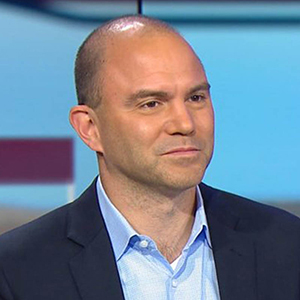
Barbara A. Perry
Hello, Ben.
Spencer Bakich
Hey, Ben.
Perry
How are you doing? Hello from Charlottesville [Virginia].
Ben Rhodes
OK. How’s it going?
Perry
Going well. Beautiful here. Beautiful here in Charlottesville this spring.
So we’ll just jump right in. Thank you again for meeting with us. This is our third session with Ben Rhodes for the [Barack] Obama Oral History [Project] by UVA’s [University of Virgina’s] Miller Center. As we have done frequently, I’m going to turn to my expert colleagues, Spencer [Bakich] and Bob [Robert Strong], to carry out what I think will be our final session on some of the final topics, particularly related to international relations. Spence, you want to forge ahead?
Bakich
Sure. Ben, it’s good to see you again, as always. You mentioned last time we met that we should probably focus on 2014, 2015, 2016, that time frame. And if you don’t mind, I’d like to start our focus with Iran. The reason why I was suggesting Iran first is because you can’t really explain much about what happens in 2014 and 2015 with Iran unless we take it back a few years prior.
I’m thinking, I suppose a good place to start is with the U.S.–Iran policy review that the administration kicks off in 2009, where, as a result of that, we get the announcement that the United States will join the P5+1 [five permanent members of the United Nations Security Council plus Germany]. I was wondering if you had any insights as to how the administration is thinking about the Iran problem—its nuclear program, its ballistic missile program, the activities of the Quds Force—very early on, and I guess we can push it forward from there.
Rhodes
Yes. Obama had—this had been a big issue on the 2008 campaign, and so he had staked out this position and had to defend it for, like, [laughs] a year and a half, that he would engage in diplomacy with the Iranians directly. So that was no—I don’t think there was a big mystery that we were open to that. The [George W.] Bush administration, if I remember correctly, in 2008, had actually started to engage the P5+1 process a little bit, too, so there was already a venue for the diplomacy that had been somewhat established through the P5+1.
I don’t have much memory of that process, of that review. What I remember more is how Iran interacted with all the other things that were going on, which was a theme for the whole administration. In 2009, for instance, I was—we talked about it, I think, but I was very involved in the nuclear issues, the Prague [Czech Republic] speech [on nuclear disarmament], and the nuclear posture review.
I think we were very deliberate in trying to frame the Iran issue in the context of nuclear proliferation. I think that was something that came out of that review, which was essentially, rather than treating this as this bilateral tension between the U.S. and Iran, we wanted to strengthen the norm around nonproliferation, strengthen the nonproliferation treaty, demonstrate through the New START [Strategic Arms Reduction Treaty] negotiations that we were recommitted to the nonproliferation regime as a means of isolating Iran’s behavior on nuclear issues.
The strategy was, essentially, we’re going to reinvest in the nonproliferation regime. We’re going to show that we’re doing that through the Prague speech; through the New START negotiations; through, in the fall of 2009, Obama chairing a UN [United Nations] Security Council session on the NPT [Treaty on the Non-Proliferation of Nuclear Weapons]. All of that was part of trying to generate global pressure on Iran to come into its obligations under the NPT. That was one element of what I remember.
The second was, I don’t remember exactly when, but the facility in Qom [Iran]. The U.S. intelligence community had basically discovered this covert nuclear facility that the Iranians had built. I don’t remember exactly when that happened. But we chose very deliberately to have Obama chair this UN Security Council session on the nonproliferation regime, and then the next day, at the G20 [Group of 20 Summit], announce the revelation, essentially, of this covert facility—again, to build pressure on the Iranians.
And then the other two things I’d say are, well, on the nuclear side, there were these initial talks in late 2009, and there was this proposal to have a confidence-building measure around this research reactor in Tehran. I remember that was very deliberately set up as kind of a test of whether the Iranians could actually follow through on something, with the idea that if they didn’t, then that would be the pretext, essentially, for moving to harsher sanctions on the Iranians. And so on the nuclear issues, that was the play we ran in 2009: Show we’re willing to come to the table; build the nonproliferation regime; and then, through diplomacy and that nuclear work, build pressure on them.
The only other two things I’d mention are, the military was—on the Quds Force piece—the U.S. military, I don’t know if it was 2009 or later, but they would occasionally agitate for us to go after the IRGC [Islamic Revolutionary Guard Corps] in Iran. Obama basically indicated he didn’t want to do that. So it was not a big issue, but that was lurking in the backdrop.
There’s one other thing. [thinking] Well, yes, I guess that probably would cover—oh, the only other thing is, we did that Nowruz [Iranian new year] message, which I thought was interesting, in March of 2009. It was my idea, with Kelly Magsamen, Puneet Talwar, and Denis McDonough, to have Obama do this video where he addresses the Iranian people directly, addresses Iranian leaders directly. That was meant to signal a new approach but also to speak over the heads of the Iranian government to the Iranian people. So yes, that’s—now, there’s the Iranian election too. I don’t remember the exact timing of that, but that obviously was a factor as well.
Bakich
That was June ’09. I was actually going to ask. I don’t imagine that Mahmoud Ahmadinejad’s election was welcomed in the White House. Did that pose a significant challenge immediately and thereafter?
Rhodes
It did. I felt particularly—so that was shortly after the Cairo [Egypt] speech. What I remember about that is, because I had written the Cairo speech, I felt some—and this becomes a theme with the Arab Spring too—but I felt some, maybe “responsibility” is not the right word, but I felt some, [pauses] well, obligation, I guess, to the people who were protesting.
So you had this election. It’s pretty clearly stolen. Then you had these protests. I did not like our response. I was definitely agitating for us to be more outspoken. I don’t know that it would have made a huge difference, so I want to be honest about that. It’s not like if Obama came out and made some great speech, the Iranian government would have capitulated. But I did think we got that one wrong. I thought we waited too long.
Ultimately, Obama said all the right things. It was after the woman—I think her name was Neda [Agha-Soltan]—was shot, in this very graphic [violent] video, that he finally went out and made a very strong statement in the White House Briefing Room. There had been a kind of reluctance to get in the middle of Iranian politics, for some good reasons.
I think the argument that persuaded Obama was that if we are outspoken about this, it will look like—we’ll turn the [Iranian] Green Movement into, they’ll say it’s a tool of American imperialism or something. But they were going to do that anyway. [laughs] So my view of these questions of “when do you speak out on something” are, don’t self-censor just because they’re going to accuse you of meddling in their politics. Whether it’s the Iranians or the Russians or whomever, they’re going to accuse you of that anyway.
And then, yes, it was complicated because, on the one hand, it was worse that Ahmadinejad, certainly, was president. That was not a guy that we were going to do a deal with. But also, they were kind of weakened, too. In some ways, it made it easier to pressure them.
The only other thing I’d say—because it foreshadows what ends up happening with [Hassan] Rouhani in 2013. Obama sent a letter, I remember, to the Supreme Leader around the same time that we did the video for Nowruz, and we got a response back that wasn’t particularly constructive. It was a pretty predictable list of Iranian grievances. So yes, there’s a lot—I guess a lot did happen in 2009, [laughs] but a lot happened every year with the Iranians. So, yes.
Bakich
Sure. This is one of those cases where if you look back, knowing how it ends with a signed JCPOA [Joint Comprehensive Plan of Action], you look back over those subsequent years, and you ask, How did we get here? I’m seeing at least three components of what we could call a “course of diplomacy” campaign. Right? On the one hand, you’ve got significant sanctions by the United States and the European Union working almost hand in glove. You’ve got significant pressure coming from the Israelis, which is threats of attack and also an assassination campaign going on. And then you have a cyber initiative, which I’m not sure if you are able to speak about.
I’ve asked this question of several people, about, Do you know anything about Stuxnet [malicious computer worm] and are you willing to comment? The answer is usually, I do not know what you’re talking about, move on. Are you able to speak to any of those particular elements, and are they working together? Is there a coordination effort, or are these three streams that are working in parallel through 2010, 2011, and 2012?
Rhodes
Yes, I’ll come back to the cyber piece. On this one, I really do think—and this is one of a million reasons why it’s so frustrating, what [Donald] Trump did in his first term. It really was a seven-year coercive diplomacy campaign that I think holds up if you—it was remarkably consistent.
This drove me nuts, because—we can get to the weirdness of the debate in 2015 and ’16 later, but people kept acting like we were hiding the ball, or they were shocked that we were doing this diplomacy in 2013. Obama ran for president saying he would do this. He spent—he immediately extended a diplomatic hand to the Iranians. When they didn’t take it, we moved to coercive tactics through sanctions and diplomatic isolation. And we pursued that path for several years, until we got a partner in Rouhani that would reciprocate, and then we negotiated a deal for two years. That—and it’s pretty consistent.
I worked on a lot of policies that lacked that coherence in eight years. This one was remarkably consistent and coherent, and worked. Whether or not—you could argue about how good a deal the JCPOA was, but what we set out to do, by the end of the eight years, it was—if you had told me at the beginning of the Obama administration that at the end, we’d have this deal, I’d say, Wow, that’s great. That worked. That succeeded. So there was definitely a thread to the coercive diplomacy that was, I think, remarkably consistent.
The Israelis, that’s a whole other story. That was challenging because, on the one hand, they were useful as a “bad cop” [to make the U.S. seem more reasonable] in some ways. But they were also very difficult to—they were constantly getting in our politics, and trying to derail diplomacy, and trying to make this only about pressure. And that story gets much more intense in the second term.
On the two other things, I can’t talk about Stuxnet. As you may know, there was a very serious FBI [Federal Bureau of Investigation] investigation into that. I was not the culprit, let’s just say, but because I was in charge of communications, I had to spend a lot of time involved in that. But what I would say, I guess—I think I can say it this way, is that we would certainly have been—how do I say this?
I’ll put it this way. We had nothing to do with those assassinations and were not aware of them before we learned about them like everybody else did. That was not part of our strategy. That was an Israeli—well, presumably, allegedly, whatever caveat I need to put on that. So that’s how I’d categorize it. Of all the things you referenced, that was one that was not a part of any Obama administration policy.
Perry
Spencer, could I jump in? Ben, this may reveal my lack of understanding of international relations, but I wrote down Iran, Egypt, and Syria. On each of those three, the administration had to determine what to do, how to intervene, as portions of the populus rose up against the regime [Arab Spring]. Is it just safe to say—or is it too simplistic to say—the administration, probably like most administrations, has to take these things as they come, they have to take them case by case.
But on the other hand, you’re very open in your book about Egypt and how there were at least two camps in the White House and beyond, in the Cabinet, arguing different positions about whether to say to [Hosni] Mubarak, This is it, we’re going to support those who want you out, and those thinking, Yes, but we’ve worked with him for so many years. None of these people in charge of these countries are the kinds of people we want to be in charge, typically, and particularly in an Obama administration.
So I guess my ultimate question is, is there some kind of process to figure out when to speak, when to intervene, when to go to the sanctions, et cetera, or does it just happen organically?
Rhodes
I’d say two things. First of all, one thing that it’s, I think, hard for people watching from the outside to understand is the difference between when it is a country like Egypt, that is a U.S. ally that we provide billions of dollars in assistance to, and when it’s a country that is an adversary of the United States that is already sanctioned. The reason that’s important is that we don’t have many tools with an Iran or a Syria to affect their internal politics. We can issue every statement we want.
But with Egypt, it’s the question of, should we continue to basically prop up an autocratic government with our assistance? Some people would say, understandably, How come you guys muscled Mubarak aside, and you didn’t do that to [Bashar al-] Assad? It’s like, well, sure, we would have loved to have done that with Assad, but we were not the Russians and the Iranians. If we were—the Russians and the Iranians essentially played the U.S. role vis-à-vis Assad that we did vis-à-vis Mubarak. So that’s one point, just that there are many, many more levers to pull if it’s a U.S. recipient of military assistance, it’s a U.S. diplomatic partner.
But then the second point is, it’s fundamentally kind of episodic. You don’t know—you kind of know the events that might be destabilizing an election in Iran, but you’re inherently being responsive. That said, there’s still a process. You have a deputies and principals committee meeting, and you review, what are our options, and what should we say, and what sanctions should we consider. If it’s Egypt, should we pause assistance? If it’s Iran or Syria, should we do this sanction or this action? You do assess a range of things, but yes, you’re inherently reactive.
My overwhelming lesson is, you’re inherently limited in your capacity to shape these outcomes. It’s taken the U.S. government—and I think Trump’s final reelection cemented—but it’s taken the U.S. government a long time to realize that we cannot engineer the politics inside of these Middle Eastern countries. Even Iraq, where we had the most leverage, it was difficult to influence Iraqi politics. I think you do have to accept that there is a limit on your capacity to engineer things.
I still thought that it was worth speaking out because I thought that that is not just a message to the people in those countries, but it’s a global message of, Hey, we are going to hold people accountable. We’re not going to look the other way when these things are happening. We want it to be uncomfortable for an Iran to crack down on its people. If the U.S. is not speaking out about that, and other countries aren’t speaking out about that, it’s comfortable for them to just crack down. If we’re making a lot of noise, if we’re calling it out, if we’re spotlighting the worst excesses of what they’re doing, that’s more uncomfortable for them both domestically and internationally. I still think there’s value in doing that to fortify—it’s a quaint concept, but to fortify norms of democratic behavior, or human rights-related norms.
I will say that on Iran, like I said, there was a remarkable consistency to our approach on Iran that was missing on Syria and Egypt. I think on Syria and Egypt, we’d try one thing, and then we’d try another, whereas with Iran, it was like—I think the most important decision that Obama made was that the nuclear issue was the paramount U.S. interest in this country. We don’t like all these other things Iran is doing. We certainly confront them. We try to interdict weapons shipments. We sanction the IRGC. There may be things in the cyber domain. It’s not like we weren’t doing other things.
Even on the political side, we tried to get internet access in Iran, and we broadcasted into Iran, so we were doing a lot of things. But the nuclear issue was the foremost concern, and that guided our decision-making over the course of eight years.
Bakich
Ben, could I jump in on that point? So is the articulation by the president of the United States that this particular issue is paramount—you attribute a lot of that consistency, coherence, to the president’s intervention and the focus that he offers. Was that similar type of articulation lacking in Syria and in the other cases? I just want to make sure that I’ve got your point clear because I think it’s an important one.
Rhodes
[pauses] Well, in some respects. You know? Because in Egypt, you have an interest in democracy, but you also have the peace treaty with Israel, and you also have terrorism concerns. And so it was lacking because every time we’d have a debate after, say, 2012 about Egyptian military assistance, there’d be people like me saying, We shouldn’t give them all this military assistance, because they’re repressing their own people brutally. But then the other arguments would be, Well, we have to give them the assistance, because it’s part of the Camp David Accords, and it’s fundamental to Israeli security that we support the Egyptian government, or we have concerns about terrorist groups in the Sinai [Peninsula], and they need these weapons to go after those people.
So, yes, on Egypt, there was definitely a tension about, What is the paramount interest here? I believed that in the long run, a more democratic Egypt would actually be better for those other interests, but that was not—that was the winning view for a year, in 2011, but by 2013, that was not really the view, or at least not the policy.
Syria is a little more complicated because that was such an extreme situation that we—you know, there was no refugee crisis in 2012. By 2015, the refugee issue was a paramount issue. In 2013, obviously, the chemical weapons issue was a paramount issue. So in Syria, I think it was just a more fluid situation. In that one, events drove things more than anywhere else, I think.
Bakich
And as somebody who spends a lot of his professional life studying process in foreign policy, I have to ask the question, was there something different about the way that Iran policy was crafted? Were the meetings different? Was it hived off from the rest of the NSC [National Security Council] process, or was it factored into the regular ebb and flow of national security decision-making?
Rhodes
I think it became different in the second term. I don’t know if you want to get to that. But in the first term, it was pretty integrated.
But once this negotiation started in 2013, there was an exceptional process built to support the Iran negotiations. I actually think, as an occasional process nerd myself, it was a model in the sense that there was this team built, interagency team, not just around the negotiating team but it was mirrored back in Washington, where you had nuclear experts, sanctions experts, intelligence analysts. You basically had people who knew how to deal with Congress. People who were dealing with the Europeans on it, so you had European experts because of the Europe dimension.
It was, I think, a kind of model of how to build a process around a priority. We are going to find the best people. Who’s the best sanctions person at [Department of] State? Who’s the best sanctions person at [Department of the] Treasury? Who’s the smartest nuclear expert in the intelligence community? And just assemble this kind of Avengers [superhero] team. And it was a remarkably consistent team for three years—unsung people like Paul Irwin and Richard Nephew. So that was different. It was a true presidential priority.
And I learned—and this is the same thing on Cuba. I take the lesson from my years in government that if you really want to change a U.S. policy, you need to create an unusual process. The normal process will produce the status quo outcome. But if you’re like, You know, I want to change something in this Iran policy, I want to change something in this Cuba policy, or I want to change something on climate, as we talked about last time, you have to build a new process to get a new outcome.
Bakich
Hmm, that’s really interesting.
Robert Strong
Can I ask a question about Iran? I think your description of it being consistent, methodical, ultimately successful policy is all fair. Did the administration get much credit for that? And was it seen that way at the time by domestic and international actors?
Rhodes
I’m obviously the one who has probably the most scars of anybody, [laughs] so this is such an important question that has so many dimensions. Internationally, 100 percent. Internationally, we got a ton of credit. The Europeans loved the Iran deal. It addressed a security concern of theirs, but also they believe in the approach of trying to pull the Iranians in a different direction. Obviously, it was an area where we could continue to work constructively with the Russians and Chinese despite tensions in other areas. Everywhere except Israel and the [Persian] Gulf, the approval rating for the Iran deal was very high. Maybe there are some outlier European hawkish types, but among European politics and European publics, overwhelmingly positive, and certainly in most of the rest of the world.
I think why this is an interesting question is, I don’t think the American people have—and look, I’d be the first to acknowledge, I believe this was a success and an important success. People can disagree and say, Well, you know, I don’t like this deal. That’s fine. I don’t expect everybody to agree with me. What I do think is, I don’t think the American public has very strong opinions about the number of centrifuges that Iran is allowed to do R&D [research and development] on 10 years out from a deal in 2015.
What was weird about it is, the Israeli and Gulf opposition to the deal overlapped with the Republican Party’s interest in attacking anything Obama did in a chain reaction kind of way, to use a nuclear analogy. [laughs] You have the Israelis mobilizing all their support in the U.S., mainly through AIPAC [American Israel Public Affairs Committee]. This isn’t a conspiracy theory. AIPAC spent tens of millions of dollars opposing the Iran deal publicly in U.S. politics. The Israeli prime minister flew to the United States and gave a speech to Congress opposing it. Then you have the Gulf, which is more influential in Washington than people know. They are very influential with certain journalists. They’re very influential at certain think tanks. To put it simply, they’re very influential with a certain kind of elite opinion.
And so when you had, in 2015 and ’16, the Israelis and the Gulf cranking up their networks to full throttle, at the same time that you have a Republican Party that had already become radicalized against Obama, entering a presidential campaign where the incentive is to say the most bombastic thing attacking Obama, you have a lot of noise. Now, I don’t think most ordinary people even care. Part of what was so weird about this whole drama in 2015 around the deal is that we’re just relentless arguing about something that is important, but it’s not foremost on the minds of ordinary people in the U.S., which I had to constantly remind myself of.
And actually, whenever we polled it, people were like, Yes, we’d rather have this deal than have to bomb the Iranian nuclear facilities. That’s how Americans looked at it. So it usually polled well. You could ask the question differently, like, Do you think we should be giving them money? or something, and then of course people would say, No, don’t give them any money. But the basic premise of—and look, Trump has announced he’s going to try to get a deal. [laughs] Americans don’t want another war, and they’d rather have a deal. And they don’t really know about the particularities of centrifuge technology and uranium mines. So it was a very strange episode. I know I’m skipping ahead.
Strong
Well, and it’s a complicated issue that is either hard for the American public to understand, or the public understandably doesn’t care all that much about its details. Does that open the door to domestic political distortions in the debate and the commentary that makes it harder for the success to be claimed or appreciated?
Rhodes
I have a pretty provocative take on this, which I’ll get to. I actually think Obama won the debate publicly, in terms of the—because what Obama realized is that—what do Americans want? They don’t want Iran to get a nuclear weapon, and they don’t want to be in a war with Iran. So when Obama would talk about this, that’s what he would say. And that was something that people could understand. I don’t think any of Obama’s supporters were upset about the Iran deal.
What happened is, the opponents, people who already didn’t like Obama, this became something to really fire them up. My provocative take is that it was a remarkable case—and Trump was particularly skillful at this, and he continues to be—of bringing identity politics to foreign policy. So where I’m being provocative here is, These are brown people. These are Muslims. We’re giving them cash. Obama is in league with terrorists. He won’t say “radical Islam.” He’s doing deals with the Iranians. He’s letting people cross the border. ISIS [Islamic State of Iraq and Syria] could be coming across the border.
And so this very technical nuclear negotiation got wrapped up in this big ball of “other”—of “radical Islam,” remember that debate? It’s crazy how big a debate that—Why won’t you call it “radical Islam”? And the border stuff was not just about Latin Americans coming across the border. ISIS was going to cross the border.
And so there was this effective—to their audience. I mean, like I said, I don’t think a Barack Obama [supporter] was like, You know what? I liked Obama, but then he gave Iran sanctions relief. But if you’re watching Fox News, what you’re watching is a segment on the border, a segment on the Iran deal, and a segment on radical Islam, and it’s all kind of the same thing. Then you go on social media, and it’s all the same thing. It’s just one big “other,” that Barack Obama, Barack Hussein Obama, is somehow on their side, not on your side.
I think that was very effective in contributing to the radicalization of the Right in this country, and very unfortunate. It bothered me, too, because I thought—I don’t think—I’m not saying everybody who opposed the Iran deal was trying to do that. That’s not—I know people who are very smart people who were just like, You guys should have gotten a better deal, or, I just don’t think a deal with these guys is worth doing because they’re not trustworthy, or, Why didn’t you do the ballistic missiles? or, It should have been longer. Those are all totally fair arguments. There are plenty of good reasons that people could find substantively to take issue with the deal.
But what bothered me is that the politics of the opposition, I think, became this “otherization” of it. And so the people that were mounting these other arguments—because as someone who was responsible for that—I was literally responsible for that whole debate with Congress and in Congress. I’d be on the phone for an hour talking to some nervous Democrat about the possible military dimensions of the Parchin facility, as if anything I tell them is going to turn down the heat that they’re getting at a town hall or something. Those people are not showing up because they’re angry about the inspections of the past militarization of nuclear technology at the Parchin facility before 2002. You know? There’s an absurdity to it.
But the whole late Obama years were like this. It’s like, you’re in “normal land” here, and you’re trying to have good-faith arguments and debates about policy, and there’s a mob right outside the room that is trying to burn it down. That’s why I think it’s such an important issue to understand what happened in American politics between 2013 and the election of Donald Trump. And this is why I fault AIPAC. AIPAC made itself a useful part of that. And I think AIPAC had other interests. Their interests were, they didn’t like this deal. The Israeli government didn’t like the deal. They’re there to represent a certain point of view. But they were contributing to Trump.
All the people that jumped on this bandwagon then became surprised that the Republican Party became the party of Trump. Whether it was Benghazi [Libya, terrorist attack on U.S. facilities], whether it was the Iran deal, or whether it was “Obamacare” [Patient Protection and Affordable Care Act of 2010], the hyperbole around the attacks on these things, and the bad-faith nature of some of those attacks, is part of what opened the door to Trump. That was the logical end point of the kind of arguments they were making about, Obama doesn’t love this country, or He wants to weaken it deliberately, or He loves the ayatollahs [supreme leaders of Iran]. There are mainstream Republicans who are saying things like, Obama likes the ayatollahs, and all this stuff.
To me, it’s central to understanding how we ended up where we are today. Not the Iran deal itself, but it was one example of a broader dynamic that was taking hold in the nature of the opposition to Obama in those years.
Strong
All right. And I want to just follow up real quickly. One way to describe that is, closely divided nation, rising levels of partisanship, and say there are some structural issues that just made it harder to do controversial, consequential foreign policy initiatives without getting into the partisan fight. That’s one way to describe it.
There’s another way to describe it that you got from some of the commentators at the time. It’s not the two sides behaving in the same way. It is more of an issue from the Republican Party and the changes that were taking place within it that become Trump and Trumpism and that it isn’t just that we lack a core consensus of the kind we had during the Cold War and are becoming more partisan. It’s that one of those two parties was behaving in new and dangerous ways.
Are both of those explanations worth exploring further?
Rhodes
Yes, because this is really important. I think it’s more the second than the first, but it is both. On the first point, I don’t think it’s just polarization. I mean, that’s part of it, but I think it was the media polarization. If we had done this deal in 2009, it would have largely been adjudicated in newspapers and nightly newscasts and, yes, some cable news, some cable news yelling. By 2015, it was a social media environment with a much more powerful Fox News in the cable space. It’s actually interesting to look at. It was maybe one of the first major complicated foreign policy things that happened after the fracturing of the media environment. Through the Cold War, Americans accepted the filter through which they were asked to have an opinion about a complicated foreign policy issue.
The example I give is, we did not give Iran $150 billion. That didn’t happen. We gave them sanctions relief. They had roughly $150 billion in revenue that had been frozen in the sanctions. It was their money, not our money. I think even by the end of the Obama administration, precisely because that sanctions regime was so strong, maybe they had been able to access a fraction of that money, a few tens of billions of dollars, I think $50 billion, of their own money. On social media, it was, We gave the Iranians $150 billion, and you could not convince somebody that that didn’t happen. They believed it because they’re just getting a steady bombardment of that. That would not have happened 10 years ago. So yes, I think there was some—it’s not just polarization. It’s this very specific form of polarization through the changing media environment.
And then I do think that, with the Republican Party, the decision that was made in the first Obama term by, I think, more generally responsible politicians like John Boehner and Mitch McConnell to just universally oppose whatever Obama does. They lost control of that decision in the second Obama term. They legitimized that the idea that, whatever he does, we’re against. The example I always give on the Iran deal is that just about the entire Republican caucus announced its opposition to the Iran deal before they even saw it. I don’t think Democrats would have done that, I really don’t, if the roles were reversed. They certainly didn’t in the Bush years on a bunch of foreign policy things.
But what had happened is that by 2015, McConnell was kind of still in charge of the Senate caucus, but Boehner, [Paul] Ryan, they weren’t in charge of their caucus. I remember—I’ll tell you about a pretty remarkable meeting I had.
After the election of Trump, I met with Paul Ryan’s staff in the Situation Room about the Iran deal. What I saw is that they realized that they’d had all these votes to kill the Iran deal, just like they’d had all these votes to kill Obamacare, and they realized they can’t do that anymore because then they’d actually kill it. And we briefed them on, like, “Hey, this would happen. This is what would happen if you kill this deal.” And they’re like, “We don’t want to do that.” And they didn’t, by the way, you’ll notice. They didn’t pass a single vote repealing the Iran deal. Ultimately, Trump had to pull out over the objection of his own staff. That tells you exactly what happened, which is, they lost control of their caucus.
So by 2015, it was not Paul Ryan—I don’t even remember who was Speaker at the exact time, Boehner or Ryan, that was in charge of that. It was whoever was saying the craziest thing about Obama who was going to get the most attention in that caucus. It was [Michael R.] Pompeo and Jim Jordan. And crazy stuff. Just to be personal about it for a second, they had a hearing. They thought we edited transcripts of State—that I had edited transcripts of State Department press briefings or something, which I’ve never done. Then there was a conspiracy theory that I had been denied a security clearance in the Obama transition because I was an Iranian agent. These are things that elected Republicans were saying. It was just nuts.
And so I do think there was obviously hyperpartisanship on the Democratic side, but there was an asymmetry of just how far they were willing to go with it. That made Trump the logical leader of that party in 2015.
Strong
Asymmetry on crazy.
Rhodes
Yes, an asymmetry of crazy, and an asymmetry of being willing to say—what I always took grave offense to was, their hit on me for two years was that I was lying about the Iran deal. I never lied about it. I believed it was a good deal. You can disagree with that, but I believed everything I said. And we never just lied. We never just came out and said something that wasn’t true. Show me the thing we said that wasn’t true. You can totally say, These guys are weak. These guys don’t get the Iranians. These guys should have done more against the IRGC. I don’t agree with that either, but that’s fair political partisanship. But they were willing to say things that weren’t true, like we gave them [Iran] $150 billion. And I don’t think Democrats do that.
Strong
They accused you of lying.
Rhodes
Constantly. Constantly. Yes. But they never said what I lied about. The only thing that they claimed was that I’d invented a story—and this was that New York Times thing—that I’d invented the story that the nuclear negotiations began when Rouhani was elected, when they’d actually begun in secret before that. I was like, That’s not—I wrote speeches for Obama in 2007 saying we wanted to negotiate with these people. I wasn’t trying to hide it. Why would I lie about something that I had been saying for seven years? So it was just a—
That’s where the asymmetry was. They were willing to cast aside—and look, I’ve studied the debates over the Panama Canal and the SALT [Strategic Arms Limitation Talks] treaty. Yes, people—it’s not like lying didn’t exist in the past. Maybe not lying, but exaggeration. But this—it went to a level of kind of conspiracy theory that I think was new. And by the way, I don’t think that’s the Republican Party that John Boehner, Paul Ryan, and even Mitch McConnell wanted. And they weren’t usually the ones doing that. So I’m not saying all Republicans. But the people that were driving—the people in the back seat suddenly were the ones driving the car by the Iran debate.
Bakich
It sounds to me like even if the terms of the JCPOA would have been extended in perpetuity and not after 10 some-odd years, and even if the ballistic missiles and the Quds Force were wrapped up into the terms of the deal, it sounds to me like what you’re saying is that there would have been opposition no matter what.
Rhodes
I think so. To get back on the timeline, this was—when we did the interim deal, the JPOA [Joint Plan of Action], JPOA—these acronyms are crazy—we tried really hard with AIPAC and Israel and the Republicans, and they just weren’t interested. And then when [Benjamin] Netanyahu came and gave that speech to Congress, the thing he laid out—ballistic missiles, no support for terrorism, permanent restrictions on everything—that’s not possible, there’s no deal. The Iranians are never going to agree to that. So if the sunset [agreement end] had been five more years, and there had been no research and development, some of these things that we had a lot of debate about, I can’t imagine that the Republican Party would have supported it if it was 20-year deal instead of a 10-to-15-year deal.
It just felt like they were going to oppose everything Obama did, which, again, is not unique to Iran. It was health care. It was everything else. And the same applies to Netanyahu, which, again, is his right. They [Israel] are a sovereign country. It’s the right of the Republican Party too. But it just made it kind of disingenuous to be having these endless debates about things that were on the margins when they were going to oppose anything. And by the way, the test of whether that was sincere is, let’s see if they oppose Trump if he gets an Iran deal. [laughs] You know? Because he’s not going to get all those things either. If he does, then I’m wrong, but I wouldn’t bet on it. So I think that was a piece of it.
We also hamstrung ourselves. We were so—one little detail for history that always bugged me is that the lawyers—we lawyered everything, so everything we said had to go through not just fact check but lawyers. The reason it’s called the “Iran deal,” which sounds kind of shady, right, is that the lawyers wouldn’t allow us to say “the Iran agreement.” They said, “Technically an agreement needs to be approved by Congress.” So we’re playing by some rulebook that is so far thrown out the window on the other side. And that kind of thing happened, too, where it’s like, we were an extra-normative administration because Obama was very scrupulous. He was a lawyer, and he wanted to—I think also, frankly, the pressure of being the first black president, I’m going to double-check everything. And you talk about bringing a knife to a gunfight.
The reason I think I became such a lightning rod is that I started throwing some elbows. I actually started, not fighting dirty, but I was calling out AIPAC in ways that people didn’t before. I was bringing back the Iraq War and throwing it in their face, and they didn’t like that. I think part of the reason why I became such a target is, unlike a [Antony] Tony Blinken, or a Wendy Sherman, or a John Kerry, I was a little more willing to—I saw who we were dealing with. It’s not how I started. I worked for Lee Hamilton, guys, at the Wilson Center [Woodrow Wilson International Center for Scholars], which no longer exists. But I just looked around by 2015, and I was like, there’s no way we can fight these people without actually fighting them.
Strong
We’re circling back to one of the really important themes in your book and in some of the earlier discussions we’ve had with you, that you can’t understand the Obama administration unless you understand the transformation of media that’s taking place during that eight years. But I want to ask something else. Some commentators say that is an important factor, but another important factor is a racial backlash against the first African American president that shows up in opposition to things Obama is for, shows up in crazy birtherism [conspiracy theories about Obama’s eligibility to be president], and in other forms. Is that something that also made all of this worse and harder to deal with?
Rhodes
Yes. So many of my assumptions about this country and its politics have been on a roller-coaster for the last decade. I remember when I left government, thinking—in the same way that when I was growing up, I would learn about things that happened in the ’60s or ’70s, how people used to talk, and some of the things people used to do, and think, Oh, my God, I can’t believe that happened.
I thought, 30, 40 years from now, people are going to look back at the Obama years and be like, I can’t believe that happened. I can’t believe people talked about the first black president like that. The, He hates America, he wasn’t born in America. But on Iran, He’s on their side, not ours. Some of it was, you can go back and probably find some pretty overt racism. And there were memes going around of Obama dressed like an ayatollah, and Trump out there on the campaign trail saying, “Barack Hussein Obama loves the Iranians, and he’s giving them money,” and stuff, in a way that I don’t think would have landed with a white Democrat the same way.
But there’s something more invisible. I learned a lot about the invisibility of American racism in the eight years that I was there, which was just the inherent mistrust of his intentions. Again, it gets back to what I was saying about the otherization: Obama’s letting them get money in Iran. He’s letting them cross the border. He’s one of them. He’s not one of us. Sure, there’s some of that when Bill Clinton is president, but it was just cranked up. And if you don’t think it was cranked up, how do you get George W. Bush at the end of Clinton and Donald Trump at the end of Obama? I just think there was a—it wasn’t like people calling him the N-word, although that happened sometimes. It was more just this casting of him as something other and untrustworthy.
And Marco Rubio, right? I remember Marco Rubio in that campaign. The famous line that Chris Christie actually ended up getting him to repeat at that debate, “He’s deliberately weakening America.” You know? I just think some of that was, it’s hard to quantify how much of that was racialized and how much of that was partisanship. It’s a hard thing, and this would be a great thing for historians to try to unpack. Because what’s so complicated is, it wasn’t all racism. Yes, some of it is just opposition. Some of it’s just polarization. Some of it’s that people have other grievances.
But there was an extra thing in terms of the intensity of hatred of Obama, who, as you all will probably find, is a pretty temperamentally conservative person. You know? He was an incredibly patriotic president. He was a Reaganite [aligned with Ronald Reagan] in terms of how he talked about America and was absolutely committed to not having Iran get a nuclear weapon. There was no other meeting happening. It was like, We don’t want these guys to get a nuclear weapon, and we don’t want to bomb their facilities, and we don’t want the Israelis to bomb their facilities and draw us into this war. And so what’s the best deal we can get to prevent that from happening?
Again, you can disagree with that, but there was an intensity. What’s interesting is it was always there under the surface. But by that second term, it was like the lid was being—because social media, there was no—there are certain things you were not allowed to say even on Fox, but social media kind of opened up this Pandora’s box. And then Fox—and I pick on Fox as just kind of the id of the Republican Party. Fox’s language started to—they were worried, I think, that, Wait, there’s this whole discourse over here on social media. We’d better get at least close to that, or else we might lose these people. And so the racism started to get more—I mean, imagine if John McCain stood up in 2008 and said “Barack Hussein Obama” at all of his rallies. Not only would he not have done that as a human being, but it would have been like, What?
Weirdly, that was more normal at the end of the Obama administration than the beginning. I think—I believe, and people can disagree, and they can say I’m “woke” or something—I do believe there was something triggering about having a black person in that office for eight years that just ate away at some people and opened up the aperture for some of this stuff to reenter the mainstream. As long as you didn’t say certain things—you know, you’re not calling him a racial epithet—you can push up against the boundary of casting him as an other. And I think that’s important to understanding the Obama presidency.
The defensive thing I say, as someone who has, I think, demonstrated a willingness to be self-critical of myself and of Obama, is, when some people even on the Left say, Well, Obama led to Trump, and that’s his big failure, I’m like, Well, at the end of the day, the only thing that really did that—it wasn’t Obamacare. It was the fact that he was black. Because he wasn’t that far left. Most of my critiques of Obama are that he didn’t do something more progressive, because that’s where I’m oriented. He was a pretty middle-of-the-road politician, you know?
Strong
[unclear].
Perry
What was that, Bob?
Strong
He passed “Romneycare” [Massachusetts health care reform law, 2006].
Rhodes
Exactly. Exactly.
Strong
Not a radical alteration. It’s a—
Rhodes
An evolution, an incremental evolution. And Obama is an incrementalist. And, you know, we pushed it on foreign policy with Iran and Cuba. But at the same time, I actually don’t think the Iran deal—it will be interesting to see what Trump does now, but I don’t—there’s not another solution here. You have options. There are three ways of dealing with the Iranian nuclear program: bombing it, sanctioning them, and making a deal. And the middle one, sanctioning them, is the “Goldilocks option” [most appropriate], but it doesn’t stop them from getting a nuclear weapon. It makes life more difficult for them. And so I would like to think that most Democratic presidents would have probably done the same thing we did, and even some Republican ones.
Strong
It doesn’t stop them from getting a nuclear weapon. It just postpones it.
Rhodes
Yes. I mean, Bush started talking to the Iranians in 2008, and I think in part because some people like [Richard B.] Cheney wanted to bomb the Iranian nuclear program, and Bush didn’t want to, to his credit. And I don’t think [Condoleezza] Condi Rice wanted to because they saw Iraq, and they were like, Well, we don’t want to do that again.
So yes, I guess I wasn’t surprised at how big a fight that was. I guess I was surprised that after it was over, in 2016, they just wouldn’t let go of it. You know? I mean, I knew they would never say, Oh, this was a good thing. But why Trump had to pull out of that deal, achieving nothing and just creating a problem for himself now. [laughs] He would be better off with that deal in place. And there’s just something weird about that. Cuba was different because it was more eccentric.
But yes, so Iran, immigration, health care, those were the real flash points. And I guess some of the cultural issues, but the thing about the cultural issues is that they didn’t emanate from the White House. What’s interesting is, Obama didn’t create the Black Lives Matter movement. Obama went with the flow on gay marriage. Some of the stuff that was changing in the culture ended up being attached to Obama in ways, I guess, that make sense. I mean, things that happen when you’re president become your thing.
Bakich
So the heat that the administration, Obama in particular, is getting over the Iran deal, that doesn’t seem to be—if my memory is wrong on this, let me know—but that doesn’t seem to be the case with the ISIS campaign. Is that true?
Rhodes
Not after it started. I mean, I think— [pauses] The interesting thing about Obama, and this is not a race point, is he was also just a huge figure. People were aware. Barack Obama is an historical figure in the same way that Donald Trump is, in the same way that Ronald Reagan was, in a way that Joe Biden wasn’t. And so when an individual hostage got beheaded by ISIS, it was like, Obama, what are you going to do —people weren’t waiting. There wasn’t the same—when Biden was president, it wasn’t like, What’s Biden going to say about this? What is he going to do about this tomorrow? Even the people that did the beheading called out Obama in a way that I’m not sure they would have called out a Biden, right? So Obama took a lot of heat at the height of the ISIS crisis, which was the beheading of the four hostages.
Once we started that campaign, we had a communications strategy that worked really well, which was, every couple weeks—and this was Obama and I. I give Obama the credit, but he called me, and he’s like, “Here’s what we’re going to do. I’m going to go to the Pentagon”—our regular ISIS meetings, right, would normally be in the Situation Room—“I’m going to go to the Pentagon, and we’re going to have that meeting there, and we’re going to bring the cameras in. And then I’m going to go out after the meeting, and I’m going to talk with some generals around me.” Or, “I’m going to go to the State Department, and we’re going to bring in all the ambassadors from the coalition, and then we’re going to bring in the cameras, and we’re going to show, look at this diplomatic coalition that we have.”
We were very visible in narrating the ISIS campaign, which was also working, and people calmed down. Now, Republicans didn’t. Ted Cruz and Trump were still going nuts. But actually, if you look at that campaign, they veered away from, We had to bomb ISIS more, and then went to “Muslim ban” [2017 Trump executive order], so they took it to immigration. By late 2015, we had this on a—I think we had shown people, You know what? This is still a big problem. Frankly, it’s a bigger problem for the Europeans than for us because that’s where the threat was really manifest, with some of those attacks in Paris [France] and Brussels [Belgium], and Nice [France], I think.
But after the height of people understandably being freaked out about ISIS in 2014, once we had that campaign built and running, people did calm down about it. And I think that’s because there was a familiar arc to it: there’s a terrorist group; they do something horrible; we get a bunch of people together, and we start going after that terrorist group. And I think Obama had actually earned, with what he did to [Osama] bin Laden and al-Qaeda—actually, a pretty healthy majority of Americans were like, Obama knows how to deal with this.
Then it became the refugee issue, which was interesting. That goes back to my point about the racialized identity politics. Rather than pick on his Iraq policy, it became, Let’s ban refugees, and that became a big, big challenge for the last year, to protect the refugee program and, frankly, expand. We—I’m proud of that. I mean, obviously, because Trump got elected, it didn’t last, like a lot of things I worked on, but the refugee program was bigger after that fight than it was before.
Bakich
I’ve got just a couple of questions on the ISIS issue. We’ve got an unfortunate statement by Obama. I believe it’s January of ’14. I think he’s speaking with David Remnick, and you get—
Rhodes
Yes, the JV [junior varsity] thing.
Bakich
Yes, the JV thing?
Rhodes
That’s my fault. That’s my fault.
Bakich
Yes, let me hear. What do you have?
Rhodes
It wasn’t ISIS, actually. It wasn’t supposed to be ISIS. What happened is, about a year before—some time before that, I don’t remember exactly when, but it was a long time before that interview—we had a debate in the Situation Room. There was some new terrorist group in Egypt, and some people were pretty whipped up about this terrorist group. I don’t even remember the name of this group, you know? And they were saying we needed to do all these things, and the Egyptians were hyping this terrorist group, because that’s what they do. I actually remember that the terrorist group was named after the leader of the terrorist group, and I don’t remember this guy’s name—the John Doe Network or something.
Then they actually captured John Doe, so this guy is rolled up. They’re like, Well, we still really have to go after these guys, and we have to do all these things—and I remember I had been getting increasingly frustrated with the “forever wars.” I was like, “Guys, we have to be able to disaggregate between these groups. I mean, there’s al-Qaeda, but then there are these JV groups like this one, and we don’t need to go to war against all of them.” Obama liked that intervention, in part because the momentum in all these meetings is always to do more. Why aren’t we doing more against this group, or these people in Libya, or these people in Yemen? At a certain point, you have to just say—and I stand by the point—not every terrorist group in the world is a threat to the United States that necessitates military action or some dramatic weapons shipment to some autocrat.
What’s interesting is, this is how Obama’s brain works. This one thing in a Situation Room meeting clearly just stuck in his head. And so yes, we didn’t tell him to say that to David Remnick about ISIS, but when I saw that, I was like, Oh, shit. He used my line, but he used it in the wrong context, you know? And yes, it was an unfortunate slip.
I will say, because Obama—and the same thing is true of the “red line” point [2012 threat of military force against chemical weapons use by Syria]. Because Obama is an unusually articulate and disciplined person, again, if Joe Biden—or, certainly, Donald Trump says crazy stuff like that all the time, and nobody is going to be asking Donald Trump 10 years from now about when he said something like that, right? But I think because Obama is so articulate and often measured in his word choice, when he erred, which was not that many times in eight years, it really stands out. And he erred in saying that. He should not have said that about ISIS. That wasn’t the nature of our understanding of ISIS, even at that time.
But I think he was trying to make the point I had made, and I know why he was trying to make it. He did not want to go to war with ISIS if he could have avoided it, and that’s true, and that can be a criticism. He didn’t want to go back into Iraq like that. He wanted the Iraqis to deal with it. And to be fair to him, he was being told that the Iraqis could deal with it. Some things are—well, actually, it wasn’t even really an intelligence failure. The military, I think, was invested in the idea that the Iraqi Security Forces were better than they were because the [U.S.] military had trained them, and so he had been told for years about how great these Iraqi Security Forces were. The military was telling them that they should be able to handle it. I think that’s what, in his mind, probably gave him the permission structure to make that comment.
But I think what it illustrated is that he didn’t want to go to war with ISIS. It was only when—the two things that precipitated the shift were [Battle for] Mosul Dam [Iraq, August 2014] and Mount Sinjar [massacre in Iraq, August 2014]. Right? So you have the danger of ISIS taking over Mosul Dam and potentially flooding a biblical swath of Iraq—or at least that was what we were being told—and then most acutely, the genocide attempt on the Yazidis [Kurdish religious group] at Mount Sinjar. He reluctantly started that military operation then. So that’s where his mindset was at that time.
Bakich
Yes, and I think Michael Gordon wrote an entire book on this. But the way we used military force in the counter-ISIS campaign is interesting because it is—clearly, the United States is an active and integral participant, but it avoids much of the Iraq ’03–’08 style of fighting. I’m wondering, how was the military campaign presented to Obama? How did he get his mind wrapped around a different type of military operation? Can you walk us through his thinking on what is acceptable and what is not acceptable, even in the face of Mosul Dam and Mount Sinjar?
Rhodes
Yes. Well, he did some interesting—he really designed that military plan with [Martin E.] Marty Dempsey. He got along with all his chairmen [of the Joint Chiefs of Staff], but I think he and Dempsey had the most “mind meld,” if you will, because Dempsey was sick of the forever wars too, and sick of the lack of burden sharing in particular.
Once we decided we were going to do this, Obama said, “Look, I’ll immediately break this siege at Sinjar, but then here’s what’s going to happen. We are not going to do anything else until the Iraqis change their prime minister because [Nouri al-] Maliki has gotten us into this mess,” because he’s a sectarian leader, and that’s what pissed off the Sunnis sufficiently to open the door for ISIS. And so that happened. It took a few weeks, but we muscled Maliki out and got [Haider al-] Abadi in there. And that was some good diplomacy, not by me, or even Obama, but by—that was people in Iraq.
Then Obama said, “This has got to be a coalition, and there has got to be Arab participation.” He’s taking all this incoming [criticism] from the Arabs, the Gulf Arabs in particular. And he’s like, These guys don’t do anything. They sit there, and they throw rocks at me, and this is a bigger threat to them. They need to have planes in the air. Even if it’s just purely for symbolism of burden sharing, but this shouldn’t just be America. And the Europeans should be involved, too, because it’s a threat to them. And the Europeans were willing to be involved because this was a threat to them. And so one condition was, build a coalition, and that happened.
And the second thing he said is, “I just don’t want our people to be the ones fighting on the ground.” He was ultimately persuaded, and had to be persuaded, that we needed people on the ground to facilitate and to backstop the Iraqi Security Forces, but we set limits on the numbers. He was very mindful—he wanted to constrain the scale of ground operations by the U.S. in this.
I don’t want to say it’s just him. Dempsey, I think, was thinking similarly. Dempsey created this—and Dempsey had been trying to—actually, separate from even ISIS, Dempsey had been trying to create a new model for counterterrorism that was—and he described it as such. It was a reaction to both Iraq and Afghanistan but also to drones, because Dempsey didn’t like drones. He certainly didn’t like drones being run by another agency. To his credit, I remember Marty Dempsey always saying, “If someone is going to kill someone overseas on behalf of the United States, it should be the U.S. military,” which is a statement I very much agree with.
And so he had already been thinking about, How do you combine air power and very good ISR [intelligence, surveillance, and reconnaissance] intelligence, and special forces, and partners? He already had been thinking about this. ISIS became a template for the kind of counterterrorism campaign that Dempsey wanted to run anyway, that was also very much the kind of counterterrorism campaign Obama wanted to run. That’s actually part of why I think it worked well, because it learned all the lessons from Iraq, Afghanistan, Libya, drone war, and applied them.
That’s not to say it didn’t have problems. I’m sure it did. I’m sure that there were more civilian casualties in a place like Mosul than there needed to be. I also think—even I, sitting in the White House with all the things I was briefed on—when I left government and talked to people, I was kind of like, I probably didn’t know everything that the special forces did, you know? And I really didn’t. I mean, I knew they did raids and high-value targets, but I think the military started pushing a lot through the special forces in ways that put huge burdens on those guys. And I think that’s a debate we never had as a country, about whether that is fair. It’s not like those people are ever going to say no, and that’s part of the issue. They’ll say yes to any mission.
But anyway, I wanted to work in some criticism too. But on the whole, I do think that campaign worked. It rolled back ISIS in two years.
Bakich
And it’s not a campaign that, by virtue of the way it’s structured, is going to deliver quick results. It just won’t.
Rhodes
It’s going to take a couple years. And by the time we left office, it was basically—Raqqa [Syria] was the only thing left, and we had a Raqqa plan that we gave to Trump, and then he paused it. And then basically he used the same plan with the only change being he relaxed the standard for civilian casualties, which I don’t even know was necessary, but he did.
Strong
He also changed it by taking full credit for it.
Rhodes
[laughs] Yes, yes, he did. Yes, he did. He did. He did that entirely. But that was an interesting story. I mean, I think this has been told, but Obama—we were nervous because they wouldn’t sign off on the plan in the transition, and Obama didn’t want to start it without—he was responsible to the very end. And so, literally, in the limousine to the inauguration, Obama was pressing Trump on the Raqqa plan. That’s what they talked about on the way to Trump’s inauguration.
Bakich
I’ve got one final question, and you brought it up. Do you have anything more to add on the intelligence picture that you’re getting regarding ISIS in the lead-up to the their romp across the border from Syria to Iraq? You mentioned, of course, the point about the U.S. military being committed to the Iraqi national force. Anything about other intelligence that you’re getting about this group being relatively localized or not as—
Rhodes
Yes. I think what was really challenging about it was—and I’m sympathetic to the intelligence community on all these things because being able to know what’s happening in some of these places is not easy. But we started to get—they started to show up in the briefings in, I don’t know, 2013, 2014, as an increasingly violent and extremist group in Syria that is beginning to control territory. I think what was challenging at first is that there are a lot of those in Syria. And actually, al-Nusra [Front], who now runs Syria, was seen as the strongest one. Actually, it probably was the strongest one, but they just weren’t focused on—they weren’t going to go try to conquer Iraq. They were fighting where they were fighting. And so there were warnings, but it wasn’t like—it was in this bigger “alphabet soup” of extremist groups in Syria, and some in Iraq too.
And then they move into Iraq. And then they did start to ratchet up the warning of, These guys are ambitious, and They have a charismatic leader, and They want to control territory. At that point, it’s like, Well, we’re aware of that. And actually, we intensified discussions with the Iraqis, and I think we expedited some weapons to the Iraqis. And again, the failure was less not understanding that they were a threat and more like, They are a threat, but we think the Iraqi Security Forces should be able to handle this threat. They have enough manpower and hardware to deal with it. It was only when Mosul fell that it was like, Oh, shit. We did not have this right. We did not see Mosul falling. And whether that’s intelligence failure, or policy failure, or military failure—it’s all three. Everybody owns a piece of that.
I think part of the challenge was Iraq itself. The brittleness of Iraqi politics and whatever was going on “underneath the hood” in Iraqi politics—the disaffection of the Sunnis, the loathing of Maliki, the corruption in the Iraqi Security Forces—that kind of stuff did not make its way up. We were aware that Maliki was a sectarian leader, but I don’t think we fully grasped the rot in the Iraqi political system that allowed that to happen.
Bakich
And it’s interesting, too, because Maliki was—the previous administration had pinned so much hope, such high expectations on Maliki to be able to deliver during the surge [Iraq War troop surge of 2007]. I wonder if that had its own—
Rhodes
Yes, I think so. And we, too. I mean, I think Maliki—he was never anybody’s favorite, but he basically weathered all these things, from the surge, to [feud with Muqtada al-] Sadr, to the U.S. withdrawal [from Iraq, 2020]. And again, not in exactly the way we’d want him to, but yes, I think you’re right. I think it was, Well, he’ll get through this one. We’ll get him some more weapons and some more intelligence, and they should be able to deal with it. But I think time had done its work on Maliki too. He had just made too many deals over the years —I think he’d become more and more corrupt and sectarian to stay in that position. The way he stayed prime minister was often by making the wrong choice, and that’s where we were by 2014.
Bakich
You bring up an interesting point—well, several. I don’t think we’ve talked about this, but can you speak to how Obama was as a consumer of intelligence? I don’t care which issue, or you can string together issues, but how did he interact with his briefers? How did he engage the IC [intelligence community]? How was he as the “consumer in chief”?
Rhodes
He was definitely curious. He took his PDB [President’s Daily Brief] every day. It was the first thing every day. It was always in person unless he was traveling or something.
The way he would do it is, in just the routinization of it, there’d be the PDB, the actual several articles in the PDB, but then he would always want to have a discussion. The bulk of that PDB session was not actually usually on the PDB. He’d want to have a discussion about the most pressing things that were happening in the world, or the most interesting intelligence that had come up —so this rhythm evolved: get to the briefing; the briefer plows through the briefing; Obama asks a few questions. But then there’s a longer discussion about several topics that are a blend of, Hey, what does the PDB briefer think is the most interesting thing that Obama needs to know? and What is the topic that’s on Obama’s mind?
And then that briefer would leave, and then we’d usually have a conversation, the senior national security staff, for another 20 minutes or so about, Do we have to do anything about what we just heard, essentially. And that was the rhythm of those meetings every day. Usually there was always something to do coming out of that.
But then Obama pushed over time. He wanted to do—he, like me, was a little frustrated that the PDB was so terrorism- and Middle East–heavy, some of which was just, that’s where the resources were, and some of which, for understandable reasons, was CYA [cover your ass]. Any plot in the world they have to put in the PDB so that if an attack happens, nobody says that the intelligence community [laughs] didn’t warn—you know? So you’re plowing all this ground through the Middle East and terrorism, and it’s like, what about China? What about Russia? What about the entire global south, climate change, all these things Obama cares about?
So you started to get more—in the second term, in particular—deep-dive sessions where he would ask the IC to periodically bring a bunch of their best analysts on a certain issue. And we’d use things like, We’re going on a trip. Let’s get the best analyst from that country to come in. And actually, I remember it was kind of nice because, all of a sudden, there’s some 30-year-old analyst in the Oval Office who is stunned to be there. But he liked that. He liked going deep on an issue. Like, what’s going on in Malaysia? Let’s get the South China Sea. I want a detailed briefing on the South China Sea.
And so over time, he got—and I think that’s a good use of the intelligence community, to not just bottleneck the hot-button issues and the terrorism issues, but like, Hey, there’s some smart people. Why don’t you come in and tell us what the political dynamics are in Southeast Asia right now? And we’ll do a South China Sea session, and then we’ll do a TPP [Trans-Pacific Partnership] session, and then we’ll do a democracy session. We started to do more of that.
I will say, also, he was not that—because you inevitably have friends who ask these types of questions when you’re in the government. He didn’t want the salacious—I can only imagine what Trump is like. There was no—he didn’t—they might dangle something out there about a certain leader. Obama wasn’t like—he didn’t want to—he was curious about what he needed to know for his job. He wasn’t curious about, Hey, what’s some cool thing you might have seen in an intercept? It was very businesslike.
Bakich
To what extent, then, was Obama and the rest of the senior national security staff surprised by [2014 Russian invasion of] Crimea?
Rhodes
Oh, man, we were shocked, flabbergasted. No warning of that whatsoever. Which I don’t—well, I don’t know. I guess that does show that we were not in the Kremlin. We had been through Ukraine. It was an important issue. It wasn’t the most important issue, but it was an important issue. We were involved with the Europeans in brokering that deal in which [Viktor] Yanukovych agreed to have elections. The [2014 Winter] Olympics [Sochi, Russia] were going on. We thought, That deal happened. There was going to be an election. That’s great, problem solved.
Then Yanukovych—to this day, Obama, if he talks about it privately, is just like, this happened because Yanukovych flew the coop. Whether that was by design or not, I don’t think anyone knows. But then Yanukovych leaves. There’s this kind of euphoric couple of days. They’re finding golden toilets and zoos. The corruption of Yanukovych is being confirmed. That’s further humiliating, I think, to [Vladimir] Putin.
But yes, I just remember getting called into an NSC—Situation Room meeting, and the Russians are in Crimea, and I’m like, What? I had not thought about Crimea. It wasn’t something that Putin had raised or we had intelligence that he had ambitions to do that. I remember just sitting in the Situation Room and absorbing, This is really happening? It took me a minute. It took all of us, I think, a minute to just even absorb that that had happened.
And by the way, by the time that we learned of it, it had happened. Here I get a little defensive because people are like, Why didn’t you stop him? By the time we found out about it, they had taken the government buildings in Crimea. It happened that fast. They moved these guys in, and there was no resistance. We were immediately in a situation of dealing with whether we could get them out, not whether we could stop them from coming in. That’s, I think, something that somehow—I think people would like to think there was some way to stop them—on this one, there wasn’t.
There are things we could have done to get rid of Assad. There are things that, I don’t know, we could have done in a host of things. But there was no way that we were going to stop the Russian invasion of Crimea because it happened literally overnight.
Bakich
Right. How do those discussions after March start to evolve in terms of thinking about—and as the Donbas [Russian-occupied region of Ukraine] separatists start their campaign, they’re getting assistance from the Kremlin. How does the administration’s discussion over what’s turning into a simmering conflict in eastern Ukraine, how does that evolve over time?
Rhodes
So there are these immediate consequences for Crimea, right? There are some sanctions, and we kick the Russians out of the G8. It was all new territory, too, by the way. The Europeans were not ready for this. The Europeans had to be brought—it’s interesting now to see them be the hawks on Ukraine because they had to be dragged to do sanctions over Crimea.
And then I don’t remember the exact timeline, but then when we started to see, pretty soon, obviously, this play being run in eastern Ukraine, that we could see—right? Unlike Crimea, we could see all that, because we were watching it closely. We could see them moving stuff across the border, and these “separatists,” we could see how they were not really separatists, they were an extension of Russian interests. Some of them were Ukrainian, but they were definitely being armed by Russia and to some degree under the control of Russia.
So then, basically, it’s like, how much—there was never really a consideration of militarily coming to Ukraine’s defense. So again, what I’ll say that’s defensive is, there was no option that was going to repel the invasion. What you’re really talking about is, how much do you sanction the Russians and how much do you arm the Ukrainians? And what other tools do you have? There are UN votes, and the European energy Nord Stream pipeline, these kinds of things.
On the sanctions, again, we thought we were going pretty far—and I know, understandably, it doesn’t look that way in retrospect—because we were going farther than the Europeans wanted to go. We were constantly the most hawkish—I don’t know, maybe the Baltic countries, probably. But in terms of big Europeans, it was constantly us, Obama on a Quad [the U.S., the U.K, France, and Germany] call, Obama at a G7 [summit], Obama at an EU [European Union] summit, trying to pull the Europeans to sectoral sanctions of the Russian economy or bigger lists of Russian oligarchs.
Each time we did something, we thought we were doing something wholly unprecedented. But I understand why it didn’t seem like it was— [laughs] And it was having an effect on the Russian economy, but it wasn’t, obviously, affecting Putin at all. But maybe it was. Who knows? Because he could have gone to Kyiv [Ukraine] then, and he didn’t.
The arms conversation—on sanctions, by the way, it wasn’t that contentious. I think Obama was willing to sign off on anything that—certainly anything we could get the Europeans to come along with, and we wanted them to come along for the sanctions to be more effective.
The arms conversation was more divided. Obama was wary of arming the Ukrainians. His basic argument was, number one, if we start arming them, why wouldn’t Putin then just try to invade Ukraine and go all the way to Kyiv before we could arm them? And this is, by the way, a logic that we didn’t say publicly at the time, for obvious reasons. You don’t want to alarm people. But this was Obama’s thought process, I can tell you, at the time. If we start arming them, won’t that incentivize Russia to escalate dramatically to avoid them being armed, essentially.
And there were some indications, by the way, that that was not impossible. I don’t remember what the exact intelligence was, but Putin’s intentions were so unclear. The Crimea [invasion] had come out of nowhere, right? What Obama used to always say in these meetings is there’s just an asymmetry. Putin just cares about this more than we do, and he’s right next to it, and he knows that we’re not going to go to war for Ukraine. So if we start arming them, if I’m him, I would just say—I’d use the fact of the Americans arming the Ukrainians as the justification for invading Ukraine fully and making a run at Kyiv. That was Obama’s judgment.
Most of the team wanted to arm them with at least Javelins, antitank weapons, because those were the most relevant weapons on that eastern front line. The Ukrainians were asking for everything. I remember we met with [Petro] Poroshenko, and he was asking for F-16s [fighter jets]. So there was a wide spectrum here.
I think where Obama was persuaded was, there was a secondary concern that the Ukrainian military lacked a degree of professionalization and training. And so through a pretty rapid policy process, where we ended up is, Let’s set up a training mission. Let’s do it through NATO [North Atlantic Treaty Organization], so it’s not just America. I don’t remember the timeline exactly, but that started. And then, let’s give them basically everything short of weapons: Let’s get them uniforms. Let’s get them logistics support. People make fun of it, like, we gave them uniforms, but all the logistics that their military needed, there was a lot to it. Frankly, I was supportive of the Javelins. But I wasn’t pounding on the table or anything.
Then the other piece of it was—so then that all begins. Then there was—well, two other pieces. One is what Obama was also very focused on, which was, What’s to stop this from happening in the Baltics? And so this Eastern European reassurance plan starts. We start doing things like Baltic air policing. We moved more U.S. troops into Poland. What we kept hearing from the Poles and the Balts were, Boots on the ground here, NATO boots on the ground. Putin needs to see that if he comes in here, he might hit an American. So we did that.
Obama was 100 percent, whatever we have to do to reassure NATO. Obama’s view as a core-interest guy was, the boundary of Article 5 [collective defense of NATO countries], I will do anything. And I remember him saying this: “I will go to war for the Baltics, and we should project that.” We went to Estonia. He gave a speech. That was a pretty muscular speech in Estonia. So contrary to some of the caricature of him in Europe, he was very hawkish about NATO. He just—Ukraine wasn’t in NATO.
And then the diplomacy thing. We set up this Normandy [Format] process where, essentially, the French and the Germans were in this negotiation that became the Minsk agreements with the Ukrainians and Russians. But Obama was—we were definitely a non-named party to the Normandy Group—Obama was calling Putin. Obama was constantly talking to [Angela] Merkel. Their people were stepping out of meetings and calling our people. So we were very involved in that. Then you get the Minsk agreements, and you get the frozen conflict that persists until the full-scale invasion.
Strong
In the time we have left, can I take us back to your more general observations about Obama and his significance? Your earlier statement was really intriguing, that he’s—I think you called him a “world historical president.” Not all of our presidents make as much difference. Reagan made a big difference, Obama did, Trump did. And you can make a difference for good or ill, but they are more significant than others. Can you talk more about why Obama is in that group? First of all, he’s in that group because he’s the first black American president, for sure. He’s in that group for generational reasons. He’s the only one since Clinton who wasn’t born in the 1940s.
Rhodes
Maybe we’ll get another one someday.
Strong
Maybe. [laughter] But tell us—and all three of them are extraordinary communicators. Trump not in the traditional way we expect presidents to be communicators, but in mastery of social media and new forms of communication, he’s pretty skillful. What else is it about Obama that’s going to put him in that category of the more important presidents?
Rhodes
I mean, look. Let me just acknowledge my bias up front, obviously. I’m very close to Obama. And look, I think even with Trump’s destruction of certain things that Obama did, including the things I worked on, I actually think he [Obama] is an objectively good president. He comes in, there’s a financial crisis, we’re in two wars. We get out of the financial crisis. We wind our way out of the wars. He did his job well. He passed some big legislation. More people have health care. We can go down the scorecard. So to begin with, he was a successful president. He was a good two-term president. That’s actually different than what we’re talking about, but that’s kind of necessary. You have to clear that bar.
But then I think—I’ve thought a lot about this since leaving that job, in part because I watched someone come in and take apart the things that I was proud of. What I realized about myself is, when I was growing up, my hero was John F. Kennedy. I went into politics, I think, because of John F. Kennedy. I knew all the speeches. My parents had his picture in the house. I couldn’t name—now I could, but when I was 24 [years old], I don’t think I could name a single piece of legislation that passed when John F. Kennedy was president. I could reference the Cuban Missile Crisis or the Peace Corps.
But he was one of those guys. The speeches he gave, the story he told, what he represented, the generational change, the changing idea of what America was, it was all manifested in this guy who was only president for a thousand days. Not only did that change the idea of what America was to Americans and around the world, lots of people did things because of it. I, arguably, did what I did in my life because of John F. Kennedy, because I saw those speeches and it made me feel a certain way.
I think Obama is one of those people. I think that—I cannot tell you how many people I know for a fact—who are in Congress now, who are like, I got into politics because of Barack Obama. I saw a speech, or I went to a rally, or I remember how that campaign made me feel in 2008. Or I started an organization. Or people in other countries. Justin Trudeau told me he ran for office in part because he saw Obama and was like, I think I can do that here [in Canada].
And so I think that Obama is a very complicated figure in American history for a million reasons, and history is going to have to wash out. We’ll have to see where Trump ends up and how that ends up looking. The best-case scenario for Obama is, 30 years from now, it’s like, Well, that guy was the future. You know? And then there was this insane period of reactionary backlash, and seesaw, and then things steadied out, and we became a multiracial democracy. And yes, Barack Obama was early. Barack Obama was at the vanguard of where the country was going. You know? In that case, I think he’s a really important president.
But even without that, I still think that because of his caliber as a communicator, because of his race and identity—and identity too. It’s not just race. He’s not only black. He’s unlike anybody who’s been president. He’s—immigrant father, from Hawaii, lived in another country. He’s a different kind of America than has ever been in the Oval Office. But that America is more normal now than not. In other words, there are a lot of people with mixed-race parents. There are a lot of people that have one parent, who come from a divorced family. His background is actually less exotic. The more time goes on, actually, the more normal that background is for Americans. Right?
I’m not meaning to ramble, but I’m trying to center it on—I think it’s the communication skill, the motivational skill, that idea of, People will do something because of Barack Obama. They will run for office. Their own lives changed course because of the Obama presidency, and the racial barrier breaking. All that adds up, I think, to just when history does its work, and you remember three or four presidents for every 50-year period, I think he’s firmly in that conversation to begin with.
There’s another thing that I’ve been thinking about a lot recently with Trump, too, which is—well, two things. One is that, like I was saying about 30 years from now, I don’t know what is America. If culturally the Obama years encompass gay marriage, and more diversity in every sector, and a kind of Hamilton-ization [modern updating] of America’s understanding of itself, Trump represents a very different thing.
One thing that’s an interesting exercise is, in Obama’s speech at Selma [Alabama], which I think is his favorite speech when he was president, he gives this canon of American heroes in it. And it’s the most euphoric progressive statement I’ve ever read, because it’s like, Here are our heroes. You know? And it’s all the underdogs throughout our history. But he doesn’t—it’s Mark Twain too. There’s white guys in there too. But it’s just like, this is a bigger American history and understanding of ourselves.
Trump clearly copied that speech at Mount Rushmore [South Dakota] and gave his own list of heroes. Trump is much more fixated on Obama than—I see stuff all the time that I’m like—I think the North Korea thing was about Cuba. He wanted to go shake hands with a dictator. This speech—Trump has, like, Frank Sinatra in it. And that’s Trump’s America.
The reality is, we’re both countries. But actually, I think we can’t keep being both countries. My bet is, despite all the stuff that’s happening, despite all—I’ve been owned as a lib [mocked as a liberal] harder than anybody could be. I still think, 20 years from now, we’re going to look back, and the Obama America—that’s where we’re going. I could be wrong. Stephen Miller could shut down that border and deport as many brown people as possible, and maybe we won’t, in which case I’m wrong. But if we are going in that direction, to what I think is a multiracial not just democracy but a multiracial identity, then I think Obama will be really important.
And the last thing I’d say is that as difficult as the Obama years felt at the time—and they were hard years, coming in on the financial crisis, coming out with this crazy polarization—I don’t know, but in retrospect, they look pretty good. Most people I—and obviously, I’m politically biased, and most of my friends are like-minded—not all of them. But I think people look back on the Obama years as a pretty good time. Those were pretty good years. And there’s something intangible about that too. People look on the Reagan ’80s like, I kind of liked the ’80s. You know?
I actually think that period in time—put it this way. It hasn’t felt that good since. And I think that matters too. How do people remember that time? And I think people remember—even some people that didn’t like Obama or didn’t vote for Obama will grudgingly be like, Yes, things—it felt like he was in charge, and he was narrating things, and I liked it when he sang “Amazing Grace.” They’ll remember four or five moments. They’ll remember the bin Laden speech and the “Amazing Grace” singing. I think that not every presidency is like that, where people remember—those were the “Obama years.” And those were very definitively the Obama years in a way that I don’t think there are “Biden years” and “[Jimmy] Carter years.”
“Clinton years,” maybe. The ’90s are a little more—I don’t know. Clinton is an interesting comparison to Obama. I’d say the reason I think Obama will be bigger in history is that I think Obama will probably look more like the future than Clinton. And through no fault of Clinton’s. He was a moderate Southern governor in the ’90s. By definition, a charismatic black politician at a time of—that he was president will look different.
But yes. So I know I droned on, but that would be my case for why I think Obama—I’m not saying—he’s not FDR [Franklin Delano Roosevelt]. He may not even be Reagan in terms of Reagan’s policy reorientation of the country. But I do think he’s one of those intangible 10 presidents that you think of when you think of the American presidency. And I think that will stick. And by the way, unfortunately, I think it will stick for Trump too.
Perry
Well, what will stick for us is all of the time, Ben, that you gave us. And thank you. We’re so grateful. I don’t know if you can make out my John F. Kennedy poster back behind my right shoulder. My mother took me to see him when I was four [years old], when he was campaigning, so he inspired me. His speeches inspired me. And we’re glad that they inspired you to do the public service that you did, and I would argue that you’re still doing. Thank you for being the voice of reason and rationality in these troubled times. We just can’t thank you enough for giving us your time now. We think of that as public service too, to recording your—
Rhodes
As someone who’s writing a book about history now, I have a great appreciation for these [oral histories]—I can imagine what you’re doing will be a wealth for future historians, so thank you for doing it.
Perry
Well, thank you again, Ben. And take good care, and we hope we’ll see you here in Charlottesville one of these days.
Rhodes
Yes, thanks all. I appreciate it.
Strong
Thank you.
Rhodes
Give my best to Mr. Jefferson.
Perry
Will do.
[END OF INTERVIEW]