Transcript
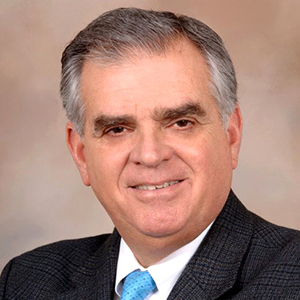
Barbara A. Perry
We want to just open by saying this is the Secretary Ray LaHood interview, along with Joan DeBoer, for the Barack Obama presidential oral history as done by the University of Virginia’s Miller Center. As I said to Joan, I loved your memoir and went back through it again last night to take it all in. I read it over this semester. We don’t want you to feel like you have to repeat things, but you can’t be sure that everybody will read the memoir, and so to be able to go to your interview and say, “Here is the full story of Secretary and Congressman LaHood,” is really helpful.
Remember, too, that a lot of students and teachers use these materials. I think that hearing about where people come from and what shapes them—what are their values? How do they pick politics to go into and become leaders of our country? Particularly at this time when, let’s just say it’s fraught. Our time is fraught in terms of politics. I think it gives young people hope that it’s a worthy career to go into.
I want to hear about your parents and your grandparents to start with. Let’s just start at the beginning. I want to hear about them and coming from another place in the world and settling in Middle America, in Illinois.
Ray LaHood
My grandparents on my father’s side came from Lebanon, a small village named Aitou, which still exists with about 200 people. During my time in Congress, I have visited that village many, many times. The last time I visited, they put a sign up called “Ray LaHood Boulevard.” That was unannounced.
Perry
That had to be very gratifying.
LaHood
Yes, it was a nice occasion. I think all 200 people in the— [laughter] and surrounding areas came back. My grandparents’ home, where they grew up in Aitou, no longer exists, but obviously the property does, so we have visited that.
Perry
Has it been pretty peaceful, or has it gotten—
LaHood
It’s been very, very, very peaceful. It’s on the way to the Cedars [Bsharri], which are up higher in the mountains there, but also the Gibran memorial [Khalil Gibran Museum], where he is buried, is also very nearby there. You pass through Aitou and end up at Gibran’s memorial. On my mother’s side, her ancestors were Irish. They were born in the United States. I tended towards my father’s family because when we were growing up in Peoria [Illinois]—I had two brothers—every weekend we would spend with my father’s relatives. He had a sister and two brothers, and we’d have these big, big family dinners and move around to the different homes. So growing up, I knew all of my cousins and aunts and uncles. We were a very close family.
Perry
Lebanese food?
LaHood
Always.
Perry
What’s your favorite?
LaHood
We have all kinds of favorites: cabbage rolls; I would say kibbeh, which is lamb and wheat; I would say grape leaves. All of it is very good, very good. As a matter of fact, I stayed in Washington, D.C., last night and ate at a Lebanese restaurant.
Perry
That was my next question. What’s the best Lebanese restaurant in D.C.?
LaHood
There are several good ones. Lebanese Taverna is very good, on Connecticut Avenue. But there’s a new one in the Wharf area called—it’s I-L-L-I [ilili Restaurant], pronounced “ee-lee,” and it’s a restaurant that was started in New York by an immigrant Lebanese. He moved to Washington, and now he’s establishing one in Miami [Florida].
In any event, my grandparents were people who, on my father’s side, came from Lebanon. My grandfather and grandmother came on the same boat, went through Ellis Island [New York], ended up in Peoria, we believe because—Peoria is in the middle of the country, and it’s in the—
Perry
Yes, how did they get from New York to—
LaHood
They took the train. The train stopped in Peoria, and we think that’s the reason that they ended up there, because that’s where the train stopped. They actually stopped in a small town just west of Peoria called Kewanee [Illinois]. Opened a confectionary store there. During the [Great] Depression, that closed, and they came to Peoria and opened restaurants. Almost all of the Lebanese people who came early on to central Illinois and to this country—restaurants, some were tailors, and many were in the grocery business.
Perry
In what era did they come? You said pre-Depression.
LaHood
In 1895, my grandparents ended up in Peoria.
Perry
OK. Do you know what drew them to the U.S. to begin with?
LaHood
I think the Ottoman Empire was wreaking havoc in that part of the Middle East. The Ottoman Empire, I think, killed a lot of Lebanese people. Lebanon wasn’t really formed until the time that Israel was separated off and became a country of its own, and then Lebanon, and then Syria, and some of those—
Perry
Right. A lot of that was broken up after World War I, right?
LaHood
Exactly.
Perry
The Middle East then shaped into these countries that may or may not have logical borders—
LaHood
That’s correct. That’s correct.
Perry
—in terms of ethnicity, religion.
LaHood
Lebanon is a very small country, maybe only—no more than 4 million people total. Once my grandparents were established, they started writing back to Aitou and other places in Lebanon and told people, “This is a pretty good place to live. You can make a living.”
Again, two or three things: (1) they didn’t speak a word of English; (2) they had a great faith, and they had a great work ethic. Not dissimilar to many other people who came to America. That was established early on. They were accepted in the Peoria community, which—there were many—a big German population, Irish population. But they were well accepted and worked hard. And to think about the fact that my grandparents came not speaking a word of English but with a good work ethic and a strong faith.
My father was born in Kewanee, and my mother was born in Peoria. My father never graduated from high school. My mother did. They were, again, just very hardworking people. So, (1) to have someone like my grandfather’s grandson get a college education; (2) I started out as a teacher professionally; (3) become a member of the highest legislative body in the country, the Congress; (4) become a Cabinet secretary. It’s extraordinary in the sense that what we have done, not dissimilar to what other people have done, just continued to stand on the shoulders of our grandparents and our parents because they were good examples and good mentors. Faith in God, hard work, and play by the rules, and you can be successful.
Obviously, my grandfather and grandmother lived the “American Dream,” and we have, as well, only tried to stairstep on their accomplishments and their achievements. So it is an example of the American Dream. It’s not unique. There are many people that have done the same thing. But we took advantage of the opportunities that America provided and still provides today.
Perry
Did your parents live to see you go to Congress?
LaHood
No, they didn’t. No, my parents died very young. As I said, when I finished my work at Bradley University, where I met my wife—we were both married while we were students there. I was a teacher at the time that my parents—actually, I was working in a different part of Illinois and more involved in government at that point. But the fact is that becoming a teacher was quite an extraordinary thing in our family. Again, college degree and becoming a teacher. I don’t know that I was the first teacher in my family, but I was one of the first, that’s for sure.
Perry
You say in your book right up front that really politics was not something that was infused into your household or that you talked about a lot.
LaHood
I don’t know that politics was a dirty word, but it was not something that our family was ever involved in. When I was growing up in Peoria, I couldn’t have told you who my city councilperson was, maybe even who the mayor was. Certainly didn’t know who the governor or—we had a long-, long-standing congressman named [Robert H.] Bob Michel, who I ended up working for. Everyone knew who he was because he was a dominant figure in our political community. To be honest, his office was very helpful with a number of our family members who wanted to become citizens. He had someone in his office who helped people become citizens—fill out the paperwork and all of that. The point is, politics was not a part of our life.
When you look at families who have come up in politics and have been dominant in politics, it’s usually because their family pushed them that way. Our family, our parents, never really pushed us into—
Perry
Voted, I’m sure.
LaHood
Oh, of course. Yes, yes, they voted.
Perry
Did they talk about when a presidential election was coming up?
LaHood
No, not really. I really got interested in politics when I started teaching school. In Illinois, probably like many states, I was teaching eighth grade, and you have to pass the “constitution test”—state constitution and U.S. Constitution—in order to pass on. That’s one of the requirements to pass on to high school. I don’t know if it still is now, but it was back when I was teaching. My interest in politics was really sparked by teaching the Constitution, and government, and three branches of government, and all of those things.
Perry
Civics, what we would call civics.
LaHood
Yes, civics. Yes, yes, that’s exactly what I taught: civics.
Perry
What had you studied at Bradley?
LaHood
I was sociology and education. Then I got my—in Illinois, you have to have a teaching certificate, so you have to student teach, which I did in Peoria. Got my certificate and then qualified to teach. I taught four years in the Catholic schools and two years in the public schools, and then left teaching and went into—as I said, I moved to the Quad City area [Iowa and Illinois border], which is 75 miles west of Peoria, and got more involved in government. Ultimately, I worked for a congressman there and so forth.
Perry
Let’s talk about—well, before I get to that question, why do people say, “This has to play in Peoria”?
LaHood
It was a standard that was really brought about because Peoria became a test market for products. For example, maybe soap, or maybe Procter & Gamble, or somebody like that was testing out some kind of new product, or somebody was testing out a new cereal. They thought that Peoria was such a homogeneous community made up of midwestern people, and so they might bring their products there and test them out. If people liked them, then they thought, Well, this would be good enough for the rest of the country. Then a lot of vaudeville acts came to Peoria. A lot of people in vaudeville got their start thinking that if they could make people laugh or if they could entertain them in Peoria, it probably would be pretty good in the rest of the country. So those two things.
Richard Nixon really coined the phrase when he was in the White House. Somebody said something about some policy or some issue that he was going to be involved in that maybe they thought was controversial, and he made the statement, “Well, if it plays in Peoria, it’ll play anywhere.” That got broadcast around the political environment and around the country. It still holds true a little bit, but there are a lot of places today in our country like Peoria that people test things out and try and figure out if they make sense. But that’s how it came about.
Perry
It’s truly Middle America, I guess, as the average of meeting there in the middle.
LaHood
That’s correct.
Perry
That’s helpful. I’ve always wondered about that origin. Tell us—I know that you at one point ran for school board, twice.
LaHood
I did. That was in the Quad City area, when I was in the Quad Cities and some people asked me to. I was involved with an organization called the Rock Island County [Illinois] Youth Service Bureau, a delinquency prevention program that I was hired as the first director for. It was funded through the Department of Justice. The money came to the county, Rock Island County, and they established the Youth Service Bureau as a delinquency prevention program to keep kids out of the courts and intervene in their lives in the school and before they went to court. I got very active with a lot of school systems, got to know the superintendents, and someone persuaded me to run for the school board, which was not a good decision. [laughter] You’ve got to be a local person. You’ve got to be locally known to be elected to a school board or a city council. Here I was from Peoria, Illinois. Nobody knew me from Adam.
Perry
Seventy-five miles away.
LaHood
Yes, yes, exactly.
Perry
Did the delinquency program seem to work?
LaHood
It did work, and it still works today. I was invited back recently to meet with the director in Rock Island. I went there, and I was asked to help with a little fundraiser that they were putting on. They’re still working with young people and trying to keep kids in school and out of court.
Perry
What are some of the strategies that you were using at the time and they still may be using?
LaHood
To really work with the school systems where the kids were, where kids were getting in trouble, and with the police departments, who sometimes would encounter these juveniles. Back in the day, they were called “juvenile delinquents.” What would happen is—say that a police officer would arrest a juvenile for shoplifting or something. They would send them to the Youth Service Bureau, where we would have counselors that would meet with their families and try and figure out how we could change their behavior. Or the school system would have children that were delinquent from school or absent, and their parents maybe weren’t as involved as they should have been, so they would be referred to us, and again our counselors would meet with them.
We had some success in terms of recidivism and in terms of our ability to really encourage kids and their families—the family part of it was very important—to stay out of trouble, stay in school. We worked with business leaders to provide jobs, starting jobs for a lot of these kids, give them an opportunity to work. It was a program that the federal government was funding to really try and reduce juvenile delinquency.
Perry
Another of those examples, it seems to me, when people complain about the government. You know, “Get the government off our backs,” or, “We’re antigovernment.” Stories like this—I hope people understand that it can be helpful.
LaHood
Yes, right. I would too. I moved to the Quad Cities in 1972 and became the first director. To think that here I went back to this same community a year ago, 2024. The program is still going, which means it still has value, still helping families, still helping kids, keeping kids out of jail, keeping kids in school. It was a pretty good idea.
Perry
And that comes in the Nixon era, right?
LaHood
That’s correct.
Perry
Block grants? Were those called block grants?
LaHood
You know, it was called the juvenile justice program funded under the Law Enforcement [Assistance] Administration of the Justice Department. It was a new program created by Congress and the Nixon administration.
Perry
Well, let us get you then, as I refer to my notes—you have your first jobs in that realm. Tell us then how you get linked to your Congress positions by starting in staff positions. You get linked to the Congress as a staffer before you are elected to Congress. How did that work?
LaHood
I was involved with the Youth Service Bureau, which, as I said, was funded by the Department of Justice. Tom Railsback was the congressman from, then, the 17th [Congressional] District [of Illinois]. He was on the [House] Judiciary Committee. When we needed to get additional funding, it would have to come from the Justice Department. We began to meet with his staff to figure out how we could use his influence to help us continue the funding for our program. That’s how I became aware of Tom Railsback and he became aware of me. We worked with his office for a couple of years.
Perry
Was that primarily a field office you were working with?
LaHood
Yes, a district office.
Perry
Yes, rather than in D.C.
LaHood
Yes, district, not really D.C. It was the district office. Then I gravitated from the Youth Service Bureau over to the bi-state regional planning commission. Again, we worked with Railsback’s office on a lot of federal funds for a lot of different areas, planning and so forth. I got to know Railsback very well because we worked with him and his staff on federal funding for these programs. He was looking for someone to run his district office. His district director moved on to something else. I interviewed for the job and was fortunate enough to get it. That was my first venture, or adventure, really, into politics. [laughter]
Tom Railsback was a very, very popular moderate Republican in what we call the western part of Illinois, the 17th Congressional District. He had been elected in 1966 and, as I said, served on the Judiciary Committee. He had been a practicing lawyer in Moline [Illinois]. His father was a very well-known lawyer. He was in his father’s firm. Then he ran for state rep [representative], became a state rep from the area, and then got elected in 1966 against a one-term Democratic congressman.
Perry
Who had probably swept in in ’64, right, with the Lyndon [B.] Johnson wave?
LaHood
Precisely. A fellow named Gale Schisler, who was a schoolteacher. Nobody wanted to run in that district, so Schisler decided to run and, as you just said, got swept in in the Johnson landslide of ’64. Railsback came along in ’66 after the Vietnam War was beginning, and Johnson was in the midst of that and in the midst of passing a lot of legislation, the Great Society [legislative programs].
Perry
Was that not playing well in that part of Illinois?
LaHood
It was not playing well in that part of Illinois.
Perry
Had that district typically been Republican?
LaHood
Republican, for sure.
Perry
So the outlier was the ’64 race.
LaHood
Exactly. Railsback got elected, and when I went to work for him, I worked for him for five and a half years. Then he lost a very close primary in March of ’82. His district had changed, and they shifted the lines and shifted the geography.
Perry
Democrats had done that in the state legislature?
LaHood
That’s correct.
Perry
Ah. Gerrymandered that district. [laughs]
LaHood
Yes. He was in a district where many people did not know him. The Republicans that knew him remembered him for the fact that he cast one of two or three Republican votes as a member of the Judiciary Committee to impeach Richard Nixon, which was a very, very tough vote for him, very tough. Nixon had come and campaigned for Railsback when he was running for Congress. He knew Nixon. I don’t know how close he was to him. But that vote, for conservative Republicans, was the death knell that defeated him in his ’82 primary.
He had a conservative state senator from another part of the district, that he had not represented, run against him, so he used that. Railsback was so-called pro-choice. The district was more conservative. Railsback also voted for some gun legislation, so people didn’t feel that he was as strong on Second Amendment as they liked.
Perry
You had mentioned that he was—you described him as a moderate Republican.
LaHood
Right.
Perry
You’re giving us some information about his policy votes that made him more moderate.
LaHood
That’s correct.
Perry
Was it that that district that had been gerrymandered, was it that the part that was more conservative, had that always been more conservative? Or were the people moving in a more conservative direction?
LaHood
The thing that Railsback had going for him—he was very popular in the district that he represented prior to ’82. People knew him. Some people were willing to turn a blind eye on some of these things because they felt he was doing a good job. He had a great constituent service organization, really provided good service to people. He was a very likable fellow, also, and he lived in the district. He lived in Moline. His father was a well-known attorney for years.
All of a sudden, he gets moved to other areas where people don’t know him and don’t have quite the tolerance for the fact that he’s not pro-gun, or that he’s not anti-abortion, or the fact that he voted to throw out a conservative Republican president. Those two or three things hurt him—
Perry
That’s the death knell, yes.
LaHood
—very badly against a conservative state senator in, now, a more rural district. This conservative state senator was a farmer and was beloved by the [Illinois] Farm Bureau, which is a big organization in Illinois. He had an opportunity to beat Railsback and saw it. The problem is that in the general election, a conservative Republican could not get elected. A young Democrat had filed to run against Railsback. Railsback gets beat. Now this young Democrat named Lane Evans comes in, beats the conservative Republican. This guy was a legal aid attorney, and he was maybe no more than 30 years old. He served for 20 years. The seat went from Republican to Democratic.
Perry
Oh, my goodness. That’s a fascinating story in and of itself.
LaHood
It is. Lane Evans served for 20 years. Unfortunately, he became very ill and had to retire from Congress, and has passed on. But that was the beginning. From a political point of view, the beginning of the shift that we see today where—prior to ’82, issues like abortion, gun control, were not the litmus test issues that they are today. That was the beginning of the start of these mass mailings. There were mass mailings against Railsback, votes that he had made on gun control, votes that he had made on abortion versus so-called right to life.
Perry
The so-called wedge issues.
LaHood
The wedge issues.
Perry
You saw that from the beginning, rising up.
LaHood
Saw it played out to a fare-thee-well.
Perry
Could I pause there? We mentioned in reference to this congressman, Railsback, voting on the Judiciary Committee for the impeachment of Richard Nixon. You must have been taking all of that in. What were your thoughts about Richard Nixon, since you viewed yourself as a Republican, and as you said, I would think, a rather moderate, reasonable Republican?
LaHood
When those votes were taken—I’m trying to think. I might not have been with Railsback’s office at that time. I may have come on maybe a year after that.
Perry
Right. But you were following the—
LaHood
No, of course I was following.
Perry
It was everywhere in the news, and the Watergate hearings. What did you make of Nixon before that? And then what did you make of him once all of that came to the fore?
LaHood
Well, I voted in 1967 for the first time, and I voted for Nixon.
Perry
In ’68, for his second run for the presidency?
LaHood
That’s right, ’68, that’s right. Yes, I voted for Nixon then.
Perry
And I presume in ’72 for reelection?
LaHood
Yes, of course.
Perry
Since you’ve talked about—Nixon obviously had to sign that policy coming through the Justice Department about juvenile delinquency. How did you view his Republicanism, and then how did the Watergate scandal impact your feelings and thoughts about him?
LaHood
Well, I was an admirer of Railsback, and I thought that he was a very thoughtful member of Congress. I thought that when he voted for impeachment, that was a very thoughtful, deliberate, thoroughly examined vote. To be honest, I thought he must have known a lot more about this than common, ordinary Ray LaHood or any other voter. [laughter]
Perry
And he was a lawyer, you said.
LaHood
And he was a lawyer.
Perry
And his dad had been a lawyer, so presumably he knew the Constitution, even maybe better than you, as a civics teacher, as a lawyer, let’s just say.
LaHood
Yes, that’s right.
Perry
Do you think Nixon should have resigned in ’74?
LaHood
Well, of course. He probably should have had better control of what was going on. Clearly, he did some things that really didn’t meet the standard for ethical governance.
Perry
Though now it seems somewhat minor. [laughs]
LaHood
That’s right.
Perry
Every time I watch [the film] All the President’s Men, it almost seems minor compared to things that go on today.
LaHood
No, that’s correct, yes.
Perry
We should say for the record that no one has ever connected President Nixon to the actual break-in or the bugging of the Democratic national headquarters in Watergate. But the smoking gun, so-called, on the tapes that the Supreme Court required that he turn over was found that he was part of the cover-up. As they always say, the cover-up can be worse than the actual action.
LaHood
Right, exactly.
Perry
Other thoughts and lessons that you were learning—thoughts that you had then, you have looking back—in serving Congressman Railsback in his district office?
LaHood
Well, other than what we just talked about, really the beginning of these wedge issues.
Perry
What were you learning about constituent services?
LaHood
That it’s very, very important. That some people will overlook a vote here or there if they were able to get their passport, if they were able to get their visa, if they were able to get their citizenship. Getting a Social Security check, getting a Medicare problem fixed—that means a great deal to people. Even today, I live in Peoria, which is my hometown. I run into people all the time that say, “Thank you,” not for some vote that I made on a bill but for recommending their child to an academy.
I ran into a fellow who’s in a very good position in the state of Illinois who came from Sudan to Peoria as an engineer. He showed up in—this was when I was working for Bob Michel—showed up in our Peoria office with a handful of papers wanting to become a citizen. He never forgot that we took an interest in that and helped him maneuver through all of the paperwork and became a citizen. That’s more important to people than a piece of legislation that they don’t understand and take for granted, that hopefully whoever is voting on it took the time to read the bill or whatever. Constituent service is as important as any legislation that a member of Congress can vote on. It just simply is.
Perry
It’s personal. Politics is personal and local in that setting, isn’t it?
LaHood
Yes, that’s right. Right.
Perry
How often did Railsback come home?
LaHood
Every weekend.
Perry
Every weekend flew home.
LaHood
Every weekend, yes. His family lived in Moline. He had four daughters. His wife and daughters lived in Moline. They went to the public schools there, the same schools that he went to.
Perry
Just for folks who are reading this, when I was in college in the 1970s and majoring in political science, there was a book called Home Style: Congressmen [House Members] in Their Home Districts, by a political scientist called Richard [F.] Fenno. It was my favorite book that I read in political science. It is all about that, just what you said. They call it the “soaking and poking method,” that he, as a political scientist, would link up with members of Congress and say, “Can I go home with you when you go home to your district?” He would go around that weekend with those members of Congress all over the country and see exactly what you’re describing. I just thought, Oh, that really helps me understand that job, what they do.
Anything else for Railsback before—
LaHood
You know, after Railsback lost, I had the good fortune of being appointed as state representative because there was a vacancy, and the local county chairman appointed me to that. I served until November, and I lost that election to a very well-established Democrat, and again, in a newly drawn legislative district. But it was fun to serve.
Perry
Did you serve one session of the legislature?
LaHood
Yes, one session exactly. I served from May 1st through maybe October.
Perry
What did you see in Springfield [Illinois] in that one session? You’ve seen now Congress and what somebody’s doing from the federal government back to the local district. Did anything impress you positively, negatively, about the state legislature and legislative politics?
LaHood
Not too much really. The Illinois legislature has a long, long, rich history of having a lot of characters serving there, so it was fun to meet them.
Perry
Colorful?
LaHood
Colorful people, yes. And to have a front row seat on watching “the sausage being made” at the state level was fun. Good learning experience. Following my defeat, I was called by Bob Michel’s office, who had just finished a very close election himself. In 1982, he was in a redrawn district and had a young lawyer, Democrat, run against him, and he only won with 2 percent. It was the closest election he ever had. He was redesigning and rethinking about his district office and his service because he was Republican leader, and he did not come every weekend. He stayed in Washington and was really marshaling President [Ronald] Reagan’s legislative program through, some of which had a negative impact because the economy wasn’t too good then. So Michel had a very close election.
The point I’m telling you is, then Michel decided to reorganize his Peoria office and opened an office in Jacksonville, Illinois, and Springfield. Jacksonville is just a few miles west of Springfield, which is where Joan [DeBoer] is from.
Perry
Oh, we must talk about that.
LaHood
We were brought on. I was brought on with another state rep who lost his election—a fellow named Craig [J.] Findley. Craig was in Jacksonville. His father was a very well-known congressman, Paul Findley, who served maybe 25 or 30 years. Anyway, the point I’m trying to make is we moved from the Quad Cities, from East Moline [Illinois], back to Peoria. I headed up the Peoria office. Craig was in the Jacksonville office. We really created a service program for Bob Michel that the people really hadn’t seen before.
Perry
He got this idea, no doubt, from that close election in ’82.
LaHood
That is correct.
Perry
That, I better spend more time—
LaHood
Being accused of being more interested in Washington rather than Peoria, more interested in the people in D.C. and lobbyists and all of that than the common, ordinary people who sent him to Washington. He got the message on that.
Perry
That can be the kiss of death, can it not?
LaHood
Yes, that’s right. That’s really what launched my opportunity to be back in Peoria, my hometown, and really get ensconced in politics there. And the community—I got involved in the community and served on different boards and stuff.
Perry
You make so clear in your wonderful memoir, Seeking Bipartisanship, your admiration for Congressman Michel.
LaHood
Of course.
Perry
Tell us about what you learned from him. One lesson: Be at home and have good people reaching out to your constituents. Did he start coming home every week, as best he could?
LaHood
Yes, he really did. He didn’t come home every week. His children were raised by the time I came on board. He and his wife, Corinne, raised their children in Peoria. They went to the public schools. After his children were raised, Corinne moved to Washington. Bob became Republican leader. Without him, Ronald Reagan would have never passed his legislative initiatives because Reagan inherited a Democratic Congress except for two years. Six of the eight years were controlled by Democrats. Because Bob Michel had such a great relationship over the years with Democrats, he was able not only to rally his own troops but to talk to Democrats about why this would be a good vote for the Reagan program, whatever it was. That was very helpful.
Perry
And [Thomas P.] Tip O’Neill, Speaker [of the U.S. House of Representatives] at the time. Chris Matthews has written that book, Tip and the Gipper, and about Tip O’Neill going to the hospital after the attempted assassination of Ronald Reagan, in which he almost lost his life, and the two praying together. Certainly your theme of bipartisanship. Is too much made of that, or was that genuine?
LaHood
No, not at all. No, no, I think it’s very authentic. I think it’s true. Tip O’Neill and Bob Michel were—I don’t know if “best friends” is the right word, but certainly very good friends. They played a lot of golf together. They played in the Bob Hope [Classic] tournament several years together. They socialized together. Now, again, Tip O’Neill and his wife lived in Washington, and Bob and Corinne lived in Washington. It was much easier to become friends when you can go to dinner on the weekend or play golf on the weekend together.
Perry
That’s an important point you’re raising because you hear a lot now that one of the contributing factors to this fraught time in which we live and the polarization is that so many members of Congress don’t live in Washington. They are not seeing each other on the weekends, or having dinner with their families—or if their families are there, their kids aren’t going to those schools in D.C.—or seeing each other at the grocery store. But then there is that conflict, isn’t there, trying to find that balance between being painted as D.C., colored by D.C., as opposed to the home folks?
LaHood
Right. I do think those relationships have fostered good policy, good legislation. In the absence of that, nothing gets done, and we see that being played out more and more often today, rather than what was being played out back maybe during Reagan, or George Herbert Walker [H. W.] Bush, or maybe even George W. Bush. To be honest, Bob Michel helped [William J.] Bill Clinton pass the NAFTA [North American Free Trade Agreement] agreement. He did it because it was good for Caterpillar, which was the dominant employer in Bob’s district, but also because Bob felt it was good public policy, even though Clinton was a Democrat. That kind of legislation doesn’t just happen. It’s a process where people from both parties have to come together.
Perry
What are you seeing in the Reagan years from the White House, and the fact that the concept of Reaganism and the Reagan Republicans, and Reagan Democrats, for that matter—blue-collar men [manual workers], particularly, often ethnic men, moving more conservatively and being supportive of Reagan and Reaganomics—and feeling like we were pulling out of the difficulties of the [Jimmy] Carter era, both in foreign and domestic policy?
LaHood
I think Reagan had his touch on the pulse of the American people. That’s why he was so popular. He passed some tax cuts that maybe Democrats didn’t like very much, but he also did some other things that I think encouraged and really fostered the kind of relationships that he was able to develop with some conservative Democrats. I think he set a standard for how a president should get along with Congress, even when the president’s party is not in power—that you do have to reach across the aisle. You can’t just count on your own troops. Reagan had a good way of doing that and used the White House and his office to curry the favor of members of Congress by inviting them to dinners, or lunches, or one-on-one opportunities, and it paid big dividends for him. It takes a lot of time and energy to do that, but it pays off.
Perry
Anything more from this time in your career, before we get you to Congress? And Joan, when do you come into the mix in our story?
Joan DeBoer
In 1990. In September of ’90, I moved to Washington and started working for my hometown congressman, who was Bob Michel at the time, when he was [House minority] leader. That’s the same time that Secretary LaHood had just started as chief of staff for the leader. I started as a staff assistant.
Perry
And you’re from Springfield?
DeBoer
Jacksonville.
Perry
I’m sorry, Jacksonville. What drew you into the political realm?
DeBoer
I was a poli sci [political science] minor and had done a—
Perry
Where was that?
DeBoer
At the University of Missouri in Columbia.
Perry
Our Rick Willis [executive assistant at the Miller Center] went to Missouri.
DeBoer
I heard him mention it, right.
Perry
You’ll have to talk to him about that at lunch maybe.
DeBoer
I had done an internship for Senator [Christopher S.] Kit Bond when I was at Mizzou [University of Missouri], and so I drove over to Jefferson City [Missouri] every day for a semester. I really got a feel for the constituent service work that has been talked about earlier, which made me interested in public service. Then an opening happened to come up in the Washington office for my hometown member, and it was just really nice to work for someone who you really saw make a difference back home where you were from.
Perry
Oh, good. All right. Continue to jump in when necessary. [technical interruption]
[BREAK]
Perry
[To LaHood] Let’s get you to Congress. What causes you to—after not having success in three different races at the much lower level, but taking your time to be working with Congressman and Leader Michel—say, I’m going to cast my hat into the ring, and I’m going to run for Congress?
LaHood
It was always clear to me, maybe towards the end of Bob’s career, that eventually he would retire. We talked about it. We talked about succession. Bob had been a congressional staffer for eight years prior to being elected. He graduates from Bradley University, I think, in 1948, maybe. The president of Bradley University says to him, “Our current congressman is looking for someone to help him.” Bob interviews with Harold Velde. Harold Velde is the congressman. Bob goes to work as what he would term as “his man Friday” [right-hand man], or his—[laughter] what we’d call today his “body man” or whatever. Back in those days, members of Congress maybe only had a handful of staff people that were paid to help them.
Bob worked for Harold Velde for eight years. Congressman Velde decided to retire, and Bob was elected in 1956. It was not uncommon—I mean a lot of people remember that Bob was a congressional staffer, but they remember a lot of other things about him—also, his [military] service.
Perry
You followed, then, that pattern.
LaHood
That’s correct. I followed that pattern. He and I talked about the fact that at some point, he was going to give it up. I think his family was encouraging him to hang it up, and he had always wanted to be Speaker—never had the opportunity. Then Newt Gingrich got elected to the Congress and became Republican whip. [Richard B.] Dick Cheney was actually Bob’s Republican whip, so that would have been number two. Michel number one Republican, Dick Cheney number two from Wyoming. George Herbert Walker Bush picks Cheney after he’s elected to become his secretary of defense. Cheney resigns from Congress. Newt Gingrich runs against an Illinoisan named Ed Madigan, gets elected whip by one vote.
The way these elections happen is, for Republican leader, the Republican members cast their votes. It’s not done by all the members of the House, just the Republican members. Michel gets elected leader, Cheney gets elected whip. Great team, bright future. Then all of a sudden, Cheney’s gone. There’s a vacancy. Gingrich, who is a real firebrand even at that time, comes in, says, “I’m going to run for whip.” Ed Madigan, who is one of Bob Michel’s best friends from Lincoln, Illinois, long-standing congressman—the two of them [Madigan and Gingrich] go against one another. All the Republicans get in a room. Gingrich wins by one vote.
Perry
Now, what was happening in the Republican Caucus?
LaHood
Things were changing. Things were changing. Newt was saying, “We need younger members. We need antiestablishment members. We need to think differently about who”—
Perry
“If we’re ever going to be a majority in the House.”
LaHood
That’s correct. That’s correct. Newt comes in, and he is not quite the team player that Cheney would have been, or that Ed Madigan would have been, or that Bob Michel was accustomed to, having served in leadership for many, many years.
Perry
Now Congressman and Leader Michel is dealing with an insurgent leader and an insurgency in his own caucus.
LaHood
Yes. And Gingrich is the one that went after Jim Wright, who was the Speaker elected from Texas, the Speaker of the House. Wright had written a book.
Perry
That was the ethics issue, right, on his royalties, as I recall?
LaHood
That’s correct. He wrote a book, and then he got all these lobbyists to buy the book. He got the proceeds for himself. There was an ethics investigation brought on by Gingrich. Gingrich eventually comes to the floor and says that Jim Wright should resign, and Wright resigns. Democrats never, ever forgave Newt Gingrich for doing that to their Speaker. They basically ran him off.
Newt becomes a nettlesome— [laughter] not quite the team player that Cheney would have been or that Ed Madigan would have been. He forms his own group. It was called the Conservative Opportunity Society, COS. All of these younger members coming in, very conservative. Today they’d be called Tea Party [political movement]. Back then, they were called the Conservative Opportunity Society. Newt lays the groundwork because he wants to be Speaker.
Perry
What’s happening in the country, though, in those districts where these “young Turks” [younger members], I’ll call them, who would become the COS-ers—these young Gingrich acolytes are being elected in the districts?
LaHood
I think they’re coming from districts where people are tired of Washington. They want the place turned upside down.
Perry
The wedge issues again that we talked about, right? Guns, abortion, religion.
LaHood
Yes. They want to elect people who are going to care more about them rather than themselves. The bank scandal occurred where members of Congress had their own bank—you could write checks whether there was money in your account or not. That was happening.
Perry
Savings and loan scandal happening about that time.
LaHood
Yes, exactly. The country was in turmoil in terms of their leadership. Part of it happened—played out by the fact that George Herbert Walker Bush, president, campaigning, said, “No new taxes,” then had to reach an agreement with Democrats on a budget. Tip O’Neill said, “Well, in exchange for all these things, we’re going to have to raise taxes.” Bush decides, “I’ll raise taxes.” That threw Gingrich, the COS crowd, into a complete chaos against Bush.
Perry
Yes. What we talked about with the Reagan years, it is the Bush 41 [George H. W. Bush] not being viewed as a loyal Reagan Republican that upends his presidency.
LaHood
Correct, and the statement that he made at the convention.
Perry
“Read my lips: no new taxes.”
LaHood
“Read my lips,” correct. Gingrich and his acolytes came out full force and told Bob Michel, “We are not going to vote for this. You don’t have our votes. You may have the Democrats on board, but we are not going to be on board.” More than a handful of Republicans voted against that, which was a real—it was a very difficult time for Bob and for Bush, to think that his own troops were not going to support what needed to be done.
All of these things were steps that led up to Bob’s consideration in ’93, leading up to the ’94 election, to decide to retire. Frankly, Newt basically told him, “If you run again, and win your seat, and want to become leader, I will challenge you.”
Perry
And probably, You’ll be ousted from the leadership?
LaHood
Well—
Perry
That was the implication.
LaHood
That’s the implication—because I’ve got my COS group, and I’m going to be out campaigning for all of these members that are going to be coming in here.
Perry
And that group will increase in number.
LaHood
Yes.
Perry
In the meantime, you have the ’92 presidential election, in which Bill Clinton is running as a moderate Democrat to say, The days of George McGovern are gone. The Democratic Leadership Council is supporting me, and I’m not for the big government of Lyndon Johnson and the Great Society. And you’ve got Ross Perot entering the picture as a third-party candidate who gets 18 percent of the popular vote, running almost as a single-issue [candidate], balance the budget, which I know is of issue to you and of great concern to you.
LaHood
Right. Sure, sure.
Perry
All of this is coalescing at the time, and then, you run.
LaHood
That’s correct. Bob decides—
Perry
He’s going to step out and retire.
LaHood
Newt has a clear path then and comes up with the idea of the Contract with America [legislative agenda]. Ten items to reform Congress, 10 items to include term limits, doing away with the bank, all kind of reforms for how to pass legislation, and tax cuts.
Perry
They stand out on the plaza of the Capitol, the [National] Mall side.
LaHood
That’s correct. Right, and everybody signs.
Perry
And everybody signs on.
LaHood
Right, right. At that point, Gingrich decides he’s going to run a national election rather than district by district. Get everybody to sign the Contract with America. You become a part of a national congressional effort or movement to take control of the Congress. To be honest, it was brilliant because it worked. It worked.
Perry
Now, what is happening in your district—you will come to represent this district. We’ve talked about gerrymandering that had happened and how district lines would change. What are you seeing in your district as you run?
LaHood
That I would carry on the traditions of Bob Michel.
Perry
Moderate Republicanism?
LaHood
Yes. I mean, more balanced. Conservative on the issues that people care about, but certainly more balanced, and someone who would work with people on both sides of the aisle—friends on both sides of the aisle. I distinguished myself in this regard. I was one of three Republicans who did not sign the Contract with America because I felt it was a little gimmicky, and I wanted to run on my own. And to be honest, I was not in favor of the tax cuts until we balanced the budget. That was a big issue for me. I thought balancing the budget was the most important thing we could do and campaigned on that. I campaigned on the idea of, “Let’s balance the budget first before we give tax cuts.”
Perry
And that worked. People accepted that.
LaHood
They did. I was successful.
Perry
And they knew you.
LaHood
That’s correct because I was involved in many different ways representing Bob Michel and providing the kind of constituent service that people really wanted.
Perry
Now I have to say, when you all came in this morning, I already felt like I knew Joan because we’ve been emailing, and I felt like I knew you because I’d read your book, followed your career. But I notice for both of you, as you met our staff, you look them in the eye, warm handshake. I thought, This is why these people have been successful in politics. [laughs]
LaHood
Yes, yes, sure.
Perry
Does that come naturally to you? Are you a people person?
LaHood
Well, I don’t know that it really comes naturally to anybody until you start doing it, and you get the kind of reaction that you would expect: that people respect you because you’re interested in them, and you’re willing to listen to them, and you’re willing to meet them on their own terms wherever they’re at. Over time, you understand that this is—it’s important because when you’re asking someone to cast their vote for you, that’s a big ask, particularly for people who may not know you. So, over time, you develop that kind of rapport with people.
I think of politicians that I have known over the years. I think when you get elected president, you have to be able to relate to people. People know it when you don’t, when you don’t look them in the eye, or you interrupt people in the middle of their sentence, or you don’t really care about their own opinions.
You see that played out in presidential campaigns. To think that—just two examples: To think that an African American can get elected in the state of Iowa, where there are few black people, you have to have some charm about you, and you have to be sincere in your approach to people. I felt that way about [Pete] Buttigieg. He won the Iowa caucuses—surprised everybody—as a gay man from a small town, South Bend, Indiana. Nobody knew who he was. But what they [presidential candidates] do is they go, and they reach out. That’s why Jimmy Carter was successful in Iowa.
The one president that people tell me that they think impressed them more than anybody else was Bill Clinton. If you’re talking to Bill Clinton, he’s looking you in the eye, you’re the most important person in his realm, and it seems like he really cares what you have to say. I’ve had more people tell me that. Obama was that way, in a sense. I remember watching him campaign, and he’d work the rope line, and he’d shake every hand that he could, give every autograph that he could. I think about [Ron] DeSantis’s campaign. The one thing people faulted him for? He didn’t meet people very well. People didn’t think he really cared about them.
Perry
Did well in his gubernatorial campaigns in Florida, but you’re right. When he tried for the nomination—
LaHood
On the presidential level, people—they’re looking to measure up the person that’s running.
Perry
It’s that, “Do you want to have a beer or invite this person to your backyard barbecue?” question. It really does mean a lot, doesn’t it?
LaHood
Exactly. Yes, yes. Politics is very personal. It really is, at any level. School board, city council, whatever.
Perry
As it should be. [To DeBoer] Were you on the campaign trail?
DeBoer
For Secretary [LaHood]?
Perry
Yes.
DeBoer
Yes, I went back a little bit. But I was still working for Bob Michel.
Perry
At that time before he cycled out?
DeBoer
Correct, yes. I couldn’t go back, so I wasn’t on campaign staff or anything because I stayed with Mr. Michel’s office until the end. But obviously, we were all part of the family that was supporting LaHood.
Perry
Tell me about fundraising. We haven’t talked about that. We know that that’s part of the—we talked about the reason for members of Congress coming back to be with the people: to hear their thoughts, to look them in the eye on the weekends if they can. But we also know, certainly nowadays, coming back for funding and talking to people with lots of purses and lots in their purse when they come home.
Do you see, since you are part of staff for that period of time before you become a member of Congress, are you seeing that? Are you seeing that in Congressman, Leader Michel’s office? What about when you’re running and getting money to run? What are you using it for? What is happening over that time period?
LaHood
You can’t really get elected to Congress or the Senate or the White House without raising an enormous amount of money. The Supreme Court decision that just allows money to wash over everything, and very little reporting, and all of that, it’s a problem. Just think about the fact that a common, ordinary person can’t really run for president, when you think about the fact that Vice President [Kamala] Harris spent a billion dollars. That’s just mindboggling. Most people don’t even know what that means.
Perry
In about three months.
LaHood
Yes, yes, in about three months. In our state of Illinois, our governor is a billionaire a couple of times over.
Perry
This is Pritzker, JB Pritzker?
LaHood
Yes. He spent $400 or $500 million of his own money the first time he ran, and $250 million of his own money the second time he ran. Basically, while I was in Congress, I thought about running for governor, but when you start talking to people about running for governor in Illinois, you talk about spending all of your time raising money, not really going to the parades, or the fairs, or door to door, or whatever. It costs an enormous amount of money to run for public office.
Perry
Do you remember how much you raised for that first campaign?
LaHood
About a million dollars. What you’re doing—you’re begging your friends and relatives and neighbors to contribute, and you’re having a lot of fundraisers. Now the district that I once represented doesn’t exist anymore. It’s been merged with others. But it would cost several million dollars to run for Congress in Illinois in any one of the districts that currently exist. That’s true around the country. If you wanted to run for the Senate in Illinois, you’d be talking millions of dollars. Money is important, but it’s also a distraction.
Perry
What is it used for in these campaigns? How did you use it?
LaHood
Primarily for television to get your message out, 30-second commercials. That’s primarily what it’s for, targeting voters on whatever issues are topical during that particular campaign. Maybe it’s the abortion issue. Maybe it’s the transgender issue.
Perry
Nowadays it is.
LaHood
The other thing is, when I ran in ’94, there was no social media. There were no cell phones. We had a big box phone in our car that we used.
Perry
[laughs] Like in the Batmobile.
DeBoer
Right.
LaHood
Yes, yes. My point is, I think a lot of campaigns spend money on staff people who just do the social media stuff. And you can put a lot of messages out on social media. That’s a part of campaigning that I know little or nothing about, but it’s the way of the world now in politics.
Perry
And the consultants who help you know what—make those commercials, or, This is the commercial you need, or, Get this on TikTok [social media], or, Get this on Instagram [social media]. Marketing—marketing, polling, all of that, right?
LaHood
Right. Yes, yes.
Perry
What could be done? If you could wave a magic wand right now to fix that problem, what would you do?
LaHood
I mean, in the presidential campaign, Congress did pass a law that said each candidate will get X amount of dollars. Well, what’s happened is they sign and say, “We’re not going to take it. We’re going to spend whatever we want.” You get—Donald [J.] Trump. I don’t begrudge him the fact that he’s a multimillionaire, but look what he did. He used his own airplane, his own helicopter, his own money the first time he ran, and signed off on whatever money the federal government—said, “We’re not going to take it.”
Perry
Public financing isn’t working at that level, for sure.
LaHood
No, of course not. Of course not. The Supreme Court decision that said, Raise whatever you want from whatever whom you want it, and you don’t have to do any reporting, and so forth.
Perry
That’s both overturning McCain–Feingold [Bipartisan Campaign Reform Act of 2002] through Mitch McConnell’s—Mitch McConnell is named in the case. And then Citizens United [v. Federal Election Commission], I guess. You add that to the mix and really, all the bets are off.
LaHood
That’s right. Money is very, very important, but it can also be a problem.
Perry
First of all, would you support McCain–Feingold types of restrictions? And if you were on the Supreme Court, would you vote to uphold those kinds of attempts to limit the impact of money?
LaHood
I think we do need to limit the amount of money that’s spent. It means that common, ordinary, average people—I don’t know if Abraham Lincoln could run for president today. [laughter] I don’t.
Perry
Interestingly, Obama—we’ll soon enough come to Obama. You know, Jimmy Carter—I’m thinking of in our time, modern presidents don’t come from money. Nixon didn’t come, Reagan, but they ended up—even [the Obamas] I think, via Michelle Obama’s work, had enough money to live on so that they could—although they were saying they were still paying back their student loans when he was in the Senate, I think. But for somebody who doesn’t have enough money at the time to run, you can’t raise a family and run for office.
LaHood
Obama could not have run for president from the state senate seat. He could logically do it from a U.S. Senate seat, even though his own personal wealth was limited, with the idea that he’d raise the money, that there’d be enough people to support him to do it. But without any limits, then you can go and do whatever you want to do.
My point is this: Not a single average, ordinary citizen would think about running for president. Many would never think about running for United States Senate or the House of Representatives because it would be daunting to them to think about the kind of money they would have to raise.
Perry
Right. They wouldn’t know. They wouldn’t have the contacts to start.
LaHood
That’s correct.
Perry
They don’t know people of wealth. They don’t know people in high places of business.
LaHood
Look, I had an advantage. Now, ’94 is completely different, completely different time, but I had an advantage. I was a congressional staffer for two members of Congress, so I knew what I was getting into, and I had made enough contacts to know that—and I’d worked for somebody who could help me encourage other people to contribute.
Perry
Yes, because you were the common, everyday person, but you had had those positions.
LaHood
Yes. My point is, Barbara, that it would be very difficult for you to run for Congress. It would be daunting.
Perry
You’re absolutely right, even though at 16, I was in a little fashion show, and they introduced me. I had been interested in government and politics since my mother took me to see John F. Kennedy campaigning in our hometown when I was four. They announced, as I walked down the runway, “She would like to be the first woman president.” The people in the department store all laughed.
I don’t know if it was money or being an intern—I was an intern for Senator Wendell Ford—I just somehow, once I got there I realized, coming from my background, which is very similar to yours, although not the immediate immigrant status. Our family came in the 1840s running from the German and Irish and English revolutions of Europe at the time. But I was first in our generation to go to college, and realizing that I probably didn’t have that money or background, or maybe the desire, to do what that required. So happily, I became a professor and a faculty member.
How about a little break?
[BREAK]
Perry
Let us get back to—you’re coming in with the Gingrich class. Gingrich achieves his desire, his goal. He makes the Republicans the majority, and he becomes the Speaker, and he immediately turns to the Contract with America to start to get that through. Again, you have great detail in your memoir, but anything that you want to embellish on, or add to that, or the people you were working with in Congress at the time in the Clinton era that you might want to focus on a bit?
LaHood
Yes. I think that there’s a little bit of a misunderstanding. Even though I didn’t sign the Contract with America, I voted for 9 of the 10 items, number one. The only one I didn’t vote for was the tax cut provision because I felt that we should be balancing the budget first, which we ended up doing. We had three years of a balanced budget.
Perry
And surpluses during that era, as I recall.
LaHood
Yes, yes.
Perry
People have to understand, of course, it doesn’t take away the debt, but you don’t have a deficit every year that you’re adding to the debt, right?
LaHood
Yes, right. Exactly. Then, I think also, the one thing that I established—so when we were sworn in on January-whatever-it-was, third or fourth—
Perry
Of ’95.
LaHood
—’95—not one member of the Republican Party had ever presided over the House, including Gingrich. So what happens when you become the majority party? The Speaker has to preside or assign someone to do that. One of the advantages that I had as a staffer to Bob Michel is I had access to the House floor. I’d come over and watch debates on—controversial or spirited debates. I took an interest in the person that was in the chair and developed a method.
I developed a method that was appealing to what was considered a very controversial Congress because the Democrats hated, in the first 100 days, every day of having a debate on one of the 10 items. They became very controversial and spirited debates. I developed a good method for presiding, and I probably ended up presiding during our time in the Republican majority more than any other member. In spite of the fact that some in the leadership disliked the fact that I was only one of three who didn’t sign the Contract [with America], the fact that I was a good presider did not inhibit them from putting me in the chair.
When people ask me, “How were you chosen to preside over Clinton’s impeachment?” Gingrich made that decision, and he said, “We’re going to have Ray LaHood do it because he knows how to do it.” What I did for two days is preside in a balanced way. I knew it was going to be very controversial. The Democrats hated this. They hated that Gingrich was doing this. They felt they were trumped up charges and trumped up impeachment articles. What I did is I made sure everyone had their time to speak within the time that they were given, and I treated everyone with respect. The reason that Gingrich asked me to do it is because he knew that I had presided over other very controversial issues in a bipartisan way, which is what the Speaker of the House is supposed to do.
The second thing, the most important thing besides doing it with balance and respect, is to pay attention to the parliamentarians. They’re the ones that decide rules and procedures and, if the chair is being challenged, how to answer the member that’s challenging them. I developed a very good friendship and relationship with the parliamentarians.
At the end of the two days, I had many, many compliments from Democrats and Republicans that it was done fairly, it was done in a balanced way, every member got to have their say within the time that they were supposed to say it. What my feeling is about this—even though I never really passed any major legislation, because when we were in the majority, the only way you could get your name at the top of a bill was to be the chair of the committee. Even though you may have introduced a bill, it probably was incorporated in another bill, and the chairman’s name was on the bill, not yours, even though—but that’s—
Perry
You had this historic role, not just in normal times—“normal,” and by that I mean more routine times where you’re presiding. May I ask, you talked about the parliamentarian. Presumably for routine debates, even if they’re heated and/or controversial, there is a set of rules—
LaHood
That’s correct.
Perry
—that once you’ve been—
LaHood
That are adopted on the first day by the Congress.
Perry
Yes. You already know what those are, and the more you preside, the more used to fulfilling those you know.
LaHood
That’s correct.
Perry
For the impeachment, were there separate rules developed for how the whole debate over those two days would run?
LaHood
The only thing that was different was the fact that we knew the Democrats—and the Democrats told the parliamentarians, “We’re going to offer a motion to censure Clinton. Not impeach him but censure him.” There is no provision in the Constitution for a censure.
Perry
Now the Senate can, is that right?
LaHood
I don’t know.
Perry
I don’t think that’s in—I don’t know if that’s in the Constitution. We’ll have to check that at lunchtime. [Joseph] Joe McCarthy, I think, was censured by the Senate, but we’ll have to check that out to see. But I remember from your memoir that that is not an option.
LaHood
Yes, look it up. I think you can censure, and we have censured, members of Congress. But what I’m saying is the ruling that I read that was written by the parliamentarians in response to the resolution that was presented by Dick Gephardt, the minority leader, was a resolution of censure of the president. My point is I don’t believe—we can check this [see Congress.gov, https://www.congress.gov/crs-product/R45087]—I don’t believe there’s anything in the Constitution that allows for censure of the president. There is for impeachment, which is what we were doing. That was the only thing that we knew where a ruling was going to have to be made.
Now, on the second day of the impeachment proceedings, Bob Livingston, who had already been established—Gingrich had decided he, at the end of that term, was not going to be Speaker. Bob Livingston waged a campaign, and it was clear he was going to be the next Speaker of the House—the chair of the Appropriations Committee from Louisiana. He comes to the floor on the second day and asks to be recognized. Everyone thought he was going to give a speech. Well, he announces that he’s going to vote one way or another on the articles of impeachment, but he also announces, “I will not stand for Speaker,” because it was disclosed in the media that he was having some kind of an affair outside of his marriage with another person.
Perry
And that didn’t seem quite right, given what was happening with the president. [laughter]
LaHood
He says, “I am not going to stand for Speaker.” Well, the air went out of the place.
Perry
Why was Gingrich stepping out? Why was Gingrich stepping out as Speaker?
LaHood
I think he’d worn out his welcome. Republicans lost seats in the midterms, and a leadership challenge among Republicans made him vulnerable.
Perry
This is ’98, right?
LaHood
That’s correct, December of ’98.
Perry
Right, right before the holidays.
LaHood
And right before—the election was over, and right before a new Congress was going to be sworn in.
Perry
Right. People who don’t remember—you were there, you were in the room where it was happening—or people who are coming to this with a foggy memory or are new to the whole concept, it’s only four years after Newt Gingrich’s amazing takeover.
LaHood
That’s correct. The “revolution,” yes.
Perry
And revolution. We always say, that’s something you can just add. When you go to the transcript, you can just add.
LaHood
Yes, we’ll add that. Do you remember, Joan?
DeBoer
You know, I don’t. What I’m kind of recalling, wasn’t it—he had issues, too, of—
LaHood
He had issues, but I don’t know that they came out until afterward.
DeBoer
That’s what I’m wondering.
Perry
What I’m remembering, too, about his downfall was that—remember how he and Clinton flew over to Israel for the [Yitzhak] Rabin funeral.
LaHood
Yes, and he had to get off on the back of the plane.
Perry
He had to get off on the back of the plane. Then the ’95 [government] shutdown, there were also issues related to that. Eventually, there were personal morality, marriage issues.
LaHood
That’s correct.
Perry
I’m trying to think. Were there any ethics issues beyond that?
LaHood
There was an ethics issue, and this may be—you may have pinpointed it. Gingrich signed a document that was not quite right about a loan that he had received. He claims, Well, I signed it, and it wasn’t accurate. It went to the Ethics Committee, and in 1997, the House voted to accept the committee’s recommendation to reprimand the Speaker, and he was ordered to pay a $300,000 penalty.
Perry
I think all that was swirling, that really knocked him out.
LaHood
My point in even bringing this up is, some of the Democrats came up to me while I was presiding, while somebody else was speaking, and said, “Should we suspend?” Because people were running over to Livingston saying, “Oh, don’t do this.” We were trying to keep order in the House, and the proceeding was still going on. Some Democrats were saying, “Should we—” I think it was John Conyers [Jr.], who was the chair of the of the Judiciary Committee, or ranking member because Henry Hyde was the chair, but said, “Should we suspend?” I said, “No, we’re going ahead. We’re moving forward.”
That’s not something I consulted with the parliamentarians on. We just needed to—the second day, people knew they were going to vote, so we needed to get the debate over. We knew that the Democrats, once the debate was finished, were going to walk out of the chamber, go out on the front steps, say whatever they wanted to say. But the vote on the first article of impeachment had started when they walked out, so they wanted to be sure and get back in within the 15-minute time frame so they could vote.
Anyway, the Livingston thing really took the air out of the chamber briefly. The side story on that is Tom DeLay, secretly, gathered a bunch of his acolytes together. He was the whip. He knew [Dick] Armey couldn’t be Speaker. Armey was majority leader. He knew he couldn’t be Speaker. Both of them were way too controversial—more controversial, maybe, than Gingrich. So he handpicked Dennis Hastert, the deputy whip.
Perry
From Illinois.
LaHood
From Illinois. When everything was over and the day was over, we go downstairs in a big room like this [interview space] where we always met as Republicans. Gingrich stood up and said, “I want to compliment Ray LaHood,” and I got a standing ovation from all the Republicans on the way this was conducted.
Perry
Two articles had been confirmed.
LaHood
Two out of four passed.
Perry
Two out of four, right. Perjury was one, and one obstruction of justice?
LaHood
Yes, we’d have to go back and—
Perry
Yes, I think you had those listed in the memoir. There were two different perjury ones: one to the grand jury and one in the Monica Lewinsky deposition. I think it was the second one? In any event, one of those, and then one obstruction of justice.
LaHood
Right, right.
Perry
OK. You said you would have voted “yes” on all four.
LaHood
I did vote for all four.
Perry
Yes, you thought all four should have gone forward.
LaHood
Yes, I did.
Perry
Now you’ve got a new Speaker.
LaHood
We go downstairs in this meeting, and Gingrich says, “I support Dennis Hastert for Speaker.” No debate. That was it. We knew that Hastert was going to be Speaker. It might be the first time in the history of an election of a Speaker that it happened in that short a period of time without any kind of campaign.
Perry
Was there an actual counting of votes?
LaHood
Not that day, but we knew there was going to be a vote on the first day after we got sworn in.
Perry
When the new session begins after—
LaHood
When the new session begins January 3rd or 4th. But Newt wanted to make it clear, Nobody here is going to challenge this. This is the way it’s going to be. And nobody did challenge it.
Perry
You had to have known Dennis Hastert—
LaHood
Oh, very well.
Perry
—from Illinois.
LaHood
Back when he was running for Congress in a special election, because his predecessor had died in office—Hastert was a state representative in Springfield from the Aurora, Illinois, area. He was from a town called Yorkville [Illinois]. Bob Michel and I went—Bob Michel campaigned for him, and I went with him up to that area when he was running in the special election. He and Bob became very good friends. We became very good friends with all of his staff people. The answer is, Hastert was a good friend.
Perry
Was he your style of Republican, would you say?
LaHood
Yes.
Perry
He wasn’t in the Gingrich—
LaHood
Not at all, not at all—
Perry
He predated all of that.
LaHood
—even though he was Tom DeLay’s deputy whip. I think DeLay was trying to bring in the Michel wing of the party at that point, maybe, and that’s why he got the appointment. Hastert was conservative, but he wasn’t nutty about it.
Perry
Whereas you’re saying Armey and DeLay—too extreme to be leaders.
LaHood
They were too extreme, yes.
Perry
And they even knew that.
LaHood
That’s correct.
Perry
Was the “Gingrich Revolution” losing steam and air by this—
LaHood
Yes, of course.
Perry
Within four years.
LaHood
Yes, yes. The reason it was losing steam is Bill Paxon, the head of the NRCC [National Republican Congressional Committee], Delay, and I think maybe Armey, to a lesser extent, were a part of a little cabal—that did not come about—to throw Gingrich out, and they couldn’t figure out who they were going to put in. They were thinking about putting Paxon in, and the whole thing fell apart. We had a big conference about that. That had happened earlier on.
Perry
DeLay ended up with ethics issues, I think—
LaHood
Yes, he did.
DeBoer
Definitely.
Perry
—involving his business, as I recall.
LaHood
Yes, he did. He had a state’s attorney or a local attorney—we call them “state’s attorneys,” maybe a county attorney—
Perry
Oh, “commonwealth’s attorney,” we say in Virginia and Kentucky.
LaHood
Yes, yes, who went after—
Perry
Local prosecutors.
LaHood
—went after him and charged him. I can’t remember what—over his PAC [political action committee] or something. He had a charitable PAC that he was taking money from. Anyway.
Perry
What a time, and what a time for you to be in the chair presiding over the impeachment of a president. Just to remind people who are, again, maybe new to their civics: that’s the indictment part of the process, then to send over to the Senate for the trial.
LaHood
Which we knew was not—he was not going to be impeached. I mean he was impeached.
Perry
He was impeached but not convicted.
LaHood
He wasn’t going to be convicted, that’s correct.
Perry
Wow. All right. Other thoughts that you are seeing from a staff position, Joan? Are you looking at correspondence? What is your role in staff? Say a little bit about what a member of the House’s staff is like in D.C. and then back in the home states?
LaHood
Yes, Joan, tell them what your title was and the role you played in the office.
DeBoer
Yes. I started with LaHood as a scheduler, and then moved up. [To Perry] By the time we left office, I was deputy chief of staff. The prior discussion about constituent service was really something that was most important. When we hired our folks, LaHood would meet with them, and it was all about constituent service. If you looked at his record, he’s really not known for major pieces of legislation. He is remembered for his dedication to constituent service.
Perry
The “LaHood Act” of some time.
DeBoer
Correct. Right. But he was known for his time in the chair. He was known for his time being respected on both sides of the aisle. You couldn’t say that about too many people in the House at that time and about constituent service. That was something that was very important. No matter what your role in the office or your title was in his office, it was all about working together. Everybody picked up the slack to make sure that everything was covered for constituents back home. Everyone answered the phone. Every piece of mail was answered. He signed every letter. There was no autopen [signing machine]. It really took an effort of the whole staff to pay attention.
Perry
How many staffers in D.C.?
DeBoer
We had a smaller D.C. staff and a larger district staff, which goes, again, to constituent service. I think probably seven in D.C., and then the rest was district staff.
Perry
What are you hearing—because you have a very poignant moment in the memoir where you’re at church. The cook from the school where you had taught is behind you, and you do the sign of peace, as Catholic liturgy does. And, is it after the Mass, she takes you to task over the impeachment of Bill Clinton, saying that, Oh, it’s just the Republican are jealous or envious of Bill Clinton? What are you hearing about other issues, if you feel free to speak about them? What are you hearing from the folks in Illinois about the impeachment or, again, other things that they’re interested—they’re not talking about impeachment, they’re interested in something else that’s going on.
DeBoer
Well, it was an interesting time. When he was presiding, our offices were flooded with calls from all across the United States because—it’s interesting that we talk about civics because a lot of people, when they watch C-SPAN [Cable-Satellite Public Affairs Network], they really think that it’s that presiding officer’s decision on whether that person is going to be impeached or not. They looked at Ray LaHood as the deciding voice.
Perry
Like he’s the judge at a trial and there’s no jury.
DeBoer
Like he’s the judge, correct, and it’s his decision, and he’s the one making it happen. He’s the one who’s doing this to Bill Clinton. It was a very interesting time. Again, it goes back to the fact that he was very adamant that we answer every phone call. You didn’t turn your phones off. You didn’t let it ring. We were on the phones during that time period. You heard a lot of unhappy people.
I will tell you, the other thing that we heard a lot from is that people respected how fair it was. They respected the way that he was not favoring the Republicans by any means. He was cutting people off, Republicans and Democrats, when they had gone on too long.
Perry
Over the time limit assigned.
DeBoer
Correct. Never letting anyone get more time than they were allowed. Very respectful to both sides. He always seemed to be in control, which was very important, during the debate. It was a sense of pride for the staff, knowing that our member was so well thought of by folks out there. We also used to get compliments from other staff members and your peers saying, “Your boss is doing a great job,” and you knew they were from a Democratic office. They always would say, “It makes us feel comfort knowing that he’s in the chair.” So that was nice.
Perry
You hear now, in 2024, so many stories about the horrible, nasty calls with vulgarity and profanity that members of Congress get and that their staffs have to answer, not to mention—but I will—threats of violence. Let me ask you: Did you get nasty, vulgar phone calls? If so, maybe a rough percentage? Any threats of violence against the congressman or you? Did the Capitol Police have to beef up any presence around your office in D.C., the field office, your home?
DeBoer
We definitely got very aggressive and nasty phone calls. Again, it goes back to the character of Secretary LaHood—that being a staffer, you almost feel like you’re a therapist sometimes. It’s all about listening to people and making sure that they feel that they have been heard. But he also said, “You shouldn’t be disrespected.” If someone was being vulgar or nasty on the other side, then we wouldn’t allow that call to continue.
Perry
Would you say, “I’m so sorry. We can’t take this call any further. We’ll have to hang up now”?
DeBoer
Something very respectful, but yes, yes. Some offices wouldn’t take calls from people outside their district. If I’m calling from Atlanta, Georgia, people would say, “Well, then, you need to call your Atlanta member.” But that was never our policy.
Perry
You took all callers.
DeBoer
We did. It took up a lot of time. I don’t really recall any security issues that we had. There were a lot of people who were very unhappy and would say unfavorable things, but there were no security issues that I recall.
LaHood
No, there were no security issues.
Perry
No threats that you had to report to Capitol Police.
DeBoer
Correct, right.
LaHood
Back in the day, the Capitol Police were much more interested in leadership offices than individual members. That’s all changed now. But there were no threats.
Perry
When you went home for the holidays, other than at church, [laughter] you didn’t have to have a police presence outside your home, for example.
LaHood
No, not at all.
Perry
You didn’t have people gather on your lawn or at the street corner?
LaHood
No, we didn’t. We had no protests at our office in Peoria or Jacksonville.
Perry
Just to note the contrast with today, sadly.
LaHood
Barbara, can I—and maybe you’re going to cover this. Before we get off of Congress, I want to talk about these bipartisan activities that I was involved with because it was an important part of establishing who I was as a member of Congress.
Perry
It makes another perfect reason to have you preside over the impeachment hearing.
LaHood
That’s correct.
Perry
Tell us about that. That also relates to the Hershey’s Kisses [chocolates] you received as an early birthday present, so please. It is such an important theme, takes up several chapters in the book, and is fascinating. I think it will be again to people going forward.
LaHood
We were approached by David Skaggs, a congressman from Colorado, maybe—I’m not sure if it was ’95 or ’96, but he said, “Would you be willing to sign a letter asking the leadership if we could gather together a group of members to provide an activity where members could come together with their families?” I said, “Of course I will.” He and I penned a letter. We got a whole bunch of members to sign it, maybe 80 or 100. We gave it to Gingrich and Gephardt. Gephardt is the minority leader, Gingrich is the Speaker.
We put a group of members together, and invited staff, and came up with idea of a bipartisan retreat where members and their families, including their children, would spend the weekend together. Basically getting to know one another, with the idea that if you get to know somebody, it’s much more difficult to criticize them. We gathered members who we knew, on our side, the Republican side, would go along with this. We had a great group on both sides of the aisle. No leadership. No leadership people, just members.
Perry
Just the rank and file and came to Hershey, Pennsylvania.
LaHood
We came up with the idea of meeting—
Perry
Oh, the train, going on the train together.
LaHood
Yes. We came up with the idea of the meeting, including families. [Amory] Amo Houghton [Jr.], who was a part of our committee, who was part of the Corning—his family was from Corning, New York, as he was. He was obviously a very successful businessman, and his family owned Corning [Glass Works]. He was a wonderful, wonderful member. He knew somebody in Hershey from his business interests, and he said that would be a place to go.
People like Joan and others on the staff organized this. We took the train from D.C. to Hershey, Pennsylvania. We had maybe—more than 200 members.
Perry
More than 200? So almost half of the House.
LaHood
Yes. We had about 150 spouses and maybe 100 kids. We spent the weekend.
Perry
I have not been to Hershey. Friends have. First of all, you can go through the factory, right, and see them producing, and you get a Hershey’s Kiss at the end, or a Hershey [Milk Chocolate] Bar. And then is there not almost like an amusement park or theme park there?
LaHood
There is, yes. We went in colder weather, so we weren’t able to take advantage of that. We really created some activities around issues, but opportunities where members could just talk to one another about—not really come to any big decisions, although we did come up with some recommendations for some changes in the House rules, and the way that the House operates, and the way that people debate within the committees. We really tried to create a more family-friendly atmosphere in terms of scheduling debates and scheduling when the House was going to be in.
We went there maybe, I don’t know, on a Thursday or Friday.
DeBoer
Yes, it was a weekend.
LaHood
Yes, and stayed till Sunday. It was a lot of—the kids played games on the train.
Perry
You said you had activities for them and spouses.
DeBoer
We did.
LaHood
Right, right.
Perry
While you all were meeting on topics or rules or things related to—at the Miller Center, and I think this is very common now, we call that “workplace culture.” We have a workplace culture committee. I think other people would be used to the concept of teambuilding with a ropes course. That’s sort of the standard. You were ahead of that movement, I think, in the workplace, by necessity. You saw that this was something that was now called for, in part, maybe, because of what we said: that lots of people weren’t living in Washington anymore. This was a way, then, for families, spouses, children, to meet.
LaHood
First time a congressional kid met another congressional kid, first time spouses met one another. We tried to get some of the senior members to go, chairmen of committees and ranking members. I had a couple of Democrats who said, “I’ve never shaken hands with the Speaker of the House. I’ve never met him.” This was an opportunity for somebody, if they wanted to, to have a cup of coffee with Gingrich or other leaders and just talk to them.
We ended up doing four retreats. The last one was probably the one that was least attended. The first one was the best. There were changes in leadership. Hastert became Speaker, and Gephardt continued as the Democratic leader. These were worthwhile. A lot of these friendships were preserved even after people left Congress. A lot of these friendships engendered opportunities for people to work on legislation together, to work on issues together, and to really form friendships that lasted well beyond Congress.
Perry
In the daily work of the Congress, of the House, you saw the effects of this.
LaHood
That’s correct.
Perry
Who would you say was your best friend on the Democratic side in the House?
LaHood
I would say David Skaggs. He’s the one that really came up with this, and he and I cochaired this together along with our colleagues from both sides of the aisle. Amo Houghton, of course. He’s a Republican. But I would say Skaggs was really the one that we probably bonded with on the other side as much as anybody.
The other bipartisan thing that I want to mention is I was approached by Rahm Emanuel, who was a congressman from Chicago [Illinois], who I got to know just flying back and forth together to Chicago. When I’d be going to Peoria, he’d be going to his home in Chicago. He approached me about having bipartisan dinners where he would invite seven or eight Democrats, I would invite seven or eight Republicans, and we’d go to the Monocle, which is a restaurant right on the Senate side near the Capitol, and have dinner together. These dinners turned out to be very, very successful. We’d probably have them once a quarter, so maybe four times a year. Members would get to know one another. Sometimes we’d talk about politics. Sometimes we’d talk about legislation. Sometimes we’d just talk. Those turned out to be very, very helpful, I think.
Rahm and I really became good friends after that. He went on to become mayor of Chicago. He was chief of staff, then mayor of Chicago, and our friendship has continued today.
Perry
He will come into our story very soon as we get to the Obama presidency.
Anything else? Oh, I know one thing I wanted to ask about staff: legislative assistants. You’ve made clear, Joan, that constituent service is paramount and that all members of the staff engaged in that. Did you have a person titled and dedicated to legislative assistance, an LA [legislative assistant]?
DeBoer
Sure. We had LAs based on different—
Perry
Topic areas?
DeBoer
Yes, policy. Then later, we actually did have an LD [legislative director].
Perry
A legislative director?
DeBoer
Right, right.
Perry
OK. You’ve been honest about saying that it was difficult from when you came in—both because of the way the committee structure was, because you hadn’t signed the Contract with America, and because of the Gingrich Revolution—to try to get a foothold in order to produce a piece of legislation with your name on it, or to get some of the plum assignments as a chair of a committee or leadership. It seems like you would have been well qualified to be a leader, not only because of your understanding of how the House operated but also because of your willingness to work across the aisle and be bipartisan. It so happens that was not considered paramount, it seems to me, by the Gingrich Revolution, Gingrich himself.
LaHood
That’s correct.
DeBoer
Yes.
Perry
How did the legislative assistants and then director work on legislation? You worked on it, you just couldn’t get your name associated with it, ultimately?
DeBoer
Secretary LaHood was really great about letting people really do their thing. It’s the former staffer in him. He expected a lot of the staff, but he gave you a long leash to really dig deep and do some research. He was great. He would come in with some ideas on things that he may want to try and champion, but he also let the folks think about it and do some research, and then he would like to hear from them on things that we were hearing from constituents back home or things that would be good for the district. Obviously, agriculture was huge in our district, and so he would let our ag [agriculture] LA, who then became an LD, really do some research on what would be helpful to the farmers back home. That’s how you approached—
Perry
Would contribute. That’s the way you and your office, with your expertise, could contribute to the legislative process, the committee process, and, ultimately, to the policies that would get passed, that you could also then go home to say, “Here’s what my office has been doing. Here’s what I’m contributing to.”
LaHood
The way the process worked back in those days, a member of Congress might send a letter over to our office saying, “Would you cosponsor this bill?” or come up to you on the floor and say, “Would you be interested in this?” We’d turn it over to our staff, do a little research, and figure out if this fits the direction we would want to go. We did a lot of that, a lot of collaboration with other offices on issues of mutual interest.
Perry
What are you seeing on those wedge issues that we talked about beginning to bubble up early on in your career? I’m thinking—you mentioned Henry Hyde of Illinois, chair of Judiciary [Committee]. Hyde Amendment regarding abortion, not allowing federal funds for abortions. How are you seeing that both continue to bubble and continue to bubble into Washington and through Washington and through constituents, perhaps? I don’t know. Correct me if I’m wrong, if you’re not being flooded by right-to-life postcards or something, but tell us if you are, and how are you dealing with that as the member of Congress?
LaHood
Yes, I established pretty early on during my campaign—you have to, during a campaign, stake out a position on these issues. I had a 100 percent pro-life voting record, opposed to abortion except for the three exceptions. I had a pretty strong stand on gun control. I would have voted for a ban on assault weapons, but we have a lot of hunters in our district. During a campaign, you have to tell people where you stand on these, and then you’ve got to stand on them when the votes come. Otherwise, you don’t stand for anything, and you look a little wishy-washy. On the social issues—for example, when I was in the state legislature, we had a vote on ERA [Equal Rights Amendment], which I supported. But again, on the social issues, you just have to take a stand and then tell people where you stand.
Part of the job of a member of Congress is going back and explaining to your constituents the reason that you voted the way you did, and the information that you had at hand when you made that vote, so they understand the issue. They may not agree with you. A lot of people didn’t agree with me on impeachment when I explained to them what the reasons were. At least they understood it. Sometimes you’re not trying to change somebody’s mind. You’re just trying to, as their representative, explain the facts that you had at hand when you cast your vote.
Perry
On so many of these, as you say, you had taken the stand and were not—there are two views of representation. One is I think what you’re explaining, your theory, which is you have your own understanding and ideas and views, and you take those stands, you tell the voters where you are, you hope that you mesh in more than you don’t so that you can get elected and keep getting elected, which you did, and even had—were you unopposed?
LaHood
A couple times, yes.
Perry
Yes, a couple times unopposed. But the other theory is that the person who’s running says, “What would you like me to do?” You hold your finger up into the wind, see which way it’s blowing, and then go that way. Again, it sounds to me like you were in the former camp of saying—again, trying not to get too far ahead of or behind where your constituents were, but you had your ideas and your views that were well settled before you made your first run.
LaHood
Right. Exactly.
DeBoer
And communicating that was so important, and making sure that people knew that.
Perry
How did you do that?
DeBoer
You mentioned the flood of postcards. We did. We would get flooded on a particular issue, and people would sign their name. Sometimes people—I don’t even know that they really understood what they were signing. [laughter] But it was very important. He was adamant that people got an answer. If someone called the office to voice an opinion, we would take down their name and address, and they would get a letter. If they signed a postcard, and their address was on there, they would get a letter back.
Perry
Even those you would sign in person.
LaHood
Correct.
DeBoer
Absolutely.
Perry
No signing machine.
LaHood
No.
DeBoer
No, and stacks and stacks of letters would go out. People would be shocked that they were getting a response to a preprinted postcard. Again, it was really important about communicating that message of why he did what he did.
Perry
How about newsletters? Frequently sending out newsletters?
DeBoer
That didn’t come till later. Toward the end of his time in Congress, people were starting to do town halls, like the tele–town halls. He always did in-person town halls, but people started doing tele–town halls, and that wasn’t as big. We didn’t really do a newsletter, per se. Sometimes quarterly, I think, maybe one went out. He was really more about the personal experience. When he was back home—you went around to, all weekend was counties, county visits, and during district work periods, and—
Perry
Breakfasts and—
DeBoer
You name it.
LaHood
Exactly.
Perry
As you said, fairs, and bingos, and church festivals.
DeBoer
You get in the car, and you hit every county that you can, yes, yes.
Perry
All of those, “rubber chicken circuits” [political campaign dinners].
DeBoer
Exactly. Right.
Perry
Oh, my goodness. Well, I know in your memoir you say after 14 years, you felt like you didn’t have more to do there. You’d done what you wanted, didn’t have more to do, and would step out. Tell us about how you—
LaHood
Part of the problem for me—and it was a problem. I did not like to tell people “no” when they invited me to do something. I felt that when someone invited me, that was an important thing for them, so I went to everything and participated in everything that I possibly could if I wasn’t in Washington. It got to be a little bit like Groundhog Day [film in which the same day repeats]. [laughter] Not that—look, I love the people, but I just decided that, You know, it’s time for somebody else. Give somebody else a chance to have this great job, this great opportunity for public service.
Perry
It sounds like, from your memoir, no regrets?
LaHood
None.
DeBoer
No, no.
Perry
You left with head held high and a good feeling.
LaHood
Yes, went out on top. To be able to say you go out on top in these jobs is very important. I had no regrets at all, and I never thought, Boy, there’s just one more thing I want to do. None. None.
Perry
That ends—you leave in 2005? No—
DeBoer
In 2008, at the end of 2008.
Perry
Right. Oh, anything about Bush 43 [George W. Bush] you want to allow for us, about serving when he is president?
LaHood
George Herbert Walker Bush?
Perry
W. Bush. Oh, and the war in Iraq.
LaHood
First of all, just back to—let me make one more point about congressional service. I regret, really, these members that stay too long. Some members stay too long. It makes me wonder why they do it. I didn’t want that for me. I wanted to go out on my own terms. I wanted to go out on top. I wanted to go out with the idea that people felt, You know, he gave it his all, didn’t really leave anything on the table.
Perry
You didn’t want people to say, “Why is he staying?” [laughter] You do see that. I’m not a psychologist. You double-majored in psychology. I guess it’s ego for a lot of people, or maybe that’s mostly what they have in their lives, especially as they get older, if their families are gone, or they’re divorced. But you do see it, much like athletes, I think, who can’t leave the game even when their game is gone. They just can’t step out of the limelight.
LaHood
I liked George W. Bush a lot. He came and campaigned in Peoria. We had a big rally.
Perry
There’s a picture in the book of you and him campaigning.
LaHood
Is there? Yes, after the convention he took a train ride all across Illinois. He stopped in Lincoln, Illinois, and I got on the train with him. Cheney was on there, and Mrs. [Laura] Bush. I got to know George W. Bush. I admired him very much. I really did. I thought he was a very good politician. He was one of those people—he loved to shake people’s hands. He loved to talk to people. As I said before, you cannot get elected president unless you like people and like talking to people and listening to them. Bush was very good at that. He really was. I was very happy when he got elected president. And he had a good relationship with his people.
The thing about Bush—he visited a hundred schools when he was running for president on the idea that he was going to develop legislation to really get kids to reading and doing math at the level they should, i.e., No Child Left Behind [Act]. He did it in a bipartisan way, which I liked very much. He went to [John] Boehner’s district and signed it—Boehner was the chair of the Education Committee—and he went to Senator [Edward M.] Kennedy’s state. He went to both. Signed the bill in both states. I liked that very much.
Then 9/11 [September 11th, 2001, attacks] happened. It changed him. It changed his demeanor. It changed his agenda. Everything was about the terrorists after that. I was on the Intelligence Committee for eight years, and I was just astounded that we knew nothing about these people living in Florida, taking flying lessons, living there illegally, and then crashing the planes and killing 3,000 citizens. That was the worst day of my career. It really was. Bush did the best he could.
Perry
I made a note to myself in my notes, looking back again at your work in this space of intelligence. I was making a mental note to myself to say to you, do you think that was a good idea? After the congressional committees and the 9/11 Commission, we didn’t bring the points together. We didn’t connect the dots. As you said, why didn’t we know about these people? How could we not know about them? Do you think it was a good idea to—my understanding of the director of national intelligence and that Office of National Intelligence was try to have more coordination in the intelligence space. Do you think that that was a good idea?
LaHood
No, I voted against it.
Perry
Why was that?
LaHood
Because I didn’t think we needed any more bureaucracy. [laughter] We don’t need somebody at the top telling people down here to talk to one another. What the hell?
Perry
It would seem you were right about that, wouldn’t you say?
LaHood
Absolutely. They created a whole bureaucracy that exists today. I don’t know what those people do. They’re not collecting intelligence. We didn’t need that. I almost got kicked off the Intelligence Committee when I told them I wasn’t going to vote for it. Hastert’s office said, “Well, maybe we’ll have to take you off the committee.” I said, “That’s fine. Take me off the committee.” It didn’t happen because they didn’t need my vote, but I voted against it in the committee and I voted against it on the floor. I thought it was a terrible idea to create a whole new bureaucracy because these people aren’t talking to one another. Then hire people that do talk to one another. Anyway.
Perry
The war in Iraq.
LaHood
I voted for all of the funding because I wanted to support the troops.
Perry
Right. For both Afghanistan and Iraq?
LaHood
That’s correct.
Perry
The authorization to use the military force.
LaHood
That was the reason I did it. For me, a “no” vote was saying that you don’t support—this money is going for the troops. But as it turns out, there was no WMD [weapons of mass destruction]. As it turns out, we went after Saddam Hussein.
Perry
Was the WMD error, was that a failure of intelligence? Or was—
LaHood
Absolutely. I think it was—well, I don’t know. Trotting out Colin Powell and having him appear before the UN [United Nations].
Perry
Holding the vial [model of supposed weaponized anthrax].
LaHood
Exactly.
Perry
Maybe that wasn’t such a good idea.
LaHood
No. I just think they had it in for Saddam Hussein. That’s clear. They did. A lot of people didn’t even know why.
Perry
Well, in the few minutes before lunch, shall we get you through the 2008 election and into office? Then we can spend our afternoon talking about that.
LaHood
Sure, that’s fine.
Perry
Your thoughts about the ’08 election? Hillary [Rodham Clinton] and Obama, to start with, on the Democratic side, vying for the nomination, neck and neck and neck. And then Obama—you know him from the Senate. He’s from Illinois. He represents Illinois. And then, ultimately, McCain and the [Sarah] Palin ticket.
LaHood
Yes. Look, I loved John McCain. He was a friend. I liked what he did on immigration. I considered him a war hero. I visited the prison he was at when I went to—
Perry
The “Hanoi Hilton” [Hỏa Lò Prison]?
LaHood
Yes, when we went to Vietnam on a trip.
Perry
Oh, you went with him?
LaHood
No, I didn’t go with him, but I went on a CODEL [congressional delegation] with some other members. Part of it was just to visit the place where he was. It was clear that he was tortured and all of that. McCain was a good senator. He really was. He was really onto something with immigration and with campaign finance reform too.
Perry
And bipartisan, both of those.
LaHood
Yes, both of them, yes. I ran as a delegate, went to the convention in Minneapolis [Minnesota], and was completely stunned when he picked Sarah Palin, like most people. I guess—I read afterwards, maybe somebody else picked her and he went along with it. He wanted the now-deceased senator from Connecticut.
Perry
Joe Lieberman.
LaHood
Yes. He wanted Lieberman, but his people told him, “No way will the Republicans stand for that,” and they were right.
Perry
Actually, when I said Hillary and Obama, Hillary hails from Illinois. She’s a [Abraham] Lincoln stater.
LaHood
Right. Well, I wasn’t that involved in that election that much.
Perry
Did you have a preference—not from your party, but for knowing that one of the people nominated by the Democrats could become president. Did you have a preference of one over the other at the time: Obama or Hillary Clinton?
LaHood
I thought it was going to be difficult for McCain to win because I was afraid that people, because he’s a war hero and a war hawk, would see him as the third term of the Bush Iraq War. People were very weary of the Iraq War at that point, obviously. That’s why Obama won, in part.
Perry
Yes, he did come out directly against it.
LaHood
Yes. I thought it was going to be hard for McCain to win. Then he picked Palin, so at that point, he probably has two strikes against him with some people. Even though Obama was a senator, I don’t think he was really considered a part of the establishment in D.C. the way McCain was.
Perry
And that was a plus for him.
LaHood
That was a plus. That was a plus. And Hillary—
Perry
So, actually, the lack of experience, D.C. experience, was a plus for him.
LaHood
Yes. Hillary was an established D.C. person, so the party obviously was looking for somebody different. She supported the war, and so that hurt her with Democrats.
Perry
And married to Bill Clinton, which didn’t help her with many people.
LaHood
No, no.
Perry
All right. Did you have any sense ever that you would end up in the Cabinet of a Democrat president?
LaHood
No, never.
Perry
Or a Republican president?
LaHood
No, no. [laughter] Not really.
Perry
No?
LaHood
No, not really. The thing that really sparked my friendship with Obama is after he was elected to the Senate from Illinois, and I had just finished my election to the House, he called me and said, “I’m coming to Peoria. I want to sit down and talk to you about how we can work together.” He and I had never met. I never met him on the campaign. He came to Peoria. We met for 90 minutes in my congressional office, and we talked about how we were going to work together, and try and get along, and do things for Illinois. And we did, for two years.
Perry
What struck you about his personality—you mentioned his charm, to be able to win the Iowa caucus—and his conversational style?
LaHood
Well, he certainly wasn’t arrogant. He wasn’t—I don’t want to say he was a common person, but he had a lot of good traits about just being a good person. A good listener and a good person.
I respected him for the fact that when he was running in the primary, he was running against a multimillionaire who spent a lot of money against him for the U.S. Senate, and he [Obama] beat him. He basically did it downstate Illinois in a lot of white communities. He was able to persuade people to vote for him. Then we nominated a Republican with a good name, Jack Ryan, but he fell into some real controversies with him and his wife and some things that were going on. He ultimately had to get off the ballot. Stupidly, the Republicans brought in Alan Keyes from Maryland, who wasn’t even an Illinois resident, and put him on the ballot because he was an African American who had run for president. Anyway, that was a dumb thing to do, and Obama obliterated him.
When you meet someone like Obama, you can just tell he’s a good person.
Perry
Did he ask you questions in that first meeting?
LaHood
We talked about my district and what my interests were, and we talked about his campaign and some of the things he wanted to do. We talked about the fact I was on the Appropriations Committee and the Intelligence Committee. Then he opened an office in my district in Springfield, and I went to the opening of his office. I think people were stunned that I did that. During the two years, he helped me on some transportation issues, helped us get some money for some of the communities because he was in a position in his Senate committees to do that. He didn’t have to do it. Our staffs worked together, and he set aside the money. He called me and said, “Hey, we got this money for”—I don’t know, Pekin, Illinois, or whatever.
During that two years, I mean, we never went to dinner together. We didn’t—we’d see one another on the airplane flying back and forth because he went back home every weekend. It was just—
Perry
Ever talk sports—you know, he loves sports—or family, or—
LaHood
Family but not sports. Yes, yes. I think the fact that he reached out to me was significant. He probably was told by maybe Rahm or somebody that, If you want to do some stuff in downstate Illinois, LaHood’s probably the best person to talk to.
Perry
David Axelrod’s memoir is really good about Obama going downstate and working toward the Senate race, so people can get a real sense of that flavor from one of his top campaign people. Last minute before lunch, did you work with his staff in the Senate on something like this transportation funding?
DeBoer
Yes, definitely.
Perry
What were your thoughts about his Senate staff? Maybe [Peter] Pete Rouse, for example?
DeBoer
Pete Rouse, Chris Lu.
Perry
Chris Lu, right, who ends up in the White House with him.
DeBoer
Right, right. The Illinois delegation was actually very unique. It was very bipartisan. We would work with [Dick] Durbin’s office, with Obama’s office, on issues. You sort of put politics aside, and you worked for what was best for the state, which was—like I said, it was unique. Not every state did that. They would have Illinois delegation lunches, where the members would all get together.
Perry
From both sides would get together?
DeBoer
Yes. There was a lot of collaboration for the good of the state.
Perry
That’s an inspiration on which we should pause.
[BREAK]
Afternoon Session
Perry
All right. We’re on our way, now post-lunch. We’ve mentioned Rahm Emanuel a number of times, and I know that he and the president, now president-elect by December of ’08, are both crucial to your coming into the Cabinet. Tell us how that happened.
LaHood
Yes, yes. I talked to Rahm about my interest in continuing to serve, and he said, “What are you interested in?” I said, “Oh, maybe agriculture, maybe transportation,” because I had served on both of those committees in the House for six years before I went on appropriations. He said, “Let me run it up the flagpole. Don’t be talking to anybody else, and don’t say anything to anybody.”
Maybe a week later, four or five days, we spoke again. He said, “I ran it up the flagpole, and no opposition.” I think what they had is, maybe they had Axelrod, [David] Plouffe, [Robert] Gibbs, [Joseph R.] Biden [Jr.], Valerie Jarrett, maybe.
Perry
You’d describe those as the inner circle.
LaHood
Yes, yes. Michelle Obama, maybe. I don’t know about her. But those were the people that I think he—
Perry
Ran it through?
LaHood
I think they were meeting every day in Chicago, considering who they wanted. Then he said—I don’t know if he said it that day—“Come for an interview.” They had a transition office in a federal building in Chicago. My wife and I drove up there on a very cold day in December. I had no idea how many people would be in the room. So I got there. I was in a small room, waiting area. Obama comes in. We do the “bro” [guy] hug, and I congratulate him on his win. We go in his office, and it was just he and I. We talked for 40 minutes. We talked about agriculture, and I could tell he was a little conflicted on that. I later learned that they’d already offered it to [Tom] Vilsack. We talked about transportation.
I left, and a few days later, I called Rahm and said, “How did we do?” He said, “Well, he’s thinking about it.” He said, “I’ll let you know.” Then maybe a few days later, he called and said, “He wants to know if you’ll take transportation.” I said, “Yes.”
Perry
Did the president talk to you about bipartisanship and the fact that you would be, not the only—I guess [Robert] Bob Gates staying on would be considered a Republican in the Cabinet.
LaHood
We did not.
Perry
He didn’t even say, for symbolism purposes—
LaHood
No, no. No, we did not. Rahm and I talked about—and I didn’t even know if I knew Gates was—maybe I knew it by then.
Perry
Was going to be asked to stay on.
LaHood
Yes. I’d fill the bipartisan slot that they were—I think it was pretty clear it wasn’t going to be more than one, [laughter] surely not more than two.
Perry
Right. Did you have any qualms about that?
LaHood
Not one. Not one bit. No. No. I think the interesting thing about this is people don’t really know how the process works, and it’s different with every administration. I mean, I didn’t know how it worked. If I hadn’t had a friendship with Rahm, I probably would not have been in the mix because I wouldn’t have known who to communicate with. I knew Axelrod, but I didn’t know him the way I could pick up the phone and say, “I’d like to talk to you about this.” And I certainly knew I wasn’t ever going to get to Obama. So that’s for starters.
Secondly, the interview we had was 40 minutes. Some of it was just talking about his campaign and politics, and some was talking about a Cabinet post. We didn’t really spend a lot of time, and I think part of the reason—they knew who I was. They didn’t have to figure out, Who is this guy? Is he going to be a team player? And blah, blah, blah.
Perry
Do they ask you—well, maybe I should put it this way: At what point are you asked to start submitting all that paperwork? And do they—in this case, as you say, different from every president-elect to president-elect—had they done any background work on you? I mean they knew you, but did they do any background work as far as you knew, or did they say, “Before we go any farther”—like Rahm, say—“you seem like a straight arrow to me, but is there anything in your background that could be a problem? If so, tell us now”?
LaHood
That question was never asked, I think, in part, because both of them had served with me, knew me. We’d worked together on things. I think Durbin might have put a good word in for me. Durbin—I think his daughter had passed away during this period, and I had gone to his home in Springfield to pay my regards. I may have mentioned it to him there or sometime after, and I think he talked to Obama. He was having lunch with Obama after the election or something. He was the only other person that I talked to.
Rahm says transportation. I said yes. Then maybe an hour or two later, maybe the next day, he calls and said, “You’re in vetting.” I said, “What does that mean?” He said, “You’re going to get a phone call from a guy named [Michael] Mike Froman,” who ended up being the trade rep. Froman was in charge of the transition. Maybe that day or the next day, Froman calls and says, “We’re going to do an initial FBI [Federal Bureau of Investigation] background check. We’re going to ask the FBI to call around. This is just the initial. It’s not the full blown.” So I assume they did that.
Then I was told to be up there where they were going to announce the fact that I was going to join the Cabinet. Ron Kirk, former mayor of Dallas [Texas] and former candidate for, I think, governor or Senate, was named the same day. Former Congressman [Hilda] Solis was also announced that day. We drove up that day, my wife and I and my son. My press guy—on the way up, I said [to Froman], “Do you want me to put something together?” He said, “Yes, put something together and send it to us.” He said, “The only thing we care about is we want a quote in there, ‘I’m going to carry out Obama’s agenda for transportation.’” We put together the release, and they used most of it and included that quote.
Then we met in a room like this [interview space]. I think Axelrod was there. Rahm was there. Obama was there. Just pre–“here’s what’s going to happen.” Gibbs was there, on the phone, I think. Plouffe might have been on the phone. Anyway. Then we go out, and he announces it.
Perry
Sounds pretty simple.
LaHood
We spent the next month—my wife is a CPA [certified public accountant] and has always done our taxes, so she kept all of our tax returns. You have to—as a part of the process, there are Senate Commerce Committee forms, and the FBI, and the White House. We spent a month filling out all these forms. You have to list all your addresses that you’ve ever had. My wife had kept all of our income tax returns.
Perry
That was a help, I’m sure.
LaHood
Big help because it had all of our addresses from all the places that we had lived over the years. A lot of other information. Most other Cabinet members, I found out later, hired lawyers to help them. We didn’t. We couldn’t afford a lawyer, first of all. [laughter] But anyway, we figured out how to fill them out.
Perry
Did staff—did former staff for you on the Hill [Congress]—did you have to gather any materials?
LaHood
[To DeBoer] I don’t really remember that you did.
DeBoer
I did, but it wasn’t that comprehensive because I was not up for a Senate confirmation post.
Perry
Right, right. But did you have to call on—
DeBoer
Oh, did we—yes, we helped you a little bit. Yes, yes.
LaHood
Oh, yes. Oh, yes.
Perry
To gather materials or—
DeBoer
Yes. We were all part of—although, like he said, Kathy LaHood is unbelievable with her records, [laughter] so that was a huge part of it. But yes, we had to pull together your financial disclosure reports and include those from when he was in Congress.
Perry
Right, right. Any job, anywhere you had ever worked, any investments that you might have.
DeBoer
Absolutely.
LaHood
I was stunned when I ran into a—I taught school back in, started in ’67 and finished in ’71 before I moved to the Quad Cities. The FBI had gone back and talked to some of my former teachers. [laughs]
DeBoer
That’s crazy. I don’t think I even knew that.
LaHood
It really is.
Perry
They’re thorough.
LaHood
Yes, they’re very thorough. And some of our neighbors. Went back to some of our old neighborhoods that we lived in. We probably lived in maybe five or six houses during the time we were married. We lived in two different houses in the Quad Cities and maybe three or four in Peoria. Anyway.
Perry
My goodness. And no stumbling blocks were presented.
LaHood
None.
Perry
So that was good.
LaHood
No, that was good.
Perry
Once you’ve put all those forms together, how does one prepare for the Senate confirmation hearings?
LaHood
Well, fortunately, the Obama people had a transition—a group of people that had been meeting for months, putting together all these briefing papers. I asked Joan to be my chief of staff and another woman that I had worked with during my campaigns, from Peoria, Marlise Streitmatter, to also just—because I knew they were going to try and put their people in place, but I wanted a couple of people that I really trusted.
Perry
You didn’t get any blowback from—
LaHood
You know what I said? I told John Podesta, I said, “John, I want these two people: one as my chief of staff, the other as deputy chief of staff. These are people I trust. I’ve worked with them for 30 years” or whatever. “I’m telling you, I think they’re both Republicans. I’ve never asked them, but I’m sure they probably are, and I don’t want anybody giving me any grief about this.” That was the last—
Perry
And he was part of the transition team.
LaHood
Yes, he was. He was the personnel people. We went to a bunch of meetings—Joan and I and Marlise started going to these. It was a group of maybe 10 people. Jane [F.] Garvey, former FAA [Federal Aviation Administration] administrator; Michael Huerta, who was at the FAA and ultimately became the administrator under our administration; Roy Kienitz, who is a transportation geek, who came to work for us running our policy; Polly [Trottenberg] was in there.
DeBoer
[Peter J.] Jack Basso, Mort [Mortimer Downey].
LaHood
We sat around a table every day. We went to the Department of Transportation. They were camped out there. They’d bring a different briefing book every day. Maybe one on the FAA, one on transit, one on pipeline safety, and we’d just pore over it, all of which helped us then put together our testimony for the Senate Commerce Committee, because we knew we were going to get a lot of questions about things.
Perry
Was that group put together by the—they were a lower level from the top transition?
LaHood
By the—yes. They’d been in existence six months.
DeBoer
Yes, all in transportation.
Perry
Gathering all of these briefing materials, talking about what you would need to get through confirmation and to get up and running.
LaHood
Right, exactly.
DeBoer
Correct.
LaHood
There was a group like that at every major department. They were way ahead of the game. They were well prepared. They really, I think, hit the ground running, at least at DOT [Department of Transportation]. I got sworn in on January 23rd, two days after Obama. I was confirmed by unanimous consent in the Senate and immediately was sworn in. Then we had a ceremonial swearing in down at the Old EOB [Eisenhower Executive Office Building], and Obama came to it. I met a few other Cabinet people there. We started working January 23rd. We couldn’t do anything before then. You weren’t allowed to until you were sworn in.
Perry
That’s important to know because somebody just called me from the press yesterday—I think from The Wall Street Journal—to say, “Oh, you know, Trump is doing a lot of calling of foreign leaders and making a lot of statements. Do you think that—don’t we just have one president at a time?” I said, “Well, that’s the tradition, and I think the Constitution requires that as well.” So that’s an important point to make.
LaHood
Let me just ask Joan if I missed anything in any of that.
Perry
Transition, confirmation?
DeBoer
No, no. I will say his confirmation was very smooth, given that he had been a former member. It’s a theme, but he is so respectful and so well respected that he knew—it’s not that he didn’t get tough questions, but he knew how to handle it. It was just a very congenial hearing.
LaHood
I did visit every member of the committee. Every member. Both Ds [Democrats] and Rs [Republicans].
Perry
Individually, you would go to their offices?
LaHood
Go to their offices, hear what they had to say. They all had issues they wanted dealt with. And the leadership, also, leadership on both sides.
Perry
You’re coming in in the midst of a financial crisis and meltdown of our financial system [2007–8 financial crisis] that is about to take us off a cliff. As you well know, people are saying, “If we do go off the cliff, this will be as bad as, maybe worse than, the Great Depression in this country. And because we’re the leader of the world’s economy, we will take the world down with us.” What are you thinking about that and how that’s going to relate to transportation policy and spending?
LaHood
The thing that we knew we had to do—we knew that there were going to be at least a hundred political appointees. Joan and Marlise and—I don’t know, who else?
DeBoer
Nate [Turnbull].
LaHood
Nate, who was our White House liaison person—they really went to work. Their job was to really screen these people. A lot of people wanted to work at DOT just because that’s what they liked. Joan can really talk about that.
Perry
Where were they coming from?
DeBoer
All over. You mean the candidates?
Perry
These hundred positions to fill.
DeBoer
All across the country.
LaHood
These people worked on Obama’s campaign, and they felt that when Obama won, then they—I don’t want to say they were “owed” a job, but they wanted to be considered. All of these names came from the White House—White House personnel?
DeBoer
The vast majority. You’d get to a handful that were really expert positions, where we didn’t necessarily have a campaign staffer who knew pipeline safety. You really had to go and figure out, Who do we need for that? Who is going to be the best expert in that position? Is their policy aligned with President Obama?
Perry
A number of checkpoints, right?
DeBoer
Correct, correct.
Perry
Were there people who hadn’t been on the campaign, as you say, from maybe all over the country, who are experts—
DeBoer
Correct. Definitely, there was a—
Perry
—or view themselves as experts in some area of transportation, or love that policy area.
DeBoer
Right.
Perry
And then you might find somebody who happens to have expertise in pipeline safety. Were there many positions like that that you—either of people on campaign or others who were writing in to say, “Oh, I’d really like to be in the Transportation Department.” Did you have to go outside that group to try to find some of your experts?
DeBoer
A little bit we did, yes. Not too much, but there are some positions that are very important. Safety is paramount at DOT, so you really had to make sure you had those experts in those specific fields, so a little bit we did, yes.
LaHood
Let me just go back for a minute. A couple things I left out. [Norman Y.] Norm Mineta called me. He was in either China or Japan, and he said, “Immediately, I want to get together with you and talk to you.” The night before it was announced, a few days before that, [Samuel K.] Sam Skinner—who was a former secretary, from Illinois, and former chief of staff to George W. Bush—called me and said, “I want to get together with you.” We had dinner the night before I was announced at the Drake Hotel.
Perry
You and Sam Skinner?
LaHood
Yes, and my wife was there and my son. He was just tremendous in terms of a lot of good advice about the department, what to expect, who are the most important people you need. One thing that he said really stuck with me, which was, “There are 55,000 employees, and all of them are going to do—irrespective of politics, they’re career people, they’re professional people. They’re going to do whatever the president and the secretary want. You can count on these people. Use them.” And he was right. All good people.
That’s the thing I don’t think people realize about our government. There are career people who spend their lives working on important issues that they care about because they care about the country, they care about the American people, and they just go to work and do their job every day. We met a lot of them. Thirty-seven thousand of the 55,000 are FAA employees, air traffic controllers, and they’re in different locations. We were in two buildings in the Navy Yard, and they’re in two buildings across the street from the [Smithsonian National] Air and Space Museum and in control towers all over the country. One piece of advice somebody gave me—I don’t know if it was Norm or Sam—“Make sure you get the right FAA administrator. You’ve got to have somebody that you get along with and will work with you. Very important.”
Of these hundred positions, our number one priority was deputy secretary, which is the person that runs the department, and we came up with a couple names and finally landed on the secretary of transportation in Maryland, John Porcari.
Perry
White House have any input there?
LaHood
Yes.
DeBoer
They do, yes. But I will say, again, that the relationship that LaHood had with Rahm was so important because I think there was a trust level there that he was not going to suggest someone that was off the radar or—
Perry
That they would not approve of or would start doing things—
DeBoer
Correct. That would be completely out of anything that they would—that might go rogue in some way. So I think there was a real trust factor there. But yes, they definitely had people who they would bring to us, but they also knew that the deputy—the chemistry between the deputy and the secretary is huge, and so you really need to have that be a solid working relationship. We took our time with John Porcari because we wanted to get it right. He didn’t come on until like June, at least.
LaHood
Yes, and the deputy that was there. Career guy, deputy under Mary [E.] Peters—
DeBoer
[Thomas J.] Tom Barrett.
LaHood
Yes, Tom Barrett—he stayed on.
DeBoer
The White House was actually good with that because, again, he was so well respected. He was so helpful to us in those early months.
LaHood
From that transition group that we met with day-to-day, Roy Kienitz was the chair of that. We hired him as our number three person: policy. We hired Polly—who was on that group, who is now the deputy secretary at the department—as his deputy, right?
DeBoer
She was assistant secretary, yes.
LaHood
Was [Robert S.] Bob Rivkin on the transition?
DeBoer
He was, yes. He was our general counsel.
LaHood
General counsel. A lot of those people were—
Perry
They could move into those areas of expertise.
LaHood
Well, they had to go through the White House, right, to—
DeBoer
Oh, yes, definitely. Yes. I was trying to think if there’s anyone else. Well, Michael Huerta. He went in as deputy FAA administrator.
LaHood
We spent our first few months articulating a little bit that the White House was putting together an economic stimulus bill, which ended up being $870 billion. They wanted a line item for transportation because they felt that was a way to get people to work, and get unemployment down, and get the economy moving. They landed on $48 billion. We had some discussions with them. That was pretty much done by them, but they talked to us a little bit about it.
Perry
With whom were you talking about that in the White House? Was it OMB [Office of Management and Budget] people?
LaHood
What was the—yes, OMB. Rahm asked me for a figure. But then the guy that worked for John Lewis, the black guy?
DeBoer
Rob Nabors.
LaHood
Yes. He had called me a couple times. He would call and say, “What do you think of this?” And I’d keep going higher and higher. Finally we got $48 billion.
Perry
You start your public service, money coming from the Justice Department that helped deter, maybe reduce, juvenile delinquency, and it’s still running strong in Illinois. And yet you believe in a balanced budget. How are these things playing in your mind as you go from one branch to another?
You go from being one of 435, right, people in the House to the head of a 55,000-person department in the midst of a financial collapse and a great recession, unemployment at 9 to 10 percent—knowing, as you say, that this is a priority of the president and now is a priority of yours—to help with things like infrastructure, and building transit systems that will put people to work. Do you have a conflict, or do you say, Well, this is what we have to do now, so we have to spend whatever money we’re going to need to get out of this situation? Do you have a conflict, and if so, how do you resolve it in your own mind?
LaHood
Look, when you go to work for an administration, you become a part of a team, so I’m a part of the Obama team. He’s got his priorities. They think $48 billion is what they can get through, which is really—it’s a lot of money. I think $28 billion for roads and bridges, $8 billion for transit. We started a program called TIGER [Transportation Investment Generating Economic Recovery], which was a discretionary program, where we could go directly to mayors and other local officials and give them grants—$8 billion for high-speed rail.
Perry
Well, as [Everett McKinley] Dirksen said, in this case, “A billion here, a billion there,” adds up to real money but to solve real problems. Is that how to see it?
LaHood
Correct, yes. We were a part of a team of people who were trying to help the president get the economy going and get people back to work, and no better place than transportation to make that happen. We played a very integral, vital part of that.
Perry
Plus, I think we needed those things. Bridges needed to be repaired and upgraded, and we need better transit. We don’t do it, typically, in times when we’re not in trouble or till the bridge collapses. It’s not as though this was just money that was being scattered about for some pet project somewhere.
LaHood
We also then were able—so Vice President Biden was put in charge of making sure that all the stimulus money was being spent correctly. He put together a committee of the Cabinet that got pretty sizeable chunks of money, and we would meet once a week. He put an inspector general in charge of the committee as the staffer, and then he ran the meetings. We’d go around the table every week and talk about what we’re doing. Then Biden and I would get on his plane and fly somewhere and start handing money out, either to governors or mayors. We spent a lot of time in Pennsylvania. But we traveled to other places.
Perry
Did you feel popular?
LaHood
Very popular. Very popular.
Perry
Lots of smiles when your plane and the vice president would land.
LaHood
Yes, yes, that’s right. And lots of workers that knew they were going to go to work building a road or a bridge or a transit system. Then we took the TIGER money, which was discretionary, and started building out communities with mayors that couldn’t find the pots of money that they needed in the federal government to start a bike path, or to start a bike program, or to—
Perry
Curb drops I know were big here in Charlottesville [Virginia], and bike paths. Louisville [Kentucky] has bike paths now.
LaHood
We called that our livable, sustainable community program—anything that improved communities, improved transportation, accessibility, all of those things. After four and a half years, we had visited all 50 states, 225 cities, and really made the improvements. The money that we had was to be spent over a two-year period, and we did a pretty good job. We got a high-speed rail program started. The lion’s share of it went to California. That project is still going on. Some went to Nevada. Florida got a train line from Miami to—
Perry
To Orlando, right?
LaHood
Yes. Wildly popular.
Perry
What would happen when governors—Rick Scott, for example, Chris Christie another example—when you would run into people for whom you had much money to give to help put people in their state to work, to improve their transit system, or build their bridge, and they would turn it down?
LaHood
We’d give it to another state. We took the $2.3 billion that we were going to give to Florida. The project was Orlando to Tampa along the interstate. Everything was ready. All the NEPA [National Environmental Policy Act] stuff was done. Scott turned it down because it was somebody else’s idea. We had everything ready for the two tunnels between New Jersey and New York. Christie turned that money down, and he had to pay a huge price—$95 million, a fine.
Perry
And that was, you said, coming from “somebody else”—coming from the other party?
LaHood
That’s correct. That was Jon Corzine’s project.
Perry
Just total partisanship.
LaHood
Yes. In Wisconsin, the previous governor, Jim Doyle, had a rail project from, I think, Milwaukee [Wisconsin] to Chicago, and it was turned down by a new governor. A guy named [Scott K.] Walker. That was maybe $800 or $900 million. California really benefited. They got the lion’s share of the high-speed rail money in the beginning.
Perry
And that wasn’t partisan in the sense that, Oh, well, that’s a Democrat state, so they—
LaHood
Right, right.
DeBoer
No.
Perry
But these other Republican governors turning down the money, Sorry, you don’t want it? We have others who do. Other states, other governors, other transportation secretaries.
LaHood
Right, yes. Gave some to Pat Quinn in Illinois to speed up the train from Chicago to St. Louis [Missouri]. But there was a lot of bipartisan activity going on, particularly in the cities, and in transit systems, which were clamoring for new infrastructure, for new cars.
Perry
Had you known Biden—if we can circle back to that. I remember when that was announced, that he would be taking care that this money was spent properly—no graft, no corruption. One, had you known him or worked with him at all when he was in the Senate?
LaHood
Not too much.
Perry
This was really your first time of working closely with him.
LaHood
Yes, correct.
Perry
What were your first impressions of him at these meetings and then as you got to know him in traveling around the country?
LaHood
Well, he was truly an infrastructure person. He liked rail, obviously, having ridden it every day, [laughter] so it was fun to work with him. He was a pretty joyful person, and very positive, and he knew a lot of these elected officials. It was fun to work with him and his staff.
Perry
Were there any times in those meetings or anything that—we should say that the Obama administration is pretty well known for lacking in scandals, and corruption, and graft, just to say that up front, and certainly for him personally and Mrs. Obama, and his marriage, and his family. Were there any times when anything would have happened in those meetings or anything that you were hearing, or something that was going on in a state or in a city, where a red flag went up?
LaHood
I can’t remember any.
DeBoer
Not really, no.
Perry
There really wasn’t anything to—maybe because there was an inspector general and this committee with the vice president as an alert, Be straight as arrows on this money.
LaHood
I think part of it, too, is what you said. Obama made it very clear in our first Cabinet meeting, “I don’t want any—we’re doing everything by the book, everything above board, everything ethically. I don’t want any problems.” That was the first thing on his agenda.
Perry
Because don’t they say either— [Checks watch] What is happening here?
LaHood
Yes, there’s an alert.
Perry
An AMBER [America’s Missing: Broadcast Emergency Response] alert?
LaHood
An AMBER alert, yes.
Perry
Aw, 10-year old. [Pause] Back to your point about the president saying, “Everything above board,” and the AMBER alert caused me to lose my train of thought, speaking of transportation.
LaHood
Well, he made it clear, he really did, in the first Cabinet—that was the first thing off the bat.
DeBoer
And you made it clear within our own department, I have to say, with everybody that was brought on—
Perry
That’s where I was going. Thank you.
DeBoer
—that everything was pretty well vetted. We had our own internal system to get it to the point of where, then, when he got to the Cabinet-level meeting with the vice president, we felt very secure about the projects that we were putting—
Perry
The people you were hiring in those 100 spaces to fill.
DeBoer
Correct.
Perry
What I was going to say when the AMBER alert came in is related to that. I think I’ve heard the thing that either presidents are told or secretaries are told, Just be prepared because someday, somebody in your department—or to the president—somebody in the executive branch is going to be doing something wrong, and so you’ve got to be prepared for that. Something is going to happen no matter what you say.
As it turns out—and maybe with that IRS [Internal Revenue Service] exception of some people in the IRS going after the conservative thinktanks or the nonprofits—you’re hard pressed to find something in the Obama administration. But it’s coming, you’re saying, from the top down, to the vice president, to this committee of the Cabinet officers. At least—and you know in your department, you’re making that statement as well.
LaHood
Correct.
Perry
In those four and a half years, you did not encounter anything like that.
LaHood
We didn’t. Yes, we really didn’t. Particularly as it relates to the $48 billion, no bad stories, no controversies.
Perry
No investigative reporting that digs in and finds somebody’s cousin got big money and did nothing.
LaHood
No. One of the things that—I can’t think of the name of the fellow, maybe we can run this down too. He was the IG [inspector general] that—
DeBoer
Earl Devaney.
LaHood
Yes, Devaney. He would meet every week with the IGs from every department to make sure they were doing their job and to make sure they knew that this was a priority for this administration, to make sure there were no problems.
Perry
You’ve spoken about the Recovery Act and the stimulus as one, but you had never led a giant institution or a giant bureaucracy, nor had you had that big of a budget anywhere. For people who look at this years later, we’re right in the midst of the second Trump administration making appointments, making nominations. Sometimes some of the criticism about some people is, Oh, this person for the Department of Defense has never led any large group of anybody or has not had control of any budget like this. That’s a criticism, but I think because people trusted you from your time in Congress, you’re not hearing that. You did have your deputy, as you say, who runs the department, but is there anything that you’re having to learn about being at the top of that giant department with that budget, even aside from the stimulus?
LaHood
Of course, many things. What all the acronyms mean. [laughter] Every department—I don’t know. How many were there, major?
DeBoer
Oh, the modes?
LaHood
Yes.
DeBoer
Oh, at least like 10. So your transit, pipelines, aviation.
LaHood
You’ve got a department for aviation, for transit, for pipeline safety, for safety.
Perry
These are all divisions within the department.
DeBoer
Correct.
LaHood
Yes, and they don’t just have one thing that they do. You have to learn the multiple things, and you have to figure out who the real experts are so that you can get up to speed on the things that they want to get done. It’s a big learning curve.
Perry
How did you do that, in addition to the meetings with the transition team where you had all these briefing books preparing you for the confirmation? That had to help hit the ground running on day one to know all of that. How did you learn in the job itself?
LaHood
Each week, we would have what we called a “cabinet meeting.” Before the political appointees were appointed, the career people were acting in those jobs. I met with them once a week. They had to give a report on what they were doing. I could respond to it or give direction. It was a great way for me to know what everybody was working on, what their priorities were, and I could tell them what the priorities were for the administration. Those were regular meetings. You had to be there—mandatory attendance and a mandatory report.
Perry
Always good to have a former teacher as a Cabinet secretary.
DeBoer
Agreed.
Perry
I am taking attendance, and you must have your report.
LaHood
What else did we do besides that?
Perry
Chris Lu was a fellow. He was one of our first fellows because [William J.] Bill Antholis, our director, knew his brother, who was a fraternity brother with Bill here at UVA [University of Virginia]. He knew Chris, and Chris became one of our first fellows here. Of course, now he’s off to the UN in the Biden administration. But I talked to him a lot about when he went from being Cabinet secretary then over to [Department of] Labor with Tom Perez. He talked about how his role working with Tom Perez would be to sit in the cafeteria and just say, “Hey, everybody who works here in this building”—I don’t know if it was every day, but let’s say, “Every Wednesday, I will sit in the cafeteria. Come sit with me, and if there are any issues—you need another coffee machine or whatever—let us know.” Did you have anything like that that you tried to do?
And you mentioned Sam Skinner, the former transportation secretary, saying, “Look, these 55,000 people are great, and you will love working with them. They are so committed, and they’re so good at what they do.” Did you find morale to be high among those 55,000 people, including the two-thirds of those that were FAA people scattered around the country, but particularly for the bureaucrats who get such a bad name?
I have to say, that’s what is so upsetting to me about the Oklahoma City [Oklahoma] bombing. When people complain about bureaucrats, or even people run for office based on, “These horrible bureaucrats in Washington.” Timothy McVeigh, a domestic terrorist, as you know, acted on that and blew up the [Alfred P.] Murrah Federal Building—blowing up 160 bureaucrats, and the average person who was there at the Social Security office that day, not to mention the kids in the daycare that day.
Nevertheless, not every department is all “beer and Skittles [candy].” There are some departments where morale isn’t so high, and they have studies that show that. What did you find among these people when you came in?
LaHood
One of the things that we did that was very helpful—I don’t know if it was once a quarter, probably—we’d have a town meeting. We had a big, big, huge atrium. We’d announce the time. I’d say a few words. But more importantly, we just took questions. We had microphones set up. You can ask any question you want. If I didn’t know the answer, I said I would get back to them, and we’d get an answer back to them.
The other thing that was pretty devastating for me was when I read in The Washington Post of a survey that was done by—
DeBoer
The Partnership for Public Service.
LaHood
Yes. They did a survey of employees of the different agencies, and DOT was, I don’t know, way down the list in morale. So we set about a plan. Joan and Marlise put together a plan for how we get our morale up so that we become one of the top agencies.
Perry
In morale, in employee morale.
LaHood
Yes, in what people think about their job, the workplace, and all of that. I don’t know. Joan, maybe you—a couple of the—
Perry
Yes, how did you do that? Again, we’re back to workplace culture that you had worked so closely with others and the secretary, then the congressman. Did you go to Hershey? [laughter]
DeBoer
I went to Hershey, yes. We didn’t with the department.
Perry
Did you take DOT people to Hershey?
DeBoer
No, that was not possible. I think a lot of it was his accessibility. They had never really done a town hall where it wasn’t scripted. He took a question about anything.
Perry
What did you get? What did you get in those town halls?
DeBoer
You got a little bit of everything.
LaHood
Yes, we got a lot of—
Perry
Oh, do tell. Anything stand out?
LaHood
Nothing stands out.
DeBoer
There was one that was actually funny. The Obama administration was promoting bike lanes and biking to work as a mode of transportation, as opposed to exercise or recreation. It was a mode of transportation, so we were promoting bike lanes and biking for transit. There was a woman who stood up, a DOT employee, and she asked the secretary if—she said, “I love what you’re doing, but I just can’t get involved in it because I don’t know how to ride a bike.” You said, “Well, we’re going to fix that.” She was desperate to learn how to ride a bike, so we put her in touch with an organization that could help her ride a bike. You really got from top to bottom of—
LaHood
We had some questions about our daycare, and we tried to fix that too.
DeBoer
We did, yes.
Perry
That’s a real workplace culture issue, isn’t it?
DeBoer
Yes, yes.
Perry
But you literally found lessons for this woman to learn how to ride a bike.
DeBoer
Absolutely, yes. Yes.
LaHood
Yes, sure.
Perry
Now that is hands-on.
LaHood
That’s constituent service at its best. [laughter]
Perry
I will tell you, my dad taught my mother—when he had to retire on disability at 60, and she was 58, they moved to a condo and had a nice—where they could ride bikes. But she, as a girl growing up in the 1920s, was not taught how to ride a bike. The one time she got on one, she fell and broke her arm in eighth grade. She was scared to death of them. My dad taught her, at 58, using training wheels.
DeBoer
Oh, I love it.
LaHood
Yes, that’s the best way to learn.
Perry
Then eventually, she was so proud. They took the training wheels off, and she rode till they were in their eighties, I guess.
LaHood
What was the program that we—where people could call in with a complaint?
DeBoer
IdeaHub.
LaHood
Yes, we created IdeaHub.
Perry
Oh, for the general public, or for the—
LaHood
No, for employees.
DeBoer
Just for employees.
Perry
Just for employees. Oh, like a suggestion box.
DeBoer
Correct. It was online, and we’d modeled it after [Department of] Homeland Security had started something.
Perry
All anonymous?
DeBoer
All anonymous.
Perry
Unless you wanted to say your name.
DeBoer
Correct. But you definitely got a response back. It’s not like your suggestion went into a black hole. People would put in suggestions, and then your peers could vote on them. If it got enough attention and votes, then it would bubble up, and then it would be considered for implementation.
Perry
OK. Were these mostly policy things, or again, more workplace culture? Could we have a better coffeemaker?
DeBoer
All of the above.
LaHood
All of them, yes.
DeBoer
One of the things that came up out of that was a better health unit. We had a nurse on staff, but she maybe came once a week for both buildings at DOT. We—you finally—it bubbled up, and it was a priority. You got the funding to put in a health unit with a staffed nurse and a room for nursing mothers. It was those kinds of things that really came out of that.
Perry
Again, all very workplace culture related.
LaHood
Also, it helped—within, I would say, three or four months, Obama made a visit to the department, and he hadn’t done that at every department. We were the first one. He came over—
Perry
You hadn’t asked. He volunteered to come.
LaHood
No, no, they volunteered. He came.
Perry
Rahm? Could that have been Rahm, do you think?
LaHood
I think Obama wanted to visit—I don’t know. Maybe it was because we were spending a lot of money, and he wanted to encourage people to get on board and, Let’s get this money out the door. Michelle Obama also paid a visit.
Perry
You have pictures of that in the book.
LaHood
Yes, yes. That really helped engender a good esprit de corps also.
Perry
Could you get a sense of the audience when both of them came at separate times?
LaHood
Oh, people were thrilled. Oh, yes, for sure.
Perry
Big turnout, lots of cheering?
LaHood
Oh, yes. Filled up the atrium.
Perry
How many people do you think were there?
LaHood
I don’t know. I mean it was full.
DeBoer
The DOT is set up where each floor has a balcony, so there were people on all—up to the ninth floor, that would line the balcony so they could see. It’s hard to say how many, but it was—
Perry
Thousands, it sounds like.
DeBoer
Yes, standing room only.
LaHood
We really worked on that. We got our 100 political people in place. I spent a lot of time with the idea that we need to pay attention to members of Congress. If somebody calls, you need to call them back within 24 hours. If somebody from Congress writes a letter, we need to answer it quickly. Even if we don’t know the answer, we send them a letter, tell them we’re looking into it. A lot of times, I would go up to Capitol Hill when a member would call and have an issue in their district. I’d go up and sit and talk to them. We paid a lot of attention to Congress, a lot, and not just to the people on transportation and commerce—anybody. And not just Republicans—anybody. That paid big dividends.
Perry
In getting things through?
LaHood
Well, yes, in getting things through and getting people to appreciate the fact that the department was bipartisan, and transportation was a priority, and we wanted to help.
Perry
This is so important because now, linking from the executive branch to the legislative branch—and you had talked about the importance of constituent services when you were on the Hill and at home, and even before you were elected. There is this theory in political science called the “triangle.” Some even call it an “iron triangle.” I think it’s a positive thing, where you have—one point is the people; and one point is the bureaucracy, the executive branch; and then one point is members of Congress and their staffs, who help run interference.
You’ve talked about getting the child to the academy, getting the Social Security check, all the things that people need in their daily lives, and that triangle works really well. The book that was written by this political scientist was called Congress: Keystone of the Washington Establishment, knowing how important Congress is in that triangle. Now you’re seeing it, in a way, from the other side—or another part of Pennsylvania Avenue, I’ll call it—and that’s really helpful to know that theory is true. You were making it work now in another branch of the government.
LaHood
Right, right.
Perry
Back to civics, I would say. When you were working with people in Congress, there had to be—I’m not sure how to say this because it will sound negative, but I’m going to use the term “pork barrel” [using government funds for projects to win votes]. Obviously, when you have all these billions of dollars that you are pushing people to take—governors, mayors, city council people—did you get a lot of pressure from members of Congress that might be viewed as “pork,” but is just doing good for their states, doing good for their districts, knowing that there’s money there to bring a project to their state, to their district?
LaHood
No, no. I’d say generally people wanted the money, right?
Perry
No one was lobbying—no, members of Congress were lobbying to you.
DeBoer
You mean—yes, they were. That is correct. You had lots of members calling and saying—
LaHood
Oh, yes, yes, for sure. Oh, yes.
DeBoer
Yes, very much so.
LaHood
Oh, yes, and we paid attention to them. We tried to be helpful.
Perry
Yes, because the money was there, and as you say, Make your case and we’ll—
DeBoer
Absolutely.
LaHood
Right, right. And even the ones that didn’t vote for the stimulus, which no Republican did—
Perry
That’s right—they were coming for the money.
LaHood
Yes. Yes, yes, right.
Perry
I do remember reading about that. And then they ran on that, that they had gotten money for their district or for their state. [laughs]
LaHood
Right, exactly, yes. Yes, that’s OK. It’s for good projects to help the people.
Perry
Yes. Could I ask, though, is it OK about how people view Congress or the government when they’re being told by someone, “I am against Washington. I am against this spending of money,” and then they go back two years hence or a year and a half hence and say, “Please reelect me because I got this project for you”? Do the American people understand what’s happening?
LaHood
No, and it doesn’t make any difference.
Perry
It is what it is.
LaHood
Yes, it is what it is. You’re not going to change that.
Perry
Oh, it just hurts. It hurts me.
LaHood
It’s not going to change. And it’s not the member of Congress that benefits. It’s the people that are impacted by the projects.
Perry
They will benefit.
LaHood
Of course.
Perry
Yes. But they’ll still think ill of government. That’s what hurts because I love our government.
LaHood
There are plenty of people who despise Congress and love their own congressperson. That’s not going to change.
Perry
That was something else that—it might have been Richard Fenno in this book, Home Style, who discovered that he knew, as a political scientist, where Congress was when people are asked “Do you approve?” often in the teens or even below, and then discovered when he’d go back to the districts how beloved these members of Congress were. You’re absolutely right, and I guess that won’t ever change.
LaHood
It’s not going to change.
Perry
This is—you know, people say, “I hate the public schools,” but they love their child’s teacher. Or, “Doctors charge way too much. I don’t trust them. Oh, I love my physician.” I guess that’s human nature. That’s that personal connection that you’re making.
LaHood
Right, right.
Perry
OK. I have got so many topics that we could stay several days, and we don’t want to do that. What about some of the issues and policies beyond the stimulus?
LaHood
Let me make a point about something that was very important to us. When people ask me, “What’s the most important thing you did?” It’s safety, in every mode of transportation.
Perry
That covers so much.
LaHood
So trains, planes, automobiles, buses, transit, pipelines, bikes. We started a program in the beginning called Distracted Driving, which not one person in the country was talking about. Most people didn’t know what it meant. Only 18 states had passed laws. Today, all 50 states have passed laws. We got people to think about, “You can’t drive and text, you can’t drive while you’re talking on the phone.” We had two or three big meetings about it, a couple here in Washington, a couple out around the country. A lot of people now are beginning to think about that. That’s number one. [Looks at watch]
Perry
How are you doing on time, by the way?
LaHood
I’m doing fine. Let’s take five minutes, then we’ll finish talking about safely, and then you decide what else you want to talk about.
Perry
OK, perfect.
[BREAK]
LaHood
One of the things that people told me when I appeared before the Senate Commerce Committee for my confirmation was, “What you have to emphasize is safety.” I agreed with that. What we say often is, every day, people get up in our country. They get in a car, on a plane, on a train, on a bus, whatever. One thing they don’t think about is safety. There has to be somebody that does think about safety.
We had two pipeline explosions, one in San Bruno [California] and one in Pennsylvania. People were killed. These people had no idea that pipelines were running through their front yard. We got the industry together. Most of the industry has hundred-year-old pipes running through these communities.
Perry
And these are gas pipes.
LaHood
Correct, natural gas. We got Congress to pass a very strong—with the companies, the industry—a very strong pipeline safety program and replaced a lot of aging pipes.
There was a Colgan Air crash in Buffalo [New York] where 49 people perished. Every one of those people thought they were going to get to Buffalo safely when they boarded the plane in South Carolina. And it was pilot error. The wings iced up. The pilots didn’t know what they were doing. As a result of it, we worked with the families and with Congress—more pilot training, more pilot rest, and Congress worked with us on that.
Perry
And passed laws about that, right?
LaHood
That’s correct. We had controllers that were bored with their jobs because they were the only one in the control tower. One person, falling asleep. We had sleepy controllers. We worked with the unions, and we corrected that problem.
I talked about distracted driving. Every mode of transportation—we took buses that were traveling from Washington, D.C., to New York that were completely in need of repair but filled up with college kids because they could get a cheap ride, and we took those off the road. We fined Toyota the largest fine in the history—now they fine car companies more today, but $32 million, largest fine ever, for the sticky pedal that caused two or three people to perish in one of their cars. Dr. [Akio] Toyoda came here and testified before Congress.
Perry
You went to Japan, as I recall.
LaHood
Yes, we went to Japan, toured their facilities. We think we helped them improve their—
Perry
The sticky pedal. Was that the one where the way they had put the floor mats in was causing—
LaHood
That’s correct.
DeBoer
Floor mat entrapment.
LaHood
That’s exactly right, floor mat entrapment. Yes.
Perry
Therefore, it should be an easy fix.
LaHood
Right. I could continue to talk chapter and verse, but the bottom line is safety is and always has been the number one priority for DOT. When Buttigieg was nominated, the White House told him to call me and talk to me. The first thing that Joan and I—we had a Zoom [videoconference] meeting with him. We said, “You’ll never go wrong talking about safety, encouraging safety,” and he’s done a good job with that, I think. Boeing’s [aviation manufacturer] problems right now are a result of the fact they don’t have the right safety culture. They had a whistleblower come out yesterday and talk about this—safety problems. Anyway.
Perry
This is the blowing out of the doors and the windows in air.
LaHood
Yes. With us, it was batteries in the hull of the planes that were catching fire.
Perry
Which is why you’re asked, when you go to check in, “Do you have any batteries?” And when you check in online, These are not allowed.
LaHood
Right. We also did what we called the “Passenger Bill of Rights.” People being treated very shabbily by airlines, going online, paying for stuff that appears on their credit card that they had no idea they were paying for. We corrected that. The airlines didn’t like it.
DeBoer
The tarmac rule.
LaHood
Tarmac rule. Three hours [maximum wait on the tarmac], four hours for international flights. If they violate it, they pay a big fine per passenger.
Perry
Did you get—I’m sure you did—a lot of complaints coming in from—
LaHood
From the airlines.
Perry
Well, from the public first, to say, “I was stuck on the tarmac with no food.”
LaHood
Yes. Well, [laughs] we read about it too.
DeBoer
We did. And you’ve experienced it in all the flying that you have had, going back—
LaHood
Anybody that’s flown has experienced it.
Perry
I am still waiting for my suitcase. I arrived back from Louisville two nights ago, and as of this morning, I still didn’t have my suitcase. I had gone from Louisville to LaGuardia [Airport, New York City] to here. They sent my suitcase to Atlanta. They promised it would be here yesterday. They said it would be here yesterday on the first flight out. I called around 5:00 and said, “I have an AirTag [tracking device].” Do you have these? These are the most wonderful things.
DeBoer
You know where it [the suitcase] is.
Perry
When I got to Charlottesville, I said, “According to this, my bag is in Atlanta,” and he said, “Yes, that’s right. It will be here tomorrow morning.” Well, that was yesterday, and then at 5:00, I said, “It’s still in Atlanta,” and they said, “Oh, it will come in late.” And no word. It did actually—I did see on the AirTag that it got there by this morning. Maybe it’s on my porch. Anyway, thank you for those of us who fly a lot. [laughs] Thanks to both of you for getting that through.
One other item of policy that I found intriguing was the Mexican trucks coming across the border, and by law, could only go so far into the United States. What really caught my eye was the tariff war that was going to start over that, now that we are back into tariff issues again. How did you deal with that?
LaHood
I don’t know. Who worked on that? We had somebody—
DeBoer
Katie [Kathryn B. Thomson].
LaHood
Yes, Katie Thomson.
DeBoer
Chris Lu’s wife.
Perry
Oh, OK.
LaHood
Yes. She negotiated with the Mexican government. It took a while, but we got it fixed, and it was amicable in the end. People were happy, particularly those that were transporting things—fruits and vegetables, and other food commodities, and other things.
Perry
Now, I should know this now that I’m in my fourth year of doing this project, or maybe even five by now, but I still was stunned when I saw that—am I remembering correctly, your first full Cabinet meeting was not until April of ’09?
LaHood
Yes.
Perry
Almost three—well, at least two months after the inauguration.
LaHood
Yes. A lot was going on. Obama was really trying to work with [Timothy F.] Geithner on the economic stuff. [Lawrence] Larry Summers was involved with it. There were a lot of meetings going on. Their main focus was really around three things, I think: fixing the economy, the Iraq War, and putting together their strategy for passing Obamacare [Affordable Care Act]. Those were their priorities.
Perry
And also figuring out what to do, on top of Iraq, with Afghanistan. So the two wars, right?
LaHood
I think there wasn’t much, really, for other Cabinet members to do around those issues. We knew what our marching orders were once we got our $48 billion. Biden was in charge of that. We met with him once a week.
Perry
Right, so you didn’t really need a full Cabinet meeting?
LaHood
No, no.
Perry
Then the way you describe it, though, is quite interesting, when you did meet, finally, in April of ’09, and then when you would have these periodic meetings. Could you say a little bit about what they were like and the president’s style?
LaHood
They were all prescribed. Everybody knew who was going to speak and pretty much what they were going to talk about. The first meetings were about the economy. Geithner and Summers did a lot of talking. Susan Rice, who was at the UN, maybe talked a little bit about the wars. Really that pretty much took up the meetings. Biden talked about the work he was doing with our group in getting the money out the door.
Perry
Did he stay within time limits?
LaHood
No. [laughter] No.
Perry
Did the president ever do one of those, “Joe, wrap it up,” or did he let him—
LaHood
No, he let him. He was pretty respectful of him.
Perry
What was he talking—how come he went so long? What would he be saying?
LaHood
It was a small group of people really focusing on the thing that Obama wanted to—that he was working on.
Perry
And just making sure everybody was on the same page.
LaHood
Exactly.
Perry
But there are no decisions being taken.
LaHood
None.
Perry
There’s no discussion.
LaHood
None. No votes.
Perry
No votes. Other than just, again—first of all, is it necessary?
LaHood
Well, it’s also for, Bring the cameras in and give the impression around the country that Obama is working, his Cabinet is working, and these are the things we’re working on. Then Obama gets to make a statement, and they get to ask him a couple of questions for the topic of the day. It serves a good purpose in terms of messaging.
Perry
I see. Tell me about the inner circle. We’ve mentioned the people in the Obama inner circle, and that’s a pretty well-known fact of what it was and who they were. But you do speak about it in your memoir. Tell us about it and how you felt about it.
LaHood
Well, first of all, the fact that I had a friendship and relationship with Rahm was very helpful because you can’t really get anything big or major or important done unless you have the White House, because you’re a part of the president’s team. He’s the team leader. He’s the quarterback. You want to do the things that he wants to get done. I never picked up the phone and tried to call Obama. I worked through Rahm, and I had a friendship with him and a good relationship.
Perry
Did you ever need to see the president and go through Rahm to see if you could get an appointment?
LaHood
No. Look, I knew Rahm was speaking for the president.
Perry
And you knew your message would get to the president if he thought—
LaHood
Yes, if it needed to.
Perry
Yes, got it. Tell us—talk about “colorful.” We’ve mentioned colorful people in this conversation today. He’s certainly viewed as colorful.
LaHood
Yes. I think there’s a misconception because of a couple of stories that maybe circulated about him. First of all, he’s very smart, very politically smart. Maybe one of the smartest political people in the country. And very thorough and very structured. He knows how to get things done.
Perry
Disciplined?
LaHood
Yes, very disciplined.
Perry
I think the “colorful” is the language, the profanity.
DeBoer
The language, right.
LaHood
Yes, yes.
Perry
Did you encounter that?
LaHood
Yes, but that was—I’ve known him for a long time, so it didn’t really faze me. I didn’t think that much about it. The other thing that was good for me is Obama invited me to play golf with him quite often on the weekends. He played golf just about every weekend at Andrews Air Force Base [Joint Base Andrews], which was very secure, so he’d invite a few Cabinet people to play golf with him. That was really enjoyable, in terms of just relaxing and fun, and, you know, talk about golf and not really talk about any issues or anything that’s going on.
Perry
That was his way, presumably, of relaxing and getting out of the bubble.
LaHood
Very much so.
Perry
I mean he’s at a secure location, but he’s out of the White House and that bubble.
LaHood
Yes, very much so.
Perry
His handicap?
LaHood
I think when I first started playing with him, it was maybe 18, and now he’s down to about 8. He loves to golf, and he plays a lot of golf, and he takes it very seriously.
Perry
Not a “Bill Clinton mulligan” [extra shots]?
LaHood
None. None.
Perry
Plays by the rules.
LaHood
By the book. Completely by the book. Yes, for sure.
Perry
That says a lot, doesn’t it, about the two of them.
LaHood
Yes, it does. That’s right, yes.
Perry
You can redact this: You want to give us your handicap?
LaHood
Oh, 20. Yes, yes.
Perry
You can redact if you wish, hold it for however long.
DeBoer
He wouldn’t do that.
LaHood
No, no. Very average golfer.
Perry
You’re transparent, as always. Favorite golfer, either currently or in history for you?
LaHood
Oh, I think Tiger Woods, for sure. He’s done so many great things for golf. Yes, for certain.
Perry
What other topics, what other issues—
DeBoer
I was going to jump in.
Perry
Yes, please.
DeBoer
You mentioned Rahm and colorful. He is colorful, but I will tell you, from my time on the Hill and then watching him at the White House, so beloved by his staff. Sometimes people who have a rap about being larger than life—
Perry
Or maybe even difficult.
DeBoer
Right. They’re looked at—yes, being maybe someone that’s hard to work with. Complete opposite.
Perry
That says it all.
DeBoer
His staff loved him, and he respected them, and knew their families and their kids’ names, and took time to ask. So really, it shows something about him as a person and as a manager.
Perry
Yes, for sure. You mentioned Chris Lu. I just wrote down, knowing that Chris was the Cabinet secretary, but I didn’t realize his wife was working with you at DOT. The role of Cabinet secretary: Did that have any impact on the organization of getting to the president, or Cabinet meetings, or the meetings with the vice president? Did you need to work with Chris quite a bit?
LaHood
Joan interacted with him on a regular basis.
DeBoer
Chris did an excellent job in his role as Cabinet secretary. I think he elevated that role, and really utilized it, and really implemented the office. In our first couple years, that was the one point. That was one point that you would go to if you needed something outside of the secretary calling Rahm or whatever it might be. Other Cabinet members didn’t have that relationship, so your one point of contact was [Office of ] Cabinet Affairs, and they stressed that. It really worked. It wasn’t just a bottleneck because it’s a small office, and you’d think that with all this incoming from the agencies—but his deputies were excellent. It worked very well. You could tell after he left—
Perry
That was my next question. A difference?
DeBoer
There was a difference. They restructured it. To be honest with you, it didn’t work as well from an agency perspective because you didn’t feel that maybe you were getting that answer immediately. It just had a different priority later on. Chris started this weekly lunch that we would have. All chiefs of staff were to come down to EEOB [Eisenhower Executive Office Building], and we would bring our own brown bag lunch, but we would sit around. There would be a topic of each lunch, but yet that was the time, too, where everybody could ask a question, or you actually just got to meet your fellow chief of staff and work on ways where you could collaborate or be helpful to one another. It was really—
Perry
Did those carry on after—
DeBoer
No, they didn’t, unfortunately.
Perry
Oh, well, there’s one difference there.
DeBoer
Yes.
Perry
I had a question on—
LaHood
Let me just say something about Katie because Katie came on board as my counsel. I’m not a lawyer. We quickly learned that the White House wanted us to work with the EPA [Environmental Protection Agency] on changing the CAFE [corporate average fuel economy] standards, the gas standards. We knew immediately Katie was the one to do it because she was an environmental lawyer.
Perry
Oh, I didn’t realize that.
LaHood
She took this on, and she led our team. We had the EPA team. Between the two of them, they put together a phenomenal proposal that Obama absolutely loved. Launched it at Georgetown [University]. Big press conference. Katie was just invaluable. She went on to do some work at the FAA. She became general counsel at the department. Now she’s chief of staff over at—right, chief of staff?
DeBoer
Deputy FAA administrator.
LaHood
Yes, deputy administrator at FAA.
Perry
I had lost track because, again, Chris had to leave our fellowship when he went up to the UN.
LaHood
Yes. The work that she’s done, though, is just phenomenal.
Perry
Well, it doesn’t surprise me, then, that those two would be together. The other parts of the inner circle—Axelrod you mentioned in relationship to Illinois politics when Obama ran for Senate. Anything about him? You speak about Gibbs a little honestly, let’s say, in the memoir. Valerie Jarrett, we had talked a little bit about her role before we even started recording today.
LaHood
She’s a friend. I still stay in touch with her. She’s leading the [Barack Obama] Foundation for President Obama to try and get his library open.
Perry
Which is exciting. What a great thing that will be for Chicago. Oh, and of course, she was based in Chicago, so you all had that connection of Illinois.
LaHood
Yes, but I didn’t really know Valerie before. But we’ve become good friends. I’m on—when Axelrod left, he started the Institute of Politics at the University of Chicago, and I’ve been on that board since the beginning. David and I are good friends.
Perry
He is, I have to say, like you, a very lovely person.
LaHood
Yes, and I got to know Plouffe a little bit.
Perry
He seems wicked smart, as they say in Boston [Massachusetts].
LaHood
Yes, he’s very, very, very smart politically.
Perry
Oh, and Gibbs.
LaHood
You know, Gibbs I didn’t really know that much. Pete Rouse and I became friends, and he’s very influential.
Perry
Right. He stepped into chief of staff after Rahm left to go back to being in Chicago.
LaHood
Right. And then [William M.] Bill Daley, who is a friend of mine.
Perry
Another with obvious deep Illinois, Chicago roots.
LaHood
Yes, he was a friend. He and his wife were friends.
Perry
Did anything—well, I should say, did things change when Rahm left, as far as—
LaHood
Oh, of course.
Perry
You didn’t have that—
LaHood
The management style was completely different.
Perry
How so with Pete and then with Bill Daley?
LaHood
Well, they’re just maybe more low-key and maybe not as—I don’t know what the right term is, but they had their own style about them, which was quite different than Rahm.
Perry
Did you feel that you could pick up the phone if you needed to talk to them?
LaHood
Absolutely. Completely.
Perry
Good. And they were accepting.
LaHood
Very much so. Oh, yes, for sure. I think they realized that what we were doing at DOT was very important to the president’s agenda, and I think they also realized that Obama and I were friends and played golf together, and they wanted to be respectful of that, too, I think.
Perry
I’m so glad that you mentioned that, the golf playing, because you mention, I think, once or twice in the book—one time he said, “Oh, come play with me,” but you were back in Illinois. This is really helpful to see your relationship grow with him while he was president.
LaHood
Sure, that’s right.
Perry
Did you see any difference in—I remember when I said, “How did you find him when you first talked to him, that first meeting,” and you said, “He wasn’t arrogant.” Correct me if I’m wrong, but were you saying that because some people say he is or was?
LaHood
No, I was saying it because I’ve met a lot of senators who have a chip on their shoulder, think they’re very self-important, and are arrogant.
Perry
And he was not.
LaHood
And he’s not.
Perry
Did you see anything change when he became president?
LaHood
Absolutely not.
Perry
That’s good to know.
LaHood
Absolutely not, no, no.
Perry
We often ask this for all of these different presidential projects: Did you have a sense of how President Obama liked to learn, how he wanted to get information?
LaHood
I think he has an insatiable appetite. I think he’s very, very smart. I think he probably either understands or remembers just about everything that he reads. He is a voracious reader. He reads everything. He’s just very, very smart. I think anybody that can write their own book and does it in longhand is a very smart person.
Perry
[laughs] I agree.
LaHood
Yes, I do.
Perry
His turn of mind. He’s a lawyer. He taught constitutional law, right, in Chicago at the [University of Chicago] Law School. Did you get a sense of how he thought, in addition to how he acquired information?
LaHood
Well, I don’t think he ever made snap decisions at all. I think he tries to get as much information as he can. I think he’s a tremendous analyst in terms of taking everything in. Obviously, when you’re in a political position, you have to put some political calculus in, but I think he liked to base his decisions more on the information and the analysis of it and what impact it’s going to have.
Perry
Most people know he’s considered a great communicator. You mentioned Reagan as well. How would you compare and contrast the two in their communication styles?
LaHood
Equal.
Perry
Equally effective?
LaHood
Yes. I mean equal at their ability to communicate a message, yes.
Perry
And interesting with Bush 43—I had the opportunity, when I was at the University of Louisville as a fellow at the McConnell Center, to see him come in. It was ’07, and Mitch [McConnell] was getting ready to run for reelection in ’08, and so he had the president come in and do a fundraiser. Mitch had founded the center and said, “Can you meet with our 40 students—we have 10 in each class—and a few faculty?” He said, “Sure.”
He came into a meeting room at the hotel in downtown Louisville. I was really completely stunned by how different he seemed in person from on TV and just much more comfortable. As you talked about him coming to Illinois for you, just at ease in talking to these students. They said, “He’ll do a photo at the end,” and I thought, Forty-five people will gather around, and they’ll snap a photo. Oh, no. He took a photo with every individual student and faculty member. He wasn’t ever going to run for anything again.
He told great stories about his daughters, who were in college in those days, and some of the escapades that would end up in the paper. He’d say—I think it was Jenna [Bush Hager], down at Texas [University of Texas at Austin], had a fake ID [identification]. He said she said, “If you weren’t president, this wouldn’t even be an issue.” He said, “I said to her, ‘Don’t you blame this on me. This is what you’re doing.’” The kids, of course, loved that.
He took Q&A [question and answer]. He remembered every question that every student had asked, so when they came up to do the “grip and grin,” he would comment, “Oh, yes, that question you asked me about Sammy Sosa, I shouldn’t have let him go from the [Texas] Rangers to”—was it the—
LaHood
[Chicago] Cubs.
Perry
The Cubs. I always get my Chicago teams mixed up. But somehow, not as good on TV as a Reagan, for example, and just seemed much more at ease in the presence of people in person. Any other things I’m leaving out from policy?
LaHood
I don’t know if we missed anything.
Perry
Then we just want to get you to your decision to leave. Called on at all in 2012 to campaign?
LaHood
No. You know, I had an agreement with Rahm. I was not going to get involved in politics because I’m a Republican. I’m not going to—I just would be uncomfortable doing that.
Perry
I’m sure he understood that. You did say, though, I know, in the book that you said at the time that you would have voted for ACA [Affordable Care Act] if you had still been in Congress.
LaHood
Of course.
Perry
That’s a good thing to mention. Why?
LaHood
Because in my own district, I started, with the help of the federal government and local people, four or five health clinics for people who had no health insurance. We went to the poorest neighborhoods in Peoria and elsewhere and worked with the local hospitals, and got money from the federal government and the state government, and opened up health clinics so that people could get an annual physical or a mammogram or whatever because they had no health insurance.
Perry
And that’s some 40 million Americans, right?
LaHood
Yes, so I’m thinking, What the hell? The government should be doing this.
Perry
Did that money for those local clinics come from HHS [Department of Health and Human Services]?
LaHood
Yes.
Perry
I know when we did the Edward [M.] Kennedy [Oral History] Project, he talked about that and people who worked with him—that here he was in Boston, where they have all these great hospitals, but if you are poor and live in South Boston, you might not even know about those hospitals, or how to get there, or pay for them. He founded one of those clinics out—got some of those doctors out in South Boston near the Kennedy Library [John F. Kennedy Presidential Library and Museum] and now his institute [Edward M. Kennedy Institute for the United States Senate]. I remember reading at the same time, Adam Clayton Powell [Jr.]—though, this would have been in the 1970s, I guess—they figured out how to get that funding, and Adam Clayton Powell started some in Harlem [New York City], I guess. That’s interesting to know that you had that experience.
LaHood
Yes, I’m very proud of that.
Perry
Yes, you should be.
LaHood
Yes, helped a lot of people get health care.
Perry
Right. There’s your bipartisanship coming back on ACA. So, no campaigning. That was down on my list. And I say, anything else that comes to—oh, Superstorm Sandy [tropical cyclone], working with Chris Christie.
LaHood
Yes. I went up with Chris Christie. The White House said, “Go up there.” We had a pot of money, didn’t we, that we gave them?
DeBoer
Yes, emergency—
Perry
Relief from the superstorm for infrastructure repair?
LaHood
Right. We spent a whole day up there touring around, and Christie came with us the whole time.
Perry
Right. That happened right about the election in 2012 because remember the famous hug between the president and Chris Christie, and bipartisanship.
LaHood
Yes, that’s right.
DeBoer
That’s right, yes.
Perry
Right. And so even though he had turned down the money for the tunnels, he, I’m sure, was happy to accept this.
LaHood
Yes, of course.
Perry
And you got along fine with him.
LaHood
Yes, of course.
DeBoer
Yes. The administration put together a huge task force, remember? The Sandy Task Force [Hurricane Sandy Rebuilding Task Force]. It was an interagency task force that met on a daily, weekly basis on relief and rebuilding that area.
LaHood
Yes, and raising the standards—sustainability for the next flood.
DeBoer
The resiliency factor.
Perry
And the environmental element of it. Was there also a sense of, Let us not do what maybe went wrong with [Hurricane] Katrina in the aftermath?
LaHood
Yes, that’s right.
DeBoer
Right, right.
Perry
There had been after-action reports. [Frances] Fran Townsend, for example, wrote up that report.
LaHood
That’s right, yes.
Perry
Again, unless you have anything else, your decision to leave?
LaHood
OK. Let me just—I saw something in your notes about my son in Egypt, and I just wanted to talk about that. The reason I want to talk about it is—
Perry
I didn’t know whether it was uncomfortable.
LaHood
No, not at all. Very quietly—well, when I heard about it, I heard about it from my son, who called me and said he was at the [U.S.] Embassy. They came into his office with guns and confiscated—
Perry
He was there with a nonprofit?
LaHood
Yes, IRI—nongovernmental [organization], NGO.
DeBoer
Which stands for International Republican Institute.
Perry
Nongovernmental, you said, and nonprofit supporting—
LaHood
Correct. Funded through the State Department. Similar—the Democrats have one.
DeBoer
The National Democratic Institute.
LaHood
He ends up at the embassy, and he’s staying there. His wife is with him, and she’s doing library work at American University in Cairo [Egypt], but she kept her maiden name, so she continued to live in their apartment while he was at the embassy.
Perry
No one came after her?
LaHood
No. I don’t—they maybe knew who she was, but it didn’t seem like it.
Perry
Why were they saying they were there?
LaHood
This was the Muslim Brotherhood. They were trying to exercise their—you know, they overthrew [Hosni] Mubarak, but this was just not agreeing with the kind of work these people were doing, which was democracy building, finding candidates, training them, and then trying to make a change.
Perry
That was not their mission, safe to say.
LaHood
No, no.
Perry
So Mubarak is still in.
LaHood
Yes, he is.
Perry
This is before—maybe the Arab Spring [antigovernment protests] is just beginning in Tunisia?
LaHood
Yes, I think it’s just beginning.
Perry
They see maybe this is their opportunity.
LaHood
Yes, right.
Perry
Of course, Obama had to decide and was—as you well know, there were many discussions going on within the White House by his thinking, We’ve supported this guy for all these years. It’s part of our Cold War policy from years gone by. The stories claim that it was the younger—the Ben Rhodeses and the Susan Rices saying, “Look, we shouldn’t be supporting this fellow.” Did your son have to get involved in any of that conversation?
LaHood
No, no.
Perry
OK. But it must have been scary for you and your family?
LaHood
Well, it was worrisome because we weren’t sure, you know—
Perry
What was going to happen?
LaHood
Yes. And Obama took a great deal of interest. He told his people, “We are not going to let this stand. Figure out a way to get him out.” About 20 days after he had been there, they brought a plane in about 3:00 in the morning, took him to the airport, and his wife, and they came back.
Perry
All was well then?
LaHood
Yes. The important point—you know, Obama didn’t make a lot of noise about it publicly, but I was told that every day, he talked to his staff about, What are we doing? How are we going to get him out of there? I never really placed a call to Obama and said, “Hey, come on.” They just—they told me, “He’s taking care of it.” That was it.
Perry
That’s an important story. I’m glad that you raised it. And I’m glad that it was in the briefing book. I will tell—we have a panel of researchers, professional researchers, and I’ll tell them. They always like to hear—“Is what we’re doing OK? Was that helpful?”—and I’ll say, “It produced a very important story.”
LaHood
Sure.
Perry
They’ll be thrilled by that. But I say, I didn’t know if it was controversial enough that—I don’t ask all the controversial things because it’s uncomfortable sometimes, but that’s helpful.
LaHood
As far as leaving, I think I was, I don’t know, maybe 68 years old, and I just felt like, You know, I’ve had a good run. We’ve done a lot. I tried to convince them to raise the gas tax.
Perry
Oh, yes, that was another.
LaHood
Yes, to really continue the momentum we started with the $48 billion. But Obama, apparently, during the campaign, said he wasn’t going to raise the gas tax.
Perry
In the reelect of ’12?
LaHood
Yes, exactly. But that wasn’t the main reason. The main reason was we’d done a lot of good things. In these jobs, there’s only so much you can do. Anyway, it was just a good time to leave.
Perry
This may be too personally political: For whom did you vote in 2012? You can pass.
LaHood
I voted for McCain in ’08, and then I voted for Obama. Yes, of course.
Perry
Ah, OK. Well, I was going to ask about [Mitt] Romney. I just noted that he gave his farewell remarks on the floor of the Senate yesterday, going into retirement, and speaking in the diplomatic, moderate way that he always has. Really not to pry but mostly to say, how did Obama win reelection handily in 2012 when, in preparation for all these interviews, it sounded like—in some ways, he never got quite as low, I don’t think, as Biden in approval, but pretty much into the 30s [percent] because unemployment was still where people didn’t want it, and they were still scared in housing, and mortgages, et cetera. The year before the reelect, Peter Baker was writing in The New York Times, “It’s unclear whether Obama will be reelected.” How did he pull that off against a very good and strong candidate in Mitt Romney?
LaHood
I think they, again, ran a very disciplined campaign. I think Obama’s first debate with Romney, where he was terrible—
Perry
It was awful.
LaHood
—was a real wake-up call for everybody. They knew they had to get back in the game. They got very disciplined again, had the same people running the campaign.
Perry
Right. Axelrod, Plouffe came back. I mean they had left to go into the campaign, yes.
LaHood
Right, yes. I think Obama got back in the political mode again and realized that he just had to get out there and talk about the things that he had done.
Perry
Do his homework, be ready, be prepared. Was there anything else?
LaHood
My son, Sam [LaHood], worked—did a lot of advance work for McCain, but also for Romney and got to know the Romney people.
Perry
How did he compare and contrast the two campaigns?
LaHood
You know, I think he and McCain became friends, so I think it was a different dynamic. He really liked McCain. They became friends. I don’t know if he got to know Romney that well.
Perry
I see. Last thing, I think, for me would be of that inner circle we talked about, of the Obama inner circle, was there anyone—again, this is a typical question we’ll ask about presidencies. Was there any one of those people—some people would say about Bush 43, W. Bush, that Dick Cheney was usually the last person he would speak to before making a decision. Whether that was Bush saying, “I want to see Dick Cheney as the last person,” or people would say about Dick Cheney, he’d be in the Cabinet meetings. He wouldn’t necessarily say a lot, but they would see that he would stay behind and speak to the president, maybe giving his view.
Did you have a sense of either that inner circle or somebody else in the Cabinet who would have been that last person typically to speak to the president, maybe aside from Michelle Obama, because I always refer to that as “pillow talk.” I’m sure that husbands and wives in the White House talk to each other, especially when they are smart.
LaHood
I don’t think you can underestimate the influence of spouses.
Perry
I agree, as someone who studies First Ladies.
LaHood
I really don’t. I think Jill Biden and Biden’s sister are probably the two most influential people in his life. I think Michelle Obama was Barack Obama’s most influential person in his life, and still is. I don’t know about this business of who the last person in the room was or whatever. I just think that when it comes to major decisions, I think presidents usually do turn to their spouse.
Perry
We know from your conversation today how important your spouse, Kathy, [laughter] was to your confirmation. Well, unless you have anything else—
LaHood
I don’t know. Is there anything else?
Perry
—or Joan, have we left any stone unturned?
DeBoer
No, I don’t think so.
LaHood
You have done a great job. You did a lot of research.
DeBoer
You’re a great interviewer. You really are. You’ve got a great way about you.
LaHood
Yes, yes. I brought my book back. I don’t know. Do you want it back?
Perry
Oh, sure, if you want.
LaHood
The notebook.
Perry
Oh, unless Joan, do you want to keep—did you ever get yours?
DeBoer
Yes, this is mine.
LaHood
That’s hers. I left mine in the car.
DeBoer
This one’s mine, but we could—
Perry
No, you can keep it.
LaHood
Yes, OK.
DeBoer
I’m just looking to see if there’s anything else that may have been suggested topics that we didn’t hit.
Perry
What I did was I usually go through those, and then as I’m reading the briefing book, and the memoir in this case, to see if there’s anything, we want to avoid where—I’m writing right now on the fraught political relationship between [John F.] Jack Kennedy and Eleanor Roosevelt. I think it was Columbia [University] that did an interview with her a long time ago, or maybe it was just two scholars from there. But you get a question, and either you get to the end of an interview and you think, Why didn’t they ask—this obvious topic needs to be covered—or a topic is covered, question is asked, there’s an answer, and you’re thinking, Oh, the follow-up, the follow-up. You turn the page thinking, Surely the interviewer—
DeBoer
The answer is right—asked that, yes.
Perry
Yes, and then they’re on to the next topic. Joan, you would know if I have—and this is also why we typically do our teams, and why we had called on [Michael] Mike Nelson, who has been at this for decades, and Sam Skinner. This is the first time this has ever happened where two people at the same time had to drop out.
DeBoer
We covered it. I think one of the—
Perry
Oh, I had—on the VW [Volkswagen] plant in Chattanooga [Tennessee], about dealing with right-to-work states and they having, it seems—I know Kentucky, for example, got a, was it a Toyota plant, I think, in Georgetown, Kentucky? But these states that are right-to-work have an easier time of drawing in, especially from abroad, these car companies because they don’t have to worry about unions. Did you find that that was the case? That as you were thinking about these people coming in, jobs, good jobs, that that could be an issue? Go find Southern states, particularly, that are right-to-work.
LaHood
You know, I never really thought that much about it. I was invited to go down there and participate in the ribbon cutting. It was a pretty joyful day.
Perry
I bet. I mean it means so much to these communities.
DeBoer
Oh, absolutely.
Perry
Whether it’s some town of some size, Chattanooga, or this little Georgetown, Kentucky, not too far from Lexington [Kentucky]. Anyway, I think I may have interrupted you, Joan.
DeBoer
I was just going to say—and we did discuss it. I think it was a unique thing. Obviously, it had been done before, but the fact that Ray was pretty much the lone Republican in the Cabinet. It was never an issue. I never felt that he was there as a token. I actually, from day one, I always felt like they looked for the right person for the job, and someone they could trust and rely on to be a part of the team to implement the president’s vision—that he was their person.
Perry
Which he did, and you did.
DeBoer
Right. It wasn’t like, Oh, we need a Republican, so let’s put him in a nonpartisan department like transportation. It really wasn’t any of that, and I never felt like he was conflicted in anything.
Perry
That’s also good to know. [To LaHood] I wonder if Norm Mineta, when you talked to him when you were nominated, and you said he called you because, of course, he’s the only Democrat in the Bush 43 administration. We had the most wonderful interview with him, which is on for the Bush 43 [Presidential Oral History] Project.
That can be our second-to-last point because the last point is, we say, we may exhaust you, but we never exhaust all the questions. We just want to thank you both so much—
LaHood
Of course.
DeBoer
It’s our pleasure.
Perry
—for your long service to this country.
LaHood
Thank you.
DeBoer
Thank you. It’s nice of you to say that.
Perry
We believe that this is another part of it. You didn’t have to come all the way to the East Coast. You didn’t have to drive down here. It’s so much—we can do these online now. We got expert at that during the pandemic. And I don’t mind it, but there’s just nothing like sitting at the same table and having lunch and chatting.
LaHood
Sure, sure.
DeBoer
Sure. Agreed. Yes, totally agree.
LaHood
Thank you for including us.
Perry
Thank you. Thank you.
DeBoer
Yes, it was a great opportunity. Thank you.
[END OF INTERVIEW]