Experts

Todd Sechser

Fast Facts

  • Professor of Politics and Public Policy at the University of Virginia
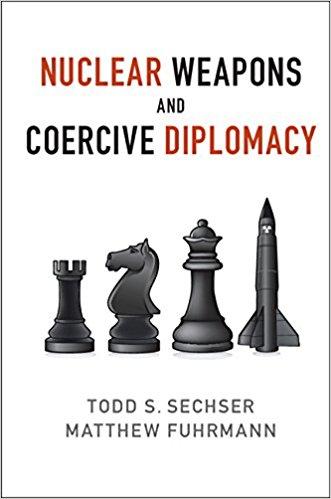
  • Coauthor of Nuclear Weapons and Coercive Diplomacy
  • Nonresident scholar, Nuclear Policy Program, Carnegie Endowment for International Peace
  • Expertise in international relations, foreign policynuclear security, emerging technologies

Areas Of Expertise

  • Foreign Affairs
  • American Defense and Security
  • War and Terrorism
  • World Happenings

Todd S. Sechser is professor of politics and a faculty senior fellow at the Miller Center of Public Affairs at the University of Virginia. He is also a nonresident scholar in the Nuclear Policy Program at the Carnegie Endowment for International Peace. His research focuses on coercive diplomacy, nuclear security, emerging military technologies, and foreign policy.

Sechser is coauthor of Nuclear Weapons and Coercive Diplomacy (Cambridge University Press) and coeditor of Emerging Technologies and International Stability (Routledge). His work has appeared in the American Journal of Political Science, International Organization, International Studies Quarterly, Journal of Conflict Resolution, Journal of Experimental Psychology: Applied, and the Journal of Strategic Studies, among other journals, and his policy writing has been published in The Washington Post, The Wall Street Journal, Boston Globe, and other media venues. He previously directed the multi-university Program on Strategic Stability Evaluation, a nuclear strategy study group, and was the founding director of the UVA Karsh Institute’s Democratic Statecraft Lab.

Secher's research has been supported by the Carnegie Corporation of New York, the U.S. Air Force, and the Stanton Foundation, and he regularly consults for several government and military agencies.

Sechser was previously a Stanton Nuclear Security Fellow at the Council on Foreign Relations and a postdoctoral fellow at the Olin Institute for Strategic Studies at Harvard University. He received his PhD in political science from Stanford University, where his dissertation won the Walter Isard Award for the Best Dissertation in Peace Science. Before entering academia, Sechser worked as a nuclear policy analyst at the Carnegie Endowment for International Peace.

He has received multiple awards for teaching, including the All-University Teaching Award and the inaugural Cory Family Teaching Award. He currently directs the Politics Honors Program.

Todd Sechser News Feed

Admiral James Stavridis, former Supreme Allied Commander of the NATO alliance, discusses the role that nuclear weapons should play in American foreign policy in the 21st century. President Barack Obama once proclaimed, “I state clearly and with conviction America's commitment to seek the peace and security of a world without nuclear weapons.” More than a decade later, however, a new era of great power rivalry is upon us. How should we adjust our nuclear posture for this new era? As Russia extends the threat of nuclear attack in Ukraine, how should the United States and its allies respond? Drawing on a lifetime of national security expertise, Admiral Stavridis takes stock of today's nuclear threat to the United States.
Todd Sechser Miller Center Presents
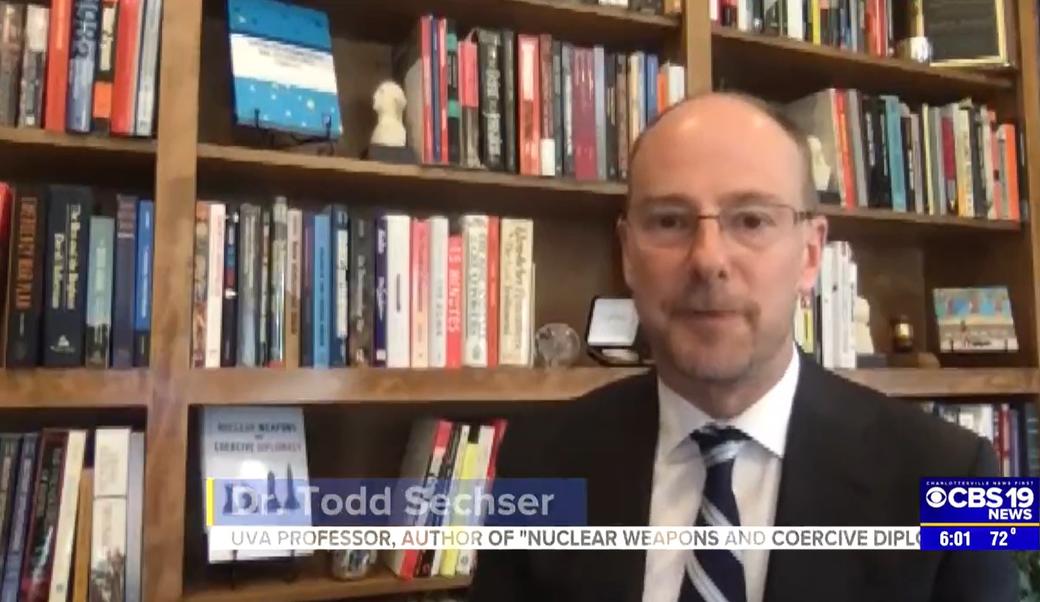
A nuclear war would be an unthinkable scenario. However, Russia continues to keep its nuclear arsenal on high alert and is now calling on China for help. And President Joe Biden brought up the possibility of World War III in a press briefing this week. Experts warn the Russian invasion of Ukraine could escalate to a dire situation. Todd Sechser is a professor of politics at the University of Virginia and a senior fellow at the Miller Center.
Todd Sechser CBS19
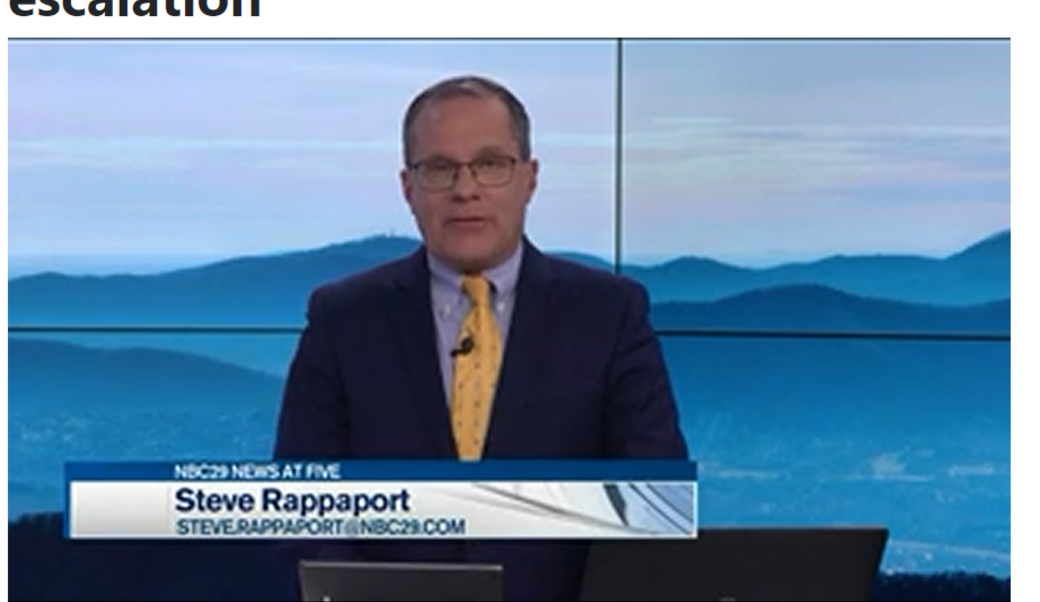
Senior Fellow Todd Sechser is interviewed on NBC29.
Todd Sechser NBC29
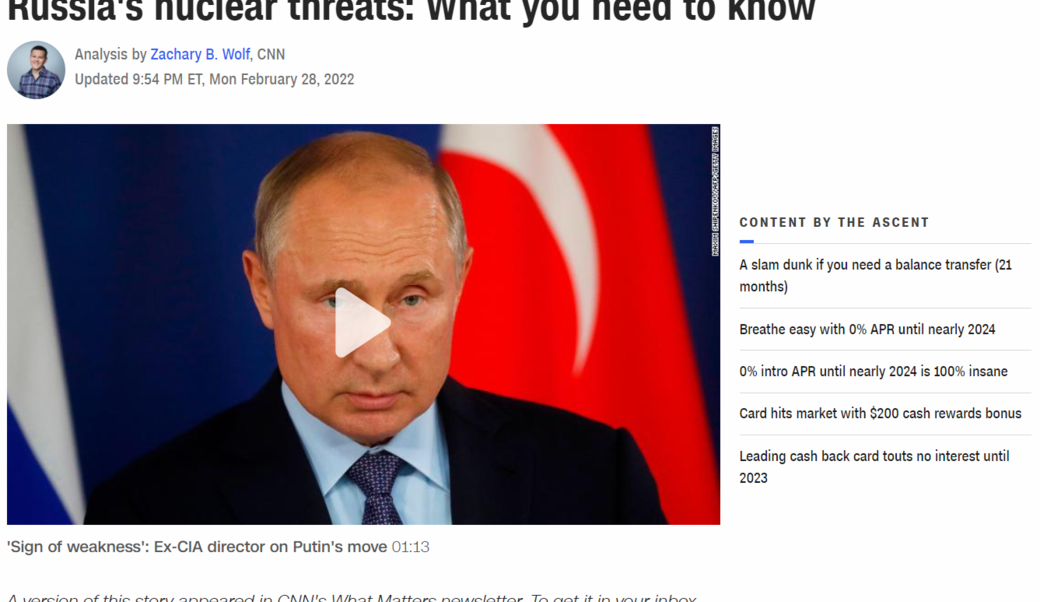
Sechser says Putin may not have thought it all through. "Russia has now played most of its escalatory cards, and doesn't have many tools left for resolving this crisis in its favor. The nuclear alert seems like more an act of frustration than a calculated tactical move," he said in an email. "If the nuclear alert was intended to coerce the United States and Europe into tempering economic sanctions or abandoning Ukraine, it failed. If anything, it has served to further inflame world opinion against Russia," Sechser added.
Todd Sechser CNN
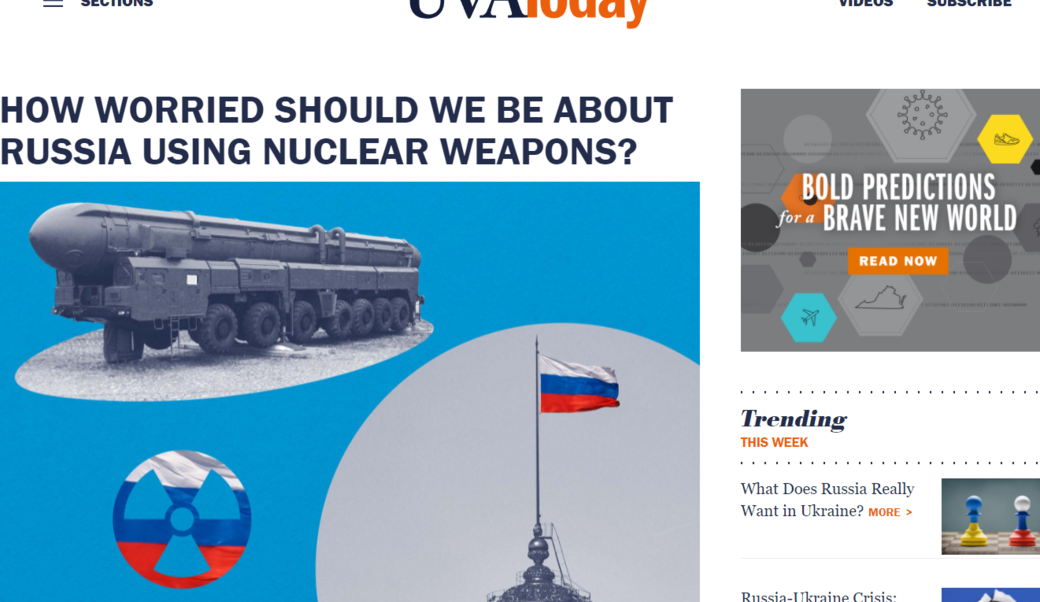
Co-author of the book “Nuclear Weapons and Coercive Diplomacy,” Todd Sechser is the Pamela Feinour Edmonds and Franklin S. Edmonds Jr. Discovery Professor of Politics and Public Policy and a senior fellow at the Miller Center. “The nuclear alert is an extraordinary escalation. But it suggests that Putin is running out of coercive options,” he said. “Russia has been turning up the pressure on Ukraine for years, and now it has launched a full-scale invasion.”
Todd Sechser UVA Today
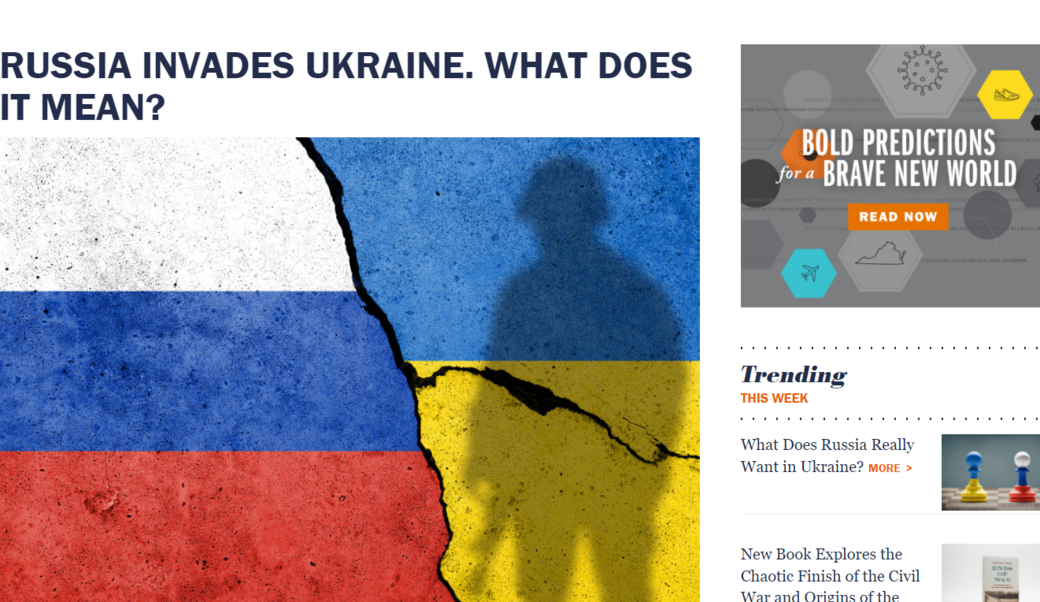
Todd Sechser heads UVA’s Democratic Statecraft Lab, which addresses the problems posed by the twin challenges of authoritarianism and great power competition. “Democracy is at the heart of this conflict,” said Sechser, the Pamela Feinour Edmonds and Franklin S. Edmonds Jr. Discovery Professor of Politics. “Putin does not recognize the legitimacy of Ukraine’s democratic government, and it appears that regime change is a core objective of the invasion. The rivalry between Russia and the West is not only about power; it is about what form of government will prevail in the 21st century. This war is the clearest illustration of that struggle.”
Todd Sechser UVA Today