Transcript
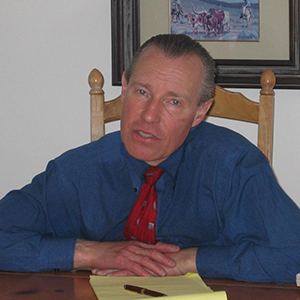
Stephen F. Knott
Thank you very much again for giving us this time. We were talking about the Edmund Morris book, which I can’t recall if you said you had read or not. I think you said you had not.
James Kuhn
Had not. Just being stubborn about it because we were so upset about how he did it and how it came out. But I’ve been told if you read the whole thing it’s not as bad as the media reported it to be. Of course, they went in and cherry-picked all the bad things out of it and didn’t talk about any of the good things, apparently.
Knott
Right.
Kuhn
So someday I guess I need to read it.
Knott
The Morris book was roundly criticized both by people who worked for President Reagan but also by book reviewers saying that he fictionalized the story. I was just wondering if you had any recollections of Morris around the White House. What was the attitude of people who worked with President Reagan regarding Morris’s presence?
Kuhn
We gave him a lot of access. We probably gave him too much access, because the more we gave him, the more he wanted, and it’s like anything else, it started getting out of control. And then he wanted to be in various meetings.
I mean, when I said we gave him a lot of access, we would give him time in the Oval Office, maybe once a month, twice every six weeks or whatever, and we’d always do it at the end of the day, and we’d give, like, an hour. The bad part was when that hour was up we had a hard time getting him out because the President knew that he didn’t have anything on his schedule after that, and the thing about Reagan was he was always so sensitive. He didn’t want to keep people waiting and he thought, I’m not putting anybody out. I’m not inconveniencing anyone. He wants more time with me. Jim, I think I’m okay—let me go on.
So he’d go an hour, go an hour-and-a-half, an hour and forty-five minutes. I don’t know that it ever went two hours. We thought, well, this is important. But then Edmund wanted to come in more often, and then he wanted to come in on meetings. A lot of meetings we didn’t want him in on. There were some that were, well, okay, because we’ve got a group of GOP state chairmen in from around the country for lunch. It’s going to be a political discussion. They’re going to talk about some issues. It’s nothing national security-related or anything sensitive or whatever. But there were some meetings that he wanted to get into and it wasn’t necessarily—in terms of national security—sensitive. It could have been something domestic that you wanted to keep on a close hold and we had to constantly say, “No, Edmund, not today,” not this, not that. The bottom line is, we ended up cutting him back a little bit and he got upset about it.
Knott
Right.
Kuhn
I guess maybe it was our own fault, because you give him too much—the more you give him—It’s just the human condition.
I actually drove him up to the ranch. I made a lot of trips. It seemed like in his second term I was out there virtually every time the President was out there. We set it up so that Edmund would go to the ranch one afternoon and just watch them do what they did. And that was just being out there cutting down trees and clearing brush. So he spent a couple of hours up there and he didn’t really talk to him. He just kind of monitored him, watched him. It was interesting to see Reagan up there, because it’s so intense. I mean, they took that ranch so seriously. I grew up on a farm and you’re either working or not working, and it was like they didn’t want to be bothered, and even if they saw us they didn’t acknowledge us. It was like, “You guys are fine, but we’re not going to stop and talk to you.”
I guess they chose Edmund Morris in 1983 or 1984. It was a dinner at Mark Hatfield’s house when he was in the Senate, and they had different historians there, authors. Reagan got a chance to meet all of them and he ended up choosing Edmund Morris. But then it dragged on and on and on. I mean, Reagan let him. It took him, what? Thirteen or fourteen years to write this book. And apparently he really struggled with it because he kept looking for that profound side of Reagan that you’re never going to find, that you’re never going to be able to figure out—why this man was bigger than life, and why he was so unique.
Knott
Did you have any reflections on that? I mean Morris seems to conclude—it’s hard to tell. Sometimes he seems to think that there wasn’t a profound side, but for the bulk of the book I think he thinks there was a profound side, but he just couldn’t cut through to see it.
Kuhn
I think there was, but I think Reagan kept that hidden. I mean he never revealed it. But there was this part of Ronald Reagan that was very sensational, very unique, very powerful, that he really never put on the table.
You could be sitting here like we are, and you could think, gosh, he’s just a regular guy who has strong convictions and a very significant belief system. But when you were with him you wouldn’t know that. Then five minutes later he could be in a press conference, he could be on television, speaking to the nation on stage, and there was this bigger-than-life aspect of him that came out.
Let me say this. I think there were three things. I think he kept that hidden. It’s been said that actors have a way of holding something back so that when they go off-stage they always keep something with them for the next time. Who knows? It might have been partly that. He had this unbelievable ability to communicate, had so much personal appeal, was so much at ease. He just had such an uncanny ability to attract people to him, to listen to him. Then lastly, one-on-one, I think he was very shy, but in front of a large group he was very much at ease and very comfortable. So you saw those two sides of him, where in a small group, Reagan was just sort of okay, or maybe even not so good, because of his shyness. But in front of a group where he knew he had to perform, he was the best.
So in trying to define that profoundness, I would break it down that way, I guess. But I do think he kept something back. He kept something tucked away so that he always had something that next time. He was just a very interesting and unique individual.
Knott
You’d mentioned last time, I think you gave us an example of that shyness that you were talking about, that occasionally there would be these awkward silences in the Oval Office?
Kuhn
Yes. You know, Ronald Reagan was not a back-slapper. He was not verbose at all. That was the greatest thing about him. So many people in Washington here talk too much, either because they feel they have to to prove themselves, or they just like to talk. But he wasn’t that way. He was a quiet man, very reserved, and a shy man. And there were those awkward moments where if somebody else didn’t drive the discussion— And normally these were not policy situations where he was talking foreign policy or domestic policy, because that was an agenda that he was following and there was a lot that had to be said and he was always prepared for that. These could have been photo-ops, these could have been White House staff coming in, a friend of yours coming in to get a photo, to say hello, some group presenting something, something very lighthearted. He wasn’t really so good at that, because he wasn’t real talkative, because it wasn’t a substantive meeting.
So a lot of times you had to prompt him a little bit and sometimes it was a situation where you really couldn’t prompt him because somebody just wanted to come in and bring in their family. So you had to prompt the family. You had to prime them to get the President going. “If you want to really get him going, this is what you talk about. Talk about the ranch. Talk about Camp David. Talk about when he was an athlete.”
The guy was unbelievable. He was so low-key and unassuming and never took himself too seriously when it came to being President, but he was so proud of his acting career and so proud of being a high school and college athlete. He loved talking about that stuff. And he’d go on and on and on.
Knott
Would you intervene to break the ice on occasion when you’d be in the room and there might be those awkward times?
Kuhn
Oh yes. You might say, depending on who the group was, “Oh, Mr. President, they’re from the South,” they’re from California, they’re from this or that, or whatever. “We were just there. Tell them about this, or tell them about that.” Once you got him rolling, then he was fine.
And if you really wanted to have fun, you got him to tell a couple of jokes, because he loved telling jokes. The amazing thing was he could remember those. I can’t tell jokes because I can’t remember. Not only can he remember jokes word-for-word, but he was the best at delivering the punch line, where I always step on it.
Knott
I have that problem too.
Kuhn
He was just uncanny in that respect.
Knott
Did he have a large repertoire of jokes or did he tend to tell the same—
Kuhn
No he had—I may have said before—he had material that was being fed to him. I knew somebody was feeding it to him. I never knew who it was and I thought, Jim, you don’t have to know everything. Leave that alone. They’re either coming into Nancy [Reagan], or Kathy Osborne is not telling you the truth and she’s getting them and this is her little secret with the President. But in the end I did find out that he did have someone feeding him. It was a retired Marine General by the name of [Charles C.] Krulak who was sending jokes in to him.
I mean, you’ve got to get them from somewhere and he didn’t have time to write his own jokes—he wasn’t going to do that—but if somebody’s sending jokes, he would tell them. And boy, could he tell them good, too. And he could tell old jokes. I mean, you could tell the joke about this or that or whatever, and he had it, he just always had it. He was never caught flat-footed.
Knott
Let me ask you—One of the accusations or criticisms of President Reagan made at the time, and maybe it even persists to this day, was that he was sort of lazy, that he was not a hard worker, that he would take a lot of naps, fall asleep at staff meetings and what not. I’m just wondering if you wanted to respond to that. What would you say to that accusation?
Kuhn
He was always busy doing something, and let me say this. Just having been with him on weekends and throughout the day, I don’t think I ever walked into the Oval Office, into his cabin at Camp David, into the residence upstairs in the White House, into the Century Plaza Hotel where they stayed when they were in Los Angeles, as President, or even before he became President, in their house in the Pacific Palisades, or on Air Force One in the stateroom—I don’t think I ever walked into any of those specific areas when he wasn’t either reading or writing. He was always doing something. He was never just sitting there watching TV, sleeping, or daydreaming, never. Not once did I ever see him doing that. He was always busy, always, always, always doing something.
In my line of work and in your line of work, if we’re reading or we’re writing, we’re working. That’s what we do. And if you’re President, that’s what you do also, so he was working nonstop. He was a voracious reader who loved to write. Now, did he doze off sometimes? He was a little—I think we all are—sometimes a little vulnerable right after lunch in that two o’clock time frame.
Knott
I know that well.
Kuhn
And it depended on the meeting. It just depended. There were a couple of times where he did doze off, so you’d give him a cup of coffee or whatever. But that was usually because of that right-after-lunch thing, and a lot of us have that problem. Now, other than that, the one problem that we really did have, and I may have talked about this before, and stop me if I did. Did we talk about the Pope, and falling asleep with the Pope a couple of times?
Knott
I’m not sure.
Kuhn
In 1982 when the Reagans made their first big trip to Europe, they went to a number of countries. I was in the advance operation then, when you traveled ahead and got to Rome three weeks ahead of them. Actually, I went to Rome twice and then set up shop with a bunch of people. You met with a couple of hundred people you’re working with, the State Department, and you’re the lead person as the President’s representative, working with the government of Italy and then the Vatican, which is a separate entity, as you know.
When he met with the Pope, they had a one-on-one, and that was fine, but then they gave speeches in the papal library. The Pope speaks very slowly and he speaks in a monotone. The reason he speaks so slowly is because his thought process is English-to-Polish-to-English, and he was speaking in English. But it is so slow and it is such a monotone that it just knocked Reagan out. Plus he was up real late. The problem there, also, was we couldn’t decide if we were going to bring the Reagans into Rome the night before, because they were in Versailles for the G7, the economic summit that they just had in Avignon.
Are we going to bring him in the night before? Are we going to bring him in the next day? It just got too late because of all the festivities inside the night before. You’ve got to remember, we were holding, like, 900 rooms throughout Rome so that we could accommodate everybody traveling—the staff, the Reagans, the press, military, security. Again, he was tired. He just went out right there on worldwide TV and made quite a bit of news. That was ’82.
Five years later we went back and it was still pretty much the same kind of drill, where they did the one-on-one. But they had been together I don’t know how many times. Eighty-two was the first time they had done that, so in ’87 it was the second, third or fourth time, or whatever. In the library again. We had been in Venice for the economic summit. I guess this was—was this right after the summit and we went to Rome and then we went back to Venice? I think it was before the summit started.
We went down to Rome to meet with him again, and the same thing happened where he fell asleep. It wasn’t because he was up too late the night before and he was real tired. It was just that monotone again—with all due respect to His Holiness. I remember the lead White House photographer on that trip dropped his big lens on purpose on the hardwood floor of the papal library and it made an awful clunk, but it accomplished what we wanted. It woke him up and he was okay then, and then we got through it.
We were flying back to Venice and we were on final approach in Air Force One and I walked into the stateroom. I had to tell him something before we landed—“You’re going to meet somebody and the press are going to ask a question about this or that, or whatever.” I had to go up and talk about something. They were looking at one another and they were both kind of shaking their heads somewhat ruefully. I knew what was going on and I just said, “Look, you know, it would happen again.”
The President looked at me and I said, “I think I know what you’re talking about here. You’re talking about what happened back with the Pope.” And he said, “I did it again, Jim.” And I said, “I know.” And I said, “It would happen again, too, and it’s not your fault. It’s nobody’s fault. He’s the Pope, with all due respect, it’s just—he just knocks you out and there’s nothing we could do about it, so don’t worry about it.”
Then Mrs. Reagan said, “I think Jim’s right. He’s right.” And I said, “We’ve just got to move on.” It just happens. It’s unfortunate, but no, this man was not lazy. I don’t know why, how—
Knott
Where do you think—
Kuhn
He had a reputation. Before I got to know him, the first thing I heard about him was that he was cheap. And this guy would give you anything. He would do too much. If you asked him for it, he’d give you the shirt off his back. He’d do anything to help—a very compassionate man. Not cheap at all. I mean, I saw him pull money out from time to time and I’d say, “What are you doing with money? Where’d you get money?” And he’d say, “What do you mean? I have money.” Every once in a while he might need something and he’d always pull money out and say, “Here’s this” or “Here’s that,” and I’d say, “No, no, we’ve got it covered. Don’t worry, we’ve got a budget for this.” This man was not a cheap man. He was a very giving man. Where that bad rap ever came from I don’t know.
This thing about being lazy—I mean, if you’re willing to put pen to paper, or you’ve always got a book, or document, or something in front of you and you’re reading or writing, that’s hard work, and that’s all he ever did. If he wasn’t doing that, he was outside, active, either going for walks at Camp David, going horseback riding, always doing something, never just sitting somewhere watching TV or wasting time. This man did not waste time. So I don’t know where that came from.
It started even before he became President. It could have been this nine-to-five thing, where he got in at nine and wanted to be out by five or six. But you don’t always have to be in the office to be working.
Knott
Sure.
Kuhn
You know that and I know that. And, as President, you don’t have to be in the Oval Office to be working. There are those Presidents that wanted to get in the Oval Office at seven o’clock and go back down after dinner, and he didn’t have to do that. And he knew that. That’s all perception. He didn’t have to do that.
[Jimmy] Carter—I know this for a fact—President Carter—and you learn about former Presidents from people who work at the White House who never leave, who are career White House employees. There’s a bunch of people there who are not political. They could be either security, they could be painters, they could be plumbers, they could be framers—they run the place. Some people told me that during the Iran hostage crisis, Carter used to come down at 4:30, five o’clock in the morning. Go in, sit at his desk for a while, do some work, and then go back into his study and sleep on the couch for a couple of hours, but nobody ever knew that. So it was reported that the President was at his desk today at 5:00 a.m. doing everything he could to solve the hostage crisis. I’m not trying to take a swipe at Carter but that’s what I was told, and I don’t think they made it up, either.
Reagan would never do anything like that. Not that I would ever suggest it, but it was sometimes to his detriment. “I’m going to play it straight and this is how I operate.” He kind of took a bad rap for it, whereas some people got credit for something that they weren’t even doing.
Knott
In those rare instances, perhaps where there was some late night situation, an emergency, would you be called back into the White House? Did that ever occur?
Kuhn
I don’t think I was ever called back to the White House. I don’t think during the second term—and you stop me if I’m wrong. During the second term, I don’t know that that ever happened. In the first term it did. One thing that comes to mind is—and I’m not saying he didn’t get calls in the middle of the night. He might have gotten calls from his Chief of Staff, from his National Security Advisor, but I think you’re talking about convening a meeting in the middle of the night. That didn’t happen in the second term.
First term, in November 1983 when things broke out with the Marxist rebels in Grenada, when that situation got out of hand, there was that photo taken of him in his pajamas being briefed by—I think George Shultz, by either Jim Baker or Mike Deaver, whoever was there that weekend. He was at the Augusta National Golf Club, playing golf that weekend.
We had three things happen that weekend. We had Grenada, that situation. We had some idiot who drove his pickup truck through the fence to get to Reagan—drove right through the gate to get him and took two White House staff as hostages. And the worst thing was the terrorist attack on our Marines at Beirut at the airport. All that happened that weekend. That was in the middle of the night or whenever it was. He got a full-scale briefing and had to make a decision about sending the Army in there to quell the situation. Now, I don’t know that anything ever happened again after that where he had to convene a meeting at 2:00 in the morning or 4:00 in the morning or anything like that.
We did have a situation where Ed Meese—dear, dear man, but he made a mistake. I made a lot of mistakes. We had a situation with two Libyan MIGs, in 1984. I remember, because we were out in Los Angeles to open up the Olympics, the summer Olympics. I was in the advance operation for that. We shot down two Libyan jets, two Libyan MIGs. It was a skirmish in the air. That happened around 7:00. Meese was notified. He was the lead person there. He was counsel. Baker wasn’t there, Deaver wasn’t there, and Meese was the number one with the President. It happened at 4:00 a.m. Pacific Daylight Time and Meese got the call, I think from—who was National Security Advisor? I think it was Bud McFarlane. He got the call from McFarlane to tell him, but they didn’t wake up the President to tell him that we’d shot down two of the Libyan jets.
Then they told him hours later when he did wake up, and Reagan took a terrible hit for that because they said he slept through it, didn’t care, wasn’t told. He should have been awakened.
I’m going to give an example of one of the times I saw Reagan get angry. You had to really be pretty stupid—and I think I may perhaps even be repeating this story and if I am, I’m sorry.
Knott
That’s fine, don’t worry about it.
Kuhn
I’m not sure I told this but I might have. That was ’84. Two years later we were campaigning for [William] Henson Moore who was running for the United States Senate in Louisiana and had a chance of winning. You know, a Republican hasn’t won down there in over a hundred years. We went down to do a fundraiser for him and that was right before we bombed Libya because of all the terrorism that was being spread throughout Europe and elsewhere and they had bombed the discotheque in Germany. [Muammar] Qaddafi was responsible for it. It looked like we were going to retaliate and we did then shortly after that. But it got out of hand where the press were reporting something was imminent with Libya and that we might not even travel to do that fundraiser that day.
When we got down there, Henson Moore met us in the holding room and he made a very stupid statement. He said a very stupid thing to Reagan. This is before they went out on stage to give the speeches. He said, “You know, Mr. President, there are all these rumors that you weren’t coming because of Qaddafi and something’s going to happen. But I told them that you were on the way. I got the call that Air Force One was in the air and I told them you were in final approach. And I also told them, Mr. President, that you wouldn’t sleep through anything this time like you did in 1984.”
I thought, Oh my God, he’s not going to like that. Why did this man say this? Reagan looked at him and he kind of gritted his teeth, and he had that look on his face. He said, “Now look, I’ve taken a bad rap for that for a long time. And yes, I was sleeping when it happened. It’s been said that at 7:00 a.m. I was asleep and didn’t know about it. I was in California. That was 4:00 a.m. out there. Most people are asleep at 4:00 a.m.” He said, “I was not awakened. My staff has orders to wake me up the minute something like that happens again. We made a big mistake and I’m angry about it but it won’t happen again. But I did not sleep through that the way people think I did.”
He was pretty upset. I thought, Boy, this guy shouldn’t have said that. What is wrong with him? He lost the Senate race and he later became the number two at Energy. Former President [George H.W.] Bush made him the Deputy Secretary of Energy. Admiral [James] Watkins was the Secretary of Energy and Henson Moore was the number two.
Knott
I knew the name clicked. Let me put forward another criticism made of President Reagan and get your reaction to it. This comes partly from the Tower Report and the Iran-Contra situation. They painted a picture of a kind of detached chief executive, particularly in regard to the press personnel matters. Any comments on that? Any reflections on that? Do you think that was a fair statement, or is that something that was particularly isolated to the National Security Council at that time?
Kuhn
When you say “personnel matters”—I’m trying to tie it into Iran-Contra now. Was that because—Can you be a little more specific?
Knott
It seems to me that it was—and I’m sort of taking this from memory, as well, but the term “detachment” was used and I thought that they also recommended that he take more of an active role in terms of selection of personnel or—
Kuhn
Can we use Oliver North as an example?
Knott
Absolutely. Sure.
Kuhn
He didn’t really know Oliver North, and Oliver North will say that Reagan knew him very well. The reason Reagan didn’t know Oliver North very well is because he didn’t see him very often. North was there—I may have said this for the record before, but I’ll say it very briefly again. North was there at the NSC in the Reagan White House for 28 months. Twenty-eight months. Anytime the President was with anybody there was a record of who was in with him. We went back and did the research on it, and North, in 28 months, had 16 sessions with the President.
He was never alone with Reagan. He might have been in the Oval Office with two or three or four people. Over half of those I think were over in the old Executive Office Building where there’s an auditorium that can hold 200 people. He was there, was part of his group or whatever, some foreign policy thing, some speech that North was involved with.
The point I’m trying to make here is, you had those people working for you, like North, who will tell you that he was very involved. But he was down the ladder, and I don’t care who the President is, you can’t know all those people, you can’t be responsible for all those people. Now, you can say, “Okay, why did this happen?” Bud McFarlane was National Security Advisor. Why wasn’t he a little more on top of Bud to make sure that this didn’t happen? And then John Poindexter? Reagan was very trusting and he trusted that they were doing the right things.
Now, with Iran-Contra, really this was within Reagan’s mind and heart day-in and day-out—the hostages that were being held around the world, in Lebanon and that part of the world. He was very bothered by that. I mean, it was something that never left his mind and he wanted to get them free. When it came out, the arms for hostages, Reagan was very stubborn and said, “We really weren’t doing a deal to the Iranians to give them arms for hostages. We were giving them arms because there’s a group of moderates there.”
You’ll hear it today—and I think about this quite often—the people of Iran very much are in accord with the United States, but the government of Iran is totally the antithesis of the United States, as you well know. But there were those moderates that we could begin to work with, so we did arm them. But, at the same time, Reagan knew that they could help us to get the hostages released—as negotiators if we did give them those arms. It really wasn’t a swap, but it was a swap.
Reagan was very stubborn. He said he never had cancer and for the record, when he had colon cancer, he later said that he didn’t have cancer. He said there was this thing inside of him, this growth, this tumor. It had cancer, but he didn’t. He said that. He said that over and over again. He was a very stubborn man.
Well, we didn’t really do arms for hostages. Yes he did. But he wouldn’t admit it. But that got out of control. What do you do with the money, then, for those arms, and then the diversion of funds? Reagan trusted McFarlane. He trusted Poindexter and had no idea it was going on. You could say, “Why didn’t he know?” Well, maybe he was too trusting. Why did it happen? Maybe because Poindexter thought, Hell, we can do it. Reagan’s not going to get involved in this and nobody’s going to know, and let’s go ahead and do it. Whereas, I suppose you could say, if it were LBJ [Lyndon B. Johnson], LBJ might find out about it and rip somebody’s neck off and they wouldn’t have done it. But Reagan was no LBJ. Reagan didn’t kick ass the way LBJ did. He just didn’t.
Knott
Right. Were there times when you wished he did?
Kuhn
Yes, like then at that time, yes, very much so. But it wasn’t his style to micromanage. It’s interesting. I’m sure you’ve listened to—well, you probably—how far back are you going with the Presidents? Are you going—
Knott
Reagan is as far back as we’ve gone so far. We may go back to President [Gerald]Ford but it’s still up in the air.
Kuhn
Have you listened to any of the Johnson tapes?
Knott
We do that. The Miller Center does those tape transcripts, yes.
Kuhn
This guy micromanaged. It’s unbelievable! He really micromanaged in a very substantive sense, where Carter micromanaged in a kind of a screwy sense, like, “Who’s playing tennis on the White House tennis court? Who’s using the cars? Who’s doing what? Who’s using the plane?” Well, Johnson didn’t get into that, he just got into these things like, “Who are we putting on this board?” I was just amazed to listen to that—how he really focused on that stuff.
But that still wasn’t Reagan’s style to do that. When he made a decision and said, “You do it. This is what I want. You know what I want,” then he kept the big picture in mind. I suppose there were times like Iran-Contra where he probably thought, hey, maybe we should have been a little more on top of it. So maybe the fear factor was there, like they lived in fear of LBJ, I think, somewhat because he would kick your butt from here to Chicago if things weren’t going right. They knew Reagan didn’t do that because he wasn’t going to be following it that closely and therefore things maybe got tangled up the way they did.
So there’s an argument for being a little more heavy-handed, I guess. But still, you weren’t going to change the man. He was what he was, and how were you going to change Ronald Reagan? He was set in his ways. All the real conservatives and all the real Reaganites used to say, “Let Reagan be Reagan. Don’t try to change him. He’s already changed more than we want him to change. He’s become too pragmatic, or whatever. He’s not as hard-line as he used to be. He shouldn’t have met with [Mikhail] Gorbachev. He shouldn’t have gone with this thing.”
And there were a lot of hard-core conservatives that were really upset with him that he was talking to Gorbachev. They didn’t want that. They wanted to blow up the Soviet Union, they didn’t want negotiations.
Knott
Did you ever hear him express any frustration with these hard-core conservatives?
Kuhn
Yes, one time, and I was really surprised to hear this. It had to have been after, I think, Reykjavik. We’d been to Geneva. It might have been before Reykjavik. The real hard-liners were upset and felt that we were going soft on Communism because we were starting to make inroads with Gorbachev and they didn’t want that. They wanted their chance to have an audience with Reagan, and we did it to appease them. That didn’t mean that Reagan was going to change, but he would hear them out. He would hear what they had to say.
He made it clear to them that they were making progress, and that we could end the Cold War, and we could do away with nuclear weapons, and that that was in the best interests of the world, and that he was going to continue to pursue that path. They didn’t want that. We were in the Roosevelt Room. This was a group sitting around the table, maybe fifteen, eighteen people.
He got up and left. There might have been more. There might have been twenty or so because there were other chairs brought in.
He made his closing statement and got up and left. Generally, when you do that—and I don’t care if you’re President, or I’m President, or it’s Reagan—there’s an acknowledgment when you leave the room. They usually applaud, like, “Thank you and good luck.” But it was one of those things where he gave a rousing, “This is what we’re doing, and this is how it’s going, and we’re going to continue on, forge ahead.” He walked out, puffed up, and it just fell flat. There was this silence. No applause, no nothing, no “Go get ’em” or anything.
We got in the Oval Office and he looked at me and he said, “Did you pick up on that when I left?” I said, “Yes, I didn’t like the way that ended.” He said, “Yes, there was no applause.” Meaning, not for me, not for Ronald Reagan, but for what we’re doing, like, “We salute you. We applaud”—and there, literally, he said, “There was no applause.” And I said, “The hell with it. You’re on the right path. Forget about it. They don’t want this to happen.”
But I mean, he picked up on that and was—I don’t want to say he was angry—but he was upset. “All right, I know I’ve got to bring you guys with me and I know how you feel about it,” but they just thought, Hey, we’re going to send you a message, Mr. President. You’re doing the wrong thing. We’re leaving, and you go back to the Oval Office. And he didn’t like it. He did not like that. He wasn’t angry, but he didn’t like it, believe me. Or maybe borderline angry, like, “Why can’t I get these people behind me?”
Knott
I’m making you jump around here a little bit. Can I just bring you back to the Tower Commission report? Do you recall his reaction at that time? That was February—late February of ’87. Did that bother him? He was generally someone who was seen as not to get upset or to be down. Do you recall his being down?
Kuhn
Nothing got him down, other than hostages being held. Anything like Beirut, 242 Marines killed, a suicide attack—things like that. The space shuttle. Yes, that got him down. But that’s because there was bloodshed, people were killed, loss of life. That got him down. But something that was going to hurt him politically or his approval rating, or his ability to lead was going to be tarnished, his legacy was going to be tarnished—did that get him down? Not one bit. He didn’t care about that—“I’m not going to let it bother me. I’m just going to keep going on.”
I shouldn’t say he didn’t care, but he just didn’t let it pull him down. I may have said before, the hardest thing—one of the hardest things—about working at the White House is there are so many great times, and you were on these unbelievable highs, and then there were some really bad times, and you hit rock bottom. When you’re on a high and you had to come back down, and you’re on a low and you had to get back up, most of us were like on and off the Richter scale, and that really was hard. Whereas, with him, he was always on an even keel. He didn’t get too excited. He didn’t get too upset. When things were great, he was the way he was. When things were bad, he was still that way, unless there was loss of life, and then that hurt him. That was different.
Knott
There were stories at the time about the hostages in Lebanon, that the families here had a great amount of influence on him in terms of perhaps pushing, getting him to accept the idea of doing anything to get them out, and that that led to Iran-Contra and all of that.
Kuhn
Right.
Knott
Were you ever in any of these meetings where you met with these family members? Do you recall anything?
Kuhn
I might have been in at the beginning or near the end, but I didn’t sit in on the whole meeting, but that was something that really touched his heart and mind. I know I said this for the record the last time, but I’ll give you a case in point. Another time I saw him angry was when we were in Spokane, Washington. He had the morning news on, and in the local paper there was a story, but I think he saw on TV where there was a family from the Spokane area who had, I believe, a son who was being held somewhere in Beirut or on the outskirts of Beirut. They wanted to meet with Reagan and they were denied the opportunity to meet with him while he was in Spokane. It was reported, and he heard about it in the news and was damned upset.
It was too late to pull them together and then I think we finally had a phone discussion with them, but he wanted to meet with them. That was a dumb thing. That was John Poindexter who made that decision. And I thought, boy, you don’t know this man very well, John.
Knott
Do you think it was for the reason Admiral Poindexter didn’t want the President to be overly influenced by these kinds of personal contacts?
Kuhn
I think it was—
Knott
I’m asking you to answer a question of somebody else’s—
Kuhn
No, I like to answer those kinds of questions. I think it was Poindexter thinking, There’s nothing that the President can say or do that we’re not already doing. You could say, well, that’s really pompous on the part of the National Security Advisor to think that he’s that close to the President that he can speak on his behalf. Surely it demonstrates that he didn’t know Reagan very well. Because if you knew that man, you would have had him in that meeting in a heartbeat because that’s what he wanted to do—that kind of thing. I mean, if you could ask him one thing he wanted to do that month, that day, that week, it would have been to be with that family and they denied him that. He was pissed off, I’ll tell you, and rightfully so. Dumb mistake on Poindexter’s part.
Knott
Let me ask you again—another criticism of President Reagan again—just to get your response on the record and that is that he was not that smart. How do you respond to that?
Kuhn
Well—
Knott
You know, there’s the famous Clark Clifford line about Reagan being “an amiable dunce.” It’s a pretty harsh line.
Kuhn
Yes, there was that. There was being cheap, being lazy, and not that smart. I think Reagan—would you call Reagan an intellectual? Would you call him a heavy thinker? No, I wouldn’t refer to Ronald Reagan as a heavy thinker or an intellectual type. At the same time, would an intellectual or a heavy thinker make a good President? I think not.
What Reagan had was good intelligence. I think he had a strong level of intelligence. But what went with that was an unbelievable, ultra-high level of analysis on issues—domestic issues and foreign policy issues—that he acquired and built up throughout the decade. And I see that in people a lot. I see people—they can be on the radio, they can be on TV or whatever—and I see a lot of very smart people who don’t know that much. And I see some people who are of average intelligence—and Reagan was clearly way beyond that—but I see people of average intelligence who do very well in life because they work hard, because they keep building up their knowledge bases.
Reagan had a strong intelligence level—not an intellectual, not a heavy thinker—but to go with that he had an unbelievable, an ultra-high knowledge base of domestic and foreign policy issues that he kept building and building over the years and continued to build as he was President. And, Professor, I’ll say this, every day we try to expand our knowledge base. I don’t care of you’re President or a professor or myself, if we don’t get smarter every day, what’s the use of going through the day? We want to get brighter. We want to get smarter. We want to expand it. Reagan’s knowledge base was unbelievable. It was unbelievable.
But the heavy thinkers make poor Presidents. Carter was a heavy thinker, highly intelligent—a poor President.
Knott
One final criticism to run by you and then we’ll move on to more pleasant aspects. This notion that Ronald Reagan was somewhat cold, somebody who wouldn’t necessarily know your name if he saw you in a hallway even if you’d worked for him for three years. Myth? Anything to it?
Kuhn: You know what most of that was? I saw this and I saw it days and weeks, and months and years, and it finally occurred to me that he was just so nice and so polite that he lived in fear of calling somebody by their wrong name. He saw so many people. He was so afraid that he would offend someone by calling somebody Bill instead of Dave, or Jim instead of George or whatever, and he never wanted to do that. He just never wanted to do that.
So there was this inner circle and I’ll tell you—Yes, if Ronald Reagan knew your name, if he called you by your name, that was really something. Boy, you were pretty close to him, because he didn’t do that. That was such a small percentage of the people that he came in contact with. If he knew your name, you were in a—I don’t want to say an elite group, but you were in a real small group of people. That was because he was too damned nice, too polite.
I know darn well he knew a lot of people’s names but he would—that was a rule that he followed, because it’s like he says, “If I start it, I won’t know when to stop and then I’ll hurt somebody’s feelings, I’ll offend them.” So, no, he didn’t. That’s why. I’m convinced of that. I studied that. I watched him too long. I know why. I’m sure.
Knott
Were you in that elite group?
Kuhn
I was fortunate enough to be in that elite group only because he saw me more than he probably wanted to see me or needed to see me, and so it was inevitable. Whoever had that job, he was going to know that person. It wasn’t because of me. It was because of the position.
Knott
You would meet him first thing every morning, is that correct?
Kuhn
Yes, I would normally meet him—
Knott
Off the elevator?
Kuhn
I would meet him downstairs, off the elevator. But if things were starting to change or it was going to be one of those days—we might have had a crisis or something—if I had so much to talk to him about, I’d go right upstairs and grab him as soon as he came out of the bedroom and start talking to him then. I would have to talk to him upstairs, on the elevator going down, all the way across the colonnade, past the Rose Garden, and once we got into the Oval Office. Because once you got in the Oval he wanted to start. “Get ’em in here. Where’s George? Where’s the Vice President? Where’s the Chief of Staff?” He wanted to roll. So I knew if I had a lot to tell him I had to get upstairs and utilize that extra time to make sure he had everything.
Knott
What generally would you say to him first thing? “This is what lies ahead for the day”?
Kuhn: “We’ve got some changes. We’ve got some problems. We’ve got some things you’ve got to know about right now and it’s going to impact the entire morning.” He needed to know, because he wanted to follow his drill. And you kind of had to let him know because that would upset him sometimes if it didn’t go the way he wanted it to go. So you just had to tell him, “Right now, we have to tear up your schedule for the day and we’re going to be rolling with the punches all day long, and there’s nothing we can do about it.” And he’d say, “Okay, fine.” But you had to tell him. If you didn’t tell him and he kind of followed—
Knott
You caught him off-guard.
Kuhn
Yes, surprised him, caught him off-guard or if you just kind of gave it to him piecemeal, he didn’t like that. He didn’t care for that. So you just had to give him the whole load of hay up front. Then, you never know, there might have been a situation where he had to make a statement right away or say something, or there was going to be a photo-op and he was going to see the press two hours earlier, or whatever—they were going to have a chance to ask him questions and you had to convey some things to him. You just wanted him to know. As long as he knew, he was fine.
The job, my job, just required that. That position required you to protect the President. Protect him to make sure that he wasn’t caught off-guard so that he knew and he was prepared. Even then, we got caught a lot. You couldn’t cover for everything. But yes, I was always the first person to see him, and in that position you spent more time with him than anybody else.
People say, “What about the First Lady?” Well, the First Lady didn’t see him that much during the day. She didn’t see him that much. She only saw him at night. She might see him a little bit if they had a luncheon or something. But no—and she didn’t come over there. Every once in a while Mrs. Reagan would come over to the West Wing for something and we’d always be flagged ahead of time.
It was amazing. There you are in the White House and it was like somebody’s coming over to your house. We started looking around. We’ve got to get ready. The First Lady is coming over. I mean, it’s like we had to clean up the place or something. The Oval Office was impeccable, but still you had to do some things before she got there. I don’t know what. I mean it might have been this or that, or whatever. It looks great but we’ve still got to do five or six things before she gets here. This is out of order, the papers here—she’s going to wonder why that’s there or whatever. Why is he doing this? Or why is he reading that? Just certain things—I don’t know. We just had to do the First Lady check before she got there.
Knott
How much advance notice did you usually get?
Kuhn
We’d usually get about an hour’s notice. But they knew that she would come over and look for things. Like certain things might be out of place, or there might be too many papers scattered around or whatever. We’d kind of scurry there to get everything squared away. It wasn’t like the place didn’t look great—it was the Oval Office, right next to the Rose Garden and everything—but still we kind of scurried to get ready before she got there. Minor things. Little things.
Knott
You hear stories of people who have worked in the White House, and former Presidents themselves, talking about the White House being a kind of cocoon, cut off and isolated from the rest of society. Did he feel that? Was he frustrated by that? Did he ever just want to walk out the gate and—
Kuhn
He felt that, but he didn’t want to break out because he always said, over and over again, that every time he went somewhere, did something, that he was a security threat to somebody else, meaning somebody wanting to get to him. Reagan always had a very high threat level. He had a high, high threat level the whole time. He knew that if he went somewhere that he was a security threat to somebody else. If somebody wanted to get to him, they could, if he was there. Somebody else could get hurt because of him. So he just kind of accepted the fact that we’re going to stay in and that’s the way it is, but we’re going to Camp David this weekend. Now, he was older, as you know.
Whereas, the Clintons didn’t like to go to Camp David. I don’t know how many times they went in eight years, but it had to be a small, small percentage of the times the Reagans went. The Clintons liked to go out. They went out for dinner, to do these things. The Reagans didn’t do that. They accepted the fact, “We’re going to stay in. We don’t want to inconvenience other people. Every time we go it’s a motorcade. It’s intersection control. It’s all the security, putting up tents to put the limo in, sealing blocks off.” They knew that and they said, “We don’t need to do that. And we’re fine staying in. We’ll go to Camp David. We’ll do our walks there. We’ll do our partying. We’ll socialize when we get to Los Angeles and we go to Betsy Bloomingdale’s and our friends’ homes in Bel Aire and Beverly Hills. We can wait and do it then.”
Whereas, there were some people there—and the Clintons I’ve got to use as the best example. They couldn’t wait. They had to get out and do things. Did they care about the inconvenience? I don’t think they were nearly as sensitive about it obviously as the Reagans were. It was, “Hey, that’s the way it is. We’re going to go, and if people are inconvenienced, so be it.” That’s not how the Reagans wanted to do things. Totally different.
Knott
You said you spent 91 weekends—
Kuhn
Weekends at Camp David. Yes.
Knott
Those were usually times—Were they generally up there by themselves or would they have guests or—
Kuhn
Almost always. I looked at the Camp David guestbook at the very end and I think it filled up maybe one or two pages, and it seems to me if you flipped to the third page, it filled up the third and maybe part of the fourth page. That was it, in eight years. They didn’t invite people up there. I mean, all the family were up there a couple of times. Now, Maureen [Reagan], God rest her soul, was up there more than anybody, but she didn’t go up all the time, and she lived at the White House the second term when she was co-chair of the Republican National Committee.
The [Charles and Mary Jane] Wicks were up there, maybe one or two weekends, and some other folks, but for the most part they wanted to be alone up there. They wanted to be alone. And, I was in a unique position because my family got to go and—
Knott
Routinely?
Kuhn
Yes, every weekend.
Knott
The President told you to do this?
Kuhn
He had told my predecessor, Dave Fischer, to do that. So that was all set. I inherited that privilege of being able to do that. So that was nice. We had our own cabin and everything. The kids got to see the Reagans. For the radio address he’d go to the big lodge—Laurel Lodge. The kids got to see the Reagans and they were really good about it. My wife would go to the movies on Friday and Saturday night—not every Friday and Saturday night, but generally she was there, and they were real good about it.
Even though they were alone, they would invite—in fact, there were about ten people that would go into their living room to watch a movie—myself, my wife, a press person, the lead Secret Service agent, the military aide, the lead Marine One person, the Major of HMX [Marine Helicopter Squadron] who flew the helicopter. The lead White House communications person was there, and the Director of Camp David, the Commander of Camp David, was there also. They would all come in to watch the movie with him.
So even though they were alone up there, when they did the radio address there were people that were around for that every Saturday. They had dinner alone. They had lunch alone. They had breakfast alone. But then they would invite—they wanted—people in for the movies. There were some times, over and over again, where he might have been—let’s say he went to Bethesda Navy Hospital for a physical and he had to do the colonoscopy and everything, and go through all that, or it might have been just a real busy week where everybody was—a tough week, tired, whatever. Where I would go to the Reagans and say, “Look, you’ve been at Bethesda. You went through that awful physical,” or, “You’ve had a tough week” or whatever— this or that—“Why don’t you guys—you’re so wonderful to have everybody in, but this is a night where you ought to just do it alone, and we understand it.”
And they always overruled and said no. They never did that. They would never do that. “No, Jim. We want everybody to be there. Make sure they know.” Then, “If you guys don’t want to come, we don’t want to make you.”
I said, “No, it’s not that at all. It’s an honor to be with you, but I just thought—you had the physical, you had this, you had that.” But no, not once would they ever—they always wanted everybody to come. Yet, they did not have a big group up there spending the whole weekend with them—their friends—that wasn’t their nature. That was the time to have their privacy.
Knott
I’m trying to recall if there were any foreign leaders in Camp David during the second term. I’m sure there were.
Kuhn
Not very many. The first weekend I went up there, December of ’84, Margaret Thatcher was there, but when they came up they only came up for part of the day. They never spent the night. Margaret Thatcher was there on a Saturday in December of ’84 and she had met with Gorbachev before he became—then—General Secretary. Then the position changed to President of the Soviet Union. She said, “He is the heir apparent.” And she said, “There’s something there with this man—I think the two of you can begin serious discussions. I think there might be a chemistry that will develop.” And she was right.
The next head of state that came up there was Prime Minister [Yasuhiro] Nakasone in April of ’86. He came in on a Sunday. I believe that was the Sunday before we bombed Libya the next day. Then Thatcher came back later on, either in ’86 or ’87. She was back up there again on a Saturday at Camp David, for part of the day. Those were the three, actually heads of government, because you know who the head of state is in England, and the Emperor is the head of state—
Knott
That’s true.
Kuhn: —head of state in Japan. Of course, the President of the United States is head of state and head of government, but we had three heads of government up there in the second term. I don’t know that—Oh, in ’81 I was up there in the advance operation, and the President of Mexico, [Jose] Lopez Portillo was up there with the Reagans for a dinner in ’81. But I don’t know if anybody else went up there in ’82 or ’83 or prior to Thatcher in ’84. I don’t know, because I didn’t go up there then. Dave Fischer did. But it wasn’t a lot.
But—and I’m sure I said this when we met on March 7th—that was the one thing, the only thing, that he said he would miss, that would be hard to let go of or miss when it was over—that was Camp David. He said, “I will miss Camp David.” He would not miss the White House because it’s here, you have temporary custody and it’s time to go. You know that coming in. But he did feel the use of Camp David was very special, and he would miss that. He really, really enjoyed that. That was the only thing he said he would miss about it though.
Knott
You mentioned earlier the ranch, and you spent quite a bit of time out there as well. You would be down in Santa Barbara. Is that correct?
Kuhn
Yes. Have you been there?
Knott
Yes, I did, I went a year and a half ago, a great tour.
Kuhn
I’m probably repeating myself, but it’s a paradise.
Knott
It really is.
Kuhn
There are no jobs there. I guess you just have to have a lot of money. I mean, obviously there are service jobs there. There are restaurants, gas stations, things like that, hotels. But what a paradise. I remember hearing on the radio in ’76 when I was working for him in Ohio—I mean, I had a job working in industry, a small industrial firm—that after these primaries and this and that, then he’d go to his ranch, north of Santa Barbara. And I’d think, That just sounds like a really decent place. Something about it just sounds so good.
I remember when I got to go there for the first time after the election in 1980, after we won and everybody else went back to Washington and I stayed out there. A small group, two of us stayed on the west coast and rented that house across the street from the Reagans in Los Angeles in the Pacific Palisades. But I’m trying to go to the ranch.
The first time he went up there—The election was November 4th. Well, a couple of weeks later, two and a half weeks later, three weeks later, Thanksgiving, we went up to the ranch and we got to go up there for that and we camped out. The press went up and we stayed in Santa Barbara.
Well, we went up to the ranch, and I got to go on a tour with him and he showed me around. We were up on a ridge and looking down over the Pacific, a very picturesque view, as you can well imagine. But, I’ll never forget. He said, “Jim,”—this is probably already on the record—he said, “You’re looking south, you’re looking toward San Diego.” I had such a hard time. I said, “How could that be?” He said, “Because California, as you come up, juts out and then goes back up again.” And he said, “We’re on that side, so that part of the ranch is on the part facing south.” So he said, “You’re looking due south.”
I remember going down to Santa Barbara the next day or the day after, Thanksgiving weekend. The White House press—you know, like the Leslie Stahls, or the Sam Donaldsons—it might have been one of the two of them then, or it could have been Lou Cannon even. Did you talk to Lou Cannon? Are you going to?
Knott
Not yet. He’s actually consulting with us, advising us on occasion.
Kuhn
It might have been Lou. It was one of those big-name people who had covered Carter also who said, “This is a paradise.” Even though I thought it was great, I said, “Why do you say so? The palm trees, the weather, the ocean, but is it really—I agree, but—” And he said, “You don’t know what we’ve been through, what we’ve experienced the last four years.” He said, “We’ve been in Plains, Georgia, the last four years with nothing but these awful mosquitoes and bugs, nothing to do down there, an awful place to go to. And now we come to Santa Barbara. This is truly the contrast. It’s a paradise to begin with, but when you contrast the two, it’s even more of a paradise.”
Knott
Sure.
Kuhn
I’ll never forget that. It really was something. It was great. The one thing, though, that I did like about LA more than Santa Barbara was—and I don’t know what you think of Los Angeles, but I really like that town—
Knott
Me, too.
Kuhn
It’s a big city. There’s a lot going on, but it’s very comfortable, and it’s not intense. Washington—I mean, it’s small compared to LA, but Washington is still a big city. Washington is always so intense. The one thing that I liked about LA more than Santa Barbara was there was more of an energy level in LA than there was in Santa Barbara. Santa Barbara is so laid back. I was a lot younger then. Today I’d probably like it a little bit—I always kind of fed off that energy. Well, I suppose today I might like Santa Barbara more than I did LA. Back then I liked LA more because there was just more going on. I’m a lot older now and if we were out there today, I’d say, “Give me Santa Barbara”—very laid back, very, very laid back, and I had a hard time adjusting to that because it was quiet. It was really quiet.
Now, we didn’t go up to the ranch to bother him every day. It just depended on what was going on. We worked there, but it was kind of hard to work in Santa Barbara because it was so laid back. We set up our offices there, first at the Sheraton, then at the Biltmore Hotel, but we kept it as quiet as we could. We were there during August. We were there over Thanksgiving, and we were probably there in March. It just depended. You never knew when you were going to be out—It was a given you were going to be there in August. It was a given you were going to be there over Thanksgiving, and you might be there earlier in the year. It could have been June. It could have been May, or whatever. But it was really something. It was very nice.
Knott
We heard reports that the ranch was favored more by President Reagan than by Mrs. Reagan—that she wasn’t that crazy about it.
Kuhn
Yes, she didn’t care for it.
Knott
Preferred to be back in LA?
Kuhn
Yes, she really did, where she could be with her friends, where she could get out and do things. She did it for him. He loved that ranch, and that’s the only reason she did it. If it had not been for him, there would have been no—I mean, she had no interest in that. She’d go riding with him, but if not for him, she wouldn’t go. Why would she go there? There was nothing there for her. When they were out there clearing the brush she was on the phone the whole time doing her work. But she did it solely for RR because it meant so much to him. He loved that place. He put a lot into that. He built that ranch. He and Dennis LeBlanc and Barney Barnett. They built fences. They cut trees down. They did the buildings. I mean, they worked hard up there. Reagan was good with his hands. I didn’t see that—He was really good with his hands, building things, doing all kinds of heavy work. He enjoyed that a lot.
This was done—they bought the ranch in—what? Seventy or seventy-one? I think it was 1970. They did a lot of work on that for two decades—throughout the ’70s. And they did most of it—the heavy duty stuff—before he became President. Then while he was President it was pretty much maintenance and clearing brush. The press used to say, “How much brush is there?” Well, there’s 688 acres up there.
[BREAK]
Knott
Switching gears a little bit, the second term saw three different Chiefs of Staff, if I have this correct—Don Regan, Howard Baker and Ken Duberstein. And I think the last time we spoke, you talked a bit about Don Regan. Does that ring a bell with you?
Kuhn
Yes, I believe I did.
Knott
But I’m not sure we talked so much about Howard Baker or Ken Duberstein. I was wondering if you would just give us any reflections that you may have on their tenures as White House Chiefs of Staff. And how much of an impact did that have on you with a different Chief of Staff?
Kuhn
It has an impact, even though my job was to be with the President or, as I like to say, “protect” the President. When I say protect the President, I mean—you know what I mean, Professor—that’s to make sure you eliminated all the unknowns. Of course that was impossible, to take care of every unknown situation, but you wanted the President—and I’m going to get to Howard Baker and Ken Duberstein—but you wanted to eliminate as many unknown possibilities as you can. You wanted to make sure that he was fully briefed but yet you had to make sure that sometimes—In a sense you could say you were protecting the President from himself to make sure that he didn’t say or do the wrong thing. When you’re shifting gears throughout the day and evening, that can happen. You can trip yourself up. Of course, when he was with the media you wanted to make sure that he was not surprised there, even though that constantly happens. So you protect him from the media.
He met with a lot of outside individuals, a lot of people making their case, which maybe wasn’t what he wanted or maybe wasn’t the right case, and he had to decide. That could have been domestic. That could have been foreign. So in a sense you were trying to protect him from that, also, so that he knew, so that he saw all sides, and it was ultimately he who had to make the decision. It might have even been the First Lady who’d say, “Hey, look out for this,” or “Look out for that.” And, “We did this and you’re going to hear about it.” Or, “You said that.” He protected me a couple of times from the First Lady also, when I forgot to do some things or tell him some things that she wanted, and he covered me. So we looked out for one another.
But, in any event—the Chief of Staff. You spend all that time—and the other thing was it’s hard—one of the hardest things about the job—I will get to Howard Baker after this—I may have said this before. It’s very hard to stay on schedule, and it’s even harder to keep a President of the United States on schedule, and he wanted to operate on a schedule. That was very challenging to do. Somehow you had to get through the day, keep him on schedule, but not—I mean, it’s one thing if you say, “Here’s the schedule and we don’t care about what we accomplish, we just want—” No, we had to get our value out of the day and somehow operate on the schedule. We didn’t want to have the value slip, where some meeting went awry just because you wanted to stay on schedule. You couldn’t have that happen. So that was the hardest part.
Now—Chief of Staff. You had to interface with the Chief of Staff throughout the day. I mean, you had the President, but Chief of Staff had a major role in what the President was doing. So it was this constant interlock between the executive assistant, the personal assistant, the right-hand man, whatever you want to call it, between that position and Chief of Staff.
With Don Regan, he was very, very, very hands-on. So there was a lot of communication between that position and Don Regan.
Knott
Did you start under Jim Baker?
Kuhn
No, I started under Don Regan. I should say I started under the President, with Don Regan, or with Howard Baker, or with Ken Duberstein. With Regan it was a lot, a lot of ongoing communication with Don Regan. With Howard Baker it was kind of face-to-face with Howard Baker but Howard would handle things. He was a little more of a delegator himself. And even though you saw Howard a lot, if I needed to get answers, a lot of time it was with the Deputy Chief of Staff who was Ken Duberstein, because Howard was more of a delegator. I mean, Howard was not looking for that job, believe me. He didn’t want to be Chief of Staff. They had to drag him into it.
Knott
Right.
Kuhn
I mean, he was perfectly fine. Here’s a guy who left the Senate and then could have continued on, could have been majority leader of the United States Senate for two more years but decided to retire. The thinking was he was going to run for President, and you don’t run for President being majority leader. I think he made a mistake. I think he should have stayed two more years, by the way. But then as it turned out he didn’t run. I think he would have been more in a position to run if he had stayed two more years. That was his decision, not mine, but I never quite figured that out.
He left, went into the private sector, made a lot of money, and there we were. We needed to repair a lot of damaged relations with Congress after Iran-Contra and we needed to put that back together and Howard Baker was that person. Did he want to do it? No. But he did it for Ronald Reagan. He came in. It was Paul Laxalt who had a big role in that. And it was Mike Deaver. Those were the two primary people, but it was Laxalt who had the biggest role in talking him into doing it.
I remember, and I may have said this on the record the last time we met. When we finally had that meeting—when Reagan asked him that Friday afternoon to do it—even though he agreed to do it, the President still had to ask him—Laxalt and Baker pulled up on the south side of the White House, on the south grounds, and came in the diplomatic entrance. I remember Laxalt getting out of the car just beaming, and kind-of high-stepping into the White House, and there came Howard Baker, kind of dragging along behind, kind of slumped over, dragging his feet. He looked at me and he said, “Oh Jim, what am I doing? What am I doing?” I said, “Come on. You’re doing this for Ronald Reagan and he needs you. That’s why you’re doing it, and the President is waiting for you upstairs. We’re just so relieved that you’re here, Senator, and we need to get started.”
I shoved him onto the elevator like, “You can’t back out now,” and got him upstairs and made sure he said yes. But he wasn’t as aggressive about things as Don Regan was. It was like, “Okay, what do we need to do?” Just two totally different people.
Knott
Do you believe some of it was the difference between a politician like Baker and a businessman?
Kuhn
Yes. I think it was a combination of things. You had Don Regan who was a hard charger, very aggressive, having not only run a major company in Merrill Lynch, but that was his style, too. He was just a hard charger, whereas, we brought Howard Baker out of retirement, basically. You have to remember, Regan went from Merrill Lynch—and put that company on the map—to Treasury, to the White House. Howard Baker went from the United States Senate to his law firm, but had retired from something, had left the Senate, had gone into his law firm but had a lifestyle that he really liked and we were bringing him back into kind of a lifestyle that he wasn’t looking to—back to a level that he wasn’t trying to achieve on his own. So it was totally different.
Regan, even though Regan had a group of people that he surrounded himself with, wasn’t as much of a delegator as Howard Baker was or as Ronald Reagan was. So, my ultimate point was, it was different dealing with Regan because he wanted to know everything. And even though he had his people that I’d work with also, Howard Baker was—You could call him any time. You saw him all the time. That didn’t mean that Howard Baker didn’t go to meetings in the Oval Office and delegated those meetings to Ken Duberstein. No, he did not do that. There were just certain things that you went to Ken for, and there were other things you went to Baker on.
Now, it never got to the point where you went to Ken with a problem and you didn’t tell Howard Baker about it. No, no, it wasn’t that you didn’t want to bother the Senator. If there was something that the President was not pleased with, or there was something that we needed to change, you went to the Chief of Staff on that issue, because Baker would have been upset. He would say, “Why didn’t I know about it?” But if it was kind of a routine thing I’d go to Ken on it rather than bothering Baker. Whereas, with Regan, he had everything. It could have been routine, it could have been some boring issue—therein was the difference. But that’s the way Baker wanted it. And it worked well, because Baker and Duberstein worked very closely together.
When Regan was Chief of Staff, it was like there really wasn’t a Deputy Chief of Staff. Even though there was, there really wasn’t. Whereas, with Ken, Ken was clearly a Deputy and Howard was clearly the Chief of Staff. When Ken became Chief of Staff, it was pretty much all Ken like it was with Regan. [M.] B. Oglesby was the Chief, but 99 percent of—and B. and I talked all the time—but on a day-in and day-out basis, it was all Ken as it was with Regan, where it was kind of split up between Howard Baker and Ken Duberstein. It was just different.
Knott
Did you have a good relationship with Don Regan?
Kuhn
Very, very good.
Knott
We’ve had testimony from others who did not.
Kuhn
It was great. I had no problems with him. He listened. He really listened. You could say, “Well, here is an old stubborn Irishman, set in his ways.” At least with me, and I’m sure it was only because he looked at me like, This guy knows, because he’s with the man. He’s with the President and he knows Ronald Reagan. This is what Reagan wants. This is what the President wants. When I’d sit down and say, “This is what we need to do,” he knew I was saying, “This is what the President wants,” and it was never an issue.
Or, I could go in and say, “I think we have a problem here and I think you need to change it.” And he’d say, “Tell us what we need to do.” And boy, it got done. It really got done. He would tell his people this is what we’re going to do. I never abused that with Don, obviously, but I thought it worked very well until the very end.
You know, it was unfortunate. There needed to be a change because of Iran-Contra and somebody’s head needed to roll, and that was going to have to be Regan’s head. He didn’t want to leave, but that’s how it works and that’s the unfortunate part, but it did get to that. He finally had to go, and then it got kinda ugly there at the end. There’s no way—you can do all you want to make sure it doesn’t happen that way, but it just does. He didn’t leave gracefully. Sort of like, as I may have said when we met in March, Secretary [Paul] O’Neill didn’t leave gracefully and left abruptly and kind of stormed out and Don kind of did the same thing.
Knott
You hear these stories of Don Regan hanging up on Nancy Reagan, at least once.
Kuhn
Yes, he did it once and I actually thought he did it more than once. I thought he did it a couple of times. I remember him coming down to the Oval Office. He said, “I did something very bad.” I looked at him and said, “You shouldn’t have done that.” For one very important reason. You could have your disagreements with the First Lady and you hung up on her, but even the President is not going to like that. That was one way, if you really wanted to—I told you, one way of irritating Ronald Reagan—Henson Moore—but the ultimate way to get him upset would be to tread on her. He wouldn’t like that. And if so, you had to have a pretty damn good reason for doing it, because that would upset him. If you crossed the line with her, if you said anything bad, did anything bad, hurt her feelings, did anything negative towards her, he wouldn’t have liked that. And Don did.
Now, did we go in and tell the President that he hung up on Nancy? Did I tell him? Did Regan tell him? No. Did Nancy tell him? I don’t think she ever told him until—I don’t know that she ever told him that, but I think he eventually learned about it, maybe through her.
Knott
You mentioned a few minutes ago that there were instances when the President protected you. Would you be willing to elaborate on that?
Kuhn
I thought I was going to be fired over this. She told me—this was early on, right after I started in that position. She was supposed to come down. Interestingly enough, it was the National Alzheimer’s Association, but long, long before—we never knew that he was going to have it. It was Rita Hayworth’s daughter who was the spokesperson for it.
Nancy was supposed to come down. It was supposed to be a photo-op, some presentation, something we were doing, some proclamation that he was signing in a photo-op in the Oval Office. And she couldn’t come down. She sent a message through her assistant to make sure to tell him why she couldn’t be there, and that the President was supposed to point out that Nancy’s sorry she couldn’t be here and this is why.
Then Mrs. Reagan called me and said, “Jim, make sure Ronny does this for me, and explains why I’m not there.” I said, “I know, Mrs. Reagan. I know you had so-and-so call.” Well, I forgot to tell him. And I thought, boy, and we did it. It was over and they were gone when it occurred to me. I thought, I could get fired over this. She’s really going to be upset. I thought, she’s going to be angry at him. She’s going to be angry at me.
I went to him and the day was over and I said, “I did something very bad, and I may be in a whole lot of trouble for it too, but it’s my fault and you’ve got to know. Mrs. Reagan is going to be very upset. She wanted—she was supposed to be there, and I was supposed to tell you why she wasn’t there so that you could explain, and I forgot to do it. She had her assistant call. And then, Mr. President, she called, and I still forgot to tell you.”
“I know what’s going to happen,” I said. “As soon as we get off the elevator, as soon as you walk into wherever she is, Mrs. Reagan is going to say, “Did you explain this? Did you explain that?” And you were supposed to send her love to Rita Hayworth’s daughter. “She’s going to be very angry with me, and rightfully so,” I said. “I screwed up. You’re just going to have to tell her, and it’s a hundred percent my fault.” Anyhow, I left it at that.
Well, he got off the elevator. He walked into his bedroom and she said, “Honey, is that you?” And he said, “Yes.” She said, “Did you tell Rita Hayworth’s daughter why I couldn’t be there and that I sent my love?” And he said, “I certainly did. Yes, I did. Everything was just fine and they miss you.” He looked at me and winked, like, “Don’t worry. I’ll cover for you too.”
Knott
That’s great.
Kuhn
He knew I was shaking in my shoes and he covered me big time. I’ll tell you why that was so important, because that was early on and you had to have her trust to do that job. As simple as that was, she wouldn’t have trusted me the way she did after that. It was just a screw-up. That’s all it was. But wow, she was really something. She was one powerful woman, and I was really nervous about that. So he covered me. And there were a couple of other times, but that was one big time when he covered me. He really covered me on that one. She would have been very upset about that, and there would have been the trust factor after that. She would have never forgotten it.
It was almost like, you lie to her once, and you’re out of business. That wouldn’t have been a lie but it would have been close to it in her book. Like, “How could you screw that up? If you couldn’t get that right, if we had two calls in to you, and you still couldn’t get it, what else are you screwing up?” That’s how she thought. So he saved me.
Knott
That’s a great story. Were there aspects of the job that he seemed to particularly—I think we brushed up against this the last time, but not extensively—where you could tell that he particularly seemed to enjoy it? And were there aspects that he particularly disliked, or was it all pretty even keel?
Kuhn
It was pretty even.
Knott
Were there things where he really had to kind of suck it up and say, “Okay, we’ve got to get through this again.”
Kuhn
When we met with the bipartisan leadership of Congress. Every Tuesday we met with the GOP Congressional leadership, where he had Republican leadership in the Senate and the House there. When they were in session, every Tuesday they came down. Bipartisan, where you brought the Bob Byrds in and the Tip O’Neills or the Jim Wrights the second term. Those were some contentious meetings because they would tell the President to his face where they disagreed with him, and they would have to go back and forth and he didn’t really look forward to that, but he knew it was part of the job.
I’ll never forget Bob Byrd and I see him over and over and over again, right there on the floor, and he’s in that session there, I think. They talked about jobs in West Virginia and how bad things were and everything, and what the government could do to make things better. Whether it would be to take some of the restrictions off coal mining or whatever. Even though Reagan wanted to do it. I mean, there were so many things—what was going on with strip mining and everything. Reagan made the comment to Bob Byrd—something tells me I told you this before, but I’ll say it again for posterity. He said, “There are things that we’re doing in terms of retraining people—government programs.” And Byrd pointed out to the President very coldly, “You don’t retrain coal miners. This is their culture. This is what they do. They’re not going to leave, and they don’t have any other life, and this is the only life they want.”
That kind of touched home with Reagan, because he heard what Bob Byrd was saying and Byrd was right. There were all these things—we don’t agree with you here, we don’t agree with you there. Did he look forward to the GOP leadership meetings? Yes, because those were his people. Did he look forward to the bipartisan? No, because it was looking like the President was going to get his butt kicked. Still, they did get contentious at times. But it was part of the job and he had to do it.
Otherwise, if we were doing head of state, head of government—it could have been CEOs coming in. It could have been something political. Whatever it was, he took it in full stride and he just shifted gears from domestic to foreign. It just didn’t matter.
Knott
You may not want to answer this question, and I will completely understand if you don’t. Were there members of Congress that he had particularly good relationships with and those that he did not? If you’d rather not name names, that’s fine with me.
Kuhn
There were those in that very unique group that I think he had good relationships with. He saw Bob Michel as a real fighter for him. You know, the House had been Democratic since 1954, and then it changed to Republican—for 40 years. So he saw Bob Michel as his leading advocate in the House. A lot of people don’t realize that, but he was very fond of Bob Michel because he’s the minority leader and he’s out there fighting day-in and day-out for the right cause or issue. That didn’t mean the President was dictating to Bob Michel. Bob Michel was his own man, but they pretty much did see eye-to-eye and were in accord on the major issues. Michel was a champion for Ronald Reagan, so he had a special relationship with Bob Michel.
In the Senate—Howard Baker—Yes, they had a very good rapport in the first four years from ’81, ’82, ’83, ’84. I would point those two out.
As far as any real negative relationship—He liked Tip O’Neill. Tip O’Neill said some very bad things about Ronald Reagan, but he liked him, because he was an old Irishman, and he liked him as an old Irishman. But Tip O’Neill said two things—the worst thing that was ever said about Ronald Reagan—God rest his soul—was by Tip O’Neill. This is the worst thing that was ever said, that I know of. He said it was a sin that Ronald Reagan was ever elected. That’s pretty bad. I don’t know how you get any worse than that. But Reagan didn’t let it bother him. He still liked Tip. He knew that he and Tip didn’t agree on anything, but he still liked him. He still liked him because he was an old Irishman and they could tell jokes. Reagan was able to get above the fray, the disagreements, and still try to find a way to get things done with the Speaker of the House. That just shows what an open mind and what a big person Ronald Reagan was, that he could still find a way to work with Tip O’Neill.
Jim Wright, when he was Speaker. Once again, there wasn’t that rapport because they didn’t tell jokes. They weren’t two old Irishmen where they could put their issues aside and kind of cozy up to one another. He couldn’t do that with Jim Wright, because Jim Wright wasn’t that kind of guy. They didn’t see eye-to-eye on anything. Did that mean he didn’t like Jim Wright? No. They found a way to work together. But there wasn’t that closeness that he had with Tip.
I didn’t get to see it. I just know it. Tip was gone when I came in. He’d already retired. I saw it with Jim Wright. But did he ever say anything bad about Jim Wright? Did he ever say, “I’m not looking forward—” No. But he was what he was, and they had to find a way to get things done.
Knott
I’m trying to remember who, when the Democrats took the Senate back, who their majority leader was in ’86.
Kuhn
Was that George Mitchell?
Knott
George Mitchell, of course.
Kuhn
They were okay. It was an okay relationship. They respected one another. A lot of disagreements on policy.
Knott
Is it safe to say that Ronald Reagan saw the good in almost anybody?
Kuhn
Yes. It was hard for him not to like anybody. And, as I said, over and over again, for you to anger that man, you had to be pretty stupid. To upset or make the man angry, you had to be pretty darn dumb, because it took a lot to cross the line with Ronald Reagan. But George Mitchell, once again, treated him like you treat anybody—with respect. He was that kind of a man. As much as they could, they found common ground. No problems there, really.
Reagan and Ted Kennedy got along. As much as Kennedy—I mean, he’d come in. Kennedy was very respectful, once again, Irish blood and everything. Then an hour later you’d have the TV on and Kennedy would be just berating him on the floor. And it used to make us mad, but Reagan would say, “That’s politics. That’s life. That’s the way it is.” We’d get more upset than Reagan. Reagan wouldn’t get upset. We would, but he wouldn’t.
Knott
Were there any meetings that you recall between President Reagan and some of his predecessors—Gerald Ford, Jimmy Carter, Richard Nixon? I’m just throwing this out. This may not have even occurred.
Kuhn
Yes. Nixon. He was closest to Nixon because he knew Nixon the best. He didn’t really know Gerald Ford because, well—
Knott
Of course. He had challenged him.
Kuhn
Ford never—I mean, there are those that will never forgive Reagan for challenging him. And of course he beat Carter. But he knew Nixon because Nixon used to call on Reagan when he was Governor of California. He sent him on certain trips as his representative overseas on various missions. They could have been business missions. They could have been policy missions. I can’t tell you exactly what they were, but Reagan was his special envoy a couple of times.
Knott
I think one was to Taiwan to reassure the Taiwanese government.
Kuhn
Was it? But they did know one another, and Nixon would call him, to give him advice, guidance or counsel, or share thoughts with him. Nixon sent notes in constantly. Nixon met with him a couple of times. I remember we snuck Nixon in. We didn’t want to make a big deal out of it. We thought, We don’t have to tell the press everything we do. This is going to be a private meeting. So we brought Nixon into the Oval Office and we brought him in through the southeast gate, which is a gate that’s normally closed. But they will open it if we tell them to open it. But somebody saw him come in, and then the press said, “Did he meet with Nixon?” The answer was, “Yes.” “Why didn’t you tell us?” “It was a private meeting. We didn’t put it on the schedule.” But if they asked, we confirmed it, of course.
Knott
Was this in the Oval Office?
Kuhn
Yes.
Knott
Was it a lengthy meeting?
Kuhn
My guess is they probably met for a minimum of 30 minutes, probably not more than an hour. Nixon would have never taken—Nixon was a very polite and, I found, considerate man. I know that, having talked to him on the phone one time—this may already be in the record—He called for the President one night when they were out to dinner at somebody’s house and I didn’t go that night. He was going to the house. Somebody went. It was one of those things where—no statement, no press or anything. But somebody would go and you were just there for contingency purposes, so I got somebody to fill in for me at the White House.
Nixon called for him and I told the operator, “Tell President Nixon that we’ll return the call. Ask him if he needs to talk to him tonight, that they’re out to dinner, and if not, we will return the call first thing in the morning. But if he needs him right now, we can interrupt him. We can call him back after dinner, or we’ll call him back tomorrow morning. Ask him what he wants to do.”
The operator came back and said, “He wants to talk to you.” I said, “He does?” I’ve talked to people before. I’ll say, “I’ll take the call.” But I wasn’t going to do that with President Nixon. I didn’t think it was right. He got on and he said, “Mr. Kuhn, I know what you do, because I had that position, too.” I said, “Yes, sir, I know who did it for you—Steve Bull.” He said, “Do you know—” We started talking. We had a delightful, brief discussion. He said, “Now look, I don’t need to interrupt him at dinner.” And I said, “Well, we can call you back tonight.” He said, “No, I want you to convey—” I can’t even remember what it was. He said, “Just tell him this.”
I said, “Mr. President, I know he’s going to want to talk to you.” He said, “Well, he can call me back if he wants, but this is what I want you to tell him.” And I said, “Yes, sir.” He was a nice man, very nice. You never forget that kind of discussion because, gee, I got to talk to Richard Nixon. But in that job you got to talk to some pretty unique people. It could have been everybody from Michael Jackson to Richard Nixon, to—my God, I can’t even think of the guy’s name now. It will come to me later. [Robert Smith] Wolfman Jack once called. Remember him?
Knott
Sure.
Kuhn
He used to do that Friday night or Saturday night—
Knott
He was in American Graffiti.
Kuhn
That midnight special. Muhammad Ali. You used to get all those calls because you’re just not going to put all these calls through to the President. “What can we help you with?” But anyhow, Carter? He went to Carter’s library opening in ’87 and Carter did reciprocate it on November 4th, 1991. When the Reagan Library opened up, Carter came to his. So I will give Carter credit for that.
Knott
You were at both library dedications?
Kuhn
Yes. I went with him to the—Now, Reagan went to the Ford Library opening in 1981, I think, the Ford Library opened up. And Ford came to his. Reagan went to Carter’s and Carter went to his. Then the Nixon Library—it’s interesting that the Ford and Carter Libraries opened up before Nixon’s did.
Knott
Nixon was locked in litigation, I think, at the time.
Kuhn
Exactly. Nixon went to Reagan’s—Excuse me—Reagan went to Nixon’s in 1990, as former President, and Nixon went to Reagan’s in ’91. So Reagan went to every one he was invited to. Why wouldn’t Reagan go? I mean, that was just his—but I’m trying to think—not everybody else went to everybody else’s.
Knott
Carter, I believe, stayed away from the Nixon.
Kuhn
Yes, but Reagan went to every one and everybody came to his. Then Bush, of course, went to Reagan’s. But when Bush opened his, I think Reagan was unable to go. Bush opened his—when? Was it in ’90? It was after Reagan started. So he wasn’t going to those things anymore because he couldn’t speak. That was a very special day when Reagan’s opened. But Reagan and Carter—they saw one another when Reagan sent the three former Presidents to Cairo for the funeral of Anwar Sadat. Reagan went to Carter’s library opening. But did he see him otherwise? I don’t know that Reagan ever saw Carter other than those two times that I really know of.
Nixon, he was the closest to. Ford? Other than sending him to Cairo and other than going to Grand Rapids for the library opening, I don’t know that they ever saw one another for anything.
Knott
When you would go on these trips—overseas in particular—was that a more difficult time for you personally, or was it more difficult being back home here, or was it pretty much no difference?
Kuhn
It was always more difficult when you traveled, because you’re out and about and you’re on the go and you’re moving and you’re doing things. So more things could happen. Whereas in the White House you were able to keep things a little more buttoned down. Once you got out, things were a little more unbuttoned. When you got overseas, they were even more unbuttoned. It was just at a different echelon.
Then you can say, well—depending on where—well, I shouldn’t say that. It didn’t matter where you were. You could have been in South America, you could have been in Europe, you could have been in Asia—it didn’t matter. The level of intensity kind of went up, I think. It just did. And why? Well, you’re dealing with more unknowns. That pace is pretty hectic. We all were kind of tired because of jet lag and things like that and it was a pretty fast pace, going from country to country. Because when you went somewhere, you just didn’t go to one country, you went to several countries.
I’ll give you a little story here about—let me go back to that—you were going to ask me something.
Knott
Go ahead, Jim. I’d rather you continue while you retain it.
Kuhn
I don’t know why this popped into my mind. It goes back to your question about being in the White House and feeling entrapped—in a cocoon. We went to Indonesia in 1986 and, you know, you’re about as far away—you’re on the other side of the world. I mean, you’re halfway across the world when you go there. Remember, we weren’t like most Presidents. The Reagans, they did everything the right way and it worked for them, it worked for us, and it worked for the press.
Former President Bush used to go out to Andrews Air Force Base and sleep on the plane and have it so you could leave at like 3:30 in the morning and arrive exactly at your destination so that you hit the ground running, and it unfolded. The Reagans would never do anything like that because they weren’t going to—Well, we didn’t have the 747 then, but even then, they wouldn’t have done that, because they would have thought, Well, wait a minute, there’s all these other people who have to go with us—White House staff, Secret Service, press, people flying the plane—What time are they going to have to get up if we have to leave at 3:30 in the morning? That’s crazy. We’re not going to do that to all these people. They would just never do that. They were too considerate to do anything like that.
That, combined with the fact that when we went to Indonesia, we didn’t just get on the plane and fly and refuel and fly. We got on the plane and we flew to LA. We spent, like, a day in LA, or a day-and-a-half. Did some things. Get on the plane. Now, fly to Hawaii. Well, why fly to Hawaii? Why stop? Why not? It’s the fiftieth state. He hadn’t been there. Do some meetings there. Have some time to prepare. Visit Hawaii. Go walk on the beach.
But we’ll work our way there, also, because the other advantage was to get your body clocks set going there. There are these other advantages. The press liked that and the staff liked it too. They got to spend some time in Hawaii while the Reagans really were out doing speeches or events. Everybody got to experience some time in LA, and got some time in Hawaii. The Reagans were getting their body clocks right. We made an official stop in Hawaii, and that wasn’t a state that you got to visit often. And it was kind of nice to do it that way—kind of a first-class way to travel.
Then you left Hawaii and you’re on your way. Even then you couldn’t go nonstop. We had the 707. We got as far as Guam. Stopped to refuel. What did we do in Guam? Well, we have a naval facility there. We spoke to the troops in Guam. Then got on the plane, the press filed their stories, and then we flew on to Bali. Still, these were long legs—eight, nine-hour legs. That’s how we did it when we went on that particular trip.
But then we got there, and as well as that went, we stayed at a very nice hotel, a resort hotel, and we had, like, a day. We got there mid-morning or something and they had greeted us at the airport, but then we went into the hotel and the Reagans had downtime that day because we were going to meet with the government of Indonesia. We were meeting with Suharto. They had time to prepare. It was basically a down day.
Well, there was a little private pool. We were in one part of this big resort hotel and the Reagans had this little pool. It was like a baby pool. On the other side of the fence was the big pool where everybody else was. Now, we owned the hotel—White House staff, press and Secret Service. Reagan wanted to go over to the big pool and go in. Mrs. Reagan came to me and said, “You’ve got to talk to him, Jim. He wants to go over there and you know he can’t do that. The press are all over there. But he wants to do it. He doesn’t care.” So we have a problem.
“Mr. President,” I said, “you’ve got this little pool.” He said, “You expect me to go into that dumb little pool? That thing? I’m not going in that. Come on, I want to go into the big pool. Why can’t—”I said, “Well, you’re going to have a press conference if you do that, and people aren’t going to leave you alone. You can’t do that. Let me see what we can do. You know, the ocean’s right over there. What about if we go over and do something on the beach?”
He said, “Yes, why don’t we do that?” Then we worked it out so that we’d go later in the day because the press had staked out the pool, they’d staked out the beach, and they wanted to get him. They wanted to get him for pictures. They wanted to pin him down, to ask him questions. I said, “Why don’t we wait until later in the day? They’ll get tired of staking out and they’re going to think you’re not going to go out. Why don’t we wait until dusk or so, right before dinner, and go out, and they won’t expect it?” That’s what we did. We went out for a 30- to 45-minute walk on the beach. Worked it out with the Secret Service. No press and everything. He was fine. They took their shoes off and went for a walk on the beach.
We had actually gone onto the beach—I don’t think I told you this part before, but I might have. In Hawaii, we knew he was going to go on a walk on the beach, and the press knew he was going to do it, too. We made sure there was a coconut out there. Somebody had told me—I guess my predecessor said, “When you’re in Hawaii, make sure there’s a coconut out there that he can toss around like a football, because he likes to do that.” He liked to show off a little bit. There was that macho side of Ronald Reagan, as a former athlete, as a former actor. He was very proud, very bold, and almost kind of macho.
President? Forget it—not even close to being proud or macho or anything. But we had that coconut out there in Hawaii and we did start throwing it around, and the press did pick up on it. He was throwing it to me and I was throwing it to him. He was running out for a pass and I led him, and I threw it a little bit too far and it went off his fingertips. And they got that on camera, with him not catching it. I said, “I’m sorry, I kind of overthrew you there.” He said, “You did throw it a little long.” I said, “I did. But, you know, Mr. President, I had a high school coach, our receivers’ coach, who told us that if you touch it, you’re supposed to catch it.” Then I said, “I aimed for your fingertips.”
Knott
That’s an old Vince Lombardi line.
Kuhn
Is it really? Is that where that came from? I didn’t realize it.
Knott
Yes.
Kuhn
Now, I tell you that story—that he didn’t like being in that hotel. He couldn’t get out. He didn’t want to go in that pool. Then he felt, I’m really in a cocoon. What do we do? Well, we’ll get you out somehow. But other than that, he understood the White House and Camp David and everything.
But the traveling thing—yes, it was pretty intense. You have all these meetings, all these speeches, press availabilities, country-to-country, jet lag and everything. That was hard for everybody. It wasn’t his desire to get on a plane and go somewhere. You know that, because we talked about that before. But there were trips that he knew that he had to do. And by the way, I saw somewhere recently where they were talking about travel. Reagan flew just over 600-and-some—close to 700,000 miles in eight years in Air Force One.
Clinton doubled that. Clinton doubled that because he loved to travel. And Bush, foreign President Bush loved to travel. Reagan didn’t do that. Reagan went where he had to go. Some of these Presidents—Clinton—they just wanted to go. “Where haven’t I been? I haven’t been here. I haven’t been there. I want to go, go, go, go, go.” And of course, the President’s going to go. These countries are always—Bring the President of the United States in? They’re ready to receive any day of the week. Reagan didn’t want to do that. Reagan went where he had to go, or where he needed to be, but other than that he wasn’t looking to travel somewhere.
Knott
Were you with him on the trip to the Berlin Wall where he made the famous, “Mr. Gorbachev, tear down this wall” speech?
Kuhn
Yes.
Knott
Any particular memories from that day or—
Kuhn
That was the trip I talked about, where he fell asleep with the Pope. We started out in Venice for the economic summit, the G7. Then we went to Rome. We went somewhere else it seems, also, but we also went to—I guess we didn’t. I guess we went from Italy, then we went to Berlin and then to West Berlin and he gave that speech.
As important as that speech was, when you heard him give it, you really didn’t believe that you would live to see the day, or you couldn’t comprehend that the day would come when that Wall would come down. It came down two years later. It came down at the end of ’89, two-and-a-half years later. It all happened so fast. And the Soviet Union unraveled. But we didn’t know, we just—none of us knew, he didn’t know, how fast it would happen. In our lifetimes, we thought. Yes, but when? Ten years from now? Twenty years from now? Thirty years from now? Or would we not see it happen? And that’s what went through our minds when he gave that speech. But you knew it was an historic speech, though, without question. The fact that he was there.
Now, he had been to Germany, and I can’t remember where he went—he went to Checkpoint Charlie in ’82, when we were in Rome, when I was doing the advance in Italy and at the Vatican in ’82. Five years later he returned to Germany and that’s when we were in front of the Brandenburg Gate. But he’d gone to Checkpoint Charlie in ’82. This was much more historic, the speech that he gave and everything.
Knott
And you were with him on the trip to Moscow in the summer of ’88.
Kuhn
Yes.
Knott
The visit to Red Square?
Kuhn
I don’t know—did we talk about what went into getting him out there to be with the people of Moscow?
Knott
I don’t think so, Jim. I took a quick look at the transcript yesterday—
Kuhn
I don’t know that we did, either. Seems to me—
Knott
We talked a lot about Reykjavik and Geneva and Gorbachev the last time around, but I don’t think we talked about the final Moscow—
Kuhn
And how she wanted him to get out and be with the Soviet people—
Knott
I may be mistaken but I don’t think so.
Kuhn
I don’t think so, either. I know this. In ’87, this was the third summit, because we had Geneva in ’85, we had Reykjavik in ’86, and the White House in ’87. We were in the second or third day of the summit and they were running way late. They were almost 45 minutes—maybe more than that—45 minutes late, and we were told that they were finally on their way. The Gorbachevs. Gorbachev was on his way to the White House. We didn’t know what he was doing, but he was late. That’s another thing Reagan didn’t like—he wanted to run on schedule.
Well, she’s getting to the point—five minutes, ten minutes, fifteen minutes is one thing. Then 30 to 45. Now he’s getting a little upset. Then, we see on TV that he stops in the middle of the intersection at Connecticut and L and gets out of the car and starts shaking hands. Well, that’s on live television. Now we’re all getting a little upset. Not only is he 45 minutes late, he’s out glad-handing and it’s kind of like he’s stealing the show here a little bit. What do you do about that?
Well, she never said it, but in our minds—and I’ve got to commend her—in her mind, I think she vowed that the day will come—
Knott
Nancy?
Kuhn
Yes. “We’ll have our opportunity and we will do something with the people too. And we’ll do it as spontaneously as we can.” And that was in Moscow.
Knott
Is that the stop in the market?
Kuhn
Yes, the Arbat, as they call it—the open market. It was called the Arbat. Well, George Shultz—And we knew. We just knew. It was kind of like through osmosis with the First Lady that you kind of just had to know without her telling you, but yet she knew that you knew that she knew that she wanted certain things done. That this was going to be part of that trip. She never really said, but we knew we had to do it.
I’m talking now weeks ahead of time. Well, about a week. We were going to do something very special there. We had to find this opportunity. Without her saying it. But she knew that I knew and I knew that she wanted it done.
Well, Shultz, about a week before we left, came by to speak to the President, and he said, “You know, you need to go to Red Square and do something. You need to be seen in Red Square.” I thought, you know, that’s really not going to work. That’s not—I thought, what the hell is he talking about? Well, he’s talking about a drop—just seeing Red Square. “You need to see Red Square.”
And I thought, that’s fine, I’m thinking to myself. I’m hearing Shultz in the Oval Office. That’s fine. We can get a picture of the Reagans in Red Square, and if the Gorbachevs are there, that’s fine, however we do that. But that’s not the kind of thing that I’m thinking about, and that’s not what Nancy Reagan is thinking about, because we want something where the people are going to be. And if we go to Red Square, that’s not going to be the kind of event where there’s going to be hundreds of people, or whatever, where we do something spontaneous. We could go there and there might not be anybody in Red Square. I thought, do people hang out in Red Square? Well, not necessarily. How filled with people is Red Square on a daily basis? It could be empty. We need to go where there’s a group of people, where there’s an event, where people are coming and going, and that’s not it, and it wasn’t it.
It wasn’t until the day before that Mrs. Reagan—I’m trying to think back now. We were in Finland. We stopped on the way into Moscow, once again kind of working our way in. Well, we wanted to visit another country, make a stop. What do we do? We don’t want to fly out from Washington into Moscow. We’re going to go to Finland. We’ll do a visit there. We’ll do meetings with the head of state, head of government there, have some time to prepare, do a stopover, and then do another stop and get our body clocks right.
It was in Finland where Mrs. Reagan and I talked—in Helsinki—and that’s when she said, “Now what are we going to do? We need something there where we go out and do something spontaneously. Can we get that done?” And I said yes. Had we planned anything specific? No. Had we talked to the White House staff advance guys that were there ahead of time? No. Because if we gave them too much notice it really wouldn’t be spontaneous, but we knew that day was going to come. But it was the day before—24 hours ahead of time—when she said, “We need to do something.” I said, “I know. We’ll find something, and now is the time to work on it, as you know.”
That’s when we put the word out. We got hold of the lead advance guy there and said, “Find something, because they’re going out. It needs to be done after we get to the embassy. We’ll go in. We’ll get settled in the embassy. Then we want to head out shortly after that. Not stop the motorcade. Not try to find a crowd or something like that. But look for something that’s within walking distance. Is there some market? Is there some shop? Find something.” That 24-hour notice was plenty of time to do that, to find it. If you did it too far in advance it would become a structured event and you would ruin it. I said, “Don’t tell anybody. Don’t do anything. Find it, and then we’ll tell the Secret Service.”
These advance guys are very good. I went to the head of the advance office, who I think was already there in Moscow. I said, “You know what they need—something spontaneous, where real people are, not something structured. This is what we want to do. Keep it under your hat and report back to me.”
Of course they found this place, and it was easy to find. I mean, it was a place within walking distance, and they found it. Then they did have to tell the Secret Service, and they told one of the supervisors who was there. The number one guy was with us in Helsinki, but his supervisor was on the ground in Moscow. Right away, there was a disagreement that, no, we can’t go there. “It’s not safe. We can’t secure it. We don’t feel good about it.” It started to unravel.
This is the day-of. I had told Mrs. Reagan, “We’ve got a place. They found it. This is what it is. It’s an open market, spontaneous, real people coming and going. It’s a home run. It’s a grand slam. It’s made-to-order and it’s going to work.” Then we had to tell the Secret Service. I told the lead guy, the number one, in Helsinki, and then I told our guy, the head of advance in Moscow, and I said, “You have to talk to your guy.” And I know exactly who it is. The guy, today, is the Inspector General, Department of Veterans’ Affairs—Dick Griffin had a major problem with it.
So now, we’re day-of, and we’re ready to leave, and we think we’ve got that event. I said, “We’ve got some security issues, Mrs. Reagan, but they’ll get it worked out. There shouldn’t be a security problem because nobody knows you’re going to go, and we’ll get it taken care of.”
Well, we thought we had everything worked out. She had waited almost a year for this day—that “We will have our opportunity to be with the people, to have our photo-op also.” We wanted that more than she did. And there was Reagan, the President, who was like, “Whatever. I’ll do whatever you want me to do but it’s no big thing. I don’t have to do this.”
Well, we got to Spaso House, the Ambassador’s residence in Moscow, where we were staying, and the plan was then to walk out and go to visit this market, and shake hands and meet Soviet citizens. Secret Service had major problems. I felt we had everything worked out. We’re ready to go, and I’m calling the guy and saying, “We’re going. It’s time to go.” And our guy downstairs, our staff agent said, “Jim, we’ve got major problems. I can’t get this resolved. I don’t know what to do.” I said, “What do you mean?” He said, “They refuse to do it. They want to go to another location.”
Knott: “They” being the Secret Service?
Kuhn
Yes. They don’t want to go to an open market. They want to go to some point in Moscow where there’s some view where you go to, but it’s going to be staged, and there’s no people there, and we’d get a photo-op with no people. I said, “Forget that. That’s not going to work.” He tried to get it resolved with Dick Griffin. This guy’s name was Jim Hooley who was running the advance office. I knew him well. We used to do advance together. He’s running an advance office. He went up to that position and I’m now Reagan’s assistant—have been. This is May of ’88. He can’t get it resolved with Dick Griffin, the supervisor. I’m talking to Ray Shaddick, who was the head of the White House detail. He’s siding with Dick Griffin, and we have a stalemate.
I said, “Mrs. Reagan, we’re trying to get this resolved. Ray—” She said, “What about Ray?” I said, “Ray is deferring to Dick Griffin and I’m deferring to Jim Hooley. They’re trying to get it resolved.” She said, “Jim, we want to go.” She walked into the bedroom. Now it’s me and the Reagans in the bedroom, and there’s Nancy, who wants to go. And he, the President, is kind of pacing the floor like, “Are we going to go, or are we not going to go? I want to get undressed here. I want to be casual. I want to go through my briefing books. What are we doing?” And I’m going downstairs. “Look, what are we going to do? We don’t want to go to this other site where there’s no people. We want to go to the Arbat. We want to go to the market. That’s what the Reagans want, and they want to go now.”
They said, “We need more time.” Dick Griffin is really uptight now and Ray’s—So, I gave them some more time. Every five minutes is like a half an hour now because the Reagans want to go. So this drags on for 30, 45 minutes—whatever—which seems like forever and we’re getting nowhere. Jim Hooley said, “I can’t get this resolved. We’ve got a major disagreement.” Then I went to Shaddick and said, “Ray, the Reagans don’t want to go there. They want to go to the market.” I could see where he’s really got a problem, and I thought, We would never want to take the Reagans somewhere dangerous and have something happen to them. Obviously. We’re not stupid.
Yes, they wanted to go, but yet they weren’t saying why, and I finally said, “Okay, let’s have a meeting.” I told the President and Mrs. Reagan, “I know we shouldn’t ask you to do this.” I knew this was very special to Mrs. Reagan. I said, “You need to hear both sides and you’ve got to make a decision. You, Mr. President and Mrs. Reagan, have to decide what you’re going to do. I don’t see the problem. I don’t agree with them, but yet, we’ve got to hear their side. I think we ought to come up here and have a meeting.”
We never did that before. So we brought the Secret Service up—two Secret Service agents up. We brought Jim Hooley up and a couple of his guys on staff. And we brought them into the Reagans’ bedroom, because the Reagans are going to have to make this decision, and I thought, too, we’ll get the Secret Service to see how serious they are. They’re going to tell the Reagans that they can’t do it. I wasn’t sure they would.
So there’s Mrs. Reagan. She’s lying on the bed with her—I never saw anybody do this before. She’s got her feet on the pillows at the head of the bed, propped up, I guess so that the blood—you know—the other way. I never saw anybody—she’s lying on the bed backwards with her dress on. I mean, she’s fine. She’s dressed and everything. There’s Reagan. There’s the President. He’s kind of pacing the floor like, “Are we going to go, or we’re not going to go?”
Now we’ve got the Secret Service and White House staff up there. I said, “Okay. Here’s what we want to do.” I explained the situation and I said, “Jim Hooley and his guys have got this worked out. Mr. President, Mrs. Reagan, it’s exactly what we think would be good. There are people. You get to shake hands with people coming and going. It’s spontaneous. We’re going to have the press there. They don’t know where you’re going yet. We’ll get pictures. We want to do this, but Secret Service has concerns. They want to take you to another location. I think it’s a mistake.” I had Jim Hooley explain why. And I said that the Secret Service needs their time to explain why they can’t do it and why they’re opposed to it.
They explained why they were opposed to it to the Reagans, and then there was kind of a pause and nobody was saying anything. I stepped in and I said to Ray Shaddick, who was the lead agent, “Ray, are you telling the President and Mrs. Reagan that they can’t go to the Arbat because you can’t secure it? Is that what you’re saying?” He said, “No, that’s not what I’m saying.” And Nancy Reagan—Mrs. Reagan—looked up and she said, “Then let’s go!” Ray said, “Okay, we’re going, we’re going. Give me five minutes and we’re going.” And we went.
We walked over, and they drove them over in the limo because they just felt better. We did agree to do that. But they got out of the limo and there were people. I think word had probably gotten out that they were coming and there were people everywhere, and it was unbelievable. It was great. I mean people pouring on him, all over. Just walking through people, just hundreds and hundreds of people at this open-air market with stores around. There were so many people that the press couldn’t get their pictures, and that’s when I saw Nancy. I thought, boy, she knows.
You think you know what you’re doing because you set up photos. You’ve done all these events and everything. And then you watch someone like Nancy Reagan take over. We didn’t know what to do because we didn’t have it staged so that they’d get off and get a picture. She saw this old wagon, this kind of old horse cart or something that was parked there—some old trailer. It was just kind of there, positioned—I don’t know. It wasn’t a statue. It wasn’t a platform. But it was something on wheels that was stationary that you could go up on and look at. She saw that as a natural elevation to get them up to wave to the people so that everybody could see them. But yet, our press could get the picture. They stepped up there and I thought, My God, she’s a genius. Everybody cheered because they saw, and the press all got their footage, the photos. My God, she really knows—it was like Hollywood all over again.
Then we worked our way out. Wow. This wasn’t a home run. This was a grand slam. It was because the Secret Service was put in the position of saying—“Are you saying you can’t secure it?” They wouldn’t say that, and that’s when Nancy Reagan said, “Let’s go.” If they had said then, “We can’t secure it,” they wouldn’t have gone. So we kind of, I won’t say called their bluff, but—“Come on, what is it? Is it you don’t want to do it, or you can’t do it?” And it was, “We don’t want to do it, but we can do it.” She got what she wanted that day and it was just outstanding.
And when we were walking back—we walked back—Helen Thomas, the reporter who is now with Hearst Newspapers but she was with UPI all those years. We had a kind of press pool following us back, they were near but they couldn’t really shout questions. Well, I don’t know what she did. She got a little too close, and the KGB—two people—grabbed her on each arm and started dragging her off.
Now Helen never liked me for some reason because I would never tell her anything. She would always ask me questions and I’d always not answer her because whatever I said she was going to print. With some of the press you could—they were kind of cool about it—but I could lose my job over her. Well, there were times when you’re running back and forth between the residence or something because something’s going on. When you go by the press office, you had to walk real slow like everything was just fine because she’d see me running, or any press would see you run and they’d go, “Something’s up. He’s running because there’s something going on, because we know what he does.”
She’d see me sometimes, and she’d say, “I see you going back and forth. What’s going on? I know there’s something going on. Tell me what’s going on.” Well, I’d never tell her anything and then the next thing you know, we’d be in the motorcade going somewhere. He would make some announcement, or whatever, and she always held that against me. She was kind of rude to me.
But that day, they started to drag her off and I thought, God, that’s not right. Where are they going to take her? They were going to lock her up. I thought, She wants to be with us. She has her story to write. I turned to the President and I said, “Mr. President, the KGB has Helen and they’re dragging her off. Stop and tell them what to do.” He turned around and stopped, and he said, “Oh, wait a minute, gentlemen, she’s with us, please.”
They took their arms off. And once again, Nancy Reagan did so well, I think. She reached out. She said, “Helen, come on.” Helen not only got let go, but Helen came up between the Reagans and they both locked arms with her and walked with Helen for the next—I don’t know—300 yards or something, and she got to walk with them right to the front door of Spaso House. I thought, why did I do all that? Helen treats me like a you-know-what, and then she got treated like a queen here and everything. Anyhow, that was our day in the sun in Moscow. We got our—I don’t want to say we got even, but we had our day.
Now, we still did Red Square, but we did it a couple of days later. I think we did it at the end of the summit. The Reagans went up to the country home—I can’t remember what they call it—and had dinner with the Gorbachevs at his country home. Then when we came in, when we went back to Spaso House, we took the motorcade through Red Square and that’s where the Reagans got out and stood for photos. There was nobody there. It was a dark night and the press got their pictures.
Knott
I think there’s a picture of the President holding a baby—
Kuhn
Oh, wait a minute. That was something else we did. Gorbachev surprised us on that. He took us out there and we didn’t know he was going to do it and they had put people out there that they knew. There were babies, there were kids, there were families. But these were all hand-picked. These weren’t people that just happened to be in Red Square.
Knott
Party officials’ families?
Kuhn
Correct. We did that, also. We didn’t know we were going to do that. We didn’t know. That was Gorbachev. Which was fine, but it was staged. It was very staged. What we did in our photo in Red Square at night. We planned that. That was staged. But that thing at the Arbat—that was for real. Even though we worked that out that we were going to come and everything, it was for real. Nancy Reagan was very happy that day.
Knott
As time wore on—and Morris makes something of this, he claims that there was a decline in President Reagan’s acuity and his vigor. Did you notice anything like that?
Kuhn
No. And he said something he had no business saying. He said—and I don’t know how he would know this or where he got this—that once Reagan was shot, it was the beginning of a decline that evolved—
Knott
Yes.
Kuhn
As time went on, it was because of the gunshot that started that. It either started it, he said, or expedited that process. I thought, You are out of your mind. You are so crazy. That is so wrong. That is such an untrue statement. Now, Reagan did get older. He turned 70—Less than a month after he became President, he turned 70.
Knott
Yes, so—78, I guess, when he left?
Kuhn
Yes, so he was eight years older when he left. Was he lacking when he left, mentally? No. Was he eight years older? Yes. But was he lacking physically or mentally? I say not. Did we have to curtail his schedule because he was eight years older? No. Once again, he wasn’t looking for travel. Was he any less apt to travel in the eighth year than he was in the first year? Well, yes, only because there were certain things you had to do in year one that you had already done in year eight. So we didn’t have as many places to go to. But, in year one, was he going to Mike Deaver saying, “I want to go, I want to go, I want to go”? No. They were saying, “You’ve got to go, you’ve got to go, you’ve got to go.” Well, there were fewer “you’ve-got-to-gos” the eighth year than there were in the first year.
But from a mental or physical standpoint? No. That was just his judgment, and why he made that judgment is beyond me. That was his way to embolden himself, like, “I’m Edmund Morris, this Pulitzer Prize-winning author, and it’s a study of Presidents and this is my view. This is what I studied of Ronald Reagan.” It’s a total falsehood.
Knott
The transition from the Reagan administration to the Bush administration—We’ve heard accounts where people say there was some awkwardness or some bad blood. Did you pick up any of this?
Kuhn
Yes.
Knott
I’ll just give you a specific. Somebody mentioned tickets to the inaugural, the Bush inaugural, that they were sitting out in the bleachers, more or less.
Kuhn
That I didn’t know, but I didn’t get it. I mean, George Bush was at a disadvantage. Former President Bush was at a disadvantage because it was still going to be almost like Reagan-Bush rather than Bush. What do you do about that? Somehow you have to emerge in being your own man. That’s pretty hard to do, having been number two to Ronald Reagan for eight years. But it went too much the other way.
It wasn’t the Bushes. I think it was the Bush staff. There was a litmus test going on—and I know this for a fact—that if you wanted to work in the Bush White House, the former Bush White House, following Reagan—If you wanted to work for the 41st President of the United States—there were those in there that had the litmus test. Who did you work for in the early primaries of 1980? Did you work for Ronald Reagan? Did you work for Howard Baker? Or did you work for George Bush? If you didn’t work for George Bush, that was a stumbling block. It may not have kept you out, totally, but it didn’t put you into the top-tier jobs. It didn’t put you into the second-tier jobs. It might have kicked you down to the third or fourth tier if you wanted to work. So they took care of their people first.
You could make the argument, well, they had every right to do it, but they should have used common sense about it and they went too far with it. I mean, there were some people that really could have helped them who maybe should have been put into the top-tier jobs or second-tier jobs, who weren’t, because they were Reaganites and they were shunned because of it.
Now, you’re talking about the inaugural? Some of that probably went on, too. Then there were others who said, “Hey, you worked for Reagan? Forget it. Reagan’s gone now. You’re persona non grata.” There was some of that, yes. And I’m talking about staff appointments, now.
Barbara Bush made the statement during the inaugural at some fashion show—no, not a fashion show—some luncheon. The Reagans were still in the White House. Reagan was still President, with, like, two or three days to go or something. Barbara Bush, at some event, made a statement I’m sure she didn’t mean to say, but she said it. “There’ll be no more designer dresses in the next administration.”
Nancy Reagan was on the phone with me later that day about certain things and she said, “By the way, did you see what Barbara said today?” And I said, yes. She was not pleased. She was wrong. That was a direct slap at Nancy Reagan. I saw where it seemed to be, “Whatever Reagan did, we’re going to be different because we’ve got to be different,” and that was logical, but it was irrational. It was irrational and I think they did it to their detriment.
But trying to see their side, how do you emerge? You emerge by drawing that demonstrative line. I think it was a mistake in the end, that they overstepped it—in staff appointments, the First Lady, the President trying too much to be his own man. I guess, in the end, you can say, “Why distance yourself from Ronald Reagan? Why not just embrace him? It might help you.”
Knott
Could you tell us about that last day, about the last day in the White House and the flight back to California with the Reagans?
Kuhn
Yes. I’ll tell you, everybody was so emotional—not the Reagans—but the staff were so emotional. I’m going, “This is a great day. Come on, it’s time to go. He’s ready to go. He’s had an historic eight years. He’s achieved so much. This is not a sad day, no tears. Everybody should be broad smiles and should be ready to head out.” He was absolutely that way. She was fine. I was with him—“Let’s go.” I had been there for eight years and it was time to go. But everyone was so deeply saddened, almost dragging their feet—not the Reagans—just senior staff around him were very melancholy. I wasn’t melancholy at all, but a lot of people around were—there were a lot of tears and everything. There should be no tears.
We cleared the Oval Office out the day before. He saw no need to come down to the Oval Office that day because, what are you going to do on the last half-day? What’s the point? What are you trying to prove? So what we were going to do that day was start off with receiving the Bushes and riding up to Capitol Hill with them. And then some members of Congress, the congressional leadership was coming down too, so we were going to have coffee with them, a little reception at the White House, get in the motorcade, go up and speak.
Well, somebody had gotten Duberstein—and it might have been Ken, but I think somebody got to Duberstein, and he said, “You need to be seen in the Oval Office that last day. He ought to come down and have his picture taken, one last look, walking in.” So we did. We just kind of staged a photo there of him walking in, walking out.
Colin Powell came in. He was National Security Advisor. Reagan pulls the code, the card with the nuclear code, out of his pocket and gives it to Colin and he said, “Oh, Colin, here. I won’t be needing this any more.” I said, “Wait a minute, sir.” It’s 10:45, 10:30 or something, and the speech is at approximately noon. I said, “Sir, you’re still President and we’ve worked it out what we’re going to do with that and you need to keep it until it’s time.” And Colin said, “Jim’s right, Mr. President.” We actually did that hand-off later on before he went out to speak and gave it to the military aide so that they could take care of it for the President and everything, but it was right there. He was ready to give it up. “I don’t need it any more.” “Sir, you’re still President.”
Then we went over to the residence and we did a reception on the state floor. Once again the Reagans were just fine. Ronald Reagan’s like, “It couldn’t be a greater day,” and everybody else is kind of hanging their heads and everything. Of course, the Bushes—it was their day. Then we rode up and we got to the Capitol. I remember Barbara Bush coming up to me and she made a special point to say good-bye. It was like, “Good-bye and thank you,” but also, “This is good-bye,” too. She gave me that look like, “It’s over for you guys.” But she was very gracious too, and gave me a hug and a kiss.
But listen, I was ready to head out to the private sector. That was before the speech. At some point we gave the card to the military aide, and then Reagan spoke briefly. Bush spoke. Then we had the historic photo taken with the Bushes walking the Reagans out to the helicopter. You see that photo over and over again. It’s an historic—they got on the helicopter. We flew over the White House and buzzed around it so the Reagans could see it one last time. He was kind of touched by that. I could see that he was kind of touched. That hit him a little bit. No tears or anything—I forget what his comments were—“Honey, there’s our old house,” or “That’s our old place where we used to be.”
Then we got to Andrews and there was a huge crowd out at Andrews to see him off and we got on the plane and flew out. We filled it. Actually, the same plane I came in with him on eight years earlier, I flew back with him on. It was a roundtrip. That plane is going into his library. They’re building a hanger there on the grounds of the library.
I talked to the library yesterday. That construction’s about to start. Boeing is disassembling the plane because they have to transfer—the plane has been at the San Bernardino airport in San Bernardino Valley of southern California, and they’re breaking it down where they’ll truck it to the library. I don’t know if that’s an hour drive or what it is. Boeing is doing all that. Quite an undertaking, I guess. Then they’ve got to reassemble it. They’ll actually start the construction but then they’re going to build it around the plane—they don’t need a big hanger door because that plane is never going to leave. It’s going to stay inside there.
But, back to that flight—it was just a very comfortable flight. He had staff on there, family, my wife, Carol, was on that flight, the trip out. Reagan actually got into the cockpit on final approach and for landing. They gave him the seat there, and he had never done that before. Then they had a little rally at LAX. They had a group where he spoke—a small group of people—I can’t remember if it was a few hundred people or several hundred people over there. Then we motorcaded up to the residence.
Knott
To the house in Bel Aire?
Kuhn
Yes, which they had just moved into the month before, right before Christmas of ’88. It wasn’t like a good-bye, because we knew we were going to stay in touch with the Reagans and we’d be out there and we’d see them or talk to them by phone or go by the house and everything. So it was just fine. Just a small group of us went up to the house. I may have told you this before when we talked on March 7th, but it kind of hit me then, when it came back to LAX.
It’s getting dark, now. It’s like, six o’clock Friday night. It was a Friday night, January 20th, 1989. I was the only one going back, because the Dubersteins had gotten in the car to ride up in the small motorcade, but they were going on to Hawaii. Dr. [John] Hutton stayed at the house with the Reagans for a while and he was going to stay out there for a couple of days. So I guess Carol and I, my wife and I, were the only ones—most of the people who flew out stayed on the plane and were going to fly back. They didn’t go up to the house. We got back and I remember getting on the plane. We drove right out to 27000, the 707. When I got out of the car and got on the plane, I remember the security guys were there and they said, “Time to head back?” and I said, “Yes.” And I said to myself, “We’re free.” Meaning, it’s over. You’re back out into the real world again. It really hits you after eight years. It’s like a lot of pressure was off then. Then you could really tell it because—
They pulled the stairs away and the plane taxied. Even though that was the Air Force One because the new Air Force One, the 747, didn’t get delivered for another 19 months, that plane needed to get back. Bush had 26000, the historic plane that flew Kennedy’s body back from Dallas. And LBJ was sworn in on that. That went back to cover him in case he needed a plane.
Well, we headed back. We had a big group of people still onboard flying back. It was LAX, six o’clock, 6:30 on a Friday night. We got in line—there were like fifteen planes ahead of us. We were sitting—you knew then it was over. We didn’t care. We just kind of partied all the way back and it was great. We went back home. We got back like at 2:00 a.m. or something.
I may have mentioned this to you—another sign that it was over. We got into the house in Alexandria about 2:45 in the morning, and the first thing I did was to pick up the White House extension, because you had a direct—you didn’t have a dial tone, the operator picked up, no dial tone—and that phone was dead when I got home.
Knott
Didn’t waste any time.
Kuhn
No.
Knott
How many times did you see President Reagan in his post-Presidential years?
Kuhn
At least once a year, every August, because my wife is from LA. So every August we’d go up to the house and see him. We might spend 45 minutes with him. One year we spent almost two hours with him. We stayed in touch every year—let’s see, August of ’89, ’90, ’91, ’92, ’93, ’94, and then I saw him in April of ’95. That’s after they announced the Alzheimer’s and he didn’t know me then, in April of ’95. We didn’t go up any more after that. He had really started to decline.
Knott
Did the announcement of the Alzheimer’s in, I think, November 1994, catch you off-guard?
Kuhn
No, we knew there was a slowdown. I think at the end of ’91. It might have even been early ’92. I think it was early ’92. That was three years after he left office. They knew there was a slowdown because he was giving a speech at the library, a dinner speech, a fundraising speech or something, and he had repeated a page. He got to the bottom of the speech and went right to the very top instead of flipping it ahead and they knew then that maybe there was something that was wrong.
The one thing that I’ve been told is that they thought that when he hit his head—he took a terrible hit when that horse threw him in September of ’89—not when Morris said, in ’81, when [John, Jr.] Hinckley shot him, but in September of ’89, when they were riding in Mexico. Reagan corrected me on this. I talked to him on the phone after that happened. He said, “You tell those people back there that I didn’t fall off the horse.” He said—and this was the macho side of him again. He said, “I was thrown from that horse. I was thrown. I didn’t fall off. I was thrown.” So in his mind there’s a difference—that macho side. When he was thrown from that horse, they said, that might have had an impact. That was September of ’89. It might have expedited anything that was going to happen from an Alzheimer’s standpoint.
But that was late ’91, early ’92. So they went through ’92, ’93. I don’t know when they really detected it, but I guess it was ’94 at the Mayo Clinic that they detected it and made the determination that he was in the early stages of Alzheimer’s, but they didn’t do anything in ’92 or ’93 just because he did that. It was just old age. You know, you start falling down. I’m 51, and I know I can’t remember, I forget names. It just happens, right? Anyhow, I’m just answering your question about seeing him in the post years.
Knott
Did you go to the ceremony here at the White House when President Bush 41 unveiled Ronald Reagan’s official portrait?
Kuhn
Yes, I did.
Knott
I think that was actually after Bush had been defeated by Clinton. It was between—
Kuhn
No, the Reagan portrait was unveiled—that was November of—was that ’90 or ’91? George Herbert Walker Bush, former President Bush was President, and that was either in his first or second year. I know it was in the fall and it seems to me that it was November of 19—could it have been ’89? Or ’90? Former President Bush and Barbara Bush were there and I went to that. Yes, I was there.
Knott
I’m just wondering if there was anything in particular that day that struck you—to see the two of them back together again?
Kuhn
Well, it was interesting. He was a dear man, George Bush, former President Bush. Case in point: the ceremony was over. They unveiled, they both spoke, and the Reagans and the Bushes were just shaking hands now, in the East Room. The event was over, then mixing, or whatever. I thought, I have no role today. I went out in the cross hall, in the grand foyer. I’m standing out there just to get away from the crowd. I know the Reagans are going to come out and the Bushes are going to come out. My job wasn’t to be with the Reagans that day. I wasn’t working. I was there as a guest. I didn’t have to do anything. So I’m just standing there waiting for the thing to end, getting away from the people. All of a sudden I hear a voice saying, “Jimmy, how the hell are you?” And I thought, Gee is that—? and I looked up and it’s the President—President Bush.
He came over and put his arm around me and everything, and I thought, You dear man. You’re in there, letting the Reagans have their day, and you’re standing out here along with me. But that was his style. So that’s a high compliment to him. He could have been in there yucking it up, glad-handing in front of the cameras, and he said, “Nah, this is their day.” He’s standing out in the hallway with me, just the two of us. That speaks highly of George Bush, don’t you think?
Knott
Absolutely. One last question. Was there one particular highlight for you in your eight years serving President Reagan? Anything that stands out? I realize that’s a big question.
Kuhn
I think that the moment when I had the most significant feeling about being—if you want to talk about a moment that you felt the most moved, or you felt was the most significant, or most historic, or maybe one of the greatest moments—was probably flying back from Geneva, because you had this sense that, maybe, we were on the right track, and it was the beginning of the end of the Cold War.
I contrasted that with growing up as a young boy—and you never forget Nikita Khrushchev saying, “We will bury you.” I remember people in our neighborhood. I grew up in a rural area—farmland in northwest Ohio. People, farmers, were talking about, “Do we build bomb shelters or not? Is it the responsible thing to do, to build bomb shelters, or do we not do that? Will they not ever drop the nuclear bomb? Or if we don’t do it, will we all die?” I used to go to bed, lying awake at night, not knowing, almost living in semi-fear. How bad is it? Do they really mean what they say? Will they try to destroy the United States? Will there be a nuclear attack? And we didn’t know.
You kind of felt that there wouldn’t be, because—we didn’t know what mutually-assured destruction was—but, are they crazy enough to do it? So you didn’t live in fear, but you lived concerned about it—with the Soviets and how serious that threat was.
I contrasted that with that—on that flight back. It was quite a moment. It kind of intensified when we got off the plane in Andrews. We got on Marine One and we flew up across the Mall and they had live cameras of Marine One coming in, up on the east side of the Capitol for Reagan to address the joint session of Congress to report on his meeting with Gorbachev.
It’s a feeling you just never forget. I felt that contrast between growing up and kind of living in an uneasiness, to that day when it looked like these two men were going to be able to rid the world of nuclear weapons and end the Cold War. Then, just thinking how lucky I was to be just such a small part of that, to be with this man and be there and have a small contribution to it. That’s probably the moment that I’ll always keep in mind the most.
And it did unfold after that. I mean, it did continue. We went to Reykjavik, and we didn’t know. We thought it was falling apart, that they may never see one another again. What was going to happen? We knew clearly there was a stalemate, that we weren’t going to bomb them and they weren’t going to bomb us, but when would it end? When would it open up? Reykjavik was the turning point. We didn’t know it then, but it became a turning point in the whole thing.
Knott
That’s great. Is there anything else you’d like to add?
Kuhn
No, and if I think of anything—and I probably will—I’ll probably just give you a call if that’s all right.
Knott
Again, I really want to thank you for your recollections. This has been invaluable.
Kuhn
I’m just trying to think here. A lot was packed into eight years and in a way it went very quickly, but when you look back on it, in a way it was like a lifetime itself. I see people who go back in and I could never—I would never do it again. It wouldn’t be good for me, because these are very important years for me being in the private sector at my age—kids going into college—and I haven’t done it for eight years. I couldn’t make the commitment.
I got to do it for the Reagans, you know, and it doesn’t get any better than that. I was very fortunate. To work for any President is an honor, a high honor, Democrat or Republican. But when you got to do it for somebody as special as the Reagans, as significant as they were, as kind and as nice as they were, and the fact that he was bigger than life at times, you’ll never get any more fortunate than that.
Knott
Thank you, Jim. That’s great.
Kuhn
It’s quite an experience. People talk about the memories, Professor, and I try to say, it’s not the memories. It’s the experiences, and what you can do with those. But I’ll tell you, it’s heartwarming to hear these guys on TV. Still, Reagan’s name is mentioned over and over and over again as the basis of how things should be done domestically and foreign policy-wise.
[END OF INTERVIEW]