Transcript
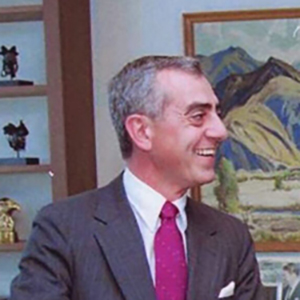
Kenneth Khachigian
I’ve always had an interest in politics. My first exposure was on election night in 1966. I was a first-year student at Columbia, and I wheedled my way into the election night coverage at ABC. I was one of these people who go around handing people messages and whatnot. It was at their studios. I’ve always been a political junkie. That night in 1966, of course, was a great Republican comeback. They won 47 seats in the House and some Senate seats, and it was really the start of Richard Nixon’s comeback. But that’s a whole other story that we can get into.
In the fall of ’67, when I was a second-year student, I was interested in getting involved in the campaign. I had been reading about Richard Nixon’s comeback, and the New York Times Magazine had done a long article by Bob Semple, Jr. on the team around Nixon, including Marty Anderson and Pat Buchanan and Ray Price and Len Garment and some others—Dwight Chapin—and so I hung on to that. Then around the fall of ’67, I started writing letters to his law firm, Nixon, Mudge, thinking that of course they were going to hire me instantly, being the bright Columbia law student that I was.
I was very persistent and pestered them. They lost my letter, blah, blah, blah. They said, send it again. My wife worked for a Wall Street investment management firm, so she walked it over to the Nixon law firm. I got a letter back from a guy named Pat Buchanan, who was then a 29-year-old speechwriter, assistant, researcher, whatever. He said, “Come on in, and let’s talk.” At that time they had an office on Fifth Avenue, I think in the 500 block of Fifth Avenue.
So I went there, and he started asking me rapid-fire questions about things. I told him I had been raised on a farm, so I knew something about farming. He started asking me about the Brannan Plan, about which I knew nothing. I felt stupid. First he thought I said “foreign policy” when I said “farm policy.” He still tells this story. He thought I was a [Nelson] Rockefeller spy. Here I was a Columbia law student—he could not believe me supporting Dick Nixon. He said, “Come on in,” and he introduced me to a lady named Ann Volz—now Ann Higgins. She was in charge of correspondence. So, for three weeks or four weeks, I’d go in a couple of days a week and help with correspondence.
Of course, my goal was not to just do correspondence. She thought it was a pretty good deal because it’s not every day a law student will come in and help with correspondence. But every opportunity I’d get, I’d spot somebody in the room and give them—in fact, I was digging up quotes for them that he could use in speeches. I’d go corner somebody—Marty Anderson, or Dwight Chapin, or Pat. I was a bit of a pest.
Anyway, I stayed through. He won the New Hampshire primary, and we had a big hoop-de-do. I stuck with it through that second year of law school, and that summer I was offered a fulltime job, which was really great. I remember, it was about 500 bucks a month, which beat my previous summer job, being a maintenance man at the Statue of Liberty.
James Sterling Young
I won’t ask you how much that one paid.
Khachigian
Well, it was outdoors, let’s put it that way. That was the good part. I began working as a researcher. We had our offices at 450 Park Avenue. I was on, as I recall, the fifth floor—that was the research and writing floor. I was introduced to my boss at that time, who was going to oversee domestic policy research, and that was Alan Greenspan. Dick Allen was on that floor, as was Annelise Anderson, Marty Anderson’s wife. Marty was on the road with Nixon, but his wife was on that floor. We had a researcher, Agnes Waldron. I can’t recall everybody who was there, but that was the writing and research department. Agnes Waldron had been a researcher for Nixon back in the ’50s. She was the one who spent days—hours and hours—clipping every newspaper.
You have to understand how different it is now, running campaigns. Then it was in the ’60s, and, of course, in the ’50s. You kept reams and reams and files and files of news clippings. I probably still have a lot of them. The communications were very crude. The fax machine at that time was called a telecopier. You put a piece of paper around a cylinder, and it would go around and around like that, and a light would read it and transcribe it. The other mode of communication was called a TWX [teletypewriter exchange service]. It was basically a teletype, like an old Western Union teletype machine. You would type out a text, and it would print out, cut into holes, on a strip of paper, and then you’d run that strip of paper back through, and it would communicate that back. We thought that was pretty hot at the time.
So that was my summer of ’68. They asked me to stay on for the fall. Alan Greenspan actually tried to get me to quit law school. He said, “Nixon’s going to win, and you’ll get a job in the White House. You don’t need to go to law school.” I thought that was pretty bad advice. I couldn’t imagine that after two years of suffering through law school you’d quit it for your third year. I worked pretty much full time, and my grades suffered in law school. That’s how I got involved in this business.
I was a researcher and writer and actually wrote two or three position papers that were used in the campaign. I had the privilege of serving as the Staff Director for the Nixon -[Spiro] Agnew Agricultural Advisory Committee, which was pretty interesting, as a 23-year-old. It was like herding cats. Senators Milton Young and Karl Mundt of the Dakotas were “wheat belt politics.” Then there was Page Belcher of Oklahoma, who was the “farm bureau politics.” Then we had some private citizens, and that was interesting. I got caught in between the Senators a couple of times.
Young
This was at what point?
Khachigian
This was in ’68. The farm vote was pretty important. In the 40s and 50s it was hugely important. As years go by, there are smaller and smaller numbers of farmers, but it was still a pretty big deal then. We had this advisory committee that was brought in more to just create some interest in the farming community, and you could put out press releases that we had such a committee and whatnot.
Russell L. Riley
Was it mostly limited to dealing with midwestern and western state farm issues? I would think southern state farm issues wouldn’t, at that time—
Khachigian
We did have somebody from around here, but I can’t recall who. I’d have to go back and check records. But the emphasis was west and midwest just because of the personalities involved. That’s when I got to know one of my mentors, Bryce Harlow. The saddest thing in the world is that you don’t have his oral history.
Stephen F. Knott
His name comes up quite frequently. It’s amazing.
Khachigian
Talking to him on the phone, I thought Bryce was 6’ 9”. Then when I finally met him, he’s about 5’ 4-1/2” stretched out. He’s a diminutive person and a giant individual. He started work on the Armed Services Committee as a clerk in the ’40s and worked for General [George] Marshall subsequently. He said he had the unfortunate—he called it unfortunate—ability of having learned shorthand. I guess a lot of men learned shorthand in the ’30s and ’40s. Anyway, he knew shorthand, so he was a clerk, worked his way up, and then in the ’50s became a speechwriter to President [Dwight] Eisenhower, possibly through the connection with George Marshall. I don’t know the full history. He was a remarkable person. He was from Oklahoma, and he had this soft drawl. He was a calming influence. He said that Eisenhower called him his “meat and potatoes writer.” The others would try to write flowery things, and Bryce would write this “meat and potatoes,” as he called it.
Bryce was brought into the ’68 campaign to travel with Nixon, largely as a sort of senior statesman influence. You’ll probably hear Marty Anderson talking about him a lot, and others, just because he was a wise man and a very nice man. He had a lot of wonderful sayings. I think it was when I got caught in this Karl Mundt–Page Belcher dispute that— Oh, I know, there was a leak from the Committee, and I called him up worrying that I’d get in trouble. He said, “Don’t worry. The only thing a Senator can’t stand is an unattended microphone.” He’d come up with things like this all the time. Nice man.
So I worked in that campaign and finished law school and went back to California to take the bar exam, yearning to work on the White House staff. I didn’t have a position and sort of kept bugging them, like I did in ’67. Finally, after I passed the bar, I got word that I could segue into this when they created the National Goals Research Staff, which was announced on July 4, 1969.
Young
Excuse me, to dial back just a little bit. You took the bar in California.
Khachigian
California.
Young
Did you get out of Columbia before the riots?
Khachigian
No. The riots were in ’68, so I was there.
Young
I was just wondering how that affected your politics.
Khachigian
Mark Rudd was a little Stalinist kid who had a gift for gab, and he was very charismatic. But he was also inciting these kids. The leaders of these student riots in those days would incite the kids, and then they’d sort of head in the back way and sneak out while the kids started storming windows. The police would come in and beat up the kids who were in the audience instead of the Mark Rudds of the world, who escaped in the back. It was a very troubling time, obviously, but that’s a whole other story. The ’60s—it was very troubling. I’d be in the fringes, but witnessed the cops going in and beating up kids with their batons. On the other hand, the kids were spitting at them, throwing things at them, and there was this horrible clash.
I didn’t exactly go around wearing big Nixon buttons at Columbia in those days. There weren’t a whole lot of Republicans, much less—
Young
I don’t think you could have even worn an Eisenhower button.
Khachigian
Probably. You probably couldn’t wear an LBJ [Lyndon Baines Johnson] button either, for that matter.
Riley
I want to ask one question also about this period. I’m from Alabama, and I’m always interested in how George Wallace was being read at this time. Do you recall whether there was much attention being given Wallace in your areas?
Khachigian
Well, I was not a senior in that campaign, but obviously he was a big concern. In our view, he almost cost Nixon the election. I think had Wallace not been—there was no question that we would have won, not just a narrow victory, but quite a larger victory, because at that time, despite whatever baggage it was seen that Nixon had from previous years, [Hubert] Humphrey had the baggage of LBJ. But we lost—what? I think five states of the south, as we called it, the cotton south, which we would have won easily against Humphrey. He was a big concern, but I can’t recall because I wasn’t in that campaign at the level where I could honestly tell you.
Riley
Right. I just didn’t know whether, having dealt with agricultural issues, if somehow or other that had played a part.
Khachigian
It may have, but I just can’t recall. That was a long time ago.
Riley
Sure.
Khachigian
They formed this National Goals Research Staff, and I saw that as perhaps a way of getting back into Washington. Leonard Garment was the one who came up with this with Pat [Daniel Patrick] Moynihan. We actually did a report that we submitted in July, a year later, on July 4, 1970. It covered policy areas that people would be looking at towards the 21st century.
Young
Was Marty Anderson involved in that?
Khachigian
No. It was sort of an “off balance sheet” operation. Pat Moynihan, who was very involved in this, brought in a social scientist from Harvard named Ray Bauer. There was a fellow named Charles Williams—who I think was from Virginia, by the way, or North Carolina. He was staff director. But it was mainly staffed internally, of detailees from other—one came in from NOAA, National Oceanic and Atmospheric Administration. We did these high-falutin’ policy studies about population growth and urban mass transportation. Frankly, I just saw it as my ticket eventually into the White House.
Riley
Where were you housed?
Khachigian
In what is now called the New Executive Office Building. At that time it was FOB7, Federal Office Building number seven. Now, as the government has grown, they’ve filled it with a lot of OMB [Office of Management and Budget] people. People who worked there felt like they were being dissed if they didn’t have a good name. So what was originally the Executive Office Building is now the Old Executive Office Building. Actually it has a name.
Multiple
Eisenhower.
Khachigian
The Eisenhower building, yes, and the other one became the New Executive Office Building. Maybe it has a name, too. It was on 17th and Penn. We were housed in there. The White House actually was a little nervous about this group, Buchanan especially, because of Ray Bauer, who was this Harvard social scientist. They were afraid that he was going to walk Nixon down these terrible paths from Harvard yard. In the meantime, I had gotten an EOB pass, and I would frequently go over and visit with my old friends at the White House and in the Executive Office Building. Finally, I got in to get an interview with Herb Klein. I then finally got hired in August of 1970 to work as a staff assistant to the President in the office of the Director of Communications.
That was preparing materials for the use of the administration, for Cabinet officers. We did what we called “cheer speeches,” supporting administration positions, and we shipped them around to Cabinet officers hoping they would use them. Of course, the Vietnam War was going on and—
Young
I think this was the first time—correct me if I’m wrong—where there was a separate unit established for communications under Klein that was different from outside the press.
Khachigian
It may have been.
Young
I think that was the beginning of that communications shop and then the press shop.
Khachigian
It was distinct from the press shop for two reasons: one, I don’t think Herb wanted to be press secretary—
Young
Yes.
Khachigian
Two, I don’t think Nixon wanted him to be press secretary. At that time [Harry Robbins] Haldeman had come in and sort of rearranged the deck chairs. But Herb had a lot of relationships in the media going back to the ’50s, when he was Vice President Nixon’s press secretary, and so they had him there. We had quite a large staff. There must have been 12 or 15 of us. I worked there until the spring of ’71. Right after the New Year, January, February or so of ’71, Chuck Colson pulled sort of an internal coup d’état and took over a big chunk of Herb Klein’s staff, including me.
While I learned to really like Chuck later, what they said about him in those days—that he would run over his grandmother for the re-election of Richard Nixon—was true. He was not at that time fun to work with. Later, when I wasn’t working under him, it was a lot easier. I got out of that because I didn’t want to do it. I went over to work with Pat Buchanan in the spring of ’71 on through the election of ’72. That’s the long version, unfortunately.
Young
Well, a little bit more on Nixon. We’ll come back to the way things ran in the Reagan White House, so it’s important to see what similarities and dissimilarities there were with a very different kind of President in a different time. The Klein operation, I’ll call it, included a batch of things that later would be called “public liaison.” Could you just be a little bit more specific about what that operation did?
Khachigian
Well, they coordinated. If we had the newspaper editors in for briefings, they’d do that. I don’t know if public liaison does that. Public liaison brings in outside groups. If the Chamber of Commerce was going to have CEOs in, the public liaison would do that. That was not the function. The function was, basically, coordinating the communication. They wanted to speak with one voice throughout the administration, and Haldeman ran a very tight ship. Nixon very much wanted strict discipline throughout the administration, which is natural. Any President who says they don’t care is lying. Even now they’ll say about [George W.] Bush that you don’t go outside the boundaries of the White House line, or you’ll be in big trouble. That’s the way it was then.
Young
Were Cabinet speeches, for example, Cabinet department speeches, cleared?
Khachigian
I don’t know that they were cleared, but they knew what our positions were. I don’t know how many fact sheets I did, and talking points as we called them, that we shipped around to the Cabinet departments, constantly, whether it was dealing with domestic policy, foreign policy, and, of course, huge domination of the Vietnam war. We’d have weekly casualty reports. May of ’70 was the incursion into Cambodia, and then the Kent State shootings, and Jackson State, and it was constant turmoil. So you had the administration constantly playing defense. As a result, we were flooding the administration with these things. We also had a lot of communication with the Republican National Committee, so that all the political folks would know, here’s the line. It was the “line of the day” or the “line of the week” kind of thing. We tried to impose discipline.
You had a good cop–bad cop routine, where [Ron] Ziegler would be in the briefings and would be the tough guy, and Herb was always—still is that way—a little more calm and had a reasoned approach toward the press. He was the former editor of the San Diego Union-Tribune. So that was the notion of the Office of Communications, and I don’t think it was markedly different in the early days of the Reagan administration.
But the Reagan administration was structured a little differently as well, and I’ll get into that—the interplay with Dave Gergen. Dave Gergen is an interesting personality, about whom I’ll have some observations as we go.
After the ’72 election, I moved over to the speechwriting staff in the White House. Ray Price, who was director of the speechwriters in ’72, then moved up to sort of senior status. Dave Gergen, his deputy, was made head of the President’s speechwriting staff, and there were five or six of us including [Aram] Bakshian. Lee Heubner was still there. Ben Stein came in later. He has since become a great celebrity, of course. You know who Ben Stein is, don’t you? Anyone who has seen Ferris Bueller’s Day Off.
Riley
[William] Safire?
Khachigian
Well, Bill Safire. Bill and Pat and Ray Price took on upper— Actually Bill Safire left the White House in ’73 to take up his column, and so you had Pat and—
Young
Bill Safire was doing Agnew’s speeches for a while?
Khachigian
That was in ’70 mainly, the campaign in ’70. He and Buchanan did Agnew’s speeches. The original speechwriting staff under Nixon was Safire, Price, Buchanan, Lee Heubner, and Bill Gavin. Bill left the White House and went to work for Jim Buckley, the Senator. I can’t remember how long Lee Heubner stayed. Then he eventually left. John Andrews—who is now state senator in Colorado—was a speechwriter, very skilled. So it was me, Ben Stein, Aram Bakshian, Gergen, and a couple of others I’ll think of later.
Young
The Judson Welliver Society. Is that sort of an alumni—
Khachigian
I’ve never been in it, and I’ve never gone to any of the meetings. I don’t think it’s anything formal. I think it’s a handful of people—
Young
—who call themselves that, after Coolidge’s press secretary.
Khachigian
I don’t know who came up with it. I think Aram is part of it. You know, I never really thought of myself as a speechwriter, that’s what’s funny. I never intended to be Ronald Reagan’s speechwriter.
Young
Okay. We’ll get that story as soon as you write it.
Khachigian
I went in on the speechwriting staff after the campaign, for most of ’71 and ’72. I was involved in the campaign of ’72. The White House was on full alert every second. So I was a political aide, researcher, and oversaw a lot of the research. There was a lot more coordination with the politics. The White House was much more intertwined with the outside world than it is now, or than is allowed now under FEC [Federal Election Commission] rules.
Young
I was going to ask, were you transferred over for employment purposes to the RNC [Republican National Committee]?
Khachigian
No, no. I was paid by the White House.
Young
That was another era.
Khachigian
That was another era. Exactly.
Riley
And the RNC then was the Committee for the Re-election of the President.
Khachigian
Well, yes. The RNC existed, obviously, but the Committee to Re-Elect the President pretty much took over. It’s the same with campaigns now. In ’84, it was the Reagan–[George H.W.] Bush Re-election Committee. We had separate offices, but in those days I coordinated a lot with the Republican National Committee. They provided a lot of research for us—on the other candidates.
Young
Were there people specifically assigned to opposition research?
Khachigian
That was me in the White House, to coordinate that, in ’71 and ’72, working with the RNC. A young researcher named Gary Bauer did most of it. And so we prepared internally what we called by the very salubrious name of the “attack book” on George McGovern, which I still have a copy of. It was a tabbed book that Pat Buchanan wrote, based on my research, and it was the Bible for the campaign, for a 49-state victory against him.
After that, I didn’t have a job, so that’s when I moved over to the speechwriting staff and was there up through the end of the President’s administration. Even though I had speechwriting functions, I maintained this sort of firefighter function of what then became the Watergate defense, as everything started coming unloose—into that summer of ’73 and right on up till he resigned. That dominated my life all the way up to August of ’74.
Riley
Would you mind telling us a little bit about that as someone who was working on the inside, how you came to view that episode? When you first came to understand that this was a real severe problem for the White House?
Khachigian
Well, it was us against them. Frankly, I grudgingly admired the [Bill] Clinton people, who were a little more tough-minded than we were—and we thought we were pretty tough. You don’t start making instant moral judgments when you’re in a political battle. It is us against them. They’re trying to take your power away. They’re trying to discredit you. You know, Watergate was not the great moral quandary, in my judgment, that the instant historians have applied to it. A hundred years from now it will be seen as an epic political battle between two forces in American politics.
In this case, the partisan forces were joined by what a lot of us believed to be the national media, which had a great interest in vanquishing their old nemesis, Richard Nixon. Increasingly we viewed it as a very serious thing, but it wasn’t like, “Oh, golly gee, we did something bad.” It was, “The bastards are trying to get us, and we’re going to fight back.” I wasn’t at such an intimate level where I was involved in the decision-making process, but we had a lot of staff meetings. We were defending against this leak or that leak, and then—
Young
You were on the defense team.
Khachigian
I worked with [J.] Fred Buzhardt.
Young
You worked with the counsel.
Khachigian
Yes. As a lawyer—that’s one of the skills that always help me in my career—I was able to wear the two hats.
Young
There was a succession of legal—
Khachigian
Fred Buzhardt and then Len Garment.
Young
Len Garment did a lot—
Khachigian
And then Jim St. Clair came in and created an in-house legal defense team.
Young
Right.
Khachigian
I worked with all of them.
Young
What about [John] Dean?
Khachigian
Dean was gone by March or April. Actually, I’ve lost track of some of the dates, but it was, I think, April 15.
Knott
’73.
Khachigian
Yes, ’73 is when Dean left. I worked with John in the initial part. And I’ll say this about John—he never gave any hint that he was going through this turmoil with the President. I never got any sense of that.
Young
You didn’t have any direct dealings with Nixon?
Khachigian
Oh no.
Young
What about Haldeman or [John] Ehrlichman?
Khachigian
I probably talked to Haldeman once or twice in the entire time we were at the White House. Once during the campaign the guy who normally briefed him on the news wasn’t there, and he asked me if I’d take a call. And so I took a call at home from Haldeman. Haldeman was a much-feared figure in the White House.
Young
Yes.
Khachigian
I was standing in my kitchen, standing up straight talking to him, scared to death about if I’d say the right thing. After he resigned, I helped him with some of his testimony. I think he called me for advice. It’s funny how, once he was out, I got to know him when we were working on Nixon’s memoirs. He was nowhere near the ogre everybody thought he was. I think he always felt he had to play a certain role. He was not a sweet, sensitive guy to begin with, but he was just stuck in a position, and he felt that it ought to run a certain way, and that’s what Nixon wanted.
Knott
Was there anything that came out after President Nixon left that caused you to maybe change your perspective about him or about the whole Watergate thing?
Khachigian
No. And I’ll tell you why. One of the things that I did through that whole period of time was gather research on previous administrations and previous presidential election campaigns. It’s sort of a popularized, slapped-together book, but I would commend to you a book by Victor Lasky called It Didn’t Start with Watergate. A lot of my research was given over to Victor.
But, going back to FDR [Franklin Delano Roosevelt], who was ruthless, and in whose administration there were a series of bag jobs and break-ins of anybody who seemed to be, during the war, even somewhat disloyal. They could be the subject of harassment by the FBI [Federal Bureau of Investigation] and by the government. People tend to forget that Richard Nixon was a wartime President. The Vietnam War was as much a war as any other war. Of course, the [John F.] Kennedy administration weren’t schoolboys, and they were rough in their political game. Bobby Kennedy used the Justice Department ruthlessly. There’s a book called Kennedy Justice, by Victor Navasky, which is interesting. Victor Navasky wrote books about the Kennedys. The Kennedys had an anti-Semitic streak in them—not to mention John Kennedy’s treating the White House like a bordello. So there was this whole string of them. I have files this high. I could tell you then, and still believe largely now, that we were treated under a double standard in the Nixon White House.
I will say this. I think there was a point when the President could have saved his administration by putting John Mitchell over the side. The flaw there was that Mitchell was in the center of all this. He was a political naïf. Mitchell is a brilliant man, but politically naïve to the point where I think he thought, Well, this is what you do in campaigns, and he approved a lot of this stuff. He didn’t conceive of it, but he was there. And so, in order to save himself, Nixon would have had to throw Mitchell to the wolves, and Mitchell had a very dominating influence on Nixon. He was very imposing, and Nixon was in some respects cowed by him.
Nixon had his flaws as a human being. Obviously he was greatly wounded early in his political career, and he carried those wounds. So he lashed out from time to time. But you’ll find that with a lot of Presidents. You know, the Kennedys were that way, and Bill Clinton was that way, and Hillary Clinton was that way. They played hard and tough, and they felt they were being maligned and picked upon unfairly, and they fought back. We fought back.
So I have not had a conversion on the road to Damascus. I am still unreconstructed. This Watergate anniversary is such a bunch of hokum. But that’s a whole other subject.
Knott
Were you in the East Room, where the President gave his farewell?
Khachigian
Oh, sure. I was crying along with the rest of them. I stayed for a few days, and then I went out to San Clemente for three weeks, in August, after he resigned. He was a beaten, dispirited man who was on the brink of financial ruin. That’s when I started helping him out. I was his sort of legal liaison all the time I was out there working on the memoirs as well.
Riley
How did you come by that position?
Khachigian
I wanted it. I wanted to go back to California after almost ten years on the east coast, and my daughters were five and four. I didn’t want them to grow up without their grandparents, and I missed California. I hated New York City. I went to Columbia Law only because of the experience of living in New York, which was wonderful, but I’m not a city boy. And while working in the White House was fun—and it was even more fun with Reagan—I had no interest in staying. I wanted to go back to California. San Clemente is a beautiful place.
Young
But not out of politics.
Khachigian
But not out of politics.
Young
You’re still a political junkie.
Khachigian
Yes, yes, very much so.
Riley
But I guess what I’m trying to decipher is, you’re someone who had not had much direct relationship with Nixon in the White House, so how did you find yourself invited to San Clemente?
Khachigian
Well, people weren’t exactly jumping out of their windows to go work for the disgraced ex-President. I’ll say about a lot of my colleagues, they weren’t very courageous in those days. A lot of them became great embracers and advocates of Gerry Ford. I have nothing against Gerry Ford, but I find it odd that you can be going down this road one day, and then act like—You could talk to a lot of my former Nixon colleagues who would say, “Oh yeah. Once we saw all the bad stuff, that was terrible, and I realized I could never live with that, and I’m so glad that Gerry Ford became President,” and all that stuff. But I’m not one of them. For me, it was just a natural thing.
Young
Were you the only one, or was there a small—
Khachigian
Diane Sawyer came and worked with us for three years.
Young
Yes.
Khachigian
In fact, on that flight out from Washington, Diane and Frank Gannon and Ron Ziegler came out with a few others, and they stayed. Ron Ziegler helped in that period right after the resignation, and then I did it for three weeks, and then I came back to Washington. I was asked to leave the White House staff because they were basically getting rid of those of us who were “tainted.” They didn’t put it that way, but that was it. I was also able to get a segue job over at the Department of Agriculture. So from October of ’74 to April of ’75 I worked as a speechwriter to Earl Butz. If anybody was ever a speechwriter, that was a good experience. I think he’s still alive.
Young
Yes.
Khachigian
Like 98 years old, quite a person. Nice man, wonderful man. Anyway, I did that while they were solidifying the positions out in San Clemente. The President was still just trying to survive. Of course, at that time they were just bombarded with subpoenas and lawsuits and everything. So finally, somewhere around the spring of ’75, I was asked to come out and join them. He got his book contract down then, and so I was asked to come out and join the staff.
Young
What was Bryce Harlow doing during those days?
Khachigian
The last days of the administration?
Young
During the administration. Didn’t he come in for a while?
Khachigian
He came in in ’69 and served as Congressional liaison until—you’d have to get this somewhere else. It seems to me he stayed through the ’70 mid-term election. I think he stayed for two years, and then I think he went back to Proctor and Gamble, where he was chief lobbyist.
Young
[Bill] Timmons—
Khachigian
And then Timmons took over the Congressional liaison staff.
Young
But he reappears—
Khachigian
He reappears in ’73. Nixon brought him back in because he really needed somebody in the White House to help stabilize things. He lost Haldeman, he lost Ehrlichman. Al Haig was made Chief of Staff. It was sort of a wobbly situation. So Bryce was a familiar face.
Young
Then in the Ford transition, he came—
Khachigian
Yes. He was close to Gerry Ford, very close to Gerry Ford.
Young
From his House days, I think.
Khachigian
Yes. And so he came in. In ’74, in February, Nixon went to Florida for a few days. Usually one speechwriter went with him on trips, and this was one of the rare occasions I got to go. We were down at Key Biscayne, and I was helping Bryce. Bryce was going to give a speech, I believe, and I was helping him.
He said, “Let’s take a walk.” And we took this stroll on the bay there. I’ll never forget. Bryce said to me, “Nixon will be impeached. Willy-nilly he will be impeached.” I was shocked at that. I couldn’t conceive of it. But he stayed right on through. I’m not sure he was there when Nixon actually resigned. I’m not sure he was in the White House. I can’t recall. But he was brought on there to try to provide some stabilization.
Harlow smoked Lark cigarettes, incessantly, and of course later contracted emphysema and unfortunately was tethered to an oxygen tank the last years of his life. That’s when I went out to California and worked on the Nixon memoirs for about three years, as a writer and researcher with Diane Sawyer and Frank Gannon, and also coordinating his outside legal counsel, who were in and out dealing with a number of issues.
Knott
Were you in fairly steady direct contact with the President, almost daily?
Khachigian
Oh yes. That was a whole different thing. I was with him every day, maybe one or two hours a day.
Knott
Would he suggest areas for you to research? How would the meetings tend to go?
Khachigian
Well, largely they were less about the book and more about just what’s going on. I was his political eyes and ears. I would send him in clippings and articles, and I’d often brief him on what was going on. I was the contact point for a lot of outside people who would call in and I’d be on the phone, a lot of his former staff. So my day would be a good part back and forth about what’s going on in the world. Of course, the ’76 elections were coming up, and he was intensely interested in the primaries, and in Reagan’s challenge of Ford. We followed the Democratic primary very closely, all the ups and downs. Every day, when the campaign came around, it was like getting three Ph.D.s in political science, if you will. I had this rare, rare, rare opportunity of sitting at his feet as he talked. I could take notes, and it wouldn’t bother him. He had a great interest in what was going on.
He talked about portions of the book. I would prepare research packets to send in to him, and then he would do dictations. That’s what he did, mainly. He’d get in early—6 o’clock, 6:30—and he’d start dictating. We have folders and folders, files full of his dictations that I think now are at his library. I would do much like you all did here. I would do timelines. It was interesting, because I had full access to the archives for his early campaigns. It’s a very good memoir, in my judgment. It’s about as honest as I think he can be when he gets to the Watergate portions. You really get a full sense of that administration. I did all the campaigns beginning in ’46. We debunked a lot of myths about those campaigns, too, especially the 1950 campaign with Helen Gahagan Douglas.
You really do find out that Nixon was maligned and hated largely because he was defeating liberals and doing it in a tough, aggressive way. He was an aggressive campaigner. So I did all those. The book really does give you a flavor of things. We did a lot of magnificent things that largely get overlooked, not just the opening of China. People the age of this young lady here will have no idea that China was this monster, threatening nation to the United States. That in the ’60s and ’70s, until he met with [Leonid] Brezhnev in that famous Soviet summit in May of ’72—right after he mined Haiphong harbor, by the way—we had nuclear weapons pointed at each other in this great threat.
Most people don’t realize that schools in the south were segregated until 1970 and ’71 when Nixon began the progress of having the federal government desegregate them. He did it in such a way as not to create this mass of cultural dislocation and conflict that could have happened if it was done in the ’60s. In ’71, there was an Indo-Pakistan conflict that we could have been pulled into because the Soviets were involved. There were the Mideast conflicts. There was the Yom Kippur war in ’73, when “the great anti-Semite” saved Israel. And if you don’t believe it, you can ask Golda Meir. Read her memoirs, and she’ll tell you that Richard Nixon saved Israel.
There were a lot of things that happened, a lot of things we’re not crazy about, like the formation of the EPA [Environmental Protection Agency] and OSHA [Occupational Health and Safety Act] and wage and price controls. A lot of dramatic things happened in that administration. It was an interesting process doing the book.
Then I took time off from the book to work, to prepare him for his interviews with David Frost, which was 25 hours of television interviews.
Young
Was he nervous about that?
Khachigian
No, not really. He needed the money, that was part of it. He also felt that he needed an opportunity to have his say. I think they thought that Frost would be fair and balanced, that he was not an American. He would never have done it with any of the American TV guys. He was unhappy with the Watergate portions of the interview.
At the end of the day, it was important for him to do it, but I think he hated to go through that maudlin part of it—“I let the country down.” It’s not that he didn’t believe that. Richard Nixon was just not very emotional. You have to understand that his Quaker upbringing was to keep things in, not let things out. I think he just saw it as something he had to do. He had to get through that period and then, once his memoirs were done, he moved to New York, and he restarted his life, just like he did in 1963.
Young
Yes, yes.
Khachigian
He had a great sense that to change direction, you do something dramatic. So he moved. I couldn’t believe he was going to New York, but I subsequently understood why. So he moved to New York and wrote another what, five or six books?
Riley
Was there anything that surprised you about Nixon that you learned in working that closely with him?
Khachigian
I don’t think so. Despite the fact of not having been involved with seeing him as a staff person earlier, I knew pretty much all about him. Certainly you would have read anything written about him. I mean, maybe personal traits, like when his daughters would telephone and he would be very soft—
Riley
Sure.
Khachigian: “No man is a hero to his servant,” isn’t that the saying? They view him differently, but nothing about his politics or his life, or anything else. I got a lot of very candid views from him about a lot of different things and different people. He loved gossip, political gossip. He had insatiable curiosity for it, but I think I knew that, too.
Riley
What can you tell us about your observations of Nixon’s personality and the way that it showed itself in a public way? I’m asking the question in a kind of vague way because for those of us who will study Nixon in the future, he’s seen as kind of an enigmatic figure, difficult to understand.
Khachigian
I think you’re going to find out that every U.S. President you ever talk about is going to be seen as an enigmatic figure. When we get into Reagan, you’re going to hear from Don Regan. Someone said just the other day that Don Regan said that in all the times he worked for Reagan, he never shook his hand. Now, I don’t know what that says about anybody. But I’m sure you’ll find that Clinton intimates will find him an odd and enigmatic figure in a lot of ways. We all have personality traits, but with Presidents and Kings and Prime Ministers, you blow them up on the screen. I think these are pretty normal traits, but because we have one view of them, the public relations view of them if you will, the portrait we try to draw of them is that they’re larger than life, are almost inhuman or not human. Then you see them in private, and they’re different personalities. He had a lot of different traits.
He rarely got angry, but one time he was really upset, at David Frost at something, for switching gears on us one day. Someone once said, seeing him angry—it wasn’t about Nixon—was like looking into the heart of a Bessemer furnace. He was very intimidating. I had never seen him that way. But that was like once out of what? four years, three and a half years? He wouldn’t, day to day, ask about my family. But every now and then he would. And when he went to New York and we talked on the phone, he’d ask about them.
When my daughter tried to get into Duke and was turned down, he wrote a letter to the Dean of Admissions, and she got turned down again. I talked to him on the phone, and he said, “I’m not having anything to do with Duke again.” [laughter] But that was kind of him. He didn’t have to do that. And I didn’t write the letter. I mean, I wrote basically what she was going to do. I think that things like that wounded him. It had to wound him, you know, being an alumnus of Duke University Law School and sending a letter on behalf of someone.
Young
Yes.
Khachigian
After we did the David Frost interviews, he gave me 500 bucks as a bonus. There were things like that. But we didn’t have a warm and fuzzy kind of relationship. We’d go over to the house for dinner. The staff would go, maybe three or four times. We had caviar once that the [Mohammed Reza] Shah [Pahlavi, of Iran] had sent him, and he’d say grandly, “Eat that caviar, or you’ll insult the Shah.” Of course, he never touched it. It was mixed. There were sides to him. He could make petty observations about people. He was transparent at times in ways that I think he almost knew he was being transparent.
We talked about the thing he had sent around on Helen Gahagan Douglas in the ’50 campaign, the so-called “pink sheet.” I asked him about that, and he said, “That was Murray Chotiner. That was the cheapest paper we could get.” The pink paper was going to be cheaper than yellow paper or white paper. I think that was almost like testing to see if I’d buy into something so obviously—But, you know, whereas some people think that was sort of venal and that he was trying to put one over, it was just not. There are just not many people who have had that kind of time with him. Pat Buchanan, I’ve told him about this. Unfortunately, he’s not going to do your project. There’s a handful of us now who have had those relationships. I didn’t have it in the White House, but I had it in those three and a half years with him. We stayed in touch over the years. You’ll see—in the Reagan years, he used me as an intermediary to get memos to Reagan.
Knott
During 1976, do you recall any observations that he made about Reagan and particularly Reagan taking on the sitting President?
Khachigian
I think there was a part of Nixon that was very complicated in some ways. But there was a part of him that wanted Gerry Ford to lose the nomination. He didn’t say it. I think he was pleased that Reagan was giving him trouble. It’s not in ingratitude for what Gerry Ford did or anything else. It’s hard to make this seem like it is, how this comes off—but after the pardon, there was a feeling. I think Nixon felt that Gerry Ford wouldn’t be where he was without him. Certainly Gerry Ford would have never been President of the United States on his own. There were some gestures by the administration, or ways they were distancing themselves. If you look back, you can understand why they did it, because Ford was trying to win re-election.
On the other hand, I think Nixon was in a position where he resented some of that. So he wasn’t rooting for either side. But I think he took some pleasure in the fact that Reagan was giving Ford a hard time. Nixon was always afraid of Reagan, in a political sense. Unlike a lot of people, he had great respect for Reagan’s horsepower and brainpower and ability to communicate. He was nervous about him in ’68. I don’t think he wanted him on the ticket because I think he felt he was probably too strong and would overshadow him. Nixon was pretty shrewd about evaluating people, and—What’s the old line from the Godfather? “Keep your friends close and your enemies closer.” He wanted to be good friends with Reagan. He had extraordinary respect for Reagan’s ability and admired those traits in that campaign.
But then, when Ford won the nomination, Nixon desperately wanted him to win, desperately. He would constantly have me try to pass things on, pass on advice surreptitiously, in ways that we wouldn’t be noticed. He really, really wanted him to win. After Ford’s acceptance speech—which was, given Gerry Ford, damned good—we talked the next day, and Nixon was very pleased. So, there was no question at the end of the day that he wanted Gerry Ford to do well. It’s just, I think, that there was part of him that appreciated the fact that Reagan was giving him heartaches.
There were a lot of people around Ford who crapped on Nixon a lot. We were all a little unhappy about that.
[BREAK]
Young
What were you doing during the Ford years? Were you involved at all?
Khachigian
Yes. I was with Nixon in San Clemente from May of ’75 until pretty much the memoirs were done in the spring of ’78. Then I stayed on for about another year doing odd sorts of clean-up jobs, and there was just some day-to-day work to be done. I can’t remember the exact time, but it seems to me it was somewhere around very late ’78 or early ’79. Basically, it was like shoving a bird out of the nest. It was a combination of, there was no reason for him to be carrying me on his payroll, and I was just a little too comfortable going from my house to his place every day. We talked about it, and there was a transition period where he kept me on as a consultant to him, and he gave me a lot of advice. He opened a few doors for me for clients, and I worked about starting a new business, a public affairs consulting business where I would do writing and research and anything that I could that would come along. So by spring of ’79 I had made the full cut, although he had kept me on, as I said, as a part-time consultant to him.
So I picked up some odd jobs, and then in the fall, somewhere around the fall of ’79, I picked up some work as an outside consultant to the Reagan campaign. My contact there, I think, initially was Jim Lake. Have you gotten Jim Lake?
Young
No. We should do that.
Khachigian
You should do Jim Lake. Jim was with him when he was Governor. He was in the Washington office, the California Washington office. I got to know Jim Lake because he was Bob Mathias’ administrative assistant. We’re both from the San Joaquin Valley—he was from Bakersfield and I was from Visalia. Bob Mathias actually was my hometown Congressman and, of course, boyhood hero. He was an Olympic champion in ’48 and ’52, won the decathlon at age 17. Coming from Tulare, California, that was a pretty big deal. Anyway, he was a Congressman, and he won in ’66. Jim Lake was his assistant, or AA, and later in the ’70s became head of Reagan’s Washington office. He was involved in the ’76 Reagan campaign and then helped him on through the ’80 campaign as well.
Riley
Reagan’s Washington office.
Khachigian
Lake was with John Sears and Charlie Black and after the New Hampshire primary, they were fired in ’80. Quote “fired.” Lake sort of came back later, as did Charlie Black.
Jim Lake helped get me some work with the Reagan campaign in late ’79, doing some position papers, I think in agriculture. Over New Year’s of ’80—I think it was January 2, 3, and 4 of 1980—John Sears had set up a series of briefings at the Airport Marriott in Los Angeles for Reagan. Sears was an interesting figure, very smart, very self-confident. He had run Reagan’s ’76 campaign and was brought in again. The notion was to brief Reagan on all these issues and get him up to speed. So we had three days of it, and I drove up—I guess I stayed over.
We had a big table set up in round-table fashion so we could talk, and a series of different experts would come in. Art Laffer was one of the big hits of that day. He gave his supply-side speech. Marty Anderson was there, of course, and any number of others. I can’t remember who all were there. I’m sure in and out were [Mike] Deaver and [Peter] Hannaford and [Lyn] Nofziger. Jim Lake was there.
Young
But Reagan was not there.
Khachigian
No. Reagan was there.
Young
This was for a briefing.
Khachigian
The briefing was for him.
Young
But Sears set it up.
Khachigian
Sears set it up. Sears sat next to Reagan. These were tutorials.
Young
Yes, I get you.
Khachigian
To Reagan’s credit, he’d sit there, although you were never quite sure how much attention he was paying to it. But, John could—for a young guy like that he’d often sit there, lecturing Reagan. We did these briefings in early January before the New Hampshire primary. The whole idea was to get him up to speed because the rigors of the campaign were going to start in again.
Young
Was this all issues?
Khachigian
All issues, yes.
Young
Domestic, foreign?
Khachigian
Yes. Dick Allen was there, so I think there were some foreign policy issues as well.
Riley
Was Mrs. [Nancy] Reagan anywhere to be found in this?
Khachigian
I don’t think she was there. No, she wasn’t. We did that for those three days, and that was where I got hooked up. I knew Lyn Nofziger from the Nixon White House, of course. Marty Anderson, Dick Allen, John Sears, from the Nixon years. I knew most of those guys. Ed Meese conducted a lot of this as well. In fact, come to think of it, Sears sort of sat, and Meese sort of moderated. Ed was a good moderator. He liked to do that.
That was my exposure to them. Somewhere in that period between January and the summer, I was in touch with them. I had suggested to them that I’d like to join up with the campaign should he win the nomination, and head up a research operation. That’s what I had in mind for myself.
It was pretty clear by the spring of ’80 that he was going to win the nomination, so I had been in touch with Ed Meese a couple of times. But largely I was working through Lyn Nofziger. By that time, Jim Lake was out, and I really, really wanted to get involved. It was very frustrating because I could see their point of view. They were on the road, they were busy, and staff was moving along. Bill Casey was running the campaign by then. It was like déjà vu to ’67. I was kind of being ignored. I did not get to go to the convention. I can still remember listening to convention speeches while I was working in my garage in San Clemente and being unhappy that I wasn’t involved.
I had called Lyn Nofziger several times, but he didn’t return my calls. So I just put it out of my mind. I could tell I wasn’t going to be involved at all in that campaign. I was very disappointed. So, somewhere around mid-September—I brought these old notes I had. The Reagan campaign got off to a really shaky start in September. There were some factual errors, and my notes here say that [Jimmy] Carter started his campaign in Tuscumbia.
Riley
That’s correct.
Khachigian
And that’s what Reagan criticized as the home of the Ku Klux Klan. Then he got hit for calling Vietnam a “noble cause.” And then there were statistics he’d use, and they were coming out wrong. So it was a gaffe-a-minute kind of thing. The campaign was drifting and under fire, and Carter was basically making Reagan the issue, questioning, in effect, his competence. It was about that time when they obviously decided that they needed to get control of this process and bring some focus and discipline back to the campaign. I don’t know when Stu [Spencer] joined, but by that time, Stu was in the campaign. So it may have been after the convention. Did he tell you when he came on?
Knott
He probably did.
Young
He did, but I don’t recall. I don’t have it in my head.
Knott
He wasn’t with the candidate.
Khachigian
He wasn’t involved in the primaries, though. I think he got brought in after he won the nomination.
Knott
That’s correct.
Khachigian
It was in the summer, probably, or maybe even after the convention. Stu probably got brought on through Mrs. Reagan. Stu had run the campaign for Ford, so Mrs. Reagan was wise enough to go back and get him. Interestingly enough, you’ll find with Reagan, they’ll say, “Mrs. Reagan did this.” But it’s often because he wanted it, but he just wasn’t the messenger. He’d have her do it. So I got a call from Ed Meese, somewhere around mid-September, and he asked if I would—
Young
This was after Sears was out?
Khachigian
Oh yes. Sears was out in the primary, yes. That’s when they brought in Bill Casey.
Young
So Meese and Casey, their headquarters were in Virginia.
Khachigian
Were in Virginia, exactly, in Arlington. Yes. Right across the river there. And I got this call out of the blue from Ed Meese. He said, “We need a speechwriter on the plane, and would you do this?” Obviously, my first reaction was, “Well, are you sure that’s what you want me to do?” I’d really proposed that I would do research, negotiating the job.
For some reason, I didn’t feel comfortable. I was a little nervous about doing the speechwriting. Partly because, I think, I was rusty, and speechwriting is one of those things that, if you’re doing it day in and day out, it’s one thing, but if you don’t do it for a long time, you get out of the routine and the habit. And partly also because it was Reagan. And partly also because it was boom, right into the highest possible level you could do. But I wasn’t going to turn it down.
I said, “Well, if that’s what you want me to do, if you think I could do it, yes.” The campaign came out to California, and on the morning of September 29 of 1980, I showed up at LAX [Los Angeles International Airport] with my suitcase and got on the plane. Where we worked in the back of the plane, we had a working table. I don’t know if any of this has been described to you, but we had a working table. Facing the front of the plane was Jim Brady and me. And with their backs to the front of the plane and across the table were Marty Anderson and two rotating researchers. They’d rotate on and off each week, Kevin Hopkins and Doug Bandow.
I can’t remember who started—it was probably Kevin, but I can’t remember which one. I was assigned my place, and then right behind that bench seat, on the left side of the aircraft, there was a typewriter, an IBM Correcting II typewriter. And on the other side was another one that the secretaries used, Shirley Moore and Michele Davis.
So we were heading for Iowa, and the first thing they did, they gave me this farm speech that he had had. They said, “Can you work on this between now and Des Moines?” So that was it. I was immersed into the campaign. The reason I was brought on was to gain structure and discipline over what came out daily in the campaign, because they had speechwriters in the headquarters. I never knew why Pete Hannaford wasn’t involved. I just don’t know. I think Deaver and Hannaford as a business was still ongoing, and Hannaford stayed behind to run the business. But you’ll have to ask one of the two.
In fact, I probably asked Meese that question, “Why isn’t Pete doing it?” Because Pete had been with Reagan for years and years. As for the other speechwriters at headquarters, I think they just weren’t comfortable with having them travel with them. I don’t know why. They had a very odd structure before that, of these speeches coming in from Arlington to the plane. It was awkward, and there was no interplay. Everybody likes to be a speechwriter if they can edit and add two lines, but nobody wants to be the speechwriter if they have to sit at a blank piece of paper writing the original thing. Dick Darman was great—“I’m a speechwriter because I know how to edit.” But I’ll tell you about Darman later.
Young
Deaver was not on the plane?
Khachigian
Deaver was on the plane, Spencer was on the plane, Ed Meese was at headquarters.
Young
And Bill Casey was at headquarters.
Khachigian
Nofziger was on the plane. Dick Allen was at the headquarters. I’m trying to remember who else was on the plane. We didn’t have that many staff on the plane, come to think of it.
Young
And Mrs. Reagan was traveling with him.
Khachigian
Periodically, not all the time, but yes, she started traveling with him. And then David Fischer was the personal assistant. I think he was in the ’80 campaign. Oh yes, I’m sure of that. The CHP [California Highway Patrol] driver we had from the Governor’s office, Dennis LeBlanc, was on the plane. Then you had the advance guys. Steve Studdert was on the plane. He was head of advance. Reagan had basically a stump speech that he had crafted largely on his own, a combination of himself, his acceptance speech in—I can’t remember where the convention was that year.
Knott
It was in Detroit.
Khachigian
Detroit, yes, Cobo Hall.
I think bits and pieces of other speeches he had given. So he had a basic stump speech, and the problem was in trying to stick brand new text in front of him, which he did not like, or not having anything. You have to realize that Reagan, all his life, was used to having a script. He was never comfortable just winging it, even if he had something he had done over and over again. He had his basic stump speech, and my job became writing a two-page insert every day, or twice a day. What we would do is pretty much gather in the morning, depending on where we were, and talk about issues. We had a good exchange at that table.
Deaver was in charge of the body, making sure the advance operation worked, making sure the rooms were there, the comfort levels were there. He had basically no involvement in the day-to-day policy stuff. Stu was in policy, but he would say, “Okay, we’re going here, and this is what our goal is today, or this week.” Then we’d sit around and talk about issues. Well, largely you would key off of what happened the day before or what Carter had said. Then we had the researcher there, who could go dig up facts as we needed. So largely it was just a matter of starting to attach some good political rhetoric to the stump speech, with the premier goal of having something to put in the hands of reporters.
One thing about campaigns is that an enormous amount of time is spent on the care and feeding of reporters. Reporters are working under difficult circumstances. Again, back in 1980, you didn’t get a story and e-mail it to your office. You tried to find a fax machine somewhere to fax it—by that time we did have a little more sophisticated faxing capabilities—or you read it to a desk person back there. Quite often, they would just dictate them over the phone. They’d file through dictating. One of the problems in the campaign was they weren’t handing things out to reporters. They would just let the reporter listen to the speech, and the reporters get tired of writing the stump speech every day. They were controlling the news cycle because they’d ask him these questions, and Reagan would pop off, or something would happen.
So, virtually immediately, just through the function of what I was doing, I brought discipline into that process. I can’t tell you how many times we’d be on final approach into some town, getting ready for a rally, and I would be through typing that insert. I’d get up from the typewriter, and on one side Shirley Moore would be typing on his half sheets, which looked like this, just a piece of paper cut in half, and typing in bold letters, the insert. And on the other typewriter, Michele Davis would be typing the press release version of it. Of course, since these were not word processors, they’d make mistakes, and they’d white-out. They’d hold the half sheets up to the cooling vents on the airplane to dry the Wite-Out so they could type over it, and they’d put it back in the machine, type over it. Again, I can’t tell you—somebody would keep coming back, “When is it ready? When is it ready?” You’d have three people hovering over me, then they’d be hovering over Shirley and Michele. The candidate was in the front of the plane doing this [banging on the table], and Mrs. Reagan was—This was the nature of the game.
You’d take off, and you’d have—especially when you’re traveling in the northeast—you’d have 45 minutes between flights. It’s not like going from California to Chicago or California to Dallas. Almost immediately, this routine started working. They’d get the copies done, the plane would land, the power would be plugged in, and she’d start Xeroxing on this slow copy machine, Xeroxing as many copies as she could and then rushing them in and just flinging them to the reporters, who would be grabbing them. Reagan would have a few minutes to look at these new remarks on his half sheets, and he’d go out and give the stump speech. Then he’d, at the right position, he’d pull out his half sheets and read the insert for the day. Of course, the insert for the day was meant not only for the print guys. It was meant especially for the TV guys to get sound bites. That’s where I earned my spurs, because we were writing good sound bites for these guys.
For example, at one rally we said, “Jimmy Carter promised a government as good as its people, but he only gave us a government as good as Jimmy Carter, and that’s not good enough.” That was a good sound bite for TV. We’d sit around trying to do these clever things, and Carter would—actually Marty Anderson came up with this—Carter would come up with some new— You know, the economy wasn’t in great shape in those days, so he’d come out with some statistics trying to justify this, and Marty came up with the line that he was “Jimmying” the numbers. We started having some fun with all this stuff.
Then, if you did the Carter history, you remember the so-called “misery index” from the 1976 campaign. Well, that came back to bite him. The misery index was a combination of unemployment and inflation. In the Ford years, the misery index was 12.5 or 13%. When inflation got to 14 and 15%, unemployment was 7%—whatever it was. The misery index got to something like 21 at one point, just horrendous. So we just ground him down with the misery index. This was our day-to-day. Sometimes we’d do two of these in a day because you’d want to get in the midday report. The wire guys would have a midday news cycle. Or you could get on the noontime shows for the local stuff. Then you’d certainly have to have a sound bite for the evening news. So your day was really done. The focus was on the morning.
Young
How did you know that you were clicking with Reagan on these inserts?
Khachigian
Well, for one thing, the press quit reporting about mistakes, and Reagan started going on the offense. Secondly, you had feedback.
Young
You didn’t discuss any of this with Reagan himself?
Khachigian
No. We’d show him things. This helps me refresh my memory. The way it worked is that I’d finish a draft, and we’d shoot it up to him first before we’d put it in the final. He’d make edits on it. I don’t know where those are. They’d obviously be very valuable. I have no idea where those are. I know I don’t have them. Then they’d come back, and they’d be retyped. But I knew it was clicking because there weren’t that many edits on it. That’s how you always knew with Reagan.
Young
He would integrate it into his—
Khachigian
That was his job, not my job. He would integrate it. But I would listen to the stump speech and figure out a segue.
Young
He carried these half sheets or whatever it was—
Khachigian
The stump speech?
Young
Or did he just know it by heart?
Khachigian
I think he had his own notes on it. I don’t know if you’ve been told about his shorthand.
Young
Yes, yes. We’ve seen some samples.
Khachigian
He had a peculiar shorthand that he tried to get me to adopt in the White House at one point. The typists in the White House tried it, but it didn’t work. Over the years he was so used to this certain—it was his peculiar shorthand. I really didn’t worry about those because that’s what he had been doing. That was not my job to worry about those.
But I think he had half sheets, and here’s what he would do. He’d shuffle them like cards, and he’d take some from here and some from there. He had several, I think, different ones, depending on what he wanted to talk about that day. Then he’d sort of put them together like this, and then once he was comfortable with what it was, he’d fold them up and put them in his pocket like that. He’d get out at the podium, and he’d be waving like that and sort of unobtrusively pull out his notes and put them down, so that when he was through greeting the crowd, they were there. We didn’t use TelePrompTers in ’80.
Young
But the half sheets that you were physically preparing for him—did he translate those into shorthand?
Khachigian
Oh no, no.
Young
They’d come out right in full type.
Khachigian
Yes, yes. Because we didn’t have time. As I recall, he’d mark them up by putting pauses and things like that to break it up.
Young
Word emphasis or something like that.
Khachigian
Or a transition. He’d put a dot or something like that. I can’t even tell you to this day where all those ended up. Dave Fischer probably got them, and where they went I don’t know.
Knott
You were about to mention Deaver’s name.
Khachigian: The other reason I knew that I was sort of clicking was Deaver came back to me and said, “You know, we’re really glad we brought you on.” He indicated that the Governor felt very comfortable with me. And Deaver said, “He just never was that comfortable with speechwriters, and there’ve been very few that he’s been able to work with.” So we knew it was meshing. And then we started getting better press.
Then, I remember, I was really nervous because Bob Novak was on the plane, and he asked me if I would come back for an interview. Of course, I remember Evans and Novak from the Nixon days, and I’m thinking, Oh, no. I was a little nervous that they were going to say “Nixon aide on the plane” kind of stuff. But he ended up writing a very positive piece in the column that I had, in effect, brought discipline to the speechwriting and organization.
Young
Was the press on this plane?
Khachigian
Oh yes, yes, yes. We were right in the back of the plane. I should draw a picture. There was a curtain, curtains here like this, and this table I talked about was right here. Then Brady and Marty Anderson and the researcher and me. The typewriter was here, and there was a typewriter here. Then, eight or ten feet from here, twelve feet from here, past this curtain, the press all were seated here, all the way back.
Young
And the front compartment was the President.
Khachigian
The front compartment, way up in the front here, the President had a table that he worked at. Quite often I would go up and sit with him, and if we had time to discuss the speech—especially in the first few days—I’d take something up, and we’d sit, and I’d watch him edit. I never understood why people had trouble—well, I think I know why people had trouble writing for Reagan. Too many of them would think about what he should say or how he should say it, and not pay enough attention to him, realizing that he was a gifted communicator and gifted writer and wordsmith on his own. Basically, if you just listened to him, you’d sense how he would like to say things.
In this early phase when he would correct me, he’d say, “This was very nice, but here’s how I would like to say it.” He’d never scold you. He’d always say, “Let’s try it this way.” And I’d watch him edit, and just learn from the process how he’d like to do things.
So, we’d exit the back of the plane, and he’d get off and give his talk.
Young
Did he come back to talk to the press on the plane?
Khachigian
No, no. It was verboten. That was part of the problem. He might have done that once, or he may have wandered over to the press. We called that “Governor, Governor.” He’d be walking by the press, and they’d shout, “Governor, Governor, Governor.” He’d point ahead, “Gotta go.” The whole idea was to keep him away from the press. That was the whole point.
Young
Was that difficult to enforce?
Khachigian
No, he knew what he had to do. He knew because he was told, “Look, you can’t be doing it any more if you want to win.” I think Reagan always believed he could change anyone’s mind, given enough time. But the problem is, they all had different agendas. We were basically forcing them to write what we gave them, and—if you’ll pardon me for saying—the fact that they had some fresh, good, punchy prose every day made a difference. They liked it because we were helping them write their leads.
Young
Sure. Sure.
Khachigian
Then we’d have games guessing what their leads would be. Usually we were right because it became pretty much easy to write a good lead. In return, they appreciated it because it made their life a lot easier when they were filing stories. Jim Brady was very good at dealing with the press. Jim was basically lazy, but he loved the relationship and the back and forth with them. And they liked him because he’d kid about Reagan off the record, and he wouldn’t act up tight. Then we had some guys like Lou Cannon on the plane and Howell Raines, who is now editor of the New York Times. The Los Angeles Times rotated, and they had Dick Bergholz, a completely unlikable guy, unpleasant, unlikable. Even he had to write this stuff.
Then we had guys like Lou Cannon and others who don’t become your cheerleaders, but they become—You like to be on the winning team instead of the losing team, even if you’re a reporter. There were some rough spots. There was a time we were in Southern California, and he talked about how trees produced smog. So the reporters would laugh and say, “Let’s see. We’ll sit in a room with a tree, and we’ll put Reagan in a room with a running automobile, and I guess we’ll die first.” They’d kid about that.
That’s when I got Jim Brady into trouble, because reporters had written about the killer quote, “Reagan believed in killer trees.” We were flying over the Rockies, I think—somewhere nice—and there was a forest fire below. I said, “Hey, Brady, look. Let’s go back there.” So we’d go to the back of the plane, and I said, “Hey, killer trees!” Brady took the hit for it because Howell Raines wrote it up in the New York Times, and Momma didn’t like it, so Brady got banished to Arlington for a week.
Young
Was that the sentence, to be banished?
Khachigian
Oh yes, to get off the plane, that was the sentence. You didn’t want to be off the plane during the campaign. The plane is where everything happens. A campaign is a sealed unit, and being in the headquarters is—If it’s your first campaign, and you were like me in ’68—I’m not sure I wanted to be on the plane. But once I got a taste of it, I didn’t want anything different. So, yes, you were just out of it, because the decision-making process was so fast, was so boom-boom-boom. You didn’t have time to go back and forth, back and forth. If you had a good idea in Arlington, it was almost never going to get aired.
Then there were times when we actually had to do some texts. Candidates don’t do this anymore, but in the old days, half-hour television shows were quite common. Nixon did them and Reagan did, either two or three. The pattern would be, we’d get in late to Arlington, around four or five in the afternoon. I would have been writing, and as I was doing those, they’d send a draft in from Arlington. Tony Dolan was working on speeches, and Bill Gavin did some. I think Hannaford did some. They’d come to the plane, and I’d rework them. These were half-hour speeches, so they’d be—I don’t know how many words, I think 140 words a minute times 27 minutes, whatever that comes to. It was a lot of writing.
So in addition to what I was doing, we’d periodically have to do these half-hour televised speeches. Reagan was amazing. We’d go in a studio. I never fully understood why we couldn’t edit, because they weren’t live. They were video. But we’d do them, and then they’d rush them to the studio that night. He’d come in, and he’d do like a 17-minute segment sitting at a desk, and then get up and stroll across the room and finish standing up next to a table or something, all on TelePrompTer. He’d only have one chance.
The only place you could get a break was at that movement where you could have a camera angle switch or whatever. But if he flubbed a line 15 minutes into the 17 minutes, he’d have to start all over again. I’ve never figured that out, why we couldn’t just edit. Anyway, we had these long sessions. We’d get into Arlington, and sometimes it would take a couple of hours to tape these things, and he was tired. We were tired. In addition to what I was doing day-to-day, we’d have those half-hour speeches.
Then, of course, in between we had the debates. I had a little bit to do with that debate preparation. I wasn’t the author of “Are you better off today than you were four years ago?” I don’t know if that was him or somebody shot it in from the outside. Somewhere in this process you might find out. I think a lot of people take credit for it, so you have to be careful. [Editor’s Note: In preparing his memoir, Mr. Khachigian discovered that he was the originator of this phrase. See Ken Khachigian, Behind Closed Doors (Post Hill, 2024), pp. 67, 105.] That and his throwaway, “There you go again” in the debate with Carter. That debate sealed it. We were already moving up in the polls and—You have [Dick] Wirthlin here?
Culbert
Not yet. He’s on our list.
Young
He came here quite a while ago. We want to do him again. It was more than 10 years ago, and it wasn’t really for this kind of thing.
Khachigian
Well, we were moving up in the polls already, but that pretty much—that and Jimmy Carter talking to Amy [Carter] about “nukleer” policy—sealed it. We pounded on Carter pretty hard all the rest of the campaign, whether it was on domestic or foreign policy, and, of course, the economy. It was a “target-rich” environment, as they say. The only thing we were worried about was that there would be an Iranian hostage release at the end, just like LBJ did to us in ’68 with the bombing halt. But that never happened.
Knott
You mentioned earlier that he was very gentle in terms of correcting. Did you ever notice any sort of wear and tear on him?
Khachigian
Nothing comes to mind. If I have some sort of post-memory thing, I’ll come back to you on that. I can’t think of anything. I do remember some foreign policy speech. I can’t remember where we were traveling. I was in the back of the motorcade, and the motorcade stopped. You could hear on the walkie-talkie someone saying, “Khachigian, come up to the limo.” So I came over there, and they said, “Get in.” The Governor and Mrs. Reagan were sitting in the seat—it was a limo, so it had one of the jump seats you pull out. I was scrunched up against her, and he was over here and she was here. I had my notes, all my notes, my yellow pad and my pen. He wanted to work on that. He was unhappy with the speech he’d gotten. But again, a lot of times she was the one who carried it.
I was going to work on the speech, and that’s when she said, “Ronnie is at his best when he shows emotion, when he appeals to emotions. That’s what you should try to achieve. Just remember, they like him to be emotional.” What she meant by that was when he played on people’s emotions, in effect. He had a set speech he’d give, talking about the POWs who returned home from Vietnam. He had scores and scores of anecdotes he told over the years about heroism and Medal of Honor winners. He’d get very emotional. That’s what she was talking about.
I remember, in that motorcade from where we were going, from wherever to wherever, sitting there, frantically taking notes as we were talking about the next speech he was going to do. I did it for five and a half weeks, and it was an exhausting experience, getting four or five hours sleep a night, eating bad food, and then never being able to relax. Getting on the plane and boom, back to work. You’d hit the ground and boom, go into a meeting about what are we going to do the next day, and what’s in the news cycle and blah, blah, blah. And at the same time, reporters would like to take you out at night to get information out of you. A couple of drinks and go to bed and boom, up again. So by the time we’d get done, I was just terribly, terribly exhausted.
That was pretty much the campaign. Are there elements of that you wanted to ask about?
Young
Have you told us all that we should understand about Mrs. Reagan’s role on the campaign plane?
Khachigian
That was pretty much it.
Young
Did you say she banished Jim Brady once?
Khachigian
That was for the killer trees. That’s publicly known.
Young
And then, as you’ve written, her explanation to you about the speeches.
Khachigian
That was where she told me in the limousine that day when we were going from wherever to wherever. He was working on his speech, and he was clearly unhappy. The speech had come in from Arlington, and I think it was a real stiff, policy-oriented, policy-laden speech, and it was just not him.
Young
Was Marty Anderson—he was sort of a policy guy.
Khachigian
Yes, but he wasn’t involved in the stuff that came from Arlington. He would not have been. Marty was there to bring discipline and vet figures. If Carter had said something about the economy, Marty had a couple of staff members back there or he’d have resources and he could— He was a combination economist and financial analyst, and has pretty good political sense, too. So Marty would be there mainly to vet what came in on the domestic policy scene. He has a good reach of knowledge about a lot of things. He’s very smart and very bright. He was our on-board policy advisor. And then Dick Allen did all the foreign policy counseling.
Young
And Stu was one who sort of suggested the focus?
Khachigian
Stu’s job was to—I think “positioning” would be a good way to put it. He was good at sensing when there were problems. He was good at knowing when to change the debate, when to change the message. We went out that week of September 29 when I joined up. You’ll have to look this up, the date when Reagan came back. We came back to L.A. I think it was that next week. We were still having some problems, that I think Stu sensed, with women voters. He probably saw it in the numbers. In L.A. Reagan had a press conference announcing that the first appointment to the Supreme Court would be a woman. If I had to guess it would have been that first week of October. Classically it would have been on a Monday. If we came in for the weekend, we came in probably on a Saturday night, and we had Sunday. And then Monday morning, before we left on the next leg of it, as I remember it, he had a press conference, at one of the airport hotels. That was Stu. If I had to say at the time, I thought, “Geez. People will see through this. It’s a little transparent.”
Young
A gimmick?
Khachigian
Like a gimmick. But it wasn’t seen that way. It was seen as, “Hey, maybe Reagan’s not such an old fuddy-duddy after all.” He had a good feel for that. Stu was always good at looking for the long ball, something to change the debate—when you’re going in the wrong direction, to change things around.
Young
Would it also be fair to say keeping you on the right wavelength for the public, for the audience, tracking the audience?
Khachigian
Stu was good at sending signals about what’s a good idea, or what direction we ought to be going. He would never claim to know what the words should be, or the particular forming of the message. But, “We need to be doing this.” He wouldn’t read volumes—
Young
He has resources to be the ear—
Khachigian
Right. He had a good ear. Some people have a tin ear for politics. His is made of platinum. He has a good sense of it. I had met him in ’79 when I was, quote, “starting my business.” Among the people Nixon said I should see was Spencer, and Stu then had his office at Newport Beach out on Balboa Island, as I remember, on the peninsula there. I went to see him, and we visited. That was our first meeting.
I don’t remember really seeing him again until the campaign. I think it was Stu’s idea to bring someone on. I don’t know who came up with my name, whether it was Stu or whatever.
Knott
Can we move into the request to join—
Riley
I want to ask one question. Was it your common practice to listen to the speeches?
Khachigian
Oh yes, absolutely, oh yes. I’d go out. Because I’d want to hear how the lines worked. That was critical, absolutely critical. Again, that’s why I think I worked well with Reagan. I’d go out and listen to him speak and see how he delivered it, get his sense of cadence, so that when I was writing something, I almost felt like I could hear him talking. That was completely critical. It got to the point where, again, the little game with the press was, he’d say a good line, and I’d go to a reporter and say, “Write this down.” He should be writing it, because you could tell it was good—the crowd would react. Reagan was somebody who got strength from the audience, as I’ll describe a little later. It was like this energy force that would come to him and then go back and then come back to him. That was one of the reasons he was such a skilled communicator. Even in mass audiences, he felt into it, with the crowds.
Riley
But he didn’t ad-lib.
Khachigian
He would appear to ad-lib, but he did not extemporize. He wasn’t comfortable doing that. If something came to his mind that was clever or quick, he might do it, but he wasn’t big on—
Young
He was a very disciplined speaker.
Khachigian
Right, yes. He didn’t stray. And he prepared very carefully.
Riley
It’s an interesting dynamic you’re identifying, because from the outside, if you think about a speaker feeding on the audience, the most common way of doing that is steering your remarks in a direction that appeals to that particular audience. In your case, what you seem to be suggesting is that there was almost an empathetic way of delivering that met the audience’s need.
Khachigian
Well, it’s not like we were surprised at the audience. These were partisan crowds, so it wasn’t like you were walking into the League of Women Voters cold. These were all partisan political rallies. You talked to advance men. These are not unplanned events. You have the young people in front, the screamers and the shouters, and you have the band over here, and you had someone heat up the crowd to fever pitch. They’ve been waiting for two and a half, three hours. You know, “He’s almost here, he’s almost here. Here he comes.” You heard it a zillion times. Johnny Grant used to be great at this, at warming up audiences in L.A. at our rallies.
By the time we got there, we knew there was just this total red meat. So I knew the audience. I knew what they would cheer on, I knew how to get a feel for that, and of course he sensed it, too. But still, if a line fell flat, we would know instantly. I’m sure it happened a few times. It never happened very often, because we’d say, “Okay, this doesn’t work and that does.” But it wasn’t like he would have to adapt to the audience. We knew who they were.
Young
So you didn’t have the experience of confronting a hostile audience?
Khachigian
Oh no, not—you might have a heckler. That’s when he might ad-lib something, but he probably had ad-libs going back 30 years.
Young
For the hecklers.
Khachigian
I think he was heckled a few times. A heckler in a crowd like that is going to lose every time because they get booed down. He did have a storehouse of hundreds and hundreds and hundreds of stories and one-liners that were up in that memory device of his.
So it was pretty clear by the last week we were going to win. The only thing may have been the Iranian hostage crisis.
Young
By then Nixon was in periodic communication. We have seen some of it. He was consulted about the October surprise business, and he said, “Don’t get uptight about it. It’s too late for them to turn it around if they do something.” So at some point, some advisory relationship—
Khachigian
Yes, one of these articles mentions Kansas City. I think that was in ’80—there’s a reference here, to sending me memos. He had Nick Ruwe fly to wherever I was—I think Kansas City was one of them—with these memos. Honestly, I don’t think Nixon believed what he said about how the Iranian hostage crisis was too late. Having suffered through the bombing halt, unbelievably, October 31 of 1968—Johnson—you talk about a crass, hardball, manipulative, conniving politician as President, to do a bombing halt five days before a major election. Nixon had that in the back of his mind, I know. I think he was just trying to play the role of keeping Reagan calm through this so he would not lose his eye on the ball.
Nixon, as I think I’ve said before, was particularly shrewd when he gave advice to others, like all the rest of us. I think in a tense, very tense, situation in politics, your advice is more balanced when you’re not taking it, when you’re not in the middle of it, but you’re giving it to someone else. Nixon would have been a great campaign manager. He was extremely shrewd in figuring out the steps ahead. When he was the candidate, however, his judgment was not as strong or as sound. But I think that’s a normal human trait. And I think that, while they were not close, Reagan valued Nixon. He did see Nixon as a larger than life—
Young
Was he seeking Nixon’s input on anything?
Khachigian
Not in that campaign. He’d do it through me: “Here, get this to him.” And I probably gave it to Deaver or to Spencer to give. It wasn’t me that turned them over to Reagan. And Stu knew. Stu’s dad, Ken Spencer, was one of Nixon’s original Committee of 100 back in 1946. And so, while they were not close, Stu had come up in the political world in the Nixon era, and Stu respected him a lot. He never actually worked for Nixon, I don’t think. But he had a lot of respect for him. He also knew his advice was good. He also knew that it would settle Reagan down, and I think it was just as important to give comfort to Mrs. Reagan, because she fretted constantly.
Young
Was she the official worrier?
Khachigian
Oh, I think so. He did too, almost always, but not in the same way she did. I mean, you could tell Mrs. Reagan was almost always tense. She rarely was relaxed. But Stu, I’m sure, gave you a better feel for that than I can because he was the intermediary.
Young
Yes.
Khachigian
On election night, we were at the Century Plaza. Honestly, I can’t remember now whether I had gone to his house or was at the hotel. I think it was at the house, and I had given him victory remarks. I said, “Governor, I have a policy. I never write concession speeches, so here’s the victory remarks.” He said, “Well, I’m superstitious. I can’t think about that.” He took them, but he said, “I don’t think about it. I’m too superstitious. I’m still keeping my fingers crossed.” [Dick] Wirthlin had given him some final numbers, but he wasn’t prepared to say that he was going to win. He was just too superstitious about it.
Riley
Were you consulting with Wirthlin? Did you have much interaction with Wirthlin as you were crafting the content of the speeches?
Khachigian
Yes, a little bit. There’s not a lot of time. Dick’s an academic—no offense, but he’s an academic—and when you’re in a campaign like this it’s boom, boom, boom [snapping fingers]. “Dick, give me the 92-second version instead of the 92-minute version.” Dick would start. He’d have something, and then he’d make little notes like this, and say, “Okay now.” Then he’d make another little note over here like this. We didn’t have a whole lot of time to have sophisticated analysis on polls.
I know how Stu’s relationship is with Wirthlin. He called him “Numbers”—that was his name for him, “Numbers.” Dick was more mechanical and mechanistic about numbers and how they guided you and these particular phrasings and whatnot. I don’t fault him for it, but he never understood fully, I think, what Nixon always told me, and what is absolutely true in Reagan. That is, political speeches are not prose, they’re poetry. That was critical to understanding Reagan’s communicating skills.
So, with Dick, the bottom line would be, “Okay, Dick, the issue is the economy.” “Right. Okay. Fine. The economy. Now I know what to say. Carter’s incompetent. The misery index is 21” —whatever lines we would use. I didn’t need to hear, “Well, if you approach it this way, and if you do it this way.” I can remember a couple of times Stu would shove me. He’d say, “Here, talk to Wirthlin,” because Stu was totally impatient, didn’t want to even deal with it. So he’d force me to sit down and start taking notes, pretend I was taking long excruciating notes from Dick’s lectures. He’s not a bad person. When you have him in here, you’ll see. He did all this polling. He did it again in ’84, all that.
Oh, I know the other thing. If you ever found that Evans and Novak piece from October of ’80. It was critical of Wirthlin. Well, that was Stu putting out the word. It was like, “Khachigian is now writing these punchy speeches instead of the ponderous dah-dah dah-dah,” something about Wirthlin. So Wirthlin comes to me on the plane and says, “Well, thank you, Ken. That wasn’t very nice,” or something like that. I said, “What?” He said, “Well, you know, the Evans and Novak piece.” To this day I think Wirthlin thinks that I did that to him, but it was Stu. Stu got impatient with him, and also thinks a lot of times that Dick takes too much credit for strategy.
Young
Yes.
Riley
It’s an interesting set of questions, again, from the outside, because you got more in subsequent years, the Frank Luntzes of the world, who were focus-group testing words over and over and over again.
Khachigian
I think that’s much overdone. I was just telling somebody a couple of weeks ago that focus groups are the first resort of people who lack confidence in their instincts. I’m not a great believer in focus groups, for politics. But that’s a whole other issue. Focus groups are like juries. You get two or three strong people in them, and they tend to lead the others. I think it’s very rare that you get them to say how their brain is actually thinking about a decision-making process in politics. In a focus group, people are thinking sort of good government thoughts. I think they can be very misleading.
I think polls are good because you have large enough samples. You do a thousand people, statistically you get some averages and medians and means that work. On campaigns I’ve been involved in, where I have been the strategist, I try to get them to do open-ended questions where they ask, “Why do you think the economy is going bad?” Then they probe, “What do you mean by ‘Interest rates are too high’?” If you have a few hundred of these, literally, you can go through and start picking out words and seeing patterns. Some of what Dick provided was helpful in that respect.
I’ll jump ahead to the 1982 campaign, the mid-term election campaign. I was brought in to write Reagan’s stump speech for that campaign. We had this big briefing with Dick Wirthlin. Dick had done all these polls and analyses, and he came up that the overall message for ’82, for the elections, was “Stay the course.” Well, that’s maybe what all these patterns showed him, but it was crazy. People were unhappy in ’82. The economy was sluggish, and you were telling them, “You’ve got to stick with it. You’ve got to enjoy, you know, no sugar in your cereal.” That was so contrary. That’s not Reagan. And that’s why we did poorly in the ’82 elections.
But Dick had a big influence. Dick had the imprimatur, and he was very strong-willed. If you strayed from his message, he let you know it. It was often the path of least resistance just to go ahead and do what he wanted. But in the campaigns both in ’80 and ’84, I’d already figured out how this relationship worked. Reagan liked what I did, and I liked what I did with him. As I’ll tell you a little bit later, some of the people on the staff thought I was a little too independent.
Then the election was over, and I went home and collapsed like all the rest of us. Somewhere in November, probably in mid-November, third week in November, Jim Baker called me. Jim Baker was appointed Chief of Staff, which was largely Deaver, Spencer—just manipulation, if you want to call it. They didn’t want Ed Meese to be Chief of Staff. Ed was good, but he was certainly not as polished as Jim Baker, and almost a little too “wonkish.” Ed was a little too “old maidish,” if I can use that term about things. Ed Meese is very smart and very precise, but I think they sensed he was a little disorganized, too, if you can be precise and disorganized at the same time. He liked to control too many things, and he was disorganized. Baker represented something that I think Mrs. Reagan liked. Jimmy is aristocratic whereas Ed Meese was sort of frumpish. Jim Baker always had his shirts starched and his crease in his pants and a prep tie or whatever, and didn’t have that sort of constantly disorganized, disheveled look that Ed often had. Sad to say. Stu was close to Baker from the ’76 Ford campaign.
Deaver was reflecting, probably, Mrs. as well. So Ed became counselor to the President. He had a Cabinet-level position, and Baker became Chief of Staff. It was both good and mixed because, in my opinion, Baker brought on too many of his old Bush colleagues. That’s how Gergen showed up in the White House, and Darman showed up in the White House, and Jim Cicconi and Margaret Tutwiler, and a whole raft of people who were not true Reaganites and who came to have some impact a little bit later.
Anyway, Baker called and said, “We’d like you to take on the job of chief speechwriter.” I didn’t assume that I was going to get asked that, but I thought there was a pretty good chance, and I’d already thought it through. I just didn’t want to do it. I think my wife probably would have been interested in doing it, going back, but I had no desire to go back to Washington. I had no estate, I had no money. The kids were 10 and 9, and I didn’t want to uproot them from all their friends and their community and move them back to Washington and then go back there and work 70 hours a week and get back in the snake pit, in the White House. The maximum pay in those days, I think, was $56,000 a year. I would have been miserable, just utterly miserable, I know, had I stayed.
I turned him down right then, I think. I may have called him. I may have said, “Let me think about it, and I’ll call you back.” He said, “I’m going to have the Governor call you.” And I said, “Well, go ahead.” So a couple, three days later, Reagan calls, and I said, “Well, Governor, I’m very flattered, but I’m not inclined to do this, and I told Jim no. But I owe you reconsideration because you’re asking. Give me a couple of days. Let me think about it.” I already knew what my decision was, though.
I think I called Baker back and told him I wasn’t going to do it. He said, “We want you to pull the lead oar on the Inaugural speech.” I said I’d be happy to do it. Then he said, “Would you be able to come back for the beginning of the administration?” I said, “I can do that. I’d be happy to do that.” So I got to work on the Inaugural.
Young
Did you have an agreement that if you came back to the White House it wouldn’t be for a long period of time?
Khachigian
Oh yes. I said, “I’m not staying.”
Young
So, for the early days.
Khachigian
Yes. I didn’t give them any false notions. My family stayed in California, and I was going to come back. I sat down with Deaver and Reagan. Actually, I didn’t look up any of those dates, but I think that’s been recorded elsewhere. I sat down with Deaver and Reagan at his house in Pacific Palisades and talked just generally about themes and whatnot.
Young
Was Mrs. Reagan at this?
Khachigian
No, she was not. It was just me and Deaver and the Governor. I can’t remember the exact sequence, but either before that or after that I had asked somebody to get hold of a book of Inaugural addresses. I read every Inaugural address from [George] Washington’s up through Carter. I wanted to get my own head, get into the context. By the way, if you ever teach a class in American history, have then read that book. It’s a chronicle of American history, a short version of American history, because each speech talks about the trials and tribulations and challenges of that day, or era. It was an interesting process—other than when you read [Abraham] Lincoln’s Second Inaugural, which then makes you feel about this big as a writer. You wish you hadn’t read it. It’s so poetic and just monstrously beautiful.
After doing that, I asked several people—maybe 14, 15 people—to send me ideas. I reached out to colleagues from the Nixon years. Aram Bakshian was one, and Dave Gergen and Bill Gavin and Noel Koch. I’d forgotten about Noel. Noel Koch was a Nixon speechwriter. Ray Price. I got the views of maybe 12—
Young
Bill Safire?
Khachigian
No. Safire was at the New York Times at that point, so I don’t think I asked. I don’t think he would have done it. I think Bill at that time had drawn a Chinese curtain, as we say. So I collected anywhere from full speeches to ideas to thoughts, because I didn’t want to just sit there thinking I knew all the answers. I got as much information as I could. I think I did that before I met with Reagan. I collected all that information, then I went to Reagan and we talked about it. I had given him a lot of these ideas and thoughts, my suggestions, their suggestions. Then I took notes from that meeting.
I went back and wrote a draft. It was the Christmas–New Year’s holiday, and I was working all New Year’s Day. I finished that draft and sent it in to Reagan. He had to be back in Washington in January for something, some briefings or whatever, and he took it with him. The version you see with the handwriting is where he took my draft and then just started from the beginning. Someday you can take my draft and compare it to his. He changed it significantly, and yet he didn’t change it significantly. It’s sort of a mixture of both. But it was important that he do that the way he did it, because he got it all in his own words and his own phraseology and his own sequence. I got sort of carried away and got a little flowery, and he’s not big on flowery. He’s big on emotion, he’s not big on flowery. High-falutin’ eloquence is not his thing.
So he got back, and we met again after that trip he made to Washington. It was during that first week of January, the sixth, seventh or eighth, or something like that, when he flew back from Washington. He worked on it all the way back. It may be in the Lou Cannon book. Oh, here it is: “Reagan wrote a first draft January eighth while flying back from Washington to Los Angeles.” I was diplomatic about this. “It was based on 50 pages or 10,000 words of material.” Actually, I was acting as coordinator, not as a writer, but I did present him with a draft. He wouldn’t have wanted 50 pages of stuff. They would have killed me. He worked from a draft. Here it is, “I came back to him on January fourth.”
I left him all those ideas and memorandums from the other advisors. He probably didn’t read them. Then, shortly after Christmas, I met with him and Deaver. I made notes, and we talked about it. I went back, and then I came back on January fourth, at that time with the text of my draft. I worked all through the holidays on it. He took it and came flying back on the eighth. He rewrote it. We probably met on the ninth, right after he got back. That’s the scene where we went up to the house in Pacific Palisades. I got there, and there were packing boxes all over the place. He said, “Let’s find somewhere to sit.” We’d go to one room and there were movers, and we’d go to another room and Mrs. Reagan is telling people to pack this china, that china, whatever. It’s sort of funny. He’s President-elect of the United States, looking for some place to sit down.
We finally go into his study, and it has packing boxes just all over. He sat at his little desk, and I sat on a chair, and it was cramped. He says, “Well, Ken, what you presented was very eloquent, but I just had to put it in my own words.” Like he was apologizing to me now that he had to rewrite his Inaugural. That’s Reagan—he appreciated all the work I had done. He said, “Why don’t I just read it to you?” And by the way, it turned out he had already read it to two of his secretaries whom he knew, Kathy Osborne and someone else. He knew that they would react to it, and that’s why. He loved, even if it was just his secretary, to get that kind of feedback. They’d start bawling, and he’d love it. Ever the ham.
So I was the second or third person who heard his Inaugural Address. He read it to me, which was quite an experience, actually, to hear a Presidential Inaugural Address sitting in those circumstances. He got to the end, and he said, “I ran out of time. The plane landed too soon, and I didn’t get to the ending.” He said, “I’ve been thinking about, for the ending, using this—” He said, “I got a letter from Pres Hotchkis.” That’s in the Cannon book, which is an interesting story. I met Pres Hotchkis’ grandsons three weeks ago, and they had no idea about this. So I told them the whole story, and I said I’d even see if I had it in my notes with Reagan somewhere.
He got this letter from Pres Hotchkis, who had been an old supporter of his from the gubernatorial days. It was this diary from Martin Treptow, the diary entry that was in the Inaugural speech. I’m sure you’ve read it. He said, “I’m thinking about using this.” Of course, the first thing I said was, “Where did you get this?” He had a wounded look, like, “Why would you question?” And I said, “Governor, everything you say for the rest of your life, or at least during the Presidency, is going to be looked at by millions of people. Reporters are going to dig it up.”
Of course, in the back of my mind was the fact that we all realized that from time to time that Reagan’s stories were apocryphal. Not that he made them up, but sometimes there was a fusion of movies and reality, or stories and reality. And a lot of times he’d pick up stories, he’d grab anecdotes from wherever. He loved stories and anecdotes. People would send them in.
So, having been a veteran of the Nixon White House and the fact-checking process we had, I said, “Look, you know, I’ve got to protect you, sir.” He was determined to use this diary entry, and so I set about trying to find out about Martin Treptow. His name is in one of these articles. It’s in Cannon’s book. I’ll find it.
Riley
About page 74, 75—
Khachigian
Yes, at 76, here. Ed Hickey was the security guy in Sacramento for Reagan and was a former military aide in the White House. I don’t remember going to the Pentagon with him, maybe we did. If I told this to Lou, maybe we went together. We had to track this guy down. It turns out there was a Martin Treptow, and he did serve in WWI, and he was killed, but—
I have to back up a minute. The ’81 Inaugural Address was, for the first time, given on the west front of the Capitol instead of the east front. It was sort of symbolic. Here was the Governor of California, who was an obvious westerner. But the beauty of the west front is that up there you look out over the Mall to this majestic sight. There was the Mall. There was the Jefferson Memorial over here, the Washington Monument, the Lincoln Memorial and beyond that, of course, Arlington Cemetery. So this great sweep was something that became a part of his Inaugural Address.
Well, in telling the story and, as we discussed having this reference to all the monuments, it was logical for him to then say, “Not only was this heroic young man killed in the war, not only did he keep his diary of dedication and determination and sacrifice, but that young man, just like all our other heroes, is buried right there in Arlington Cemetery.” He wrote it that way. First he put “under a cross.” By the way, there are no crosses in Arlington. There are just markers. There are crosses at Normandy, but not at Arlington.
So that’s what we set about to find out. I was getting nervous at this point. January 14 was when we all flew back to Washington. That was the inaugural flight of Air Force One. The President went on Air Force One. We landed, and here we had five days to go, and we still hadn’t found out. Noel Koch was helping this process, too. We finally found out that Martin Treptow was buried, not at Arlington, but in a cemetery in Wisconsin. So everything was coming out true except the fact that he was not buried at Arlington.
Well, Reagan had in his mind by that time, “Hey, I’ve got this great story, and you’re not going to mess up my story with the facts.” There’s a great line in Man of La Mancha where Sancho Panza presents Don Quixote with the facts, and Don Quixote says, “The facts are the enemies of truth.” That works, knowing that Reagan sometimes is a Don Quixote figure. That’s very apt. He was very stubborn, and I said, “Governor, you just can’t do that. They’ll find out in two seconds he’s not buried in Arlington.” And there we are—we have to start all over again: “Reagan can’t get his facts straight.”
So I went back to the drawing board. Obviously we fudged, as you can see in the final text of the speech. We did the thing about the monuments and, by the way, as we did this, the cameras, during the Inaugural, if you look at a video of the Inaugural speech, the cameras are looking over the vistas. They home in on the Monument. They home in on the Lincoln Memorial. Boy, this is theater at its best. Then he talks about Arlington, all the heroes of all these wars, and then—I’m the one who wrote this line. He had written, “Under one of those markers lies a young man.” And I put, “under one such marker,” knowing that that was literally true, minimally and literally true that under a memorial marker lay Martin Treptow. So he got the benefit of having 300 million people think he was talking about Arlington, and I had the benefit of being able to defend to reporters that it was the literal truth.
Young
But not the factual.
Khachigian
But not the factual truth.
Riley
You were able to verify that he had a diary entry. You said you found him.
Khachigian
Well, I think so. That’s an interesting question. I can’t remember the answer to that. Is that in the Cannon? I don’t know if that’s in the Cannon book. But, anyway, we verified him. We verified his division, we verified where he served and, either we found the original source or just assumed that if all of that was true, the diary entry had to be true. Although, as you know, as these stories get handed down year after year after year, and they change, and there’s a Rashomon effect that takes place—
Culbert
Oral history.
Khachigian
Yes. You’ll get a lot of different versions of a lot of different things. So that was the Inaugural speech. I had the last visit with him right after that church service he had gone to, and I gave him the reading copy, which was half sheets.
On later occasions when he used TelePrompTers, he wanted half sheets, too. By the way, the TelePrompTer is different now than it was then. Then it was like a rolling conveyer belt kind of thing, and the half sheets would go on there with the page numbers that sequentially were the same page numbers on his half sheets. He was very disciplined. As he would pass a page, he’d have his hands on the podium, and he would take one hand and glide the top page down so he’d be on the next page. So as he saw a page number go down on the TelePrompTer, he would just reach down and pull down a page. From a man of what? —almost 70 years old on Inaugural day—for him to have all these abilities, doing these very complicated things, was an amazing proposition.
So that was pretty much the Inaugural. Do you have any questions? I’ve told it to so many reporters.
Riley
I’ve got one about content. I don’t know whether you have anything you want to say about this, but one of the lines that is most frequently cited out of this as being emblematic of the Reagan presidency is, “In this present crisis, government is not the solution—”
Khachigian
Right. I’ll tell you where it came from. It was Ray Price. It was the one line that I had pulled out from Ray’s notes that he had sent me. Ray was chief speechwriter to Nixon and “In this present crisis, government is the problem, not the solution” was from him. As much as any speechwriter would hate to give credit to someone else, that was not mine. But I put it in because I thought it fit perfectly.
Riley
Did the line occasion any discussion or internal debate as to whether it was—
Khachigian
You know, there was not any—Look, we’re in a transition period. You’ve got everybody figuring out how they’re going to move from wherever they live to Washington, and finding a place to live, closing down their businesses. I had the ideal situation. Nobody bugged me about the speech. I’m not sure how many I circulated a draft to, or if I even circulated a draft. I may have, but nobody had time.
Riley
That’s interesting. So that would have been one of the few cases where you got pretty much a complete pass on something without a lot of meddling because people were distracted.
Khachigian
Yes. I insisted. As you’ll find out, I insisted on a lot of that when I was in the White House but didn’t have the same kind of flexibility. The circulation process can be a big pain. I don’t remember anybody picking the policy points of the speech. It seems like I circulated it, and I may have gotten some feedback from the others, but, like I said, everybody was so distracted at that point. And by that time, the most important thing in the world was that the old man had confidence in me. So to get into an arm wrestling match with me over the prose was— I always won.
I was pretty good at representing at the White House. “So and so would like you to say this,” or “So and so would like you to say that.” And he’d look at me like, “They really want me to say that?” I was a fair presenter of ideas. But on that occasion, there really wasn’t much.
The end of the speech, I will say, the fellow who really wrote a lot of this very poetic stuff about the monuments, that one paragraph, was Noel Koch. I almost took it exactly from the material he presented to me. I probably couldn’t have written it then—about George Washington, “a man of humility who came to greatness reluctantly, who led America in the Revolution to victory, infant nation—and off to one side, the Thomas Jefferson.” He talks about his eloquence and then a line that—
Culbert
About Lincoln?
Khachigian
Yes, “Whoever would understand in his heart the meaning of America will find it in the life of Abraham Lincoln.” I thought on Washington where he says, we mention, “upon his shoulders all of us stand.” Maybe that was taken out. But anyway, Noel Koch came up with that. Then, for the end of his speech, after he talked about Treptow and our capacity to perform great deeds, and “After all, why shouldn’t we believe that? We are Americans.” He had talked about a movie—there’s always a movie made about World War II and the Death March of Bataan. He remembered distinctly. He may have even mentioned the name of the actor, trudging through in this scene on the Death March of Bataan, saying words to the effect, “This can’t be happening to us. We’re Americans.” Or, “How can this be happening to us? We’re Americans.” And that put a light bulb off in my head that that was so Reaganesque, that he could really pull that off saying, “After all, why shouldn’t we believe that? We’re Americans.” Anyway, of such things Inaugural Addresses are done.
But he put a big imprint on it, and it was one of the last times he had time to do a lot of work on it. We really did have a hand wrestling over that Martin Treptow story. It’s not easy to back down an incoming President of the United States. I was determined I was not going to have that on my résumé for the rest of my life.
Riley
If I could have one follow-up question related to this. You referred to the fact that you’d gone back and read all of the prior Inaugural Addresses, primarily to give you a sense about tone and history, I suppose. Were there any structural things that you picked up from that that you tried consciously to mimic?
Khachigian
Grace notes. You looked at grace notes—who they noted on the stage, or thanks that they gave. I mainly didn’t want to overlook some conventional kind of grace note that would make it look like we hadn’t done our homework. And even though I had been in the White House before, I’d never written one. There’s not a whole lot of authors of these around. I think I talked to Ray Price. He worked on Nixon’s in ’68 and ’72 or ’69 and ’73, and I think I probably talked to him about it. Everybody has a different view of it, but you don’t want to go way outside the box on an Inaugural speech. As we’ll get to it at the end, I was disappointed I couldn’t do his Farewell Address, because I thought it was outside the box, and I didn’t care for it.
There are certain pieties in government and politics that you follow, and that’s why I’d done that. I was also looking for some sense of inspiration. You can imagine what it’s like—you’ve got that blank piece of paper in the typewriter, and you’re wondering how to start, where to start. A lot of times it’s best just to start putting words on paper. I don’t know how many drafts I went through. Again, that was before there were word processors, so I was using my old correcting Selectric II, which I still have. Don’t you think it ought to go in the archives somewhere?
Riley
The Smithsonian?
Khachigian
The first draft. I hadn’t thought of the Smithsonian, maybe the Reagan Library.
Young
Let’s break for lunch.
[LUNCH BREAK]
Young
Well, I think on your agenda, we’re at about the fifth item on your first page. We’ve been through the Inaugural Address and the first few months of the administration.
Khachigian
One of my first missions was to hire a staff, because they didn’t have anybody, basically. So, in the midst of also trying to write a lot of the first initial speeches, we’re engaged in hiring a staff. Two I inherited, Tony Dolan and—her maiden name was Mari Maseng, who is now married to George Will.
Riley
You say you inherited them from the campaign?
Khachigian
In a sense. Basically, I had the option of hiring a staff. Rich Williamson, who was in the campaign and head of intergovernmental relations in the White House, Mari had worked for him, and he wanted her placed in the White House. So that was sort of done before I got there. Tony was just left over from the campaign, and he probably would have ended up there anyway. But I didn’t hire him. He wanted to be chief speechwriter, and he felt I sort of usurped his job.
Kathy Reid was my executive assistant and principal secretary. She was a holdover. She was there in the Nixon years, actually. She was a professional, and she’d worked for Stu Eizenstat in the Carter years. She is deceased now. She was just a wonderful lady. Then Nance Roberts, who was a secretary in the campaign, was brought on. She is a remarkable typist, types 140 words a minute or so. It’s just nuts how fast she could type, which was just great because we were always on a deadline. Then Denise Laxalt was on the staff. All the rest we were going to hire, and I wanted to set up a research operation, pretty much like we had in the Nixon White House.
The research operation in the Nixon White House was patterned after the Time magazine research staff. That’s because Jim Keogh, who was executive editor of Time magazine in the ’60s, was brought on in the Nixon years as head of it. He was like the editor of the speechwriting staff, with Pat and Bill Safire and Ray Price as the three senior speechwriters. Keogh brought along with him Cele Bellinger, who was the head researcher at Time, or one of the researchers at Time. I don’t know if that’s still their fact-checking method. The fact-checking method at Time magazine was to basically check off on any word, date, spelling, grammar. If there was a question about it, there would be a line. They’d have to initial above that word or phrase or date or statistic, and that initial would denote “okay.” You’d see a speech with 55 okays or check marks or initials or whatever. It was a painstaking method, but it was, for the White House, a very, very good method to ensure that the President did not say something factually incorrect.
I brought back two researchers from the Nixon White House, Theresa Rosenberger and Maureen Brown, and we hired one more, Misty Church, who had been in the campaign. So we had three of them. Then I started interviewing people for speechwriting jobs. I must have had 20 résumés, and probably about 10 or 12 really, really good résumés, because everybody wanted to write for Ronald Reagan.
Young
How did these get to you? Did they go through central casting, so to speak?
Khachigian
They came in through the personnel office.
Young
Was Pen James—
Khachigian
Pen James was running the presidential personnel office. Probably most of them came that way. People were looking for jobs, and they’d send them to the transition office. They automatically went to the personnel, and then I’d end up with them. There were probably a few who were definitely not qualified, probably a handful that I had to do obligatory interviews for, friends, or a Congressman. He’d say, “Look, I know he can’t write, or she can’t write, but please interview him.” You can imagine how I felt about having to do that and having to write all this stuff to begin opening an administration.
I ended up hiring three new speechwriters. Ben Elliot was one. Ben had worked at the U.S. Chamber as a speechwriter. The Chamber at that time was sort of on all-fours with Reagan as to economic policy, and I wanted somebody who could write economic policy. Ben had a good ear for that and a good feel for it. He was a good writer. Then I had several, I can’t remember all their names. One ended up the editor-in-chief of the American Spectator. It wasn’t Bob Terrell, the publisher. He was a good writer. I had several good interviews like that.
I had interviewed Spence Abraham, who was then the chairman of the Michigan state party, and didn’t hire him. Of course, later he turned out to be U.S. Senator and now Secretary of Energy. It’s amazing who crosses your door early in a political career. But he had no writing experience. Then, I was looking for somebody who could write humor, because Reagan liked humor. I wish I could remember this other fellow’s name whom I did not hire. It was a close call. Jeff Burgener maybe was his name, worked for [Richard] Lugar. I ended up hiring Landon Parvin. Landon Parvin was being pushed very hard by Bob Gray because Bob was at Hill and Knowlton. As you know, Bob had a peripheral role in the campaign, and he was pushing Landon. Landon was not a strong personality, and I was a little bit worried in that respect. But he had the ability to write humor, and he still does. So I hired him because I knew I’d need someone to have around.
During the campaign we had a young fellow who followed Reagan everywhere with a boom microphone attached to a little cassette player. It was mainly so that after each event he’d run back and play that cassette for the staff to see if Reagan had said some offhand remarks. So if he was working the rope lines, or some reporter somehow got to him, this microphone would just be hanging over his head. This young man, that’s all he did on the airplane.
Riley
Was there a deterrent effect of having a microphone dangling over your head?
Khachigian
It was like none of it was there, because Reagan was used to mikes in his face. But he was our guy. And a lot of times reporters appreciated it because our guy was allowed by either Secret Service or staff advance man to be where the others weren’t all the time. A lot of times reporters would like him to play it back.
Anyway, one late night after a long trip, we were on a bus from Dulles to Arlington, and I’m bleary-eyed. I’m in the very back with this young man, and I said, “Dana, what do you do in real life?” “Well,” he said, “I was an editorial writer at the Orange County Register.” I said, “Oh, you know, editorial writing is really good preparation for speechwriting.” That was the last I heard. The next thing I knew he had applied for a speechwriting job. Know what? It turns out to be Dana Rohrabacher, who is now Congressman Rohrabacher from California. Lyn Nofziger was pushing it. That was the one hire I did probably out of loyalty to somebody who had really busted his butt in the campaign, which you have to do sometimes.
So that was the speechwriting staff. Right out of the box I didn’t want any of the other speechwriters either, because they weren’t ready yet to write for Reagan, and I wanted to protect Reagan on the first few speeches. So I really insisted on doing the first main speeches. After all, that’s why I was there. I had gotten an apartment, called an apartment-hotel, there in Georgetown, the Georgetown Mews it’s called. I stayed there and took breakfast, lunch, and dinner at the White House mess. I was there from 7 in the morning until usually 11 at night.
We began the process, and the first few things we did were pretty much throw-off kinds of things. But we had the kickoff speech coming up pretty quickly. Right from the beginning, quite obviously, we figured that the economy is what got us there, and that’s what was going to keep us there. So there were plans for an economic speech. So that’s, what? The twentieth—11 plus 5—16 days from the Inauguration to the first major television address on a huge domestic issue. The way the White House worked then, we had a 7:30 staff meeting, senior staff, in the Roosevelt Room. There are pictures of these, by the way, that are available. I know I have a picture of us taken in January or early February in the Roosevelt Room with the senior staff. We’d start the day that way.
Then I’d go back and start my day, go back in the speechwriting staff. I had room 100, which was great. It was, I think, where Henry Stimson was, his office, when it was the War Department. Was he Secretary of Army or War? I can’t remember.
Young
Secretary of War.
Khachigian
War, yes. It was this beautiful— I don’t know if you’ve been in that old EOB. It has gorgeous rooms and high ceilings. It was wintertime, so outside my window I could see the Washington Monument and the Jefferson Memorial. It was rather inspiring. We started talking about this speech, and I’m sure I began meeting with the economic staff, and Murray Weidenbaum was the Council of Economic Advisors. I wonder if he was the chairman. He was the lead guy, anyway. Of course Marty Anderson, Ed Meese, and the domestic policy staff.
The first speech we did focused completely on the ideas and concepts that we had had in the campaign. The premier thing that Reagan wanted to do was cut taxes. There’s a story I’ll recount later, but from the days in Hollywood when he started making money, he deeply resented the huge, high taxes he had to pay. In those days, I think at one point 90% was the highest rate. So, he wanted to follow through with that and getting control of inflation. They had an economic program that they had spent a lot of time putting into place.
The interesting thing about that speech is Reagan’s ability to deliver and great skill at communicating. I had sent him a draft, and we were going over it. He said, “Well, I have an idea. I want to show how much the dollar has lost in value.” I can’t remember what period of time is in the speech, but in a period of a decade or something like that, or 20 years, or whatever it was. He says, “A dollar today is worth thirty-six cents.” He took out a quarter, a dime, and a penny, and he says, “I’ll just take this out of my pocket and show it.” In a way I guess I’m thinking back to Nixon, who was a little bit clumsy about these things, or awkward. Then I thought about how I would do this if 80 million people were watching me on television, and all of a sudden I had to reach into my pocket and take out this money and put it out here like this. I don’t know. “I’m not sure you should do that, Mr. President. I’m afraid something could happen.” “Oh, don’t worry about it.” he says. “I think I can do it.”
So, you know, I tried not to second-guess, as hard as it was. I didn’t want him flubbing. I knew that if there was a flub in the speech—I didn’t care if it was his idea or not—part of it was my sense I might get blamed for poor staff work. Part of my job as a staff person was to caution him on things like this. So he gives the speech, and he kept it in his side pocket, and he pulls it out effortlessly, puts it out there. I think he did this, shook his hand like that with the coins in it. He put it like that, and the cameraman zoomed in on it. How better to make your point than to have an illustration that your dollar of, whenever it was—
Knott
1960.
Khachigian
1960, so it was. In 20 years, in two decades, the value of the dollar had gone from a dollar to thirty-six cents. Was I right, thirty-six?
Knott
Um-hum.
Khachigian
Those kinds of skills were extraordinary.
Riley
Did he get stage fright? Did he show any signs of anxiety before a camera or an audience?
Khachigian
He’d sip warm water before he’d give a speech. I can’t remember who he said he learned that from, old trick from somebody, one of the crooners.
Knott
To soothe the—
Khachigian
Yes, to soften the vocal cords, he’d sip on warm water. I can’t remember if it had lemon in it, but anyway, it was warm water. He was just always supremely confident. Cameras were like, it could have been his mama. He was extremely, extremely comfortable around them, never got tense. Right up until the last. And he had an internal clock in his head, too. Later, when we were doing 30-second commercials, it was extraordinary how he could tell you something would be 27-1/2 seconds. He had a great comfort that way.
Things like that are what clearly helped make him such a good communicator. He always looked for illustrations.
Young
Can I get back a little bit to the preparation of this speech? This wasn’t like the Inaugural speech where everybody else was distracted—
Khachigian
Right.
Young
And it was big time.
Khachigian
Right.
Young
With a lot of actors interested in what he was going to say.
Khachigian
Right.
Young
Tell us about how that worked.
Khachigian
Well, I can’t remember the precise details of 21 years ago, but we probably had two or three meetings with the key players. [Dave] Stockman was head of the budget, OMB. You had Murray Weidenbaum. You had Treasury, Don Regan was involved, and in the White House you had Marty Anderson as well, and Ed. Meese and Darman—even though that was not his job—and Gergen would pop his head in. But the main players from my point of view were Treasury, OMB, and CEA. To the extent any domestic stuff was involved, Meese and Marty.
Contrary to what it may sound like, when policy was involved, I didn’t make policy. My job is not to make policy. I could influence it, but I wasn’t Secretary of Treasury. I didn’t confuse myself with who was. We had a huge budget problem. We had massive budget cuts to make in this early time, and Stockman would run in and out of my office quite often when we were in the final throes of a speech. I was checking with him constantly. If there were any national security issues involved, we would clearly involve the NSC staff, whether it was Dick Allen or Bud [James] Nance. Admiral Nance was the deputy national security advisor, and I knew a lot of the staff members at the NSC, or I would call them, specialists in certain areas. We probably had two or three conversations about this. Typically I would have gotten information, drafts of stuff from Treasury—
Young
Different kinds of elements of the speech?
Khachigian
Not prose so much as “Here’s what needs to go in it.” Maybe a page of facts about the effect of the tax cuts, or maybe four or five pages on the effect of tax cuts done by the Assistant Secretary for Tax. And, of course, the Cabinet people didn’t have that much staff yet in place. You didn’t want to totally rely on the career people, because of their agenda. I remember Steve Entin. I just saw a piece by him in the Journal yesterday. He was one of Don Regan’s assistants at that time. Larry Kudlow was there. In fact, he’s still aggressive. He’s on CNBC now. Larry would come in, and he had disagreements with some people in Treasury. People know that whoever has the last shot at the speech before it gets to the President can, to that extent, control policy. So they try to influence you to change something. I was resistant unless I thought there was a consensus.
I can still remember being in the Oval Office just before he gave that speech. Don Regan was trying to change something. I warned him. I said, “Mr. Secretary, the President doesn’t want to change it. That’s his.” He kept arguing and arguing, and I said, “It’s not going to change. The President likes it the way it is.” And then he took it up to the President. This is minutes before. That pissed off the President. I could tell he was annoyed, but he didn’t change it. Regan should have listened to me.
Young
Where was Reagan in this process now? Did he give a conceptualization of what it was he wanted to get across here?
Khachigian
No. I probably circulated a draft four, five, six times. I don’t know how many in this case, but a draft would have gone around. If we work on it the night before, and I have it typed up in the morning, at 9:30 that draft is going around by messenger to everybody who needs to see it. There’s a checklist, and you say, “I need remarks back by one o’clock.” You set deadlines. I didn’t feel it was my job to handhold them or anything else. Now, if it was somebody really critical—if Dave Stockman had not signed off—I might have called him and said, “Look, I just want to make sure.” But we were careful. Everybody had their shot at it. I would tell them at senior staff that morning, “The speech is going to be circulated. Get it back.”
The circulation would include a lot of people like Meese and Baker, the guys who really never took the time to look, Deaver. Deaver almost never looked at them, but he had them just in case. So by the time all that took place, and then I’d send it in to the President, it was vetted by everybody who had a policy in it, and also by my research staff.
Then he would get it, and he’d edit it and send it back, and we’d do another final check on it just to make sure he hadn’t put in one of his history facts—or something handed to him back-door by somebody. Then we would put it into reading copy.
Young
But Reagan didn’t get really involved in this until he had a draft.
Khachigian
Right. On this particular occasion, we probably had an Oval Office meeting. I would guess that we did. I’m pretty confident on this. In fact, I do remember actually meeting in the Oval Office on this one. But it would have been one where Meese would probably be the one who leads the way, and Stockman. It would be back and forth, back and forth. He’d give you two or three philosophical points that ought to be in there, but this was not a Socratic dialogue that took place. It was not an exchange back and forth. Basically, he would listen, and I would take notes if he said anything. I’m pretty sure on these first two speeches we met ahead of time. There would be a record of that. Do you have the President’s schedule?
Young
We don’t have Reagan’s, the daily diary.
Khachigian
Isn’t that public now?
Knott
I have no idea.
Lee
I think it is.
Khachigian
The public papers of the President often have that in there. Sometimes. If you have the volumes, “The Public Papers of the President,” some of those, in the early days, would include that kind of detail. I remember my name being in it. You know, “President met at the Oval Office with Ken Khachigian at 4:15.” But you’re right. Probably these first couple I met with him.
Young
Reagan is not really laying down the law.
Khachigian
No, exactly. He’d certainly make clear what we were going to do: “We’re going to cut the budget, we’re going to cut taxes. This is what we said we’d do in the campaign” kind of thing—
Young
So there was reference back to campaign promises.
Khachigian
Sure, oh yes.
Young
Because I notice he refers to that often in a speech, “I told you I was going to—”
Khachigian
That’s right. He followed through on everything he said he’d do.
Young
How did Dave Gergen come into all this? What did he do?
Khachigian
By that time he had become a Jim Baker protégé, largely through Jim Baker’s involvement in the ’76 Ford campaign. Dave was involved in that. Then, as you recall, Jim Baker ran the Bush primary campaign in 1979-1980, and Gergen worked on that campaign for Bush, as did Margaret Tutwiler. So when Reagan was elected, and Baker was Chief of Staff, Baker was given a lot of leeway—probably a condition of his taking the job—in hiring. He brought on Darman to be staff secretary.
Now the staff secretary’s job in the White House was a paper monitor. In other words, a lot of times, instead of me circulating something, you’d send it to the staff secretary, and they would circulate it. It would be like FedEx. They were like Memphis, or Atlanta. As they say, it doesn’t matter if you’re going to heaven or hell, you have to go through Atlanta to get there, right? Same thing with the staff secretary.
Riley
Going to heaven through Darman?
Khachigian
You have to be a saint to work with him, let’s put it that way. He was staff secretary, and my first exposure to him was that he was the guy who arranged my consultancy. They put me on a hundred dollar a day consultancy, or whatever the maximum was I could get. I wasn’t a full-time employee of the White House staff. I was on some payroll of one of the departments. Maybe the White House payroll, I don’t know.
Riley
This was true throughout your entire tenure?
Khachigian
Well, I was only there for three and a half months. I had wanted it that way, largely because I didn’t want to have to go through all the disclosure filings and everything else. I didn’t have any outside clients at the time. I just didn’t want the headache of having to do all that stuff.
Riley
Sure.
Khachigian
It was bad enough filling out the form, whatever the form is, the 101. I can’t remember the name of it. You fill it out for your FBI background check. Fortunately, I had an old one from the Nixon years. But everywhere you lived, every job you ever had and so on was on it. So Darman had arranged for that. He did all the paperwork, and he was good at that stuff. The next thing I knew, we were in one of these policy meetings. I was with Marty Anderson and Murray Weidenbaum and Darman. And the next thing I know, Darman is pontificating, talking about this and that, and he’ll prepare this paper and that paper. This is early on. I looked at Marty, and I said, “Marty, I thought it was your job.” I was just baffled. To me, Darman was the staff secretary. Darman chased me down the stairs in the West Wing, all the way down to the bottom and halfway across the West Executive Avenue, telling me, “I ran this. I was the head of that. I have a degree there. I was a policy—. I ran my own consulting company—”
“Okay Dick.” So that was Darman.
Young
Redefining the staff secretary’s job? Right in front of everybody’s eyes.
Khachigian
Dick felt that he had imprimatur to do anything he wanted at the end of the day—
Young
It must have made it pretty tough on Marty.
Khachigian
Marty wasn’t combative or confrontational, and I don’t think Marty felt like going to war over a turf issue. It was clearly a turf matter. But Darman is like a moth to the flame. That’s him and the power. Plus his ego. He just thinks he knows more than everybody else.
Young
He didn’t run up against Meese in any of this?
Khachigian
Well, he did run into Meese. You have to understand. First of all, Ed would be besieged by outside people, all his friends from the Heritage or the Hoover Institute. Ed was not going to say no. He wore so many hats. He had to clear off national security to do this. Ed would insist on going to every meeting there was, and briefings. So Ed was distracted, which made it just perfect for a guy like Darman to go into the vacuum.
And then Gergen came on. He came to see me, and he said, “Well, I’m going to be in the administration.” I was a little surprised. He was my boss at the end of the Nixon years, and I was a little surprised because he was a Bush guy. Not horribly surprised. He said, “I’m going to be staff director.” He gave himself the title “staff director.” I don’t know why, but he didn’t want to be communications director. He wanted to give it a new elevation of some kind. I think it’s almost like résumé collecting.
He brought in Frank Ursomarso as Director of Communications Frank had an auto dealership in Delaware, and I think he may have helped out in the Bush campaign, too. He was not a stupid person. He was just not a person I would have automatically put into that job. And then nominally, I was here.
Young
But really where were you?
Khachigian
Really where I was was probably here.
Riley
The designation, just for the oral record—
Khachigian
Well, if you had a line from Deaver, you’d have a separate box for me and speechwriting.
Riley
Exactly.
Khachigian
When I was there, Gergen did not control the speechwriting staff. He tried to, but—
Knott
You had a confrontation?
Khachigian
No, no, we didn’t. To me it was business as usual. Dave knew I was going to be there for a short period of time, and while he tried to impose himself on speech—He’s a little bit like Darman, but he’s more charming. He doesn’t have the ugly edge that Dick does. But Dave was a power-seeker himself. This is a guy who goes from working for Ronald Reagan to working for Bill Clinton. Case closed. It’s someone who likes to be in the middle of the action, policy, politics. He’s very smart. He’s very, very smart, very verbal. He’s a pretty good writer. He was a Yale undergrad and Harvard Law. Very smart, high energy. Good instincts. It was his idea to have Reagan talk to somebody up in the gallery, although I didn’t like it that well. I think it turned out to be a good thing, but I think it was way overdone after a while. But he had good instincts about grace notes.
If you asked Dave to sit down and write a speech, it would be not bad, but it wouldn’t be stylish and polished. But he was a pretty good editor, pretty good at giving you ideas. It was just that he was also a last-minute guy, so you’d be in the throes of finalizing a speech, and Dave would come in and say, “Geez, I just got around to doing it. I’ve got 20 edits here.” Then it would be, “Dave, we don’t have time for this,” and back and forth, back and forth. We didn’t have confrontations. We were old colleagues. We’d been through a lot of wars together. But I knew what my job was in that early part of that administration, and I didn’t have time to stroke everybody on these things. I had the confidence of the President and Deaver, and even Baker. Baker didn’t pick fights or complain. Baker didn’t want anything to do with this. He knew that was something he didn’t have to worry about.
It’s just that guys like Darman and Gergen wanted to influence the process largely through their egos. It wasn’t as bad as I make it sound with Dave. With Dick it was a problem.
Knott
Did you have a feeling, or did you fear, that the Reagan agenda was being—
Khachigian
Oh sure, absolutely.
Knott
The press accounts at the time that talked about the split between the pragmatists and true believers.
Khachigian
The prags and the wingers, I believe they called it.
Young
Is that the right term? Was it accurate, did it describe—
Khachigian
I think that was a Newsweek term that Tom DeFrank came up with. Tom DeFrank, when he was at Newsweek, referred to the prags and the wingers. It wasn’t pitched battle, but there were those who, especially long term Reaganites, who wanted to protect the legacy. And guys like Nofziger would lob in and be protective, and Meese. You know, I’m not a long term Reaganite. I’m more conservative on the spectrum than the others. Gergen is not ideological, Darman certainly is not ideological, Baker is not ideological, and so there would be occasions when there was a little bit of a tussle over philosophy. But, with Reagan you knew who was going to win out.
Young
Philosophy and sometimes over position, would that be correct?
Khachigian
Over what?
Young
Position. That is, who is trying to position themselves.
Khachigian
Well, Reagan had no idea this was going on.
Young
No, I understand that. But you mention Darman was expanding his position. It wasn’t just an ideological versus pragmatic thing.
Khachigian
Power. Oh, yes. I think largely with Dave and with Dick it was seeking power. By nature they were less ideological and more pragmatic, and so it seemed foreign to them for Reagan to be taking such strong positions on certain issues. It was more congenial in those early weeks just because (a) I still had a lot of influence from the campaign, and (b) we were in a hurry to get things done. So I don’t want to over-exaggerate that every situation was some kind of pitched battle. But there were disagreements. Dick didn’t try to influence himself more until later on. I think even he knew that he shouldn’t move too quickly to press himself into the process.
Knott
Did you ever get the sense—I read this somewhere—that Darman had a kind of contempt for the President’s intellect?
Khachigian
Oh he did, but that didn’t make it unusual. He had contempt for everybody else’s intellect.
Knott
You heard him say this or you just—
Khachigian
Oh, there were probably occasions when he would make a crack or something. It showed up in most of the 1984 debate preparation, where basically he wanted to tutor the President, and he was given the charge to do the debate prep. It was a lot of detail. It didn’t take long before you found out he scored 800 on his math SAT [Scholastic Aptitude Test] or whatever the second highest score was. He had something like a 1560 SATs. As I said, he lectured me on the multifaceted consulting firm he operated. It wasn’t that you disputed his intelligence. Uniformly you’ll find people will tell you he was arrogant and had contempt for other people’s intellect, period. By and large, in terms of just pure brainpower, it’s hard to dispute him. He’s a very, very smart guy. But he’s the classic person who knows all the prose, but none of the poetry.
That speech was pretty much a success, I think. Then the next big speech, eleven days later, was the Joint Session speech on the economy. He did not give a first State of the Union. But this was, in effect, his first State of the Union. It wasn’t formally called the State of the Union speech, but you could effectively call it that. We probably went through a lot of the same processes there.
Young
As in the economic—
Khachigian
Yes. By this time, that first economic speech was mostly outlining things in general principle. I think the February 18 speech gave a lot of details of legislation he was going to send up and specific budget areas. One thing that I can do for you in this day and a half is to always talk about his different communicating skills and what he did to bring them through.
Young
Let’s do that.
Khachigian
This particular speech is a wonderful example. The story is one I tell over and over again. When Reagan came into office, the national debt was approaching a trillion dollars, which seems like not a whole lot compared to what it is now, right? He felt that people heard on so many occasions about a billion here—it’s like Everett Dirksen said, “A billion here and a billion there, and pretty soon you’re talking real money.” But people were talking billions, and tens of billions, and hundreds of billions, and he thought that Washington got caught up in this in such a way that they had no concept of how much money it was, and the American people were being deluded into thinking that these huge amounts of money were harmless, and that a trillion dollars was just this number.
So as it had been so often, he wanted to illustrate how much a trillion dollars was. So he took my speech to Camp David. I didn’t go up that weekend. He went to Camp David, and the helicopter came back and landed, and they brought me the marked-up copy of the speech that I had submitted to him and he had taken up there to work on. It came back. The deficit was a trillion dollars, and to illustrate how much a trillion dollars is, he inserted this line—”If you can imagine one thousand dollar bills, stacked upon each other, to make a trillion dollars, the stack would reach up to—” And he had written in something like “140 miles high.” He put a question mark around that and said, “Check this.” I’m thinking, “Where the hell did he get this?”
I knew exactly what was going to happen. Regardless of anything else, he would keep this line in the speech. So somehow I had to find out how many miles up in the air a trillion dollars would be if you had thousand dollar bills stacked on one another. Well, one of the neat things about being in the White House is that you have the resources of the entire universe at your hand, at least of the United States government. I put in a call to the Bureau of Engraving and Mint. I said, “This is a crazy question, but can you tell me how high in the sky a trillion dollars worth of thousand dollar bills would be?” They said, “Well, let us get back to you.”
So they called back, about two hours later, whatever, a half hour later. I said, “Well, how’d you do?” They said, “Well, fine. Do you mean old bills stacked loosely on each other, or do you mean bills that are bound up and wrapped?” I said, “Why don’t you give me both.” So, for the ultimate trivia quiz, it’s 63 miles high if they’re wrapped, and 67 miles high if they’re stacked loosely. I think we used 67 miles in that speech.
Young
You’ll never know how he got 140—
Khachigian
Somewhere. It was close enough. Somewhere in his past he had gotten that information, and he had put it into the memory bank, and it came out.
Riley
I thought you were going to have a punch line at the end of that story. You called back and they said, “I don’t know. They’re still out there stacking. We’ll get back to you tomorrow.”
Khachigian
Well, they knew the width—in nanometers or whatever it would be—of a dollar bill. They also knew that if you compressed them with wrappers it would be less. That reminds me that I forgot to tell you about that day we did his Inaugural speech. We were working in his study. We sat down amid all these stacks and boxes, and he said, “Well, one thing nice about moving is you get to get rid of a lot of old things.” He showed me the old trashcan full of hundreds of his 3x5 cards from speeches given since the ’40s. I said, “Governor, you cannot throw those away.” “Oh no, those are old.” I said, “No, every one of those is now a part of history.” Honestly, I don’t know what he did with them. He probably threw them away. Hundreds of them, hundreds of them. All kinds of speeches with rubber bands around them.
Knott
I think a lot of those early speeches are lost.
Khachigian
My guess is I made some effort to tell somebody about that, but I should have just taken the damn wastebasket with me and squirreled them away. It’s crazy. That’s the way he was. He had no ego. He did and he didn’t. He had no ego about being famous; he had an ego about doing well. [gap on tape]
Did you find the February 18 speech? How does he word it?
Culbert
“A trillion dollars would be a stack of thousand dollar bills 67 miles high” is the sentence.
Khachigian
And of course, he was gesturing like this. I think I’ve described pretty much the speechwriting process in those days. In those early days, he had some informal remarks to different groups, so that was a way of the staff getting their feet wet.
Young
What about his radio talks on Saturday? Were those scripted?
Khachigian
They were. I’m trying to think if those started when I was there. I’m not so sure they did. I think they may have started after I left. I think that was maybe a Gergen introduction, because I don’t remember doing those. But those were totally scripted, yes. He just read those.
A little story. I still think Presidents should not do them. I think Bush ought to quit doing it. Reagan would do his radio address. Right after he did his radio address, the Democrat would do a radio address, the Democratic response. And so you’d have the President doing his, and they’d have the same amount of time he did. The next day, you’d have it in the Sunday paper, “The President said this in his Saturday radio address,” and Tip O’Neill said, “The President is crazy. The economic plan is going to bust.” Whatever it was, they’d do this. I told Deaver once, “You know what? You’re giving a platform to the Democrats. Why are you doing this?” The President could have any platform he wants, but the minute you do these radio addresses, by law, they have to give the other side equal time, and they get equal play. So you’re elevating and giving them the ability to have a platform. I still think it’s nuts. I’ve told that to the current White House, and they just think they’ve got to do it.
Deaver said, “Well, I can’t tell him that. He loves it, he loves doing them.” He was back doing his old radio stuff. He said, “I won’t even bother to say anything to him.” I said okay.
That was the speechwriting process. If the new speechwriters did something, I edited it very carefully before it went on, including Tony, who resented it a little bit. But, again, I felt like my job was to create a zero-defect environment as much as I could. Because Reagan thought of me as his only speechwriter, and he did for a long time. When anything came in, he’d want to know if I did it. Even if it was Tony or the others, and the others were a little nervous. I remember Landon being scared to death about his first speech, and Mari Maseng being scared.
The next speech I have on here is the Canadian Parliament speech, which he gave up in Ottawa. It used to be that the first traditional out-of-country trip for the President was to Canada. I don’t know if that is still—
Knott
I think W broke it, didn’t he? I think Mexico was his first.
Khachigian
It would be either one of the two, but Mexico would be logical for W. That was tradition. That speech illustrates part of a process that I helped get started there, and that I always did any time I ever wrote a speech for Reagan or anybody else. It especially worked well with Reagan. It was my idea that he say something in French. So I wrote out in English what’s there in the speech, and then I took it over to the State Department and had their number-one interpreter write it in French precisely the way it was written in English—colloquialize it or idiomize it.
When I gave him the speech, I said, “Mr. President, if you’d like, we could have someone from the State Department come over and work with you on those lines.” He said, “I took French in college. I can do it.” That was one of his little ego things, like, “I know what I’m doing.”
Knott
Did he do it all right?
Khachigian
I think he did it okay. He could have used a little polishing on it, but it was a nice touch, and I’m not sure it had been done before. Maybe it had. Sometimes you do things, and you think you’re doing something new, but you’re just reinventing the wheel. So I don’t know if other Presidents had done it, but I thought it was a nice touch and would go over well since that’s the other language there.
The reason I put the Mary Pickford story in here is that, on a speech like this, I would create any number of research tasks. I’m sure I created a series of them: How much trade between the U.S. and Canada? What’s the back and forth immigration? Population statistics, age, demographics—just anything to have more background. In this case, I also said, “Could I have a list of famous Canadians?” The list comes back, and there’s Mary Pickford on there, which set up what I thought—if I do say so myself—was one of the most wonderful lines in the speech. He talked about how close America and Canada were and noted that we were so close we adopted a Canadian as America’s sweetheart. It was written a little more elegantly than I just said. It was, I think, a great line. Of course, it’s sort of ironic, isn’t it, that we pick a foreigner to be America’s sweetheart, and I didn’t know that. Probably 95% of the people didn’t know it. Is that in there?
Culbert
“I believe I know the very special relationship between Canada and the United States, but with all respect to those few that I have mentioned, I can do better than that. A young lady once came to Hollywood from Toronto, and before long, little Gladys Smith was embraced by our entire nation. Gladys Smith of Toronto became Mary Pickford. And I know that you’ll forgive us for adopting her so thoroughly that she became known all over the world over as ‘America’s sweetheart.’ But America’s sweetheart was Canadian.”
Khachigian
Actually, it turned out real nice. The other nice part of that was the Hollywood twist. Things like that he really loved. That’s a function of research. I had a fairly good-sized research staff precisely for that reason. The success of a good speech often relied on that.
The next speech I referred to was the political action conference—which I didn’t write. I think Tony Dolan probably wrote that. It’s another example of a great use of anecdotes. Do we have that? He was in front of all his conservative friends. It was a love fest. It’s such a good story.
I’ll just read it. This anecdote is something Reagan put into his speech. It was not in his draft. “I also believe that we conservatives, if we mean to continue governing, must realize that it will not always be so easy to place the blame on the past for our national difficulties. You know, one day the great baseball manager Frankie Frisch sent a rookie out to play center field. The rookie promptly dropped the first fly ball that was hit to him. On the next play, he let a grounder go between his feet and then threw the ball to the wrong base.” Now, you have to picture Reagan doing this. As he’s doing this, he’s gesturing with his hands with the ball going out, the grounder going between the feet.
In between Reagan is pausing for effect because the audience knows something good is coming here. “Frankie stormed out of the dugout, took his glove away from him and said, ‘I’ll show you how to play this position.’ And the next batter slammed a line drive right over second base. Frankie came in on it, missed it completely, fell down when he tried to chase it, threw down his glove, and yelled at the rookie, “You’ve got center field so screwed up nobody can play it.” [laughter]
That’s just the Gipper, that’s vintage Gipper. And of course the audience is howling. But it illustrated his point. You have a big job, and you can’t blame it on others. You can’t drop the ball. Of course, he knew a ton of baseball stories, having been the announcer for the Cubs. Any questions up to here?
Young
Did you say that Tony Dolan—
Khachigian
I think that Tony did the draft of that speech, right. But that part of the speech, I can remember well, was inserted by Reagan. I think he just put in there “Frankie Frisch story,” because he knew it so well.
Riley
So he could tell an anecdote like that without having it scripted.
Khachigian
The anecdotes he knew. He knew the stories. He could tell a story, because these stories he had probably told over and over and over again. Like the “shining city on the hill.” Whenever he got into those things, it was not a problem. He was a great storyteller.
Riley
How often, at this stage, are you attending the speeches?
Khachigian
I didn’t go to this one. I went to the Canadian Parliament speech. When he’s traveling, you always send someone, at least we always did. That was the previous policy, and I think they did that most of the time. Although after I left, they didn’t do it for a while because, again, he wasn’t comfortable. Oftentimes he’d see a strange face in the room, and he’d get a perplexed look on his face. He didn’t often know people by name, but he knew them by appearance, and if somebody totally different appeared, he’d get a little like “What are they doing? Who are they and what are they doing?” But I remember not going to that one. That night, the sound bite on TV was naturally of the story.
You’ve seen pictures of him at a podium where he’s laughing heartily. He would get into those stories in great detail. And of course, with his stage presence, he was good at it. In this period of time we did two or three dinners. There was the congressional dinner, there was the White House correspondents dinner, there was the White House radio and television correspondents dinner, I think. Anyway, there were two or three of those that were obligatory. The congressional dinner came up first, I think. That was before he was shot, I believe. And those are evenings where you’re supposed to basically get up and crack a bunch of one-liners.
The first one or two of those that he did, I may have asked Deaver or Hannaford or somebody, “Where does he get his humor material?” Anyway, I got Ray Siller, who was the lead writer for Johnny Carson, to do a series. He sent me in about six or seven pages of one-liners, and so Reagan used those. That was why Landon was helpful. In the campaign of ’84 we hired Doug Gamble to do humor writing. I’ll talk about him later. Landon still does stuff for Bush. I talked to him a few weeks back. I always had a stable of humor writers. It’s not something I’m good at, and I had a stable of three or four I’d call on. Guys like Ray Siller would be happy to do it. You know, from time to time make sure they get a letter from the President.
Riley
Is it common in speechwriting offices to have an in-house humorist?
Khachigian
In the current administration, they apparently have farmed out stuff to Landon. No, I wanted somebody there on hand. That wasn’t his only job. He was a regular speechwriter, but he also could do lighthearted, and he could do some humor, and that’s very helpful. That’s one of the pitches he made to me when I was interviewing him. He showed me a lot of his humor writing. I knew that Reagan liked humor and used it very effectively. Nixon would use Paul Keyes. Paul Keyes was one of the co-producers of the Laugh-In show, [Dan] Rowan and [Dick] Martin’s Laugh-In. And Paul would send in a dozen pages of one-liners. He probably used to get his writers to do it, too. Every President likes to crack jokes. I’m sure Clinton had a huge stable of Hollywood guys lined up to write stuff for him.
Knott
That brings us up to the assassination attempt.
Riley
Were you in the White House?
Khachigian
Yes, I was in the White House. I was in a meeting with Marty Anderson up in Marty’s office. We were talking about doing a speech at the NAACP. He was going to be doing it later. I was in Marty’s office. This was Mari Maseng’s first speech. It was before the Building Trades, as I remember over at the—
Young
Hilton?
Khachigian
Washington Hilton. So I assigned the speech to her. It was time to start weaning everybody. We were through. It was just about 11 o’clock, 11:15, and I said, “Come on, follow me to the West Wing.” I didn’t tell her where we were going. So we had the speech, his reading copy. I took her over there. It was a lot of fun, because she didn’t know where she was going. She’s tall. She has thin legs. She’s 6’ 2”, and like a lot of tall women, she had bad knees, and we’re racing up the stairs to the West Wing, and she said, “Where are we going?” I just hauled her into the Oval Office, which was fun. She had to pass Kathy Osborne, and then he looked up and gave her that wonderful boyish grin of his, and it melted her. So that was her first experience.
We saw him about 11 o’clock or so, somewhere around there, and gave him his speech, and then I went to have lunch. After lunch, I went straight up from the Mess to Marty’s office to start working on ideas for the next speech. It was a rainy day like yesterday was, sort of rainy in and out, and streets were wet. We heard a lot of sirens going on, and I thought it was just an accident. Then somebody burst in and said, “The President’s been shot.” It was the beginning of just a wild day. I stayed over in the West Wing up until late at night because there was a lot of chaos going on, and part of what I did is I took notes. I was taking as many notes as I could just for history’s sake. I couldn’t even tell you where they are. They’re probably in my papers at the White House.
Bush had been in Texas and was in the air, I think, when he found out that Reagan had been shot. Everything was at full alert at that point. The White House went into close-down, on the theory that they didn’t know who it was, or what it was, or if there was a gang of assassins or whatever. So Bush lands in some remote part of Andrews, and then they bring in—I don’t know whether they motorcaded or flew him, I can’t remember.
Young
I think it was a motorcade, wasn’t it? Because he would not land on the presidential lawn—
Khachigian
He wouldn’t land, that’s right. He said, “I can’t land on the White House lawn.” Precisely. That was a sensible thing to do. At that time we didn’t know the President’s condition fully. Bush came in, and he got briefed, and it was a little chaotic. Then we got [Daniel] Ruge, I think, on the line and got a little bit of a briefing from the doctor. Daniel Ruge was a neurosurgeon. Of course, with Jim Brady’s case, he knew a lot about what was going on.
At that point Bush was sort of collecting his thoughts, and I went in there and talked to him. Pete Teeley was with him. Pete Teeley was his press secretary, and he said, “Well, Ken, we probably need to say something.” I said, “Well, I would suggest, you know, maybe this, maybe that. Pete’s done your stuff. Why don’t you have Pete write it?” Pete sat down, and to this day, he’ll tell the same story—he just froze. He just clutched, because Bush was going to go out and brief. I was just working on adrenalin, so I sat down at the typewriter in Bush’s office, and batted out whatever short remarks he gave. He went right from there to the podium in the briefing room and made his remarks.
I went down to the situation room where that famous scene between Al Haig and Cap Weinberger happened, and then I followed Haig back up to the briefing room when he said he was in control. Quite a day. Then the White House just went into this sort of quiet period. The President came out of danger, and we didn’t have the same urgency in the process. It gave us all time to organize a little more and get caught up. The President, of course, survived the shot. I can’t remember how many days he was in the hospital. Then he came back. But we had lost Jim Brady, basically, because he had severe brain damage. That was a big loss, because Jim was very, very likable, was a great personality around the White House and was a great press secretary. He was given a little bit to being flippant and whatnot, but the press liked him a lot. That was a really big loss.
That—on a separate, totally separate path—created a lot of ultimate friction between Larry Speakes and David Gergen. Gergen started giving briefings, and Larry Speakes was the deputy. Larry was good at it, too, but Dave started imposing himself. Dave liked a lot of attention, and he liked being in that role. Speakes would go out of his way to find ways to sort of connive against Gergen. But until Larry was finally made acting—I think he was never press secretary. I think he was always either “acting” or “deputy.” They wouldn’t give him Jim Brady’s title.
Young
What changed as a result of this? Was there any kind of climate change around the White House, given this sort of shock that the President—?
Khachigian
The security changed, obviously, became stricter. There was a period of time between the President’s shooting and then later on the bombing of the barracks in Beirut, and then they finally shut off Pennsylvania Avenue. But not right afterwards. I don’t think there was a big change. The White House slowed down a great, great deal, and there was a lot of focus on just waiting for the President to get well. But I can’t tell you that there were any big changes.
Young
Mrs. Reagan has written in her book about the trouble it was for her, too, a sense of greater protectiveness of the President, perhaps?
Khachigian
If the President had been killed, it would have been not believable. So it was like when he got shot, he was in the hospital, I said, “Okay, I know he’s going to get well.” You can’t fathom it in a way, especially being there. Mari and I were the last staff people to see him in the White House before he left, and I kept thinking, “Wow, what if he had died?” And how weird it was. He was so healthy and happy the last time I saw him. But I don’t specifically remember. The mood was somber. Once they knew the President was okay, the mood was pretty much somber about Brady, just because a lot of us were so close. I was really close to him in the campaign. We chummed around, we palled around, and we were very, very close.
Young
But it was known that the President did not suffer great damage.
Khachigian
Right.
Young
So I was wondering if there was a period of wondering whether he was capable of carrying on.
Khachigian
I can’t specifically recall that. I guess I probably attach such extraordinary gifts of strength that he had that it never occurred to me that he would be any different. I don’t know when he got back from the hospital. He must have been in the hospital at least four or five days. So he probably didn’t come back to the White House until maybe April 5 or 6, 4 or 5, somewhere around there [the President’s Daily Diary indicates this happened on April 11, 1981]. Then he was recuperating in the White House. That’s when Mrs. R sent out instructions, “We’re not going to start him out too soon. Leave him alone. Let him heal.”
He started recuperating. He started doing exercises. He had a very weak lung capacity because of the injury to his lung. So the first time I saw him, he was going to do a speech to the Joint Session of Congress again, for a lot of reasons, I think. One, to show he was back; second, to tout the— Now we knew he was fine, I think everybody thought conspiratorially that this was an opportunity to take whatever sympathy there was and use it to promote the economic program.
We had a meeting with him, up in the residence—I think it was up in the yellow oval room in the residence. He was wearing a red sweater. He was very casual. It was the only time in the White House I had seen him without a coat and tie, although he was in the residence. He was wearing slippers and the sweater and slacks. We had a meeting up there, Jim Baker, Ed Meese, Deaver—they may have been the only ones—to talk about the April 28 speech. As I normally did before going in to him with something like that, I jotted down a series of ideas. That was the typical kind of thing I would do. He would not classically have prepared for any of these meetings, and I think partly he got used to it. That was his MO (a), and (b), I think he got used to me coming in with a lot of ideas.
So I came in with a chunk of ideas, and we started talking about it. That’s when, partway into the meeting he said, “Well, I don’t know. While I’m up there— I want to know what you think about my doing this,” he says. “I just thought about maybe I could just do the death scene from Camille.” And he holds his chest like this [coughing], and he puts his head down on the table and sort of looks up at us, and he starts laughing, thinking that maybe some of us thought he was actually going to do it. Now, I don’t know what the death scene from Camille is, but people who know the movies I guess do.
Young
Well, I do, and I looked and I read that speech over and over again. When you said the death scene from Camille, we had an argument in the office. There was a hurricane Camille, and I said, “No, I think this is Greta Garbo’s death scene.”
Khachigian
Yes, it was Greta Garbo.
Young
We couldn’t find it in the speech, so I’m very glad to have that cleared up.
Khachigian
I had to give you some teasers. Anyway, it was a real comic moment. He always had that sense of theater, and you could just picture him thinking, What can I do to really shake them up? His voice was still raspy. It was very raspy at that meeting. It was not strong. It was sort of low and gravely. He has a wonderful radio voice as it is. I often described it as a wonderful, velvety Merlot being poured into a Cabernet glass. It’s just so smooth, and he had a huskiness to it, which was even enhanced by his being shot.
I went back and wrote the speech. Obviously there were the notes about the shooting. He mentioned Brady and [Thomas] Delahanty and Tim McCarthy. He opened it up with all these grace notes. I had written some of this, but clearly he rewrote this first half of the speech. Before I went in to see him to turn in the speech draft, I had done something that I classically do for presidential speeches. What I’d do is I’d call down to the correspondence section, which, by the way, ironically, was being run by Ann Higgins, who was the lady I worked with for Nixon in 1967. Ann would go through all the correspondence, looking for things, and she would bring me letters. Well, she brought me this letter from young Peter Sweeney. It was cute. I think it’s been published with a photograph of it in some book, I can’t remember which one.
Young
What year was he?
Khachigian
Second grade. So he must have been seven or maybe eight at the most. And it was in this scratchy little handwriting. I delivered the speech, and I’d taken this letter with me. I said, “Mr. President, I went through a bunch of letters, and there’s this really cute little letter. You might want to think about using it.” So I gave it to him, and he looked at it. He just looked at it, and he chuckled. He got this look on his face, and he just chuckled. Then he gave it back to me. Oh, no. For once, pretty quick thinking, I said, “Why don’t you show it to Mrs. Reagan because I think she’d like to see this.” So I gave it back to him. And he looked at it again, and he says, “I’ve got an idea.”
I had successfully planted the seed. I didn’t say anything to anybody, and none of this was in the speech text. So we go into Congress, the House, and I’m up in the gallery for this one. He’s doing parts of the speech and expressions of the society we heard from, and then he says, “From college age to kindergarten—” Then he fumbled in his pocket for a minute, because he had the little letter in his pocket. This time it wasn’t as smooth, and he hesitated in the speech. If you look at a video of the speech, you’ll see him hesitate just for a minute. He’s fumbling a little bit, and everybody is sort of like, “What’s going on? What’s wrong?”
Then he finally gets this letter out, and he reads this story from Peter Sweeney. This was just vintage Reagan. He tells this story about Peter Sweeney in the second grade in the Riverside School in Rockville Center. He said, “‘I hope you get well quick, or you might have to give a speech in your pajamas.’” The place just howls. And Reagan—big grin, long pause after the laughter died down—says, “He added a postscript. ‘P.S. If you have to make a speech in your pajamas, I warned you.’”
Young
It just exploded.
Khachigian
It exploded. Just to have all these Democrats who were howling, doubling over in laughter. It was worth it. It was a legitimate letter. You can’t make these things up. It was so cute. It was just a matter of not telling him he had to use it, but making it his own idea. Once he adopted his own idea, at that point I knew what he was doing. He talked about Brady and Delahanty. Then after all this—and this was the intended segue after setting it up—”Now, let’s talk about getting spending and inflation under control and cutting your tax rates.” I mean, like, you just set them up like ten pins at the bowling alley. Those were the times when we just had all the leverage in the world. That was my last event while I was there.
I went in to see him on May 1, somewhere around there, right after that. I said I would wait till his first speeches, and then I’d return home. I had a meeting with him. Deaver tried to get me to stay. He said, “Aw, come on, take your 56 grand like the rest of us and stick around.” I said no. Then they said, “Well, maybe from time to time you could help out.” I said, “Be happy to.” He said, “We’ll try to work out some arrangement where you can come back from time to time.” So, somehow what they had told Reagan was that I was going to continue writing speeches all the time from California. I go in to say my good-byes, and “The boys told me you’d be helping out from California, so I appreciate that.” I said, “That’s fine, whatever.” So inscribed on the photograph of that last meeting, he wrote, “Dear Ken, this comes with thanks for all you’ve done, and just between us, for all you’re going to do.” [laughter]. I have that in my office.
But within six weeks, five weeks, I was flying back to Washington. At that point there still weren’t comfort levels. Gergen was taking over the speechwriting staff. In fact, I had a meeting with Dave before I left, and he said, “I want you to know the speechwriting staff is not going to have the same independence you had while you were here.”
Young
It’s not going to have—
Khachigian
It’s not going to have it.
Young
Was that an issue between you and Dave?
Khachigian
Not really. You could tell it was an issue with him, but it wasn’t any fight that he was going to pick, because I was going to be gone. Had I stayed for the entire first term, we would have ultimately butted heads over this. David just wanted the control. Controlling speechwriting is a pretty important thing in the White House. You really do have a lot of power to influence decisions and whatnot. And David was never shy about doing that.
Young
Your note says “Ronald Reagan still not comfortable with speechwriting—”
Khachigian
Right, exactly. What happened is, I left, and he had a couple or three speeches that he complained about. He wasn’t happy with it.
Young
To whom? To Dave?
Khachigian
Probably to Nancy. Probably to Mike and to Nancy or to Nancy and then Nancy told Mike Deaver. He was explicitly unhappy. It just wasn’t what he was used to. There was a big speech to the Jaycees somewhere in June. June 24, yes, San Antonio. It had been written already, basically. I don’t know who did the draft. I flew in, and I went up to Camp David with him and worked that weekend with him. I think I just edited the speech. I probably tightened it up, Reaganized it a little bit. I think also he was just more comfortable with the fact that I was back. We had a very good working relationship. It was always very, very comfortable. I don’t know if I can claim this, but I think probably, in the entire eight years, I was the only speechwriter he knew by name. Because I had been with him on the campaign, and did it again in ’84.
Young
Yes.
Khachigian
While he had capable people working for him, at this particular time I think he was a little vulnerable still. He was just not comfortable with it. So I went back. I remember it was Father’s Day weekend. It was the kind of reason why I didn’t stay in Washington, things like that. It would have been Mother’s Day, Father’s Day—the White House is a jealous mistress. I went over to the Aspen Cabin. He had just come back. He had been riding—Laxalt was not there, but he had been out riding. In the picture of us working on the speech, he’s wearing his riding pants, with the puff out on the side, like you see in Virginia a lot, with his jodhpurs—are they boots?—and western shirt. He had been out riding his horse.
He was very disciplined. He knew it. He loved to relax. If he was at the ranch, it was chopping wood. If it was Camp David, riding horses. And he sure didn’t like seeing us around. But he knew if he had to do something, he was very, very disciplined. He would get his work done so he could go play. He wasn’t lazy at all, which is what you may hear from some people. He was not lazy. He was disciplined. I still think of him as 77 years old, in the last year of his presidency, doing that, slogging away, never letting up. I give him a lot of credit.
Knott
Was one of the reasons you hit it off so well with him, do you think, your California— Would you ever sort of chat about California with him, or was it usually all business?
Khachigian
We didn’t chitchat. He wasn’t easy to chitchat with. You’d do it a little bit. I’d force it to make conversation, and he’d get that sort of vague— He’d cock his head and sort of smile or grin and nod, but it didn’t elicit a back and forth. He wasn’t rude. You didn’t have a conversation. I don’t know how many times I went up to see him for speeches, and I’d always try to have a story in my head about something that happened. “Gee, I see you and Mrs. Reagan went over, doing so and so,” whatever it was.
But I was never bothered by that. Some people are bothered by the fact that, “Oh, all the times I saw the President, he never asked about my family.” Or “He never asked where I was from.” Or “He didn’t know where I went to college.” That never bothered me. He’s President of the United States, and he’s got a lot of other things on his mind. In Reagan’s case, his circle of closeness was very limited. And yet he was very warm to me.
I had had a mustache for a long time. I had it in the campaign in ’80, and I had it through the campaign in ’84. I probably shaved it around ’85 or ’86. I can’t remember where it was. For some reason, I was at the White House visiting somebody; I was on the steps going from the ground floor in the West Wing. All of a sudden I heard— You know, you could always tell when the President was coming, this big rush of feet, like a stampede. An agent would come and then another agent, and then advance men. I just stood back. I stood to the side like this, because the steps are fairly narrow, and he went by me. I said, “Hi, Mr. President.” He went by, and I started going down. He turned around and said, “Is that Ken?” Then he apologized, and he said, “Oh I didn’t recognize you. You didn’t have your mustache.”
I thought that was sort of neat.
Young
You weren’t anonymous.
Khachigian
No, I wasn’t anonymous.
Young
Some people felt anonymous.
Khachigian
Well, most of them for good reason. I don’t think he really knew Aram Bakshian, who took over, that well. Peggy Noonan I don’t think he knew other than as “that young girl.” That’s probably who he thought of her as. It’s obviously not to denigrate her contribution, but that’s just the way he was. I think it grew out of the campaign, and also, I think it was Mrs. Reagan. She and I had a good relationship. When I was called upon, it was largely because of her. I think if he was having trouble with something, she would say, “Well, why don’t you bring Ken in?” I think that’s the other reason he had an awareness of who I was.
Young
Could it also be that you were one of those who didn’t have an agenda?
Khachigian
That’s possibly true, too.
Young
Everybody was pushing agendas at the President.
Khachigian
She thought of it that way.
Young
That’s what I was referring to.
Khachigian
She didn’t like people who had their own agenda. I think back. Why didn’t I leave the White House and go on the lecture circuit? I could have made a lot of money. It didn’t occur to me. I knew I’d be in the doghouse if I did, but it never even occurred to me. She was distrustful because so many people had probably tried to use him over the years, which happens. Same with all the Presidents. You get wary of whoever is around. They want something or they want to use them.
Young
How was Reagan in a room full of politicians? Was he comfortable or—
Khachigian
He would tell stories. You always knew that when he told stories, one after another after another, it was when he didn’t know who they were. He’d tell stories to his friends, too, but when he was with strangers, he would always try to come up with something, almost just the opposite of what I was telling you about when he was with me, right? I would talk to him, talk to him, and he wouldn’t respond.
We were doing a photo shoot once, outside the south portico. He shows up and sits down, and there’s five soundmen, cameramen, and lighting guys around him. Right away, big smile on his face. “You fellows know what ‘gobos’ are?” Gobos were, I guess, the big lights they used in the ’50s to make movies. That’s the way he was with strangers. As I said, people would go in a room with Reagan, and he’d start telling stories, and they’d think, Gee, what a friendly guy he is. He was so nice. It felt so at home. That’s what he would do.
My wife and I had dinner with him and Mrs. Reagan in ’87 when I went up to Camp David to work on the State of the Union speech. Talk about a long, agonizing evening. My wife is really good at trying to make conversation, and she’s not intimidated. She’d been around President Nixon and others. She’s chatting away, and I was trying to make conversation. It was just a difficult evening. You’d try to come up with things to talk about.
With Nixon, you could start talking about politics instantly, and boom, you’re into it. Why do you think Andy Card told that story to Esquire magazine? What was he thinking? Is Karl Rove’s relationship not good with Andy? Boom, boom, boom, you start getting into it and just patter back and forth, back and forth. You would never do that with Reagan.
Young
He wasn’t interested in gossip?
Khachigian
I think he was interested in gossip, maybe with his old Hollywood cronies. I’m trying to think. Who was the guy that used to come in? He was an old Hollywood agent who used to come in.
Young
Lyle?
Khachigian
Lyles, A. C.
Young
A. C. Lyles.
Khachigian
Now with him there’d be some stories back and forth, but it was probably about some of their chums. I didn’t have that kind of relationship.
Riley
You think some of this was generational? The fact that his formative experiences were with people in a different time?
Khachigian
Well, I was in my 30s and he was what? forty years older? Let’s see. He was born in February, 1911, so he’s 91. I’m 57, so what’s that? Thirty-four years older than I am. Yes, that could have been it. I was staff. I thought it was quite something he invited us to dinner that night. I don’t know which one of them decided. I think he did. He probably felt bad we had to come up and spend the night at Camp David. That’s really rough. [laughter] It was in the middle of January, and there was snow piled up three feet. It’s gorgeous. I was actually looking forward to us going to the mess at the lodge there, the staff lodge. They usually show a movie afterward and oh, [groan] “We’ve got to go to dinner with the President and Mrs. Reagan.”
So I did that, and then went back to California. Then again, in July of 1981, my family and I were in Sun Valley, Idaho, on vacation, and I got tracked down. It was his speech he was going to give on the twenty-seventh. This was the call to arms. Congress was about ready to vote on his package. Again, my guess is that he or she or maybe Deaver—just for him to have a comfort level with it—they called me and faxed the speech out to me. I don’t know where we found a fax. We were renting a house or a condo, so it must have been to some downtown hotel or something. Somehow they got a fax to me [the fax went to a forest rangers station in Ketchum, Idaho]. My family went out doing something, and I sat on the fairway at the golf course, in shorts, with this speech. I edited the speech, and then basically what I did, I wrote the last part about the forks in the road. Yeah. “In a few days the Congress will stand at the fork of two roads. One road is all too familiar—”
This is nothing special. This is not any particularly wonderful prose. It was what he wanted. It’s what he wanted to say. Of course, you couldn’t even think of a bigger cliché than fork in the road, but I knew that sometimes clichés worked with Ronald Reagan that didn’t work with anyone else. Nixon would have been bothered by that. It would be too conventional, but Reagan could make it work. I think mainly I just understood what his message was.
This would have been a very good way to end it, “I’ve not taken your time this evening merely to ask you to trust me. Instead, I ask you to trust yourselves. That’s what America is all about. Our struggle for nationhood, our unrelenting fight for freedom, our very existence—these have rested on the assurance that you must be free to shape your life as you are best able to, that no one can stop you from reaching higher or take from you the creativity that has made America the envy of mankind. One road is timid and fearful, the other bold and hopeful.” While it’s not wonderful, this is Reaganesque prose—trust in yourselves, we need to be free, we need to be bold, we’re Americans, we can do anything, we will make America great again. I think that’s what they were looking for. It didn’t take me long. I just edited it and then wrote longhand that ending. I sent it back, and they were happy.
Then, shortly after, Congress voted and passed—the Gramm-Latta was what they called the budget. Any questions up to here?
Young
We have a number of speeches yet to go. The next one was the “stay the course” speech that you have remarked about.
Khachigian
Yes, I alluded to that already.
Young
Whose idea was that?
Khachigian
That was Wirthlin’s. This would have been his stump speech. I didn’t work on these. I did a stock speech, and I shipped it in. I don’t know how much of it they used. Maybe they used it in one of the first ones he did.
Knott
Boy, it’s a long speech. Bet somebody passed out in the middle of it.
Khachigian
I think I may have put some of this stuff in here, but I would have written that, then I would have assumed that someone was going to cut it down and cut it back. What I probably did was wrote a pretty comprehensive speech with all this stuff in it and—
Young
I can’t remember if it was this speech, but one of the speeches, the delivery wasn’t what it usually was, and it looked like he was rushing to get through it at the end.
Khachigian
In reading it looked like it, or watching?
Young
No, when I was listening to it. I remember one of these speeches.
Khachigian
Well, this would be one of them. This goes on and on.
Young
Talking very fast, against the clock, I think. It wasn’t a speech that went over very well, I thought.
Khachigian
This speech would have gone on for 35 or 40 minutes. It’s way too long, maybe longer than that. Here it is, at the end: “Well, I intend to stay the course.” It’s not a very strong speech. He inherited a lot of bad stuff, and it’s just full of data and statistics. But that’s what they wanted. That’s what Dick wanted, and I was supposed to do pretty much what he wanted in this case.
By the way, one thing I want to say, and I meant to say it earlier. If you look at the speech, at paragraphs that begin with “Well…” I count two, three, four, where he starts the paragraph “well.” I don’t know if you remember how a lot of times he’d go “well,” and we’d tease him about it. Well, I started actually writing that in the speeches. He did it naturally when he’d talk and when he’d give speeches. A lot of times you do a text in the campaign, and it wasn’t in there, and he’d start the sentence from this. He’s say, “well,” and he’d go on. So I just started actually writing it and scripting it into the speeches.
I asked him about it once. He explained to me that it was a “stage pause,” and it’s something he learned. When you’re trying to focus on how you’re going to say the next word or next sentence or next thought, it gives you just a fraction of a second to think through how you’re going to say it. That’s exactly what he called it to me, a “stage pause.” Where he picked that up I don’t know, but I started doing it. Then all the other speechwriters actually started writing it in where we thought there was a natural place for him to have a stage pause. And a lot of these probably are his own. You look in the actual texts, which are taken from transcripts, a lot of them, and if you hear him give the speech, he’ll end a sentence, and then he’ll go, “well.” It sets you up—now you know something else is coming because he’s signaling it.
Young
Or you know that what they’ve just learned, you’re going to get a new view of.
Khachigian
You’re going to get a conclusion, too. Again, all these things that people seem to think were accidents of his communication were actually very well intended.
Young
It makes me wonder that this man— He was never on the stage, was he?
Khachigian
Except in college maybe. He wasn’t a stage actor, no.
Young
Because he has a lot of that presence of playing to—
Khachigian
A live audience.
Young
On a stage.
Khachigian
Yes.
Young
And I don’t know how you get that in Hollywood.
Riley
Or his speaking career after Hollywood, right?
Young
Road show.
Khachigian
General Electric.
Knott
And he did do some college plays.
Khachigian
Radio probably had a lot of effect on that. Although you don’t have feedback, you don’t see an audience.
Young
No, that’s it, because an actor on a stage, that’s the other person you’re talking to.
Khachigian
You get strength from it. I just think he picked up tips and tools everywhere he went. He knew he was not a natural. He was not Laurence Olivier. He never was an Oscar-winning actor. He was never going to be Jimmy Stewart or one of those guys. He adapted himself to whatever he did. This is totally a digression. I’m trying to think if I ever told him the story. I’m not so sure. I think I did. I was student body President at UC [University of California] Santa Barbara, and we found out he was going to be in the Santa Barbara area for a campaign event in the spring of ’66. He was running for Governor in the primary. I got hold of the people in the area, and I coaxed them into having him come out to speak, not to a rally, but in an auditorium there on the campus. I give him a lot of credit for that—to go on a UC campus in 1966. It was pretty gutsy. But he came, and I introduced him.
I don’t know if you remember when he did the Death Valley Days, as the host. I introduced him by saying, “Just as you replaced the Old Ranger on Death Valley Days, so we understand you want to replace the old ranger in Sacramento.” He just got a big kick out of it. He was really—even before I ever knew him—he was a nice man.
Knott
You mentioned in the items that you sent us that you had a view regarding the “stay the course” speech, your view on TEFRA?
Khachigian
Yes, TEFRA was, as I recall it, the Tax Equity Fiscal Responsibility Act. Those were the prags who somehow took over, and they got very nervous, I think, about the supply-side theory. Coming in, everybody was a great believer in supply-side theory, that you take a dynamic view of tax cuts and not a passive view when you’re scoring, although I don’t know if they called it scoring in those days. We all, those of us who were believers, believed that tax cuts stimulated the economy. We believed in the supply-side theories. Jack Kemp used to make great speeches about this. That’s what the first tax cuts were all about.
In fact, even he had made a great compromise to agree to instead of 30 %, the 10-10-10, to do 10-10-5 or 5-10-10. I can’t remember the sequence. And this is where I think it was a combination of maybe Stockman got a little nervous, and Regan and Treasury were sending over warnings. Of course, Darman was in the White House. Internal guys were feeling he needed to do something, so they came up with TEFRA. To this day, I can remember Reagan saying, “They promised me that for ever dollar of tax increase I would get three dollars of tax cuts.” That’s how they sold it to him. In actuality, for every dollar of tax increase, there was not three dollars of tax cuts. I mean revenue cuts—
Riley
Budget cuts.
Khachigian
Budget cuts. Instead of three dollars in budget cuts, there was $1.70 increase in the budget for every dollar of tax cut. So TEFRA passed, and I think that was the beginning of the horrible—while it didn’t affect the ’84 election, it obviously then slopped over into the ’86, ’88 era. Then the massive deficits started building up in huge numbers, and the first George Bush paid the price. But TEFRA was one of the few policy observations I’ll make. He was very defensive about it. He was really bothered about TEFRA.
Young
Being sold a bill of goods?
Khachigian
Yes. I don’t know if he wrote about this in his memoirs. Honestly, I didn’t read all of his memoirs, so I don’t know if he talked about it. But I think it was a big mistake. Did Marty talk about it at all?
Young
I don’t remember.
Knott
I don’t think so. I don’t recall that. I certainly don’t recall that acronym.
Khachigian
TEFRA?
Young
At some point in here, some right-wing people in the party begin to complain he is betraying the cause, or words to that effect.
Khachigian
Yes. That’s where they call that LRBR: Let Reagan be Reagan. That’s when they started blaming people around him. But, you know, he was President. He made the decisions, and there was a lot of grumbling going on. But also, that’s a natural phenomenon. I mean you have some of the Bushies complaining about him [George W. Bush] now—he should have vetoed the farm bill in 2002, he should have done this, he’s straight on this. The purists always get a little upset when we go into office, but this was a pretty sad betrayal of principles.
Just to give you an illustration about the tax issue. I was working with him on a speech, late in the administration. I can’t remember which one it was. It was about taxes and tax cuts or tax increases, and he just volunteered this. It just sort of came out of the blue. He said, “You know, I can still remember, those days when I was going around the country doing—” he didn’t call them celebrity events, but that’s in effect what it was. He said, “I went to the Pillsbury Bake-Off in the Midwest, and I was to award this lady. She’d come up with this wonderful recipe. She had won several thousand dollars, and she had all this innovation and creativity and entrepreneurship. She worked hard and came up with this wonderful thing, won a lot of money. And you know what? The government took 90% of that.” His feelings about taxes were just ingrained. I thought that was just a very telling story.
Young
I remember talks where he was talking about this is how America began, rebelling against taxes.
Khachigian
Well, that’s true, yes. He was really a philosophical tax cutter.
Young
Could I pause a bit here and reflect on these callings back, reaching out to you again. Maybe we could address this in more detail later. But there is a big puzzle about Reagan that people think about who study the White House. That is what a President needs in the way of a staff, service and staff, and what he does when he doesn’t get it. In the story you’re telling us here—I don’t mean that pejoratively, I mean your account—he’s not satisfied with the speeches he’s getting, and he reaches out and gets somebody who will satisfy him. I’m wondering if there is any general principle or general observation about Reagan and his staff people or what Reagan really used, wanted, and needed from his staff or didn’t—
Khachigian
Reagan, I think, deferred too often. He’d always talk about, “Well, the fellas told me this,” or “The fellas tell me.” “The fellas” were this great mystery out there, his staff or advisors, when he wanted to do A, and “the fellas” were telling him to do B. If you look at things like Iran-Contra and some of the other things where problems were created, he wasn’t asleep at the switch so much as he was very trusting of his staff. I don’t know if there’s a general principle other than that. I think he just relied so much on things being done right, and then wondered when they went wrong why they went wrong. Although he knew I was going to be gone, he thought I was going to be still writing full time from California. I don’t know why. I think that was somebody who wanted to let him down easy or didn’t want to take any heat from him. “Well, Ken’s leaving, and guess what? You’ve got so-and-so writing speeches now.”
It stabilized a little bit. Aram Bakshian came on. When he came into the White House, he didn’t come in on the speechwriting staff originally. He came back. I wonder if he was writing at—not OMB. Economic advisors? It seems like he was doing some other stuff, not writing speeches. In my absence, there were these problems. The guys who worked for me speechwriting, all of them would call me and complain about Gergen. Gergen was doing this. Gergen was telling them that, Gergen was forcing them to do this. He was editing their speeches. Rohrabacher would call and complain, and [Ben] Elliott would call and complain that they’re toning down the speeches. They would complain to me about that.
Gergen reached out to Aram. I think Aram was in the White House doing some other function, and Gergen reached out to him because Gergen knew him from the Nixon days as well. Aram is a workman-like writer. He’s a journeyman. He doesn’t have the same flair maybe, but you know it’s going to be a decent product. Also Aram is very nonconfrontational, and so Gergen was able to have a lot of influence over that process. I strayed from your point, I guess, a little bit.
Young
Maybe if the President is trusting of “the fellas,” you understand better the important role that Nancy Reagan played.
Khachigian
Sure, I didn’t fault her for—
Young
She did get a lot of fault for that. But those of us who study the presidency don’t share that opinion. She played a very vital role for her husband.
Khachigian
She was substitute Chief of Staff at times, or whatever you want to call it. She had one constituent and that’s all. She played the role that his ego should have played. In the case of Nixon, Nixon knew what he wanted and knew if he wasn’t happy. He wouldn’t make the decision, he’d have Haldeman. Or he’d make the decision, and Haldeman would execute it. Hillary, I think, did some of the same for Bill Clinton. But in Mrs. Reagan’s case, she didn’t want her hand to be seen. She didn’t want people to think she was doing it. In the case of Hillary, I think it was just the opposite. She wanted everybody to know.
Knott
What do you think drove Ronald Reagan? He seems like an unlikely figure to have gone into this business.
Khachigian
He’s a great patriot. He’s an extraordinary patriot. I think it’s nothing more than that. He’s just a great son of America. He’s the kind of people you expect to grow from a country like ours at some point, somebody with deep beliefs and warm feelings for the country. He found he had a talent. He had pretty strong political views going back to the days when he was a big New Dealer in the ’40s. Maybe prior to that, the late ’30s when Roosevelt was President. So he had strong feelings.
Then, I think, as he got more affluent, he saw things cut against him. He did a lot of reading. I don’t think he read James Burnham’s Suicide of the West, but he read a lot of articles. He read Human Events, the publications that are sometimes very extreme—not extreme, but exaggerated. I think what happened is that—not to get too much into the psychology, because I’m reluctant to do that—his movie career stalled. He started doing the thing with the General Electric circuit, out there making speeches. General Electric wanted him to give speeches about capitalism and free enterprise, a lot of the beliefs he had. He prepared more and more and more, and he got stronger and stronger feelings. And probably everywhere he went, people said, “You should run for office.” That’s all I can think of. I know you’re thinking, “What’s a sweet guy like this doing in a bunch of snakes?”
He was tough. He knew what he wanted. It isn’t like he didn’t know what he wanted. If things were going awry, he had a very fine sense. His antennae were good. It’s just that he wouldn’t be the one to pass the message along. I’ll tell you the story later about our little session in the Air Force One with Jimmy Baker, and you’ll get a feel for how Mrs. Reagan handled things. I’ll tell you something very interesting. As ruthless as people thought Richard Nixon was, he had a hard time—he couldn’t fire people. He didn’t like to fire people. He was not strong when it came to confrontations like that. Now, you hear on the White House tapes “that son of a bitch, you better do this to him,” and “that son of a bitch.” But that’s just locker room talk. He didn’t like to be tough. He liked to make tough decisions about the country. He didn’t like to make tough decisions about personnel. So in a lot of ways, he and Reagan were alike, just different personas in a way. Should we go on?
Young
Sure.
Khachigian
Why don’t we go, if you don’t mind, a few more minutes, because I’m thinking tomorrow—I tend to be a little verbose, I guess. You could probably get this documentary from the library. I would think that they sell it.
Young
You’re talking about the outtakes?
Khachigian
Yes, here’s how we did that. When the campaign organization was being put together, Ed Rollins was going to run it as the day-to-day. Stu would be back involved, and they asked me to come back and to be involved, eventually going day-to-day with them. So, starting somewhere probably in the spring, April or May of ’84, I started shuttling back and forth for a few days at a time while we were setting up the operation for the Re-elect, the Reagan-Bush Re-election Committee.
The plan was again for the two of us, Stu Spencer and me, to travel on the plane with him in ’84. But in the meantime, we were setting up structures and functions. I opted not only to do the writing, but I wanted to oversee the research, largely opposition research, although there was some of the basic stuff to dig up. So I hired a full staff of people to work under me, and I took on the title of Director of Issues and Research. Then I moved back again somewhere around July. I took up an apartment again and shuttled two or three times back and forth. Reagan spent a lot of the summer in California at the ranch, and I worked on the acceptance speech with him up there in Santa Barbara. I didn’t know I was going to get involved in this process, but when the Tuesday Team got organized, they started talking about this documentary.
Knott
Do you want to just explain what the Tuesday Team was?
Khachigian
The Tuesday Team was an in-house advertising agency put together just for the ’84 campaign. I don’t know if we were the first to do it, but in 1972, the Nixon re-election was the November Group. Pete Dailey had an advertising agency in L.A., Dailey and Associates. Phil Joanou came in as his deputy, and there were two or three others, and they did the same thing. They formed their own in-house advertising agency. So instead of hiring a person to do media, they went outside. In this case, they got hold of this guy [Phil] Dusenberry. Phil Dusenberry was at BBDO [Batten, Barton, Durstein, and Osborne], an advertising firm in New York. He had done the screenplay for the movie The Natural with Robert Redford. He was an interesting guy, very low key, and he was one of them. Jim Travis was another guy. I don’t know what agency he was from. A fellow named Jim Weller came from still another agency. There was another guy, Tom Messner, who had an MCI account at another agency. Five or six of them came together. They all knew each other professionally, and this guy Travis was sort of the managing director of this in-house agency. They were to do the commercials for the campaign.
It was Dusenberry who had come up with this notion. They wanted to do a documentary for the convention, like they always do, but he didn’t just want to do the conventional, “Here’s Reagan doing this. Here’s Reagan speaking here. Here’s Reagan doing that.” So he had conceptualized in his mind having Reagan in a conversational mode talking about issues or people, things in his administration or philosophies. So we’re going to start shooting this thing at Camp David on a weekend. Jim Lake, who was helping the campaign then, back in good graces and helping the campaign, knew Dusenberry somehow. They come to me and say, “We’d like you to script this thing.”
I said, “What are you talking about?” “Well, we want to try to script this with Reagan, and here’s what you’re going to do.” And what it ended up was, as we were shooting the first stuff at Camp David, Reagan is sitting there, across the table from me, about four or five feet away. I remember he had a western shirt on. The idea was I was going to talk to him and maybe read from a script, or get him to look at a script. The concept would be he would be talking to somebody, and then they would edit that into the documentary. I had about 24 hours’ notice, and I don’t know how to do this stuff. Again, the notion was that Reagan would have a comfort level with me. These guys didn’t know him, plus they didn’t know the issues. So, for a conglomeration of someone who knew issues and Reagan and words, they chose me.
Actually, it worked out really well. We did it for about an hour or so at Camp David. I would look at the script, “Mr. President, when the economic program started, and you wanted to cut taxes, and a lot of people thought that was a crazy…” or whatever. I’d start in like that, and he’d catch on, and then he’d start talking, “Well, you know, taxes burden the working people of America, and they were stopping the freedom and growth of our people.” Whatever it was he said. I can’t remember. But he was talking to me. They had a camera on him there and a camera on him there and then, when they edited this, all they did was cut out my voice. You’d have to get it. An announcer would say, “When America was in economic trouble, Ronald Reagan—” And he’d start, and then you’d hear him talking. It was done on film, not on video, so you had a much gauzier, professional look to it.
So we did this for about two hours on a Saturday up at Camp David. I was stressed out, but it turned out. I got into it a little bit, and he was good at it. Then we did it again, twice at the White House, once at the Oval Office, and he was in a suit. And once out on the portico. That’s when we talked about the gobos, and he was in a suit. That’s how that documentary was done. When I talk about the outtakes, it’s that there are probably a couple of hours or an hour and a half of film of him talking about a lot of issues. I’ve always been curious, because I know that it also has my audio on it. It would be a nice thing to have. I ought to start poking around myself, just for my grandchildren. But then, when you saw the documentary, it was him talking, and the actor came out in him.
In one of them, he was to talk about Mrs. Reagan. I got him started, “What about Mrs. Reagan?” And he got into it, and he just starts talking about her. At one point he goes like this, and he says, “I can’t imagine life without her.” And he looks down like this, this little doe-eyed look. It’s all in the documentary. You’ve got to get it.
Riley
I remember this because the concluding shot is they’re walking, and she kicks him—
Khachigian
Yes, she does this cute little teasing kick. That was filmed at Camp David that day. They took all these disparate parts and made this wonderful documentary out of it. It was this that got me angry at Sig [Rogich]. We’re driving to the White House one day. I was with Travis and Sig and this other guy. I said, “I’ve got this great idea. You guys ever been in the Roosevelt Room?” Was it in the Roosevelt Room or in the Oval Office, or both? It’s the Roosevelt Room. I know the Roosevelt Room has it, and I guess the Oval Office does, too. There are flags of all the services—the Army, the Air Force, the Navy. And hanging down from the flags are the battle ribbons of every battle fought.
I said, “You know, it would be great for him talking in the Oval Office and saying, “Across the hall, there is a room, the Roosevelt Room…” and those flags and, “my goal as President is to see that they didn’t die in vain,” or “that we never have to add another ribbon to those flags.” Something like that. It was very moving. Travis thought it was a great idea. That’s why in 1988, when the story comes out and Sig Rogich says, “You know, I had this great idea one day with Reagan—.” I wrote him a letter [see Appendix], and he calls me up, and he said, “Well, Ken, that was part of my idea, too.” I said, “You didn’t even know what the Roosevelt Room was, Sig” [see appendices]. I don’t mind sharing things, but I get annoyed when I’ve done something and somebody else all of a sudden spontaneously says that they were it.
That would be a very valuable archival thing, only because there’s a lot of rich material in there of him talking. Boy, he was really comfortable. There was no TelePrompTer. We’re in broad daylight, and—you know how they light up even outside lights. He just sat down, and once I got him going, he just picked up. I’d talk, and then he’d— I’d pause for just a second, and he’d pick up. He’d just start talking. It would trigger him. He knew exactly what he was doing. And I think in his own head he could sense how they were going to edit this and how they would use it.
The next big speech was the Republican Convention speech. Why don’t I do that and the kick-off speech, and then we can pick up the rest tomorrow, if that’s what you want.
Riley
Sure, good.
Young
What does this mean, “Darman and Santa Barbara”?
Khachigian
This was August now, or maybe late July. The convention was probably late August. So this was probably early August, and I was tasked to write the ’84 convention speech. Reagan was up at the ranch. When he was up at the ranch, the staff stayed down at the Santa Barbara Biltmore in those days. There was an office set up. Of course, I’d already spent a lot of time. I probably met with him at some point, talking about some themes for the speech. But I think that was pretty much up to me where that was going to go. I’m sure I had another conversation with Dick Wirthlin and the political guys. But once I had done all those conversations, I pretty much knew where I was going.
But Darman, by that point, had really been imposing himself into the policy process. And by that time he had also announced—probably to Baker—that he was going to travel on the plane with us, even though he had no political hat. He was going to travel on the plane with us the entire time. So he showed up at Santa Barbara, and he wanted to involve himself in that speech. It was just awkward. He always made it very, very difficult. I felt like it was an annoyance, because I knew at the end of the day where it was all going to go. But you just had to deal with him. He was shameless about involving himself in the process. Interestingly enough, at a White House correspondents dinner in April 1984, at the end of the evening after we’d had a lot of drinks, Gergen came up to me. He was a little relaxed, let’s put it that way. He said, “I’m glad you stood up to Darman. I’m just so glad you stood up to Darman. He would just get to me. All the time, he’d just get to me.”
So, as tough as Gergen was—and here you had the two similar power-seekers—Darman would get to him. Darman would just get on people’s nerves. He was a classic bully—if you didn’t push back, he’d just roll right over you.
Young
Why did he want to? I guess the answer is in a sense obvious, but it wouldn’t strike me that campaigning was one of Darman’s smarts.
Khachigian
He thought it was.
Young
He did? He really thought he was as good outside Washington as he was inside the Beltway?
Khachigian
Yes, absolutely, no question. He once asked me—it was either on politics or speechwriting—he said, “Tell me a good book to read so I can learn.” Maybe it was about politics. It was about one of the two things he had no expertise in. He asked me, “What’s a good book? I’ll read a good book about this.” He always figured if he could study something, he could do it. Great enormous self-confidence, but monstrous, just monstrous, monstrous ego.
Young
What was his idea of what the speech should be about?
Khachigian
I don’t know that he necessarily had any particular point of view. It was just that he wanted to put an imprint on it. He wanted to involve himself, and he wanted to make sure I showed him copies of it. Who knows? He was Baker’s tool. I used to call him Baker’s on-board computer. Jimmy Baker—here’s how he liked to get on the airplane. It’s like this, with a piece of paper in his hand, maybe it was the schedule for the day, and that’s it. That, his jacket, and his pen in his pocket. Jim doesn’t like to carry briefcases or anything else. If you look at a picture of us, the staff on Air Force One taken at the end of the campaign on the stairwell, Darman’s got two briefcases, and they’re in one hand [laughter].
I always knew that Baker kept him around because he was smart: “Dick, what size was the budget two years ago?” Darman knew those things, but he had no judgment. He had no political judgment, but thought he did. And he knew he was not a likable personality. He was very much aware of that, and he tried to overcome it by making himself indispensable. History needs to understand I’m not the only one who felt this way about him.
Riley
No, you’re not the only one.
Khachigian
Dick and I had epic clashes. People knew, and they knew and respected that I stood up to him. I had a couple of outbursts with him. He wasn’t going to bully me. But, if you look at a picture of when I delivered the speech to Reagan up at the Century Plaza Hotel in L.A. when it was all done, just before he was going to go out to the convention in Dallas, there’s Reagan and there’s Darman in between us, sitting in between us, then me. There was no way he was going to get cut out of that picture. That’s the one picture I try not to put up on my wall—with this guy who didn’t do anything. Nobody else would insist on that, being there when I delivered the speech to Reagan, but he insisted. Just a remarkable, strange, strange person.
That was the year of the Olympics, and I have a reference in here later on about meeting Reagan, him throwing the airplanes.
Young
Yes, you do.
Khachigian
It’s a great story. I put a lot of effort into that speech. That was the year of the Olympics, and that was the year that they carried the torch from coast to coast. People would pay. A number of people paid big money to run it a hundred yards and pass it along.
First of all, they introduced him by playing that documentary. So the crowd was just hyped up to a fare-thee-well. The other thing is, ’84 was a great year. The economy was coming back, and the whole sense was that America was strong again. It was just the antithesis of Jimmy Carter’s administration. The Olympics were a big boon. Americans were feeling good about themselves. Our theme song in the campaign was “God Bless the USA” by Lee Greenwood. They played that at every rally. All this hoop-la was going on.
The speech was a political speech, a lot of tough attacks on Mondale’s position, tying him to the Carter administration. I had collected all this stuff, bits and pieces and anecdotes about the torch going across America, and started this narrative about the Olympic torch. The audience was so wrapped up. He talks about holding the Olympic games here, finding the promise of the season. I’d referred to the springtime of hope for America, greatness. I was really on a roll when I wrote this. I remember just cranking it out because it was what I was good at. I always did the patriotic speeches in the Nixon administration.
But then the audience starts shouting, “USA, USA.” I did this wonderful tour of America’s greatness with the torch, from the Gotham City of New York, and Appalachian springtime, and Cradle of Liberty, the big shoulders of Chicago, the Gateway Arch, the wheat fields, the stark beauty of the southwest, everywhere. I don’t think they put all the “USAs” in here. In fact, I know they didn’t. Just about every time he said one of these things, they started screaming “USA, USA.” The poetry of the thing got smothered.
I was in one of the boxes, and I’m dying. It’s my worst moment. What I should have done—I wish I could do it over again—I would have had them dim the lights when he got to that part, because this was meant to be a love poem to America. You may or may not like it, but if you read this, it’s pretty touching. That’s the year they restored the Statue of Liberty, and “the glistening hope is still alive, every promise, every opportunity.” The goddamn audience. As one of my friends referred to them, the “donkey delegates” kept on going, “USA, USA,” every time he said anything. It just destroyed all the—
That’s just my writer’s conceit. But it’s a lesson I learned about when you’re dealing with live audiences. On TV, that would have had people crying and emotional and, I’m convinced, like limp rags. But an audience just sort of ruined it. He was annoyed. You could tell. He was trying to quiet the audience. He knew what the point of this was. He could see it, and he was clearly annoyed, not happy. But he just slogged his way through it.
Finally, the kick-off speech, which was at Mile Square Park in Fountain Valley.
Knott
That’s in there.
Khachigian
I’m trying to think where I came up with this. Maybe Eisenhower used this in one of his speeches. I don’t know how I got the Eisenhower reference. I looked it up somewhere. I remember going through the public papers. Maybe it was in Eisenhower’s Acceptance speech in ’56. Somehow I found it.
Knott
Found the “You ain’t seen nothing”?
Khachigian
It was an old Al Jolson line. The Al Jolson line is, “You ain’t heard nothing yet.” Eisenhower told this story, which I thought was great because it was the signature for how we’ve done real well, but we’re going to do better. So I used it in this kick-off speech at Mile Square Park. And I did put it in some of the speeches afterward. Then he picked it up, and he used it in every single speech all the way through the campaign. That’s how that happened.
Then, the last day of the ’84 campaign, in his very last speech, he says something to the effect that, “I know you’ve heard this so many times. I know it just drives the other side up the wall. I’ll say it just one more time,” and there’s a pause, and the audience sort of joins him, “You ain’t seen nothing yet.” It was an interesting thing, because I did it as sort of a throwaway for the speech, but then he liked it. And once he got something in his head that he thought worked—I think it’s in virtually every speech he gave in that campaign. Kathy Reid, a friend of mine who worked for me then, had an embroidery done or whatever you call it, crewel, and had it put up on a frame for me, in my office. “You ain’t seen nothing yet.” So that was up through the kick-off.
Young
Okay, shall we knock off for today?
Khachigian
It’s up to you. It’s five o’clock.
June 21, 2002
Young
Steve had something to pick up that we missed yesterday. That was this speech.
Knott
The speech announcing the re-election. You said you wanted to cover that.
Khachigian
Re-election?
Young
Yes, yes. We didn’t cover that yesterday.
Khachigian
He wasn’t telling a lot of people what he was going to do, so I went in to see him. I think that was when he was out in California for the first meeting. He was always very modest about this. He always said, “One isn’t elected to the presidency. One is given temporary custody of the presidency.” So, he didn’t want a bombastic re-election speech. What was fun about this one was this opening, “I’ve come to a difficult personal decision as to whether or not I should seek re-election.” The late Maureen Reagan was standing next to me in the Oval Office as he gave the talk, and she looked at me with a stricken look on her face thinking, Oh no. Well, it was interesting. He hadn’t told any of his family.
Young
He hadn’t?
Khachigian
No, as far as I could tell from her reaction.
Young
Surely Nancy Reagan.
Khachigian
Well, Nancy yes. But he wouldn’t have done it if she didn’t approve.
Young
You think he had genuine doubts about continuing?
Khachigian
I don’t think so. I think, as long as he felt that his health was okay. You know, despite the modesty in his life, he did have a strong ego, and he was very competitive. I don’t think it ever occurred to him that he wouldn’t run for re-election. I think he waited to see from the point of view if he could win, if he was going to be healthy enough, the rigors of a campaign. I’m sure he consulted with Mrs. Reagan. I confess I haven’t read his memoir. He may have discussed that in there. I don’t know.
Young
There was a fair amount of talk, outside speculation, which, among other things, added a bit to the suspense.
Khachigian
It was his age and his health. But he survived the shooting the way he did. He took care of himself extremely well, though, in just about every sense. He used, I think, Listerine and rubbed his gums for gingivitis, partly a normal pride in his health, but also his Hollywood days, to keep himself up, looking good. For a man his age he was fairly trim, and when he did get to the ranch, that was his form of exercise.
Riley
Did you notice any lessening of mental acuity after the assassination attempt?
Khachigian
Not really. In the immediate short weeks, but not in the long run. No. The election campaign of ’84 put that to rest. It was a vigorous campaign. We went through a lot of states—I think 27—and that’s not easy for anyone, even if you’re the President, sleeping in strange beds at night. He held up really well.
Anyway, this speech made this sort of mysterious business about whether he would run.
Young
Another kind of general question. There are some people who feel that once you’re President, running a campaign for re-election is more difficult than running a campaign to get the office, either because you’ve got more things to do or because you’re already there. There’s a psychology about not having to go through this again. Some people said that about Bush, for example.
Khachigian
In ’92. Yes, in ’92.
Young
Did Reagan really enjoy being out on the stump, or was it a chore? What was it for him?
Khachigian
No, I think he enjoyed it. Obviously, up until that first debate, he was being held back a little bit. Then, when he was unleashed after October 7, I think he felt a lot better about the campaign. I think it’s easier because the logistics are easier. When you’re just a candidate, you don’t have helicopters—I mean, if you’re not President, you don’t have helicopters. You still obviously have Secret Service for that protection and entourages and whatnot, but it’s just not quite the easiest thing in the world. But I think he was up for it. And as the election got closer and closer, he gained more energy. Reagan was one who gained energy from his audiences.
Young
Yes, you mentioned that earlier. I think that was not always the case.
Khachigian
Yes, I’ll mention the whistle-stop through Ohio. Are we at the Mondale debate?
Knott
That’s where we left off.
Khachigian
The preparation was over in the EOB. I can’t remember the room. It’s like a theater concept. Darman was put in charge of debate preparation by Baker, and they had Stockman playing Mondale. This would have been typical Darman. They prepared masses of briefing books, none of which he probably read in any great detail. Then we had the mock debate in the room, and Stockman just cut and slashed and was vicious. I think Darman’s theory was probably to scare him into studying harder. But what it really ended up doing was demoralizing him. The President got annoyed and angry. When they concluded, he turned to Stockman and said, “You better send me flowers, because you’ve been mean to me.” Stockman replied, “Darman made me do it.” Some of us might substitute Darman for devil, but I wouldn’t do that. [laughter] So that was the problem with that debate prep. It was way overdone.
Young
There was some interpretation at the time that said the President had been over-briefed. You’re saying that really wasn’t it. It was that the actual rehearsal was demoralizing.
Khachigian
The rehearsal was, and also, he had been over-briefed. By that they meant he had all these briefing books and whatnot.
Knott
That you didn’t think he read.
Khachigian
I don’t know for sure, but that wasn’t his style. He did his homework when you gave him homework, but having to go through thick briefing books with all kinds of arcane issues— He was pretty up on things anyway, and I think he had a lot of self-confidence that he could handle most of what would happen on the natural. After all, when you’re President, you’re being briefed on a continuing basis, whatever it is, whatever the issues are.
Young
Do you think he felt he could do it without a rehearsal?
Khachigian
I can’t answer that. I really don’t know.
Young
I don’t know whether the rehearsal itself was a chore for him.
Khachigian
Well, I’m sure he didn’t enjoy it. Basically, though, whatever the boys wanted him to do, he did—or the “fellas,” as he called them. He did rely a lot on the judgment of his staff and others. Although there were times when his own instincts went contrary to that, and he followed his own instincts. He was always better off following his own instincts.
Riley
I want to be clear. The inference is that he sees this stack of materials there that he really isn’t inclined to go through, but that, in combination with sort of being beat up on, leads him internally to believe Maybe I’m not as prepared for this. Or maybe his confidence is rocked a little bit by the—
Khachigian
I think it was a combination of being overwhelmed by all of it, and probably there was a little part of himself that thought, Why do I have to debate Walter Mondale? Whereas, take a Bill Clinton. He, probably with relish looked forward to his debate with Bob Dole. But that wasn’t Reagan’s style. Reagan was not a policy wonk.
Riley
Right. Were you involved in any discussions about whether to go through with the debates? I can’t remember whether there was discussion. There usually is about whether a sitting President ought to do this.
Khachigian
I don’t think so. I can’t recall. I may have been. I know my own staff at the campaign did a number of briefing materials, but I couldn’t honestly recall right now whether we presented them to him. We may have for the second debate.
Riley
Sure.
Khachigian
We may have taken a different role in this one. I was at this debate prep session, and it was brutal. It was absolutely brutal.
Young
Mrs. Reagan was very upset with that.
Khachigian
Well, she was certainly upset with that first debate.
Riley
That’s the next.
Khachigian
The debate was on the 7th, and Reagan appeared a little befuddled. [Editor’s Note: In preparing his memoir, Mr. Khachigian discovered that the sequencing of these events was recalled out of order. For a more accurate accounting of the timetable, see Khachigian, Behind Closed Doors, pp. 256–61.] Then as he got off balance, his closing statement was less than stellar. I think he was so wrapped up in the fact that Mondale had been really attacking him pretty hard, he just was off balance. I don’t know what it was. To tell the full story: On the flight back, I went up to the President’s cabin, and we were working on 30-second commercials that we were going to tape that day. Or if not that day, the next day, but I think it was that evening or afternoon. So I was up there. We had two or three of these 30-second spots, which were not much more than 130 words on a page. I always liked to have him edit them, to put it in his own cadence and words. Mrs. Reagan was sitting across from him, and I sat on the bench perpendicular to them. The President is here, and Mrs. Reagan is here, and I’m here, sort of leaning forward as he starts in. Mrs. Reagan looked at me and said, “Well, Ken, why isn’t Ronnie mentioning Mondale by name? He tells me he’s not supposed to mention Mondale by name.”
I started to do a back-and-fill because that certainly wasn’t my recommendation. That was largely Jim Baker—not largely, it was Jim Baker who instructed me not to put Mondale in the speeches. She wasn’t satisfied with that, so she came back at me again and said, “Well, what’s the point? Why?” “Well, um, we thought maybe, don’t get down to the level of—” I was trying to come up with stupid little excuses why we shouldn’t mention Mondale when I actually believed he should have been. I’m pretty aggressive, so I think he should have been attacking him. After all, it’s a campaign. Finally, I decided I wasn’t going to take the hit for Baker, and I said, “Well, actually, Mrs. Reagan, Jim Baker instructed me not to put that in any of his speeches.” About a nanosecond after that, she just does this—hits the button. The steward walks in, and she says, “Get me Jim Baker,” in that tone of voice.
Baker comes in, probably thinking this is not a very good thing, because there I am with Mrs. and Reagan, and he was probably back there just sort of relaxed. He walks in and sits down, and she just gloms on him right away and says, “Jim, Ken here tells me that he’s not supposed to mention Mondale in the speeches.” And then he does his shucking and jiving back and forth, and, “Well, that’s not presidential,” and blah, blah, blah. She just looked at him and said, “Jim, no more white picket fences.” I thought that was pretty clever. He walked out, and he wouldn’t talk to me the rest of the day. He was steamed.
Young
How did the President take this?
Khachigian
Oh, he didn’t lift his eyes from the page the whole time.
Young
He was still working—
Khachigian
He hadn’t even written one word. He was bent over at acting like he was—
Riley
Hiding in plain view.
Khachigian
Exactly. He was dodging this. This was one of those occasions where Mrs. Reagan did the dirty work. It was obvious she was speaking for him. That was clearly a situation where he probably said, “The fellas won’t let me even mention Mondale.” We got back, and we got off the plane and were getting on the buses, and Deaver comes over to me and says, “What’d you say to Baker? What did you do to Baker?” I told him what happened, and I said, “Mike, no reason for me to take the responsibility for something that was not my doing. Tell Jim I’m sorry, but there was no other option.” Deaver had a way of just putting things behind him and said, “Oh, don’t worry about it.”
From then on, Baker wasn’t very happy to be around me. Jim was a very capable Chief of Staff, but he also had a very strong ego, and he pretty much liked to be Mr. Clean. He liked to background reporters. He wanted them to like him. He wanted them to think that he was not some terrible pol that gets his fingers dirty. You have to remember, Jim is sort of an aristocrat. His father was very well known—James Addison Baker, started a law firm, Baker & Botts. Jim was raised in that kind of milieu, Ivy League schools and whatnot. He’s very, very bright, very, very capable. But there was no reason why his staff should take the heat for something that he should do.
Subsequently, that’s why he got out of the White House, I think. He just didn’t enjoy the messiness of it, and he could go over to the Treasury and not deal with the staff problems, and certainly not deal with Mrs. Reagan.
Young
You have the Laxalt meeting in Baker’s office following on that.
Khachigian
Right. That was probably on the 9th. You could check. Do you have the presidential diaries?
Young
We don’t have them.
Khachigian
Actually, you wouldn’t have that either, because that was a meeting over in Baker’s office, so I couldn’t tell you if it was on the afternoon of the 8th or on the 9th. It may have been on the afternoon of the 8th.
Young
It was very quick after “no more white picket fences.”
Khachigian
Yes. Mrs. Reagan called Paul Laxalt. He convened a meeting in Baker’s office and gave the word down that he was taking charge at Mrs. Reagan’s request, and that Ken was to do a very tough speech for the whistle-stop tour. He said, “And I’m going to walk it through the system so nobody does anything with it.” Well, of course I was elated.
Young
This was Paul Laxalt speaking, in Baker’s office.
Khachigian
Paul Laxalt, yes, in Baker’s office.
Young
Saying that Mrs. Reagan had instructed.
Khachigian
Absolutely. I don’t recall who all was in that meeting. Certainly it was Baker, me. I would guess that Deaver may have been in it. Stu Spencer may have been in it.
Young
Darman was there?
Khachigian
I don’t remember that, but he might have. Darman, you know, showed up just about everywhere, so he may have been there. But I can attest that Laxalt made it clear that he would walk it through. I was elated, of course. I went back and got on the typewriter. It really is funny how my colleagues at the campaign were just tickled pink that it happened.
Riley
Can I interrupt and ask you a question about this period?
Khachigian
Sure.
Riley
Do you recall whether Dick Wirthlin was weighing in on one side or the other at this point about what the polling numbers might have been saying?
Khachigian
I don’t remember doing this. He may have been, but I don’t remember.
Riley
It was just an aside.
Young
Was it at this point Darman was just sort of put out of the campaign? When Laxalt—
Khachigian
No, but he clearly didn’t have control over anything. And clearly from then on the rhetoric was going to be tougher and stronger. We had that whistle-stop tour coming up in Ohio, and he really loved this speech because it was pretty tough.
Knott
Well, we have a campaign stump speech first delivered on October 12, 1984.
Khachigian
That’s the one. He gave about five speeches that day. It was a whistle-stop.
Knott
It’s taken from Peggy Noonan’s book, so it’s not a full—
Khachigian
She wasn’t there. Here it is: “Instructions to walk his work through the system so Darman couldn’t stop. If necessary, Spencer would hand-carry it to the President. Khachigian touched up a three-year-old attack speech.” He was really enjoying that day, I can tell you, and he was adding on each time, and the crowds were revved up. He was laying the bamboo to Mondale. We were way behind schedule, so I went in to sit in the front car with him to edit down the speech, and every time I’d come to a line, he’d say, “We can’t take that out. You should see their eyes light up when I say that.”
That’s when I learned that no matter how large the audience, a live audience, he focused in on people. As you know, he had one contact lens rather than two. One was for reading, and one eye was for distance. So he would actually focus in, literally, on one person in the audience and then another person. That was the theater in him, I think, getting feedback from his audience. That’s when he said, “No. You should see the look in their eyes when I say that.” We probably cut about two sentences out of the speech. I wasn’t going to argue with him. He was having fun. He really enjoyed that day.
Then, the second debate, we obviously didn’t over-prepare, but it wasn’t that great a debate. What saved it for Reagan was that line about not holding Mondale’s youth and inexperience against him. What’s funny, he said that line and Mondale just howled. I think Mondale was intimidated by Reagan. It clearly threw him off balance.
Young
How did the prep for the second debate go?
Khachigian
I can’t recall specifically how it went, but it certainly wasn’t the kind of overbearing—
Young
There was no repeat of the Stockman—
Khachigian
No, no, no.
Young
Did Mrs. Reagan sit in on the preparation?
Khachigian
I don’t recall. That wouldn’t have been her style. She probably did not. I don’t know if you remember. In that debate, he had a story at the end that he got about two-thirds of the way through. Well, because in the first debate, the closing statement was awkward and disjointed, I had found this story that he told quite often about how he was coming down from the ranch and driving down the Coast Highway, and the thought crossed his mind, “I wonder if we’ll be here X years from now. What’s it going to be like?” It was a story that he had told over and over and over again.
So I thought, instead of trying to have him memorize a brand new closing statement, give him something he can do in his sleep. I have no idea what happened to him on that. He stretched out the story a little bit, and the next thing you know, he was going down the Coast Highway, and the moderator says, “That’s it, Mr. President, you used up your time.” Everybody was wondering, What is down the Coast Highway? That was my fault. I just thought, Give him something he would be comfortable with, that he had done a zillion times. So that was the genesis of that. That was the reason.
Riley
You were also working on writing campaign commercials?
Khachigian
Yes, I was. I did it all, jack-of-all-trades. I did it because there was a little competition going on with his existing speechwriting staff. Darman had sort of got them worked up to the point where, “You guys should be traveling,” not, “Ken’s on the campaign.” Once Peggy Noonan traveled with us, and I don’t know if any of the others did. But I felt I had a better feel for these things, spots for him, and he was comfortable with me. We did do several of them. I have a couple of favorites, one where he is on the south lawn and gestures back to the White House, although you couldn’t do those these days. You couldn’t do a commercial on the south lawn in full view, not that close, but basically in full view of the public. We actually did some documentary on the south portico there. That’s why it would be nice for you to get those outtakes if you could.
Knott
There was some criticism at the time that the ’84 campaign was kind of devoid of any forward-looking ideas. Is there anything to that?
Khachigian
Probably.
Knott
Kind of an agenda-less campaign.
Khachigian
I don’t dispute that. If you look at the staff at the time, certainly the predominance of the staff was not necessarily Reaganite at those levels. Also, I think there was probably some fatigue. Baker, as you know, right after the election, swapped with Don Regan. So he was looking to be a short-termer. I don’t think he had any great intentions to have an agenda. But, a lot of times, politically, I think it’s probably wise not to put too much new on the table and raise political risks. You’ve always got the opportunity to do the new agenda when you’re re-elected. In this case, it was a massive landslide, although it wasn’t long before he got into a lot of stew, which was sad. I think, starting with Bitburg, he got off balance, and then Iran-Contra. The second administration just wasn’t what he wanted it to be.
We were flying back the last day. We knew we were leading in just about every state, so we did something naughty. We did a last minute visit to Rochester, Minnesota, to see if we could win Mondale’s state, do a 50-state sweep. What we did there, we had a rally where we didn’t even get out of the plane. We pulled the plane up, and they pulled steps up to it, and he just went out on the steps. They gathered people at—not a hanger, but one of those places where people got on. He did this last minute thing with maybe a thousand people. I don’t know how many were there. We were trying to rub it in, obviously. We lost Minnesota. But we won Massachusetts, amazing.
Frank Sinatra was on the plane with us coming back to Los Angeles for election night, and Mrs. Reagan was just pampering him, making sure he had everything he needed. It was interesting. I was surprised he was on the plane with us.
Young
Excuse me, I didn’t hear. You were surprised at what?
Khachigian
That he was with us. I couldn’t really understand why Frank Sinatra was on the plane.
Young
Was he an old friend?
Khachigian
I think Mrs. Reagan had a—not a relationship, but she liked him a lot. I think she thought he was pretty hot stuff to have on the flight with us. In earlier years, Roy Rogers and Dale Evans traveled with us, and every now and then we’d pick up one of the old-time celebrities. That part was fun. At one stop, as they were getting out of the plane, Roy Rogers started singing “Happy Trails.” Those are the kinds of wonderful memories you get when you do these kinds of campaigns.
Riley
Were they appearing on stage?
Khachigian
Well, yes, they would come on stage with him and be introduced. They didn’t entertain.
Riley
Right.
Khachigian
But they’d be introduced. So it was a pretty big deal for our generation.
Young
Was Charlton Heston ever—
Khachigian
I don’t recall him on that campaign. Then, as we were flying to L.A., they called up the reporters for a last little color briefing. They stuffed them into that front cabin. As they were talking, it was a pretty jolly atmosphere, and Lou Cannon said to him, “Well, Mr. President, are you going to miss giving the speech?” Reagan looked over at me and said, “Would you miss a boil?” By that time, he was tired of the stump speech. But he must have used that line “You ain’t seen nothing yet” about 50 times in that campaign.
Young
Well, Reagan begins to take some real hits, Bitburg and so forth. But you do have “miscellaneous stuff.”
Khachigian
Yes. “Miscellaneous stuff” here means, these are just things that you might be interested in. When he was editing something I had done, Reagan often was half apologetic that he would edit it. Once he used that line, “In Hollywood, I was not known as a good scriptwriter, but I was known as a pretty good script doctor.”
Young
That was his own statement?
Khachigian
Yes. He didn’t write scripts, but he often edited them. He called it being a script doctor, and I thought that was an interesting way to put it.
Young
Was he accurate? Did he ever really write a script for himself?
Khachigian
No. I don’t think he ever did, but he was a good editor. I don’t know if you remember Ed Reimers of the Allstate ads. “You’re in good hands with Allstate.” Ed Reimers was a colleague of his at WHO radio in Des Moines, Iowa, Reagan’s first job. So by way of illustrating to me economy of language and economy of words, he told me the story about how the station was owned by a Dr. Palmer. I don’t know all the history of this, but he referred to him as “Dr. Palmer of chiropractic fame.” So, whoever this Dr. Palmer was, he also owned the radio station.
He told the story of how Ed Reimers, during the radio show, does his closing thing. He says, “This is WHO radio in Des Moines, Iowa.” Dr. Palmer pops his head in and says, “Ed, I don’t think you have to say ‘this is.’ That’s pretty apparent, isn’t it? Just drop it.” Then he goes out and comes back in and says, “By the way, you don’t have to say ‘radio.’ It’s obvious people are listening to the radio, so you don’t have to say ‘WHO radio,’ do you? And he goes back out, comes back in again and says, ‘And one more thing, Ed. There’s only one Des Moines, and it’s in Iowa.” So from then on, the call sign was “WHO Des Moines.”
True story? I don’t know, but Reagan told it. It was actually another way of saying, “Tighten up your words.” Sometimes I didn’t know where these stories came from, but sometimes when he was trying to make a point to me, he used an illustration. He was such a kind, gentle person. He was never critical. Once he told me, “Ken, you’re a very eloquent writer, but,” he said, “I just have to put this in my own words.” It was almost apologetic, like, you can do anything you want.
You want me to start talking about Bitburg?
Young
What is “one-take Weller”?
Khachigian
Yes, yes. Jerry Weller was one of the ad guys. Two or three of these guys in the ad business who were helping with the Tuesday Team were sort of characters, and this guy was a real character. He was sort of an odd personality. One of his colleagues referred to Jerry Weller as being a manic-depressive without a manic day in his whole life. He was this intense sort of guy. So we’re doing a commercial in the Oval Office. I would go to every one of these. And we’re filming a commercial—
Riley
This is on the campaign?
Khachigian
On the campaign. Weller is in the Oval Office with a couple of the other guys, and I’m watching. Reagan does one take, and Weller says, “Can you do just one more?” Reagan stares at him, and then he says, “Okay.” So he does one more. Then Weller says, “Can you just do one more?” Reagan glared at him, and I just yanked him and said, “We’re out of here.” So that’s why we used to call him “one-take Reagan.” He used to like to do these, and he could guess—You do a commercial in about 27.6 or 28.1—or something like that—seconds for a 30-second commercial, and you could almost get him to the tenth of a second. He was amazing. He prided himself on it. So that was the “one-take Reagan” and Weller. We yanked him away.
Riley
You said earlier that he was a very kind person. Do you recall instances of seeing him angry? Demonstrably angry?
Khachigian
I think I referred to one yesterday, but now I can’t remember what it was. I’ll think of one. It was rare. That time with Stockman, he was angry. He never had a temper tantrum, but you knew when he was annoyed. It was rare, any indications of a tantrum or temper outburst or anything else. That one time he said to me, “Ken, this is very eloquent. You’re a great writer, but I have to say it my way.” That’s how he would do something.
Bitburg. As you know, the background is that Reagan was to go to Germany for a state visit. Basically this was, in my judgment, the first major crisis of his presidency. When the advance team had gone over to Germany, they went to the Bitburg cemetery, where there were German soldiers buried. He was going to put a wreath there. The advance team didn’t do their homework, and it turns out there were a number of Waffen SS soldiers buried there. As you know, they were the worst of the worst in terms of the Nazi army. So it began this outburst that became a huge public debate and escalated, got worse and worse and worse. The President got very defensive. He could be stubborn, and this was one of those times when he was stubborn. He felt that nobody could think he was an anti-Semite and, after all, these men died for their country. They weren’t the ones making the decisions. Hitler was the one, blah, blah, blah.
But it escalated, and it was symbolic. It became just this extraordinary national outburst. I got called in by Deaver. He said, “Look, we’ve really got a big controversy over here. We’re going to go over, and he’s going to give a couple of speeches. We really want you to come in and help.”
Young
This was after there was some speculation that he shouldn’t go at all, and he was stubborn about that.
Khachigian
Oh, very much so. He felt it was an insult to [Chancellor Helmut] Kohl, so he had to follow through on the trip.
Young
And they couldn’t change to another venue?
Khachigian
Well again, he was pretty stubborn about it. They brought in Elie Wiesel, who had been in one of the concentration camps there, Auschwitz. He confronted the President in his office, which was very painful. He actually gave a speech where Reagan was there, saying, “That place is not your place.”
Riley
What was the purpose of having Elie Wiesel come in and lecture the President?
Khachigian
They were probably trying to “defang” the controversy and thinking, If you give him a forum— He was making a big public to-do over all this.
Riley
Exactly.
Khachigian
I wouldn’t have let him in, but I think they felt he was making such a public stink that maybe you could assuage him by having him come in.
Riley
It didn’t work.
Khachigian
No. He came in and confronted the President. The President was deeply wounded about all this. So I got called in, and I met with Reagan in the Oval Office. It was one of those occasions where I think I was almost like his counselor or psychiatrist. He just started talking. I said a few words, and he started talking almost instantly. I started taking notes furiously, because I could sense that he had given it a lot of thought. I took really, really good notes, because I knew that I would be using that in the text of the speech.
The way they decided to deal with this was to bring in— I can’t remember the general’s name.
Knott
Ridgeway, wasn’t it?
Khachigian
Matthew Ridgeway, who was a World War II general. They decided that he and a German officer, a general from the war, would put a wreath at a different place in the cemetery. Then, in order to draw the sting out of this whole situation, they would send Reagan to the Bergen-Belsen concentration camp, where he would give a speech. He would then go to the Bitburg Air Force Base, where he gave his other speech.
My job was to work on that speech. So I did what I quite often do in a situation like this. I just research it, over-research it, get as much information as I can. Bergen-Belsen was a historic place. It is where Anne Frank is buried. So there were all kinds of grace notes that I thought I could use in this. But when I sat down with him in the Oval Office, he opened up by saying words to the effect, “No one of us can understand the despair of the camps.” That’s how we pretty much opened the speech.
I don’t have the text in front of me. As I say, I wrote down his words because he was feeling very, very emotional about it.
Riley
And those notes would probably be in your files at the library?
Khachigian
Yes, yes. See, “This painful walk into the past has done much more than remind us of the war that consumed the European continent. What we have seen makes unforgettably clear that no one of the rest of us can fully understand the enormity of the feelings carried by the victims of these camps.” That was virtually what he said to me.
One of the things I wanted to do was get a sense of what he would be seeing when he got there. While I was working on the speech, I was also in touch with the advance team over in Germany. I asked them, as they took the helicopter into Bergen-Belsen, to describe in excruciating detail what the countryside looked like so I would know what he would see as he was coming in. It was a very bleak place, number one. There are mounds where the mass burial is, and then there’s thistle that grows there, which is not very pretty. He was going there in May, May 5th, as I recall. The countryside would start to be greening up.
The advance team must have been thinking I was crazy by that time. I said I wanted a precise description of everything they saw. But it was crazy like a fox, because I immediately felt that that gave us a theme that we could use—the idea that in springtime you have emerging hopes. It was symbolic.
It’s almost coincidental that at the same time the Jews do their commemorations. Armenians observe April 24 as the beginning of the genocide of the Armenians. I went to a service at Arlington and then got back and had my own sort of inspiration. I was going to have dinner with an old colleague, and as I was waiting for her at Clyde’s in Georgetown, I made notes on this napkin of parts of the speech that I wanted to do. I was obviously very consumed by this.
Anyway, he gave the speech. We released the text of the speech, but I told them that this portion of the speech—at the end where he says, “Flying here, I could see the greening of the German countryside—” I didn’t want in the advance text, because obviously you couldn’t have it said in advance text “as I was flying here.” That almost got released by accident. The bottom line was, he gave a very, very emotional speech. If you have a chance to ever look at it, the cadences were somber. If I might say, it’s one of the best I ever did, with a lot of poetic allusions in it.
Then he went to Bitburg Air Force Base. I had done some research. I had the researchers dig up some stuff about the story about soldiers at the Battle of the Bulge, on whether it was Christmas Eve or Christmas Day. Anyhow, a woman had taken in American soldiers and German soldiers in the midst of the Battle of the Bulge, and they had broken bread and had dinner. It was a very warm kind of thing [chuckling]. So I was going to add this, put it into the speech at Bitburg, which we did. Somebody on the staff said, “God, Khachigian’s got reference to the Nazis in this speech.” If you read this, “Remarks at Bitburg Air Force Base,” the notion was that even in the midst of war, the worst time of war, human beings can come together.
So, between the Bergen-Belsen speech and the Bitburg Air Force Base speech, I just added those few lines for Bitburg and edited it, and pretty much ended the controversy. In fact, he came out very much on top of it. A week or so later, when he got back, he called me up, which was rare, and thanked me for helping on the speech. He said, “You know, I think I could have been elected President of Germany.” [laughter] So he went from absolute despair to being very pleased.
Young
You’ve earlier talked about how Reagan would work on a speech draft. Was there anything different about the way he worked on the Bergen-Belsen speech and the Bitburg speech?
Khachigian
He minimally edited the Bergen-Belsen speech. It was an extremely emotional speech, and he worked on both of them. What’s interesting is that in the Bergen-Belsen, he didn’t use any TelePrompTer. I think he felt that there had been a lot of artifice in that, so he actually spoke from his half-sheets. I watched, I remember watching it at 3 o’clock in the morning, California time, and it was quite a moving event.
Riley
They had arranged for him to take a tour of the site before he spoke?
Khachigian
No, no. The advance guys had described everything so specifically that in the speech, he described with great accuracy what he saw as he came in.
Riley
My question was about the museum, or the actual site itself. There were reports of the kinds of normal discomfort one would experience in touring the place.
Khachigian
It was very bleak, because you know the German spring comes a little later than most. He toured around it. I don’t know that he knew specifically what it would be like. These are very bleak mounds, and thistle is not a very pretty plant, and the commemoration and the memorial are not very pretty. This was Deaver’s mission. Deaver was just determined that we were going to rescue the situation.
Young
He did the advance—
Khachigian
He did the advance the first time.
Young
He must have felt badly—
Khachigian
Yes, he felt that he was responsible for it. My guess is that my coming in was also a Mrs. Reagan decision, that he would feel comfortable with me. I don’t mean this in any derogatory way, but I don’t think he would have felt comfortable dealing with any of his other speechwriters on staff there. Should I go to the next one?
Young
Um-hum.
Khachigian
I’m not sure why I have this in here, but it’s an example of how preparation for a speech pays off. I had come up with this idea during a June, 1984, meeting at the re-election campaign in a meeting with Stu Spencer and Bob Teeter. I had thought of this idea that when Reagan spoke before the UN General Assembly in September that it would be a great symbolic gesture to refer to the seating arrangements in the hall, where the fact is that the Soviet delegation is seated physically close to the U.S. one. It was a metaphor—that there “was not a great distance between us”—to suggest that relationships could improve between the two superpowers—at least an improved relationship if not a new one. Many would think this was a gimmick, but it was a good illustration that Reagan pulled off really well. While I didn’t draft the ’84 UN speech, I sent in this idea, which was edited into his remarks.
However, I did draft the President’s remarks before the UN General Assembly in October, 1985. In that speech, interestingly enough, I had some pretty tough language. After all, Reagan was the original cold warrior. Pat Buchanan by that time was his Director of Communications. We went in to talk to him about the speech. As I said, I had some pretty tough language in there. Just to show that Reagan was not a puppet—He didn’t scold, but he was unhappy with the harsh language. He said, “You know, if we’re going to have this new relationship with the Soviet Union, we’re going to have to tone down the language a little bit.” I was taken aback. I always felt like I had let him down if I didn’t do it just the way he wanted. I thought that was very interesting. He determined on his own that if we’re going to have this new relationship, we’re going to have to soften the rhetoric.
Young
No more “Evil Empire.”
Khachigian
No. I didn’t like that. That was Tony Dolan. I think Reagan was a fairly subtle person. The problem with a lot of those who have written for him over the years is that they felt he could be their instrument of either policy-making or rhetoric, and I think one of the reasons I got on with him so well is that I really tried to reflect him and not someone else.
Young
I think that’s an interesting observation, because in the past, there were speechwriters who were policy people. Ted Sorenson was a main speechwriter but also very much involved in the policy. And I think one of Jim Fallows’ problems with Carter was he thought he was also a policy-maker, and Carter didn’t think so. It was the exact opposite, it seems to me, of the relationship you describe.
Khachigian
The lecture I always gave to the other speechwriters is, “We’re not the President. It’s not our policy, and it’s not our butt on the line.” I once said, “Don’t confuse yourself with the President or the President with God.”
Culbert
You’ve mentioned a number of times the amount of research that you did before the speeches. Is there a set list that you’d have speechwriters go over when you were working in the White House or that you yourself went over? Or was it more situational in every instance?
Khachigian
It was situational, largely. If you look at the speech after he was shot, that was an occasion where I wanted to see what kind of letters he had gotten. A lot of the stuff came up spontaneously, so in that case I wanted to see letters he had received, because I thought that would be a good hook. Fortunately, we hit pay dirt with this letter from little Peter Sweeney. In the situation at that Canadian Parliament speech, I just came up with this idea. Sometimes you don’t know where these things come from. I came up with the idea that a lot of Canadian nationals live in the U.S. that we think of as Americans. And, gee, we hit on Mary Pickford. You couldn’t do better than that.
A lot of it was by accident, but my notion was research, research, research, send them back, get more, get more, get more. I would drive the researchers crazy. This one with Bitburg was a good example. I knew that some thematic elements would come out if I could just find out more and more about it. I’m trying to think who came up with the line, “Proper preparation prevents poor performance.” That’s how I viewed this. But each one was different. That kind of research is critical. Your job is to help the principal and do all that footwork. Obviously, at the end of the day, you don’t use 98% or 95% of it, but you can pick and choose.
Culbert
It’s been your experience, however, that most speechwriters operate the other way? That they see it as a chance—
Khachigian
Certainly, with the Reagan speechwriters, I set the standard before I left that we had a big research operation. So I think they did a lot of the same stuff. I think too many presidential speechwriters try to impose their own feelings on a President. It seems to me there was some recent story about one of Bush’s speechwriters. Was it [Mike] Gerson?
Knott
There was a story about David Frum.
Khachigian
Oh Frum, yes.
Knott
His wife was sending e-mails out saying that he had coined the “axis of evil” phrase.
Khachigian
Right, right. Oh, that’s bad. Yes. I talk about my role in a lot of these things, but it’s one thing to talk about it in this kind of historical sense, and it’s another thing to go out beating your breast that you did these things. Look, there’s no question. This piety that Ronald Reagan did all his own speeches is not true. I know Marty Anderson is working very hard to do this In his Own Hand. The fact is that Reagan did do it when he did radio shows. The point is, if the President had had time, he’d always do his own speeches. Even the Inaugural Address was re-written by Reagan. It was important that he rewrite it, because he really did put it in his own cadence. But as President, if he had done all the work I did, it would have been crazy.
There’s no question that he was a gifted writer of his own and communicator, but I felt that my role in speechwriting for Reagan was to just put myself in his head, as if I were him. I worked hard at that. I worked hard by listening to him. I worked hard by paying attention, when he corrected me, to the way he edited me. One of the reasons I think I was successful is that I just tried not to confuse myself.
Young
You studied Reagan.
Khachigian
Yes.
Young
You made a study of him, for this role of yours.
Khachigian
Yes, I was a facilitator. I think it helped me, because in the Nixon administration, I don’t know that I had these same skills. I became a better writer as a result of it. He was an extraordinary communicator. Simple was better than complex. He didn’t like eloquent language—eloquent meaning high-flown—but if you look at this Bergen-Belsen speech, he sort of liked the idea of a poetic look at things.
Riley
Did you also do, sort of as an aside to this, studies of speechmaking and rhetoric, just as general background information? You said at one point that you had gone back and read the Inaugural Addresses.
Khachigian
I wish I could say that I was a scholar of—
Young
Presidential rhetoric.
Khachigian
Rhetoric and writing.
Riley
Or any rhetoric—Churchill speeches or anything like that?
Khachigian
No.
Riley
The reason I ask is that there would be others who would be curious as to how one goes about training oneself.
Khachigian
I was just lucky, I think. I had some wonderful, positive instincts and lucked out. You know, I had to take bonehead English in college—
Riley
There’s the answer.
Khachigian
It’s part of the answer, believe me. They call it subject A in the UC system, and I had to take it. I call it bonehead, but it’s Subject A. To pass, you had to write these essays. We had this instructor, and you’d write an essay. She had her list of no-no’s. No split infinitives, no passive voice, no misspellings, whatever she had. She would read your essay, and the first time she got to one of her no-no’s, she’d quit reading and flunk it, and that was it. You got to the point where you were writing essays where you’d spend the first 15 minutes writing, and the next 30 minutes line-by-line, word-by-word— Even now, I catch the passive voice like that, which is—I’m not bragging about it—but I think most people find it difficult. The passive voice is used a lot. The notion that you’re going to be hanged in the morning concentrates the mind wonderfully. [Laughter]
Riley
That’s a good tribute to a teacher.
Khachigian
Yes, she was tough—Jean Haywood. She was actually a teaching instructor, not tenured. But boy, it was this nightmare process. It’s sort of like learning to walk again. I was never a student of rhetoric. I was on the debate team, I took a speech class, but that was it. I think at some point you either have some sense of this talent or not. I view myself as fortunate.
Riley
Well, and a sense of the poetry—
Khachigian
And writing for the ear, that’s the other thing. You’re not writing for print, you’re writing for the ear. That was also a big difference. With Reagan, I could write in such a way as to almost hear him say it. I don’t think that’s a special gift. I think that’s just a matter of discipline and subsuming your own ego. A lot of us speechwriters had that problem, and they probably still do.
Riley
So those who would study Reagan’s rhetoric in the future would be well advised to listen, and watch the speech, rather than to read it on the page.
Khachigian
Yes, and as you’re reading it on the page, think through what it would sound like. I don’t know if anybody has ever put his speeches on CD or tape. That probably would be a good idea. Maybe the Reagan Library has done that.
Young
There have been some of his radio addresses, I think, put on CDs.
Khachigian
Boy, he loved those Saturday radio addresses. I got in trouble when I said he shouldn’t do it.
The joint speech on drugs—I don’t remember whose idea that was. They gave that in ’86. That was Mrs. Reagan’s “Just say no” campaign. The funny thing about that is that I initially short-changed her role in the speech, did him for twenty minutes and her for eight or something like that. She made it clear that she’d like equal time, so we readjusted it. I think she really enjoyed that one.
Young
She practiced very much for it, apparently.
Khachigian
She probably did. She was a little bit nervous, but she did very well, and she was very, very happy with it, I remember that. It was my idea to have it—it was the first time that they had done a speech from the family quarters, and I can’t remember where it was. The public papers would say where they gave the speech.
Knott
It just says “the residence at the White House.”
Khachigian
I think it was up on the third floor, second or third floor, but it was in the residence portion. That was my thought, that they should do it there, because they were talking as a family. It was a big hit. She was very comfortable, and she did a great job.
The story that I mentioned. When he’d come to L.A., they’d stay at the Century Plaza Towers. I went to meet with him on this date, August 29th, and we were going to sit down with him and Mrs. Reagan to talk about the speech, to go over ideas and what they might want to say. I got there and Mrs. Reagan was out, doing something and not there yet. He was in his western shirt and jeans. I walked in, and he’s up on the 30th floor, whatever. I can’t remember. It was in the tower.
He says, “Here, come look at what we’re doing.” He was making paper airplanes out of White House stationery and flying them off the towers. It was funny. He was just like a little kid. I have a picture the White House photographer took. We’re at the balcony, and he’s going, gesturing down, “Look at that.” I’m looking over the balcony at these white paper airplanes floating down. There was an empty lot down there that they hadn’t done anything with yet. I was thinking, what poor soul is going to walk there and see this White House stationery paper airplane?
There he was. He had time on his hands, and he obviously came up with this. “This will be neat, flying paper airplanes off the towers.” He was charming. He was a charming man, and you enjoyed being around him. And to be so comfortable in his own skin. That would never be something Richard Nixon did or Jimmy Carter did, for example. In a way, as much as I don’t like him, I have to admit that Bill Clinton has a lot of the same skills that Reagan did, and I think that helped him through a lot of problems in his life. He had the insouciant charm. You couldn’t help but just like the Gipper when he did things like that.
Ah, Iran-Contra hits. I’ve got that in there largely because he was so wounded. But I don’t have any particular story. I may have had something in mind, but I can’t remember what it was.
Young
He sort of went out of the public eye. He didn’t give many speeches during this time.
Khachigian
He was really taken aback. He was thrown off balance. He was wounded by it. That’s when I had come in to do that State of the Union speech in ’87. He was just floored, totally taken aback. I think he couldn’t believe it because (a), I don’t think he thought he did anything wrong, and (b), the notion that they were now starting to do criminal investigations just shocked him. I think Iran-Contra and all these late scandals we had were the residual of Watergate, this scandal mentality, “Gotcha!” mentality. But he was really, really deeply wounded over that. And, by the way, the same thing with the anti-Semitic charges. If he felt like he hadn’t done anything wrong, it was like, “How could they think this of me? How could they possibly think that of me?” It was in the heat of this when I was called in to do the ’87 State of the Union Speech, which was a nightmare effort.
Over the Christmas holidays, in December of ’86, he had had prostate surgery. That whole last couple of years, I think, he was less vigorous, less healthy, didn’t have the same physical strengths, was thrown off balance by Iran-Contra.
Young
Did you write any speeches for him or any public statements for him about Iran-Contra?
Khachigian
Just in that State of the Union. I think there were references to it. I can’t remember offhand what we said.
Young
I imagine the White House counsel or the lawyers would have had a lot to do with public statements.
Khachigian
Yes. He had written something out in long hand about Iran-Contra, and I honestly don’t know where it is. I don’t have a copy of it. He had written out a little statement, but it’s something that his lawyers—
Young
Yes, something about “I don’t remember—”
Khachigian
This was something that never got made public I’m referring to.
Young
Yes.
Khachigian: “I have one major regret. I took a risk with regard to our action in Iran.” Yes, he felt that he had to say something about it, and I’m sure we vetted the language on this very, very carefully. But, you know, we were playing defense. He was playing defense that whole time. That was probably the most difficult speech we worked on, just because the times were so difficult. Mrs. Reagan called me in California in my office. She was starting to get into it with Don Regan. They were having conflicts with one another. I don’t think it’s a good idea to bring in a CEO to be Chief of Staff. You know, Don Regan was CEO at Merrill Lynch, and that CEO mentality doesn’t fit in well with somebody who’s trying to be a Chief of Staff. Your ego—in this case Don Regan’s ego—was pretty strong, and it didn’t serve him well. Very quickly he got into conflicts with Mrs. Reagan.
Young
I’m wondering how he came to take the job. He must have wanted it.
Khachigian
He and Baker did the swap. I think they were just both bored with what they were doing. I don’t know who proposed it. It’s public who proposed it. I don’t know if Baker proposed it or Regan proposed it. Regan might have. Don just did not have the temperament for that job. He had a very, very strong personality. He’s very smart, obviously anyone who had been as successful as he had at Merrill Lynch. But Mrs. Reagan was very unhappy.
Riley
Was Mike Deaver gone by then?
Khachigian
Oh, yes. He left pretty much after the Bitburg speech.
Riley
Did that have something to do with her discomfort with the way things were running?
Khachigian
Probably, because she didn’t have Deaver there to run things, and Regan brought in with him this group that we ended up calling “the mice”: Dennis Thomas, David Chew, and Tom Dawson. They were called either the Beaver Patrol or “the mice.” They had no business being in the positions they had. Dennis Thomas had very limited skills, but his ego told him he could be a speechwriter, a policymaker, and everything else. Unfortunately he was deputy to Regan, and he had a lot of stroke in the White House.
So I got called in to write this speech. He had “the mice” breathing down my neck the whole time. Dennis once walked into my office and pompously said to me, as he was looking at the speech, “Well, Ken, what’s the lead? What’s the lead?” I don’t remember throwing him out. It was just a difficult time. Mrs. was very unhappy, and Regan just did not handle those things well.
I got invited to Camp David to meet with him to work on the speech. I asked if I could bring my wife, long suffering through all these tours of duty I had made. She had never been to Camp David. We went in January. Camp David is really a lovely, lovely place, and there happened to be snow on the ground all over. It was just really gorgeous. We were getting ready to go over to the dining room, the little dining area. I don’t know if she called—I think one of the staff members called—and said, “The Reagans would like you to have dinner with them.” It’s the kind of thing where you just go knock on the door, because Camp David is a very safe and secluded place. There’s no historical significance to this other than the fact that we had cocktails, and then we sat down to dinner. The President said, “I hope you like corned beef,” which I hate. I said, “You know, I just love it. I never get it at home, Mr. President.” Talk about forcing down a dinner. But it’s sort of like a command performance.
That State of the Union turned out to be very, very difficult. The partisanship in the Congress was awful. The Democrats smelled blood. They were after him at that point. They were tired of losing battle after battle after battle to him. There wasn’t really any theme to that speech. We didn’t have any new initiatives. It was a very, very difficult time. I can’t say it’s the best thing I’ve ever done, frankly. The problem was that, in the well of the House, when he gave the speech, he’d say things that the Republicans would like, and they’d stand up and cheer. Then he’d say something that the Democrats would like, and they’d stand up and cheer. It was just awful, awful. The State of the Unions have become spectacles where they do these standing ovations over and over and over again. I think something has happened to lose the flavor of these speeches. It was a rough time.
Her goal was not achieved, which was to pull the poison out of the situation. It just didn’t work.
Young
Through the State of the Union?
Khachigian
Right. This is where we had these conflicts with the so-called “mice.” As you know, Regen was eventually fired. It wasn’t a comfort level there at all. That’s when he was dispatched, and Howard Baker was brought in.
The last speech I did for Reagan was his valedictory at the Republican convention in New Orleans, which I thought was a great speech. That was the time I went up to the ranch, the one and only time I’d been to the ranch in Santa Barbara. I met with the President and Mrs. Reagan over lunch outside on the patio and discussed the speech. In New Orleans, at the Superdome, the acoustics were just awful. The audience couldn’t hear it that well, and there was a little feedback. Reagan didn’t have the intimacy with the audience that he likes.
I always felt that Mrs. Reagan was very unhappy with that, even though to this day I think it was a pretty damn good speech. But that was lack of homework. In fact, what happened is, right after that—because Bush was going to give his two days later—right after that, they scurried around and fixed the acoustics to change where the speakers were.
I had met with Howard Baker sometime in ’88 in L.A. when they were out with Reagan. Baker and Tommy Griscom, his Communications Director, asked me to commit to doing three speeches. One was the ’88 convention speech. I can’t remember what the other one was, honestly. The third one was to be the farewell address, which I had actually started working on. By that time, Ken Duberstein became Chief of Staff, and the next thing I know, Peggy Noonan was doing the farewell address. That was an unhappy time for me. I still have my notes somewhere of a brilliant farewell address that I was going to do for Reagan.
Young
Had you discussed it with him yet?
Khachigian
No, no. I was doing what I always do. I was collecting string. Whenever I know I’ve got an assignment, I just start collecting string, as I call it, putting notes—I keep a folder and put notes and ideas or clippings. No matter where I was, if some idea came to me, I’d write it down and keep it in a folder so when I got around to writing something I’d have all these thoughts.
Young
How come it was taken away from you?
Khachigian
I have a feeling that the New Orleans speech, Mrs. Reagan wasn’t pleased. Again, if you go back and read about it, or even go back and watch it, you can just tell, the acoustics were terrible in the hall. You had to be there, actually. On TV you would just get a direct sound.
Young
But the content of the speech, you think she was unhappy with that?
Khachigian
No, I don’t think it was the content. She was unhappy with the performance, but she probably didn’t distinguish between the two. So for whatever reason, we went from me to Peggy.
Riley
Did you have any sense of competition, or feel competition between yourself and the people who were in the permanent speechwriting operation?
Khachigian
I didn’t feel it. They felt it, and it got to be very uncomfortable, especially in ’84, the campaign. I had hired Ben Elliot, who was in effect the chief speechwriter. I think they were bothered by the fact that—and in a way I can see it—I would fly in from the outside, and not have to do the day-to-day drudgery, and then I’d get the big speeches. In ’84 it got to be difficult in the campaign. There was a lot of resentment to the point where, for instance, when we were doing some of the commercials, Ben and his staff would prepare some, even though that wasn’t their job to do. It was interesting. They did a lot of speeches for Reagan in the campaign as well. I didn’t do all of them. In the ’84 campaign, I was mainly just the traveling editor and comfort level person, and a good many of the speeches came from the speechwriting operation.
Young
Who was running it then?
Khachigian
Ben Elliot.
Young
Ben Elliot was running it.
Khachigian
Yes, Tony Dolan had the job of chief speechwriter—I mean the title—but he didn’t run it.
Young
Were Mari—
Khachigian
She was gone. I think she left in ’82. Dana Rohrabacher was there, Landon Parvin was there, Peggy, Ben, Dolan. Oh, Peter Robinson and—
Riley
Buchanan there?
Khachigian
Pat was Director of Communications for a couple of years in the second term. I’m trying to think—the guy who wrote the Bitburg Air Force Base speech with me. Gilder, Josh Gilder. That was the speechwriting staff. Peter Robinson, I think, did “Mr. Gorbachev, tear down this wall.” Yes, Mari was gone by then. I think she left in ’82. She went over to be with Elizabeth Dole in Labor or Transportation. Where was she? One of the agencies.
Riley
Transportation.
Khachigian
Transportation. So that was the staff at that point. But there was jealousy and envy. I frankly understand a lot of that.
Riley
Were they still doing research for you in the production of your speeches?
Khachigian
They didn’t, but I had access to the staff.
Knott
So right after the ’88 convention, you’re recruited for the [Dan] Quayle campaign?
Khachigian
Yes. That was sort of my idea. I had lunch with Stu Spencer, or breakfast, down in San Clemente. He came down to see me, sometime in ’88 probably, early ’88, and I told him that what we should do in the ’88 campaign is put together an in-place operation, an entourage that would attach themselves to whoever the vice presidential nominee was so that you wouldn’t have to put a makeshift team together. So we did. We put me to do speechwriting, Stu to do political stuff, Dave Prosperi to do press. Dave had been with us in the ’80 campaign. Lanny Wiles to do advance, and Jim Cicconi to do policy. I thought it was a pretty clever idea, because a lot of times you have a nominee, and then, boy, you scramble to put together an instant staff for him. The notion was a pretty good one, but the situation with Quayle was a difficult one.
Young
How did you come to make that proposal? I mean, putting a vice presidential team together?
Khachigian
I don’t know who we made it to. My guess is maybe Stu made it to Baker.
Young
Was this before Quayle was chosen?
Khachigian
Oh yes, yes. No matter who was going to be the nominee, we’d be ready to go. We had the team together, we were all at the convention, and ready, aim, fire, we’d join—
Young
It was a foregone conclusion that Bush himself would have a different team.
Khachigian
Oh yes. He would have his own team, right. Lee Atwater was running the campaign. Stu and Bush did not—it wasn’t a problem, but they didn’t mesh well. That was part of it. Lee was going to run the campaign, and they had their own folks. It was sort of like the cup passeth, the torch is passed, someone else will do that. I thought this would allow us to be involved in the presidential campaign, so it was sort of a gimmick that could get us in place.
Riley
Presumably, a vice presidential candidate is in kind of an attack mode anyway.
Khachigian
Supposed to be.
Riley
And that’s something that appeals to you as a partisan?
Khachigian
Oh yes, I enjoy doing that. I’m good at that. I think tough rhetoric, political rhetoric, was my strength.
Riley
Was there any sense at all that this team of people might be involved in any kind of vetting of potential candidates?
Khachigian
No.
Riley
You’d just be a complete hand-off. Whatever you’ve got, give it to us.
Khachigian
Right, in-place operation. Whoever it was, we’d attach ourselves to him. But Dan Quayle was ill-served by that, the way they started that process.
Young
Can you tell us a little bit about that?
Khachigian
I don’t know who made those decisions, or how it was made where they would just bring him up from the—They had this rally in New Orleans. Dan Quayle was in the crowd, and they bring him up and anoint him. He has to work his way through this mob, and then he gets up there. Then, didn’t he hug Bush?
Young
He punched him.
Khachigian
Punched him. The whole thing was just terrible. Here you have a problem to begin with, with this boyish, young-looking person, and then you put him in this milieu, and he’s not sure—Nobody tells him how he’s supposed to conduct himself, or what he’s supposed to say. He has no guidance. Then you get this start, and of course everybody is taken aback. That was a nightmare campaign.
Young
It was a surprise to everybody.
Khachigian
Reporters don’t like to be surprised. You know, they hadn’t thought about him.
Young
And also, well, it was a surprise to the viewing public because he had never been introduced, and there had never been much speculation about it. “This might be one, this might be the choice.” So he came absolutely cold, with no preparation. Apparently Bush wanted to keep it a secret to the last—
Khachigian
They just didn’t prepare for it, and the result was a real disaster.
Riley
Were you involved in damage control in the first 24-48 hours?
Khachigian
I don’t recall. I mean, it did help that we were there to start traveling with him right away, because this was a very veteran team. But from day one it was hard.
Culbert
Were you in the hotel watching the announcement? The core group reportedly was all in a hotel room watching this on television when Dan Quayle was announced.
Khachigian
I was watching on TV, so I know I wasn’t down in that audience. I may have been with them. Is that the way Stu remembered it?
Culbert
There are various stories about where each person was and how the core group was in the hotel when it was announced.
Khachigian
That sounds right.
Culbert
Then the scramble began.
Khachigian
Oh, it was a scramble.
Young
Can we have a break for just about five minutes?
[break]
Riley
I was curious about the damage control operation, which we had already touched on. If you recall and can put us in the first meeting you had with Stu and others as you’re putting your heads together trying to figure out what’s going on here. Do you have a memory, or is it too blurred?
Khachigian
It’s really too long ago. I remember. We got on a plane. I don’t even know where the first stop was, but it was difficult from the beginning for all of us. For Stu because he was impatient with the youngster, and then Mrs. Quayle imposed herself on this. In terms of the speechwriting, Quayle wasn’t big on prepared texts, so he’d wander. We never knew where he was going to go. Part of the problem was the surprise to the press and everybody else, and then they started digging up all this stuff on him.
Young
Before he starts campaigning, was there a period of time when things were sort of in limbo, waiting for him to hit the trail?
Khachigian
You mean between the time he was nominated and—
Young
Yes, and the time the actual work of the campaign began.
Khachigian
Well, it was a short period of time. I don’t have a real good recollection of all that, honestly.
Young
Had you met him before?
Khachigian
No.
Young
Had he met any of you?
Khachigian
He said to me, “I understand you’re my linesman,” as in, preparing my lines for me.
Young
How did the first meeting come about?
Khachigian
I think we all probably went to the suite and sat down, and “This is your press guy. This is your—” Of course we had to mesh with his staff. Greg Zoeller, whom Lanny Wiles called Fuzzy Zoeller. He was related to the golfer distantly.
Riley
Was that a comment about his mental acuity?
Khachigian
Greg was a good guy. He was very much a Hoosier.
Riley
Enough said.
Khachigian
I can’t remember the others in his organization, but he had two or three staff people who traveled with us, and his secretary [Cynthia Ferneau] traveled with us. I just don’t have a good memory—
Young
I’m just wondering how Quayle found out that this ready-made team was going to be given to him.
Khachigian
That’s an interesting question—
Young
And how that related to his own staff.
Khachigian
I suppose that Baker probably told him. Baker and Atwater probably told him, “Here’s your deal.” His staff wouldn’t have been ready for this at all.
Riley
Had you been writing speeches for other people than Reagan when you went back to California?
Khachigian
You mean after the Nixon book?
Riley
Yes. I’m wondering if your speechwriting experience had been pretty much restricted to writing speeches for Ronald Reagan for this period of six to eight years.
Khachigian
Well, Richard Nixon, obviously.
Riley
And Nixon.
Khachigian
I was on the speechwriting staff for Nixon. Nixon was a different set-up, though. He spoke from what we called “suggested remarks.” If he did a TV speech or a set State of the Union or something like that, he had a text. But if Nixon was giving a speech in a more informal setting, or to an audience that was not a policy speech, we would prepare for him “suggested remarks,” which would be chunks of paragraphs, of prose, but none of which had links to the others. They were just ideas. We would also accompany that with fact sheets, detailed fact sheets about the audience, about the occasion, about—if he was in a particular state—facts about the state. The fact sheets were very tightly done. It was a very good discipline to condense a lot of information into one, maybe one-and-a-half pages. The “suggested remarks” might be three or four pages. Then, on the flight in, Nixon would take this and jot down his own notes and then speak sort of extemporaneously.
Riley
My question, then, is how were you thinking about preparing for a new client? Had you given much thought in advance to how you might go about—?
Khachigian
Reagan?
Riley
No, this was after Reagan. I’m thinking about going to Quayle. You know that you’re about to get someone who’s a completely different political creature than anybody you’ve dealt with before, and I’m wondering, as a speechwriter, how you go about educating yourself to the style.
Khachigian
It wasn’t easy, because he didn’t have any basic style. In his case it was just sort of catch-as-catch-can, I must say. I’m sure we probably had a conversation about the ways he likes to do things. But partly, the whole idea was Baker very quickly wanted us to impose discipline on him, because they thought he was wandering, and he’d say things, malaprops that would get him in trouble a little bit. As you found out, he’s a very pleasant fellow, almost an innocent. I was just very surprised when he was picked for this job. Even when he was Vice President, I think he was uncomfortable.
Young
How did you go about working out a speech for him with him?
Khachigian
That part was pretty much what we tried to impose on him.
Young
You would give it to him, and then he would—
Khachigian
He would usually wander from that. He got rebellious, and he just got tired of being told what to do. Mrs. Quayle, Marilyn, was resentful that we treated him— I don’t think I treated him that way, but the overall notion was that we were treating him like he didn’t have a brain in his head. Very awkward situation. Stu eventually left the plane, got disgusted and left for a while, just simply got irritated.
Young
How did you stick it out?
Khachigian
That was my job.
Young
I mean, after a very successful rapport with Ronald Reagan, and here you have a very different situation.
Khachigian
It was a challenge.
Riley
Yes, the difference between Reagan and Quayle must be just about—
Khachigian
That’s understated. It was enormous. This is a guy who probably hardly ever gave a speech from a text. He was reluctant. I think he was in Congress before he ran for Senate, and then he knocked off Birch Bayh. He was almost an accident of history, you know? He ran an aggressive campaign against Birch Bayh, but it was sort of fly-by-night. I don’t think he ever had any particular speechwriter.
Riley
Did he learn during the course of the campaign?
Khachigian
Not real well.
Riley
Did you get the sense that you were making progress?
Khachigian
No. In fact, towards the end, he would go off on these extemporaneous launches, and you never knew where he was going to end up. [chuckling]
Young
He made public complaints about his handlers, saying, “From now on—”
Khachigian
“I’m my own handler,” I think is what he said.
Young
Was that real?
Khachigian
He felt that he was just being told what to do, and I think Marilyn fed that, that he wasn’t able to be himself. But, being a Senator from Indiana, and then all of a sudden being on this elevated plane where every little thing you say and do is being watched and commented on, I think that was a big surprise to him. It was not something he was used to. A couple of guys in a car with you going from Gary to Indianapolis is not the same as having a bunch of sharks in the back of a plane ready to cut your throat, and eager to do it.
Riley
Why didn’t somebody in the Bush hierarchy understand this?
Khachigian
Because they were focused on Bush. That [Quayle] was not their problem. I mean, it was their problem, but it was almost like they didn’t want to deal with it. They had the candidate, Bush, the presidential candidate, and they just focused all their attention on him. It was annoying to me that we’d get treated like second-class citizens. You know, we had a better team than Bush did, in my judgment. Bush would have done well to have us go with him and somebody else go with Quayle, frankly. But they just didn’t want to deal with it.
Young
That must mean that they didn’t consider the Quayle problem a serious problem.
Khachigian
Not right out of the box. Later they did. They decided it was a really bad, big problem.
Young
What happened then that was different from earlier, once they spotted that?
Khachigian
They were denigrating him, openly denigrating him, from their staff and wanting us to try to get more control over the process. We’d say, “Well, we’ll do our best.” But they were just—you know, Baker and Atwater and—Darman was involved with Bush—and the others were just sort of focused on Bush. It would be interesting to get Bush’s reflections on this at some point. I don’t know what he said in his—
Young
We have not interviewed Bush.
Khachigian
He’s done a memoir, hasn’t he?
Young
It’s all on foreign affairs. It’s done with [Brent] Scowcroft.
Khachigian
I don’t think you’ll get a memoir out of him then. Even Reagan’s was totally ghosted.
Knott
You and the other Reagan loyalists—what was your attitude toward George Bush as a successor to Ronald Reagan?
Khachigian
I always liked him. You’ll hear this from people: George Bush is a gentleman, a real thoughtful person, he’s a true gentleman. He’s courteous, he has great courtesies. But, you know, it’s hard not to think of him as the Vice President, not the President. I think he was fortunate in his opponent, to have [Michael] Dukakis, who was totally unprepared, I think, or not capable of running a presidential campaign. It would be hard for us not to view Bush as still second-string to Reagan.
But, look, the man’s had a wonderful, a great career. I felt bad for him in the re-elect, actually. I think he was often mis-served. [John] Sununu was not a good Chief of Staff to have, and the economic policies didn’t make any sense. Then they got thinking that the war against Iraq was going to—he was, what? Up at 90% approval ratings. But that was far enough away from the election that they should have been focused on the economy. [James] Carville was right. And the same thing could happen with young Bush here. He needs to keep his eye on the ball, because the World Trade Center attacks and the follow-up against the Al-Qaida are going to recede in memory at some point, and he needs to get the economy squared away. But fortunately, he has more time than his dad did.
Riley
And he has his dad’s experience to illuminate that.
Khachigian
I would hope so.
Riley
Were you invited back after the Bush-Quayle election to do any speechwriting for anybody?
Khachigian
No. Pretty much that was it. I went back for a visit and would check in from time to time when I was back there for business, but that was pretty much the end of my presidential or vice presidential speechwriting career.
Riley
You didn’t stay a Quayle intimate at that point?
Khachigian
I’d go see him, and we’d visit. We always got along well. I liked him, and he liked me, and we’d visit.
Young
Were you at all in on any particular perspectives of Reagan’s choice of Bush as Vice President? There was the whole Ford dance that—
Khachigian
What do you mean?
Young
With Reagan.
Khachigian
The talk of picking Gerald Ford.
Young
The talk of picking Gerald Ford as Vice President.
Khachigian
I can’t imagine that was serious. I don’t know, maybe it was. Bush had good credentials in foreign policy, and in a lot of respects, and so I think that had something to do with it. I can’t imagine—the Ford thing wouldn’t have made any sense at all. I don’t think they particularly liked each other.
Young
Do you think Bush was a logical choice for Reagan? They were really pretty different positions.
Khachigian
Yes. There may have been others. I think they were looking for somebody who had experience in the establishment to assuage the image of cowboy and inexperienced and right-winger. Bush was a known moderate, and he had good credentials as former National Chairman and Ambassador to China and UN Ambassador. I thought he turned out to be a pretty good campaigner that year. He was loyal and disciplined. I can’t remember any mistakes he may have made in that campaign.
Riley
But this also points up a feature of Reagan and his inner circle that I’d like to get you to comment on. That is his ability and their ability to overlook past faults, if you will. Bush with the voodoo economics charge, Spencer with his dalliances with the Ford people—what does this say about Reagan?
Khachigian
Well it says something about him, not just him, but his staff and Mrs. Reagan. Deaver and Mrs. Reagan probably would have had some influence in that process. In that sense, I think, there was a lot of pragmatism involved. Look, Spencer ran his campaign for Governor in ’66, and so it’s not like he was a foreign entity. And when Spencer was brought on to do Ford, he was the incumbent President. You don’t have much choice. Reagan, I think, would do what “the fellas” thought was right. You couldn’t push him to do something that he thought was completely stupid or against the grain, but he was pretty flexible. He tended to let his advisors advise, and he tended to follow. After all, his experience was being directed. You have to always go back to his experiences as an actor to understand Reagan in a lot of respects. Being used to having scripts, how he related to people—that was a very telling part of his life and his career.
But also, in terms of being the communicator, again, you always have to remember that for years and years on the GE circuit and writing his radio speeches—well, Pete Hannaford wrote a lot of those, but Reagan did a lot of them on his own. Reagan liked to work on airplanes, writing on airplanes when he took long airplane trips. He’s very disciplined. He’s not lazy. These notions that Reagan was lazy are just nuts, not true at all. He was very disciplined.
Knott
Did you read the Edmund Morris book, Dutch?
Khachigian
I read parts of it. That doppelganger just didn’t work for me. I’ve spent a lot of time with him because Morris viewed Reagan’s communicating skills as a central part of his presidency. He’s an interesting guy. He’s very charming, and very, very, very bright. But I think he just spent too much time working on it. I think he over-thought it and then couldn’t figure out quite what to do. He maybe got too sophisticated in thinking he had to be really clever about this. He should probably have just written a conventional biography. He’s a very literate person. But I haven’t read the whole thing.
Young
Why do you suppose he was selected and given this special access?
Khachigian
Probably the TR [Theodore Roosevelt] book.
Young
It’s kind of unusual to select an academic, although he wasn’t an academic.
Khachigian
The TR book had gotten extraordinary reviews.
Young
Yes. But TR was dead. This is writing about a dead man.
Khachigian
Morris agonized over trying to figure out who Reagan was, and Reagan is not complex, in my judgment. I think he just over-thought it. I have to come up with something so unique and clever. But to put himself into it was just weird. The book obviously was a great disappointment, a critical disappointment. I don’t think you get much insight into Reagan. Cannon’s book is— I don’t think the definitive Reagan book has been done yet, but I don’t know who’s going to do it.
Young
What would the definitive book be, in your view?
Khachigian
There’s two things that a Reagan book should accomplish. One is to give you a good snapshot of the eight years and what happened in those years and what he accomplished and what he did. The other would be to capture his personality, his patriotism, the emotions that drive him, how his career evolved, and how his career actually influenced his ability to communicate. I think that part of what made him such a great communicator was—We have to remember that he got his start in radio, in a time when radio announcers were rewarded for their ability to create pictures, word pictures. If you think about it, think about how he would broadcast games for the Chicago Cubs and create these elaborate word pictures of what was happening. That was the beauty of radio, and that was, I think, part of what enabled him to write words and deliver words that elicited portraits in your mind. You know, I’m certain the books have covered a lot of that, but I don’t think you need to write a thousand-page book on Reagan.
Young
A number of people think that an important chapter in a book about Reagan ought to be his governorship and that period of his life.
Khachigian
Well, certainly. Eight years of being the Governor of California was a pretty important thing, and also remembering that he was a potential presidential candidate in ’68, and he was a candidate in ’76 and then again in ’80. I don’t have a real good memory of his governorship. I was in New York, in law school, when he was elected in ’66. I was in Washington after that. I did see him speak in California at the Republican Convention in ’69. I had seen him speak at UC Santa Barbara, as I told you. But he was a Governor who certainly put an imprint on California. Cannon has written a lot of interesting things about him. I think he did the Ronnie and Jesse [Unruh] book, as I remember, or Ron and Jess. But you can’t be the Governor of a big state like that without having some impact.
Young
Or without thinking of the presidency.
Khachigian
Sure. A California Governor is always automatically on the short list the minute he gets elected. That’s why Nixon was very wary of Reagan, very wary of him. And he had great respect for him. He was not one of these who thought he was a stupid actor or a big nobody.
Young
Did Reagan ever talk to you about George Murphy?
Khachigian
No, no. That’s how he opened his Inaugural Speech, though, in ’67. He said, “George, here we are on the Late Show again.” Remember, he took the oath of office at midnight, I think at 12:01. “We’re on the Late Show again.” That was quite a team, when you think about it. Murphy got elected—when? in ’64?—and he was already a Senator. He lost to John Tunney in ’70. Celebrity politics in California. Now Arnold Schwarzenegger is thinking of running for Governor. I don’t know if that’s such a good idea. I’m sorry I can’t remember a lot of these details.
Riley
Oh no. It’s been very instructive, interesting.
Young
Do you have more words for future generations about how they should look upon the Reagan years and the Reagan presidency, things that they might not otherwise know about? Things that were misinterpreted about the administration that should be re-examined?
Khachigian
I think one of the most important things was restoring the confidence of the country in ’81. That’s a really important legacy of his administration. I don’t think Jimmy Carter understood the presidency. I don’t think he had a grand picture of America. America was really dispirited in ’79 and ’80, not only just because of the Iranian hostages. When you think about it, it’s just shocking. We had 18% inflation and unemployment at 6 and 7%. That was one of my great partisan lines, fun partisan lines of 1980, which is sort of cruel, I think, in retrospect. I wrote a line for Reagan that said, “Jimmy Carter promised us a government as good as its people but only gave us a government as good as Jimmy Carter. And that’s not good enough.” But in a way that was really true. So that’s a very important legacy for him.
Plus, I think he was another bridge at ending the Cold War. I don’t know if I told you about the General Assembly speech in ’85. Did I tell you about how I had written some tough rhetoric? “If we’re going to have the new—”
Young
Tone it down—yes, you mentioned that.
Khachigian
I think that kind of thing he realized. He had a role in history—
Young
From the tough line to the “Let’s talk” line, a new relationship. Do you think that’s something that was in his mind all along, or something that was circumstantial?
Khachigian
I think he came in as a cold warrior, but I don’t think anybody planted the seed. I think that was him thinking, Look, we need to change things. By the way, that’s his personality, isn’t it? His personality is not confrontational. It was accommodating in many ways. But there was a big arms build-up in the early part of his administration, which was, I think, critical, absolutely critical to achieving his goals.
Young
There have also been observations about the reality of Armageddon to him.
Khachigian
I don’t know that. I don’t know how he felt about that. I really don’t.
Young
It seemed to bring a good deal of passion to the cant, “We’ve got to do something.” That was part of the SDI [Strategic Defense Initiative].
Khachigian
That could have been a function of his just getting older, too, and thinking what kind of legacy he wanted to leave. I don’t think these thoughts were foisted on him. That’s why I said I had this shock when he had this speech and made these edits on it. In fact, I thought we were being sabotaged by the weaklings in the administration. I suspected that someone was trying to soften up his position here, and I was trying— Pat Buchanan and I immediately started looking conspiratorially at who it was. Was it Regan? Was it John Poindexter?
Poindexter is a very enigmatic figure. It would be interesting to talk to him at some point about Iran-Contra. I don’t know if he is inclined to do it.
Young
We don’t know yet.
Khachigian
You’ve got a lot of territory to cover.
Young
You can’t do a definitive oral history after 11 years. The memories are too far. There’s no hope of hearing from the President at all, and I frankly don’t know how inclined he’d be—even if he were able to do it—to be reflective on his experience.
Khachigian
That’s not his nature.
Lee
Do you think Mrs. Reagan would like to reflect on it? Would it be her nature?
Khachigian
I don’t think so. She’s not a spring chicken any more. She’s what? Eighty-two?
Riley
Eighty-four or five?
Young
Eighty-two, I think.
Khachigian
I don’t think she’d be interested in taking that kind of time. The President has just been amazing. He’s resilient. The networks have all begun collecting stuff for obituaries, and I’ve already done two long interviews with CBS and NBC. They’re putting stuff in the can, but he can live several more years. He’s very healthy. He was a very healthy man, took care of himself. He really took care of himself.
Riley
Have you seen him recently?
Khachigian
No, ’96 was the last time. I don’t know that beyond that many people have seen him.
Riley
I didn’t think so.
Khachigian
Just that one time when I went there with the Doles, Bob and Elizabeth Dole.
Young
You want to tell about that on the tape? We mentioned it last night at dinner.
Khachigian
I was mentioning that I was running Bob Dole’s campaign in California in ’96, and so we paid our courtesy visit on the Reagans, in his office. The President was there, but he certainly didn’t have any idea who Dole or Elizabeth or I was. He sat there, pretty much just sipping on a Diet Coke while Mrs. Reagan engaged in conversation with the Doles. Initially I sort of poked my head in and said hello, and they invited me to come in and sit down. But he was just—he was off in some fog somewhere. He sat there, and then when we were leaving, he got up, and he walked by me by his desk. He pointed up at a picture and said, “That’s our mother,” referring to a picture of Nell. The last thing I said to him was, “Mr. President, we’re just going to win one more for the Gipper.” His eyes sort of flashed recognition, and he said, “All right.” So that was it. It was sad. I didn’t ever want to see him again.
He was beginning to lose it in ’92 when I saw him. He knew who I was. We had a political reception in ’92, and he sort of looked at me blankly for a minute, so I think he was already—But I didn’t see any of that while he was President. Whatever it was was post-presidential. He didn’t do what all his worst critics and enemies thought he would: He didn’t get us into war. He didn’t start a nuclear exchange. He didn’t destroy the country. The John Birch Society didn’t take over. It’s interesting. I’m not sure anyone would have projected it, from ’66 to the ’80s, what kind of President he would have been. He was still seen a little bit as a right-wing nut in the ’60s. But, you know, he just knew how to reach people. He really did.
Young
He knew what he wanted to do, I think.
Khachigian
Oh, yes.
Young
He had a real purpose.
Khachigian
He did.
Young
Beyond the office itself.
Khachigian
Right. He had a passion for what he did. What’s really interesting about him is his total lack of ego. It’s not total lack of ego, he had an ego, but he didn’t see himself as the center of the universe. Like he always said, “You don’t become President, you take temporary possession of the office of the presidency.” And he really believed that. It might sound corny to people, but he believed it.
Young
Well, thank you very much, Ken.
Khachigian
You bet. It’s been a great two days.
[RESTART]
Khachigian
It was probably around mid-’84, maybe June, July, somewhere around there of ’84, when we had a meeting in Jim Baker’s office. I was there, and Darman was there, Baker was there, Lee Atwater was there, Ed Rollins was there.
Young
Stu.
Khachigian
I don’t know for sure if Stu was there. He may not have been. It was at that time that Rollins had already reached the conclusion that—I was working on the campaign, I was Director of Issues and Research, and Ed wanted me traveling with the President, as representing the Re-election Committee. So we had this meeting, and that’s when a combination of Ed and Jim Baker were talking about who would be on the plane with Reagan. They announced, “Stu Spencer and Ken will be traveling with Reagan on the plane.”
Out of nowhere Darman says, “That would be a big mistake.” It’s like, “Where did this come from?” He got real huffy, and then I got very angry with him. I pounded him pretty good.
Young
What about Baker?
Khachigian
Baker said, “The decision has already been made.” I lashed out at Darman. I don’t know what words I used, but I lashed out at him. He’s basically a bully, and he cowed people all the time with his bullying techniques. When I lashed back at him, he got up in a big huff and stormed out of the room. Then we went back to the campaign later on, and Lee Atwater comes into my office and says, “I’ve never seen anybody treat Darman that way.” And I said, “I don’t think Dick’s ever seen anybody treat him that way.” I said I couldn’t believe the guy would make an outrageous statement like that, in front of me. Anyway, that was the story.
Dick and I never—the chemistry was wrong from day one. Also, I don’t think I said this to you. One of the reasons for that is that he was with Elliot Richardson when Richardson got fired by Nixon, in ’73. The so-called “Saturday Night Massacre.”
Young
Right.
Khachigian
Darman was on his staff. So he had a Nixon phobia, and I had Nixon written all over my head. So that’s the story.
[END OF INTERVIEW]