Transcript
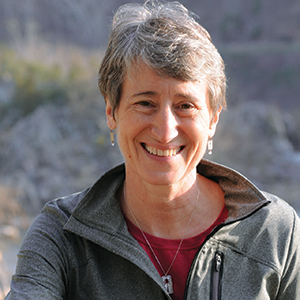
Russell L. Riley
We usually start with a little bit of autobiography, because people don’t know, there’s no single place recorded where folks come from. I hope maybe we can start that way, and we’ll figure out as we go along once Mike is available. You know how you want him to fit in with your discussions, so I’ll follow your cues about how we’ll organize that.
Sally Jewell
I think having a biography on each of the three of us is going to be helpful because part of it illustrates how you pull a team together that works in a complementary way.
Riley
Terrific.
Jewell
I would like it if you would capture the biographies of both Mike and Tommy. Both of them served for part or all of [Barack] Obama’s first term, as well as all of the second term. This is the Obama Presidential Oral History Project, so I’ve only been there for half of it, but these guys have an interesting journey into [Department of the] Interior, so it’s worth capturing.
Riley
Terrific.
Mike Nelson
Certainly would love to hear about Deepwater Horizon [2010 oil spill] from somebody who was in the administration at that time. Then I assume there were ripple effects that carried over into your tenure as well.
Jewell
Oh, yes.
Riley
No pun intended. [laughter]
Nelson
Oh, sorry.
Riley
So let’s start with you, then. You were not born in the United States—
Jewell
I was not, no.
Riley
—which is an interesting place for us to start because that’s unusual in American politics.
Jewell
I was at every State of the Union because I wasn’t a “designated survivor,” because I’m not able to serve as President of the United States.
Riley
Oh, is that right? No kidding. So tell us about your upbringing then, particularly as it relates to what you end up doing.
Jewell
I immigrated to the United States when I was three years old, just about to turn four. My mother was born and raised in India to basically colonial parents. They both served in the Indian Army, which was the Crown at that time, and my grandfather’s family had been in India since 1760. His name was Murphy. He came from Ireland originally. My grandmother left Yorkshire [United Kingdom], the youngest of 13 children, and went to find her way in India, and that’s how my grandparents met.
My mother left when India gained its independence—she was a teenager—and she came back with her parents [to England]. She had to apply and get citizenship in the U.K., which was interesting, even though she was serving the Crown. So she met my father. She was a nurse-midwife, and my dad’s a doctor, so they met, and she wasn’t quite what his parents had in mind for him marrying. They did come to the wedding. [laughter] But they [my parents] decided to leave. He [my father] had two fellowship options: Seattle, Washington, at the University of Washington, in anesthesia; or Nairobi, Kenya. He kind of wanted to go to Nairobi, but they wanted a five-year commitment. Seattle only wanted two, so that’s how we ended up at Seattle.
I went back to the equivalent of first grade in England, lived with my grandparents. It was something that I clearly remember: very strict grandmother, pea soup fogs, only warm room was the kitchen, and it was all heated by coal. They delivered coal lumps by cart in the street. I’m not that old, but it was happening even back in those days.
Riley
And this was in London.
Jewell
In London.
Riley
Right. What part of London? Do you remember?
Jewell
Palmers Green. I think it’s on the way to Wimbledon, kind of. So I lived there a year, came back, and then [was] educated in the Seattle area. That was my home. Graduated from Renton High School, which is a local public school. My dad left the University of Washington to go into private practice and worked in early open heart surgeries, where there was one anesthesiologist and about six surgeons. He just would do 16-hour days. It was rough for him, but that was that. My mother became a nurse practitioner, worked at Planned Parenthood as a women’s health care specialist, and did that for decades, really, until she was 83 and lost her voice, associated with cancer, and died about three months later. People came out of the woodwork saying, “She diagnosed my cancer.” It’s just really sweet, yes.
So I went to the University of Washington, lived in the dorm, met my husband there. He was studying mechanical engineering; I was going to be a dentist. It’s a little longer story than that. I was going to be a dental hygienist because that was a safe profession for women. That’s what my dad said: “In case you marry a schmuck and he leaves you, you’ve got to be able to support yourself,” so I guess I did OK with that. [laughter]
He was a mechanical engineering student. We were doing homework together, and I thought, That looks a lot more fun than mine, so I switched to mechanical engineering. We married right after graduation, like a week. Loaded up a U-Haul truck after doing a quick honeymoon with all my relatives in England, drove to Oklahoma in a U-Haul, and started with Mobil Oil in two different field offices, living together in Duncan, Oklahoma.
Riley
Had you ever seen Oklahoma before you moved there?
Jewell
That’s a good question. You know, I don’t think so. I don’t think so. Oh, no, that’s not true. In 1977—so I graduated in ’78—I did a road trip, 15,000 miles by myself. It’s the only summer I took off and didn’t work during college, the summer before my senior year, and I did go through Oklahoma. I just went down the whole country, down to south Florida, flew to see a friend who was in Jamaica, drove up the East Coast. Warren met me—my husband, boyfriend at the time—and we drove all the way back from Acadia National Park in Maine, camping all the way, mostly in Canada at that point, dipping into the U.S. to buy gas because it was cheaper. [laughter] So yes, I had been to Oklahoma before.
Riley
So what kind of car were you riding at the time?
Jewell
A Fiat 128 sport coupe. I mean, I’m a mechanical engineer. You have to know how to fix cars if you’re a Fiat owner. [laughter] Warren and I, when we were 19—started dating on my 18th birthday—bought together, at age 19, a 1964 Triumph TR4 and rebuilt it from the ground up. It’s in our garage. In fact, when we were moving to Oklahoma, we were towing the Triumph, and I was driving the Fiat, and, of course, the Fiat broke down. We were towing the Fiat and then driving the Triumph with us. So, yes, we’ve been together for a very long time. Really, we grew up together. But we’re both engineering brains. That’s kind of the upbringing. Married, like I said, right after graduation in 1978, moved to Oklahoma. Both worked for Mobil Oil, a year in Oklahoma, two years in Colorado.
Then I realized that oil wasn’t found in terribly pleasant places in the world, and I was restricted from doing a lot of things because I was a woman. My interest—you kind of specialize in a certain area—I really enjoyed marine corrosion and how you prevent corrosion. So I wanted to work on offshore structures, and there was only one in the world that allowed a woman on it, and that was off of Stavanger, Norway. Every other place in the world, including every platform in the United States, was closed to women.
So I thought, there’s things I can change and things I can’t change. Maybe we go back to Seattle because we know we want to have a family at some point, and we’ll raise them close to family, and we’ll let the career sort itself out. He was working on the Prudhoe Bay equity redetermination—which is complicated, I won’t get into it—and doing a lot of computer work, so he kind of gravitated in the computer direction. I went to work for a bank to help them through the crazy oil and gas lending that was happening in the early eighties, and 1981 is when we moved back.
Nelson
Part of what I was thinking is that your time at Mobil Oil was sort of a fraught time for the oil industry.
Jewell
It was a go-go time for the oil industry. They were minting money. It was Jesse Helms and [James] Strom Thurmond and go-go oil, and they were getting accused of making obscene profits, which was true. They were talking about a windfall profits tax on oil companies, but every other industry was dying. This was, I think, still [President] Jimmy Carter. Is that right? I think so.
My mortgage rate when I moved to Seattle: 16 and three-quarters [16.75%]. It was bought down by the bank by 5 points if I stayed with the bank because they’re in the lending business. But that was the market rate, and interest rates were—prime was over 20, 21 [percent], I think, maybe it peaked at. And we had oil embargoes and things, one in ’74, and then oil was going crazy, too crazy, and the crosstown rival bank—because you couldn’t bank across state lines at that point, you had to participate in loans—was making a lot of money by participating in oil and gas loans.
The bank I was recruited to work for said, “We want to do that, but we don’t know what we’re doing, and we’re worrying about our credit risk, so we want to hire somebody that knows that.” At that point, for the two years that I was in Denver for Mobil Oil, I’d been doing planning and budgeting, answering questions like, Do you do the well on the ice island and the Beaufort Sea, the wildcat well, or do you do the steam flood in Bakersfield [California], both of which were $40 million?
I was doing the economics to translate the engineering into the common language of business—the engineering economics, if you will—of the wells, and making a recommendation for where we should put our budget money, which was very helpful in transitioning to banking. I didn’t know banking at all. I’d never had a finance class in my life. I hadn’t had an accounting class in my life. I rectified that quickly by taking a couple because I was really at sea.
But the thing that I think is extraordinary, to me, and I’ve spoken—he’s now passed on, but at age 93, I had lunch with the president of the bank at the time, who was the advocate for bringing me on. I turned down $350 million worth of loans my first year, and the bank really wanted to do them. They were struggling otherwise with the interest rate environment, which killed the timber industry, which was Weyerhaeuser, and so on, killed the airplane industry because of interest rates to borrow [to buy airplanes].
So they really needed the energy loans, but I said, no, I don’t buy into these assumptions that the engineers that are advising the banks are using. I recommend we turn down. And they listened to me, and they turned them all down, and they all failed, and they took our crosstown rival with them. So that was my transition back into banking. I don’t know if you just want me to riff or you just want me to stop. [laughs]
Riley
No, the only question I have about this is, are you paying attention much to politics at this point?
Jewell
None.
Riley
None, OK.
Jewell
No. Well, I was paying attention to all the tax incentives that the oil and gas industry were getting because that was part of the economics I was assessing. And it wasn’t until decades later, working in government, going, wow, these are really significant subsidies, and they happen to be the same subsidies that the oil industries oftentimes will fight against for wind and solar and other competitors. So I was familiar with intangible drilling costs, and all of these tax incentives that were part of the assessment of an oil and gas company’s profitability, or a well’s profitability, or whatever it was that we were doing.
But no, and it wasn’t until I think I became vice president of the bank, and they started asking me to contribute to the PAC [political action committee] for the bank—and I did, because it’s dutifully what you do as a vice president of a bank. I started looking at who we were giving money to, and I said, “This guy’s a real idiot. I don’t want my money going to this guy.” They said, “We’ll put you on the PAC board,” of course. So I go on the PAC board, and it’s kind of like, “Well, yes, he’s a turkey, but he’s our turkey.” [laughter] So I guess that was my first dipping into politics. And they used to go to the American Bankers Association conferences. I never did. I was very naive to that until much later.
Riley
OK. And you stayed in the banking industry for—
Jewell
Nineteen years. But I’d say the bridge, for an odd career—because I still just have a mechanical engineering bachelor’s degree—is board service. I started volunteering, and banks encourage that because a strong community means a strong bank. So I kind of had three lanes around volunteering as it evolved: one in education—first board I went on was a little private school that I attended as the first alumni rep at age 26—and then social service and the environment.
The environment put me on the radar of [outdoor retailer] REI, and they asked me to join their board in 1996. I was a founding board member of this [environmental] organization [the Mountains to Sound Greenway Trust], saying, if we don’t take thoughtful action along the Interstate 90 corridor from Seattle across the Cascade Mountains, it’s going to look like I-70 out of Denver, or any other interstates where you’ve just got a strip of development and you lose the character. And this is going from Puget Sound over a mountain range, and everything else, so how do we thoughtfully allow economic development, but do it in a way that recognizes wildlife corridors, and viewsheds, and watershed integrity, and all of that.
That’s where REI identified me, and so they asked me to join the board sooner. I said, “I just can’t. My kids are small. I’m working my tail off. I can’t take on another thing.” So they persisted, and I joined the board in ’96, and that was my connection to REI. It plays into my connection to how I got on the radar of the Obama administration as well.
Riley
OK. You want to continue with that, or you want to switch?
Jewell
I don’t know, what’s easier for you? You want me to just go to the end?
Nelson
Tommy, when were you born?
Beaudreau
I was born in 1972 in Wheat Ridge, Colorado.
Nelson
OK, so tell us about—I’m thinking about how your lives overlap, and you’re still a kid when Secretary Jewell—
Jewell
I graduated from high school when he was one. [laughter]
Beaudreau
There are some interesting throughlines that I think you’ll see play into the evolution of a number of different policies during the Obama years, and still carrying forward in the national politics today. So I was born in 1972. My family’s vocation in Colorado was horse racing, quarter horse racing. Back then, there was a fair circuit that traveled, and my grandfather’s job was to coordinate and ride the quarter horse cowboy races at the county fairs.
My father was a Marine, Vietnam veteran, spent his time in the war working on a radar system in Da Nang [Vietnam], which trained him in electronics and radar technology. After he got out of the Marine Corps, he went on his adventure out west—that’s how he met my mother—and in 1978 got a job on the North Slope of Alaska, working Prudhoe Bay. It was really British Petroleum then. It was BP.
So as part of the adventure of it, my dad went to URI, University of Rhode Island, for a semester or a year but ended up dropping out and joining the military. My mother didn’t go to college. They moved to Alaska, and, for a blue-collar guy, he got a very good job working on the North Slope. It was because of his training in the Marine Corps. Some of the technologies had application for downhole logging, so that’s why he worked with BP on the North Slope.
When we moved up there, I was seven or eight. The first two people I met when we got to Alaska were Brits, and I could tell, even at seven or eight years old, they got a kick out of my dad. He was a straight-laced Marine and did not comprehend their sense of humor, on any level. [laughter] Even at seven, I perceived he was the straight man for their routine. At the airport, when we arrived, they gave me a compendium of Jack London stories, and they gave my sister a compendium of Lewis Carroll, and I still have both of those books on my bookshelf in our house.
So part of that story—it’s not all that dissimilar from Secretary Jewell’s career path—the oil and gas industry was a major source of economic opportunity in the United States, including for people without college educations. I grew up in Alaska as a result, and that’s where I graduated from high school. Our family was tied to the oil and gas industry, through the boom times, and then the story of Alaska is, as many resource-dependent states, there are bust times.
In the eighties, when the bottom fell out and there were lots of layoffs, my family went through a period of my dad being unemployed. So that was part of the story, too, and shaped my attitudes about the challenges that resource-dependent communities and states face.
I loved living in Alaska, spent a lot of time in the outdoors, hunting, fishing, skiing, all the reasons people would choose to live in Alaska. When I was a junior in high school, the Exxon Valdez [oil] spill happened, and so that was searing for most people in Alaska. Again, you’re tied to the oil and gas industry in a way that many western states are, but Alaska, in particular, is essentially, especially back then, a petro-state. There’s no sales tax, no income tax, no property tax. They distribute to every Alaskan a portion of the permanent fund from oil and gas revenue taxes. It is not the only industry in Alaska, but it’s the lifeblood, so everyone’s connected with it one way or another.
At the same time, everyone chooses to live in Alaska—there are easier places to live—because they love the outdoors, and they love the state, and they love the wilderness. Exxon Valdez’s spill brought all of that tension into focus. Prince William Sound is one of the most beautiful places on Earth, if you’ve ever been there, and to see the devastation from that oil spill was a formative experience for me. It put a lot of my friends through college, [laughs] working on the cleanup, but to have all of that brought into such stark conflict was formative.
So I go off to college, I’m at Yale, and back then I didn’t go on any college tours or anything. I show up in New Haven [Connecticut] sight unseen. I had my own image of what an Ivy League campus must look like. It was different than that, [laughs] New Haven in 1990. I graduated from there. The way I ended up in Washington, D.C. was—
Jewell
Tell them your degree.
Riley
Yes, what did you study?
Beaudreau
I studied history and art history.
Riley
Art history.
Beaudreau
Yes.
Jewell
I really find that interesting.
Riley
I do, too. It’s not what you expect from an Alaskan—
Beaudreau
No, and for me, that was part of my own adventure. Here I was at Yale and had all of these worlds of opportunity and interest opened up to me.
Riley
Who’s the famous art—? There’s a very famous art historian professor at Yale.
Beaudreau
Yes, so [Vincent J.] Vince Scully [Jr.], and I took lectures from him. He passed away a couple of years ago. I took his survey course as a freshman and wanted to get more into it, so he was—I can do Scully impressions to this day—just an incredibly energetic, erudite—his lectures were a blast. I ended up spending a lot of my time on art history on Northern Renaissance work.
But I was going to go one of two paths: I was either going to be a professor, go to grad school and an academic route, or be a lawyer and go that route, because my only skill set is to read things and write you papers about it. [laughs] So those were the applications. I ended up going to D.C., Georgetown [University], for law school. That’s where I met my wife and, other than the year I spent clerking in Norfolk, Virginia, have lived in Washington D.C.
I was a white-collar criminal lawyer. I did internal investigations, particularly on financial crimes, SEC [Securities Exchange Commission] enforcement matters. One of the last big matters I worked on before I joined the Interior Department in the Obama administration was an internal investigation related to a fund that had been invested in [Bernie] Madoff. So I just put that out as an example of the type of work I did. One—and this is relevant to why I ended up at the Interior Department—aspect of my practice at the time was to do internal investigations for public agencies that had gone through some sort of scandal or loss of public confidence.
One example was a two-year investigation of the Houston Police Department’s crime lab, which, in the early 2000s, had gone through some scandals related to DNA analysis. Whatever you think about capital punishment, when it’s Texas, and it’s Harris County, [laughs] that’s really the epicenter, and everyone agrees that the evidence should be reliable.
My partner, [Michael R.] Mike Bromwich, and I did a two-year investigation of their forensic science operation, which ended up expanding into all of the disciplines, including trace analysis in firearms and even chemicals. We were the monitors of the D.C. Police Department, which had come under a use-of-force consent decree with the Justice Department. Those are all examples of this kind of niche we had, in addition to all of the white-collar stuff, working with these public agencies.
So I was doing that, and I was in my office at my law firm at the time, when the Deepwater Horizon accident happened, with the explosion on the rig.
Nelson
It was 2010?
Beaudreau
This was 2010, so April 20, 2010, is when the Deepwater Horizon rig exploded. The oil spill continued for 89 days afterwards, until the well was finally intervened and eventually completely sealed. That brought back all of the terrible feelings that came out of Exxon Valdez, and I remember being—as most Americans were, including Barack Obama—extremely frustrated and angry. But there wasn’t much for me to do about it. Here I am. I had little kids at the time, trying to teach them to recycle and stuff, and then someone puts 5 million barrels of oil in the Gulf of Mexico, and it’s incredibly frustrating.
I can go into how I ended up at the Department [of the Interior] as a result, just very quickly. Because of our practice, my partner, Mike Bromwich, and I had connection, had worked on opposite sides of issues, with a woman, [Kathryn] Kathy Ruemmler, who was in the White House Counsel’s Office at the time and went on to do even more and more, including becoming President Obama’s White House counsel. So we knew her from the Enron wars and Arthur Andersen and that sort of thing.
The President, Barack Obama, in addition to the environmental calamity, which everyone was extremely frustrated about—and there were reports at the time of the girls [Malia and Sasha Obama] asking their dad, “What are you doing about this?” There were also questions about the competency, independence, integrity of the offshore regulator at the time, which was the Minerals Management Service. We can unpack the origins of the MMS to the extent that’s helpful. But the Minerals Management Service was essentially a one-stop shop set up by one of Secretary Jewell’s predecessors in the early eighties—James [G.] Watt, Ronald [W.] Reagan’s Interior secretary—to lease oil and gas, do the safety regulation for oil and gas, and collect revenue from oil and gas, both offshore and onshore.
There were some perceptions of a conflict of interest [laughter] among those missions. In fact, the MMS, at the end of the Bush administration, had gone through—and they always had a number of scandals—but they went through a significant scandal, brought to light by the then–inspector general of the Interior Department, [Earl E.] Devaney, on the revenue side. There was a scandal about, literally, drugs and partying between MMS officials and oil and gas people and on the revenue side.
Jewell
Worse.
Beaudreau
People went to prison over it. So part of the conundrum was, in addition to dealing with the environmental calamity, these questions about the regulator, and lots of criticism of a potentially corrupt agency, and what was the President going to do about that. It turns out if you have one coke-and-hooker scandal, people don’t give you the benefit of the doubt anymore [laughs] as a regulator when a huge environmental catastrophe happens, and that’s where we came in.
Mike Bromwich, my partner, and I joined the Interior Department in June—the spill had already been going on for almost two months at that point—to help with a turnaround exercise to not only deal with the industry-facing regulations and improve regulations, try to minimize risk of another oil spill, but also look inwardly on the performance of the Interior Department as the offshore regulator.
Nelson
You can tell me if this is accurate or not, but it strikes me that both of you in your sort of formative years, meaning up to the time you joined the Obama administration, have known people, been familiar with people, who are interested in natural areas for the resources they can extract; people who are interested in natural areas for the sake of preserving them in their natural state; probably people who see them as recreation areas, who want to go into natural areas but with their off-road vehicles and snowboards and so on. Am I right to think that none of these folks were strangers to you?
Jewell
That’s absolutely accurate, yes.
Nelson
So that’s got to give you—when you’re assuming responsibility for all these areas, with all these different interests, and probably more that I haven’t identified—give you a sense of at least, I know, am familiar with these people. They’re not unimaginable to me, why they think the way they do.
Jewell
Absolutely. I think, for both of us, when you’ve worked in the industry, or your fathers worked in the industry, you recognize the economic impact, when it’s going well and when it’s not going well. Certainly, for me, working in the field, you see the environmental impact. You’re part of it.
Even I will say, not necessarily widespread, but you see shortcuts that contractors want to take. If you’re the smaller oil companies, that don’t have the resources of a major and don’t have the worry of reputational risk, I saw all the time shortcuts being taken. Stories of being the foreman in charge over a weekend, because we used to rotate the duty, and you have spills occasionally. And if they were over a certain size, pretty small size, they’re reportable to the EPA [Environmental Protection Agency].
You’ve got some contractors that—one guy just said, “I could take care of that for you really fast, Sally,” and flicks his lighter. I said, basically, “Get your ass down to the creek, use the hay, pull it out, get the vacuum trucks, and don’t ever suggest something like that to me again.”
But there are things like that that go on, and these are kind of remote places. But then many of the same people that are working in the industry and involved in that are also avid outdoors people. Some of the biggest allies, I would say, that the Obama administration had—that had great relationships across the aisle—were the hunters and fishers, who are some of the best conservationists in the country and people from rural communities.
So I think having that, either from living in a rural community, like we did, or being in an oil-dependent state, like Tommy was, you do get a sense of how the other side—I mean, “the other side”—how all sides think, right? The environmentalists that are strident, the people that enjoy using the lands, the people that are trying to make a living and support the economy, and then the consequences of those things. So, yes, that’s true.
Beaudreau
Agreed, totally.
Nelson
And had any of you had encounters before you joined the Interior Department with Native tribes, and what their interests were?
Jewell
Yes.
Beaudreau
As an Alaskan, in particular, the biggest minority population in Alaska is Alaska Native. Even in Anchorage, I had a number of classmates, schoolmates, who were Alaska Native. Alaska has a unique system that’s very different than the Lower 48 [states] on how tribes are organized. On a treaty or reservation system that involved in the Lower 48, in 1972, there was the Alaska Native Claims Settlement Act, which, among other things, required Alaska Natives to relinquish their land claims and, in exchange, set up Native corporations.
My perspective on it was in that context of, not reservations or that history of westward expansion and settlement—although my family from Colorado, they had their history intertwined with all of that as well—but rather Alaska Native groups being connected and tied to, under ANCSA [Alaska Native Claims Settlement Act], these economic entities, including on the North Slope, with oil and gas. That’s part of what’s unique about Alaska, too, is how tied tribes are and Native people are to resource development and extraction, whether that’s fishing, timber, or especially oil and gas.
Jewell
We have a bit of a parallel track. When I moved into banking in 1981, one of the areas where there was a lot of activity with oil and gas was in Alaska. So the first large relationship that I managed as a banker was with the Native corporation NANA, Northwest Alaska Native Association, based in Kotzebue, Alaska, which is north of the Arctic Circle.
I got very close with them. In those days, in the middle of the blanket toss, which is a walrus hide, dried and stretched, where everybody stands around and holds it, and they flip you up in the air—very traditional Alaska Native activity. So I was working very closely with the tribal leaders, working very closely with their finance staff, and really deeply beginning to understand the village corporation structure, the Native corporation structure, how it differed from tribes in the Lower 48.
That was in 1981. I took on NANA as a customer, as a $10 million borrowing relationship, and also worked with Sealaska Corporation, which is in southeast Alaska. I worked with CIRI, which—C-I-R-I—do you remember what stands—?
Beaudreau
Cook Inlet Region [Inc.].
Jewell
Cook Inlet Regional Corporation. Because they had Anchorage, they basically got chits to be able to buy federal land elsewhere because a lot of their traditional homelands would’ve been in Anchorage. So they were a very different business, but I was involved with all of them as a banker. NANA got involved in mining as well. It’s really interesting, knowing as much as I know now, but even at that time, it’s sort of like, in a sense, applying a colonial lens to Alaska.
What’s interesting, that both Tommy and I have experienced, is now what used to be the village corporations and Native corporations being more allied—and NANA in particular is like, We’re about shareholder employment and economic opportunity for our people, our shareholders. So their shareholders were all Alaska Natives from that region. Over time, the traditional subsistence integrity of the ecosystems that they’d come to rely on and the acceleration of climate change, which is so much more evident in Alaska and the Arctic and the Antarctic than it is elsewhere in the world—you began to see fractures develop between tribes, of which there’s 250-some in Alaska? So a lot of them are tiny.
And the corporations that they are shareholders of—and even between the villages, which are more subsistence oriented than the Native corporations, which are more corporate—it has evolved, with ANCSA and stuff, and ANILCA [Alaska National Interest Lands Conservation Act], which was Carter administration settlement, when Cecil [D.] Andrus was secretary. All of that has evolved over time to create fractures, I would say, within the Native community, particularly on the North Slope, which we’re both familiar with, but Tommy very much in this current tour of duty that he just finished.
I will say, for myself, I also banked fishing companies, timber companies. Some were Native, some were not. Many of them employed Natives, if they weren’t Native themself, when I was a banker, as well as doing a loan for a cultural center, and so on. So I had some, and I always had a real deep interest, but it wasn’t really until Interior where I really began to get it and to understand the legal mechanisms by which treaties were created and oftentimes not upheld. Anyway, I’m sorry, you were going to say more.
Beaudreau
No, that captures—
Nelson
I did want to ask Tommy about the first line in—I’m assuming this is a biography you supplied us with.
Riley
That came out of Wikipedia, I’m afraid, [laughter] so—
Nelson
Oh, it did. OK, so—
Riley
Which is contrary to our typical procedure.
Jewell
I was going to say that, yes.
Nelson
Do you claim this sentence about you: “Tommy Beaudreau is an American politician”?
Beaudreau
No.
Jewell
No. [laughter] Mine says the same, the Wikipedia page. It’s like, I’ve never run for elective office.
Beaudreau
No.
Jewell
Yes, that’s Wikipedia.
Nelson
I think probably the assumption is you’re from Louisiana, and everybody from Louisiana—
Jewell
Doesn’t he sound like a Cajun? Tommy Beaudreau? [laughter] I mean, I assumed that’s where he was from when I first met him.
Nelson
OK, we’ll withdraw that.
Beaudreau
No, my eldest son is responsible for the hygiene of my Wikipedia page [laughter] and has lost interest in that. So that particular line, if you look at the editorial history, has changed from lawyer to politician to lawyer to politician. So, no, I’ve never run for office, and I never will.
Riley
I saw the same thing. It’s contrary to our standard procedure.
Jewell
That’s totally Wikipedia. I don’t know who even writes it. I didn’t even know you could have hygiene on my page.
Beaudreau
I know who writes it.
Jewell
My page is all—it’s got inaccuracies, and it’s like, I don’t really care.
Riley
Did you have a follow-up, or should we try to get the Deepwater Horizon piece of it?
Nelson
Well, I’m interested in Secretary Jewell’s experience with REI because that was pretty extensive. During that time, my impression is, as a consumer, REI really became a nationally prominent.
Jewell
Yes, so I was on the board, as I mentioned, starting in 1996. Just to refresh your memory on what was happening at that time, really the beginnings of use of the internet and email and things, from beyond an academic setting. REI had bought the domain name REI.com from an engineering firm in Florida that had REI.com. My colleague at the time, Matt Hyde—I was on the board at that time—he went to them and said, “This is our business and what we do. Would you consider selling that to us?” And he goes, “Oh, you can have it.” [laughter] So he [Matt Hyde] gave him some REI coffee mugs. That’s how early this was.
Well, it quickly ramped up, of course, and by the time we got to the late nineties, everybody was diving in—Amazon.com—but there were about 30 that were focused specifically on outdoor recreation. REI was early to the game and had, at that time, a great website. But we were a member-owned cooperative—are still a member-owned cooperative. When you have crazy money—and you remember, there was a lot of crazy money at that time—chasing these deals, when you have no source of outside capital other than debt, how do you compete?
Goldman Sachs, Hambrecht & Quist, Merrill Lynch, were doing a beauty contest to try and take REI.com public and spin it off separate from REI. Nordstrom had done it. There’s a lot of venture money going in. So I was on the board at that time, and the CEO [chief executive officer], Wally [Smith], at the time had been in that role for 17 years. He’d grown up in REI. The COO [chief operating officer], Dennis Madsen, also had grown up in REI from—he’d worked there selling backpacks as a high school student, and they both went to college, but that was all they knew.
So ’99 rolls around, and the board is like, We don’t want to split the brand, we don’t know how that works. Wally came to me and said, “We need help. You’ve been in the finance industry. Would you consider becoming an employee of REI, moving from the board to being an employee?” I said, “Well, what are you thinking?” He said, “I’m thinking chief operating officer. And Dennis,” who was COO, “I’ll have him run REI.com, if we spin it off.” So that was the first conversation.
Quickly after that, Wally came to me—and actually, it was a very emotional conversation for him—and he said, “You know what? I don’t have the beans to do this job anymore. It’s beyond what I’m comfortable doing. I’m going to retire.” He was pretty young; he was in his fifties. So I’m on the board still, and as I was chairing the finance committee, I think, I disclosed to the board that Wally and I’d had this conversation. I said, “I don’t want any conflicts. You guys need to be aware of that.”
He said, “I am going to step out,” so then the obvious number two, Dennis, became interim CEO. Dennis was on the board, as was Wally, throughout all of this, so they had two insiders on the board. Long story short, we made the decision not to spin out REI.com. Wally retired. Dennis was interim CEO. They made him CEO. And I said to him, “Do you want me? Because Wally wanted me.” He said, “Yes, I’d love to have you onboard.”
So that’s how I got there as COO. I quickly discovered that they were unsophisticated in a number of ways that needed to be addressed. People are like, “Oh, going to REI, that’s got to be great.” In fact, when I talked to my then-16-year-old son and said, “OK, family meeting, I’m thinking about changing jobs. I got this—blah, blah, blah. What do you think?” My son’s like, “Dude, Mom, REI?” [laughter]
So I went to REI at that point, and people said, “It’s got to be a lot of fun.” I said, “You know, I think it’s going to be fun in about two years.” And I might have underestimated the amount of effort that needed to be put in to actually get it back on a stable footing. Also, you had the dot-com bust at that time. Anyway, that’s what took me there. And it was the Mountains to Sound Greenway that I’d been volunteering on, the I-90 corridor, which introduced me to REI. So it’s the volunteer service that got me there.
At REI, I was very, very interested in stewardship and service. REI had done some of it, but they weren’t really engaging young people. I was the average age of an REI customer at that time—when would I go there? I want to say I was 44. Every year I’d look at the statistics, and I’d still be the average age of the REI customer, and that is not a recipe for a sustainable business. We began to say, how do we increase more interest in REI, beyond the older, almost exclusively white, and dominant-male customer that we had typically had?
We did a lot of work in terms of getting young people involved in the outdoors. My own journey into the environment really started, and loving the environment and nature, started as a child, much like Tommy’s. It’s like, how do we nurture more of that? There’s all kinds of that story that happened, but it did influence what we ended up doing when I got to Interior, and I’ll talk about that later. But do you want me to talk about REI-to-Obama now, or do you want me to wait?
Riley
Yes, sure, go ahead. I think the timing is good.
Nelson
At some point, I want to ask about how your board experience gave you a sense of what the Cabinet would be like, was like, should be like, but that can come later on too.
Jewell
I think that should wait. Yes, very different. [laughs]
Nelson
That can wait.
Jewell
Very different, I would say. [To Beaudreau] And had you been on boards yourself?
Beaudreau
No.
Jewell
No.
Beaudreau
I mean, I’ve been on boards since, but not—
Jewell
Since, but not then.
Riley
Yes, go ahead.
Jewell
So I was on the board—longer story, but I was asked to serve on the Board of Regents of the University of Washington, which is my alma mater, by Governor Gary [F.] Locke. It’s a [state] Senate-appointed position because it’s public school. He didn’t even know that I’d been a graduate or that I’d been volunteering in engineering and business and with women in science and engineering. Had no idea.
I said, “Well, why did you pick me?” He said, “You remember that Kingdome advisory task force I put you on when I was county executive?” He said, “You were one of two people that said, ‘For God’s sake, don’t blow up the Kingdome. It’s a covered structure in what is oftentimes a rainy city. Leave it, and have the [Seattle] Seahawks fix up Husky Stadium, which needs renovation.’” I was one of two people that made the recommendation not to blow it up. It did, in fact, get blown up, and now Lumen Field—whatever. [laughter] But he said, “I want somebody with the ability to think independently and not be intimidated to say what you think.”
One of my colleagues on the Board of Regents is [Gerald] Jerry Grinstein, who is a lawyer, pretty well known in Seattle, but ran Burlington Northern Railway for a time. He’s now 92, or will be 92 in a couple months. During the time we were on the Regents together, he was pulled from the board back in to run Delta Airlines, so he’s like a god in Atlanta. Jerry was a mentor and a friend, and he still is a mentor and friend. Even when he was in Atlanta, running Delta, trying to figure out, Do we do bankruptcy? How do I negotiate with the pilots?, he’s running all of his employee communications by me. So a mentorship, if it’s good, is a two-way street.
Jerry, a lifelong Democrat, was the chief of staff to Warren [G.] Magnuson way back when, so he knew his way around politics. OK, so just park that for a minute.
Another board I was on, the Initiative for Global Development, was after 9/11 [September 11th terrorist attacks]. A group of business leaders in Seattle, led by a philanthropist named [William H.] Bill Clapp, said, “How do we use our soft power, not just our hard power, to help the world, so that people don’t feel that they want to bomb us? What might that look like?” So it was a group of businesspeople, and because of the Gates Foundation, they were bringing in all kinds of speakers, and we could ride their coattails.
One of the founders of that group—there are five founders. They were Dan Evans, the most famous politician in Washington state history; Bill Clapp, the philanthropist I mentioned; John [M. D.] Shalikashvili, former chair of the Joint Chiefs of Staff; [William D.] Bill Ruckelshaus, first-ever head of the EPA; and [William H.] Bill Gates [II], Sr. OK, so those were the founders. They asked me to be the inaugural chair of a separate 501(c)(3) [nonprofit organization] and board because I was half a generation, or three-quarters of a generation, younger. [laughs]
Anyway, Bill Ruckelshaus and I became close through that. Bill, of course, is a Republican, Indiana’s attorney general before, I think, running for Congress, ultimately ending up running the EPA twice under [Richard M.] Nixon, “Saturday Night Massacre,” all that stuff. I’m very close to Bill. I know the inside story on that. So Bill and Jerry are fast friends, Republican and Democrat. They teamed up to support President Obama when he was running in 2008, and did fundraisers for him, and so on. And I contributed to President Obama—I think I maxed out—but I didn’t go to any of these fancy fundraisers. I’m working for a co-op, right? I have no stock options and that. So apparently somebody asked them who might be good for their Cabinet, and they took a five-year-old résumé of mine, and they gave it to the transition team and said, “Check her out.”
I get an obscure call in the end of 2008 from [Michael] Mike Froman. He said, “Would you have any interest in serving in public service?” I said, “I don’t know.” I hadn’t even thought about it. I did know Dirk [A.] Kempthorne. I’d been calling on him as REI. I had convinced the industry that if we were going to take public lands for granted, we were going to be potentially on the short end of the stick, so I was making calls on members of Congress. We created an outdoor industry PAC, so I was politically active at that point, but certainly no ties into the administration.
So Mike called. This is December of 2008. The market has crashed. My sales are off 20 percent. I laid off 900 people in February 2009. It was really tough. And I said, “If called to serve, I will serve. The timing is awkward because I don’t know what’s happening. I don’t know if we’re going into the Great Depression, and I’ve only been CEO for three years. So this is my circumstance, but if called to serve, I would consider serving.”
I had no idea where that call came from. In fact, it was a month before—so the Seattle Post-Intelligencer, which at that point I think had gone online, had kind of a gossip column. Somebody sent me a blog of it saying that I was a candidate for secretary of the interior. But people had said I want to be mayor of Seattle. There was all kinds of nonsense out there, so I’m like, “No, there’s nothing to this.” Well, it turns out there was, and that’s when, later, I think, I found that Jerry and Bill sent my résumé on, didn’t tell me about it, and only fessed up, actually, in full when I got the call in 2012 to become secretary.
Beaudreau
So the real operators generate that momentum themselves. [laughter]
Jewell
Well, I know, and people are like, “Well, yes, that’d be great. Who are you calling?” And I said, “I’m not calling anyone.” I said, “If you think about it, the President’s got this Rubik’s Cube, and what does he need? He needs geographic diversity, needs gender diversity, needs racial diversity, age, experience, all that stuff.” I said, “He knows what he needs. He knows who I am. If he wants me, that’s fine, and if he doesn’t, I have a great job.”
So I didn’t say, really, anything to anybody other than my husband. In fact, then, [Christine] Chris Gregoire, just had been Washington state governor, terrific, really wanted the job. I think she was offered EPA. Before being governor and attorney general, she had been head of the Department of the Ecology, so she knew that. She’s just a terrific person, and I don’t want to compete with Chris Gregoire for anything. She’s great. So it was a little awkward in that way. But that was the genesis.
It was the nonprofit service is really the moral of the story. It was people seeing you in action outside of what your professional lane is and then sort of thinking, Yes, she might be good for this or that. That’s been the glue that has knit my career together since I left banking.
Nelson
What attracted you to Obama’s candidacy? And was it when he was running for the nomination against Hillary [Rodham] Clinton, or was it only later, when he was running against [John] McCain?
Jewell
It was really David Jayo, who’s the only person I brought from my prior life into Interior. At REI, he was leading our grants program and working with nonprofit organizations, and so on, and working on this youth initiative to get more kids involved in the outdoors. He was a real advocate for Obama, and doing some campaign volunteer work, and things like that. They weren’t really on my radar—I hadn’t been engaged much—but he was very convincing. So really it was David that said, “You really ought to take a look at this guy.” And I said, “Why? Help me understand.”
David is gay, and we’d just taken a public position on marriage equality, which is very unusual for REI to stand up for something other than around conservation because usually taking any kind of political position just loses you customers. They either agree with you and keep shopping with you, or they disagree and they—so David was an advocate for that. He’s a man with, I think, really good judgment. So, really, I would say his influence.
Then I knew later that Jerry and Bill were supporting him, but that was farther down the track, when there was momentum behind his campaign, and there’d been some primaries and stuff. But it was really just listening to people that were deeply active.
Nelson
Did you meet him at all?
Jewell
The President?
Nelson
Yes.
Jewell
I first met the President in—I supported the 2008 campaign, but not in a big way. I’d had this strange, obscure call, but it didn’t go anywhere. And I got called in 2009, I think it was May of 2009, about whether I would come to an event at the White House—I think this was before Great American Outdoors Act—to explain to the President and a small group of his advisors how REI was managing to cover all of our employees with health insurance, even if they worked part-time. So it was the formation of what became the Affordable Care Act. That was my first introduction to President Obama. We were in the Roosevelt Room in the White House, and I don’t think I’d ever been into the White House before, other than on a tour of the East Wing or something years before with my kids. And it was Rahm Emanuel and Nancy-Ann DeParle—is that right?
Beaudreau
Nancy-Ann DeParle.
Jewell
Nancy-Ann DeParle, Valerie Jarrett, really a cast of their—I don’t know if Kathleen Sebelius was in there. Was she in the first term? I think so.
Beaudreau
Yes.
Jewell
At any rate, so it was us, REI. It was Microsoft, it was Pitney Bowes, it was a union in Texas, it was Safeway. It was like seven companies, and we were each asked to just sort of give a couple minutes about what our company was doing and provide any information. That’s when I first met President Obama. He said, “OK, in a few minutes, the press is going to come in, and it’s going to be like a scrum.” He was so sweet. “Don’t get intimidated. Just pretend they’re not there, even though they’ve got microphones hanging over your head, [laughter] and the lights are going to be on you, and they’re going to be jockeying for position, and they look like they”—
Beaudreau
Act natural.
Jewell
“—they look like they just came out of their tent on the street.” [laughter] He didn’t say it quite that way, but he did reference that they would be kind of scruffy. And sure enough, that’s what happens.
So here was my first impression of President Obama. Again, there are seven of us. We have place cards around the table. He’s not taking any notes. He’s not referencing any notes. I gave him a copy of Last Child in the Woods: Saving Our Children from Nature Deficit Disorder, which I’d given to Dirk Kempthorne before because I was a champion for connecting kids with nature. So he gently put it underneath so it wasn’t on the table, or visible.
And he proceeded, with this press conference, to calmly pick out—and some people were more nervous than others, and some were more rambly than others. He picked out a nugget of something every one of us said, with no notes, and said that to the press. It was extraordinary. It was my first impression of him. Deep listener. Well prepared. And didn’t know what we were going to say going in there, and just did a synthesis that was really amazing.
Then, I knew [Kenneth L.] Ken Salazar. I’d called on him as a senator because of some of the committees he sat on, the things he cared about, and he called me a few times for various jobs, including to run Minerals Management Service. [laughter]
Beaudreau
You dodged a bullet there.
Jewell
Well, yes, it was already after Deepwater Hor—no, it wasn’t.
Beaudreau
No, it wasn’t.
Jewell
It wasn’t. It was before. So I was talking to Jerry and Bill, saying, “I’m getting asked all these things. I’ve got REI going on. What should I do? Should I be doing this?” And they said, “No, don’t take anything below deputy secretary.” So that was really helpful.
But I was engaged with them [Department of the Interior and Secretary Salazar], and they did this project called America’s Great Outdoors. Frankly, it was super disorganized, so REI stepped in. David actually played a pretty significant role in helping organize it, this gathering of people from all over the country, to raise awareness about the importance of public land. I was asked to introduce the President at an event which was in the atrium of the USDA [United States Department of Agriculture], and I think that was 2010. So that was the next time I met him.
Riley
I’m watching the clock only because—
Jewell
Mike [Michael L. Connor].
Riley
I’m not sure what our commitment is to him.
Jewell
Why don’t you pause and see what’s going on with Mike. [Pause]
Riley
I did want to ask one question, because we sort of skipped over your own partisan inclinations. I haven’t known, until this point, whether you considered yourself actively a Democrat or not.
Jewell
No. No.
Riley
OK.
Jewell
I had always supported candidates, and not parties, and wasn’t a member of any party. Washington state, actually, was foreign to me, when we moved, that people signed up for parties. In fact, this is a bit of a funny story: so we moved to Duncan, Oklahoma, in the oil business, with our U-Haul towing our cars, and one of the first things we do is we go to register to vote. So they said, [laughs] in an Oklahoma twang, “Honey, what party?” I said, “What do you mean?” I said, “Oh, Independent.” “Honey, you can’t vote in a primary if you’re an Independent.” I said, “OK, Republican.” She said, “Honey, no Republican’s won in the state of Oklahoma in 40 years.” [laughter] I said, “OK, Democrat?” “Honey, that’s a great choice.”
[BREAK]
Jewell
OK, so Mike is available until about 11:50 a.m.
Riley
OK.
Jewell
And then he’s got another thing at noon, and then he can rejoin us around 1:00, and then he’s free this afternoon.
Michael L. Connor
[Joining by Zoom] Yes, so I’ve got 1:00 to 3:00 blocked off and no pressure on that. Maybe even a little longer than that, I don’t know.
Jewell
I think you’d originally said you had something at 3:00, so I just told these guys you were available until 3:00, but—this is going to be way more fun than whatever you have going on, I guarantee you. [laughter]
Connor
I guarantee that too. [laughs] Yeah, I’ve got until 3:00.
Riley
Terrific.
Beaudreau
Hello, Assistant Secretary [of the Army (Civil Works)] Connor.
Connor
Mr. Beaudreau, deputy secretary, chief of staff, grand poohbah, Caps [Washington Capitals] fan, good to see you, my friend.
Beaudreau
Do you have vessel traffic flowing into Baltimore yet?
Jewell
Little boats.
Connor
No, but feeling pressure, thanks for asking. [laughter]
Beaudreau
Has that come up today?
Connor
Got a meeting with Governor Moore at noon, so it will come up big time then.
Riley
Well, you’re very kind to carve time out for this. One of the things that we have been doing is getting a little bit of autobiography from everybody, which is very helpful to people who come to these as research documents, these interviews. So I wonder [to Jewell], is it OK if we talk to Mike?
Jewell
Oh, yes, absolutely think you should, yes.
Riley
[To Mike] So we’re eager to hear a little bit about your own autobiography, where you come from and a little bit about your upbringing, and how you end up getting into the Interior Department.
Connor
All right, I’ll try and do this—
Jewell
Tommy and I went back to childhood, even birth, so— [laughter]
Riley
Ancestors, actually.
Jewell
Ancestors, that’s right, which I think would be good for you to do, too, Mike.
Connor
No, birth is a disappointing aspect of the story, since I was born in Utah, where I lived for about two months. Other than that, I’m a New Mexican, but I have a hard time saying New Mexico native because I wasn’t actually born there.
I grew up in Las Cruces, New Mexico, in the southern part of the state. So after that two months in Utah, stability and staying in New Mexico, went to New Mexico State [University], got a degree in chemical engineering, went out and worked in the private sector for GE [General Electric] for four years, ended up working in the power generation services business. The service operation is a smaller operation, so any engineers, particularly the younger, less-senior engineers, got tasked with other responsibilities. I was assigned health safety, environmental compliance, as well as the project engineering stuff I was doing, and got tired of the lawyers always telling me what to do. So if you can’t beat ’em, join ’em.
I went back to school at the University of Colorado and got a law degree. I was going to be an EPA-type lawyer, since that’s what I had been doing at GE, but the University of Colorado specializes in natural resources law, so I fell in with that crowd, and wonderful professors. When I graduated, I just wanted to go back to New Mexico and work in the biggest, most prestigious firm that I interned with in my second year of law school. Thank God they didn’t hire me. [laughter] I now feel very lucky because, as I recently relayed to a group in Albuquerque, New Mexico, a couple of days—Don’t worry about those disappointments when you don’t get the job you want. There are other opportunities.
So I had to go out and find a job, and the Interior Department Solicitor’s Office hired me. I joined the solicitor’s office honors program in fall of 1993, at the start of the [William J.] Clinton administration, or at least nine months into the Clinton administration.
My legal career started at the Interior Department, the solicitor’s office, as a career civil servant. I worked there for four years. My son was born. We had enough of D.C., and I requested a transfer to move back to Albuquerque so I could work in the regional solicitor’s office there, always thinking that I was going to plant my stake back in New Mexico for the long term. Then a year later I was detailed back to D.C. to work in the Indian Water Rights Office for Secretary [Bruce E.] Babbitt. Then I ended up running the Indian Water Rights Office until the end of the Clinton administration. I was still a career civil servant, detailed to the secretary’s office, but when the Bush administration came in, I wasn’t quite sure how that transition would go.
There was interest on Capitol Hill. My home state senator, Jeff Bingaman, had become briefly the chair of the Senate Energy Natural Resources Committee and was then the ranking Democrat. Jeff was looking to advance, specifically, water resource issues in his role as chairman of the committee and wanting to do that in his home state.
Being a New Mexican, I had a leg up when he wanted to add staff to the committee, and he hired me. I worked as counsel to the Energy and Natural Resources Committee in the Senate for eight years, and then met a senator from Colorado who was on the committee, Ken Salazar. I was fortunate enough, when Barack Obama got elected, that then-Secretary Salazar asked me to come run the Bureau of Reclamation.
As I always tell folks, if you want a confirmed job as a political appointee, then make sure that the committee you work for has the responsibility for confirming you. I got confirmed in pretty much record time, since my boss was the chairman of the committee, and started there in May 2009. I did that for about five years.
Then somebody named Sally Jewell was recommended and nominated by the President to be the secretary of the interior. When my predecessor at Interior, Deputy Secretary David [J.] Hayes, left in 2013, I was very fortunate that Sally asked me if I would be interested in being the deputy secretary, which I desperately was interested in, and got confirmed. It took me about, I don’t know, was it six to seven months to get confirmed at that point in time?
So I got confirmed in February of 2014, stayed there, and helped turn off the lights with Sally and Tommy on January 20, 2017. I went into the private sector for four years. Worked for a law firm, WilmerHale, and did some board work to stay connected to conservation and water policy.
Then when President [Joseph R.] Biden [Jr.] was elected, he, fortunately, asked if I would be interested in becoming the assistant secretary of the Army for civil works, overseeing the Army Corps of Engineers. This time it took seven months to get confirmed, but I’ve been doing this job since November 2021.
Jewell
So, Mike, if you’re comfortable, I think these guys would be very interested in your story around your grandfather and water rights negotiations and stuff. Would you mind sharing that?
Connor
No, not at all. So hopefully, in this setting—sometimes I get a little emotional when I talk about it because I am a member of Taos Pueblo, one of the Indian tribes in New Mexico. And how that all came about was very strange.
When I’d grown up, I didn’t know of my Native American affiliation. My mom and her biological father never met. The mixing of Hispanics and Native Americans in northern New Mexico in the late 1930s were not exactly the most accepted relationships. My maternal grandmother was Hispanic and my paternal grandfather was a Pueblo member. This didn’t make any of the families on either side very happy. So her biological father and mother were not married, and she was spirited away from Taos by the Hispanic side of the family when she was three or four. I think she had been told that her father had deceased, and that was the story. She never mentioned it. We were never connected to the Native American side. So I grew up being Hispanic and Anglo. My dad’s a white guy from upstate New York.
After I graduate from law school, after the honors program year, I was assigned to the Division of Indian Affairs, and I remember sitting with my parents. They came out to visit us, Washington, D.C. And I remember my mom basically saying, “Well, that’s appropriate, since you’re Native American.” I was like, “What? What?” I found out the story of the father, and she showed me the birth certificate, and it was just, obviously, a strong interest, given what I was doing for work. This was, what, in 1994 or ’95, something like that.
Anyway, as I mentioned, I moved back to Albuquerque, and, as I mentioned also, she’d been told that her father was deceased. I was working, doing Indian water rights in the Albuquerque regional solicitor’s office. I was actually the attorney of record on the Taos Pueblo water rights adjudication, and when you put together your case, you hire historians to go back and document water use on tribal lands, reservations. From that standpoint—I hope you can still hear me because my screen is kind of blinking.
Jewell
We got you. We’re hearing you fine.
Connor
OK. I’m not making this as short as I should, but—
Jewell
No, don’t make it short. It’s really important.
Connor
I’m reading this history report, and it says, “We’d like to thank the members of the Taos Pueblo Water Rights Task Force for providing this oral history of water use. We’d particularly like to recognize and acknowledge the passing of Patricio Romero, who was integral in the preparation of this report. He died in 1992, as the report was being prepared.” I’m like, Patricio Romero? And it said something like he died at the age of 74 or something like that, and I’m thinking, Patricio Romero, that’s the name on Mom’s birth certificate, and that’s interesting. And if he was 74, or whatever the age was, he was going to be 27 back in 1938. I was like, Wow, that’s interesting.
So I called my dad and said, “I found this out. This seems to be pretty earth-shattering. Don’t tell Mom.” Of course, he ran in the room and told my mom, and my mom called her relatives in Taos, and they spilled all the beans on the family history. He had lived a long life, and, yes, that was her father, and he had just passed away.
Because I was not only the attorney of record on the Taos Pueblo water rights, I was also chairing their Indian water rights settlement team, which was in the middle of negotiations, I had a close relationship with members of the Taos Pueblo. And by that time I knew I had this history with Taos Pueblo, but we didn’t know that Patricio Romero had lived to be in his mid-seventies, et cetera.
So I got through all that, but the real emotional part was then the Pueblo. I was telling their attorney about all this, and he and I were good friends. And then one time soon thereafter, when we were having a negotiation session, they asked me to stay around afterwards, dismissed the rest of the federal negotiating team. There were four or five of us up there at a time for a meeting, and they all went around the room, and they all told me something about my grandfather. So from that moment on, I’ve had a very close relationship with folks in the Pueblo who have taken me under their wing, showed me a lot of the Pueblo, showed me where my grandfather was buried, told me lots of stories, et cetera.
Finally I became an enrolled member in 2018, which the tribe has to approve, and that’s kind of the history there. It’s been pretty meaningful for well over 20 years. That was the late 1990s when all of that kind of played out, 25 years almost of a good, solid relationship with leaders in the Pueblo.
Jewell
So Mike is genetically a water rights guy. [laughter]
Riley
It sounds like it. We really appreciate your taking the time to share that story with us. That’s a fantastic series of coincidences.
Connor
Yes, and I’ll just note that we ultimately settled the Pueblo’s water rights. I went from negotiating a settlement in the executive branch, then I went to Capitol Hill, working for their senator, Jeff Bingaman, and wrote their water rights legislation. Then I moved back to the Interior Department as the commissioner of the Bureau of Reclamation and was responsible for implementing their water rights settlement. [laughter] Needless to say, from the Pueblos’ perspective, none of this is just pure coincidence. [laughter]
Riley
I’ll revise and extend my remarks, then, after I get the transcript.
Jewell
Mike did not become a member until after he left government because of the potential of conflicts.
Connor
Right, yes. Exactly.
Jewell
I do just want to say, just hearing our stories and Mike’s, this is a team of people that does not overlap very much. We bring a whole lot of different skills, and that, to me, was absolutely critical. And water, and the negotiations on the Colorado River, which is overallocated, and the Bay-Delta in California—to have Mike’s deep background in that was just critical for us being able to do our work. And then Tommy’s deep background in the oil and gas industry, and the regulations, and he was acting assistant secretary for—
Beaudreau
Land and minerals.
Jewell
Land and minerals, which was BLM [Bureau of Land Management], and then—You didn’t even talk about running BOEM [Bureau of Ocean Energy Management] or anything.
Beaudreau
No, we haven’t gotten there yet.
Jewell
No, OK. At any rate, it was very, very helpful because I had the conservation side, and I had to learn a lot on the Indian side, and so on. But it was a team that was just super helpful in terms of covering the very complicated landscape of Interior.
Nelson
There’s a whole constellation of issues—and I think Mike might have a perspective on this—involving tribal recognition, tied in some cases to the desire to own and operate casinos on tribal lands. And I wonder, does that resonate with any of your experience that that was an issue that was important during your time in office?
Jewell
Oh, yes, critically important. Kevin [K.] Washburn was the assistant secretary for Indian affairs. He had been in the tribal gaming NIGC [National Indian Gaming Commission] prior. And [Lawrence S.] Larry Roberts, who was his right arm, principal deputy, who became acting assistant secretary after Kevin left, also had come with a background in gaming. Gaming for tribes—I can’t remember the statistics now because it’s been so long, but call it $30 billion versus $10 billion, or something like that, that they get in total from other federal programs. It is absolutely critical. And the way the laws are written, they have to put the money back into support for the tribes.
So it’s been absolutely vital, and Interior oversaw the National Indian Gaming Commission, picked the chairs, picked the members, and they oversaw those programs. I would say we were not frequent but occasional advocates with states for state compacts and things like that, to facilitate it. But tribal gaming, obviously if you’re close to a population center, it’s going to be a much bigger part of what you do. There’s a number of tribes that really make no money on their casinos, and then there’s a bunch of them that are in between. It’s sort of like 25/50/25, but absolutely critical.
Beaudreau
It’s also a good way to go to prison. [laughter]
Jewell
Oh, yes, [Jack A.] Abramoff.
Beaudreau
Yes. One of Mike’s and my predecessors, [J.] Steven Griles, was deputy secretary during the [George W.] Bush administration, and got mixed up in the Abramoff scandal, and went to prison for it.
Jewell
It was under Secretary [Gale A.] Norton.
Beaudreau
Yes. So Sally is absolutely correct about how important IGRA [Indian Gaming Regulatory Act] and gaming opportunities had been to provide economic opportunity for tribes, but it has historically—and some of this is mitigated in recent years but was certainly still very politically fraught in a lot of ways during the Obama years. It has been a really difficult and challenging political environment, where a lot of decisions about gaming compacts or recognition, taking land in a trust, get wrapped up in gaming politics—both how individual states feel about gaming as an industry, but also the competitive aspect that [points to Jewell] the secretary talked about.
So, really complex and sometimes quite nasty dynamics about market share, and those have gotten into a political realm at times where the letter of the law on whether a particular tribe is qualified to be recognized, whether a gaming compact should be approved, gets washed through a political lens. There’s been a lot of really sad history around all of that.
Jewell
I’m going to tell the Harry Reid story.
Connor
Can I—?
Jewell
Oh, go ahead, Mike.
Connor
I was just going to add real quickly, taking this issue and, I think, one of the things from my perspective is how disciplined and well managed I think we were under Sally’s leadership, in particular, with respect to gaming issues. Gaming issues, as Tommy just articulated, are very complex and fraught with risk if you start playing into all the competition, et cetera.
I think we were uniquely blessed with having Kevin Washburn, who had the experience that Sally referenced and could take care of those issues. Gaming issues were the assistant secretary for Indian affairs’ responsibility, and we all were tribal advocates and worked a lot on tribal issues from a policy level, how to better fulfill our trust responsibility. But we left all the gaming issues in the assistant secretary for Indian affairs’ office and kept the rest of us away from that.
I think Sally and Tommy, in particular, were just very disciplined in recognizing risk and just keeping us in appropriate lanes. We didn’t have any scandals—we didn’t have any of that, with respect to gaming—and that, as Tommy highlighted, was a problem for previous secretaries.
Jewell
I’m going to tell a story that I don’t mind being on the record because I’ve told it before. Tommy probably wouldn’t, but— [laughter]
Beaudreau
He’s dead now.
Jewell
He’s dead now. So I got a call from Senator Harry Reid’s office to meet with him. Tommy’s briefing me. I don’t think Mike was involved in this briefing, but—
“OK, what does he want to talk to me about?”
“Well, it could be about this what became Basin and Range National Monument and this city project he’s got. But we think that there’s something about tribal recognition of the Pamunkey tribe that he might mention.”
Yes, so the Pamunkey is the tribe of Powhatan and Pocahontas. Their traditional homelands would be—I guess it’s the James River at that point, Yorktown, Jamestown, and so on. So I thought, Well, that’s strange. Why would he care about that? At any rate, because my team prepared me well for everything, they sort of said, “Well, it could come up.” And I thought, Well, why? This guy’s from Nevada.
I go to the meeting, and he talks about monuments and some other things. I can’t remember all of the information. But—I’m thinking, Well, it doesn’t seem like the sort of thing you’d want me—And then he says why he’d want me to come in. He says, “Oh, yeah, and your Indian Affairs people, they are considering tribal recognition for this tribe. What’s its name? Pa—Pa—” And I said, “Pamunkey?”
“Oh, yeah, that sounds right. I’d like you to extend the comment period on that. I know it’s going through your process, and I think it’s getting to the end of a comment period. I’d like you to extend it.”
And I said, “Senator,” I said, “what did you have in mind, and why?”
He said, “Oh, I just think these things are important, and it would be valuable if there was more time. I was thinking maybe six months.”
So I’m thinking, This is very strange. I said, “Well, Senator, we’re getting close to the end of the comment period, and six months would be a very conspicuous and long period of time to extend a comment period. Let me speak with my team and see what we can do.”
So, I went back to the office, spoke with Kevin. I’m sure I spoke with Tommy. We agreed we could extend the comment period another 60 days, which I think might even have been double the regular comment period. I can’t remember. So, fine. Unbeknownst to me, Kevin Washburn gets called to meet with Senator Reid, so he takes Jeremy with him as a notetaker. So they go into Senator—
Beaudreau
Jeremy was a staffer in our Congressional Affairs Office.
Jewell
Yes, Congressional Affairs. Usually you have somebody along with you. So Tommy has first person. I’ve got—
Beaudreau
Relatively junior guy.
Jewell
Very junior guy. So they go in, and [to Beaudreau] I’ll tell it the way I understand it, but most of it’s coming in from you, so you can jump in and correct me. [laughter]
But the conversation goes something like—I’m sure there were some niceties at the front end, but Harry Reid stares right at Kevin, and he says, “I know your boss gets emotional sometimes, likes to cry sometimes when it deals with Native American issues. If you recognize the Pamunkey tribe, I will give her something to cry about.”
Nelson
Oh, my.
Jewell
OK, so—
Beaudreau
That’s how Jeremy read—
Jewell
Jeremy’s taking notes. [laughter] So, yes, Jeremy’s the note taker. I’m telling you this because it’s in paper, on paper. And they are panicked. He is the Senate majority leader at that time, and he’s basically just threatened the department and me, and it’s misogynistic as hell, right? I mean, I’m dealing with tribal education. You’ve got, in many cases, the worst-performing education system in the country that I’m responsible for. I’m trying to figure this out. You’ve got the boarding schools. It’s hard. It’s hard to go out to some of these places and see the circumstances these kids are in.
And, yes, I wear my emotions sometimes on my sleeve when it comes to that stuff, although not stuff like this. [laughs] This stuff won’t make me cry. It’ll make me mad. So nobody tells me for at least 24 hours, maybe 48, I don’t know. Tommy comes into my office and says, “We have this situation that’s happened with Senator Reid, and I think you need to know.”
I said, “Why didn’t you tell me right away?”
[Speaking for Beaudreau] “Well, you know, urgh, urgh, whatever. [laughter]
So I said, “Would you call Kevin and ask him to come up?”
Kevin comes up to my office, and I just said, “Kevin, as soon as you have completed the work needed and believe the Pamunkey tribe is ready to be recognized, I want you to recognize them as soon as possible. Thank you.” So that’s what he ended up doing.
So why? Why Senator Reid? Because across the [Potomac] river, in the National Harbor, MGM Grand has just invested $1 billion to build a massive entertainment and casino complex. I can’t remember the amount of land the Pamunkeys were getting—maybe it was an acre, or maybe it was 30 acres. [To Beaudreau] Do you remember?
Beaudreau
It was, I think, very small.
Jewell
Small. It was a footprint, because they had to have some sort of a footprint. And it wasn’t about gaming to them. It was about recognition, and opening up the door to the kinds of services that they should have had all along, as a federally recognized tribe, having ceded their lands, and so on. But I tell you that story because this very, very powerful senator still most likely—I don’t know, I’m speculating—doing the bidding of a big donor from his home state, and so—
Beaudreau
That happened.
Jewell
That happened. [laughter] Mike, you weren’t involved in that one, were you? I’m sure you knew about it, but—
Connor
No, I remember hearing about it way after the fact.
Jewell
Usually when I tell that story, I tell a companion story that involves John McCain, because if I’m talking to an audience—and I do tell these mostly to students in universities and things—it’s kind of the influence of our campaign finance system and how it manifests itself. In both of the cases, with McCain and this one with Reid, the people coming out on the short end of the stick were tribes.
Riley
You want to go ahead and relate the McCain story with it?
Jewell
I don’t know. I could. It’s a completely different topic.
Riley
OK. Well, what I wanted to make sure we did—we haven’t gotten you into office yet, and so I’m kind of interested in hearing about your nomination and appointment, and then the kind of Oceans 11 business [laughter] of assembling this team of people.
Jewell
OK, so I told you about the genesis and how I got on their radar. On December 21, 2012, I get a call from the White House [Presidential] Personnel Office, saying, “The President is interested in speaking with you about potentially becoming secretary of the interior, that Ken Salazar plans to leave after the term,” so could I come to D.C. To set the tone, it is exactly one—no. The Newtown massacre [Sandy Hook Elementary School shooting] of all those children, it happened within the week prior.
Sequestration was on the table and they were facing the fiscal cliff. The President’s family was in Hawaii, and the President was not because he was trying to keep the government funded and not go off this fiscal cliff. So I had about 24 hours’ notice to get to the White House. I flew there to interview with the President, and I met with [Jacob J.] Jack Lew, who at that time was serving as chief of staff. I met with Valerie Jarrett, and I met with the woman leading the Presidential Personnel Office, a handful of others, and then I met with the President.
And I just referenced Newtown, and said, “It’s got to be really hard.” He said, “Hardest day of my life.” He was really wrapped up in it. It was an interesting interview, and, honestly, it was more of a sales job than an interview. I mean, they weren’t asking me questions to see if I was qualified. [laughter] They really wanted me to just say yes, which was not hard to do because, at that time, in late 2012, I’d been CEO of REI for eight years at that point, and the organization was doing very well. I’d just hired, six months before, a great CFO [chief financial officer], telling him I had no plans to leave but that I had this sort of bug in my ear from 2008 that I could get called again, so if I did, that’s the one job I would take.
So that was helpful, to have that history so it wasn’t catching me totally cold. And I’d worked at that point somewhat extensively with Ken Salazar, leading REI, and a partner in public lands and national parks, and raising awareness, and getting the outdoor industry engaged in advocating for support for programs of Interior, and so on.
The President interviewed me in the Oval Office. Other than him being in this really awkward situation, he was gracious as can be. They called me shortly thereafter to say that they want to go forward with the nomination process, and would I fill out some paperwork.
Riley
Did he ask you directly if you’d take the job?
Jewell
Actually, not at that moment. I’m trying to remember because the first time I met with him, as I mentioned, was in 2009, and I do remember getting a call to see if I could go to the White House. I was sailing my boat up to the San Juan Islands, and my daughter, who was at home, in college at that point, said, “You know, Mom, I got this call, and they said it was from the White House, and they wanted you to call back, and I thought it was probably a crank call, and then I thought, ‘Well, no, maybe they really do want to talk to’—” [laughter]
Anyway—the paperwork. I think they said, “We’d like you to fill out this paperwork. We need to do vetting.” It took my husband and I together working basically 40 hours between Christmas and New Year’s to do all the paperwork. It’s an absurd amount of paperwork. All, of course, is now public record because of the data breach, but my parents’ naturalization certificates—they were both deceased—and all kinds of stuff, my brothers’ and sister’s Social Security numbers. I don’t know. Very intrusive process.
That launched FBI [Federal Bureau of Investigation] background checks. I think the FBI personally interviewed probably 50 people, because they still are coming out of the woodwork, saying, “Oh, yeah, I got a—I didn’t get a call from the FBI, I got a visit.” So that was taking place all through January. Then I got the call: “Would you take a call from Air Force One?” [laughs] I don’t know where the President was going to, but I got the call about the nomination. I don’t even remember exactly what date that was, but it was within a few days of February 6th, which is when I flew out to D.C. for the formal nomination.
Nelson
And this was a very nontraditional nomination, meaning that that position previously had been held for decades by sort of western politicians, western elected officials. Did you have a sense of why he wanted to make a change in that pattern and, in fact, make a change from his own first term?
Jewell
Well, this is a little bit of what I was talking about earlier. I had a great job. I didn’t want to complicate anybody’s life. I didn’t want to advocate for it. I had tremendous respect for Washington state’s governor, who was in the mix, or other people I knew that wanted to be in the role, including the deputy secretary, David Hayes.
So I was not advocating or lobbying. And I think the President was trying to pull this Rubik’s Cube together. I think he was trying to think, Well, I want some businesspeople. Penny [S.] Pritzker came from the business world. I want some geographic diversity. They knew that I was from a business that depended on healthy outdoors.
REI paid for, but it was under the banner of the Outdoor Industry Association—I think starting in 2006, we’d been producing a report on the economic impact, actually by state and by congressional district, of human-powered outdoor recreation. Then we broadened it to be boating, and hunting and fishing had always been in there, but ORVing [off-road recreational vehicle] and things like that, to make sure it was more inclusive. They were aware of those things, but I didn’t want to push because I knew that he was trying to figure this out, or his team was trying to figure this out, so—
Nelson
I wonder, for Tommy and Mike, did you have a sense of this is a very different kind of secretary of interior from what the department has been used to, from what you’d been used to, just in terms of not coming out of the political world?
Connor
I figured, oh my gosh, what’s this change going to be like, a CEO coming in, and how are we going to operate differently? By that time, I had started in the private sector, but I had shifted to government and been in some form of government for 20 years at that point in time. So, yes, I remember just thinking, She seems really nice, and it’s REI, so that’s cool, but, wow, this might be a sea change here, and I wonder how this is going to play out. So the anticipation of a significant change was real from my perspective, when I heard.
Beaudreau
Yes, I agree, totally. The only thing I would add is, it was an interesting moment in the administration. And I do think at that moment, for lots of reasons, the White House was interested in bringing businesspeople into the administration. [To Jewell] I don’t know if you remember it. I remember it as one of my favorite lines during your confirmation process. I think the fact that Sally was a CEO, had credibility in the business community, and—this is also interesting as a moment in time, and how things have evolved since—your background in the oil and gas industry was a qualification. I think the administration was interested, and we were still in all-of-the-above mode, in having credibility with the energy industry, and oil and gas industry.
I remember one of the things you talked about is you had actually fracked a well. One of my favorite lines during your confirmation process is, you were talking about that background as your suite of qualifications, and you had a great line, saying, “Yes, I was a CEO. Yes, early in my career I was in the oil patch. I spent most of my career, actually, as a banker. That’s no longer considered an honorable profession, [laughter] and so the emphasis is on my other experience.” Given the financial crisis.
Jewell
But they did actually kind of ignore my banking background, which turned out to be so valuable, especially in my confirmation process. I got this phrase that I didn’t use at that time but I use a lot now, which is, Progress moves at the speed of trust. So how do you build trust? And it is about finding common ground, to where you actually know somebody, human to human.
Mike, what was the name of the guy from Alabama that held up both of our nominations for a while over—
Connor
[Jefferson B.] Jeff Sessions [III].
Jewell
Jeff Sessions—over ductile iron pipe. OK, so what the hell is that, right? [laughter] It cost Mike nine months of his time, waiting to be confirmed, or something like that. That was actually more the engineering background that was useful, but people will try to get something from you for supporting your nomination. But also, you’re trying to find common ground to where they will support your nomination, especially if they’re from the other side of the aisle, and they’re really worried about you being some kind of environmental extremist or something. I could find common ground with many of them because I had banked ranchers, and farmers, and fishing companies, and timber companies.
Beaudreau
And NANA Corp.
Jewell
And NANA, right, Native Corporation. And in the case of ductile iron pipe, [laughs] because Jeff Sessions had said, “I’d like you to guarantee that you’ll use ductile iron pipe in all of the Bureau of Reclamation installations,” or something like that—
Beaudreau
Manufactured in Alabama. [laughter]
Jewell
Of course, but he didn’t say that, of course.
Riley
He didn’t have to.
Jewell
So I said, “Well”—
Riley
I’m from Alabama, so—
Jewell
Are you? I assumed. So I said, “Well, Senator,” like you’re kind of coached to do, “I’ll take that under advisement. Let me look.” So I call my brother-in-law, who is an engineer working in a lot of water projects. He’s done it around the world, but at this point he’s doing it in Oregon. And I said, “Talk to me a little bit about ductile iron pipe, because I know it’s not appropriate in all uses.” So he gives me chapter and verse.
I meet with Senator Sessions again, and I said, “Well, Senator, I’ve done a little research on this, and there are certain circumstances where we could use ductile iron pipe. It’s really going to be better if it’s got a coating on it because of the risk of corrosion, but certainly with some acidic soils, it’s not going to be appropriate, so the Bureau of Reclamation will take this under consideration. But I’m just letting you know that it’s not something that I think would be appropriate for us to guarantee because I’m sure you wouldn’t want us to waste the taxpayer money by using it in circumstances where—” [laughter] “Oh, yeah, yeah, yeah, yeah.” So it was all very happy, and nodding, and I’m sure he’s got no idea what I’m talking about, which I thought was kind of the end of it. And he did support my nomination, and the committee process, and so on. But then he held Mike up for seven months or whatever. Wasn’t it on ductile iron pipe?
Connor
He did, he held me up for several months, and then I got caught up in the Harry Reid going nuclear issue, and then all confirmations stopped. But he had raised this issue when I was already the commissioner, Bureau of Reclamation. And the concession I had made as reclamation commissioner—because even though I was confirmed, you want to try and work with these issues—was, if we’re building a project that we’re going to turn over to a local entity; and we are building lots of rural water projects; and that entity, who is going to have to operate and maintain the project, wants to use ductile iron pipe, we should be open to it.
Because Bureau of Reclamation basically said because of corrosion potential, et cetera, we’re not using ductile iron pipe in any of our projects. My compromise was, if we’re going to build it and operate and maintain a project, I’m going to stick with the bureau’s assessment, but if we’re not going to O&M [operate and maintain] it, then if a local entity wants to use ductile iron pipe because it’s cheaper, then we should be open to that.
But that was a compromise, and when I went through the confirmation process, I had to convince him that I had listened and that I had changed our policy in an appropriate way, and we just kept going back and forth. He goes, “You didn’t listen to me, and now you want me to support you, and why should I?” And I made all these changes. Ultimately, he actually supported my nomination, too, but as he told me when he called me to tell me he was going to support me and release his hold, he said, “I’m going to support you, Mike. I’m convinced you were listening. Folks seem to think you gave them a good audience. But sorry I held you up too long, because now you’re going to get caught up in the Harry Reid action,” which I did, for many more months. [laughter]
Riley
I was going to ask [Jewell] if there were any particular vulnerabilities you had in coming up for confirmation. Obviously, you have terrific sets of experience that commended you, but was there anything in particular that had people nervous?
Jewell
I don’t think so. I mean, I think I was such a dark horse. And really, the newspaper articles were all scrambling when I got nominated because they didn’t know who I was, and so the same mistake that had been printed by The Seattle Times a decade before kept getting repeated. They really had a hard time coming up with information on me, and I didn’t have a social media presence. But I’m very boring. [laughter] Just really not much in there to glom onto.
I think the issue around confirmation was more senators wanting something from me. The most controversial issue was around the Izembek National Wildlife Refuge and Senator [Lisa Ann] Murkowski wanting a road through it. And Ken Salazar—the environmental impact statement had been written, and the record of decision said that, no, a road shouldn’t be built because it’s very important wildlife habitat. It’s been protected since, I think, 1945. It’s a very, very unique geologic and natural area between two freshwater lagoons. It’s like an isthmus.
Beaudreau
It’s a refuge in the Aleutian Islands.
Jewell
Refuge in Alaska, in the Aleutian Islands, yes, or just before the Aleutian Islands start. So Ken should have made the record of decision. She pushed him hard to let me make the record of decision, and to make sure I’d gone up there and understood the challenge of the Alaska Native folks in King Cove, Alaska, to getting emergency medical attention, and how critical this road was. We did a lot of work, including working with the Army Corps of Engineers, to look at alternatives. It made a lot more sense to transport people, if you can’t do it by air, to do it by boat across Cold Bay, to where there’s a World War II–era gigantic runway that people can land in.
At any rate, Ken Salazar chickened out and punted, and I ended up with it, and I did make the very clear decision to not do it. And Lisa Murkowski made life miserable for all of us, frankly. Mike got through the confirmation process. Most of the rest, I think, of the nominees that we had did not get through, and we had acting roles for three-quarters of the time that I was there. Lisa chaired both the Authorizing and the Appropriations Committees, and she holds a grudge. It was really unfortunate.
The one thing that was so striking to me, coming from the business world: first, running a business is so easy compared to running government.
Beaudreau
You got that question a lot.
Jewell
I did, like, “Why can’t it run like a business?”
Beaudreau
Or, what was harder, being a CEO or secretary?
Jewell
Yes, and I have my lines down on this, but it’s like, as a CEO, every single day you know how you’re doing. All right, I’m going to move the socks from the footwear area to the impulse area by the cash registers and see how they sell. Where are people going to buy socks, or shoe inserts, or whatever? You know. You know who the customer is. REI knows exactly who its customer is, or who it aspires its customer to be.
Who’s the customer of the secretary of the interior, or the deputy, or the chief of the staff? It’s the public. And it’s not just the public of today; it is the public for generations to come. I used this phrase often: We are in the forever business. So for Mike, who’s a lifelong public servant, I just developed such an appreciation for how difficult it is to be a public servant and how important it is. In business, you are paid to take risks, and quite often you’re celebrated when you blow it, because you learn from that and you try something new.
In government, in the issue that Mike’s very familiar with, when the EPA was working with the state of Colorado to try and clean up some abandoned mines, they had a blowout on the Animas River that turned it orange. You guys remember this? And it was going into the San Juan River, and into the—
Beaudreau
The Gold King Mine.
Jewell
The Gold King Mine. They wanted [Regina] Gina McCarthy fired. Bureau of Reclamation was doing an independent analysis. They wanted me to testify with Gina McCarthy. They wanted her head, and probably mine, too. I said, “We can’t, because we’re doing the independent investigation.” They played some games, like putting my name badge on an empty chair at the hearing, which I called Congressman [Robert W.] Bishop and said, “Get rid of the chair and that name badge. You know I can’t do this.” “Oh, did somebody do that from my staff? Oh, yes, no, sorry, we’ll make sure that’s taken away.” It’s hard to not use a four-letter word, but—
Riley
Oh, go ahead.
Jewell
No, it’s OK.
Beaudreau
For posterity. [laughter]
Jewell
But that’s what taking risks looks like in doing something. The real issue is we’ve got abandoned mines all over the place. Instead of penalizing the EPA and the state of Colorado for trying to clean one of them up, why don’t we figure out how to deal with this situation that’s actually leaching, every three days, the same amount of toxicity into the river system as was released on one day, but there’s 300 million gallons of this toxic waste going into the river systems in Colorado, killing them until they are dilute enough to support life again. That’s the real issue.
I talk about risk, I talk about customer, and I talk about the budget. I mean, what kind of business would run not knowing from year to year whether they were going to have a budget, or having a continuing resolution where you’re funded for stuff that you’ve already finished, and you can’t get funding for things everybody agrees you need to do? Of the four years that the three of us worked together, we had one year with a normal budget, because [Patricia L.] Patty Murray and [Andrew] Lamar Alexander [Jr.] negotiated a two-year budget deal to end the 2013 government shutdown. So it was fiscal 2015, I guess, that was the one year of regular order that we had. Otherwise, they were CRs [continuing resolutions] the whole time.
Nelson
I guess the surprise now is that you had even one year.
Beaudreau
Yes.
Jewell
Yes, because it’s been dysfunctional since then.
Beaudreau
It really has broken now.
Jewell
It has completely broken. But what business would run that way?
Nelson
None for very long.
Jewell
What’s the value? Why has Mike done this for over 20 years, and Tommy done it for seven very important, or eight very important earning years of his life? And what’s my experience with it? And it’s that there is nothing that compares to public service in terms of having an impact and making a difference.
Nelson
Tommy made an observation earlier, which I think piggybacks or matches well with this, that Obama wanted, in a second term, to bring in more people from the corporate world for the Cabinet. Am I right about that?
Beaudreau
For a period.
Nelson
Of course, he’d lost control of Congress in 2010, didn’t regain it in 2012—And one of the big trends in the Obama second-term presidency is doing more things through executive action rather than seeking legislation. Was this part of the strategy? In other words, bringing in corporate people who know how to take executive action, rather than political people, whose experience is sort of working things out legislatively? Maybe that’s too big a broad question.
Jewell
I don’t know that taking executive action—I think that experience in management and leadership was a factor, and maybe exposure and respect from the business community, but I don’t know that the people with the business background said, “Great, let’s use all these executive actions.” I think it was always a tool in the toolbox, and it was a tool that you used when you couldn’t get anywhere through the congressional process.
A good example in our world was national monument designations. But also things like I think the first secretarial order—I think it was the first one—that I produced. Mike was primary author on it. It was about mitigating for the impact of development on public lands and making sure that those who are most impacted were compensated by those that wanted to develop. I think it’s probably Alpine up in the [Alaska] North Slope, and ConocoPhillips’ desire to develop Alpine was one of the first examples of that. I don’t know, I’m looking at you, Tommy and Mike. But Mike wrote—
Connor
It was Greater Mooses Tooth.
Jewell
Oh, was it Greater Mooses Tooth? OK. Greater Mooses Tooth 1. So anyway, developments within the national petroleum reserve in Alaska, and there was a lot of pressure, mostly from Lisa Murkowski, to not make the oil companies pay. This was a secretarial order providing guidance. I think that secretarial orders and executive orders were used a lot during the time I was there, and some of it was just to get moving off a high center. But I don’t know if I would say that that was related to the backgrounds of the Cabinet members. I don’t know, do you guys have insights on that? Mike, do you have a feel for that?
Connor
No. I think that may have been the President’s intent, but I wasn’t aware of that. I do know that by that time, the second term, when you came in, it was clear that we were going to have to rely on executive action, so I think you’re exactly right: the regulatory agenda was very significant. Tommy and I spent a lot of time managing that process moving forward. I think your level of activity on secretarial orders probably was higher than it had previously been.
Unfortunately, I think your successors used that, because they issued a lot of secretarial orders too. But it was a great way to set policy, to use the bully pulpit, to message priorities, and then, at the end, with secretarial orders, whether it was California Bay-Delta or Colorado River, we were trying to make it hard to deviate from the policies and the strategies that we had put in place. We were trying to articulate how they were well founded in policy and science and technical, and we were trying to do what we could to put pressure to keep things moving in a certain direction. The array of executive actions was critical, but I don’t know that it was tied to the President’s appointments. It’s a good question.
Riley
How much freedom did you have to put your team together? Were you getting much direction from the White House about that, or are you given carte blanche to—?
Jewell
You know, it’s a really good question, and an insightful question. The White House would love to fill every political appointment, in every department, with people that they want to thank for doing things for them. I think that’s just sort of somewhat the natural way, and I am grateful that I was a second-term secretary of the interior and not a first.
Besides having no experience in government coming into this—really, nobody alongside you having much experience, when you’re trying to pull this together—and there’s a lot of people that have gotten President Obama elected that have expectations. I think it’s really hard. And these gentlemen, particularly Mike, have seen this pendulum swing back and forth so many times, they’ve got better insights. But I fought to get Tommy and Mike.
Riley
How did you know them? How did they get on your radar?
Jewell
Well, Tommy, he had been the first-ever director of the Bureau of Ocean Energy Management, which was the part of the Minerals Management Service we talked about earlier. He talked about breaking it up. It was broken into three parts. It was broken into BOEM, Bureau of Ocean Energy Management—Tommy was brought in to run that. BSEE, the Bureau of Safety and Environmental Enforcement, and so we actually had someone from the Coast Guard that was running that, and that’s kind of like the check and balance—BOEM does the leasing, but BSEE does the sort of safety and compliance stuff. And then ONRR, the Office of Natural Resources Revenue, which went up into the budget office, the [Office of] Policy, Management, and Budget. Tommy was director of BOEM and then tapped to be the assistant secretary for land and minerals management in an acting capacity when I was there.
So, let’s see if I get all this straight—Tommy was interested in staying in that role. I don’t know, Mike, were you in the mix at that—? Anyway, David Hayes overlapped with me until about June or July of 2013.
Riley
In which position?
Jewell
Deputy secretary, yes. He had been in the Clinton administration, under Bruce Babbitt, as well as Salazar’s first term. Very knowledgeable, also a lawyer. So he was leaving. I said, “Who do you recommend?” He’d recommended Mike and several others for me to consider, so I was trying to do my own little Rubik’s Cube. Tommy’s assistant secretary of land and minerals comes up, and we do kind of an interview process, and we had another candidate, Janice—what was her last name?
Beaudreau
Schneider.
Jewell
Schneider—thank you—Janice [M.] Schneider, who Tommy knows well. And my then–chief of staff, Laura Davis, who was a holdover from Salazar. I think we both decided it was probably—It’s 11:45, Mike. I just put my watch on to buzz me, just so you’re watching the clock.
Connor
Yes, thanks.
Jewell
Anyway, Laura decided to leave, and I knew I needed something a little bit different than what I had, so I was looking at a list of candidates. The White House immediately jumps in and provides a list of candidates. But I was working with Tommy, who was interested in being assistant secretary of lands and minerals management, but I was interested in putting Janice in that position and putting Tommy in the chief of staff position. [To Beaudreau] I don’t know how your lens is. You can correct me from your perspective.
But then when it became evident that these positions were open, then the White House exercises its interest and provides names, and I considered the names, and advocated pretty firmly with the White House, especially given my nongovernment background, that I needed people that would fill gaps in my knowledge set, that would be complementary to me. So that’s kind of how we ended up with this—
Nelson
When you say the White House—
Riley
Yes, that was my next question.
Jewell
Office of Personnel Management. Yes. Is it OPM? Is that the right—?
Beaudreau
PPO [Presidential Personnel Office].
Jewell
PPO, excuse me. PPO.
Nelson
Who were the White House staff people who were particularly interested in what was going on in the Interior Department?
Jewell
Oh, well, I mean—
Beaudreau
From a policy perspective?
Jewell
Just in general?
Beaudreau
Yes, whose beat was the Interior Department?
Jewell
Yes, [Peter M.] Pete Rouse at the time. Ken Salazar relied on him as kind of a liaison into the White House. Was he policy, or was he—?
Riley
Counsel?
Jewell
Yes, maybe he was counsel to the President or something like that. So we worked with him. Rob Nabors was the deputy chief of staff at that time. We worked with him. I even wrote some notes down that I’m just trying to pull out of the back of my brain. [laughter]
Riley
I’m trying to remember who domestic policy—
Jewell
Oh, it was Cecilia Muñoz. We did work with Cecilia. Tommy and I couldn’t come up with a name last night, because we talked about this in the car on the way down. There was a woman who was the Cabinet secretary, proceeding Broderick Johnson—
Riley
Sure, that makes sense.
Jewell
—and I just can’t come up with her name. I can see her. She was great. So in terms of liaison into the White House, yes, Domestic Policy Council. Brian Deese, was he there at that time?
Beaudreau
Deese was the acting director of OMB [Office of Management and Budget] before he—
Jewell
Before Sylvia [Mathews Burwell] came in?
Beaudreau
Yes, and before [John] Podesta stepped out to work on the campaign, and he stepped into that senior advisor role.
Jewell
After Peter Rouse left, John Podesta was absolutely critical to us. Really, really critical. Understood the issues, knew his way around, highly respected, and firm, which was—
Nelson
When you say critical, do you mean helpful to you?
Jewell
Helpful. Yes, I’m sorry. Really, really helpful. And fearless. We also worked with Michael Boots, who was deputy in CEQ [Council on Environmental Quality].
Beaudreau
Yes, and acting in CEQ after Nancy [Sutley] left.
Connor
Yes.
Jewell
After Nancy left, Nancy Sutley.
Connor
Yes.
Jewell
So those positions were the ones we interacted with a lot. And, of course, there were people handling our budget in OMB that we worked with. There was a woman—what was her name? It was a political appointee, I think, moved back to Montana or something.
Beaudreau
Yes, Sally Ericsson was—they call it PAD [program associate director]. It’s the political appointee in OMB. And then when she left, Ali Zaidi, who’s now head of the Climate Policy Office, became our PAD.
Riley
You mentioned one of your congressional relations people earlier. Did they have much independence, or were they expected to be knitted into the CL [congressional liaison] operation in the White House?
Jewell
I think they had independence. I mean, they were pretty careful about keeping the White House informed. The key is no surprises, right? You don’t want to shock the White House with anything. Sarah ended up in that role. Who was it to begin—? Oh, it was the guy—
Beaudreau
Christopher Mansour.
Jewell
Christopher Mansour, yes.
Connor
Chris Mansour.
Jewell
Yes. I don’t know, what were you guys’ observations about that? Any thoughts in terms of how we interacted with the White House? I think about Jess—[Jessica] Jess Marr, I think, was the one from the White House that took me around during my confirmation process, so I got pretty close to her. Sarah Greenberger on our staff was the one that prepped me for that before I was confirmed. So I knew people in the White House because of the confirmation process, because I’m isolated from Interior at that point, right, other than hiding out in a room and not even meeting anybody, because you don’t want to give any suggestion that you’ve been lobbying folks or otherwise. It was a very, very difficult and awkward time. I think we had good relations with the White House, but we didn’t surprise them.
Beaudreau
Mike, you’ve got to step away soon. You want to weigh in on that?
Connor
I think you’re right. I think Tommy was the key. I mean, I was always amazed, coming from a bureau director, and having interference run somewhere higher level in the department with the White House. I appreciated that, but then, when I was deputy, I thought I’d be spending every waking moment talking to the White House about things. But Tommy, I think you were the primary contact. You had great relationships, so the information flow to the White House, and preparing them for things that were happening, and understanding if they were irritated at us, all of that flowed through you, and I think that was extremely helpful overall—
Jewell
And it was [Benjamin] Ben Milakofsky.
Connor
—because you obviously had built relationships.
Jewell
We had White House liaison, first Ben Milakofsky, and then BJ—what’s BJ’s last name?
Beaudreau
BJ Donovan.
Jewell
BJ Donovan. They both—they’re lovely people, who build trust and confidence, and, again, no surprises. So they’re day-to-day, when they’re in those roles, doing that, and that was very, very helpful.
Riley
So what I’m hearing, then, I think, is that your operating relationship with the White House was a positive—
Jewell
Yes.
Riley
—for you in this position, that you didn’t experience—and I’m looking for Tommy. [laughs] It seems that maybe I’m overinclining in the favorable direction here?
Beaudreau
No, not at all. My perspective at the end of the administration, the last few years, was, one, as both Sally and Mike said, it was about execution, and the President used the term, “I have a pen and a phone.” So your question about the congressional dimension, there was oversight, there was the care and feeding involved with individual members, especially through a nominations process where they had some leverage.
But there wasn’t—unlike in the first term, where the Affordable Care Act and some of the signature legislative initiatives—the second term, legislation wasn’t the emphasis, and we weren’t getting budgets. So, from my point of view, while you tended to those relationships, and they can be important, they weren’t that relevant to implementing our agenda from the Interior Department because we didn’t need them for anything—“them” being the Hill [Congress].
The White House was really important, and I think we had a very functional relationship with the White House. Obviously, there’s always a constructive interaction where you’ve got to hammer stuff out, and sometimes bad ideas would come over, and you’d have to deal with those. But there was a lot of alignment, particularly with folks like John Podesta, on moving the agenda forward. Some things that we had wanted to do throughout the administration, later in the administration, we were able to move forward, including monuments and some reform items.
Jewell
Mike, you’ve got to go. Is there anything you want to add to this before you jump off?
Connor
No, I think I’ve added—I’m going to drop off in about a minute, and I’ll come back after 1:00.
Riley
That sounds fine.
Connor
Thanks.
Riley
Thank you, Mike. [Mike leaves the Zoom meeting]
Jewell
I will say—and I don’t know if you’ll get into this later—the President, and the White House staff is being influenced by people all the time that want things, and—
Nelson
Maybe even Harry Reid. [laughter]
Jewell
Yes, maybe even Harry Reid. But more often I’d say—and they did hear from elected officials occasionally that wanted something different than what we were providing. In our case, it was more often going to be environmental groups where we weren’t going far enough, and so they’d work their angles. And we’re upholding the law. We’re not going to do something that doesn’t uphold the law. We’re not going to do something that undermines an important law, like the Antiquities Act, by stretching it farther than it was intended to go.
So, an example: somebody I know quite well, who’s also from Seattle, Tom Campion, is a champion for the Arctic National Wildlife Refuge, never wants to see it developed, takes people up there pretty much every year on trips, and big donor, very influential, has a direct pipeline to the highest levels of government. And if he’s not getting the answers he wants from somebody like me, even if I say, if I do make the Arctic National Wildlife Refuge a monument, when it’s already been recommended and is being managed as wilderness—I think it undermines the use of the Antiquities Act, what it’s intended for. Here, it set aside all those things before the ANILCA, whatever that stands for—
Beaudreau
Alaska National Interest Lands Conservation Act.
Jewell
Yes, OK, so that’s what established the refuge, et cetera, et cetera. So if he didn’t get the answer he wanted from me, which was to use the Antiquities Act to protect that, he went straight over my head to the White House. And this is the Barack Obama White House. Brian Deese, others on the staff, would take some of this incoming, or the President would ask them directly, “Talk to Interior and see where they are on this.” We were prepared. We had good arguments. I would present those arguments. And I can’t remember a time when the White House didn’t have our back. The only time I caved was getting “Schumed” [laughter] over the Statue of Liberty. Yes, well, OK, I’ll—
Beaudreau
It’s a term of art, getting Schumed.
Jewell
Getting Schumed. Has to do with the current Senate majority leader [Chuck Schumer]. [laughter] I’ll just tell it because it’s kind of a funny story. Early, early in my tenure—this is where being a CEO and then coming into government, you really can kind of “step in it” because you’re used to kind of being in control. I had gone to New York City because Superstorm Sandy had caused significant damage to the Statue of Liberty and Ellis Island, really devastating damage there. The archives had been flooded, which were in the basement, and millions of dollars were needed to renovate the building and then trying to recover the historical archives of immigration and all that. Lady Liberty herself, the base of the statue and the visitors center, stuff like that underneath, had really been undermined, and so all of it was shut down.
I got a call from Mayor [Michael R.] Bloomberg in New York City, after I had gone up there to look at it. And he says, “I really would like a commitment to have the Statue of Liberty open by Memorial Day.” So I started on April 13th—it was the day I was confirmed. [laughter] I’m talking to the [National] Park Service, and all this, and they are explaining that there’s security screening in Battery Park and on Liberty Island, which were just these thrown-up structures after 9/11 that were still there 12 years later, that were kind of temporary, full of magnetometers. Have you guys been through them? They have one in New Jersey and they have one in New York, and they’re really ugly eyesores, sitting right in Battery Park and in Liberty Park.
The Park Service, in all the planning on Superstorm Sandy, is like, Let’s bring everybody that wants to see the Statue of Liberty to Ellis Island first. We will do the security screening when they get off the boat in Ellis Island, and they can only get to the Statue of Liberty from another boat from Ellis Island, so nobody going to Lady Liberty will not have been screened. And then we can get this eyesore out of our parks in New Jersey and New York, and everybody’s happy. OK, so it’s very logical.
New York Harbor is full of boats: Staten Island Ferry, tour boats coming and going—those little tacky things. You don’t go through a magnetometer to get on any of those boats. So all of a sudden, out of the blue, I get a call from our team. Senator Schumer is doing a press conference with the then–New York City police commissioner, and they are on a tear about how the National Park Service wants to send dirty boats into New York Harbor. [laughter] Dirty boats, where people haven’t been screened. I don’t know if there’s a clean boat in New York Harbor. And they [the National Park Service] want to move the security screening out of Battery Park, and that is just unsafe, and it’s going to put people at risk and encourage terrorism, and whatever else they were saying. And this is completely out of the blue.
So I’m livid. We’ve already put the money—I mean, we’re accelerating everything because Superstorm Sandy had just happened the year before. We’re trying to get these things open. It’s really critical to tourism in New York, it’s critical to the Park Service, et cetera, et cetera. All this money’s been accelerated. We’ve laid the foundations for the pier blocks that are going to hold up the structure for the magnetometer on Ellis Island. I’ve seen them in place. All the plans are developed. And so this happens.
I call Mayor Bloomberg, and I said, “Can you do something with your police commissioner? This is ridiculous!” [laughter] I’m gracious but firm. I said, “We’ve invested the money. The plans have been approved. This is going forward. There are dirty boats all over New York Harbor. What is this nonsense? It makes no sense whatsoever.” I might even have flown to New York—I can’t remember—because I did see him in person. I think this was all a phone call.
He said, “Sally, you’re absolutely right, and when I’m out of office, [laughter] the Park Service will have its way, and I don’t disagree with a word you’re saying. And I know this is very unfair, but I’m not going to take on my police commissioner.” I said, “What?” I mean, logic, common sense, invested money. You want this thing opened as soon as possible. I’m trying to do it by the Fourth of July. I said, “Help me out here. I’m trying to help you. Help me.”
So about as much as I can lose it, this is the deal. I’m not happy with any of this. I’m very new in the position. I don’t know where my boundaries are in terms of where my authorities lie or don’t lie. So I talked to the person at the White House—there was the woman who was our Cabinet secretary liaison, so I spoke with her. Do you remember—? Oh, no, Mike’s gone. I was going to ask him if he knew her name.
But there was another person on the White House staff whose name escapes me, became an ambassador to a country in Africa shortly after that, but—Schumer at this point is calling the White House, and it’s blowing up into a big deal, and they’re basically telling me to back off. I’m like, this is crazy. This is a waste of taxpayer money. It’s sequestration. I’m trying to be a businessperson, be sensible, and it becomes like a—In the car, I know I’m talking on the cell phone to the guy at the White House, like, “No, really, the foundation’s poured. This is nuts, and we’re trying to get”—blah, blah, blah. And they’re like, “They’re not going to take on Bloomberg or the police commissioner.”
Finally I call Janet Napolitano, who is at that time homeland [security] secretary. And it’ll come up maybe later, but the women of the White House and the Cabinet used to meet regularly, and it was Janet and Kathleen Sebelius that set it up. Some of it is there are a lot of people in D.C. that haven’t gotten the memo that women actually are kind of part of the professional world. [laughter] You see it in Congress all the time, right?
So fun opportunity for us to get together, swap war stories, share some funny stories about who had the worst week, like Sylvia Burwell when she moved her kids from Walmart, and she was doing OMB, and they moved bunches of times. She was with the Gates Foundation; I knew her from up there. She moved everything. And her son at that point is three or four, toilet trained and all that, so her furniture all arrives, it’s broken, and her son is starting to poop on the floor. [laughter] Like, you win, sister, you win.
Anyway, I called Janet, because I know her through this. It’s super useful to have somebody like that, pretty intimidating, because she’s a household name all over the country at this point. And she said, “Sally, you’ve got to pick your battles. You will never win a battle with the police commissioner of New York City. Give it up. Just a word of advice. They are second only to the Department of Homeland Security in terms of counterterrorism operations and so on. Just don’t go there. Just do what they say.”
So I called Bloomberg, and I said, “All right, I will acquiesce to this, but if you want this opened by the Fourth of July, I need a lot of help right now to reinstate the stuff in Battery Park, to get it out of storage, to whatever.” He said, “Whatever you need, Sally.” I said, “Well, I need a building permit tomorrow. I need power to the site tomorrow. I need support and security to do this, et cetera.” He says, “Done.” So, anyway, that was my first, maybe my second—first or second experience with the White House. First one was when I gave the speech to all Interior, and this is Sally being naive, and also early in Obama’s second term—
Beaudreau
That’s a good—because, again, it highlights the zeitgeist.
Nelson
How soon does this happen?
Jewell
Yes, I don’t remember the exact timing on getting Schumed, whether it was before or after—
Beaudreau
It was before I was chief of staff, so—
Jewell
Well, yes, both of these were before you were chief of staff because they were all in May, I think, of ’13. I think the thing with the Statue of Liberty happened before. But I’d been around to a lot of Interior lands, and I was going to do an all-hands meeting for Interior. I pulled as many people together from the central office building, and others in the Bison Bistro, which is what we call our cafeteria. It was probably a couple thousand people there, and it wasn’t in the auditorium, because I think the Bison Bistro was bigger.
Beaudreau
It was in the Bison Bistro.
Jewell
Yes, and then people would video-link in. I’d been out to a bunch of places at that point, including the Statue of Liberty, and seeing the damage from Superstorm Sandy. One of the reasons I took the job was because there was only so much I could do around addressing climate change at REI. We were really working hard on sustainability and climate change, and this was an opportunity to have a bigger impact, and I ran right into the 2012 campaign, where they weren’t using the term “climate change.”
They were being very careful about their wording, and there was an element of shell shock, I think, across the administration about saying “climate change.” It wasn’t until June, mid-June of that year, 2013, that President Obama did his climate speech at Georgetown, where it was sort of OK to talk about it. I was naive to all of this. A lot more things I was naive to, but that was part of it.
So I say in this meeting, and I think it’s probably recorded out there someplace: “I’ve had the benefit of traveling to a number of places in my first six weeks or so on the job, and one thing that’s common, no matter where I go, is that if you go on the public lands of Interior, and under our stewardship, you cannot deny that climate change is going on. It is everywhere I look.” So that’s what I said, basically.
Beaudreau
Sounds pretty normal today.
Nelson
But you’re right, it wasn’t then.
Jewell
So what happened? The Drudge Report picks it up and says, “Jewell, new secretary of the interior under President Obama, creates hostile environment for climate change deniers.” That’s how it’s framed, the headline. So the White House starts to freak out. What did she say? [laughter] We got this loose cannon over there at Interior.
It blew over, but it was my first experience on just how every word is parsed and can be used against you, and also how sensitive the White House is to surprises like that. I mean, I would think that was completely normal. I’ve been into wildfire areas. I don’t know if that was before or after 19 firefighters died in a fire in Arizona, but there’s just evidence everywhere, in our facilities, in what we manage, in droughts and water policy, and impact on tribal communities, and so on. But the White House freaked out.
Nelson
Can I ask you a question about you meeting with the other women in the administration?
Jewell
Yes.
Nelson
How much did you find yourselves talking about—you described traveling a lot, and I’m sure working long hours—how those positions compared with the expectations of your husbands and children? Did that come up very much at all?
Jewell
What the women of the White House in the Cabinet did was brought us together where we built individual relationships. I would say, rather than a group discussion on that, what you had was an opening to have those conversations one-on-one, with people who might have left their spouses behind or maybe their spouses came with them.
For me, it was a lot of the meetings that I had coming into the role, or early in the role, with people—One of the people on that particular topic that was most helpful was Ray LaHood. Ray was transportation secretary before Anthony Foxx, and I think it was during my confirmation process, even, and Ken Salazar said, “Ray’s a great guy, you ought to talk to him.” He [LaHood] said, “I recommend you bring your spouse with you, and I recommend you bring him to every possible thing that you can, because you’re going to be going flat out, and it’s going to be hard for him, and there’s going to be some really fun stuff you get invited to do, and you should do every bit of it that you can, and you should bring him with you.” It was great advice.
There was sensitivity about—Gina McCarthy’s husband, Ken, stayed back in Boston, and same with Kathleen’s husband, I think. I called both of them, actually, because they both have short hair, and I said, “Where do you get your hair cut in D.C.?” [laughter] It was good, because I’m looking like a shaggy dog and I need help because I’ve been with the same guy [hairdresser] for forever. It was funny because Gina said, “Sorry, Sally, I can’t help. I get my hair cut in Boston.” [laughter] And Kathleen said, “Yeah, my hairdresser’s in Topeka.”
But I also called Kathleen, first White House Correspondents’ Dinner, May of that first year, of 2013, and I said, “OK. Help me understand: with wardrobe, how much skin do you show? Do you get a different dress for every event? How much are you on display?” She was super helpful. “I don’t mind showing a little skin, Sally, but,” [laughter] she said, “yeah, I got five dresses. I rotate through them. But you know what I should be doing is actually writing down which I wore to what, because by the time I get to the next event, I’ve forgotten.” But it’s practical advice.
Also Gina and I worked closely on a lot of stuff relative to climate change, a lot of times with [Ernest J.] Ernie Moniz. So I would say that it was just another way to build a relationship with people in the Cabinet because the Cabinet met very infrequently. How do you build a relationship with people where you can ask questions that are may be more personal in nature or have to do with protocol, or personalities? How do you navigate your way through the White House gauntlet on this and that, or what to watch out for? Super helpful.
Nelson
A name that hasn’t come up at all this morning is the vice president’s. Is that an omission that reflects the reality?
Jewell
No, it’s not an omission. Vice President Biden, of course, he’s a lovely, lovely man. He swore me in, as is traditional. Actually, my legal swearing in, which had to take place—Interior insisted on it, partly because I think Ken wanted to leave, too—the day after I was confirmed.
Beaudreau
Couldn’t have a gap.
Jewell
Yes, so my husband’s in Seattle. My family’s in Seattle. They said, “You’ll do a ceremonial swearing in with the vice president in the White House, and you can invite whoever you want. We’ll do that in a week to 10 days or something.” I said, “Well, who can swear me in legally now?” He said, “Well, either a federal judge or a notary.” [laughter] I’m not making this up. So I said, “Well, I don’t want to be sworn in by a notary, just any old notary. I know two federal judges, and one of them is in Seattle, so that’s not practical, and the other is Sandra Day O’Connor.” She was retired from the bench at that time, but she and I had worked together on the National Park Second Century Commission, which started during the [George W.] Bush administration and ended in the Obama administration, a couple years in.
Riley
We missed that.
Jewell
Yes.
Riley
We missed that. We didn’t—
Jewell
I know, I didn’t talk about it. There’s a lot of stuff I could talk about, but you want to get to the Obama presidency. So yes, Sandra Day O’Connor was in that group, and she is a very interesting person, and she commands a room when she walks in. I knew her, not well, but I knew her, and she’d been gracious. I said to my staff person from REI that was supporting me through this, “I have got to get a picture of you with Justice O’Connor for your mother.” And he goes, “Well”—I said, “Don’t worry, I’ll ask her.” She was very gracious in doing that. So I knew her a little bit, but not well.
We call over, and she says, “Yes, I’d be delighted to do that for Sally.” I talked to her, and she said, “Yeah, we’ll just do it here in the Supreme Court. There’s a lovely room that we can have.” [To Beaudreau] Were you there for the swearing in?
Beaudreau
No, no.
Jewell
OK, so, “Yeah, that would be great. I’ll even have some beverages or something there.” So I just kind of put it out at Interior, Y’all come, and I asked Hilary [C.] Tompkins, who was our solicitor, who is a member of the Navajo Nation, to hold the Bible for me. I think we used an Interior Bible because I don’t think I had mine. I think my husband brought it out, the one that I grew up with. No, maybe I did have it—I’ll have to go back and see who signed it. I think I had her and Biden sign it. But so Hilary held the Bible. I think we had 50 to 60 people there, but no family members of mine, and nobody knew me because I’d been hiding in a hole, going through this process.
Nelson
No notaries to certify? [laughter]
Jewell
No, no notaries. I can share a picture with you over lunch. So Sandra Day O’Connor swore me in, with Hilary holding the Bible, which was really meaningful. And then Biden—I know that was the question that I ran off on a rabbit trail—he swore me in. But the first time I really saw him in action was when we lost 19—we didn’t, they were not part of our crew, but the BLM took over from this—firefighters in the Yarnell Hill fire in Arizona in mid-2013. People were shaken to their core when that happened. I was traveling at that time in Nevada, I think, doing renewable energy stuff. I diverted to Arizona to be with our crew. It was horrifying. Nineteen people killed, with a burnover.
They did a memorial service for these 19 men, most of them in their late teens, early twenties, and Vice President Biden went. I rode with him on Air Force Two, and Dr. [Jill] Biden was there, too. He was so gracious with every family, with the entire audience. I thought, Wow, this guy is—He feels things in his heart, and he shares them in a way that everybody relates. So that was my first experience with him. I did another visit with him to Gateway Arch, I think, in St. Louis. I did an event with Jill Biden in Seattle around women’s issues.
I would say probably the area where we intersected the most was with bringing Native American tribes into VAWA, the Violence Against Women Act, because up until that point, VAWA—and this is something Kevin Washburn and Larry Roberts worked hard to get interpreted in this way—there’s jurisdictional challenges with Indian tribes. If you’re a non-Indian perpetrator of a crime on an Indian tribe, it has to be the federal government that prosecutes you. The state government or the local jurisdiction cannot, and the tribe can’t in tribal courts because you’re non-Native.
So this was an extension of VAWA to allow non-Native perpetrators of violence against women to be tried in the tribal court system. [To Beaudreau] I got that right, right? [To group] So Vice President Biden was critical to that. And every year he hosted, on the anniversary of VAWA, which he authored originally when he was in the Senate, a gathering of people who were involved—almost all women, if not all— at his home as both a thank you and also visibility raising to reinforce the importance of VAWA. And in that particular year, right after the tribal thing, we had a number of tribal members come, too.
We didn’t have a lot of intersections. The portfolio of Interior was not his main thing. A lot of it was around foreign policy and things like that. But I will say, toward the end of the administration, he came up to my husband—and he’s [Biden’s] a touchy-feely guy—puts his hands on his shoulders and he’s right in his face, and he goes, “Your wife has done an amazing job, and I know it’s been hard on you, and I just want to say how much we appreciate her and how much we appreciate you.” That’s who he is, yes. But from a policy standpoint, it wasn’t his portfolio.
Nelson
And he wasn’t one of those who interviewed you, it sounds like, at the beginning.
Jewell
No, it was all White House.
Nelson
You mentioned the Cabinet meeting. Maybe this is the time to ask the question about, how did your career as a board member, as a CEO, how did that sort of shape what you thought the Cabinet would be like as an entity? You’re a member of the Cabinet, right, but was there any sense at all that it turned out differently or like what you expected?
Jewell
Well, as a CEO, I had my executive leadership team, and I had my senior leadership team, and so I was used to running things where everybody in that senior team—and they might report up to the executive team—you have a pretty close group of confidantes and colleagues, so the immediate direct reports you work most closely with and then the broader group.
And I would say the parallels would be the executive leadership team meeting all the time—that’s going to be the President and the vice president and the chief of staff—it was a little bit like [points to Beaudreau] we had. We had a smaller group that met a lot, and then we’d bring in the assistant secretaries, or maybe the bureau directors as well, depending on the level. So there’s a parallel there, and that’s just in terms of sort of single version of the truth, expectations that the administration might have, and so on.
What’s different is that I mentioned how easy it is to run a business compared to government, and part of it is the breadth and complexity of the portfolio. What was more common in government than was in the private sector was getting smaller groups of the Cabinet together with the President, or with each other and the chief of staff, or a senior staff person like Podesta, to talk about those areas of commonality. For example, Keystone XL pipeline. It was actually a State Department decision on whether we supported the pipeline coming from Canada into the United States. Environmental groups opposed it, mainly because they didn’t want to facilitate anything that would help, economically, oil sands be developed in Canada.
Denis [R.] McDonough, the chief of staff, held a meeting, and it was John [F.] Kerry, myself, and Ernie Moniz. I don’t remember if Gina McCarthy was in on that or not. I feel like maybe not, but maybe she was. But that was to speak about the Keystone XL pipeline and to bring in the different perspectives that each of us had.
Nelson
Was that an ad hoc group, or was it an ongoing group?
Jewell
Ad hoc group. I would say more of an ongoing group would be around climate change, or the White House Council on Native American Affairs. That’s probably a better example where upholding trust and treaty obligations to tribes is the responsibility of the whole U.S. government; it’s not just the Department of the Interior and HHS [Department of Health and Human Services] with the Indian Health Service and things. It’s everybody, but it’s more top of mind at Interior and at HHS than it is for the other agencies. President Obama did an executive order after I started, created the White House Council on Native American Affairs, and asked the Cabinet members themselves personally to participate and to select a point person that was going to do the running around with the follow-up.
That was, I think, probably the best illustration of—wasn’t the whole Cabinet. DoD [Department of Defense] was not represented. Transportation was there. EPA was there. Ag [Agriculture] was there. HHS, obviously. Indian Health Service often came along with HHS. Let’s see, I’m trying to think of—HUD [Housing and Urban Development] was there. I’d have to look through a list of the agencies. It wasn’t every agency, but State was not there, for example, and I don’t think Treasury was there either.
The President expected everybody to participate, and we worked, as one would in a senior team, on, Well, OK, what are the things that our units can influence, and how do we narrow this down to a set of things that we can actually accomplish during the time frame that we had? Each of us kind of had a lane we were operating in, and sometimes it crossed agencies: Anthony Foxx on transportation; I think [Thomas J.] Tom Vilsack on economic development, because he had money for rural broadband, and those kinds of infrastructure projects that tribes oftentimes got left out of; and Gina on all kinds of toxicity issues on tribal reservations.
That was probably a really good example of a pretty good chunk of the Cabinet working together and also showing up at every Tribal Nations conference, along with the President, and having something to show for it. More ad hoc but also not uncommon was Gina and me and Ernie working on climate change. The President gathered us together with his Cabinet secretary liaison to do that, and then we met on our own to discuss that stuff.
So that’s more of how it operated. The full Cabinet meetings, if you think about it, what do all the Cabinet members have in common? It’s not a lot. But President Obama, one of the most memorable Cabinet meetings I remember was after, I think, Gina and Ernie and Penny and others—I was a little bit on the early side in terms of getting my confirmation, so a little bit later in 2013 or early ’14. He called a Cabinet meeting together, and he’d had the blowup on the Affordable Care Act, trying to get that done, and then there was a commerce secretary that had a medical issue and I think was driving his car and had some kind of an incident. That’s before Penny.
I think even [Eric K.] Ric Shinseki, and you remember that Phoenix mess with vets not getting appointments, or them relying on cooking the books a little bit on how frequently vets were seen, and so it made it look better than it really was? And Ric, who’s a lovely man, left over that. So I think it was after that stuff had blown over.
He [Obama] said something on the order of, “I want you all to absorb with me for a minute that we collectively, in this room, are running the largest organization on planet Earth. It is an unbelievably important mission, it’s difficult, and I need your commitment that you will carry out your work ethically and as effectively as you can, and I don’t want any drama of your own making.” And I thought, they called him “no drama Obama,” right, [laughter] but that’s who we were working for. I loved the fact that he took it seriously.
And a little note on Biden. So you sit at the Cabinet table in a set order, and the way it works is President, across the table vice president, and then in the order each agency was created, you branch out around the table, so the later agencies are kind of on the edges. The President sits here [gesturing with hands]. On his right is the secretary of state, and then goes to treasury, justice, defense, and then you got interior, which, at the time it was created in 1849, was the Home Department, or the “Department of Everything Else.” I’m sure you’ve heard those comments.
I’m always next to John Kerry, who is almost always out of town, so I’m almost always right next to the President. And there’s this sort of “secret squirrel phone” by his right knee, which, the Cabinet table is so tight and the chairs are so big and heavy, it’s really kind of a joke, especially if you’re wearing a skirt, trying to get into your seat. But we’re all seated before the President, [laughter] so then he’s trying to jockey around me, and I’m trying to move out of his way for him to get in the seat, so there’s all that kind of funny stuff.
But then he says his words, and then he gives it to the vice president. And President Obama, he’s a man of relatively few and measured words. He’s got a sense of humor, but in this kind of a meeting he’s pretty much all business. Joe Biden, he’s a hail fellow well met. You all know that because we see it, and he’s great on the campaign trail, but I’m sitting next to President Obama, and he wants to get on with the meeting, and everybody’s got meetings and things like that. I could just start to see him shifting around in his seat, [laughter] and I thought, These two are odd fellows together. I think Biden and Obama both have said, “Joe’s the last person that I talk to,” and I think there was a tremendous bond between them, but they are as different as chalk and cheese. You really saw that in Cabinet meetings, and it was somewhat entertaining.
The President at Cabinet meetings would generally, I think just to not freak people out, pick a couple of topics and then plant that he wanted you to talk about this and that. He did that with me once, and if I had my notes I could tell you what the topic was, but I don’t remember at this point. I’m sure it had something to do with public lands or Indian tribes. That was kind of a way to break the ice.
Nelson
Why do you think he held any Cabinet meetings at all?
Jewell
I think there were messages that he needed to convey to all of us and have us all hear one version of the truth. So the budget, his priorities for the budget. Sometimes really important U.S. government topics that we didn’t have a direct hand in but needed to be aware of, like Syria.
David Simas, who was another contact I didn’t mention at the White House, he’s just a brilliant statistician and strategist, worked with the Obama campaign, and then became the head of the Obama Foundation for a while. It’s now Valerie Jarrett, but—He said the President would say to his team, when people are like, “Ah, this is so hard, I can’t do this,” the President would lean over and say, “It’s not Syria.” [laughter] Like, quit whining, you know? You want Syria? He never said that to me, but I thought it was just classic Obama. We got a big job. We’re running the largest organization on planet Earth. Just deal with it, right? We expect you to do your jobs.
Riley
All right, I—
Jewell
Break for lunch?
Riley
Nailed it. Twelve-thirty on the—You stuck the landing there. So we’re going to break for lunch.
[BREAK]
Afternoon Session
Riley
Great, OK. We can pick up our discussion of the problems of intercollegiate athletics during the break again.
Jewell
These guys just care about the Capitals right now that they’re in the playoffs. Nice job, boys. [laughter]
Connor
Woo-hoo!
Riley
Here’s my question to kick off the afternoon session, and that is that the Interior Department contains a number of subunits. I presume that’s what occupies most of your time is managing or dealing with those individual subunits. I’d like to hear from you your observations about those subunits—park service, land management, and so forth—and your recollections about what the big issues were in each of those areas, “greatest hits,” what were the biggest headaches, what are the mismatches, what shouldn’t be there that is there.
Jewell
How long do you have? [laughter]
Riley
Well, I figure we’ve got a few hours, anyway.
Nelson
It’s an essay question.
Riley
But this is one that I thought would provoke discussion among the three of you about your recollections on these things.
Jewell
Well, let me start with structure, and then we’ll dive in, because I think coming in cold from the outside—not completely cold, but most of my interactions previously had had to do with just the public land part of it, and access to public lands, and national parks, and being on that Second Century Commission with Sandra Day O’Connor that I mentioned earlier.
There are 10 bureaus of the Department of the Interior, but there are actually more kinds of entities within it, and so I’ll rattle through them in a second. One of the things that struck me the most when I first got there is, I just signed up for constant conflict, because the organizing statutes for the agencies within Interior oftentimes are very much at odds with each other. A lot of what the secretary and the leadership team end up dealing with are those intersections when everybody’s trying to do their job, but doing their job is in conflict with each other. It’s organized, I think, generally, structurally, pretty well from a chain of command and span of control standpoint.
Now, we all use those differently in terms of when a secretary comes in, and I was quite different from Ken Salazar in this regard, but there are, we call these “hallways.” There’s the assistant secretary of Indian affairs, and in that hallway, or under that jurisdiction, are two bureaus: the Bureau of Indian Education and the Bureau of Indian Affairs. It used to be that Indian Education was under Indian Affairs. But I mentioned that it’s a huge problem, just the quality of education, the challenges of educating in these really rural communities. If you want to run down that tangent at some point, I’m happy to do it, but—
Riley
I do, because it becomes a priority for President Obama, and so—
Jewell
Yes, that’s true, but let me hold and get back to that because otherwise I’ll run down another rabbit trail. So Bureau of Indian Affairs, Bureau of Indian Education. Then there’s the assistant secretary for fish and wildlife and parks, and that’s U.S. Fish and Wildlife Service and the National Park Service. Now we’re up to four bureaus. OK.
Then there’s the assistant secretary of land and minerals, which Tommy was assistant secretary of, or acting assistant secretary, for a time. That’s got four bureaus under it: it’s the Bureau of Land Management; it’s the Office of Surface Mining Reclamation and Enforcement, which largely deals with coal mining, and holding coal companies accountable for reclamation, and so on; it’s the Bureau of Ocean Energy Management, which Tommy was the first head of; and it’s the Bureau of Safety and Environmental Enforcement, or BSEE, both of those created, as Tommy referenced, under Deepwater Horizon. So now I think we’re up to eight.
Then there’s the Water and Science Corridor. The assistant secretary for water and science really has two very different bureaus. One is the Bureau of Reclamation, which Mike ran when I got there. He operated all of the federal dams in the United States that were under the Bureau of Reclamation, so there are over 500 of those. But now he operates all the rest of them, which are under the Army Corps of Engineers. This man [points to Connor] has run every damn dam [laughter] the federal government has, pretty much. And then the science is the U.S. Geological Survey.
OK, so those are 10 bureaus that I just rattled off. In addition, you’ve got the assistant secretary for insular affairs, which has insular areas under it. That is the U.S. government’s primary liaison to our territories, and—oh, what’s the term for the—?
Beaudreau
Freely Associated States.
Jewell
Freely Associated States, thank you. So it’s Guam, the American Samoa, it’s the Virgin Islands. It’s not Puerto Rico, because Puerto Rico wanted to fly on its own, but they would have been better if they’d stayed under the Department of Interior and had more advocacy, especially recently. So those are our territories. And then the Freely Associated States, it’s Palau—
Beaudreau
Yes, Northern Mariana Islands.
Jewell
Northern Mariana Islands. Actually, that’s a territory, right? CNMI [Commonwealth of the Northern Mariana Islands]?
Beaudreau
CNMI is a Freely Associated State.
Jewell
It is, OK. So the Commonwealth of the Northern Mariana Islands, close to Guam. It’s the Marshall Islands. Basically, if we used it as a testing range or we did a lot of military activities that had big impacts on it, that is part of the insular areas that we are responsible still for—
Riley
OK, but it’s not the governance, it’s not the internal governance of those areas?
Jewell
I mean, they have their own governance. In the case of the territories, they have a delegate in Congress, and the delegates are voting members, I think, in Congress, but can’t vote for President, right?
Beaudreau
But DOI [Department of the Interior] doesn’t govern—
Jewell
No.
Riley
OK, that answers that question.
Jewell
Correct. But we are kind of their allies and liaison to the administration and, to a certain extent, to supporting their representatives with Congress, to kind of understand what they do—
Riley
It’s like an embassy, almost?
Beaudreau
Yes, it’s almost—It’s a lot of funding.
Jewell
Yes, it’s funding.
Beaudreau
So it’s managing the federal funding obligations that go into the insular areas.
Riley
All right, OK.
Beaudreau
Through compacts.
Riley
My head’s spinning already, but continue.
Jewell
Yes, well, those are the main elements. Then there’s Office of Natural Resources Revenue, we mentioned, that was one of the spinoffs from the Minerals Management, and that goes into the other assistant secretary, which is for policy, management, and budget. Then there are other duties as assigned. There’s the representation in the National Interagency Fire Center, coordinating firefighting resources, along with USDA and other elements. There’s a lot in the portfolio. Anything big that I missed, you guys?
Beaudreau
The only thing I would add is, in addition to all of the policy stuff and all of the services, it’s a 70,000-person enterprise. So all of the guts, which was largely the responsibility of the deputy secretary as the chief operating officer for the department, so you’ve got to run IT [information technology] systems with cybersecurity. You’ve got—
Jewell
HR [human resources].
Beaudreau
—70,000 employees, and the HR infrastructure. You have an Office of the Inspector General, whose job is to audit everything and investigate allegations of waste, fraud, and abuse. So there’s the entire administrative infrastructure that comes with it, too, which is not the stuff you elect presidents, necessarily, to be focused on.
Riley
Other than the Defense Department, is there a bigger—?
Jewell
Oh, yes, HHS, like 350,000 employees. You’ve got Medicare—
Beaudreau
Ag.
Nelson
Homeland Security.
Jewell
Yes, yes. Yes, so there’s bigger, but it’s certainly bigger than anything I’d ever run. Mike, anything you want to add in terms of the scope?
Connor
No, I think Tommy covered what I was thinking about: the duties as otherwise assigned, and the deputy secretaries’ role in all coordination, and those offices, et cetera.
Jewell
I don’t know if you want me to talk about this now, but the way we kind of divided up the roles, besides Mike being such an expert on water—you’re going to defer to Mike, and the only time I got involved is if he needed a “bad cop,” or a “good cop,” or we needed to back each other up through things, but he’s chief operating officer. We created a strategic plan relatively early on, so that was a large group that participated in that. We did some retreats, part of that just for me to get to know people, and vice versa. It was really twisting arms to try and get any career staff there. There was a pushback on not allowing career staff, which was my former chief of staff’s preference, I think.
Once we sort of had a clarity on the directions, really, then, how does that get executed? The assistant secretaries really reported up to Mike, and he held them accountable for making sure that they were doing their part on the strategic plan. And he put measures and milestones and those kinds of things in effect, and he can talk about that. But really running it like you would run a large enterprise, where you’ve got a reasonable span of control, you’re not killing yourself with the number of direct reports. We put discipline in place so that there weren’t a lot of end runs.
If a bureau head can go direct to the secretary and get what they want, then what is the purpose of the deputy secretary and the assistant secretaries if they’re just going to be able to run to the secretary and get what they want? That’s not an uncommon thing that happens in government, but it was an uncommon thing to happen with the three of us in the Department of the Interior.
So you play to your strengths. I know a lot about conservation, and public lands, and the business side of that, so if it was national parks and things like that, I was probably more on point. If it’s water, Mike was always on point. We divided on a lot of things, but if the secretary is the one where, I’ve got to have the secretary, want the secretary to speak, I’m going to drive more people to my event if I do that. Then running the operation day to day really falls to the deputy. That’s the way we ran it. Yes. Not that Mike didn’t travel—he traveled a lot—but yes. You want to add to that, Mike?
Connor
Yes, I do want to add because it gets into the inner workings, but I think the inner workings were incredibly important during your tenure. And this was, from my perspective, the dream team. Sally had great experience in the conservation world, and national parks, and all of those issues. Plus, as I learned through the banking experience, I was wondering how she knew so much about Native Americans, and [to Jewell] because you had worked with them, you had done loans, et cetera.
In any event, Tommy had his expertise in the energy world, and I had expertise running Bureau of Reclamation and the water world, as well as I started my career in Indian affairs, basically being a lawyer for the Bureau of Indian Affairs, so I had a lot of experience in that area. I think it was a dream team from the standpoint [that] we all had strengths, we all divvied up responsibilities for high-priority issues in a pretty seamless way. I always joke that the best part of my week was when the three of us would get together because it was easy, seamless. Not that we didn’t have difficult issues to work with, or had different perspectives, but it was just an ease of working together. And I think that translated to how we worked with the assistant secretaries and bureau directors, and they knew they couldn’t end-run any of us. We tamped down on that.
These are incredibly difficult jobs because of all the pressures. But when you can work through those internal divisions, competitions, and particularly at the three highest levels—the chief of staff, the deputy secretary, and then the secretary—then it’s still fun to come to work, and all the external issues are what you’re dealing with, all the external pressures, and you have a kind of united front, and a team mentality in working at that, whether it’s Congress, whether it’s the White House, whether it’s another agency, or whether it’s, of course, all the public advocates and different constituencies out there. I really think that contributed a lot to the policy work that we were able to get done on a larger scale and focus on issues, because I had seen a lot, starting as a career official, kind of quasi-career political.
When I was running the Indian Water Rights Office, I got a lot of visibility to what was going on in the entire Interior Department, just from interactions, and I have seen less-seamless work between senior executives [laughter] and how that undermines the ability to get stuff done. So by design and, I think, personality, we had as good a situation as you can have amongst leadership, and other people mentioned to me that quite often. That’s why I confidently say that was one of our strengths.
Riley
Which of those subunits created the biggest headaches for you?
Jewell
Everything in the Fish and Wildlife Service. [laughs] It’s really, the Endangered Species Act was—the Fish and Wildlife Service is upholding the Endangered Species Act, the Bald and Golden Eagle Protection Act, the Migratory Bird Treaty Act. They are about protecting habitats so species don’t go extinct, and wildlife refuges are just that. [Emphasizing each word] The Arctic National Wildlife Refuge—not ANWR [the acronym], right?—is a national wildlife refuge to support habitat protections, so that’s probably a perfect example of, Well, there’s oil under there. We’re pretty sure there’s oil under there. It should not be developed because of its importance to species. So if you’re the BLM and you’ve got FLPMA, the Federal Land Policy and Management Act—is that right?—I think—
So that’s the organizing statute for BLM. They always talked about, “It’s about multiple use, Sally. It’s about multiple use.” So it’s oil and gas development. It’s mining. It’s grazing. It might be timber, depending on where you are. The [United States] Forest Service has a similar mandate under USDA of multiple use. But there’s a second part of that mandate, which is sustainable yield, which nobody talked about, really, until, I think, our administration. And that was something that Neil Kornze, who went from being a Reid staffer to Interior to run the BLM, was really trying to help people recognize. Bruce Babbitt created the National Landscape Conservation—no, excuse me. National Conservation Lands? Is that right?
Beaudreau
National Conservation Lands System.
Jewell
System, that’s right. And it was to say, multiple use includes conservation. The highest and best use of land may be conservation. But if you are doing oil and gas development, you’re allowing transmission lines or pipelines or other rights-of-way across land, they have to do an assessment, an environmental impact statement, or at least an environmental review to determine what the impact is going to be on species. So you’ve got people that want to do their work, which is to write grazing permits, to write oil and gas permits, and then they run headlong into an environmental impact statement that says you’re going to impact the dusky gopher frog—and they always have names that are easy to vilify in the press. [laughter] So it was really hard.
Before I went into Interior, I was doing a hike on a trip with a nonprofit in Canyonlands [National Park, Utah], and the guy that was leading this hike in the Needles area had been with three different agencies of Interior. So I asked this question, not having any idea that I might sit in the chair as secretary. I said, “Well, you’ve been with the BLM and the USGS [United States Geological Survey], and you’re now with the Park Service. I know companies have personalities, universities have personalities. Do the agencies have personalities, and how are they different?” He said, “Oh, wow, that’s a great question. Well, people that work in the BLM largely have grown up in rural communities, and they come with a mindset around land use, oftentimes grazing, could be farming, but grazing, ranching, wide-open spaces, hunting, fishing”—
Riley
Supportive of that.
Jewell
Oh, yes, supportive of that, and probably—like Tommy talked about the oil business being his formative years when his father was in Prudhoe Bay and then losing his job and all that—their jobs oftentimes were from those communities. Park Service, mostly urban. People are urban, they’re well educated, and so even right there, you’ve got almost an urban-rural divide, even though they’re out in the hinterlands. Then the Fish and Wildlife Service, generally they’re in it because they’re wildlife biologists and animal lovers.
So it is difficult when you have to not do a development that the team really wants to do because of its impact on a species. I learned so much and I knew so little, so I’m still on a learning curve as it relates to how you do all these things, but they’ve got tools in the toolbox to deal with that, that can help somebody develop and reduce or eliminate their risk of incidental take. I’m on the board of a timber company now. They’ve got all kinds of habitat conservation plans with the Fish and Wildlife Service, incidental take permits, so that if they happen to cut a tree down that has a spotted owl nest, they’re not going to be thrown in prison for doing that, for violating the Endangered Species Act.
Beaudreau
As long as they didn’t mean to. [laughs]
Jewell
Long as they didn’t mean to, yes, but—
Beaudreau
Incidental.
Jewell
Incidental take. So that’s an easiest example, but you also have the monuments designations. You’ve got people—may have been Bears Ears [National Monument]—we can go off on a tangent on Bears Ears or some of the other monuments, but you’re setting them aside to be protected. You’re identifying what uses are appropriate and what aren’t. So in the case of Bears Ears, we modified the language after listening to the community and allowed some grazing activities, some gathering activities for tribes. You’re honoring valid, existing rights. The Park Service deals with valid, existing mineral rights, and people want to drill a well in—[turns to Beaudreau] adjacent to the Everglades—
Beaudreau
Big Cypress.
Jewell
Big Cypress [National] Preserve. People are like, “Wah, it’s managed by the National Park Service.” Well, they had a valid, existing right. You’ve got to allow that to happen. So it’s constant.
I remember talking to Gina McCarthy early on, and, in her Boston accent, she said, [imitates Boston accent] “Ah, Sally, that’s a no-brainer.” I said, “Gina, I’ve only been in government for a few months, but there are no no-brainers in government. Everything is a brainer.” [laughter] The best example I used was very soon after I got there. I think it was [Daniel M.] Dan Ashe, who was running the Fish and Wildlife Service, came to me and he said, “I need your support for a regulation change that we’re trying to push through OIRA [Office of Information and Regulatory Affairs].” I didn’t even know what these agencies were or what they did.
He said, “I’d like you to support, because we’re trying to prevent the importation of nonnative constrictor snakes to the United States, because the Burmese python and the boa constrictor are devastating the Everglades, eating the eggs of species, and the rodents, and upsetting the balance, and we want to make sure that there is not the ability to import other snakes that we’re pretty confident would thrive in those ecosystems.”
All right, if there’s a no-brainer, there’s none of these snakes here, nobody’s going to lose their business because we’re not selling the snakes, generally people don’t like snakes, and they certainly like their national parks—so you’d think that would be easy, right? It took three years because the Reptile Keepers lobby came out of the woodwork and said, “Well, we might want to import these snakes.” And it’s like, well, we know. That’s why we don’t want you to import these snakes. [laughter] If there’s sort of an obvious one that should be easy, it wasn’t, because there’s always a lobby for everything. So nothing is simple, nothing is free—I talk about that a lot with energy, including renewable energy—but also, there are no no-brainers, and we were dealing with that constantly.
Riley
Snake lobbies. I’ve heard everything now. [laughter]
Nelson
Within the structure of the department, where were the lawyers who would presumably advise you as to whether this executive action was legal or intruded on Congress’ authority? And the same question about the media relations people. Did each of these units have their own people, or did you keep that at the secretarial level?
Jewell
Oh, we left the solicitor out, didn’t we? [laughs] Yes, I’ll let you guys answer. You’re the lawyers. I’m the mechanical engineer.
Beaudreau
Go ahead, Mike.
Connor
Lawyers are a part of the secretary’s office. There’s a separate solicitor’s office, but they’re a part of the departmental structure—I guess not the secretary’s office, per se, but they’re part of the department structure—and then they are put into divisions. There is the Fish, Wildlife, and Parks Division—I know it’s been divvied up now—Public Lands Division, Minerals Division. There’s a General Law Division, obviously; there are a lot of personnel issues, general administrative law issues, that General Law has. And there’s the Water and Power Division. I’m sure I’m forgetting them, but six divisions, if I remember right, with a solicitor, a deputy solicitor, and then other deputy solicitors that are running each one of those areas.
I think, if I remember right, probably in the solicitor’s office were around 300 lawyers that were located in D.C. and then out in the regional offices to support the different agencies out in the region. In theory, the lawyers all worked for the secretary, so looking out for departmental interests and the secretary’s interests and making sure what we’re doing is consistent with all the authorizing statutes, et cetera.
I would say now, overseeing a different organization, I have a new appreciation for the Interior solicitor’s office. One, you have political appointees that understand that we need the legal support to move forward a policy agenda. I oversee an organization now that has no specifically allocated political appointees overseeing the legal operation, so it tends to be the office of “no” because no is always easier. So I have a new appreciation for the solicitor’s office. But that’s the structure, and it has political appointees who are appointed by the President. But, per Sally’s discussion, I think the Obama administration was good in allowing, for the most part, the departments, particularly Interior, to make the personnel decisions. At least, folks were asked to be in their positions by the secretary, and that helps move the agenda forward.
Jewell
Yes, and some of the things I want to make sure we cover is, I got sued a lot. There were 3,500 or so active lawsuits that were v. Jewell, which went to v. Zinke when I left, and, fortunately, no famous ones. Cobell v. Salazar was one that will be in the history books forever, right? The largest settlement. But one of the things we also did was work closely with the Department of Justice because you’re suing the U.S. government, and there was an environmental office of DOJ [Department of Justice]. They’re of different ideologies and come with different administrations, and sometimes easy to work with, sometimes difficult.
One of the things that started in Obama’s first term—and I don’t know, Mike or Tommy, whether it was pursued largely by Salazar, or maybe Kevin Washburn’s predecessor—but there were all kinds of suits that tribes have brought against the federal government for upholding our trust and treaty obligations. Normally, the mode of the Department of Justice is to fight to win the lawsuit on behalf of the U.S. government. But we’re in this conflicted role where we’re supposed to uphold trust and treaty obligations, and if we aren’t doing our job and we get sued, maybe we should be settling some of these things. Mike, I think you played a pretty significant role in a lot of these.
We went about working with DOJ—and there’s one particular lawyer there whose name escapes me right now, but I can see him. He’s a very tall guy. He was kind of an advocate for this, and I think that in the Obama term—I don’t think it was just my term, I think it was the full eight years—we settled over 100 lawsuits with tribes. The largest one, I think, was the Navajo Nation at $557 million. I feel like that’s right. I think it was actually in the notes here.
Connor
You are right.
Jewell
Yes. So some of these lawsuits have been around for decades, and the tribes are pouring millions of dollars into saying, Wait a minute, you guys, you need to do this, and then you’ve just got generations of DOJ lawyers like, well, part of your portfolio is to fight these tribes. I think we really changed things up with that, and Cobell settling the fractionated lands—so just a quick primer.
I don’t know if you want this or not. In our government’s wisdom over the years, there have been different ways of treating tribes, right? You take the land, push them on a reservation, and at some point in time they say, “I’m tired of these reservations.” Congress says, “I’m tired of these reservations. We’ll just give this land,” so each individual tribal member or family gets an allocation of land, and now the land’s chopped up in these little pieces, and they don’t have, historically, a concept of land ownership, and so they don’t have wills, and so on. So you got six kids, and it gets divided six ways, and then they each have six kids, and now you’ve got 36 parcels. We had some pieces of land with over a thousand owners.
So the Cobell settlement was about that, and I think it was $3.4 billion or something along those lines. It had some money that went direct to tribal members, and the tribes used to say, “Do you have any of those Salazar bucks? Could I have some of those?” [laughter] But a billion dollars went to the land buyback program, which was a group of people, including with some external contract hires, to try and chase down landowners, to get them to sell at fair market value, and then to take that land. As soon as you got over 50 percent, you could take the land back into trust for tribes.
Huge, huge effort, and with a 10-year deadline, you’ve got to do it within 10 years. And I don’t know when it happened—it happened when Salazar was still there, so we maybe had a six-year run, or something like that. The [Donald J.] Trump administration was not enthusiastic about it, and I don’t know how much land got taken into trust after the change in the presidency.
Connor
I think it was 1.7 million acres overall. We were probably up and made decisions on 1.3 or 1.4 [million] by the end of the Obama term, because we understood that there could be a change, so we were—
Jewell
Accelerating.
Connor
And we felt pressure to make sure that the program was viewed as successful by getting those resources out on the ground, acquiring land, and getting the land taken into trust for tribes. I think it was strongly successful, so successful that it was kind of the top part of the iceberg—I wouldn’t say tip, but at least only a third. There’s a lot more need out there to clean up these fractionated interests in lands so that tribes can better manage their resources and benefit the tribal community as a whole. There’s a lot more to do. We advocated to extend and continue the program and put more resources to it, but Congress hasn’t done that.
Jewell
I think it officially ran out in ’22, so that must have meant it started in ’12.
Connor
Yes.
Jewell
So to your question about lawyers and so on, we took a different approach than had been typically been taken as it related to tribes. We worked on settlements. I think we did more water rights settlements during the Obama years than had happened, adjudications of water rights—is that right, Mike?—than any other presidency.
Connor
Ten full settlements of tribal water rights claims and two partial settlements, and, yes, that was the most active run of congressionally enacted Indian water rights settlements for any president.
Jewell
Yes.
Riley
Can I get you to step back just a little bit and help us understand how Native American interests are a priority for this administration? In the [interview] briefing book, it’s evident that this is something that the President himself has taken an interest in, I think beyond what I’ve seen in any of our other projects. And I’m sort of curious as to how that gets communicated, and then, in a more robust fashion, how that gets carried out within your department as you’re trying to tend to what appears to be a neglected area of presidential consideration over time.
Jewell
Well, I’ll take a crack at it to begin with. First, there was, I think as I mentioned, with Cobell and so on, good progress made before I got there. And I think Jodi Gillette, who was the White House tribal liaison—I don’t know if that was her official title, but—
Beaudreau
Yes, it was within the DPC [Domestic Policy Council].
Jewell
So Jodi, I think, was probably the architect—it was before I got there—of the concept of the Tribal Nations Conference. Every one of Obama’s eight years, he personally participated in the Tribal Nations Conference, and that invited a representative of every one of the 500-plus federally recognized tribes to Washington, D.C. A subset of them met with the President, and Interior was the organizer and orchestrator of that event in partnership with the White House. But if you were in partnership with the White House, you basically did all the work, [laughter] because they had a very tiny staff. So we orchestrated all these things.
I don’t know how it was in the first term, but certainly in the second term—and part of this was, I mentioned earlier, this executive order that created the White House Council on Native American Affairs, so that was the beginning of the second term. Jodi Gillette was still in the White House. The secretary of the interior was named the chair, just by virtue of position, of that council, and that brought all these Cabinet members together. And a part of it was, just how do we do what we’re supposed to do, as whole of government, in terms of upholding our trust and treaty obligations?
Members of the Cabinet, in one year—maybe the first or second year I was there—I think we had 14 members of the Cabinet participate, including the President and the vice president, and it wasn’t uncommon for us to get the First Lady, as well. So people really played, and I think that White House Council, people took their roles seriously. They began to think about, Well, what in my portfolio of transportation, what should I be doing, in terms of prioritizing roads in reservations and not just roads where the governors or whatever are browbeating me? With EPA, there’s no lack of toxic waste sites, but they were on the radar for tribes. For Ag, the rural broadband and rural development programs which they had, and same with HHS.
It was different with this administration, and I think that Jodi was particularly influential. She was followed by Karen [R.] Diver, later in the second term, and I think Karen was a former chairwoman of the Fond du Lac Band of Lake Superior Chippewa, so she brought a different view. Jodi was Standing Rock, and, of course, the President visited the Standing Rock Reservation. Just to tell a quick story, which may be in here a little bit, in the material that we were provided, but one of the things the President and First Lady wanted to do was to meet with tribal youth [from Standing Rock]. The tribe had pulled together about 24 young people, and sort of through the White House mechanism, the President said, “No, I want to meet with a smaller group. I want to be able to get to know these people.”
And just a sidebar story: I was staying at Standing Rock’s casino the morning of this and went out to grab breakfast in the casino. Waiting for it to open, there’s this young man and a boy, kind of dressed up, waiting in line. The young man was probably early twenties. So I just struck up a conversation. I said, “Are you going to get to see the President today?” He said, “We hope so.” I said, “Well, I think that’s great. You guys look really good.” So just chatting with them. The young man is raising three or four brothers. There are no functional adults in his life. He’s living in Bismarck [North Dakota], he’s going to community college, he’s working at Walmart, and he’s trying to raise these boys together. I wish it was an uncommon story, but it’s not an uncommon story. He actually was one of the six that met with President and Mrs. [Michelle] Obama.
President goes in, and he wasn’t happy with any of us in terms of how these events were orchestrated, because he goes in to meet with these young people, and he and Michelle—
I had met with them [the young people] before, just to kind of relax them to the extent that I could, and say, “This is who the President and First Lady are, and they’re down-to-earth people, so just be yourselves. Don’t worry about how you look. Don’t worry about what you say. They’re just here to get to know you.” But still, you’re really freaked out, right?
So the President comes, and he and Mrs. Obama are meeting with them, and the kids really open up, eventually. There’s one that hardly said anything. But he [Obama] heard about their stories, and he was gobsmacked. I mean, he and Mrs. Obama were emotionally shaken to their cores. And this is where the timing didn’t work out so well, because he’s supposed to go straight from that to a powwow, where he’s front and center, and they’re dancing, and all of that, and he’s trying to process what he saw.
So he came to me—actually, it wasn’t in the moment, I think it was at an event in the White House where I saw him—and he just took me by both hands, and he said, “Promise me you’re going to do something about this.” [tearing up] So I’m sure that Tribal Nations conferences and meeting with tribal leaders, which he had been doing for the first four years, nothing moved him like that visit to Standing Rock.
Nelson
This is an old, pointed question, but for all that you were doing, are there any metrics that demonstrate that—some of the usual markers of hard life on reservations and among Native Americans: suicide rates; college graduation rates, in a positive way; substance abuse. Could you look at evidence and say, Yes, the lives of Native Americans are measurably better because of these various things we’ve done, these various encounters we’ve had, and the President has had? Ways of tracking that, that made you think the stuff we’re doing is actually having the consequences we intend for it to have?
Jewell
Yes, we did our best to try and measure. This would not have been the place I picked, but the White House Council on Native American Affairs—largely, I think, Sylvia Burwell and Tom Vilsack really wanted to pick Pine Ridge—said, “We want to do a Promise Zone,” which was a program of USDA. It was to go to a place where there were a lot of really tough numbers and to see, if we concentrated resources in one place, if we could actually move the meter. They were measuring suicide rates, and dropping out of school, and various other measures. And it’s just like, the time is so short that you’re in there, it’s very hard to see measurable progress.
And they picked a really tough reservation, where if you don’t have strong tribal government, it’s hard—if you don’t have the leadership on board, and your partner in this process, willing to say, Yes, we really could use some help. But also it’s about listening and figuring out, what is the appropriate thing?
In the schools, trying to reform Bureau of Indian Education, there were a lot of metrics we were looking at, including some of the ones you mentioned. But it’s also a little different approach to the Pine Ridge decision that was made, where they wanted to do this Promise Zone. In Indian Education, we said, Where is it working? And then sent out a SWAT [special weapons and tactics] team, really, of education experts. We brought in the woman—Maridee? Marilee? [To Beaudreau] Do you remember her name? [Marilee Fitzgerald, director of DoD education activity, 2010–13]
Beaudreau
Ann Marie [Bledsoe] Downes?
Jewell
No, no, not Ann Marie. This is the education person from DoD. Anyway, she turned around the DoD schools, which were a disaster as well. It’s polar opposite. DoD, your students are coming and going as their parents get deployed all over the place. Tribes are very place bound, but, nonetheless, she turned it around.
And then we had the former Denver superintendent of schools, who’d done a good job, particularly with some of the more disadvantaged communities. We had them work with somebody that we brought in from Department of Education and our head of BIE [Bureau of Indian Education], to say, What is it that is true when things are working well, and then how do we potentially apply that in the tribal context? They were either working well in tribes or others. There were a lot of metrics associated with that, and that had to do with everything from teacher housing in the schools [to] academic performance, suicides, dropouts.
It was working well in some schools, but you have to continue that effort over a prolonged period of time to really know whether you’ve moved the meter. And then you’ve got other variables, like the fentanyl crisis and things. So it becomes hard to measure, but you must measure, right? So we did do that. You guys want to add on this?
Connor
Yes, I think the metrics on the social ills on tribal reservations, the jury’s out. I hope people are tracking this over time, and there’s the problem with inconsistency of administration policy rather than sustained, continual attempts. This is a story—not to make this all about the history of federal government and its inconsistent policies with respect to Tribal Nations, but that’s the source of a lot of the ills today. These inconsistent policies over time where we’ve created reservations, then we tried to uncreate reservations, allot lands, terminate tribes.
We are in a period now where we recognize the principles of tribal sovereignty and tribal self-governance and trying to more facilitate the right conditions for tribes to be successful in helping their tribal members, their communities, address some of these issues through the right programs, through the right support from the federal government, not the federal government running these programs. Maybe we are in a period of at least not changing policies but allocating resources to the issue, even if you have the right policies. I think that’s been a little inconsistent over administrations.
That’s a long way to say, I think on those, the toughest metrics, the jury is probably still out. And I’m not sure where we are, other than the metrics that Sally mentioned. We created other metrics that we could control, which are not related to those social problems, but restoring tribal homelands. That’s an important part of tribal cultures, and that’s part of what they need to thrive—to have their own economic wherewithal, to be self-sufficient—is the reestablishment of their homelands and opportunities.
We had a goal for taking lands into trust, 500,000 acres, and we exceeded that goal. We had added to that the 1.7 million acres put back into trust from the land buyback program that I mentioned. OMB, during the Obama administration, was very focused on what we called the “priority goals.” I think we had, like, six goals related to trying to permit renewable energy, water conservation, there were different water programs, Bureau of Reclamation.
On tribes, I forgot the first one, but the second one was we were moving to reduce the recidivism rate with respect to tribal jails. We picked a selection of reservations and tried to have a very focused set of social work and other resources to try and at least, if you focus resources and provide assistance, can you reduce the recidivism rate from tribal members committing crimes? And I think we had some measure of success. I can’t remember the exact metrics.
We tried to measure a lot of different things, but some of that just takes sustained policies and then a sustained level of resources. Getting to the bigger question about the administration’s approach to tribal policy, you went from the Bush administration, where tribes were ignored. No lands were taken into trust, or very few. There was the scandal on Indian casinos and gaming that Tommy referenced earlier, related to the—
Jewell
Abramoff.
Connor
—Jack Abramoff scandal. Then you had the turnaround that Sally mentioned, which was from day 1 in the Obama administration, given the President’s priorities. We’re going to turn this around, and we’re going to respect tribal sovereignty. We’re going to reiterate the need to consult on any federal policies or actions that might impact tribal interests. We’re going to reestablish communications through a Tribal Nations conference every year that the President will personally attend and Cabinet members will attend. We’re going to establish the White House Council on Native American Affairs, which the Interior Department had to stand up and basically run.
And then we’re going to settle all these lawsuits, including Cobell, that had been, I think, initiated before the Bush administration. But just a series of horrible decisions, recognizing how the federal government had not carried out its trust responsibility to tribes, and settling that early in 2010. And setting the tone that we’re going to do things differently, setting the tone with settling those hundred other cases, supporting them with the resources to settle, and then moving forward on Indian water rights settlement. It’s quite the agenda that the President had, that the Interior Department was at the center of.
Jewell
Let me add two things to what Mike said. One was something that happened, and that’s the Standing Rock situation. I want to get to that, but I first want to talk about something that’s very unique to the Obama administration. You recall when Obama ran that he had an army of young people who were tech-savvy that really harnessed the power of the web [internet]. And one of the things that happened probably two to three years into my tenure was the concept of something called Generation Indigenous. It originated from the White House, and it was tribal youth saying—and it gets a little bit to my philosophy, and I did it at REI, mentioned it briefly in the schools—it’s like, What’s working well?
The concept was, let’s harness the technology of Obama for America and these young people that know how to use technology. Let’s put a challenge out there called the Gen I Challenge, Generation Indigenous Challenge, to tribal young people across the United States, and say, if you are doing things that are making your community better, or you want to make your communities better, we want you to sign up and take the Gen I Challenge and say, “This is what I commit to do to make my community better.” So you send that in. We had a partner organization that Senator Byron [L.] Dorgan had started, and he put it at the Aspen Institute, called the Center for Native American Youth. They were our partner in terms of reaching out to tribes.
This tech-savvy group, combined with the Center for Native American Youth, launches this Gen I Challenge. We said, “If you commit to doing this at home”—you could be an urban Indian, you could be on reservation, didn’t matter—“to make your community better, we will invite you to Washington, D.C. for the Tribal Youth Summit,” which took place in 2016. And we had thousands of young people that took this Gen I Challenge, and when we did the Native Youth Summit, I think we had 1,500. Michelle Obama was the headliner, always more popular than the President, [laughs] and still is, I think. But it was so heartwarming. The President did a little roundtable discussion with some of these young people onstage. It was highly relevant to them.
But here’s the brilliance: these young people, who are doing good things for their communities all over the country, now know each other. They’re connected. They have emails. They have chat groups. They’re using whatever the latest technology is to keep in touch. And that has created this groundswell of pride in being Native that just didn’t exist, at least not to the same degree. So I’m still involved in the Center for Native American Youth. I’m on its advisory council.
Tommy met a young woman last night that I’ve been mentoring who just is finishing law school [who was part of the Gen I challenge and was recognized as a Champion for Change by the Center for Native American Youth in 2018]. She grew up with no functional parents. She raised her brother and sister, not dissimilar to this young man that I mentioned [from Standing Rock]. So there is a change that is happening, and I think there’s a lot of things that have led to it. Were we, the Obama administration, part of that groundswell and change? I think so, and I think that kids, instead of growing up hiding from their Native past or being ashamed of it, are more proud of it. So that’s really cool.
I’m going to juxtapose that with the Dakota Access Pipeline protests that took place on Standing Rock. Mike now has a different hat on. [laughs] He was wearing a very different hat at the time. So the facts are: the shortest distance to run that pipeline would be to go north of Bismarck, North Dakota. I may be taking some editorial license here, but that would put it north and upstream of the water supply for Bismarck, and Bismarck wasn’t very keen on that. So they decided they were going to bend it around Bismarck to get to—is it Chicago was the terminus or something? Or it was running into another pipeline, wherever.
So they were not on the Standing Rock land, but they were on ceded lands, traditional lands, and they were going under the Oahe Reservoir, which the Army Corps of Engineers had built in the 1950s. I want to say ’54 or something. They’d moved it to flood the Standing Rock reservation because the farmers didn’t want their lands flooded, the settler farmers. So they’d taken land, basically, from the tribes to create the Oahe Reservoir and flooded out their villages, their farmlands, and, in some cases, their cemeteries. So there are not a lot of great feelings about where that ran.
Now, with the pipeline bending, it’s going under Lake Oahe, which is the reservoir created by the Core of Engineers’ dam—I think it’s Core of Engineers dam, but at any rate, by the dam—so the lake. And so it’s running under a lot wider body of water than running under the Missouri River upstream. Standing Rock is crying foul, said, “You didn’t appropriately consult with us.” They said, “Yes, we did. We checked the box”—a lot of argument that we tried to clean up in another secretarial order about what is authentic consultation.
At any rate, they activate, in essence. They raise awareness of this issue. They create this camp. It’s largely about protecting the quality of their water supply. It’s not about stopping the oil flowing from the Bakken [formation]. That was not the tribes’ issue, but it becomes, as you know, a huge brouhaha, with Leonardo DiCaprio and all kinds of people coming and going. Mike and Tommy in particular are on point every single day, trying to negotiate with the Army Corps of Engineers to say, “Don’t give them the permit until they’ve done appropriate consultation and looked at alternative routes to crossing the lake.”
I mention this because—and Tommy and Mike can add the real color to it—it was a huge issue, but it activated Indigenous confidence, in some ways, around the world. It brought in people from Australia on Indigenous rights. It empowered people in Canada with First Nations that didn’t want to see the Trans Mountain Pipeline bring the oil sands to Vancouver. It even, I think, impacted some of the work around railway lines transporting coal and coal dust, and its impact, including in the coastal communities of my home state, where the tribes did not want a coal export terminal.
So I do think that Standing Rock was indicative of an awareness around Indigenous rights and Indigenous perspectives that was kind of a watershed moment in terms of awareness about the importance of working with tribes. And there are lots of other examples with the Enbridge pipelines and things up in Michigan, and people are aware of it. Mike and Tommy lived this every day for a long time.
Connor
On DAPL [Dakota Access Pipeline], I would just say, Tommy saved me. I had one meeting with Energy Transfer Partners, was greatly offended, and then just in the allocation of duties, Tommy was the point person and did great work, so I would defer to him on DAPL, at least in the Interior Department. Now I live DAPL constantly in my current role overseeing the Army Corps of Engineers.
Beaudreau
He’s still living—
Jewell
I know, it’s— [laughter]
Beaudreau
I agree with the way Sally contextualized the DAPL protests and the issues around it, of, one, there was a lot of intersection with climate policy, et cetera. But in terms of tribal awareness and pride and empowerment, it was a seminal moment in tribes asserting themselves in a way that I still—and this is transporting a little bit out of just the Obama years, and my experience in the current administration as well. There has been an awakening.
I think tribes still underestimate their political potency, and I think they have a unique political power, for a lot of different reasons that are important to Republicans and Democrats. But I also think the Indian country writ large still suffers from the hundreds of years of losing and just expecting to lose. I remember Chairman [David] Archambault [II] of Standing Rock, during the protests, coming in. We were talking about this, and he literally said something along those lines of, “Well, don’t worry about it. We’re used to losing.” And it’s like, Well, part of what we need to help with Indian country and turning these corners, which hopefully someday yields to metrics, [laughs] but there are more fundamental issues at work that needed to be dealt with.
Mike mentioned the principles of self-determination and sovereignty, and in some ways there’s still—In the Obama administration, we made progress on establishing those structures so that tribes have a chance at addressing social ills within their community, knowing that the federal government has not been able to, and is not able to, solve those problems. The real solution is tribes becoming more autonomous, more able to govern their own communities, and giving the resources and support necessary to do that. Some very fundamental structural issues needed to be tackled, and still do, and turning the corner on 400 years of how we got to this point can’t happen overnight.
But I saw firsthand, just as Sally described, the impact on the President and the First Lady, that those conversations with kids from Standing Rock Sioux had on the President. We had a meeting with the President not long after that in the Roosevelt Room that—Sally, if you want to describe a little bit. But you already got a sense, I’m sure, through all of the conversations—
Riley
No, please, I’d like to hear what it was like.
Beaudreau
—what a no-nonsense boss he was. He led that meeting with, essentially, an opening, saying, “I know you guys are trying. I know the policy agenda. In some ways, just the fact we’re trying is meaningful, because that hasn’t always been the case. But it’s not enough, and what are we actually—?” As the President implored the secretary directly, it’s like, “What are we doing, and what can we do?”
So one wishes, when you had a President who cares in that way, that there were immediate things that could revolutionize the way Indian country functions and supports itself, but it takes time. But having that type of focus and expectation come from Barack Obama was incredibly empowering, and I think Indian country still feels it. Indian country stood up for itself very well during a change in administration, and, again, hopefully it yields to measurable change. But the pride in culture, the pride in language, the confidence have improved.
Riley
It’s a really interesting example of the use of presidential power, both in terms of the potential for it as well as the constraints on it, because this clearly is something that this President took an interest in. And yet the measurable effect of that, it sounds to me as though it’s substantial. But you sort of think, in this textbook image of presidential power, that if the President were to say, “This needs to change,” it changes, and, of course—
Beaudreau
If only.
Riley
If only.
Jewell
Of course, the President, he’d initiated My Brother’s Keeper. It’s more of an urban problem than a rural problem, but it’s the same issue: there are deep-seated, generations-long histories that you can’t reverse overnight. He wanted to create an environment that empowered young men to see a future for themselves that wasn’t about crime.
I’ll give you one tangible example. It’s little, but on climate change, the President agreed with John Kerry to—We were chair of the Arctic Council. But Russia and Norway didn’t want to talk about climate change in the Arctic Council setting because they’re both oil-producing states in the Arctic. Of course, we are, too, but they didn’t want to go there. So they hosted a separate conference called GLACIER [Global Leadership in the Arctic: Cooperation, Innovation, Engagement, and Resilience] in Anchorage. And I’ll bring this back together.
So the President, he took a couple of field trips. He went out to Glacier Bay, and he went up to Kotzebue [Alaska], which is where I’d mentioned that I was the banking lead for NANA; it was its headquarters there. He was going to go to the village of Kivalina, which is falling into the ocean because of climate change and coastal erosion. But he also went out into the wilds, if you will, to the extent you can ever be a President and go in the wilds when you’ve got Secret Service trailing you that generally don’t know anything about being in the wilds themselves.
There’s a TV show called [Running Wild with] Bear Grylls, right? OK, so President Obama was his guest, and they went out and they ate salmon that a bear had finished with. He’d eaten the eggs and left the carcass on the side, so they were grilling this over a campfire, and the President’s saying, “Oh, it’s pretty good. Is this OK to eat?” [laughter]
But he came back—and this was a little bit funny, because it also reflects his urban upbringing himself—and he said, “I want every child in America to have an experience in the outdoors in Alaska.” [laughter] I’m like, “Ah, that might be a tall order.” But there was a program that, through REI and things, I’d been involved with called First Tracks, or Fresh Tracks. Fresh Tracks?
Anyway, it ended up being funded by Tom Campion, who is this advocate I mentioned earlier with Arctic National Wildlife Refuge. He brought urban people of color, kids, young people of color, together with Native youth, and they did have trips in Alaska, and then the Alaskan kids came down and had trips in the natural world in the Lower 48. It’s still going on today, and it’s, I think, orchestrated through the Children and Nature Network, all of which I’m peripherally involved in.
So President Obama, he gets these experiences and it’s like, “We’ve got to do something. Let’s bring every child to Alaska.” We did do some of that, and it did change some lives, and it’s kind of a snowball moving down the hill. The more people you understand—if we give these positive experiences, which, as creatures of nature—Tommy and Mike, you get so tired of hearing me talk about this, but the natural world really changes you. If we can give these urban kids opportunities in nature—They’re more comfortable with the sound of gunshots than they are the sound of insects. They’re afraid of being eaten by a bear or bitten by a snake, which is like—I just worry about being out after dark in these places. [laughs]
I think President Obama really got it and got really enthusiastic about it. And the fact that at least there were some things that happened, that have exposed a lot more young people. Then organizations like REI and nonprofit organizations are much more involved in this than they were, and I think that all helped.
Riley
Did you want to say something about that, Mike?
Connor
Oh, no, I don’t think I could add any more. It’s the Obama presidency we’re talking about, but I would just say, one, Tommy read my mind because we were thinking about the same meeting. I’ll just give one minute.
President Obama, we had these Cabinet engagement meetings, and he was always prepared, he was serious, and then that’s the quality of a President that we had at that point in time. Then you could break up and he would be personable, and you could interact with him on a more friendly basis. But that was the one most serious moment I just saw a steely eyed President making it crystal clear to us what his expectations were in our ability to move the needle. I think we were talking about Indian education at that point in time, some reforms that, Sally, you had put on the table, and his expectation that these reforms be successful or else we needed to come to him, because he was going to be personally involved to make sure we were successful. Just amazing.
It’s the leadership. It requires so many skills: setting an agenda, giving a vision, and then motivating all the people who work for you to help you fulfill that vision, et cetera. And he had all those qualities and demonstrated [them]. And then to be moved by something that moved us all, as well. It was a glorious time to be able to work for somebody of that quality.
Jewell
I would say the only frustration I have is, that was late in the term. We’d been talking about this in every strategic plan and in every meeting that I’d had with the President in terms of where was Interior going, what were our priorities. It wasn’t really until he got to Standing Rock and had that experience, and then got up to Alaska, that he really kind of got it. It’s not like he wasn’t sympathetic to it before, but it wasn’t visceral. It became visceral.
Riley
Let me throw this on the table, and if what you have trumps it, then trump it, but it’s about the national parks piece that we haven’t dealt with much until now. I’d like to sort of hear your joint accounts of what was going on in the Park Service at the time. And forgive me, I can’t remember the terms of all of the leaders of these various organizations, Bureau of Land Management—
Jewell
Yes, directors. Mostly they were directors of the bureaus.
Riley
OK. Are those directors all presidentially appointed—
Jewell
Most.
Riley
—within an administration, so there’s an assumption that the Park Service director will change at the beginning?
Beaudreau
Yes. Yes, yes.
Riley
OK. So your relationship with the Park Service director, for example, during this time.
Jewell
[laughs]
Riley
Oh, please, do tell. [laughter]
Jewell
Well, it was interesting because I knew the Park Service director, [Jonathan B.] Jon Jarvis, from when he was the Pacific West region and I was working on the National Parks Second Century Commission, so that was when I was at REI. I had a relationship with him, it was good, and I knew he wanted to be director, so he asked if I’d write a letter of recommendation, which I did. He gets the job, and then the next time I saw him he was just quite full of himself, [laughter] and let’s just say that that kind of continued.
Jon, I think, with Ken Salazar, was used to going direct. I think when we sort of exercised the role of the assistant secretary and the deputy secretary, both he and Dan Ashe, who ran the Fish and Wildlife Service, were kind of peas in a pod in terms of path of least resistance, Let’s tell the secretary just what she needs to know to get her to make the decision that we want her to make, and bypass all others. I’m being harsh, but it was, at times, quite frustrating.
Riley
Is that kind of standard behavior between a Park Service director and an interior secretary? Do they consider themselves equals normally, or is this a—?
Jewell
It’s not equals, necessarily—I mean, they knew that the secretary was above them. But it’s like, why mess with Mike; Tommy; the Fish, Wildlife, and Parks assistant secretary, if you can just go direct, provide a minimal amount of information, and get the answer you wanted, and cut out all that process. But at times, if progress moves at the speed of trust, and you choose to not disclose all information, then you slow yourself down, and let’s just say that happened on occasion.
The Park Service, it’s highly visible. The government shutdown, we had to shut down the parks to comply with the Antideficiency Act, and that was very, very hard on lots of people. We got vilified, and there’s all kinds of stories around this, but you remember the honor flights coming in to see the World War II memorials, of the people that were still alive coming to the World War II memorials. We had to turn the fountain off. We had to put those kind of barricades around it. But we didn’t enforce it, and people moved the barricades, and they’d go around, and the Park Service is just, “This is fine.” We had a member of Congress that closed a barricade and then did a press conference about how we were keeping these veterans out, but they actually closed a barricade themself. [laughter] It was open. That’s the kind of nonsense you had to deal with.
I think the Park Service was trying its best to walk a fine line in that case, and this is really a positive and creative example of working with Jon Jarvis as the director of the Park Service. People plan their vacations from all over the world to see national parks. October, which is when the shutdown was, is a really popular time in Utah in particular but also a massive economic driver for South Dakota with Mount Rushmore, Shenandoah National Park. I think we had 20 weddings [in Shenandoah National Park] that we had to say, “Sorry, find another venue.” They’d paid the caterer, they’d paid the hotel, all that stuff, and just had to shut it down.
In this case, kind of initiated by the governor of Utah, Gary [R.] Herbert, saying, “Can you—?” He actually literally—sheriffs from the state of Utah were going to take over the parks using armed force from the law enforcement rangers that were keeping them closed because of the Antideficiency Act. I called Gary Herbert and I said, “You’ve got to stop this. We cannot have a firefight between your police officers and mine.” He said, “I don’t control the sheriffs. They are independently elected from their counties. That’s who’s doing this, and I can’t stop them, Sally.” He said, “Can you just partially open the parks? Is there a way we can do this?”
Long story short, with a lot of support from Jon Jarvis, we basically held firm in saying we’re not going to partially open any parks, we’re not going to open the roads without having people there, because the resources will get trashed, or people will get lost, and we’ll have to launch search-and-rescue missions, and we can’t have them doing it. We can’t have somebody spray-painting Delicate Arch or whatever.
So if you want the parks open, you, the state, will have to pay 100 percent of the staff there. We did that in Utah, and we did some close to all-nighters. The Department of the Treasury stayed up until midnight to process payments from the state of Utah, to get the parks opened in Utah, and the Park Service stood up people and had the parks open the next day. I mean, they don’t want to have them closed. I think seven states or something like that followed suit. It’s the first time that had been done.
It also raised awareness about, Hey, you complain about putting money into Interior, Interior’s budget, and so on, but you actually made more money in sales taxes in your state than you spent on the entire Park Service budget to have these places open. And Gary Herbert, very conservative governor of Utah, but he talked about that in a very favorable way, about the Obama administration, about me, and about the director of the Park Service getting these places open.
The centennial of the National Parks took place during our watch. It was 2016. One of the things—I think consistent with the youth initiative that we haven’t talked about but that was really important to me, getting more kids into the outdoors—we worked with the National Park Foundation to raise awareness. They had a program, “Find Your Park,” and they had it in English and Spanish. They had posters everywhere. They did events with social media influencers, with young people, and so on, to encourage them to come out to their national parks, and then we did a huge thing around the centennial. I think I started up in the Northeast maybe with Bill Nye the Science Guy doing an event around the Edison national historic site in New York City [Thomas Edison National Historical Park, West Orange, NJ], lit up the building that replaced the World Trade Center buildings, whichever that’s called. Is it One World Trade Center?
Riley
Freedom.
Beaudreau
Yes, the Freedom Plaza.
Jewell
Freedom Plaza, whatever. Anyway, so that got lit up by kids doing a dance on a little—it was all kind of fun electronics playing off of Thomas [A.] Edison, and so on. We ended up going all over the country, highlighting national parks. And I do have a funny story about recording a video for that, but I’ll hold off on that to see if we have time.
We end up in Yellowstone, which was the first official national park, with a huge celebration. John Prine is singing, and a number of other luminaries, very, very exciting celebration, to recognize the centennial of the national parks. Part of this work that I’d done when I first met Jon Jarvis was around the Second Century Commission, meaning what happens after 2016, and it had been initiated when Dirk Kempthorne was secretary. He was working on trying to get the parks funded for the next centennial because he knew the funding was short.
He did not get that bill that he was hoping to get through Congress to fund the centennial, but he still cared deeply about it, and it wasn’t—as we used to say, parks aren’t Republican or Democrat. They’re America’s national parks. They’re our special places. They tell our story and our history, and we want to celebrate that. So it was really a big effort to help people find their park, to say, “These are your parks,” to bring in people to the parks that had never been before, and to really celebrate them.
Nelson
That story about keeping state governments’ funding, I guess to pay the salaries of Park Service employees—
Jewell
That’s right.
Nelson
Has that been repeated? Has it been replicated in other domains during subsequent shutdowns?
Beaudreau
[Unclear] used it during shutdown threats during this [Biden] administration.
Jewell
Trump did not do it. What happened under the Trump administration—and they had a big, long shutdown, it was six weeks or something. I was talking to Park Service people. I was really quietly, because I didn’t ever show up in any—just quiet—went to a couple of gatherings, kind of like wakes for what was going on. They were told to stay open, without any staff, and it was a huge problem. One of my former security detail members is chief ranger in a national park now, because they’re part of the U.S. Park Police, so they’re part of the National Park Service.
Endangered birds were getting hit by cars. When the shutdown was over and they had to let people in—they weren’t allowed not to—the visitors centers were closed. The toilets were closed. They couldn’t keep the facilities open, obviously. Soon as the shutdown was over, the wildlife biologists and everybody else trying to deal with these endangered species, their first job was to clean up human excrement from the parking lots. It was everywhere. How do you feel if you are a public servant, and you care about this resource, and you’ve been trying to protect these bird species and create a great visitor experience, and that becomes your job description because your government has shut down and allowed people in and not allowed you to do your jobs?
So they could have, certainly. We’d done all the paperwork. We’d worked with the Department of Justice. We’d arranged how to do this. We made sure that it was in accordance with the ADA [Antideficiency Act] and all of that. That’s not what they chose to do. They chose to take what they thought maybe was the path of least resistance, but the people that really took it on the chin, in so many ways, particularly in terms of their morale, were the Park Service workers that had to clean up after this mess.
Nelson
It’s interesting, in a sad way, that World War II veterans denied access, that’s a great story for the media, that’s a great photo.
Jewell
I know.
Nelson
The various decentralized acts of vandalism and disregard that go on in a national park, that’s not a great photograph. So what gets publicity and what doesn’t?
Jewell
Well, one of the things that was most frustrating—and I knew it coming in, because I’d seen it really seem to ramp up during the Clinton administration—was sort of open season on public servants.
Every speech I give to this day that’s of any size, I’ll start by saying, “Could I just—?” Well, I’ll talk about my experience in public service, and my reverence for people that choose to spend their careers in public service because of how difficult it is. Then I’ll ask people to just do a show of hands. There might be a 30,000-person crowd or a 1,000- or 500-person crowd. Not a lot, but people will raise their hands. Then I’ll say, “At any level of government: local, state, city, county, federal.” And I’ll just say, “Thank you.”
Then I’ll talk about, “So the next time you go to a national park, or a state park, and you find that the toilet paper’s out, or the toilet’s clogged, instead of kind of ragging on a public servant, you can gently tell them there’s a problem, but just thank them for their service, because they’re probably the wildlife biologist, and the person maintaining the trails, and doing the bathrooms, and maybe working the visitors center, because there’s never enough money to go around.” And I said, “Public servants, we rely on them so much, and yet they can’t defend themselves, and so they become, oftentimes, the people that are most criticized.”
Nelson
This morning, we were on the verge of asking about the Deepwater Horizon experience, and I don’t think we ever got back to that.
Riley
We didn’t, but I thought maybe—Mike’s going to have to leave early, right?
Jewell
Well, I think Mike actually is OK for now.
Riley
But, I mean, until—
Nelson
He was in the Department then.
Connor
I’ve got until 3:15.
Riley
Oh, OK. I thought maybe we would wait until after Mike was gone, although did Mike also have a piece of that portfolio?
Nelson
I don’t know, did he?
Jewell
Deepwater Horizon, that’s mainly Tommy.
Connor
Yes, not me.
Beaudreau
Yes, we can talk about that after 3:15.
Jewell
I think some of the things that I’d want to make sure we cover also are—
Riley
Yes, please.
Jewell
We had a bunch of armed conflicts on our lands, right? So we don’t want to forget Cliven Bundy, and the Bunkerville situation in Nevada, and—
Riley
Why don’t we go straight into the—
Beaudreau
Those go in the headache category. [laughter] Those were headaches.
Riley
So take off. Tell us what’s going on. How does it present itself to you?
Jewell
This is actually something I heard of with Tommy’s predecessor, almost from walking in, about this really problematic cattle rancher in Nevada who had been brazenly not paying any grazing fees and not abiding by any of the rules. He was running his cattle—I mean, the ranchers didn’t like him because of his—he didn’t dehorn his cattle, he didn’t vaccinate them, so they were ornery. A lot of times they were underfed and underwatered because he didn’t have appropriate facilities for them. They were running on national park land as well. Lake Mead National Recreation Area [Nevada–Arizona], he’s got his cattle on there, and so BLM is wringing its hands about what can we do, and the Park Service.
So the BLM decided that what they wanted to do was basically round up the cattle, to the extent that they could, and sell them and pay down some of his debts because he had court orders against him for years. [To Beaudreau] This is like 20 years, right, he hadn’t paid any fees?
Beaudreau
Yes.
Jewell
So BLM did not tell me about this because it’s kind of a top-secret action. They were working with the FBI, they were working with the local sheriff’s office, and they didn’t tell us until kind of the last minute. [To Beaudreau] Were you in position by the time we had to deal with this?
Beaudreau
No. I was transitioning in as the standoff occurred.
Jewell
OK, so you were there at the beginning of the standoff.
Beaudreau
Yes, not the run-up to it.
Jewell
So the BLM had decided—and this was the head of the BLM law enforcement, I think, involved, was arranging this—and I’d seen him before in Utah, and he’d sort of suggested that they had a big action, but he wasn’t at liberty to tell me about it, because it was a multiagency action, and whatever. What I didn’t know at the time was they had had the local sheriff’s support and they [the local sheriff] pulled out at the last minute. I think that they [the BLM] did have the support from the FBI. At any rate, they launched this, and they had all these plans about, Well, we’re going to have this protest area, because we know there might be some protest.
Cliven Bundy activated the Network of Patriots, or whatever he called them, the Oath Keepers, Three Percenters, there’s a number. You know, we think of—
Beaudreau
Militia types.
Jewell
Militia types. I don’t recall Proud Boys being a name there, but there were a lot of the same groups that were represented in the January 6th attack on the Capitol. So this well-armed militia comes up, and they’re not going to be doing their protests in any little cordoned-off area to say their protest. These guys are armed heavily and have put themselves in offensive positions to have a firefight.
We had, at that point, begun to round up cattle, and we were using contractors to do that, so there were cattle in a corral. You had Cliven Bundy, the patriarch of this family, and other family members regularly on the news. You had the newscasters out there. It got to be a very, very dangerous situation. We’re working with DOJ, the FBI, and Homeland Security. The pictures you saw of the guys with the long guns, hiding behind jersey barriers, aiming at our law enforcement people, Park Service, BLM, other agencies—everybody was itching to pull the trigger. So Neil Kornze and I—it was late at night. [To Beaudreau] Were you there for this?
Beaudreau
Yes.
Jewell
Yes.
Riley
He’s the BLM—?
Jewell
He was the BLM director, but he was brand new in the role, and he’s a young guy too.
Beaudreau
But from Nevada.
Jewell
Yes, from Nevada, used to work for Harry Reid. Anyway, as I recall it, we basically said, “We’re going to release the cattle.”
Beaudreau
Yes, nobody’s going to die over cattle.
Jewell
Nobody’s going to die over cattle. I said to the press, “We will take this up with our system of justice. He has not paid his grazing fees. He’s not abided by any of the agreements. He’s not abided by court orders. We’re going to take him to court.” Unfortunately, we lost, and I think there were some errors made in the prosecution by DOJ, and—
Beaudreau
He wasn’t acquitted.
Jewell
No, he wasn’t acquitted, but—
Beaudreau
It was evidentiary and disclosure issues by the prosecution, so they ended up having the charges dismissed because—
Riley
So he ultimately was allowed to keep the cattle?
Jewell
He’s still running the cattle, I think. Isn’t he? I don’t know.
Beaudreau
Well, no. So the way the situation evolved, he was charged, and he was arrested, he was prosecuted, along with some others who were involved in the standoff.
Jewell
That’s right.
Beaudreau
We never forcibly removed the cattle because we didn’t want to have—
Jewell
The firefight.
Beaudreau
—these types of confrontations. But because of mistakes, errors in the prosecution—failure to disclose exculpatory evidence, et cetera—which came to light, the charges against the Bundys for the Bunkerville [Nevada] standoff were dismissed, which segued into the next meeting we had with these folks, with the Malheur—
Jewell
Malheur National Wildlife—
Beaudreau
—Wildlife Refuge in Oregon.
Jewell
Ammon Bundy was one of a couple of sons of Cliven Bundy, and he led a group, and it’s just an awful story. Malheur National Wildlife Refuge is a really critical waterfowl area for migrating waterfowl, and something called the High Desert Partnership—Chad Karges was the refuge manager at Malheur, and he had worked very closely with farmers in the area to talk about migrating waterfowl.
And the farmers themselves had also had a problem with—a lot of their farms were flooded. They used flood irrigation. Something was involved with nonnative fish, and I can’t remember all the issues. But Chad had, for decades, I think, or at least a decade, worked alongside these guys to better understand each other, with the objective of, We live in this pretty harsh high-desert community. They’re all hunters and fishers and want healthy wildlife.
So they began to understand each other. Progress moves at the speed of trust. Chad and this group of farmers and ranchers from the area were building trust with each other. I knew this area because, as a banker, I had a bunch of customers there that were ranchers, which didn’t hurt, to actually kind of understand the area.
He was working with the farmers to say, “If you could use flood irrigation, we could actually triple the size of what’s the Malheur Refuge to provide waterfowl habitat,” and it was all great, and everybody was kind of getting along. And Harney County, which was the county in Oregon—Burns, Oregon, was the county seat—was a pretty good environment. I would say the BLM was generally not at the table in those discussions. That came out later, but—so there was a—[to Beaudreau] is it Hammond?
Beaudreau
The Hammond family.
Jewell
Yes, Hammond family, Jay Hammond, I think. They had done some illegal poaching of deer—I can’t remember if it was in the refuge or not—and I think were concerned about being caught, or were being caught, or whatever. They were burning evidence of their poaching, and they said it was a prescribed burn that got away from them and burned some federal land. They were being charged in this, and I think had—correct me because, Tommy, you know this better, but they’d done some minor time in prison for this illegal burning activity.
Beaudreau
They were charged with arson.
Jewell
They were charged with arson, OK. And then they’d been acquitted. But it turns out that there’s a mandatory minimum sentence of five years for this charge, and they served less than that, so they were being rearrested, and this generated all kinds—A little bit like Cliven Bundy calling out the militias, they called out their allies and said, “This is an egregious—.” I don’t even think the judge wanted to give them the extra time, but people became very sympathetic to their cause, even though they were problematic. And that, I think, prompted the takeover of the Malheur Refuge. [To Beaudreau] Am I getting that right?
Beaudreau
Yes. The only thing—
Connor
Yes.
Beaudreau
The Hammonds weren’t acquitted. They were convicted, but there was this question of whether they should do more time because of the application of the sentence, and that sparked, again, allegations of federal overreach, this sort of persecution of these people.
Jewell
Yes, playing right into kind of the antigovernment narrative of these militias.
Beaudreau
Yes, same sentiments with Cliven Bundy, et cetera.
Jewell
I will say, by the way, just to jump past the Obama administration, I think the Hammonds were some of the first people Trump pardoned.
Beaudreau
That’s true.
Jewell
Who are these people? [laughter] It’s not like Trump knows them.
So they took over the wildlife refuge, and it was terrifying. Long guns. Lots of arms. People scatter. The staff scatters. They’re working from home. They’re terrified. They’ve got people sitting across from their house, threatening them. As long as laws aren’t being broken, there’s nothing they [law enforcement] can do about it. So they’re [the occupiers] hanging out. There’s a tall tower for observing wildlife. It’s also a great sniper stand. They’re in there. They’re broadcasting to their group.
We’re working with the FBI. We’re working with the state of Oregon. We’re trying to figure out, how do you get these guys out of here? We can’t cut off the power and the water because it’s a self-sufficient facility. There’s a well. There’s a generator. What do you do? And the FBI, having been through a number of these things, said the best thing to do is to basically ignore them and not allow the media to get into a frenzy over it, not that it wasn’t, but to just kind of let it run out of gas.
Riley
I keep thinking Waco [Texas siege, 1993].
Nelson
Did you get the sense that Waco was sort of the backdrop for all this?
Beaudreau
A hundred percent.
Jewell
Yes, Waco and Ruby Ridge [Idaho siege, 1992]—
Beaudreau
A hundred percent.
Jewell
Both. You don’t want any more of those, and we certainly were talking about that all the time with Bunkerville.
Beaudreau
And Mike was front and center on this as well. We had these conversations with the FBI, and the domestic terrorism unit, and there was a lot of frustration, obviously. We had to have this same conversation with the Fish and Wildlife Service staff of, Well, just leave, and this feeling like, why are you letting these criminals take over public lands? Again, it was nobody’s going to die over this, and the better part of valor is to deescalate, vacate it, they’re there. The FBI playbook, informed by Ruby Ridge and Waco, was be present, monitor, but allow the situation to unfold, and then see if they get tired and go home, or if there can be an opportunity for a relatively low-risk intervention. And they stayed there for—
Jewell
Forty-four days.
Beaudreau
—more than 40 days.
Jewell
Yes.
Nelson
Publicity is the great accelerant.
Jewell
Mike, you want to jump in?
Connor
Yes, I would just say it was 44 days, and we started off, Tommy and I had a call with the incident command on ground every day. Then the thing just kept drawing out, so I think we went to every other day, and then maybe twice a week, but we still stayed on top of it. And we were getting tremendous pressure, which I fully understand. We talked about the Fish and Wildlife Service director, Dan Ashe, and the National Park Service director, Jon Jarvis. They were frustrated. They were concerned. They felt like the lack of prosecution for Cliven Bundy had led to this. So we were trying to monitor the situation, hearing directly from the Justice Department, FBI, being briefed, understanding their strategy as to why they didn’t want to have an armed confrontation to clear these folks out from the refuge.
At the same time, we’re having very dramatic discussions with the BLM, National Park, and Fish and Wildlife Service directors because their concern is that the lack of action and prosecution and tolerance has led to Malheur, this particular incident, and was leading to other threats against our public lands in other areas.
I remember I went over to the Justice Department to meet with the deputy attorney general, expressing my frustration at the lack of prosecution, expressing concern about the fact that as we dragged on into 2016, I was concerned that they wouldn’t bring prosecutions because of elections. I got my rear end handed to me about the Justice Department never taking political climate into consideration and that they would file actions against Cliven Bundy at the best time that they thought the case could be brought. I’m just giving you a flavor for all the different dynamics that played during this 40-, I always call it 41-, but maybe it was 44-day period of all the drama behind the scenes associated with that. Then, of course, Cliven Bundy got arrested going to Oregon to support his sons in their endeavors, thankfully, and—
Beaudreau
That was the window of opportunity.
Jewell
Yes, to arrest him.
Beaudreau
When you go in an airport, you don’t have a gun. [laughter] And that is out of the FBI playbook. So he got on an airplane, and they knew it, and they knew he wouldn’t be armed, so when he got to Oregon, then they could arrest him. So they got the old man. The son was still at the refuge, but they took the opportunity to arrest Cliven, because they could get him in an airport.
Nelson
How often did you feel like you were having to make not a good decision but the least bad decision?
Connor
Every day. [laughter] In this type of situation—
Jewell
That’s what I was going to say.
Connor
—every day.
Jewell
Yes. Mike, did you want to finish up? Is there more you wanted to say?
Connor
No, it was just that. We had to defer, and in retrospect, it turns out the FBI was on top of it, with respect to monitoring Cliven, with respect to taking the opportunity when Ammon Bundy and the other folks left the refuge. They picked their opportunities, and certainly, it’s unfortunate somebody died in that, but they avoided the Waco.
Beaudreau
There was one death.
Jewell
The death was a guy named [Robert] LaVoy Finicum, and it was really suicide by cop. I mean, pulling a gun out—remember that?
Riley
On the road, right?
Jewell
Yes, on the road, near John Day [Oregon]. It was a couple-hour drive, probably, from there. But I’ll say, in addition to Mike and Tommy dealing with this, I’m getting calls from the governor of Oregon, Kate Brown, and she’s like, “Sally, my state patrol is going nuts! When are you guys going to do something? We can’t stop. We’ve got to do something. We can’t just—” And I’m like, “I get it, I get it. Here’s what I can tell you. Here’s what the FBI strategy is. We don’t want a bloodbath.”
But it’s not the kind of publicity she wanted, either, for the state of Oregon. Meanwhile, I think it’s the Burns Paiute Tribe—they’d worked in partnership. They had a bunch of artifacts that were being stored there, and these guys were running roughshod on some of these sacred sites, using bulldozers, and creating roads, and doing whatever the hell they wanted. So it was very hard on staff. [Connor speaks inaudibly]
Mike, go ahead. Yes, go ahead.
Connor
I was just going to add one other thing that I forgot to add, and I didn’t mean to interrupt you, Sally—
Jewell
No, it’s all right.
Connor
—but I’ll just add, the saving grace here from just the climate there was the sheriff. What was his name? Dave [Ward]? I can’t remember.
Jewell
Yes, I know.
Connor
I want to say Dave Brown, but I don’t know if that’s the right—anyway, he was a straight shooter, first of all. He wasn’t one of the sagebrush-repelling sheriffs that likes to undermine federal law. He was trying to deal fairly, I think, with the situation and working with—so there wasn’t this tension between federal and local law enforcement. They were working together.
And two, at least because of the collaborative relationship on some level that the local refuge manager had developed with a certain population of the community in developing resource management plans for the refuge, and being somebody that was connected to the community, the community was split in their support for these trespassers and insurgents, I’d call them, and their recognition that, Hey, this isn’t our community. We don’t want to be supportive of this because these folks managing this refuge are collaborative, and they’re part of our community, too.
So they didn’t have that local support that could have made it much worse, could have got them entrenched more. I think they were surprised at the lack of local support, everybody saying, “We agree with you.” And I think that was helpful to the situation ending, at least with as little violence as it did.
Beaudreau
No, that’s right.
Jewell
But I think—
Beaudreau
And the guy’s name, the Harney County sheriff, was Dave Ward.
Jewell
Dave Ward. There’s also the county executive, or—what did they call him—county judge, but he was like the county executive. I can’t recall his name, but he was very much a hero in all this as well. But the reality is, at the end of the day, I went to the refuge—did you go with me, Mike, when we visited?
Connor
Yes.
Jewell
Yes, that’s what I thought. They were broken. The refuge staff was broken. We went there afterwards. I didn’t want to go there during because you don’t want to draw attention, but I think most of the staff left us. A lot of them left government in total. Their kids were being harassed in schools. I think that the Harney County judge and the sheriff found it difficult. So it’s not like it went back to a harmonious environment. It was kind of the beginning of a division that we see in this country where it’s neighbor against neighbor. It’s very disturbing.
Riley
That’s too bad. That was my next question, about the aftermath, hoping that you were going to tell me it was all sweetness and light, but I’m hearing exactly the opposite.
Jewell
No, it’s not. I don’t think so. I mean, I haven’t gone out there since, and I did hope that we would do that as part of our road trip, but we didn’t get there.
Mike has got about 10 minutes, and I’m just kind of looking at some of my notes, which are not very complete, but we haven’t talked much about water, Mike, Colorado River Compact, delta smelt, your favorite fish. [laughter] We talked a little bit about Indian water rights, but before we lose you, I feel like that’s maybe important. I can share with them what I learned when I floated down the Colorado River with [Jeffrey] Jeff Kightlinger, about what really happened with “Minute 32x.” I don’t know if I talked to you about that because Mike did the same thing. He did a Colorado River float with UC [University of California] Davis students, both after we were gone. But I think it would be helpful for you guys to hear from Mike about some of those issues.
Riley
Terrific. Yes, please.
Connor
Yes, let me just riff real quick, and then I’ll see if that spurs any questions. So water issues in the West, similar to today and what Tommy had to deal with during his tenure as deputy secretary, dominated news coverage, particularly out West. But the Colorado River’s an iconic system, and when you have shortages, potential for shortages—we didn’t have shortages during the Obama administration, but when you have the potential and there’s stress on the system, it’s national news because the Colorado River is iconic.
At the same time, you had severe drought in the Colorado River system, severe drought in the Sierra Nevadas. When you have that, the state of California vacillates between five and seven, but I’ll say the sixth largest economy in the world on its own, subject to water shortages, of which there were significant ones in the Sacramento and San Joaquin Valley systems. Significant shortages to agriculture, that’s also big news.
So those two issues, between what we were trying to do with Indian water rights settlements, and Colorado River and the Sacramento–San Joaquin, those were the issues that dominated the water agenda. And, of course, the Bureau of Reclamation is central because of all of the facilities it manages. In the Colorado River Basin, it is the Bureau of Reclamation, and it manages all the major reservoirs, 60 million acre-feet of storage, and there had been an agreement in 2007 about how to manage the Colorado River, should there be shortages.
Shortages were defined by, you reach a certain elevation at Lake Mead—that’s elevation 1,075 [feet]—and that would trigger shortages, primarily to the state of Arizona, a small amount to Nevada. And California wouldn’t share in shortages because they were senior water user on the river. Then there was always a question of, well, how does Mexico fit into this? Because in the Lower Basin of the Colorado River, you have the allocation of 8.23 million acre-feet, and that includes an allocation to Mexico under a 1944 treaty. So we just had significant drought, and it got to the point where we may go into drought, and we’re going to have to impose shortages on Mexico, and that would have been a diplomatic crisis. The State Department, which would have had to be involved, said, “We don’t really want to do that.”
So there have been 20-plus years of various agreements to deal with various issues in the Colorado River. I would say during the Obama administration, ours was primarily, how do we bring more certainty to the situation by resolving Indian water rights settlements, of which we had several in the Colorado River Basin, and how do we deal with the situation with Mexico, and can we bring them into the community of folks who accept water shortages? And we effectively did that.
In 2010, we had a short-term deal. There was an earthquake in Mexico. This was in 2010, and it kind of spurred this opportunity. Mexico didn’t want to agree to shortages, didn’t want to—
We were having difficulty. We were having feel-good talks with them but not making any progress. Fast forward to 2010, there was an earthquake. They could not take all their water they were entitled to in the Colorado River Basin, and they asked us to store it for them in Lake Mead. And if we did, then we could talk about how we might use that stored water that they’d be entitled to to help offset any potential for shortages. Plus, as I mentioned, shortages are triggered by the elevation in Lake Mead reaching a certain level, so if you could store anybody’s water, or conserve water and put it in Lake Mead, get any reduction in use, then you’re going to keep Lake Mead elevation higher, and that became the focus of our strategy.
We entered into a short-term agreement in 2010 with Mexico to store that water, to potentially have it available to alleviate shortages. And then in 2012, we did a much more significant five-year deal that integrated that aspect of us storing water for Mexico, the ability for Mexico to accept payments to allow that water to be used by other folks in the U.S. side of the border, so it was kind of a transactional arrangement. Then we integrated this idea that we should allocate some water to the environment, and we created the opportunity to use some of that Mexican water because Mexico at that time, under President [Felipe de Jesús] Calderón [Hinojosa], had a strong environmental bent, and they wanted to demonstrate that by working with us, to restore flows to the Colorado River Delta for the Baja California to the Gulf of California there.
So that 2012 deal was significant because it solidified an arrangement where Mexico, similar to the Lower Basin states, would accept shortages at certain elevations in Lake Mead, so we had kind of had a historic agreement there. And then we also secured water that we could release to reconnect the Colorado River to the Colorado River Delta, which we did under Sally’s tenure in 2014.
Sally Jewell, being the most gracious person the world, allowed me to be the face of the Department of the Interior at that particular event, since I had been the person leading the negotiations with Mexico on that particular agreement. That was the big arrangement, 2012, big success with an agreement. In 2014, this big environmental event that just brought out—it was just historic, and to see communities in Mexico, kids playing in the water that they had never seen, in that stretch of the river, it was a memorable event.
But, lo and behold, as is typical in the Colorado River, we’re patting ourselves on the back, and then you have two more very extreme years of drought, probably 20—
Jewell
2015?
Connor
Probably 2012 and 2013 being 40 percent of average hydrology, average snowpack, and we were back in that same cycle. Particularly, I think, in the Colorado River, it’s very important to have the commissioner of the Bureau of Reclamation, other folks, working on these issues constantly in negotiation with the seven basin states, tribes, NGOs [nongovernmental organizations], other stakeholders, and you reserve the secretary for critical times. And Sally was there at critical times. I think it was 2014 or—yes, it was 2014 when we decided we needed to, once again, have a contingency plan if the drought continued, and Lake Mead had the potential for going into shortage under that 1,075 elevation while we were still in office.
We used, I think, a Western Governors Association meeting to have Sally convene the representatives from the seven basin states and basically say, “You need to come up with a drought contingency plan, or else I’m going to come up with one for you.” She conveyed that message very effectively, and that launched a whole new set of negotiations for the states to come up with a drought contingency plan, which they did.
We got about 90 percent there, and then we got 90 percent there on a follow-up agreement with Mexico, which later became known as—the one we negotiated was Minute 319, the 2012 deal, and that lasted five years, as I mentioned. So we were trying to extend that at the end of the Obama administration. We called it Minute 32x. These are minutes which are interpretations of the 1944 treaty, and they represent these agreements that we have with Mexico.
Anyway, we got about 90 percent of the way there, but we couldn’t get them over the finish line because of various politics that Sally can tell you about. But we did get 90 percent of the way there, or even 95 percent, I think, with Minute 32x. So to memorialize all of this progress, to try—and I mentioned earlier, the power of secretarial orders—we wrote a secretarial order, which Sally signed. I think we released on January 18th of 2017, with two days left in the administration, pointing out what we thought was the right strategy on the Colorado River: to carry through with these agreements, to carry on with the program that we called System Conservation.
We probably put 3 million acre-feet in Lake Mead during probably 2013 to 2017, through paying folks to conserve water. And it changes based on elevation, but every 100,000 acre-feet you put into Lake Mead at that point in time was 1 foot in elevation, and so 3 million was like 30 feet that we added to Lake Mead. So it was a huge success story throughout the administration. Sally came in and played a very effective role, and the President always wanted to know about water when we’d do these Cabinet engagement meetings.
I’ll just quickly—Sacramento River, Sacramento–San Joaquin, Central Valley, California, similar crises—and I’ll stay on for a couple more minutes here, in case there’s questions—driven by not just hydrology but, as people like to blame, the Endangered Species Act. The situation in California is you’ve got the Central Valley Project, which is Bureau of Reclamation, and the State Water Project. They both pump water from the Sacramento–San Joaquin Delta—I’ll just call it the delta—now, and that basically causes reverse flow in that estuary out to the Pacific Ocean, which is unnatural, which tends to pull fish back to those huge, massive pumps. They were at one point in time, and they still may be, the most massive pumps—particularly when you combine the two projects—in the world.
And so endangered species issues. The delta smelt, which, in the public arena of debate, farmers say you’re choosing little fish called the delta smelt and reducing our water supply because there were then restrictions on the amount of water you could pump because of the Endangered Species Act, also because of water quality needs in the delta. But then, also, there were salmon issues. Salmon are trying to out-migrate and come back in to the Sacramento River particularly, and also the San Joaquin, although those runs are very much reduced.
So this was just a huge political football. In the Colorado River, you had all stakeholders kind of moving in the same direction, and it’s almost depoliticized because of this historical collaboration between the states and the federal government. It’s tough to get the deals, but you don’t have politics shooting at you from outside the room as much as in California, where you have politics about ESA [Endangered Species Act] versus fish versus farmers. That’s the constant tender. We managed to operate through to try and maximize water. We had emergency set-asides on the ESA.
We dealt with this operationally, and we worked hand in hand with the state of California and Governor [Jerry] Brown. The last 18 months of the administration, I probably met with Governor Brown personally—and these would be meetings that would be an hour, with just four or five of us in the room. That’s how much he cared about water, and that was probably six or seven meetings like that over the last year and a half.
He had a vision for building some tunnels that would change the dynamic about pumping in the delta, that would alleviate some of the pressure on the fish. That was also very environmentally contentious. We never got it over the finish line, and it’s still not over the finish line, and you still have those tensions. And fortunately, California the last two years has had very high levels of snowpack, but it’s still kind of a drama playing out.
But it took—I think for a two-year stretch as Bureau of Reclamation commissioner, I was in California every month. Probably a good week of every month was just spent in Sacramento and San Francisco. So that’s kind of the water drama, and the successes we had, or didn’t quite get over the finish line.
Jewell
Wow. [laughs] I’ll fill them in on Klamath [River dam removal] and a few other things, if you’ve got—
Connor
Klamath. Yes, exactly. Klamath, huge success story. Yes, but you were intimately involved in that every step of the way. So, yes, please, Klamath, also.
Jewell
All right. Anything else you want to add, Mike, that we haven’t covered that you know more about than we do?
Connor
No, I think that’s probably it for me. If there’s any just burning questions in a couple minutes on Colorado River or California—although Tommy is the new Colorado River expert and can—
Jewell
It’s true.
Connor
—answer any of those things, but I could take one or two, or I can jump off and let you continue.
Riley
I just wondered: is there an answer to this problem? I mean to the [water] shortage problem?
Jewell
Yes.
Riley
Oh, Sally says there’s yes, but I’d sure like to know what the answer is.
Jewell
The answer is collaborative cooperation on what is an overextended river system, and better, smarter use of the water so that it is in balance with the ecosystem as it evolves and changes. I think that’s the answer. It’s hard. And right now, the seven Basin states and the Colorado River have—you know, states basically regulate the water, but—I had lots of meetings with Governor Brown, too, most of them quite amusing. He’s quite the character.
Connor
Yes.
Jewell
But I said, “Governor, your Central Valley is subsiding a foot a year because of groundwater depletion. I can’t do anything about that. That’s yours.” He said, “Yeah, I know, Sally. That’s a big problem.” [laughter] But, you know—
Connor
I—
Jewell
Yes, go ahead, Mike.
Connor
I was just going to add, Sally just identified what the solution is. I would just add, though, that there’s no silver bullet. It’s a combination of changing the way we provide water to agriculture, being much more precise, conserving water. It’s a combination of water recycling and reuse so that we allow communities to reuse water, recharge their aquifers. It’s a whole host of—You want to deal with it at a watershed scale, but it takes working on the individual uses and increasing supply. Can we reclaim brackish groundwater here, desalinate? Can we conserve over here? Can we reuse over here? And all those things, and then can we take the most inefficient lands out of production from an agricultural standpoint? That’s the hard work that’s been ongoing for decades now, which continues to need to happen in earnest.
Jewell
And don’t plant almonds in California and alfalfa in Phoenix, and there’s just so many obvious solutions. Cover your reservoirs so that they don’t evaporate. Stop the leakage in your water transportation systems, a lot of which Mike did through this program called WaterSMART. Tons of stuff, but—
Riley
Is desalination a—
Jewell
It’s very expensive and very energy-intensive. A lot better to recycle, which is being done, yes.
Connor
A lot of good research on desalination of drawing down energy, but it’s still—they’re out there, those big desalination facilities. California has one, and they’re elsewhere in the world, but they’re expensive to operate.
Beaudreau
They’re really a hard permit.
Riley
OK.
Jewell
Nothing is simple and nothing is free because you’re releasing very briny water back into the ecosystem and changing the salinity of the oceans at the same time. Nothing is simple and nothing is free. And we know a lot more about dams and their impact, and I get involved with our local tribes with the Snake River dam removals, and will I write this op-ed and advocate now. It’s complex, but we are doing a lot of stupid things. I think that aligning economic interests with what’s right for the environment, or in this case, water allocation, would go a long way. If people were paying what the water’s worth, that would go a long way toward changing what crops they produce or how they do the production. But all right, Mike, thanks for everything.
Riley
Thank you so much for joining us, Mike, and best wishes as you continue working for us.
Connor
Thank you very much for taking the time to do this.
Jewell
Sorry you’re not able to join us for a beer or something fun.
Riley
[laughs] Have one anyway.
Connor
I wish.
Jewell
I know you do.
Connor
I wish, although I might hear about the Lower Snake dams from you if I did, so I’d better sign off.
Jewell
[laughs] Anytime.
Riley
Take care. Thank you, Mike.
Jewell
All right, my friend. Thanks.
Riley
All right, why don’t we take a break for a few minutes—
Jewell
Yes, sounds good.
Riley
—and then we’ll come back and finish off.
[BREAK]
Nelson
In terms of structural components of American government, the West is—especially the upper West—grotesquely overrepresented in the Senate, right? Alaska, the Dakotas, Montana, Wyoming, Idaho: that’s six states with probably fewer people than Washington state, but 12 senators, all of whom, I’m guessing, are more interested on average in the Interior Department than most of the rest of the Senate. Does that actually play out in terms of how you do your job, having this built-in disproportion in the constitutional design of the Senate?
Jewell
[To Beaudreau] You want to start?
Beaudreau
Yes. [laughter] So, obviously, I think Alaska is the most important state in the union, [laughter] and that gets—
Nelson
It’s the biggest.
Beaudreau
It’s the biggest.
Jewell
It’s the biggest.
Beaudreau
And there’s good reason for this, other than our constitutional structure, but states like Alaska do take up a huge amount of the Interior Department’s energy and, certainly at the secretarial level, a lot of focus. There are lots of reasons for that, but if you look at the Senate Energy and Natural Resources Committee, which is our authorizing committee, as well as the same mix represented in the Appropriations Committee, it is disproportionately western states.
On the one hand, that’s good, actually, because that’s so much of the constituency. On the other hand, as the secretary talked about, when you’re managing public lands, you’re managing them for all Americans, and you’re managing them for future generations. And that is a big part of the challenge of the Interior Department: bringing that national perspective, bringing that stewardship perspective into management decisions where a lot of your partners, folks you have to work with on the Hill, including in the Senate, are driven by much more immediate and local concerns. And that’s part of why the Interior Department is a fascinating place, but that is one of the inherent and constant tensions of being at the Interior Department and being the landlord for much of the American West.
Riley
I have a specific follow-up, since we have an expert here on this. The renaming of the park, Denali.
Jewell
[laughs] I’m going to tell this story because he’s a hero.
Riley
All right, because that had been—
Beaudreau
Not the park, the mountain.
Jewell
The mountain, you mean.
Riley
Well, it had been suggested for a long time, right?
Jewell
So—
Beaudreau
You.
Riley
Tell the story.
Beaudreau
Tell the story. [laughter]
Jewell
I’ll tell the story because Tommy’s really a hero on this.
Riley
Excellent.
Jewell
Oh, yes. So I think it’s mid-1970s, the Alaska state legislature basically passes an act asking the federal government to change of the name of Mount McKinley to Denali—not Mount Denali, despite what it says in press reports, just Denali, which is largely the Athabaskan name. There are multiple names for the mountain, just like Mount Rainier has got a bunch of different names, depending on the tribe, but Denali is the one that was pretty much agreed upon. So the Alaska state legislature had passed that in the mid-1970s. The body that makes decisions on the naming of geographic points is the Board of Geographic Names, which is under the jurisdiction of the USGS. [To Beaudreau] You can correct me where I go wrong.
Beaudreau
No, no, that’s right.
Jewell
So there is this process where people sort of recommend a name change, and the Bureau of Geographic Names does its research. As long as there’s really no objections to it—you’ve seen Squaw Peak renamed Piestewa Peak in Phoenix—it’s not that difficult to do, but if there’s objection it becomes more difficult. So the Alaska state legislature passes this legislation. They give it into Congress. It’s advocated for by the members of Congress from Alaska at that time. And the state of Ohio files an objection.
Beaudreau
[William] McKinley’s home.
Jewell
McKinley’s home state. [laughter] So every year—
Riley
This month.
Jewell
—from 1975 to, at that time the present, the state of Alaska had been refiling this, and the state of Ohio had been refiling it, and there was never any resolution. All right, so I think Tommy and I early on had talked about Denali would be better. Alaskans call it Denali. I’m not from Alaska, but I’ve called it Denali. The climbers call it Denali. That’s what everybody calls it. And Lisa Murkowski had mentioned it to me as well, so there was commonality of interest.
Riley
Murkowski in favor of the change?
Jewell
In favor of the change, absolutely.
Riley
OK, so you’re on the same side of the change.
Jewell
Yes, we’re on the same side. There’s a lot of things we’re on the same side of. It’s just Izembek, and she just decided to penalize me and be very vindictive [laughter] for the rest of the time I was there, but there were a lot of things that we agreed upon. So we’re getting ready to do this GLACIER conference in Alaska, with, I mentioned—
Beaudreau
With President Obama.
Jewell
—President Obama. It’s when he did the [Running Wild with] Bear Grylls thing. He went up to Kotzebue. John Kerry’s there. They’re talking about climate change. And I happen to be seated next to Lisa Murkowski, which I’m sure did not make either one of us terribly happy because of the grief she’d been giving me since I didn’t put the road through Izembek. But we’re gracious, obviously, and we continued to talk. I mean, she chaired both of the relevant committees.
At any rate, [at Interior] we’re kind of saying we want to come up with something that President Obama can announce that would be good for Alaska while we’re up there, so Tommy comes to me, and he says, “Hey, I just figured out that you can change the name to Denali.” I’m like, “I can?” [laughter]
He’d done this research to figure out—[to Beaudreau] I don’t know, you can fill in the blanks, this is just sort of my memory—he’d done the research to figure out, how do these name changes work. And the way it worked is basically if, after a reasonable period of time, there is not agreement on a name change, the secretary of the interior can make a decision.
Beaudreau
Under the 1954 statute.
Jewell
Yes. So he comes to tell me. I’m like, “I can?” And he’s like, “Yes, I think we should do it.” I’m like, “Yeah, we’re going to do it!” So that’s the origin of Denali.
Nelson
It’s a great story.
Jewell
Besides naming Stonewall National Monument, Denali is probably the thing I get more comments on than anything else because it needed to happen. And there is this hysterical video which is worth finding. I’m trying to remember who did it. It was John Oliver, I think, John Oliver the comedian. He picks this up somehow, and he’s interviewing an Alaska native leader from the Arctic. I think he’s with Arctic Slope Region[al Corporation] or something, but anyway, good spokesman, very thoughtful. You think of your classic thoughtful, measured, deep Alaska native, and then he’s got that juxtaposed with the woman who is manager of the McKinley Museum in Ohio. [laughter] Oh God, it is so funny.
So Oliver’s going back and forth between these two. “We call it Denali, and different tribes call it different things.” It’s the Great White One, or something; it was just various names for it. “But here’s why it’s spiritually important to our culture.” And he talks about subsistence and connecting with the land.
Meanwhile, they’re interviewing the woman at the McKinley Museum, saying, “Oh, so I assume the President climbed the mountain?”
“Oh, no, no, he didn’t climb the mountain.”
“So he went to Alaska and he saw the mountain?”
“No, he’s never been to Alaska.” [laughter] It’s so well done. “Well, it’s because he was one of the nation’s best Presidents.”
“Well, actually, he’s kind of an average President.” [laughter] I might not get that quite right, but he wasn’t very noteworthy for anything.
And they’re just flipping back and forth between it. It just is a really funny.
Nelson
So, Tommy, you’re the reason Ohio has gone Republican in every—
Beaudreau
Well, so— [laughter]
Nelson
Obama carried it at one time, you know.
Beaudreau
Yes, yes. No, it used to be a battleground state. So two points on that. One, there’s a little lesson in government here, where—and I’ve found this to be true in lots of different contexts, many more significant than the renaming of Denali—but there’s a lot of lore in government, right? And when you work with folks, career staff, and even the lawyers, there’s just a lot of lore, and there’s a lot of, This is the way we do it.
Jewell
Inertia.
Beaudreau
So lifting up the hood on that and, All right, well, let’s read the statute, and that’s literally what it was. OK, government’s nothing if not—I mean, it’s a giant legal fiction, right? It is a body of laws, starting with the Constitution, and government is about the exercise of authorities from whatever source. So you go back and look at the authorities, and there it was. It was like, here’s a process. We’re going to set up this weird bureaucratic office that nobody’s heard of, the Board of Geographic Names, and here are the things they need to think about, with proposals, and they had written their bylaws, and all this, but at the end of the day, it was the secretary who has the authority.
I remember going into our solicitor’s office, and they were like, “Well, we can’t really do it that way because there’s pending proposals and that sort of thing.” And it was like, “Well, here’s what the statute said.” Then eventually the career lawyers are like, “Yeah, I guess so.” [laughter]
It was a lesson for me in government, of it’s not discounting in any way the wisdom and experience of career folks, but, again, sometimes things take on their own lore and mythology, and sometimes you have to get fundamental about it and say, OK, what is it really based on or is this just sort of a practice?
Second, going to the Ohio thing and why Democrats never win Ohio again, one of the [laughs] fun moments for me was when we were flying—this was 2016. I’m flying up for the GLACIER conference. I went separately. But I’m on the plane, and the word had started leaking, and it was like, Oh, White House considering—this sort of thing, and candidate Donald Trump picks up on it and starts tweeting. He’s like, “I will defend the honor of Ohio.” [laughter]
Jewell
I’d forgotten that.
Beaudreau
I had screenshotted it and still save that tweet. I was like, Yes, I’ve got on his radar! Then after Trump was elected, he just assumed, like Sally talked about earlier, anything we did must have been wrong. So Trump’s like, “I’m going to restore the name,” and the Alaska delegation was like, “No, no, no, don’t do that!” [laughter] Lisa Murkowski and Dan Sullivan and Don Young, they’re like, “No, no, no, we were glad about this one.”
Riley
You’re in the right spot, for a change.
Beaudreau
Yes, so that’s a funny—and that’s amazing you saw that.
Riley
That’s a terrific story.
Jewell
Well, just one quick story. I’ve mentioned the real challenge, and the Izembek thing was just really, really unfortunate, the way that Senator Murkowski viewed it. We had private meetings, with nobody else in the room, and she said, “You really don’t think this [build the road through the Izembek National Wildlife Refuge]?” And I said, “Here’s why.” We went up there together. We went to two open public meetings. I sat through a presentation where a child from every single class, from kindergarten through 12th grade, told me why this road was so important and that granny was going to die if she couldn’t get in the plane if she got sick.
And I believe that the story is different, and I believe that the motivations are different, but that they bring up this poor people struggling. We the taxpayers have put $54 million into this small community of King Cove to not build a road, which was negotiated with [Theodore F.] Ted Stevens. So there are ways to keep the villagers safe—much safer than trying to drive 40 miles on a dirt road in an ice storm, which is the picture they paint about why this is important. Nonetheless, it was very difficult, and Lisa Murkowski really did not—She made us pay, mostly through our nominations but, to a certain extent, in our appropriations and things too. She was difficult to work with.
I was sitting next to her at this GLACIER conference, as I mentioned. [laughs] It’s right after we’ve renamed Denali. I have not been able to get the assistant secretary for policy management and budget through the process. I’ve not been able to get [the assistant secretary for] fish, wildlife, and parks through a nomination process. I haven’t been able to get Suzette [M.] Kimball, who’s the head of the USGS and has been in the process since I started, and she was acting director. She’s a USGS scientist with a PhD, a highly respected career staffer that had been put in this director role. She’s been doing the job for, at this point, three years, almost four years.
So I have a napkin, a little, square napkin, and I wrote down, “Topographical mapping of Alaska. Permitting for Greater Mooses Tooth.” Something else. “Denali.” Then I put, “[Kristen] Kris Sarri,” who’d been nominated for PMB [policy, management, and budget], “and Suzette Kimball nominations, please?” [laughter] So I got Suzette Kimball, just one. She [Senator Murkowski] never said anything, but Suzette, who’d done the job for four years, finally gets a picture on the wall saying she was director of the USGS for, I don’t know, months.
Beaudreau
Yes, six months. She was good.
Jewell
But she did the job for a very long time. Anyway, I’m sure it was Denali, but we did a ton of stuff for Alaska. I want to add to the question that you asked about western states, and I want to weave it into something that I want to make sure we cover. So I just mentioned to you, Russell, this multispecies litigation settlement that took place at the beginning of the Obama years, where over 600 species that were candidates for endangered species listing—a big settlement with the environmental groups that brought the suits, who sued me all the time and sue every secretary of the interior all the time.
One of them was this bird called the greater sage-grouse, which is kind of an indicator species of the health of the Great Basin and the Great Plains in terms of the Sagebrush Sea, is what they call this ecosystem. It’s roughly 144 million acres that touch 11 states and two Canadian provinces, but there’s sort of seven core states. And so that particular species was identified where the Fish and Wildlife Service had to make a determination on whether or not it was endangered/threatened, one or the other, by September 30, 2015.
This obscure, unusual bird called the greater sage-grouse is very sensitive to disturbance, meaning roads, or human presence, or anything. And it’s very sensitive to vertical structures, so that could be trees, it could be power lines, it could be even windmills generating water on a farm. So any ground disturbance—oil and gas development, mining, roads, infrastructure—is an issue. Ken Salazar had set up this sage-grouse task force in working with western governors on this because, not all the western states but pretty much Nevada to the border—Nevada, Montana, Wyoming was a very important state, Colorado, the Dakotas, Utah—all involved, and a little bit of California, little bit of Washington and Oregon, but not much.
So what were the issues? First, there wasn’t good knowledge on where the critical sage-grouse areas were. Second, there wasn’t a provision generally in the states’ management of fish and wildlife in their areas to address these concerns. If you weren’t going to list the species—it fluctuates, but it was fluctuating down. It used to darken the skies with hundreds of millions of birds, and we’re down now to hundreds of thousands of birds.
Ken started this process, Ken Salazar, with these states, and I think Colorado and Wyoming were the two cochairs. It was [John W.] Hickenlooper [Jr.]—when I was there, anyway—and [Matthew H.] Matt Mead in Wyoming, maybe their predecessors as well. And the idea was, let’s figure out what the critical areas are, let’s meet regularly, let’s have the stakeholders around the table: cattlemen’s groups, environmental groups—Audubon Society was really key in this—oil and gas companies, transmission companies. And then the various states’ fish and wildlife agencies—they all have different names, but the ones responsible for managing wildlife and habitat within the states. And let’s see if we can collectively come up with a plan that satisfies the Fish and Wildlife Service that we are protecting the critical areas so it’s not likely the bird will become endangered.
The states don’t want it to be listed because then they lose control over what happens within their states. That’s one of the reasons why the Endangered Species Act is something people love to hate, because they lose control, and the feds get involved, and it feels like federal overreach.
Nelson
So if it’s just a threatened species, the states—
Jewell
Well, it was a candidate for listing. The bar to list—we made this harder. To your point about inertia, we made it harder by interpreting the rules so that anybody couldn’t just say, “We petition you to list this species.” They actually have to do some science to say why they think that, but that wasn’t true when this multispecies litigation took place. So it’s out there, and we’re required by this settlement to do all these things, and this one is big. So it’s worked on for a long time.
I mention this kind of in the context of something larger, which is, how do you pull up and look at landscapes more holistically? We think in terms of state borders and political boundaries, but that’s not the way the Earth works. It works in watersheds, and ecosystems, and so on. This was a huge effort, with every one of the governors in these western states. It dominated the agendas of every Western Governors Association for the entire time that I was at Interior because it was really huge to try and get to this point. It was never very much fun for Hawaii to sit through, or Washington, or Oregon. [laughter] I think we had Guam there, also represented, as a very, very western state—not state, but—
Riley
Not many sage-grouse in Guam?
Jewell
No, no, but they had to sit through some of this. The point is, you’re building relationships with individuals. I had great relationships with just about all the western governors, very few not. I helped Governor [John S.] Dalrymple [III] in North Dakota. I took a napkin, and we went out to lunch, and I drew on the napkin what well fracking was. He’s in the middle of the Bakken. It’s driving his state’s economy. He didn’t really know what it was. So I just said, “Here’s how you frack a well. Here’s what happens with directional drilling. Here’s how it’s done. Here’s what happens when you pump it in. Here’s what happens when it comes back out. This is what we’re looking”—because we were looking at regulating fracking, and so on.
But it was partly because of these sage-grouse meetings, and getting together with the western governors, that you begin to build trust. They know you’re not some crazy. They begin to get confidence in you and your team, and your team is building relationships with their team. So we had the three “grouseketeers” [laughter] on our team: Sarah Greenberger, [James E.] Jim Lyons, and Michael Bean. Sarah still has a framed sage-grouse picture on her counter. She’s supporting the deputy secretary right now—I guess I wrote something, and she goes, “Oh, yeah, well, there’s your little note to me.” I said, “Oh, well, that was nice of me. [laughter] I’d forgotten all about that.”
But because you are collectively managing these landscapes and you’re doing it across boundaries, you’re really building relationships that forge collaborations that go well beyond just that one project you’re working on. If it’s a transmission line, it’s interstate. If it’s habitat protection, it’s interstate. If it’s the national park in Yellowstone, or Glacier National Park, you’re really talking about an ecosystem that goes from Yellowstone to Yukon [Canada] in terms of migrating species and dealing with private landowners and so on, and so you’re working with them all the time. And I’d done a lot of this at REI and with nonprofit organizations I’d been involved with before.
But you’re looking at a landscape scale. So that’s something that we tried to do as part of our strategic plan: how do we pull up and look—and even our agencies were generally organized along state lines. How do you get them to work more collaboratively across state lines to be able to do this? And the sage-grouse was really a good illustration.
Just before the September 30, 2015, deadline, Fish and Wildlife Service agreed that they would not list the species as threatened or endangered because of the commitments made by the states to modify their plans to support this habitat broadly. And it’s a good illustration of the kind of relationships with western states. Governor [Brian E.] Sandoval, who’s a great guy to work with—he’s the Republican governor of Nevada. And in the announcement we had two Republicans and two Democratic governors, and the Audubon Society, and a rancher, all come together. So just kind of illustrative of this “epic collaboration” is what we called it.
Governor Sandoval came to me, and he said, “Sally, Tesla is announcing that they’re building the largest battery factory in the United States, just outside of Reno.” Reno is very close to some of the largest lithium deposits in the United States, which sit underneath some of the prime sage-grouse habitat that we’ve just identified. “Would you work with us, or your department work with us, to figure out if we can create equally effective habitat for sage-grouse that we can then consider mining this area that is potentially so valuable for our state’s economy and for the clean energy transition and all of that?” I said, “Yes. I mean, we have to work with the Fish and Wildlife Service, but yes. It won’t get done on our watch, but yes, it’s a reasonable request.”
And Tommy, involved in sort of the oil and gas side, it’s like, if prime sage-grouse habitat is underneath the private landowner’s land that they want to drill the oil that’s under there—we worked out part of the arrangement where you can go to an adjacent federal property and directionally drill there. It’s the surface disturbance that’s a problem for the bird, whether it’s roads or otherwise, and you can go as far as 2 miles away with a directional drill.
So yes, we worked with the western states a lot. I went out with Senator [John] Hoeven and Senator [Heidi] Heitkamp at the time in North Dakota to look at the rigs early on in the Bakken development, when we were talking about fracking and methane capture, because there’s a lot of methane that’s just going up in the air that’s a problem. When you talk to these people across a table, and you explain the issues you’re trying to deal with, you’ve got reasonable people to deal with. I would say with Standing Rock, I was calling Hoeven, I was calling the then-governor, which wasn’t Dalrymple, I don’t think at that point. It had changed in North Dakota.
Beaudreau
Yes. It wasn’t [Douglas J.] Burgum yet.
Jewell
That was a more difficult conversation. Their constituents are really, “Damn Indians,” and, “We’re going to get our National Guard out there.” I said, “Please, whatever you do, don’t call out the National Guard because this is like the battle of Little Bighorn. This is like the cavalry and the slaughters that took place both ways in that area. The last thing you want to do—let’s work this through.”
And they did call out the National Guard, and it did not help anybody in North Dakota. But at least you could have the conversation and go as far as you could go. A lot of that just had to do with finding that common ground on collaborating on something like the sage-grouse that was in their interests and in our interests both in trying to uphold what was important to the people that we represent.
Nelson
Those were great public policy case studies, by the way, in terms of how to get to “yes” so that both sides could walk away feeling like we’ve accomplished our primary goal.
Jewell
Yes, I can’t stress enough to people, and I do it all the time now, speaking to student groups and things like that, that there almost always is common ground, but you’ve got to get to know the person underneath. You can’t accelerate trust, and you can undermine it very quickly. It’s a real worry in terms of where our country is right now, in terms of not really trusting each other, not listening to each other.
Nelson
I hadn’t heard that phrase before: you can’t accelerate trust. That’s a great phrase.
Jewell
I think I just made it up. [laughter]
Riley
Well, we’ve got it recorded, so—
Jewell
Well, yes, that’s—
Beaudreau
Trademark.
Nelson
I can’t copyright it.
Riley
Right. There were two other points when we were off the—
Jewell
Yes, I mentioned renewables.
Riley
Right, so you want to go to that now?
Jewell
Yes, sure, because it’s a really important thing.
Nelson
Well, can I throw in this, too?
Jewell
Yes, yes, anything.
Nelson
Nuclear?
Jewell
Yes.
Nelson
Because that didn’t come up in anything we read, and I know that’s the Energy Department, but in talking about alternatives to oil and gas, sometimes nuclear is part of the discussion, and sometimes it seems to be outside the discussion. I wonder how it is for—
Jewell
I talked a lot with Ernie Moniz about nuclear. Of course, he knows more in his little fingertip than I know about nuclear.
Nelson
But you don’t have to focus on that. I just—in the mix.
Jewell
No, no, and I talked to him about distributed nuclear because there’s all kinds of technologies that can be deployed and are being researched and things like that right now, forgetting about fusion. Obviously, it’s kind of the holy grail, but—and this is unrelated—I’m the sponsor of a submarine, and I did get to spend a night on a submarine in the pack ice in the Arctic. So every once in a while you get to do super cool things, like going into the crown of the Statue of Liberty, and things as secretary that you’ve got to take advantage of because there’s a lot of crap.
Beaudreau
You met the pope.
Jewell
I met the pope, yes. So the submarine, Virginia class submarine—and I’m now a sponsor of the USS Montana, which was commissioned and is now out there somewhere doing sneaky things—there’s a power plant in it, nuclear power plant, that is about the size, I think, of, roughly, 3 cubic meters or something. Probably a little smaller than that, 8- or 9-foot cube. And they drop it in, they deploy it in the submarine, and it runs, basically, without any refueling for 34 years. It produces all the air, all the water, all the propulsion, all the energy needs for that submarine, which is 300-some feet long, for 34 years.
Riley
You’re not going to have to kill us now that you’ve told us that, right?
Jewell
No, this is all public information. No. I don’t know any information that’s not public, [laughter] as it relates to this. It’s all stuff that you could pick up on Wikipedia.
Riley
Well, we all know how accurate that is. [laughter]
Jewell
I know. I suspect that it probably is not the numbers I’ve quoted. It’s probably more than that, but I usually underestimate. The point is, so I went to Ernie and I said, “Ernie—” And we were pretty close. I kept losing bets to he and Gina with the [New England] Patriots and the [Seattle] Seahawks [football teams], so I had to keep buying them dinner. But I said, “OK, so if this can do this, why can’t we have these in neighborhoods? Why do we have to have this massive grid? I know that we’ve got problems with the nuclear waste and things like that, but—”
He said, “Well, even when that kind of a reactor is out of service, it’s very, very hot.” I said, “OK, well then, if the spent fuel is very hot, why can’t we use the spent fuel to—?” He said, “Yes, it’s more complicated than that.” But there’s a lot of work going on, and it was not in our portfolio, but there is a lot of work going on there. The biggest bugaboo is the waste. The Hanford nuclear reservation is in my home state [Washington]. It’s the largest repository of nuclear waste in the country. It is in bad shape. It is leaching into the Columbia River. It’s in aging tanks. They’re trying to vitrify it. They spend billions of dollars every year to try and deal with it, and that’s the main problem with nuclear.
So, renewables. I mentioned kind of pulling up and looking at things on a landscape scale. There are three examples of this, and all of them were begun in Obama’s first term. I’m going to leave Atlantic Wind to Beaudreau, because that’s really his, and some amazing stuff that happened and is continuing to happen there. There was a project, initiated—I think, by the Nature Conservancy with the BLM in California and the state of California—to say, Let’s take a look at this large landscape, which is the Mojave Desert, where the wind blows and the sun shines, and figure out how to deconflict it and accelerate renewable energy development to the places with the greatest potential and the least conflict.
It started an effort that we got across the finish line during our administration, but it was started with Ken Salazar and took ESRI [geographic information system] data and layered—if you think of a map with layers—a layer for critical habitat, for the endangered desert tortoise and other animals; a layer for viewsheds; a layer to the extent needed for where does the sun shine and the wind blow, so where is the highest potential, where is the transmission, where is the disturbance, what are the political boundaries, who owns the land, et cetera, et cetera.
What came out of that was something called the Desert Renewable Energy Conservation Plan. We got the federal part done while I was there. The state part—[to Beaudreau] Did they ever finish it?
Beaudreau
Yes.
Jewell
OK, so it hadn’t been finished at the time I left. I talk about this with students all the time, about the importance of how government regulation at every level can help drive changes that you want to see that align economic interests with environmental interests. In this case, the state of California, with its renewable energy standards, sort of ups the ante and says to utilities, “You’ve got to be renewable by X time.” Gives the utilities the incentive to provide a purchase power supply contract to a power supply company that is building out a solar or a wind farm. If you’re dealing on federal public land, that can be a laborious process. You’ve got to do an environmental impact statement. You’ve got to do consultation with tribes. You’ve got to hold public meetings in neighborhoods, and so on.
What this process did was say—I may be oversimplifying—Let’s do that in advance. Let’s identify with tribes the areas that are off-limits, from their perspective, without revealing their sacred sites. Let’s do community meetings. Let’s do an environmental impact statement that basically says, “Stay out of these areas,” and let’s put that all on a map and see what are the areas that should be developed.
I don’t know how this played out in practice, but we basically said, if you go in these areas, we’ve done all this work, and we will accelerate your permit, so you’ll have it in X many days. And that’s money in the bank. It could be a seven-year process to go through this. It was a close to a decade-long process, I think, for us to get it done. But now, that’s good government, because you have precleared the process, you’ve accelerated what the state of California wants in renewable energy development and what we want in the federal government, which is multiple use of federal lands in a way that also aligns with economic interests and aligns with environmental interests.
The Desert Renewable Energy Conservation Plan was one of those. The National Petroleum Reserve in Alaska was another one. The areas that should never be developed, because they’re a really critical habitat; and the areas that have a reasonable probability of having oil and gas that are not going to disturb subsistence any more than necessary, and can be mitigated, and so on; and then taking what we’d learned in the Gulf of Mexico, and so on, and looking at wind energy offshore in the Atlantic. Both of those last two—Tommy, if you want to jump in on that—was really like taking a much bigger-picture view.
Beaudreau
No, you nailed it. Again, it’s simple to say, but then there’s administrative processes that have to be built to make it work and make it work right. As Secretary Jewell said, a lot of these principles started being put in place early in the Obama administration to advance renewable energy on public lands. The catchphrase that Secretary Salazar put out for all this was “Smart from the start.” In addition to being doubly clever in rhyming and alliterative, [laughter] what it really meant was that process of upfront deconfliction, under the hypothesis that if you do that through a planning process, you’ll ease the way for permitting and reduce conflict and opposition and impacts.
That approach has been fundamental to meeting renewable energy goals on public lands, and all of this work really started in 2009 in the Obama administration. We set a goal of 25 gigawatts by 2025 of online renewable energy on public land, and as of today, we’re actually ahead of that goal. How often do you hear that in government? It’s still super challenging. It’s not easy to site solar farms, and wind, in particular. There’s a lot of challenges around it. The secretary described some of those with respect to species habitat.
Then a little bit of a segue from Deepwater Horizon into work I continued to do throughout the Obama administration, and even carrying into the Biden administration. I came in, as I described earlier, in June of 2010 to help with, one, increasing regulation, derisking oil and gas drilling and production offshore; and then that inward focus of restoring credibility to the regulator, which led to the reorganization that the secretary described.
All that I was told in June of 2010 was it’s going to be a six-month thing. [laughter] You go in, fix it, turn things around, and then go back to your law practice, which is what I told my wife I would do. [laughter] That process of doing the reorganization and everything took about 15 months, and sometimes the successes don’t get told.
I will say that reorganization of offshore energy oversight is one of the most successful and durable reorganizations in government ever. And maybe that’s a low bar, [laughs] because there are lots of examples of government reorganizations that fail for whatever reason—DHS [Department of Homeland Security] still trying to figure out how the hell its components are supposed to work together after being sutured together post–9/11—but it worked, and it stuck, and it stuck through a change in administration. Those agencies have their own identity and a discrete focused mission, and are effective now.
At any rate, that took, like, 15 months instead of six months. And when the reorganization was completed—it was the end of the summer of 2011—I did reach a point of, Well, should I leave government and go back to my law practice? One, my eyes had been opened to the value and impact and fulfillment of government service. I love my clients as a lawyer, take all their problems, make them my own, all of that, but it’s a very different proposition when you’re working on things that matter to millions of your fellow Americans. You really do have those little windows of opportunity to try to effect positive change. That’s exciting to have that opportunity.
Then, second—and this was really what the value proposition for me in staying in government was—Secretary Salazar asked if I would take leadership over one of these new agencies we created out of breaking apart the Minerals Management Service. I wanted to take the leadership of the Bureau of Ocean Energy Management, one, to make sure our reforms stuck—I was pretty personally invested in all of that. But two, the opportunity to convert an oil and gas leasing agency into a renewable-energy agency, and get to do that in government, and get to stand up an entirely new industry in North America with offshore wind, is something very rare in life, let alone in government.
So that was the proposition for me: make sure we continued to be vigilant on oil and gas, and the offshore—be smart about what the future of that is. The upside proposition of renewable energy on the offshore was really exciting to me. That was a big priority coming into the Obama administration before I got there, was standing up offshore wind. The Interior Department had gotten the authority to lease for offshore wind under the Energy Policy Act of 2005. They needed right regulations. That was going very slowly. Part of what I undertook was getting those regulations finalized and completed and getting those first lease sales done.
All of that, unfortunately, had been stalled because of all of the focus that had to go on Deepwater Horizon. I was able to take that back up when I stepped into BOEM, and we did the first offshore wind lease sale in 2013. If you look in the [news]papers now about the wind farms that are being constructed and are now online, plugged into the grid off of New England, one of those is cited in that very first lease we issued in 2013.
There’s a huge need for additional clean energy sources, but when you think about it, and you put it all in perspective, we really have stood up this entirely new industry. The Europeans were way ahead of us. We’ve stood up this whole new industry that is now plugged into the grid, in 15 years, which is remarkable. It has a lot of challenges associated with it, with anything post-COVID [pandemic], supply chain, all of that.
But that was a huge priority in the Obama administration. And we brought those “smart from the start,” deconfliction, analytical methodologies into offshore leasing to try to do the deconfliction with the idea that this would accelerate renewable energy development on- and offshore, and it’s been pretty effective. Everything gets sued on, as the secretary said, but so far, all of the challenges brought against those offshore leases and offshore projects have withstood judicial scrutiny because of the rigor of the process that went into it.
Jewell
Just to put some numbers on it, I think the first lease sale he referenced in 2013 was noncompetitive, and it brought in about $1 million. There was one that was in process when we left, happened in the Trump years off of New York, and it got $500 million for the U.S. Treasury, from leasing.
Beaudreau
The only thing I would say is—
Jewell
Yes, fix that.
Beaudreau
—the Trump administration did no leasing.
Jewell
No, right, it was in process with us, right.
Beaudreau
Yes, and it brought in more than $4 billion.
Jewell
Even though they did no—
Beaudreau
No, when we, in the Biden administration, conducted that sale.
Jewell
Oh, you did that sale. OK.
Beaudreau
Yes. So the Biden administration, we conducted the New York lease sale, which was the biggest offshore energy lease sale ever.
Jewell
And how big was it?
Beaudreau
Four billion dollars.
Jewell
Four billion, OK.
Beaudreau
Which was bigger than any Gulf of Mexico lease sale or the Chukchi lease sale off of Alaska.
Jewell
So it went from $1 million—and then I did this presentation Tommy was actually at, but after we all left—to, I don’t know, $40 million or $49 million, to $100 million. Then, at that point, there was a $500 million one, and now $4 billion one. And it’s jobs, it’s clean energy, it’s where it’s needed, it’s shallow water, it’s not that complicated to do.
What are the conflicts? They’re military. You’ve got to deconflict from the military because they run exercises and access. They’re maritime industry, people getting into the big ports along the East Coast. They’re fishing. And they’re always people who have oceanfront property don’t want to look at a blinking red light. It’s a little easier if you’re in North Dakota or something.
Beaudreau
So the funny anecdote on that one. Again, as part of the leasing process, we would do visual modeling of, OK, what would be the viewshed impacts if you were 10 miles off, 13 miles off, 15 miles off. And we were doing this analysis off of New Jersey. They’d create digital images showing turbines at certain heights and if you can see them.
I remember, as the director, being briefed on some of this modeling, and they were showing the digitized images, computer-generated images, and they were all from if you were standing on the beach. I said, “I don’t want to delay the process, I don’t want to go through a bunch more expense, but could you do it from the height of [rock star] Billy Joel’s deck, [laughter] and change the angle of the aperture, just so we know what we’ll be getting into?” And they did. They were like, “That’s a good point.” It was also from the top of—because some of the conflicts would be a national seashore and a—
Jewell
There were archeological sites, too.
Beaudreau
Yes, archeological site, but a lighthouse on a national seashore, so it’s like, we actually have to see if it has impacts on the lighthouse and that sort of thing.
Riley
Did you have any trouble whatsoever with the Energy Department [gestures with an “X” with his hands] thinking you were in their—?
Jewell
Allies, generally. The National Renewable Energy Lab [Laboratory], or NREL, they’d done a lot of research. One of the very large solar installations—sidebar, REI, parallel track, I’m over there. [gesturing in the distance] This is during Obama’s first term, and we’re trying to do solar energy in a lot of our stores. We’re going to have the very first 100 percent solar-powered retail store in the United States. We get ready to do a big announcement. And we had the best solar panels available, and they were made by a company called Solyndra. [laughter] That’s right when that blew up. Do you remember this? DOE [U.S. Department of Energy] had funded Solyndra, right?
Nelson
Oh, yes, yes.
Beaudreau
That was part of the Obama loan program.
Jewell
Yes, part of the loan program to get companies to invest in. And they created a great panel, but I don’t know what was happening politically because I wasn’t as tuned in, but it was like, Look at the Obama administration picking winners and losers, and they picked this company, and we’re going to lose our money, and all that. So REI never made an announcement about the store that’s still running Solyndra panels in Orange County [California] because of all the controversy around that. So no good deed goes unpunished.
Beaudreau
But if your question was a jurisdictional one—
Riley
Yes, it’s just—
Jewell
They do a lot of the science behind it, and the development.
Riley
OK. It’s sort of just a bureaucracy 101 question about particularly if there are success stories that you might—
Jewell
They don’t compete on stuff like that. There was a request that we had to DOE, which we funded out of our budget, which is always a little frustrating because it seemed like they had a lot of money, relative to what we had. But in Alaska, in a lot of the Native communities we operated with, they used dirty diesel, old generators. And the fuel is delivered, when it’s ice-free, by barge up the river and over bumpy roads to get to their generator.
We’re like, this is a great place where there’s a need. We’re looking to consider a modular hybrid wind and most likely diesel generator—so they use a lot less diesel than they do right now. They can take advantage of the midnight sun, if you will, some of these northern villages. It wasn’t a lot of money, but we actually funded DOE to do the research on creating that modular thing, which hadn’t really gotten off the ground when I left. I looked at some sort of a prototype, and I don’t know if it ever went anywhere.
Beaudreau
Not really.
Jewell
Not really. Then they got a solar energy research lab that I visited in Albuquerque [New Mexico]. NREL is just outside of Boulder, Colorado. Wind turbine blades. Actually not in the renewable category, but it was the Department of Energy that created the technology to do directional drilling for oil and gas. So, no, very different lanes, and very cooperative relationship in general, yes.
Riley
Mike, did you have any follow-ups on the Deepwater Horizon thing?
Nelson
Well, I’m watching time, and, Tommy, how long would it take you to really describe your role in the Deepwater Horizon aftermath?
Beaudreau
I can do a quick version. [laughs]
Nelson
Or semiquick version.
Beaudreau
Yes. I described a little bit the circumstances that led to me being recruited to come into the department. Just sort of a vignette on that, which I think gives you some color on the circumstances and the crisis. Kathy Ruemmler reached out to, again, my partner, Mike Bromwich, and me on a Tuesday, and we were at the Interior Department the following Monday.
It takes a long time to onboard federal employees and all of that. But when the President is angry and frustrated, as Barack Obama was around this spill, and wanting to see and demonstrate to the American people that we were taking action not only to deal with the environmental problem but these questions about government integrity, things can move a little faster.
I still needed to do the background checks and all of that, but that caught up over time. The one thing that apparently even the President of the United States cannot waive for you was my urine test. [laughter] So my only real qualification for coming into government—
Jewell
Was your pee.
Beaudreau
—was passing my drug test.
Jewell
By the way, as secretary, I had to do that too. Oh, it’s pretty funny. They are making sure you do not—
Beaudreau
Yes, yes, no. And it was funny: at the end of the administration, I was cleaning up my office, and I still had the receipt. [laughter]
Jewell
Did you really?
Beaudreau
Yes, so I emailed the HR person who shepherded me through that. I was like, “Oh, yeah.” [laughs] The first Interior Department employee I met. But that was the environment.
Another story that just, again, captures the political complexity of it. So environmental calamity, open [oil] well, a mile underwater—because that was the depth, it was over 5,000 feet—and not having the technology and the capability to shut in the well. So that all had to be improvised, the famous capping stack. That all had to be improvised and designed and tested while the spill was just gushing at the bottom of the ocean.
And thanks to Representative [Edward J.] Markey, who subpoenaed the video from the ROV [remotely operated vehicle], he made sure it was playing 24 hours a day. So we would come in. There was a command center on the third floor of the Interior Department where we would meet at 8:30 every day to talk about the status, what was going on with the response coordination with the unified command. That corridor and room to this day gives me the willies [laughs] when I go by there because, a lot of memories, and we had that image of the gushing well head playing up there.
So that was all going on, dealing with BP on a daily basis about the operation of the cleanup as well as plugging the well, but also, in parallel, the criminal and civil investigation. The department had a role in all of that, as well, obviously DOJ leading, but we had a role in all of that. And in the middle of all of that, there’s still the politics, right? So recall that part of the response from Secretary Salazar was to impose a moratorium on new exploration drilling in deep water while the recovery was going on, the theory being, what if this happened again?
The entire global response infrastructure is there right now. We couldn’t deal with another incident. It’s hard to explain to the American people why drilling would continue while we’re still dealing with that. It was incredibly controversial, even under those circumstances, politically. And if you’re in Louisiana, the argument was, we’re in the middle of an environmental catastrophe, that’s terrible, and BP needs to be held accountable, but now Obama’s creating an economic catastrophe by shutting down the Gulf of Mexico.
It was my second day at the department, so it was the Tuesday after I started. I was still trying to get my head around everything, as you could imagine. The lieutenant governor of Louisiana at the time was a guy named Scott [A.] Angelle, Cajun guy, and he was Bobby Jindal’s lieutenant governor. He somehow got ahold of my phone number. I didn’t even know my phone number. [laughter] It was on the desk.
I just tell this story to point out the circumstances and the complexity, both on the response side, the reform side, but then the politics. I pick up, and he goes, “Hey, this is Scott Angelle from Louisiana. I don’t know how someone named Beaudreau hates Louisiana so much.” [laughter] So I was like, “Well, sir, I assure you I’m here to help,” all of that stuff. I’ve since gotten to know him very well over the years and have led speeches when I’ve known he’s been in the room with that story. But the reason I tell it is, that level of complexity to it, of here we are in the middle of this disaster, and the politics around oil and gas is hitting the White House as well.
I point all of that out to sort of cut to the chase of what I think is most salient about the entire experience. Part of the reason President Obama was so angry was, if you remember, in 2009, when there were a lot of legislative things being negotiated and sorted out, one of the proposals was to expand oil and gas drilling into the Atlantic, including a lease sale off of Virginia. The President had been told and briefed that, We haven’t had an accident in U.S. waters since the late 1960s. That’s 40,000 wells. This stuff is safe. Oil and gas, we’re all of the above. And so if you got something valuable through a legislative process, and that was expanding energy off of the Atlantic, and there had been some public conversation about those proposals—
Then Deepwater Horizon happens, and everyone feels sort of exposed. And then you lift up the hood, and, yes, there hadn’t been a big spill, but it turns out there’d been dozens and dozens of near misses over time that the American people didn’t know about.
That, in addition to just the safety and the reorganization—I believe very strongly that that was a watershed moment on oil and gas and energy policy in the United States. We went through a process to deal with leasing proposals offshore. The industry was never able to be credible again, to say, If we go into new places, we have the infrastructure available to deal with a spill, that sort of thing.
So in a way that wasn’t linear and took some time, I think it effectively ended the policy debate about whether you could really expand oil and gas leasing out of the Gulf of Mexico ever again. By the end of the Obama administration, the entire Arctic Ocean had been withdrawn from future leasing, the Beaufort [Sea] and Chukchi Sea, except a narrow sliver in the Beaufort. And—
Jewell
Bristol Bay.
Beaudreau
Bristol Bay was withdrawn to protect that fishery. The Atlantic Coast, we went through a process that developed, actually, a lot of consensus along the Atlantic Coast, including Republican states at the time—North Carolina, South Carolina, Florida—that were like, “We don’t want oil and gas in the Atlantic.” It effectively ended the debate.
So one thinks about an alternative universe where that incident hadn’t happened, and how long that debate would have continued. But it really was a moment that changed a lot of people’s views, including in the administration—including, I think, Barack Obama—about where the country needed to be on offshore oil and gas.
Jewell
Can I interject something here, just to make sure that—?
Riley
Please do.
Jewell
I did mention it briefly, but the way our laws work, if an administration leases land for mineral development—oil, gas, coal, hard rock—and hard rock minerals, we haven’t even begun to talk about mining reform. It’s just crazy. Bruce Babbitt tried forever to get the mining law [General Mining Act] of 1872 updated to current standards and didn’t do it. But I’ll just stick for a minute with oil and gas.
When there is a valid, existing right, you must accommodate. You can do it by putting rules in place that take into account information that you now know that you might not have before. And one of the things we haven’t talked about but I want to just mention at this point is, Shell’s offshore drilling in the Arctic Ocean and Chukchi Sea. That took place during our time working together.
I live in West Seattle, which helps form Elliott Bay in Seattle, which is the waterfront that the city sits on. My husband takes a picture from the top of the West Seattle Bridge going to our house and saying, “Here’s the view from the top of the bridge.” And there is this massive oil rig tied up to a dock in Seattle, or one of our container ship ports, with hundreds of “kayaktivists” [climate-activist kayakers] [laughter] surrounding it. And I’ve got the city council calling me, the mayor calling me. “You’ve got to stop this drilling. You can stop this drilling.” And I can’t stop this drilling. It’s just people don’t understand that.
But what I can do is work with my team on what are the risks, and how do we mitigate those risks while honoring the valid, existing rights? So taking very powerful lessons from Deepwater Horizon, we said, if we had a spill—and it’s wildcatting, and there’s a lot of pressure on the gas up there, and it’s all been reinjected, and that pressure’s not going down. It’s going up now, with all the Prudhoe stuff. There’s no pipeline to get rid of the gas.
So in the Chukchi, you could see easily a situation where you could have a blowout. Shell and a number of other companies had leases up there that had been let during the [George W.] Bush administration, I think toward the end of the administration, right?
Beaudreau
Yes.
Jewell
So we had to accommodate, but one of the things—
Beaudreau
In 2007.
Jewell
In 2007, so right at the end of the—last couple years. So we’re like, if we had a Deepwater Horizon blowout—
Beaudreau
Which they paid $2 billion for.
Jewell
They paid $2 billion for the lease, yes. If we wanted it back, and we said, “You’ve got to relinquish it,” we’d be paying—if we could even do it legally—the $2 billion plus interest and leasing fees, and any of the investment that they put into exploration development, and so on. It was like a $4 billion, maybe, price tag that they had invested in it at the time.
We said, based on the lessons learned in Deepwater Horizon, based on the fact that this is an extremely sensitive ecosystem under the Arctic and that the ice moves in, and if that well is blowing out during a time when you can’t get another rig in to kill it, you’re talking about probably nine months of flow that potentially could destroy that whole Arctic ecosystem.
So, Tommy, very influential in the rules and so on—but we basically said, you’ve got to have a second rig waiting on standby that could drill a kill well right away. You cannot wait until you have a problem because there’s not enough time to get a rig up there. You have to be out of the exploratory well and have it plugged and abandoned no later than a minimum of 28 days before the National Weather Service estimates that the first ice could move into the area.
They didn’t have the greatest rigs in the world that were up there, but they did end up doing it. And we were fortunate: they didn’t find anything that was economically viable. They found hydrocarbons, but they didn’t find anything that was economically viable. Shell buried $7 billion up there. I got a friend that just left Shell as a senior executive. So all the other companies that were up there—and they were an international group of companies—all relinquished their leases, and we protected it, as Tommy mentioned. And you can do that—[to Beaudreau] was it 20 years?
Beaudreau
Permanently.
Jewell
Was it permanently protected? OK.
Beaudreau
Or, as we like to say, “indefinite duration,” because the lawyers, they don’t like the word “permanent” for some reason. [laughter]
Jewell
Takes more letters, that’s better. So I just mention that because they had no choice but to drill in Willow [oil project] in the Biden administration. Willow, I think, is still within an area that was not in the sensitive habitat, right?
Beaudreau
No.
Jewell
But they also leased close to, I think, Teshekpuk Lake, which is a very critical caribou calving ground where we had kind of done the same DRECP [Desert Renewable Energy Conservation Plan] thing to, in essence, put areas in limits for leasing and out of limits for leasing based on the wildlife migration and the habitat in that area. But if a subsequent administration leases—or Congress passes a law, which they did, to require the administration to lease in the Arctic National Wildlife Refuge, you’ve got to abide by the law, and you also have to honor valid existing rights. Unless you can do a permanent withdrawal or something, which has been done in the oceans, you still have the risk of this habitat degradation, which is very difficult to protect. I just wanted to mention those things.
Riley
You had also indicated you wanted to talk about fires. We’ve got about 20 minutes.
Jewell
Yes, I did mention fire, I mentioned youth, and since that time I wrote down monuments, because that’s also something really important. President Obama named more national monuments than any other president in history, more acreage.
Riley
And that’s important for us to get to because of the presidential—
Jewell
So I think I’ll skip fire. There’s a lot going on in fire, and there still is a lot going on in fire, so that’s OK. But it was an area of cross-organizational collaboration with the government, particularly me and Tom Vilsack kind of on point, and our teammates working that.
National monuments. I think President Obama ultimately named 29 national monuments during his tenure. The reason the acreage is bigger than any other president is because he expanded two that had been named by George W. Bush, and those were the two Pacific marine monuments: Papahānaumokuākea Marine National Monument, which is in—
Riley
Can you spell that, Mike? [laughter]
Jewell
I can. I can.
Beaudreau
Barack Obama could, though.
Riley
Oh, I bet he—
Beaudreau
Because he’s from Hawaii.
Jewell
It’s in northwest Hawaii islands. Bush took it out to 50 miles; we took it out to the full EEZ [exclusive economic zone]. And science continues to evolve. There is Global Fishing Watch. If you actually go to Global Fishing Watch, which is an open public [web]site, you can see where the fishing boats are, and you can see where they aren’t, and you can see the outline of the monuments, sort of circles around islands in the Pacific, and then the Pacific remote island does this, but then it has kind of a cutoff line, because there’s a commercial Hawaiian fishery that we did not impact because it gets politically very difficult to do that.
But when you do the biodiversity of the fish in these monuments, whether they’re ours or Palau’s or other countries’, it is extraordinary. They’ve got from apex predators down to the smallest critters because the apex predators aren’t being removed, which are the tuna, the shark, swordfish, things like that. Really extraordinary. So that’s where the big acreages come from, just in transparency.
We did Atlantic Seamounts—Mounds and Seamounts? What was it called? Anyway. [laughter]
Beaudreau
Canyons and Seamounts [Northeast Canyons and Seamounts Marine National Monument].
Jewell
Canyons and Seamounts, thank you. It’s like a Grand Canyon, but it’s underwater, and the marine life that is present along that is really critical to protect.
Beaudreau
They’re ancient river canyons from when sea levels were lower, and so they’re kind of natural shelter habitats, but it’s sort of fascinating geology.
Jewell
Yes, pretty cool. You’re not going to go visit, most likely, but they need to be protected. Then there was a whole series of monuments, and the Park Service was really very helpful in a lot of these, and I would give Jon Jarvis credit for when he came in as director, before my time but after I’d written the note of support for him.
The next up for these theme studies that the Park Service used to do to identify special places historically and culturally was going to be summer homes. [laughs] He [Jon Jarvis] looked at that and thought, summer homes, like the Kennedy summer home, and said, “No, we are not going to do summer homes.” He began a series of theme studies to represent the underrepresented, so places that tell the story of our African American history. Harriet Tubman [National Historical Park] was ultimately a national monument created, César [E.] Chávez National Monument, Stonewall National Monument—
Beaudreau
Fort Monroe [National Monument].
Jewell
Fort Monroe, right, and that was where slaves were traded, and that’s in Virginia, right? Beaufort, South Carolina, was Reconstruction Era National Monument. We did one in Anniston, Alabama, for the Freedom Riders [National Monument]. We did one for civil rights in Birmingham [Birmingham Civil Rights National Monument]. There’s a whole bunch of them.
The first one I went to announce with him was Pullman National Monument in Chicago. The Pullman Railcar Company was a company town, one of the first company towns. It was one of the first integrated towns where blacks and whites lived together, where they worked together. The housing was very different, but it was still in the area. It’s the place where they had a violent riot over wages in the late 1800s that brought us, ultimately, Labor Day, so famous for a variety of different things. It was the first place where black Americans could actually have a career and make a living, and those were the Pullman porters, of which Michelle Obama’s grandfather was one.
Nelson
Oh, that’s right.
Jewell
Right? So a very, very interesting place. And the schools were integrated. The kids all went to the same schools in that area. That was the first national monument that I attended with President Obama.
They were BLM lands in some cases, a lot of Park Service properties. Some of them were Fish and Wildlife Service and NOAA [National Oceanic and Atmospheric Administration], which would be the marine ones. It was recognizing that there are places that are too special to develop. There are places that are essential to our history and culture that we’ve got to memorialize in some way and raise visibility.
The list is long. One of the most controversial ones we did was Bears Ears. I could go off a long time about that one, about how closely we worked with the Utah delegation on legislation, but how we also—and they were aware that we were going to name it as a monument if we had to, if they did not come through, but we’d prefer to work with them.
Of course, we named it a national monument, and it absolutely should be one. There aren’t any of the monuments we did that were more tailor-made for the language of the Antiquities Act than that one. There are 100,000 documented cultural sites there—cliff dwellings, and petroglyphs, and pictographs—and ongoing cultural activities throughout that region that take place with the descendants of the people that built those structures.
So that was the most controversial. And state of Utah, they were still mad at the Clinton administration over doing the Grand Staircase–Escalante National Monument. So Trump, at the urging of—I’m not going to say their names, but the chair of the Finance Committee, who he was going to need for [laughs] his tax reform stuff, and the chair of the House Oversight [and Reform] Committee, who was going to oversee some of his behaviors—that’s [Jason E.] Chaffetz and [Orrin G.] Hatch—got to them, and the Utah delegation got to him and said, “We don’t want these monuments,” and he rescinded them.
When I was on my little road trip that I mentioned earlier, we went to both places, but we went out into Grand Staircase-Escalante, which was named over 20 years ago—way more than that now, but it was 20 years at the time. We met the paleontologist who’d found, I think, three new dinosaur species—or maybe it was 14, it was a lot anyway—never known to man before, in this area. That was an area that Trump had opened back up for mining and other activities. Of course, Biden reinstated the monuments.
Highly controversial, but it needed to get done because Native American graves were getting looted, sacred sites being desecrated, oftentimes just because people didn’t know or didn’t realize what they were. I just wanted to mention that because it was something that President Obama was really helpful in, and John Podesta, as our partner, at least in the time that I was there, really helped move some of that forward.
Riley
There was a gay and lesbian site—
Jewell
At that Stonewall, Stonewall National Monument.
Riley
OK, Stonewall, but I thought there was a broader—
Jewell
There was a theme study done by the Park Service on LGBTQ+ potential sites and a number of places identified. [To Beaudreau] I don’t know, have any more been done? Because some of them are on the National Register of Historical Places.
Beaudreau
Yes, not with the—If I can, one feature of Bears Ears that I want to highlight, again, because it’s a precedent and foundation for things that are being followed through on today, not only for Bears Ears: one, the tribal coalition and quality of support for it; the values, from an Antiquities Act perspective, that the secretary described; and then an innovation, which was to establish in a proclamation comanagement of the monument—
Jewell
Thank you.
Beaudreau
—including tribes. That was a principle that Secretary Jewell really started talking about in terms of working with tribes in particular on how to manage cooperatively public lands. To set that structure and institution in a presidential proclamation really laid the foundation for a lot of what’s still happening now with new designations. Secretary Deb Haaland has obviously made it a big priority to do cooperative and comanagement with tribes, but the concept and the language and the precedent got expressed through that Bears Ears proclamation in a way that was really significant and precedential going forward.
Jewell
Yes, thanks for raising that. I did actually write a secretarial order on tribal comanagement of lands, and there were, besides Bears Ears and supporting that, the Chickasaw National Recreation Area in Oklahoma. The Park Service leases its offices from the tribe. It’s adjacent to tribal property. The superintendent is from the tribe, and that was an area where we formally made an arrangement for comanagement, I believe. I don’t know if it’s still going on.
Beaudreau
Yes, 100 percent.
Jewell
Then the Ahtna region in Alaska, which is in between Anchorage and Fairbanks. It’s in the Athabaskan interior portions of Alaska, where there’s a lot of hunting that goes on on federal lands. So Ahtna said, “This is our subsistence. This is how we live. And we’ve got these weekend hunters coming from Fairbanks and Anchorage, and we want to have a real—”
Beaudreau
Including young Tommy Beaudreau used to hunt there. [laughter] True.
Jewell
I’m sure.
Beaudreau
It was like, I didn’t realize.
Jewell
Oops! Anyway, we worked with them on doing wildlife management and hunting management in that area. States tend to regulate hunting, and so we were trying to work with state of Alaska. They weren’t very cooperative, as I recall. I don’t know where that’s gone.
Beaudreau
Like some western states, Alaska has a very aggressive view about predator management. [laughter]
Jewell
Oh, yes. Kill all the wolves, shoot them out of airplanes.
Beaudreau
Wolves and bears.
Jewell
Yes, bears. It’s really stupid because you need an ecosystem in balance, and if you don’t have an ecosystem in balance, the ungulates don’t do well because they overgraze, and then they die of starvation. A few wolves and bears are helpful, mostly wolves.
Nelson
Are we ready to talk about the transition to the Trump presidency?
Riley
Yes, we’ve got just a few minutes.
Jewell
Yes, what transition? I mean, we prepared everything: notebooks, desks, offices, people, liaisons. Everything was ready, and basically nobody showed up.
Nelson
Really? Did you prepare those before the election?
Jewell
No.
Beaudreau
No. [laughs] No, no. Oh, well—
Jewell
I thought maybe you’d prepare them—
Beaudreau
—that’s not true. There was—
Jewell
There would be a new president.
Beaudreau
There was some anticipation that Hillary Clinton would be [laughs] the new President, and there was anticipation about certain policies that everyone wanted to be ready for them to take up and move forward.
Jewell
That’s true.
Beaudreau
So, obviously, after the election, the exercise became quite different.
Jewell
Actually, I answered that quickly, but I don’t know when it started. It was a lot of people, and a lot of them career staff, doing this work, so it may well have started before. I’m sure there were a lot of things learned from before that were exercised there, but it was a huge amount of work to do these transitions.
Beaudreau
And they’re formalized, as you guys know. It’s actually a career staff–driven process to ensure smooth transition of power.
Jewell
It’s not political.
Beaudreau
It’s not a politically driven process at all. The career staff goes through, and they prepare the bindings and briefing books, and here’s what the department is, and here’s what the agencies do, that sort of thing.
Riley
Did you see anybody? Did anybody come see you?
Jewell
I reached out to Ryan Zinke once he’d been—
Beaudreau
No, no.
Jewell
Is that—? I’m sorry.
Beaudreau
So you’re talking the November-December time frame?
Riley
Yes, I’m wondering after the election had been settled whether anybody came to see you to have any conversations about—
Jewell
No. It wasn’t really until Zinke was named as a nominee, but he wouldn’t have been nominated at that point, I don’t think. That was probably in January, because I was still there.
Riley
I’m not even sure he would have been nominated before the inauguration.
Jewell
He was, or at least he—actually, so a quick answer to your question. First, George [W.] Bush did a wonderful job on the transition, and Barack Obama deeply appreciated that. He said, “I don’t want any of these games, like removing the W’s on things, like the Clinton-to-Bush transition. We’re professionals. We want continuity of government here. I expect you to do the best job you possibly can in the handoff.” So that’s one thing.
The other thing is these are difficult jobs, and when you walk in cold, it’s really hard, so we actually had a joint meeting of the Obama Cabinet and the incoming potential nominees to the Trump Cabinet. Zinke was there, and Rex [W.] Tillerson was there, but there was a pretty good chunk of people, at least 10—
Riley
[To Nelson] Do you know about this?
Nelson
No.
Riley
Because I’m not sure I’ve heard this before.
Nelson
I didn’t know about that.
Jewell
Yes, I was in the Eisenhower Executive Office Building, one of the large conference rooms. It was a joint meeting, and we said, “We’ve run a tabletop exercise on a global pandemic, and this is what we learned. We’ve done these other tabletop exercises on natural or man-made catastrophes, and here’s the information, and here’s where you go.” Something happened, some big disaster happened on day 2 of the Obama presidency. I learned this from Cecilia Muñoz. And she said, “Yes, and we’re getting calls from governors saying, ‘Can you declare a state of emergency for our state?’” And she’s like, “Uh, how do I do that?” [laughter]
So we wanted to make sure that the incoming administration was as knowledgeable as it could be. We talked about terror threats, and these tabletop exercises for natural or man-made disasters, and things like that, and graciously greeted each other, and did all of those things. So that would have probably—it had to be in January.
Nelson
And this was the entire Obama Cabinet, with the entire Trump—
Jewell
Yes.
Nelson
So you had some serious people. You had [James N.] Mattis in there. You had Tillerson.
Jewell
Yes, Mattis was in there too.
Nelson
You had some serious Trump people there in the mix.
Jewell
Yes.
Nelson
I mean, serious people. [laughs]
Jewell
Yes, right. Then after the group meeting, we kind of broke off together, kind of knee to knee with our counterpart, if there was one, and talked about things. Then I invited Ryan Zinke out for dinner, and it happened to be the eve of his confirmation hearing. [To Beaudreau] Would that have been able to take place before the inauguration?
Beaudreau
[Shakes head no]
Riley
Yes, because Congress was in session, so often those discussions will take place—
Jewell
Yes, Congress is in session from the first of January.
Beaudreau
He was one of the earliest.
Jewell
He was the early ones, yes.
Riley
—so that you can get confirmed right after the inauguration.
Jewell
Yes, and I’d met him before because he was on the committee and stuff. I was as helpful as I could possibly be to him. He brought his wife, which I wasn’t expecting. I said, “Oh, I didn’t realize this was a spouse thing. I would have brought my husband.” And she asked most of the questions, which I thought was a bit strange, but—
He seemed very relaxed for a guy going into his confirmation hearing the next day. It was strange to me because [laughs] I worked my ass off for about six weeks, more than that, even, met with 50 senators. It was hard, really hard work.
Riley
He didn’t ride his horse into the White House for this.
Jewell
No.
Beaudreau
His horse named Tonto, it’s true—The horse he rode on day 1 was called Tonto.
Jewell
We did everything we could to be as professional as possible, to not be political. Basically, I thought that my successor would be actually really interested in carrying a lot of the important work forward. We were kind of talking about this in the hallway: nobody sets out to do a lousy job.
Beaudreau
So with the transition team, [Douglas W.] Doug Domenech was the head of transition.
Jewell
That’s right, I knew him.
Beaudreau
He had been an appointee during the Bush administration.
Jewell
Second Bush administration.
Beaudreau
Yes, and had been secretary of natural resources in Virginia under Governor [Robert F.] McDonnell. He’s somebody that, in these circles, I’ve known pretty well. I invited him to my office when I was chief of staff, and I was like, “It’s great you’re onboard, Doug, the department, you care about it. Open door, whenever you want to talk.” Never took me up on it.
That White House thing was bigger, Cabinet level. The only sit-down that we had with the Trump transition team, such as it was, was in your [pointing to Secretary Jewell] office, and it was Scott Cameron and Doug Domenech, a lot of retreads from the Bush administration. And we carried the conversation. We were like, “Here’s what’s going on.” We talked about the sagebrush stuff, and we talked about DAPL, because that was still ongoing. And there was just—
Jewell
No questions.
Beaudreau
It felt like a box check for them, of, OK, well, you invited us, so we’ll sit and listen to you, but it was less—
Jewell
It was pretty disheartening, considering how much we’d sort of poured our heart and soul in. Like I said, I had a great relationship with Secretary Kempthorne in the second Bush administration. I’d met George Bush before. It just felt very, very different. I met [David L.] Bernhardt at the event when John [C.] Bezdek announced his retirement. It was the deputy secretary’s office, Mike’s old office, and Tommy’s. It was very, very uncomfortable. Wasn’t he heading the transition team for Interior?
Beaudreau
By then he was, yes.
Jewell
Yes. He barely said a word to me at all. They really did not want to have any kind of a conversation. Super awkward.
Nelson
When you knew the results of the election, was there an accelerated effort to get regulations on?
Jewell
We had a bunch in process. There’s the Congressional Review Act, and so the ship kind of sails by May-ish, depending. But, yes, we had a bunch of stuff that went through toward the end.
Beaudreau
Again, from where I was sitting as the chief of staff, a couple things. One, obviously, no one anticipated—We all thought we knew what the outcome of the election was going to be. When the returns started coming in, and Florida and everything, by 9:00 p.m. I was like, This is going to be a very different proposition. I started trying to get my head around it. The chief of staff does a lot of different things but is chief of the staff, and so we have between 105 and 120 political appointees, right?
Jewell
Out of 70,000, so—
Beaudreau
But a lot of folks. My advice as chief of staff had been, don’t count on staying through in a Clinton administration. There’s always going to be turnover. You should be thinking about your next steps outside of the Interior Department. Some people took that advice. Many people didn’t. It became an exercise, really quick, in, Oh my gosh, among other things, we’ve got to place people.
But then to the business of the department, the Congressional Review Act had only been used once on the Clinton ergonomic regulation, [laughs] but it was clearly being communicated as a tool that the new Congress was going to use with the Trump administration. There was a lot of stuff to get finalized, but there were also conversations about trying to make judgments on whether, given the uncertainty and the substantially similar language, whether we wanted to finalize certain rules. Because, potentially, a CRA [Congressional Review Act] action could—
Jewell
Unwind.
Beaudreau
Clear the field—not only unwind it, but preempt future regulation in the area.
Nelson
That’s a good point.
Beaudreau
So those judgments had to be made. And the exercise also was, Bears Ears wasn’t done yet, so we had to gut-check that. It was, OK, do we want to recommend to the President to do the monument designation, knowing that it was going to be controversial? A new administration may attempt to rescind it. What does that mean for the Antiquities Act? Would that be legal?
The President and the secretary, I think, made the proper judgment that if we were going to have a throwdown over the Antiquities Act, Bears Ears was a favorable battlefield, metaphorically speaking, to have that fight because of its values and its clear consistency with the Antiquities Act, as well as the tribal components of it. So, politically, in addition to legally, it was, OK, if we have to have these political battles, what’s the most favorable conditions we can suffer ourselves going in?
Those last couple months of the administration postelection was a whole lot of that type of conversation. Of, one, how do we shore things up to the extent we need to? But then, two, a very realistic conversation of, all right, if we need to pit our values against their values in future political conversations, how do we do that in a most favorable way?
Riley
The one thing that is universally true about these interviews: we can never cover everything we could possibly could. We do a pretty good job of exhausting the participants, if not the list of things to talk about. [laughter] You have both been—
Nelson
Champions.
Riley
—very accommodating, and very illuminating, and very helpful, which makes an exceptionally valuable contribution to our archive that is now quite expansive. But few are as enjoyable as this one was.
Jewell
Oh, that’s great.
Riley
This has been enlightening.
Jewell
I’m so happy both Mike and Tommy were able to participate.
Riley
And Mike online.
Jewell
Yes, both of them.
Nelson
Yes, this was really the sweet spot between careful reflection and analysis with color and making things vivid. This was [laughs] the textbook case of a really good interview.
Jewell
Well, you also get a sense not only of “no drama Obama” but also just how valuable it is to have a well-functioning team. Because clearly, what Mike and Tommy know was absolutely instrumental in me being able to even begin to do this job when you come out of the private sector and you know nothing.
One thing I didn’t mention—I’ll just say this—is Kevin Washburn, assistant secretary for Indian affairs, all these people, they’re putting words in my mouth before my hearings, and I’m writing my words for the hearing and all that stuff, and I said, “Kevin, we keep talking about me upholding trust and treaty responsibilities to tribes.” I said, “I can say the words, but I really want to understand what they mean. Help me understand what really is my job in this respect.” And he said something so simple that’s so profound. He said, “Sally, it’s as simple as this: no matter what you do in this job, don’t forget the Indians.” [tears up] So there was that kind of transparency and help and support.
Riley
Well, it comes through, and this is part of the reason why I was probing you about that particular component. Not having interviewed an interior secretary from this administration before, I hadn’t seen, until I read this briefing book, this level of commitment that existed. It may have shown up some in Cecilia’s interview, but not anything like it did here. It’s just extremely valuable for us to have that—
Jewell
That’s great. Poor Cecilia.
Riley
—as a part of it.
Jewell
To not make more progress on immigration just killed her. She’s so, so good, so dedicated, and a heart of a public servant, to be sure. She was good to work with.
Riley
Well, we get to work with a lot of awfully good people, so thanks for coming.
Jewell
Yes, definitely.
Riley
And you may now possess the record for the longest trip to get here to do this interview. [laughter] I can’t recall anybody else—I remember Warren [M.] Christopher coming from Los Angeles, but—
Jewell
Nobody’s come from Alaska?
Riley
No, I don’t think so. So thank you very much.
Beaudreau
Yes, this is awesome.
[END OF INTERVIEW]