Transcript
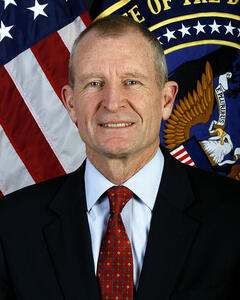
Dennis Blair
Hello, everybody. Sorry I’m a little bit late.
Barbara A. Perry
Hello, Admiral. Happy Monday to you.
Blair
And to you, and happy Thanksgiving to come.
Perry
Yes, indeed. Thanksgiving week is here. We, without further ado, just to say for our transcriber that this is our second session with Admiral Dennis Blair for the Barack Obama Presidential Oral History, performed by UVA’s [University of Virginia] Miller Center. We decided we want to jump into those topics you mentioned at the end of our first session last week. You can start wherever you wish. If you want to start on the topics of the improvements that you made and are justly proud of in the intelligence realm, and/or the issues related to working with others in that community, particularly [Leon] Panetta, John Brennan, and then obviously President Obama.
Blair
Sure. Just to be clear, Barbara, this is our last session, right?
Perry
That’s up to you. [laughs]
Blair
Wow.
Perry
We often will get to what we think is a last session, and our speakers, our interviewees, will say, “Oh, I have some more to say.” You have been so generous. If you have three hours today, we are happy to spend that with you. Does it work to go to 4:00 for you today?
Blair
OK, OK. We’ll get started.
Perry
OK. Then again we’ll see where we are. We thought, as well—we conferred a little bit before you popped on. Again, we want to make sure we cover in depth those two topics, and then we can always circle back in chronology to other specifics that we might have or you might have as well. The floor is yours. The recording is yours. Yes, if there are more things you want to say after today, we will be all ears.
Blair
OK. Well, let’s start on some of the challenges that were inherent in the job of a new organization like the director of national intelligence and some of the obvious problems I had to deal with when I first came in.
One that was there, right off the bat, was that the satellite surveillance systems that are run by the intelligence community, some are run by the Department of Defense, some are run by the intelligence community. Their results are shared imperfectly but generally shared between the two. The ones run by the intelligence community, that are funded through the budget that I controlled, had had a terrible recent record. They had spent probably $4 [billion] or $5 billion and had not produced the capability that they were expected to, so Congress—the intelligence committees, primarily led by the Senate—had basically put the funding for all intelligence community satellite systems in escrow. [laughs] They said, “You can’t spend any of it until you come back to us with a plan, and a plan that we will have confidence in.”
That was a pretty serious matter. We were going to go blind if we didn’t get something done pretty quickly. I convened a group of senior retired intelligence officials who had experience in the National Reconnaissance Office in leadership positions in the intelligence community and asked them to do a very quick study on what should be done. It was led by Paul Kaminski, who’s really a legendary figure in the acquisition world of the Department of Defense. Other people I remember are [Martin C.] Marty Faga, who had been the best recent chairman of the National Reconnaissance Office; John [M.] Deutch, who had been the director of central intelligence earlier and also served in the Department of Defense; and there were a few others.
I asked them to come up with a plan. There was full support from within the intelligence community. All the big agencies have a stake in the big satellite systems—NSA [National Security Agency], NRO [National Reconnaissance Office], CIA [Central Intelligence Agency], NGA [National Geospatial-Intelligence Agency], all of them do. So it was a very fast but very thorough study.
That team came up with a good plan, part of which was to make a few satellites pretty quickly, just to make sure that we had no gaps in coverage, and then a longer-term program. The other members of the “executive committee” of the intelligence community—that is, the directors of the big agencies—looked at it, and they thought that was the best way to proceed. The next step was then to sell it to Congress and have them really—relations with the Congress were pretty bad when I came in. Quite apart from this particular problem that had to be solved, I tried to meet individually with each of the members of the select committees on intelligence just to find out why things were bad from their point of view, and what we could do to fix it.
I very much felt that I was the intelligence officer not only for the president and for the rest of the executive branch but also for the members of Congress, who have to make decisions and have a role in national security policy. That is a fairly minority view among members of the executive branch, I can tell you, [laughter] especially when it concerns members from the other party. There’s sometimes outright hostility in that, and I didn’t figure that was good, so I talked with the minority members who were Republicans and all and just tried to get everybody back on a common job. I think I had some success in that. But anyway—
Perry
Sir, could you name some of the—was it Dianne Feinstein who was chair of the Senate [Select Committee on] Intelligence?
Blair
Yes, she was the chair and the ranking member—it wasn’t so bad on the Senate. There’s generally a more collegial affair there. But gosh, the senators from Georgia and from North Carolina—[Richard] Burr and one other.
Perry
I’m blanking on the Georgia one. We can add those in.
Blair
I was able to develop relationships pretty quickly on the Republican side in the Senate. It was harder on the House [of Representatives] side. Silvestre Reyes was the chairman, Democrat, and Peter Hoekstra was the bomb-throwing Republican. I had to work hardest on Hoekstra, but I think I succeeded. I think I was about the only member of the administration that talked to him because he generally attacked us. But he had to vote also, and I thought, by his position, he ought to know what our enemies were doing around the world and what we wanted to do about it. That was the general idea.
I’ll come to one other issue where that paid off.
Spencer Bakich
Admiral Blair, I hate to interrupt your train of thought.
Blair
Oh, sure.
Bakich
I do have a couple questions, though, to fill out some detail on this story. Specifically, are you comfortable with addressing the types of gaps, limitations, that we were confronting? One thing that comes to mind, I remember hearing Director [Michael] Hayden speak about this in open setting. When the war in Georgia [Russo-Georgian War] broke out in 2008, he found it incredibly frustrating that all of our satellites—if you needed something over the Panjshir Valley [Afghanistan], no problem, but if you wanted to know where the front line of troops were in Georgia, you were going to have a real significant problem given where our satellite tasking had been.
Is there anything that you could give us, a sense as to what the specific nature of the problems were that you were confronting?
Blair
Yes. It’s been fixed now, so there shouldn’t be any secret about it. It was infrared coverage. Our infrared satellites were actually beyond their designed lives and could fail at any minute, and we didn’t have replacements on board. We were getting thin in radar satellites at that time as well. Those were the two.
The program which had gotten us in trouble was something called FIA, Future Imagery Architecture. That was to have been a replacement for several different types of imagery satellites that took pictures or video at various wavelengths. The National Reconnaissance Office had attempted to perform several miracles of physics to bring a multipurpose system in. There had been no discipline in the requirements process, and that was the satellite system that took more money, took more time, and simply hadn’t been producing results. Those were the specifics. Congress was justifiably outdone about it. Does that help, Spencer?
Bakich
Yes, absolutely. There’s a general suspicion, or hope, I guess, that those certain technical capabilities perform well and they’re there when they’re needed. It’s always interesting to hear that side of the story where problems come along.
Blair
Yes, there are no communists who are working in these fields. It’s people trying to do the right thing and a lot of it. These are tough technical decisions, and there are a lot of different people who are served by them. My predecessors were just trying to do too much, with the best intentions in the world. That was that problem. The problem that [Michael V.] Mike Hayden was talking about was more one of tasking of the satellites you have, and there’s no way of getting around that. That’s always a tug and haul. It’s a combination of technical things. You’ve got to recharge the batteries of satellites at some point, and you can’t be taking pictures at that time.
You just have so many pictures you can take, and you have a lot of claimants. There’s a group that does the best they can. Generally, they do pretty well, but of course the only people you hear from are the people who felt that they were not adequately served. [laughter] You never hear, “Oh, wow, that’s great. We had terrific coverage.” You generally hear, “Ah!” I’ve been on the other end of that conversation as well, before I became DNI [director of national intelligence]. It’s total capacity, and that’s what I was working on. We just were not going to be able to take pictures in the infrared spectrum, which is very, very important for some key things like missiles being fired or other hot spots. Then there’s tasking.
I had the solution. All of the right people agreed on it, and so it was a case of getting it approved. Of course, I had to check with the White House. [laughs] There was a space staffer on the National Security Council staff that, of course, gets the package when you send a memo to the president that says, “This is our plan to get things out of hock.” This particular staffer had had no helpful suggestions as we went through this process but decided that he had a few things that he wanted to put in.
I ended up calling [James L.] Jim Jones, the national security advisor, and saying, “Get this little know-nothing bureaucrat out of the road. This has been put together with a whole lot of input from people who know what they’re talking about. We’re ready to do it. This idea that he wants to take another look at it from the White House is just nuts.” To his credit, Jim stepped on this particular large ego, and we got it out of the White House.
Then it was a case of convincing the Congress. Dianne Feinstein, rest in peace—[laughs] on some things, she was very wise, and on other things, she just—Where did that come from? One of the “where did that come froms” was she had a little private—well, in fairness, in frustration at the intelligence community not producing decent satellites on time, she had a group of academic experts to advise her. They somehow had convinced her that small satellites would be able to do the job—if you broke up the different functions of a satellite, put them on a small one in a particular orbit, that was better than having these more complicated satellites, which we had been used to. I mean the ones that fell apart were too complicated, trying to do too many things.
We dropped back to an intermediate level of multipurpose tasking. That seemed to me to be the best thing. This was well before the small satellites achieved the capability that they did about five years ago or so that we see every day in Starlink [satellite internet constellation] and the many other commercial systems that have come up.
She was convinced that we should rewrite the whole program in terms of Starlink, so she held a private hearing. I remember saying, “Madam Chairman, that is just irresponsible. That technology is not proved, and we have real gaps coming up, and we’ve got to put this stuff up while we work on things for the future.” My congressional advisor, who was a wonderful friend, in the car back to the headquarters said, “You’ve got to call her back and apologize for calling her ‘irresponsible.’” I did, and we patched it up. [laughter]
Fortunately, I had an ally. Senator [Daniel] Inouye was the chairman of the appropriations committee in the Senate, and as you all know, authorization is a yawner. It’s really the money people. I knew him well. I met with him separately. He held a separate hearing on it, in which he approved the program. Senator Feinstein just didn’t have the firepower to change what Senator Inouye approved, so we got the satellites, and we managed to avoid the gap. Since that time—
I also had to replace the director of NRO. Gosh, I can’t remember him right now. He’s still alive. He may want to read this when we post it.
Perry
You can add him in, or we can add him in on the transcription.
Blair
Scott Large, I think his name is. He had fought battles, and he was just tired. It was pretty clear he was not the right person to go on to a new chapter, so I talked to, I think, six other good candidates. [laughs] They all didn’t want to go back in. I finally convinced retired General Bruce Carlson, a former Air Force four-star general whom I knew, who is a very fine leader, knew lots of people, and respected by all. He agreed to come in and take the job.
I said, “Bruce, the job now is to get satellites up that work.” Then I called in the heads of the companies, Lockheed Martin and Northrop Grumman, and told them. I said, “We are under the gun. We have got to get these things up. The good-idea cutoff date just passed. We have to hit capability on orbit.” Then we had an amazing streak for the rest of the time I was there and afterwards of launching satellites on time, on budget. It was after that, after I left, that this whole smaller satellite idea actually matured, and it’s been a very dynamic area since then.
That was one that I don’t think anybody in the White House knew about. [laughs] It wasn’t policy. It was going to make a huge difference in whether we could warn the customers about things. I was pretty proud of that one.
Perry
Sir, could I ask you to back up to your productive link with Senator Inouye from Hawaii? Do you think part of that was his own wartime experience? For people who are new to him, he had lost an arm in, if I recall, Italy—in the Italian campaign in World War II—and just was somebody who was much admired. He had been on the Senate Watergate Committee but also, because of your command, at Pearl Harbor [Hawaii]. Had you had conversations with him before, or he knew of you because of that?
Blair
Yes. We were pretty good friends from the time I’d been in the Pacific as a commander. He and I saw things a lot the same way. The wing-walker rule: Make sure you hold on with three of your appendages and move one at a time. He was a relatively conservative thinker on defense capability, so it was something that I think he would have come to anyway, but it didn’t hurt that he and I trusted each other.
Perry
That’s important. All right. Spencer, did you have another follow-up?
Bakich
Not at all. That was terrific. Thank you, Admiral.
Perry
OK.
Blair
Another thing I had to deal with was a whispering campaign and perception that the Office of the Director of National Intelligence was bloated, too many people, was double—was doing things that could be done by the agencies. This was a very purposeful CIA attempt to weaken the office. They were the happy child who had been put into the orphanage. They just continually would whisper to members of Congress, because that was their best target, that we were just duplicative, not adding any value in the Office of the Director of National Intelligence.
My campaign to repair relations with the Congress was just on general principles that it shouldn’t be bad, and it had deteriorated for reasons on both sides. In particular, I had many meetings, both full meetings and individual meetings, with members of both the Senate Select Committee on Intelligence and the House [Permanent Select] Committee on Intelligence, simply to preserve the staffing we had for the office of the DNI.
When you did an analysis of the ODNI [Office of the Director of National Intelligence] staffing, the great majority of it had been mandated by Congress itself and consisted of centers which either had previously existed and were swimming around without a real boss or ones that been created by Congress, the largest of which was the National Counterterrorism Center, the NCTC. That amounted for about a third of the ODNI staffing.
Congress had also established mission managers for Iraq and North Korea. Those were established by the law and relatively small staffing. There were probably 20 people in each one. Things like the National Counterintelligence [and Security] Center, which had been established by Congress—a lot of the matrix bodies that had either existed or had been mandated by Congress were assigned to the ODNI, which made a lot of sense. They didn’t fit neatly into the other agencies. They weren’t overall growth in the Office of the Director of National Intelligence.
When you really did an analysis of these matrix organizations that were attached to the DNI, plus the organizations which had previously been handled by the [intelligence] community management staff—which was lodged physically in the CIA building, reported to the director of central intelligence who, of course, at that time was also the director of the Central Intelligence Agency—and then you added in the things you just have to have like a separate general counsel’s office, a separate congressional affairs office, a separate public affairs office. By the way, ours was about a quarter of the size of the CIA’s public affairs office—the organization that has nothing to tell Congress, of course, except when it leaks to its own benefit.
When you really looked at that, and based on my experience after a few months of, They were pretty busy doing good things, I didn’t think there was a lot of fat to cut. I think this was an attempt to weaken the oversight of the ODNI. I spent a lot of time with Congress defending the size of the staff—and successfully, I might add. We never had cuts while I was there. That’s that piece of it.
Perry
Could we pause there, Admiral, to circle back to something that stuck in my mind from our first session about the nature of intelligence? Obviously, if we knew where there were going to be attacks, [laughs] we could do that intelligence ahead of time. As you were saying, when something is missed, as inevitably it will be because it can’t be perfect by its nature, then people go back and second-guess and armchair quarterback and all the rest.
What comes out of 9/11 [September 11th, 2001, terrorist attacks] and the 9/11 Commission is this concept of failure to connect the dots. Correct me if I’m wrong, because this is not my area of specialty, but the DNI and the ODNI were to try to coordinate to avoid not connecting the dots in the future. I think my question is, first, was it correct, the conclusion of the 9/11 Commission about not connecting the dots about 9/11? Second, was the DNI and the ODNI—was that the right answer, if what their conclusion was was correct, to try to avoid that in the future?
Blair
I would say yes on both counts, Barbara, but it’s a little more complicated, of course. The ironic thing was that the area that needed the least amount of work was combatting terrorism because the sheer shock of 9/11 caused everybody in the intelligence community—I don’t care who they were—to feel responsible, guilty, angry, “That will never happen again.” On that particular issue, whether there had been a DNI or not, the community would have worked together, stopped holding back information—as was shown by the 9/11 Commission—combine their efforts, work for the common purpose. That would have happened with or without an ODNI, and that was the ironic thing. One of the main arguments of the detractors of an ODNI was that precise argument: Everybody is cooperating now. We don’t need it. We’re doing just fine.
But there were two things wrong with that. Number one is that spirit of cooperation tends to fade in time unless it’s institutionalized. I could see that happening. The second thing is that it did not spill over into other very important intelligence questions. The urge to cooperate after 9/11 did not translate automatically into urge to cooperate on North Korea, Iran, or other key intelligence questions that we were trying to get, where you need that same ability to completely share intelligence, work together, keep up the effort, whether you’re making progress or not.
Those, unless you have a DNI who is holding the individual agencies responsible for continuing to work in a cooperative way on the most important questions—I mean left to their own devices, of course NSA will try to gain signals intelligence about North Korea, and CIA will try to recruit North Korean spies. But it’s hard to learn the secrets of these autocratic, ruthless regimes who try to keep their secrets. If you don’t succeed in getting anything good as a collector over time, and as time goes by, there is a certain amount of looking under the lamppost because that’s where the light is. You can gather a lot of intelligence on important questions, but not necessarily the most important questions because those are the ones your enemies hide from you the most.
You need a DNI ensuring that the different agencies have their best people on these programs, are still trying, whether they’re succeeding in the near term or not. That’s the part that very few people understand unless they’re in the business in some sort of a—if they’re not tied directly into one of the agencies, in which you generally think, We’re working really hard on this. We need everybody else to work as hard, and that’s the answer to the problem, you need somebody in the striped shirt with a whistle to keep the attention on the important questions. That’s the real thing that you lose when you weaken the DNI, which is what’s happened ever since I left.
The subtle thing is that you don’t recognize that as you go along because it’s the absence of the positive that you’re seeing, and you can cover it up really well. Only somebody on the inside who is looking critically can understand it and try to change it. It works until there’s another disaster—a Pearl Harbor [World War II attack], a 9/11, or something else. A politician goes back and does a study and says, Oh, my God, they weren’t doing this, they weren’t doing that.
The DNI is designed to do the things that often get done after there’s a big disaster, to do those before the disaster happens to try to prevent it from happening. What I came to think is that that’s the main job of the DNI. Part of it is “management leadership 101,” part of it is technical. For instance, the DNI runs a process out of one of those “bloated” offices in which if one part of the intelligence community believes that it’s not getting all of the information that another member of the intelligence community has because of restrictions on the number of people who can take it, or the sensitivity, there can be an appeal to the DNI, and that office staffs the appeal. While I was there, 9 times out of 10, the ODNI told the collecting agency to turn it over to other people. Otherwise, that wouldn’t happen.
You see all groups have tribal behavior. The tribal behavior of intelligence people is, by and large, to protect the sources of their intelligence, even though that intelligence is never used. It’s better if you don’t blow it, even though you don’t use it. President [John F.] Kennedy made the famous remark back during the Cuban Missile Crisis when he was told that, “My God, you’re going to declassify U-2 [reconnaissance aircraft] imagery to show that the Russians have nuclear weapons on Cuba?” He quipped, “What’s the use of paying for all that stuff if you never use it?” [laughter] That’s the valid criticism. That criticism actually stops sharing within the community.
Some of the very top secrets that NSA collects, that CIA collects, they hold to a very small group that they control because the source of that information is so sensitive that they just don’t trust other people except those who expended the sweat and blood on collecting it, and therefore know how hard it is to be able to handle it.
Bakich
If I could on this point, sir. I think you’ve already answered my question, but were you ever a proponent of creating a community-wide, all-source analytic fusion team that could actually serve in a way that perhaps maybe the Joint Staff would serve in the Pentagon, as a way of breaking down those silos?
Blair
No. My successor carried this idea further than I did. We had the National Counterterrorism Center that really got all information on countering terrorism. That was—as I said, no one disputed that. Then we had a mission manager for Iran and for North Korea. I created, I think, three more, just so there would be half a dozen of what I thought were the most important and most difficult intelligence questions.
I would have a meeting on a periodic basis with the heads of the big intelligence communities—director of CIA, director of NSA, director of DIA [Defense Intelligence Agency], director of NGA—and we would have the mission manager report to us how well they were doing on getting a copy of the North Korean war plan, finding the exact locations of all the North Korean nuclear enrichment facilities and any weapons that they had built. These are really tough, important questions. We would, on a rotating basis, go through these half a dozen important areas, and the mission manager would report how they were doing.
Then the next question is, “What do you need to do better?” You’d hear things like, “Well, we’re supposed to have four people from NSA, and we’re only down to one because three weren’t replaced. They were sent elsewhere.” So I have the director of NSA sitting right there, and I say, “Keith [Alexander], we’re going to meet again in a month. I want three good analysts here. I don’t care what else you’re doing. This is one of our top half dozen things, so get somebody there.” Or, “We need money for this project.” “OK, comptroller, let’s get some money so that we can buy a fancy collection system that can go and do it.” Or, or, or.
My idea was that you have a limited number [of mission managers]. Congress had identified mission manager organizations in the legislation for the authoritarian regimes who would attack the United States given half a chance. The Congress had put in the law offices whose job it was to lead that effort, to tell you what they needed, to tell you what they were doing. What I did was just put the executive attention on top of congressional direction and have a system to find out what was holding them back—well, assess how they were doing, find out what was holding them back—and then check to make sure that that had been changed.
Now, my successor, [James] Jim Clapper, decided to extend that mission manager concept to virtually all of the areas that—the next tier. I think by the time he left, he had about 35 or 40 of them. My feeling at the time was, when I limited it, that unless we reviewed them at a very high level, they were not going to get the attention that they needed, therefore I would limit the number.
But people in the intelligence community know that if you’re a Horn of Africa analyst in the NSA, you know who the Horn of Africa analyst people are in the CIA, and you do get together in groups. But there’s a difference between that sort of least-common-denominator sharing and the sort of assessment and sharing which is done if you have a higher-level body that’s reviewing how it’s being done and has the power to put more resources if that progress is not adequate. That was, again, one of the things that I thought was an important function.
That’s why we set up the DNI, and that was the program I put in place to do that. I mean you can’t argue with what I just said, right? [laughs] What are you going to say? “No, we’re not going to work on the toughest problems because I have other things to do”? “No, I want to spend my resources on other things”? But unless you make it explicit and measure it and follow it, it doesn’t happen.
Well, specifically, we count the numbers of intelligence reports by each agency. We grade them and count them, so we know that, for example, three-quarters of the intelligence that we use comes from the NSA these days. A much lesser proportion comes from all of the others. If you’re being, in part, graded by numbers, then you tend to look under the lamppost to get your numbers up. The things that you’re looking at are not trivial, but you get a 1 for learning where a North Korean nuclear weapon is, and you get a 1 for determining where a secret naval base of country X is. That drives you in the direction of doing what makes you look good.
That system was one I put in place and not only lasted, but the person who came after me expanded it. I’m not sure whether that diluted it, as I feared. I don’t know if you’ve talked to Jim Clapper yet, but he could tell you that.
Another example: satellites. Incredibly, the intelligence community had no requirements process for the huge equipment that it purchases. The biggest, most expensive things that the intelligence community buys are satellites. They cost a lot of money, they provide a lot of intelligence, so that’s the big one. There are many other pieces of equipment that are also purchased, but the ones that are used across the community that cost the most money are satellites.
It turns out there was no established requirements process. I told you about the FIA architecture, which just took on all of the requirements, and eventually became top-heavy and toppled over. My background had been in the requirements process in the Department of Defense, which has become so huge, complex, and encrusted that it’s justifiably criticized as slowing things down.
This technique of getting a group of outside experts together, I used it again. I turned to some friends I knew from the Department of Defense and from the intelligence community who had thought about this problem, had some background in it. I asked them to design a new requirements process for the intelligence community, for big programs in the intelligence community that serve many agencies. I told them that it couldn’t be just a transfer of the overcomplex Department of Defense system into the intelligence agency, but it couldn’t be the incredibly loose and whimsical—not “whimsical,” that’s a bad word, but loose, “That sounds like a good idea, why don’t we build that,” we’d been through with FIA.
A group, again, of about eight people, I think in 90 days, came back with a report of a very sensible system to try to connect the people who use satellites with the people who know how to build them to figure out what we were going to do next. I’m pretty proud of that. It exists to this day.
In addition, as the intelligence community had no equivalent of the Department of Defense program acquisition and evaluation division—the much-hated PA&E, or another name now—were the smart, generally ops [operations] analysis–trained people who drive the services crazy by demonstrating conclusively why they didn’t need a program that the services knew they needed. They’ve become, at various times, too powerful in the Department of Defense because it’s true that they have no practical experience. They just run the numbers. Sometimes they’ve been not powerful enough. There hadn’t been a challenging voice for some of the things that the services wanted, based primarily on replacing what they had and knew well and being not really aware of what new technology could bring to offer.
I wanted an equivalent of PA&E in the intelligence community that could take data and ask tough questions. I did establish that office, carved it out of billets in the comptroller’s office plus a couple of others, and put in charge of it a friend who had been the executive secretary of this advisory group to advise on the requirements process. Roger Mason is his name. He did a brilliant job in establishing that office and then in bringing some good analysis to bear in these resource allocation decisions.
Now, during the time that I was DNI, the intelligence budgets were increasing the whole time. That tends to make your resource allocation problems a little less difficult, but budgets were always a problem, for the NRO in particular. They always felt that they had a billion dollars’ worth of requirements for every $500 million of budget. Sometimes I had to step in to take over their program because they said, “There’s no way I can meet everything I want to do. You either have to give me more money or it will be the end of Western civilization as we now know it.” [laughs] I had to step and say, “Come on, you guys. This is what we’re going to do.”
So, the establishment of a requirements process for acquisition and then instituting an agency-wide assessment process with such a good initial director as Roger Mason, I think, was one of my legacy programs. Not long after I left, the budget stopped growing, and that’s when you really have to make tough decisions and trade-offs. That’s when you really need data to do it rather than “squeaky wheel” management or management by the seat of your pants and your own experience. Again, that was another important legacy that—again, invisible, boring to write about, but nonetheless, I think, essential and a good legacy item.
Bakich
It is an absolutely critical item, and I think anybody who’s paying attention to innovation and fielding rates of, say, the People’s Liberation Army [Chinese military] compared to our acquisition process could tell you right now and in gory details that getting the acquisitions process—it might sound boring, but it is absolutely critical.
Blair
That’s what I found.
Bakich
I’m curious, sir. Did you have any principles about how you were going to thread this needle between the overly encrusted PA&E system at DoD [Department of Defense] versus the looser IC [intelligence community] process that you inherited? How did you think your way through that problem?
Blair
Based on my DoD experience, I found that the most powerful tool was to set deadlines and stick to them. If you set a deadline that you’re going to progress from conceptual analysis to detailed analysis of alternatives, to decisions on details of a program, you can figure out a reasonable timeline for that. It’s in the months. If you stick to that, then, of necessity, you control the amount of crap that can be processed during that time because they know they have to come to a meeting and say, “This is it.” You can’t contract for another dozen studies. You can’t worry about the third decimal point on the analysis. You have to do it with their—
I used deadlines as ways to keep the bureaucracy under control, whereas the DoD deadlines were just so long. Every single piece of analysis that would be done for a DoD acquisition, you could justify in some fashion. Added together, they just slowed down the system so badly that you lost whatever advantage they would bring. That was the technique I used on that particular one.
Robert Strong
Can I ask—
Perry
Yes, Bob, go ahead.
Blair
Go ahead, Bob.
Strong
I wanted to follow up on your observation, which was clearly true. If you’re in government, and you’re doing a good job, it doesn’t make news. There won’t be an exciting congressional hearing about the good work you’re doing. In your area, where there’s so much secrecy that has to exist, there’s even less notice. I guess I wanted to ask, was there a group of people—it would be a relatively small group, I presume—in the Obama administration who was noticing the things you were doing?
Blair
No. Not at all.
Strong
Why not? Are they driven by the bad-news cycle? Are they driven by responding to the latest disaster or don’t have a chance to look broadly about what’s going on?
Blair
The political types think of intelligence as just one more political staff function. I’m being a little bit harsh here, but not too much. They figure a job of intelligence is to, yes, inform, but also support the policies of the administration, even though the policies of the administration are—even though, based on the intelligence that you have, you would normally think, That’s a dumb policy you have because it’s not having any effect. The politicians cannot grasp the idea of receiving best advice followed by, “Yes, sir”—which is what it is in the case of the military component, the DoD—or best advice followed by, “OK, that’s your decision. It’s not what the intelligence tells you, but you have other things to worry about, so that’s your job.”
The politicians’ way of thinking about things is that once it’s pretty clear what policy the president wants to adopt, then everybody has to fall into line. And if you send an intelligence report that shows that the policy isn’t working, if it were leaked—and it often is—then that makes the job of carrying out the policy harder. It’s “disloyal.” Your job as a leader of the intelligence community is not to allow that to happen. That’s part of it.
We’ve all seen intelligence—Director George Tenet is a great friend. By and large, I completely admire him, but he flew too close to the sun by becoming part of the policy team in the [George W.] Bush administration. He honestly thought that the Iraqis did have weapons of mass destruction, despite what his analysts were telling him. He just kept whipping them to find them and paid the price.
I specifically did not want to be one of the inside guys in the administration. The mistake I made was thinking that that would be recognized, getting to the second part of your question, [laughs] and would be valued. I didn’t leak. I was quite outspoken in internal meetings, and how that generally leaked was by one White House staffer saying that, “Blair was getting outside of his lane.” That leak wouldn’t come from me. It came from some of these little toads who sat around the outside of meetings and took notes and then talked to reporters.
Within the National Security Council staff, the intelligence section of the National Security Council staff is a complete wholly owned subsidiary of the CIA to process covert action requests. They don’t have any ability to let people know, “You know, DNI is doing a pretty good job on these community-wide things.” I tried to change that and didn’t succeed. And then the defense part of the NSC [National Security Council] staff just basically deals with the Pentagon.
So no, there’s no one in the White House who recognizes the basic blocking and tackling that you’re doing, trying to take care of a community of 16 [intelligence organizations]. I wasn’t going to send the president memos saying, “Hey, here are three great things that I did last week.” I just expected to do them and to be, as I had been the rest of my career, generally rewarded for doing a good job. [laughs] It turned out I was completely naive when I reached the highest levels of politics.
Strong
Does it help if the NSC has someone like a [Robert] Bob Gates, who was there from time to time, who has real background in the intelligence community, or even a president like George H. W. [Bush]?
Blair
Yes. Oh, yes, much better then.
Strong
We don’t usually have that, but we occasionally do. Is that an important—would that change the dynamics of understanding what you were doing?
Blair
I would say it’s more important to have the senior director for intelligence on the NSC staff, which is a pretty high position—to have that person not be a CIA plant, designed to protect the interests of the CIA, but have a widely experienced former intelligence professional who can take an overall view of the intelligence community and convey that to a president, the national security advisor, others who don’t have intelligence community experience. One of the fights I had—
Strong
Those people are hard to find.
Blair
—was that exact position, and I lost. The CIA-favored candidate was put in over the more widely knowledgeable person that I recommended. It was incredible. Yes, what’s that, Bob?
Strong
The kind of people you’re describing are hard to find for the senior positions at the NSC.
Blair
Right. Right, right. I would take somebody out of retirement who has a good reputation and is widely respected, and also doesn’t have any current allegiances within the government. That would be my recommendation.
Perry
I think this is a follow-up, sir, along with two perhaps related questions. One is, you mentioned for the DNI, some of it is—you used the term “management leadership 101.” Having risen to the ranks that you did in the Navy and your leadership in that, I think my question is, what is the difference between leadership at those highest military levels and then leadership, particularly management leadership—or is there a difference—at the high level you were serving as DNI?
A related question is, when did you recognize what you were just describing to Bob? How long did it take to see what was happening, and what were you thinking in addition to, Well, I’m still going to plow ahead and do what I need to do? Which you did, and that is your legacy, as you say. But when did it dawn on you—quickly, early, a few months—that this was not working the way it should, the way you thought it should and, I think, the way the 9/11 Commission and Congress thought it should?
Blair
Yes. It didn’t dawn until fairly late that doing the right thing, or what I thought was the right thing, was not working in terms of my personal standing as DNI. I kept thinking that, as had happened in my career before, eventually people would recognize that [laughs] I had the right priorities, was doing the right thing, and that I would be at least tolerated if not rewarded.
I mean it didn’t take me long to recognize these problems. I got to work on them pretty quickly. I had run-ins, quite a few, along the way after my first six months or so there. But again, the way I was raised, if you have a competent subordinate who you have run-ins with, you set that aside and say, Well, at least that subordinate is working on it, and I don’t see any signs of disloyalty, that because the decisions went against him, he’s leaking to the press, he’s not working anymore, all of that. So I just kept on going.
Also in my thinking was when lives are on the line, I don’t think you can tolerate management by committee, which is what really was the White House’s view of what the intelligence community was. Everybody does the best they can, and if it works, it works; if it doesn’t, it doesn’t. I was of the tradition that you have to have responsibility going from the president down through the lower levels. If something goes wrong, you can find out whose job it was, who screwed up in his or her job, and you take appropriate action. You either fire them, get a new one, do whatever.
I thought that in things like countering terrorism, in things like covert action, in things like others, there needed to be a very clear chain of command, whereas the White House believed that they wanted to get input from the CIA, get input from me, make their own decisions. Maybe if they had enough time to look at it, which they often didn’t, then good things would happen.
The time that came to a crunch was with the “underwear bomber” on Christmas of 2009, which was this young Nigerian who got a bomb in Yemen. He got on a plane in the Netherlands with this bomb that had no parts that would be detected by the then–detection systems that everybody had to go through, and attempted to set it off over Detroit [Michigan]. Luckily, he wasn’t well-enough trained to do it correctly and was overcome by passengers and arrested as soon as the plane landed. It turned out that that was the first time that the president said, “Whoa, whose fault was this?” [laughs] He told John Brennan to do a study of it.
Now, John Brennan was the person who had the most to do with telling the CIA, the NCTC, and all of those organizations, “Here’s what you do to catch terrorists.” He had been a former director of something called the TTIC [Terrorist Threat Integration Center], which is the predecessor to the counterterrorism center, which was the predecessor to NCTC. He was calling them from his White House office all the time, talking to them every day: “What are we doing about this terrorist?” He really had operational direction.
I was the resource provider, making sure that NCTC had enough money in the budget, but I was specifically supposed to stay out of the operational details, which I did. [laughs] So when the president talked to me about it, he said, “Tell me why I shouldn’t fire you.” I said, “Well, because I had no operational responsibility for what just happened.”
Perry
The president said that to you one-to-one?
Blair
Yes, yes.
Perry
Was this in the Oval [Office]?
Blair
Yes. He appointed Brennan to do the investigation of what happened. Well, again, leadership 101 is you don’t have the guy who might have screwed up do the investigation because the answer is always, “It wasn’t my fault.” Or in John’s case, to give him credit, he said, “Oh, I share in the blame for this but”—and then the “buts” were all lower-level employees who had made a mistake here or made a mistake there. I thought it was a systemic problem.
This was a telling moment. It’s getting into the next topic, but it’s interesting. Brennan did his report in about three or four days. What kind of report is that going to be in that period of time? He found a couple of obvious errors made by cipher clerks in the organization. The political pressures were to have a press conference to announce that, We’ve done an investigation, we’ve found out what’s wrong, we’ve done these things.
Brennan’s report was given to me at about 10:00 one morning, and I was told that the press conference was at 2:00. I read the report. I thought it was shoddy, didn’t get at all of the facts. It couldn’t have in that period of time because there was no obvious person who made a terrible mistake. It was a series of errors that deserved to be analyzed more carefully, so I said to the press officer, [Robert] Gibbs, “Listen, I don’t agree with this report. If I am asked, ‘Do I support this report?’—if I’m publicly asked by a reporter—I won’t seek it, but if I’m asked, ‘Do I support this report?’ I’ll say, ‘No, I don’t think it was a good report.’”
Within half an hour, I was in the Oval Office with Brennan. Important substantive issues don’t get to the Oval Office very quickly, but the idea that there might possibly be public dissention within the ranks gets you to the Oval Office in half an hour. That was not my intention, but it was the way it works, just to give you an idea. The president said, “I understand you’re not happy with the report.” I said, “Yes. Number one, I was shown it two hours ago and told that, ‘You have a report and you’re going to talk to the press in two hours.’ Number two, I think substantively, it’s not correct.”
The president, to his credit, said, “OK. You and John go down to an office and revise the report. He turned to Gibbs and said, “Can we move the press conference? Gibbs said, “No, we can’t.” What he basically said is, We have leaked what we are going to say at the press conference to these reporters. We have to go ahead and hold it. So the president said, “Blair and Brennan, go work this out.”
I basically put a whole lot of other points into the unclassified summary, which was going to be handed out. It basically made it a useless report that was hard to read and hard to figure out what it really said. I later convened a proper inquiry, which took several months, led by John [E.] McLaughlin, former acting director of central intelligence. We found out what really went on, and we made some structural changes, which were very important. To me, this illustrated everything about why somebody with my background, training, and instincts was not very effective in that kind of an administration, with that kind of experience and with those kinds of things that they wanted to do. That was a very illustrative time.
After that, did I think that I wasn’t the favorite Cabinet officer in the White House? I’d say yes. Did I change what I was doing? A little bit, but not much. Finally, basically, the president got tired of disputes between me and Panetta, and he decided to get rid of me rather than getting rid of Panetta.
Perry
There’s a lot there, obviously, sir, to chat about. One would be, am I recalling correctly that the Christmas Day bombing attempt by the young man over Detroit—again, if somebody would have known or could have figured out that this was happening, you try to catch everybody that you can. I also think about the tube stations [subway stations] in London [United Kingdom] when I was there and during “the Troubles” in Northern Ireland, that would be, “see something, say something.” In fact, that is actually what happened on the flight. As you say, the passengers subdued this incompetent young man.
Then the president was in Hawaii, as I recall, for the holiday, and they sent out Janet Napolitano, the homeland security secretary. I think she used the term, “The system worked.” There was controversy about all of that.
Do you think that by, I’ve got down that the meeting that Obama had with 20 heads—I think the one that you were speaking of, not generally with you alone—it was on the 5th of January, I guess after he had come back from Hawaii. Were they trying to make up for what they felt had been the wrong message that was sent immediately after the news was reported of what had happened? There’s that politics, and the media, and the messaging that’s colliding with what it is that you do.
Blair
I think the big meeting was a combination after-action report and “let’s do better” meeting. I think that one was fine. It was the quick political reaction to the, We’ve got to do something. We’ve got to get the word out that it wasn’t our fault.
That was the part that I found most objectionable. For instance, I was not stopped from doing a proper after-action report. What that report found, that John McLaughlin did, was that had a couple of officials done their job exactly right, [Umar Farouk] Abdulmutallab would have been on a no-fly list that would have caused him to be taken and questioned. It would not have kept him off the plane, but it would have caused him to be questioned. If it had been a good questioner and Abdulmutallab had betrayed signs of stress and unease, there was a chance that they could have stopped him.
But the more important and long-lasting result of John McLaughlin’s investigation was the realization that the problem was too much information rather than too little information. The typical NCTC analyst would come in to work in the morning and find 300 intelligence reports having to do with terrorism on his screen. Then he would spend his entire shift going through those intelligence reports, trying to figure out if they were significant, if they were something he should put aside in a file with other similar ones, spend some time trying to connect dots and cross-reference them, and so on. We were putting just way too much on these NCTC analysts because of the flood of information. We had oversolved the problem of not sharing enough, which I had mentioned earlier.
What we did was take a fair amount of money—I think it was $50 million, something like that—and we used it specifically to build algorithms that would help the analyst prioritize, corollate individual intelligence reports, so we just didn’t put it all on the shoulders of the analyst. That was the way the system should work, but it takes time to thoroughly investigate a question. You don’t do it in three days and come up with anything valid. This took 90 days. We put money into the budget and made the NCTC better, which was what the fundamental problem was. It was that kind of thing that frustrated me.
Perry
That’s another legacy. We’re coming up to our halfway point, sir. A break, a little bit of a break? Or are you ready—
Blair
I’m good. I’m good if you all are.
Perry
I think we all are as well. I was going to ask a quick question—well, maybe not a quick question. We’ll want to get into—well, before we do that, Spence, did you have a follow-up on the bombing, or security, or intel [intelligence] related to that? Bob, as well?
Bakich
I did.
Perry
Yes, please.
Bakich
I was wondering if you could—you’ve described an episode of policy-intelligence relations that is clearly problematic and driven largely by immediate political concerns. I was wondering if you could reflect perhaps maybe on the event that happens between September and November of 2009, and that’s the Afghanistan review that’s conducted. Multiple NSC meetings, a very laborious process. Is there a difference in style that you can detect across those two instances of decision-making? And perhaps describe more generally your role in the Afghanistan strategic review going forward.
Blair
Yes. I thought that review was pretty well handled. I think the problem with it was that the national security advisor and the secretary of defense were unable to bridge the distance between the inexperienced president, and his inexperienced advisors, and the generals who were making up the military plans. Politics played a big role there because the president had run on this platform of the “good war,” Afghanistan, and the “bad war,” Iraq. If it was a good war, he obviously had to do something about it, even though all of his instincts were to get out. He believed that—and it’s intellectually respectable—deploying major military units into the Middle East was costing a lot more than it was getting us.
But in his inexperience and in the inability of Jones and Gates to direct him the right way, the initial mission given to the Pentagon—well, it was given to all of the branches, but it ended up being just about the Pentagon—was that the mission in Afghanistan is to disrupt, dismantle, and ultimately defeat the Taliban and al-Qaeda and ensure that Afghanistan does not become a sanctuary for a future attack. That’s a pretty fulsome mission, and those words were put up on the screens in the Situation Room, where we would meet for these interminable meetings on it.
The Pentagon went out and dutifully came back with a book solution, This will take several hundred thousand troops, 10 years, trillions of dollars. The president said, “Oops, that’s not what I meant.” [laughter] Rather than honestly acknowledging, That’s not what I meant, or, I don’t think that amount of resource justifies it, and then changing the mission to something more modest and achievable, I think—I know, for political reasons, the president never changed the mission. He just kept putting pressure on the Pentagon to say, Do it for less. Do this big, expansive, complete job, but I only want you to spend a couple years, a few tens of thousands of troops, and a few tens of billions of dollars.
It put the military leadership in an impossible situation because they knew they couldn’t do that mission with fewer forces. In fairness, having come off of their success in the surge in Iraq, the senior generals—they were almost all Army generals—said, We know how to do this. We can do in Afghanistan what we did in Iraq. If we can just get a decent amount of force, show over the course of a year or so that we can succeed, then we’ll get another—we’ll get an extension, and we can get the whole job done. That was dishonest on their part. Holding onto the mission when it was clearly not something the president was able to support was the fault on the White House side.
I just watched that play out in front of me, with the final result that the president approved this crazy plan of increasing forces and then taking them down within 18 months. [laughs] It doesn’t take a strategic genius to think that if you’re a Taliban leader, you say, OK. I think I’ll just hang out over here in Pakistan until the drawdown starts, and that’s, in fact, what happened. I watched that happen from across the room. I could watch what the president’s people were doing. I could watch what my friends, who were still on active duty, were doing. It was just kind of a Greek tragedy, everybody playing their part and not able to change it.
The people whose job it is to change it are the secretary of defense and the national security advisor, and neither of those was in a strong enough position—the national security advisor, being a friend, Jim Jones, who really wasn’t suited to that job, and the secretary of defense being a holdover from the previous administration, therefore being suspected on that basis. They weren’t in a position to be able to tell the president, “Look, you’ve got to change the mission,” or to tell the military leaders that, “Hey, the real mission is to support Afghanistan for a few years, give them a shot at building up their capacity, and then we’re out of there. That’s all we’re going to do.”
At the higher level, we never really went to an overall strategic analysis, which was that, as it turned out, the things we did to make it tougher to get into this country were the single most effective things we did to protect Americans. It is hard to get into the United States now. It was easy before September 10th [2001]. We have not had one attack since 9/11 that was planned overseas, that involved sending teams that were trained outside of the United States into the country, putting weapons together and making attacks.
The only attacks that have been made have been people who are Americans or are here legally, by and large, inspired by jihadi propaganda to take matters into their own hands and do the best they can with what they had. The partial exception to what I just said was people like [Najibullah] Zazi, who was trained in Pakistan, came back, tried to recruit some friends to take backpacks on into the New York metro [subway]. But NSA caught him in a phone call. He was tracked the whole way and was arrested.
A problem I had in the administration was a reputation for making policy recommendations going beyond intelligence analysis. The first instance I recall was a meeting with the president on Iran policy. I had been told that it was an ideas meeting—the president was looking for fresh insights. I made the mistake of believing that guidance.
When it came my turn to speak at this meeting, I said, “Mr. President, you really just have one decision to make. It’s really important, but it’s only a single one. Are you going to tolerate Iran having a nuclear weapon or not? That’s what the rest of us will be guided by. If the answer is no, then there are ways that the intelligence community has to try to mess that up and keep it from happening. Then there are ways that the Department of Defense has to take military action against the weapons. If you tell us all that that’s what you want, then we can go do our jobs. On the other hand, if that’s not what you want, if you think that Iran can be contained, deterred, well, that’s a whole different set of actions that we would be taking.”
The president took me aside after that meeting and said, “Denny, don’t ever put me on the spot like that again.” I said, “What?” [laughs] I mean, I didn’t say, “What?” but I said, “Yes, sir, Mr. President. I certainly won’t.” That was just so foreign to the way I was brought up. If you called a meeting and advertised it as being a meeting to get ideas, you’d like to hear ideas. You didn’t shoot the messenger. But putting it together in retrospect, I think that was the key meeting. After that, I think the president told his people, “Blair doesn’t know what his role is. He thinks he’s smarter than I am. He’s way out too far. Let’s make sure that he just does intelligence.”
I found out much later that there were meetings that I was not invited to, that I was kept out of meetings from that time forward. I didn’t find it out at the time. It would have been a good warning signal. I don’t think I would have done anything different, but I think it was from that time that I was really thought of as being somebody who was not a team player. Again, none of this ever leaked to the press from me. I thought if you talked inside, you’d be—that’s what you were expected to do. They didn’t hire just an intelligence person. They hired a retired four-star admiral as the director of intelligence, so I presumably had some things to say.
I think the other thing is I’m not very good at hiding my impatience with ideas that [laughs] I think are pretty stupid, whether they come from subordinates or from superiors. That’s always been a problem of mine. I think that this young president without national security experience felt challenged. That’s my fault. I should have been more sensitive to that and been smarter in the way I expressed myself. I think I had that reputation from the beginning that led to me finally leaving.
Bakich
One of the things, too, that’s been written about in great detail is President Obama was, and many of his civilian aides, deathly afraid that the military was going to “box him in.” This was the fallout from General [Stanley A.] McChrystal’s discussion about the necessity of 40,000 troops doing a full-on counterinsurgency strategy. Do you suspect—I know you’re not the president, you’re not in his head—but do you suspect that rather than seeing the DNI, perhaps he was seeing a four-star retired admiral who was part of the military establishment? Was there a general distrust, do you think, in the administration of senior military officers?
Blair
I do. I do. I mean, Jim Jones was told to leave at the same time that I was told to leave. I have a feeling that an element in both Jones and me being hired was to have—what’s the elegant term for “shit shield”? [laughter]
Bakich
Elegant. [laughs]
Blair
To have some senior retired military officers they could point to, to say, “Oh, you know, the president may be inexperienced, but here’s Blair, here’s Jones. They’re taking full advantage of it.” And that after 18 months or 15 months or so, they said, Oh, well, we’ve seen—and they just don’t get it in terms of being politically smart enough. We don’t need them anymore to give credibility to the administration. We pretty well know what the ropes are, so we can let them go. So yes, I think that there was a fair amount of that.
Perry
Did you chat with your colleague, General Jones, about the fact that you both seemed to be facing the same issue at the time, in real time?
Blair
No, we never did at the time. No, no.
Perry
Since?
Blair
Not since either, really.
Perry
All right. Well, we hope to speak to him. We just need a contact, so we may circle back to you for that.
Blair
Yes, yes.
Perry
That would be great.
Blair
I can send him an email, tell him we had a good talk. It’s a good chance to put things on the record. So I, let’s see—
Perry
Excuse me, sir. Bob, I think you had a question a while back.
Strong
I just wanted to circle back a little bit. I think you may have already answered the question I wanted to pose. It was not about your time in office but broadly about the period after 9/11. Are there other reasons why our counterterrorism succeeded? After 9/11, lots of people thought there would be more attacks, and more large-scale attacks, in the United States. That has not happened. Beyond the things you’ve already said about better security, about who comes into the United States, were there important steps that were taken that led to that success?
Blair
I think that increasing the checks on foreigners entering the United States was the single most important one. For example, ISIS [Islamic State of Iraq and Syria] turned out to be a much more brutal, efficient, and larger organization than al-Qaeda. ISIS certainly had the ambition and a lot more people to make attacks on European countries and the United States.
They were able to make them against European countries because you can travel from northern Iraq to any European country without getting on an airplane, without getting on any form of transportation that gives governments a chance to check you. There are no border points anymore within Europe, and once you get across the border into Turkey, then get across into Greece, which is easy to do, you’re home free. Europe, of course, had a number of attacks long after the United States did. So yes, I think that was the single most important thing we did.
As far as al-Qaeda in particular, I think getting them on the run was good and certainly destroyed their capability right away. But it was also fairly hard for al-Qaeda to recruit and train these teams that they did for 9/11. They wanted to recruit and train more, as you recall, for 9/11, but they just weren’t able to do it, so there was a matter of sheer capacity. I think the efforts that we have continued overseas have played a role in making it somewhat harder on them, but I think it’s basically the airlines, in particular, border controls that have made the single greatest difference.
Bakich
How would you throw into the mix the targeted killing campaigns through drones and whatnot that the Obama administration—they didn’t implement, they carried over from the Bush administration, but certainly the operational tempo was at a much, much higher rate.
Blair
Right. I think they were helpful but not decisive. It’s better than not having al-Qaeda looking over its shoulder, but the amount of time it took us to find [Osama] bin Laden is an indication of how well you can hide your activities from drones and from the limited other forms of intelligence we were able to bring to bear in Pakistan. If you look at, for instance, what Hamas was able to do in terms of preparing an attack that took a couple of thousand—they trained a couple of thousand people in a pretty elaborate plan, and Israel, with very tight intelligence sources, didn’t have a whiff of it. I think that’s more an indication that you can’t just plink from the air with drones and expect that to be able to completely negate a threat.
Perry
Speaking of the bin Laden raid, given how you’ve described decision-making while you were DNI in the Obama administration, how did that become successful? How did the bin Laden raid become successful?
Blair
That was a multi-intelligence-agency task force that was headquartered at the CIA, in which no intelligence agency was going to stint resources. Eventually, I think, it was just an example of what I’m talking about that works. Some of the key pieces of information were NSA-intercepted signals. Then there was some CIA recruitment of people within Pakistan to take a look and try to surveil. Then there were these pictures being taken and analyzed, and seeing a tall man and all. It was just a tremendous example of what—everybody shares everything, everybody knows the mission is high—
Perry
Had Obama learned to do better at this kind of decision-making? Or was it the topic of the decision-making, and as you say, then, working as it should in a coordinated way?
Blair
The latter. He had no idea. CIA took full credit for it.
Perry
[laughs] Very helpful. Can we talk a little bit about—obviously you’re talking about President Obama, his style of leadership or lack thereof, a little bit about Brennan. We certainly want, as you mentioned in our last meeting, to talk about Leon Panetta.
Before we get to him, could I ask you about the first time you met Obama? What did you think? What had you been thinking about him? What did you think about him the first time you met him? What is it from your analysis of him that caused him to be the kind of president that he was, in addition to what you’ve mentioned, which is a truism: his lack of experience, particularly in the foreign and defense policy area?
Blair
I had met him only once before he became a serious candidate, but obviously, he was thinking about it. I got a call from his staff. My general reputation was as a Pacific commander. That’s what I was best known as. His staff was having him meet with a bunch of people around government to just try to pick their brains to learn about things. I was invited over to lunch, and we had a tremendously, I thought, interesting and stimulating talk about the big security issues in the Pacific. He was a wonderful listener, asked good questions, seemed to take it all in. Everybody else I know who talked to him during that time was equally impressed. He’s a smart guy, and when he’s humble, he’s even more effective.
I’m pretty sure—I don’t know for sure because I haven’t talked to Mike [Michael Froman] about it. But his, I think, law school roommate or certainly classmate, Michael Froman, who later became the U.S. trade representative, I think put my name forward—I had known Mike through the Trilateral Commission—as a potential DNI. I was happy to serve in any high-level capacity. I felt I had one more good high-level job in me before it was time to hang it up.
When I was called in to meet with Obama, who was in Chicago [Illinois] at the time, I said, “You know, I know you’re considering me for DNI, but I’d really like to be the deputy secretary of defense. That’s the job I was made for right now.” He said, “Well, civilian control of the military, I don’t think we can put you up for that one. But would you like to be DNI?” And I said, “Well, if that’s what you want, sure.”
Those were the only times I met him before we got together after the inauguration. All of a sudden, after the inauguration, he knew everything. If you don’t think he knows everything, go back to rule 1, which is, he knows everything. He’d become incredibly arrogant, intellectually arrogant, and his staff reinforced that: The president this, the president that. I’d think, Wait a minute. [laughs] This guy hasn’t changed from six months ago when he didn’t know a lot about Asia-Pacific issues. I don’t think I can do his job, but can’t we get beyond this?
The answer is, I think he was a little bit insecure in the job with people more experienced, and I think he saw it as somewhat of a challenge to his authority and to his manhood and so on, that others—and as I say, I don’t hide impatience with people who don’t know what they’re talking about very well. I think I pretty well got off on the wrong foot [laughs] after the administration started.
I sort of thought that we’d get beyond that because one of the first big issues that we had in the administration was this question of whether the report of the inspector general of the CIA, which detailed a lot of the details of the enhanced interrogations, would be released or not. The CIA turned Leon Panetta and all of their other allies on to tell the president this couldn’t possibly be done. It would be bad for morale. It would hurt the agency. When it came my time to give advice, I said, “I think we ought to put it out. I think it will be a one-day story. We’ll get beyond it. We need to make a clean break with this.” The president eventually decided to put it out, and I thought, OK, there you go. The president will remember that there was at least one member of the intelligence community that thought this was the right thing to do.
But then, like many of his predecessors, the president became captured by the CIA’s covert action ability. It gives politicians a unique tool to do things they want to do but not have to be held publicly accountable for it, except if they want to say something publicly. They completely control the story. So Obama was captured by this.
John Brennan was the distributor. “Mr. President, we can go after all of these terrorists, and you can control every one. We will bring to you the target folder on each one that we’re going to kill with a Predator [drone], and you can make the decision, and you can control the degree of force, how many collateral—how many family members or others will be killed when the strike takes place. This is a new form of warfare, and because you’re such a great, wise, and just person, this is just the right tool for the wars of the twenty-first century.”
And Obama fell for it and became deeply involved in all of this targeting of individual terrorists, felt that it was doing the most good and that he was having fewer casualties. Brennan, you’ll recall, at one point said publicly that we had zero civilians killed in our strikes, which is just ludicrous. [laughs] Of course we didn’t. I think the president was captured by the CIA because it gave him this tool, which gave him a false sense of precision control and humanity. Meanwhile, he somehow didn’t realize that when you commit 10,000 American troops into a combat area, hundreds of them are going to be killed, thousands of civilians and combatants in the area are going to be killed, and yet you’re here worried about a few dozen terrorists—it just didn’t make sense to me.
I thought it was a case of inexperience. I thought that the president would see that the CIA was not acting in the best tradition of American values and that, with my military training, I was. I would eventually be—that he would eventually see that I was seeing things the right way. He would support me getting greater control over them rather than directly through John Brennan running a small aspect of the counterterrorism program. So that was it.
The CIA has two ways to maintain their own power and autonomy. One is to develop a direct relationship with the president to act as his praetorian guard, whether providing him with intelligence or taking action like going after bin Laden. The second one is in their relationships with other intelligence agencies, which I think is fundamentally unhealthy for the country.
In many areas, the mukhabarats [intelligence agencies of Arabic-speaking countries], especially the Middle East—the Middle East intelligence agencies are more powerful than many parts of the government. CIA deals with them, and then often the CIA has its own agenda before they have a national agenda. The CIA station chief is, in many countries—Egypt, Saudi Arabia, other places—much more powerful than the U.S. ambassador is in terms of dealing with the other country. I think that’s basically an unhealthy situation, but it gives the CIA power.
When I challenged that power in the issue over DNI representatives, that was trying to step on one of their most important tools to maintain their power and autonomy. When I tried to interfere with their direct access to the president on their covert action programs, that was stepping on the other. I was really taking on the—trying to subordinate the CIA to the DNI, as specified in the IRTPA [Intelligence Reform and Terrorism Prevention Act] legislation, which says that this director of national intelligence will supervise the activities of the CIA. They fought back, and the president basically went with them. That’s sort of what happened in my departure.
Now, personalities had something to do with it. Had Brennan not been Brennan, not been in that position, my job would have been easier. But because of his extensive experience in the Middle East and as director of the TTIC, and because he early on had signed up for the Obama camp and had been there on the long march with the campaign, he had a unique, trusting relationship with the president that those of us who came in later would never have. That was one thing that helped him.
Perry
They wanted him to be director of CIA to start with, right? Yes.
Blair
Right, right. He set himself up as a semidirector of CIA out of his White House office based on his former experience. That was one thing.
I don’t think Leon Panetta was as scheming and hard as John Brennan was. But I think he had the understandable desire to back his organization, to fight his corner. Of course, he’s a very well-connected and experienced Washington [D.C.] insider and far more trusted by his background as a long-term Democrat than I would be as an outsider, so he had certain advantages. But I think he just played a predictable bureaucratic role. It was more the way that the CIA leadership below him and John Brennan played the game to maintain these two pillars of their own power that I was challenging that had to do with the issue there.
There’s certainly a personnel, personality issue, but I’ve gotten beyond that now, and I think there was a real bureaucratic question about, how do you want your intelligence community organized? If you read the testimony that I gave later to Congress, I said that the CIA ought to be broken into two pieces: a clandestine service and an analytical service. Both of those should report through the director of national intelligence to the president. You’re well aware how far that’s gotten in terms of gaining [laughter] any support or action. I still think it’s the right thing to do.
Bakich
Could I ask a quick question? You describe Brennan as abetting the mystique of covert action in the president’s mind. Did you ever get the sense that Director Panetta was doing the same type of thing? Was he as enamored with his own capabilities and fed the president’s desire for control in that way?
Blair
No, I don’t think so. It was a bad set of appointments. My background is operational, not policy. I was in the job in which I was supposed to be at this membrane of operations and policy. Panetta’s job was much more operational. He didn’t have any background in it. It was a real mismatch of skills to the job.
If you look at the legislation, the director of national intelligence is supposed to approve the appointment of a new CIA director, but at the beginning of an administration, that never happens. You’re not confirmed as director of national intelligence by that time. The transition team is trying to figure out both of these jobs. I was asked informally if I could work with Leon Panetta, and I said, “I don’t know him, but he’s good of reputation, so he sounds OK to me.” I was a little naive. I thought we could work it out.
Perry
I have in the timeline, sir, that in October of ’09, there was a meeting. I presume that the president suggested that the vice president, [Joseph R.] Joe Biden [Jr.], meet with you and Leon Panetta for a rapprochement or, “Let’s try to work together.” If that is the case, can you speak about that? And we haven’t talked about then–Vice President Joe Biden. He, for example, had a different view of Afghanistan and what should be done at that time, which was to get out: Get bin Laden if you can but get out. Thoughts about Vice President Biden and anything that you might want to say, if you do, about that meeting?
Blair
Well, that meeting was the final meeting in an important issue. The IRTPA legislation says that the director of national intelligence will have the ability to appoint a DNI representative in each country.
Perry
Right.
Blair
That part of the legislation had not been implemented by the time I came into office. In fact, my predecessor, [J. Michael] Mike McConnell, was ready to sign an instruction that the DNI representative will be the station chief—that is, the CIA representative—but that in some cases, the DNI may appoint somebody else. McConnell and I are friends, so he said, “Do you want me to sign this before I go out the door?” I said, “No, let me work it out because I’m the one who’s going to have to implement it.”
I pulled together another of my advisory group of retired officials. On that committee, John McLaughlin, who had been a former director of CIA; Tom Schieffer, who had been a two-time ambassador; and I had one other person on it. I said, “Please look at this DNI representative.” They came back with the same recommendation that Mike McConnell had come to, which is that under most circumstances, this will be the CIA station chief, but under certain circumstances, it will not be. I looked at it and said, “That makes sense to me.”
There are some countries in which, for example, we do not conduct human intelligence at all. We just don’t recruit spies in that country. But we have very strong relationships in signals intelligence, for example. It just didn’t make sense to me that you make the CIA station chief the senior representative in a country in which he’s got nothing to do, and you’ve got an NSA representative, which is your most important relationship. It just seemed to me a matter of equity and common sense.
But the CIA regards its control of foreign liaison relationships to be one of its real power bases, and so anything that dilutes that, they regard as an existential threat. When I signed out—Panetta and I talked about it, and he made all of the arguments. Finally, I said, “Leon, I’m sorry. I just don’t agree, and it’s my decision.” I made a decision that put out a DNI directive that says in the great majority of cases, the CIA station chief will be the DNI representative, but under certain circumstances, it may be chosen from another intelligence agency. That was the decision.
As soon as I promulgated that decision, Panetta sent out a message to all the stations that says, “Blair has just put out this directive. Disregard it. We have appealed it to the White House.” Incredible [laughs] to me. I couldn’t believe it. The White House took it on and directed the vice president to figure it out, how they were going to choose.
The issue was actually staffed not by the vice president but by [Thomas] Tom Donilon. I sent a representative, the CIA sent a representative, and Donilon eventually came down completely on the side of the CIA. Basically, I was told to say that in all cases, the DNI representative will be the CIA station chief. That meeting with the vice president was for him to tell me that that was what he wanted to do. He had barely read the thing. It was a completely unsatisfactory conversation. He wasn’t engaged in the issue at all. But nonetheless, that’s the way it stood.
Strong
Can I ask a quick question?
Perry
Yes, and then we’ll come to you, Bob. Hold on just a second.
Blair
In his book, when Leon describes this issue, he says that he fought it so hard because, This would have allowed Blair to name the CIA station chiefs in a particular country. That was simply not true. [laughs] I never sought nor had the ability for the CIA to name its station chiefs. What I wanted as a DNI representative was to choose among the CIA station chief, the senior NSA representative, the senior NGA, the person who I thought was most useful to represent the overall interests of the intelligence community to that country. I’ve not talked to Leon about it. I don’t know if he actually believes that or if that’s just what he said, but if that’s what he believed, that explains his vociferous opposition—I would have felt the same way if I felt the DNI was naming station chiefs.
So anyway, follow up.
Perry
That’s why these interviews are so important to correct a record such as that. All right, Bob?
Strong
What you just said answered the question I was going to ask you: Who chooses the CIA station chief? But let me ask the reverse of that. If there’s a problematic CIA station chief, as there must be from time to time, who is responsible for the supervision or maybe the replacement of that station chief?
Blair
If I had a report that a certain station chief was acting badly, I would have gone to Panetta and said, “Listen, I have this information. You need to investigate it and replace him.” I would have definitely done it through the CIA director—and I don’t think there would have been any problem. The same behavior that would disqualify you as a DNI rep [representative] should disqualify you as being a station chief.
An example of where a DNI rep is important was the other controversial issue, which broke into the press—not through me, by the way—which was this trying to sign an agreement with France that we would stop spying on each other, as we don’t spy with our closest allies. The French had appointed a DNI equivalent, Bernard Bajolet—wonderful guy with not a lot of experience in intelligence. The president was [Nicolas] Sarkozy, who was very pro-American and wanted to work with us. We did, in fact. We spied on the French. They spied on us. It was ridiculous.
Bajolet and I got together and said, “Don’t you think we should stop wasting the effort on spying on each other and spend more time on the common enemy: the terrorists, the Russians, the Chinese?” If you look at the statute, the DNI has the authority to establish intelligence relationships with other countries, so I said, “Yes, that’s a good idea.” I put it out to the executive directors of all of our committees and said, “What do you think about not spying on the French?” All of them said, “Good idea,” except the CIA. They said, “No, we can’t do that.”
The FBI [Federal Bureau of Investigation], in particular, was spending a lot of resources trailing French intelligence people around the United States to try to catch them gathering mostly industrial—mostly economic espionage to favor their French companies. They said, “Yes, we could use those agents on more important tasks. We think it’s a good idea.” The CIA said, “No.” When I [laughs] had a meeting and said, “OK, what’s your reason?” “Well, what we do is spy. We can’t trust the French.” That was their reason. I couldn’t believe it. I thought they were smarter than that. I had exactly the reaction that I gave you now, and I said, “That’s no reason. We’re going to sign it off.”
Now, the woman who was caught in the middle was our CIA station chief and DNI representative, in Paris [France] because I involved her right away. I said, “Well, what do you think? Are you getting more out of spying on the French than you are by talking to them?” That’s how we get intelligence on our close friends. We just go ask them. She said, “No, not really.” She was split between her DNI responsibilities, because clearly what I wanted to do was sign this no-spy agreement, and the CIA, which had adopted this, to me, ludicrous position that we keep spying on the French because that’s what we do.
Again, the issue got to the National Security Council. The president decided to take the CIA side on this one. I’ve got to believe that that was simply choosing which bureaucratic organization he preferred at that point because there was no logic on the CIA’s side. Also, I found out that his opinion of Sarkozy was not as high as mine. He thought Sarkozy was arrogant and a hard person to work with.
The person I was disappointed in was Bob Gates, however, who I had talked to carefully ahead of the time about this issue because I—we all respect him, and he’d seen it on both sides, and particularly because I had gotten a provision of this agreement that said when the French sold weapons to other countries, and those weapons could be turned against the United States, the French would tell us the best way to defeat those weapons. Conversely, if the United States sold weapons to another country and they were being used against the French, we would tell the French the best way to defeat those weapons. We ought to know because we built them.
I told Bob that, Hey, listen, I’ve got something. I knew from my military background that this was a pretty big deal. But even despite that, Bob—[laughs] oh, my gosh, I remember him at the meeting. He said, “Well, I remember back when we were talking to [François] Mitterrand”—this is [Ronald] Reagan years, this is the 1980s—“I remember that Mitterrand would tell us something, and then he would do something else. You can’t trust the French.” [laughter] I was really disappointed.
This was stepping on, again, one of these two areas that the CIA felt were their sources of independence, autonomy, and power, which was relationships with other intelligence agencies. They wanted to control that. They wanted to control their direct access to the White House. These were the two things that the DNI was challenging, and therefore, these were the ones they fought the hardest, and they were successful. That’s that story.
Perry
Back to AfPak [Afghanistan and Pakistan]. The timeline notes that you met with Pakistani president [Asif Ali] Zardari in June of ’09. We’ve obviously talked about Afghanistan and the war there, but any thoughts that you want to express to us about that meeting or dealing with the Pakistanis?
Blair
Yes. They were duplicitous, scheming nationalists. It was pretty clear we were not going to make any headway with them. I also spent a long night with [Ahmad Shuja] Pasha, the head of their intelligence service. We got along pretty well as military officers, but it was quite clear that he was thinking about how he could manipulate the United States to Pakistani interests. When I had to give briefings about the role of Pakistan, I was pretty hard on them based on what I’d seen in the intelligence and also the assessments of those who had worked for a long time with them.
Yes, I didn’t play much of a role in Pakistani relations. They were just never—I didn’t think that they would come along with us and help us much. They were looking at the longer game, which was after the United States left: What power will we have in Afghanistan? They regarded Afghanistan as the back door. When India did anything in Afghanistan, they were deeply suspicious and would try to counter it—so it was pretty cut and dried, I thought, with the Pakistanis. We had to work around them.
Perry
I have one more question on President Obama: the “No-Drama Obama” label.
Blair
Yes.
Perry
You do say—or others thought, I should say. It was reported that he was very blunt in the meeting of the principals and the leaders in that January 2010 post–Christmas Day bombing incident. Is that a correct label, and does it mean anything in understanding him, if it is correct? And if it isn’t, we’d like to know that too.
Blair
He was—I think that No-Drama Obama is an accurate representation. He didn’t tolerate dissention within his organizations very well. I think he wasn’t mature enough to be able to turn that to creative purposes, which I think good leaders do. They channel legitimate disagreements into alerting them to alternative courses of action, understand the pros and cons of them. One of the most powerful tools that a leader can use in those situations is humor to say—if I say something that seemed—like in that meeting that I described to you about Iran. Had I been on the other end of that meeting, and I felt that it was putting me on the spot or something, had I been in Obama’s situation, I would have said, “That’s easy for you to say, Denny, but—” and just get a laugh. Just defuse it and move on.
I never saw Obama use humor in a meeting. Another thing: If you’re going to have a meeting, and a couple of people in the meeting clearly have different opinions, then I think what good leaders do and what I try to do is say, “OK, Bob, you’re saying that. Hillary [Rodham Clinton], you’re saying that. Now, why do you believe that? Bob, do you agree with that? What’s the real issue here?” So you can understand—I never saw Obama do that. Whenever we had a meeting, it would be one time around the table. Everybody gets to say one thing. Then he would take the written papers and go back and read them.
I used to think that his approach was more judicial, but I think his approach was more academic. He wanted to take the written materials back and think about them.
He was not one to have his subordinates discuss an issue in front of him and then try to learn something from that discussion, which I think was a real waste of talent. [laughs] Why do you have these experienced people if you’re not going to use them? It’s not enough for each of them just to write a memo and you’ll read the memos. You’ve got to go back and forth and see how it goes. He never did that. Being able to keep a civil— [pauses for thought] Being able to keep a civil communication within a meeting is very important, but that’s different from suppressing dissent just for the sake of having no tension.
When I left, I wrote the president a letter in which I said, “You know, I’m on my way out. I wish you well. I’m proud of a lot of the things that I did. But if I can offer you one piece of advice as I go out the door, it’s that you’re not taking advantage of the talents of the people that you have working for you. You’ve got amazing people in your Cabinet. They want to do the right thing for the country. They get along pretty well with each other, frankly. But you’re not taking enough advantage of them. You’re relying on a small group of aides who have been with you for a long time, and I think it would really help if you talked to them.” I got a nice personal note back from him, which said, “Thanks very much for your advice. I think that’s something we can do better.”
I wish I’d had the relationship with him earlier to be able to say that in a way that wouldn’t be taken as arrogant at an earlier time, but I didn’t. So yes, I don’t think that administration was very well managed during the first year and a half that I was there.
Bakich
Barbara can probably correct me on this if my intuition is wrong, but it sounds like somebody who’s an editor of a law review rather than a judge. [laughter]
Blair
Ah, maybe.
Perry
I was thinking that myself, although in a way, it’s a little bit more like the—we’re thinking of a one-judge courtroom with the two adversarial—but, of course, the court of appeals will have three, and the Supreme Court will have nine. And knowing quite a bit about how the Supreme Court operates, there is a little bit of that in their conferences after they hear oral argument, where, depending on the chief, they’d go around one time and give their views. I think with some chiefs, they then do talk across to each other, but then the chief assigns the opinions, and they go off, and they and their clerks write the opinions. He was a law professor in constitutional law, so maybe there’s something there.
I have a question. I worked on a panel at the Hofstra [University] conference on the Obama presidency [“The Barack Obama Presidency: Hope and Change,” April 2023]. Hofstra’s [Cultural] Center does—for every administration, about three, four, or five years after they leave, they gather scholars and practitioners together to talk about looking back at that particular presidency. I said to some colleagues at the Miller Center, everybody is going to propose a paper or a panel on race. Why don’t we do something on gender in domestic policy and then in foreign policy, as we know about Hillary’s [National Action Plan on] Women, Peace, and Security program that she was working on. I’m thinking about your description of Carla Hills, watching Carla Hills as a model of leadership as a Cabinet member and one of the first women Cabinet members.
Did you see anything in these meetings—you mentioned, for example, at one point about Obama’s manhood. Researching this topic to do a paper for this panel at Hofstra, there were things that I was not paying attention to during the Obama administration that were being reported about women being unhappy with the kind of masculinity, I guess you would say, in that administration.
Some of the women would say—and women have said this for years—you’d make a statement in a meeting and nobody responds, and then a man says the same thing, and everyone says, “Oh, that’s a really good idea.” The women literally developed a strategy in the Obama administration. First of all, they went to Valerie Jarrett and said, “The women are upset,” so he invited the leading women to a dinner. But the women developed their own strategy in the meetings whereby if a woman said something, immediately another woman would say, “Oh, very good idea,” and use her name, and hope that would embed it into the conversation.
In any event, from your perspective, did you see anything along those lines?
Blair
I did not because Hillary Clinton was such a powerful voice, had to be taken seriously, that you just didn’t see that the most important woman in the room was not being paid attention to. So no. But now that I think back on it, his inner circle was all male. Now, Valerie Jarrett would come into particular meetings, but Gibbs, [Denis] McDonough, [Mark] Lippert, Rahm Emanuel, those were all men. Sports were big in their discussions, and “guy things” were there. I guess we also were all aware how powerful Michelle Obama was. That was—no, that was not something that I really picked up on, but I can see it, Barbara, now that you talk about it.
Perry
Yes, so maybe sports talking but not towel snapping.
Blair
Yes, that’s right. It was just more the inside—I don’t know how many women fill out their NCAA [National Collegiate Athletic Association] basketball bracket [Perry raises her hand], but I think it’s a relatively small [laughter] group of you.
Bakich
Susan Rice.
Perry
Actually, I’m so glad, Admiral, I’m so glad you mentioned that because here I am today in Louisville, Kentucky, and grew up surrounded by [University of] Kentucky and [University of] Louisville basketball. That is my primary sport.
I’m a really bad prognosticator, both in politics and college basketball, but my boss and I, when I was a fellow at the Supreme Court in ’94–’95, I said, “OK, I’ll work on”—he was Canadian. [laughter] He didn’t know very much about American basketball, so we filled out one together, and I must say, I did help. And we won. We won at the Supreme—now, I can’t say that the justices were involved, but the staff were involved, maybe some of the clerks. Then I said, “I’m going to go out a winner,” so I haven’t really filled one out since then, but I sure do watch all of the games as I can. I think I would have fit in really well with the “bros [brothers] of basketball” in the Obama group.
Blair
I went by one meeting of the inner group, and they were tossing a football around, the guys were.
Perry
Oh, very [John F.] Kennedy-esque, as well.
Blair
I think there was something—
Perry
A little bit to that, maybe.
Blair
A little bit to—I don’t think it was terrible, but I could see women being frustrated. But no, I just didn’t think he—I think he had a bit of a chip on his shoulder. He would say things like, “I’m the first president who’s not influenced by Vietnam.” Why do you have to say that?
Then Biden—you asked about Biden. At the end of those Afghanistan hearings, when the president had made his decision, Biden said in one of these meetings, “Did you hear what the president said? That’s an order.” I mean, I served 34 years in the armed forces without hearing anybody ever say, “And that’s an order.” That’s in bad movies about military officers. I think it’s just another indication that Biden, who is supposed to have all of that wisdom from all of his experience, and certainly Obama who has no experience, just didn’t understand how to take advantage of military experience and had these misperceptions which actually grated all of our teeth, [laughs] frankly, when they indulged them.
Perry
Bob, you had a question, then back to Spencer.
Strong
Any observations about Obama as a consumer of intelligence? Was he attentive? Was he curious in interesting ways, or did he attach the right amount of value to the information he was being presented?
Blair
No way of knowing because he never reacted. He was the most disinterested, uncurious consumer of intelligence that I’ve ever run across. In fact, we would plot to [laughs] try to put something pretty provocative in the PDB [President’s Daily Brief] just to get a reaction. We never got any reactions. It was classic. I was really surprised by it. In fact, later on in the administration, it was given to him on an iPad [tablet computer], so he didn’t even have to see human beings to get it. It was, as you said—what did you say, law review?
Perry
Law review, right.
Blair
Everything comes in. You think about it in your big brain. You make a decision. You don’t interact. You don’t test your ideas. You don’t go back for another bite. As a consumer of intelligence, he was that way. I never saw him ask a question about it.
Perry
How different from the one-to-one meeting that you had—or maybe there were others there from his staff, but the meeting that you had with him before he was president.
Blair
Yes, yes. I was struck by that. I don’t think it’s just a personal quirk. But I don’t think you can possibly understand what’s going on without asking some questions and digging a little deeper. But that was his way.
Perry
Spencer.
Bakich
Yes. You mentioned Hillary Clinton, and I believe that’s the first time in our discussions that her name has come up. Can you give us some insights as to how she functioned in strategic decision-making forums or in your relations with her one-on-one? How was she as a consumer? Did you get a sense of how she operated in the State Department?
Blair
I didn’t see her much within the State Department. Most of when we were together were in these interminable NSC meetings about Afghanistan and all. After I took a trip to the Middle East and really understood how the power of the CIA station chiefs was, I thought, undercutting the authority of the ambassadors and, I thought, deforming a balanced American policy in the region, I went to her, and I said, “I think we have this problem that we ought to take on.” That was not long before I left. She didn’t react immediately, so we never got around to it. I tried to approach her to do something on that.
She was good in the meetings. She said her piece, wasn’t contentious. I got the impression that she was meeting separately with the president on her own—in fact, that became the way that most members of the National Security Council felt they could really get something done with the president because the meetings we were in were obviously just “show meetings.” The real meeting was taking place somewhere else. Everybody—Gates, Clinton—wanted to have a separate meeting and arranged them. I know that Gates did. I saw your head nodding. I guess Clinton did, as well, to really influence the president and get the last word in. I’m sure she did that.
Again, that’s lousy leadership. If you’re going to have a damn meeting of your National Security Council, make it worthwhile. Get the differences out and find out what lies behind them. But that was never true. In fact, it got so bad that Rahm Emanuel would say things like, “Well, we’re going to meet on this tomorrow,” “this” being the subject that was supposedly the National Security Council meeting. We quite quickly got the idea that these weren’t the real meetings, that these were just show so that it could be reported in the press that the NSC had met so many times. Consequently, Gates and Clinton sought their own meetings to try to get it in. It was just bad basic leadership and management, I thought.
Perry
Why were they interminable?
Blair
Because it was useless, and you were—
Perry
He just went around the room? Were these the “he just went around the room, everybody said his or her piece,” and then that took a long time, I presume?
Blair
Yes. The other thing that was bad was that the White House took over all interagency meetings. They were all run out of the White House, whereas my experience dating back to the Reagan administration was you put relevant agencies with the most to gain in charge of the interagency meeting. NSC staffers would just go representing the White House views. But the White House took them all over, and Tom Donilon, in particular, who never seemed to sleep, would run this enormous number of deputies meetings on any subject, no matter how trivial. Then the idea would be, Well, we’re going to solve this at the deputies meeting, but if there’s anything that we can’t solve at the deputies meeting, we’re going to kick up to the principals. That’s just not that—that bottom-up approach doesn’t solve all problems.
I guess the time—a ridiculous example that was brought home to me was a meeting on Somalia. This was—it wasn’t as bad as it had been back in 1992, but still, these warlords, even in 2008, were interfering with humanitarian aid shipments throughout Somalia. The question was, what was the United States going to do about it? We didn’t want to get back to ’92, when millions of Somalis were starving and so on. This was something that Tom Donilon had a deputies meeting on.
I’m trying to remember now. The issues that were then reserved for the principals meeting at the Cabinet level were things like, Is the payment of bribes by international organizations to which the United States has contributed legal—and the bribes are paid by these NGOs [nongovernmental organizations] in order to get through the checkpoint to deliver the aid. American official contributions to these NGOs, is that a matter of—is that illegal? The deputies couldn’t decide that, so they kicked that up to the principals.
I mean, come on. Here’s an issue having to do with the future of Somalia, the role that the United States should play, whether we should attempt to change this in fundamental ways, hundreds of basic reasons, which can only be decided if you get the big guys together, and they say, “OK, here’s our overall approach.” Then you turn it over to your subordinates and say, “Work on some of the details, and we’ll figure out what we want to do.” But this everything going through the deputies, bottom-up, just leave leftover issues to the principals, just led to bad policy.
You saw that the worst in the Arab Spring [antigovernment protests in Middle East], which happened after I was gone, but which I watched in horror and some understanding in 2011. Again, it’s just a sign of the immaturity and the lack of understanding of how national security is best made by this administration to apply this bottom-up, White House–run approach to every single issue and to generally miss the big picture for the little picture. That was just chronic. I saw it in issue after issue.
Again, these meetings in the White House were not only a waste of time, because they weren’t actually determining in a major way what the president would do, but they were also distorted by this limited choice of issues, which we were supposedly considering.
Bakich
Sir, just so I have the correct facts here: Are you attending deputies meetings or principals meetings?
Blair
Principals meetings.
Bakich
OK. I didn’t want to incorrectly conclude that somehow the DNI had been shunted to the DC [deputies committee]. I just wanted to make sure I was correct on that.
Blair
Yes. No, no.
Bakich
Good, OK.
Perry
The Somali issue, I don’t remember seeing this in the briefing book, but it does remind me of the Somali pirates’ seizure of Captain [Richard] Phillips’s ship.
Blair
Oh, yes.
Perry
Well done to the Navy SEALs [Sea, Air, and Land Teams], I must say. [laughs]
Blair
Yes, good for them.
Perry
I would always say to my students, “Can you imagine trying to shoot, from the stern of a rolling ship, people who are popping out of a little capsule some distance away?” At any rate, did you have any role in that decision-making process over that crisis?
Blair
No, I don’t recall having any personal role in that. Well, just one other vignette, though, when I did have a role. That was when the North Koreans torpedoed the [ROKS] Cheonan, the South Korean ship that was up there in those islands off the west coast of North Korea. That happened in the middle of the night, and the reports were very unclear.
It turned out that the next morning, I was the one going in to take the PDB with the president. The briefer said what we knew about it from the official reports and any intelligence that we had. I said, “Mr. President, the facts aren’t all in, but 34 years of naval experience tells me that this was a North Korean submarine shooting a Soviet-supplied keel-breaking torpedo,” and that’s what happened. By this time, I had learned that I was considered to be getting out of my lane by talking about policy, so I said, “I’m not make a policy recommendation here, but this is an opportunity for the United States to deal with North Korea in a way in which we will have a jump on the news, and so take advantage of it however you can.” He turned to Donilon, who was attending the meeting at that time, and said, “OK, Tom, go ahead and look into it.”
But, you know, here’s a big deal, and I thought we should have bombed the North Korean submarine docks the next day and really put Kim Jong Un back in his box. His behavior—I’ve been watching those Kims [North Korean leaders] for decades. Whenever we are strong, they back up. Whenever we are weak, they advance. It’s just classic. We missed a chance for the president to really make other people afraid of him and respect him. He later missed another chance by not doing anything after the red line was crossed in Syria on chemical weapons, and so on.
President Obama believed he was a twenty-first-century president—climate change, counterproliferation, counterterrorism—but there is a lot of seventh century that’s hanging around in the world, much less the twentieth century. His relationship with China was, I need to make China a partner in dealing with these big problems that we share together. China’s agenda was pushing the United States out of its position of power in the world. It was just a lack of, I think, maturity and understanding about what’s really going on in the world.
I guess that came to a head when the administration published its national security strategy. You all know the hierarchy—national security strategy, national defense strategy, national military strategy. We actually had a national intelligence strategy, which I was pretty proud of, which we published within six months after I came on board, which was six months before we had a national security strategy. When I sent it up for interagency look, I said, “This is ahead of the national security strategy, but we need a little guidance here, so I’d like to put this out,” and it was finally approved.
National security strategies are usually written by intensive interagency processes. The agencies generally send their best people, and they really try to do a good job on it. This one was written by Ben Rhodes, you know, novelist-trained deputy national security advisor.
Perry
The speechwriter.
Blair
Speechwriter, yes, yes. Ben channeled Obama, wrote this national security strategy. It was sent all out to us. We held a meeting. The president asked what we thought. We went around the room, and I knew we’d all have one shot, the way we usually did. The shot I took was to criticize a little box in the draft national security strategy—it survived, you can look at it in the version that was eventually published—about the use of force. It basically says, The United States will use force when all other avenues are exhausted, when we have tried diplomatic persuasion, when we have tried economic sanctions, when we have gathered together a large number of allies, and even then, reluctantly will we turn to the use of our military forces.
When my turn to speak came, I said, “Mr. President, I’ve been involved in a lot of national security strategies over the years, and I’ve got to tell you, this is the weakest statement of the American use of force that I have ever read. When the time comes, you can do whatever you want, but national security strategies are to reassure your allies and scare your enemies, and you don’t want them to think that it’s going to be a long time or there are a lot of problems if you want to use one of your strongest weapons.” He thought a minute, and then he said, “But that’s the way I feel.” To me, I remember thinking to myself, Holy smokes.
I never leaked that. It never got out of the room to my knowledge. When I looked at the finally published draft, and you can look at it yourself, it’s about the same as what it was in draft form. I think he was a president who thought he had gotten beyond the things of the past like use of military force and all, which, of course, haven’t been pretty over the years and certainly have been misused as well as being well used. He thought that people would realize that he was on to the problems of the future, and the problems of the future required more cooperation than they required conflict. And that Xi Jinping would surely realize that working together on climate change was more important than working against each other on Taiwan.
I recall when finally it was clear that I wasn’t considered a part of the White House team, I remember thinking, Yes, well, I would have stayed and served, but I really am not in sync with this administration and with this president, so maybe it is the best thing that I leave, although policy differences were not really the open reason for my departure. I think he was a man too far ahead of his time to be an effective president.
Of course, when the Arab Spring came along, by this time, I was out of office. He took charge of a policy, and it was a dog’s breakfast. He basically, as this serial set of revolts spread across the Middle East from Tunisia, to Egypt, to Syria, to Lebanon, and even to Iran, he handled each one as if it were a new phenomenon. When the next one came along, he looked at the mistakes he’d made on the last one and then made sure he didn’t make those mistakes, so he made new ones.
As a result, there was never any strategic persistent thought about, What are our real interests in the region? Where do we want to end up after this series of things? Do we make a decision between supporting some of the leaders who are willing to work with us even though they’re not ideal? Do we want to stand up for whatever the combination protest and democratic forces throw up in this country because we’re for democracy? We just ricocheted from one mistake to another throughout that period. At the end result of it, American power and influence in the region were considerably diminished, and we did very little good with the power that we had at the time.
So yes, I just don’t have a very high opinion of the national security policy that he led. Great leaders, to me, know what their strengths are, and then they hire people around them to compensate for the areas in which they don’t have terribly good experience. They mold those people together in order to have a good overall team. This president never did that. He had overconfidence in his own judgment, and nobody’s judgment is perfect. If you pair judgment with a lack of historical knowledge, with a lack of experience, you make mistakes, and I think that’s what they did.
Perry
Given your vast knowledge of China and the entirety of the Pacific region, was the president’s so-called Asia pivot, as a whole, ill-conceived?
Blair
No, I think it was well conceived but poorly executed. I think, in fact, the same people who were involved in that pivot in the Biden administration, Kurt Campbell, Jake Sullivan, [Daniel] Danny Russel, several of them came back in the—did I say Biden?—who were involved in it in the Obama administration came back in the Biden administration. I think they’ve done a much better job in the last four years. It’s much more comprehensive. It has a strong military component, which it didn’t have in the past. I think it was a good idea but not well executed.
Another thing: The president would make these soaring speeches. We in the bureaucracy would learn about them at the same time that the world heard about them. When our counterparts would turn to us and say, “Wow, the president said something terrific about a new U.S. policy in the Middle East”—you know, his speech in Egypt, for example—“We’re looking forward to working with you in a different way.” We would have to shuffle and dance, and say, “Oh, well, yes. That was a good speech, and we’re working on the implementation of it.”
Again, national security 101, have your initiatives that stand behind a major presidential speech all lined up and ready to go. Give the speech, roll out the initiatives, and it appears that you have a really solid policy. That never happened in the Obama administration.
The pivot was one more example. The president gave a speech down in Canberra [Australia]. Again, I had gone by that time, but you could tell from the outside that the word went out: The president’s going to give a speech in Canberra about this pivot. What do we have? Oh, we’ve got some Marines that are moving down to Australia from Okinawa [Japan]. Yes, so they’re moving from a position about 250 miles away from China to a position 2,500 miles away from China. That puts more pressure on China?
Then the State Department cited the Mekong River Delta Project as their primary example of the pivot to Asia. I mean, you’ve got to do your work first on these things and have a series of real, meaty, actual projects that you then roll out triggered by the speech, rather than giving a speech that sounds great, and then, at the last minute, scrambling to find things that can be announced in the speech, as was done in the Canberra case, or coming out with them months later. It was not a skillful administration.
Perry
We’re coming towards the end of our time today. This is one of those “what-ifs,” and I know my historian colleagues don’t care for them, but I think they’re fun to noodle around on. Given what you’ve said about Hillary Clinton, would it have been better for the country and national security if she had won the nomination in ’08 and won in ’08, or, since she failed that, would it have been better if she had won in 2016? And you can or can’t—depending on what you want to do about America First policy and the first [Donald J.] Trump administration.
Blair
I mean, I think it’s terrific that we have had an African American president. We’ve just broken through that. As I think I said in our previous talk, I wish it had been Colin Powell in ’92. I think that would have been—the country would be in a different place.
Perry
He’s a great hero, by the way, of the Miller Center, because he participated in both the Bush 41 [George H. W. Bush] and the Bush 43 [George W. Bush] oral histories we had. I wasn’t there for the 41 project, but I did get to meet with him in his office in Northern Virginia—and he was just lovely—not too long before he passed. Great man.
Blair
He’s wonderful. Had Alma Powell not—I don’t know if he’s ever told you honestly, but he didn’t run in ’92 because Alma said that he’d probably be assassinated, and she didn’t want that. You have to respect that. But I wish for the country’s sake that he had run.
Anyway, given where are we in 2008? Yes, I wish that Hillary Clinton had been the Democratic candidate. I mean, any two people on this call could have won the 2008 election, right? I mean [John] McCain, [Sarah] Palin; Iraq, a disaster; the huge financial crisis [2007–8]. You could have opened the New York phone book and picked two names, and they would have won. [laughter] The Democrats winning the election in 2008 was going to happen. Obama decided to make this run for the nomination, which turned out to be successful.
I think that it would have been better had Hillary won in ’08, probably been reelected in 2012. Obama would have gained some executive experience during that eight years, and then in 2016, when the Trump phenomenon appeared, I think a seasoned Obama—I mean, he’s not carried away by the craziness of the Democratic Party now with its complete identity politics. I think he could have carried the weight of the color of his skin and just the way that that was appealing to many Americans with a comprehensive view, especially seasoned by eight years of a Cabinet job or serious job. I think he could have won in 2016 and—
Perry
In this what-if game, you can also make the argument that if Hillary had won and not Obama in ’08 and ’12, that there wouldn’t have been a Trump phenomenon. That’s possible as well.
Blair
Yes, yes.
Perry
As the blowback against Obama, starting with birtherism and all the rest. I’m sorry, sir. I interrupted you.
Blair
No, no, that’s another open question. But I think she would have done a better job. I remember thinking in the first—because looking at them both across the table, in the first couple of months, I thought, Boy, the Democrats made the right decision. The right person is president. But as time went on, I thought that she was a lot more solid and wiser and more straightforward on these national security issues than he was, so yes.
Perry
Do you worry about the rise—the “resurrection,” I’ll call it, really—from the 1920s, between the two world wars, of America First-ism [movement] now?
Blair
Oh, it’s awful. [laughs] I do know where it came from. It’s an easy demagogue’s point, right? You’re not feeling good about your country. Your problem is immigrants coming in and jobs going out. It’s just a classic simple solution to a complex problem that appeals to people who have better things to do than go into full analysis of why they’re feeling dissatisfied. So yes. Then you dress it all up in America First, but it isn’t really America first. It’s choosing handy, simple solutions to complex problems that then get the “America First” label.
I don’t think it is like it was in the 1930s. I don’t think a Charles Lindbergh would have the kind of appeal he did then, outside of people who are taking positions for political advantage. I think most Americans feel a lot closer to, involved with, and aware of the rest of the world and our stake in it than they were back then. I think it’s a handy source of some simplistic solutions to real problems that Trump and the other Republicans have picked out of the bag and are using.
Perry
Well, on that note, we are at our appointed stopping time. Certainly, sir, if you think of other things you would like to talk to us about, we would be happy to schedule any more time you wish. But if this is the end of your interview for the Obama [oral history] project, we all agree how rich and informative and detailed and honest it is, and that this is such a contribution to history. In addition to your 34 years of service to our country and your time in the White House, I hope you will rest easy on that legacy.
We are going to be thankful this Thursday for you, for the time that you gave us and your service to our country, sir. Thank you so much. And I’m going to be thankful, as well, to Spencer and Bob. I couldn’t do this without them.
Blair
Oh, great. Well, back at you. Hope you have a wonderful Thanksgiving. This project is, I think, a good idea. We all have our little—our 10 mottoes of leadership or personal conduct or whatever. I guess my overwhelming one is, “Make new mistakes.” [laughter]
Bakich
There you go.
Perry
Thank you so much.
Blair
So long.
[END OF INTERVIEW]