Transcript
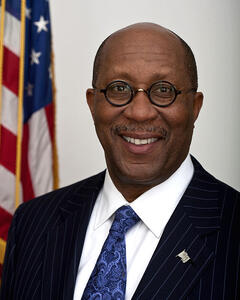
Barbara A. Perry
Hello, Ambassador. Are you able to hear us?
Ronald Kirk
I hear you fine. Can you all hear me?
Perry
We can, indeed, sir. Great to see you.
Kirk
I don’t know what it is with us and these Zoom links, but— [laughter]
Perry
They’re always little gremlins. You can never tell.
Kirk
That’s all right. Good.
Perry
Well, we thank you so much for joining us again, and we have you for about a little under three hours?
Kirk
Yes.
Perry
OK, great.
Kirk
I have no time restraints today. [laughs]
Perry
Oh, super. That’s always music to our ears in oral history interviews, but we won’t keep you—
Kirk
Trust me, my wife was like, “Please let those people go home before dark.” [laughter]
Perry
You tell her we enjoy speaking with you. So let us go back to where we ended. We’re going to back up a little bit before that. Bob had some really important topics, as did Scott and Russell, but particularly our business experts here, on exports, TPP [Trans-Pacific Partnership], China, and SBA [Small Business Administration], so we want to be sure that we cover that and dig in as much as they would like to.
But Russell and I were comparing notes, and we weren’t sure that we had gotten you much past your mayor’s position, so we know that we talked about that, and that was fascinating. We want to just fill in that gap that we think we might have after you left the mayor’s position and ran for Senate against John Cornyn [III], maybe being considered for the DNC [Democratic National Committee] chair. That’s something that’s in the briefing book, if you wanted to comment on that. And then the [Barack] Obama campaign, if you had any role in the 2008 campaign.
Kirk
OK. When I left the mayor’s office, I joined the Vinson & Elkins [LLP] law firm. I was having a reasonably successful tenure in municipal finance, corporate affairs, among other things, and then [William Philip] Phil Gramm announced, I think to a lot of people’s surprise, that he would not seek another term. And that’s when—no, that’s right: I joined V&E [Vinson & Elkins] after my Senate race. I think we’ve already covered that.
Perry
I think you had mentioned Vinson & Elkins.
Kirk
Yes. And did we talk about, notwithstanding the loss to Cornyn, the one thing that came out of that: that’s how I met then-Senator Obama.
Perry
You mentioned that briefly, that you had met him at a meeting in Chicago, as I recall, a Democratic Party meeting.
Kirk
Right.
Perry
Was there anything else that you wanted to elaborate on that?
Kirk
No, I think it was a fundraiser for me that he’d attended. He approached me afterwards and shared with me his desire to run for the U.S. Senate in Chicago, and he says I dismissed him. I did not. [laughter] I suggested to him that I hadn’t won my Senate race. But the interesting thing that sort of intrigued me was his knowledge of the fact that when I served as mayor, my daughters were only six and three years old, that my wife was a Wharton School grad, powerhouse economist, and we bonded initially around how you manage these competing desires, interest in public service with spouses who very much wanted us to be income-producing husbands and fathers. [laughs]
Anyway, fast forward. When he decided to make that run for the Senate, I reached out to him and offered to do for him in Texas what people had done for me. Because to this day I’m still grateful, and a little bit curious, how people around the country that didn’t know me but for a friend calling and saying they would be willing to help me out and put themselves out on my behalf. So I thought this was a good way to pay him back.
Then we also had the interesting intersection that a couple of people that had worked on my campaign went to work for him. If I covered that, y’all, please cut me off and we’ll go on, but most notably was Robert [L.] Gibbs, who served as communications for my Senate campaign, went on to do the same thing for then–state Senator Obama, and ultimately became his communications director in both his U.S. Senate office and at the White House.
So, fast forward, we helped him. I brought him to Texas. We had two reasonably successful fundraisers for him. I kind of took him around and introduced him to people, and then, subsequently, the next year he makes the headlining speech at the Democratic National Convention. I remember most of the Texas delegation turning around and looking at me and going, “That’s that guy with the weird name you brought.” [laughs] And all of a sudden everybody’s like, “Boy, we knew him first.”
So we became friends. I visited him in Washington D.C. a couple of times, but mainly just touching base and doing it as things began to progress and build, and the interest, excitement around him approaching the 2008 election. I was privileged to be among a small group of folks that were his—I don’t know if you’d call us “kitchen cabinet” or whatever—helping him think through the merits of a presidential race.
And just by way of background, the majority of African Americans loved [William J.] Bill [Clinton] and Hillary [Rodham] Clinton. They had strong support from our community. They had strong support, which they had earned and deserved, among most of the black elected officials. So it wasn’t that Barack and I had this unique relationship. There were not that many of us in that initial circle.
I did tell him that I thought that if he were to run, he would be subject to a lot of legitimate criticism: Look, the guy’s only been here two years, he gave a great speech, he’s not ready. But I also offered my opinion that, unfortunately, in politics you can’t bottle the kind of energy and enthusiasm there was around him after that speech and leading up to the ’08 campaign. If you don’t run, you stay in the Senate long enough that then you’re just another senator.
Also, there was no way to know, notwithstanding all the people telling you, “Oh, it’s time, America’s ready.” You just have to do it, but you have to really want it. My counsel to him was that he and Michelle [Obama] should really take the time to think about, Is this what you want? Because, as you know, it is the most grueling—intellectually, emotionally, physically—thing you can ever do, and it’s [recording freezes; inaudible] want it, if you want it. And we kind of joked. I said, “Because you could win, and now you have to go be President.” [laughter]
That was sort of our conversation, my involvement. I was one of the early adopters, surrogates. I campaigned for him around the country, and I just thought it was a wonderfully exciting and inspirational campaign, mainly because of the way he connected, inspired, and engaged young people, college kids who, much to their parents’ dismay, left school, put off going to grad [graduate] school, took a semester, and slept in their cars. And I thought then that he was transforming the path to getting the nomination, mainly because he had changed the conventional wisdom: Young people don’t vote. They certainly don’t give money.
Just to back up for two minutes, that was just the beginning of people running for office even thinking about how to use social media to do that. I think he tells a story, or I don’t remember if it was David Plouffe or [David M.] Axelrod, that there was this parade of people then going to Facebook, because that was the dominant platform. All went out, spent half a day, and mostly wanted to know if I wanted to raise money, how would I do it. And, apparently, as I remember the story, Barack’s the only one that went out and spent two or three days there, understanding how to build a community. So you had this incredible network of young people linking up, building their own groups, going out, and they completely upended the traditional democratic process. It was fun and interesting to watch from the inside.
Perry
From early on, when you decided that you would support him, did you already think he could defeat Hillary?
Kirk
You know, we don’t know. The conventional wisdom was that—and I don’t mean this in a pejorative way at all—it was Hillary’s time. I also thought if you had stripped away everything and on the merits said, “Who’s most prepared to be the President?” I would have said Hillary Clinton, and by a wide margin. She had done the work. She had a sterling reputation when she was in the Senate for being serious and thoughtful and engaged, not at all sort of here as the First Lady with nothing to do. She was wonderfully prepared. We didn’t know. I just believed in him.
But I would tell you the conventional wisdom, and I heard it often from my Clinton friends, was, “How quaint. We know you’re friends with Russell, y’all were at the Miller Center, but you all go ahead. And in January, when the numbers come out, Hillary will have raised this massive amount of money, and she’ll win Iowa, and the rest of you all will go away.” And, in fact— [laughs]
Now I wasn’t high enough on the food chain to get those threats, but the Clinton people were, at best, dismissive and sort of paternalistic, that old “poor you.” A lot of people were threatened: How dare you? It’s Hillary’s turn. But the conventional wisdom, Iowa’s going to come along and we’d be gone, and maybe they’d think about him for the candidate or not.
I remember Iowa came along, and all of a sudden everybody was, one, shocked, but the biggest thing was the whole presumptive model at that time was you had to raise money from big donors, in big numbers. With the infrastructure the Clintons had—and I can’t remember if that was January or February or March, before the Iowa primaries—but the Clintons had reported what people pretty much thought they were. It seems laughable now, but let’s say it was that they had raised $20 million, and the other candidates had raised grossly less amounts of money, and the Obama campaign had not reported.
I was in Texas—I wasn’t in Washington—but I remember as we got closer to the day, lots of press stories that, Oh, poor Obama, nice story, but how embarrassing. So I finally called the campaign and said, “What’s the deal? Why haven’t we reported?” They said, “Look, this isn’t for public dissemination, but we ain’t stopped counting.” If you think back, they weren’t the $1,000, $5,000, $25,000, but there were just hundreds of thousands of people sending $25 and $35 and $40. What we learned was, if you could get your mother, I could get your then-teenage kid to say, “I can’t get $5,000, but I can get $25.”
Those people writing $5,000 checks, in many cases, that was the max and they weren’t going to knock on doors. But the people who hit that button and gave $25, for them, they were invested, and it’s a lot easier to come back in three months and say, “Can you give another $10, another $35?” And it just became this virtuous circle of repeated giving that put an extraordinary amount of wind behind the campaign. Then the upset win in Iowa just caused everybody to rethink everything, and think, Uh-oh, maybe this won’t be as easy as we thought it would be.
Scott C. Miller
Ambassador, if I could just ask a question, as one of those young people [laughs] who you were mentioning—I was in college at the time. I’m just curious, because you mentioned just a few moments ago, you said, “I just believed in him,” and I’m curious what it was. One of the things I try to explain to my young students now is, (a) I know that you think that Barack Obama is this old guy, but you have not seen cool at a certain point until you understand what Barack Obama was in 2008.
Kirk
Yes.
Miller
So that’s number 1. But also the thing that I try to explain to them is they see it as the inevitability, just like you were talking about, like, Oh, of course Barack Obama was going to be President. I was like, “Actually, he was definitely not of course going to be President.” And as an early adopter, it’s not like there wasn’t a good option in the Democratic Party. So what was it about him in particular that led you to say, I’m going to really get behind this guy, before there’s anything certain about anything?
Kirk
Well, let me frame this and tell you, I always try to be honest. Full disclosure: I tell people, in terms of all of my picks for President or whatever, I’ve been right twice in my life, [laughter] but thankfully they were spectacular.
I was just of that generation that I grew up admiring LBJ [Lyndon B. Johnson], worked for Lloyd [M.] Bentsen [Jr.], and all of those. In my own Senate campaign, I just had a belief that, one—[winces] it sounds horrible—at best, the least-creepy guy wins, and, God forbid, if somebody can be a little more inspirational and poetic, that’ll beat “Go to my website, look what I’ve done.” And I know, as Democrats, we have to do that, but I tell people, “If you’re directing people to your website to see your plan on Social Security, whatever, and I’m talking about our hopes and dreams, I’m going to beat you every time.”
Again, I was very vocal among that group of people that said, Look, we have no idea if we can do this. It was just, there was a passion, an interest, an excitement. I do think he tapped into a longing in the country, that people were kind of tired of conventional politics of both parties. So he set himself somewhat as an outsider, and I think having a black man articulate, We’re one America, we’re not black or white—and with his personal narrative, that was believable. Here’s a kid from a mixed race—
As you said, he inspired young people like you, and others, and I just began to feel this hidden wave. And no fault of Senator Clinton, we all know many politicians that we looked at and said—whether it was [Robert J.] Bob Dole, or Mitt Romney, or John Kerry—would have been wonderful presidents, but somehow on the stump, it just didn’t translate. It’s not fair. We can say it’s mean, and we would argue, Oh, it’s unpatriotic, it’s misogynistic, whatever, but it wasn’t there.
When I had met him at that rally in Chicago—and I hope I’m not treading—during my Senate campaign there were seven of us. I think I told you I had basically built my campaign speech around Robert [A.] Caro’s last book, Master of the Senate. I don’t know if we talked about that, but just the journey to power. When Barack came to me, he was one of, I guess, 12 people that said, “I really liked what you said.” [laughter] But when I would hear him, he talked more about the power of government to change people’s—I mean, it just wasn’t the recitation of that as Democrats, Oh, we’ll be against Social Security, we’ll be for this, we’ll that. I thought that had the ability to resonate with people.
Look, you can tell I’m a Barack Obama guy. I told him, “You’re the luckiest SOB [son of a bitch] in the world.” He wasn’t even supposed to win the Chicago campaign. He runs against two billionaires, one of whom disclosed, as at least his wife and daughter said, he was a great guy when he wasn’t knocking them around. Then you remember he got kicked out—or you may not. They bring in this other self-funding guy, and his second wife said, “Oh, yeah, it was great fun, except for when we’d go to New York and he’d want to” whatever, was it wife swapping or something. Then they bring in Alan [L.] Keyes. What a layup. [laughter]
Then during the campaign he had some breaks, he had some challenges, but, to your point, it wasn’t foregone. The Reverend [Jeremiah A.] Wright [Jr.] deal could have been crippling to him. There were many black people who, I don’t know if they bought into him, but to hear my mother say, “Oh, he sounds great, but Irene says he’s a Muslim” —you know, the Muslim thing. And black people loved Hillary Clinton. Going into those primaries, we were losing among African American voters 35–65 for Clinton, and it wasn’t until Barack surprised them in Iowa. Then, if you remember, Hillary had that strong comeback in New Hampshire. Then we were about to go into the southern states, and maybe I shouldn’t say—well, I’ll say all this. You can edit it later. [laughs]
I still contend—much to the extreme anger of my friend Terry McAuliffe, who ran Clinton’s campaign—that all of us had a strong belief, because of how the [George W.] Bush presidency had ended and the Republicans were going, that this race was for Democrats to win. And I contended on more than one occasion, and I’ve been honest about it, that I believed Bill Clinton had to look in the mirror every morning and say, “What’s going to be worse: not being the first black President or not being the only Clinton?”
And it felt like every time Hillary got her footing and got her voice, Bill Clinton said or did something that shifted the landscape to Obama. If you remember, he had that famous call to [James E.] Jim Clyburn—and, again, most of the black caucus had endorsed Hillary. Clyburn had stayed neutral, but all of a sudden, Clyburn makes this public statement on how offended he was by this phone call that Bill Clinton makes on the eve of South Carolina. And Clinton made some public statement to the effect that, We’re not going to let you people take this from Hillary. And he said, one of the news deals, “Well, yeah, Barack did well, but it’s Iowa. Wait until the real America gets to vote.” All of that felt like coded language.
I can tell you—I’ll never forget—I was in Atlanta doing fieldwork with young lawyers, and it was like the Earth shifted overnight. Just hundreds of young black people flooded into Barack Obama’s campaign because there was this sense, Bill, we loved you, we gave you the Monica [Lewinsky scandal], but—you know, he’s one of us.
So it wasn’t any one “burning bush” moment. It was a series of things. But it felt, as we got along, he was beginning to get that momentum, and obviously the rest of it played out. But no, it was not certain at all, and I remind people, the margin between then-Senators Obama and Clinton was infinitely closer than it was between Hillary and Bernie Sanders. It was a tough, bruising, difficult primary.
Perry
You mentioned Jeremiah Wright. What did you think of Barack Obama’s so-called “race speech” in response to that?
Kirk
I think it’ll be studied. It was powerful. It was brief. But knowing him now much better than I did then, it was also very difficult. For those of us who grew up in the black church, the black church was the epicenter of our lives. We were not allowed to go to school. We were not allowed to read. We were not allowed to do anything. So the black church was where we not only got our religion but we learned how to read. It was the place we gave ourselves value, and it was the epicenter of our politics for so long.
You could go into a million black churches every Sunday and hear something similar to what Reverend Wright said, and nobody took it, writ large, as We hate white people, but there were a lot of people in that church that lived lives that were full of hate and ugliness and segregation. That was a place that welcomed and nurtured Barack after he ran for the House against Bobby [L.] Rush and just got dump-trucked because he wasn’t from Chicago, he wasn’t black enough. I mean, that church had nurtured him, healed him, so that was a very, very difficult thing for him to do.
But after Reverend Wright’s just ill-timed speech—I think it was at the National Press Club—he knew he had to do something. I thought he handled what probably was one of the most difficult personal matters for him with grace and dignity and intellect, and at least it gave us a chance to kind of catch the wind and not just derail the campaign. I thought it was masterful.
Russell L. Riley
I have only one question about the campaign period and that is, did you maintain any communication with Robert Gibbs after he went to the Obama campaign, or were pretty much all of your communications directly with Senator Obama?
Kirk
No, I had a couple with Barack, but having run myself—and I know we say Texas is big [laughs]—Russell, I just can’t tell you how grueling and exhausting it is. Look, I loved running. I loved the campaign, meeting people and doing—I loved that experience because it tested me in every way you could imagine, and I came out of it—forget whether I won or lost.
The thing that drove you the craziest were the calls from your friends, your neighbors, “I saw Barbara at the grocery store, you weren’t there,” you know, “Scott’s got”—people talk to you as if, “Oh, God, I’ve never run, what a great idea.” So the last thing I’m going to ever do is be the guy to call you and say, “Hey, why did you do this? Why did you do that?” Again, I saw my role singularly as saying, I’m here, I want to do for you what you did for me, and you tell me how I can help and I’ll go to work.
I can’t even remember who my contact was within the campaign, but I was like, Look, I’m here to help. I’m also going to give you to get that I’ll never be the guy that if you called and said, “Hey, we don’t need you to go on CNN [Cable News Network] anymore”—it’s never going to be a bad call to tell me I don’t have to go to one of these backwoods places they were sending me.
Somebody asked me, “What’s it like being a surrogate?” I said, “First of all, they think of the most dangerous cases it would be to send a black candidate.” [laughter] So all of a sudden I’m in Louisville, Kentucky, during the middle of the NRA [National Rifle Association] convention. [laughter] I tell them I was the “Mikey” of politics [1970s TV commercial, “Let’s get Mikey” to try it]. They’re like, “Let’s send Ron, he’s stupid.”
Perry
Oh, as a Louisvillian, I apologize.
Kirk
No, you were hosting, but you can’t make that up. [laughter] I’ve got to tell you, Barbara, I came down for breakfast—and those NRA conventions are huge. So I’m lucky for work, first of all, because I was actually in a real hotel and not some two-dollar motel to campaign. I’m actually in a Hyatt, and I come down before breakfast. I always had an Obama button, and for some reason I hadn’t put it on. I think I’d changed coats, so I’d just stuck it in my pocket.
But I’m sitting down, and it was—I don’t mean to be crude—like that old Dave Chappelle comedy skit where the black blind farmer joins the KKK [Ku Klux Klan]. [laughter] So I’m sitting here with all these people—but I decide, you know what? So I sat. I had breakfast with them. I talked to them. I let them talk about stuff. I mean, they are dog-cussin’ Democrats and dog-cussin’ this stuff, and I’m just going on. I said, “Look, I’ve enjoyed talking to y’all, but I’ve got to go.” And I just reached in my pocket, and I put on my “Obama for America” button. But then I just ran. [laughter] I ran out of there.
Perry
Well, tell us about—
Kirk
This can’t go in the deal, but you can’t make this up. So I remember they are interviewing people on camera before the primary. Look, this is the Democratic primary. It really was unfair. They’re interviewing this guy, and if you were saying, go pick a redneck, union, Democratic voter, the unkempt, big T-shirt, they asked him, “You a Democrat?” “Yes, I am.” “Are you going to vote in the primary?” “Yes, I am.” “Are you going to vote for Barack Obama?” “Hell, no!” “Well, sir, we have to ask you, is it because of his race?” He says, “No, it’s because of his color.” [laughter] And I thought, Well, at least he’s honest.
Miller
Whoa.
Kirk
But anyway.
Perry
Well, general election, and we also want to hear where you were on election night, November 2008. But anything to add about the general election?
Kirk
We may have covered it, and I hope it doesn’t sound arrogant—Valerie [J. Jarrett] would get mad at me and say, “You’ve got to stop saying it,” because I’m like, no, unless he literally comes out and slaps somebody, a woman in the face, we knew we were going to win. I toyed with the idea of going to Chicago, but because I was early, and I was so identified with the Texas campaign, they’d asked me if I would stay in Texas, and do, and manage. We had very strict orders not to get ahead of the campaign, not to predict, not do anything.
So we had a massive rally at one of our biggest churches here in Dallas, the Friendship West Baptist Church. I remember it even more than my own mayoral campaign, but it was just electric with anticipation and excitement. For the black community—you had these young people that had slept in their car. You had elderly people, even before, just in tears with the prospect. But you also had people praying, worrying. There were literally people going, I want him to win, but, man, I’m afraid they’ll kill him. They killed Martin [Luther King, Jr.]. But we’re building through the evening, we’re going, I get up, and I say stuff from time to time. And I mean, literally, I wouldn’t even get before the microphone and people would just explode.
I remember we’re getting these texts, and we won this number of states, this number of states. And you didn’t have to be an economist or a futurist to predict we were going to win, but the deals were, don’t say anything until this state comes in. So while I’m up speaking, I’m saying, “It’s early,” and we’ve got CNN on these massive screens. But the whole time behind me, Wolf Blitzer is, “CNN calls this thing for Obama,” and, “CNN calls that state.” And it just built to this incredible crescendo that was just—I mean, it shakes me to my core.
I had agreed that I wanted to spend the evening with a handful of friends because I am, as my wife and daughters describe me, the “cry daddy.” We were with a good friend of mine, [Michael S.] Mike Rawlings, who later became the mayor of Dallas, and two other couples. There were five couples that agreed that we just wanted to be together. Mixed race. There was a lesbian couple. There was a white guy and a Hispanic wife, and me and my wife. So we all gathered at Todd and Abby Williams’s house and watched the returns in Grand Park, and we hugged, and we cried, and we watched as the cameras went around the country to all those campuses.
I remember saying the next day that I thought that, for me, the most powerful sentiment was that at least for one night, whether we were Democrats or Republicans, that America took off all of our labels and masks and celebrated what was a uniquely American thing. No matter who you voted for, I think all of us thought this is something that would only happen in this country. As difficult as this march toward being a more perfect union, to have all this stuff we talk about, bootstraps and—a kid raised, essentially, with no father, no station in life, a single mom, not of the majority ethnic group or in the political group, rises to the highest level of power. I still think that is one of the most beautiful testaments to the power of the idea of America that we could ever have.
Of course, quickly I was also worried. The press was quick to go, “OK, have we entered a postracial America? We’re beyond race?” I think we said last time, and I can’t remember, I remember Rush Limbaugh being interviewed with some of his people, and they were all, I hope he fails, I hope he fails, I hope he fails. And one of the other commentators, just contrasting that, saying, “Last night, we saw the best in America, but my fear is very quickly we’re going to see some of the worst of America.” But for that moment, it was amazing.
Perry
In your mind, would you let yourself think during the general election campaign—and especially as it looked like he was going to win, particularly as the economy was collapsing, and [John S.] McCain [III] wasn’t doing so well—did you let yourself think, Maybe I’ll be in the administration, and, if so, I have some positions that would be interesting to me?
Kirk
Not only did I not think that—from the very beginning of those conversations with our small group, I thought it was important for him to know that I had zero ambition for further public service. I had been secretary of state. I had, in my mind, a very successful time as mayor. But I had a young family whose financial future I had put off.
I’d taken my shot in the Senate race, and I’m weird enough—and I said it enough that I think I got under my friend Vernon [E.] Jordan’s [Jr.] skin—because I would say, “Look, [Robert S.] Bob Strauss is 90.” Vernon’s 70. I want to be the next Vernon Jordan. I want to be the next Bob Strauss. And I literally had already worked it out with Vinson & Elkins: I was going to commute between Washington and Dallas, help build our practice. I told him, “I don’t want to be in your Cabinet. I want to be the President’s best friend.” [laughs] And I did. I thought, This is going to be great for me. I’ll be close to power. I’ll have fun. I don’t want to go in.
If I can back up one moment, during the campaign I was a surrogate, and my wife, who’s an incredible businesswoman on her own right, very late in the campaign, they called and asked her if she would host Michelle Obama, I think, for her only visit to Texas. Of course, she said yes. As I tell people, she was engaged but not involved because her deal is, one political nut in the family is enough. Somebody’s got to work, raise our girls.
So she spent the day with Michelle, and for some reason, I feel like they went from El Paso to Austin somewhere, and the rallies were spectacular. End of the evening, she came home about 8:00. I just remember because she never—she slammed the door when she came in, so much so that I thought, Oh, that’s not good. So I came downstairs. Also, unlike me, she had poured herself a glass of wine. And she looked at me in these seething eyes, and I said, “How did it go?” She said, “It was F-ing incredible, and he’s going to win, and he’s going to ask you to be in the Cabinet, and you can’t say no, and we’re going to be broke again.” [laughter] Then she stormed up the stairs.
I thought, Well, honey, I don’t have to—and she was like, “There’s no way you could say no to him.” But I had not. I had not subtly lobbied, hadn’t done it. I had a very different idea of what my participation in this venture would look like.
Miller
Ambassador Kirk, I just have a question, because a lot of the times with presidents in all past history, but especially recently, they are so intensely covered, minute by minute, second by second, that sometimes it seems like, well, we know about as much about them as they possibly can. But if you, having known Barack Obama well and being a friend-friend of his, if there’s something that you could share that you think people may not know, or do not know well about Barack Obama, or maybe something that you may think is a misconception, other than kind of the obvious stuff that people throw out as political attacks? What is that thing that you feel like you know about Barack Obama, or have an instinct about him, that may not be part of the public consensus, so to speak?
Kirk
Well, I want to bifurcate that question a little bit. One, as much as I think he is an amoral, horrible, mean-spirited individual, Donald [J.] Trump did two things: he broke the mold in terms of the path to the presidency, that you’ve got to be a Democrat or Republican, or governor or senator. And we said that he very much understood, America wanted something different. They were sick of both parties. And whether we do it or not, he won’t be the last billionaire—for lack of a better word, “rock star”—to decide, I’m going to run for President. And I give him credit for that. Second—and I blame, to some degree, Morning Joe [Joe Scarborough] as much as anybody—no President has commanded the type of minute-by-minute attention that you’re talking about than Trump did. I just remember during the ’16 campaign thinking, Why are these people stopping their broadcasts to let Trump come on radio? I do give him credit for that.
Now, having said that, we think we know them. And I said that to Barack—and I have to be careful, he is not naturally an extrovert. Again, if this is stuff we’ve covered—Bob, forgive me, I know you want to get to the business, and you’ve got to be sick of my stories. [laughter] But I said to the President once, and it was just an observation—because he labored from the criticism of the Clinton Democratic camp all the time, Well, he’s not Bill Clinton. When Bill was here, we did this. When Bill was here. I told him once, “I don’t know”—because I was blessed to grow up in a two-parent family, although not wealthy— “but it seems to me that particularly men who grow up without fathers very much take on the persona of their mothers.”
In the case of Bill Clinton, he’s got this gregarious, outgoing mom, and Clinton’s modus, his meaning, what breathes life in him, is, damnit, he’s going to be loved. And that’s why he remembers every thing and every bit about you, and he’s better than any leader I’ve ever seen, because I’ve worked for him. When you walk in a room, and even though you do it, somebody leans close and goes, “Bob, that’s Mike Greco,” and then Bob, “Oh, yeah, Mike.” Bill Clinton walks in a room, and it isn’t that he knows you, but he will stop and point across the room, “Bob Bruner, how’s your uncle, Bob? You remember when we were down in so-and-so and you took me this catfish?” Then people are like, He knows you.
Barack doesn’t do that. But Clinton’s deal is, I’m going to make you love you. Barack’s mother took him all around the world, took him to Indonesia at a formative point in his life. And we haven’t talked about, we both came of age in the sort of postdesegregation world where, for kids like us, we were always trying to fit in. Do I belong here? Do I belong to—?
Imagine trying to figure out, Am I black, am I white? Now I’m Indonesian. So his comfort place was his intellect, his refuge, his books. He is a giant intellect. He walks in the same room, and if people dunk down on him, he’ll think, I’m going to outsmart you guys. His first instinct isn’t to come in the room and overwhelm you with emotion. It’s to overwhelm you with intellect. And people thought, He’s a little aloof for us. He’s a law professor. He doesn’t want to speak in sound bites.
And the biggest misconception, the best and the worst thing happened to him since he won those kids, is that lady at the rally that stood up and said, “We’re fired up, ready to go! Fired up!” He would have never come up with that. [laughter] And he was so sick of saying that. I’ll never forget, we had him in Dallas at a rally, and he got up and gave this Al Gore–John Kerry intellectual dissertation on what he wanted to do, and everybody in the audience looked at me like, Are we not going to do the “fired up and ready to go”? We don’t want to hear that shit. [laughter]
So I’d say we had to push him out to go do that. Bill Clinton you had to pull out of a room. Barack Obama, a lot of times, we had to push into the room. He would love this [small group] format. He would talk to you all for days. He would love being in an intellectual deal with six people where he could expound.
Now, he got good at it, and he’s very good at it now, but people don’t believe me. He was sort of an adaptive—I won’t say extrovert, but engager. I said to him when I left the first time, I thought if there was a liability of his administration, if you think about it—he was surrounded by introverts. [Peter M.] Pete Rouse, who’d been with him forever in the Senate and that, Pete Rouse is damn near a hermit. [laughter] Valerie’s not warm and fuzzy. I mean, it was the biggest collection of—we love him, but—I tell people, “Hell, the only person there who would talk to anybody was [Joseph R.] Joe Biden [Jr.].” [laughter] You either had Rahm [Emanuel] screaming at him, or Joe—I used to call Joe the mayor of the White House. I called him Joe da B, because he was my guy. [laughter]
Anyway, I think he [Obama] is more reflective, more thoughtful, but still warm, incredibly intellectual, and people have come to love him, but that was a journey for him.
Perry
Bob, when we were talking about exports before the ambassador joined us, do I remember your point about what Obama had said in the campaign about exports?
Robert Bruner
Yes.
Perry
Yes, so please jump in.
Bruner
I don’t have the page of the briefing materials at hand, but it was either during the campaign or in the inaugural, or very, very early in the administration, Barack Obama declared that the goal of his administration would be to double exports over five years. And I’m looking at data right now that shows that since World War II, basically that’s happened only once. It happened in the depths of the 1970s. I think what drove exports was increased agricultural exports or a bad harvest or something somewhere.
At any rate, since 1980, at least, there has been no five-year period in which exports doubled. So I thought, Well, gee, that’s a pretty large goal, kind of a stretch goal for the United States. Now, mind you, it’s 2008, coming out of a depression, severe crisis. Yes, there might be some sharp snapback or reversion to the mean, as statisticians call it, but doubling in five years, pretty high. So you were being held to a very, very high bar as of the get-go from the administration.
How did that goal arise? Were you conscious of it? And then what were you going to do to fulfill that goal?
Kirk
Well, one, I wasn’t in on the formulation of that number, but for the fact, the most important thing you acknowledged—and it’s interesting you used the word. I can’t remember if we ever said we were in a “depression” —we just called it the “2008 bomb”—but we may as well have been. So you all know that.
I would tell you, from the beginning, transition, everything was, anybody not named [Timothy F.] Tim Geithner, [Lawrence H.] Larry Summers, Paul [A.] Volcker [Jr.]—I mean, they were warm, we were welcome, but they were very clear about, Look, guys, we are on the precipice of a disaster, so love you all but, please, hold on, manage your departments, do everything you can, and, please, just don’t—
He doesn’t swear, not like I do. [laughs] The only time he swears is if you say, “Hey, we were with Ron Kirk and he said hi.” He’d always laugh and go, “No, you weren’t with Ron.” And they’d go, “Yeah, we do.” He said, “Because if you were with Ron Kirk, he would have said, ‘Tell that skinny MF [motherf---ker] I said hello.’” [laughter] But he would tell us, “Just don’t F up. We got so many deals.” But he did challenge us all to say, look, everybody’s job number 1: we have got to get this economy turned around. So I don’t care what your agency is. It doesn’t matter that you’re not Treasury or whatever. You have got to be looking how to help create jobs.
Secondly, it’s esoteric enough, but, as people say, the trade job is sort of conflated with commerce. Commerce does the export promotion and has all the outward—we are just almost singularly, boringly focused on the trade architecture, so that’s historically not our job. It became part of all our jobs.
But from my standpoint, knowing how toxic trade was—and where I thought you were going, Bob, and I think we may have talked about this the very end of last time—some people would argue, and certainly labor felt that way, that the deciding factor between Barack and Hillary in getting that nomination, if you recall, was labor felt that they had been horribly victimized, misled by [Bill] Clinton in NAFTA [North American Free Trade Agreement], and it was never going to happen again. But both candidates sort of had to take a pledge that we were going to redo NAFTA, and we weren’t going to be doing any more trade deals. And even though both senators made that pledge, Hillary was unfairly burdened with, “Yeah, but you were with Bill. Y’all are free traders.” They were kind of hoping Obama wasn’t.
From my standpoint, it was a way to at least interject into the public psyche, we’ve got to be engaged with the word without using the “T” word. Everybody loves exports because we’re selling people to them, you can make a bigger nexus to it, but we were not going to talk about trade. And believe me, there were people in the White House that just as soon I had never—I think I told you last time, I felt for the first time what it felt like to be the other woman. [laughter] They’d send me flowers but don’t be expecting to come to dinner. Don’t be hanging around the East Wing when company’s here. People, “What do you do?” “I’m the trade guy.”
Anyway, anything that credentialed international commerce, trade, albeit via exports, we were pleased to do. I would say one of the fun things about it was we sort of had this loose export promotion council, so with Secretary [Gary F.] Locke at Commerce, Karen [G.] Mills at SBA, Fred [P.] Hochberg at the Export–Import Bank [of the United States], and myself, Secretary [Thomas J.] Vilsack, we, not all, but four or five times a year would go around the country to big centers and talk about exports, particularly focusing on resources available to small- to medium-size businesses.
For me, it wasn’t so much, are we going to double, as it was—at least it gave me something, particularly to go to very, very suspicious Democrats, and say, “Hey, don’t dismiss trade on its face.” We know you don’t like our borders just being open, but surely you think it ought to be fair that since we buy all these cars and goods from—shouldn’t we be able to sell them our stuff? And don’t you think it’s fair that since we’ve helped rebuild Europe and Asia after the World Wars and the Marshall Plan, now it’s our time? And don’t you think it makes sense that since we’re only 5 percent of the world’s population, you’ve got all these new markets, “Made in America” is the best brand in the world, [that] we should be selling our goods and services? So I focused more on the value proposition of what it did to help us lessen some of the very hardened anxiety about trade so we could ultimately get around to doing something substantive.
But ag [agriculture] was easy, because we win in agriculture. We also learned, as you know, most of our exports are professional services, which we are spectacularly ahead in those two.
Miller
Ambassador, I’m curious: we touched on it at the very end of last time, but we mentioned TPP, and I was curious how the Obama administration thought about TPP. Because if I’m correct, the idea originated in the [George W.] Bush administration, and it kind of carried over, and then it obviously became a major tripping point between Bernie and Hillary. But I was wondering if the Obama administration viewed it as simply an economic strategy, or if it was a geopolitical strategy, or maybe a China containment strategy, or all of the above. Unfortunately, at least in my view, it didn’t get enacted into policy, but the question is, how was it conceptualized within the administration?
Kirk
Well, I won’t be brief, [laughs] but I’ll go and say it was all of the above. And I thought we talked about it, but the other thing in my colloquy about Obama in response to your earlier question, what didn’t we know, the other thing everybody forgets: this is a kid who came of age, spent a big part of his life, in Indonesia. Whatever you think of him—with the exception, I guess, of that generation of presidents that all served in the [Second World] War in different theaters—you could argue he’s the most truly internationalist of presidents in terms of his life, his upbringing.
So, one, it was very easy for him to understand and embrace the fact, there is as much potential for us to exploit and build a relationship in the Asia-Pacific writ large, similar to what we have with the transatlantic relationship with the European Union, and, obviously, with respect to coming out of this economic tsunami that Bob mentioned. Then, just from a pure, naked standpoint, we were selfishly sitting there saying, Hey, we own America. We’ve stuffed as much stuff into Europe as we can. Where are the next markets? At least at the time, most of the emerging economies were in that part of the region. There was a real belief, Look, we’re already anchored there in terms of our military presence, of what we’re doing in Korea and Japan and so many others. Doesn’t it make sense? So the answer to that would have been yes.
And, yes, TPP came out of the APEC [Asia-Pacific Economic Cooperation] summit, and I think APEC actually started under Clinton. But yes, there was always the goal that APEC, instead of just being a coalition of who owns what, eventually become a free trade agreement among all of the—forgive me, is it 16 member economies? But that it would ultimately evolve into a major free economic trade zone. To their credit, it was Singapore and Australia and New Zealand that thought, Look, everybody isn’t ready. Why don’t we go just take a small group—we’re not a threat to China, we’re not a threat to the U.S.—and we’ll create the architecture. But the ambition early on and the understanding was, when it was ready that if the United States joined, and Japan and Vietnam, then it really had some heft and would become the vehicle that we wanted.
So we were there, but we had a lot— we inherited the three agreements with Panama, Colombia, and Korea. Then there was also, bless their heart, this—I don’t know what you’d call it—this ambitious Doha [Qatar] agreement that a lot of people thought had to be addressed first, so we were just trying to manage all of those expectations. But I think, at least for me, we always thought the grand prize was the TPP just because of the scale of it and what it could do to advance our interests in the region. I think we announced it pretty quickly. I mean, it was a year, but he announced it in, I think, 2010 when we were at APEC in Singapore.
And having nothing to do with this, in a crazy way, I ended up making the announcement. The President was going to make the announcement, but that week we had a horrible shooting at Fort Hood in Texas. I don’t know if you remember, a soldier killed a number of people, and I think either the memorial to them—but the President ended up visiting and attending that memorial service, so it fell on me to make the formal announcement that we would commence negotiations to join the TPP.
Miller
Just as a follow-up on the TPP, this is actually something that I am personally very interested in and have read a decent amount about. There are two kinds of narratives. One tends to say it was always kind of a pipe dream. Yes, there was certainly effort there, but it’s just a massive thing to get over the line, given the political currents at play. But then there’s another one that says, no, it was actually pretty darn close to becoming a reality until you had Bernie Sanders come into the mix. Bernie kind of throws the sand in the gears, so to speak, and then Hillary Clinton has no choice but to kind of disavow it. I was curious if you have any thoughts on how close it was, whether you think there was the political will until someone like Senator Sanders kind of mucked it up, as the narrative goes? Yes, I’ll leave it there.
Kirk
Well, I would say you had both that, which certainly had a major impact in the Democratic primary, but you also had the reality that for the first time—and, again, I know I’m painting with a very broad brush. As someone who believed in trade and that labor was [laughs] not only suspicious but—I think labor would have thought it had been a great deal had I gone for a walk at night and fallen in a hole and never been seen from again. [laughter]
I was a strong believer in it, but I would always say, there’s never a good time to take a bad deal that comes. But if you can get a good deal, that we can make a legitimate case that it’s going to open markets, it’s going to strengthen our ability to protect what we have, the good news is, we always find a way. Historically, for a lot of reasons, it ends up being during Democratic administrations because Republicans just always assume labor’s against, give them the back of their hand. Then that just empowers labor to go full-fledged against it. That’s why I inherited agreements with Panama, Korea, and Colombia.
So, one, you had that factor. I know it’s wrong, but we could always count on the [U.S.] Chamber [of Commerce] being for it, the Association of Manufacturing, but the big deal was you had these agricultural groups that are stronger than you could imagine. Historically, we could count on two-thirds, if not more, of Republicans who would vote for the agreement, and the 30 to 50 Democrats from places like Texas or Montana or Washington could.
In addition to Bernie, you’ve got to remember, this is the first time you had a Republican candidate demonizing trade, in Donald Trump. That’s part of what endeared him, helped lift him in those same—I think we talked about it last time, but whether we like it or not, these elections come down to Michigan, Pennsylvania, Ohio. These are very anti-trade states. So it wasn’t just Bernie. It was when you married that with Trump, I think that made it really difficult to come in, no matter who was going to be President.
And I think I told, but just backstory—I know I have a story for anything—I was in New York on other business and on my way to the Clinton campaign to do my endorsement of Hillary Clinton. I was doing some work for another group, and I had stopped off, in whatever, Chelsea district, done an interview with Errol [Louis] what’s-his-name on NY1 [New York One]. And they break in, and Hillary Clinton comes out and says she is against the TPP, can’t do it. [laughs] So I just called my staff and called one of her people and said, “I don’t think we’re going to the party. We’re not going to show up.” [laughter]
I was disappointed, and I thought it was seen among some elements of that Democratic intelligentsia, because Hillary was very much probably one of the strongest believers in TPP. But I also said to her people, “I want Hillary to be President, so do what she’s got to do, and we’ll figure out a way.” Again, at that time, whether it was arrogance or foolishness or our cultural, political elitism, none of us really thought Trump—well, I’ll say this: at that point, we were more worried about getting past Bernie Sanders than the Republican nominee.
But I do have to go back. We did complete the negotiations. Ambassador [Michael] Froman, we had essentially completed the negotiations, and the architecture was there. And Trump, as you recall, came out and said, “Man, we don’t want to be a part of it.” So it wasn’t just a pipe dream, and I still contend what a horrible—my father, who served in World War II, used to always remind my brother and I, “Son, there ain’t no such thing as friendly fire. You’ve been shot in the ass.” [laughter] We just took a shotgun to America’s farmers, and we completed this agreement that, not in whole but largely, extended our American values as it relates to intellectual property, next-generation business—all these things we wanted, none of these other countries cared about, and then we walked away from them.
Perry
Russell, did you have a question a while back?
Riley
I mean, my thought process keeps evolving, and I actually have a different set of questions because one of the things that I see in looking at the timeline is you spent an awful lot of time traveling. It’s evident that we can’t deal with all the trips that you make, so I’m wondering if I could throw out sort of a generic question: if you think back, maybe, what are the two or three most memorable overseas trips that you made? And what about them made them memorable in terms of either productivity or what happened on the ground while you were away?
Kirk
It wasn’t so much where as what. I said this to a group the other day: when you are in the environment we’re in, with the kind of navel-gazing, defining ourselves by the lowest common denominator, that feels like we’ve engaged in for the last 20 years, it is refreshing, it is startling when you are privileged to be the face of this country—and even though trade’s obscure—but I was. When you travel around the world—first of all, when you get off the plane and the car at the bottom of the stairs with the flags is waiting for you, it’s pretty cool. And when there’s all this press, and there’s more people there—it really strikes you that at that point they don’t give a rat’s ass that you’re a Democrat, that you’re a Republican, that you work with—you really are confronted with how much the world still sees America as a special place.
It just sort of gives you the chance, almost in a spiritual sense, to have this revival—I can’t tell you how many times people said to me, “You guys get to vote for who you want?” I remember, they said, “And you have buses that pick up your kids to take them to school? Is that true?” It’s like, all that other shit, we don’t want to hear about. You get the right to educate your—and it helps you realize, we still are a place, with all our faults, that everybody would send their kids.
Now, the first year, the funny thing—one, I had to go and meet my colleagues. I tell people I got nothing done because, I kid you not, it didn’t matter if I was in China, Russia, India. Everywhere I went, my initial meetings with whomever I was with were spent with them explaining to me what a big deal it was that Barack Obama was now the President of the United States and that that wasn’t going to happen.
I didn’t get in trouble—thank God it didn’t make the press—but our first state visit was in China, with all that pageantry, and you go to the Great Hall [of the People], and you sit there. And it was thoughtful, but I looked around the room and thought, Wow, how cool. And the President made note of the fact, and he said, “Look, I’m glad you’re all here, but, guys, we have two Chinese Americans in our delegation, Gary Locke and [Eric K.] Ric Shinseki, whose grandparents still live in China.”
Then I looked over, and I’m sitting next to Susan Rice, and there’s Kathleen Sebelius. We walk into that Great Hall, and I thought, Wow, we’ve got women, and men, and people of color, and Asians, and this—then the Chinese delegation comes in, [laughs] and Eric [H.] Holder [Jr.]—Susan was hitting me, and I go, “Chinese guy, Chinese guy, tall Chinese guy, short Chinese guy, Chinese guy, one woman.” After, I said, we looked like America. And when they started playing the National Anthem, it was like, I’m not crying, I’m not—but I told somebody, I felt like what it must feel like to win a gold medal for your country and stand on that podium. I got that sense of pride and joy in our country but also in having a President that valued that diversity, inclusion, and I felt that everywhere that I went.
Secondly, I would say particularly in Africa I was a little bit fearful. I don’t want to be too hard on them, but I would tell you it was amazing how quickly the world went from feeling like, under the Bush administration, that we were cowboys—go it alone, don’t need any help—and how quickly not just Barack Obama but Hillary Clinton, the two of them, just at least got our seat back at the table and how welcomed we were at the table.
And the one thing the President and I talked about all the time, he said, “It is both a blessing and a curse that we go in these rooms, and, God, they just beat the shit out of us. Because everybody, ‘Oh, you’re America, you’re big, you’re this and that.’” He says, “But you’ve got to understand the other side of it: unless the United States is at the table and forces that, nothing happens.” Not at the climate talks, not at the G20 [Group of 20 intergovernmental forum], not at—you pick the forum, we are the force mover.
A lot of it’s pageantry, a lot of it is scripted, but that’s a lot of power and a great responsibility. And there was a lot of hope and excitement but almost just, particularly in Africa, this unrealistic belief that we’ve got a black President. We don’t just have a black President, we’ve got a son of Nigeria. Everything’s going to be fixed now. They’re going to come in here and fight the Chinese. We’re going to do this. And the level of expectation outside the country was almost heavier than it was here. But the reception, when we finally traveled with him, the receptions we got around the world were crazy. I mean, he’d always say, “Hell, I’m more popular in you-pick-the-country than I am here at home.”
Perry
Russell, did you have some others in that vein?
Riley
Well, I was just curious whether there were any especially productive overseas meetings that you had or, maybe conversely, any that turned out to be genuine disappointments in terms of negotiations?
Kirk
Well, the trade world is a slog.
Riley
OK.
Kirk
I love stealing these stories from Jim Clyburn, who I love, but he always—he read [Alexis] de Tocqueville. I told you I love the poetry, but he always ends his speeches with, “When people ask de Tocqueville what he found special about America, he says, ‘As a country, they have the ability to repair their faults,’ if we will.”
So you go to other countries, and you forget the massive scale and size of our economy and how we have the ability that you can’t just go to UVA [University of Virginia] and see kids from D.C. and Maryland, Virginia; you see kids from China and India and around the world. We’re one of the few countries that has that capacity. But the smaller countries hide behind the, Oh, come on, you’re so big, you’re successful. Nobody cares if we’re counterfeiting a few Tylenol, ripping off your music. And it was my job to go, “Yeah, we do. That’s bullshit. You’re already making the stuff, [laughs] but theft is theft.” As I told them, “Imitation is not flattery; it’s theft, when it comes to American”— [laughter]
With Korea, for example, a great strategic partner, and it took me a while, and I would say I learned this because of the gifted staff that I had. There is this perverse incentive that the Korean populace has that because we have had this strategic investment and because we protect them, that when an American President shows up, whether it’s George Bush or Bill Clinton or Barack Obama, that y’all just drop to your knees and do whatever they want.
They have to counter that by negotiating with us as brutally hard as they can. [laughs] It was awful with the Koreans and with the Japanese, and with the smaller companies, but our job was to get it. And you’ve got to understand: it’s them against us. In TPP, nobody else really wants to talk about the environment or fisheries. In every case, we’re the ones doing it, and it’s a little different with each country, and it can just be nauseatingly difficult. But it’s worth it at the end, if you can get the deal done. That’s where I thought my background as a mayor, my skills as a lawyer, sort of counterbalanced my lack of, quote-unquote, being a “trade technician.” But, no, God, it’s difficult.
When you go to Doha, they all sit there and give you the, “Oh, we weren’t sure you were coming. We didn’t know if Obama had a trade”—I’m like, first of all, it’s been four months. Get over yourself. [laughter] I think I told you, I love Geneva, but I’m a mayor. I’m not an ambassador. They’re just all so—“Oh, Ambassador, we’d been waiting for you.” If I heard once, it was the deal—“We all feel like we’ve been waiting for Godot. We’ve been waiting for Godot, Godot.”
So finally I speak to the whole group, and I tell them I’m glad to be there, and I said, “I’ve heard from y’all more than a hundred times you’ve been waiting for Godot.” I said, “Well, I ain’t see it, but they tell me that son of a bitch never showed up.” [laughter] So I said, “First of all, I feel more like Blazing Saddles when the sheriff rolled up.” And my press secretary, who was about as irreverent as she could be, was like, “Oh my God, when you referenced Blazing Saddles, I was just praying he wasn’t going to say, ‘Where the white women at?’” [laughter]
But Russell, for me, it was just fascinating and interesting. But embedded in it—we go to our first Summit of the Americas, and I can’t even remember who the wild man was in Venezuela at the time, and Cristina [E. Fernández de Kirchner] had come back in Argentina, and the opening ceremony, they pick six leaders that are each supposed to talk for five minutes. These guys get up, and it is 30 minutes of damning the United States, slamming the United States.
And I will give you credit, it’s when I really got respect for—President Obama sat through all the speeches. He didn’t leave. He didn’t blink. He got up and said, “Well, it’s been interesting to hear how much you hate”—he says, “but I notice how all of you [rolls eyes] didn’t want to line up backstage and go, ‘Are we going to do business?’ ‘Can I get a picture?’” [laughter] But it just reminds you at the end of the day, they want to do business with us. A lot of it is anchored in, we take for granted the respect for the rule of law, and as one of my colleagues said, “You make stuff that works.”
For me, to be out of the country was wonderfully affirming of what I was doing, because when I came home, I was over in Congress with the Democratic Fair Trade Caucus telling me what an idiot I am. We just got the crap beat out of us in the 2010 midterms. People are mad at this President, we haven’t solved the economy, and you want to cram this trade stuff up our rear end. So I had a very inverse world. [laughs] My experiences outside the country were generally more affirming than within the country.
Perry
Bob, did you have some follow-ups on China?
Bruner
Well, before China. You referred to Larry Summers and some of the other economic advisors in the White House who were pretty forceful in establishing the targets. Can you talk some more about your interaction with them? Was it all pretty much one-way communication from the White House on down, or did they seek to invite you into that conversation?
Kirk
Bob, you know Larry Summers?
Bruner
I’ve met him.
Kirk
Is there such thing as a two-way conversation with Larry Summers? [laughter] Come on, Bob. Now, look, I did read your bio. You’re the economic smarty-pants on here. Come on.
Bruner
Well—
Kirk
We joked that when Larry was in charge of the Council of Economic Advisers, we didn’t have meetings because Larry knew all the answers, [laughter] and when [Eugene B.] Gene Sperling came in, we didn’t have meetings because Gene couldn’t get organized. But to the degree that he was, for my portfolio, it is both. I always tell people that one of the criticisms of most administrations up to Trump is, Why are there not more businesspeople? We need to run the country like a business.
For the most part, CEOs [chief executive officers] can’t come in and accept the reality that you were not brought in to run an agency. You are a wholly owned subsidiary of the Office of the President of the United States. First of all, if you can’t say every day, in every speech, “President Obama feels,” “President Bush feels,” then you can’t be in the Cabinet. Secondly, trade, by its nature, which we talked about a little bit—people forget, it is still controlled by Congress constitutionally, and they created this vehicle by which the President would carry out trade stuff through the Office of the USTR [United States Trade Representative]. So we are the most interdisciplinary of all the Cabinet portfolios.
And you started asking me about exports. Within the trade portfolio—and I thought it was a strength. Since I only had 250 people, I was regularly in touch with Secretary Vilsack, Secretary Clinton, Secretary Gary Locke at Commerce, and the person who managed all that was, in theory, Larry Summers. Fortunately, for us, it fell to his sherpa, Mike Froman. Some people thought, Oh, you’ve got to be close. You should be offended. But you remember, those first 24 months were not easy. It was trying to get the Recovery Act [American Recovery and Reinvestment Act of 2009] passed, signed, to save the banks, so, necessarily, that’s where our coordination was.
Larry’s broadest philosophy, and it’s hard to argue with, as difficult as it is to get a trade deal done—and I tell people, having been a mayor, it’s the same energy to rename a post office sometimes as it is to go get a billion dollars to rebuild a city. So if you’re only going to have one fight, go for the big bang. Larry felt very strongly that completing the Doha Round was where we should put our energy and muscle because it was global [and] would have impacted all of the 150-plus members of the WTO [World Trade Organization].
But the reality: Doha didn’t have a chance to pass. India and China were never going to—I mean, it wasn’t. I was trying to be more practical, the mayor in me, that, look, we’ve got to put points on the board. Panama and Colombia were the easiest to sort of recalibrate, and I thought if we could do those, then that would at least advance the President’s goal of meeting that export goal but show that we could get something done.
But we had to do it all against a political backdrop that the political minds in the White House were like, We are not mentioning the trade rep. I can’t tell you [laughs] how much the atmosphere shifted after the shellacking we took in 2010, and so everything was just like, We cannot piss off the few friends we have.
I do think the one thing I’m the most proud of is, against that backdrop, we were able to recalibrate, renegotiate the three agreements with Colombia, Panama, Korea; make substantial progress on TPP; and get the trade adjustment assistance reauthorized. Then, remarkably, we bundled them all up and got them all passed on one evening in October of, I think it was probably 2011. Trust me, there was a lot of pushback, a lot of angst among some of our friends on the Democratic side, but we were able to get it done.
But to your question, I probably worked most closely day-to-day in the White House with Mike Froman, sort of as a surrogate for Larry. I did take advantage of the fact—and we talked about it—that because I had kids in college in my family home, I did play golf with the President a lot. One, because I let him play golf and be a golfer, and, two, I understood that that ride out to Andrews or whatever was the 30 minutes that we talked about family first, always, and he’d always invite me to say, “What’s going on in your world?”
I did have a chance to have conversations with him. He was always very gracious in thanking me for not getting the time from the White House, understanding and doing, but also engaging labor the way I did. And he was very sympathetic—he said, “Ron, I know you’re doing it,” he said, “but you always talk about Matrice [Ellis-Kirk] being from Ohio, and if you lived up there, you’d be angry, too.” But he was very firm in his resolve that, look, I love labor, but this is not 1940s. The cars are here. Slapping tariffs on stuff isn’t the answer, but we’ve got to bring them along.
That’s why we were so heavy on our enforcement agenda and, since Barbara keeps referencing China, particularly focusing a lot of our challenges at the WTO against China’s unfair trade practices. That did help. It slowly helped soften some of labor’s resistance to what we were doing, but in almost every case that we had at the WTO, they were supported by one of the labor unions. I think I talked about my relationship with Leo [W.] Gerard in particular, but that was all a part of that strategy.
Bruner
So you refer to China. My particular interest is in the shift in attitude in Washington D.C. toward China over the past 20 years as one of the most remarkable ground shifts in attitude. Mid-2000s, there’s a sense China was liberalizing because we can do business with China, or China’s going to become more democratic, more capitalist, et cetera. By the mid-2010s, a different sensibility was coming forward. How would you describe that change in sensibility toward China, that it wasn’t playing according to the playbook that so many had assumed would happen? It was kind of marching to its own drummer, and, Uh-oh, here comes trouble. Can you tell us about that a little bit?
Kirk
Again, Bob, I think what you’ve articulated is both the answer and the question. I think about, and I should know. I know I was a mayor at the time and thinking how cool it was that Bill Clinton had invited me and three other mayors to be at a press conference in the White House with George [H. W.] Bush, and [Henry A.] Kissinger, and every former secretary of state, to make the case for bringing China into the World Trade Organization and what it could do.
We all believed, for the reasons you articulated—going into the time we came in, it wasn’t perfect, but China was moving not toward a—I will say this: I don’t think we harbored any illusions they were going to become more democratic, but we did want them to become a more market-based economy. And you remember there were benchmarks, and they were, for the most part, meeting them.
But clearly, China embraced the benefits of trade from the export because that’s essentially what revitalized their company. They were assembling some manufacturing, but their exports were powering their economy. We were hopeful, I think, that as they began to transition from an agrarian society to a consumptive society, they would open their doors, but they clearly did not. And I would say both business and the administration felt that.
I think we talked last time a little bit about that the good thing—and it started before—is there were two very thoughtful structures put in place to engage China on these matters. One was the strategic and economic dialogue, I think as you know, led by the secretaries of treasury and state, and we looked at the broader big-picture issues. Then there was a real nuts-and-bolts, get in the weeds, hit what you’re doing dialogue called the Joint Committee on Commerce and Trade led by the secretaries of commerce and the U.S. trade rep [representative]. And because agriculture—you mentioned, I think, Bob, you or Scott— was so important, Gary Locke and I essentially just made Tom Vilsack a de facto part of it, since most of what we were arguing about was agriculture.
We had, between the G20—the good thing, between the G8, S&ED [U.S.-China Strategic and Economic Dialogue]—you had four opportunities where we were face-to-face engaging with China on this. And the most important thing for you to know: we were not blind to this growing phenomenon, Bob, of what you were saying. For us, the importance was that whether it was at a military level or the State Department or Treasury, we were all singing from the same playbook to tell China, “You can’t just take. You’ve got to give. You’ve got to open up your economy. You’ve got to stop trying to force the disclosure of critical trade secrets.”
For example, every time we would go to China, we would meet privately with the U.S. –China Chamber [of Commerce] and get in a room with very high-level businesspeople and say, “We know what the Chinese say. Give us the real truth.” And they would tell us, “Look, we’re being hammered. They’re BS [bullshit]-ing you.” We had very direct conversations with them.
I think we knew, and maybe we wanted to believe, we were making incremental progress because China—they are very astute and very sharp negotiators, but they’re businesspeople at the end of the day. Their deal was to just give us enough to say we won something but not enough to move the needle. The other thing they did, they would always come back and say, “Well, that’s not fair. You’re asking us to give 10 things; we’re asking you to give one.” The challenge of that is our economy’s open. We’ve already reformed our systems. We have these. You are the new member of the World Trade Organization.
Just so you know, when you go through what we call the “ascension”—and if I’m being redundant, or you know this—the process of joining the WTO. You look at a country, whether it’s China, Vietnam, and Russia, and they generally have a number of disciplines they want you to address. You have to do everything, but you’ve got to have some provisions for worker rights, you’ve got to implement some provisions on respecting foreign property. The main thing is once you become a part of the family, you have to treat every other member as if they’re—so you have all these things. I would say China had probably gotten 85 percent of the way there, but it was that last 10 percent that was most meaningful for us, in terms of respecting intellectual property, that we couldn’t get them to move on.
I’ll give you an example when I said we really went armed with data, and I don’t think I’m getting in trouble. We knew the government of China for the most part operated 95 percent on Microsoft software. Microsoft could tell us to the penny how much that should cost. And if, let’s say, China should have been spending half a million dollars buying Microsoft software, they were spending $235. [laughter] So you had to do things like, “OK, would you at least get your own governments to stop using and start using—? Would you start saying you’re going to—? You said you’re going to combat anticounterfeiting and copyrighting. You’re going to have to put some rules in place to enforce it.”
So it was just grueling to do it, but my own humble opinion, being a mayor, not a China expert: China made a calculus that the price to invest in saying, We are moving 20 million people a year out of poverty and farms, and to do that, we will take a lecture from Europe and the United States about—we’re going to copy and steal this. Now we’re educating our people. We’re trying to create our own creative class. But they just looked and said, “Lecture and do all you want because our way of keeping a communist government with a semiopen economy is dependent on peace.” And particularly after the Arab Spring [protests], they were obsessed that that wasn’t going to happen in China. So they made that calculus.
Then obviously, I think, it has become much more internal with Xi’s [Jinping] election. I’m not deep enough to tell you why we didn’t forecast that. I think we thought because he’d studied in the United States—and when he came over as vice president, he talked about all the great memories he had of doing that—but I would say that one, it certainly caught me by surprise. I do think the Trump administration—I won’t say they were right, but they were certainly not wrong to say, Hey, you guys have tried it one way; we’re going to take a different approach. And I think all of us are sobered by the reality now, no matter what our intentions [or] ambitions were 35 years ago, China’s behavior now dictates that we take a much more sober and a much more muscular response.
Bruner
Thank you.
Riley
I have a question—
Kirk
I hope that was responsive.
Riley
I have a question sort of based off what you said about your occasional golf trips with the President. That is, as somebody who’s spent a lot of time in politics and around politicians, in looking back at your time, I’m wondering, what you thought President Obama did really well as President? And if you could be a sort of internal critic, what you thought maybe he did less well as a President?
Kirk
In the really, well—I tell people, having at least seen it from my perspective and what I’ve told people: stop judging a President, Oh, is he for tax, is he for this. The job of the presidency is you get elected. Bob Bruner’s now President, he goes to his trusted advisors, Russell and Scott and Michael and Barbara, and says, “I need you guys to do that.” And the only time they see Bob is when they come in and go, “You know that Palestine just invaded Israel.” The hard stuff we do, so the job of the President is us lining up outside his door, saying, [laughs] “None of this shit works. There is no easy answer. There is no solution that makes everybody happy.”
What I judge a President on—I’d heard it about him—his ability to convene in a room—and I thought we had a very talented Cabinet—and say, “OK, Bob Gates, what do you think? Barbara Perry, what do you think? Hillary, what do you think?” And Gates talked about it, even as critical as he was. To take all of that, absorb it, hear from everybody, and then say, “Here’s what we’re going to do.” So everyone felt respect, that nobody felt the need to go back and go under.
You have to be comfortable that whatever decision you make is going to be open to very legitimate criticism, but you’ve got to make a decision. I judged him on his intellect, his earnestness. I still tell him, at the end of the day, I still think his signature achievement—and it only happened because of him, because I watched him—was to say every U.S. President in our lifetimes has complained about our healthcare system and said we were going to reform it, but I’m going to have to do it. I’m going to have to spend every bit of political capital that I had, but he believed in it, and he did it. And he paid a price for it, much the way LBJ did with civil rights and voting rights. I think that’s admirable.
I won’t say he didn’t do it well, but I would say the President was in the Senate for two years. He’s an intellect. I used to tell people, all that said, he wasn’t doing anything. I was like, if you’re going to just elect people on how many bills they passed, then you’d have an election between [Charles E.] Chuck Grassley and, I don’t know. [laughs] It’s not a prize for longevity.
I will tell you this: one of the good things he would do every December, before we left home, was tell each Cabinet member we had to write him no more than a two-page paper on what we thought was going on. It could not be written by staff, and it had to be short enough he’d actually read it. In my last one I wrote, I addressed what I talked about a little bit about, sort of the, not reclusive, but the fact that the Cabinet was made up of people whose first thought wasn’t who we could reach out to. And that I thought every second term—having been a little bit of a creature of Washington—and a lot of times, after reelection, every President recalibrates. [Ronald W.] Reagan got rid of whoever and brought in, Bill Clinton famously got rid of his people, brought in Leon [E.] Panetta.
Now, some people leave because they’re tired and they’re ready to go, but you expend at all to do anything you want in politics. You have to have political capital. I said, “You correctly, courageously expended that capital on health care, but you’ve got a lot of other stuff you do, and you need capital, and one of the ways to do that is surrounding yourself with people who can give you that.” I told him—I’m a mayor, and I said, “The most expensive real estate in the world is the 10 feet around the President of the United States, or the President’s box at the Kennedy Center, or Air Force One, or on the golf course. And if that space is filled with you and me and Marvin Nicholson,” who was his aide, “and [Reginald L.] Reggie Love every weekend, that’s great fun for us, [but] probably not building capital.”
I will tell you, when we got our butt kicked, I told him, “You and John [A.] Boehner have more in common than you think. You both have two daughters that you adore. You both love golf as much as anything.” I said, “The main difference between you and Boehner: he smokes in public and you don’t. [laughter] Invite him to go play golf.” And he did. I’m not saying they were in love, but if you go back and look at his last White House Correspondents’ Dinner, the video clip he did, you could tell that was a genuine respect for he and Boehner.
Now, just as an aside, Mitch McConnell turned down every invitation to the White House Barack Obama offered him, everything from the White House barbecues to the White House picnic. And McConnell made that famous statement, but the minute Barack Obama played golf with John Boehner, Mitch got his little panties in a bunch like you couldn’t believe. But he was like, You don’t talk to him. [laughter]
Anyway, I thought the White House needed people to court Congress more. Some of that was, like all Presidents, you get so much incoming stuff that it’s just natural to surround yourself with people you know you can love and trust. But that can also keep you from building the kind of relationships and capital that you need.
There was some sense—it wasn’t spoken out loud, but you heard it a little bit through Valerie—there were a lot of grumblings among Democrats, The President doesn’t pay us attention. We don’t get invited to play golf. They come to the big parties. I thought they could have done better than that, but remember, I gave you my theory about, at his core, they’re kind of introverted. They also had two little girls that they were fiercely protective of. But I still thought they could’ve been better about doing it.
Typically, when we would go on a state visit or something, the Cabinet goes ahead of time, so we go over and meet with our counterparts. We meet for months to figure what are going to be the deliverables, but then we go ahead of time and make sure that when the Presidents get there and say, “Hey, we’ve signed a joint defense agreement,” or, “We’ve signed this deal, and trade to that,” and then many of us then get to ride back on Air Force One. My trips on Air Force One, I’m a member of the Cabinet, and I’m sitting in the back of it. I don’t care, I’m just glad I’m on Air Force One.
I’m sitting next to the hairdresser and somebody else, with half the members of Congress, which is fine. But I get up and I go to them [Obama staff], “Are you fucking kidding me? You got members of Congress sitting back here with personal staff? They need a little of the Obama touch.” He can do that, but that was something that was not intuitive to them.
Perry
Russell, just a quickie. Ambassador, who has the better golf game, you or the—
Kirk
Oh, he does. Then I did, but that was only because he wasn’t playing. [laughter] He’s a much better athlete. He took great care of himself. He loved to play basketball, but he was very disciplined with his diet and all of that. He’s legitimately probably now an eight or nine handicap. I was, arguably, maybe sort of a 14, 15 when I went in, and now I’m a 20 with a bullet the other way. But I told him, “Give me a chef and a masseur and somebody to keep me from eating fried chicken and drinking whiskey, [and] I might lose a few pounds and get better.” [laughs] But he’s competitive. He’s competitive.
Perry
I’ve heard that. We have heard that. Russell, back to you.
Riley
I was just going to ask, did you have much interaction then with the congressional relations shop about the President—
Kirk
I did, but mainly once we got ready to do the trade part. They were taking a beating trying to get health care, trying to get through the recovery. I mean, I knew them all, and we were all friends. And I’m sure y’all won’t be surprised, [laughs] with my personality, the most fun thing I did, by the end of our first year in office, I’d had dinner with every member of the Cabinet by myself. So we would be in meetings, and every once in a while I’d tell him, “Well, you know Jared so-and-so used to play bass in a jazz band.” He’d go, “How you know that?” And I’d say, “You go to dinner with Bob Gates, by the time you get there he’s going to be there, and it’s going to be his second martini.” [laughter] Then we started a supper club. [Lights turn off in Ambassador Kirk’s room]
I’m in one of these rooms where it gets dark if I don’t move around. [Kirk adjusts his chair and the lights turn back on]
But yes, I told you, I took my job seriously, but the other part of me, for a kid who was born—I’m on the board of the NAACP [National Association for the Advancement of Colored People] Legal Defense Fund. I’ll digress for a minute, but we’re celebrating the 70th anniversary of Brown v. Board of Education [of Topeka]. I was born in 1954, and so I’m old enough to have lived through the end of Jim Crow and young enough to be what I call the test-tube babies of deseg [desegregation].
For a kid whose parents couldn’t vote, to go in the White House—every day I was there was like I was a kid meeting Joe Namath or going to a Beyoncé concert. But I had fun. I just decided, if I’m going to put up with this, be away from my family, make this financial sacrifice, I’m going to do everything, meet everybody, enjoy every moment of it.
Riley
Terrific. Barbara, we’ve got about an hour left, but I think some of us may need a break.
Kirk
God bless you. [laughter]
Perry
Take five, or however much you need.
[BREAK]
Kirk: Were you down at the [George H. W.] Bush Library?
Perry: No, this was a Zoom meeting that we had as a follow-up to a presidency conference that we had last October, and our director, [William J.] Bill Antholis, was running the show. It was mostly practitioners and a few scholars mixed in. And Bill has this idea that we need to get things moving on appointments, presidential appointments and Senate confirmations.
Kirk
Well, I’ve got to tell you, Barbara, I am 100 percent—having been through it—and I tell both parties, I am from the Lloyd Bentsen school. Look, we have an election. The President wins. Short of some fatal personal flaw, confirm these people. And, to me, once I’ve gone through government checks and your Senate committee, the fact that Ted Cruz can just say, “We’re not going to have an ambassador,” the whole thing to me is ridiculous.
Perry
Yes. Well, we will reach out to you.
Kirk
We can wait on Bob, but—the headline was awful, “Kirk has a tax problem,” and yet a week later, I was confirmed with, what, 92 votes? Ninety-four votes?
Perry
Yes, it was 94–5.
Kirk
I can’t remember him. He was a senator from Kentucky. I get through committee. I’m voted out. [James P. D.] Jim Bunning—
Perry
Yes, the pro baseball player.
Kirk
—former baseball player, which I tell people, the easiest way to describe Bunning: he was so disliked and so cantankerous. You may not remember, Mitch McConnell primaried him. [laughter] I’m serious. Mitch McConnell ran against him in the Republican primary and took him out.
Perry
I had forgotten that.
Kirk
Oh, I know. So I get through all that, and now I know Bunning has a hold on me. And it just happened that only I could have lived in an apartment building within walking distance of the Capitol, but all these kids were staffers. One of the kids who was there was like, “Well, I work for Speaker Boehner,” or he worked for McConnell. He would always say, “Is there anything we can do for you? Anything?” I said, “Look, since you asked, can you do anything about Jim Bunning?” And the guy laughed and said, “Jim Bunning is the one guy that nobody can talk to,” he says, “because he is furious with the”—he said, “He hates y’all, and he is furious at the Democrats.” So he is just this angry island sitting over there, and the White House is like, hey—I don’t know anybody. So I thought, what do I have to lose?
I call his office, and I ask for a meeting, and I go to see him. And I think y’all can tell, if I have a fault, I believe I can find something in common and I can get along with everybody. I have never been more intimidated in my life. [laughter] Because I’d read up, Hall of Fame, and, one, he’s a big man. He was like 6′5″, something, and his hands were massive. When you read about him, everybody talked about, in baseball, they hated him because he would throw at people and hit people. So I sat there. He doesn’t smile, and I’m emo—
He finally goes, “Why are you here?” I said, “Well, Senator, I’m Ron Kirk. President Obama’s nominated me to U.S. Trade Representative. I’ve been voted out of the committee, and I understand that you have a hold on me, and I just”—he literally goes, “I don’t have a hold on you.” I said, “Senator”—so he looks at his staff guy, who I thought was literally going to have a heart attack. He goes, “Do I have a hold on him?” And he goes, “Yes, sir.” He goes, “Why?” And I said, “Well, Senator, I was hoping perhaps you could tell me and I might be able to”—he just looks at me and goes, “Get out of here.” So we leave, and his staff—the next morning, they say, “Senator Bunning’s lifted his hold,” and I was like, “Hurry up and vote! Shit!” So I’m with you. [laughter]
Hey, look, I know I screwed up the time last time. I’ve got all the time you want, but in the interest of going, do we want to start and if Bob’s got questions, he can do it? I don’t know how you all’s time is.
Perry
Oh, I think we’re all fine, and you just tell us—
Kirk
I can go as long as you want. If Bob’s got questions, we’ll do those—
Perry
Scott, I know you had some.
Miller
Yes, can I just ask you—it’s a question that’s not tied to what I want to ask, so this is a more personal question, as opposed to the business end of the questioning, to give Bob one more minute. I was just curious, Ambassador Kirk, if you were in Denver for the nominating speech.
Kirk
Oh, yes. Cried like a baby. [laughs]
Miller
Oh, good. That’s why I was going to ask, because I was there, too. I’m from Denver, Colorado. I was way up in the rafters, so to speak. But the reason I ask—you say cried like a baby—is because that was, it’s very difficult to explain. It’s one of those kind of mystical moments of human gatherings, right? I’ve tried to explain it to people, and I do not know how to explain being in that stadium.
Kirk
Well, I’ll say for all the reasons I gave you why I felt going to the Capitol—and, again, and Valerie would go, “Stop saying that.” I was like, no. Once he won the nomination, I was like, we’ve just nominated the next President, and even if we didn’t, I was like, I don’t care. I was here.
Barbara, you all may not remember. We were in a convention hall, but for this, they moved it to the stadium, which was a controversy, and it was outside, and we were doing it. And, again, not because I was that special, but I ended up—and I had never done it. Scott, it was only the second Democratic convention I’d ever been to. I hate those things. I hate the interparty politics. Anyway, they had asked me to be the, whatever you call it, the spokes[person]—I forget the name—for Texas, because legally, when the Democratic convention meets, you have to have somebody that has the power to do it, so I was. And I literally had never been to a national—I’d been to one national convention. So I do this.
Well, I found out that the person who had run this for the Clintons, you go through this laborious process, picking delegates, and how many, and making sure you got this and that and women, and then Gary would just take the list. People would just go to him and go, “Put me on the list,” and Gary would exercise his authority. So immediately I’m flooded with representatives, different people, people who didn’t vote for Obama, “Put me on the list.” I’m like, “Whoa, whoa, what list? I don’t want to do that. There’s a convention. Y’all are going to do it.” So we survived all that. We managed it. We get there, and now it’s my job every day to tell the groups what’s going to happen, what the protocol is.
So the convention’s in Denver. I am head of the Texas delegation representing, whatever we are, the fourth largest state, second most populous state, but a state that has not voted for a Democratic President since LBJ. We were not even in the city. The last thing you want to be is a Texas delegate to a Democratic convention. [laughs] In Boston, we were at the airport. In Denver, we were literally in a little city called Aurora, Colorado, which you’ll only remember, Scott, because that’s where they arrested these two guys who had showed up before the convention and had guns and stuff, and that’s how far out we were.
It’s all building up to the day of the convention. I get everybody set. I get the delegates. And among our delegation is Congresswoman Sheila Jackson Lee, whom we all love, but Sheila has a well-earned reputation for being something of a media peacock. She isn’t going to come, and she would never sit where she was supposed to, and she’d show up two hours late, and no matter what, she would take my seat. [laughter]
So in Denver, for some reason I can’t explain, the Texas delegation actually had seats on the floor where we sort of could see the stage. I mean, we weren’t awful. I had a seat on the front row. Sheila didn’t come on time. She comes late, and I’m sitting there next to our congressman. But I come out, I go do whatever I’m doing, and she’s taken my seat. By now, everybody’s furious at her, and I said, “Guys, it doesn’t matter.” So I actually went and sat up where the finance people were. I went up in the upper balcony, and I thought, I may just boohoo like a baby. I ended up sitting with a bunch of the Texas really megaweight donors, and we just took turns crying through the speech. [laughter] But it was incredible.
Now, the bad thing is, by the time we got back, the buses had left, but nobody is going to where our delegation’s staying. The stadium, I can’t remember how far it was from even a home hotel, so I’m walking with a friend. Forget Uber: there are no buses, no rides. I see a guy who’s working, and he’s got not a golf cart but a little pickup thing, and he’s literally picking up bags of trash in the back, but he’s riding with his son. I said, “Buddy, can you just give us a ride?” He goes, “I can’t do it, I’m sorry.” I said, “Look, I’ll do”—he says, “I can’t.” I said, “I’ll give you 20 bucks.” And he’s like, “No.” I said, “I’ll give you 50 bucks.” My friend says, “We’ll give you 100 bucks apiece.” [laughter] He literally takes his kid, says, “Get in the back,” and puts his kid in the back with the trash bags and gives us a ride [laughs] back downtown. But that was an incredible evening, and a great speech.
Miller
Yes, pretty amazing, pretty amazing. Well, thank you for sharing that. That’s, yes, pretty remarkable. So one of the things that I was really interested in, going through and reading the briefing book, is that in your time as trade rep, you seemingly negotiated, and at minimum, pretty closely interacted with, a number of pretty formidable people from other governments around the world. I am a believer that individuals do matter, right? There’s the trends and forces theory. It’s both, but that humans and how they interact with each other do matter quite a bit. So I was wondering if I could just give you a few people and just see what your impressions are of them. Of course, we can embargo whatever you may want to embargo or whatnot.
The first one on my list, as I was reading through—we have a group, actually, that meets every Thursday morning. We call it the “war room,” and we talk about the war in Ukraine. And being kind of, with Bob and another colleague, the ones that focus on financial and economic policy, I was really intrigued going through the timeline, seeing that you negotiated with Elvira [S.] Nabiullina multiple times. She’s become a critical figure in maintaining the Russian economy right now as head of the Russian Central Bank, and seemingly is one of the ones that the Russian government actually values very, very highly. I was wondering if you could just speak of your memories of her, and if there was anything in particular that stood out about her for you.
Kirk
She was our counterpart for—we were negotiating, and we did successfully help Russia complete their what we call ascension to the World Trade Organization. She was the lead on that, along with a couple of other people—very bright, very earnest. Again, I want to be careful because it wasn’t like I’m this 30-year Russian scholar, but you’ve got to remember at that time, [Dmitry A.] Medvedev was president and [Vladimir V.] Putin was more like prime minister. And Medvedev, at least, there was an earnestness and an acknowledgment and, I think, a genuine effort on behalf of Medvedev and his team that, We have just got to move away from being dependent on one source of economy, open up, liberalize. So there was a genuine effort there, and typically we would negotiate, we would make a little bit of progress.
I think, Russell, when you asked me what did I learn—all these countries wanted us to do it for them, and so part of it was like, Look, you can join, but you have got to do the work. So there was just this laborious, years-long, Here’s what you’ve got to do, here’s what you’ve got to get, and we would do it and we would make progress. We would get to a certain point, and then Putin would walk in the room, and it was like your grandmother came in and we all had to put away the cards and the drinks under the table. [laughter] He stalled everything.
I have to back up and tell you, just because—my first G8-G20 summit, because typically trade is not a part of that, was when we were in Korea. It was Korea’s first time to host it. President Obama had set the ambition of concluding the trade agreement with Korea by the time Korea hosted the G20. It was a big deal for President Lee [Myung-bak] and them. So it was really my first time to be with the President with all the leaders. Now the best thing about my job, and what did I enjoy, was in all these other meetings, I’m sitting across from every leader in the world, either next to the President of the United States or one seat away, depending on whether it was just Hillary and I or Geithner. But it was my first time to see everybody together.
I will tell you, just in a purely selfish way, it was the coolest picture of all the many pictures they have, if you Google me, of me and the President. We were in Korea. We’d had our briefing with the whole team. Everybody had left. He just stopped and said, “How are you doing? What’s going on?” We’re framed against this light, and it’s the two of us, and the President has his hand on me. And [Peter J.] Pete Souza got this picture. It’s a great picture.
So we go into this room. All the leaders are coming in. And I would ask the President anything—“What do you like most about the job? Worst?” I’d always tease him. Because Pete would say, “Why do you make him laugh?” I’m watching all these guys come in, and I said, “Does it piss you off that you’re the only leader, the President of the United States is the only leader in the world that can’t color his hair?” I said, “Because you are the youngest guy in the room, and these guys’ hair, they’re 70, their hair is jet black.” [laughter]
Well, he laughed. So we’re just talking about the weight of the job—and I don’t know if I’d asked him or he volunteered, but we had a conversation about the most uncomfortable thing for him. He says, “The common denominator of every one of us, the most difficult thing to come to grips with, everybody around this table can pick up the phone and have somebody killed.” Then he turned to Putin, he said, “And the only thing different about that SOB”—it’s the only time he swore to me—“the only thing different about that SOB: he’s done the killing.” I say that it is wrong of me, it is stereotypical, it is painting with a—but when Putin walked in a room, it’s chilling. It is dark. It was heavy.
Anyway, I thought Elvira was in a very difficult position. On one hand—and you all probably have Russian scholars—but at least it felt like there was this tension between the Medvedev forces that said, Look, we are where we are, we’ve got to liberalize, and Putin was very much of the mind, That isn’t going to happen, we’re going to put the band back together. So it was like we would make this progress, he’d show up, everything would stall. But then finally Medvedev came to Washington, and the President just said, “Look, if you want this thing, you’ve got to have your people, and you’ve got to instruct them.” Medvedev turned to him and he said, “This is my guy.” We went over to USTR, and I said, “Cancel your flights.” And we got in a room, and we did it. So she had that tension.
Again, I talked about my emotion, at least, of just the optics of our Cabinet being diverse and inclusive. You don’t get that in other countries. I’m not saying I’m an expert, but she was one of few if only a handful of women that high up in the Russian architecture, so you’re both dealing with this huge ideological tension, and she’s dealing with all this testosterone in the room. So we had great respect for her.
Now, I would tell you we were aided in that, even though we took the lead, by [Catherine M.] Cathy Ashton, who was trade commissioner for the—a huge ally.
Miller
She’s next on my list.
Kirk
Oh, I love her. We’re still friends. Cathy was both, I think, sort of a comforting presence for him, but it just helped having another woman in the room, and I think it just gave Elvira some comfort, some room to get some things done. But it was tough, but we did get it done. We did get it done.
Miller
Absolutely. That was about as perfect of a transition as you could possibly get. Next on my list right here is Catherine Ashton, just the same kind of question. She’s a pretty unique figure in the higher echelons of British political governance, being from Wigan [England] and not having gone to Oxbridge, et cetera, et cetera. I’d just be curious if—
Kirk
But she was in the House of Lords.
Miller
[laughs] Yes. I’m just curious about your assessment of her.
Kirk
We could spend another day—one of my favorite people in the world. She was my first meeting. I was talking about, offline, Bob, when we were waiting on you—Barbara was telling me about a conversation with one of our mutual friends, and they had a discussion about presidential Cabinet confirmations. Anyway, I go through all of this stuff. The President is sworn in. Reasonably certain I was sworn in—I think I was confirmed March 19th. I couldn’t be in the building. I’m sitting at home, and it’s a weird feeling because you’re by yourself.
Then I get the word I’ve been confirmed, and so now you don’t know what to do. They’re like, “Get over here,” and they swore me in, and they go, “Oh, by the way, you have your first bilateral this evening.” I’m like, “What’s a bilateral? And who?” [laughter] They go, “Catherine Ashton is here. Baroness.” I tease her because she’s a baroness. They’re like, “She just wants to meet you.”
But back to the bigger question of what it’s like, it is a big deal to all of these countries that they feel they are within that inner circle of that room, so it was a huge deal as to who my first meeting would be with. Was it going to be Europe? Was it going to be China? And so Cathy Ashton—and I learned they had basically gambled, Look, Ron Kirk’s going to be voted on—so she was there. She wasn’t on other business.
We went to dinner that night—it wasn’t anything substantive—and we hit it off. She’s brilliant, earnest, humble, self-effacing, just the kind of person you would want to have sitting across the table so that you’re not shouting, screaming at one another, you’re each making your points, and we just got so much done together.
One of her sons came over and was studying here and had an American girlfriend, so she got nervous and she came over, and we all went to lunch at the White House. Have you read any of her husband’s works? Her husband’s an American history scholar and has written a couple of books.
Miller
Yes!
Kirk
But anyway, the good thing is we were very much joined at the hip with the EU [European Union] on that, and I thought her being there was hugely important. Then, of course, I think pretty quickly, once they finally got to whatever marker they hit in the EU, they had their first—they didn’t call her secretary of state, but then she was elevated to that.
Barbara, you’ll find it interesting: that night, what we most talked about was my grueling—like all Cabinet members, “Oh, it’s terrible, they held me up for three months.” She goes, “Well, but at least you had a time.” She said in their system, you get a call, “The prime minister has tabbed you to be minister of something.” She said, “One day, I am a member of the House of Lords, and that afternoon I’m on a train on my way to Brussels.” [laughter] So the complete opposite. But a great friend.
Perry
Parliamentary system, no separation of powers, right?
Kirk
Yes.
Miller
I could go on like this forever. I will not, but one of the others that you kind of alluded to in your comments about Jim Bunning—it shows in the documents that you had a decent amount of interaction with John Boehner, Orrin [G.] Hatch, and Max Baucus. I was curious about similar assessments of those individuals as well.
Kirk
Well, what helped me is I was a political animal. Ironically, when I left Washington, when I left Lloyd Bentsen’s staff in 1982, Max Baucus had just been elected as the hot, young senator from Montana. I can’t remember when Hatch was elected, but in that class was Max Baucus, Chuck Grassley. Orrin Hatch was there. I met Boehner through other ways.
I always reminded Hatch that I knew he, since intellectual property was important—I did my homework, but I don’t know if you know Hatch actually sang with some singing group and won a Grammy or Emmy or something. Max was an interesting figure. Every senator cherishes their power as role, but Max was a little like Biden. I don’t know, Max was a little bit of a stutterer, little bit lonely, but he wielded that power. But he was pro-trade but wanted to make sure I was being respectful of him.
My biggest challenge was [Sander] Sandy Levin on the House side. Sandy Levin and Carl Levin may have been the only two brothers to serve at the same time. Carl was still a senator. Sandy had become chair of [the House] Ways and Means [Committee]. Again, remember, I told you, we reported to both Ways and Means. Sandy was the de facto voice of trade in the House because, in his mind, during the Bush years, since they wouldn’t talk to labor, he had come up with the compromise to get whatever agreement they had done that first embodied some of the—but Sandy had just lost his wife. He was a 70-year-old loner in Congress, and he had nothing to do but help me be—I used to call him Ambassador Pro Bono. [laughter]
He was very supportive, but there were times—Sandy wanted me to send him all of my briefing memos to the President before I sent them to the President. I had to delicately suggest to him that the one thing I’ve learned when my father taught me how to drive, there’s only one steering wheel, [laughter] though I might report to two committees—
But it was interesting. You learned personalities. I got a break. The first person I hired was Demetrios [J.] Marantis to be my first deputy. Demetrios came from Max’s staff in Ways and Means. And the last person I hired was Michael [W.] Punke, who had come to Washington with his brother [Timothy] Tim [Punke], with Max Baucus, when Max first came as a young senator. Michael is interesting because he and his brother had been there 20 years, worked in finance. He was a little bit of a trade geek. They grew up in Atlanta. Did we talk about this story last time? Michael was interesting. He ended up being my ambassador to Geneva [Switzerland and the WTO].
And everybody, when we came in, wanted to go to work for Hillary, or they wanted to be in the White House, or at least Treasury. Who’s this loudmouth guy over at trade? Everybody hates trade. So I was digging through the bottom of résumés, and somebody said, “You ought to talk to Michael Punke.” I thought, Well, what’s he been doing? They said he’s a brilliant guy, but they grew up in Montana, and he took off because he wanted to write some books. He’d always been in love with the West.
So I went back, and he’d always been romantic about the idea of the extinction of the buffalo. He wrote that book, and it sold about as well as you would think a book about the extinction of—but while he was writing it, he found out about this character that they’d always grown up hearing about, that they thought was sort of mythological. Hugh Glass had been a buffalo hunter who’d been abandoned by his colleagues, and shot by the Indians, and mauled by a bear, and then came back and found retribution. And that did about as well as you thought. [laughter]
So he comes to go to work for me. He’s in Geneva. We’re there for our first trip, and we’re all just having dinner, catching up, and he says, “Guys, you won’t believe me, but this Mexican film producer read my book and wants to option it,” or whatever you do to make a movie. We’re like, “Michael, do it. Dude, you sold 1,500 copies.”
So then we fast forward six months later, he’s here for our testimony before Congress, and we’re all sitting around, a group no bigger than this. He says, “Y’all won’t believe this, but Leonardo DiCaprio’s going to make my movie. We said, “Michael, we don’t believe you.” Long story short, Michael Punke wrote The Revenant, and that became— [laughter] I don’t remember if it won [an Oscar]. I think it won Best Picture, but it was certainly Leonardo’s first Oscar. Anyway, we had a great time, but they were interesting people.
I would say, Scott, the most important thing, no matter who you ask me about, the best thing about USTR is the professional staff, and they’ve been there. I tell people, they’re not bipartisan; they’re nonpartisan. They have negotiated with these countries, so when you go in, to the degree that you can, you learn everything you can about them. And I would say this, only in the context of the scandal about people taking home classified documents. Part of what can make something classified is the substance of what’s in it, but I’d say probably 40 percent of it is the source. It isn’t that you couldn’t find out what Ron Kirk does, but it’s the fact that you’re saying, no, Scott Miller was Ron Kirk’s deputy, so you know that whatever interpretation you’re getting of Ron Kirk from Scott Miller is pretty good.
Everything from this person drinks to they don’t drink; they swear, they don’t swear; they want to talk about this. But with most of them, I pretty quickly discerned who was prone to the healing powers of single-malt Scotch and a cigar. [laughter] You have to use everything you could to get these people to be reasonable.
Miller
Absolutely.
Perry
Could I circle back to Putin? You call it the chilling effect of his walking into the room where negotiations were happening. I think I know why that is, but I just wanted to get your thought. Is it the reputation, that you said that our President said he’s the only one here who’s killed someone? Is it just his look, how he looks, and/or the response of the Russians in the room to him when he walked in?
Kirk
Well, I would say I had at least been in venues with him three times before President Obama made that comment, and I know it’s unfair, but I told my wife, “It feels like a Bond movie when he and his guys come in.” They are the sleaziest-looking bunch you’ve ever seen. They really are. It was interesting, all of the other leaders—and you could just see it, no matter who would—and you would hear them, “Well, the Russians are here.” Like, There goes the [neighborhood], you know. Not that way with Medvedev, but Putin was—he’s a very dark, complicated figure.
Perry
Who’s scarier, Putin or Bunning? [laughter]
Kirk
Well, Bunning was difficult. Bunning was a mean, angry, tragic figure. Putin’s a dangerous SOB who has the power to act on it, as you’re studying in Ukraine, so infinitely more dangerous. It’s one thing to be lonely and grumpy. It’s another thing to have the power to execute on that, and to me, that’s what makes Putin so dangerous.
Miller
The final question I was going to ask—and this has been incredibly interesting—we’ve talked about people that you have a lot of respect for, like Cathy Ashton. We’ve talked about people who are nefarious at best, like Putin. But I was curious: there are some people—obviously, I’ve never met him but I’ve heard this about Barack Obama—that there’s a gravitas about the person. You’re like, Oh, that’s a formidable person. I was curious, in your travels, in your meetings, if there’s a person or two that just stands out in your mind where you’re like, Oh, OK, I get it, that’s a formidable person.
Kirk
I will tell you, the one person, leader—I got to meet President Xi. I got to know all the presidents of Mexico. The one leader I did not get to meet, the only leader that the President expressed to me that he had huge admiration for, just because of her intellect and the job of what we were doing, particularly when they were trying to deal with this economic tsunami, was Angela Merkel. He had extraordinary respect for her.
I know I’ll get it wrong, but I think he gave her the Presidential Medal of Freedom when she came over for her state visit. I think it’s the only state leader. He thought she had a brutally tough job, and managing her own country, but she was the force multiplier, because the European Union couldn’t figure out what the hell they wanted to be. I was, unfortunately, out of the country when she came for her state visit. I would have loved to have met her.
Miller
Yes, I’ve also heard that about Merkel as well. Is there anybody else for you in particular that you remember them coming, or walking out of the room, so to speak, and being like, Hmm, that’s an impressive person right there?
Kirk
Michelle. [laughter] No, I mean, a lot of them. You say that, and I want to be careful because I tell people—and I’ve said this to my friends about President Bush—you don’t get to be president of a country being a complete doofus. I would even say that about Trump. He’s dangerous in a different way, but you’ve got to have a skill set. In terms of that level, for me, President Obama, Angela Merkel. The Chinese were so close to the chest, they’re not emotive leaders, so they’re just very, very hard to read. Dilma Rousseff was a little wobbly, uncertain, strong. I would probably leave it at those two.
Perry
Ambassador, you mentioned earlier today that you referred to now-President Biden when he was vice president as “mayor of the White House.” Can you expound on that?
Kirk
You all see my person and you’ll see why I’m like him. [laughter] My visits to the White House would be if I go over, I’d have my meeting, if it was in the Oval Office, I might take that back stairwell and say hi to—not Rahm, but [William M.] Daley and I were really close friends. I’ve been told by my wife more than once that my walk isn’t as melodic and soft as I think it is. [laughs]
But you would walk by the vice president’s office, and, literally, he’d go, “Russell? Barbara? Is that you? Come in here!” And the minute you walked in, his staff would be, “He has a meeting. Do not go in there. He has a meeting.” I’m like, “It’s the vice president, and I’m just going to say hi.” And 45 minutes later—I mean, the President had huge respect for Joe, but Joe wanted to talk to you, wanted to find out how you were doing. But he’s a mayor. Joe’s touchy. He’s feely. He loves people. That’s what makes him so admired and respected.
Larry Summers was uncomfortable. Larry, you said your business, you left. With Rahm, you got 10 minutes before he blew up. But Biden was fun and warm and inviting. That’s why I thought, in a way, that was a great pairing, that the stuff that the President wasn’t good at, it was natural for him to say—and for the good of the country, I would say—Joe Biden and Mitch McConnell, as different as they are, hammered out a whole bunch of deals.
But I will also tell you, Barack Obama and John Boehner, notwithstanding all the people that said, “Well, Obama should do this,” they did make a grand bargain. And I only know it—and I’m not saying it to brag—because it was the first time I had been in Washington. We had had an afternoon hosting a number of African leaders from smaller countries, and we were inviting them into AGOA [African Growth and Opportunity Act], which was a big deal for them. So I’d been at the White House late, and—did we talk about this last time?
Miller
No.
Kirk
Anyway, the President had said to me, mainly because he knew I was there by myself, “Gah, Michelle and the girls are gone for the weekend. What are you doing?” I said, “Well, I’m here.” He goes, “Well, I might want you to come over for dinner.” And by then we had done a couple of things, but it was always with a group, and so it was the first time ever I’d got the nerve to say to him, “Look, are you asking me out or not? Because otherwise I’m going home to Dallas.” And he says, “Well, come over for dinner.” So it’s the first time I go to the White House, it’s not 10 of us, it’s just me and Barack Obama. When I get there, he is jubilant. We are sitting out on the Truman Balcony. He’s dressed almost identical to Bob [dark sweater over a white collared shirt], only he’s got on sandals.
He said, “I’m going to pay a price for it, but Boehner and I have cut the deal.” And literally, we are toasting with martinis, and I will never forget, the head of legislative affairs came out 30 minutes later and says, “It’s Speaker Boehner.” And essentially, and I don’t know if you remember, 2010 was when whatever you call it, the Tea Party, but when [Eric] Cantor and all those guys—and apparently Boehner went back to his caucus, and they just cut his legs out. So they each got criticized for something, but they tried.
Perry
So the President heard right then that was it was blown up. How did he react?
Kirk
We had another martini. [laughter] He was disappointed, but he understood. You asked me what I liked about him, what I thought admirable, and, again, for what some people see as cold and aloof, as pretty close as it can be, he is “no drama Obama”: What does me being angry, screaming at Boehner going to do? We’ve just got to find another way.
Perry
You mentioned Chief of Staff Daley and that you were friends with him. That didn’t seem to work out so well, his position as chief of staff. What do you think went south on that?
Kirk
I wasn’t in there every day, but Bill was a Clinton guy, and there was, at the Cabinet level—and I’m telling you, Barbara, I was with them a lot. I never saw a hint of animosity, undercutting, whatever, between President Obama and Secretary of State Clinton. Believe me, there were staff people, “You’ve given her too much power, you’ve given her this.” There were Clinton people, “You were doing—” but at their level, they worked exceptionally well together. He had great respect for her. And I remember him saying to us after the convention, when people were saying, “Oh, you’re letting her do it,” and he did, he said, “Guys, this was the closest Democratic primary in history. Imagine if the shoe had been on the other foot, and they needed us. Wouldn’t you want me to have my moment to say to my people and have my peace?”
I won’t name them—some I know. I just think there were people, some holdovers from that war, that just never were comfortable with a Clinton guy now being chief of staff. Barack Obama was not one of them. But I had known Bill because I served with his brother and worked with him when he was commerce secretary when I was mayor. I had a great relationship with him.
Perry
You mentioned the EU in reference to Angela Merkel. I know that Brexit [withdrawal of the U.K. from the EU] comes after, obviously, you are USTR, but did you see any signs of that movement in that direction in the U.K.?
Kirk
At the risk of making Bob throw up, I don’t want to even pretend that I’m that deep of an economist. I think I told you the story of when I came in as trade rep, that after six months I brought my team together and told them we weren’t ever going to use the word “free trade” again because of the American—I would say what I articulated, if you go back in my speech. I understood the American anxiety on trade, and in longer speeches I would talk about the fact that my concern—and I think the President saw it—was that, as different as we all are, all of us have one thing in common: we probably grew up in a household that our parents said to us, for certain, “Barbara, I want you to do better than us.”
And to the degree that we all have kids, we are raising kids that we are certain we ain’t ever saying that to. You take that away, there is this anxiety in the developed world—I would say the transatlantic world—we have reached the top of that food chain. We have made that transition. We’ve gone from the farm to the town, to the factories, to colleges, to lawyers and doctors, to entrepreneurs, to that. That challenge, then, is where are the jobs going to come from?
Did I think it would manifest itself in Brexit or Donald Trump? I didn’t even begin to—but I was afraid that was a way that would open the door for more nonconventional candidates, that people just said, “I don’t want to hear that.” And it opened, unfortunately, people’s minds to the possibility, “It’s their fault. It’s the immigrants’ fault. It’s globalism’s fault. It’s internationalism’s.” Because we’re dealing with some hard truths, which we still don’t—most of our jobs have disappeared because we’re just so damn productive now.
I know, Bob, you were talking about the number of exports and that, but that was one of the things. It fell on deaf ears because it’s a lot easier to blame all these jobs on trade and Mexico, but the reality is the more innovative, the more productive we get, the fewer workers you need. That’s not an answer if you’ve got a kid that you just paid to get out of Columbia [University], who’s now sleeping on your couch, trying to figure out what the hell to do.
Perry
Bob, did you have a follow-up on that?
Bruner
What advice, Ron, did you give to your successor?
Kirk
Well, I didn’t have to give him a lot. Froman and I are very close. I mean, different guy, but we worked so well together. And the sherpa is one of the best and the most—I don’t know how he stayed, put one foot in front of the other because, one thing, he gets to be a little piece of everything. And I hope I don’t—are y’all going to interview Mike, or have you interviewed Mike?
Perry
We have.
Kirk
I have to be careful because Mike really wanted to succeed Larry Summers. He really did. But the one thing I told him, I said, “Mike, I know you’re doing that, but you all always talk about the fact you got the car, you got security.” And I said, “The one thing we have that Larry doesn’t: you sit at the table. I know it’s great to have your fingers in everything. There’s nothing like being in the Cabinet and being in that inner circle.”
Bob, we had a great relationship. Sometimes we were good cop–bad cop. Most of the times we were both. [laughs] We were like, one of us has got to be the good cop in terms of these negotiations. He really understood the agency for people, so I didn’t have to tell him a lot other than that he would enjoy it and we’d be there to support him. He really was well-equipped to take over that portfolio.
Perry
We have just a few minutes left. Did you want to talk to us about your leaving and why you decided to leave? And any thoughts about staying on into a second term, or any thoughts about the 2012 reelect?
Kirk
I loved it. I loved every minute of it. Went into it a bit naive. I thought I was going to go two years, pass all the deals, then leave. And I’ll back up. Because I am blessed to live over in flyover America, in Texas, I have a lot of Republican friends. The day President Obama announced me as his nominee to be U.S. trade rep, the first phone call I got the next morning was my brother, my friend, Henry [G.] Cisneros, who said, “This is awesome. How can I help?”
I hung up from him and my phone rang, and it was my friend [Donald L.] Don Evans, who was George Bush’s commerce secretary. I talked to Donnie Evans every morning for a week. And they gave me everything. “Don’t move up there. Get an apartment. Don’t do this. Don’t do that.” But both of them said, “Stay two years and then get the hell out of there.” [laughter]
Anyway, I had stayed for—I did it, I told you the story about my wife and Michelle—but the other reality, from my experience with Lloyd Bentsen, I loved it. And by the time I met my wife, I was a young lawyer in Dallas, city attorney. She was a young professor. I knew that was who I wanted to marry from day 1. And she always said, “Man, I’m going to marry you, but I’m just worried.” She goes, “You love politics too much. You’re just going to run for office, and we’re going to be broke.” And my wife grew up—I don’t think I told you—she was an ABC [A Better Chance] kid. Deval [L.] Patrick was one. She grew up without a father, and she’s very linear in her thinking. In her mind, every politician she knew got elected to office, left his wife, ran off with his executive assistant [laughs].
But by the time I met her, I had worked around the state capitol while I was in law school, I had worked for Lloyd Bentsen in Washington, and now I had run government affairs for the city of Dallas for eight years. I told her, “Look, I love politics, but there’s only five jobs in government worth having. You go to Washington, you’re either the President or United States senator, or you are a federal judge. If you go to the capital, you’re the governor or the mayor of a big city. I have no ambition for any of them. The only job I’d want to do is be mayor. So I’ve done that, I finished mayor.”
I told her, “I promise you, I am not going to be one of these guys that retires at 75 years old and then gives that tearful speech about, Oh, I missed my kids growing up, and all that. And oh, by the way, I’m broke because I’ve been in Washington. Fortunately, I was blessed to only be in jobs that were term limited. I’d had a successful term as mayor. As I mentioned, I was at V&E, doing well, but by then, I also had a daughter at Columbia and one on her way to NYU [New York University]. So, financially, it was not the right thing to do.
The interesting thing, it was the first time we sat down as a family and had a conversation about what it would mean to us. I was on three corporate boards. I was beginning to fulfill my wife’s dream of having an income-producing spouse. [laughs] And the most interesting thing: every conversation started with, “You can’t say no. You have to do this.”
So we did it, and I promised my girls I would assume all the financial burden of doing that, that their lives wouldn’t change. We had done well enough that I could do it, but there’s hourly, billable hours—and I understand people reading this are going to have no sympathy for a lawyer making a half-million dollars a year, but as opposed to Penny [S.] Pritzker, it was a financial burden.
I will tell you, I budgeted $250,000. I spent, out of pocket, $350,000 to supplant what I didn’t make. And this may come out because, listen, I know most Americans are like, “If you can’t live on $196,000”—no, you can’t. Not with an apartment in Washington, a house in Dallas. You all do the math. [laughs] Hell, my tuition that first year was damn near all of my salary.
So I loved my job, I loved my relationship with him. And I want to be careful because I don’t want to say I would do it—he asked me to stay and at least explored the deal, “Would you be interested in something else?” I told him, “I’m deeply flattered, but I’m not leaving because I’m bored.” I said, “I love what I’m doing.” I said, “It’s one thing to blow through my savings. It’s another thing to have to go take out a loan.” And I just could not, in good conscience, whatever I was then, at 59 or whatever I was, 58 years old, I just couldn’t do that.
This will not go in the—I will take it out. The other thing was my wife and daughters were worried about safety. And all our relationship, I told them, and they’d said, “You’ve got to quit saying this.” I told them, “Oh, I’m not going to die of disease.” I said, “All politicians die in plane crashes.” Then I take a job in which I’m on a plane 80 percent of the time. I didn’t have any death wish, but there was a part of me that thought, What if something happens to me? I am leaving my wife and daughters in the lurch. So, one, I felt like I had done what I had been hired to do. I had lived through a moment in history I’ll always have, and I just thought it was time to move on.
Perry
Well, please thank them for letting you do that, and then please thank your lovely, dear spouse for letting you do this set of interviews. Please tell her that we love your storytelling.
Kirk
I’m not going to—the minute I tell her that, she’s going to want the transcript, so—[laughter]
Perry
We will get that to you in a few months’ time, and she can call me, and I will tell her this very fact.
Kirk
No way, Barbara, no way. [laughter]
Perry
There’s nothing we like better in oral history—
Kirk
That’ll be our secret. This will all be our secret—
Perry
All right, all right.
Kirk
Well, I’ll be rooting for UVA for the first round, but the second round—
Perry
That’s if we make it, and I’m not convinced we will, although I saw the last game here against Georgia Tech and we were really good, so we’ve run hot and cold this year.
Kirk
Well, I have a law partner, Mylan [L.] Denerstein, who is one of my favorite—she’s at UVA. Her daughter is at UVA now.
Perry
Well, tell her we said “wahoowa.”
Kirk
We were at our partners retreat the year you all won your only championship, [laughter] and to tell you she was out of control, ungracious, over the top, would be an understatement.
Perry
That was 2019. We’d like there to be more. But we do, in all seriousness, thank you for your time twice.
Kirk
Thank you. I hope I didn’t drive you all nuts with this stuff.
Perry
Fantastic, and we thank you for your service to our country. And I thank my colleagues, Russell and Scott and Bob, for joining in. Thank you.
Kirk
Well, come see us. I always tell people, crazy as we are, we will be the state for the study of—I’m reasonably certain there’s no other state with three presidential libraries.
Perry
I think that’s right.
Kirk
And close is Arkansas. Where else could you go within a three-hour ride and see four presidential libraries? So come see us.
Riley
Will do. Thank you.
Perry
Come see us, too, at the Miller Center.
Kirk
You bet. Thank you.
Bruner
Thank you, Ron.
Perry
Thank you.
Miller
Thank you so much.
[END OF INTERVIEW]