Transcript
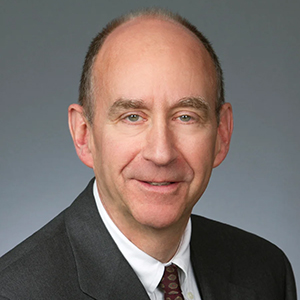
Barbara A. Perry
This is the Neil Eggleston interview for the Barack Obama Presidential Oral History at UVA’s [University of Virginia] Miller Center. Given that I am half Hoosier, I just wanted to talk to you a little bit about—I guess we could break into song, “Back Home [Again] in Indiana.” Were you born and raised in West Lafayette [Indiana]?
Neil Eggleston
I was actually born—not that I remember it. [laughter]
Russell L. Riley
Oh, that would be a great story.
Eggleston
We’d have to release that right away. I was born in Evansville and lived there for six months.
Perry
Which is right on the river but just downriver from Jeffersonville.
Eggleston
Yes. I lived there for six months and then moved to West Lafayette and then grew up in West Lafayette.
Perry
And your dad was a lawyer, as I recall.
Eggleston
Yes.
Perry
How did you all end up in West Lafayette? Was he connected, or your mother, to Purdue [University]?
Eggleston
Neither one was connected to Purdue. My mother grew up in West Lafayette. I don’t know exactly what that discussion was, but I think they ended up back there because that’s where my mother had grown up. My grandparents, my mother’s parents, lived in West Lafayette, and we saw a fair amount of them. But that’s how they ended up there, I think.
Sarah Wilson
What type of law did your dad practice?
Eggleston
Lafayette and West Lafayette were right across the Wabash River from each other. West Lafayette has mostly Purdue in it—Lafayette, not that much. It’s significantly bigger but not very big, and to the extent there was any industry or commercial activity, it’s all in Lafayette. I say that because if you’re a lawyer in a small town, you do everything, and so he kind of did everything. He did a fair amount of litigation, trial work. He did wills and trusts. He did business law. In small towns you can’t really specialize.
Perry
A sole practitioner?
Eggleston
No, he had a firm. He had a firm called Ball Eggleston, and then various other names came and went, I think. At the end it’s still called Ball Eggleston, even though both my father and Mr. [Cable] Ball are long dead.
Perry
Ball, as in Ball State [University]?
Eggleston
Well, spelled that way but not related to Ball State, I don’t think.
Perry
Maybe long ago.
Eggleston
Yes, maybe a long time ago. So he was in a firm that he started with Mr. Ball and, I don’t know, may have had a dozen lawyers at one point. I sort of lost track.
Riley
Where did he get his law degree?
Eggleston
He went to Northwestern [University] Law School, which is the same place I went.
Perry
Were they political? Were your parents political or talked politics at home?
Eggleston
Yes, I’d say so. When I was still in junior high or high school, I can’t remember which, there was a very long-serving congressman who covered our district, which was Tippecanoe County. I’ve forgotten his name, but you probably have heard of him because he’d served forever. He finally retired, and my father was considering running for Congress and then didn’t. I think he didn’t really want to move to [Washington] D.C. and take a pay cut and move the family and all that kind of stuff, so he didn’t do it. They talked about politics, were interested in politics. I don’t remember them being particularly active, certainly not in local politics that I remember, but they were interested in politics and talked about it. Boy, it’s funny I can’t remember the guy’s name.
Perry
I don’t know why this name of [Charles A.] Halleck is coming to my mind.
Eggleston
Yes.
Perry
Charlie Halleck?
Eggleston
I think it was Charlie Halleck. I think you’re right.
Riley
Good for you. [laughter]
Eggleston
When we get to a break, we’re going to have to Google that. I think it was Charlie Halleck, and he covered whatever district that we lived in. And then when he retired, my father thought about it. He would speak periodically to groups and stuff, but I don’t remember him being very active in local politics.
Perry
Were they partial to one party or another?
Eggleston
Yes, quite Republican.
Perry
And presidency, talk about presidential elections coming up?
Eggleston
Oh yes, and very Republican. That slice of Indiana—well, you probably know. The Democrats are in the cities, and we were not really in a city, although it was essentially a college town. I went to a public school. There weren’t any private schools. There was a Catholic school in Lafayette, but apart from that, unless you left town, there were no private schools. But the result of being in a college town is that all my classmates were children of Purdue professors, all of whom had PhDs. It was almost like being in a private school. Everybody—I don’t mean literally everybody, but of 200 people in my graduating class, I think all but 3 went to college. That’s what was expected, and that’s a good thing, but everybody was a child of a Purdue professor—not literally but heavily—which meant it was a very middle-class community because professors don’t make a lot of money, as you guys know.
But it was middle class, and so the people that didn’t have as much money tended to live in Lafayette where the housing prices were lower and went to the public schools there. It was very, in some ways, homogeneous. And since it was agriculture and engineering particularly, the “ag” people were typically white and the engineering people were not African American, but they were heavily Asian, Pakistani, Indian. It was this sort of interesting mix of people. Very few African Americans actually in the community, including in Lafayette for that matter.
Riley
We were talking earlier. I grew up in Auburn, Alabama. It’s exactly the same.
Eggleston
Isn’t that right? It’s interesting what it then ends up drawing because you would think there would be more African Americans in agriculture but not in West Lafayette, Indiana. Not at Purdue.
Riley
Did you feel marginalized because your father wasn’t in the university?
Eggleston
No, not really. I never really felt that. My mother’s father was relatively wealthy—not by today’s standards—and he was quite active in the university, so we had great tickets to all the football games and the basketball games. [laughter]
Riley
That’s the answer.
Eggleston
When I was a kid, it was when Bob Griese and Mike Phipps were the quarterbacks back-to-back, and so they had amazing teams year after year after year when I was a kid. This is irrelevant to this, but just to show how things have changed, when we went to football games, I would go in a coat and tie.
Perry
Oh, that was common here at UVA.
Eggleston
Was that here too? I would go in a coat and tie.
Perry
Yes.
Nancy Kassop
Same at Penn [University of Pennsylvania].
Perry
Penn too?
Kassop
Yes.
Eggleston
Is that right, went in a coat and tie? Now nobody goes in coat and tie.
Perry
Clothing is optional these days. [laughter]
Eggleston
Exactly. So I didn’t feel marginalized, but I think part of it is that we were pretty connected to the university.
Wilson
I spent a year as a Hoosier in Columbus, Indiana, by way of New York City, but I’m curious about your religious background and the community around you.
Eggleston
My father grew up in Alcester, South Dakota, which is just north of where South Dakota dips into Iowa. You know there’s that little dip, and he was sort of at the top of the dip, I think. That’s where he grew up. I was only ever there once. That was a tiny farming community. His father was a veterinarian. The only reason I say that is that religion is massively important in those communities, and he was Southern Baptist. They went all day Sunday, and they went on Wednesday. The result of all that, unfortunately, is he had no interest in religion. We basically never went to church. Every once in a while, my mother made an effort to take us—I can’t remember whether it was a Presbyterian church or a Methodist church—which would last two Sundays. He also loved to play golf, and we played golf sort of as a family on Sunday mornings.
Kassop
That was the religion.
Eggleston
Which was kind of a religion, so very little religious training. My father would sing Southern Baptist hymns at home all the time, but I think that’s the only thing that really stayed with him. I’ve become, actually, much more religious. My wife, from whom I’m now separated, when I met her was/is religious and we started going to church. And then I felt it was important that our kids have the exposure so they could make whatever decisions they wanted, so we went to church. The kids were pretty active in youth group and all that kind of stuff. I’m much more religious now than I was as a kid—essentially unreligious as a kid.
Riley
The hymns took. [laughter]
Eggleston
Yes. If I thought about it, I’d remember the hymns he used to sing.
Perry
They’ll come back to you once they get started. What are you thinking about careers as you are going through high school? And then how do you end up at Duke [University] for undergrad?
Eggleston
I think I always assumed I’d be a lawyer—I guess this happens to people. I could tell that my father really liked being a lawyer. I mean, he liked it. It gave him a lot of freedom, and he didn’t work for anybody else. Now I’ve just been in big firms, so that turned out not to quite fit me, although partners in law firms are almost solo practitioners anyway.
Perry
Sarah agrees. [laughter]
Eggleston
I think I just always assumed I would be a lawyer. My brother, who’s just a little bit older than I am, went to undergraduate at Dartmouth [College]. He was a basketball player and played basketball for Dartmouth. I’m medium height. He’s 6’7. And his son, who went to Penn, played basketball at Penn, is 6’8. And then he played professionally in Germany for several years. I didn’t get the height like my brother got the height.
I don’t know. There was something, but I didn’t really want to go—I don’t know if it was antielitism—I didn’t really want to go to an Ivy League school. I don’t know why that was. I think I could have. I did really well in high school. But Duke sort of fit what I was looking for—smaller school, I thought it would be fun to go to the South. I don’t know how well thought out it was. I remember my parents were all over my brother—I don’t mean that as a “helicopter parent,” I just meant they were quite involved with his selection of where he’d go to college, but it was mostly about athletics. They were trying to figure out what the best school would be where he could play. He wasn’t good enough to play in the ACC [Atlantic Coast Conference] really. I think when it came to me, they were like, He’ll figure it out. [laughter] I don’t remember anybody helping me on figuring out where I should apply or the applications. I think it was like, We already did this.
Kassop
Second child.
Eggleston
Exactly, the second child, He’ll figure it out. And I did figure it out, so it was all fine.
Perry
What did you major in?
Eggleston
History.
Perry
History, OK.
Eggleston
American history.
Perry
Any professors particularly come to mind who you studied with?
Eggleston
Yes. There were two. I remember the name of one of them, although I don’t remember his first name. He was Dr. Scott. Modern European history was my focus. He taught that class and a seminar that he held at his house, and the students came over. I remember him. He was fantastic. There were two other professors. There was a professor who taught the history of socialism and communism who was from Russia, I think. At least he had an accent. I’m pretty sure he was from Russia. Loved that. And then there was another professor whose name I don’t remember now but just a fantastic, fantastic professor whom I still think about every once in a while. He was a little old guy, all scrunched down in his chair.
Perry
Probably 50. [laughter]
Eggleston
Yes, exactly. He was probably 50, exactly.
Wilson
But the topic was European history?
Eggleston
His topic, I think it was something like intellectual history or something. I remember “intellectual” being part of it. I really remember those three. I’m not great at remembering their names, but I remember those three pretty well.
Perry
Any political science? I’m thinking of my favorite, James David Barber, who was in political science, I think, at Duke at that time and wrote this book, The Presidential Character.
Eggleston
Yes, I remember him. I didn’t take him. There was a professor, whose name I don’t remember, who—Duke then and now has all these connections with Washington. There’s all this interaction between the two. People who are in political positions—I don’t mean currently—teach down at Duke. There was some sort of center, not like the Miller Center, but there was some part of the university that was devoted to that. There was a great professor, whose name I don’t remember, who taught some political science classes I took and really liked. But my focus was really on history. Part of it was I knew I was going to go to law school, assuming I did OK, and so I didn’t really need to learn a trade. [laughter] I was going to go three years and learn a trade. Today, I think people don’t go into history anymore because they’re—It’s sort of sad.
Perry
In your summers, did you do any internships or work?
Eggleston
During college?
Perry
Yes.
Eggleston
Yes, I did two internships. I think after my first year I worked on a farm, if I remember right. I think that was after my first year of college and not after my last year of high school, I can’t remember. But then I did two internships at the Department of Justice during college.
Perry
What division?
Eggleston
Well, the first one was at the [U.S.] Marshals Service. I don’t know how I ended up there, but there was some Duke placement thing. The most remarkable thing that happened—for some reason I was thinking about this, completely unconnected to this, I don’t know why it popped in my head—but when I was there, I was in the public affairs department. The head of the department and the head of the Marshals Service had gone on some trip—the brass [leaders] of the Marshals Service and the head of public affairs had gone on some trip somewhere. And there was some hostage situation that took place in the basement of the federal courthouse. All courthouses have holding cells, and there was some hostage situation. I just remember no one came back, and there were all these calls coming into where I was from the press.
Perry
You were answering?
Eggleston
Yes, because what did I know? This was my first exposure to the media, which has gotten significant since then, but they kept wanting me to tell them the names of the hostages. Of course, I knew better than to do that since their families didn’t know, and it just seemed like more than some summer intern ought to be doing, I remember that. [laughter] And then I went back the second summer. I don’t quite remember where I went, but I definitely remember the first one because I remember this hostage situation.
Wilson
Was this in North Carolina or in Washington?
Eggleston
Washington. Yes, it was in Washington.
Riley
What years were these roughly?
Eggleston
I went to college—I started in ’71 and graduated in ’75.
Riley
OK, so this would’ve been pre-Watergate [scandal]? Post-Watergate?
Kassop
During Watergate.
Perry
Height of.
Riley
But I mean when you were in Washington.
Eggleston
I think it was—When did he resign? ’73?
Wilson
Seventy-four, August of ’74.
Eggleston
Seventy-four. OK, so I was new. It was August. My brother—I don’t remember how this happened—was actually in the White House as an intern that summer. He used to joke, “Absolutely nothing happened. [laughter] Nobody’s doing any policy. Absolutely nothing happened,” but he was there. That must’ve been connected with Dartmouth because he would’ve been at Dartmouth at the same time. I think this was probably ’72 and ’73. I don’t remember that well.
Riley
Were you bit by the Washington bug? A lot of students will go to Washington and just fall in love with it. Or were you just there to get the experience?
Eggleston
I was sort of there to get the experience, and I thought it would be a fun thing to do. As I said, my father was a lawyer, so we had—There are a lot of people with a lot of money. We didn’t have that kind of money, but I didn’t need to earn money for the summer and all that kind of stuff, so it gave me the opportunity to have these kinds of experiences.
Perry
Then you decide to go straight to law school?
Eggleston
Yes.
Perry
Any other thoughts other than your dad’s alma mater, Northwestern?
Eggleston
I was a good student at Duke but not a great student. I got into Stanford [University], which was probably a better school than Northwestern. I just didn’t really want to go to California. I think people go out there and get lost.
Riley
Have you seen Palo Alto [California]? [laughter]
Eggleston
Later, I represented the board of directors of Enron in the whole Enron scandal. You probably don’t remember this, but the chairman of the audit committee was the dean of the Stanford Business School. [Robert K.] Bob Jaedicke was his name. So I would see him periodically in Palo Alto, and I’ll tell you, I didn’t regret this. I don’t understand how anybody does any work. It’s beautiful. The weather is beautiful. I just can’t imagine sitting in a library studying. All the students look gorgeous because they’re all exercising.
Perry
You thought winters on Lake Michigan would be more conducive to staying inside and studying.
Eggleston
Well, yes. It definitely kept me inside. The lake would freeze, way out into the lake, and you’d think to yourself, This is a big lake.
Perry
It’s a Great Lake.[laughs]
Eggleston
It’s a Great Lake. Hundreds of yards out the lake would freeze, probably not any more actually, but then.
Perry
Before global warming. I’m thinking you arrive at Northwestern in the fall of ’75—
Eggleston
Correct.
Perry
Which would’ve been about the time that Justice [John Paul] Stevens was nominated and had gone to Northwestern. Are you starting to think about, Maybe I could get a clerkship? Or what are you thinking as you go into law school? You want to go back to a small town and practice as your dad did? You’re not bitten by the Washington bug. You’re not looking to run for office. Are you thinking, and at what point in law school, about what you want your next step to be coming out?
Eggleston
It took a while, I think. You’ve got to do really well, and at first, I didn’t know if I was going to do well. How you do then determines what your options are, which is weird since my father’s a lawyer, but I was sort of unclear about what I was going to think about doing. After the second year, it was pretty clear I could get a clerkship—I was not really interested. My first summer I don’t really remember what I did, but I probably just played golf or something. My second summer I went to Sullivan & Cromwell in New York because I really wanted to see what that was like, sort of “What is the whitest white-shoe firm in New York?” But I don’t think I understood at the time that 90 percent of law students end up going to the firm that they spent their second summer at, and I had no interest in going there permanently. I don’t think I made that connection.
This is all going to sound so happenstance. I got the clerkship with Judge [James] Hunter [III], whose chambers are in Camden, New Jersey, right next to that big Campbell Soup factory, which was really awful then. It’s still awful. I lived in Philadelphia [Pennsylvania] right off Rittenhouse Square, and there’s the [PATCO] High Speed Line that goes—His chambers were in the post office. Not that you’ve ever been to Camden. I could take the High Speed Line and it was reverse commute.
The one thing I did figure out is that you have to accept the first offer you get. Basically, Hunter said to me, “You’ve got 24 hours because I’m going to stop interviewing if you take it.” He had other positions to fill. At that time, there were only two clerks. While I was there, they added a third clerk. The court of appeals judge got third clerks, but it turns out he was sort of a feeder to the Supreme Court. A whole bunch of clerks who had clerked for him went on to clerk for [William H.] Rehnquist and the Chief—
Kassop
Actually, I believe [Samuel A.] Alito [Jr.] had been a clerk in the Third Circuit just before you. I think he left the year before you got there, and then eventually he was a judge on the Third Circuit. It wasn’t to the same judge that you were clerking for, but it was on the Third Circuit.
Eggleston
I forgot that. I knew he was a judge on the Third Circuit. I actually argued in front of him several times.
Perry
Who appointed your judge?
Eggleston
[Richard M.] Nixon.
Perry
What did you learn about judging that year?
Eggleston
This is a little bit of a story about our medical—He was a very prominent South Jersey trial lawyer and had a heart attack. At the time, they told people if you have a heart attack, you have to stop stress. So he gets nominated and confirmed to the Third Circuit because you’re not supposed to do stressful things, and there’s nothing less stressful than being a court of appeals judge. [laughter]
But the result of that was that—he was very clear about this—he thought the kings of the mountain were the trial judges, the next were the district judges, and the least important people in the system were the court of appeals judges. He said, “Those district judges, they have to make a ruling on the spot. I have two and later three clerks. I can think about it for months. I can talk to my colleagues about it. I get to write an opinion about it. A district judge has to decide because there’s a jury sitting there.” He used to think that the whole system, if anything, should’ve been more skewed to affirming the district judges. Not on pure legal issues but on the trial issues and all that kind of stuff because he just said, This is a weird system where we get to remake the trial judge’s decision, and we have months and the trial judge has five minutes. But anyway, that’s the way he thought about it, which was super interesting to learn from somebody like that.
Wilson
Were there any three-judge court cases when you were—
Eggleston
No, not that he was on.
Wilson
And he didn’t sit by designation?
Eggleston
No. There were none that he was on.
Perry
Did he let the clerks draft opinions?
Eggleston
Oh, yes. He made it clear how he wanted an opinion to come out. We didn’t have that kind of discretion, but he was very clear about how he wanted it to come out.
Perry
Once you’re there, you realize he’s a feeder judge to the Supreme Court. And then do you say to yourself, I’d like to be fed to the Supreme Court? [laughter]
Eggleston
Yes. By that time, if I wasn’t first in my class at Northwestern, I was almost first, and so I had a legitimate shot. I had gotten an interview with Rehnquist.
Perry
What was that like?
Eggleston
Well, exactly as you’d think. He’s kind of curmudgeonly.
Perry
Oh, we’re shocked to hear that. [laughter]
Eggleston
I remember this. I don’t remember much about it, but I remember he did say to me—I can’t remember exactly what his words were, but basically he was saying, “You know I’m a right-wing conservative,” and the question was, “Could you work for me?” To which the answer was, “Sure,” to get a Supreme Court clerkship. I said, “Yes, I’ll tell you what I think, but you’re the justice. And once you decide, my job is to implement the way you want to come out of this. I’m not the justice here, you’re the justice.” He ended up not hiring me.
Perry
You didn’t get an offer from him?
Eggleston
I did not get an offer from him.
Perry
Any others, other than the chief at that time, [Warren E.] Burger?
Eggleston
I think I got an interview with [Harry] Blackmun. I don’t quite remember. I definitely remember Rehnquist.
Perry
But not Stevens, even though you were coming out of Northwestern?
Eggleston
Not Stevens. I did not get an interview with Stevens.
Wilson
Did he hire a Northwestern clerk?
Eggleston
Yes. I mean he—
Wilson
In your year?
Eggleston
In my year? Because I was thinking you were asking the broader question, to which the answer would be yes. He did not hire a Northwestern clerk my year. He only took three clerks, if I remember right. Basically everybody else had four, but he had three. Maybe Rehnquist only had three? He had three, but none of them—because I would’ve remembered. There was nobody else my year who was Northwestern.
Perry
But obviously you interview with Chief Justice Burger.
Eggleston
Not actually.
Perry
Not?
Eggleston
He didn’t do the interviews himself. He had a committee of a couple people who then made recommendations to him, and this is just the way he did it every year.
Perry
Who were they, the committee?
Eggleston
A professor at Penn, [Stephen B.] Steve Burbank. Probably not there anymore.
Kassop
I was in at Penn Law, so I was an undergrad.
Eggleston
Steve Burbank. I’m surprised I remember his name. I didn’t interview with him, but I interviewed with a guy named [Charles F.] Chuck Lettow. Do you know Chuck?
Wilson
Oh, sure, yes.
Eggleston
I interviewed with Chuck Lettow, who was at Cleary [Gottlieb Steen & Hamilton] in D.C. at the time.
Wilson
Yes, and he was a Blackmun clerk, I believe.
Eggleston
No, he had to have been a chief clerk because—
Wilson
Oh, that’s right. Yes, because he was interviewing.
Eggleston
—that was the connection.
Wilson
Yes, and he’s on the Court of Federal Claims.
Eggleston
Oh, is he?
Wilson
Yes.
Eggleston
I sort of lost track of him.
Wilson
He left Cleary. He was an environmental lawyer.
Eggleston
Yes, I remember. He was a super guy. But he’s the guy I interviewed with, so I like him. [laughter] He obviously recommended me.
Wilson
Incredibly smart.
Eggleston
It was great. I think it was a lunch.
Riley
Can I ask you? Because you’re kind of at the intersection of what we would broadly call politics and law, and you had replied on the affirmative to Justice Rehnquist that you could work for a right-wing justice. What are your own politics at this time? Do you consider yourself a conservative or a liberal? Or are you a legal craftsman who is apart from all of that?
Eggleston
I think personally I was moving away from my conservative roots. I’m not saying this is inevitable or this happens to everybody, but I think as my world expanded at Duke, at law school, living in Chicago, a big city, I’m moving increasingly to the Left. And so when Rehnquist asked me that question, I did not have his worldview. I would’ve written whatever he told me to write, but I wouldn’t necessarily have agreed with it. But again, that didn’t matter, I wasn’t the justice.
I was significantly to the left of Rehnquist, and I think that’s the reason he was—I don’t know how he sensed that because I think I was pretty careful not to suggest that. And maybe he just asks everybody that because lots of law students are—There wasn’t FedSoc [Federalist Society] then, so there wasn’t a selection process for what hat people wore. But I was well to the left of Rehnquist.
Riley
In terms of your partisan disposition, did you consider yourself an inheritor of the Republican affiliation or are you moving in the direction of the Democratic Party?
Eggleston
I’m moving in the direction of the Democratic Party, probably voting Democrat by then.
Kassop
Also, that was a period of time, post-Watergate and post-Vietnam War, where Congress was very Democratic and there was a lot of very progressive legislation going through as a reaction, essentially, to Nixon.
Eggleston
Yes, exactly. You’re right. Watergate had just happened. It would’ve been tough to stay a Republican there for a while. All that progressive legislation, all the sort of reforming the structure of government, the FOIA [Freedom of Information Act].
Kassop
Yes. If it’s a government act, War Powers Resolution, all of those things.
Eggleston
All that was sort of happening.
Wilson
Were you active in any causes or movements—
Eggleston
No.
Wilson
—when you were in college or law school? Anti-Vietnam War, nothing like that?
Eggleston
Not really.
Perry
Describe for us the chambers of the chief justice at that time. Who were your co-clerks? What was your relationship like with the chief? He was very interested in administering the court and—“thank you,” we say, Sarah and I, because we were judicial fellows—he founds the Judicial Fellows Program. Mark [W.] Cannon, he sets up—
Eggleston
Yes, sure. He was there when I was there.
Perry
Right, so what’s it like at the top?
Eggleston
He had four clerks, and then he had a “superclerk,” I think we called him, who, a couple years after I left, went on the Federal Circuit. I can’t remember his name. Paul Shechtman, who’s remained a friend, was one of my co-clerks. Eventually, I go to the U.S. Attorney’s Office. Paul was there a year or two before I was there. We’ve just stayed friends. I know his wife, I’m not sure I met his kids, but I know Paul. There was a guy who clerked on the Seventh Circuit named Michael Huskey. He was from Minnesota, and he went back to Minnesota. I can’t remember what firm, but one of the big firms in Minneapolis, I think. There was a guy who, I think, had gone to Penn. I sort of lost track of him even though he stayed in D.C. He was a criminal appellate at [Department of] Justice forever. I don’t really know what happened to him because he took that path, and that meant that our paths didn’t really ever cross. And then there was a fourth. No, I’m the fourth. [laughter] There are no four in addition to me. The year after me, a clerk was John Sexton, who ended up as president at NYU [New York University]. He and I have sort of stayed in touch ever since.
Wilson
Any opinions of note that you worked on that really stick with you?
Eggleston
No. I wrote my share. I can’t remember how many I wrote, but I don’t think that I wrote anything that’s getting cited today. Remember, things were different back then. They were not the same kind of blockbuster opinions. I think our term was Richmond Newspapers [Richmond v. Virginia] that, I think, the chief wrote, but I didn’t.
Wilson
There were some ecoprotection cases that may have been bubbling up mid-1970s.
Eggleston
I don’t remember. Griggs [v. Duke Power Company] was before us by a couple years, I think.
Kassop
This was ’78, ’79?
Eggleston
So, ’79, ’80. October term ’79 because I clerked for the Third Circuit ’78, ’79, and then for the chief in the October term ’79.
Kassop
Was Jeffrey [B.] Morris in the office then as an assistant to Mark Cannon?
Eggleston
Not that I remember.
Perry
What’s the scuttlebutt in the chambers among the clerks, among the chief’s clerks and among all the other clerks, about the court? Who’s influential? The chief is running the conferences, the secret conferences. What are people saying when he goes in and what’s being said when he comes out, to the extent you feel comfortable discussing that?
Eggleston
The thing is, I’m not going to remember details, so I can talk because I don’t actually remember any details. In the fall is when The Brethren [:Inside the Supreme Court] came out. Within a couple of months after I got there, The Brethren comes out, which was very harsh about the chief. The two people who come off worse—I don’t know if you’ve read it—it’s the chief and [Thurgood] Marshall. Marshall they accused of just sitting in his bathtub and never doing anything, and the clerks did everything, and all that kind of stuff. But it really went after the chief too. And I think that changed the relationship a little bit. It changed the relationship with the clerks a little bit because, obviously, a lot of people had spoken to [Bob] Woodward in connection with that book. I think that there was a change. I hadn’t been there long enough to know whether there was a change among the justices, but I think everybody thought that the justices also talked to Woodward and trashed the chief. I think it changed the atmosphere.
You read or hear that post-Dobbs [v. Jackson Women’s Health Organization] leak, there’s been a big change now. Obviously, I don’t have any personal knowledge of that. But The Brethren was more of a personal attack. The Dobbs leak is sort of a breach of trust of the organization, but the breach of trust with The Brethren is both a breach of trust and personal attacks. You can tell now, having been with the media as you guys are forever, you can always figure out who the leaker is because they’re the ones who look great. [laughter] [Potter] Stewart looked great. Everybody always thought he was talking to the press all the time. Nobody ever thought he was giving out the results of opinions in advance. I don’t mean that, but I think that sort of changed things.
Perry
There was no retirement party for him in ’81?
Eggleston
Not that I remember.
Perry
“Here’s your hat.”
Eggleston
Yes, exactly. “Don’t let the door hit you.”
Perry
Last question for those of us who study the court. The personality of Chief Justice Burger, what was your sense of him as a man?
Eggleston
Like we’re all complex, he was a complex figure. He had been a judge forever, and that wasn’t really what interested him. Things like the administration of the courts, which he was really good at, that’s where I think he thought—as a justice, even though he’s chief, he’s one of nine. Basically his only job that’s different from everybody else’s is to run the conference and to assign the opinions if he’s the majority. They’re always talking about the “Roberts Court” and all that kind of stuff, but there’s really no more power except you have the power to assign opinions if you’re the majority.
He thought he could make a difference in court administration. I think that’s part of the reason he had the superclerk. By the time my drafts got to the chief, they’d already gone through Bob—last name begins with an m. Anyway, they’d gone through Bob and we’d sort of been back and forth. And so when the chief saw them, he also knew that Bob had already seen them and that gave him a comfort that he didn’t have to spend as much time on them. He was the decision-maker but exactly how it was drafted and stuff, pretty much less interested. He was totally devoted to his wife, talked about her all the time.
Perry
Virginia? Was that her name, Virginia?
Eggleston
I don’t think so.
Perry
Or was that the daughter?
Eggleston
Vera [Elvera S. Burger]?
Perry
That sounds right.
Eggleston
Anyway, I can’t remember her name, but he talked about her all the time and talked about his kids a lot. He was pretty good to us. We didn’t have a lot of interaction with him during the week, probably much less than other clerks had with their justices during the week. But on Saturdays, he would come in and he was famous for making this bean soup for all of us, which he made in the kitchen in the court. He didn’t bring it from home. There was a little kitchen as part of his chambers, and so he would make this bean soup. We’d all sit around and eat bean soup for lunch and basically just chat, not really about court work but whatever, mostly about administration and what he’s doing, that position as the head of the Smithsonian [Institution], and he liked that. He had two or three black ties in his office because he went to black-tie events all the time, and so he had these black ties.
Perry
Just last word on him, I’d say he’s chief justice out of central casting. If you had to cast a chief justice by looks, hair, and voice—perfect.
Eggleston
Perfect. He looked the part.
Perry
He looked and sounded it.
Eggleston
And sounded, both. I’m sort of amused. “Amused” is probably the wrong word. And I think Rehnquist did this after the chief left. He was just an enforcer of the time limits. If that final light came on and an arguer was talking, he’d cut them off in the middle of a sentence. Rehnquist did the same thing. I think there was generally a view that these arguments don’t really matter, so why are we—[laughter] And they don’t really.
But now the way—this is because of the changes that came in during the [COVID-19] pandemic, when it was all sorts of audio—and now, going around the room and all that kind of stuff, the arguments go on forever. [John G.] Roberts [Jr.] is not really enforcing any of the time limits. I’m sure everybody agrees, but darn. I can hear Burger saying in the middle of a sentence, “Thank you, counsel.” [laughter]
Wilson
Did you have any sense that he had an interest in a jurisprudential legacy for his tenure? There have been articles written about whether there was reaction to the Warren Court, how decisions would play out on civil rights issues in particular.
Eggleston
I didn’t really. I think probably unlike other justices, and very much unlike the justices today, my impression was he took each one sort of one at a time. The only one I remember fairly vividly along this line is that we either talked about this or we had some Miranda [Miranda v. Arizona]–related case come up. He was not a fan of Miranda, but his view was, you can’t change it. You can’t change it. It’s part of the culture, the police are all taught it. If we tell them they don’t have to do it anymore, are they going to be back to the old brutality practices?
It was meant as a prophylactic. You could ask where it is in the Constitution. It probably doesn’t actually belong there. He felt quite strongly that even though he didn’t think it was an appropriate rule, that it should not be undone because it had been internalized by people and the police, and to undo it would cause a significant overreaction the other way by the police. That’s the one I remember him talking about as jurisprudential. People write about his First Amendment jurisprudence and all that kind of stuff. I don’t know that I think that’s right. I don’t think he was playing the judicial long game in a way that people talk about Rehnquist did and [Clarence] Thomas did.
Wilson
Do you think he had the ear of anyone on judicial appointments?
Eggleston
I think the people he wanted appointed got appointed. [J. Michael] Mike Luttig, the now famous Judge Luttig. When I clerked, he was literally his bag carrier. If the chief went on trips, Luttig went and carried his suitcase, like he was literally the bag carrier. They got to be quite close, and I think the chief got the Fourth Circuit appointment for him. Alex Kozinski, he really liked Alex. He was a couple years before me. I think he was helpful. Nobody really remembers this, but Alex went on the Merit Systems Protection Board first before he went to the Ninth Circuit. I think Alex is a “chief justice thing.”
Wilson
And he was on the Court of Federal Claims.
Eggleston
I forgot he was on the Court of Federal Claims. Oh yes, of course. MSPB [Merit Systems Protection Board], Court of Federal Claims, Ninth Circuit. I think that’s a chief justice thing. This Bob, the superclerk whose last name I can’t remember, on the Federal Circuit, I think that’s a chief justice thing. Look, I think Justice Blackmun’s a chief justice thing.
Perry
And Justice [Sandra Day] O’Connor, don’t you think?
Eggleston
Well, I don’t know about that. That was after my time. I’ve heard that, but I don’t have as much sense of that.
Wilson
There was a pretty significant expansion of the federal judiciary in, I think it was, ’79, ’80.
Kassop
Seventy-eight, ’79.
Wilson
Yes. Was he at all involved in that, do you know?
Eggleston
Might’ve been, but I don’t know. I didn’t have the impression, but, again, I wouldn’t know this part. First, I don’t know anything except for the year I’m there. If he’s talking to somebody about judicial appointments, he’s not talking to us about it. He’s doing that through Cannon or directly. The only ones I know are the ones—sort of his clerks that he got placed. Look, they’re all—Kozinski, obviously, ended up having his problems, but he was a super smart guy. I don’t mean they were unqualified and he got them their jobs, but he was instrumental, I think, in getting them nominated to their positions.
Kassop
Were you able to see anything about his interaction with his fellow justices?
Eggleston
Not really.
Perry
Even Justice Blackmun, as his old friend?
Kassop
Right, “Minnesota twins.”
Perry
Minnesota twins, but then began to part ways.
Eggleston
Maybe parting ways after this? We didn’t spend very much time in other chambers. I don’t really remember seeing other justices. There didn’t seem to be a lot of justices visiting each other.
Kassop
But were the clerks? Don’t the clerks speak a lot during lunchtime, or whatever, and they talk about their fellow justices?
Eggleston
Yes, clerks talked all the time. There was one funny story. We had a basketball tournament. I started dating a Blackmun clerk—which is like the only place you could find a woman, because I’m too busy. I eventually married her. [laughter] By that time, I could’ve found somebody else, but I decided she’s the one for me.
But the chambers had a basketball tournament. I think it was four-on-four, and every team had to have a woman. Lots of chambers didn’t have any women clerks, but you could pick anybody else—a secretary, a researcher—you just had to have a woman. So it comes down to the finals between the chief’s chambers against Blackmun’s chambers. I played high school basketball—not well—in Indiana. And this Paul Shechtman I talked about actually played for Swarthmore [College] and was a college basketball player. We also had—I think he played with us—[James C.] Jim Duff, whom you probably all know. He played basketball at [University of] Kentucky.
Wilson
He was a walk-on.
Eggleston
He was a walk-on. He played freshman ball. He’s still a very good friend.
Wilson
We’re all big fans of Jim Duff.
Perry
We love Jim.
Eggleston
Anyway, we were pretty much going to win this thing because we had two college basketball players.
Perry
Who reffed [refereed] for these games?
Eggleston
I don’t think we had any refs. Just like you do on a playground, I think we just called ourselves. But the Blackmun chambers created this huge banner that they put up in their chambers that said, “Beat the chief.” And then when the game comes around, they take it up—there’s a basketball court in the Supreme Court—they take it and they hang it on the side. Blackmun comes to the game. We won. The chief somehow found out about it. The next time we saw him, he said, “I don’t understand why you didn’t invite me to that game. I heard Justice Blackmun was there,” or Harry was there, “I’d have gone.” I thought, Yes, really, we’re going to invite you to this basketball game. I remember this giant banner that said, “Beat the chief.”
Perry
I hope that wasn’t a cheer, “Beat the chief, beat the chief.”
Eggleston
Well, there was nobody to cheer. [laughter]
Wilson
How many women Supreme Court clerks were there at that time approximately?
Eggleston
Everybody had four except, I think, Stevens, and I think Rehnquist had three, so it would’ve been right at 34.
Perry
Out of that total, how many women clerks?
Eggleston
Remember, [William J.] Brennan’s [Jr.] wife wouldn’t let him hire women, so he never had a woman until his wife died.
Perry
This was second?
Eggleston
First wife wouldn’t let him hire—
Perry
Oh, first wife wouldn’t let him.
Eggleston
But I think most chambers had—we didn’t, but he had other women clerks. He had one who clerked a few years before I was there whom he really liked, Candi something, big, flowing, blonde hair. He really liked her. He was willing to hire women, and I think lots of years he hired women, but he just didn’t happen to have any women our year. Blackmun had one, the woman I ended up marrying. Rehnquist had one, Stevens had one. She got pregnant during the course of the year. I don’t know when she got pregnant. She was pregnant during the course of the year. [laughter] I don’t think [Lewis F.] Powell [Jr.] had any. I don’t know, it was not many. Blackmun obviously had one.
Perry
So you are there in the midst of an election, a presidential election. First of all, you’re there when there is [Edward M.] Ted Kennedy’s challenge of the incumbent president, Jimmy Carter, for the nomination. If you were there ’79, ’80, you would’ve just left before the fall election.
Eggleston
I left in the summer. Everybody came and left during the summer.
Perry
Right. You’ve told us you’re drifting leftward, and you’re drifting towards the Democratic Party. What were you thinking that summer, if you had time to think?
Eggleston
I don’t think I was really thinking.
Perry
Were you for Carter? Did you want Carter to defeat [Ronald] Reagan?
Eggleston
Oh yes, definitely.
Wilson
Do you remember how many candidates were in the primary?
Eggleston
No.
Riley
John [B.] Anderson.
Wilson
Mo Udall, and then there was John Anderson for the Independent Party.
Eggleston
I haven’t thought about this in a long time. This is the ’80 election, right?
Perry
Correct.
Eggleston
The primaries would’ve been—
Perry
The winter and spring of ’80.
Eggleston
Of ’80.
Perry
Ted Kennedy’s challenging Jimmy Carter for the nomination. Reagan gets the Republican.
Eggleston
I was done clerking in the summer of ’80. I can’t remember when, but somewhere in there I get an offer to be an assistant U.S. attorney for the Southern District of New York. But I get caught in a hiring freeze. I’m going to get hired, but two people had to leave the office for one person to go. It’s not a complete hiring freeze but two had to go, if I’m remembering this right. I just went for six months to a small litigation boutique, which was one of those hot litigation boutiques that had a whole bunch of Supreme Court clerks, called Rogovin Stern & Huge. Does anybody remember [Mitchell] Rogovin? Most of what I remember about this is Rogovin was representing Anderson in trying to get on ballots. I was sort of involved helping out that effort but just as a lawyer, not because I particularly was a John Anderson fan. I don’t remember being all that, except for this. I’m pretty sure this is when—anyway, it may be that I heard about it but didn’t work on it, I don’t remember—but I remember that Rogovin was the person trying to get him because there were issues about getting him on ballots as the candidate he was. I kind of remember that. I was a Carter person by then. I was a Democrat by then. I would only vote for a Democrat.
Perry
We can presume you voted for Jimmy Carter?
Eggleston
Yes. I don’t remember, but I’m sure I did. I’m sure I voted because I always vote, and I’m sure I didn’t vote for Reagan. [laughs] I don’t actually remember voting for Carter, but I’m sure I did.
Perry
What were your thoughts when Reagan won?
Eggleston
At the time, it seemed terrible. But then we had [Donald J.] Trump, and so we had no idea what “terrible” was. [laughter] I guess I thought he was going to retrench on civil rights, as he did. Like Trump, he brought in all sorts of people into agencies whose goal it was to destroy the agency that they had been put in charge of. I remember the guy they—was it [James G.] Jim Watt who was brought in—
Perry
James Watt, [Secretary of] Interior.
Eggleston
—for the EPA [Environmental Protection Agency], whose goal was to destroy EPA. The guy they brought in to run the Civil Rights Division. What’s his name?
Kassop
[William Bradford] Brad Reynolds.
Eggleston
Brad Reynolds, whose goal it was to make the world great for white men again. I remember being pretty disappointed and all that kind of stuff.
Kassop
Justice was pretty politicized too.
Eggleston
Quite. Yes, quite politicized.
Perry
And then quickly he gets an appointment. Are you watching the Supreme Court and appointments? Stewart leaves in the summer of ’81.
Eggleston
I don’t remember having any more interest in that. By that time, I’m an assistant U.S. attorney. The year I clerked—well, let me come back to this for a minute. The interesting thing about clerking is you show up and you’re mostly doing cert [certiorari] memos, and the chief was part of the cert pool. I assume there’s still a cert pool. Not everybody was. Blackmun was. Brennan wasn’t.
Perry
Stevens was not.
Kassop
Stevens wasn’t.
Eggleston
Stevens wasn’t, Brennan wasn’t either because he thought, I’ve been here forever. All I have to do is look at the question, present it, and I know how I’m going to vote. I don’t need somebody writing me a memo about this. He wasn’t, Stevens wasn’t. But I think they wrote cert memos for Stevens. I think Brennan just didn’t have cert memos because he didn’t need them, was his view. So you show up and you do these cert memos. You’re pretty frantic, you don’t know what you’re doing. All these other justices and clerks are going to read it. I assume everybody’s just like me, which is that we all have imposter syndrome, like, How could I possibly be a Supreme Court law clerk? I’m not smart enough. I’m not good enough. All these other clerks are smarter than I am. I went to Northwestern. They all went to Harvard. And so you really wanted to do a good job.
You have the same number of cert memos, and then you have to write bench memos, and so the work has expanded. On the other hand, you’ve gotten pretty good at the cert memos and know how to do them. Then you get better, and then the opinions come on top of it. So now you’ve got three tiers of work, and then they slowly peel away. By April, there are no more bench memos because there are no more arguments. Now you’re really good at the cert memos. They don’t really take any time at all. You have opinions, but you don’t have that many opinions really. You could have some dissents. Although these days, they decide something like 55. I think we decided 140.
Perry
I was going to say, it was more than double what they’re taking now and hearing and deciding.
Eggleston
The other thing is that we didn’t have what Professor [Steve I.] Vladeck calls the “shadow docket.” That just didn’t really—
Kassop
But you did for death penalty, right, for emergency appeals for death penalty?
Eggleston
But remember, they were sort of just coming back because the Supreme Court had wiped out the death penalty and then reinstated it in the early to mid-1970s. And so the cases really weren’t at the Supreme Court yet because they had to have been tried. They had to get through the state system. I think we had a handful of death cases but very few. And we hadn’t gotten very good at how to do it yet, so I remember it was more chaotic. I’m sure they’re quite organized now. There are probably clerks in the clerk’s office who are devoted to how to deal with it and all that kind of stuff.
Perry
The “death clerk,” they call them.
Eggleston
Is that right?
Perry
Yes.
Eggleston
Again, all this is checkable, but I don’t really remember many death cases. I just think they hadn’t come back since the Supreme Court had basically reinstituted the death penalty with all sorts of procedural limitations.
Kassop
That was ’72, ’73, so yes.
Eggleston
By ’79, they really haven’t gone—
Wilson
Through the system.
Eggleston
Because they had to have all been convicted by a jury and sentenced to death.
Perry
So the appeals were still working their way through the system?
Eggleston
Yes, the appeals are still working. The habeases [petitions for writ of habeas corpus] hadn’t happened yet because there wasn’t time for all that kind of stuff. It was later. It was into the eighties, I think, that all got started up.
Wilson
Were there any cases on which you worked or opinions that you helped draft where you remember struggling with a particular issue or having the chief struggle to get consensus?
Eggleston
Not really, but I don’t really remember. I wrote my share of opinions, and when you did 140, the chief did not dissent or concur much. I think he thought, as chief justice, he would if he really had to, but he wasn’t—unlike today, I think part of this is a result of them having no majorities to write, so I think they all weigh in because they have nothing else to do, and so they write these separate concurrences.
Wilson
Modernist approach.
Eggleston
Yes, kind of. But at 140 opinions, there wasn’t a lot of excess capacity I don’t think. Anyway, he didn’t concur or dissent much. I don’t remember him ever really concurring. I’m sure he did, but I don’t really remember him concurring. But I don’t remember what I wrote actually. I’m sorry. I remember one totally inconsequential opinion I wrote, and I’ll tell you about it in a second. It was a little trouble getting accord and keeping accord. I don’t remember the name of the case. It was a Sixth Amendment case, an indicted defendant. The law enforcement puts an informant in his cell, if I’m remembering this right, and he confesses to this informant. The question was whether that was a violation of his Sixth Amendment rights. The guy was already indicted. It wasn’t just him telling a cellmate. They sent somebody in to try to get a confession out of him, and he confessed. If you think about it, it’s kind of a dicey little issue. The chief ruled that it was a violation of the Sixth Amendment. U.S. v. something, I can’t remember.
Wilson
Yes, I know what you’re talking about.
Eggleston
Obviously, U.S. v. something, or something v. U.S. But I remember the test was tricky. I don’t remember what was tricky about it, but I remember the test was tricky because nobody wanted to—unlike the Warren Court, it was kind of a law enforcement court. They didn’t want some big, gaping hole here every time a defendant was indicted that somehow law enforcement couldn’t investigate them and all that kind of stuff, so the test was kind of tricky. Blackmun was dissenting, and I remember we went back and forth on what the test was.
Perry
You said, “Holding the court.” Was it a 5-4?
Eggleston
It was 5-4.
Perry
As the chief is in the majority, your task was writing the first draft of the opinion?
Eggleston
Yes.
Perry
You obviously know that he is going the way he’s going, and you’re trying to hold five votes together.
Eggleston
Yes, and then we distribute the opinion. Since it was the test, it was hard to talk to the clerks. There was a division of how the case should come out, but then it got distributed and I think some memos came in. I don’t know how they communicate now, but at the time, they communicated by written memo that went to all the chambers. I just remember some responses came back from some of the justices saying, “Well, I’m with you on the result, but this test doesn’t work for me. If you don’t rework the test, I can’t be with you.” It was this crappy little case, and it was a 5-4 court. If we actually lost anybody, we wouldn’t have the majority.
Perry
Do you remember what the test was?
Eggleston
No.
Wilson
All about the means to the end though.
Eggleston
It wasn’t what triggered the Sixth Amendment because the Sixth Amendment was triggered by an indictment. I think it had something to do with what level of involvement the law enforcement had in extracting the confession. As I say, you couldn’t have a rule that if some guy just decides to confess to his cellmate that you couldn’t use that. So there had to be some involvement—
Perry
This active involvement set up almost like a sting.
Eggleston
Yes. And the other issue—I don’t really remember this, so maybe I shouldn’t say this. But there may have been an issue about whether it related to the crime for which he’d been indicted. So there may have been some anxiety, if the guy’s in on one drug offense but we also think he sold drugs in some other case, can we not have that investigative technique? I think there may have also been an issue with it. Actually, it was kind of a cute, little, tricky case. But I remember coming close to losing my court. [laughter] Chief didn’t really care. He’d been there forever, so it wasn’t a big honor thing or something. But I cared. I’m assigned to write the majority in this case.
Perry
And the indicted person cared.
Eggleston
The indicted person cared, yes. And he won. The indicted person got his conviction reversed.
Kassop
Given the fact that it was such a divided court, was there any effort on the part of the chief to try to craft unanimous opinions? Did he try to reach out, or was it just not possible?
Eggleston
In this one, it wasn’t possible.
Kassop
Not on this one. But I’m saying in general, do you have any recollection?
Eggleston
I don’t really remember hearing him—well, rarely, “I talked to Harry about this.” Again, this is post-Brethren, so whether this is happening a lot and I don’t know about it, I don’t really know. Brennan was famous—I don’t know this personally—for lobbying his fellow justices. I didn’t observe that or even hear about it from the other clerks.
Kassop
I mean, obviously the Nixon case, which was before your time. But the ’74, there was a real important position there to be able to do it unanimously.
Eggleston
Yes, then they came up with that wacky opinion.
Kassop
Without Rehnquist.
Eggleston
Yes.
Perry
Anything else before you are ensconced finally in the Southern District in the U.S. attorneys?
Eggleston
No, I think that’s—
Wilson
A story on a district.
Perry
Yes, exactly. A story on a district.
Eggleston
Yes, that was fun.
Wilson
“Sovereign District of New York.”
Eggleston
That’s exactly the way we thought.
Wilson
Who was the U.S. attorney then?
Eggleston
For most of my time, it was a man by the name of Rudy Giuliani. But I was not hired by Rudy. I was hired by John [S.] Martin, who then went on to be a district judge and then ultimately—he has sort of remained a friend—resigned over the sentencing guidelines. He said, “I’m just not doing this anymore.” This was pre-Supreme Court striking them down as nonbinding, and he said, “I don’t believe in this.” He resigned actually. He must be in his eighties now, a mediator or arbitrator or something
Perry
You’re there from ’81 to ’87?
Eggleston
Yes.
Perry
When does Rudy Giuliani come on board?
Eggleston
You think about the presidential election, so the election—
Perry
In ’84 Reagan is reelected in a landslide over [Walter] Mondale.
Eggleston
Rudy started as associate in the Department of Justice. I think associate. Yes, he wasn’t deputy, he was associate, so it was a very unusual move that he went from one of the top three people at Justice to being the U.S. attorney. It wasn’t after ’84 because Reagan just got reelected, but that didn’t have anything to do with—I think ’83 maybe. I think I was there under John for a while and then Rudy came in, maybe even ’82. Actually, that seems kind of late. I don’t remember that Rudy was there. Maybe John resigned or became a judge and there was an acting for a while or something.
Perry
Was Rudy Giuliani there for the rest of your time?
Eggleston
Yes.
Perry
Tell us what that was like.
Eggleston
With a very large caveat I’m about to articulate, he was quite a good U.S. attorney, I thought. First, the thing about being in the Southern District is you’re always fighting with the Eastern District and New Jersey—mostly the Eastern District but also New Jersey—over who’s going to get the case all the time. We won every battle because he’d been senior guy at main Justice. Anytime there was a fight, sometimes Rudy decided to give it away because he didn’t really want it, or he thought he was winning them all, and he wouldn’t win the next one he really cared about if he didn’t give some away. But they did whatever he wanted essentially. That was good.
I think he was basically a pretty good U.S. attorney. He did a couple things that were unfortunate and were kind of unforced errors. Remember, he’s the architect of the [Mafia] Commission case, which is where all the heads of the organized crime families in New York were all indicted in the same case. He wasn’t the one who tried it, but he went to the FBI [Federal Bureau of Investigation] and he really pulled that case together. He needed the cooperation of the Eastern District and New Jersey to do that. That was him, and that was a really historic case.
He did two things that he really shouldn’t have done. Well, one he shouldn’t have done. The second one he was always going to do. Remember, he had all those insider trading cases. He didn’t do them with much humility. Remember, he would arrest these traders on the [trading] floor and have them handcuffed and walked out of the building. They weren’t running anywhere. They all had lawyers that had been in contact with the office. They weren’t flight risks. They didn’t have to do that, and I think it pissed off the judges. A significant number of those cases that went to trial got reversed, and I think part of what happened is they didn’t want to be—and this applies to the second thing I’m going to talk about too—they didn’t want to be players in his media drama. So a significant number of those got reversed. The most famous ones were those two guys who were arrested after indictment on the floor, the indictment was later dropped, and they were never reindicted. That’s pretty shocking. But he did the “perp walks,” and I think the judges were just like, I’m sorry, we’re not here to beef up your media credentials.
The second thing he did, he did very much on purpose and it was also a mistake for the office but not for him. You wouldn’t really remember this, and I didn’t have to do this because I was too senior by the time this was going on. He did what they call these “sweep” cases. He was basically trying to put pressure on the DA’s [district attorney] office. One day a week, the buy-bust, two-bag cases came to federal court because under the sentencing guidelines, which were in effect, the penalties were much higher. And he was really going to show, I’ll do these in federal court. I’m going to take these people off the street.
In the DA system, really, there’s not enough room for all these people selling two bags of heroin. It’s not enough. They just have to process those people. That also really ticked off the judges because they didn’t become federal judges to do two-bag, buy-bust cases. It really, I think, hurt the relationship between the office and the judges. That relationship is so important. Again, every defendant gets due process, but there’s a cooperation between prosecutors and judges to get cases processed, not to get them convicted. We wanted them convicted. The judge’s goal wasn’t to get them convicted. But it was to get the whole thing moving, and there’s a lot of cooperation between the office and the judges. I think that really annoyed them.
He did it because he was going to run for office, and so this was his big idea about how to get his name in the [news]paper. Remember, he did that with then-Senator [Alfonse] D’Amato. He did some undercover buy, and they’re both wearing “colors,” meaning gang jackets. Do you remember this? And so he’s on the front page of the New York Post wearing his, what they call, “Colors with Al D’Amato.” It was just awful. The federal judges could not believe these cases were in their courtroom. Obviously, there’s federal jurisdiction because selling drugs is a crime, it doesn’t matter the quantity. And so I think that had an impact. It also had an impact on his relationship with the office because we didn’t become AUSAs [assistant U.S. attorneys] to prosecute two-bag, buy-bust cases. We’re putting a lot of resources into this. There’s a finite amount of resources, and so you couldn’t—
The other thing that he liked is that it increased the volume, so his numbers got bigger. He could say, “I’ve got 1,000 indictments this year. Nobody’s ever had 1,000 indictments,” or whatever it was. He did both of those. I think those were two pretty big mistakes. But apart from that—and those were pretty big, so maybe you can’t really say, “apart from that”—but he was a pretty good U.S. attorney. A significant portion of the time that he was there, I was chief appellate attorney on criminal cases, only criminal. I argued in the Second Circuit all the time. As a result, I became sort of a legal advisor. That job also becomes sort of a legal advisor to the top people in the office, so I spent a fair amount of time with him. I thought he was smart. I thought he was doing a good job.
Wilson
Who was your predecessor in that role, criminal appellate?
Eggleston
I can’t remember if he was my immediate predecessor, but [Gerard E.] Gerry Lynch, now Judge Lynch.
Wilson
He used to circle in and out of that and then teach at Columbia [University].
Eggleston
Yes. He may not have been my immediate predecessor. I don’t remember who my immediate predecessor was.
Perry
Back to Giuliani then. You see the, as you call them, “caveats” about your overall assessment of him. In terms, again, of a personality impression, he’s a media hound because he has political motivations. Did you see anything else in his persona that was of concern at that point?
Eggleston
No. Look, we’re all difficult, but he wasn’t any more difficult than anybody else. [laughter] All successful people are kind of difficult. He wasn’t prone to anger, or he didn’t shout at people. He ran pretty efficient meetings. He had a very high opinion of himself. If he thought he was right, there was no way to convince him otherwise, but that’s true with a lot of people. No, I didn’t see anything troubling. I think his current problems are probably because he’s become an alcoholic, and alcoholics have personality changes.
Perry
Well, let us not be difficult and have a coffee break at this point. We are halfway through our morning session, maybe a little bit more.
[BREAK]
Riley
Back to you, Barbara.
Perry
Excellent, thank you. Anything else to allow, Neil, from your time as U.S. attorney? And if not, or even if so, we can use that as a bridge to how you get, in ’87, ’88, into the position as deputy chief counsel of the House Select Committee to Investigate Covert Arms Transactions with Iran.
Eggleston
I abbreviate that to the “Congressional Iran-Contra Committee,” which, as you just pointed out, was not its name but no one cares.
Perry
Now we have it official though. We’ll abbreviate it to “Iran-Contra.”
Eggleston
By that time, I’d been married for—I got married in ’83, so in fall of ’86 I’d been married for a little over three years. My wife and I are talking about having babies, frankly. We didn’t want to have babies in New York. I lost track of who’s a New Yorker here. I know that millions and millions of babies have been in New York.
Kassop
I have too.
Eggleston
But it wasn’t going to be ours because I’m from, obviously, this little town in Indiana. She’s from Knoxville, Tennessee. Kids run around in the backyard and walk down the street to a park. There was no way I was getting my brain around—and I wasn’t going to move out to—I say, “I.” I don’t mean I controlled this. My wife and I, we were not going to move to New Jersey or Connecticut or Long Island and take the train and the subway. I’m sorry. A lot of people have adopted that lifestyle.
Kassop
That was not the kind of lifestyle I had in Long Island either, but I understand what you’re talking about.
Eggleston
We were not doing that. We met in D.C. Like in most marriages, we each had a veto about where we would go. We each vetoed the other person’s hometown. [laughter] And so the only other place that we really had familiarity was D.C. It was kind of a career risk. “Risk” is too strong a word. I grew up as a lawyer in the Southern District of New York. I knew all the judges, I knew all the prosecutors, I knew most of the defense bar.
To deviate for a second, I never really cared, then or now, about criminal law. But I was a Supreme Court law clerk. Becoming an assistant U.S. attorney in the Southern District of New York is actually a job that you can’t be guaranteed to get from being a law clerk because it’s more than just being smart. It’s juries, it’s agents, you know what I mean? And so lots of people applied from being Supreme Court law clerks and didn’t get it. I thought to myself, Well, that’s something worth trying to get. And so then I go and do it and I learn a skill, which is, I now know how to try criminal cases. Anyway, that’s how I got into this.
But to move back to your question, I thought that moving to Washington and becoming involved in that congressional investigation would be a good way to get to know the legal community in D.C. I actually had applied to work for Judge [Lawrence E.] Walsh, and I don’t think I heard at the time. Some of my colleagues in the Southern District went and did. David [M.] Zornow and [Michael R.] Mike Bromwich both went and ended up on the Oliver North trial team. That also would’ve been fun. It turned out, I think, what I did was more fun. I don’t think I’d heard from Walsh when I got the offer to do this. I was also just bored with the U.S. Attorney’s Office. I’d been there six years, five and a half years. It was getting sort of repetitive and so I was kind of done with it. I thought this would be a nice way to get—and maybe slightly ameliorate the downside of becoming a lawyer in some place, really knowing the system, and then leaving it when I’m going to go to private practice. That’s why I did it.
The way I got the job is that the person who was selected as chief counsel, a guy named John [W.] Nields [Jr.], on the House side—the chairman was Lee Hamilton. John had done some Korea investigation with him. I think his committee had done some Korea-related corruption investigation. I can’t remember the name of that South Korean businessman who bribed everybody under the sun, remember that? Anyway, he had done that, and so Lee asked him if he’d be chief counsel. I didn’t know John, but he’d been chief appellate attorney in the Southern District 10 years before I was. He sent the word out. Actually, I think the first person he called was Paul Shechtman. I can’t remember how he knew Shechtman, but I think Shechtman is the one who called me and said, “Hey, John Nields is looking for a deputy. Are you interested?” I went home, talked to my spouse, and it took a very short amount of time before I said, “Sure, happy to.”
Kassop
Is the political aspect of it enticing to you, the fact that it was dealing with politics?
Eggleston
Given my career, this is going to sound like a weird thing to say: I’ve never been that political. I thought the prospect of doing this super-high-profile investigation would be really fun. I wouldn’t have done it for the Republicans, I don’t mean that, but it was less that it was political than it was going to be this super-interesting thing. I’d never had any experience with Congress before, and so I thought that would be a really interesting experience.
If you remember, it’s the last time—we had hearings all summer, and everybody watched every minute of those hearings. There were others like Clarence Thomas’s high-tech lynching that everybody watched, but they didn’t go on all summer. There’s not been the same thing as there was that summer on Iran-Contra, really, since. Even the January 6th Committee [United States House Select Committee on the January 6th Attack], which was amazing, made a conscious decision to do it in the evening and have two-and-a-half-hour sessions, all controlled and mostly video-recorded. And these were actual hearings.
Kassop
But the audience for the January 6th hearings was also very divided. In other words, people who were not interested in it were not going to watch, whereas with the Iran-Contra, we weren’t as much of a divided society at that point.
Eggleston
Yes, and people watched.
Kassop
So people were more willing to watch that.
Eggleston
Yes, and people watched. I did a fair amount of the questioning myself, and people recognized me on the street. “You did a great job today.” [laughter]
Kassop
Did you know [Louis] Lou Fisher?
Eggleston
Oh yes, sure.
Kassop
He was the research specialist there, yes, CRS [Congressional Research Service].
Eggleston
Yes, I remember Lou.
Kassop
He was a good friend. You know Lou?
Perry
Oh yes, he’s great.
Riley
Was Brendan [V.] Sullivan [Jr.] somebody you had known?
Eggleston
I knew him a little bit but not really, because I hadn’t really been a Washington guy. He didn’t have any cases in the Southern District that I remember at the time I was there.
Perry
As all of us who teach or work with students here, undergraduates or interns, who don’t know what Iran-Contra is—
Kassop
Or even Watergate.
Perry
Or Watergate.
Eggleston
It’s so funny. It’s history to these people, and it’s so weird.
Perry
It is, and it’s ancient.
Kassop
It’s ancient history.
Eggleston
It’s ancient history. It might as well be World War I to them. It’s out of their memory, so it’s all way in the past.
Kassop
I’m convinced that their high school history courses don’t go beyond World War II.
Wilson
As a TA [teacher’s assistant] in intro to American studies at Yale, we were studying the 1960s, the civil rights movement. I remember a student raising her hand and saying, “I don’t really understand the relationship between the black church and the civil rights movement.” And as someone who grew up in that, I was like, OK, this really is truly a different generation. But it’s different when you don’t actually grow up with it as your backdrop, and you’re learning about it in the abstract retrospectively.
Perry
Iran-Contra is complex and so just a brief summary, if you will, so that when people are reading this transcript they’ll know exactly what you were having to do and could be a bridge to what you did do.
Eggleston
The fundamental issue that had a lot of tentacles was that the Reagan administration was largely run by Oliver North, who was a lieutenant colonel but in the NSC [National Security Council], an office in what’s now called the Eisenhower Executive Office Building. At the time, it was called the “Old Executive Office Building.” Congress had passed the Boland Amendment, which barred funding to the Contras in Nicaragua. The whole thing was about, How are we going to get around this funding bar and how are we going to find money. So they came up with this idea about selling TOW [tube-launched, optically tracked, wire-guided] missiles, I guess—I think they were TOW missiles—to Iran, generating proceeds as a result of that, and funneling the proceeds to the Contra rebels in Nicaragua.
Perry
Who are the Contras and why did the U.S. care? Why did the Reagan administration care?
Eggleston
I don’t remember that much.
Perry
They were against the—
Kassop
Sandinistas [National Liberation Front].
Perry
Right, the Marxist Sandinistas.
Eggleston
OK. I mean, obviously, they’re the “Contras,” so they’re against the government, but I didn’t quite remember what the government was.
Perry
This was still height of the Cold War, when we were always supportive of anticommunists.
Eggleston
Yes, exactly. The Boland Amendment, named after Congressman [Edward P,] Boland, had barred any funding, which is pretty remarkable actually.
Kassop
And there was a bill in there for every year. They kept reauthorizing it every year.
Riley
That sounds like a neat idea. [laughter]
Eggleston
But it required Congress to agree on something.
Perry
What was the hostages component of this? We were selling arms to Iran, but weren’t we also—because they called it “arms for hostages.”
Kassop
Because they were hoping to negotiate with the moderates in Iran. Was that right?
Perry
Yes. We released hostages who had been taken by Islamic fundamentalists, as I recall.
Eggleston
This wasn’t the same. I remember the hostage piece, but I don’t remember—
Kassop
The cake, remember giving the cake as a gift?
Perry
No, that I don’t remember.
Riley
Not the Carter-era hostages.
Perry
No, no, no. But there were individual hostages being taken by Islamic fundamentalists in the Middle East, individual Americans. And so that was a sidebar, as I recall, of the deal.
Eggleston
I remember that more as a sidebar.
Perry
With the Iranians.
Eggleston
The real issue was selling them these TOW missiles.
Perry
Correct.
Eggleston
The notion that anybody thought you could do this—I mean, they were U.S. government TOW missiles. It’s not like we bought them on the open market and sold them. The U.S. government sold them and then took the money and gave it to the Contras.
Kassop
But I think there was also an effort to get private donations from private individuals to then give that money to the Contras as well.
Eggleston
Yes, I think that’s right.
Kassop
And it was the idea that they were unauthorized funds.
Eggleston
Yes. I was sort of in charge—obviously, in the committee, John Nields was in charge of the whole thing, but the piece of it, because I was deputy chief counsel, I was sort of the CIA [Central Intelligence Agency] and White House. Those were the places where I did the interviews. People don’t really remember this, but Reagan waived executive privilege. And so there were no executive privilege fights because he waived executive privilege right off the bat.
Wilson
Who was his counsel?
Kassop
[Arthur B.] Culvahouse [Jr.].
Eggleston
A. B. Culvahouse, whom I really liked. And then he had a counsel just for this.
Kassop
Was that Peter [J.] Wallison?
Eggleston
No, because he was the actual—he was never White House counsel, but he was in the Counsel’s Office. He went off and became general counsel of part of General Electric or something. Anyway, I can’t remember his name. Nice guy, did a good job, I think.
Perry
Why do you think Reagan eschewed or gave up executive privilege?
Kassop
Can I say something? Actually when I interviewed Culvahouse, Culvahouse was very opposed to Reagan giving up executive privilege and thought it was a real mistake. But they thought that for public relations purposes, it would look good that way.
Eggleston
That’s what I remember, which is that he didn’t want—Administrations confront this all the time, which is then you’re going to have a big fight over the process.
Wilson
Right. It becomes more interesting, it attracts more attention, what it is you’re not willing to divulge.
Eggleston
Exactly, and so I think his view was, “Let’s just get this over with. Get it out.” I suspect the other thing, frankly, that he was thinking about is, I, Reagan, didn’t have anything to do with this. They can investigate all they want. They’re not going to find I did anything. What else do I really care about? The fact that there are all sorts of institutional issues about not giving up privilege, some other President’s going to have to deal with that problem.
Perry
Yes, because he’s coming to the end of his second term.
Eggleston
Yes, he’s at the end of his second term. I think it’s a combination of what you said, which is they—and I’ll talk about this when we get to me in the [William J.] Clinton administration—I think they just decided, We don’t want to fight over the process. They’ll kill us over the process. I think they probably also didn’t quite understand that we were going to have hearings all summer long. I don’t think they really realized that we would call all these witnesses. I think they thought it would be more of a traditional—where you have two hearings and, How bad could it be? Let’s get it over with and rip off the Band-Aid. I think they probably mispredicted what we were up to. How much damage could we do in two days of hearings? But that’s not what we ended up doing. I forgot the question.
Kassop
Why did they give up executive privilege?
Perry
The combination of those two things.
Eggleston
Yes, I think it’s a combination of those.
Wilson
What were you actually doing on a day-to-day basis for the investigation? Witness interviews?
Eggleston
I was mostly taking testimony from people in the CIA and the White House. Again, since he waived privilege, nobody could say no. Well, let me do this first. I remember somebody in the CIA whose name I don’t remember, but I think I couldn’t say anyway—I think his name was classified, his real name was classified—but I remember him shaking his head and saying, “You know, we spend enormous amounts of effort not linking our operations.” He said, “No intelligence professional would ever link an operation in Iran with an operation in Nicaragua because some number of them go south. When they go south, you only want that one to go south.”
He was sort of marveled that North had designed this in a way that linked two things, because he said, “We spend a lot of time isolating each one because they’re not all going to work. If they don’t work, we want the damage isolated to that issue.” He didn’t say this, but I think they probably use different bank accounts and all sorts of different operational stuff so that if one is penetrated, you’ve only penetrated that one and you haven’t done—it’s really interesting what he said. “We would never do this.” What’s-his-name was the director, who was a little nuts.
Kassop
Was that [Richard] Helms’s CIA?
Eggleston
No.
Perry
CIA director.
Riley
Oh, you’re talking about [William] Casey.
Eggleston
Casey, who then died pretty quickly after this.
Kassop
Very conveniently. [laughter]
Eggleston
Very conveniently, not suggesting anything inappropriate by the way. But he was a cowboy. He was not really—The person I was talking to was a real CIA professional. I’m sure Casey didn’t have the same—
Perry
And so when he’s talking about linkages, he’s meaning linking what’s going on in Nicaragua to what’s happening with Iran?
Eggleston
What he means is the operational aspects of it, which is—
Perry
That were broad rather than narrow and separate.
Eggleston
Yes. If the Iran part of it goes south, it’s automatically going to reveal what you’re doing in Nicaragua because they’re all linked together. His point was, “We don’t link these things.” Now, obviously, North had to link them because the linkage was the point. It was to generate money. The linkage, in that sense, was completely the point. But the professional said, “We never do this.” Because what happens then is what happened here, which is the whole thing blew up. If you remember, it all blew up really—I’m not going to entirely remember—right around Thanksgiving of ’86 is when, I think, [Charles J.] Chuck Cooper at the Justice Department found out about this. Didn’t they interview somebody?
Kassop
Is this the one where it was revealed in a newspaper article, I think, at one point? Chuck Cooper actually wrote the OLC [Office of Legal Counsel] opinion about the finding, that the finding could remain secret and it did not need to be revealed to Congress. He was at OLC at the time.
Eggleston
I kind of remember that. I would not have remembered that. But he and somebody else conducted some interview in the Justice Department. Anyway, it came out because—
Kassop
Somehow, I remember it coming out of some newspaper article in the Middle East.
Riley
In the Middle East, yes.
Eggleston
Maybe that’s what prompted Chuck Cooper to go talk to somebody and say, “What’s this about?” And whoever they talked to told them the truth.
Riley
They lost containment there and then it came back here, which confirmed your point.
Eggleston
I didn’t quite remember that. Something had to have prompted them to start talking to people.
Perry
Foreign relations is not my area of expertise at all, but again, just for the history of this, I think I’m remembering correctly that this was violation of the Boland Amendment. Congress had passed this law about us not supporting the Contras. I presume that is in the post-Vietnam era that we’re rethinking our Cold War policies of bucking up right-wing dictators as long as they’re not communist. Also just a sense of not wanting to support a war, a civil war, south of our border and just being careful about that.
And then we should also be thinking about what’s happening in the Middle East. That if we’re selling missiles to Iran, they are at war—if I’m remembering my chronology correctly—with Iraq. So do we want to be ginning up one side of that when actually we’re also ginning up against the Soviets. We’re ginning up the mujahideen in Afghanistan. There’s lots happening in the Middle East that we’re—as a country, I think—saying it probably behooves us, or some people in the Congress and others are saying, “It behooves us to be careful about this.” But the main thing is, it’s violating this amendment.
Eggleston
Yes. That’s the point you made about the Iran-Iraq War, which is, I think, that we studiously kind of liked them fighting each other but didn’t want to take a side.
Perry
That was the balance of power in the Middle East.
Eggleston
Yes. By them fighting each other, they were diverted from fighting anybody else. We intentionally didn’t want to pick a side because we actually just kind of wanted it to keep going.
Perry
Yes. And then that’s what happens when we take out Saddam Hussein in the Iraq War. I’m not saying that we shouldn’t have done that, I’m just saying that that upset that balance of power that we had supported in the early to mid- to late 1980s.
Kassop
I think there was also the domestic legal issue that the funding that was going to the Contras was not appropriated by Congress. And so, literally, the executive branch was going around—that was the whole point of the Boland Amendment—that they were going around and they were giving U.S. Treasury money, and private funding as well, to support a foreign policy objective that was not something that the Congress had approved.
Eggleston
If you think about it, it was kind of remarkable. You’re all historians in a way that I am not. People talk about how powerless Congress has become in foreign policy areas. The Boland Amendment was a real action by Congress to say, “We’re not doing this.” I’m sure it’s happened since then, but I’ll be darned if I remember. I guess it was part of the NDAA [National Defense Authorization Act], which is why it kept getting through and not vetoed. I don’t really remember how the Boland Amendment came to—
Kassop
Whether it was freestanding or not. It was probably also somewhat of a reaction to the Vietnam era.
Perry
Well, that was your point, too, about the War Powers Act and Watergate. There was this pushback.
Kassop
But the Congress was reassigning itself.
Perry
Yes, it was the pushback against the “imperial President.”
Eggleston
Yes, but I can’t really think of something they’ve done—
Kassop
Since then.
Wilson
No, now it’s more like, “Remember us? [laughter] We count too. We actually have the power.”
Eggleston
And the administration’s response was, “Sorry, we don’t care. We’re going to get our money anyway. We just got this farkakte [messed up] thing about how we’re going to get it to them.”
Perry
The Miller Center is having a conversation about this in the fall, about this very issue of balance of power within our own constitutional cosmos.
Riley
There were also Republicans. It was a minority part of the committee, right?
Eggleston
Oh, yes.
Riley
I think [Richard B.] Dick Cheney was involved in that.
Eggleston
He was the ranking, I think.
Riley
And Stephen [J.] Hadley was involved in it, I think, as a staff member, which in the [George W.] Bush interviews, they make a big deal out of a conservative reaction to what the majority was doing at the time.
Kassop
Cheney wrote the minority report to respond to the majority.
Riley
Exactly, which, among conservatives, is considered sort of a touchstone document on this question of balance of power.
Eggleston
Not to get out of the chronology, but I continue to think about these issues because I’m teaching at Harvard [University]. I now teach two classes, but the class I’ve taught for seven years is my seminar on presidential power. It’s so fascinating. These students completely think the executive has too much going on in foreign affairs and that Congress should step up. And I always say, “Well, it requires Congress to do anything.” [laughter] I have them write these papers, and I say to them, “As you discuss these issues, don’t tell me that the solution is to have Congress do something because you might as well wish that the sun rises in the West. It’s just not going to happen.”
Perry
Do you ask them to say what—If they say Congress should do something, “You need to be specific in your paper and say what it is that they should do and how they would do it now”?
Eggleston
I basically say to them, “A paper that concludes that the solution to this is that Congress should do it is a paper without a conclusion.”
Perry
Do they respond to that? Because we presume they’re pretty smart. They’re at Harvard. What do they offer?
Eggleston
Well, what I say to them is, “How would you do this?” whatever the “it” is. Not just necessarily this issue, but how would you do it through the executive branch? Could you do it through an executive action, executive order? Is there a way to have a court solution? Because if you conclude the only way to solve this—and every once in a while they say, “We need a constitutional amendment.” I have an even stronger reaction to that. I just say you could conclude by saying the only solution to this is to have Congress do it, and that may be the right resolution of whatever your principle is. But you have to write it recognizing that means the problem can’t get solved because Congress, this Congress, won’t actually do anything. That solution is to say there’s not a solution.
Wilson
But isn’t that such a tragic conclusion?
Eggleston
Isn’t it.
Wilson
I mean, Article 1 of the Constitution is not available as part of our functioning democracy.
Eggleston
It’s really terrible. Anyway, I didn’t mean to get off subject.
Perry
What about the courts?
Eggleston
The foreign policy stuff largely doesn’t get into the courts. Nobody has standing. Even this court isn’t going to find standing for foreign policy stuff.
Kassop
Except when they want to.
Eggleston
This court particularly. There’s no standing. The new doctrine is there’s no standing. If it’s an environmental tree hugger, there’s no standing, but if we want to take the case, then there’s standing. I’m sorry. I’m getting off the topic here.
Riley
There is no such thing as off the topic in this room. I was going to ask, you’re teaching the class at the law school?
Eggleston
Yes.
Riley
What is the other class you teach?
Eggleston
That class I started six days after I finished at the White House. I wasn’t ready to go back to Kirkland [& Ellis], but I also wasn’t ready just to sit around. You guys know this because you’re all teachers, but it’s a lot more work than I thought it was going to be. [laughter]
Kassop
Six days to set up a course.
Perry
Thank you, thank you.
Riley
We have that on the record.
Eggleston
It’s a lot of work.
Perry
And we’re underpaid.
Eggleston
That’s true, and I’m even more underpaid as a lecturer.
Perry
Yes, adjuncts are more underpaid. We agree to that.
Eggleston
I actually designed the class the month before the election because there was nothing going on at the White House. Obama’s out. Congress is all gone. Obama’s out campaigning. Essentially his legacy is set, and so there’s really nothing going on. I got really busy, and we’ll get to this eventually, again after because—
Kassop
You have to pack up the boxes.
Eggleston
—the transition and dealing with the incoming administration. That’s a heavy White House counsel thing. We basically led that. I designed it then, and then Harvard said they would take it. The next year, I taught at Yale [University], and they wanted to see my syllabus and everything. Harvard didn’t care. They just went in on the name of my class. [laughter]
Kassop
Different cultures.
Eggleston
Anyway, the second—it’s my own syllabus. There’s no book. I have the cases, I edit down the cases, the copy office copies them, and they pick up the packets, or they get it online or something. I’ve now taught it two falls. Harvard has these things called “reading groups”—maybe every law school does—which is one credit, pass-fail, 6 two-hour classes instead of 12. You assign whatever you want to because they’re pass-fail, so I don’t really assign anything except doing the reading and discussing it.
But now to get to your question, the topic is how the new Supreme Court is changing the functioning of our government. So, West Virginia v. EPA, I have two sessions on voting and how they’ve killed the Voting Rights Act, and a bunch of standing cases.
Kassop
You will have Chevron [Chevron U.S.A., Inc. v. Natural Resources Defense Council].
Eggleston
I’ll have Chevron.
Kassop
Not Chevron.
Eggleston
Well, I won’t have Chevron by the fall, but by the fall after I’ll have Chevron. I’ll have another election case.
Wilson
You’ll have Humphrey’s Executor [v. United States].
Eggleston
I’ll have Humphrey’s Executor. As I say, when I had this idea, I think [Amy Coney] Barrett had just been put on the court. And it was kind of a thesis. It wasn’t clear what was going to be true, do you know what I mean?
Perry
Now you have the evidence to prove your thesis, your hypothesis.
Eggleston
And now it turns out it is true. It wasn’t like it was likely to be untrue.
Wilson
It was a suspense class. [laughter]
Eggleston
But when I told the first class, I said, “This is basic because we don’t really know yet whether this is going to turn out to be true.” That’s a lot easier because that’s every two weeks.
Riley
Let me come back and see if maybe we can put a bow on this piece of your past. What sort of lessons did you draw about institutional powers and the aftermath of this experience? You’ve been thinking in very broad terms since then, and maybe it’s a two-part question. What did you think you knew at the time about the question? And on reflection, have you changed your mind about this?
Eggleston
The short answer, and I know this is totally unsatisfying, but I’ve given it a couple of times and every time I’ve given this answer, it’s sort of unsatisfying. I think I was mostly getting through the process and not thinking deep thoughts about it. I’d never really seen Congress before. As you say, Dick Cheney was the ranking. And so I wouldn’t have experience with willful distortion of the record, saying things that just weren’t true.
I had come out of the U.S. Attorney’s Office, where there was always a defense lawyer who was trying to come up with an alternative, but I expected that. They’re representing some client who I’m trying to put in jail. And a defense lawyer, as long as it’s not based on perjured testimony, they’re allowed to come up with an alternative theory about why their client is innocent, even if it’s not true. That’s the way our system is designed to work, and usually they lose and we win. But I hadn’t really expected to see it in Congress. I remember that sort of surprised me in how dishonest they were and how dishonest that final report was.
If you remember [Oliver] Ollie North, John Nields questioned him. He made that weird decision to wear that light blue suit, and North is there in his uniform. John’s hair was long, Ollie’s was not. John kind of lost that battle. Then to see the deification of Ollie North—it made a lot of shades of that since. I don’t think we’d seen a lot of that before that experience, but I really had no experience watching the way that system worked. Since then, I’ve been in the White House twice. I now know exactly how that works. But at the time, I was very surprised at how ungenuine the whole thing was.
And I think we were pretty straight, actually, with one exception. The way this worked—I don’t know if you remember this—the majority to get a special committee was essentially chairs of all the relevant committees, so they were the biggest dogs on the Democratic side. Lee Hamilton was chair of the Intelligence Committee. He did it. Jack [Bascom] Brooks was on it. I can’t remember what he chaired. But there were all these major committees. They all had big staffs on their other committees, and some number of them were brought to be on our staff. And so we had a small core of independently hired staff members, but then there were these other staff members who were also involved. They all had different agendas. They all wanted to use the whole thing for some other political purpose.
I liked the guy actually, but he was an example of—Rahm Emanuel, who was in the Clinton administration with me and then I later represented in the [Rod] Blagojevich trial, had this line, which I’ve never forgotten, which you’ve all heard but it’s so apt—“Never let a crisis go to waste,” which is a great line. We have the power. They’ve waived privilege. Anything we ask they’re going to give to us, so why are we staying on topic?
Perry
You said the Republican Party. There’s a 1988 presidential race coming up, and they would like to get a Democrat, I’m sure, back into the White House after eight years of Reagan. If they could besmirch the vice president, who’s clearly going to get the nomination, they would’ve—someone like this fellow would be happy to do that, and it’s payback for Watergate in his case.
Eggleston
I do think if we made a mistake on that, it’s probably that we didn’t focus on [George H. W.] Bush as much as we should have. We were very interested in what Reagan—the old line of “What did he know and when did he know it?” It turns out he was probably fairly senile by then anyway. But we didn’t focus much on Bush and probably should’ve focused more on Bush than we did.
Kassop
If I remember also there was a talk about, but it never materialized, the possibility of even impeaching Reagan. The House Democrats had discussed it, but [Richard] Gephardt was the one who actually opposed it. At the point, it was towards the end of the administration in the first place. Reagan was still popular. There didn’t seem to be any benefit to the Democrats to be able to do that. But even the fact that they had thought about the possibility of impeaching him—But, as you said, Reagan himself really did not believe he had any culpability anyway.
Eggleston
I do think the other thing on that—I remember Lee talking about this and just saying, “We’ve got to find out what he knew first.” Remember, we immunized North and [John] Poindexter, which then caused their convictions to get reversed. When they were done, there was—obviously, they weren’t going to impeach because they basically said, Reagan didn’t know anything about this. We never came up with any evidence that he had any involvement in it, so he really wasn’t impeachable as a result. We talked about it. I suppose you could say he was impeachable because he let this catastrophe happen in his administration, but we don’t really do that.
Perry
As you probably know, we have a whole Reagan oral history—not with the President—but there is talk in it about his senility and was that related to the assassination attempt and how close he came to death and bleeding out. But since you mentioned it, I thought it would be an interesting thing to pursue. Was there much talk about the state of his mind at that time and when it might’ve begun?
Eggleston
I don’t think people—I don’t remember talking, at the time, about whether he had dementia. I think we all thought that he was sort of a “big picture” guy, had a few principles, never really knew whether they were his or [Edwin] Ed Meese’s [III]. Where their principles came from, nobody quite knew, but he governed on some principles and he just didn’t bother much with the details. We didn’t think we were getting lied to when people were telling us that he wasn’t involved and didn’t know anything about it because that seemed consistent with what we learned during the course of it. But I don’t remember people thinking that he had dementia and that he didn’t know about it because he had dementia. I think we just thought of him as kind of disengaged, generally, as a President, which I think he was basically. What do I know? But I know that snapshot.
Perry
So far, no one has done an Eisenhower: The Hidden-Hand Presidency on Ronald Reagan, as far as I know. The analysis holds to this day that he had principles, some of which I think he did bring with him from his days lecturing for GE [General Electric] and that kind of thing and his governorship of California. But, yes, what he borrowed from others, who knows? But I think that’s true, and he didn’t get down into the weeds, and he didn’t like personnel issues. There is a new biography about Nancy Reagan and how involved she was, but less so for him, I think. Eggleston: Interesting.
Perry
Shall we move on then from the investigation? What are you doing between ’88 and ’93, when you become associate counsel for Bill Clinton?
Eggleston
John Nields was at a law firm, which no longer exists, called Howrey & Simon, later shortened its name to Howrey. He asked me to come practice law with him, and so I went as a partner there. Arthur [L.] Liman, who was at Paul, Weiss [Rifkind, Wharton & Garrison], also asked me to, he and I, the report writing—just to pat us on the back, we started in January of ’87, and our report was out before Thanksgiving of ’87. We investigated, we held the hearings, we had this report, which then got published all in less than a year. The whole thing blew up in Thanksgiving of ’86, and so it took until the next term to get—but basically we did the whole thing in less than a year, which sort of was amazing.
But what I was going to say is that the report writing, we divided up the tasks among the various staff members and gave various people different chapters. We also hired—remember, the hearings were joint. It was not a joint committee, but the hearings were joint and the report was joint. And so the Senate staff, they got a piece, we got pieces. We jointly hired professional writers to write it and put it together. But the report stuff was really done by Arthur and me. John, when the whole thing was over, he had a decades-long tradition of going to the Adirondacks to a camp—they have these camps in the Adirondacks, which I think are nothing like camps—for a week or 10 days. And he decided to do that, which was fine. I’m not being a bit critical. I think he was burnt out and needed to rest, but during those 10 days, we got the report thing going.
By the time John got back, Arthur and I were talking to each other 10 times a day. John was obviously involved reviewing stuff, but the people who were actually putting this report together were Arthur and me. Arthur asked me if I would go to Paul, Weiss, but they didn’t really have a D.C. office. I guess at this point I didn’t have any kids yet. And so now I’m going back to New York, where I’d fled, [laughter] so that I could have kids? I’m not doing that. He may have had a D.C. office that had regulator lawyers in it, but he didn’t have any litigators. And I just said, “Arthur, I can’t really do that.”
Anyway, I went with John. I’d gotten to know a bunch of people, and during that time frame I actually—once the Clinton administration came into office, I started representing nominees and other people. This is how I then got to the Clinton White House, which is somehow how I got to know a woman by the name of—her name will come to me. She works at DHS [Department of Homeland Security] now, but she was Clinton’s scheduler. She was big on the campaign. She’s always been a big campaign person. I got to know her somehow. She asked me to represent a woman by the name of Joycelyn Elders, who was a nominee for surgeon general. This was right after Lani Guinier had blown up. You remember all this?
Perry
Oh, yes.
Wilson
Oh, yes.
Kassop
Oh, yes. [laughter]
Eggleston
Joycelyn was a black woman, and they were not going to have her blow up. The Republicans were gunning for her, and she had a tax problem. So, Ricki [Seidman]—people have probably heard of Ricki, she’s been around forever. Ricki called and said, “We have a problem. Can you represent her?” I came in. We straightened out her tax problem. I brought in some tax lawyers. This is all pro bono, nobody has any money. We get it all straightened out. She does great in the hearing, and she gets confirmed. As a result of that—she was an Arkansas person, as you probably remember. She was a big Arkansas person, close to [Thomas F.] Mack McLarty, close to the President.
I remember when that was over, McLarty had us all over for lunch in the White House Mess to thank us for this whole thing. But I’d gotten to know McLarty during the course of the thing. I tell this to young lawyers or law students all the time when they say to me, “How do I get to work in the White House?” and all that kind of stuff. I always say the same thing, which is, “Look, a huge amount of this is about loyalty. They’re not going to bring you in unless they trust you because they can’t have you come in and leak.” This was my You can trust him because I’d worked with them. It was successful. I didn’t leak. I wasn’t a pain in the ass. [laughter]
Perry
You were free.
Eggleston
I was free.
Wilson
You worked hard.
Eggleston
I worked hard. It happened, and it was not easy. Let me tell you. It was not easy because she had a lot of tax—but ordinary tax issues.
Wilson
Was that in the wake of Zoë Baird?
Eggleston
Yes, it must’ve been also in the wake of Zoë Baird. Now she didn’t have the household problem. She later got in trouble because of her son. If you remember, she made that comment. Her son had a drug conviction or drug issue, and she made some comment about drugs shouldn’t be illegal anyway. I can’t remember. She said something that then caused her to resign.
Riley
Was this before Vince Foster’s suicide or after?
Perry
July of ’93 he died.
Eggleston
He’s July of ’93, so this had to have been before Foster’s suicide.
Riley
And you had known [Bernard] Bernie [Nussbaum] through this, or you knew Bernie from New York?
Eggleston
I knew Bernie from New York. He was a big Southern District guy. I knew him a little bit from New York. I don’t think I had any cases with him, but he’s a pretty legendary figure. It was then after Vince committed suicide that all these investigations started into the Vince suicide. At the same time, there’s the travel office [controversy]—Remember, there’s all this stuff.
Kassop
Whitewater [controversy].
Eggleston
Whitewater hadn’t quite started when I went. They must’ve brought me in—Vince was dead by the time I got there, but the investigations were just starting. I was basically brought in to handle these investigations.
Perry
Just to back up on the chronology, to your previous point about not being particularly political, I’m sure you had supported Clinton in ’92 for the general election.
Eggleston
Oh, yes.
Perry
Had you done any work at all or reached out to the campaign at all?
Eggleston
Nope.
Perry
You said that your students, and particularly law students, say, “How do you get to work in the White House?” Were you ever thinking along those lines now that you were in D.C.? You had seen what Capitol Hill was like. Did you have a thought of, Well, maybe at some point I could go into the White House Counsel’s Office? And now you’ve proved your loyalty.
Eggleston
I think that implies more of a forethought. Here’s the way I’ve always thought about this, and it’s generally worked, [laughs] which is that all you can really do is put yourself in position, and then someone else is going to decide. For example, I’ve never worked 10 minutes on a campaign ever. It’s just not what I do. I know [Joseph R.] Biden [Jr.] really well. He was vice president when I was White House counsel. I give money to campaigns, but I’ve never actually worked on a campaign.
Perry
Has anyone from a campaign ever reached out to you to say, “Would you like to join the campaign in some capacity, particularly to offer legal advice?”
Eggleston
No. But I think that they have so many volunteers that they don’t have to call anybody. The only thing that I did—
Wilson
Did you work on the [Albert] Gore [Jr.]—
Eggleston
No. Part of it, I think, is that people actually realize I’m not political in that sense. I wasn’t particularly brought into the Clinton White House to—I was brought in to do what I do, which is handle investigations. When we get to Obama, I’ll come back to this. That’s basically why I was there. I did think that if I did—when I went to the Iran-Contra Committee, I thought to myself, I’ll get to know people in Washington, both defense lawyers and I’m going to be a defense lawyer, so it’s a nice way to get to know that community. But also, I’ll get to know a whole bunch of government officials, a lot of them are career people. I’ll get to know them. Maybe there will be some opportunities. I don’t know.
When I agreed to represent Joycelyn Elders, I wasn’t thinking to myself—I don’t think I realized how important loyalty was at the time to be hired in a position like in the White House because you can’t have any doubt about loyalty. Nobody’s good enough to have a doubt about loyalty. I don’t think I ever thought to myself, Oh, this will be an opportunity. I really just thought of myself as, Well, this will be interesting. I’ll get to meet Mack McLarty. I’ll get in the White House. [laughter] I’d been in the White House several times during the Iran-Contra investigation, so it wasn’t my first time in the White House. And I guess I’d met probably the chief of staff too.
But I thought, This will be interesting. I’ll get to know a whole—Ricki and a couple other people and my spouse and I were all part of a beach house together. Then my wife got pregnant months into the beach house, so we never went because she had terrible morning sickness. All we really did was contribute to payment for the beach house. This must have been 1989 because our first child was born in January of ’90.
Perry
Do we have you officially in the Clinton White House?
Riley
How did that invitation come to you? Was it through Bernie?
Eggleston
This would’ve been shortly after Joycelyn Elders. And then I helped out on, I guess, the next nominee. This doesn’t make any sense, I must’ve been gone by then. Anyway, it doesn’t matter. A guy by the name of Cliff Sloan, do you guys know Cliff?
Perry
Sure.
Eggleston
Cliff called me, and he never actually told me this, but I think handling these investigations was falling on Cliff’s plate, and I don’t think Cliff wanted to do it. I think he convinced Bernie that they needed to hire somebody who had more expertise. He’d done some with this but not a lot. I think he was mostly a media lawyer at the time. I think he convinced Bernie that Bernie really needed to hire somebody just to do this.
I don’t know if this is how I met him, but Cliff worked for Walsh on the Iran-Contra investigation. We were careful after the immunity not to—but I would see him from time to time. Some of my colleagues, as I say, were working there. I think I got to know him during Iran-Contra. He’s the one who called me and said, “Hey, we have this opening. I think you’d be great for it. Why don’t you come talk to Bernie and hear about it?” I think he’s the one who called me, and then I went.
Perry
Did you have any doubts or any reluctance, given that the administration is not off to the best start, to say the least, given just what we’ve said about appointments and Vince Foster’s suicide? Did you think, Do I want to get into this administration?
Eggleston
I love crises, honest to God. I thrive. And so, no, I was thinking, This will be fun. [laughter]
Kassop
Did you have any thoughts about Clinton, about the President?
Eggleston
Like a lot of people, somewhat ambiguous about him. It’s sort of a shame, then, what happened because we don’t really know what kind of President he would’ve been since, essentially, seven of his eight years he was under investigation, and particularly the second term.
Kassop
Or Gore? Was there a connection to Gore at all?
Eggleston
With me?
Kassop
Yes.
Eggleston
No connection.
Perry
The First Lady?
Eggleston
Mrs. [Hillary Rodham] Clinton?
Perry
Mrs. Clinton.
Eggleston
She was tough, and she was very involved in the investigations. I mean overseeing them, not just her comment.
Perry
Any examples you can give?
Eggleston
I’ll never forget this. It’s not a big example, but I’m in somebody’s office. John Podesta was heavily involved in all this, which was sort of interesting because what I’m about to tell you had Mrs. Clinton and John not too fond of each other. He had done the initial travel office investigation and basically concluded that the whole thing had been messed up. Remember the travel office? Permanent employees had—not permanent. They were at-will employees, but the career—probably also the wrong word. Let me call it this way: the longtime employees were all fired.
Perry
Who would typically stay from one administration to the next.
Eggleston
Yes. They weren’t career. They weren’t civil service. They were at-will employees in the White House. But they were terminated, I think, largely because the Clinton people thought they weren’t loyal, and they were leaking, and they were doing all sorts of stuff. I have no idea if that is true or not. John did the investigation of that with another guy named Todd Stern, who has remained a friend. I know that people have heard of Todd. He’s off writing a book now. I ran into his wife the other day. They came out with this very harsh report, this internal investigation report. It was a big wedge. He was staff secretary at the time, I think. He later became chief of staff, but at the time I think he was staff secretary.
Perry
You’re saying it was harsh about what the administration had done in letting these people go against precedent and tradition.
Eggleston
Yes, exactly. His view was, I was asked to do this and I’m going to do it, and this is where the facts led me. But it created a huge rift between the two of them, which obviously got repaired because he becomes chairman of her campaign.
Riley
To his everlasting regret, I think.
Eggleston
Yes, exactly. Everybody got to read all his emails too.
Riley
The Miller Center gets occasional mentions in those emails. [laughter]
Eggleston
Anyway, Bernie then hired me, and he liked that I’m a Southern District guy. I’m his Southern District guy in D.C., and so I was perfect for this. Anyway, I’m sorry. I was in the middle of answering your question. The one that I remember most vividly is, I’m in some office. I can’t remember which one. It wasn’t John’s office. It wouldn’t have been McLarty’s office. Anyway, I can’t remember whose office I was in. She walks by and sees me, maybe Bernie, some deputy chief of staff. She sticks her head in and says, “This looks like a meeting I should be in,” and sits down. By that time, it was about Whitewater and she was thinking, If you guys are making decisions, I better be here. [laughs] But I’ll never forget, and I’m sure she said this, “This looks like a meeting I should be in.”
Perry
What was her tone both as she said that—
Eggleston
Frosty. She had an office in the West Wing. First Ladies typically had offices in the East Wing. Mrs. [Michelle] Obama had an office in the East Wing. Typically the First Lady’s office is in the East Wing. I think she had the office that Valerie Jarrett had when I was there, which was right next to my White House counsel office. It may have been the next office down, I can’t quite remember. But she had a West Wing office. She was pretty heavily involved.
Perry
If you’re able to say—maybe you’re not at liberty to say—in that particular meeting that you remember so well, where she poked her head in and said, “This is a meeting I should be in,” and you were discussing Whitewater, did she take an active part in the discussion?
Eggleston
I don’t remember the substance of what we were talking about. I just remember her, and I’m sure she took an active role. She wouldn’t sit in a meeting and just sit there. That wasn’t her personality. If she’s in a meeting, she’s part of the discussion.
Perry
And then from that point on, did you reach out to her actively or say, “Do we need to run this by the First Lady?”
Eggleston
I think we kept her apprised of what we were up to. If you remember, a lot of these issues involved her. “Whitewater,” it’s now a generic term, but it stood for a particular investment in which she was essentially the engineer. It wasn’t the President. It was her. And so a lot of this had to do with—
Perry
She was the principal person, right?
Eggleston
Yes.
Perry
As well as—
Wilson
One of her law partners.
Kassop
Susan—
Perry
Yes, but I’m also thinking of—some of this had to involve her stock. Was it commodities? She had a portfolio. What’s that issue?
Eggleston
You’re right, it was some commodity. What was it?
Perry
It was cattle futures or something.
Eggleston
I think it was cattle futures, and there was this whole issue of, did somebody tip her off, and who was telling her to do this, because I wouldn’t know how to trade cattle futures. As I remember, there was some sort of issue. I was about to get to that actually for the same reason, which is that was really her. And so a lot of these things, all of which were ridiculous—and if you remember, nothing ever came of the Whitewater portion of the investigation. There was never anything in the Whitewater portion. Some people got indicted. Poor [Webster] Webb Hubbell got indicted twice.
Wilson
Webb Hubbell, that’s who I was thinking of.
Eggleston
Yes, Webb Hubbell got indicted twice, poor guy.
Perry
But you’re right, Sarah. There were also issues then, I think, because of Vince Foster related to the Rose Law Firm and her activities there, as I recall.
Eggleston
This was after I left, but I remember the billing records suddenly appeared in the—I think they appeared in the [Executive] Residence, but we never figured out where they came from. It seemed kind of weird. They were just on a table one day.
Perry
What were you thinking as you are required to—These are your clients now, right? You’re loyal, and you would always be loyal, and you would do your legal duty and live up to your oath as a lawyer. But are you wondering about this couple, President and First Lady?
Eggleston
Let me give you a slightly long answer to that. I never thought there was anything to the Whitewater investigation, and I thought the commodities thing was ridiculous. I thought this was all made up and politically driven, and I think I’m right. It’s not just I was being a partisan. It was all just invented, which happens all the time. We’re on the Hunter Biden laptop. Every hearing that the Republicans do is going to be about the Hunter Biden laptop. People just invent stuff, and I thought that it was all invented. I didn’t have any reaction to that. They’d had lies before, and people were going to look around and find stuff.
Paula Jones comes along at one point. Obviously, I don’t have any idea what happened. But that was pre-#MeToo [movement]. This is probably something I shouldn’t say on tape, but I think people looked at men in a different way back then and in a way that was more tolerant. I think this shows with how people deal with President Clinton, and I think there is less of an acceptance of him than there used to be.
Perry
And they looked at women differently as well before #MeToo.
Eggleston
Yes, I think #MeToo has changed the way people really think about that. The Monica Lewinsky thing to me, like everybody else who worked in the White House—by that time, I’m no longer working in the White House. I can come back to it, but I’m very heavily involved in the White House almost every day because I’m involved in the litigation. Not every day but every week. It was the disappointment of what he did and then how it impacted his presidency.
His presidency, really in a lot of ways, wasn’t impacted until Monica Lewinsky. Everything else was just sort of noise, and they needed somebody like me to keep the noise level down. But it was noise. It wasn’t until Monica Lewinsky that, in my view, there was a significant impact on the presidency and his ability to be President. I think we lost some things he might’ve done that we would’ve all—I would’ve liked. I shouldn’t say, “we all.” I have no idea about you guys, but I would’ve liked—because he didn’t have the support and have bandwidth.
Kassop
But his public approval rose during the Lewinsky episode.
Eggleston
Yes. The building was just totally distracted. And I’ll come back to this when we get to Obama, but it just couldn’t—people only have so many hours in a day.
Kassop
What I remember also was hearing that in the counsel’s office, they really walled off the investigations apart from the rest of the counsel’s duties so that the counsel’s office doing their normal duties still continued on and the investigations part was separate.
Eggleston
Not really.
Kassop
No? OK.
Eggleston
No, it took over. I don’t think that’s right. And I saw a lot of them because I continued to deal with them, so I don’t think that’s right. I think it really distracted a lot from what was going on in the building.
Riley
This happens later, when there are live legal proceedings going on, that the President’s private legal team—
Eggleston
That’s definitely true.
Riley
—gets walled off with what’s going on in the counsel.
Riley
One of the really important things that happens pretty soon after you got there is the decision is taken to re-up the independent counsel statute. We’ve heard that there was significant tugging back and forth about that particular decision. Were you involved in those discussions, and can you tell us about them?
Eggleston
Yes. The first piece of this Bernie has said but I’ll repeat it, which is that there’s a real fight between Bernie and George Stephanopoulos about whether to seek a special counsel. Because remember, as you just said, the independent counsel statute had lapsed. It hadn’t been reauthorized. Bernie very strongly felt that we should just tough it out. George very strongly felt, We’ve got to do something. This is in the papers all the time and we’ve got to get it off the papers. Bernie’s argument, and I think Bernie was right actually, was if you take it off the [news]papers for a while, then it’ll be a 100 times worse when it comes back. We’re much better off taking some pain now because if there’s a special counsel, it’s going to be investigated 10 times more, and they have an incentive to do something. And I think his reaction was, This is what press people do. They always want to control the next 24 hours of the news cycle, but they’re not actually thinking—
Wilson
Long term.
Eggleston
Yes, that delaying the pain—It’s like what we teach our kids, right? “You might as well fess up because it’s going to be a lot worse if I find out about it.” [laughter] I think he felt really strongly, and there was quite a battle. That’s sort of a precursor. I should probably come back at some point to him getting fired. What happened is a little like what I described with Reagan and waiving the executive privilege, where the thought was, How can we really resist an independent counsel and reauthorizing the statute? We’ll be accused of doing it to protect the President. It’s not a policy decision. It’s a “protect the President” decision. We basically have to agree to it.
And then we agreed that it would have a five-year term, so it was essentially only going to apply during the Clinton—if he got reelected, it would only apply during the Clinton administration. If there’s a Republican after that, it would’ve lapsed. [laughter] I just would say, “Look, really? Why don’t we just say we’re going to do an independent counsel as long as Clinton is President,” because there was a five-year term. The Republicans did this design so it would only apply to him. I opposed it. It was another example—but at this point, the media people, because the White House is so obsessed by the media—and more so than in some ways now. I think that, in some ways, all the different media outlets and the internet and Fox and MSNBC means you can’t really control them anymore. But then it was The New York Times and The Washington Post. There weren’t that many—
Wilson
A little bit of CNN.
Eggleston
A little bit, but there weren’t that many outlets yet. And so everybody was getting their news kind of from the same—and even the local paper just had a Washington Post story in it or an AP [Associated Press] story in it. It was much more homogenous, and so people cared more about it. But I think the thought was, We’ve got to control this. We’ve got to get this off. This is diverting too much attention. We can’t be seen as opposing this because we’ll be seen as protecting the President. My reaction was, so what? No one cares. In two weeks, nobody’s going to care at all. We’ll just have some pain. The “good government” people will attack us, but so what? Nobody pays any attention to them.
That’s the other thing that we cared a lot about. It was interesting. We cared about every voice. In a way, if you look at Trump, what was remarkable about him is he didn’t care about almost all the voices. It didn’t matter. He almost got reelected. And yet, every crappy, little op-ed that was critical, we got all up in arms over. Again, I think it’s because there are so many outlets, and all this stuff is going to happen all the time. Anyway, I think we basically felt like we just had to agree to that. Bernie was opposed to it. I was opposed to it. But we were just considered as the unimaginative, by-the-book lawyers, of course we were going to oppose it, so I think we were sort of discounted. The ones who had the power were the media people saying, “We’re getting killed here. We’ve got to get this off the front page of the paper.”
Riley
And, Neil, were you in the bigger meetings with the media people and with the President and Mrs. Clinton?
Eggleston
Yes.
Riley
If you recall well enough, can you characterize their grappling with this issue?
Eggleston
Same resolution, I think. I don’t think they’d really internalized that we were sacrificing short-term benefit for long-term pain. I remember Bernie said—and I think he said this publicly—Bernie said to the President, “Look, it probably won’t be you who gets indicted, but it’ll be your associates from Arkansas. It’s going to be Bruce Lindsey,” who was ultimately not indicted but damn near indicted. I don’t think he mentioned Webb, but I think he meant—I think the person he said was Bruce. “It’s not you, but there are going to be indictments out of this because that’s what independent counsels do. If they can’t get you, they’re going to indict your friends.”
Perry
What did the President say to that?
Eggleston
I don’t remember what he said, but I remember that the decision was we just have to agree.
Riley
I’m trying to remember. I have an extremely vague recollection of maybe his mother passed away at a critical moment, and he was weakened or distracted. Maybe this is just a footnote that I’m manufacturing.
Perry
She passed in, as I remember, January of ’94, I think.
Riley
OK, that’s about the right time.
Eggleston
This would’ve happened in the first quarter of ’94, right?
Perry
And she was clearly going down.
Eggleston
I’d forgotten that she died.
Riley
But your characterization of Mrs. Clinton resonates.
Eggleston
She’s very active.
Riley
The accounts that I’ve heard were very firmly—
Eggleston
Again, I keep saying I’ll come back to this in Obama, and I don’t want to talk about it now. Let’s wait until we get to Obama. But Clinton loved big meetings. He basically loved chaos. Somebody at my level was in meetings fairly regularly with the President of the United States, and I was just an associate counsel. I was kind of deputy counsel because Vince Foster had died and hadn’t been replaced. It was a while before Joel Klein was brought in, who was kind of a Hillary Clinton person. He and Bernie never really got along. But I got to be in a lot of meetings because Clinton liked big meetings. He liked people talking, and he liked batting stuff around.
When I hired people for Obama, particularly to people who’d been in the Clinton administration, I said, “This is a different world. You’re never seeing this President. You’re not seeing him. He has a very small group of people he works with, and you’re not going to see him. If you think you’re going to repeat the Clinton experience and spend a lot of time with the President, you’ve got to know now. Don’t come complaining to me that you’re not meeting with the President because you’re not meeting with the President. I’m not keeping you away from him. But his office says who can come to these meetings, and if you’re not on the list, you can’t come.” With Clinton, Bernie would just walk me in, and nobody said, “Why is he here?” [laughter]
Perry
And the President was fine with that.
Eggleston
He was fine.
Perry
The more the better.
Wilson
He figured you knew everything anyway.
Eggleston
Very different.
Perry
Sarah, you had a point a while back.
Wilson
You talked about the impact on the presidency of those investigations. I wanted to understand your perception of the impact of the change in Congress, what it’s like to be there in the White House during a period of divided government as opposed to the “good old days.”
Eggleston
Are you talking about Obama now or Clinton?
Wilson
No, Clinton ’94.
Perry
“Gingrich Revolution” in the House, taken by Republicans for the first time in decades.
Eggleston
Where were we in ’94? We lost the House.
Perry
To [Newt] Gingrich.
Riley
Both.
Eggleston
That’s what I was wondering. Did we lose the Senate too?
Riley
Yes.
Kassop
Yes, first time in 50 years.
Eggleston
I’d forgotten. I remember we lost the House, but I’d forgotten that we’d also lost the Senate.
Wilson
That’s because Newt Gingrich was such a figure.
Perry
Phenomenon.
Wilson
And that was the year we were fellows.
Perry
That’s right.
Eggleston
I don’t remember having a—Let me think this through.
Perry
Why don’t we take a pause?
Wilson
Yes, think about it over lunch.
Perry
And also, one thing we hadn’t asked about—we’ll start with this and then Nancy will start, we’ll go over to you after lunch. You hadn’t talked about working on any policy, and maybe you didn’t, but I’m thinking of healthcare, for example.
Wilson
I was going to ask about that too, yes.
Perry
Put those together, maybe that’s a quick, “No, I didn’t do anything on that.” But judicial appointments, judicial nominations, anything—
Eggleston
Why don’t I just dispose of this, which is, I didn’t. It’s one of the reasons—I didn’t actually stay very long because I didn’t go to be a defense lawyer in the White House. I tried to get a little involved in criminal justice policy, but there just wasn’t any time. I was only there for 18 months or something and left.
Wilson
All under Bernie. Bernie was the White House counsel the whole time you were there?
Eggleston
No. Remember, he was fired. I stayed after that. Lloyd [N.] Cutler then came in briefly—
Kassop
For $1.
Eggleston
—because he was just transition. And then [Abner] Ab Mikva started. And so I served under all three of them but then left under Mikva. But I didn’t really do a policy, and I was not happy about that. I thought when I was going—I knew I was going to handle some of these investigations, but it was before Whitewater really blew up, and it became clear I was just going to be a defense lawyer in the White House. That seemed like it was a pretty precarious place to be. And we can talk about this later, I wasn’t happy about the way it was being handled, and so I decided to leave. Then I continued to represent people, and then they hired me back, not in the White House but as a special government employee, to handle the privilege litigation for Clinton.
Perry
The which?
Eggleston
The executive privilege and attorney-client privilege litigation, which I then handled for a year or something. I can’t remember how long that lasted.
Perry
Perfect timing. Call a lunch break.
[BREAK]
Afternoon Session
Perry
I know three people had questions about one person, but was that where we were going to start or something else?
Kassop
Yes, that’s fine.
Perry
Janet Reno. Three people wanted to talk about Janet Reno.
Kassop
Particularly, what triggered the thought about Janet Reno to me was when you were having consultations about whether or not to re-up the Independent Counsel Act or whether to do a special counsel. Were you in consultation with Reno on that? Or was it because that was really almost a conflict of interest for her to talk to you about that, because it would be coming from her office, if that were the way you would work it?
Eggleston
I don’t know that there would’ve been a conflict of interest. But fairly early on, she became persona non grata because she appointed an independent counsel to investigate nearly every Cabinet official, and I think many of us thought that she misapplied the statute. Her view was the statute—I can’t remember exactly what she said but, If there’s any colorable issue, I have to appoint somebody. We thought that she misapplied it, and she appointed independent counsels where she didn’t have any. You have this image of Cabinet meetings where she’d be at one end and everybody else would be at the other end. Unfortunately, I think that circumstance, including appointing one for President Clinton—and I think she probably had to with President Clinton, but people forget that. She’s still the one who inflicted— we went from [Robert B.] Bob Fiske [Jr.], who was the special counsel and who was recommended to the three-judge panel to be the independent counsel, and they picked Ken Starr, a very right-wing, political Republican. I think there was a sense that she’d inflicted him on the White House, even though it wasn’t quite fair.
I represented Alexis Herman, who was under investigation. I have funny stories about that. I represented her. I represented Federico Peña, who ended up not getting one appointed, but I represented him. I think that she became not too close to the White House at all because of all these issues. That was my impression, and no one really liked her.
Riley
This would’ve happened before your time there, but was there a sense that Waco [FBI siege of Branch Davidians cult] had been mishandled and that that was a part of this?
Eggleston
I wasn’t there at the time, but I think there was a sense that that was bungled and it was an early bungle. And these things fit. It’s sort of completely unfair, but Biden is being tarred with the withdrawal from Afghanistan being such a disaster, and you sort of think to yourself, What do you want the President to do? How’s he supposed to manage a withdrawal from Afghanistan? The actual withdrawal, the timing and all that, was his.
But I think the people thought that [Waco] was pretty badly bungled and that if it had been better managed by her, it wouldn’t have been so bungled.
Kassop
Aside from the investigations though, White House Counsel’s Office does have a lot of business to do with the Department of Justice and with the attorney general, or was it mostly with the SG [solicitor general]?
Eggleston
Not so much with the SG. I can only really now talk to my Obama experience. I dealt a lot with both Loretta Lynch and Sally Yates but probably more with Sally because she’s the one who’s kind of running the department. And so I probably had more dealings with Sally than with Loretta.
Kassop
But the deputy under Reno would’ve been—
Eggleston
Jamie Gorelick. Wasn’t it Jamie?
Wilson
Yes.
Eggleston
To the extent we had dealings, I think we dealt with Jamie and not really Janet. Ron Klain was with—
Wilson
Jamie and then Eric [Holder].
Eggleston
And Eric after, right? Yes, because he was the second and last deputy, I think.
Perry
Was there talk, even just amongst yourselves, that she needed to go?
Eggleston
Various times there was hope she would go, but I don’t think there was any thought that she was going to get fired. The result of all this was that she was pretty immune from being fired, and no one was going to ask her to go. She didn’t have a place to go. Everybody knew she was going to be there until the last day because she didn’t have a—It’s a little like Merrick Garland. He’s going to stay, I think, until the end. He doesn’t have any other place to go. He’s not going to go to a firm. I don’t see him going on a bunch of boards or something. I think he’ll stay probably until the end. I sort of say it’s like Reno. Reno, if she left that, she had nothing left to do. I guess she ran for office in Florida. I can’t remember what she ran for, but I think she ran for office and didn’t get elected.
Riley
Senate, wasn’t it?
Eggleston
Did she run for the Senate? I was thinking it was not statewide. I don’t know.
Riley
I may be wrong about that.
Wilson
I can’t remember.
Eggleston
But no one was going to ask her to go, I don’t think. Everything leaks, so if it came out that someone had said to her, “Don’t you think it’s time for you to move on? We’ll give you an ambassadorship,” it all would’ve leaked and there would’ve been a big backlash.
Wilson
When you were in the White House Counsel’s Office during the first term of Clinton, you were doing the investigations. It sounded like you were interested in policy work, but you didn’t think that was going to be possible, and that was one thing that led your return to private practice. There was the crime bill. Were you at all involved in that?
Eggleston
Not a bit, no.
Wilson
Supreme Court or other judicial appointments?
Eggleston
No. Ron Klain did those. He had a little team, but Ron pretty much did those by himself. I’m not even sure how much Bernie was involved. I think it was pretty much kind of a pipeline from Ron to the President. I don’t mean Bernie was excluded, I just think he was not particularly value added. Sure, he wrote the memo, because I wrote all the memos to the President, or I signed all the memos to the President, but I think that was more Ron and I was not involved.
Wilson
You were talking about your involvement back in private practice on privileged litigation. Can you talk about that?
Eggleston
It actually didn’t start with Monica Lewinsky. It started with Mike Espy. This must’ve been right after I left because Mikva was the White House counsel. And I’m pretty sure Cheryl Mills is the one who recommended to Mikva because she was still there—wasn’t deputy, but she was still there. She and I were quite close and worked closely, and I really like her. My impression was that she’s the one who recommended to Mikva that I be hired. And so I got hired for the privileged litigation on the Espy case, which I’m happy to describe.
Espy was the secretary of agriculture, and there was an issue about whether he’d taken gifts inappropriately from Tyson’s [Foods], the chicken people, which is an Arkansas company, I think. By then, the White House counsel was Beth Nolan.
Wilson
She was end of second term.
Eggleston
Well, it obviously wasn’t—
Wilson
[John M.] Jack Quinn was before [Charles] Chuck [Ruff].
Eggleston
What’s that?
Wilson
The White House counsel end of first term was Jack Quinn because Chuck started beginning of the second term.
Eggleston
I’m getting confused with my chronologies. Anyway, it doesn’t matter who the White House counsel was. Somebody commissioned an internal investigation by the White House Counsel’s Office into whether Espy had taken bribes or gratuities because the President had to decide whether to keep him in the Cabinet or fire him. That is going on before the independent counsel is appointed. Then an independent counsel is appointed. He was from LA [Los Angeles]. His last name is Schmaltz or something, I don’t remember his first name. Anyway, it doesn’t matter. The first thing he did was issue a grand jury subpoena to the White House for the product of the internal investigation. The White House decided it was going to resist. Reno and Gorelick decided that since the Department of Justice has sort of nominal supervision authority over independent counsels, it couldn’t represent the Office of the President in defending against the subpoena, and so they hired me.
I came on as a special government employee in the Justice Department but not an employee of the Justice Department. I represented them in that litigation, both in the district court and then I argued in the D.C. Circuit. I’ll get to the other one in a second. All the litigation in the district court was under seal, and actually it didn’t really leak if I remember right. In the court of appeals, we also argued it in a closed courtroom. They took steps to make sure nobody knew about it and who was there. There was a lawyer wandering around the halls, a pretty prominent defense lawyer who knows both Cheryl and me, and if he’d seen the two of us together going into a closed courtroom, he would’ve been like, “Whoa, what’s that about?” He probably would’ve tried to get in and make people force him out because that’s kind of—he’s a good guy, but that’s the kind of guy he was.
We argued that, and then Chief Judge [Patricia] Wald wrote the opinion. It was a beautiful, really cool opinion. I argued and won on this theory: because the Supreme Court was already changing a little bit, I argued that determining who his Cabinet is an enumerated power under the Constitution. There’s an appointment clause, so he was executing an enumerated—not some penumbra here—power under Article II on determining who his Cabinet officials are going to be, and it was entitled to the highest level of protection.
It had to have been Ab who was White House counsel at the time, at least I think it was Ab. Anyway, it doesn’t matter. But I remember sending a draft brief over to him, and I’m citing [United States] U.S. v. Nixon because that’s the leading case. He came back and said, “No one in the executive branch has cited U.S. v. Nixon since Nixon, and we can’t cite it.” I said, “You know, that’s not really going to work.” [laughter] On presidential privilege, there are not even any court of appeals—I said, “This is the only case.” We sort of went back and forth, and finally he said, “OK, I get it but downplay it,” or something like that, which obviously I ignored. I won that one. They found the district judge hadn’t given enough reasons or something, but it went back to the district judge, and he gave all the reasons. We won that one in a masterful opinion by Wald, which almost only Wald—if you remember, she’d been chief of the civil division under Carter probably, right?
Wilson
Carter, yes.
Eggleston
And so she actually understood all this.
Wilson
I don’t think it was civil division. I think it might’ve been leg affairs [legislative affairs] because Barbara [A.] Babcock, I think, was the head of the civil division under Carter. But we can check it.
Eggleston
I thought she was head of civil. It doesn’t matter. Anyway, she was a prominent DOJ [Department of Justice] person. She wrote this brilliant opinion about presidential communications privilege as opposed to executive privilege and explaining the difference between the two. She explained that the presidential communications privilege is both broader and tougher, meaning tougher to pierce, in a way that I hadn’t really seen before. It was this brilliant opinion. That’s the first one, and then we won it.
Wilson
Were there any dissents?
Eggleston
No. I don’t really remember who I argued that in front of. I remember it was this little courtroom. I think it may have been a district court courtroom. They didn’t want to have it in the court of appeals room because people would wonder, Why are they—
Kassop
Intrigue.
Eggleston
What’s going on in that? And then they came out with, sort of interestingly, what was called In re Sealed Case, but I think you knew entirely what the case was about from their description. I don’t think they met. Every once in a while, these court of appeals opinions In re Grand Jury subpoena, and they say Company A or something, and you can’t actually tell what the company is. You couldn’t write this without everybody knowing what it was about. I think that’s what happened.
Wilson
What were the conclusions of the internal investigation report?
Eggleston
The conclusions—you know, I don’t quite remember because it didn’t matter. We were going to protect it regardless. He resigned. I think the conclusion, it was not—particularly compared to what’s happening now—he took Super Bowl tickets or something. Nobody took him on a yacht.
Wilson
Or paid for renovations of his mother’s house.
Eggleston
Yes, just to take two random hypotheticals. [laughter] But I think he resigned and then has run for office on and off. Didn’t he just run for Senate down there and lose, I think?
Wilson
I think so, yes.
Eggleston
I think the conclusions were that he had taken the tickets, which I don’t think he ever really denied. I think he actually even paid it back. Again, life was different. You didn’t have even that level of impropriety without people resigning over it.
Perry
As a nonlawyer, I have a question going back to U.S. v. Nixon that relates to two things that you’ve said today. One was, as we were talking about Chief Justice Burger and the U.S. v. Nixon case and Watergate, you used a negative adjective to describe the opinion. And then I’m intrigued by Abner Mikva’s saying, “No one has cited that since Nixon.” What is it about that opinion that you have a view and Abner Mikva was saying this about it? Why weren’t people using it?
Eggleston
Let me answer the second one first, which is I think that U.S. v. Nixon, in Ab’s mind, was tied to Nixon. Nixon is the one who litigated that, and he didn’t want it to be identified as “Clinton is doing exactly what Nixon did.” I think that’s what it was. I think that’s all he meant: No President has relied on U.S. v. Nixon, and I’m not going to be the first one. I’m sure that’s all he meant.
I teach the opinion in my class every year. It’s just a mess. You can’t quite figure out what the theory is, the privilege of his—they talk about his executive privilege, not presidential communications. It probably would have been cleaner if they’d used presidential communications because there’s all these executive privilege assertions that go on in the agencies, which was part of her point. But it’s different when it involves communications with the President. There’s a reason for protecting that.
He sort of concludes that it’s constitutionally based. You can’t really tell what the test is. He has this whole thing about what’s called Rule 17 because, remember, it was a trial subpoena. It wasn’t a grand jury subpoena. These cases usually come up as grand jury subpoenas. And there’s this whole discussion of what the standard is to get evidence under Rule 17, which confuses everything because then, is that the same standard for grand jury subpoena? Is it a different standard? Why is the Supreme Court talking so much about Rule 17 and what the standard is? He kind of mixes it in with the need test. It’s a mess.
His ultimate conclusion—I remember sort of having this problem then when I did the Lewinsky stuff—was the operative sentence is the judiciary’s need for evidence in a criminal case or, in this criminal case, outweighs a generalized interest in confidentiality. Well, if you think about it, the grand jury subpoena is always going to outweigh something that’s called the “generalized interest in confidentiality.” The description is that there’s not much weight on that piece, which was part of the reason it was actually kind of remarkable—I know why I won—that I won in Espy because they decided the interest in confidentiality significantly outweighed the independent counsel’s interest in getting information.
There was another piece about Nixon I was going to—The other piece of it was sort of messed up. He cites the Fifth and Sixth Amendments. Well, they don’t apply to prosecutors. The subpoena in U.S. v. Nixon was from [Leon] Jaworski. It was not from a defendant and so really the Fifth and Sixth Amendments have no role. They do not apply to prosecutors. Those are rights we give criminal—
Kassop
I think the point about the Fifth and Sixth Amendments was that it would apply to the defendants in the Watergate case who could be deprived of information that might be helpful in their defense at trial.
Eggleston
Except that’s not the way he wrote it. The problem is, he wrote it as if the Fifth and Sixth Amendments were reasons to enforce the subpoena, but it was a prosecutor’s subpoena. It wasn’t a defendant’s subpoena, so I’ve always thought that the reference to the Fifth and Sixth Amendments was—anyway, I think the reason I won the Espy case is that I had a bad independent counsel who was an idiot. The first thing he did when he got appointed was issue a subpoena to get this presidential communication. Basically, what Chief Judge Wald held was, “Look, you can’t start there. You’ve got to try to get it from other places. You can’t just go straight and try to get communications involving the President.” And that’s really why I won. If he had waited six months—
Wilson
Proven that—
Eggleston
—tried to get it from other places, showed it wasn’t available, everybody else had taken the Fifth, or whatever, he would’ve gotten it, I think. But by starting with it—he wasn’t smart enough to think through, I need to lay a groundwork. I can’t treat a subpoena to the White House as routine. What he essentially did was treat it as routine, and Chief Judge Wald was going to have none of that. If he had made a record, It’s not routine. I get it’s not routine, but I really need this stuff, and I can’t get it anywhere else and I’ve tried, I think he would’ve won. But he treated it as routine, and she was having none of that.
Kassop
I have a couple questions again on the privilege cases that you worked on. Did you defend Bruce Lindsey in his government attorney-client privilege?
Eggleston
Yes.
Kassop
And that was sort of a confusing case as well, that the whole question about government attorney-client privilege is different than attorney-client privilege. But then related to that, when Bernie Nussbaum testified in front of Congress, it was also not typical for somebody from the White House to testify in front of Congress. That’s not necessarily a privilege thing. How was that justified that the White House staff member was actually willing to testify to Congress?
Eggleston
I testified to Congress. Lloyd Cutler was a great lawyer, and this was a massive blunder by Lloyd. By this time, the Republicans—we must have still had the Senate. I can’t remember when that testimony was. Anyway, I’m confusing myself, it doesn’t matter. Lloyd agreed that—I think seven of us all testified together. There’s a photo on the front page of the Washington Post with all of our hands up. It was me, Mack, Bernie, Podesta, Todd Stern. I can’t remember who else but senior people, and we all testified. I think he should’ve said no. What were they going to do? And then it resulted, I think, in essentially being very hard to enforce the privilege against Congress as all those investigations—because we’d already let all these people not just give documents but give testimony. We blew up the dam, [laughs] and I thought it was a huge blunder.
Wilson
What do you think would’ve happened if the counsel had said, “No, they’re not going to appear”?
Eggleston
Remember, it was before there was litigation. At the time, the House—of course, there’s still an issue about how much authority it has—but at the time, the House only had criminal contempt and did not have civil contempt. They’ve sort of invented that they have civil contempt, and it’s still being disputed in the D.C. Circuit. They weren’t going to hold people to criminal contempt over this, and we would have negotiated and given them some documents. We would have given them an interview in the offices, not on the record, not transcribed. It would’ve just all worked itself out, I think. As it was, he essentially, for the rest of the Clinton administration, abrogated the ability to assert executive privilege. That was a huge blunder.
Perry
What prompted that, do you think, from him? What would’ve been his reasoning? Did he not consult with you and others?
Eggleston
He didn’t consult with me because by this time, he—we were kind of part of the problem, which is another reason I left. Partially they were investigating what we did and how we’d handled this stuff. I think it was quite similar to the “Stephanopoulos theory,” which is, If everybody goes in and everybody testifies, then it’ll be over. If we fight it, we’ll fight it. We’ll be back and forth. It’ll go on forever. We’ll read about it in the paper every day. This way, we’ll rip off the Band-Aid. I think that’s what the theory was. I think it was a bad idea.
Riley
Did they have a model for that that they would cite? “Jim Bob did this five years ago and everything vanished.”
Eggleston
You’re right. There’s not a model. This is always the argument, and it’s never true. [laughter]
Wilson
Quick transparency.
Eggleston
Yes. First, the entire White House press corps is designed to have another story the next day about something else that went wrong in the building. The thing that we did—and at one point, I wrote a memo to Joel about this. It must’ve been when Joel was in as deputy but Bernie hadn’t been replaced yet. That doesn’t make any sense. Anyway, for some reason I wrote it to Joel. I basically said—and when we get to the Obama portion of this, I’ll come back to this—“I think we’re not handling this very well in the White House Counsel’s Office. We’re continuing to make ourselves targets because our opponents always want it in the current White House. By us getting involved and kind of defending against Whitewater, we’re bringing it into the White House.” What did we do? As lawyers, did we act inappropriately? It’s easy to say appearance of impropriety. I just said, “We need to get everybody a private lawyer and get the hell out of this. We can get briefed from time to time on what’s happening, we just won’t take any notes so there’s nothing to subpoena. We’re all old. If we’re called to testify, we won’t remember anything.” [laughter] But we’d all tell the truth. I don’t mean that, I’m joking.
What happened was, there were a whole series of new people came into the White House, and they all made the same mistake over again. So then Lloyd came in with his team, mostly out of Wilmer Cutler [Pickering Hale and Dorr], and they did the same thing. They got deep in all the investigations. You had Jane Sherburne who took the notes after Hillary Clinton went into the grand jury and it got subpoenaed, and there’s big litigation, goes to Eighth Circuit, and then they leave. I can’t remember who came in next but the same thing. It was like every group had to relearn the lesson because they were all smarter and better than we were: They messed up, but that’s because they’re incompetent. We really know what we’re doing. We won’t mess up. We know how to do this. We got this. Because it’s not about messing up. It’s about the press corps and the Republicans wanting to get you, and so they can turn anything into something that seems like a big deal. Nobody ever learned this lesson throughout the entire Clinton administration.
What we accomplished, in some ways, was just continually bringing the issues into the current White House. Nothing ever stayed in the past. It’s a Clinton problem, but it’s not a White House problem. Now, look, once we got to Monica Lewinsky, that became harder. By then, people were starting to learn my lesson. We got everybody lawyers and all that kind of stuff. When I argued the Lindsey case—the students ask me all the time, they’re like, “How do you keep the personal representation of the President separate from the official representation?” And I say, “With Obama it’s kind of easy because nothing ever happened.” I tell them the example is really Clinton. When I argued that, I was representing the [Executive] Office of the President. Ken Starr was arguing on behalf of the independent counsel. But [Robert] Bob Bennett argued as a personal lawyer, and somebody from the Department of Justice argued on our side as amicus [curiae]. I don’t think David Kendall argued also personally, but he might have. I said, “That’s really the example. It’s not hard if you have an Obama because there’s never a time when there was a separation between personal and public.” That was never really an issue, but it was a big issue with Clinton.
Riley
I don’t think this has come up before: Was there much engagement on these principled questions, these constitutional questions, with the Office of Legal Counsel during your administration? In the [George W.] Bush 43 project, all kinds of entanglement with OLC over things. I’m just curious about Clinton.
Eggleston
I didn’t, but I don’t think I would have. I was an outside lawyer. You mean once I’m on the outside?
Riley
No, I was thinking from beginning to end.
Eggleston
I don’t remember. I got to know Walter Dellinger pretty well, so I must’ve had dealings with him because I got to know him in that time. But I don’t really remember what the issues were.
Riley
It becomes relevant with Clinton v. Jones later, but it just never occurred to me to ask whether there were some of these institutional privilege questions that got wrapped around the axle as early as the first term.
Eggleston
Not that I remember. Lloyd and his team came in and took over the investigation, so I don’t think I would have been consulted anyway. I don’t think I would have been part of it if there were those discussions. I hope there were those discussions and that the President decided, I need to pull off the Band-Aid. I think it’s another example, as we were talking about, of relieving a short-term problem and creating a very long-term problem.
Kassop
Do you recall other discussions with OLC, not necessarily on the privilege issues?
Eggleston
As I say, I definitely had other discussions because I really got to know Walter. There was some, but nothing significant. The President fired the staff director of the Civil Rights Commission or something. This case would come out differently today. I think I got an opinion before that about whether he could do it.
Kassop
The one about David Simas, there was an OLC opinion on David Simas. He was political affairs.
Eggleston
That was political affairs. That was when I was in the Obama administration.
Kassop
Oh, I’m sorry.
Eggleston
That’s Obama. I think I got an opinion from OLC that the President had the power to fire the staff director, or whatever, of the Civil Rights Commission. Some court said he didn’t and reinstated him. But I dealt with him on that. There was this crazy travel office issue having to do with payment and excise taxes or something that was going to have to be paid by the White House Correspondents’ Association. I don’t know. I think I got Walter involved in that. I had something with the “drug czar’s” office, and I think I got Walter involved in that in a way that—and they complain about this now all the time—nobody ever calls them anymore, much less now than there used to be and almost no written opinions. I’m not sure how many written opinions I got.
Riley
Were there foreign policy–related issues that would have attracted your attention at all?
Eggleston
Not in the Clinton era.
Perry
Any other matters that are a representation of people that we should talk about during the Clinton years? If not, do you want to say anything about what you were doing at the point? Because the next thing that we have on our timeline takes us up to 2009 and representing Rahm Emanuel in the Blagojevich matter.
Eggleston
I had some other representations. One I sort of enjoyed is, I represented Karl Rove’s deputy in the U.S. attorney Senate investigation, Sara Taylor—she’s now married and I think she’s now Sara Fagen—I really liked her actually, even though she was Karl Rove’s deputy. [laughter] When she called me, she told me that Brett Kavanaugh had recommended me to her. He was on the court of appeals by then. I got to know him because he came in to work for Starr.
I won’t give any names, not sure I remember anyway, but the quality of their work was terrible for Starr on all this privilege stuff. I’m sure he had good people doing other stuff, but the quality of their filings in front of the district judge—this is now on Lewinsky. There were two parts. The attorney-client privilege one is the one that went to the court of appeals, but we had a ton of executive privilege litigation. And then we, on my recommendation, decided not to appeal it. I said, “Look, we can’t. The district judge gets the balance. If we appeal, we’re going to lose. We don’t need another loss. Let’s not do this.” That’s why we only took the attorney-client privilege. I should probably come back to that. Anyway, I need to talk about that one because I only lost that one 2-1.
Kassop
I was going to say, I know you lost. I didn’t want to bring that up.
Eggleston
But I also got a vote. [laughter] In fact, I got Judge [David] Tatel. I’m sorry. I interrupted myself, and now I lost my train of thought. What was I talking about?
Kassop
Brett Kavanaugh, Sara Fagen.
Eggleston
Oh, I was talking about that one. But he’s then in the Starr investigation, and suddenly the quality of their work skyrockets. I didn’t really notice it. But a week later, I noticed that Brett Kavanaugh’s name had been added to the briefs. It went from pretty shoddy legal work to really quite good legal work.
Wilson
Was John [D.] Bates involved at that point as well?
Eggleston
Probably but not on this issue. He was the principal deputy for most of the time, wasn’t he?
Wilson
Yes, that’s my recollection.
Eggleston
Anyway, I represented her. I don’t know if I should say this for posterity, but when the whole thing was over, I thought to myself, I did a really good job on this. Should I really have done this good of a job for this Republican? [laughter] Because it was tricky. It was very tricky. They wanted her to testify about communications with the President and communications with Rove, all about the firing of those U.S. attorneys, which became a big deal at the end of the Bush 43 administration. There were all these privilege issues that were difficult.
I remember getting a letter, it must’ve been from [Fred F.] Fielding. I think Fielding was the White House counsel telling me—and this became relevant in Simas [refusal to testify for House committee]. Since she was a deputy, she wasn’t in the category of people that OLC said did not have to appear in congressional investigations. If you’re an assistant to the President and had regular contact with the President—and I’d use this in Simas—OLC’s position is that you don’t even have to go. Courts are shooting at that all the time. But she was a deputy, and so the decision was she could go but she was able to assert executive privilege.
I get this vague letter from Fielding saying, “She’s permitted to attend, but please don’t have her answer any questions that would reveal privileged information.” I called Fred—whom I know because he and I have been around forever, although he’s much older than me—and said, “Fred, exactly how am I supposed to do this?” [laughter] Among other things, I said, “You know, I’m not actually with the government.” By that time, I think she wasn’t with the government. I think she had left what was their OPE [Office of Public Engagement]. This was in the Senate.
This was a weird experience where I took her in to meet [Patrick] Leahy, who was the chair, before the hearing, which you usually try to do to develop a little bit of rapport. He was nasty to her. I’m thinking, This is not going to be a great hearing, because he was nasty to her. The other person, the Pennsylvania Republican who became a Democrat or an independent.
Kassop
[Arlen] Specter.
Eggleston
Specter. We took her in to see Specter. He must’ve been ranking and must’ve still been a Republican. We took her to see Specter, and he said to me, “What’s she going to say?” I said, “Well, here’s where she’s going to be. She’s going to mostly tell the story, much of it just involves her. The one she knew about was a guy in Arkansas who was a personal friend. She’ll tell what she had to do with that one. She won’t talk about conversations with the President. By the way, she had no conversations with the President and we’ll convey that. But those conversations with Rove, we may have to privilege.” He said, “But she’s basically going to tell the story.” I said, “Yes, basically. There will be things we can’t answer, but basically.” And he said, “OK, I can deal with that. I’m good. I can deal with that.”
They actually let me sit next to her, which is very rare. I sat next to her and would lean over and say, “You can answer that question,” or, “You can’t answer that question,” or whatever. [Senator Chuck] Schumer was on the committee, and I remember once Schumer asked her a question, and I looked at him and said, “I think that’s privileged. She can’t answer it.” He looked at me and said, “Let me give you an argument.” He gave me an argument. I said, “OK, you’ve convinced me.” When the hearings were over, he told her how great a lawyer she had. [laughter] It was totally worth doing.
And then a hitherto unknown, now famous lawyer named Mark Paoletta represented somebody else out of that office, and I worked very hard. I was going to set the path and he was going to—anybody who came behind me was sort of stuck with my path, but I didn’t want to be stuck with his path, and so I made sure that we went first and did the whole thing.
Kassop
On the Lindsey case, did you want to talk a little bit about that?
Eggleston
Lindsey, I thought that was kind of fascinating. The issue on Lindsey was, is there a governmental attorney-client privilege that survives a grand jury subpoena? It didn’t resolve whether Congress could intrude in civil litigation. The court, citing shades of U.S. v. Nixon, says yes. But it basically, in some weird way, concludes there is no attorney-client privilege if the information is being asked for by a grand jury subpoena. It was a super interesting argument because we had all sorts of hypotheticals. I guess at some point—and I had this ready—I said that if they ruled that way, then a military chaplain is going to have to testify about communications with military people who confess. Do we really think that’s what should—because you can’t distinguish the attorney-client privilege from the priest-penitent privilege and doctor-patient. If you’re making this exception, you have to think what could become of it.
Wilson
But wasn’t the exception the fact that he was working for the government, so he was a government employee?
Eggleston
But military has all sorts of priests. I was talking about a military priest. There are all these priests and religious people who are employed by the military, so I was talking about those people. That threw them for a loop, but then they just ignored it in their opinion, so it didn’t throw them for that big of loop because they just ignored it.
Kassop
Did you appeal that decision?
Eggleston
That was in the court of appeals. We took it to the Supreme Court and they denied cert [certiorari].
Kassop
But the district court decision was Norma Holloway Johnson, right?
Eggleston
Yes. We lost in the district court then we appealed in the D.C. Circuit, yes. There’s a funny story out of that. I was never actually mooted, but I went over the day before, two days before, to meet with Chuck. We talked through it, and what should the argument be, and how should I structure, and all that kind of stuff. Obviously, he’s so smart, I really valued it. It was really great. That must’ve been two days before. I keep preparing, and then the night of, I go home. I decide I need to get to bed early, although I know I’m not going to sleep at all. I have a glass of wine or two glasses of wine. I know I didn’t have more than two, but I had one or two. I frequently have two, I rarely have more than two. I go to bed, and I wake up in the morning and I didn’t have any trouble sleeping at all. None. So I think, Oh, all right, I’m good. I can do this.
I get to the courthouse, and I go up to the door. It was in the big ceremonial courtroom in the D.C. Circuit, which is this huge room. As you might guess, there’s a guard there because there are a lot fewer seats than there are people who wanted to be in there. I get to the door, and he says, “Sir, what’s your name?” I went [groans] and I’m not even getting my name out. I thought to myself, Oh, I guess I’m not so good. [laughter] And then like a lot of things, after two sentences of the argument I was fine and did pretty well. I remember Chuck said to me afterwards, he said, “After that rebuttal, I think we’re going to win.” And then after we lost—
Wilson
He attended the argument?
Eggleston
He attended the argument. After we lost, he said, “You know, after that rebuttal, I really thought we were going to win.” Because I made this pitch in the rebuttal—I don’t mean to relive it here in front of you—but I made this pitch that his private lawyer could not advise him on governmental matters. And so I said, “Essentially, if you rule against this privilege, he’s all by himself.” And I said, “If you think about it, if you ruled this way, they could’ve called me in the grand jury two days ago and asked for my argument. Because what’s the constraint as long as they come up with some theory about how—” and I said, “That can’t be. You can’t do that to the President. You are rendering the President unable to talk to anybody about these issues that relate to his official functions, and that can’t be.” Convinced me, and I got Tatel. He was the smartest one on the panel.
Kassop
I have a question that’s not privilege-related, but before we leave the Clinton administration, did you work at all with Hillary on healthcare, on any of the legal issues there?
Eggleston
No.
Kassop
Was that run through the Counsel’s Office at all?
Eggleston
Don’t know. I just don’t remember actually. Probably.
Kassop
I can’t imagine that there would not have been legal questions that they would’ve wanted legal advice on.
Eggleston
I just didn’t. It wasn’t my—but the Counsel’s Office was much smaller. It was like a dozen people. Compared to how they’ve been since, it was quite—we got bigger once all the investigations started, but it was people responding to the investigations. It was not people doing policy work. Some people did policy work, but it wasn’t like it was when I was in Obama, where we had a lot of people working on policy. But yes, there had to be legal questions, zillions of them. And there was some litigation over whether it was—
Perry
Were you involved in that, Sarah?
Wilson
Yes, DOJ.
Perry
I was struck by a comment that you made, Neil, about representing Karl Rove’s staff director in the U.S. attorney’s case and saying, “I thought to myself, Should I be defending this Republican?” I’m attaching that to our larger conversation today about your politics and how it grew, and your politics and how it evolved. In the period of time where you’re not in the White House, you’re representing Democrats mostly and then this Republican.
Eggleston
Well, the other person I represented, by the way, was Ralph Reed. He was the Christian Coalition guy. But there was the lobbyist who was bribing members of Congress, [Jack] Abramoff was his name.
Riley
Yes, Jack Abramoff.
Eggleston
Jack Abramoff. He was involved in that, so I represented him too. She wasn’t my only Republican.
Perry
Again, as a nonlawyer but as someone who thinks of lawyers as representing people on different sides and both sides, that’s just what lawyers do. Sometimes you’re defending someone who’s innocent and sometimes somebody who’s guilty. But, again, I’m going through in my own mind getting you closer and closer to the Obama administration, or at least getting you to 2009 and representing Rahm Emanuel. But we’ve got presidential elections in between there. Anything to sort of tie a bow on the President’s impeachment, not convicted, Monica Lewinsky, the loss of Al Gore. Anyone contact you about Bush v. Gore, getting involved in that?
Eggleston
No. I was a little involved in the impeachment, but I wasn’t on the floor or anything. I had some involvement in the strategy. Some of the privilege stuff was sort of relevant, and so I was somewhat involved. Again, I was never on the floor or anything, but I was somewhat involved in the impeachment.
Wilson
Who were you talking with? Was it Chuck? Cheryl?
Eggleston
Cheryl, I think, and Chuck. Maybe mostly Cheryl.
Wilson
And Greg Craig was involved.
Eggleston
Yes. They asked me—I forgot this until you just said this. When that started to happen, Podesta called and said, “We need an impeachment czar” or something—I think he used the word “czar,” it may not have been “impeachment czar”—“The Clintons really want you to come back and do this.” I said, “Would I lead it?” and he said, “Yes.” I said, “You know, I don’t really believe that. Chuck Ruff is there. He’s the White House counsel. I think I would just come back and work for Chuck. I’ve already done that.” I remember John said to me, “If you turn this down, they’ll never call you again.”
Perry
“They”? The—
Eggleston
The Clintons. And I said, “I’m sorry, John. I just can’t do this.” I actually didn’t believe that. I think he was just pressuring me because he wanted me to do it. When I didn’t do it, Greg Craig did it. I’d forgotten that, so they did call me to do that. I didn’t do that. But I wasn’t called on Bush v. Gore, which was largely run by Ron, I guess. Ron and I were not that close in the Counsel’s Office. As I said earlier, he was kind of his own machine over there. I saw him, but we were not particularly close.
Perry
If we’re using your theory of just put yourself in different positions and you’ll be recognized and you’ll go where you want to go based on what people see and offer to you, what are you thinking at this time in your career will be your future?
Eggleston
Can I come back to something you said earlier?
Perry
Sure.
Eggleston
About some of these representations of Republicans, it’s basically true that you represent people and you don’t really care what their party is. But it’s different when it’s pro bono or almost pro bono. [laughter] Now, it’s me, and I’m devoting my time to a cause and I’m not really getting compensated. I did other government officials along the way. And there are all these ethics issues where—actually, it has gotten a little easier. I think [Kathryn] Kathy Ruemmler had conversations with the Office of Government Ethics or something about being more flexible on fees. Not nothing, but law firms can set up fees for government officials as long as they apply it across the board and some reduced—I think she figured out, working with the Office of Government Ethics, how to deal with that because individuals, particularly government employees, they can’t afford it. I would send people bills and then they wouldn’t pay me.
And then some people, I’m not sure if I ever sent Sara a bill. I may have just done it pro bono because she was already out of the government. If they’re out of the government, you can do a pro bono. The problem is you can’t give a government official a gift, so you can’t really do it pro bono. I’m not donating my time to a cause I don’t believe in. That’s sort of the difference. I think I got paid, although probably not, probably underbilled by Ralph. I really like Ralph actually. I’m not in touch with him anymore. We never talked about this, but we had a deal: we never once talked about politics ever. Based on my conversations with him, I wouldn’t have any idea what his politics are. He had a legal problem, and we dealt with his legal problem. I completely enjoyed getting to know him. It’s so weird.
Wilson
Did anyone ever ask you if you were interested in becoming a judge?
Eggleston
No. I don’t know. If they had, I would’ve said no.
Wilson
And so you never pursued it on your own?
Eggleston
I didn’t want to be a judge.
Perry
Why is that?
Eggleston
First, it doesn’t pay anything. I have this theory that may or may not turn out to be true, which is that a lot of these Trump judges are not going to stay judges very long because they’re so young and they have kids going to college.
Riley
Unless they have Harlan Crow, which I actually think is maybe the most compelling argument about [Clarence] Thomas. I mean, we shouldn’t get into this. But about Thomas’s vulnerability on this, I don’t think he’s changing his decisions one iota. I think it adds to his longevity because he doesn’t have to live like a—
Perry
With his black Corvette pulling the RV. I just remember seeing him, when we were there in the mid-1990s, driving out of the Supreme Court underground garage in his black Corvette with a Latin vanity license plate, but I don’t remember what it said. Anyway, I had a question—
Eggleston
Yes, and I had started to formulate an answer, and now I forgot both the question and the answer.
Wilson
I interrupted with the judge question, but you knocked that one out.
Eggleston
No, that was easy.
Perry
I remember now. At the time, or looking back, we often in the political science field talk about the Clinton years. This was the big change. Gingrich coming and the partisanship and the people who just hated the Clintons in Arkansas, and they were going to come after them, as you put it, more neutrally. Well, they had had a life. All presidents and spouses and their families have lives. But people, I think correctly, look back at the Clinton era as a real change in how people viewed presidents, how they viewed Congress, but the increase in partisanship. We are starting to get into the realm of 24/7 media coverage, certainly by the end. And the internet is coming on, so that the Starr Report goes out over the internet. Again, at the time—surely, you’ve just said, you saw all of the investigations that were ongoing—did it occur to you to think about this growing sense of partisanship or this growing division? Or now that you look back, do you see that? In other words, are political scientists correct in thinking there was a turning point around the Clinton era?
Eggleston
I guess I think so, but I peg it mostly to Newt Gingrich. What he did was he nationalized issues for House elections. He had his 12-point something. I can’t remember what he called it.
Perry
“Contract with America.”
Eggleston
Contract with America, thank you. He turned what to that time had been essentially local elections and he turned them into national elections, which then meant that the party had to have a national consensus because they were all running on kind of the same thing. And I think we’re kind of seeing that now on steroids. I think in some ways that Newt Gingrich really did change the landscape, and then the courts, and been a disaster in this area with all their terrible voting rights opinions.
Perry
I would say that the clerks—no negativity about clerkships in your era. I just think that those kinds of judges and justices also attract the same kind of clerk because I thought I could see in the Alito Dobbs opinion, I could see a clerk saying that or writing that. Now that doesn’t mean that the judge or justice would have to accept that in a draft. But if they’re picking those in their own image and likeness who have this view of the law and the performance of it, I think that’s added to it as well.
Eggleston
And all those have changed. Look, there were some hot debates and 5-4 opinions, but nobody wrote like that. Everybody wrote very businesslike opinions. They may drop a footnote and explain why the dissent is wrong.
Perry
Right. They didn’t attack each other personally typically.
Eggleston
But they didn’t attack each other.
Perry
Even though, again, behind the scenes there have been nasty courts and nasty people within the courts—
Eggleston
Yes, sure.
Perry
—but not as the corporate body of the court as an institution. Very interesting. Shall we get you up to Rahm Emanuel in 2009?
Eggleston
Sure.
Perry
How does that come about that you represent him? Again, for people who won’t be familiar with Blagojevich and that whole issue, that’s related to the election of Barack Obama. And I guess I should say just prior to that, were you following Obama? The fact that you had Chicago ties and he’s coming from Chicago, were you following the ’08 race particularly because he’s fighting tooth and nail with Hillary to get the nomination?
Eggleston
I’m following it closely, but I’m not involved. I’m following it no more or less, probably more because, obviously, I knew Mrs. Clinton.
Perry
Yes. Did you have a preference between the two?
Eggleston
I don’t remember actually. It was an African American and a woman, and either one of those would’ve been super cool.
Perry
But you had worked with her, and she had popped her head into meetings, and you had talked with her.
Eggleston
But he was cooler. [laughter]
Wilson
Did you watch his convention speech [2004 Democratic National Convention]?
Eggleston
Yes.
Perry
In all senses of the word, he was cooler.
Eggleston
He was cooler. But I also knew she was massively competent. I knew he was a good speaker, but I didn’t actually know anything more about him. He seemed to have pretty good views. He was opposed to the Iraq War, if I remember right. I think he famously opposed the Iraq War.
Perry
Yes, and she had voted for it.
Eggleston
And she had voted for it.
Perry
Or, Sarah, were you asking about the 2004 Obama Convention speech?
Wilson
Yes.
Eggleston
I didn’t remember the year, but yes, I saw that. Knock your socks off.
Wilson
That was the moment in time when the newscast—I actually remember the cameras panning to Hillary in the audience watching and then saying, “She’s just seen her major competitor,” and sizing him up.
Eggleston
And it turned out to be true.
Wilson
Turned out to be true.
Perry
Did you worry, as some people did, certainly in 2008 and then in 2016, that they didn’t want all of the baggage to come back from the Obama years, whether that came with Hillary getting the nomination in ’08 or the presidency in the 2016 election? Did you, who had been there in the midst of all that, were you concerned about it?
Eggleston
Not really. I think it had been so thoroughly explored that to bring it back up—it was going to come back, but I didn’t think it was going to influence anybody. I think it would’ve felt like leftover dinner from last night that congealed in the sink. [laughter] I don’t know. I don’t think I was worried.
Wilson
And, of course, she had a Senate record by then.
Eggleston
By then, she’d been a pretty good senator, so I don’t think I was really worried about that. Now, look, once she goes to the State Department, I didn’t know she had her own server and all that. I can’t believe—I don’t know how that happened. Obviously, that turned out to be a really bad decision. But I really wasn’t worried about all that. It seemed like it had been completely worked through, so I wasn’t worried about it.
Perry
Unfortunately, I think that congealed—I’m not going to be able to get that out of my mind, Neil, [laughter] the next time I do dishes.
Eggleston
Sorry, too vivid.
Perry
But I think that it stayed in the sink and some people, even with their plumber’s helper [plunger]—you know how sometimes when you use a plumber’s helper, it actually brings up the congealed gunk in your pipes.
Eggleston
Yes, exactly. You’re taking my metaphor to a new level. Now I can’t get your metaphor out of my head. [laughter] Definitely not. Where has that been?
Perry
We scraped that out of the sink here. But seriously folks, it does seem that for a lot of people, they just kept—using that term—dredging up out of the plumbing the congealed histories of what they believed she had done or he did. And then when you add, as you say, more recently for her the emails and the servers, that “there are the Clintons again.” I have had people in my own family and friends tell me that’s why they didn’t want her in 2008 and they didn’t vote for her in 2016. I only report what I’m hearing. But you didn’t worry about it.
Eggleston
I was not really worried about the old stuff, and I didn’t know anything about the server and all that.
Perry
So we’re now to Rahm, I suspect, and Blagojevich. Did you see yourself going into the Obama administration maybe at some point, maybe as White House counsel?
Eggleston
Maybe. Let me not do that. Let me do Rahm first because in some ways they’re both happening about the same time. Blagojevich comes along. Remember, just for people’s memories, Blagojevich was the governor of Illinois. Barack Obama had been a senator, and he’s stepping down because he’s now been elected, and so the governor gets to appoint who the next senator is going to be. Blagojevich is a Democrat. He was going to appoint a Democrat. They had him on tape, and he’s pretty clearly going to sell the appointment. He’s figuring out how much money he can get and from whom to figure out who the next senator is going to be.
Rahm is involved because he’s actually pretty close to Blagojevich, and he’s on tape with Blagojevich in some tapes. I think this never actually came out. There are no bad tapes, by the way. I heard all the tapes. I shouldn’t say, “I heard all the tapes.” I heard all the tapes that had Rahm on them, and there are no bad tapes, so there’s nothing incriminating or else they probably would’ve played it. But there’s nothing incriminating of Rahm, or Blagojevich for that matter, on the tapes. They’re talking back and forth about who it’s going to be and their various discussions. By this time, Rahm is the designated chief of staff. He hires me. I don’t think he went into the grand jury. No, he didn’t go into the grand jury. But he definitely got interviewed, maybe more than once, by the prosecutor, a guy by the name of Reid Schar who’s now at Sidley [Austin] or someplace.
He got interviewed, and I represented him in connection with that. I’d heard the tapes, and Rahm was classic Rahm. And so then Reid tells us he’s not going to call—that Rahm has nothing to say and he’s not going to call him as a witness. The defense counsel, Blagojevich’s counsel, calls me and says he wants Rahm to testify as a defense witness for Blagojevich. I said, “To what? What could you possibly care about from him?” I don’t remember, but we sort of went back and forth. We agreed that he was going to ask Rahm four questions, and he would tell me what they were in advance. Reid Schar agreed that he wouldn’t cross[-examine] Rahm as long as Rahm gave the answers that I told Reid that Rahm would give to the four questions. So I’m feeling pretty good about that because I couldn’t keep him from being a defense witness, but I made this as small as possible. I thought I did a pretty good job of that.
Then we get in court, and the judge wants to know why—because Rahm has got his security guards and all that stuff down the hallway, and they’ve had to do special stuff for him—and so the judge comes out and says, “Why is Mayor Emanuel here?” He’d been mayor for 10 days, I think, at the time this happened. The defense lawyer gets up and says, “He’s going to be a defense witness. He’s appearing voluntarily,” or something, “And I have four questions I want to ask him.” He gives him the four questions. I don’t remember them anymore. But I remember the judge said, “You can ask the first three, and you can’t ask the fourth.” So we’re now down to three questions.
Rahm gets on. I guess I must have gone back to the room and told him, “You’re only going to get asked these three questions. You’re not actually going to get asked the fourth question.” I go down and tell him. We were in the Clinton administration together, so that’s the reason he called me. I had a pretty good friend, whose name I’m going to forget, at Mayer Brown who was very close to Rahm, who I think told Rahm he should hire me. Andy [Andrew J. Pincus], he does a whole bunch of work for the chamber of commerce. What’s Andy’s last name? Pincus, Andy Pincus. Andy Pincus, I think he was representing the campaign and all that kind of stuff.
Then Rahm gets on, and you could tell he’s sort of in his element because there are all these people and the press is all there and everything. He’s asked, “State your name and spell it for the record, and are you employed?” He says, “Rahm Emanuel,” he spells it, and he said, “And for those of you who have been under a rock, I am the mayor of the city of Chicago.” So he got to tell his joke. [laughter] Then he answered the other three questions, and he’s off in 10 minutes.
I get in his car, and we go back to his office. We’re chatting on the way back, but I’m thinking to myself, Something’s coming because Rahm is never nice. We get back to his office, which is totally undecorated because he’s just been there. We go back to the office, and he waits until there are a bunch of people around who want to ask how it went and all that kind of stuff. Everybody’s gathered around, and he looks at me and says, “Eggleston, you’re the most expensive fucking lawyer in America.” I said, “What are you talking about?” He said, “I only answered three questions, and you’re going to charge me $20,000 a question.” [laughter]
Wilson
Yes, the fewer questions you have to answer, the more expensive I am.
Eggleston
I said, “I put a lot of work into getting it down to those three questions, Rahm.” But I’ll never forget. He was not going to say it to me in the car because there was no audience in the car. [laughter] He wanted to wait until the staff was all around. We stayed in touch a little bit since then, not too much. I haven’t talked to him since he’s been in Japan. He’s getting great press. There was a recent story that they’re all mad at him for getting involved in the LGBTQ issue.
Wilson
Was he your entrée to the Obama administration?
Eggleston
No.
Wilson
I don’t know if you wanted to go there.
Perry
No, that’s perfect. Because, again, in our timeline in the briefing book, we do have a gap between when you represented Rahm and when you’re named White House counsel. That’s five years.
Eggleston
I can’t really think of any politically related representations.
Wilson
Were you at Howrey then?
Eggleston
No. I have to think of the timeline. I was at Debevoise & Plimpton. Well, it depends on when. I was at Debevoise & Plimpton since about 2005 maybe, and then I went to Kirkland & Ellis in 2012. They recruited me. I remember talking to the guy who was recruiting me. He ran the D.C. office. We’re talking, and I say to him, “Look, you just need to know this. Whenever there’s a list in the newspaper of the people likely to be the next White House counsel, I’m always on the list. You’re going to read that, but I don’t know Obama. I never met Obama, and I’m not going to get picked to be White House counsel, so you don’t have to worry about this. But on the other hand, if something happens and he calls me, I’m sorry that you paid this headhunter all this money, but I’m going to take it. I just want to lay that out there so that if I get this call, it’s clear. Hire me or don’t hire me, but if I get asked—But the other thing is just because you see my name on a list, it’s because all the reporters know me and so they put my name on a list. But it doesn’t mean anybody with Obama has told them what the list would be.” So then I was there at Kirkland only for two years from ’12 to ’14, and then that’s when I went to the White House.
Perry
Any time before ’14, did you get any feelers from the Obama administration for anything?
Eggleston
Well, I should’ve gone back. I’m sorry, I forgot. He’s elected in ’08, right?
Perry
Correct.
Eggleston
And starts early ’09? In the fall of ’08 after Greg Craig has been selected as White House counsel, Greg reaches out to me and says, “Do you want to have lunch?” I said, “Sure. You’re the new White House counsel.” Then Greg is the one who did that little internal investigation of the Blagojevich issue, and so Rahm got interviewed by Greg in connection with that whole thing, and so he and I were having interactions. And I’ve known Greg forever. So we have lunch. After a lot of chitchat back and forth, he said, “How would you like to be my principal deputy?” I said, “Well, let me think about it. I’ve been in that office, and I’d take your job but I don’t think I would take a deputy job. I’ve kind of already done that, and I’m not going back to that.” He said, “OK, but let me know in the next couple of days because I’d like to recommend you. But, obviously, I’m not going to recommend you if you’re going to say no.”
I called him a few days later and said, “No, good luck.” On some level, maybe I should’ve done it. He basically lasted six months before Rahm started stabbing him in the back in the press.
Perry
Anyone need a break?
Eggleston
I’ll take a break.
[BREAK]
Perry
With that, we kick off and get you to be asked to come into the Obama administration as White House counsel. But again, we’re presuming that, for example, when Greg Craig left, you weren’t approached?
Eggleston
I was not.
Perry
Or any of the other changes until ’14?
Eggleston
Until ’14.
Perry
And Kathy Ruemmler was leaving.
Eggleston
Yes, she may have reached out to me in ’13. She might have actually reached out in ’13. No, I didn’t—I said no to Greg, and I didn’t hear anything until ’13. I didn’t really throw my hat in the ring for anything else. I didn’t throw my hat in the ring for this. I knew Kathy. She’s probably 20 years younger than I am, but she was in the Clinton administration at the end, I think in the last, maybe, year or so. I remember saying to her once—I didn’t really realize this, but with about 18 months left—and I told Kathy this, I told people in my office, “Leave now or commit to stay to the end because I can’t replace you with just a year or six months left. I can’t bring anybody else in. You either have to leave and I’ll bring somebody to replace you, or you have to commit to stay to the end.” Some people didn’t really get back to me. I went back to them and said, “Look, I asked you a question. If you won’t pick either one, then you’re fired. I have to hear the commitment or you’re fired. You’ve got a reasonable time to leave, but you’re fired.” I told this to Kathy. She looked at me and said, “Oh, I think that’s a really good idea. But, you know, I came in the last year of the Clinton administration.” [laughter] It’s hard to get really good people to come in.
But anyway, I knew Kathy over the years, and she reached out to me and asked me if I’d be interested. I think that she was ready to go. She ultimately served for about three years, I think, as White House counsel. For some reason, I’ve always thought that I served longer than she did, but I don’t think I did. I think she beat me by a couple months, but she’d also been the deputy for a while, so in terms of total time in the White House, she’d been there quite a while, maybe four and a half years or something.
Wilson
She was a deputy under Greg?
Eggleston
No, under [Bob] Bauer. Bauer was always going to replace Greg, I think, because it was sort of chaos and he was close to Obama from all the representation.
Kassop
And Anita [Dunn].
Eggleston
And Anita. I think they needed a steady hand, and so Bob came in and did it. Kathy was at the Justice Department, I think, as PADAG [principal associate deputy attorney general] or something—I can’t remember what she was—and then came over to be the deputy, I assume with some understanding that Bob wasn’t going to stay very long and she’d be the White House counsel if things worked out after that. So she reached out to me. It may have even been sometime in the fall of ’13. I think she was trying to leave and Obama didn’t want her to leave, and they kept negotiating when she was going to leave. I think part of her plan was, I have a better chance of convincing him if I bring him a replacement, and so now I’ve advanced the ball. I think when she approached me it was the end of ’13, maybe very early ’14, and asked me if I wanted to do it. I said sure, obviously, thrilled. She said, “OK, I’ll get a meeting with you and the President on his schedule.” I had never met him before. I don’t think I’d even shaken his hand at an inaugural ball. I’d seen him at an inaugural ball, but I don’t think I’d ever touched him or been close enough to touch him. I’m pretty sure I know why—he told me and Kathy told me, so I can tell you why I think I was hired.
I don’t remember when the meeting was. It was a lunch meeting. I do remember this quite vividly. I don’t now, but I lived at the time in Chevy Chase, Maryland. The weather is forecasting this huge snowstorm. I’m thinking to myself, I’m pretty sure I’m not going to call the President’s office and say I can’t make it because it’s snowing. And so I got a room at the Washington Hotel, which is the one right across from [Department of the] Treasury. I think it was called the Washington Hotel.
Wilson
Hotel Washington.
Eggleston
Hotel Washington. It’s back to being called the Hotel Washington. It was the Hotel Washington, then it became the W, and now it’s back to the Hotel Washington. I don’t know why that is. I spent the night at the Hotel Washington because I was not going to be unable to get in and the [Washington] Metro not working and not being able to get to the Metro. I spent the night, so obviously I made it. We went in for lunch, so I had a lunch meeting with him. He was in the Dining Room off the Oval Office where Trump had all his TV sets, so that’s where we had the—
Perry
And threw the food against the wall.
Eggleston
Yes, exactly, where he watched the insurrection [January 6 U.S. Capitol attack]. It was Kathy, me, and the President, and we just had this pleasant conversation. It wasn’t an interrogation. It was more of a chat than an interview, I think. I knew Bob, I knew Kathy, I knew Rahm. I knew a lot of people in his orbit, and so I think he probably already—I knew Eric. He was very close to Eric Holder, closer to Eric than I ever was to the President. Those two were really close and still are close. I think he’d heard from Eric I’d be good, and so this was just “I should meet him before I hire him” kind of thing. I think he didn’t interview anybody else. I don’t know that for sure, but I don’t think he interviewed anybody else. But I do remember all I wanted to do was not tip over my iced tea. I sort of poked at my food. I didn’t really eat it because I didn’t want to spill on myself, sort of moved it around, didn’t really eat anything.
Wilson
Was it just the two of you?
Eggleston
Three of us. Kathy was there. I heard later that Kathy had not spent the night at the W and had the dickens of a time because the White House car service, which is called “Carpet,” which you guys probably know the name. It has something to do with FDR [Franklin Delano Roosevelt], I think. Anyway, it’s called Carpet. They still call it Carpet. Unless you’re chief of staff, it does not pick up people at their house. It’s not designed to pick you up at your house, so she had to call and get somebody to come get her in an SUV [sport utility vehicle] to get her down.
Wilson
It was really snowing?
Eggleston
It was snowing like crazy. I would not have gotten there if I hadn’t spent the night at the hotel. Kathy had a terrible time getting in, I heard, and found somebody else, some deputy chief of staff, to order Carpet to go get her.
So the three of us had lunch together. When it was over, he said, “Thanks, I really appreciate it. We’ll be in touch,” or something. And then I waited and I waited and I waited.
Wilson
What did you talk about?
Eggleston
I don’t really remember. But it was nothing—
Wilson
Super substantive?
Eggleston
I don’t remember that it was super substantive. He asked me about myself, I’m sure. I don’t really remember. As I say, I only had one goal and it was not to spill my iced tea. [laughter] I don’t even drink iced tea, but I was hardly going to say, “Mr. President, I don’t drink the drinks you brought.” I wasn’t eating his food. [laughter]
Kassop
Your impressions of him at that meal?
Eggleston
I always had the same impression of him, which is he’s exactly what you’d think he would be. He is super smart. I remember this at the time I met him, I was just like, Man, this is one cool customer. Very articulate, very measured. The whole time I worked for him I never saw him shout at anybody. He got frustrated at times, but he never dressed anybody down in front of me. I was in meetings with just him and me. I wasn’t just in big meetings where he wouldn’t do that to somebody. I was in little, tiny meetings where he could’ve, but he was a very cool customer and really nice guy. He’s what you’d think actually. He’s exactly what you’d think. That public persona is not different from who he actually is in my experience.
Perry
How did he express frustration?
Eggleston
In his voice mostly. You could tell, “Really? Really? Really, you’re saying I have to do that? Really? That’s your only idea? That’s all you’ve got?” [laughter] It would be things like that, but it was not, “You’re an idiot.”
Wilson
Would he get into the weeds of a substantive issue, whether privilege or clemency decisions, appointments?
Eggleston
Very, very, very. I saw this as one of your questions on the list and why don’t I just jump to it, which is, How did he decide? Super interesting, I suspect very different than Clinton and I suspect very different than President Trump, which is, he liked paper. He would go home, meaning he lived above the store. When he went home, he went to the “Residence,” as everybody called it. Interestingly, having just said that, I spent a lot more time in the Residence with Clinton than I did with Obama. Clinton would have meetings in the Residence. On the weekends, we’d meet in the Residence. We didn’t meet in their super private place. There are various rooms in the Residence, and he would have meetings there on the weekends or at night.
I’m sure Obama met people back there, but he didn’t seem to have business meetings back there. I think he tried to keep it separate. It was very important to him that he be home for dinner with his kids. He would leave at 6:30 and go have dinner with his kids and his spouse. He would take a big binder or more than one big binder. And then after dinner, he would work and read the memos and do all that kind of stuff. Presidential memos [memorandums], this was true in Reagan because I saw so many of them from Iran-Contra, there’s a decision box: yes, no, and the third one was “need more information” or “see me” or something. He would check or sometimes he would write on it.
Wilson
Not a backward check?
Eggleston
Yes, it was always a backward check.
Wilson
Always a backward check?
Eggleston
Yes, with him it was a backward check.
Wilson
Just like Clinton.
Eggleston
Yes, it was a backward check, I think. I’m pretty sure it was a backward check because he’s left-handed.
Perry
Now they would say we are backward with our right-handed checks.
Eggleston
He’s a lefty.
Wilson
Oh, so it’s southpaw.
Eggleston
I’m a lefty and I do them the right way.
Perry
Oh, you do it the right way. [laughter]
Wilson
You can see as a lefty, though, that’d be easier.
Perry
Yes, sure.
Eggleston
Right. But he liked paper. Not every time, but frequently before a substantive meeting—put aside that after a while he adopted a new policy, I’ll talk about this later—but before a substantive meeting, he always wanted paper. He wanted a memo. He didn’t want a 20-page memo. He wanted a couple-page memo, but he wanted to have thought about it before the meeting because typically by the end of the meeting, he’s got so much to decide. He would want to decide and then move to the next problem. He didn’t have all day. There’s too much going on. He had to decide and move on, and so he wanted paper. He would think about it, and then he had the meeting, asked more questions if he needed to, and then he could decide.
Not every time, not even close to every time, but frequently the meeting would be over and he would say, “OK, so we’ve talked about some issues. I need a new memo on this. Please incorporate what we’ve talked about, and I need a new memo on this.” Frequently he would then get the new memo and decide and not have a new meeting, but he would frequently want a new memo. I think the discipline of making his people put it on paper and then the discipline of reading it was helpful to the way he decided.
Wilson
Were you deciding when a decision memo would go to the President or was that the chief of staff’s job?
Eggleston
Unless it was mine, I did not have any role in that. That was chief of staff who really did it. The chief of staff—for some reason I knew more about this in the Clinton administration because Podesta and I were actually quite close. Podesta would rewrite the memos. I don’t know if the Obama chief of staff rewrote the memos or not, but Podesta would rewrite the memos. I don’t mean he changed the recommendation. But if he didn’t think it was clear or if it didn’t present the options—he didn’t put his thumb on the scale, but he would think that it didn’t present the issue clearly enough and he would rewrite it. I don’t think that the Obama staff secretary did that. I forgot her name. I really liked her.
Wilson
Lisa Brown was his first staff secretary.
Eggleston
Yes, but it wasn’t Lisa. She was gone. It was another woman. I’m not going to remember her name.
Perry
I had a question about the decision-making process for President Obama. When you would have these meetings and there wouldn’t be a request then for a new memo and either a meeting or not—in other words, he was going to decide based on one memo and one meeting, did he decide at the meeting at the end? Or did he sometimes, always, never say, “I will get back to you with my decision,” and maybe he had made it right then but he didn’t want to announce it to the meeting?
Eggleston
Kind of depends on how big the meeting is. If it’s a fairly small meeting, I think typically at the end of the meeting he either said, “I need more paper,” or he decided. Some national security stuff he would say, “Let me think about this. I’ll get back to you,” and not ask for more paper. A lot of the Sit Room [Situation Room] meetings I think he would go off. But I think part of it is that the Sit Room meetings always had lots of people in them—secretary of state, defense, CIA, DNI [director of national intelligence], sometimes Justice [Department] if it related to them. I was always there. If the President was there or if it was a principals meeting, I was always there, Susan Rice. I think sometimes he wanted to go off and have a much smaller meeting with just Susan and [John O.] Brennan or somebody and talk it out, and so he would get back.
The Situation Room meetings were the ones where I think he more often—and probably still not a 100 percent of the time or not even 50 percent of the time—but more often in those meetings, he would say, “OK, I got it. I got what I need. Let me think about it and get back to you.” I don’t know why I think this, maybe it’s just because it’s what I would’ve done, but I’m not sure if he went off by himself and thought about it. I’m willing to bet he picked a much smaller group and sort of batted around. He didn’t particularly—you’re about to ask a question, but let me just finish this thought, or at my age it’ll fall out of my head—he didn’t particularly trust that those meetings would be confidential, and so I think he comported himself with a view that he could read about it in the New York Times the next day.
Wilson
Cards close to the chest.
Eggleston
Yes. Not frequently but pretty frequently he would read about it the next day in the New York Times, “Yesterday in the Situation Room, the President did this, this, and this.” Sometimes the White House Press Office would—“leak” is the wrong word because it’s authorized, so it’s not really a leak but sort of plant some of those stories. But I think a lot of them were not planted, so I think he didn’t entirely trust when it was the 20 people in the room. Maybe he didn’t even trust to have a completely candid conversation about it. I was just a lawyer, so I was never in the small group. I’m not the national security advisor, so I’m not in the smaller group unless it’s a legal issue that relates to national security.
Wilson
I thought I read at the time that Obama had very close relationships with and relied more heavily than previous presidents did on White House senior staff and did not, perhaps, open up decision-making or information sharing as much with Cabinet officers. Do you think that was true? And if so, why do you think that was?
Eggleston
Let me break that down. I don’t think that he was less open than Clinton was, actually. I think he was kind of about the same. White Houses tend to bring power, and it’s not just the President. He’s got all these people around him, and in some ways he’s not the one who thinks to himself, I should have the secretary of commerce in that meeting. He’s sort of relying on somebody else to say, “We need the secretary of commerce.” I didn’t see a big difference between Clinton—the biggest difference, I sort of said this before, but maybe I just thought it and didn’t actually say it, Obama, among White House people, had half a dozen people he met with.
Wilson
Right, a smaller core group. You mentioned that, yes.
Eggleston
Smaller core group. Obviously, chief of staff; me; deputy chief of staff, which changed over time. It was what’s-his-name, who just left as head of the National Economic Council, Brian Deese.
Wilson
Austan Goolsbee for a while.
Eggleston
He was before me. [Jeff] Zients, he really liked Zients who was the National Economic Council head when I was there. But he had a small group. And then near the end, with maybe two years left, I don’t know if this was the President’s decision or whether this was Denis [McDonough]—Denis was the chief of staff the whole time I was there. They started doing this thing that I don’t think they’d done before because if they did, I wasn’t invited. But then I was invited a lot the last two years, so I don’t know what happened. But he would meet very small groups starting at 5:00-ish.
Wilson
5:00 p.m.?
Eggleston
Yes, p.m., he was not a morning guy, so 5:00 to 6:30. Groups would be kind of lined up in what they call the Outer Oval, where there are couches out there that you can sit. If there were less formal decisions he had to make, you would come in—
Wilson
Like office hours. [laughter]
Eggleston
Kind of office hours. Denis would organize groups. If it was a legal issue, I was always invited. We would go in, and it was rarely more than three or four people. He would be sitting there, coat off, tie sort of undone. We would go through these various issues, and he would make decisions or he’d say, “I can’t make that decision. You’ve got to give me paper on that.” There were all these things presidents have to decide but actually don’t really matter how they get decided. It’s like everything isn’t the national security issue, but things just have to get decided. This was in the last two years maybe, I would say, he started to do these late-in-the-day meetings.
Wilson
Cut through the logjam maybe?
Eggleston
I don’t really know why they started. I kind of liked it because it—
Wilson
Eye towards the end.
Eggleston
Yes, maybe. It wouldn’t surprise me if Obama just thought to himself, I can cut through a lot of this if I just have office hours. I’ll just tell Denis to bring me the people relevant to each issue, and we’ll pound them out. I think he recognized there are all sorts of decisions he has to make because he’s the only one who can make them, but a lot of them aren’t really very important and so he doesn’t need big memos and stuff.
Perry
What are some of those?
Eggleston
I’m trying to think of the examples where I—
Riley
Trips, you would think he would.
Eggleston
Well, except I never was in a trip meeting because nobody cared what I thought about a trip. There are no legal issues, as long as they pay appropriately. It doesn’t matter as long as DNC [Democratic National Committee] paid for the political part. I’m sure that happened. Press, there was a fair amount of press stuff. “There’s going to be some issue coming up the next day. Josh Earnest needs to know what the President’s position is.” If it relates to Ferguson [Missouri, killing of Michael Brown], I would be in there because it’s got this whole legal component. Josh needed to know from the President, “How do you want me to talk about whatever happened that day in Ferguson?” because Josh isn’t doing it on his own. He’s reflecting the President, so he’s got to know, What do you want me to say here? Not the words, but What’s your position on this or that? So a lot of press stuff, and that’s a great example, I think.
Wilson
Quick turnaround.
Eggleston
Yes, quick turnaround. He just needs to think about it for a few minutes, needs to be briefed. He’ll say something, and Josh will say, “I don’t think that’s going to work. If we do that, this is what they’re going to say. How about this?” And then the President will say, “Yes, well, I don’t really agree with that.” They would go back and forth and come up with a message that Josh thought would work and that the President was comfortable being representative of. That happened a fair amount.
Maybe personnel stuff. Not Garland but lower-level personnel stuff. There were some DOJ positions I needed filled on an acting basis. It seems to me once I sent in a memo and he said, “Let’s talk about this,” and so I went to Denis and said, “Hey, he wants to talk about it.” Then Denis set it up for one of these five o’clock—it was never a big deal. I would recommend somebody and he would say, “Who is that again? Do I know that person? Why him and not her?” or something like that. But it was that kind of stuff, if I’m remembering right.
Perry
You had the interesting experience, I should think, of serving two lawyer-presidents. There have been many lawyer-presidents, but you have two lawyer-presidents, each from two top law schools, trained, who both taught law school and—
Eggleston
Con law [constitutional law], no less.
Perry
Exactly, no less, constitutional law. What is that like? Obviously, you can’t say, or maybe you can. Were they the same or different in their approach?
Eggleston
I’m comfortable talking about that. I was on a much more senior level with Obama. Most of my interactions with Clinton were on investigations. I’m not doing con law stuff. That was one of the reasons, as I say, I decided not to stay that long. So I didn’t have con “law-y” kinds of conversations with him generally. I’m sure that we did. He’s shockingly smart and really articulate and was more apt to push back, I think. I don’t mean push back and say, “You’re wrong,” but push me to explain the analysis or something. I don’t remember any specific examples, but he was more apt on anything to say, “Explain that. Why is that? Why would you do that? Why wouldn’t you do this?”
I had a sense of Obama generally that he thought, I have to rely on these people, and I can’t do this job unless I rely on these people, and I can’t do their job for them. I have to be the decision-maker at the top, but everybody’s got to do their job. I briefed him on lots of legal issues. He would ask me questions to make sure he understood, but he never once said to me, “I don’t think that’s right.” He then made the decision based on what my legal—the legal analysis all was an input into whether he should do something—to issue an executive order or something or not issue an executive order. That was always his decision. That wasn’t my decision. But he needed to understand what the legal issues were in connection with that.
I have an example I can talk about. I’m not going to give you the specifics, but I can give you the atmospherics. He wanted to understand, but he wasn’t going to do my job. He relied on me to do my job and to explain this to him. He wasn’t going to tell me I was wrong or that he disagreed with my legal analysis because I just think he was really—remember, I was there the last three years roughly, so he’d been President for five years. I wasn’t there at the beginning. I think by then he figured out, I can’t do this job and do everybody else’s job. I’ve got to be the President here, and I’ve got to rely on people and if they’re not good, I just have to get rid of them. I have to have good people and rely on them to do their work and bring me the issues. And so he never said, “I don’t agree with your legal analysis.”
I’ll give you the example, again, without telling you what it is because I think that probably would be presidential communications privilege, and I’m not going there. If you guess what this is, I’m not going to confirm or deny. He asked me once about whether he could issue an executive order in a particular area. There was an appropriations writer that addressed the issue and basically said no. He didn’t ask for an immediate answer. He knew I was going to have to go out and look at it, so we went out and looked at it. I went back to him and said, “The Congress did the same thing two years ago, and it was much tighter and would clearly have barred what you wanted to do. But they loosened it, and I actually think that there’s an argument that you could do this. Although I’m pretty sure Congress intended to keep you from doing it, what they wrote does not actually preclude you from doing it.” He said, “OK.” I said, “But I need to tell you, I think judges, including judges you’ve appointed, would rule against you on this, and you just have to decide.”
He knew that I had a view—this turned out to be true with Trump—the more courts rule against the President, the easier it is for the next court to rule against their President. And so I didn’t want litigation that I was going to lose because I think the stature of the President is such that you want courts to think, This is a huge deal if I go against the President. He knew that. So I said, “Look, if you really care about this, you could do this and you’ll be sued. You might win.” The way I said it was the way I just said it, which is, “I think moderate judges, whom you appointed, could rule against you on this. This is not just some right-wing crazy judge.”
Wilson
Let me push you on that. It’s a really interesting theory, and it sort of goes to separation of powers, checks and balances. Let’s look at the New Deal. Just to be a little bit cheeky about it, if FDR had taken that point of view, a cautious point of view, about New Deal legislation. I’m sure he took his hits in the Supreme Court. He maybe overreacted to some of those losses. But arguably, that’s the role of a President, to push the envelope a little bit in terms of policy on either executive action or legislation.
Eggleston
I have an answer for this.
Wilson
I’m just trying to push back on that philosophy, which is stay clear of something that you think you’re going to lose in court.
Eggleston
But that’s not what I said. I said, “If you care about this, you should do it. But if you don’t really care, we shouldn’t do it.” I did DAPA [Deferred Action for Parents of Americans and Lawful Permanent Residents]. It was not at all clear we were going to win DAPA. I did the Clean Power Plan. Now it took a long time before we lost the Clean Power Plan. It took until last summer. But everybody knew, we knew, that this issue of regulating outside the fence lines, as we talked about it, was going to be quite controversial.
I had a view about the Clean Power Plan that turned out not to be true, which is the only way to actually bring emissions under control was to go outside the—it turned out industry did it all by itself, without the rule, because natural gas got cheaper and there were all sorts of reasons to get rid of coal and all that kind of stuff. My point was, if you’re just doing this because you’re getting political pressure to do it, that’s—but I didn’t mean that if it’s risky he shouldn’t do it. We did risky stuff. We definitely did risky stuff. It was, “Don’t do risky stuff if you don’t actually care because I think there’s a consequence to doing it and losing.”
Perry
That was your test that you were giving him. The test is, If this is how you feel, do this if you’re doing it for this reason. Here are the reasons not to do that. In this instance, was it also what you had said about Congress having acted, and so there’s sort of a legislative intent—what you’re saying is moderate judges, judges you appointed, could look at the legislative intent, which they just didn’t get right in the language of the legislation.
Eggleston
Yes.
Perry
That makes a big difference too, right?
Eggleston
Yes. My counterargument was, they’d been really clear the year before and they loosened it. They must’ve loosened it because they wanted to open up the aperture. The other thing is, it would have been quite controversial. He was being pushed hard by liberal activists to do it. I just thought it was going to be quite controversial, and it would mean judges weren’t going to want to—
Kassop
But Congress could’ve loosened it because it could’ve been the price of compromise. In other words, you don’t really know the intent or the reason behind—
Eggleston
And there was no legislative history. These writers, nobody debates—
Kassop
Would that have been something that the Office of Legislative Affairs would’ve known, why the legislation had been changed?
Eggleston
No, they didn’t. I asked them.
Kassop
You did ask?
Eggleston
Yes, I asked them, “Hey, do you guys know anything about this?” Although, I think he asked me this question one-on-one, but I went to the Office of Legislative Affairs.
Kassop
It’s just interesting really.
Eggleston
It was fascinating. And, look, if he’d said, “Do it. I actually do care about this. I want to do it. I hear you. We might lose, but I’m willing to lose,” we could’ve done it and we might’ve won. I thought the chances of winning were less than 50 percent but close to 50 percent.
Wilson
Can you talk about immigration policy, an issue that he received a lot of scrutiny about? At one point, I think, being called by one of the special interest groups “deporter in chief,” other times, I think, navigating really skillfully.
Eggleston
He was so frosty to her. I was a little surprised she was invited back to meetings. This is to his credit.
Wilson
Talking about Janet Murguía.
Eggleston
The two things that I worked on most in immigration policy were—I don’t really remember if it was the summer of ’14 or ’15, you guys may remember—but it was minors coming to the border. Remember that? There was a huge influx of minors coming to the border, and they had to be turned over to HHS [Department of Health and Human Services] and within a certain period of time. And then all these issues about who would come to get them and were you going to check the immigration status of the people who came to pick them up if they were their family members. Obviously, you wanted to do that quickly. That was before the Trump administration got into—
Wilson
Cages.
Eggleston
—sort of intentional family separation in order to keep people from coming. I remember that was a huge issue, and I spent a lot of time with Sylvia [M.] Burwell by the end. I think when I started she wasn’t Burwell, she was Mathews at the beginning. That was a big issue that had a lot of legal components to it. I actually argued—and nobody ever paid any attention to me, although they’re now doing it I think—I argued that we should be putting a lot more money into immigration judges. And that part of the problem is that people come in, they seek asylum, they’re here for five years, seven years, before their claims are heard. By that time, they have kids. They have a job. They have a house. And now you’re essentially throwing an American out of the country. They’re not literally Americans because they’re not citizens, but their kids go to the public school and they’re friends of families.
I just said, “The only way to handle this is to have a lot more immigration judges and speed this process up. It’s not unfair to them to have them have a really fast hearing. In fact, it’s probably better for them to have a fast hearing if they’re going to be denied entry.” But I couldn’t get anybody because you had to reallocate money and all that kind of stuff. I think the Biden administration is now putting a huge amount of money into immigration judges. Steve Ricchetti, I guess, was listening when I was making this argument. I just kept saying, “Look, because Congress doesn’t do anything, we’re not going to change the law on how this process takes place. The one thing we can do is speed up the adjudication. But we can’t do that without a lot more immigration judges and then everything that comes with it—courtrooms, interpreters, court reporter.”
Perry
In other words, carry out the laws as they are on the books with more resources, processing, more judges.
Eggleston
Yes, and just speed up the process because I just thought these people—I remember actually, this was in a big group meeting with the immigration groups. The President was being pushed by somebody, and I remember him saying—and I feel comfortable saying this because he said it to a big group of people—he said, “Look, I get that my kids are fortunate because they were born in the U.S., and other kids are not fortunate just because they weren’t born in the U.S. But I’m the President of the United States, and I just have to enforce our borders. I hear you telling me that I really should be lax about our borders, but I can’t do that. I’m the President, and one of my jobs is to not have people who aren’t authorized to be in the country come into the country. I have to enforce the borders. I have limited resources to do it. I get that it’s unfair that my kids have this massive benefit just because they were born here, and there are lots of kids who weren’t born here who are in a much worse position, and it’s not their fault. But there’s nothing I can do about that.” They would always push for open borders or the equivalent of open borders, and he just said, “I can’t do that.”
Perry
They were asking that even for people who weren’t claiming the need for political asylum?
Eggleston
I don’t remember the exact language, but it was basically, You should let people in, take their names, and then let them just go across—yes, essentially. The counterargument is sort of the one he made, which is all these people, they’re in El Salvador, there are gangs, they have credible fears of violence—of course, that goes to asylum. And even if it’s not credible fears of violence, I can’t remember now whether credible fears of violence from a gang is enough. I think it might have to be from the government.
Perry
I think that’s right.
Eggleston
I think it has to be from the government. In a lot of these places it’s not the government, it’s the gangs they’re worried about. And their basic view was, these people, they’re in a desperate economic situation. They get kidnapped. They’re safer here. You should let them in. He just said, “I can’t do that. It’s not what our law is, and I just can’t do that.”
Perry
Since we’re on this topic, if we could talk about it from a general perspective looping back to this morning and the conversation about Congress, and especially, you’ve just said, in immigration, not being able to pass major reforms in the immigration space, though the Obama administration certainly did try and came close.
Eggleston
Yes, came very close.
Perry
Came really close.
Eggleston
That was before me.
Perry
That’s correct. But the concept of executive action and executive orders, getting a lot of publicity now, sort of in the equivalent space, I would say, of the shadow docket of the Supreme Court. But presidents have certainly been using executive orders and executive action for a long time. How did you talk to the President about taking executive action? The example that you gave without the specifics sounds like that was one of them. But generally about executive orders and acting unilaterally, pros, cons about that, and then could you go to DAPA?
Eggleston
Generally, presidents issue a lot of executive orders that actually are fairly uncontroversial. My office read all those. I didn’t. OLC read them, and if OLC had a problem with something, they would come back to my office. If it was a big problem, it would get to me. But most of those didn’t get to me if it was some little problem with phraseology. That’s a whole category that just happened, and presidents do it and nobody really cares.
We did an executive order on guns. Everybody does an executive order on guns. I think it was pretty ineffective because the gun laws, even then, were pretty favorable to guns, and so we didn’t have a lot of opportunity. I think we did something on strengthening background checks. I can’t quite remember. They were not legally assailable, I didn’t think. I can’t remember that they were challenged but probably because they weren’t very effective. They probably weren’t even worth a challenge, although today the red-state AGs [attorney generals] would challenge them just to get another win probably.
Kassop
Can I just ask, what would be the initiation of an executive order? Would it come from the President? Would it come from the agencies? What would be the start of suggesting that we should look into doing an executive order?
Eggleston
I think the ones that were controversial mostly came from the White House. Now it may be because they were talking to the Cabinet official or something. The ones that came from the agencies, I think, tended to be the ones that just had to be issued but didn’t actually—
Kassop
Less controversial?
Eggleston
They weren’t very controversial. They always have to name people to things. There’s all sorts of stuff he has to do that doesn’t have much in the executive order. I think the ones that were more controversial, from my point of view, came from inside the White House staff. But it wouldn’t surprise me if it was White House staff talking to the Cabinet secretary. It came, from my point of view, from the White House staff but it was because Jeh Johnson or somebody said, “We really ought to be doing this. You guys ought to think about this.”
Kassop
What would be the process? Once it gets to your office, what’s the process?
Eggleston
Let me think about that. Somebody else wrote it.
Kassop
Did you staff it out to somebody?
Eggleston
I don’t think it came to me to staff out. I’m not writing—By “I” I mean I don’t think my office is writing these.
Wilson
Domestic Policy Council?
Eggleston
Maybe. I’m sorry, I just don’t remember who’s—
Kassop
In other words, how would the person be designated who was—
Eggleston
Don’t remember. I never saw them until they were drafted. I didn’t necessarily see it in final. I probably knew about it, that the President had directed an executive action or executive order in a certain area, but I didn’t see it until it was drafted. Now look, it’s very possible somebody in my office saw it. I don’t think anybody in my office was drafting it from scratch without me.
Kassop
They didn’t have to run it past you to say, “I’m being asked to do this”?
Eggleston
No. If somebody in my office was working on an executive order, I would know about it. I would definitely know about it, but I wouldn’t see it until—I don’t have time to look at six drafts of something. I’m going to see the draft before the draft that’s going to go to the President in case I had any issues, so I would see it before it went. And then a whole bunch of them, there are all these foreign policy ones. Somebody at the NSC was drafting all those. I wouldn’t draft those.
Kassop
Would it go from your office to OLC and then back to you, or would you see it before OLC gets it?
Eggleston
I’m answering about me, not my office. I wouldn’t see it until OLC saw it, I don’t think, because I would get OLC’s comments and then decide whether we’d implement their comments or not. We didn’t always implement their comments.
Perry
This was true for DAPA, something at such a high level and so important and controversial, and that and DACA [Deferred Action for Childhood Arrivals] were going to be litigated.
Eggleston
Yes. That’s definitely true. If you want me to get to DAPA, it’s definitely true. That was different because it was going to be so big and such a big deal. Very early on, I can’t remember—I mean somebody, and maybe it was Cecilia Muñoz. I don’t know if you’ve met her, but head of the Domestic Policy Council the whole time I was there. She, obviously, was Hispanic and heavily interested in the immigration space and had a lot of really good people, including Julie [Chávez Rodríguez], who’s the woman now running Biden’s campaign. I got to know her because she worked for Cecilia.
Kassop
Chávez.
Eggleston
Yes. I thought she was terrific. I think we must’ve had an early meeting with the President and Jeh Johnson and Cecilia and me and Denis, probably only that group, where we talked to him about this idea. I don’t think we would’ve gone very far on that without getting his buy-in.
Kassop
Did you think there were legal challenges to that?
Eggleston
Oh, yes.
Kassop
But it was worth doing.
Eggleston
That’s one where I thought it was worth doing. It was the only thing we could do, and we had to try. If we lost, we lost. We lost 4-4 in the Supreme Court. Now, if Scalia had been alive, we would’ve lost 5-4. [laughter] But if we had Garland, we would’ve—
Wilson
That’s a perfect segue because I’m just itching to bring up Merrick Garland. Tell us about the Supreme Court vacancy nomination process, how you felt—
Eggleston
Well, I want to come back to DAPA at some point.
Wilson
OK, go ahead. Sorry, finish that up.
Kassop
I don’t have any further questions.
Eggleston
Oh, well, if you’re done, I’m done. I mean, this isn’t about me.
Kassop
I mean, there’s much more on immigration, but obviously Garland’s—
Eggleston
I’ll go to Garland, although we ought to come back to immigration at some point because DAPA was a large part of my life. But I’m happy to talk about Garland too.
Perry
Well, while we’re there and it’s still fresh of our conversation, carry on. Immigration.
Eggleston
I was just going to finish up on DAPA. I think we had early meetings with the President to talk to him about this. There’s a wonderful picture, which I have just remembered, in the Roosevelt Room. You can see the back of the President and on the other side of the table is—I’m not sure I have the order right—me, Jeh Johnson, [Donald B.] Don Verrilli [Jr.], and [Alejandro] Ali Mayorkas. Don is there because we’re talking about the legal issues because he was solicitor general at the time. There’s this great picture—which is now, I think, publicly available—of the five of us talking, the four of us across the table from him, and we’re talking about the issues.
That’s one where actually I got a written OLC opinion because—turned out I don’t think the OLC opinion impacted this—I was more concerned that there’d be more claim that he was acting completely contrary to law, and I wanted an OLC opinion that said he wasn’t. Obviously we were going to disagree about whether it was within the statute or not in the statute. But I thought that he would be criticized for being completely illegal. I didn’t think he was illegal or else I wouldn’t have let him do it, but I was worried he would get more attack from the Right from that, and I wanted an OLC opinion.
Wilson
This was in anticipation of a potential APA [Administrative Procedure Act] challenge?
Eggleston
It was more political than APA because courts turn out not to care anything about what OLC says.
Wilson
Right, but you didn’t want a judge saying that such-and-such policy was contrary to law under the APA.
Eggleston
That’s true, but I didn’t think having an OLC opinion would help that because judges don’t actually care about the OLC. They’re the Department of Justice. Of course, they say that.
Wilson
Pencil heads. Excuse me, pencil necks. [laughter]
Eggleston
And they work for the guy, so what do you think they’re going to say? I was more worried that, politically, people would say, “This is so far away from the statute that it’s—” and so I wanted an OLC opinion, and I got some 70-page OLC opinion. I did something in the opinion that Cecilia, and I think Julie, were quite unhappy with me about. I think I made the right decision but maybe I didn’t, I don’t know. In life, you can only decide to move on. If it turns out to be the wrong decision—I have a view that there’s a difference between making a mistake and making a judgment that turns out not to be what you expected. Mistakes not good, judgments that didn’t turn out the way you expected—
Wilson
Fifty percent chance.
Eggleston
That happens all the time. You can’t beat yourself up over that. Mistake, you can beat yourself up over. A judgment that didn’t work out the way you predicted, you’ve just got to take those and move on. Cecilia and Julie were pushing hard for an expansion related to farmworkers, not surprising for Julie. We looked at it and decided that we couldn’t do it. I can’t remember what the expansion was, but there was some expansion that they were really pushing us to do. Some advocacy groups came to us and argued that whatever it was—it was obviously ability to be in the country for farmworkers, but I can’t remember what exactly it was.
Anyway, we looked at it. My office looked at it. OLC looked at it and said, “We agree with you, Neil. We don’t think we can do this under the statute,” because you can’t do anything by executive action that’s contrary to statute. You can fill in holes, but if it’s governed by the statute, you’re stuck. That was our conclusion. I had OLC—Karl [R.] Thompson was the acting head at the time—put that in the opinion, which I kind of liked.
Wilson
That that would’ve been a violation of the statute to give some sort of acceleration or expansion to farmworkers on authorization to work or something?
Eggleston
Yes, roughly. I asked them to include it because I didn’t want the criticism that OLC would just say whatever the President wanted because here. A part of the opinion was actually saying, “Mr. President, you can’t”—it was written to me but, “Mr. President, you can’t do this part that you want to do.” I thought that would be sort of rhetorically helpful that they were trying to get to the right answer. Cecilia was really quite unhappy because OLC binds the government, and so without getting a new OLC opinion, nobody could take a different position. I think I made the right decision because, in some ways, it didn’t matter whether it was in the OLC opinion or not because I think this was absolutely governed by the statute and there was no way around it. But she was quite unhappy with me when the opinion came out.
Wilson
Because she might’ve thought there was a little more room to maneuver.
Eggleston
Yes, or at least she didn’t want me to close it off and didn’t understand—and I’m not saying she’s wrong. She didn’t quite understand why did I need an OLC opinion that said we couldn’t do something. Why is that helpful? I wanted it to show the part that said we could do something was more credible, but she didn’t think that argument was worth closing off. She was quite unhappy with me.
Perry
That was a tactical legal maneuver on your part?
Eggleston
Yes.
Perry
As I remember, she is not a lawyer. I’m not saying—
Eggleston
She’s not a lawyer.
Perry
—that’s why she had a difference of opinion with you, but I’m just making that case for the record.
Wilson
You’re saying that she is or is not?
Eggleston
Not a lawyer, as far as I know. I don’t think she’s a lawyer.
Perry
She is not a lawyer. And so she would’ve had the political concern as well as, as you say, a personal interest in this given her background. So I could see where you would have different approaches.
Eggleston
Yes, but I could see her—the other thing is, I’m pretty sure I didn’t tell her. I don’t think I kept it from her, but I don’t think I told her that I was doing that. And so I think when she saw the opinion, she felt a little betrayed by me. “Betrayed” is probably too strong, but “blindsided” is probably a better word. People from the farmworkers movements had come, met with me, and explained why I could do this. Julie was heavily involved since she’s got the farmworker background. I think she felt blindsided.
Wilson
This may be a completely erroneous recollection. I thought some representatives of the agricultural industry had been making the arguments, not necessarily specifically on that acceleration or expansion, but making the case for the need for more farmworkers just for workforce capabilities at that point.
Eggleston
I think that’s right, but I don’t remember them coming to talk to me. I remember the farmworkers groups.
Wilson
The argument obviously would’ve been, “Change the statute.”
Eggleston
Remember, at that time, we had just failed changing the statute.
Wilson
Yes, easier said than done.
Eggleston
Some of that was used against the President in some of the litigation, which is where he said, “I can’t.” The courts were intentionally mixing up what the “it” was. He would say, “I can’t do this on my own.” But the “it” was always comprehensive immigration reform. It wasn’t “I can’t do DAPA.” It was “I can’t do—” The courts always said, “Well, look, he said he couldn’t do it,” particularly the district judge. He had a lot of group meetings with advocacy groups on this. I’ll never forget. It turned out I remember the first one, but he continued to do it. They would be saying, “You should do this. You should do this. You should do this. You should do this.” I remember the first one, he was sitting there and I’m several people to his right or left on the same side—it was one of those big rooms in the EEOB [Eisenhower Executive Office Building], and there are tables all the way around it. There were probably 50 people in the room.
Wilson
Indian Treaty [Room]?
Eggleston
I don’t think it was Indian Treaty. I think it was a much more boring room than that. Anyways, some boring room over there. They’re telling him, “Do this, do this, do this.” He finally says, “Look, you don’t get it. I’m going as far as he lets me go,” [laughter] and he points at me. And so then there was a huge stampede of people after that to my door because they’ve decided there’s no point. He’s already said that I’m the guy they ought to be talking to, and so now they weren’t talking to Cecilia anymore. They were talking to me. I had a whole series of people come in and argue to me legally why I should be doing various different things, including the farmworkers.
Wilson
Was anyone ever express about the impact of certain policy decisions or interpretations and voting? For example, I presume it was obvious the significance of the Hispanic vote to the Democratic Party. But was there anything—I’m forgetting the specific dates, but this is already second term, right?
Eggleston
Yes.
Wilson
So it wouldn’t have mattered to his own personal viability as a candidate going forward but just for the good of the Democratic Party to stretch a bit, even if you lost in court. Were those kinds of considerations in the mix expressly?
Eggleston
Never in a meeting I was in, and I was kind of impressed by that. Nobody ever did politics in—I think Denis McDonough was very attuned to this, You’re the President of the United States, you’re the President of the whole United States. We weren’t President of the Democratic Party. The closest we ever got to anything like this is as the ’16 election is approaching, Simas would brief us on what the polls were showing and what he thought was likely to happen. But nobody ever said, “OK, then we should do this.”
We got briefed on it, and I’m sure Simas was allowed to have those kinds of conversations with the President. If I remember right, I think he’s allowed to do some of that politicking side. There are all sorts of rules about it now, essentially ever since the U.S. attorney investigation, which also included an Office of Special Counsel investigation into whether that whole office violated the Hatch Act. They concluded that it did, including my client. I’m sure there were political meetings where these things were discussed. But in the meetings I was in, nobody ever said if we did that, this would help this or that.
The closest I ever got was the flipside, which is as we were getting—Trump made the Hatch Act difficult. He later ignored it, so then it became easy. He was saying all these crazy things, and Cabinet secretaries wanted to be able to push back. The example I remember was Trump was saying we should get out of NATO [North Atlantic Treaty Organization]. [Ashton B.] Ash Carter came to me and said, “I have to respond to this. What can I do? I’ve got to tell people that that’s crazy and that he’s a threat to the country because this is the bulwark of our security since World War II. I’ve got to tell people.” And I said, “I’m sorry, Ash, but here’s what you can say. You can say, ‘NATO is critical to the national security of this country. It is imperative for our national security that we stay in NATO. This is nonnegotiable,’ whatever. But you can’t say, ‘And therefore, vote against Trump.’”
Kassop
No magic words.
Eggleston
“You can’t go there.” And he said, “But I want to go there because if he’s elected, put aside politics, what he will do is going to be detrimental to our country.” I said, “You just can’t, and the President doesn’t want you to. The President doesn’t want reports that we’re violating the Hatch Act, and you just can’t do that.” I had a lot of conversations with various Cabinet members who called me and said, “What can I do?” I briefed all the Cabinet secretaries, not all at once but in small groups as they were available, about the various, different issues.
We used to have meetings. We had the Office of Special Counsel come over and brief my office on where, in some ways, they were the cop. I don’t mean that we didn’t care about the Hatch Act. But we mostly cared what they thought about the Hatch Act because they were the ones who were going to write the letter and write the report, so we kind of wanted to know “Where are your lines?” We had a fair amount of interaction with them, mostly through my deputy Dana Remus, who later became White House counsel.
Wilson
And now at Covington [& Burling].
Eggleston
Now at Covington. We were really focused. Denis really did not want to have those kinds of issues. I remember we told the Cabinet secretaries they could not speak at the convention. Let me tell you how that went over.
Wilson
I know at least one who did.
Eggleston
By convention, I’m talking about the ’16 [Democratic National] Convention. I’m not disagreeing with you, but it was when we were in power. The person who was most unhappy was Julián Castro, who wanted to be vice president, and he really wanted to speak. But he had just had a Hatch Act problem which became public. It was totally unfair. He was misled by his staff, but he’s the one who took the heat for it. But we told them they couldn’t speak because regardless of whatever else happened, the networks were going to say, “Julián Castro, secretary of HUD [Housing and Urban Development], is the next speaker,” and all that kind of stuff. We told them they couldn’t do it, which I think was uncommon. I think Cabinet secretaries have spoken at these conventions before, and they were really cranky about the whole thing, really cranky.
Perry
I’m sure we’ll speak a lot more about Trump tomorrow particularly, especially when we get to the transition and about the campaign. But are you ever having conversations with the President about Trump’s attacks, and particularly on the “birther” movement issue and the fact that this does relate somewhat to—I had to chuckle almost internally when you said the President would say how lucky his daughters were to be born in this country when others were not so lucky. And yet, I wanted to think, Well, he’s being accused of not being born in the United States. Anyway, all of that together but particularly Trump’s attacks.
Eggleston
Did I talk to the President about them?
Perry
Yes.
Eggleston
I’m sure I did. I think he was mostly worried that if that guy was elected, the country was going to be in a bad place. Look, I’m sure there were people he talked to about politics, but it really wasn’t me. He may have some stray comment like, “Did you hear what he said about x?” or something, but then we’d go on with whatever the business of the day was.
Perry
But no, even legal issues because there obviously were legal issues around the birth certificate and the long form versus the short form.
Eggleston
Yes, but that’s all well before me. That’s all resolved before me. As I say, it was mostly these wacky claims about, “We should get out of NATO. I’m going to blow up the Iran nuclear deal.” He just did one really harmful thing to the country after another. And really his only test was, Obama did it, and so I’m going to undo it. I really think that was the only way—I don’t think there was more thought about a lot of these. He was going to replace a bunch of these, and then he never did. He was going to blow up the nuclear deal but then negotiate a new deal with Iran. No new deal with Iran.
Perry
Repeal ACA [Affordable Care Act] and replace it.
Eggleston
And replace it, and they never even came up with a replacement.
Kassop
Paris Peace Accords.
Eggleston
Paris Climate Agreement.
Perry
Russell?
Riley
I’d like to go back to something that we haven’t talked about in anticipation that there will be a lot of Trump time tomorrow. There is a sea change in issue clusters that you’re dealing with between the Clinton period and the Obama period, and that’s the war on terror. The attack on 9/11 [September 11 attacks] happens. You’re coming in long after it, but the consequences are still very active. I’d like to get you to talk about what you saw, that and what it did to change the nature of the counsel’s job when you take the position.
Eggleston
I was lucky on one thing, which is I didn’t really know anything about the law of foreign relations. Never practiced in it. I always used to joke, “Nobody but me reads the physical newspapers anymore.” In the New York Times, the first couple pages are international stories and then it gets to national. Now it’s a little different because I lived that for three years and I actually know something about some of the issues, but at the time, I’d go straight to the national section. I would never even read those international stories. I didn’t care. Even today, I have no idea what’s actually going on in Sudan. It’s terrible. People are dying, I don’t know why. There’s some war going on. I don’t know who’s fighting whom, and I don’t read the stories enough to figure it out because it doesn’t really have anything to do with me anymore.
When I showed up, I had a national security—this was unusual, and I think Trump got rid of this approach. And I think this was because of Greg. The White House counsel was the legal advisor to the National Security Council. Lots of White Houses had an entirely separate person who had that job. Greg had that job. I had a national security deputy who reported to me, and I was the guy sitting at the actual table at the National Security Council meetings because I’m the legal advisor to the National Security Council, not my national security deputy who knew a hundred times more about national security law than I did.
Kassop
Was that Mary DeRosa or somebody else?
Eggleston
She had gone, so it was Brian [J.] Egan when I started, who then partway through my term became the legal advisor to the State Department. And then it was Chris [Christopher] Fonzone, who is now the general counsel to the DNI. He became a great friend, and his wife Jill [Jillian Catalanotti] was fabulous—she’s a doctor. I basically had to learn all that stuff from scratch. This is when Brian was there and Chris was there. I remember once saying to them, “Look, I know I’ve asked you to explain this to me 10 times. I’m getting there, but it’s like if you explained a complicated physics problem to me. I don’t really have a background in this, and I don’t really quite even understand the vocabulary. Every time you explain it, I’m a little closer to getting it on my own. Eventually I’ll get there on my own, but you’re just going to have to keep doing this because every time you do it, I get a little bit more of the story, a little bit more of the story.” What I was really talking about is how you analyze all these issues, which is domestic law, international law, the steps for analysis. Well, I never had to think about it before. Anyway, I was hitting a lot of this stuff brand new.
This came to me most powerfully in three different areas that I was involved in. One, and no one’s going to remember this but it was pretty ballsy at the time. Really shortly after I showed up, the President is deciding whether to release those five people, the Taliban, out of Guantanamo [Bay detention camp] in exchange for Sergeant [Bowe] Bergdahl. You know this. There’s a statute that’s part of the NDAA every year that says no releasing anybody out of Guantanamo without giving Congress 30 days’ notice. Well, we weren’t going to give Congress 30 days’ notice that we were going to trade Taliban for Bergdahl, so we didn’t give them any notice. We gave them notice when the Taliban were on the plane, I think, on the way to wherever we sent them. We already had Bergdahl because we didn’t really trust them. And so one of the first things I did was decide that that statute, to the extent it applied, was unconstitutional in violation of the President’s Article II power. Whoa, that was something.
Kassop
Was that challenged in court?
Eggleston
No, because nobody had standing. As you and I said before, they cared about standing then. There was never a challenge in court. And what were you going to do anyway? The Taliban are gone and Bergdahl’s back.
Wilson
It’s not really a politically popular decision, “Bring them back.”
Eggleston
Yes. That was super interesting right off the bat.
Kassop
That was a great victory for you.
Eggleston
Isn’t that funny? So now I teach Youngstown [Sheet & Tube Co. v. Sawyer], and I have one of the few Youngstown category 3 issues, which is, what power does the President have when he is its lowest ebb? I think [Robert H.] Jackson said, “When there’s a statute on point against what he wants to do.” So the first thing I did when I show up is implement category 3 of Youngstown.
Riley
So it’s a constitutional basis, this intrusion on commander in chief.
Eggleston
We had a statutory argument, it passed the “red face test” probably.
Wilson
Did you document the argument or did you just say on Air Force One, “President Obama, I’m telling you this is unconstitutional”?
Eggleston
I didn’t. I can’t really remember. I consulted with OLC, I’m sure. [Stephen W.] Steve Preston was the general counsel of the Defense Department.
Kassop
When you say you consulted, did you get a written opinion or was it an oral opinion?
Eggleston
No, there was no time for a written opinion. There was an oral opinion. I almost got no written opinions from them. There was never any time for us to get a written opinion, and they were quite cranky about it.
Perry
And the President knew there wasn’t enough time to ask for the typical memorandum and a meeting.
Eggleston
Yes. It was going to take them a while to do it.
Wilson
I should know the timing better in my own head, but were you White House counsel when Osama bin Laden was—
Eggleston
No.
Wilson
OK, that was before your time.
Perry
2011.
Eggleston
That was before me. Kathy’s in some of the pictures, I think.
Riley
I don’t want you to lose your train of thought. You said that there were three.
Eggleston
Bergdahl’s just sort of funny because right after I got there, literally right after I got there, I get briefed on this thing they’re about to do. Four people in the building know anything about it, and it’s contrary to a statute. We did have a statutory argument that the way the statute—and there was another one where the statute had been tighter and was loosened between two NDAAs. It was not quite written that giving 30 days’ notice was a condition on the release. Just the way the statute was drafted, you had to give notice and there had to be a certification about the release, but it didn’t quite say that you couldn’t release them before 30 days. So we had a statutory argument, but I don’t think anybody really believed it. We’re lawyers, so we have arguments but it doesn’t mean there are winners. It wasn’t a dead loser. It was a reasonable argument, but it was mostly a constitutional argument. Anyway, that’s one.
The second thing I did, which was probably—again, these are all with help. I don’t mean to imply I’m doing this all by myself, although I’m the one articulating it to the President. It feeds up to me, but somebody’s got to look him in the eye and tell him this. But the second one, which was also fairly consequential, is that I concluded—again, with lots of help—that ISIS [Islamic State of Iraq and Syria] was an associated force for the purposes of the AUMF [Authorization for Use of Military Force], the 2001 Afghanistan AUMF. That was a big flipping deal too, which then, if you remember, the ISIS is rocketing in their Toyota pickup trucks across Iraq, so we had to make a determination. Under the War Powers Resolution, unless it was covered by an AUMF, his hands were kind of tied. That was quite controversial, and it’s still controversial.
Riley
When you’re doing this, are you tapping into precedent from Bush 43? In other words, is there a corpus of counsel memoranda?
Eggleston
Not really on this topic because before this, there were some references to associated forces, and there had been a recognition that associated force was a method of extending the AUMF and Congress had kind of approved it as a method. And it had a lot of work with the intelligence community on this through my national security deputies. The problem with this was, it was pretty clear that by the time we’re making this decision that ISIS and the Taliban had had a huge rift and they were no longer together. And so we had to conclude they were associated forces, even though they now were at war with each other.
Kassop
Also, ISIS was rather new.
Eggleston
Brand new.
Kassop
Right. The AUMF back in 2001 really covered the Taliban. It never covered ISIS.
Eggleston
Yes, it never covered ISIS. We argued that it covered, and I think we were on pretty firm ground on this, that by the summer of ’14 it was pretty well established. Again, not in a court, because nothing like this would ever get in a court, but through some Congressional stuff that it included associated forces. But ISIS didn’t exist in 2001. It had been sort of aligned with the Taliban earlier, but by 2014 it was no longer aligned. And so we had to conclude both that something that didn’t exist in 2001 was an associated force and that the fact it was no longer associated with Taliban did not preclude them from being an associated force. I concluded that they were an associated force.
This is super interesting. Congress went nuts. Adam Schiff kept coming to see me and yelling at me. I remember that I was at something—so I think I mentioned I taught my first year at Harvard, my second year at Yale. I’m at Yale, and I think I’m on a panel with Chris [S.] Murphy. The AUMF and all, that’s a part of the thing. He’s a super nice guy, so none of this was personal, but he was basically launching into this decision and said that it was wrong and we shouldn’t have done it. Anyways, we kind of went back and forth. I said, “Well, look, the presidents don’t get any more power because of an emergency,” which I firmly believe under the Constitution is true, but I said, “This didn’t cause me to go one way as opposed to another, but they were in their pickup trucks crossing Iraq.”
We started, if you remember, with the Yazidi were on Mount Sinjar and they were being wiped out by ISIS. Before we made this determination, we did some bombing of ISIS around Mount Sinjar to try to protect these Yazidi, the religious group that was trapped on the mountain. I had a different theory for that, which is under the War Powers Resolution because there’s this theory—Jack Goldsmith later told me I was nuts on this—but there’s this intermittence theory, which is if you do it a little bit, and then you stop, and you do it a little bit, each one starts the clock again.
Kassop
That was actually a Dellinger theory too.
Eggleston
Is that a Dellinger theory?
Kassop
Yes.
Eggleston
But you might say that the times between were not very long. [laughter] You could have a different argument about what intermittence really is. We did that for a while because we were really working hard with the intelligence community to figure out whether we could make this argument. And then we sort of had to decide can a group actually exempt itself from the AUMF by withdrawing essentially. It’s like withdrawing from a criminal conspiracy. You can’t withdraw from a criminal conspiracy unless you start taking actions to stop the conspiracy from going forward. So we sort of had this They were associated forces. Do they really get to say, “Now we’re not,” and get immunized? We concluded that that didn’t make much sense. But it was highly controversial, obviously.
Kassop
So you must’ve consulted with the State Department legal advisor on all of this.
Eggleston
Oh, yes. I wasn’t on these calls, and I don’t know if they continued in the Trump administration or not. I’m sure they’re continuing now because Chris Fonzone is there. But there’s what they call the “lawyers’ group,” and so basically the general counsel is—well, you know this. All the major national security agencies would talk all the time and when these issues came up. It would be OLC, DOD [Department of Defense], CIA, DNI, State. I think it was mostly the general counsels, although maybe—I was never on them. They would come and report to me.
Kassop
I remember talking to Mary DeRosa about it, late in her time, and she was part of the lawyers’ group. Who followed her, you said? Who followed Harold [Hongju] Koh at State Department?
Eggleston
I think wasn’t it an acting for a long time before Brian [Egan]?
Kassop
Maybe, OK.
Eggleston
I don’t remember who was there before Brian.
Kassop
So you don’t remember who you were dealing with? Because it wouldn’t have been Koh, he would’ve been long gone by that time.
Eggleston
Koh was gone, Harold was gone. I didn’t basically deal with these people. You know how stratified government was. I don’t deal with general counsels of agencies. They’re not at my level. I deal with the Cabinet secretaries. I have a great story, I reminded Katie [Beirne Fallon] of this the other day. Katie Beirne Fallon was the head of leg [legislative affairs] at the time I was there. I remember I called over to talk to Leahy, and his chief of staff called me back. Kristine Lucius calls me back.
Perry
She was our intern at the court. I hired her as an intern.
Eggleston
Kristine Lucius?
Wilson
Oh, really? She was also at OPD [Office of Policy Development] way back when.
Eggleston
Kristine calls me back. I knew her a little bit, and so I took her call. I can’t remember what we talked about. I have no memory of why I called and what she called me back about. I remember calling mostly because five minutes later, Katie Beirne Fallon comes into my office. I’m on the second floor, and her office is also on the second floor right down the hall. I’m at the back, she’s at the front of the building, so, I don’t know, 30 yards from my door. She comes running in, “Did you talk to Kristine Lucius?” I’m thinking, I know the truth, but I’m about to get yelled at. [laughter] I said, “Yes, I just talked to her.” “You do not talk to staff. Do you know how many members of Congress there are? Five hundred and thirty-five. Do you know what happens if you talk to the staff of 535 people? Do you know what will happen if they find out that they can talk to the White House counsel? All you’ll do would be getting calls from congressional staff. My people talk to congressional staff. You talk to senators and congressmen. You do not talk to staff.”
Wilson
Did you say, “But it was Leahy”?
Eggleston
Well, but Leahy’s not the one who called me back.
Wilson
I know, that’s what I’m saying. [laughter]
Eggleston
I told her, I said, “I called for Leahy and Kristine called me back. What was I supposed to do?” She said, “I just told you what you were supposed to do. [laughter] You should’ve had your assistant say, ‘Kristine, I’ll have somebody from Neil’s office call you or you can have Mr. Leahy call him back.’ But you cannot—” and she was protecting me. She said, “They all talk. The word will get around that if they call you, you’ll talk to them, and there are thousands of them.” But it was just an example of how stratified—Department of Justice, I talked to the attorney general, the deputy attorney general, SG, and the head of OLC; sometimes to the associate, who I guess was then Stuart Delery. But that’s about it.
Kassop
But that’s policy too.
Eggleston
That’s policy. That’s the policy side, but that’s about it. I didn’t talk to anybody else ever. I talked to other people with one of them, but I would never talk to a career person, for example. I just wouldn’t do it. Anyway, that was way off subject.
Perry
We’ve done two. We have three.
Riley
You said there’s a third on the war on terror.
Eggleston
The third is Guantanamo.
Kassop
Can we hold that until tomorrow? I have lots I would love to talk to you about on Guantanamo.
Eggleston
OK, yes. The third is really Guantanamo, but we can talk about that tomorrow.
Perry
Well, why don’t you start? Unless, Russell, do you have—
Eggleston
Actually, I’d be better on questions on this if this is an area that you really want to talk about.
Kassop
We’ll do it tomorrow.
Riley
Let me come back to something you said a few minutes ago, which is that you didn’t believe that emergency empowered the President. I think I heard that correctly.
Eggleston
Under the Constitution.
Riley
Under the Constitution. Is your position then that the emergency powers are always there, they just aren’t accessed by the President? Explain your position.
Eggleston
Not everybody agrees with me. Obviously, John Yoo does not agree with what I’m about to say. President Trump, who says under Article II we can do whatever we want.
Riley
John spent time with us, and we know what his position is.
Eggleston
All right, well, you don’t need me to articulate his position. Ruth Marcus is sort of a friend, and she quoted him in an article in the last couple months. I sent her an email and I said, “Really? You’re quoting John Yoo as if he’s just a lawyer? He was almost disbarred for what he did in the ‘torture memos.’ You have an obligation to tell your readers who this guy is. You’re regularizing somebody—”
Wilson
What was she quoting him for?
Eggleston
I can’t remember. It wasn’t a bad quote. It was a perfectly reasonable quote. But I just said, “This isn’t fair to your readers. You’ve got to tell people who this is if you’re going to quote them as if they’re some neutral expert. He’s John Yoo. He’s the torture memo guy.”
Wilson
Isn’t he the head of some law school now?
Kassop
He’s not the head. He’s a law professor.
Perry
[University of California] Berkeley.
Kassop
He was at Chapman [University] and then he went to Berkeley.
Eggleston
Now I’ve completely forgotten what the question was because I went off.
Riley
It was about emergency power.
Eggleston
I’m sorry, yes. It was a good question. They’re all good.
Perry
Thank you, Neil.
Eggleston
I know you’re grading me. I just thought I’d grade you back. [laughter]
Perry
A-plus.
Eggleston
Actually, I’ve thought more about this now than I did then because I teach this class, and so I’ve thought about this. The President has enormous, and I think too much, power under various statutes to declare national emergencies. National Emergencies Act, there are all these—and I think this is, again, I would’ve hoped that post-Trump, Congress would’ve been able to get to a bipartisan view of this. I don’t think Congress wants any President to have a lot of these powers, or at least unchecked, because a lot of these were passed—I’m sorry I’m boring you with this—but a lot of these were passed pre-Chadha [Immigration and Naturalization Service v. Chadha], and Chadha was the case that had a single-chamber veto. They gave the President this power, but one chamber of Congress could vote and repeal the power. The Supreme Court comes along and says, essentially, that’s unconstitutional, that Congress can only act two houses together, present to the President, the President either signs or not.
When they passed a lot of these things, they thought there was a one-house restraint. And then the restraint fell apart. This is a bad example, of the National Emergency Act, because then they repassed it and deleted the one-house veto thing, so they actually made an affirmative decision on that but there are a bunch of others that are still out there. So I think he’s got a lot of emergency powers by statute.
And I tell my class, I always say “he” because we’ve only had male presidents, so I’m not going to do he or she. They all know I wish Hillary Clinton had been President, and when that happens, I’ll have to say “he or she.” But between now and then, I’ll just say “he.”
I think the Constitution gives him Article II powers, which are significant, but I don’t think they’re bigger because of an emergency. I think he may exercise them more in the event of an emergency. Unlike a lot of constitutions of other countries that give the president powers to declare emergencies and suspend liberties and all that kind of stuff, ours doesn’t. It’s actually part of the whole Youngstown-[Justice] Jackson thing, which is, there’s nothing—you may be in a war and you may need that steel for your tanks, but you don’t get any more power just because you’re in a war. You don’t get power you don’t otherwise have because you’re in an emergency.
Perry
Everybody here knows Youngstown better than I. It’s been a long time since I’ve taught it.
Eggleston
I read it every year because I teach it.
Perry
I just don’t teach undergrads anymore. But anyway, as I remember, and you were referring to this earlier, one of the reasons for not allowing [Harry S.] Truman to do that was that in determining and discussing Taft-Hartley [Act], the Congress had considered allowing presidents to take over companies in case of a strike, in case of a national emergency, and that that was one of the reasons then not to go.
Kassop
And then rejected it, so the point was they considered it and rejected it.
Perry
Yes, and rejected it. That seems somewhat different from Congress not having commented on it, one. And then two, am I hearing you say you don’t believe in the concept of prerogative power?
Eggleston
Let me do the first one first, and then I want to ask you more about what you mean about the second one. I actually have a view about the first one, which I think some people agree with me and some don’t. But I don’t actually think that interpretation of statutes should depend on what Congress considered and didn’t do. There are a lot of reasons they don’t do stuff, and I think you should only consider what they do. Every once in a while—it disappeared for a long time. It used to be in cases more, like Youngstown. It’s come back a little bit with this current court. I think some [Occupational Safety and Health Administration] OSHA-related cases may have had some of that concept in it.
But as a basic matter, it’s hard enough to figure out why Congress does something. You have no idea what political things lead to them not doing something. In interpretation, I don’t actually think that’s a valid method of thinking about stuff. I know what’s in Youngstown. But it basically has disappeared for a long time. It’s coming back a little bit lately, but I think it’s basically disappeared. That’s just my view. I’m not suggesting I’m right, but I think it’s hard enough to figure out why they do something, particularly in a world where we’re not doing legislative history anymore, and so the whole thing is sort of confusing. But what do you mean by “don’t”? Could you give me two or three more sentences on your second question about prerogatives?
Perry
Again, it’s been a while since I’ve taught this, but I just remember it comes from John Locke. The concept of the prerogative power of the king—he would talk about in his era, and I remember the example that he gave. Given that there was a catastrophic London fire, he would say that if there was a fire that was starting and they thought it was going to spread, the king could say knock down all the houses in that area or all those buildings—sort of a fire line. And that normally we wouldn’t allow the king to come in and do this, but it’s an emergency situation. As I recall, particularly for [Abraham] Lincoln during the Civil War and leading up to the Civil War, this concept of prerogative power, which is defined, I think, in Locke was the power of an executive to act in the absence of a law or even contrary to the law in an emergency.
Kassop
But a coda to that was that there was always a public appeal to heaven. In other words, it was always in the sense that it had to be legitimate or legitimized by the public. If they didn’t like what they did—and that was the Lincoln theory as well during the Civil War.
Riley
And it was temporary.
Kassop
It was temporary, but it was also that he had to be responsible for his actions afterwards.
Perry
And that the Lincoln view, again as I remember it, was, What is the point of my following every jot and tittle of statutes and the Constitution if we lose the Union?
Kassop
The limb for the body.
Perry
Yes.
Eggleston
What would I have done if I were Lincoln? I don’t know. I probably would’ve done what he did. I think he probably pretty much acknowledged that much of what he did was not actually constitutional but he had to do it anyway, but I don’t think it meant he had the power. He just did it.
Kassop
But he also opened himself up to saying to Congress, If you don’t like what I do, then tell me afterwards, but I’ve got to do this right now because it’s an emergency.
Eggleston
Yes, he did. I’m going to come back to this, but it’s a little like—Obama’s always criticized for the Syria strike he didn’t take. Remember that? He had the red line. People always criticize that he didn’t do it, but nobody remembers what he actually did, which is he said, “I’m not going to do this without Congress’s support.” He didn’t say, “I’m not going to do it.” He said, “Congress, if you agree that I should do this—I’m not going to do this unless you agree. I’m not going to do this on my own.” People forget then that Congress disagreed with him doing it.
Riley
Was that on your watch or was that earlier?
Eggleston
No, it was before me. But the irony is, people only remember that he had a red line and they crossed it, and then he didn’t do it anyway.
Perry
I remember at the time people were so upset. I can remember friends who were really strong Obama fans and Democrats and liberals so angry about that. It reminded me just what you’re saying, Neil, when I was reading the briefing book of, Oh yes, there was more to this.
Eggleston
Absolutely. To get back to your issue, this is now just because I’m a nerd and I read all this stuff.
Perry
You’re one of us now.
Riley
Welcome to the club. [laughter]
Eggleston
Before I get to this, I’ll tell a brief story about Dana. When I hired Dana, she was a tenured law professor at [University of] North Carolina and visiting at Cornell [University]. I hire her, and she remains a really good friend. I hired her, and then I gave her a hard time about being a law professor all the time. They never do anything, they have no pressure, you’ve got months to do your article, and just gave her the hardest time all the time about being a law professor. And then the administration ends. She becomes general counsel of the Obama Foundation and then of the Biden campaign, and I’m a law professor, [laughter] which she points out to me all the time. I said, “Well, you know, I’ve got a different view of law professors now.”
There’s this super interesting debate now. The way people argue for that is not Locke really, it’s the Vesting Clause. Essentially, the right-wingers argue that the Vesting Clause vests the powers that the king had. This would be Justice Thomas’s view. There’s that, I forgot the case now, great dispute between Scalia and Thomas on one of these cases where Scalia says that Thomas’s opinion on this rough subject is more reminiscent of George III than of George Washington, [laughter] or something. He’s got this great line because Thomas is going on and on about all these powers that are inherent in the Vesting Clause.
There’s a professor at [University of] Michigan named Julian Davis Mortenson who’s written this wonderful article. He’s done an enormous amount of historical work, and he concludes that the Vesting Clause was only intended to vest the executive power. And at the time of the founding, executive power only meant the power to execute. It didn’t mean anything else.
Kassop
Yes, it was tiny.
Eggleston
And there is no, what he calls, “royal prerogative” in the Vesting Clause. That was a different thing and that was not incorporated in the word “executive,” and so none of that flows. Now there are a few places where his argument breaks down. There are some foreign policy things that kind of have to go somewhere that are inherent. It’s probably the reason that in Zivotofsky [v. Clinton], [Anthony] Kennedy goes off on the Reception Clause because where else is he going to find an exclusive presidential power.
But I’m actually sort of, even though—I tell my kids at the beginning of each class, each of my presidential power classes, that I may be a big lib [liberal] but I worked for two presidents and I’m kind of into presidential power. So if they’re expecting an antipresidential power because I’m a Democrat, that’s not where I’m coming from. I’ve come to think that the Take Care Clause has been completely misread. The OLC always refers to three things when they talk about presidential power every time, particularly in foreign policy area: Vesting Clause, Commander in Chief Clause, Take Care Clause.
I’ve come to think that the Take Care Clause actually means it’s a duty, not a power. It’s like a fiduciary duty and it’s not intended to grant additional power, even though that’s kind of the way OLC reads it. It’s the way the Unitarians read it in all the [unclear] and that kind of stuff. He needs and admires, he’s got to execute the law, and so he has to have people under him who are going to do what he wants to do in order for him to take care that the law be faithfully executed. I think that’s completely misread. I probably don’t have Julian Mortenson’s quite as narrow view about the meaning of “executive” in the Vesting Clause. Commander in Chief Clause, obviously, enormously broad but it’s so hard to figure out what it actually means. And I think all this originalism is kind of ridiculous. How are you ever going to figure out what it meant to the Founders? I don’t think we know what it means today.
Riley
Ouija board.
Eggleston
Exactly. It’s all kind of silly. Anyway, I do think that we have a Constitution that’s designed to be executed. But I don’t think the Vesting Clause gives the President more power because of an emergency. He either has the power under the Vesting Clause or he doesn’t. But he doesn’t have more because of an emergency. Anyway, that’s my view.
[END OF INTERVIEW]