Transcript
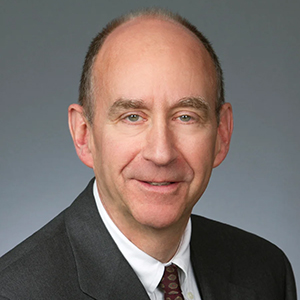
Barbara A. Perry
Nancy, why don’t you kick it off.
Nancy Kassop
No, let’s do the [Merrick] Garland and the whole judicial appointment stuff first. I think that’s really key.
Sarah Wilson
Obviously, I’m very interested in the President’s selection and nomination of Merrick Garland and then the Senate’s nonconfirmation of him, but also interested in the White House’s approach to not just the Supreme Court selection but also other court judicial selection and nomination processes under your leadership.
Neil Eggleston
Let me start with the second one because it’s probably shorter. Fairly shortly after I got there, we lost the Senate, and then [Mitch] McConnell just shut down confirmations. As I mentioned maybe yesterday, Paige Herwig was my lead judges person. After we lost the Senate, she went to the Justice Department and worked for Loretta [Lynch] because she knew really nothing was going to happen, and nothing did happen. I was able to do some negotiation to get people through. Remember, they kind of stopped working in the summer anyway. Then they’re all out campaigning, they’re not really working, they don’t know what’s going to happen, so nothing gets confirmed.
I think [Chuck] Schumer wasn’t as attuned to it, actually, as he—it was Harry Reid, I guess, at the time, not yet Schumer—but I think they weren’t as attuned to it as they became in the post-[Donald J.] Trump era. That’s my sense of what they’re really focusing on. I was able to negotiate some deals. I’d have to remind the senators every once in a while, the Republican senators, that the process doesn’t start until the President nominates somebody, and they can’t have anybody they want to be a judge. They got to vote, but they only got to vote on someone who was nominated. I actually had pretty good relationships with some senators and was able to come to some agreements. I remember Senator—from Tennessee, he retired.
Perry
[Bob] Corker.
Eggleston
Corker, yes, thanks. Of course, you would know him. He and I agreed on some judges that got nominated, and then some of them got confirmed. I remember [Charles] Grassley had some people he wanted confirmed, and I said, “I’ll nominate them, but you have to take them in order on the floor. You have to agree with me if I nominate your people, you’re not going to jump ahead of all of my people and confirm them and not confirm any of my people because otherwise, why would I agree to that.” And still, I had to decide that they were people I was willing to have on the bench.
I remember Jim Risch, whom I kind of liked actually and spent a lot of time with, had somebody he wanted me to nominate. It seemed pretty good, then we did a background check—not a background check, a Google check, not a real background check. Turned out he had a whole bunch of antiabortion comments and he was Mormon. I called up Risch and said, “Look, it’s not about his religion, happy to nominate Mormons, but President [Barack] Obama is not nominating someone who’s publicly on the record against abortion. You’ve got to find me somebody else here.” I thought he was going to take my head off, and he didn’t. He said, “I get it, OK. I’ll come back with somebody else.” He came back with somebody else, and then we agreed on it. I don’t know if the person was pro- or antiabortion, but at least he—I think it was a “he”—hadn’t publicly come out against abortion.
And then the other thing—this is sort of slightly irrelevant. And I don’t know the number so I’m just going to stick with a fair number, but a fair number of the district judges that we nominated that didn’t go through were renominated by Trump and confirmed. It was because the senators wanted those judges. They were mostly moderate judges that these moderate—like Corker wasn’t going to pick some nutcase. He actually cared about the court system and judging. And so a fair number actually got renominated by Trump and confirmed, which kind of surprised me. It surprised me that Trump renominated them.
Wilson
Was there an understanding that the home-state senators would have more input, including Republican home-state senators, for district court nominees, whereas appellate court nominees were primarily in the White House’s hands?
Eggleston
I think so, yes, definitely. There’s still the blue slip [indicating the home-state senator’s support], so we had to deal with the blue slip. My predecessor, [Kathryn] Kathy Ruemmler, had been highly critical of [Patrick] Leahy and the blue slip. The first time I met Leahy after I was White House counsel, he said to me, “If you want to work with me, you better not come after me on the blue slip. That’s a Senate prerogative. Keep your mouth shut about it. That’s my problem. I know it’s ultimately your problem, but that’s my problem. Don’t attack me on it.”
Wilson
Any assertions by Republican senators about a circuitwide blue slip for appellate nominees?
Eggleston
No. But remember, I had a totally different issue because for nearly the entire time I was there, I didn’t have a Senate, so there was no issue about blue slip. I have a great story about Alabama. If I nominated somebody that [Jeff] Sessions and [Richard] Shelby didn’t want into the court of appeals, it didn’t matter about a blue slip. It wasn’t going anywhere apart from anything else. I spent a lot of time with those two guys and I kept meeting with them. I liked them both, though Shelby did almost all the talking. We were trying to come to some resolution on district judges, and then we’re going back and forth. They’re really seriously “good ole boys”—of course, neither one is there now—and charming, totally charming. We’re going back and forth, and back and forth.
Then there’s a court of appeals opening out of Alabama, and so we’re talking about the court of appeals opening. They call me up and say—not me directly. Their scheduler called my scheduler and said, “We need you to come in.” They said, “I know we’re at an impasse. We’re not really getting anywhere, but we have a great idea for you. We’ve come up with an idea on how to cut this impasse. On the court of appeals position, we’ll give you three names and you’ll agree to pick one of the three.” I said, “Oh, well, how about this? You give me three names, and I’ll decide whether I’m going to pick one of the three [laughter] because, guys, I’m pretty much not going to agree to that in advance.” So they never gave me any names.
Then near the end, I started having the President nominate people I knew weren’t going to get confirmed because I knew that if we left the seats open, the Republicans would say, “We weren’t obstructionists. They didn’t even nominate people for these seats,” even though the Republicans all made it clear to me that they wouldn’t confirm anybody. The talking point was going to be “Oh, Obama left x number of positions open,” and so I tried to get as many nominated. We still left a lot open, obviously. There was one in North Carolina that had been open, I don’t know, since Jesse Helms or something. I finally nominated somebody. I just called [Richard] Burr and said, “Look, I know you’re going to be unhappy, but I can’t leave this open. It’s been open for 15 years, and I’m going to nominate this person.” It was an African American woman. I don’t remember her name.
For the Eleventh Circuit position out of Alabama, we ultimately nominated Abdul [K.] Kallon, who was a district judge, and so we could nominate him without messing up his life. If you nominated somebody in private practice, then they have all these practice issues. So we nominated him. They never took a vote on him. Last year he resigned from the bench and is moving to San Francisco [California], which kind of pissed me off. I can’t remember whether he ever got confirmed, not by the Trump era, but I can’t remember if he got—he couldn’t have gotten confirmed under [Joseph R.] Biden [Jr.] to the Eleventh Circuit and resigned already, so I don’t really remember.
Kassop
Was there a recognition or was there an effort to prioritize circuit court judgeships over district court judgeships because of the higher priority?
Eggleston
Yes. But, as I say, once we lost the Senate, it didn’t really matter. And then I didn’t realize when we lost the Senate just how much McConnell was going to shut it down. I didn’t realize that he was going to basically confirm nobody who wasn’t a Republican judge, which was completely different than the way Leahy had handled it at the end of [George W.] Bush where the Democratic Senate confirmed a lot of Bush judges. But McConnell just totally shut it down.
Wilson
For district court? Appellate court?
Eggleston
Both courts, just shut it down.
Kassop
There was something like only two confirmations within the last year of—
Eggleston
I don’t remember the number, but it’s a very tiny number.
Kassop
Less than five, yes.
Eggleston
And it was maybe, I don’t know, 40 under Leahy at the end. The disparity was massive. At first, I didn’t quite realize that McConnell would completely shut the whole thing down.
Russell L. Riley
How are you finding this out? Is it by statements he’s making or just by activity?
Eggleston
Just by activity.
Riley
You said you didn’t know but then you discover it. I’m trying to figure out—
Eggleston
Well, it’s just that nothing’s happening. Leahy is doing a decent job of getting people through the Judiciary Committee—I don’t mean Leahy, I’ve messed this up. By this time, it’s Grassley. When I said Leahy wanted his people, I meant Grassley in Iowa. I didn’t mean Leahy, I meant Grassley. Grassley was actually continuing to hold hearings. Not at the same rate that Leahy had been when he was chair, but he was continuing. So there were people going to the floor, and then nothing was happening when they got to the floor.
Riley
I have to ask the question. Was that a fixable proposition in any way? Is it the case that if you or the administration had been proactive early with McConnell that politics could’ve greased the wheels on this?
Eggleston
I don’t think so. He was completely focused on the courts, as the Trump era made clear, and he recognized that this was an area—and the more Obama judges he kept off, the more openings there would be, the more openings that would be open if Trump got elected. If [Hillary Rodham] Clinton got elected and there was a Democratic Senate, they would be about the same judges anyway. It probably would’ve been a little further to the left than the ones I was putting up because I had to get them through a Republican Senate, which obviously never happened. But I don’t think it was fixable, and we’ll get to Garland in a second. He [McConnell] had a view that he was not going to fill these things. There was no way to put pressure on him. When we get to Garland, I’ll talk about Garland. But there was just no way to pressure him.
Wilson
Were there any deals, either people deals, a Republican to fill one of x number of vacancies on a particular appellate court or district court, or even non-nomination deals?
Eggleston
I don’t remember any non-nomination deals. There were some deals, but they were mostly worked out by senators where there’s a Republican and a Democrat. Pennsylvania had [Bob] Casey [Jr.] and [Pat] Toomey. They had agreed that Casey would get three and Toomey would get one, if I have my numbers right. Toomey was sort of being weird, but ultimately, they agreed. I think some of those may have gotten through. Wisconsin, I think, maybe had a commission that the—I can’t remember who the Republican was. It wasn’t [Ron] Johnson, it was somebody else. But they had a commission, and they’d agreed that whoever the commission recommended would be nominated, and it didn’t happen. Some of that happened, but it was more between senators where there’s a Republican and a Democrat of the state. Those are the deals.
Wilson
For the district court positions?
Eggleston
Yes. I could’ve ignored those deals, but I wasn’t going to tell Casey, “I’m not going to give you your three because I have to give Toomey his one.” Those deals, we basically—because McConnell just shut down. There was nothing to negotiate really once Grassley got the people he wanted confirmed, and then I got people in the queue before those, and then after that it was really shut down.
Riley
As a matter of historical questioning, one wonders if the President had been proactive with McConnell. You said that this took you by surprise, that everything gets shut down.
Eggleston
Well, it didn’t—I don’t want to overstate it. I knew things were going to slow down. I just didn’t know they were going to go to basically zero because that was not the history of the way these things have been handled.
Riley
Exactly. And so the blue-sky thinking is, was there anything that the President or the administration more generally could have done proactively with McConnell that might have made him in any way amenable? I know Barbara’s listening to this and rolling her eyes because she’s from Kentucky and knows McConnell and said, “You’re trying to get the leopard to chase—”
Eggleston
I don’t know who you’re talking about, but it’s not McConnell, right? [laughter] I think the only thing that we could’ve done, and this sort of predated me, is what Biden is doing, which is just turn on the afterburners and get them done. Obama had two Supreme Court justices, right?
Wilson
Yes.
Eggleston
The one thing that White Houses tend not to do great is walk and chew gum at the same time. When you have a Supreme Court justice, all the other judges stop. If I’d been White House counsel, I would’ve said, “This is not a grade-school soccer game. We have enough people and the Supreme Court justice. We’ll be fine. We have to keep blocking and tackling. We can’t take two six-month stints when we have a Democratic Congress and not advance lower-court judges.” I would’ve been pretty harsh about that. Everybody wants to go to the shiny object, and so everybody wants to work on the Supreme Court justices.
Wilson
Was there any strategic analysis, to your knowledge, either during your tenure as counsel or before, about the number of judges on a particular circuit? A circuit-by-circuit analysis by presidential appointment?
Eggleston
Probably, but I didn’t pay any attention to it because who’s on it didn’t really matter. Any opening that was there, I wanted to fill. The one thing we did, we changed the Fourth Circuit significantly, which used to be a hellhole of a circuit and now is actually a pretty good circuit. No inroads in the Fifth Circuit because we couldn’t get anybody—we couldn’t get anything going. But I didn’t really think of it that way because it didn’t matter to me what the existing—all that mattered to me was how many openings they had or how many openings they were likely to have.
Wilson
Right. It’s just that during the Clinton administration, at any rate, the Republicans were more open about tracking parity, and you could see patterns of resistance where confirmation of additional circuit court appointees to a particular circuit would change the balance.
Eggleston
But, again, you have to remember—the other thing is, somewhere along the line, Reid had abolished the filibuster for lower-court judges.
Kassop
That was November 2013.
Eggleston
Was that November ’13? To get the D.C. Circuit judges through.
Kassop
Right.
Eggleston
This all kind of predates me because really shortly after I get there, the whole thing gets closed down. They were resisting everything. I did not see that because they weren’t being cooperative at all. It wasn’t like they were willing to be cooperative on a circuit where it wouldn’t tip the balance. They just wouldn’t be cooperative at all.
Wilson
Who interviewed appellate court nominees or candidates for a position?
Eggleston
Never me. I never interviewed a court of appeals judge or a district judge. I’m sure people in my office did. What I’ve never really known is how much involvement the Department of Justice has. They think they have big involvement. My impression was they actually had almost no involvement.
Wilson
In appellate?
Eggleston
Either.
Wilson
Really? That’s interesting.
Eggleston
Yes, I think we were doing it all.
Wilson
District judge and appellate?
Eggleston
Yes, I think so.
Kassop
In terms of the circuit court balance—
Eggleston
Can I just say one more thing about that?
Kassop
Oh, sure, sorry.
Eggleston
But I’m the top of the pyramid, so I don’t actually know. They could’ve had a bigger role than I knew about because I didn’t really care what their role was. I just cared about the quality of the candidate because I’m signing the memo to the President. They could’ve had a bigger role than I knew about, but I didn’t really pay any attention because I didn’t care. I cared about my people. And by the time it got to me, the Justice Department role was over, and so I didn’t really know particularly what Justice had done or not done.
Kassop
In terms of the balance on the circuits, Obama is known for having flipped eight different circuits that had previously been Republican, flipped them to Democrat. So by the time you left, there were nine circuits that had a Democratic majority and only four that had a Republican—Fifth, Sixth, Seventh, and Eighth. In terms of the effect of Obama judges, the reputation is that the judges that you put on the lower courts were moderates. Essentially, you went for safer possibilities as opposed to more liberal ones.
Eggleston
I think, though, part of this—I have a thesis about this, and I don’t know that I’m right. Really, anybody can argue about whether it’s a good thing or a bad thing, but it took a while for people to absorb the impact of getting rid of the filibuster. I think, in some ways, Obama didn’t realize—Biden has been amazing at appointing people of color, union lawyers, public defenders. With the filibuster, none of those people get confirmed. White guys like me get confirmed, and basically nobody else gets confirmed. White guys, senior lawyers in big firms, or U.S. attorneys are the ones who get confirmed as long as there’s a filibuster.
But I think, in some ways, Trump is the first one to figure out, I don’t have to go with the traditional model of judges. I can put my right-wing people on because they’ll get confirmed because I have a majority in the Senate. I think it took a while. In some ways, we didn’t figure that out. Again, it didn’t really matter to me because by the time I got there, the filibuster really didn’t matter. We didn’t have the Senate. But before that, I think we didn’t internalize that that would have permitted us to nominate much more diverse candidates.
Even though it was Paige, the same one who did it for Biden is the one who was doing it by the time I got there. It was Susan [M.] Davies, I think, at the beginning of the Obama administration. But I think it took us a while to figure out that this gave us a much broader latitude and really didn’t quite figure it out once it happened because November of ’13—the election is in November of ’14. So they lose the Senate in November of ’14. It’s only a year before that doesn’t matter. And then I think it’s Trump who figured out, Well, hold it. I can nominate any nutcase I want because they’re going to get confirmed. Every once in a while, Senator [John N.] Kennedy would ask some civil procedure question.
Kassop
Like Matthew [S.] Petersen.
Eggleston
Yes, and the nominee would blow up, and Kennedy would say, “Well, we can’t have that person.” [laughter] You can sort of argue about what you think about the impact of the judiciary, but it let Trump put in Matthew [J.] Kacsmaryk, who would never have gotten confirmed if you had a filibuster. But it also put in all sorts of, as I say, people of color and women who never would’ve gotten confirmed.
Kassop
There’s this reputation that Republicans understood the priority of judicial appointments better than Democrats have and that Democrats were late to the game. They’re just now catching up and realizing this is really important.
Eggleston
I’ve heard that. I don’t really have a view about that. Well, you did judges in [William J.] Clinton. I do think some part of this—again, I don’t think Rahm [Emanuel] cared all that much. I think he wanted to get healthcare through, and it was taking a lot of floor time. Getting judges through takes a lot of floor time. People talk about Don McGahn, the first [Trump administration] White House counsel, and how great he was at getting judges through. I think that’s kind of bunk. I think the Federalist Society came up with the names and McConnell got them through. All McGahn did was process paperwork of judges that the Federalist Society gave to him and McConnell said, “Let’s go with them.” But it takes a lot of floor time. As I said, the Trump administration—this is not meant to be political, but they didn’t actually do anything in Congress. There was never any legislation. They passed a tax cut and that was about it. So McConnell had nothing but floor time because there was nothing else happening.
Kassop
But that’s what he wanted too. He wanted the judges.
Eggleston
He wanted the judges. But if Trump had had an active legislative agenda, McConnell would’ve had to move it. Judges take floor time. Court of appeals judges, it takes 20 hours unless there’s an agreement, and nobody agrees anymore. There’s all this floor time that gets eaten up. But since the Trump administration didn’t have any legislation, McConnell—all they did every day was do judges because there was nothing else happening.
Perry
But that’s how he got his policy. In some ways, he didn’t need legislation except for the tax cuts.
Eggleston
I don’t know. I mean, judges can only give you so much. They can get you negative. They can’t get you positive. But Trump didn’t want positive, so it didn’t really matter. They can stop stuff but they can’t really do anything affirmative. But that really wasn’t the agenda anyway.
Wilson
Let’s go to Garland. How did the President or you find out about the upcoming vacancy?
Eggleston
I got a call from Sally Yates saying that she’d heard that [Antonin] Scalia had died in Texas at a hunting lodge. I think she said there was no suggestion it had anything to do with the hunting, but she wasn’t sure. She had heard that. She couldn’t 100 percent confirm it, but she wanted me to know as soon as she’d heard something. I called or went to see—I think it was at night.
Perry
It was.
Eggleston
Because I don’t think I was in the White House.
Perry
Yes, because, remember, he died in his sleep.
Eggleston
But maybe I would’ve heard in the morning then.
Perry
I remember it was on a weekend, as I recall. I just saw it flash along CNN [Cable News Network] in the evening time.
Wilson
The news started filtering in.
Eggleston
I would’ve been in the White House on the weekends.
Perry
But not at night necessarily.
Eggleston
But not necessarily at night. I wouldn’t have been there at two in the morning or whenever it happened. Anyway, I remember she called me. I can’t remember whether I called Denis [McDonough] or went to see Denis, or called the President or went to see the President. But I told him, I said, “This is not yet entirely confirmed. Sally’s sending a marshal to the location so that we have one of our people. The sheriff is on the scene, but everything’s kind of garbled. As soon as I get some real confirmation, I’ll get back to you. But she said this is pretty—I’m giving a little out in case this is all garbled, but it seems pretty clear to me he’s dead.” So I told the President.
Remember, that day, body still warm, McConnell announces, “It doesn’t matter who’s nominated. They will not have a hearing. They will not be confirmed. It’s an election year, and the tradition of our country is that no Supreme Court justice nominated in an election year is confirmed.” By that time, we kind of knew McConnell, so I was pretty sure that was going to turn out to be true unless we could figure out how to put some pressure on him, which I can get to.
Perry
What was your go-to plan? In our briefing book, it talks about the Obama administration was happy to get two people on the Supreme Court. It didn’t look like anyone was going to retire. Did you have a plan in place just in case?
Eggleston
Yes. When I got there—and by this time, Paige is gone. Anyway, I remember it was [Christopher] Chris Kang, not Paige, that I was leaning on for this because this is just the way I go through life. I said, “We need a list that’s current because if something happens”—and I’m sure I said, If somebody gets hit by a bus—“the President’s going to call me and say, ‘Give me your top three names,’ and I need to have top three names. I can’t say, ‘Oh, Mr. President, I really need to think about that. I’ll get back to you in a month.’” I said, “I want to develop a list and bios of the top dozen people that we would be thinking about in the event that there is some—” So, yes, I was very much. When I got there, I said, “This may or may not happen.” Chris was like, “Oh, well, they’re all still young. Nobody’s going to retire.” I said, “Chris, I don’t care.” And then I had to beat on him to do it because he thought it was just make-work.
Riley
So there was not an existing plan you inherited?
Eggleston
I think there was an old existing plan, probably arising out of the last justice.
Wilson
Right, the last two probably.
Riley
But that would’ve been how old?
Kassop
2009, 2010.
Perry
Yes, old.
Eggleston
That would’ve been several years old.
Riley
I’m just surprised.
Eggleston
Well, I don’t know. People are kind of busy, [laughter] and I’m just a little nuts. But I could see this happening, and I was not going to say to the President, “I have no idea who my top three are.”
Wilson
But there wasn’t, to your knowledge or recollection, a set of binders already in existence, the longer list from the prior selection?
Eggleston
I think there probably was. I told Chris, “Dust off what we did when we got the last two. Let’s update it. I’m sure there are new people we could have that we didn’t think about before.” It was x number of years later. “We need to be ready. We’ve got to have a new list.”
Perry
Did you have anyone in mind? Either when you were giving him these marching orders, whether you stated it or just said, “A top three that come to my mind are—” or as soon as you heard about Scalia and knowing now this is going to be real. Did you have some preferences or people you thought would be good? Let’s say your top three.
Eggleston
Garland definitely, who was very much on the radar in the prior two. Sri Srinivasan probably was also on the list, although he didn’t turn out to be a finalist for the Scalia seat.
Perry
Why was that?
Eggleston
I’m not actually comfortable answering that one.
Wilson
[Patricia A.] Patty Millett?
Eggleston
I don’t think so. I don’t think Patty Millett was ever on my list. I’m sure she was on some list, but I don’t think she was ever at the top of the list.
Perry
Let me put it this way. Were you thinking in terms of just the pure politics of it? Garland is viewed as a little bit more moderate and seems to have some bipartisan support. But were you also thinking in terms of affirmative action, diversity? You mentioned putting on circuit court judges, many of whom you knew and had practiced before and maybe had clerked with. Did you have a set of criteria that you were thinking prominently about?
Eggleston
I did, but not necessarily the same criteria as the President. Although, ultimately, he went with my recommendation, so maybe he was. I was under a lot of pressure to nominate a lib [liberal].
Wilson
From whom?
Eggleston
All the yappers that [laughter] yap whenever anything’s happening.
Wilson
Special interest groups.
Eggleston
All the standard people who are in the paper, “It should be this, it should be that.” The one thing I thought in the nominee was, it had to be somebody, in my view—first, McConnell had made a statement, so we’re going to have to get over that somehow. And in some ways, Merrick was the only one who fit this bill. It had to be somebody for whom there would be no substantive attack, where they could say too liberal, too something, or represented death penalty defendants. Remember what’s-her-name, Jane [L. Kelly] out of Iowa, I think, court of appeals judge who was on various different lists. The Judicial Action Network [Judicial Crisis Network], or whatever, started running ads against her because she had been a public defender and represented death-row defendants. I can’t remember but something super controversial. But she’d been a public defender, and they were gunning for her when she wasn’t even a top—but it was important to me that they not be able to say—
Perry
Jane Kelly.
Eggleston
Jane Kelly, thank you. I got the “Jane,” I forgot the “Kelly.” It was important to me that they were not be able to say—that they’d be stuck with the principle of We don’t do this in an election year. They didn’t have the ability to say, “That’s a principle but in any event, there’s no reason to give this guy a hearing because we’d never confirm him.” That, obviously, couldn’t be true with Garland. It had been a long time earlier, but he’d been confirmed 98 to 2 or something. He was a very moderate judge. They tried to tag him with some gun stuff, if you remember, but it turned out that some super conservative judges on the D.C. Circuit had voted the same way he had on whatever this petition for rehearing, and so it never really stuck. Nothing substantive ever stuck. I thought it was really important to have somebody—the only way we were going to get it is if we could break down this You don’t confirm people in an election year principle.
Perry
Which was inaccurate. It’s historically inaccurate.
Eggleston
It was not true.
Kassop
Did you have people in your office go back to check the history on that?
Eggleston
Oh yes, very quickly. It turned out not to be true, but I kind of wanted to fight that. And then our real, in some ways, our only hope was that there were some vulnerable Republican senators up. Remember, it didn’t take many senators. We thought if we could turn this into an issue and have Republican senators go to McConnell and say, “This is not tenable for me. I’m going to lose my election over this.” The problem is, as you said a minute ago, Democrats then just didn’t get all that exercised about all this and didn’t recognize really how devastating not getting that seat was going to turn out to be.
Anyway, that was my thought, which is, the only way to do this was to have vulnerable senators up go to McConnell and say, “I’m not losing my seat over this. You’ve got to back down from this.” But if there was a substantive reason to oppose the person, then the vulnerable senator could say, “I don’t know anything about this issue of not having a hearing on somebody during the last year, but this person did this. It doesn’t matter if the hearing would happen because I would vote against this person.” This is on the substance, not on this wacky, untrue principle. Obviously, it didn’t work.
Wilson
Did you identify vulnerable senators who you thought might be able?
Eggleston
Yes, I don’t remember. Susan Collins was up, I think. She got reelected anyway. I think there were two or three, maybe even four, that we thought were pretty moderate in kind of swing states who might’ve been concerned about this, but they weren’t.
Kassop
Did you consider any nonjudges for the appointment?
Eggleston
Yes. As we went through this, I don’t think it mattered. It ended up, between the time Scalia died and the time we appointed somebody, it was about a month if I’m remembering right. And yes, at various times, I’d go talk to the President and he would say, “Well, there aren’t any law professors on this list. Give me who you think some good law professors would be.” That’s the one I really remember. There may have been another category, but he definitely said law professors. He really liked [Elena] Kagan, and she hadn’t been a judge.
Kassop
Right.
Wilson
Because they blocked her confirmation to the D.C. Circuit.
Eggleston
Earlier, yes, but I mean by the time she’s nominated, she’s not a judge and she’s a great justice. And so I think he was thinking, Don’t fall into the “we only nominate judges” trap.
Kassop
What about [Janet] Napolitano? Had she been on the list at all?
Eggleston
No, never. I had the only list that mattered, [laughter] and she wasn’t on my list.
Wilson
Who else besides Merrick was on the short list?
Eggleston
The short list—I think this is all public, so I feel—Paul [J.] Watford out of the Ninth Circuit, Ketanji [Brown Jackson]. The President loved Ketanji. He did all the interviews one-on-one. I wasn’t in the interviews that he did. I’d met with them all, obviously. I’d met with Ketanji more than once. I can’t remember if I met with Paul more than once before the President, at least before the day the President met with them. It was those three. It sort of seems like there’s a fourth, but I can’t remember who it was. Those were the three, and he met with all three of them.
Wilson
Ketanji, Watford, and Merrick.
Eggleston
And Merrick, yes. I think he’d met with Merrick earlier.
Wilson
Was there any thought, somewhat similar to the theme you surfaced a little bit ago with regard to other judges, of nominating someone who might appeal to vulnerable senators? A moderate, someone that Republicans shouldn’t disagree with on principle, thereby casting a light on their obstructionism? But rather nominating a Ketanji Brown Jackson in order to make the point that some might view as equally or even more politically damaging to Republicans, which is, You’re blocking the first African American woman nominee to the Supreme Court, which might’ve been a very interesting election thing.
Eggleston
I don’t think that would’ve mattered to them an iota. I was a little worried she wasn’t ready. She had only been on the district court for, like, 20 minutes. It would’ve been a big step to put her—and I figured she’d be in the running for the next one. I really liked her. I got to know her husband. I was at her house several times because we didn’t have them come to the White House. We went to them.
I remember Merrick telling me after this happened that we kept showing up in our black sedans, [laughter] and the neighbors all figured out what was going on. It’s not like we’re unobtrusive when we’re showing up. He lives in Bethesda [Maryland] where I think he’s surrounded by a lot of politically active people. He laughed and said, “If you thought that was surreptitious, the whole neighborhood knew what was going on.” But I didn’t think that would work. I thought Merrick was the blandest possible candidate. I also thought—I think I’m right on this—he’s such an institutionalist that I think he’s much more liberal than his court of appeals opinions disclose. I think he’s much more liberal than that. He would’ve been a solid liberal vote on the court.
Kassop
Would the fact that he was an older judge have—that would’ve been essentially in your favor in the sense that you could say he’s not going to be on the court for another 20, 30 years. To Republicans, you could say, this is—
Eggleston
I didn’t think as much about that. In fact, if anything, it was an argument for doing Ketanji. But it didn’t matter because they were never going to confirm Ketanji. It just doesn’t matter to them. If you think about all the hearings in the Biden administration, the people who have been attacked the most—I don’t mean just judges, but throughout—are women of color.
Kassop
Oklahoma City [1995 bombing].
Eggleston
And he’d done Oklahoma City, so he was sort of law and order guy.
Wilson
Arnold & Porter partner.
Eggleston
Arnold & Porter partner.
Wilson
AUSA [assistant U.S. attorney].
Eggleston
Yes. He read to these minority kids. He would go to this elementary school and read to the minority kids, and nobody knew. He didn’t do it as a resume burnishing thing. He just did it because it was really cool.
Anyway, so that was a theory. People on my staff were then heavily involved in prepping him. The person who then sort of became his “sherpa” was Brian Deese. I was fine with that. I was sort of arguing it shouldn’t be Deese because he’s not a lawyer. Senators don’t know him. The Republicans always have a former Republican senator.
Kassop
Right, [John] Danforth.
Eggleston
Danforth, talk about very respected. We had Brian Deese, and none of the senators actually had any idea who he was. He was young, so I think it was kind of a mistake. But I didn’t want to do it because it seemed like it was going to be a complete waste of time and McConnell was going to stick to his guns. We had to do it, but it was never going to—any minute I spent on that was going to be a minute that I wasn’t spending on something else.
Wilson
Did the secretary of state or the vice president weigh in at all on the selection?
Eggleston
Not to me. Secretary of state at the time was John [F.] Kerry, so I don’t think he would’ve weighed in. It wouldn’t surprise me if Biden weighed in to the President directly. Biden was never in the meetings that I was in with the President to discuss the issues. Biden wasn’t there.
Perry
Did the President choose Deese as his preference for the sherpa duty?
Eggleston
I think Denis did. He was Denis’s—by that time, he was a deputy chief of staff and probably underemployed, as deputy chiefs of staff actually tend to be because nobody pays that much attention to them. [laughter] I think he had bandwidth to do it. I didn’t really have bandwidth to do it. The one thing I pushed really hard was prep because I said, “The one thing they may try to mess with is if they decide they have to cave and give him a hearing,” because, remember, all those comparisons to [Robert] Bork. And I’d say, “Well, that’s interesting, but he had a hearing and killed himself.” Everybody says Democrats did it. He got up there and said that the Civil Rights Act of 1964 is unconstitutional. You can say Democrats did it, but actually Bork did this to himself at a hearing. So there’s no comparison between these two things.
But I thought it was possible that Grassley would say on a Thursday, “OK, you get your hearing on Tuesday.” Again, I wasn’t going to say, “Oh, well, actually we need another week.” So I said, “We’re getting him prepped. We’re getting him prepped like the hearing is Tuesday, and we’re going to full steam get him prepped.”
Kassop
Were you in on the prep?
Eggleston
No, I didn’t attend any prep. And can I say one other thing?
Kassop
Yes.
Eggleston
I heard back Garland was kind of pissed.
Wilson
That you didn’t attend the prep?
Eggleston
Yes.
Perry
Or that he had to prep?
Eggleston
No, he was dying to prep. He’s worse than I am. He was perfectly happy to prep. “Pissed” is probably too strong. I think he thought that my failure to participate in the preps reflected what the truth was, which was I didn’t think it was worth my time.
Riley
Did he think it was worth his time?
Eggleston
My time.
Riley
No, but the other question is, how do you convince somebody—it’s like World War I, going over the top.
Eggleston
How do you convince him to get nominated?
Perry
To get prepped and—
Riley
Well, no, to do this.
Perry
To move forward.
Riley
I do understand the honor associated with the President of the United States nominating you to the court. But if the prevailing wisdom is that this is a meaningless exercise, you yourself just said it—
Eggleston
DOA [dead on arrival], right?
Riley
Yes. Why do I agree—
Eggleston
Two things. First, he’s the—it’s a little about my thing about Abdul Kallon. He’s the chief judge of the D.C. Circuit. He doesn’t get confirmed. He’s still the chief judge of the D.C. Circuit. It hasn’t messed up his law practice. It’s a huge honor. It’s kind of a pain in the ass, but nobody ever attacked him personally. His star didn’t diminish because of this, because there was no, “He’s a bad judge. He’s doing a terrible job.”
Riley
But you can’t know that in advance, can you?
Eggleston
Well, no, but you kind of knew it because it was Merrick. [laughter]
Wilson
He was the safest possible choice.
Eggleston
Totally safe and safe for him. He did things like if he talked to the ACS [American Constitution Society] one year, he would talk to the Federalist Society the next. All that stuff was totally balanced. And he’s just as crazy as I am. He had the same view, which is I have to be ready. Maybe there’ll never be a hearing, but if there is one, I’m going to be ready for it. I think I said to him, “I know this is going to be a pain in the ass. You’re going to work really hard on prep. It may be a complete waste of time, but it might not be. We just have to be ready because our only hope is to get a—” McConnell, I don’t know if he knew who we were going to do, but I think probably that day figured out that we were going to pick somebody who was going to do really well in a hearing, and it would be very hard for him to block somebody after the hearing. So he had to stop the hearing because the public was not going to hear Merrick Garland and think, This will be a terrible Supreme Court justice.
Kassop
Did Garland have meetings with senators?
Eggleston
Yes.
Kassop
How many? And Republicans?
Eggleston
Oh yes, tons. I don’t know that he met with everybody but almost everybody. He offered to meet with everybody.
Kassop
Did you try to strategize with Schumer or there was just no reason, there was no point?
Eggleston
No, I strategized with Schumer, but he didn’t have any ideas either. Other than getting vulnerable senators, in my view at least, the public was not going to move McConnell, as you well know. Kentucky wasn’t going to turn on McConnell over this. The public wasn’t going to move. In my view, and I think leg affairs [legislative affairs] agreed with me, the only thing that was going to move the needle was vulnerable senators going to him and saying, “This isn’t tenable. You’ve got to at least give him a hearing.”
Kassop
I thought I recalled at some point that Schumer made some sort of vague threat about stopping all the work in the Senate.
Eggleston
They don’t do that. They’re all institutionalists. No, I don’t think he was ever going to—
Perry
Neil, did you ever think of going faster than the month that it took?
Eggleston
Yes. I was actually a little surprised the President kept coming back to me and saying, “How about law professors?” because I was thinking, Like who? [laughter]
Perry
[Laurence] Larry Tribe.
Eggleston
Yes, like Larry Tribe. By that time, he was 75, I think.
Wilson
Kathleen [M.] Sullivan.
Eggleston
Yes, but she would not get confirmed in a thousand—I don’t think Democrats would vote for Kathleen Sullivan. [laughter] You’re right. I think she was probably on my list. There was somebody in Chicago [Illinois] on my list. I don’t remember who the law professors were because I was pretty unenthused about it, and I just wanted to get it done to answer the mail that I consider law professors. But I thought that was a terrible idea.
Perry
Do you have any thoughts about why the President elongated this process? Particularly since time was of the essence, since your opponent is saying, “Too close to the election,” even though he was saying it the whole year. It wouldn’t have mattered if you had done it the next day, if on February 14th you had announced Merrick Garland or anyone else.
Eggleston
But, I mean, this is what they did with Amy Coney Barrett. Basically, the day after [Ruth Bader] Ginsburg dies, they nominate her. Of course, they have to because they only have a couple weeks until the election. I would’ve gone faster, but it’s just the way he thinks. He wanted a range of options, and he thought by me just focusing on judges, I had not considered other categories. There’s all this criticism that they’re all judges and they didn’t used to all be court of appeals judges—
Wilson
Right. Earl Warren, we need an Earl Warren.
Eggleston
We need an Earl Warren. [Sandra Day] O’Connor was at least off of state court. I think there was a time where—actually, another category was state court. He asked me to look at state court because O’Connor was there. [William J.] Brennan [Jr.] was state court in New Jersey, right?
Kassop
Yes.
Eggleston
Kagan, never a judge, for reasons you—so actually, another category, I think, was are there state court judges that we should—
Perry
In his heart of hearts, did he know this was not going to work, that he would not get to fill this seat?
Eggleston
He never said that to me, but it’s not the way he goes through life. Do you know what I mean? He never said that to me. It was always, Let’s pick the best person, and let’s do everything we can to get them confirmed. He never once said—
Perry
“We’re doing this for show.”
Eggleston
But that was never his worldview. It was always, What do we have to do to move this thing forward? I was a pretty close advisor by then, and I had meetings on this one-on-one, so it wasn’t like he was worried someone was going to leak anything. But he never did anything with me other than, How are we going to move this thing forward? What are we going to do? What’s our plan? What’s our strategy?
Riley
Were there Republican senators who were in any way distanced from McConnell on this, at least in private?
Eggleston
I don’t remember.
Riley
I think I know the answer, but I thought it was worth asking.
Eggleston
I don’t think so. Of course, I don’t know what they were saying that didn’t get to me. I never got rumblings from Republican senators, If you just got a couple more, I’d be with you on this, which you’d get sometimes.
Kassop
Or Collins?
Eggleston
No.
Kassop
[Lisa] Murkowski?
Perry
There was something in the briefing book that said she indicated she might meet with him and then decided not to even meet with him, I think.
Eggleston
I’d forgotten that. But, again, I wasn’t the sherpa, so I wasn’t arranging this.
Perry
Did the President ever attempt to reach out to McConnell one-to-one?
Eggleston
Not that I know of.
Wilson
Did he ever make a public statement akin to what McConnell had done the day that it became public that Scalia had died?
Eggleston
I don’t know whether I’m remembering this or assuming this, [laughs] but I think he made a number of statements that the Senate had an obligation to give him a hearing. I made this a public argument that got picked up in press a couple times, that I thought, under the Constitution, they had a duty to consider him because of the way the Constitution was written. And that refusing to have any hearing, regardless of who he was, was not discharging their constitutional obligation. He nominated, and they had a duty to advise and consent. And announcing before anybody, “We’re just not going to do it,” is not advising and consenting.
Wilson
Any discussion of a recess appointment?
Eggleston
No, but remember—I need to have my timing right—
Kassop
[National Labor Relations Board v.] Noel Canning had already been decided.
Eggleston
Noel Canning had already come out.
Kassop
So the recess appointment would not have worked.
Eggleston
Yes, recess appointment was sort of dead. It was odd that [Stephen] Breyer didn’t understand because he wrote Noel Canning, right?
Kassop
Yes, he did.
Eggleston
That he didn’t understand that—he basically said, “Well, this is too short.” But what he didn’t get was he has now eliminated all recesses. It wasn’t going to be a question of how long. He wiped out recesses. There are no recesses anymore. There’s not a 10-minute recess anymore because they just do the pro forma sessions. But it was weird that he didn’t understand that what he was—I mean, look, he wouldn’t have had a different outcome, I don’t mean that. But to say, “Well, this is too short. If it would’ve been longer, it would’ve worked.” I just said, “Breyer, come on, man.”
Kassop
On the constitutional question, had you gone to OLC [Office of Legal Counsel] or it was just your reaction that was simply, this is—
Eggleston
Oh, no, this was PR [public relations]. I didn’t actually care if I was right or not. [laughter] This was pure PR.
Kassop
Had you considered asking OLC to actually document this?
Eggleston
No, because they might tell me “no” [laughter] and I was going to say it anyway. It was really hard for me to do it if OLC told me it wasn’t a viable theory. This was just trying to figure out other ways to put pressure on them. They’re violating their duty under the Constitution. I thought the reading was plausible. It’s probably not actually right. This was pure theater. I didn’t really care if it was right or not because it was close enough. Reading the Constitution, nobody could prove me wrong because the language allowed for that reading.
Wilson
It has an intuitive appeal.
Eggleston
And it had some intuitive appeal. Again, I had the Bork example of He got his hearing. Anyway, no, I didn’t ask OLC. I used to tell people, agencies every once in a while would fight. This is largely what OLC does now. Agencies would fight over something and some interpretation, and one general counsel or the other, or maybe both, would come to me and say, “We’re fighting over this. We’re thinking about going to the OLC and getting a resolution.” I would say, “Have at it, but let me tell you one thing—what they say controls. They don’t give advisory opinions, so if you ask for their opinion, they’re going to rule against one of you and you’re stuck. You can’t say, ‘Thank you very much, OLC, I’m not following your opinion’ because they bind the government on these interpretation questions. So, have at it. I don’t care. Do whatever you want to do, but you can’t come back to me if they come out against you and say, ‘We don’t like that opinion. We’re not going to follow it.’”
Kassop
Then, an interesting question, because when I’ve talked to other counsels before, they said that there’s often the opportunity to ask OLC for an oral opinion as opposed to a written one. Therefore, then you don’t have a documented record. How would you approach that?
Eggleston
First, I think they had documented records, they just didn’t do opinions. They didn’t do issued opinions. I’m pretty sure they did email opinions to their files, which were then available for the next administration. I don’t think they ever gave advice and didn’t document it. I’m not sure about that, but I’m pretty sure about it. Let me put it this way: That’s what I would’ve done. I wouldn’t have given advice and not have—
Wilson
Some sort of record.
Eggleston
Counsel to the President and not have some sort of record of what the advice was. So there’s the difference. They may not give me an actual opinion, but I’m pretty sure they documented it. Having said that—I think I can say this, everybody’s gone—I would have meetings with the senior Department of Justice officials either in my office or in the attorney general’s office fairly regularly—every two weeks, every week, I can’t really remember. Among the people I wanted to meet with but separate from that would be the head of OLC, which, as I said yesterday, was Karl [R.] Thompson at the time. He was acting. But [James M.] Jim Cole, the DAG [deputy attorney general], insisted on attending those meetings, which meant that they were completely worthless.
Wilson
Why did you want to meet with him separately?
Eggleston
I wanted to hear about what he was working on, mostly things that related to me, but I wanted a free conversation. I started inviting him to breakfast, so we would have breakfast in the White House Mess and I didn’t invite Cole. He could say, “I didn’t have a meeting. I just had breakfast with Eggleston,” so we did all our work—I really liked him. He’s back at DOJ [Department of Justice].
Kassop
The oral opinion thing came from, as I said, a former counsel who said that the public has always had this perception of OLC as being pro-executive and pro-President. And he said, “But what the public doesn’t know is how many times OLC says ‘no’ but that it’s not documented.” That was his point.
Eggleston
No, I think that’s true. My point about documentation is actually slightly churlish. I didn’t mean it that way. I just meant I’m pretty sure there’s a document that expresses what they did, but it’s not public. Every once in a while they release a batch of opinions. It’ll never be released in connection with the batches because it’s—
Perry
Then would that be binding?
Eggleston
Yes, but I’m the only one who heard it. It would bind me. But, again, I didn’t ask them unless I was willing to get the answer.
Perry
But the same for the agencies? In other words, if the two warring agencies go and they don’t get a documented public opinion, would your comment hold that if you lose, it doesn’t matter whether it’s written or not?
Eggleston
I don’t want to get too far into their procedures, but I think if two agencies went and asked for resolution, they would always do a written opinion. But there’s a difference between public and written. They frequently have written opinions that aren’t released for five years. Most of them are not actually released at the time that they’re issued.
My DAPA [Deferred Action for Parents of Americans and Lawful Permanent Residents] one was because I did it for a purpose. The [David] Simas one, I also released at the time. Although, at the time, I didn’t realize that we didn’t really release OLC opinions. Somebody called me up and said, “Oh my gosh, you released this opinion.” [laughter] I said, “Well, why shouldn’t I?” It may have been Karl Thompson who called and said, “You released our opinion.” I didn’t quite have in my head that that was—I probably would’ve done it anyway, but I didn’t really know that was a thing. [laughs]
Perry
Anything else to take us through then what we know is the outcome, or lack of a positive outcome, for the President on this nomination of Merrick Garland to the Supreme Court?
Eggleston
We never got any traction on it. As I said, I didn’t really think we would, but I wanted to be ready in case we did. He turned out fine. He’s the attorney general, and he’s largely attorney general because of that failed experience.
Perry
When it was clear that it was not going through, did the President have a conversation with you?
Eggleston
What I can’t remember, maybe somebody here remembers, is how did it end?
Kassop
That’s what I was going to ask you. At what point did you conclude that, you know, just give up, which is sort of your question as well?
Eggleston
I was asking a slightly different question, which is, did we withdraw his nomination? Did the election just happen?
Wilson
I think the election just happened.
Eggleston
We never withdrew it, right?
Wilson
Not that I’m aware of. We could certainly check.
Eggleston
I don’t remember withdrawing it. I think it pended and then when the Senate term ended, it was returned to the White House. I guess we were still in the White House when that happened because the Senate term ends early January and the confirmation is in February, so everybody was probably still there but it probably just got returned.
Perry
There was more to worry about at that time.
Eggleston
Yes, by that time, Trump is elected. Once we had him prepped and he met with all the senators and there was no movement, I think we just—what I can’t really remember, he recused himself from all cases in the D.C. Circuit. I was kind of worried about that. He didn’t ask me before he did that, he probably asked somebody on my team. I thought maybe he should’ve just recused from cases where the U.S. government was involved. I thought the Republicans might go after him for essentially stopping, be getting paid and not working. He’s getting paid as a judge and he’s not doing any work, but they never went after him for that.
Wilson
Probably perfectly happy not to have his vote on something.
Riley
I was going to say, they probably—if Harlan Crow would pay them all to stop working, they’d probably be happy with that.
Eggleston
Yes, exactly. They would be fine with that. But what I don’t remember was, before the end of the administration, whether he went back to work at the D.C. Circuit. I don’t really remember that one way or the other.
Riley
I have a corollary question to this, which is about Justice Ginsburg. What is the watercooler chatter about this in the administration, and was there ever any contemplation of backchannel communications with her about her resignation?
Eggleston
I thought about it, but I didn’t do anything. I wouldn’t have done it alone. I don’t know if Kathy thought about it or not. It wouldn’t have been anybody before Kathy. Kathy was there from roughly at the end because when [Bob] Bauer went to do the campaign, Kathy came in. So she’s there from the end of the first term through a couple years into the second term.
I don’t know if Kathy thought about it or not. She didn’t talk to me about it. I thought about it, and I just thought that Ginsburg didn’t need me, do you know what I mean? She had friends. She was quite plugged in. I was sure she was talking to people about it. And to have the White House communicate to her that she ought to be stepping down—if somebody had come to me and said, “Look, if you ask, I think she would do it,” I would do it. But just to insert myself in that? First, I was pretty sure she would pay no attention. She was within three months of—
Perry
She almost made it.
Eggleston
She almost made it. If she’d just made it to—
Perry
Well, it wouldn’t have, in the end—
Wilson
I think she probably dearly wanted the first woman President to pick her successor.
Eggleston
Yes.
Wilson
There was press coverage—this would’ve been before your time, I think—about President Obama and Justice Ginsburg having lunch. I thought there was a suggestion that he had gently raised it.
Eggleston
Not that I know of. He never told me that. Nobody inside the White House ever said to me, “Hey, do you think we ought to be reaching out to Ginsburg?” Nobody ever asked me about that. The President never asked me. Chief of staff never asked me. Nobody outside, like Walter Dellinger never called me and said, “Hey, what are you guys thinking about—” Nobody ever raised that with me. I think a lot of this is after-the-fact posturing. The other thing is, remember, we were all 100 percent certain that Clinton was going to win, as you just said. There was no doubt that she was going to win.
Riley
Which makes the conversation of the last hour basically moot. If the election goes the way you expect it to, then McConnell’s only delayed the inevitable by 12 months.
Eggleston
Yes, by 12 months.
Kassop
And 12 months’ worth of decisions.
Wilson
That, of course, also would’ve been an extra incentive to hang out there for a while even if you think you’re not going to get confirmed under this President.
Eggleston
Yes, because then you’re going to get—if she’s elected. Although, I don’t think she would’ve renominated him. I wouldn’t have renominated him under that circumstance, I don’t think. I would’ve picked somebody younger and lefter. [laughter] Because all the reasons I wanted to nominate him was that he was an old white guy who was uncontroversial. But if I’d gotten the Senate, I think we would’ve blown up the filibuster for Supreme Court justices too.
Kassop
That was going to be my next question.
Eggleston
There wasn’t any particular reason. The only reason we didn’t is there was nobody pending, so as soon as we had somebody pending, I think we would’ve blown that up for the Supreme Court justices too. I would’ve picked somebody lefter and younger and more controversial, which would’ve really ticked him off.
Riley
Exactly. What about the question of—and this goes, I guess, beyond your time as counsel but specifically focuses on it, and that is the absence of a counterweight to the Federalist Society. Maybe it’s just my ignorance of this field, about which the four of you practiced, but is there discussion of doing something that has the corollary impact of the Federalist Society?
Eggleston
There is an organization called the American Constitution Society, ACS. It just had its annual dinner the other night in Capitol Hill. It was packed, and it was a great night. Leah Litman got an award and spoke. She was great. One of the African American guys expelled from the Tennessee legislature spoke, the young guy.
Kassop
Justin [J.] Pearson?
Eggleston
I don’t remember, but he was amazing. He was an amazing speaker. And then since I’m old, I left. [laughter] Oh, and Russ Feingold.
Wilson
He came to speak to the firm recently. He’s a great leader.
Eggleston
He was the opening speaker, and I know him a little bit. I’m somewhat involved with them. They’re trying. It was run by a woman by the name of Caroline Fredrickson for a long time, who did a good job but I think got bored at the end and the organization sort of lost momentum. I think Russ is doing a great job. But I said to him when he got named to that position, I said, “Look, I got no help from ACS in ever recommending potential judges to me. No help. I got promises of help.” I gave him the example of Alabama. I said, “I needed names in Alabama. I needed some names that Shelby and Sessions might be willing to go with but we thought would be pretty good judges. I go to ACS, and I never got a single name. I didn’t get any names.”
By the time he’s appointed, we’ve already had Leonard Leo and the Federalist Society. I said, “It’s ridiculous that they have this super organized method of getting judges to the Republican administration. ACS is really the counterpart, and nobody did it. I know nobody did it because I’m the one they would’ve said the names to.” He said, “No, I got that.” I think they’ve been much more active under Russ in the Biden administration trying to get judges. But we’re just not at that level. One of the things, unfortunately, is we don’t have as many billionaires. [laughter] Leonard Leo, he got that $1.6 billion gift or something. We don’t have people giving ACS—now, that didn’t actually go to Federalist Society, but it went to Leonard Leo, who’s got a whole bunch of similar organizations. We don’t have the same funding as the Right does, and we never will really, I think.
Perry
And that can be used, obviously, for ads. But People for the American Way came out against Bork, as I recall, and ran ads. How much money does it take to come up with a list of people in Alabama?
Eggleston
This was just an organizational failure.
Perry
Yes, it has nothing to do with money.
Eggleston
You blame sort of the Obama administration for not—but if you think about, the preeminent leftist organization was no help to the Obama administration finding judges. It’s the movement that failed. It’s not just Obama that failed, to the extent you think there’s a failure. I’m a little anxious because the person doing it the first term was Susan Davies, who’s a very dear friend.
Wilson
I used to work with her too.
Eggleston
She’s fabulous.
Perry
Is it a part the fact that they are Left, so if you say, “Can you give us some names in Alabama that maybe Shelby and Sessions might support?” they come back and say—or they don’t come back with anybody because there’s nobody they would want?
Wilson
You should answer the question, but I’ll just push back on your theory a little bit along the lines of “be careful what you wish for.” I think the Democratic approach to judges is just so different than the Republicans. And I’m not sure, in terms of the end goal of getting judges confirmed, that having a reciprocal list of candidates with that sort of known ideological affiliation—the way I understand what FedSoc [Federalist Society] does—would actually be helpful to a Democratic President in terms of getting spots filled.
Perry
What do you mean by that, Sarah?
Wilson
I don’t want to turn this into my interview, so—
Eggleston
Let me respond to that. I was just asking for names. I didn’t ask whether they were members of ACS. I just needed some names. And I expected them to come back with names, even if they were to say, “Here are some names. I’m not actually sure whether Shelby—” I didn’t expect nothing. I expected either the kind of names I was thinking of—
And look, they have ACS members in Alabama and they can call down there. There are not that many lawyers in Alabama who could get nominated, and I expected them to come back in maybe a series, maybe three lists, “Here are some people we think Shelby and Sessions might actually agree to. We wouldn’t try to block them, but we wouldn’t really like them. Here’s a list of people we’d really like you to nominate.” But, in fairness, Shelby and Sessions are not going to return blue slips on them. But at least I would’ve had names of people. I wasn’t really asking so much for the FedSoc equivalent of “Who’s a member of FedSoc and went to the National [Lawyers] Convention?” I just wanted names. [laughter]
Wilson
And we’ve litmus tested them on all these different issues.
Eggleston
Yes. Now maybe they couldn’t really do that to me because there are all sorts of internal pressures, but it annoyed me.
Riley
Right. A part of the question relates to the grassroots element of this. When I was a graduate student here, I wandered over to the law school for a Federalist Society meeting in the mid-1980s, not because I was conservative but because they were dealing with interesting questions.
Perry
Yes, they had interesting speakers.
Riley
They have developed a network of people, and what you’re suggesting is a corollary network. I guarantee you that not everybody that goes to the University of Alabama law school, which is basically the feeder organization for lawyers and judges, is conservative. There has to be some organization there that identifies who these people are, helps them along, tracks their careers in the same way that the Federalist Society does, so that when the White House counsel calls and says, “Is there anybody in Alabama?” you could say, “Yes, there’s this poor guy who’s a judge in Greensboro who is brilliant but underemployed whose grandfather fought in World War II,” and so forth.
Eggleston
Russ called me the other day, and I said to him, “Look, Russ, I don’t really get this. I get invited—” When the FedSoc at Harvard [University] wants me to speak, it’s students. It’s usually some of the students in my class who are part of the organization, and they ask me to do it. I’ll do that. I’m invited sometimes to speak, usually in a panel situation, at other FedSoc events at law schools around the country. I’m never invited by ACS.
Perry
Do they have meetings at law schools?
Eggleston
Yes.
Wilson
Yes. It’s not nearly as robust as what you’re talking about.
Eggleston
But it could be. And I just said, “Russ, I don’t really understand. I was Obama’s White House counsel. I get invited to FedSoc events, and I never get invited—”
Kassop
They always make a point of having a liberal on their panels.
Eggleston
Yes. The audience is nuts. They all but boo and hiss when I speak. I was at a FedSoc national once. This was now several years ago. I can’t remember what the topic was, but I said something about Obama. It was in the Obama years—no, it couldn’t have been in the Obama years, it had to have been in the Trump years because I wouldn’t have done it. Anyway, I remember saying something about Obama and adherence to the Constitution. Guffaws come out of the audience. Literally, the audience guffaws at me saying “Obama.”
Kassop
Just the mention of his name.
Eggleston
I can’t remember what I said, but I said, “Tough crowd,” or something, then everybody laughed. But they’re all guffawing when I talked about it.
Perry
Is there any interest group that—we talked about the Federalist Society and this equivalent on the Left, ACS. But what about the Heritage Foundation, which was also sending forward, to Trump particularly, these lists during the campaign? He would read out or say, “I’ve got this list from the Heritage Foundation,” or, “I’m going to appoint people like Scalia.” And this is what is said, that’s how he got the Christian Right, the fundamentalists, evangelicals to support him, even despite his personal life.
We had a meeting. The Miller Center, being nonpartisan, bipartisan, had a meeting in early 2017 at the Heritage Foundation. I will never forget one of their prominent senior staff people—the opposite of guffawing, what would that be? Going like this [rubs hands] with his hands and with a glow saying, “You know Ruth Bader Ginsburg will die and we will replace her. We will replace her,” and could not have been more gleeful. And our knowing that there was that list that had been handed to Trump and that—I was appalled. I didn’t guffaw, but I was appalled that someone would be so disrespectful about anyone.
Wilson
First of all, when we’ve had Democratic presidents, there have been large periods of divided government and so the emphasis has been on confirmability. It’s what you’re talking about with Merrick Garland. And it hasn’t been, Who are our rising stars who are gunning to dismantle a series of doctrines that have been part of American law for 75 years? And so there isn’t that kind of motivation, unifying thematic pole, or whatever, on the Democratic side that there is on the Republican side.
[BREAK]
Perry
Can you say a word about why the President selected you, so we have that?
Eggleston
As I said yesterday, he didn’t tell me at the time. We just had this nice social lunch. I suspected this, because I didn’t know him, but I later learned from him and from Kathy that his biggest concern was, looking back over history, lots of presidents have scandals in their second term. They don’t really have scandals in their first term because the scandal hasn’t built up yet. It takes a while for the opposition party to find out about it or for something to happen. And so even if it’s a first-term scandal, it’s always investigated in the second term because that’s when there’s enough time to do it.
I think he thought that by the time I was showing up, his legacy was pretty set. He’d done ACA [Affordable Care Act]. He’d lost the House [of Representatives] and the Senate—I mean he lost the House. I think he assumed he would lose the Senate because, historically, presidents lose the House in the first midterm and they lose the Senate by the midterm in the second term. I think he’s just assumed, if history stayed, he was going to lose the Senate. I think he thought, I’ve done what I can do legislatively. I’m going to do a little bit more executive action, but my legacy is kind of set. The only thing that can mess up my legacy is if I have a scandal. And I’m probably the premier scandal lawyer in Washington, D.C.
I knew Kathy—also a scandal lawyer and very accomplished but had been doing it 20 years less than I had. I think he probably wanted someone who’s pretty well known in this space so that the senior staff at the White House and the agencies would respect and defer to me, because I’m known as being in this business. I think he thought I’d be a good prophylactic. I also think he thought that if something happened, I’d be the right person to deal with it. Nothing happened, for which he gave me credit all the time, including publicly. I’ll come back to that in a second.
The closest that anything happened on my watch was Benghazi [attack in Libya]. It started well before my watch. White House people were interviewed by the committee and all that kind of stuff. But if you think about it, the report came out and it didn’t even go after Susan Rice. It mostly went after DOD [Department of Defense] for not getting people there in time to save [J. Christopher] Stevens. The White House, appropriately, didn’t really come under criticism in the final report. Part of it is that the committee chair and I got along quite well. Trey Gowdy, who turned out to be—all I’ve ever wanted in opponents is honesty. If you make a deal with me, stick with it or don’t make a deal with me. But don’t make a deal with me and go back on it. When I made a deal with him, he always stuck with it. And so I knew if I made a deal, that’s the way it was going to be. He was as partisan as the rest of them, but he never went back on a deal he made with me, and that’s all you can really ask.
As I say, he [Obama] used to give me credit for nothing happening. The truth is, I might’ve had some impact but it really was—and I said this to him—tone at the top that actually matters. I’ll give an example of this. Tone at the top really matters, and he made it very clear that he was not going to look kindly on any of this kind of stuff. We had that one hiccup with Julian Castro on a Hatch Act matter, and he called in Julian to say to him, “We’re not doing that.” I won’t go into it, but that was totally unfair. His staff told him he could do what he did, and it turned out what he did was violation of the Hatch Act. In some ways, you can’t really blame him. We actually installed somebody over at HUD [Department of Housing and Urban Development]—who I think was Colin Allred actually, congressman now running for Senate in Texas, I think he’s the one—that we installed over there to keep a watch on all this kind of stuff. Because Castro couldn’t have a second one of these, and obviously his staff didn’t understand the Hatch Act because they told him he could do what he did.
The other thing I think that the President was really smart at, that I think was really useful to him and really useful to me, is he made it pretty clear—if I’ve said this already, I apologize—but I think he made it clear to the staff and to the Cabinet secretaries that I was really the last word. They could all appeal me to him, but he made it pretty clear that he was not going to overturn me. It was super smart of him, I think, because it meant he didn’t have to deal with it. Obviously, anybody, like Susan Rice, can disagree with some ethics conclusion I had, and she is entitled to go to the President because she doesn’t work for me. She works for him. But he made it pretty clear to everybody that he’ll hear them, but the likelihood that he was going to overrule me was de minimis [very small].
It meant nobody wanted to then expend capital to go to him and try to get me reversed, and it meant I was the final say and I could be tough. Because if he reversed me all the time, I would’ve just been a way station and everybody would’ve gone to him. I would’ve just been a box you had to check on the way up the chain. But he made it clear that he hired me to do this job. It was sort of what I said yesterday about it: he did his job, and he expected other people to do their jobs. He expected that I would be dealing with all this ethics stuff and that he wouldn’t be.
He made it clear to everybody I was the—now, look, I didn’t do it all alone. If it was a Susan Rice or a Cabinet secretary, I would talk to Denis because I wanted to make sure I had Denis’s backing, which he always gave me. I would talk to him, but I never went to the President and said, “I just told this Cabinet secretary they can’t do something. They’re mad about it,” because he expected me to handle that and not put it on his list. I thought that was a really smart thing for him to do too because it empowered me probably to be tougher than I would’ve been if I thought that I was going to get appealed all the time.
Kassop
But in the first term, he actually had an ethics counsel. He had [Norman] Norm Eisen. And then when Norm resigned to become ambassador, they never really replaced anybody with the ethics portfolio in the counsel’s office. Would you say that is correct?
Eggleston
Well, no. I hired Dana Remus and she was my ethics deputy. She was an ethics professor at—I told the story about law professors. She was an ethics professor. I said she taught at North Carolina. She taught ethics at North Carolina. She was fantastic and very well regarded in the building. She eventually becomes White House counsel. There was somebody before her who, if I remember, didn’t quite work out and didn’t stay very long. She didn’t not work out for me; I think she decided she didn’t like it.
Kassop
I remember at the time, there wasn’t an immediate replacement, so maybe there was a lapse of time.
Eggleston
For most of my time, it was Dana, who did a really good job.
Wilson
You mentioned the reference to having understandings with Trey Gowdy. Was there any understanding that you reached that turned out to be consequential to the outcome of the investigation?
Eggleston
No, I didn’t mean that. I just meant things like there was this big dispute. The reason that Susan Rice came to mind is she was really unhappy. Actually, she went to the President on this one. I don’t mean to get all wonky, but I mentioned this yesterday. For the time period of the events of Benghazi, she’s ambassador to the United Nations. At the time of her testimony, she’s national security advisor. I consulted with OLC orally on this one, and I knew what they were going to say because they’ve got so many written opinions on it. They said she’s not protected from having to appear in front of Congress in her role as United Nations ambassador but is as national security advisor.
The wrinkle was, at the time, she was the national security advisor, so we had to work out which of these principles wins. What OLC said to me was, she can be questioned by Congress about her activities as [United Nations] UN ambassador and she has to appear, but she can’t be questioned about her national security stuff. She was super unhappy about that, and she did take that to the President.
Wilson
Super unhappy about having to appear at all?
Eggleston
Yes, very unhappy about having to appear at all. She reasonably thought the rule was that if you’re a senior White House advisor, you don’t have to appear. She was really unhappy about that, and she went to the President. The President basically said, “Look, I don’t know what you want me to do. If you don’t appear, you don’t have to appear, but I don’t see what that gets you. It seems like you’re probably better off appearing and getting this thing over with,” which is what she eventually did. I can’t remember how I got into that, sorry.
Perry
Is there anything else along these lines? And thank you for clarifying and adding to the record from yesterday about the President bringing you in and, I think, the super helpful approach that he took with you. Could we go to your list of the topics that you think you’d like to cover?
Eggleston
I think of the ones I have left on my list that we haven’t really talked about are the ones I think you kind of want to do anyway—clemency, transition. I didn’t know whether you were interested in the President’s Task Force on 21st Century Policing, which was post-Ferguson [Missouri, killing of Michael Brown]. We could do that. I think we did the Simas-Oversight [Committee] thing. I don’t think that’s worth it. We did Garland. I was pretty heavily involved in the Senate torture report [Senate Intelligence Committee Report on Torture]. I don’t know how interesting that is.
Kassop
And the [Anwar] al-Awlaki release of the drone memo.
Eggleston
That’s before me. The opinion comes out when I’m there, but I didn’t have anything to do with it.
Wilson
Let’s go to Ferguson and that resulting report.
Eggleston
There were a whole series of African American men who got shot around that time period. Very involved with Eric [H. Holder, Jr.], and Eric went to Ferguson multiple times. It turns out—I didn’t really know this—the Department of Justice has a group, maybe it’s the COPS [Community Oriented Policing Services] Office actually. COPS standing for something. I can’t remember what it stands for.
Wilson
Yes, community-something policing-something.
Eggleston
They were quite good. I can’t remember the name, but the head of it was quite effective. Unfortunately, they had a fair amount of experience, even by then, of interacting with local communities and local police forces.
Wilson
I think it was created during the [Janet] Reno days, but I’m not 100 percent sure on that.
Eggleston
I don’t remember that, but it wouldn’t surprise me actually. They were quite good, I thought. We were kind of lucky in various ways. Remember all these demonstrations in Ferguson. Then for a few nights it rained like crazy, and so people didn’t go out and demonstrate. After that, the demonstrations stopped because these things have momentum. And after they didn’t go for a few days because it was raining, they—it didn’t stop the problems, but it stopped the ongoing demonstrations all the time. I think of Ferguson as a category more than just the specific event because there were obviously others.
The tangible thing the President wanted to do was the President’s Commission [Task Force] on Policing in the 21st Century. I think I have the title right. I essentially ran that. I wasn’t a member of the commission, but that was basically me. We brought in—I’m not going to remember names—the former chief of the Philadelphia Police Department, fantastic guy, and then a woman who had been at the Justice Department for a long time and was no longer at the Justice Department. The two of them cochaired it. Then we had all sorts of police representatives and police union representatives and activists. Some of the activists from Ferguson were on the commission.
They met for six months or something. It was very short because the President’s view was, This is real. I’m not giving it a commission so that in five years they can come back. I actually want to get outcomes from them. I want output from them, and I want it quickly. And so I think within six months they’d held a bunch of hearings around the country, and they came out with a series of—I thought they did a really good job and came out with some significant recommendations, some of which were kind of controversial.
The couple I remember were very negative. Police departments had started acquiring military-level equipment, and if you have a toy, you use it. And so, in these relatively minor demonstrations, they were driving around in their armored personnel carriers just inflaming everybody like crazy. Our view was not that departments shouldn’t have them, but there should be a showing of a need. What has happened in your community? Because they are safer for police officers, but what have you accomplished if you have 10 police officers sitting in an armored personnel carrier driving around the streets? We urged that different communities could get together and have one because every small community there probably didn’t need its own armored personnel carrier. We were urging limitation on military-level—I think Trump undid that. And we made it so that DOJ funds that the local police departments get could not be used for this purpose—that was the enforcement mechanism—unless they went through a demonstration and application process. That’s the way we were able to enforce what otherwise would have just been a recommendation.
The overall recommendation I remember is that we should turn policing from a “warrior” mentality to a “protecting” mentality, if I’ve got the two words right. We should try to think of policing as more of helping a community than being adversarial to a community. But they had a whole series of really good recommendations, I think many of which got adopted. If I remember right, I think the whole commission agreed with them, including the Ferguson activists as well as the police union representatives. It was really remarkable. I pretty much led that, a little bit with Valerie Jarrett, as you might guess, because she did that kind of stuff, but I was sort of the person. I put it together. Somebody, probably Justice, hired a professional writer for them. They weren’t commissioned. They needed somebody to actually write the thing.
Wilson
Was it all executive branch run and capable of enforcement, or was there any congressional involvement?
Eggleston
No. I don’t think there was any congressional involvement.
Perry
You’ve mentioned Valerie Jarrett in passing on occasion. Can you talk about your relation with her? Did you work with her frequently? We know how close she was and is to the President and the First Lady. Your assessment of her and her role in that White House?
Eggleston
Her office was right next to mine, which I mentioned yesterday. I saw a lot of her, sort of happenstance. The convenings are all put together by her. Lots of times if the President was meeting with interest groups, like I talked yesterday about the immigration interest groups or civil rights interest groups, those all had a legal tinge to them, and so I would be involved and present at the gathering. But Valerie is the one who put them together. She’s the one who invited the people and did all that, so I dealt with her a fair—and then we had to figure out what’s the President going to say and what’s the message and what’s the purpose, and so I would work with her. I worked with her a lot and liked her.
She was, obviously, very close to the President and First Lady—still is, which is in some ways cool because you almost would’ve thought that going through eight years of that massive pressure might have put a strain on a relationship. They’re close personal friends, but it’s very much a superior-subordinate relationship. And it’s sort of hard in some ways to maintain friendship when friends are not equal, and the President and Valerie are not equal. There’s a clear boss there. And you would’ve thought—presidents get unhappy at the way their staffs are performing. CEOs do. It’s sort of a fact of life.
Kassop
But the way she describes it, it’s a 30-year relationship.
Eggleston
I get that. And it started with her employing Michelle [Obama].
Kassop
Michelle. Exactly.
Eggleston
I get that, but you would think that that 30-year—I don’t mean to do psychobabble, so I won’t stay on this, but you just wonder whether there would’ve been a strain where you had a 30-year relationship and suddenly it’s boss-employee. And she had a job to do. She wasn’t just there to hold his hand. She had a very important job to do, and he wasn’t always happy with her. He wasn’t always happy with me. There were all these times he wasn’t happy with the way things were going. And you’d just think that would’ve been harder in the context of a 30-year relationship because he couldn’t forget, I hired her to do a job, and she’s got to do it. She doesn’t not have to do it because she’s my friend. I would’ve thought that would’ve put some sort of pressure. Part of this is me. I don’t really get to be friends with the people who work with me.
Perry
How did her role differ from chief of staff?
Eggleston
Totally different. She was the OPE head, which is Office of Public Engagement. Her basic job was to interact with the interest groups. She mostly interacted with the liberal activist groups. Probably did less with the business community than I think a lot of people would’ve liked. It wasn’t her natural constituency. Keeping the interest groups happy and—she couldn’t do politics because of the Hatch Act. But having them heard, having them have opportunities to be with the President, having them support the President’s policy—that was her job, so totally different job than chief of staff.
Perry
You mentioned your real estate, your office and her office. Compared to the Oval, where are you?
Eggleston
If you look at the front of the White House, I am in the back right corner. I look out over the South Lawn. Valerie is to my left, same view I have one office to the left. That’s on the second floor, and I’m right above the chief of staff’s office. Down the stairs and 20 yards to the left is the Oval Office. I’m sure you’ve been in it. The place is tiny. It’s tiny. The funniest thing about the West Wing is you’d think there was space. There’s no space.
Wilson
No one cares. They’re all happy to be there.
Eggleston
Yes, they’re all happy. They’d be willing to be in a stand-up closet to be in the West Wing. I could get to the Oval in 20 seconds.
Perry
I’m not sure if you could’ve known, but did you know, given her strong friendship with the President and the First Lady—even though they wanted, as you said yesterday, to preserve their family space and privacy in the Residence—do you suspect that she would go to the Residence frequently as a friend?
Eggleston
Yes. But what I didn’t perceive was that she was using that to advocate policies that others in the White House might have disagreed with. This could be wrong, but I never really thought that he had one view the next day and came back with a totally different view and it was because “Valerie got to him.” I know they spent a lot of time together. I don’t know how close she was considered to be family. When they had these family dinners, as far as I know, Valerie was sitting there. She wasn’t married. She’d been married, but she wasn’t married at the time. She was a single woman. And whether she sat in on the dinners? I don’t know, but it wouldn’t surprise me if she did. I think others in the White House disagreed with this, but I never got the impression that she was lobbying him off-hours and behind people’s backs. The person who did this, and I know he did it—and when I called him out on it, he would admit it—was Eric.
Kassop
That’s what I would’ve thought you said.
Eggleston
Eric is as close to the President as Valerie probably. It’s not 30 years. Michelle and Eric’s wife—she’s a doctor, I can’t remember her name. They’re close. Eric had an apartment—of course, a Covington [& Burling] guy has an apartment in the same buildings as your office. I think Michelle and—Susan? I can’t remember her name.
Kassop
Sharon [Malone].
Eggleston
Sharon, thank you. And Sharon would hang out in the apartment together so she could get away. But Eric did that to me all the time. I would call him and say, “Eric, out of the blue he came up with this idea. Are you responsible for that?” And he would say, “Yes, I think, probably.” [laughter]
Perry
Would it be the President changing his mind from a decision or some new element added to the mix?
Eggleston
It was always a new thing. Every time that I called Eric, it was—I never had the feeling that he had changed his mind on something. It was that he’d been shooting the shit with the President and they had some idea together, and the President would call me and say, “Hey, what do you think of this?”
Wilson
Do you remember any of those specific ideas?
Eggleston
I remember one, but I’m not going to tell you what it is. He didn’t admit to the one I’m thinking of.
Wilson
Was it around criminal justice reform?
Eggleston
Yes. It would’ve been a big deal.
Wilson
Just since you mentioned Eric, I wanted to loop back to whether you reviewed or had discussions about any of the government’s positions in Supreme Court cases. I was thinking about Shelby County [v. Holder] in particular. I don’t know if that overlapped with your time.
Perry
That’s 2013, Shelby County v. Holder.
Wilson
Oh, that’s earlier than you.
Eggleston
That’s before me.
Kassop
Or the ACA cases, the later ACA cases?
Eggleston
I was there for the second ACA case. On significant matters, I would talk to Don, who was there until the summer of ’16. He left in the summer of ’16.
Kassop
Can I just go back to Eric Holder? I know we have other issues to get to, but on the question of trials for Guantanamo [Bay Detention Camp] detainees and the question of whether or not they should be military commissions in Guantanamo—
Eggleston
This issue was before me.
Kassop
Was it ever continued after you got there, or it was already decided that there were not going to be trials domestically in civil courts?
Eggleston
Every year the NDAA [National Defense Authorization Act] said nobody in Guantanamo could be brought to the United States, which meant you couldn’t do it. We may have looked once about whether you could move a judge to Cuba.
Kassop
Offshore on the boats? [laughter]
Eggleston
Yes, and could you—but then what do you do about jurors? We basically decided—the restriction was bringing Guantanamo detainees to the U.S. It was not a restriction against trying them in federal courts. But as a practical matter, there wasn’t any way to do it. Anyway, that got re-passed every year. He was not going to veto the NDAA over that.
Kassop
But there were signing statements, I believe. He objected to it in signing statements.
Eggleston
Yes, he’d object to it, but he was never going to veto it. Do you want me to talk more generally about Guantanamo?
Kassop
Sure, yes.
Eggleston
As you might guess, he was quite frustrated about the lack of activity. Nothing’s happening. These commissions, nothing ever happened. It actually gave rise to a legal issue that I spent some time on, which I didn’t know much about before. His ability to do anything was pretty hamstrung because of this doctrine of “command influence.” He’s the commander in chief, and he’s not supposed to—the command is not supposed to get involved in criminal cases, and these commissions are criminal cases. It’s supposed to be handled at the level of the people who were doing it, and he’s not supposed to weigh in on how it should be changed.
We talked about things, and I talked a little bit with DOD general counsel about what could we do. The judge hardly ever went there, and so long periods of time would go between hearings because the judge handling them didn’t want to go there. And then they retired all the time too, as Steve [I.] Vladeck talked about all the time. So we toyed around with various different things. The only thing that was going to move anything was if you could take the death penalty off the table. Otherwise, they were never going to plead guilty. Nothing was going to happen.
I never came to an actual legal—I never gave him advice about what he could do or not do. This was one of these situations where the most I ever said was, “If you’re thinking about you really want to do something, we really need to drill down on whether you’re allowed to do it. Because what you don’t want to do is mess up the commissions’ trials by getting involved with command influence.” Instead, we went the different direction, which is—I mentioned Cliff Sloan yesterday. Various people were designated as the “Guantanamo czar,” or whatever, whose job it was to try to get people who were cleared for release to be transferred. The problem always was, a lot of them were from Yemen, and you couldn’t send them back to Yemen because the DOD secretary couldn’t make a certification that there are adequate safety procedures. So you couldn’t send them to Yemen. Other countries didn’t want Yemenis. I think we’re down to under 30 now.
Kassop
Yes, I think it’s 12 or 13.
Eggleston
It’s 12 or 13, I think, in addition to the defendants. Do you think it’s down to 12 or 13? I thought it was under 30 but not under 20, but you’re probably right. I don’t know.
Kassop
Maybe. But there was no effort, even towards the end of the administration as a last-ditch effort, to try to do something before—all the things that happened in that last year, there was no effort to try to push through.
Eggleston
Push through what? Nothing was going to happen in Congress. They were completely dug in. And they kept passing the NDAA, which was really the only thing—we definitely talked about it because he was very frustrated that the commissions. There were two tracks. There were the people there who were not charged with anything but were just “law of war” detainees under the AUMF [Authorization for Use of Military Force], and then there were the ones who were actually defendants.
On the law of war detainees, all you could really do was keep doing the periodic review boards. And if they got approved for release, as they got more and more geriatric, you just tried to figure out some country that would take them. I think a lot of them went to Saudi Arabia where they probably were worse off than they were in Guantanamo. But that’s the one track. The other track, there was nothing more we could do. After Cliff left, we had somebody else—I can’t remember his name—who came in and had that job, but that’s a slow slog.
Kassop
Did he regret the commitment—on the first day, basically, in office—to say that Guantanamo was going to be closed within a year?
Eggleston
Yes, I think so. That was Greg [Craig]. That was all Greg’s doing. At that time, I don’t think he realized that you can’t give Republicans a target because they’ll spend their whole time just trying to keep you from reaching the target, even if they don’t care whether you reach the target, because they can say they kept you from reaching the target. I think that’s an example where they would have been more successful if they hadn’t announced it and just done it. White Houses are forever coming in and on day one saying all the things they want to do.
Wilson
You mentioned that there were some times when the President was annoyed or frustrated with you, as with others. Can you identify—
Eggleston
I say that, but I don’t remember anything specific. There were definitely times when he didn’t like what I was telling him. Where I was telling him he couldn’t do something and he didn’t like it, or he’d say, “Go back and look at—I don’t like that.”
Perry
Did he ever do something once you said don’t do it?
Eggleston
Never.
Riley
Do you recall any specific instances—we talked about the fact that you’re dealing with a constitutional law professor. Any instances or occasions where you really got into it with him, not adversarially but just in an interesting conversation about the constitutional law status?
Eggleston
No, I don’t think so. Again, it’s consistent with what I’ve said about him. That was my job, and he had too much to do to engage. I have one funny story of this. I’m not going to give you the context, I don’t feel comfortable with that, but I can tell the story and the context doesn’t matter. I remember I’m with a few other people. Did somebody mention Mark [B.] Childress yesterday?
Wilson
I did.
Eggleston
Mark was in the meeting, which may give away what this is about.
Wilson
When he was ambassador to Tanzania or before?
Eggleston
After. Anyway, I don’t remember. He was not ambassador to Tanzania at the moment I’m talking about.
Perry
No more questions so you don’t give away the context.
Eggleston
You may guess the context, but I’m not going to confirm or deny. I’m talking to the President and a couple other people are there, including Childress because he’s the one who did what I’m about to say. He’s sitting right next to me.
We’re sitting on one of the couches. Most presidents sit at the Resolute desk. He never sat at the Resolute desk unless he was playing Candy Crush on his iPad. I just said how busy he was—not always. [laughter] Sometimes you’d go in there and he’d be playing games on his iPad. But if he had a meeting, he was always down by the fireplace.
For some reason, I had to learn about substantive due process, which, in fairness, I’ve never really understood. And so I put a fair amount of effort into it because I have to explain it to the President of the United States and it was relevant to whatever this issue was.
So I’m sitting next to Childress. I say something like, “Mr. President, this whole issue involves substantive due process. Let me explain what that is.” Childress puts his hand on my arm and says, “I think he’s got this.” [laughter] And I thought to myself, Phew, because I didn’t really want to explain this to a con [constitutional] law professor anyway because the chances of me screwing this up were so high. But I just remember Childress puts his hand on my arm and says, “I think he’s got this.”
Perry
Anything else on Guantanamo?
Kassop
No, we should move on.
Perry
Moving on. Clemency.
Eggleston
Clemency was one of the most rewarding things I did in my entire time. I’ll just say usually when I talk about it, I get slightly emotional. Hopefully I won’t. When I got there, the program had started just a couple months earlier but nothing had really happened. The President had announced that he was going to start this initiative, and I think there were six factors that were going to be considered. Basically, the entire theory was that there were a lot of people in jail who had been sentenced under the sentencing guidelines, which, by the time I was there, are advisory, and judges are not following them anymore—they’re not giving 30 years for drug offenses anymore. And so the theory was, there are all these people in jail who if they were sentenced today, would be sentenced to dramatically lower times in prison, and we ought to correct that. The only way to correct it, really, was to have the President grant clemency to them.
Interestingly, the bar did an amazing job. They put together something called Clemency [Project] 2014, I think it was called. Thousands of lawyers around the country. Word went out to the inmates that this program was available, and then word went out that they could get a lawyer. This group called Clemency 2014, because that’s when the whole thing started, put together thousands of lawyers who would look at their files and put together clemency petitions and try to track the—if you’re in for murder, you weren’t going to qualify, although that guy also sent in an application to try to get a lawyer. This group would do an initial screening to see whether there was really any chance. ABA [American Bar Association] was involved. There were various different organizations—Mothers [Families] Against Mandatory Minimums. There was leadership of the organizations, and they just did a terrific job. I yelled at them continually.
Their big breakthrough was they—I can’t remember exactly how they did this—they got the judges as a group to agree that they could have access to the presentence reports. That took a while, but that was critical because that way they could really analyze what the offense was. The President didn’t want to grant clemency to anybody who had hurt a police officer, and usually that would be in the presentence report. That was a big event and took them a couple months to get permission. Because otherwise, it would have to be done on a one-on-one basis, and the inmate would have to get a lawyer and go to the judge. We didn’t have time for all that. That was a huge thing. I was pretty harsh with them.
Wilson
In what sense? Timing or application factors?
Eggleston
No. I thought there was too much process in their organization. I said, “Look, any petition that doesn’t get to me doesn’t get granted. You can have all this process, but we’re gone on January 20th [2017], and any petition that doesn’t get to my desk is not granted.” They had all these levels of review. The other thing I said, “Don’t spend all this time deciding whether they literally fit within these factors. Obviously, there are things we’re not going to do. It’s got to be a drug offense. The whole program’s about drug offense.” I can’t remember if this was in the list or I just told them, “The President is not going to grant clemency to someone who hurt a police officer. He’s not going there.” But I said, “Otherwise, don’t spend your time literally agonizing over whether it fits because they don’t bind him. He can do whatever he wants. He’s the President. These are guidelines, and I actually don’t like those guidelines and I’m going to recommend things outside of those guidelines. You’re spending your whole time agonizing about this, but you’re not creating any value here. You’ve got to get this moving.” And so then they got their act together, and they cut out their levels of review.
Law firms would have these big clemency days—a bunch of New York firms were pretty active in this—where they’d all come in on a Saturday and review the file and write the memos, and then the memos would go to the Pardon Attorney’s Office. From there, they went to Sally and from Sally to me, and then a memo from me. At the beginning, we had a pardon attorney named Deborah Leff who wouldn’t do the program. She thought that it should be first-in, first-out, and that picking out clemency petitions was not the way the pardon office ought to be operated. It ought to be first-in, first-out.
I talked to her and said, “You could have that view, but you’re not actually the President. He gets to decide who he wants to grant clemency to. You can make a recommendation, but you really have no role in this process except to follow his view. You only exist to help him. It’s a presidential power. It is not a Department of Justice power. You have some regs [regulations] on this, but he’s not actually even bound by your regs. He can do whatever he wants.” She said, “Well, I don’t agree with that.” He talked to her, and they knew each other. I can’t remember how, but they knew each other. She said, “I won’t implement this policy.” He said, “Then you have to leave,” and so she left.
Shockingly, particularly given one of the criticisms I’ve talked about, a guy who was in the appellate unit in the criminal division in Philadelphia—last name began with a z. He came in, moved to D.C., was married. I don’t think his wife came with him. I think his kids were grown. He did a fantastic job. He was all in. He worked really hard.
Perry
He took Leff’s position at DOJ.
Eggleston
He took Leff’s position as acting. I don’t think we made him, but he was the acting pardon officer. I can’t believe I can’t remember his name. But he did the most marvelous job. And then Sally was amazing. She was really into the program. Oh, and I have a story about Greg Craig. Periodically, reporters would say to me, “Well, isn’t this all messed up because you’re asking the Department of Justice to undo what it had done before? Shouldn’t this be some outside commission? Because, after all, Department of Justice lawyers just want these people in jail, and they don’t want anybody out.” And I said, “That may be theoretically true or not theoretically true, but it’s not true with the Department of Justice people I’ve got working on this. I’ve got Bob [A.] Zauzmer and Sally Yates, and they are completely behind this.”
Wilson
I assume Eric was in favor as well?
Eggleston
Yes. I keep talking about Sally because Eric left. He was out.
Perry
So Loretta Lynch would’ve been AG [attorney general]?
Eggleston
Loretta was AG, so Cole and Eric left somewhere in there but after I was White House counsel because I dealt a lot with Eric. But Sally and the guy from Philly were really—
Perry
I remember there was a talk given here some years ago about the carceral state. I think someone had written a book on it, and, of course, there’s a racial component to that. In the early conversations about moving in this direction, was there discussion about that?
Eggleston
That most of the beneficiaries were going to be people of color? Is that the question?
Perry
I don’t know that to be true.
Eggleston
I think it was true.
Perry
That would be my sense. But also because the carceral state tends to sweep up so many people of color, I was presuming that that would be the instance. But was there discussion about the racial component?
Eggleston
No, I don’t think so. Not with the President. But remember, it was designed before me. It was designed by Kathy and the President and Eric, so I don’t know. I didn’t have that discussion with him.
Perry
You got pushback from the pardon attorney in DOJ, Ms. Leff, and then she left. She had to leave.
Eggleston
We booted her, yes.
Wilson
It’s interesting that the Office of [the] Pardon Attorney is at DOJ. You’re totally right, it’s a presidential power. It’s interesting.
Eggleston
I just think that it needs more bodies. I assume the theory was, they’re the ones who know more about all this criminal justice stuff. You had a question, but I want to come to Greg.
Perry
I was just going to ask, pushback outside the administration, pushback from conservatives, pushback in Congress, pushback from conservative interest groups, pro-police organizations, fraternal order of police, that kind of thing?
Eggleston
We got very limited pushback on this, as I remember. It’s hard in some ways since it’s an established, enumerated presidential power. People like Ted Cruz, I remember, were saying, “Well, this is a violation of his ‘Take Care’ duties because these people were sentenced, and their sentence should stay.” But it doesn’t get any traction because the whole theory of the pardon power is the President overcomes the sentence. Obviously, Cruz didn’t believe that. He’s a really smart guy. We got some. We didn’t really get pushback from the police unions.
The biggest criticism was from the Left, Rachel Barkow at NYU [New York University]. You probably know her, Should do more, should do more, can’t believe you’re not doing more. You should do more. Drove me nuts. I think I called her once and said, “Well, you’ve got all those students. Why don’t you have them work on petitions because if I get a petition, I’ll recommend it. You could just yammer to the press if you want, or you could be part of the solution here. Why don’t you organize thousands of law students around the country”—you don’t have to be a lawyer to do this, it’s just a file—“and distill it into a several page memo and send it in? Or you could just yammer to the press.”
Perry
What was her response?
Eggleston
“Oh, Neil.” Didn’t do anything, just kept yammering to the press.
Perry
You said Eric.
Eggleston
Not Eric. I meant Greg. Sometime in the last two years, Greg and Cliff, I think, come to me. They were very close, probably still are very close. Greg had to leave Skadden [Arps, Slate, Meagher & Flom] when he got indicted, and Cliff has also retired. He has a book about to come out on the World War II Supreme Court, which is interesting. He did a book a couple years ago on Marbury v. Madison, which I read and was quite good. Anyway, the two of them come to me. This is probably fall of 2015, although I don’t remember for sure. They come to me and they take up the, “It shouldn’t be in the Justice Department. There should be a commission that’s appointed to do this. We ought to take it out of the Justice Department. They’re too slow. You could get a lot more if you do a commission.”
Wilson
Sorry, take what out of the Justice Department?
Eggleston
The pardon office. I was annoyed. I was not as nice then because I was under more stress. We’re having lunch in the [White House] Mess, and I just looked at them and said, “You want me to appoint a commission in 2015 when we’re done in January of 2017? There will not be another petition granted. It’s going to take a year to get the commission appointed and up to speed.” I said, “Greg, you were here for the first year. This was an idea for you to have then. Is this a good idea or bad idea? I don’t know, but I know it’s a terrible idea today because I can’t do a commission and get any petitions granted by the President. You would kill this. This is not doable.” I was really annoyed that they—and particularly it was Greg, who—if you were going to do this, they should’ve done it at the very beginning because then it could’ve gotten set up. Presidents don’t basically grant clemencies their first term anyway, or if they do, they think they’re going to lose and they do it their last week or something.
But I want to tell one other story about this, which is really important to me and it’s one of the times I sometimes get emotional. The thing about working in the White House is that you do things for big groups of people. ACA helped lots of people, but they didn’t help any one person. There was never a person who was helped. The Clemency Initiative was all about helping a whole bunch of single people, and we got to know them. We didn’t get to know them personally, but we saw their files. We saw their family. We saw their kids. I’m sorry. I always get messed up over this because it was so meaningful to me that we were helping individual people with individual lives. We commuted sentences of lots of people who had life sentences. In the federal system, there are no contact visits.
Perry
And no parole.
Eggleston
There’s no parole. There’s no way out of a life sentence except for clemency really. I’ll get emotional as I say this too, and I apologize for this. I’m not even sure I can say it really. The other thing that happened—I’ll just stumble through this. I never know why this always gets to me so much, but every time I talk about this, I have this same reaction. There was just something about this that was really remarkable. And of all the things I did, I’m not even sure it was the most important. It was the most important to 1,700 people, and the President was completely behind it. Let me come back to what I was going to say because I think I can’t say it without crying.
But I do remember the Friday the week before the inauguration, I take the President—so what would happen is Sally would send me a recommendation. At some point, I said to her, “I want to see not just your recommendation, but I want to know what the pardon attorney said.” I want to know what Bob Zauzmer said, because she didn’t always agree with Bob. I said, “I don’t have to agree with you, so I’d like to know not just your recommendation but I want to know what Bob’s recommendation was.” They usually agreed, but they didn’t always agree.
And so I would get a memo from her with some attachments. And then I would write a cover memo to the President, and I usually attached their memo. I don’t think he ever read their memo, but I think I attached their memo in case he wanted more information because my memo was three pages long and then the little block for “grant, don’t grant, come see me.” There were a fair number of “come see me’s” where he wanted to know more. He really paid attention to these because I got a fair number of, “Please come talk to me about this one.” I would get it back and I would take it in, and he would say, “Well, look—”
Perry
Was there a pattern to those, something typical about those that he would draw out?
Eggleston
There were some that I recommended where a police officer had been hurt but not badly. I remember he always wanted to know what happened. I tried to address it in the memo because I knew he didn’t like those. I think part of it was he was always worried about backlash. The name “Willie Horton” [man furloughed from prison who committed more crimes during a period of temporary release, 1988] never came up, but he was always worried. He was very worried that somebody would get released and reoffend, and reoffend not just by burgling a 7-Eleven but by killing a pregnant mother or something. He wrote each of them a letter, and one of the lines in the letter was essentially, “I’m counting on you.” It was really cool. I’m going to have to get off this topic or I won’t be able to finish.
Riley
No, don’t get off the topic.
Eggleston
Well, no, I’m sorry.
Riley
But it shows your passion for your work.
[BREAK]
Eggleston
Now I’m on the nonemotional part. I remember I handed him [Obama] this big binder on Friday before the inauguration. Inauguration’s on a Friday, so it’s the week before. He takes it. I think I handed it to him, which is a big no-no. You’re not supposed to give anything to him. It’s supposed to go to the staff secretary, but I think I took it to him. I handed it to him and he just said, “This is really fantastic. This has been such a great thing. So happy, but,” he said, “I sure am glad it’s over.” I said, “On the ‘it’s over’ part, I have a bigger binder coming on Monday.” [laughter] He’s having going-away parties. He’s packing. And so he got me those ones I gave him on Friday on Monday. I gave those to him on Monday, and I got them back on Wednesday. They all got issued on Thursday.
Wilson
Did you ever see him get emotional about the program? Did he have this depth of feeling about it?
Eggleston
I think I can say this one without losing my cool here. We did this fabulous event where Valerie and I brought clemency recipients, not just from him but from him, Bush, and Clinton, I think—I don’t remember which Bush—but a handful, maybe 6, 8, 10, I can’t really remember. We’re in the Roosevelt Room, which is the conference room right outside of the Oval Office. They’re there and they’re telling their stories. Valerie, smartly, had Kleenex boxes [laughter] because they’re telling their stories largely about how they’re hearing from their counselor that their lawyer’s on the phone. It was very emotional.
Wilson
You mean getting the news that they—
Eggleston
Yes, getting the news. They’re all talking about how they learned about it. It’s very emotional. They’re all crying. I assume I was crying. [laughs] And then the President walks into the room, and they lose it. He talks to them for a while, and he’s getting kind of emotional. And then he says to them—this was obviously all planned—“Who wants to go to lunch?” [laughter] They get in a van, and Valerie and I get into “the Beast” [U.S. presidential state car] with him. We go to Politics and Prose at 14th and U [Street].
They’ve reserved a back room for us, but we all walk through all the diners. They’re all looking at the President of the United States. It’s the President—and they don’t know who they are—with a whole bunch of mostly African Americans. There was a white woman who I think had been pardoned by Clinton and by that time had been barred. She’d gone to law school because being convicted of a felony is not the kind of bar it used to be. But we all walk through all these diners and had lunch. He got emotional when he walked out because they were also emotional. It was really cool.
Perry
When you said, “They lost it,” I think, when he came in the room, did they just all burst into tears?
Eggleston
Yes.
Perry
Did they approach him?
Eggleston
Oh, yes. They all shook his hand. It was incredible.
Perry
Thank you for sharing this. I think partly it is time to draw the contrast. We don’t want to lose our time today without asking, where were you on election night 2016? What was that like? What was the next day like in the White House? And then the transition, and if there’s any time left, we can circle back for any other issues.
Eggleston
On election night, we all thought [Hillary] Clinton was going to win. I was at a party at Penny Pritzker’s house. I don’t know if she owned it or rented it, but they’re quite wealthy and she had this fabulous house over on Foxhall [Washington D.C.]. I don’t remember exactly where it was, but she had this fabulous house. Not the President, but the senior staff and Cabinet secretaries and friends were all gathered. Fairly early on, it looked like things were not in good shape, to me at least. There were some counties in Florida that were pretty much certainly going for Clinton that were going for Trump, as I remember. There were initial signs of some counties that were really going the wrong direction.
I thought to myself, I don’t want to be here when this—if this is going south, I’m not—this is a victory party, and I’m not going to be here for a wake. I left before it had been called, but it did not look to me like it was going the right direction. I don’t know anything about it, by the way. I’m not [Steve] Kornacki, or whatever his name is, but he was the one who was saying, “Look, if that county’s going that way, that’s not a very good sign.” I didn’t know anything about it, I’m just listening to him. But he’s looking kind of grim. [laughter] So I went home.
In light of what I just did, this won’t surprise you at all. I don’t even think I stayed up. I’m kind of “early to bed, early to rise.” And when staying up wasn’t going to affect the outcome, I figured I’d learn the same answer in the morning. So I don’t think I stayed up. I got up, looked at my phone, found out what happened. I went to the office. I talked to my chief of staff and we called my entire office into my office. There were more people than could sit, so there were people standing and sitting on the tables. By the way, the office looks exactly the same except the carpet is different. The “Trumpers” changed the carpet.
Wilson
Same couches and all that?
Eggleston
Same couch, same chairs. It’s all the same, same table. Much of it was purchased by Bernie [Bernard Nussbaum], personally purchased by Bernie because he had a lot of money, because he loved to buy—not all of it, but I think the couch, the table. So I’m starting to talk, and I’m OK. Obviously, I’m pretty upset, but I’m holding it together. I look and one of my lawyers is this very large African American guy with very dark skin whose name was Zaid [A.] Zaid. I don’t know if you know him. I look at him and there are tears rolling down his face. I just completely lost it. One of my deputies, oversight deputies, [Nicholas] Nick McQuaid, took over and finished the meeting. I later heard from people that they were touched that I was so upset, very upset. It turned out, from my point of view, every reason to be upset. Anyway, that’s the next day.
Wilson
Before election night, you would have presumably been needing to deal with two transition teams. Can you tell us about that, impressions of who was more organized, perhaps, or different areas of emphasis?
Eggleston
I actually remember dealing with the Trump team more than the Clinton team. I suspect it’s because we figured the transition to Clinton would be easier. The transition to Trump would be harder because a lot of people would probably stay in a Clinton administration. It wasn’t going to be the same. I’m sure we had meetings with the Clinton side. I don’t really remember those very well. I don’t really remember them at all, but we had to have had them. I just don’t really remember them. We were already doing our own stuff because, unlike Trump, we knew on January 20th we were out the door.
We started working with the [National] Archives, particularly to transfer the electronic records, because nobody had electronic records like Obama. It just wasn’t the same thing. The archives actually brought servers onto our property and started transferring the electronic data onto their servers, but they were still owned by us. Actually, the law is pretty good that information that—because we’re always into protecting our material, that it’s not accessible by anybody except us. This is by the transition statute.
Perry
When you say “us,” you mean the White House or the administration?
Eggleston
I mean the Obama White House.
Perry
The Obama administration “slash” White House.
Eggleston
Yes. For this purpose, I really mean the White House because this is White House data.
Wilson
These are presidential records.
Eggleston
The White House is the only entity that’s basically cleaned out at the turn of administration. All the agencies are 99 percent the same people. But all of our data and all of our paper are removed from the premises. But they started that in, I think, August [2016]. It was all led by Dana Remus, who was the ethics deputy, who oversaw that. And then at noon on January 20th, they flicked a switch and all the servers on the White House were empty. They put them in trucks and drove them to the National Archives, I think is what happened. I left behind a binder of ethics memos—wasn’t that a waste? [laughter]
Perry
In the meetings with the Trump transition team, did you reach out to them, or did they reach out to you, or a combination of both?
Eggleston
I don’t know. These were meetings that included—I attended them.
Kassop
It was the Transition Coordinating Council.
Eggleston
The ones I’m thinking about were set up by Denis and in Denis’s office.
Kassop
But I think he’s actually the head of the White House Transition Coordinating Council.
Eggleston
Maybe. That’s more than I know actually.
Wilson
Did you have someone in the counsel’s office who you deputized to work on transition issues?
Eggleston
Dana. The person we dealt with until the election was Chris Christie. He was the person in charge, and the day of the election he’s fired. He was pretty impressive actually and had done a lot of work, and he knew what he was doing. I remember this really vividly. We had to have an agreement with them because they were going to start getting information. But they had to agree they weren’t going to trade on it. They weren’t going to leak it if it was classified information. We needed to have an agreement.
I think Christie signed it, and then he’s fired. We want Reince Priebus to sign it, who’s going to be the incoming chief of staff, and they wouldn’t sign it for weeks. I said to Denis, “Actually, none of this really matters to us. We’re the ones with the information. They’re the ones that need it. But if he doesn’t sign it, he doesn’t get it. He’s got to sign this. They have to agree they’re not going to do insider trading on the basis of this information, or they’re just not going to get it.” It took them weeks. It was chaos after they fired Christie, and they were totally disorganized.
Kassop
Can I ask about the “pandemic playbook,” the tabletop exercise?
Eggleston
I don’t remember it very well, but I was there.
Kassop
It was supposed to be a combination of both outgoing Obama people and incoming—
Eggleston
Yes, it was. The whole point was to run it for them. I remember being bored to death. I don’t really remember—
Kassop
And they didn’t use any of the information anyway.
Eggleston
I think I was sitting next to Don McGahn, and we were sort of chatting. I have a funny Don McGahn story. He’s named around Thanksgiving. I don’t hear from him, and I don’t hear from him. Somehow, and maybe I remember—I was talking to Bob Bauer, and I said to Bauer, “You know, I haven’t heard from McGahn. I think that’s kind of weird. Again, I don’t need anything from him, I just want to be helpful to him, but if he doesn’t call me, I don’t see how to be helpful. Should I just reach out to him?” Bob said, “Look, he’s busy. Don’t stand on ceremony. Just call him and offer to meet with him if he wants to meet with you.” And so I did. I either did or had my chief of staff call. I can’t remember if I called directly or had somebody.
And I still don’t hear, I still don’t hear, I still don’t hear. And then a couple weeks later, on a Friday, his person who becomes his chief of staff, the one who actually took all the notes—remember, he would come back from meetings with Trump—Sarah Donnelly maybe.
Kassop
And her husband had been nominated for a federal judgeship—
Eggleston
Yes.
Kassop
—and was actually withdrawn.
Eggleston
Yes. So she calls my chief of staff and says, “Don needs to see him immediately.” My chief of staff comes in and says, “His incoming chief of staff is on the phone, needs to see you this afternoon. Is that OK with you?” I said, “Yes, but do I have any time?” She’s my scheduler. She kept my time. I didn’t know what my time was. She said, “Yes, I can move things around. I can get you half an hour from 2:00 to 2:30,” or 3:00 to 3:30 or something. I said, “OK, then let’s do it. We should do it. He wants to come.” So he comes. I did not know him. He was not a player in Washington at all. He was an FEC [Federal Election Commission] lawyer, and they are not players. [laughter]
Wilson
Don’t tell [Robert D.] Bob Lenhard.
Eggleston
Bob turned out to be a player.
Riley
I hope the emphasis on that comes through the transcript. [laughter]
Eggleston
But he comes in, and I think I said to him, “Look, I’m sorry. I only have half an hour.” He sits down and we’re chatting. We’re not chatting really about anything interesting. I did something that I recommended to all my successors. The office is beautiful. I think it’s the third prettiest office in the White House actually. Obviously, Oval—best, chief of staff’s office next. I think mine’s the third nicest. But it’s all wood paneled. I put a wood-framed clock across from me on the wall. The reason I did it is I’m scheduled in 15-minute increments, and I don’t want to look at my watch. I would sit in front of the desk, and everybody would be in front of me, and the clock was behind them on the wall. I could tell what time it was and how much time I had left and not have to look at my watch in front of people. So I did that and I’ve recommended it, and everybody’s done it since.
Perry
Did you take the clock with you?
Eggleston
I took the clock with me. I don’t remember if I told McGahn, but I knew Pat Cipollone and I told him. And then I gave the same clock to Dana, and Dana had me sign the back of it and she signed the back of it. I think she gave it to Stuart Delery. I don’t know if he signed the back of it, but I think we’ve got a Democratic White House counsel clock. It’s the clock that goes up there.
Anyway, I’m looking at this clock and 20 minutes pass, and we’ve not talked about anything. I just look at him and say, “You know, Don, you’re not in this world yet, but I’m very tightly scheduled here. In 10 minutes there are going to be 10 people standing outside my door, and I’m going to have to meet with them. I’ve got them scheduled to come here, and I don’t have more than 10 more minutes. I thought you wanted to talk to me. It’s really nice chatting with you, but we haven’t actually talked about anything that has to do with this office or anything.” He basically said, “Oh, this has been fun. I really enjoyed getting to see the office. This is great,” and then he leaves. I’ve always thought that the press had been calling and saying, “Have you met Eggleston yet?” and he had no interest in meeting me, but he didn’t want to say to the press, “No, I haven’t met with him and I have no plans to.”
The next time, I called him a couple weeks later, again not directly, and said, “I’d like you to come in because there’s some litigation that is pending that I want to talk to you about because it’s against the Republican House, and you’re going to be under pressure to settle it or to agree to the House. You’ll make your own decision, but I think it’s in the institutional interest of the presidency that you not cave on this litigation. I want to explain it to you. You’ll do whatever you’re going to do. But the Republicans in the House are going to tell you you should cave and agree to precedent and all sorts of stuff, but it’ll hurt the presidency and it’ll help Congress. I think that’s not where you and the President really want to be on this.” He came in and sort of heard me out. I never followed really what he did.
Until the tabletop, I never saw him or heard from him again, and then I didn’t hear from him after that. I didn’t pay any attention to the tabletop. I was there because I was supposed to be there, but, again, it didn’t have anything to do with me. I was leaving. We weren’t going to do that. I was an audience.
Kassop
Did he ever reach out to you for advice once he became counsel?
Eggleston
No. Pat Cipollone did.
Perry
The President, as things are winding down, meets, of course famously, in the Oval with the President-elect. Did he ever speak with you about the potential Russian influence in the 2016 election and the illegalities of that?
Eggleston
Let me be careful here because a huge amount of this is classified, and I can’t really remember what’s out there and not out there. This much is out there. We had lots of meetings in the Situation Room about this. I don’t know that he ever talked to me separately from other people, but we definitely talked about it because we had briefings from [James] Clapper and [John O.] Brennan. Nobody really remembers this, but we put out that statement about Russian interference the day of the Access Hollywood tape. Nobody paid any attention to our announcement about Russian interference because everybody was—obviously, we put it out before we knew that the—because there’s nothing magic about that day. We could’ve waited, but we didn’t know the tape was going to come out, so nobody really paid any attention to it.
Perry
For this record, the gist of that statement?
Eggleston
It was quite watered down. If I’m remembering right, we wanted a joint statement with the senior leadership of Congress and McConnell wouldn’t agree to a very tough statement. So it was some kind of watered-down statement about—I’m not even sure it mentioned Russia as I think about it.
Perry
Brennan and Clapper, in their memoirs, talk about going to meet with Trump and his people in New York to talk about this and what the findings had been. The reason I said “for this record,” I just had a very bright person say to me recently, just within the last few months—a retired journalist, a retired lawyer who happens to be conservative and a Republican, voted for Trump twice—and just said to me, “That is just not accurate. There was no Russian interference. The Mueller report indicated there was no Russian interference.” And that is inaccurate, correct?
Eggleston
It’s certainly inconsistent with everything I heard. It’s just fanciful, Kellyanne Conway and “alternate facts.” The bipartisan Senate Intelligence Committee report, which all these Republican senators signed onto, made it clear that really the only open issue in the Mueller report was whether Trump was engaged in causing—There was no issue in the Mueller report about whether there’d been—He’s just wrong, factually, on the Mueller report. It concluded that there was significant Russian—What he didn’t quite conclude was that there was, whatever the right word was at the time—
Perry
“Collusion,” I think they used, between Trump or his campaign and the Russians.
Eggleston
That was the only issue I think he didn’t quite nail down. I’m not sure why he didn’t quite nail it down. But there was no issue about whether there was Russian influence and that it was designed to help Trump. I don’t understand how these people can live with themselves really.
Wilson
Were you in your office until the bitter end?
Eggleston
Yes. I was there that morning. There was a shuttle that went out to [Joint Base] Andrews, so I went out to Andrews for his departure and saw his departure. Since I was senior staff, there was a special place for us. I’ll tell you, it was—I shouldn’t say hard, but it was a little weird because there’s all these metal detectors and stuff. I still have my badge. But it was a little hard to convince the Secret Service that I was going to the White House when they’re designed to keep everybody away from all those places. Not Secret Service, but I mean the metal detectors well before you got to the White House—because the parade was going to come through.
Perry
When you were going that morning to finish out the—up until noon?
Eggleston
When I was going that morning, yes.
Wilson
There are some people who stayed overnight the night before to avoid that in prior administrations.
Eggleston
I took the subway down and had my hard pass and eventually, I had just a few things to finish up, I think.
Kassop
When you said that you met with your staff the day after the election and it was a tremendous sense of emotion, what was it like the second day after that with your staff?
Eggleston
Well, I don’t know that it’s sunk in today really. But I think by the second day, we hitched our pants up and it was time to get to work. The transition was going to be much harder because, among other things—
Kassop
It wasn’t what you expected.
Eggleston
It wasn’t what I expected. And when they fired Christie and Christie’s team, they essentially had done no work in connection with the transition because they got rid of it all because it was tainted by Christie. We kind of had to start everything from scratch. As a result, they really came—the Don McGahn story is partially illustrative. Look, I know I’m a Democrat and he’s a Republican, but most of the office is exactly the same from one administration to the next. The basic functions of the office are the same. I just would’ve thought he would pick my brain. How did I organize it? I didn’t have a principal deputy. Others have had principal deputies. I didn’t want that. I’d been in the office before. I thought I could deal with my deputies, I didn’t need somebody. But that’s a judgment. Don might make a different judgment. He’d never been in the White House before so maybe he would want a deputy who had been in the White House before to sort of help him manage. But I didn’t need that because I already knew—there are different ways.
We had this unusual—I think I talked about this yesterday—relationship with the National Security Council because Greg wanted to have a more significant role. I would’ve told them that I thought it was in his interest. John [A.] Eisenberg turned out to be the legal advisor. I don’t know whether he was Don’s deputy or whether he had a separate role as the legal advisor to the National Security Council, which lots of other administrations have had. I’m pretty sure the Clinton—because it was Neal Wolin when I was there. Neal Wolin, I think he was the legal advisor. He came to Bernie’s staff meetings, but I don’t think he was on Bernie’s payroll.
Wilson
There was another guy who was in the National Security Council but used to come to the weekly meetings. By the way, did you have weekly meetings, like “Monday, Tuesday” staff meetings in the counsel’s office?
Eggleston
I’m trying to think. Not weekly meetings with the whole staff. I almost never met with the whole staff because it was too big. I had every-morning meetings with my deputies, sort of short. We’d have the senior staff meeting in Denis’s office at 7:30, I think, or maybe 7:15, at the start. The closer we got to the end, the later that meeting got. [laughter] As soon as that meeting was over, I’d meet with my senior staff. No, I shouldn’t say that. They all then went to the bigger senior staff meeting that I didn’t go to.
Perry
Our time is up, so one last question with probably a quick answer. Knowing that there’s no transition really that is happening, do you think on those final days or final weeks, We better leave more information than we would’ve normally? Was there anything different that had to be done, knowing you had an odd group of people coming in who had no basis on transition because they had no transition team and they had fired the head of the transition? Or you left a binder on your desk of suggestions and no one else in the White House was saying, “We better take extra precautions and leave more information for these people”?
Eggleston
I don’t think so. The default is you leave them nothing, like nothing. For me to leave them a binder—now, there’s a tradition for the White House counsel. I don’t mean I broke some tradition. There’s sort of a tradition to leave a binder of the ethics stuff behind because your successor’s going to want to get those memos out right away, you shouldn’t make them do it from scratch. That was not magnanimous by me, that was a tradition. Otherwise, it’s all about protecting your stuff. Sorry to give a long answer—
Perry
Your information and your archives?
Eggleston
Yes. And to get it off the premises so the next administration at least is going to have to take a lot of effort if they want to get to it. Now can I say one more thing?
Riley
Sure. We’re here forever. [laughter]
Perry
But you aren’t.
This data, any kind of data, electronic or anything that’s hard copy, that’s not taken away and, yes, then the incoming President would have access to it, but is it the responsibility of that incoming President to ship all of that to the archives immediately?
Eggleston
I don’t really know what happens.
Wilson
It never happens. Everything is cleaned out.
Eggleston
I don’t know what happened to that stuff. The head of OLC knew that it was not going to be gone by Inauguration Day, and he wanted to put down a little marker that they still owned it. I assume, at some point, it went.
Wilson
Probably someone sent it over to the National Archives, would be my guess, but who knows.
Eggleston
By “send,” they’ve got to plug in the server again. But by that time, there’s Biden’s stuff on the server. It’s not a different server, so I don’t exactly know what they did. Maybe they just said, “Sorry, too late because we’re not sending our Biden emails to the Trump repository.”
Perry
Well, when we do the Trump oral history and the Biden oral history, we’ll ask these questions.
Eggleston
You can find out.
Perry
Thank you more for spending a day and a half with us, Neil, as well as dinner last night.
Kassop
This has been fabulous. [applause]
Eggleston
It was fun.
Wilson
Thank you.
Eggleston
Thank you.
Perry
Fabulous, magnificent, superb. And as we always say, thank you for your service to our country in two different administrations and your service as a U.S. attorney and two clerkships on the federal judiciary. We are grateful.
Eggleston
Thanks. This has really been fun. It’s been a great two days. This was well worth doing.
Perry
We hope we’ll see you again back here or in D.C.
Eggleston
Invite me back, I’ll be back.
[END OF INTERVIEW]