Transcript
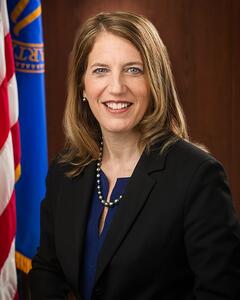
Russell L. Riley
In terms of what we want to accomplish here in the time allotted, we can’t do a deep dive into all the policy issues that you touched on, but that’s not the principal purpose, anyway. Because we’re doing Presidential oral history, our main interest is in how you were fitted into a rubric of people working on issues within this White House. Particularly because you had prior experience in the [William J.] Clinton administration, comparative thinking would be extremely useful, because you will have a basis for making comparisons that others would not. To the extent that you’re able to comment on the President [Barack Obama] himself, his interest in your issues, his engagement in them, what he was doing throughout your entire service in the administration, that’s a bonus. That’s a big piece of this.
If we had 20 hours, we would do deep dives on all of the issues, but if there are in particular two or three places that you feel are important historically for us to park on, it’s your interview, so we’ll be guided by that. I will say that from the outset the two things that I think would be particularly interesting historically would be the shutdown and everything that you had to do from OMB [Office of Management and Budget]. That, at least, is an issue area. Then all of the stuff related to ACA [Affordable Care Act], which will be a big piece of our overall project on this Presidency, trying to understand how that came about, what the key decisions were, who was involved, and those kinds of things.
The other thing is that we’re in the very early stages, so our knowledge base about the Obama administration is pretty limited right now. Virtually everything you tell us will be new to us, other than what’s showing up in the published literature, which may be right or wrong. You’ll help us with that. All right?
Sylvia Burwell
Yes. Just in terms of the framing, there are a couple of things that I think might be helpful. I think the shutdown is important during the OMB time. The second part of what I think is important during the OMB time is the second-term management agenda, because I think that gets to a reflection of a differentiator about this President. So diving into that and talking a little bit about that in terms of things that I think history will view as a changing point—
Riley
OK. And you’re talking in general management terms, not just the ACA?
Burwell
I’m still at OMB.
Riley
OK. That’s what I thought.
Burwell
The President’s second-term management agenda in OMB—the creation of the [United States] Digital Service program as a very specific example in terms of areas that are reflective of what is distinct about the Obama Presidency. I think it’s important to include that, as well as the shutdown. I think the shutdown will tell a story more of his actual management, in terms of that.
I actually think when one turns to HHS [Department of Health and Human Services] that one would need to be very careful. History and this type of work needs to do what has not been done, and what I believe is incredibly damaging is actually that the issue is health care, not the ACA.
We need to start with how President Obama and the nation were feeling about health care. Just focusing on the ACA is a version of a problem of Obamacare, in my mind, in terms of the substance and how we are taken off track in terms of the President’s policy making and that sort of thing, so I would just frame that a little differently in terms of health care. Because when you do it that way, you’re going to get to issues like delivery system reform. You can consider [Section] 1557, the issue that the current administration just overturned, which there’s going to be quite a bit of Court work on. You can put some of that under the ACA.
I’m not sure you put delivery system reform under the ACA; I’m not sure you put global health security under the ACA. That’s why I’m broadening the rubric. And then the other part, which is health-related and security-related, is Ebola [virus]. The other thing—when you look at the agenda, some of it was driven by outside events, but some of it was driven by Ebola, Zika [virus], precision medicine. Precision medicine was an offensive drive, but that falls under the health care rubric.
President Obama is just thought of as President of ACA health, and that’s not all. So I think if we broaden the parameters in terms of thinking about that, that would be a helpful thing to set the context for our conversation.
Riley
All right. This is the Sylvia Burwell interview as part of the Obama project. Thank you for your time. We’ve got a terrific interview on the Clinton administration. Give us a thumbnail sketch of what you were doing before you came back into the government.
Burwell
I went from the Clinton administration to the [William H. Gates III] Bill & Melinda Gates Foundation, where I spent 11 years. At the Gates Foundation, I came in as the chief operating officer, and then held a series of different roles. As it relates to the question and the work that we’re going to be talking about today, one of the things I did at Gates was create their advocacy work. That’s the work that came upon the realization that even with the amounts of money that the Gates Foundation had, that real change at scale occurs two ways: one is through markets, the other through government. The Bill & Melinda Gates Foundation having an ability to engage with governments around the world was how you would scale the work for change, so that was an important part of that work.
I worked on those issues, created the advocacy work, created the measurement work, and then went on to also do the work in the space of some of the new elements that were created when Warren Buffet gave his gift—the creation of our work in agricultural development; financial services for the poor; water, sanitation, and hygiene. So 11 years there, and then I went on to the Walmart Foundation after that, where I ran the Walmart Foundation and ran Walmart’s work on women’s economic empowerment, which included $20 billion of sourcing from women-owned businesses around the world. That’s the short version.
Riley
Where were you physically?
Burwell
Seattle for 11 years, and then Bentonville, Arkansas.
Riley
Bentonville. For how long?
Burwell
I was in Bentonville for—We owned a house there—It would be fair to say 18 months. But I was there and working in terms of the full-time—because once you start the confirmation process and once you know—I was only at Walmart for 14 months.
Barbara A. Perry
So what are you seeing in that interim period—from government to the interim period in the foundation, back to government—in the nature of private foundations in advocacy, in policy? Because that’s such a key component, as you just said in your introduction, of how you see approaching problems and creating policy. What did you learn about that area in that interim period of being at a private foundation?
Burwell
It is that fundamental lesson that if you want to do a scale play, you’re going to do it through markets or you’re going to do it through government, so you can find solutions to things. That was one of the great interests of the Gates Foundation. Bill and Melinda focus on technology discovery, vaccines. But we’ve had a polio vaccine for over 60 years, 70 years now. We still have polio in the world, so the question of how you scale and implement—even if you have a technological solution, or if you have other kinds of solutions, process solutions—was very much a part of it.
In terms of the work with governments, it’s like any other partnership. Public-private partnerships became de jure in terms of foundations and everybody. Some of the important lessons are that actually they are a tool. They are a means, not an end, and so as one is examining what you’re trying to do, figure out the best means. Sometimes that is partnership; sometimes it is not partnership. Similarly, when you’re working with a government, figuring out the key interests—It’s deal making. It’s negotiating. It’s all of the same likeness.
President [George W.] Bush was going to engage with Kofi Annan and the UN [United Nations] on HIV/AIDS [human immunodeficiency virus/acquired immunodeficiency syndrome], but needed to get the other G7 [Group of 7] countries to play. This was going to be at a G7, and to get them to play, he needed some type of endorsement, recognition, that sort of thing. Come to the Gates Foundation, say you’re going to support this effort, then you can bring other countries on. So it’s both sides. It’s what we wanted, but it’s also what the government wanted.
Would Bono [Paul David Hewson] speak? We funded so much of Bono and the organization—and Bono was very close. We worked in tandem; we worked together as a team. Would Bono appear on stage with President Bush? During that period you had a back-and-forth on all kinds of things, not just the U.S. government.
Because of the U.S. government budgeting system, we designed at Gates—This was one of the things I worked on, and Raj [Rajiv J.] Shah was on my team at that time—an innovative financing mechanism that did long-term financing to create demand pull for vaccines that normally wouldn’t be invested in. That’s because a government would guarantee that they would put the money into paying for the vaccine at scale. Because of our budgeting, our annual one-year budgeting didn’t work, but the British played, and other European countries played. So there were all of those kinds of things.
The core lessons are, if you want to scale, you’ve got to work with government. The other core lesson is the lesson of partnership and deal making, which is: when you walk into a situation, be clear about your objectives. The other side has to be clear about their objectives. Figure out if there is enough clarity of where there is overlap, clarity of objectives that I have that you don’t share, and vice versa, so that we’re clear. I may be trying to achieve what we’re trying to achieve, but something else. So you’ve got to understand that. Be clear about the roles that each party’s going to play and have a government system that has the flexibility for change, because everything’s not going to go as planned. That’s a short version.
Riley
I will assume that you were not politically active during this interval, or am I—
Burwell
No. Contributions to people, but not active.
Perry
This is a political science question, and therefore it may be off-base, but it does strike—
Riley
This is a university president. You don’t have to cushion these things. [laughter]
Perry
Well, I say it as a preface, because I don’t do policy and I don’t do marketing and scaling, and those are different words. But from a political science perspective, part of the good news about these partnerships is that in an era that’s antigovernment—Well, we’ve always had some of that, going back to our founding. But in an era where, particularly since, I’d say, the [Ronald] Reagan years, there’s this antigovernment strain, and an upset over the top 1 percent, if you can show people that government and private foundations are working together, it maybe lets them know that it’s not all being done by government, or it’s not all government funding or their tax money that’s being used.
That’s one point. And then the other is that for those who get upset about the top 1 percent, people like the Gateses are taking the fact that they’re in the top 1 percent and they are doing good with their money. So does it help in all of those areas?
Burwell
I don’t think so.
Perry
No?
Burwell
I think there are some, in terms of the analytics, that I would apply to that hypothesis. First of all just do the dollar numbers, and the dollar numbers need to be done in two different ways. Let’s just take the space we’re talking about, foreign affairs. Survey most Americans, and they don’t actually have the facts. When they tell you how much the U.S. government is spending on foreign affairs, it’s dead wrong.
Perry
Yes. Always.
Burwell
So doubling down on wrong concepts feels to me like not a good thing. Additionally, when one actually does the numbers, the Bill & Melinda Gates Foundation is the largest foundation in the world, and we still weren’t going to solve the problems. And it’s because if you take Gates Foundation funding in the area of education, K–12 [kindergarten through 12th grade], or even just high school education, we’re the largest private funder in the country. I don’t think we even hit 2, 3 percent, 4 percent, nothing like that. So the idea that, Don’t worry that the government’s—from a political science perspective I’m not sure that’s where you want to drive the facts.
Also from a political science perspective, I do not spend time on these issues. I spend time on the future of higher education, but I do think there is this question of the government spending too much, the elites—Those kinds of questions are questions about historical and traditional power dynamics that we in the academy, I think, need to step back and not use our traditional frameworks of analysis to think through. Because the elite kind of thing—If you think about it—Let’s take the Bernie Sanders people and let’s take the [Donald J.] Trump people, the far left and the far right. They are all feeling I’m not a part of the system. And so saying that Bill Gates is spending his money, that’s not what they’re—
I’m from West Virginia. People do not vote their economics. Because in the state of West Virginia, the number of people that received health care was the highest percentage of any population voting for President Trump—who was clear from a policy perspective—so they’re not voting their economics. You can argue they don’t understand their economics, but I don’t know that that’s exactly right. I do think it’s about participation.
So the question you’re posing, I think, is a pretty complex one. I started at the top level on do the numbers kind of match with the hypothesis? And even when numbers don’t match, people can still have—That can be what they believe. But as a political science theory, I think you’d want to drive it off of is that right or wrong? Is there a communication problem or a substantive problem? But then slipping to the broader area, I think there are some more fundamental things in terms of how one goes about resolving what is a real feeling about the questions and role of government.
The other thing is the role of the elites. Piling government with the Gates Foundation, the single most negative player in the world on GMO [genetically modified organisms] was George Bush, and number two was Bill Gates, so we’re doubling down on, “You’re bad,” [laughter] in many, many ways. I think Melinda is onto something in terms of her new book [The Moment of Lift: How Empowering Women Changes the World], in terms of unlocking and accessing and talking about other pieces and parts of this.
That’s just obviously one person’s opinion, and I have not spent time thinking deeply about the question you posed.
Riley
Were you approached in the first term about going into the administration?
Burwell
A lot of my friends were going in—Larry [Lawrence Summers], Gene [Sperling], Tim [Geithner]—and my husband and I had had a conversation. We had had our first child, and we decided that we wanted to adopt the second child. That was a decision we made. We made a very conscious decision that I would not attempt to—We were about the preemptive-strike approach. [laughter] Also the idea that having been through all this, don’t ever lead him on. If you’re not going to go the distance, then do not start a conversation. Do your thinking ahead of time.
I had served in government. We knew the positions or roles that would be roles that would make me want to change what I was doing. But we made a fundamental decision: Now was not the time for our family for me to go do public service in that way. So what I did was, I said, “I will do anything in the transition. I will give you the months of the transition. I will take a leave from my current job and I will come and do anything.”
That’s how I ended up with the FDIC [Federal Deposit Insurance Corporation]. And there is a relationship that might not be obvious. It might be obvious because I was at [the Department of the] Treasury. I was a part of the Treasury team, had been in OMB, so knew regulators, so my government experience. But the part that was probably less obvious is that my senior thesis was on the deregulation of the thrift industry in college. This was a place where I had spent academic time: [Jake] Garn-[Fernand] St. Germain [Depository Institutions Act of 1982]—that legislation.
I interviewed Garn. I still have the cassette tapes. And it was because Roger [B.] Porter had helped me access—because Republicans controlled the Congress, and Roger helped me access all—Well, I wouldn’t have had access to either Democrats or Republicans. I was a college student who didn’t matter. [laughter] But how I got the access was through Roger, who helped me.
Riley
When were you at Harvard [University]?
Burwell
’83 to ’87.
Riley
Was [Richard] Neustadt still there?
Burwell
I took the course.
Riley
Did you? We may have been in the same class together, then.
Burwell
I took the course. Yes.
Riley
In the fall of ’84 I took his Presidency class.
Burwell
I was later, because I was just a sophomore then. I took it in either my junior or senior year.
Riley
That would have been the last year he taught it then.
Burwell
Whenever it was, I did.
Riley
But you knew Roger independently?
Burwell
No, I met Roger at the class. Was he dual-teaching at that point? What was it?
Riley
I’m trying to remember.
Burwell
Neustadt taught with somebody.
Riley
He taught with Ernie [Ernest] May.
Burwell
He taught with Ernie, but then he—I took the Presidency class.
Riley
Yes, the Presidency class—what was the big hall—
Burwell
Was it Mem [Memorial] Hall?
Riley
I was at the [John F.] Kennedy School [of Government] for a year.
Burwell
Was it Mem Hall? Was it in Sanders Theatre?
Riley
Yes, Memorial Hall.
Burwell
Memorial Hall, Sanders Theatre. I was in the gov [government] department, so I thought, What’s all this case study stuff? Because the Harvard government department had a high emphasis on numbers, we were collocated with the economics department. [laughter] I was kind of, Case study, shmase study. As I’m going through this, I thought, Really? This all seems like a lot of whatever. Then it’s not very long I’m in the government and I think, Oh my goodness. That was so relevant and so true.
Riley
Anyway, Roger—
Burwell
Yes, that’s how I met him.
Riley
Yes. Because I can’t remember what he would have been teaching.
Burwell
That is how I met him.
Riley
Maybe he was coteaching with Neustadt.
Burwell
I think he was coteaching it.
Riley
I bet you’re right, because Neustadt was stepping aside—
Burwell
That was near the end—
Riley
—and probably decided they would do it together.
Perry
Pass the baton?
Burwell
Yes. I met Roger through that.
Riley
I bet that was it. Now I’ve gotten completely off track here. [laughter] So, FDIC.
Burwell
Yes, so I go do the FDIC.
Riley
Tell us about that. We don’t want to park a lot of time, but transitions are a cottage industry for academics. Anything interesting from that experience?
Burwell
Well, certainly, because it was an incredibly interesting time. So job one, figure out how many are going to fail and could we handle it. [laughter] And should Sheila Bair be the leader? The basic questions you’re supposed to do when you go in and do a transition piece of work.
Riley
How did she end up holding onto the job?
Burwell
I just told them I didn’t think they could make the switch. At that particular moment, and with the instability in the system, you couldn’t switch it then. They all agreed with that.
Riley
In her written work she’s been fairly critical of what had gone before, right?
Burwell
Yes.
Riley
So that was my question about her political sympathies. Because a number of people who were there—
Burwell
She’s an independent regulator. At that point we’re working hand-in-glove with the current Secretary. It’s transition. Basically at this point the nation is in crisis, so the idea of whose point of view and political party and da-da-da-da-da—“Let’s get the tourniquet on, then we’ll talk about what we need to fix,” and that sort of thing. You’ve got to figure out implementation of TARP [Troubled Asset Relief Program]. You’re facing critical choices every day. I didn’t spend much time on that, because I was just on what was, in one sense, a small piece, but a piece that would have contagion. If you weren’t controlling the failing banks, where were you going to be?
Riley
All right. So tell us, how were you coordinating what you were doing with the other people whose portfolios were bigger? You’ve got the FDIC piece of it, right?
Burwell
Yes. I would bring my stuff in and feed it into the system, and the system was all people I knew—Gene, Larry, Tim; they’re all around there. It’s all people we know, and so when I needed things—but mine was pretty surgical. Everything about it was a little bit surgical. I wasn’t looking for a job. I just needed to deliver my thing, give people what they needed. I do remember these conversations about Sheila. That was one of the most important questions. I came down on the side of I don’t believe you can switch the horse now. To make that decision you need a little more time, and we needed to be on a more stable footing.
Riley
And you said that you’re working with the previous Secretary, and that’s [Henry] Paulson?
Burwell
They were. They all were. I just was doing my little piece. Figure out how many of the banks—Is the FDIC ready? I would contribute to some of the economic conversations in tangential ways, but I was very focused on my piece.
Riley
And where were you physically?
Burwell
I was in the FDIC. I would go there, and then I guess—Did we have space somewhere else? I have much more of a memory of the Clinton transition in that building on 14th or 15th. I can see that building. But I spent most of my time at the FDIC.
Riley
And you were really drinking from a fire hose then?
Burwell
Yes. Focus on your own thing. Get the right pieces of information. And I did spend a little bit of time with the other regulators, just to try to understand how the pieces were fitting or not fitting together.
Riley
You mentioned Tim. Had you known Tim before?
Burwell
Yes.
Riley
Oh, that’s right!
Burwell
Tim was there at [the Office of] International Affairs.
Riley
That’s right. I forgot about that.
Burwell
Tim was a DAS [Deputy Assistant Secretary] when I met Tim. Then he becomes the Under Secretary when Larry becomes the Deputy Secretary.
Riley
So he was a known commodity and was felt to be a team player?
Burwell
Very much so.
Riley
Well, my ill-formed question was about the affect toward him having been a carryover, but I had forgotten the earlier Treasury experience that led up to that, so that answers that question. OK. So then you save the world—the financial world. [laughter]
Burwell
They did.
Riley
They did, but you had your piece of it.
Burwell
I gave a little puzzle piece. [laughter]
Riley
And then you go back to the foundation world?
Burwell
Yes.
Riley
At what point do you decide, Maybe we’re OK in my family world where I can do something—
Burwell
What happens is now I decide to leave Gates. I want to get closer to my family. My father is aging, not doing well, and I want to be closer. I do not want to travel the way I’m traveling, because at this point we do have a second child we have adopted. The trips to Africa, to India—doing them was just too much. I actually had gotten the work to a place where it was on stable, good footing. At the Gates Foundation, at that point, I looked around the room and, I think of 32 senior leaders, 24 I had hired and had worked for me. This feels good. I’m not leaving anybody—Certainly more could be done and that sort of thing, but for me and my family right now, I wanted more proximity to home and less travel in terms of West Virginia.
So I decide I’m going to do that, do a search, look at all kinds of different things, and then decide on the Walmart opportunity. The theme of that is playing at scale: $20 billion of sourcing from women who own a business? When you actually analyze how many women own businesses, and that’s now eight years ago, producing that kind of sourcing—Walmart is the biggest scale play you can make—the largest food donor in the world because of the grocery stores, the largest employer in the United States—so when you’re doing workforce changes, that has huge impact. The environmental work, in terms of them not adding trucks to their distribution, and in a ten-year period, the amount of cars that that’s the equivalent of taking off the road. In terms of their contributions and sustainable—
So I go there, scale play. Interesting. Different. Very different. But then I wasn’t thinking of a second term. We weren’t thinking of any of that. We were just thinking, This is where we’re going. This is our life. I was not focused on that at all, and I wasn’t in the run-up to the campaign. I supported Mrs. [Hillary Rodham] Clinton first, and when Mrs. Clinton said, “Please support Barack Obama,” that’s when we shifted our financial support, but it wasn’t like I was a surrogate or any of those things. My husband and I looked at each other and said, “We just got here. This is crazy.” There are three jobs in the federal government that would make us even listen. We made that decision. We felt we were done, because we didn’t think there was a high likelihood or anything—
Perry
And the three were?
Burwell
The three were: Director of the Office of Management and Budget, Deputy Secretary of State, Deputy Secretary of Treasury.
Riley
So how do you get matched up to one of those positions?
Burwell
That was a defensive play. [laughter]
Riley
Gotcha.
Burwell
There was no desire to be matched up. We had a nice house. We were living in Arkansas. My life was so much better. I wasn’t traveling nearly as much. I traveled with Walmart, but it was so much better. I had just built a team. I had finally gotten the pieces in place. I was understanding the place. Things were going quite well. In the end, unbeknownst to me, how well they were going is that my boss was going to leave and the board had approved me to become that person. All of this unbeknownst as the Obama administration calls.
Jack [Lew] calls and says, “The President would like to meet with you.” I said, “Jack, the President would like to meet?” This is postelection. He’s reelected, and Jack’s Chief of Staff at this point. “Well, he was thinking about things, and he’d like to have a conversation with you.” I said, “Jack—” He said, “No, it’s about—”And so I go have a conversation with the President. I’m not even clear that the President is talking to me about OMB. I talked to enough people that I was clear enough that I should go and have a conversation, but I wasn’t certain. And it’s not even as clear in the conversation.
It’s the first time I’ve met him. I go to the White House. I go meet with the President. We have what is a relatively short conversation, I think 30 minutes.
Perry
What were your impressions of him, as this was your first time meeting him?
Burwell
He probably had been—
Perry
Was it in the Oval [Office], by the way?
Burwell
Yes. He probably had been briefed. Well, that was a part of it. Jack knew me, Tim knew me, Larry knew me, Gene knew me. All of those were the people who were saying, “OMB Director; we need one.” Because I had done the Deputy job and they knew me and they had worked with me. I had worked on the economic team at the NEC [National Economic Council], so I see it from that position. I worked on the economic team at the Treasury. To become a member of the troika was a much more natural fit than the next job in terms of that.
So I go up and have a conversation. What are my impressions? I didn’t know him. My impressions were he is very smart, and a good man with shared values and integrity, and that I would share his values. Because when you’re doing the OMB job, when you’re doing any of these jobs at the Cabinet level, you’d better align from a values perspective, because it’s just going to be hard on everybody if you don’t. That’s not going to be good. I think I also talked to Valerie [Jarrett]. I think I also met with Valerie when I came up.
Perry
And other than the important values of integrity and honesty, caring, other values you were seeing, either through that conversation or—He’d been President for a term—
Burwell
Yes. He had proximity to the people. Even his questions of me about my family and stuff like that, and how he reacted to things about the family, indicated to me that he thought about his role of President and what we were all trying to do, to drive to the kitchen tables of the American people. That was something Clinton clearly had, that proximity to the people we serve. And he had that. It was indicative in the questions. I just had a sense of this is a guy who—This most definitely isn’t about him having a title and a job; it is him seeking, believing that in this role he can change things for people in a positive direction for the nation.
Riley
And the vibe that you’re getting from all of your former colleagues who are in the administration, is it generally pretty good, or are you getting a sense of aggravation or, Boy, this is a lot different?
Burwell
I would say 80 percent, Good, and 20 percent, Be careful; they don’t like outsiders.
Perry
And you’re viewed as one, because you were—
Burwell
I’m not part of the core team.
Perry
You’re not in the inner circle.
Burwell
Right. When I walked in the first day at OMB, in the Roosevelt Room, in the meeting, and the table, it’s Alyssa Mastromonaco. Jen [Jennifer M.] Palmieri was there, but these are people who have been with him. I am clearly the outsider.
Guian McKee
Were you associated with the Clintons, particularly, in their view, do you think?
Burwell
Yes. But they invited her in to be in the administration, so it’s not like they’re completely down on those people. I actually just think it’s who are the people we trust the most, the inner circle. This was not a problem. It’s very important in the history; this was not a problem. From Day One I said my piece. I could disagree with the Chief of Staff, with the President, obviously in a most respectful way. But if I had a point that I thought we should raise or a question we should ask—Was it hard? It was, sometimes. Did people get annoyed? But never did I feel shut off or that there were repercussions.
There was a welcome for a differing point of view, including, at one point six months in, when the President was having a meeting with the senior team. He said, “You know, I just feel like the team is really jelling—” because there were a number of people that were promoted in the second term—“I feel like the people who we’ve put into more senior roles have stood up. They’ve grown and they’re doing it, and doing it ways that are different and even better.” This sense of, They did it. “We’ve had new people come in from the outside, like Sylvia, who just fit into the team and became a part of the team.” That was fine, but it was a recognition.
And so that worry that people were giving me—I think different people had different experiences. I’m sure you’ll talk to other people. It’s high stakes. It’s tense. It’s that sort of thing. You’ve got to be ready to have a little bit of friction, and sometimes, that’s hard. Denis [McDonough], who’s now very close—Denis and I, after we got our rhythm, that, I think, was a relationship that got a lot done for the President, because I didn’t feel I needed the President; Denis could speak for him. We could work it through. We could work it out. We, I think, had a sense of each other. You all read about when we’re in those meetings, those budget meetings, the big deal meetings and that sort of thing, Denis and I were prepared going in, we worked, so I did not feel what people said, “You’re an outsider. It won’t work.”
It was similar at Walmart, though. When I was going to Walmart, that’s what everyone said, too. “They don’t like outsiders.” [laughter]
Perry
From a management perspective, how do you find that rhythm? I’m fascinated by that. You finally got that rhythm going with Denis. How do you find that?
Burwell
Part of it is time, it’s like starting any new job, understanding the players, the people, and the rhythms, and how people do things. Different people do things a different way.
You have to get to know people. That’s why relationships are so important. That’s why the Neustadt—the study, the case, and all that stuff—is so important. In my first round in the administrations I appreciated, not in an overt way, in a covert way, relationships, just because I was raised in a place where that’s important. But articulating and knowing—it’s really important to understand. Denis was a football player. What elements of that contribute to the culture? Denis knew the name of every [U.S. Secret Service] Uniformed Division officer. What does that mean, and what does that tell you about what he values and how he thinks about things? It’s understanding things like that that help you get a rhythm with someone.
And then the other thing is they have to learn to trust you. They don’t know. One of the things that Denis and I, I think, shared was—I’m thrilled and so honored that I’ve been able to be in two Cabinet posts, but that wasn’t what this was about, and Denis is completely that way, so there was an alignment. But you have to learn that. This was never about him. Never. So understanding that also helped you understand that when you were having a disagreement with him, it was legitimate. He does not believe that is the path. It’s not about him. So you very quickly move to, where is it we’re disagreeing? You believe they’re going to behave this way; I believe they’re going to behave that way, because most of what I’m working on are negotiations with the Congress.
I was very fortunate, because Rob [Robert Lee] Nabors [II] was right there to be a whisperer in terms of helping me. Rob very much helped me understand the people and the players.
Riley
Now where was Rob at the—
Burwell
He was the Deputy then. Miguel [E. Rodriguez] was doing legislative affairs, but because Rob was an appropriator and much of this stuff was around the budget, he was still very engaged in that part, which obviously had a big relationship to OMB.
Perry
I’d just like to circle back. I’m intrigued by the point that you made that though you knew you were an outsider, people had alerted you to the fact that you would be. But you said, “But I could tell the truth; I could differ if I had to with anybody, including the President, and I could be honest with him.” Did you get the sense that people who were in the circle could also do that and did that?
Burwell
[long pause] I didn’t sense a sycophantic, suck-up culture. I think there are individuals in any administration who—but I’m thinking. I’m trying to think of who I would think was that way. It wasn’t a matter of it being not encouraged to say—It would be more a personality thing. But most people told each other what we thought, and you weren’t afraid of it leaking to undermine you. Right?
Riley
You were not afraid of it leaking?
Burwell
For the most part, no. Every once in a while you’d see something, and you’d know. But it was about someone trying to move the agenda in that way, not hurting each other. What we see now is just scary. How can you work as a team? How can you get anything done when you’re worried that the person in the room is going to walk right out of the room and say something? Or the President himself will do that to you? [laughter]
Riley
Tweet it.
Burwell
Exactly. Yes.
Riley
How did you end up getting the job then? You went and talked to the President?
Burwell
It was one of the fastest job interview processes I’ve ever done. [laughter] I actually think that’s about him. This is a man who knows how to figure this kind of stuff out quickly, and he did.
Riley
So he’s a quick study.
Burwell
Yes.
Riley
What are you finding out about this President and this White House that looks different from what you experienced—
Burwell
Obama versus—?
Riley
Versus Clinton.
Burwell
A lot of things are similar. Where you are on the policy issues is basically aligned. I think it would be fair to say President Obama is a little to the left of President Clinton, but not by any big sense of things.
Obama was very good at figuring out the large, strategic plays. He was very good at the 60,000-foot level. He knew what he was doing when he chose health care when Rahm [Emanuel] was telling him not to. He knew how important that was, what a substantive issue it was, that even if Rahm might have been right about the—and look at how hard it was and how damaging it was and everything—but he knew. The focus on energy as a part of the economic strategy, in terms of the energy production we were doing and how that interacted with sustainability, but also as the base of our economy. I mean big plays. Obama would focus in that way. Clinton’s intellectual curiosity and engagement would have you play in lots and lots of spaces and lots and lots of different things in different ways.
The other thing is Obama and how he engaged is different than—Clinton feeds on people. It is a part of his intellectual feeding and his emotional feeding. Obama would feed more off of the data and the information and the reading of that. I don’t know, because I wasn’t in the Cabinet in the Clinton years, but I think Clinton probably had more Cabinet meetings if you got the numbers and did the analysis. Denis did most of that Cabinet management, which is a difference, and is fine. It actually worked.
Although when I was at OMB, every Cabinet meeting we had, we did things on the management of government. In the Cabinet meetings I was on the agenda every time, [laughter] because the President said, “We’ve got to leave this thing better than we found it.” The critical points had changed, and this gets to the second-term management agenda. Obviously, job one was to figure out the sequester, get that undone, get a budget at a time when you’ve got the sequester, so figure out how we can actually get the government funded at a level that it can function and get us out of the sequester and prevent shutdown—which we weren’t able to do, but then get us out of shutdown. That’s job one. But he was very focused on the second-term management agenda, what are were going to do, because it’s a critical time.
He believed in the importance of the use of technology, working the matrix—some of the partnership stuff that we were talking about. In any organization, at least in my professional experience, the two things that have changed the most, whatever thing I’m in, is speed to iteration, speed to change; and the matrix, that stovepipe—so technology and those concepts. What were we doing to bring the government along with the changes that were occurring? Cabinet meetings would focus on that.
Riley
Were you prepped for this in your original conversation with him, or in early subsequent conversations?
Burwell
No. When I get there it’s, “This is a part of the job,” and that’s fine. We would align. I thought that was important, too.
I was at the OMB for the second time. It’s one of the few times you can come back. I wanted to invest in OMB and the staff and mentoring circles and invest in career staff, because nobody ever does. But if you had the privilege of going twice, you ought to know enough to make it a priority, because if you don’t, it won’t happen. There was a mentoring—Denis started this whole program for leadership from people across the government that would come—the White House Leadership [Development] Program—so that you were investing in people. There were all those kinds of things that nobody reports on, nobody cares about, but are important parts.
The big one was the [United States] digital service corps. Did we call it DSP or DSC in the end? [USDS; U.S. Digital Service] I started it; Shaun [Donovan] finishes it, because I had left. I’m only at OMB for a year. It is just one year. It’s obviously a great thing to go be Secretary of Health and Human Services, but we were getting this digital services thing going, this combination of bringing these technology people, the urge to want to serve and help with these huge technology skills. And it wasn’t just the technology skills; it was like having your own government management consulting firm, with heavy, heavy, heavy doses of technology skills.
So you get these great, talented people coming in. When I got to HHS, I said, “How many teams can I have? Here’s my first problem I’d like them working on, here’s my second problem I’d like them working on, here’s my third problem I’d like them working on. And give me the fourth. I’ll take the fourth team,” because it was important.
As you think about changing government, the question of this role of technology and the question of how government needs to work more—not more like business, but government needs to work in the way that things work now. It’s not about government or the private sector or whatever; it’s just the world is a world of the matrix. The world is a world of the use of technology. The world is a world that is customer-focused. Anytime, anywhere. It’s the Amazon Prime world, so get with it! [laughter]
Then it turns out that you go to HHS and it’s the government trying to do that. The [Health Insurance] Marketplace is an unnatural function for the U.S. government. We did the intermediary function; we weren’t the funder. Medicare is a funder. Medicare pays. We write checks. That’s what we do. Obviously there’s a lot to writing checks and the rules around writing checks, but it wasn’t creating the consumer interface.
McKee
You literally have intermediaries to do that in Medicare.
Burwell
Exactly. And so you are asking the government to do something it does not traditionally do. When I went to HHS, we set our sights on being consumer-centric to succeed in the marketplace.
Perry
So you said to get these consulting teams, with the digital experts and the tech experts, and you said soon after you got there, you had your problems lined up—
Burwell
When I went to HHS.
Perry
Oh.
Burwell
Yes, HHS. I’m creating this thing for everybody to use at OMB. We’re down this path. In the second-term management agenda we’re going to focus on SES [Senior Executive Service], because they’re a key leverage, and we’re losing them all, because they’re all going to retire. We’re going to focus on the digital services corps. We’re going to focus on certain leadership elements. I’m putting together—Todd Park was helping me—I’ve got this ragtag team putting together the management agenda. I’m getting it together—We’re kind of starting down a path—and then I say, “Goodbye.” [laughter]
McKee
Had that come down from the President or Denis, or was that something that, as you came to OMB and surveyed the landscape—
Burwell
He had talked to me about caring about the way government runs and this idea of, “Sylvia, bring it to the future. I think technology is an important part of the future.” And then there was freedom. “You understand that what I’m trying to do is get government into the future—the future of the consumer at the center, the future of the use of technology, the future of working across—” even within a department. Because in HHS you’ve got to get people working across—I have the Bureau of Indian Health [sic; Indian Health Service]—CMS [Centers for Medicare and Medicaid Services] is shutting down my hospitals, and they should. But how do the pieces work together?
Perry
I guess this is another political science question, but I’m just thinking of that book, Congress: Keystone of the Washington Establishment. Morris [P.] Fiorina, I think, wrote it, about the triangle, where you had—
Burwell
Mo Fiorina was my senior thesis advisor. [laughter]
Perry
Well, there you are. So you must know. I think I’m right on the author. We can check that on the transcript. But that concept that there was what they used to call the iron triangle—
Burwell
That was Hugh Heclo.
Perry
The iron triangle, I think, was Heclo—
Burwell
Yes. The iron triangle was Hugh Heclo.
Perry
Basically you were taught by everyone who was at the top of political science. But yes, I think you’re right. Heclo, the iron triangle. But I think it’s Fiorina—it could be [David R.] Mayhew. But anyway, one of these top political scientists takes this concept and says Congress actually plays that role of interface with the consumer, so that Congress is the intermediary with the people, their constituents, and the bureaucracy. So I’m intrigued by your thinking of management and the President thinking of management and a consumer-oriented government that, would I be correct in saying, would actually have the bureaucracy having that relationship with the people?
Burwell
The consumer is different depending on what the issue is.
Perry
Ah! Explain.
Burwell
I’ll just take HHS—Medicaid. You could consider the person, the individual getting the Medicaid, but in the way Medicaid is run, because we are the financer, that’s the role that the federal government is playing. The consumer is the state. The state is our partner. So being consumer-oriented means if you’re coming in for a Medicaid waiver, how does it work, and do you feel like you received what you needed in terms of that? The Small Business Administration—it’s how financers are working with the loans. In many cases, when one says “the consumer,” the consumer isn’t necessarily the end individual. It depends on what part or piece you are doing, and how that works and how that feels. Often government is working with state and local governments, or often government is actually working with businesses.
When doing regulation in Medicare—trying to move to accountable care organizations and a bunch of the regulations that needed to implement law changes around this, the consumer actually was as much the provider, not the person getting the health care. We talked to over 100,000 physicians to do that rule making, and that was different. That had not been done before. That was very different in terms of there’s the rule-making process, which affords the opportunity for people to write in and do their thing, but no, no, no, this was our team going and meeting with the people, getting their input.
So the consumer is different depending on the issue. In the particular issue of the Marketplace what was different is it was direct to consumer; it wasn’t B2B [business to business]. It was a very different approach, as one is thinking about what the Marketplace actually is.
We had to know—I can tell you, Latinx, the Latino population, uses mobile devices to sign up more than the broad population. We had to reach those people who were 26 to 32; that’s how the insurance pool gets improved in terms of risk issues. What are the tools they use? I learned more about gaming people and YouTube personalities. [laughter] I went to hair salons. We drew the line that I wasn’t going to go to the tattoo parlors, because I didn’t think that was the best health, but this is real. You’ve got to understand the consumer. So it depends on where you are and what the consumer is.
This issue of the interface of Congress versus the interface of the executive branch—I think how I would answer that is “and,” not “or.” I am a personal believer that you actually set aside money at OMB and give it to the Congress for earmarks, because I actually believe they are closer to their districts, number one, and number two, I believe it’s how you get things done. We get a lot more legislation done. We have that ability. I’m not a purist on the executive branch to this point of proximity to the consumer. I think how I would say it is, it’s “and.” You need both the executive branch and the Congress to be proximate to the consumer.
Perry
And you mentioned stovepiping versus the matrix. Can you explain how you think about that and how that changed how you operated at OMB? Were you there long enough to implement your matrix vision, versus stovepiping? And if not, can you—Well, soon enough we’ll move to HHS. But I’m just interested in how you implement—because even at the little Miller Center, we hear all sorts of criticism in-house about too much stovepiping—this little institution at the University of Virginia. So I can’t imagine—In a giant government bureaucracy there must be, of course, the same. And what you were saying was you were attempting to move from that to a matrix-oriented, matrix-based management model. Am I correct in using that language in that way?
Burwell
I think a matrix-based management model is hard, because interestingly, I think working in a matrix has to be culturally based. It can be reinforced by the structures and the processes, but it needs to be culturally based in terms of how we think about working together.
The best example that I would give of working in this matrix approach is Ebola. It was interesting, because Ron [Ronald A. Klain] comes in at the very end. Look at the dates on the thing. I have to smile, because I’m glad Ron came and Ron helped, because he took from me—Usually you would use the White House to be your means by which you do, but this was a highly executional and operational thing. That’s why it was fine to have someone come. The point at which he came, we were pretty far into the thing, but it was working.
So the objectives—I spent hours at the table with Raj Shah and Tom Frieden, CDC [Centers for Disease Control and Prevention] and USAID [United States Agency for International Development] setting the core. There was a chart that the President would get—Where are we on the core things we’ve got to do to fix this problem? The waiting. Burials, fixed burials. What are we doing in terms of all the different pieces? You had to get agreement on that, so we spent hours getting the agreement on that.
The government worked as a whole of government in a way I had never seen before. You had USAID, you had the CDC. We brought in the Public Health Service. The U.S. Public Health Service had never been used in this way before. The authorities existed; I just had to decide and do it. And there was no choice, because what the Defense Department agreed to do was build the facilities, but they were not going to be anywhere near patients, period. We were not risking our U.S. military near patients, period. Was it Chuck [Hagel] or Ash [Carter] then? I don’t remember which one it was, but I’m not going to argue. I’ve got that, so we’ve got to find a different way to find a solution to get it staffed. And we did.
Meanwhile, back at the ranch, you’ve got to have the Department of Transportation. So the waste that was produced at Emory [University Hospital] from treating the patients has to be incinerated, and there’s a special process to get rid of the waste. Well, it had to move across state lines. This required the DOT [Department of Transportation] to be engaged in that way.
And it was matrixed throughout. The people that were taking people’s temperatures—Those are your local public health people in Charlottesville; that was not the federal government. We needed Susie Smith on Whatever Drive—
McKee
Rose Hill Drive. [laughter]
Burwell
—to go do it. So this was the entire functioning of government, top to bottom, and working. Thank God for Emory; thank God for the Nebraska hospital. The Dallas hospitals that had the patients, and New York, these people were your complete partners. So that was that movement toward it.
Was it a structure that existed? No. But did it work? What do you need to make it work more? Some of it has to be done through processes, so when you’re budgeting, having people do the budget together. The Department of Energy and the Department of Defense actually need to agree on your nuclear budgeting, so you’ve got to get that working. There are places where that’s how you do it. Or when you think about an issue like opioids, I’ve got money, the drug czar’s got money, it turned out the Department of Agriculture had money—we’ve all got to get it together. So it’s creating a management structure. It actually depends on the issue how you—and that’s where Neustadt had it right, that there are certain elements that are always consistent.
And boy oh boy, the other thing that should always be consistent is how do you red team what you’re doing? How do you, after you’re done, do an evaluation?
Perry
I’m sorry, what’s a red team?
Burwell
You put together your plan and you bring in people to say what’s wrong with it. You bring in experts to say what’s wrong with it. Often they’re experts from government. But we put together our chart that we were measuring everything—basically our template for measuring everything, and you give it to people to say, “This is why that won’t work. This is why that won’t work.”
Perry
And that’s called “red teaming”?
Burwell
Red teaming. Yes. It’s generally used in military operations, but should be used in everything. Red teams—the actual chart that measures the thing, so that you get it consistently, you get it on time. There are steps that make the matrix easier to work, but I’m not sure it’s necessarily a management structure always.
Riley
But you said it’s driven by culture, and the cultures that you were inheriting were divided cultures.
Burwell
It’s important. It’s the combination. It would be nice if it were one thing or another and there’s some silver bullet, but I believe it’s the combination of culture, structure, and process.
Perry
How do you change the culture?
Burwell
Crisis can change the culture. If we don’t get it together and work together, a million people are going to die of Ebola. I’ve seen at the Gates Foundation the Vaccine Fund and GAIN, the Global Alliance for Improved Nutrition, work together—people and players that had never worked together—the vitamin C people working with the iron people had never worked together. But when you put money on the table and say the only way this is accessed is if you work together, that’s another way to get people to work together.
Many of these things aren’t particular to government. When I speak, I always get the question of the differences. Many of these things, like whether it’s the private sector—a lot of the themes run the same.
Riley
You had indicated—
Burwell
You didn’t do the shutdown.
Riley
That was where I was heading.
Burwell
Good. All right. Let’s get back to the shutdown.
Riley
Because the management side was something that you wanted to talk about as important to the President—
Burwell
But let’s get back to the shutdown. Yes.
Riley
I had a question about—Are you getting a headache thinking about it?
Burwell
Well, my first day at OMB—
Riley
Tell me.
Perry
Let’s begin there.
Burwell
My first day at OMB, I can’t remember if it was the alternate day or the day, but it was one of the days of the furloughs. OMB had more furloughs per capita than any other, even the actual numbers, because all OMB is is people. When you’re under sequester, the only things you can cut are the people, so I arrive and half the team is gone. [laughter] The institution that’s supposed to figure this out and solve it is under the most pain from it. You walk in and you think, How are we going to work this and get us to a different place?
There were several paths to a different place. There was the big deal, and the idea that you were going to get a tax entitlement, discretionary spending deal that would make entitlement changes, make tax changes, and as part of that, get the discretionary numbers. Because the odd thing about all of it is, the discretionary budget is what we all fight about and what right now they’re going to fight about and what we shut down the government over every time. This is not where the real dollars are. This is so small relative to the other issues. In the current context now, in terms of the tax bill that was proposed, we’re fighting over the absolute wrong substantive thing. So we are having discussions about the big deal. There is a form of an unendorsed group. Mitch McConnell has said they can come talk to us, but are they blessed to negotiate? No, but—
So when I get there, you’ve got to figure out how are we going to get out of this. That’s job one. No matter who’s here or not here today, figure out how we’re going to get out of it. And clearly we have to get out of it, because we’re going to hit the debt ceiling and we need to keep the government open and get a budget. And we need to get out of the sequester, because at this point in time—
I’ve described OMB, but let’s describe what’s happening to the United States Air Force. Op [operations] tempo—you have pilots and planes just sitting, sitting, sitting. These guys are getting rusty. I understand we don’t want to use them. I understand there’s a very small percentage chance that we’re going to use them, but I don’t want them rusty. There’s stuff happening everywhere because the money’s not there, as you think through what’s going on. And the craziness of, for the DOD [Department of Defense], things like the long-term contracts. It costs so much more when you can’t do things in a planned way. We’re digging our hole deeper, so figure out how we’re going to get a solution.
You’re pursuing the big deal thing, and then you’re thinking through what are the other potential options, how would you put together deals. This takes tons and tons of time. You’ve got to talk to people, you’ve got to spend time with people. I was very fortunate.
There was a group of Republican House members that wanted something done, so they sat down and had a conversation with me. They helped me understand what was happening in their caucus, how people were thinking about things. At the same time, people like Rosa DeLauro, all the Democrats I knew—Barbara Mikulski, Nita Lowey—were helping me understand it from our side. And then, obviously, what the administration was wanting.
You had Rob, who was part of it, too, because he had been an appropriator, and so we were putting together the strategy of how we were going to land the plane.
McKee
Could you talk a little more about, to the extent you can, what you learned about what was going on in the Republican caucus at that point?
Burwell
We talked mostly about the substantive solution space, where you could get a deal and what was needed for a deal, and the role of defense and defense spending, the role of the different pieces and parts. That was kind of a House conversation. My conversations were a little more on the House side about the smaller pieces. The Senators were coming to discuss the big deal in terms of two different things. I think they would reflect that their caucus was split. But this was a group of people who were trying. They believed you should and could get things done.
Because McConnell had seemed to make a core objective preventing the President and Democrats from doing anything, relationships with the administration and Republicans were strained. But Denis was turning that. Denis actually was building, and believed that you should and did need to. But that had not always been. I arrive, and this question of the engagement with the Hill—that had happened in the early Clinton years. We hadn’t gotten working with the Hill to its best—just figuring out that we’ve got to work with these people, this is how it’s going to happen. Then, meanwhile, making sure that all the Democrats always knew about my loyalty to them and our issues. I had relationships with our Democrats, and they didn’t doubt whose team I’m on.
But trying to figure out—So that was reflected—The big deal we try, and it doesn’t work. Why does it not work? I think there’s not the appetite for the pain that both sides would have to take to get a deal. In its simplest form, that was what was happening there. Then you’re going to the smaller approaches and fixes and stuff like that.
When I came back to town, I went to visit Paul Ryan. Paul and I had known each other—There’s this piece from the 1990s—I guess it was in Washingtonian or some magazine. “Young Guns.” Oh, how painful. [laughter] When I went to the first meeting with Paul, I’m back in town and had reached out because I was at OMB. I go and one of the staffers puts the article [in front of me]. This is to say that Paul and I have known each other since that period of time. I met with Paul and talked to Paul.
There’s the question of what Paul wanted to do, and then there’s the question of his caucus and what was going to happen. He’s the budget chair at that point; he’s not the Speaker. I met with Mr. [John] Boehner. I met with all the people, but I had a sense that the deal would be Ryan-[Patty] Murray, because I knew them both. Everybody said, “Well, if you know them both, then why do you think that they will be the people to do it?” And it’s because they are actually extremely different people. But the things that they had in common, I thought, would—and in the end, that’s how that part of the deal gets done.
Republicans had to go through a series of votes to get to something that could pass. They had to show members of their caucus that things wouldn’t work. You’re sitting there negotiating—Ms. [Nancy] Pelosi is leading big parts of it—but time and time again, they would want to do something but had difficulty delivering. The Republican caucus was just fractured. That’s rule number one in negotiating. You’ve got to be able to deliver, which in contrast is what Nancy Pelosi was always able to do. She would not say it if she could not deliver it.
McKee
“She” being Pelosi?
Burwell
Pelosi. This was before where we are now. She was the strongest player. I’ve had the chance to work with Trent Lott, Newt Gingrich, Robert Byrd, Chuck Schumer, Tom Daschle, Dick Gephardt. She has always been the strongest player because she understands the substance enough. She was an appropriator. It was good having someone that good being in the mix. She knows when to delegate and she knows when to do it herself, and she knows when to let Patty Murray lead. That deal was Senate-led, and that didn’t necessarily feel good. But Nancy Pelosi doesn’t let her emotions or the politics, small “p,” get in the way. She’s about getting things done.
So we eventually get the deal. You get that deal, but of course first there’s a shutdown, and it’s the second longest shutdown in the history of the government. The first, longest one, I had worked on when I was at OMB during the Clinton years, and it’s just awful. It’s an unnatural state. It’s terrible. You’re caught between how bad it is and talking about how bad it is and trying to press the edges of the law, because this is untested law, but they’re criminal offenses—That’s the way the budget process—because spending unappropriated funds is a criminal offense.
So you’re walking between those two things. You’ve got to get all the departments ready. They’re asking hundreds of questions every day: “Can I do this? Can I do that? Can I do this? Can I do that? Can I do this? Can I do that?” We’re the arbiter at OMB of what you can and what you can’t. Their counsels obviously look at their appropriations language, but then consult with us. Sometimes you have to bring in the Justice Department, but it’s not like there’s a lot of precedent that they can help you with, so it’s usually the two counsels working through it on making the decisions about where you take the risk and where you don’t.
Then the Congress passes legislation to pay for bringing bodies back at the Department of Defense, because that was not covered for somebody who dies, but they leave out the Coast Guard. The first time that somebody dies in the Coast Guard is during that 17 days. Can I get someone to pay for somebody’s body to come back? Sure. Let me just call Bob Rubin or Bill Gates. I’ll call Bill. No, because that’s against the law, supplementing funds. You can’t solve the problem that way.
It’s just this unholy state that you’re caught between trying to get the government back open. People are suffering, and your own employees, and you’re working on a shoestring, right? I’ve got the spreadsheets, and you’re trying to get it done, and there aren’t that many people at the White House. You’re trying to work with the departments, but they don’t have anybody there to answer your questions, to get things done.
My first year I met with the President every day, through the 17th of October, every single morning. “Hi, Mr. President. Here’s where we are. Here’s what’s happening.” Then the second October, I met with the President every day for the first however many days in October because of Ebola. After that one, the President looked at me and said, “I just hope I don’t see you in October. [laughter] Let’s just not have another crisis.” I’d meet with him on other things, but I was not meeting with the President every day.
But what’s probably important is that the President was engaged at that level. We’re in the shutdown and I meet with the President every day. I brief him on where we are, what are the most challenging issues. There’s a written report and an oral report in terms of that, because it’s the combination of the problem with the shutdown and how are we getting out of this. So I’m busy meeting with him.
Perry
You’re briefing him; what is he telling you or asking you or—
Burwell
It’s just working through the problems as he sees them. Have we considered this? Are we thinking about that? Where are we on the negotiations? And sometimes you needed him to do things, like let’s have a meeting of the leaders, or let’s do this, that, or the other. And obviously I’m coordinating that with Denis and Leg [Legislative] Affairs. They’re playing a very large role, too. It’s a team in terms of how that work is getting done. But you’d have to ask him to do things. Can you call So-and-So and do this? Can we do that? We had to send Sally Jewell out to Idaho because vigilantes have taken over the National Parks. [laughter] We think she’s safe. [laughter] A lot of it is briefing and his engagement at the level of decision making that he needs. Here’s how we’re exposed, here’s where we’re not exposed.
Riley
I wanted to go back and ask a question about the period before the shutdown, and that is, in the briefing books there were several pieces that emphasized that the administration was working with a group of eight Republican Senators.
Burwell
That’s the big deal. That was the big deal work.
Riley
I’m trying to figure out where the eight Senators came from.
Burwell
They were somewhat blessed by McConnell. They were a group of people who had more of an appetite—Actually, they were Republicans that were fiscally responsible. I would put them in that category. [Robert P.] Corker has always been very interested in those issues. They were both that, and they were people that probably, from McConnell’s perspective—He would have considered Bob more extreme. Because Bob prioritized this, Bob was probably more willing to maybe compromise on certain types of things. But people like Dan Coats were there, too. Dan is just a good guy, a kind of conservative Republican. So it was a group of people. It was Ron Johnson from Wisconsin. You probably have the list in front of you, in terms of who it is.
Riley
Yes, I’m sure it’s in there somewhere.
Burwell
Yes, it’s in there. So that was when we were doing the big deal, trying to see if you could get a big deal.
Riley
And the answer was no?
Burwell
We worked. I spent a lot of time. Ron Johnson will tell you I spent a ton of time with him. Bob Corker—that’s how I got to know him better. I spent lots of time with Bob, trying to work through what would work. It was hard, though, because you had a situation where, from our perspective, these people weren’t endorsed to negotiate, so we’re not going to put stuff on the table, because we’re not negotiating with them, right? So talking about things conceptually. Was McConnell trying to set it up so that it wouldn’t work? I don’t know.
Riley
Yes, that was my next question, whether this was ever a workable proposition, or was it a dodge.
Burwell
I don’t know the answer, and Mitch McConnell would be the person who could best answer that question.
Riley
We’ll see if we can talk to him at some point.
Burwell
But you see the dynamic that was created. When people can’t really negotiate, you can’t—and this gets to, how do you get things done? If I didn’t have this job that took so much time, I would write the book on the examples of how you get it done: Ryan-Murray [the Bipartisan Budget Act of 2013], [Hal] Rogers-Mikulski [Consolidated Appropriations Act of 2014], the farm bill with [Debbie] Stabenow [Agricultural Act of 2014], MACRA [Medicare Access and CHIP [Children’s Health Insurance Program] Reauthorization Act of 2015] with Boehner and Pelosi—There are a lot of examples in a period of time that most people would say was highly dysfunctional. But you get things done. The 21st Century Cures [Act] is another example. Upton and—I can’t remember her name—California.
But there are a number of examples of how you get it done, and some elements of the recipe. I think one thing about many of those things, when you look at it, is we all kind of became infatuated with gangs because of the immigration thing, but the immigration thing didn’t actually work in the end, right? Two things that can kind of work is actually the real committee process. Empower the committee process and bank on it. But for the committee process to work, if you’re not on the committee, you’ve got to trust who’s on the committee. That’s part of the committee process working. So that’s one way. And then deals between leadership—but that means they have to be trusted individuals who can bring the parties along—the caucuses.
Riley
Were there any major differences between the shutdown this time and the shutdown before?
Burwell
I think we had better systems in place.
Riley
In the second one?
Burwell
Yes. You knew the memos when they went out, and we had done conference calls. The Railroad Retirement [Board] agency’s questions were answered. Think about the entire government shutting down and nobody knowing what to do. It’s a tremendous thing. You’ve got to line everybody up. Everybody has to have their plans. You have to review the plans. All these plans are coming in. But all that was done this time. I was there the last time, so I think we improved in that space.
Riley
But partly because you had practice—
Burwell
And the other thing that was different is we had a much better winning message in the Clinton shutdown: MMEE [Medicare, Medicaid, Environment, Education]—Medicare and Medicaid, the environment, and something else. I can’t remember.
Riley
Education.
Burwell
Education. And it was hard. It’s not that we didn’t know that a winning message really helps, but it was much harder, I think because of the sequester problem. That was a part of what you were fighting. We did have the messaging issue of “We shut down the government because several people wanted to unfund the Affordable Care Act.” That’s really the bottom line. So we did have that, and we did obviously talk about that and use that. I sense maybe it was the same—when you look back at the [Rafael E.] Cruz statements and all their statements about, “We’re gonna shut it down over this.” You’re thinking, I don’t know. We could talk to a bunch of Republicans, but I think it was clear that most of the caucus didn’t agree with them.
Riley
They remembered the lesson from before, right? When everything got hung around Newt’s neck.
Burwell
Nobody wanted to—and it’s not like we’re going to be busy telling them about their politics. [laughter] In the sense of, I’d be happy to—Of course we were having the conversation. This isn’t good for any of us. This isn’t where we want to go. Pelosi was willing to take the lower numbers and sell them to her caucus.
Perry
So here’s the big-picture question: What has brought us, our system, to this state of affairs that not only happened in the ’90s, happened in 2013, has happened since then—from your bird’s-eye perspective—but you also were obviously down trying to make things better. What is it about our politics that causes this to happen?
Burwell
I think that there are a number of elements, but one of the elements that is undermining of the fundamentals of how our system was set up—if you go back to [Alexis] de Tocqueville and think through some of these things—is the issue of individualized politics.
In the late ’70s, early ’80s, we start with letters going out from the NRA [National Rifle Association] or Planned Parenthood. In a world where you get anything, anytime, anywhere, we have heightened the role of individualized versus committee, and so you vote on the environment, you vote on abortion, you vote on single issue, and the ability to go to individuals versus a committee process that brings together issues. That’s the committee process. The basic underpinning of parties, committees, is the function of I can’t just be single issue. I have to be able to come and work through varying things and use processes to do that.
I think there is a second issue that drives the chaotic situation in terms of making legislation happen, and making things happen in general, and that is a lack of proximity to substance. And it occurs both in the body politic and in the members. The idea that I’m in a hearing and I have called you ahead of time—I call every member before a hearing. And you think I’m the Secretary of Education. You’re on this committee. I don’t look anything like—If you thought I was Arne Duncan, he’s a six-something basketball player, and John [B.] King [Jr.] is an African American male. A little bit hard. [laughter] The lack of proximity to substance—
We were just talking about the Marketplace. It’s a private market. It is using private insurance. The number of people on the committees of jurisdiction that did not understand that this was about—The conversation we’re having—Can we all back up?—is about subsidizing private insurance. Oh, by the way, yours is subsidized, because you are employed and your employer receives tax benefits. Is that complicated? Yes. But really, if we’ve elected people, and so just the fundamental lack of proximity to substance. I think that’s exacerbated by social media, and that people want things in these little sound bites, which don’t get to the clarity of the substance of an issue. So I think those things contribute.
McKee
Are they simply disinterested in the substance? Or is it incentives? Or is it the kind of people that are drawn in? What’s the core of that and what causes that?
Burwell
I’m not sure. I’m thinking about it. I think it’s a combination of things. I think some of the people that are attracted to it—because it’s not fun or good. I was just with a Senator last night on the other side of the aisle, and it was interesting just to be with him. It’s a Senator that I’ve worked with and know and have a personal relationship with. He just seemed so unhappy—
McKee
Really?
Burwell
He did not seem happy. He did not seem himself. And he loves being a Senator. It’s what he always wanted to do, all his life. He finds so much joy in doing it—and doing it for all the right reasons. We talked about, it’s like we’re on the same team, because we both believe in serving. But it was even in an eight-month period a change. I think we’re not attracting—
Because part of it is, it’s so bad. For people like me to actually go through a confirmation process, having done four confirmation hearings in a year’s time, because OMB has two confirming committees, HHS has two hearing committees and one confirming committee, but I had to go through the process with four committees. Everybody asks, “Will you serve again?” I’d say, “No. My husband and I decided, after that year, never.” I’m never going to be confirmed again. I’m not doing that again. Will we maybe change our mind? Is it like childbirth? That you forget? I don’t know. [laughter]
But to your point of what drives people away, I think there is a who’s attracted and who’s willing to do it, and that sort of thing. I don’t know if it’s different standards or seeking ease. It’s easier to not have to think about it or get it right.
I’ve found the reporters less capable in my second round in government. However, there are spots—Ezra Klein is smart, works hard, good. Robert Pear, who just died? Smart, works hard, good. But some of the people are just—really? Come on. [laughter]
I’m not sure what it is. And it’s what sells. Reality TV is what sells. People want the sizzle. We have gotten to a place where we don’t value—It’s anytime, anywhere. So I think there’s something about that that contributes to it, too.
But I wouldn’t say that the American people don’t want it, and I would use very specifically the way that we saved the Affordable Care Act. The election occurs. It’s the next day; I’m meeting with the HHS team, and I say, “No. This is not the end.” “What do you mean? He says he’s going to kill it. They hold the Senate. They hold everything. What have we got? They have everything—the House, the Senate, the executive branch. There’s nothing. There’s no way.” “No. This is a democracy and there is a way.”
This is what had not happened with the Affordable Care Act. When the Affordable Care Act was passed, the nation’s knowledge of what the problems were and what the path would be to solution had not been as clearly articulated and understood. The table was set at the policy level, and people who were working on it knew, but you hadn’t set the table with the American people. I was very clear: By the time this President is sworn in, we have to lock Mitch McConnell, Paul Ryan, and the President of the United States into agreeing that they won’t get rid of pre-ex [preexisting conditions], because it was the substantive leg of the table.
Perry
Preexisting conditions?
Burwell
Preexisting conditions. Once you say you’re going to preserve it—It’s not like we all thought an individual mandate was a good idea. It’s a necessary condition, unless you want to spend billions and billions and billions of dollars and blow the bank. Because the way you make people do something is either you pay them to do it or you discourage them from doing it. [laughter] So figuring it out—But once we got out there, that—
The other thing that you had to do was, everybody focused on the Marketplace and the access. Having 20 million people gain care in the United States is a really important thing, but there is a population of over 300 million, so what did they get?
People never focused on—so many of those people—if you’ve got your kid on your care until 26, you’re most happy. The pre-ex—everybody knows somebody. If you take that away, everybody understood that. So it’s not that the people didn’t want to know the substance; all they had heard were abbreviations—either Obamacare or ACA—it was all just these words that were given meaning that wasn’t necessarily the real meaning. And they were actually hungry. When you saw those town halls and you saw members, “Let’s not do the town halls,” right? [laughter] A bunch of the Republicans thought, I’m not doing that again. And I understand why, because once people understood the substance of this, that’s what was—
McKee
Yes. It’s interesting. The roots of that were always there in the polling when you broke it down into the pieces of it—
Burwell
You saw it.
McKee
That was always more popular than the overall—or the slogans or the—
Burwell
Yes. And you saw it. You knew it. And you tried, but you could never break through. And this gets to a little bit about coverage and what sells. The media, as the fourth arm—We have a situation where it’s about what sells, in terms of how they cover and what people want. In one sense, if people aren’t going to read it, then it doesn’t matter, and so maybe it is OK. But there is, I think, a problem there. Look at [Matt] Bevin in Kentucky. He runs for Governor; he’s going to get rid of Medicaid; first thing he’s going to do. Runs an entire campaign on it. Entire campaign.
McKee
Can’t do it.
Burwell
Didn’t do it. Cost the state of Kentucky money by taking away Connect [Health Insurance] the way they did it. But the truth is they use the Marketplace now. Whatever. Is that not the most efficient and effective way to do it, and does that serve the people of Kentucky the best? No. Was it fundamental? No. No, no, no. But he couldn’t. He couldn’t. And so you get to the substance.
When you get to the substance on some of this, the health care substance translates to politics pretty quickly, because people care about it. It is a kitchen table issue, and it’s something people relate to.
[Discussion of when to break]
Riley
All right. Let me tee up a question that ought to take five minutes or so. You were around and you’re wearing your management hat in 2013 as the website for the health care program is getting prepared. You’re chuckling under your hands there. What do you remember about that process?
Burwell
So I come in, and clearly one of the things that’s a problem around getting the budget done and that sort of thing is the Affordable Care Act. So poor Kathleen [Sebelius] is worried that we’re going to fold on funding for her.
Riley
You’re going to fold on funding?
Burwell
Yes, that we would not totally fold, but she had real needs. And so I meet with Kathleen, and say, “No, don’t worry. You tell me honestly what you need, and we’re going to get it.” So priority one as all this is going on is me making sure—Obviously it’s going to be hard, but we get her enough funding so that she can get the navigators out so that she can do what she needs to do.
At the same time, there are all these meetings about this. And when you’re at OMB, I’m in the meetings not because of the management. OMB doesn’t help departments do their day-to-day management, so you don’t. I’m in there because I’ve got to make sure she’s got the money. And it’s all a part of the team that’s working on these issues. I had questions. Everyone’s going to Monday-morning quarterback, but I did. You hear me—red team—I’m all about anything that can go wrong will go wrong. [laughter] The walls have ears, just in terms of that kind of stuff. So there were some questions as we were going in that I thought were—I wasn’t proximate enough to it to know. I just had questions. So it’s not as if I thought, This is going to fail; I just had questions.
Perry
And what were your questions?
Burwell
My questions were much more around some of the policy issues—and some of the policy issues that were making things hard on Kathleen, like what we were willing to take on in terms of taking on water. It’s hard, this question of keeping your plan and the grandfathering. That obviously undermines the pool, right? I had more questions probably about policy and the basics of testing and stuff like that. At Gates we had difficulty with our technology—at Gates. When we were redoing the technology for the grant-making systems, we spent a lot of money and it didn’t work and we had to redo. But my questions were more on the policy side, because that’s the part where I would be engaged, on the policy side.
Riley
Of course.
Burwell
On the checklist of things like that, they’re busy. Could you please go get us a budget?
Riley
Sure. You’ve got a million things going on. My question was largely motivated by your coming in in the middle of a process. Because all of this is set in—
Burwell
When I go to HHS or when—
Riley
No.
Burwell
—when I’m at OMB?
Riley
When you go to OMB—
Burwell
Oh, yes. What happens is I’m managing the shutdown. They’re all busy with that. One of the people we brought in was someone I knew from technology. I’m happy to check; tell me what you need me to do. When we’re all going over in the morning meeting about what’s Jeff Zients going to do and how’s he going to do it, and does that make sense, yes. But this is a block and tackle to get this right. The number of meetings when I get to HHS—I have meetings every single week, the whole year, and then I have meetings every single day during open enrollment.
Riley
Right. And we’ll want to hear more about that. But my question is more about how you’re getting acclimated to the health care transition as you’re coming in. My assumption is that you’re focused.
Burwell
For me, it’s the policy piece, the funding piece, and the regulatory piece, because the regulations are what’s implementing all the policy, and that comes through OMB. So those are the places where I’m deeply engaged. I am not engaged on—
McKee
Database design.
Burwell
Exactly. And the basic functioning of the Marketplace, which was the challenge.
Riley
Sure. Do you remember having anxieties about whether the path had been properly prepared for this to come out? Or is it just the case that when you’re in a high-pressure environment like this, everything looks a little wobbly until it gets firmly buttoned down?
Burwell
Again, is the whole thing going to come together and work? I’m much more focused on the question of, will you have enough young people in the pool, will you have diversity in the pool? I’m focused on the policy questions, which aren’t about what’s going to happen on October 1. They’re actually much more what happens when open enrollment closes. And those were questions. How long were you going to extend the open enrollment to get the people in? Weighing in on questions like that. Yes. But those are policy questions related to operational questions.
Riley
Exactly. But you’re in a unique position to give us a picture of this, because you weren’t there before, and yet you had a wealth of experience in the executive branch. You’re sort of being positioned in a critical role, partly as a participant but partly as an observer, about how all of this stuff is coming together. You’ve already said Kathleen was—I don’t remember your exact terms, but busy, and concerns that she certainly had anxiety.
Burwell
The anxiety I’m referring to, the anxiety we spent time on, was the money.
Riley
But it wasn’t an execution question at that point?
Burwell
Yes. There were pieces and parts that, on the execution side, I thought, I don’t know, but I don’t have the time or the energy to figure that out. Should I think more than my kind of questions? I never hid from my questions. I’m happy to always ask my questions. If I had concerns, I didn’t feel like I couldn’t raise them. But the validity with which I could raise something—because I wasn’t as close to the substance as I needed to be on those things, because I was close on the policy questions. And then at the point at which things go wrong, you’ve got to divide and conquer. I’ve got to keep the government in some semblance of—and work on the deal part. Obviously, it’s connected.
Riley
But you say when things go wrong—
Burwell
Oh, October 1.
Riley
Two things go wrong on October 1.
Burwell
Two things go very wrong: the thing I have to handle and the thing she has to handle. [laughter] So yes, divide and conquer, but keep the two things related. And there is this question of what was happening during that period of time. The joke was I gave everybody cover, at least for the first 17 days, because that was much bigger. The government being shut down was much bigger than the Marketplace not working at that point in time. That was the joke. Do we really want it solved that quickly? I thought, Yes.
[BREAK]
Riley
All right. I was going to start by asking—We’ve sort of gone in and out of the shutdown. Are there pieces of that we haven’t talked about that you want to deal with?
Burwell
No. I think we got it.
Riley
So then you’re at OMB for another four or five months after that, until April?
Burwell
Yes.
Riley
Is there anything important for us to understand about your time at OMB after—
Burwell
We talked about the President’s management agenda. I think that’s probably one of the biggest, most important pieces of that. The other thing that was pretty important is making sure you have a good, strong head of OIRA, the Office of Information and Regulatory Affairs, and so we brought somebody in. Because Cass Sunstein had left.
Riley
Did you know that beforehand, or this is something you—
Burwell
Cass had left. There was an opening in place.
Riley
No, but did you know about the importance of OIRA before?
Burwell
Yes, because during the Clinton years, we had to spend much time—because the head of OIRA had been nominated to be the deputy director for management. She couldn’t get confirmed. I had to do the management stuff. OIRA reports to the management side, and it’s one of the biggest pieces of the management side.
The other thing that is happening is—and this is about the executive function—we come into the place. I bring in this woman named Beth Cobert, my deputy director of management. She’s very talented. When things happen, where you put things that are unnatural, like the naval shooting and the question of clearance—You don’t set the clearance stuff with the NSC [National Security Council], because they’ve got a dog in the fight.
There are issues about what you ask people about clearance in terms of mental health, so HHS would have a dog in the fight. So we end up being the place where figuring out what we’re going to do about clearance stuff gets put, and Beth runs it. Beth eventually becomes the person who has to do the cleanup when the data is taken from the Office of Personnel Management and ends up going over and being the interim person. This idea of where do things go in the executive branch when new things happen? Probably the only other we might want to touch on is Flint, because that was not a natural one to come to us, necessarily. Ebola—
Riley
At OMB?
Burwell
No, this is when I’m at HHS. But the question of where do things go in the executive branch that are new—and the other thing is about talent in the executive branch and how it gets used when you have a person like Beth who’s just extremely talented. And the movements of people like the guy who I insisted was the one person I had to have to do the FDIC. If I’m going to do this, you can pick all the people—because of course they want to pick people on the campaign to give them—but I just need one person that I know can get the work done.
That was Andrew Mayock. He goes on to be at the Millennium Challenge Corporation as the CFO [chief financial officer] there. He had worked for me twice at Treasury during the Clinton years. He then goes on to be a PAD [program associate director] at OMB, and then he becomes the acting deputy director for management. But there is this thing as one thinks about the Presidency and talent and how you get things done and done well. It’s an important part, I think, of the picture when one thinks about the Presidency.
Riley
Was there anything really substantially different in OMB between your first tour there and your second tour? Is it just that the politics are different? Or looking back, could you say that there was anything culturally or organizationally different that’s—
Burwell
Well, in different administrations, the role of OMB varies. How that happens is that many OMB Directors—Jack Lew goes on to be the Chief of Staff; Leon Panetta goes on to be the Chief of Staff—the role that David Stockman played. The question of the OMB changing—It’s not it changing. Its role can change based on an administration. I worked in administrations where OMB was a strong player at the table.
Riley
Right. In both instances?
Burwell
Yes.
Riley
And there wasn’t anything particularly distinguishable between—
Burwell
I think what changed was that context, and therefore that role. I think because OMB had been managed by an acting director for so much of the time, the career OMB staff felt their work was not prioritized and they weren’t getting the attention that they felt was their due. This was not about Jeff, who was an excellent manager, but instead all the transitions. Some folks asked me, “Remember, Sylvia, how you got that picture of us all with President Clinton on the steps of the White House?” They all still had theirs at their desks, and it was so important. Or tickets to the Easter Egg Roll or things like that, because they’re mostly career staff, and so how they get treated was something we worked on a little bit.
Riley
OK. What about just budgetary politics in general? I had scribbled a note to myself to ask about CBO [Congressional Budget Office] and whether there was anything noticeable. As an outsider to this field, that may be an irrelevant question, but it strikes me again because you’ve got two slices of time—
Burwell
Yes, I think CBO—not huge differences. Again, OMB’s and CBO’s products are less in demand, because people don’t understand the substance, so that’s the change. The change isn’t them; the change is the world around them, including Paul Ryan, the former Chairman of the Budget Committee, taking a bill to the floor on health care to undo a huge portion of the U.S. economy without an appropriate CBO score. So that’s not about CBO.
Riley
No, it’s a political—
Burwell
Yes, it’s the context.
Riley
All right. Are we missing anything? We could talk ten years about—
Burwell
I think we can go to HHS.
Riley
So how did this happen?
Burwell
Interestingly, the first conversation was with John Podesta. Denis McDonough brought John in. John and I are very, very close. John and I worked together on the 1988 campaign and we worked together in the Clinton years. We’re close personal friends. He’s a counselor to Denis in the White House. He said, “So, what do you think of this idea?” I said, “It feels kind of crazy.” I was the Deputy Director of OMB; I worked on the economic team; I’m getting things going—just got a deal, remember? We undid sequester for two years, got through all this, and they were blamed for the shutdown. I’m kind of on a path. And he said, “No, think about it. Think about what it means for the administration. Think about what it would mean for you.” So the conversation started through John.
Perry
Had you still had thoughts about Treasury and State, which had been among your three, when you talked with your husband about—
Burwell
No.
Perry
You were not thinking any longer about the possibility of Treasury or State, going into another Cabinet agency?
Burwell
No, no.
Riley
Because those were Deputies, right?
Perry
Well, you wouldn’t have gone down, anyway.
Burwell
Yes.
Perry
But you were happy at OMB?
Burwell
Yes. It was just fine.
Riley
Do you figure you would have stayed there for several years?
Burwell
Yes. I know. You’re asked when you come in, “Are you going to serve the whole time?” Yes. That was the plan.
Riley
OK.
Burwell
We bought a house. [laughter]
Riley
A house that you could actually occupy, probably—and I’ll have to explain that off the tape.
Burwell
Exactly. We were coming to stay, and stay at OMB.
Riley
Right. So you’re thinking about it. Were you inclined to decline it?
Burwell
I think that’s an important thing about the Presidency and serving. This is what I said about you’re either interested in the job or you’re not. Once you start down a path, don’t—This is the President of the United States. We are not wasting the President of the United States’s time. Similarly, once you’re in the administration you’ve agreed to serve, and so if it is the judgment of the President—It’s not like this was a demotion or anything. It’s not like he was asking me to—So I felt like if this is what everybody agrees is the best thing, there’s not a lot of choice. Once you’re in, you’re in.
And you could kind of see the logic of it all. Sure, I knew Francis Collins and I knew Tony Fauci and all those guys because of Gates. I knew the international health stuff. Because of Gates, I had at least had an exposure to it. I had worked on all these issues, because you do the budgets—It’s the largest budget, and the Medicaid stuff comes through OMB, so I had worked on that before, the rule making and all that. I’m not a Governor; I wasn’t a doctor. But the work at the office—our TANF [Temporary Assistance for Needy Families] work, Bureau of Indian Health, community hospital—It’s a large, complex organization as much as it’s a health organization. What did you need to know about health?
The other issue is, what was the key thing that needed to be done? We needed to really work to solidify the implementation of the Affordable Care Act and all of the health issues that we were working on.
The other thing about it is, who could you get confirmed, if we’re all honest. The Affordable Care Act was what just shut down the government. They were going to confirm somebody? There were 114 investigations of the Affordable Care Act between the IG [inspector general] and the Congress. This is toxic. Toxic. So how could you confirm somebody? I didn’t know what the President would say, and I never asked, “So is this just because you think I can get confirmed?” [laughter] But one would think that that would be a part of it, too. I lost 17 votes.
McKee
That’s not too bad in the scheme of things at the time.
Burwell
Well, could you get anyone confirmed was the question.
Riley
So you said yes?
Burwell
Yes. I talked to him about the things that if I were going to do the job, that I would want.
Riley
And what were those?
Burwell
They were things that had to do with hiring and firing ability, the question of the team, and access to him as I needed it.
Riley
And you were given the latitude to hire the people that you wanted?
Burwell
Yes.
Riley
And access to him—
Burwell
Was as needed. We set up one-on-ones, but over time, when you see the man every day during Ebola, we got to a place where it was not as regularized as it was. Of course when you’re setting out the parameters you want to create a regularized schedule of, I will see the President for a one-on-one once a month, or over a period of time, but over time it became much more when I wanted it and needed it, in terms of the issues, or when he wanted it and needed it.
Riley
So describe for us what it was like coming into this office. Does it look different from the inside than you expected it to?
Burwell
Well, the process to get there, because of things around the Affordable Care Act—It was vitriolic in terms of how people felt about it. Nobody actually wanted to talk about the issue. It’s like fire. So you get there, and Kathleen rightfully left the technology decisions, but I had to make them that week I got there, or I wasn’t going to get testing done.
Riley
This was for—
Burwell
HHS. I arrive at HHS, but the technology, as in technology decisions of platforms, are we going to change things—
Riley
For that fall?
Burwell
Upcoming fall.
Perry
For the next enrollment?
Burwell
Right. To do the testing, I had to make the decisions immediately. I’m confirmed, I think, June 9.
Perry
And did you have lengthy conversations with her as a transition?
Burwell
Yes. Kathleen went through everything. Our relationship was a good one. Kathleen got things steadied—She and Jeff Zients and others got things to a steadied point. Then the question is, how do you make sure that you can bear the numbers, that you can do all that you’re trying to do and move on from what was a challenging—though in the end, the outcome in terms of the number of people that signed up was a good one. So yes, she had started to brief, and we had had conversations. But the real, “OK, here are the decisions, here’s what you’ve got to decide. You’ve got to get this within a week—”
Perry
How did you get up to speed so quickly to make that decision?
Burwell
I read a tremendous amount. I read a lot.
Perry
Because you don’t watch TV.
Burwell
There is that. [laughter] I read a lot as part of the process in preparing for the hearings. My confirmation hearings were very tough, because they were ACA hearings. The United States Senate wanted to just use it as another opportunity to go over the ACA and grill the Obama administration. Obviously, you’re not inside, so you can’t answer and you don’t know. You have to be careful about what you do know before the hearings and that sort of thing. But no, you just studied. Then you had good people to tee up the questions.
The other thing is, by this time, a real partnership with the White House had developed. Kristie Canegallo, Jeanne Lambrew, and eventually I pull Aviva Aron-Dine over to HHS from the White House, getting a team in place. We did things together. They came to my weekly meetings. They were on my daily calls when we were in open enrollment and stuff like that. Because the Marketplace—actually because DHS [Department of Homeland Security] has to be engaged in checking immigration status, the IRS [Internal Revenue Service] has to check income status.
This is a government-wide effort in many ways, and so it was always great and very helpful to have the White House when I would say, “I don’t think the IRS is delivering on what they need to. I can call Jack, or you can help me out.” Always helpful. And also to have that set of eyes. They had been a huge part of the cleanup. Kristie had been very engaged in the cleanup, Jeanne had been very engaged in the cleanup, so having those people there.
And of course there were some tensions between the White House and HHS after such a trying period; you know, who shot John? And everyone feeling the weight of what went wrong. It was a little strained, but I think we got all that relatively quickly back to a place of trust and folks working together.
McKee
What were the key decisions about the platforms and the technology?
Burwell
Testing load. Whether you were going to try and bring in new forms of technology or fix the existing base that you were on. Could you bear the load? There were things that were different. This time you were going to have to reenroll people, and so it’s a whole different function on top of the other function. Then there were policy decisions in terms of who would you reenroll and how would you reenroll them. There were technology decisions, and then for all the people that that didn’t work.
Then it gets down to very technical decisions. At what date would we reenroll you? How long will we give you? And what would that mean for the technology and the load, and what would that mean from a policy making—People do everything at the last minute. Well, you can’t have the load of all the people coming in at the last minute, and then trying to put through the system that reupping. What plans were you going to go into? What if your plan didn’t exist? What would we do with you? It is endless in terms of the complexity. This is not buying an item on Amazon. This is a much, much, much more complex transaction so it had to do with both policy decisions that you needed to make that impacted the technology.
Then we created these alpha companies where we were eight, twelve weeks out, actually testing things with insurers, doing it, actually running things through. But there are certain things you can’t run through. You can load test, but it’s a simulated load test, because you don’t exactly know. So in the second year, what you find out is that people actually took more time to pick, because they understood, right? So they’re on for longer. [laughter]
McKee
It’s good, but—
Burwell
Get it done, because I need you off the system, because the other thing is you don’t want to pay the cost for those peak, peak days, and everybody jams those days. And the call centers—It’s all that stuff. It’s at the end. So are you going to hire that many people? What does that cost the government? And what’s better? How much of a wait can you have that you don’t lose the people but you’re not costing the government? To bring in that many people—
and the training that’s required.
These questions are hard. In order to be a navigator, to answer the questions—“My mother’s not legal, I am da-da-da-da-da. How should I get da-da-da-da-da?” Or, “My 26-year-old is turning 27 on the day after the open enrollment. Will we be able to—” The documentation issues: “I’ve just received an email that says I didn’t provide appropriate documentation for my citizenship status. What do I need?” Well, you have to upload it and do it in this way. The uploading technology, was that working? At one point there was a glitch there. Have they fixed that?
It’s just hundreds of technology and interrelated policy decisions as you’re getting the Marketplace—and then are you going to redo the grandfathering? What are you doing about—The small business stuff never really took off in the way we wanted it to take off.
McKee
You mentioned working with the insurance companies, and I was thinking about your point earlier that the Marketplace was dealing directly with a consumer who was the person purchasing the policy. What was the relationship with the insurance companies? Were they consumers, too?
Burwell
Yes. I know all of those CEOs [chief executive officers]. I worked incredibly closely with all of those CEOs. And that was also part of how you made sure there was coverage. We were having the conversation with the CEOs about making sure states were covered. And listening to them, working with them—Of course we had the problem with the CSR [cost sharing reduction]. There are two different things, the two different kinds of payments, and the one that turned out—I’d have to go back and look it up—the one that didn’t turn out right.
You’re meeting with the CEOs. Some of the problems evolved and changed. Because of what you’re doing, they are your partners. I think they felt that I approached it that way. They’re not the enemy. I understand why they charge money. They make money. I got it. I got it. I got it. [laughter] They do a lot of things that from a policy perspective—But you cannot treat them like the enemy because they are your fundamental partner. So figuring out how to do that is a very important piece of it in terms of the insurers.
The other important piece is the state regulators, because it’s your state insurance regulators who are regulating the pricing increases, right? We brought in Kevin Counihan, a person who just focused on those kinds of relationships.
McKee
And his position was?
Burwell
What was he called? Head of the Marketplace, I think. It had a title [CEO of Healthcare.gov], but that’s the basis of it. Andy Slavitt was brought in after Marilyn Tavenner, so there were changes that were occurring. That’s the specific Marketplace.
But the other thing that started the day I got there was the delivery system reform work. I could not have asked for a better partner in transition than Kathleen, including that Kathleen had me come to a delivery system reform meeting that she was having with the team before I was confirmed, just to listen and hear, and this was a place where, I think it would be fair to say, I did change course. That was a course that was going to be about convening, and the course that I changed was—I believed that the Marketplace was obviously important, but that the delivery system reform is the long-term game that you had to do in terms of movement.
It took me a while. If you talk to Karen DeSalvo or if you talk to Patrick Conway, they will say I was driving them crazy, because it was like the Bill Gates approach to strategy development, which can be a painful—because it’s hard. This is really, really hard. This takes huge intellectual capability, understanding of the substance, to get a strategy that is a fundamental, articulatable strategy. Everybody had gotten to the game of affordability, access, and quality, and people said that. That’s great, but what are the three most important things to do? Karen and Patrick would put together—It evolved and evolved over months. They could tell you—I think it was probably four, five, but they came in with all the stuff. You just have to keep getting it and getting it and getting it to the point where we had the strategy.
This, to me, was extremely important, because it is the fundamental. Everybody was busy, focused on the Marketplace and that sort of thing. Medicaid contributed a lot to the $20 million number—Let’s not hide from that—and the Marketplace was an extremely important part of that, so you’ve got a ton of work that’s every day to get that done, but this is the long play. We were given the tools with CMMI, the Center for Medicare and Medicaid Innovation, to test things, because that’s the only way you’re going to figure some of this stuff out, so that became a huge priority.
And to this point of health and health care and the President—The President completely bought in. When I walked in and said, “I’ve got it. I understand the first-order piece on it, but this is where we have to—” The President was fully supportive and engaged in the substance. He needed to engage in that substance, but he was very willing to engage in the substance, think through the issues.
When I presented what I felt were the three elements of the strategy, when we got into that point, the President was very engaged and helped us think through pieces and parts. Interestingly, one of the places of emphasis for him was this question of the role of the consumer. Some of our conversations with him led us to how we would always talk about the consumer at the center. These big-picture concepts are examples of how he would get to and add real value, even when he rightfully was not proximate to the details.
Perry
Was that your broad definition of consumer as we talked about it early on today, or was the President thinking of consumers as individuals?
Burwell
For purposes of the question of reforming the health care system, you had to put the consumer at the center because success is measured by that individual. So no, in this case it was about health care needs to have the consumer at the center. We don’t in our systems here. The physician is often thought about as the center, and no, we have to move to a world—and this gets to some of those concepts that I was talking about earlier in response to your question, where I just think there are some paradigm shifts that we’re going to have, and it’s actually going to happen in higher education. You all are at a university where you will be deeply protected, because you’re A, so high in the rankings, and B, rich—relatively speaking. [laughter] I know it doesn’t feel like it where you all are, but—
Riley
Thank you. [laughter]
Burwell
What’s your tuition dependency? It’s not 92 percent, right?
Perry
Probably not.
Burwell
No. [laughter] So you all may be protected, but for everybody else—
Perry
For the almost three thousand other institutions, it won’t make a—
Burwell
It’s going to change. The economics do not hold. The paradigm has to shift. And this is why everybody who sits here and talks about, are you a four-year college person or are you with Peter Thiel or all the people who don’t think—the answer is, no, you’re not either. Until we get to the place where we market differentiate in higher education—what you need, when you need it—you may need a two-year degree now, but when you’re 30, you may need the other two years.
You have your PhD, but actually what you need right now is not a credential; you actually need knowledge about something that is going to inform your research and your work. You need a skill. You graduated with your undergraduate degree and your MBA [master of business administration degree], but now you actually really need data analytics understanding, because you can’t operate without it. The vast majority of people seeking postsecondary education are over 24. That’s just going to become more and more and more, because everybody’s changing jobs. The future of work has changed, and so they’re all changing jobs.
Changing the paradigm in health was a part of what you had to do with delivery system reform, and putting the consumer at the center was the way to keep your eye on the ball of how you would do that was one of the most fundamental principles of changing the paradigm.
Perry
So did you come into the meetings with the President with affordability, access, and quality as your three goals, and he then said, “Let’s make that happen for the individuals, for the consumers”?
Burwell
No. The affordability, access, and quality are the measures of what is success. I came in with, “Here, Mr. President, we have to focus on three things. One, we have to focus on changing the way we pay. The fundamental payment system has to change. Here’s the role that the U.S. government needs to play in changing the payment system, here’s the role that the private sector will play, here’s the role that the consumer will play in changing the payment system from a system where we pay for transactions to a system where we pay for value.
“The second thing we need to do, Mr. President, is we have to change the way we deliver care. We need to change the way we deliver care in terms of thinking about coordinated care.” It’s the matrix. Let’s take the hip replacement. You’re the anesthesiologist, you’re the physical therapist, you’re the surgeon. If you screw up, you can’t start your PT [physical therapy] on time, in terms of the success. So it’s very important after the hip surgery that you get up within the day, that you start your work immediately. And if you mess up—So getting people to do coordinated care. Then the other thing is the role of preventative care. So we had to change the way we deliver care and think about care.
The third thing is the use of information and technology. Most physicians enter in the data, but they complain about it, they don’t like it, and nobody gets the value. The physicians don’t get the value of it, and you, the consumer, don’t get the value. What you get is, Why isn’t the doctor talking to me? They’re busy answering something. I get 15 minutes with them, and I think 5 of that is them typing something into a computer. It feels awful. And you’re the physician, and you think, I went to medical school to type in codes? So how we move to the technology.
I come in there and I say, “How you have to think about each of these things is with the consumer,” and he says, “Yes. You really have to focus on the consumer.”
McKee
To break a few of those down—The payment reforms are really about cost, right? It’s not really the insurance companies; it’s actually in these payment systems. The provider is where the excess costs of the system are. Is that the—
Burwell
Well, it’s how we do it. Actually, the insurance companies are an incredibly important part of that. So everybody here, tell me what your monthly premium is, tell me what UVA [University of Virginia] pays for you, tell me what your deductible is, and tell me what your copay is. You all are very educated people, and I’m not going to ask you to do this, really. I can do that in groups of health care experts and I can’t get answers. It’s not a market, and the insurance companies are a part of it not being a market, because people don’t pay. You can probably tell me what your last car cost within 10 percent. Right? You can’t tell me the answers to the other questions. It’s not a market.
McKee
So price signals don’t work?
Burwell
No. So that’s what you’ve got to fix. And that’s why I took the step that—If you talk to insurers and people in the field, they will say the enlightenment moment—
Perry
Eureka moment.
Burwell
—was when I said that we would publicly commit to moving Medicare payments. Because Medicare is such a lead. Medicare is one-third of the dollars spent, but it’s still the lead. People follow the payment systems of Medicare dramatically. And the idea that I would make a commitment about Medicare payments—that’s the third rail of politics. Do I not know Medicare and Social Security? Where have I been? [laughter] And so coming in and saying we were going to do it had such a signaling value to the industry. “No, people, we’re moving to value-based payments.”
McKee
And then the insurers will have the cover to follow. Is that—
Burwell
And they also self-insured the companies, in terms of them negotiating. Boeing negotiated directly with the University of Washington to get those kinds of deals.
McKee
What was the response like from providers?
Burwell
About which piece?
McKee
About moving to value-based payments when you made that announcement for Medicare?
Burwell
It was OK. As you move to the value-based payments and you’re using the different—It was when you get to the specifics—the accountable care organizations—when you get to the specifics, the thing they all complain about—and schools here—I went from one place about affordability, access, and quality to another place about affordability, access, and quality that has inflation higher than the regular rates of inflation, so many of the similarities. They want the upside benefit but not the downside risk.
McKee
Was there any difference in the response between hospitals and physicians?
Burwell
Yes. It depended on what the issue was, the hip and knee replacement stuff. The primary care physicians are all over this. Your younger physicians—If you go to medical schools and talk to people, they’re all over this. Surgeons in their 50s, maybe not so much. So there were divides, but it also had to do with the issue, in terms of what you were doing.
McKee
What did the hospitals object to?
Burwell
Well, the insurance companies and the hospitals are always pointing the fingers. The hospitals say it’s the insurance companies’ consolidation that’s driving our consolidation, and I can’t negotiate with them unless I’m really large and I have all these—And the other thing is, for many insurers, they didn’t actually negotiate the rates. From the hospitals’ value-based payment and negotiating—even negotiating—And it depends. This has to do with competition, and the market is a market that is driven on a geographical basis.
How many doctors do you have in Washington, D.C., versus how many doctors do you have in Hinton, West Virginia? So who can have ability to set price? If I’m an insurance company, all I’ve got is the Summers County Hospital, ARH [Appalachian Regional Healthcare, Inc.] Hospital. That’s all I’ve got. Well, here in Washington, D.C., for Blue Cross Blue Shield, are you going to Sibley [Memorial Hospital]? Are you going to go to GW [George Washington University Hospital]? Are you going to go to MedStar at Georgetown [University Hospital]? There are a lot of choices.
So the reactions and responses had to do with had people been negotiating or not negotiating before? What was their power in negotiating? And then it also was on a thing-by-thing basis. What did they think of my Part B drug proposal? Different people would be on different sides of the issues.
McKee
That’s really helpful.
Perry
States. You’ve talked about state regulators, but when we talked about consumers, you mentioned states. You may have mentioned the regulators then, but also the states and trying to get them to take the Medicaid expansion. How was that working for you?
Burwell
When I get to HHS, any of just what you would call regular-order Medicaid expansions were done. This was all going to be negotiated deals, and negotiated deals hadn’t gone forward. A part of that was the timing. Kathleen had to wait on the Court’s decision before you would know what you were doing, and then Medicaid wasn’t there for everyone, so then she got a bunch in, and then it kind of stalled.
Perry
So that was waiting for the first Court decision, what would end up being the first of two from the Supreme Court, the first in 2012?
Burwell
Yes. I believe Medicaid expansion is really important. It moves the numbers on the access in a large way. It contributes economically hugely to the states in terms of both job creation and the benefits of people having better health care. The Medicaid play was a big one. And I think it’s worth compromising on some things that we think are pretty important in order to get it done. So I start negotiating. Pennsylvania, and the most famous one, and the one that everyone focuses on, is Indiana. I spent a lot of time with the Vice President—with then Governor [Mike] Pence and Seema [Verma] working on this and figuring out the deal and getting to a landing space where, I think he would say, he believed that this wasn’t exactly what he wanted, but it was beneficial for the people of Indiana, and I would say the same. That’s the big one, and that’s the one that everyone focuses on.
Riley
Can you walk us through that and tell us about that?
Burwell
Yes. There was a lot of back-and-forth, and there were others that were close. What was it—Prosperity for America [sic; Americans for Prosperity]—I don’t know which one of the groups—One of the Koch-funded groups really did stop it in Tennessee. There were no seats in the hearing.
Perry
That’s the Koch brothers [Charles G. and David H. Koch], not Coca-Cola.
Burwell
Yes, the Koch brothers’ organization. Prosperity for America? I can’t remember. They had these colored T-shirts and all the pictures from it. So there were a number of people. I was negotiating with Gary Herbert; I was spending lots of time negotiating with [William] Haslam and Pence, so working on three different conservative Governors and their needs. It was just a consistent back-and-forth, trying to get to the details of a deal and what the expansion would look like.
Some of the key points were the questions of lockouts, so if you didn’t make a payment, you could be locked out, and how you would be locked out. We generally don’t do lockouts in Medicaid because this relates to the questions of financial flow for the poor. That’s the hardest thing. The senior leadership at Walmart needed to live on what our average customer lived on for a week, so you’d get it, because it’s about the decision making on a day-to-day basis and how difficult that is and the strain that that puts on you and the choices that you have to make because of flow. It’s often about when the dollars are coming in, what you can get done. And then when something throws a monkey wrench—your car breaks down, you get laid off—and how these things work. That’s why historically you haven’t done lockouts.
But there were a number of issues—lockouts was one of them—and I apologize, I don’t remember all of the others, but there were a series of issues, and you just kept working it and working it and working it until you got a deal.
McKee
What did Pence really need on his side to—
Burwell
He needed a number of these issues, he thought. The thing that they always say is, “skin in the game.” Accountability, responsibility. And you know what? I believe that. It’s not like I disagree with the point. It’s just the question of what each of us thinks that means, and the incentives and how people will behave and what will actually happen. We’ve all seen what happened in Arkansas when they put in the work requirement. That, we predicted.
McKee
Did that come up in some of these conversations at that time?
Burwell
Certainly. Some in the Pence one, but in the Herbert conversation, that came up a tremendous amount. An important element in the Haslam conversation was drug issues and drug pricing.
McKee
And Herbert is from—
Burwell
Utah. And Asa Hutchinson, he comes in, follows a deal with a Democrat Governor. He wants to renegotiate. Asa brings his speaker of the house, his President of the senate. I met twice with those folks from Utah as well. The Governors needed their House and Senate members, so they would become a part of the meetings and the conversations as well. You clearly were negotiating with the Governor. But part of what Herbert wanted me to do, and Haslam and Asa wanted me to do, is hear them. Not just listen to them and say they were heard, but, “No, here’s what I have to do. This is my deal space.”
McKee
Yes.
Burwell
And for them to hear directly from me in terms of red lines.
McKee
Were those people substantively capable? You were talking earlier about folks who maybe were not substantively knowledgeable.
Burwell
Yes. They’re only bringing the chairs of the one committee or the other, so for the most part, yes. “Reasonable” and “substantively capable” are different words.
McKee
Right. Fair enough.
Burwell
Some of them were very, very reasonable. It was helpful to just have the conversations. You believe people are going to behave this way because of this; I believe people are going to behave this way because of that, so where we’re disagreeing is on this exact point. So you can get to that point.
McKee
That’s fascinating. There are currents of behavioral psychology and economics—
Burwell
Oh, heavens!
McKee
—that are running through this.
Burwell
It’s huge. Huge. Huge. Behavioral economics, even here.
McKee
It’s powerful.
Burwell
Yes, it is very powerful.
Riley
Were you given pretty much free rein in these negotiations, or is the White House standing over your shoulder?
Burwell
I wouldn’t negotiate without White House input, but, no, I’m not going to cut a deal that I know I don’t have the support. There were difficult issues. The work requirement is a difficult issue. And I’ll be honest and say there were divisions in the White House in terms of what people believed. In some of those cases where there were divisions in the White House, that is where the President did say, “Where are you on this, and why? Where are you, and why are you there?” I’m hearing different sides of the issue. And there were a couple where I had to make decisions and choices. I was criticized from the left with my Indiana deal. I think in the end everyone now looks back and feels it was OK and we should and all that stuff, but I was criticized from the left for the deal.
McKee
So that’s even-more-left people within the White House, wanting closer to a pure Medicaid expansion model, without the compromises?
Burwell
Yes. There were deals that I didn’t do. I never crossed the line on the work requirement, but I got very, very close and very, very creative. [laughter] In terms of that, Governor Herbert and I had designed something that, I think, was elegant in its ability to make getting the health care to be a part of connecting people with the work processes of the state, but not making it so if you didn’t do it your health care would be cut off.
But this is policy making. This is the real deal, hard. These kinds of negotiations and other things like that I had to know, and Pence knew it. Seema, obviously, was helping him with the negotiations, but I will say, Pence knew and understood the substance. He never came to a meeting where he didn’t. Sometimes we would ask everybody to leave and we would talk.
Riley
If someone were to ask you to draw up a case study of the most illuminating or most interesting of these, was the Indiana case the one that you would point to as—
Burwell
Indiana was illuminating for certain reasons. Haslam was interesting for other reasons. This is a Governor who was elected with 70 percent of the vote. And what happens when Americans for Prosperity, or whoever those people are, come in and flip his house so that he couldn’t get it through—He could get it through his senate, but he couldn’t get it through his house—he wasn’t going to be able to get the deal.
The cases are interesting for different reasons. To do Medicaid expansion I had to understand each state, even to have the conversations. I had the conversations with Rick Scott. The two big ones that eventually have to come are Texas and Florida. That will mean over a million more people have health care—well over a million. I had to come down to understanding that in the state of Texas, the role of the Governor and the Lieutenant Governor, in terms of the power structures in that particular state system, are different.
So the specific learnings—There were good learnings from differing ones. [Matt] Mead in Wyoming, how far I got that one. [Steve] Bullock in Montana, who was a Democrat. John Bel Edwards in Louisiana. In Pennsylvania, you flipped from a Republican to a Democrat Governor. There were lessons in each of them. If you were going to do a case study, I think the question would be the intention of the case study in terms of what you were trying to teach or show.
Riley
In listening to you, I’m remembering the interview that we did with Donna Shalala about President Clinton and our conversations with her about what had gone wrong with the health care reform effort under Clinton. One of her responses was she felt like maybe the most—and this would have been well before the Obama Presidency—one of the areas where she felt like there was great promise would have been in issuing waivers from HHS and allowing this sort of iterative process on a state-by-state basis to take place.
Burwell
States are our labs.
Riley
Exactly.
Burwell
And figuring out how you can have a lab that isn’t going to go off the rails—Do you have a ranch that you can wander around on, but there’s an electric fence on some things? [laughter] Right? That’s what you want in a waiver world.
Perry
I will probably reveal my own ignorance in asking this question—I feel I should know the answer to it—but is there another example that we can think of in American history that would have required policy making at this level of detail between the Presidency and the states?
I’m just so taken with what you’re saying, going back to your consumers—states, in this case—state Governors, members of state legislatures—to get a policy, maybe because of the nature of this policy or what Donna Shalala was saying, that the other health reform should have been done this way. In the [Richard M.] Nixon era they had block grants, and obviously there have been dealings between the federal government and states and localities, but it just seems like this might be unique—and therefore rich, as a case study, but unique—and might not apply to other things, although maybe it’s a model for other reforms.
Burwell
Unique in its magnitude, and it’s in the Medicaid space. There are negotiations that have had to occur because there are special payments, and the way payments are structured in Medicaid. So Medicaid actually is, and it is because of the financial interwoven nature. I think in the Medicaid space there are probably some other examples. I’m trying to think of other examples—Flint.
Riley
Yes. You said you wanted to come back to that.
Burwell
Well, just in terms of what you’ve got to do with [Rick] Snyder. This one’s crazy complicated, because it’s the city. The Governor’s being blamed for taking over the city and doing this to the city, but the Governor—the money, the control, everything to try and fix Flint, right? And you’re rebuilding a city, in terms of a city that’s—Governing is, whew, not—What are you grabbing onto to have a partner to work to solve a problem? Certainly not at the magnitude, but you’re in conversations with the Governor about—and the Governor has to know. That one’s a little different in that it’s regulatory, but parts of the health care stuff are regulatory in terms of what you’re doing.
Perry
So there would be those individual instances of a natural disaster—[Hurricane] Katrina would be multiple states.
McKee
Another policy shift I could—It’s not a perfect analog, but perhaps the welfare reform and the shift from AFDC [Aid to Families with Dependent Children] to TANF.
Burwell
Yes, TANF.
McKee
You’ve got to do it state by state, and different models of behavior, and different political incentives.
Burwell
Yes. It’s interesting, because it’s not as big dollars—
McKee
Right, and not as complicated.
Burwell
—and not as big an impact. So that’s why I was saying magnitude. I thought of TANF, as well. The other thing is, all the negotiations we had to do with setting up state and community sites where you were going to place the children who have come across the border.
Perry
Yes.
McKee
Yes, the unaccompanied children?
Burwell
Yes.
Perry
We might want to talk about that.
Burwell
Some of the other things about that HHS time. When I talked to Donna, “Is this job harder, Donna, or was HHS harder?” the way I think about going to a university. Donna said, “University’s harder.” And then she hesitates and she goes, “Except maybe for you.” [laughter]
So we went through ACA. Then, let’s just quickly do—I walk in, it’s June 9, and we don’t have the space. The numbers go up, and so you don’t have any place to place these children.
Riley
—immigration.
Perry
The unaccompanied minors.
Burwell
The unaccompanied children. Less than a month after my confirmation in early July, I spent a lot of time with the team, figuring out where five-, six-, seven-year-olds who we’re not going to put in the regular process have foster homes. I come in the door, and in the first weeks I’m told by my head of the Centers for Disease Control, “We have to set up the Emergency Operations Center for Ebola.” That’s on the ninth, and I think it’s on the thirteenth that Hobby Lobby v. Burwell is decided.
Perry
I just wrote that down. It’s the thirtieth of June 2014.
Burwell
The thirtieth. OK. So I’m there the ninth, and then Hobby Lobby v. Burwell gets decided.
Perry
So tell us about that. You obviously knew it was working its way through the courts and gets all the way to the U.S. Supreme Court. But just that slice alone of the religious element of it—Talk to us about that.
Burwell
Well, first, I think that one of the other elements was you would think that two lawyers, my husband and the President of the United States, might have mentioned that all the court cases move to my name. [laughter] You’d think—I have two good lawyers, neither one of them mentioned it. This was not high on my radar screen until I get there and they say, “It’s Supreme Court decision-making time,” and I thought, Oh, that’s good, and then all of a sudden, No, that’s for you. [laughter] We’re going to have to figure out what to do and how to work through that. Contraception, abortion—those issues continued in varying ways. But the thing about that, for me, sitting in government, is that the company is an entity. The categorization of a company, I guess, is a better way. As a lawyer, I’m sure you—
Perry
Well, I’m not, but—
Burwell
You spent time with [William] Rehnquist, though?
Perry
I did. Well, I was a judicial fellow at the Supreme Court, but as a—
Burwell
I thought you had to be a lawyer to do it. No?
Perry
You do not. My mother pointed out at the time—She said, as I was applying, “Three-quarters of the people who have done this have been lawyers.” I said, “I know, but one-quarter are social scientists, and I’m going for that.”
Burwell
Excellent. But you’re—
Riley
You’re three-quarters of a lawyer. [laughter]
Burwell
Exactly. Anyway, so those issues continue through the time, and were further complications to the Affordable Care Act throughout. But that particular decision was just—
Perry
Truly bizarre.
Burwell
It was truly bizarre. People have not pushed—The things that could follow behind that, in terms of companies’ abilities to have certain behaviors because of the category that they now are. And what we’ve historically thought about a company—It was a huge precedent.
Anyway, that happens then. During that period of time, as I’m coming in, it’s not clear whether it’s NIH [National Institutes of Health] or FDA [Food and Drug Administration]. They point the fingers at both, but we find smallpox in a refrigerator at NIH.
Perry
I remember that.
Burwell
You think, What? You wait until I’m confirmed? Sixty years it’s been sitting there, and you decide to find it within two weeks of my confirmation? [laughter]
Perry
And they named the vial “Burwell.” [laughter]
Burwell
So all of that is occurring at the same time that—Wait a minute, I had a big in-box. It was called the Affordable Care Act and all of the health care stuff, in terms of what one is walking into and coming into, in terms of how this gets layered. And then, of course, there are things like [David M.] King v. Burwell, which was a difficult time, because you’re waiting and you don’t know, and that would have blown everything up. There wasn’t a way to solve it. Everybody asks, “Do you have a plan?” You’re thinking, A plan? A plan for Armageddon? [laughter]
So that’s what we walked into. The Ebola, though, I would put very big on the list. We’ve talked about the ACA. We were going to do a little Flint.
The Flint thing is an interesting thing, just in terms of I can’t remember where I was. I think I was doing open enrollment stuff because we didn’t have any money. So in the states where the Marketplace was doing it, we didn’t have money for advertising; we didn’t have anything. The states were doing their own business. California was doing its own business and had its own. At that time Kentucky had its own, a bunch of states had their own marketplaces. But because of the Court case, we did the Marketplace in a number of places. So I’m traveling; that’s how you do it. You’ve got to get free media. You go, you meet with the communities, you meet with the navigators. You’re doing press almost every day, because that’s how you get people to know about it.
I think I was on one of those trips when I get this phone call that says—I don’t remember if it was Denis—maybe they called my chief of staff and said, “The White House wants you to run the Flint thing.” I’m thinking, Run the Flint thing? That’s an EPA [Environmental Protection Agency] issue. Gina [McCarthy] should be doing it. They say, “No, you and Gina will work together, but we need you to be the point. Can you decide who your person is and what you’re doing?” And then I think, I need to understand the issue. I obviously had been engaged to a certain extent, and ASPR [Office of the Assistant Secretary for Preparedness and Response] had been engaged. But Flint is one in terms of where things come when.
And then you just have to—There’s a new thing on the plate. And the President’s going to Flint. He wants to go. He believes we need to go. So what’s the plan? We need a little bit of time and space, but there is no time and space. Nobody wants to wait for, “What are you doing?” Working in partnership—Gina was a great partner. We worked very closely with the EPA. There was a reason to select it that way, because there was some questioning of the EPA, fairly or unfairly, so having the administration lead be non-EPA but working closely with the EPA, was why those choices were made by the White House in terms of those kinds of things.
From the perspective of things come into the White House and where do they go—Having been in two different White Houses, can we advise White Houses on here’s how you want to think about those decisions? Here are the factors to consider. It won’t always be the same, but is there a thing that you leave the next time? For your next Flint or whatever it is, here you go. Vieques [Puerto Rico], back in the Clinton administration, the naval thing. Any of these things. Now we have done natural disasters enough, so you kind of have a process for how you do those. But the new thing, what are the things you should ask and stuff, I think is an interesting question from an executive branch capacity.
Riley
Yes. But some of that goes to the question of confidence and competence—maybe more confidence than competence.
Burwell
No, but I think that’s a—
Riley
That didn’t come out the way I intended to, because it might imply incompetence, but it’s mainly your having proven that you are able—
Burwell
Yes, I think there is an element—and that’s what I was saying about the people and the work when I was talking about Andrew Mayock, who went from position to position to position, because everyone was drawn to his competence. I think that does become important, the confidence and the competence, and that’s why having really high-quality people—There will be very interesting studies done after the current administration—
Riley
Yes.
Burwell
—in terms of these kinds of questions. And, Whoa! Here’s what happens in terms of having competent people. Some of the biggest things, I think, will be competent people, willingness to tell the President no, and tell the President to listen. I think what’s also going to be an interesting thing is how you contain the power of the actual President himself. Because I think we have seen that, in terms of people around him either ignoring him or telling—
Perry
The so-called “guard rails” around him?
Burwell
Yes. Pretending they’re not listening or something—to save the nation.
Perry
The Mueller Report [Report on the Investigation into Russian Interference in the 2016 Presidential Election] makes that clear.
Burwell
Yes. The Mueller Report, I think, makes that clear. There’s the piece in the most recent Foreign Affairs that really goes through that chapter and verse in terms of what you just said.
Perry
But I’m worried, Sylvia, about your statement before that you wouldn’t probably want to go through a confirmation again, and the concern about talented people like yourself not coming in, at least at those levels. What are we going to do about that, as a country, as a government, as a nation, as a system?
Burwell
Well, interestingly, Lamar [Alexander] has said, and he’s finishing now, so you all should get him to do it. I am not sure I have the bandwidth, but Lamar promised me that when he left, we could do the piece of work on reforming the confirmation process. That would be a Miller Center project.
Perry
I was going to say—a blue-ribbon—
Burwell
No, that’s exactly what I said. I said, “The Miller Center could do it.” Maybe I need American University to do it. [laughter]
Perry
Partnership, Sylvia. Partnership.
Burwell
I’m way happy with that, way happy with the partnership idea on that in terms of the Miller Center and us doing something.
Perry
Is it OK to float that?
Burwell
Yes. But the problem is, I’m not sure I have the bandwidth to do it.
Riley
Oh, come on. We’ve been hearing about your bandwidth expansion for a couple of hours now. [laughter] This is not Ebola we’re talking about. This is not immigration.
Perry
We’ll get you a good staff, a good commission.
Burwell
Yes, if you have the underpinning. But that is one way to do it.
The other thing that the Obama administration did, and some of the candidates are doing, is inhibiting people’s ability to financially support themselves by all the steps that you take. Obviously, we don’t want a revolving door with lobbying; that is a damaging thing. Certain types of firms are categorized, because when you do this, it’s certainly not the compensation. Figuring out some of those things, too, will be important parts to having people go in, especially with all these young people coming out with the debt levels from institutions like ours. And how you figure out some of that—part of it is the cost of higher education is going to relate to these issues of how we get great people to come in. But it’s also about thinking about the compensation.
This is where the future of work and this whole issue of AI [artificial intelligence] and the automization of work, figuring out the things that can’t be done that way and then compensating them, valuing them. I believe as we’re going through this transition this is the perfect opportunity to make sure health care workers and teachers are paid. Right? Let’s not go through the minimum wage door. Let’s do the value. And in a world where things are changing—
Similarly, I think, the question of how hard it is, the compensation, and the respect. Would our students rather go work for the Gates Foundation or the government? And then what’s happening right now in terms of how the government’s treated, like when you have these shutdowns and nobody seems to care.
All this stuff really adds up, how federal workers are talked about and treated by the biggest voice. I went to the portrait thing for Ernie Moniz, and Rick Perry spoke. Governor Perry spoke about the folks at the Department of Energy in a way that I couldn’t have asked for more. He talked about how great they are. It was great. But nobody hears that. We all heard it, and that was nice, and I felt good, and that was nice of him to do, but it’s not influencing whether my students want to go into government. So we’ve got to fix some of those things.
It does mean that all of us who have served have to tell people, “You’ve got to serve. It’s good to serve.” Our students right now—I have students afraid to go to OMB or other places. Would you want to go to the State Department from our School of International Service right now? But we have to tell them, “Yes, you do want to go,” especially at the entry level, because it’s the job of the Senior Executive Service and the senior career people to protect them. They shouldn’t have to do anything that would be—You’ve got to go in knowing that if you’re asked to do something that you don’t want to do, that’s clearly wrong, not a policy, it’s wrong, and you’re going to get out. But we have to have that protective layer, especially new entry people, so we get good people coming in.
And the idea that we have this many people running for President, I guess we should be happy about it. [laughter]
McKee
I might run a few of them for Senate seats, but— [laughs]
Burwell
You could do two-thirds of them and still have a rich field.
McKee
You certainly could.
Burwell
A very rich field.
Riley
Do you want to track through either the immigration piece or the Ebola piece and just tell us—
Burwell
Probably Ebola is the better one. Ebola starts gathering steam. We go ahead—
Riley
When does that come onto your plate?
Burwell
It comes in in June.
Riley
June—at the same time?
Burwell
Yes. We start the CDC Emergency Operations Center. I actually have gone down and visited CDC and seen the Emergency Operations Center. It’s up and running already. Frieden is telling me we’ve got to get the WHO [World Health Organization] to get one up. “This is a problem. WHO, we’ve got to get on it. We’ve got to get on it.” The problem continues to gain steam. Then the numbers start multiplying, and because of the way the disease is passed, in these settings you start multiplying quickly. We then have a problem that is reaching a high level of magnitude. You cannot get health care workers to go. There is the question of the facilities where people would be treated, because Ebola requires all of the equipment because it is passed by touching, so it’s very complicated. More people are dying. It’s spreading quickly. It’s now in three countries.
Riley
How quickly is this on the White House’s radar? As early as it is on yours?
Burwell
Yes, because I’m telling them it’s a problem, and we all need to pay attention. This is a problem. We were putting tons of resources against it. Hundreds of people from the CDC are over there.
Riley
This is bad.
Burwell
They’re recognizing it, too, then very quickly the security issues. Are you going to cut off all the flights? The economic issues and all of that.
So getting to a place where you’re dealing with the day-to-day and the political overlay at the same time you’re trying to do the substantive solution to the problem, the political overlay being, “We should ban people from coming into this country.” And having the real conversations, because you can understand logically why you would think, Well, if they’re not flying here, they’re not going to give it to you, right? But why is that the wrong way to stop the spread of the disease? It’s not necessarily intuitive, and it’s politically, obviously, very difficult to argue.
So it’s happening, and you’re trying to solve the problem in that country, and then the worst thing in the world happens. Americans get it, and we’re going to bring them home. I actually have the signed picture of Kent Brantly—the signed Time magazine in my office is on the shelf over there—including that embroidered thing that he and his wife, Amber [Brantly], had made and given to me.
Kent is really, really sick. Kent is the physician who was with Samaritan’s Purse, Franklin Graham’s organization. He goes over and he has started this new clinic. It’s a great clinic. This clinic is one of the best clinics, so they become the place where Ebola people are being brought.
Kent, who I think is either a GP [general practitioner] or an OB/GYN [obstetrician-gynecologist], becomes one of the physicians treating. He goes through his six hours of treating Ebola patients for that day—in the stuff. He comes out, he takes it off, and somebody says to him, “Kent, before you leave, there’s this pregnant woman who’s come in. Can you just see her? She’s sick.” Now, at this point, everybody’s supposed to be asking all the questions—Have you done this? Have you done that?—to know if you might have been exposed to Ebola. And that’s the woman who gives it to him.
So Kent’s deathly ill. I’m on the phone with Franklin Graham. This is over a period of three to four days. We’ve got to get the drug to him. We’re approving a single use of a drug that nobody has any idea, really—to get to him. So you’ve got it approved by the FDA, and then we’ve got to get it to him. I’m on the phone with Franklin Graham, working through, and then the nurse gets it, Nancy Writebol, so they both have it. So we’ve got two Americans there who have the disease really, really bad.
We’re talking about can we transport them, can we bring them back? We’ve got to get a plane in which you can fly a person with Ebola. Because the pilots, you don’t want them exposed, right? And people are going to have to be in the stuff, who, if they’re sitting there with them the whole time, and they’re deathly ill. This is not pretty. We won’t go into all the details of what is happening physically, but this is a mess.
So we get a plane, we figure out how to do that, and we’re figuring it out. We’re going to try and get Kent back and get Nancy back. We get Kent back first. He’s worse. We get the drug to them. Kent takes one dose—
Actually, right before we get the drug to them, Franklin Graham is on the phone with me, and he says, “We just need to pray at this point, because he’s going to die by the next time I call you. I know we’re doing everything we can, but we should stop and do what we—” Franklin Graham basically tells me we aren’t going to make it.
But then we get the drug there—And that’s a whole thing that happens in Africa, how the drug gets there, and the drug gets to him. He’ll only take one dose. He won’t take the three. He gives the other one to Nancy. He somehow gets stabilized enough that we think we can move him, but we’ve never moved an Ebola patient. Never. So he could die on the flight. We think he’s stable enough. Then we’ve got to get him through, so all these arrangements get made.
Then the Governor of Maine [Paul LePage], who is no longer the Governor of Maine—The plane has to refuel. Nobody’s getting off. Nobody with Ebola is getting off. We’re just refueling the plane. He won’t let the plane land. He told the airport, “Don’t let them land.” So you have to figure through that.
Then we get Kent to the country, and you remember that visual of him walking off. He got it together enough so that he walked. And then the people at Emory are on it.
So now we’ve got a patient here. We know we have more American physicians over there. What capability do we have to treat people? How many planes could we fly people with? What are the other countries doing? It is just endless in terms of we’ve got to stop the thing, and then we’ve got to treat—because no physician or nurse or anybody is going to go unless you know you’re going to get Western medical treatment. Right?
We can’t get anybody. I’m calling the Canadians, telling them, “We don’t speak French. We need some people to go to the French-speaking countries. We’ve maximized on our French doctors. I don’t have any more French doctors. Have you got any?” They say, “We’re not going.” The Australians: “We’re not going.” The only people that are showing up are the Cubans. Really. And the Cubans aren’t part of the system, right? So we say, “Fine, we’ll tell the Cuban doctors where to go and we’ll incorporate them.” The Chinese say, “We’re here. We’ll play.” It’s an odd group. And then the British come forward and do one country, the French, basically, another, and we do the other.
The federal government we decide to bring in, and this is a Presidential decision. This is the President of the United States saying, “This is bad enough. DOD has to help. USAID cannot get the infrastructure. The only people who know how to do this kind of operational infrastructure this quickly in crisis is the Department of Defense.” So then you bring them in and you start having the conversation: What will they do? What can they not do? We still have USAID and HHS, the CDC teams working on everything. I’ve got people in canoes canoeing upriver to get the blood samples to figure out if the people have Ebola. This is the level of operational work that’s going on; all this is going on.
This is hard enough, and then there were two pieces of news that were just devastating within, I’m pretty sure, a period of weeks. I can’t remember the sequencing or the order. One is, it spread to Nigeria. Anybody who’s been to Abuja or Lagos, this could be the fall of all of Western Africa. This will spread like wildfire. So we’re moving the teams to Nigeria to stop it. I was just literally physically sick when I got that call. Oh my God. If this gets out of hand here, I don’t know how you control it.
But the good news is they had the infrastructure of trying to deliver the polio [vaccine], to get rid of polio in Nigeria. The backbone of that infrastructure is what saved Nigeria, because they had in place public health. They were taking the temperatures. They did the tracking. This tracking is crazy. You’ve got to track every person you’ve come into contact with. In Abuja? In Lagos? It’s crazy. You went through the airport. How many people did you come into any kind of contact with at the airport? This is really hard detective work for health care workers.
So the Nigeria thing, and then we get the case in Dallas. The nation is going wild. Eighteen percent of college students believed that they were going to get Ebola, or someone they knew was going to get Ebola. Everybody is going crazy. There was the whole thing with the Governor of New Jersey, Chris Christie, and the nurse that came back.
You’ve got to figure out all the protocols. The other thing is it’s hard figuring out the protocols. We’ve never had this many cases of Ebola ever, in the world. So the physicians and your scientists all say, “Here’s what we think.” You’re trying to jam a vaccine through; you’ve got all this stuff coming through.
We would approve drugs and trials—at one point I think it was in six hours with the FDA. There was this woman named Lou at the FDA. And man, I had to bank on Lou, because I’m signing the thing. Tony Fauci is a national treasure. He deserves every medal, every honor, every anything. Because Tony was the lead physician when the nurse comes here. He’s the lead physician caring for her. And remember, he’s the face on TV, because everybody hears and believes Tony. And he’s helping me think, together with Tom, through all of this. The person at ASPR, Nicki [Nicole] Lurie, is organizing how we will house all the people who are coming back, who for 21 days shouldn’t be with their family.
This is like a war in terms of all the moving pieces and the entire government having to work together. Then Ron [Klain] comes and joins the team, and Ron is at the White House. It’s great, because then Ron can be a spokesperson. Ron can help us—
Riley
Which Ron?
Burwell
Klain. He comes. Did they call him the “Ebola czar”? I don’t even remember. But I worked very closely with Ron, even having Ron go to some of the meetings at the White House. We’re going back and forth, back and forth, back and forth. Having him make some of the—Ron Klain was in charge of Andrew Cuomo and Chris Christie; I took Rick Perry.
Riley
That’s a fair trade. [laughter] Terrific.
Perry
So all of this is seat-of-the-pants, right? When you talked about the polio infrastructure in Nigeria, we didn’t really have—or did we?—an infrastructure for dealing with this here.
Burwell
Oh, we did. It’s the public health system. It’s completely what you have in place to do this. We just have never tested it. I’m calling [Mike] Leavitt, “Hey, you know that whole flu thing you had?” [laughter] “Sylvia, we never had to test it. We never had to use it. You’re in a different space. We put together stuff, but we never really had to use it in the way you need to use it. Here are the things we learned in putting it together, but you’re in a little bit of a different place.” Mike was very helpful. But the public health system stuff did exist and was in place.
The other thing that had happened was there was a big snow here in Washington. I think it was actually in March, and it was a huge snow. It shut down the whole city. But that March, before all of this happens, Susan Rice, together with a bunch of people, announced—at this point I’m still at OMB—so Susan and Kathleen announce a global health security initiative, knowing that as a world, we needed to put in place the ability to be prepared for these kinds of things. So we had started the process, in terms of doing a worldwide effort.
McKee
Where does the Emergency Operations Center fit into that, and what are its specific responsibilities?
Burwell
The Emergency Operations Center at CDC—There’s one at HHS that Tommy Thompson put in place, which was a good thing, but you needed it at CDC because of the hundreds of people that were there were from CDC—They’re tracking the cases every day. They are the center, and it’s having everybody in one place. Why you need an emergency operations center is because there you can hear all these pieces and parts. I just need to be able to turn to the epidemiologists and say, “Here’s what we’re seeing on call. Here’s what’s happening. We have an odd case. The guy who thought he was cured, they just did a test of his retina and there’s Ebola virus in the eye.”
McKee
So they’re managing all of that from Lagos to Dallas, basically?
Burwell
In terms of their portion and part of it. And they are the place I’m turning to for, “What’s the case count this week? What are we seeing? What’s happening on the ground?”
Riley
And during this period you brief the President every day?
Burwell
Yes.
Riley
And what can you tell us about his reactions, responses, his leadership?
Burwell
At one point, he said, “Sylvia, this has gotten more media coverage than anything else in my entire Presidency.” [laughter] No, he’s just all about—He’s the chief executive. A very important thing was when the President just said the DOD’s going to be involved. Opening that as a door, as a solution space, was really important, and very, very helpful.
The other thing is these tough questions about were we going to do travel bans. A bunch of other countries did travel bans, and so the politics of this are just—and you can imagine the hearings, and me and Tony being hauled up to the Hill because everybody’s freaked out.
So the President’s engaged in being briefed and the substantive problem solving that we’re doing and the decisions that we are making. Susan Rice calls the meetings at the National Security Council. So there were the meetings to do policy decisions, and then there were the briefings that were a more regularized thing—having him know where we were every day, kind of like with the shutdown.
Riley
It’s occurred to me that in our discussion I don’t think Joe Biden’s name has come up.
Burwell
We could talk about precision medicine and national security, especially when I was at OMB and doing some of the national security stuff. Vice President Biden and his team were always a part of those kinds of issues. The precision medicine would be the place where I engaged most deeply with the Vice President, probably in all of the pieces and parts, and that was the Cancer Moonshot [Initiative] and what we were doing in that space, connecting the Cancer Moonshot and the precision medicine work that the President had already started. This gets to the overarching of the health care stuff, and it also has to do with the consumer at the center.
So the consumer at the center and delivery system reform—precision medicine is the form of the consumer at the center from a science perspective. In other words, it’s not your lung cancer; it’s your cancer. And so we’re able to look at your cancer, and it may turn out that your cancer that is in your lungs should be treated with the kinds of things that we treat somebody else’s kidney cancer—that idea of precision medicine—to your genetics, to your specific cancer. It was about a theme in terms of how you think about these things—that it’s individualized medicine. That’s what precision medicine is—individualized medicine.
Riley
And how did that come to be his portfolio? Was this something bigger, or—
Burwell
The cancer stuff, because of Beau [Biden]. That’s the connection.
Riley
OK. Got it. The other question—again, similar to one I posed before, is about—
Burwell
And he swore me in both times.
Riley
I’m sorry? He swore you in both times? [laughter] All right. Well, there you go. But my question was about comparisons—[Albert] Gore [Jr.] and Clinton and the Clinton administration as opposed to Biden and Obama—Is there anything that rings similar or strikingly different?
Burwell
The Biden-Obama relationship was a strong one. Biden is a happy warrior, and they truly respected each other. And he’s Joe Biden. They each had their things. Gore and Biden each had their things that made—It’s like any President or any individual—Everybody thinks, Man! But I think that one distinction I made is the one that I think was probably a little more—
Riley
OK. All right. Terrific. We’re getting close to our appointed hour, so—
Burwell
OK.
Riley
I’m stopping to think whether there’s anything else that we want to be sure to cover. You’ve got the topics out. Why don’t you have a quick look and see if there’s something that strikes you as particularly relevant.
Burwell
Yes, one thing you asked about—the appeals and the budget process. I did them, or I would do them with Denis. With Clinton, at times, a couple went through, but during the time I was there it was just one year that I ended up doing it, but I didn’t have—We talked about that.
One thing we didn’t talk about that was pretty important—I’ll just do it quickly—my common ground breakfasts. I moved to HHS and I start these things called “common ground breakfasts.” I invited all of my authorizers and all of my appropriators on the House and the Senate, ranking and minority, to breakfast about every two months, and they were called the “common ground breakfasts.”
The objective was to bring everybody around a table, and the only rule was we’d only discuss issues where we believed there was enough common ground to get something done. So ACA’s off the table. [laughter] But we discussed global health security. We discussed Zika, Ebola, the 21st Century Cures and opioids, all the issues that were the main issues and topics. I would generally start with a couple of topics that I wanted and see where the conversation would go.
At one breakfast we had Orrin Hatch sitting beside Rosa DeLauro, and it was a return to what does get things done here. It also reminded them. When Rosa DeLauro and Orrin Hatch were sitting together—I can’t remember what they were talking about—“Well, remember when we—” You’re thinking, We? Okie-doke. [laughter] The anchor of these breakfasts was Lamar Alexander. He came to every one.
Riley
Yes?
Burwell
Yes, because Lamar believes this. Lamar supported me, and I couldn’t do it without that support. For the first breakfast I called people ahead and said, “Will a few of you come?” And then we just had them. In terms of building the muscle around things that you could get things done on, hopefully if you did it long enough, you would build the muscle for the things that are really hard.
Riley
You touched on the opioid thing, which we haven’t talked about.
Burwell
Yes, that was the next thing I was going to come to. So the opioid thing was an interesting thing, because obviously it’s one near and dear and important to my heart.
And Zika was another one we didn’t touch on, which was deciding should you go on vacation to this square block in Miami? We don’t know. This is the first time we’ve had a disease that can cause birth defects since the measles, so we don’t know anything about this. We’re getting asked questions about how long do you have it in your blood, and I’m asking the scientists, and we have to get the best answers we have based on the knowledge, because this is unknown. That’s a whole other—but some lessons that we learned from Ebola applied in terms of overcommunicating with the public. Just overcommunicate with the public. Tell them when you don’t know and when you do know. That was a big lesson there.
Opioids—figuring out the substance of what to do in this space. It’s interesting because the role of the federal government and the role of how to resolve this problem locally—This is one where the Governors play a huge, huge role. And there were Governors that were leaders and are leaders—[Charlie] Baker in Massachusetts; [John] Hickenlooper was doing stuff. You all caught some of that in terms of some of the events and the Governors that I visited who were leading in this space.
But what we worked to do—I worked to put together basically a three-part strategy on the opioid crisis. I’m a believer in threes. Prioritize and get it done. I worked very hard with our policy shop and a guy named Richard [G.] Frank, who’s at Harvard now, and Andrea Palm, who’s now the secretary of health in Minnesota, to put together a three-point strategy to work on it. And so we did that, we pushed things. We changed a number of things in terms of everything from how pain is considered in Medicare stuff, rankings in terms of treatment of pain, because it wasn’t making a difference economically.
But it’s funny. My best friend in Hinton, West Virginia, who’s a physical therapist, she says, “Sylvia, it’s not the money. It’s what’s in their mind. That doctor, when he sees that person, he thinks it affects them.” I say, “It doesn’t affect his rankings or ratings or the pay that you all get or anything.” She says, “I know that, but they believe it because it’s marked. And so when the patient’s marking that pain thing, they want to get rid of that pain, and that’s why they prescribe.” She convinced me. And Lamar was big on this issue, too.
So we did things like that. We increased the number of people who could prescribe some of the medication-assisted treatment. We did things, and we got big money in the end to fund, because that’s what you need. You need the money to build the places to get these people in treatment. So you’ve got two things going. You’ve got the people who are already addicted, and you’ve got to fix that, because that’s a massive problem; and then stopping the new ones. And the PDMPs [prescription drug monitoring programs] and the prescribing stuff—There were a lot of steps and that sort of thing. What was right? What was wrong? We got a strategy in place and implemented a number of things.
When I look back on it and I think, Well, what could I have done and what would I do differently—We didn’t have the bandwidth. I’m sure you’re hearing, I have two and a half years, we’re doing all this, we have all these crises. What I would have done is an Ebola-sized effort, in the sense of the whole of government. What happens is I put together this strategy. I’m working with ONDCP [Office of National Drug Control Policy], the head of ONDCP, and then my colleague at Agriculture, Iowa—
Perry
[Tom] Vilsack.
Burwell
Yes. Tom becomes engaged and becomes an outward-facing spokesperson on the issue, because it’s a rural issue. And that’s great, because Tom had bandwidth. [laughter] Tom is very talented. Governor, bandwidth, money, at Ag [Department of Agriculture].
But what we didn’t do—and this is a place where I look back on it—is having it being driven at the level—and that would have meant Tom and I joining at the hip and just driving it. That’s how you do it. You could have done it that way, or have the White House doing it.
How could we have gotten better results? How could we have gotten more done? How could we have been more on it? But the question is, how many things can you be on? OK, Flint. The kids coming across the border, and how much time that took. And understanding, because the numbers kept changing, the predictions.
Jeh Johnson and I once did a meeting at 4:00 p.m. on Thursday, and they did it because they didn’t want to do a hearing. They made it members only, and Jeh and I are sitting up there. I think it was three hours going through this border stuff. Members only on Thursday, and there were 70 Senators.
Riley
70?
Perry
On the border issue, with the children? Particularly the unaccompanied minors, or—
Burwell
The whole thing. But yes, the unaccompanied children were a huge, huge part of the issue.
Perry
And what is that about? Why 70 members?
Burwell
Well, that kind of attendance on a Thursday is just unheard of.
Perry
No, no, I mean, why that issue?
Burwell
Because it’s a very big deal. It has to do with immigration. It’s a huge policy deal. Any one of these things that I’m talking about would have taken most of your time. Tom and I also did the new dietary guidelines. And told people the whole cholesterol thing—not as much as you think. [laughter] Sorry.
Riley
This is really important, Sylvia, for us, because one of the things that we sometimes get steered into is the idea of doing issue histories instead of the whole administration interviews that we do. And yet every time we sit down and have a conversation with somebody like you about this, one of the most vibrant messages that gets issued is, all of this stuff compounds onto the agenda of some few human beings. It’s artificial to separate out any one of these things, because it doesn’t fully account for everything that’s going on.
Burwell
Right. And that’s where you’ve got your priorities. I guess what I’m saying is, I considered it a huge priority, and I had a whole strategy. I did not have the bandwidth to add another number one to the—if I’m honest, in terms of—
At one point we’ve got the highest suicide rates of teenagers on the reservations that we’ve ever seen. Kids are killing themselves every week—terrible suicides, these children. What it took to get psychologists—so then I’ve got copycat problems, so I’m just going to keep losing kids. I have to stop everything and have a meeting every day on the Indian—and it’s not because people aren’t doing it. People were doing the work, but if you want that kind of result, you’ve got to—and there are only so many—
And so it was a priority. Opioids were a priority. But was it more important than Ebola or the Affordable Care Act?
Riley
I don’t know. But I think people have to understand. One of the most vital things that can come out of these interviews is a comprehension from the people who are seeing them of the compound nature of these problems. And maybe there needs to be reform. Maybe HHS is too big. Maybe you’ve got to have a separate health department. I don’t know. I’m just throwing that off the top of my head as the kind of thing that could spin off from it. But the great value—
Burwell
Or the most fundamental thing, the thing that we could all do, and the thing I fixed, in a way. Actually, Alex [Azar] has done the same thing because he talked to me—there are no Under Secretaries at HHS.
Riley
Really?
Burwell
It’s a trillion-dollar department, with a T—over a trillion dollars a year, and there are no Under Secretaries.
Perry
Why is that?
Burwell
It’s a thing of history. At one point, Donna and Tommy Thompson did a whole report and talked about it. I solved it because I created counselors—Kevin Thurm and Leslie Dach.
Riley
Counselors, S-E-L or C-I-L?
Burwell
Counselors, O-R-S.
Riley
Counselors, OK.
Burwell
I called Kevin Thurm. He had been Deputy Secretary to Donna Shalala. He was a counselor. Leslie Dach, he was a counselor. Aviva Aron-Dine was a counselor. She did all of the Marketplace and Medicaid. Leslie did Ebola. I named counselors. That’s how I did it.
But having the right structure, to your earlier point, would be a tremendous help at HHS.
Riley
OK.
McKee
Interesting.
Riley
We’ve reached our moment.
Perry
I have just one more—
Riley
Go ahead. Well, it’s up to her.
Perry
On the opiate crisis, I feel like we can’t get away from you without speaking about it in reference to your West Virginia roots, and it kind of ties this up in a bow, in a circle from the beginning, discussing the role of government and your mentioning West Virginia being ultra-Trump territory. In addition to people wanting to ease physical pain and doctors prescribing these medications for that, surely people are being hooked on these drugs—because they say so many people start down that road not because they’ve been prescribed for some hip replacement, but it’s in the household, or they get it some other way. Coming from West Virginia, what is it that you see that causes people to go down this road of getting hooked on these—
Burwell
It’s the prescribing. There are people that steal it, but they have started somewhere. It’s not like you just get up one day and say, “I’m gonna take an opioid ’cause I’m having a bad day and I don’t have a job.”
Perry
It’s always about the physical pain that they—
Burwell
It generally starts that way.
Perry
—that they have been prescribed for a back ailment or—
Burwell
Yes. The prescribing of this stuff is crazy. Crazy.
Perry
So then why in some states and locales more than others? Why New Hampshire? Why West Virginia? Why Kentucky? Terrible health—
Burwell
Yes.
Perry
—in those—
Burwell
Yes.
Perry
Kentucky and West Virginia.
Burwell
Thank you for not having any health care for ages and ages. This is why you ought to expand Medicaid coverage. And this is why John Kasich helped save the Affordable Care Act, because John knows. John knows if he undoes Medicaid, he will open the floodgates of what is already a problem in opioids, and it stops the problem from getting worse. Like the visit the President did that gets talked about by a state legislator—the girl was captain of the cheerleaders, graduated at the top of her class, she has some kind of injury or something at college, or maybe it was even dental, and she becomes addicted.
Perry
Oh, it was her wisdom teeth.
Burwell
It was her wisdom teeth.
Perry
Her wisdom teeth were out.
Burwell
Yes. No, this is prescribing. This is why Purdue [Pharma]—There is something to the prescribing. And this was a place where the doctors don’t like you—and I’m not attacking the doctors. If you ask physicians how many hours of training have you had on pain, they’ll often just say “zero,” so we don’t give them the tools. The prescribing of these highly addictive medications to so many, so freely, was wrong.
And now, with the fentanyl, the synthetics are cheaper, easier to get. I just read an article the other day where heroin use is going down because fentanyl use is going up, and it’ll kill you much more quickly.
Perry
And that’s tending to come from China?
Burwell
Yes. Although—I say yes, but the analysis of that started after I had left. We were starting to see the problem, but we didn’t have the statistics—
Perry
That’s new.
Burwell
That’s the other thing—the lag in the data. The lag in the data is bad in terms of this stuff. We’ve got to get to it.
Perry
Well, thank you for taking those few extra minutes. I really appreciate it.
Riley
We’re really grateful.
Perry
And for all of these hours from your busy day—
Riley
Yes.
McKee
Yes.
Riley
We appreciate it. It’s so good to see you again.
Burwell
It’s good to see you.
[END OF INTERVIEW]