Transcript
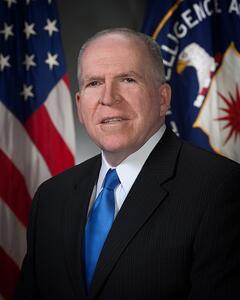
Barbara Perry
Well, good morning, Director. Thank you for being with us again today. How are you doing this morning?
John Brennan
I’m doing fine, thank you.
Perry
We always like to ask in our second session of interviews: did anything occur to you in the intervening 48 hours that made you go back and say, “I wish I had said—” or “I meant to say—” or “I wish they had followed up with—”?
Brennan
No, nothing has occurred to me. I’ve been busy since then, so I really haven’t had a chance to reflect upon things, but I’m happy to do so as we engage this morning.
Perry
Perfect. I had a general question about your memoir: where did you get the detail? How did you have so much detail, particularly of conversations? Did you do MEMCONs [memorandums of conversation] to your files?
Brennan
No, I wasn’t able to review my files, as I said in the foreword, and I think I tried to put a caveat up front by saying that I wasn’t carrying a recorder around with me, and those conversations I tried to recall to the best of my ability. I tried not to go into areas where I was vague in terms of memories. So many things are very vivid in my memory, but other things are too vague to account for in the memoir.
Perry
Right, and I would presume, given your long line of work, that you do have a pretty good sense of recall, particularly of conversations. You would have been trained, presumably, to do that.
Brennan
Well, yes, and I also talked with the people I had worked with previously, and so a lot of the people I was quoting in there, I had discussions with first, and I showed them the draft to make sure that I wasn’t straying from what, at least, they recalled themselves. So I made a number of adjustments based on my interaction with my former colleagues. It was a process that I went through. There were some parts of it that I decided I wasn’t going to include that I had originally drafted, because I was unsure whether I was remembering as accurately and correctly as possible.
Perry
All of those papers that you produced in writing the memoir—including things that you perhaps thought initially of including and decided not to—will you donate at any point?
Brennan
In my estate planning I say that any of my papers will go to my undergraduate university, Fordham University. I don’t know whether they want them. [laughter]
I have a bunch of things, whether letters, correspondence, other things—
I did keep my own personal files that were not classified over the years, so I was able to go back into them, and that was very helpful as I put the memoir together.
Perry
Right, and some future political science historian will want to see those undergraduate papers that you kept, I’m sure. That’s great.
Brennan
Yes, I still have those, that’s for sure.
Perry
That’s wonderful. Well, we decided, as we chatted after speaking with you on Tuesday, that we have just a few more topics to cover from your tenure in the White House. I’ll read those out quickly so you know where we’re going. One is the Arab Spring. You did speak a little bit about Libya on Tuesday, but we particularly want to talk about Egypt and [Hosni] Mubarak, and then any other area in that field of Arab Spring.
Also, bringing [James] Jim Clapper onboard, and then getting David Petraeus to the CIA [Central Intelligence Agency] and having him move on, which, of course, leaves that position for you. We’ll start, shall we, with the Arab Spring.
Brennan
Well, since I had spent a fair amount of my career working on the Middle East, when the Arab Spring started to heat up, I was obviously in the middle of it in the White House, as we were trying to understand exactly what was going to develop in terms of the fragility of some of these authoritarian regimes and the ability of the masses to push them out of power.
Things were happening in a very accelerated way. Things were happening on the streets, whether in Tunisia or Cairo, Yemen, other areas. I felt that—and I think I said in the memoir—there were a lot of folks in the [Barack] Obama White House who believed that as long as you just pushed these authoritarian leaders out of the way, democracy would flourish. And I think I had a good enough understanding of the Middle East and Arab countries to know that that was not going to be the case, that democracy is a process.
I thought it was going to be rather bloody and ugly, and it’s one of the reasons why I counseled President Obama and others to try to effect change at the top early on in some of these Arab Spring developments, so as to avoid what I thought could have been a very, very bloody showdown in the streets of Cairo. It could have led to thousands upon thousands of deaths if Mubarak actually decided to use his security forces to brutally suppress the demonstrators.
So there were a lot of late-night conversations in the White House, but also we were on secure video teleconferences with the ambassadors and the embassies in the region, trying to get as clear a picture as possible of developments. It consumed the White House’s attention for that period of time when it really looked as though the Middle East was going up in flames.
Spencer Bakich
Who in particular at the highest level was most bullish on the prospects for democracy?
Brennan
I think everybody was bullish [laughs] on the prospects, but I think they had a very uninformed view about just how difficult it was going to be. President Obama certainly was very much hopeful. I don’t want to say that he was unrealistic because I think he was practical about it, but there were some individuals—frankly, I don’t want to give names. I didn’t give them in the memoir because I don’t want to misrepresent their views.
I had the impression, though, that some of the younger folks, whether some of the NSC [National Security Council] staff or those in the White House who came onboard to government for the first time with the Obama administration, were too optimistic about those prospects. Again, some of the younger individuals were in those positions of influence.
Michael Nelson
What was your advice to the President concerning Mubarak?
Brennan
When the protests in Cairo first started, we didn’t know what type of momentum they would have, how large they would grow. We were trying to counsel restraint by engaging not just with Mubarak but also with some of the other senior officials in the Egyptian government. We urged them to allow the protestors the opportunity to vent their grievances and to be able to protest without facing a rather harsh security crackdown.
But as the size of the demonstrations grew and were expanding beyond Cairo and taking place in Alexandria, my counsel, along with others, was that Mubarak is not going to be able to weather this storm. There needs to be some way to have him relinquish power, and it needs to be done in a way that is not going to lead to chaos, either in the government or on the streets.
So there were some late-night conversations in the Oval Office and also phone calls with Mubarak where the President was very careful about the words he chose. But I think it was quite clear to Mubarak that he was losing the active support of the Obama administration and that the Obama administration was recommending that he find a way to turn over the reins of power as a way to prevent further deterioration of the situation and a real bloody battle in the streets of Cairo, Alexandria, and other cities.
Perry
In your long experience in that region, and your concern about what would happen when these long-standing rulers or leaders left or were pushed out, you didn’t think a switch would just be turned on and suddenly democracy would appear—or a democratic republic as we know it in the West and certainly in the United States. So as an analyst of that area, what did you look for during your career, but particularly at this time? What kinds of factors were you looking for in these countries that would have made you think some were riper for democracy than others?
Brennan
I guess it was the political institutions that were in those countries and whether or not they were at all developed. I was particularly involved in the situation in Yemen and the situation in Bahrain, primarily because the Saudis had a real interest in both. I knew in Yemen there were some political parties, and there was some experience as far as media, and so it had some of the foundation stones upon which democracy could, in fact, be built.
But I also knew that the authoritarian leadership really had a monopoly on power in those countries. In Bahrain, the monarchy there was, in many respects, a part of Saudi Arabia because it was so much influenced and controlled by the Saudis. But there were some real internal divisions, both in Yemen as well as in Bahrain, between Shia and Sunni, between various factions, and those internal fissures were going to be very problematic as far as trying to move along a path of democratization. In Egypt, you didn’t have that Shia-Sunni split; you had majority Sunni. You had a Coptic minority.
Again, the role of the security and intelligence services is critically important in these countries, and what I was looking for was whether or not the people that would be assuming power after the leaders stepped down would be able to bring together the different groups. I was skeptical that we were going to be able to move toward a real democratic system in the short term. My concern was more trying to go through this transition period, from moving [Zine El Abidine] Ben Ali, Mubarak, [Ali Abdullah] Saleh, and others out of power, to see whether there could be the restoration of some security and stability, which I thought was necessary in order for any type of democratic process to gain traction.
But if the countries were going to devolve into bloodshed and chaos, the prospects for democracy would be much less. So I was dubious that we were going to be able to get on that democratic path in the short term.
Bakich
Were you at all concerned about the potential blowback from within the region, that the United States was—to put it colloquially—throwing allies and leaders we had worked with for years and years and years “under the bus” at a moment when they were most in need?
Brennan
Well, I think there was certainly an understanding that how the United States navigated this period was going to have future resonance in terms of whether or not the United States stood behind the leadership. But at the same time, we recognized that a lot of the people we had partnered with were authoritarian leaders and that we were not going to be in a position of backing them to the hilt.
The United States had experience before, in terms of the Shah in the late 1970s. At what point do you recognize that the horse you’ve been betting on is not going to prevail? How do you then ensure that what you’re doing is really not trying to manipulate the internal workings of a foreign country but doing what you can to reduce the prospects for bloodshed and to enhance the prospects that the next chapter of this country’s government is going to be able to have the opportunity to grow, develop, and thrive?
It was more managing the crises, with the real focus on preventing utter chaos and even more widespread bloodshed. That was the immediate goal, and we recognized that any type of democracy building was going to be done over time. It would be very unrealistic to think that all of a sudden you take Mubarak out and you put someone else in.
I remember people saying that you have to be very careful about having elections too soon in the aftermath of this because these systems, these countries, these governments were not ready to hold a free, open, and fair election, just given the lack of that experience previously for them.
Perry
There’s a whole literature in political science about political culture, including institutions that you’ve described that you looked at in these countries, that you knew so well and had lived in. Did you also think about the people themselves, the vast numbers of people, the people who might become the electorate, or the people who either would or wouldn’t support democracy, and the kinds of things that you would look for among the people in terms of their political culture and whether it would lend itself to, again, a democratic republic or democracy?
Brennan
Well, yes, but in these countries you had elites, you had the upper class, but the masses were very much ignorant of democratic processes or principles. So the idea of free and fair and open elections was foreign to most of them. They lived under a system of strongmen, both at the national level as well as at the regional level and others. There was a lot of subservience as well as identification with tribes, or with social groups, or political parties, because they were the source of employment, of money, of care, of family ties.
These were very sort of traditional societies, if you get below that upper-crust elite, authoritarian, frequently corrupt leadership. So the countries themselves, whether you’re talking about Tunisia or Egypt or Yemen or Syria or Bahrain, “tribal” is not the right word, but depending on where you were in the country, your perspective was vastly different.
And at a period of upheaval and tumult, people would just naturally, I think, be attracted to those groups, those affiliations that either they felt closest to or believed were going to be able to advance their interests. And in the power vacuums that were taking place or that were developing, I think there was a real interest in trying to advance the interests of one’s own group.
So there was not a lot of interest on the part of anybody, of any of those societies that, yes, we really want to make sure that we have a representative government, a pluralistic political system. They were more seeing the opportunity to advance their interests, either because they were part of the elite and wanted to preserve it or they saw it as a new opportunity to displace the elite and be able to rise themselves.
There was really not a lot of interest in democratic principles as we understand them in the West. It was more this tremendous opportunity to gain influence, gain power, gain resources, and that’s where the scurry was taking place.
Bakich
How familiar were you with Mohamed Morsi at this time?
Brennan
I knew of him. I had traveled out to Egypt a number of times, and I got to know President [Abdel Fattah] el-Sisi pretty well early on when he was the director of military intelligence and then ascended to defense minister.
I got to meet Morsi once when I went out to Cairo, to impress upon him the importance of some of the counterterrorism things we were doing and to make sure that he was not protecting a lot of the Islamist extremists that were still burrowed into Egyptian society. He was an interesting individual. I had maybe an hour conversation with him. He sort of had an engineer’s mind, but clearly I understood that the Muslim Brotherhood was not interested in a Western concept of democracy.
Now, the Muslim Brotherhood is not homogeneous. It certainly wasn’t homogeneous inside Egypt, so you had people at all parts of the spectrum. I’m sure there were elements of the Muslim Brotherhood that really were interested in trying to have some type of representative democracy in which the Muslim Brotherhood would play a part.
But there were also elements within the Muslim Brotherhood that were interested in just gaining control and a monopoly on political power and economic power in Egypt. So there were battles and disputes within the Muslim Brotherhood, and Morsi came out as the compromise presidential candidate. He was very ill-prepared, ill-suited for the presidency, and was somebody who was then pushed aside.
So I knew of him. I got to learn more about him when he started to ascend to the presidency, and then I had that one meeting with him.
Perry
You said that the President was getting different perspectives on this issue confronting him with the Arab Spring, writ large and writ small. What are you seeing about his leadership in that kind of circumstance, where the firehose is coming fast and furious at him? How much influence did you feel, at the time or looking back, that you had over his decision-making? Was the process working well in the White House to get him the information that you felt he needed?
Brennan
Well, Obama is a very good listener. He’s an intense listener, and he takes in the perspectives of all of his advisors. I think he has his own inclinations in these conversations, but he wants to hear opposing views, and that certainly was the case during the Arab Spring. That’s why he wanted to make sure that he heard from the ambassadors on the ground, that he heard from the folks at State and Defense and at the CIA and other places.
And he wanted to remain calm throughout, “No Drama Obama,” but yet he recognized that there were consequences of inaction. He recognized that he needed to weigh in at different times, certain places. The fact that I had Middle East and intelligence experience and was able to work with the CIA and others meant my voice was certainly heard and taken into account.
I think I had a lot of influence when it came to Yemen as well as Bahrain. I was one of many when it came to Egypt—Tunisia, as well—but I had the lead on Yemen and took, also, a leading role on Bahrain. So I think some of the things that I was recommending he paid particularly close attention to in those areas where I had special responsibility.
Bakich
You wrote in your memoir that you believe the intelligence community had a fairly decent amount of strategic warning that something like an Arab Spring might occur. What was missing was tactical warning. I’m curious, as an intelligence professional, how would you classify that second gap, the absence of tactical warning? Do you put that in the realm of intelligence failure?
Brennan
I think it highlights the limitations of intelligence and the warning of these types of events. I think I mentioned in the memoir that I was working on Israeli-Palestinian issues during the early intifadas, and I knew that the environment was quite ripe for something to trigger a larger development of protests. That’s why that traffic incident that killed several Palestinians was that spark.
I remember when Tunisia happened, I felt that the self-immolation of the fruit salesman had the potential because it gained a lot of traction early on. My criticism of the intelligence community at that time was that too frequently intelligence officers and the CIA put too much premium on the clandestinely acquired intelligence that gives you insight into what’s happening in the president’s office or the prime minister’s office, or the sensitive technical collection systems that allow you to understand what people are saying to one another in the government.
There wasn’t enough attention paid, particularly at that time, to what was happening on the street. Social media was coming up and was much more readily available then, certainly. I think we needed to have a better sense of the sentiments on the street and the pulse.
You can never predict when there’s going to be a traffic accident or there’s going to be one of those sparks, but what you can say is that, just like a barometric reading, the environment is such that a tornado could form. The same thing is true: there needs to be greater emphasis placed on open-source information as a way to complement your other intelligence but also to give you a better perspective of the environment and some of the changes and the moods and the shifts that are there, particularly if you’re talking about grassroots opposition or the potential for populist movements, just like here in the United States.
Social media gives you a really good sense of where people are lining up on that political spectrum. And I think that the intelligence community’s ability and their access to that open-source information was very, very immature at that time and did not have the type of attention it subsequently has, I think, been given.
Bakich
Did you hold that perspective prior to the Arab Spring or did the Arab Spring crystallize that necessity of mining social media intelligence for you for the first time?
Brennan
I don’t recall, and I don’t want to say, “Yes, I felt that beforehand.” I certainly felt it during and after, that we didn’t have a good sense of—It wasn’t just the reaction of people in the street. It was also sentiments within the security intelligence services because I thought that was critically important, as well, and whether or not some of the grievances felt by the people in the street were shared by security intelligence services.
Perry
That point reminds me of a topic that Secretary [Janet] Napolitano brings up in her memoir, and this is relating to homeland security here. It’s a report she presented to Congress in which there was a reference to our own military at, perhaps, lower levels becoming radicalized in a right-wing direction, particularly those veterans coming back from the Middle East and Central Asia, coming back from Iraq, coming back from Afghanistan. And Congress—at least some in Congress—did not take kindly to hearing that news.
Was that something you discussed with her, again, in reference to homeland security or something you were keeping your eye on here?
Brennan
We were very concerned about how extremist sentiments might be manifesting themselves or might be concealing themselves within American society, and there was quite a bit of controversy back then about how administration officials were referencing domestic extremism or terrorism. Janet certainly got in the crosshairs of a lot of folks on that.
But it was one of the things that we were very concerned about because, although after 9/11 we did a very, very strong job of preventing terrorists from infiltrating the United States undetected, we were more concerned about the presence of extremists and those who might use violence who were already here. How do you balance privacy and civil liberties with the government’s responsibility to try to identify, detect, these individuals before they carry out attacks?
So some of the concerns that the folks in the Middle East had about those returning mujahideen from Afghanistan into those countries, and the context there, clearly the authoritarian regimes in the Middle East didn’t have the same concerns about privacy and civil liberties. But we certainly were quite conscious of the need to do what we could under existing statutory authorities without the violation of civil liberties and privacy to, again, find individuals who might be plotting and planning to carry out violent attacks.
Nelson
This is a very different kind of question, but our notes have you spending time on Martha’s Vineyard when the President was on vacation. I just wonder, how does that change your work, your relationship with the President, his ability to get information and advice when he’s on vacation and you’re there too?
Brennan
He would get the briefing every morning, so I’d show up at his door. It was more of a leisurely pace. In fact, I have—I think you can see—a photo up there that shows me on the porch of Martha’s Vineyard. It was a much more leisurely back-and-forth. It was a one-on-one, as opposed to usually when I was in the Oval Office, the national security advisor or somebody else would be there. And there were developments related to Libya when I was there, so he had to give some public remarks. I remember being in the house with a lot of phones in front of us, and we were all working the phones.
Obviously the daily cadence was a lot different. If I had something to bring to his attention, I would. I could always reach out to him through the Secret Service folks that maybe were out with him when he was with his family. I had already developed a fairly good and close and comfortable relationship with President Obama, so it’s not as though a briefer was being parachuted in.
I became much closer with Obama early on than I ever was with President [William J.] Clinton because with Clinton I just would show up a couple, three times a week or so for the period of time and then disappear. But I already had just regular, ongoing interaction with Obama. I knew when he wanted to hear more, I knew when he didn’t want to hear more. I could feel his moods, or his tiredness, or his energy level. These are things you just naturally sense as you get to know somebody rather intimately.
Perry
Syria, I think we should pause a little bit on that, and it also makes me think of we talked Tuesday about Ukraine and what we’re facing there now. We’re still dealing with the aftermath of Cold War issues. You began your career in the midst of the Cold War, a decade or so before it ended and this new world order came about. I’m thinking about the Russians, of course, and their relation to Syria. What should we be thinking about in terms of how decisions were made? You’ve mentioned the infamous—I think you used the term “infamous”—red line in Syria. How were you briefing the President on that? What kinds of advice were you offering him?
Brennan
The Syria challenge was a very protracted one, and it had many different phases. Early on in the Arab Spring, when a significant segment of the Syrian military defected and became the Free Syrian Army, it was a secular-led opposition. But then, as a result of developments inside Iraq and then in Syria, and with the growth of Al Qaeda in Iraq that became ISIS [Islamic State of Iraq and Syria], the coloration of the domestic opposition to [Bashar al-] Assad changed significantly, which really complicated our ability to continue to support the Syrian opposition.
When I look back on it, some decisions were made early on that some people have criticized, I think including Leon Panetta, who believes that we should have supported the Syrian opposition in a much more forceful way early on. But at the time, we really didn’t have a good sense of who all was in that opposition, and we also wanted to be very careful about not being the decider of Syrian society’s fate, being seen as the ones to install a new government.
It was that balance of trying to support those elements that were supportive of a more representative government and a less brutal one. So, again, the ground shifted in Syria over the course of the Arab Spring, and that made it much more challenging for the U.S. government to have an effective, coherent policy vis-a-vis the Syrian opposition.
When I think about Ukraine, obviously there are some shared characteristics. The Russians really did make a difference in Syria as far as turning the tide of some of those battles against the opposition by bringing in that air power, by bringing in the long-range missile strikes that they carried out from Russia proper, from the Black Sea, the advisors they brought in there, their brutality when it came to targeting some civilian populations—the same thing that they’re doing right now in Ukraine.
The Russians, just like Assad and some of the other brutal authoritarians, really don’t care how many people they kill, or civilians, or even how many of their own people they have to sacrifice in order to achieve their ends. It’s ultimately trying to preserve and enhance their own power.
Syria was a real difficult challenge, and it’s one of the regrets I have, that we weren’t able to make greater headway and prevent the large-scale destruction of a very beautiful country and wonderful people.
Bakich
How early in this process did you begin sensing that the Russians had very explicit objectives when it came to Syria? Was that a slowly evolving picture for you, or did Russia reach out and basically put a marker down early?
Brennan
Well, I knew that Russia was not going to allow the Assad regime to collapse because it had invested so heavily in it over the previous decades, and also it was the place where Russia had access to the Mediterranean in terms of ports. It had developed and invested heavily in the Syrian military. So I was confident the Russians were not going to allow Assad to collapse. But [Vladimir] Putin was watching to see what was happening, and when Hezbollah and Iranian support to Assad basically were insufficient, and when the opposition was really making some gains and getting closer to Damascus, that’s when Putin decided that he needed to weigh in, in a very tangible way.
I think Putin had a pretty good measure of the Obama administration, recognizing that the United States was not going to match Russia’s military involvement because Assad, as the president of a sovereign state, had an international legal basis to request support from Russia. We didn’t have the same type of legal standing when it came to supporting the opposition.
So I do believe that we recognized that Russia was going to defend the Assad regime. I had dealt with the Russians quite a bit during the Aleppo ceasefire negotiations. The Russians would agree to ceasefires when it was in their interest to do so, they would abide by them when it was in their interest to do so, and they would violate them whenever they so chose and when they thought it would advance their interests. So it was very frustrating dealing with the Russians during this period because of their callous disregard for any Syrian life, basically.
Bakich
OK. I guess, too, given the complex nature of the operating environment in Syria, it makes sense for us to probably reflect on the transition from al-Qaeda in Iraq to ISIS. Is there anything in particular that you could say about how the Obama administration thought about, crafted policy in the early days of the development of ISIS?
Brennan
Well, I think the Obama administration probably was surprised and maybe unprepared for the swiftness of the ISIS march westward. As we saw, the Iraqi government forces collapsed in the north, and basically the Shia forces said, “We’re not going to die because of the Sunni problem,” and pulled out. Then it was just like a large water leak that enveloped western Iraq, eastern Syria. It was easy for a lot of the ISIS members to take advantage of the absence of strong central government authority in these areas, both in terms of the Iraqis and the Syrians, and they quickly took over not just the territory but also the economics, oil production. This was like a large, organized criminal gang, mafia, that used extortion, kidnappings, all sorts of criminal activity to be able to thrive.
The fact is that ISIS was a much different organization than al-Qaeda. Al-Qaeda was a sort of close-knit group that you had to almost apply for membership. ISIS just issued this global clarion call for people to jump on the bandwagon, and the flow of people into Syria and Iraq to join ISIS from Europe, from Asia, from Africa, was quite surprising, the momentum it had.
We were focused on trying to do what we could to prevent its further growth in the region, but given that ISIS had this worldwide presence as well and was much more adept than al-Qaeda in terms of using the digital domain for recruitment, for surveillance, for casing, we were engaged in counterterrorism activities outside of the region, in the United States, in Europe, in other places. So it all of a sudden became much more of a multidimensional and global problem than just dealing with the Arab Spring in Syria or what was happening in Iraq. It had many more features than that.
Bakich
I was just going to say, do you attribute the rapid growth to [Abu Bakr al-] Baghdadi’s charismatic leadership? Did he bring something to the table that perhaps [Abu Musab al-] Zarqawi didn’t in an earlier phase?
Brennan
He was fortunate as a result of the environment, the absence of any type of central government control or influence, the fact that there were so many people who were disenfranchised in that area. People wanted to jump on the bandwagon of what was seen as a winner. So it just had this natural snowballing momentum that kept building and building and building, and they were making progress every day, taking new towns, new cities, new areas. I think there was just a combination of factors that really contributed to its explosive growth at the time.
Nelson
I remember thinking at the time how it seemed like the whole public discussion referred to ISIS as ISIS. The administration, the White House, always referred to it as ISIL [Islamic State of Iraq and the Levant], and I wonder, was there some policy basis for that? Was there a distinction the White House had in mind that the rest of us were missing?
Brennan
Depending on the Arabic, they would refer to themselves either as part of the Islamic State of Iraq and Levant, with the Levant being larger than Syria; it also includes Lebanon, and even a little bit broader than that. Sometimes just the use of the term in the media would influence how we would respond to questions. But yes, I remember early on we were referring to it as ISIL, but I don’t recall any big discussions about what we should refer to it as.
Perry
You mentioned a bit on Tuesday, but I don’t think we talked about Benghazi and the attack there. And I recall that at the time of the attack, John Negroponte was visiting the Miller Center. As I recall, his career had gone all the way back to Vietnam days, and he’d been stationed in and posted to many embassies and knew about embassies. And naive Barbara, thinking more in terms of domestic politics, and how media covers things, I was saying, “Is there not a better way to protect our people and embassies and consulates with more military protection?” And from his perspective, he said, “But, Barbara, think about this: you have the locals who start to come over the walls of an embassy or consulate, and let’s say we do have a big military presence there, and they start to pick the natives off of the walls. Imagine how that would look.”
So I’ve always thought about that, and I wonder about your thoughts about protecting those embassies and consulates around the world, particularly about Benghazi and what happened there.
Brennan
The protection is provided by Marine security guard detachments, the number of which is limited because they have to come under the diplomatic overarching presence. It’s augmented, frequently, in certain areas by other security forces inside of the embassy grounds. CIA will frequently have some of the paramilitary elements and security personnel on the ground in order to protect CIA officers’ activities.
But you think about a place like Benghazi, which it wasn’t the embassy. It was the consulate out there—you really rely heavily on the local forces to ensure that they’re going to fulfill their responsibilities. In countries where there are questionable allegiances, you have to do a very thorough job of ensuring that whatever local guards you’re relying on for that protection are going to be as fully vetted as possible. But any type of U.S. military presence in these countries, outside of the Marine security guard detachment, would have to be approved and authorized by the local government, and that frequently is challenging.
Sometimes there are folks that are in country for training missions and purposes or whatever that could be called upon in extremis. But generally, the diplomatic facilities, it’s really just a combination of Marine security guards and the local support that we receive either from the National Guard forces or the other host government military security services that are dedicated to that type of protection.
Perry
Anything else, my colleagues, on Arab Spring before we move on?
Bakich
I think we’re good.
Perry
All right. The removal of Dennis Blair: you spoke Tuesday about some of the issues and problems around the position that he held and that he was replaced by someone you very much supported, General James Clapper. Talk a little bit about the possibility that [James] Jim Steinberg was considered, maybe delve into a little bit about why he was considered in the first place, why he didn’t get it, why and how it went to General Clapper. You have indicated that that was a fortuitous decision.
Brennan
I knew that the director of national intelligence position was a difficult one and needed to have somebody who really understood the intelligence community. Given the experience we had with Dennis Blair, who really didn’t know the intelligence community well, I was hesitant to recommend anybody from outside of the intelligence community who might have their own preconceived notions about what that position should be.
Jim Steinberg was a member of the National Security Council even though he was a deputy to Hillary [Rodham] Clinton. It was one of the things he negotiated when he came onboard with the Obama administration. He was a known quantity, a very respected national security specialist, had a great intellect, and was a good team player.
So his name came up because he had already said he was going to be leaving or had left—I forget what it was. I was in the Oval Office when this discussion came up, and I mentioned to President Obama that I had another Jim in mind, and it was Jim Clapper because I had known Jim over the years. He was very much senior to me early on when he was head of the Defense Intelligence Agency and others, but I got to know him when he was head of the National Imagery and Mapping Agency, NIMA. I got to know him when I was at the White House when he was the undersecretary of defense for intelligence. I had great respect for him as somebody who had such great, in-depth knowledge of the intelligence community.
I mentioned him to President Obama, and to [Thomas] Tom Donilon and others. They did a bit of checking, and they checked with [Robert] Bob Gates, and Bob Gates spoke glowingly of Jim. He was somebody I felt could work better with the head of the CIA and was not going to try to just impose his will over the agency.
Perry
There’s also a shift coming up with Secretary Gates moving on from being the defense secretary, and then Leon Panetta moving into that position, out of directing CIA, and General Petraeus going into that slot. Take us through that decision-making process.
Brennan
I wasn’t really involved in the decision-making process on that one. Yes, Gates had announced that he was going to be leaving, and Leon was going over, but I wasn’t involved in the discussions about who would then succeed Panetta because it was a bit awkward, since I had been offered the job of CIA director previously.
I probably was a candidate at that time, but I think it was President Obama, Tom Donilon, and some of the key other advisors that decided on David Petraeus, who obviously had a storied career by then and was somebody who also had expressed interest in the CIA position. And so, I think, as I mentioned, I was told about the Petraeus selection outside of the Oval Office. Tom Donilon mentioned it to me sort of in passing, and I think he was intentionally doing that as a way for me not to be surprised by the announcement. But nobody came up to me and said, “John, would you like to be considered for the position?” which subsequently happened when Petraeus left.
Bakich
What were your impressions of Petraeus’s tenure at CIA? Did anything hit your radar that you thought was particularly good, or less so?
Brennan
I very much admire David Petraeus, consider him a friend. His entire background and experience was in the military, and, again, the CIA is a different animal than a military organization. David didn’t bond with the agency’s workforce the way Leon Panetta did, and I think he was much more regimented in a military sense.
He was still learning about the agency. He wasn’t there all that long, but he was always very well prepared when he came to the White House for the National Security Council meetings and briefs, and he was a good spokesperson for the agency’s views and respected. I always felt that he was maybe a bit out of his element just because, again, the CIA is very different.
Early on in CIA’s days, you had uniformed military officers who were at the helm, as well as retired military officers, who I think did quite well. But looking out over the last 30 years, there was no director who had transitioned from being a flag officer to being CIA director except for David Petraeus. Oh, no, [Michael] Mike Hayden. Mike Hayden, certainly, but Mike Hayden was already in the intelligence community and NSA [National Security Agency], had worked extensively with CIA. He was very much of a Washington senior official, and so I think he made that transition a lot more smoothly, readily, easily than David Petraeus did. But, again, David, I think, did a very fine job when he was at the agency.
Nelson
It does make you wonder what is the talent pool from which CIA directors in general ought to be drawn, whom that talent pool ought to include. Are there certain kinds of career backgrounds that either ill-equip one or well-equip one to do that particular job?
Brennan
Yes, it’s a very good question. It so much depends on personality. You can come up through different career paths, from inside the agency, outside the agency, even from Congress. It really depends on the way one approaches their leadership responsibilities and their willingness to learn about the culture of CIA and the workforce.
It’s a rather unique organization in so many ways. Sometimes my experience has been that some directors are standoffish and don’t really want to get too deeply involved with the workforce, want to be more of a member of the National Security Council. And there are other directors who I think really wanted to just be loved by the workforce [laughs] and were almost captured by it, including by the operational folks. So whether or not you have an insider or an outsider, I think it depends on the individual’s willingness to carry out their rather diverse responsibilities in terms of being a leader, an organizational manager, a workforce champion, but at the same time being a substantive expert on worldwide events and the advisor to the President.
Those management responsibilities and those substantive responsibilities are such that a director of CIA, as well as director of national intelligence, really needs to ensure that they take time to fulfill the responsibilities on both sides of that ledger.
Nelson
This may be a question that doesn’t lend itself to any general answer, but do you attach any significance to whether a new director essentially works with the deputies and so on who are there, as opposed to wanting to bring in their own people? Does that send a signal of any kind?
Brennan
Well, I think it does, and I would counsel the people that I counseled when I became director of CIA not to bring a whole slew of people in immediately, certainly. You want to bring an assistant or one or two, that’s fine, to help you sort of get your sea legs. But you need to take time to learn about the organization, understand it, get to know some of the deputies that are in place there.
For continuity purposes, it’s important that there not be a decapitation because that can be very, very disruptive. Over time, you can replace them. Even though I spent 25 years at the agency, when I was named director, I said to myself that I was going to take some time before I made any big moves or changes because the agency had changed since I had left. I think people can make those changes, but it shouldn’t be done immediately and without understanding the impact of those changes, and the need to rely on some real expertise, including at that leadership level.
Bakich
Do you believe that your time as a consumer-policymaker better prepared you to take on that role?
Brennan
Absolutely. Absolutely. I had already had the opportunity to see the agency from outside when I served the rotation at Department of State, or with TTIC/NCTC [Terrorist Threat Integration Center/National Counterterrorism Center]. But being on the receiving end of the intelligence briefings and seeing the CIA operate within that National Security Council environment and the role it played, I had a better appreciation not only of CIA strengths but also its deficiencies and things that I believe that it needed to do better. I felt that those four-plus years that I served at the White House were the best preparation I had for when I went back to CIA.
Bakich
So can you enlighten us, what were some of the strengths and deficiencies you saw manifest at that level with respect to CIA?
Brennan
The strengths were CIA has tremendous, tremendous depth of expertise in virtually any issue around the globe. That’s one of its real strengths. And it has its contacts around the globe with its counterparts. That worldwide presence, as well as the analytic capabilities of the agency, that combination really was just so, so impressive.
When I was down at the White House, I’d ask for briefings on various issues, and they’d always come up with some people. I was amazed at the depth of expertise, but I felt that the agency did not tap and leverage and marshal that expertise sufficiently in terms of having a positive impact and imprint on national security decision making. Too often—I think I said in the memoir—people from CIA would come into a deputies meeting or come to one of the other meetings, and I’d ask questions about the CIA’s capabilities here or there. They’d say, “Well, that’s not my job; I’m only on the analytic side,” or, “I’m only on this side.”
I felt that the CIA, when they attended these interagency meetings, brought only a slice of their capability; they didn’t bring the breadth of their capability. So too frequently I was frustrated by the inability of those individuals to really reflect the expertise, the capabilities of CIA. That’s why, then, when I became director, I decided to reengineer and reorganize the agency, so we would have more integration of capability at lower levels.
I felt when I was at CIA, unless you’re talking to the director of CIA or the deputy director of CIA, anybody below that was part of a stovepipe of CIA, and neither the director nor the deputy director, I thought—any director or deputy director—would be good enough to be the integrators of all of that capability. That integration needed to take place at a lower level. It was my principal concern: that the CIA was suboptimizing its contributions by its internal practices and organizational structure.
Perry
You would have seemed a perfect candidate when the Obama administration was coming into office, but from your own description, now you’re the more perfect candidate to take on this role, to head up the CIA.
Brennan
I was less imperfect, I would say. [laughter]
Perry
We would like to think of it as more perfect. First of all, tell us about the conversation to get you to that nomination now for this second time. The first time, perhaps, wasn’t quite official, but now an official nomination is in the offing. Did you have concerns that some of the same issues that were brought up four years prior would be brought up again, or that new controversies—particularly over drone use, as an example—would be used against you in the confirmation process?
Brennan
Well, I was already planning to retire a second time after President Obama was reelected. I was tired, I was exhausted, and I didn’t think that I’d be able to maintain the same pace for another four years in that position in the White House.
It was quite unexpected that David Petraeus was going to be leaving when he did. I think it was Denis McDonough who asked me if I wanted to be considered. I said, “Well, yeah, I think that would be great,” but I was advocating for Michael Morell, who was the CIA deputy at the time, because Michael had reached out to me and said that he believed he was ready for the nod. I knew that there would be some controversy about me, to include my tenure at the White House.
There was a new, I thought, criticism that would be leveled at me, which was that I was too close to Obama, that I was one of his political supporters or advisors or whatever. I didn’t have that, maybe, objectivity that some people felt that I needed to have because I was just so close to him. People knew I was very close to him, and that would have been added to the already established criticisms that I had.
But I also felt that Obama knew me much better. People around him knew me much better. They were confident in me, and they were willing to go to bat and were willing to talk to the Democratic senators who had expressed reservations before, the Dianne Feinsteins, the [John D.] Jay Rockefellers, and others. They knew I was going to face some opposition, but I think they felt pretty confident that I would prevail, and I felt confident that I would prevail, too, unless there was something that happened that came out of left field.
Perry
Were you consulted, by the way, by the President or anyone else on his team about whether General Petraeus should leave the position heading CIA once the scandal broke?
Brennan
Yes, when Jim Clapper came down and I think Sean Joyce, the deputy of FBI [Federal Bureau of Investigation], came down to the White House to tell Tom Donilon about what they had found out as part of this investigation, Sean and Jim talked to me as well. I forget exactly what discussions were held.
I had discussions with Tom Donilon and with Denis, and I think we all agreed pretty quickly that it would be unsustainable for David Petraeus to remain in there. So the question was, how is it done, who talks to David, how is it going to be presented publicly, what should be said, what shouldn’t be said? So within the course of, I don’t know whether it was 36 hours or 48 hours, it went from nobody knowing about anything at the White House to this storm taking place, and I think there was very quick recognition that it needed to be addressed immediately.
Fortunately, David, who I think was crushed by the whole thing, did what a professional like David would do: he recognized that he had no recourse other than to step down.
Perry
Was that also part of the “no drama” ethos or culture of that White House, that, Here’s a problem, this White House is not known for scandals, we don’t want to be known for scandals, let’s nip it in the bud?
Brennan
Yes, there was never a time when I was in the administration when I heard anybody say, “Let’s try to get this under the rug.” There was a real effort to try to recognize a problem early on and to have a full discussion about how best to handle it. And there was an ethos and an ethical environment that we all were operating within and knew that President Obama would always want to do the right thing when it came to these types of situations, including when it dealt with individuals.
Whether it was a Denny Blair situation or a David Petraeus situation, or others, there was, again, an appreciation for, Let’s make sure we understand what’s going on here, and once we do, we need to take action, as opposed to allowing a problem to fester. I remember Denis McDonough and I having many conversations about this. I advocated for not trying to time something at the most propitious political period, whether it’s a public statement or a release or something.
To me, when you try to calibrate the timing of something, you frequently are frustrated by maybe some of the changes that take place before the action is done. To me, once you know what the right thing to do is, rip that Band-Aid off because it can only get worse. If you know the action you have to take—because there could be leaks, there could be other types of things—do not count on a static environment until you decide to take the action. Do it sooner rather than later. It’s better.
Nelson
I think we talked with you a little bit on Tuesday about the role of Vice President [Joseph] Biden in the meetings and decision making that you were a part of. These various things we’ve talked about today, these issues that have come up—ISIS, Libya, Egypt, and so on—could you talk about the vice president’s role in the administration’s decision-making?
Brennan
He was very active. He was a regular participant in the Oval Office sessions in the morning, the PDB [Presidential Daily Briefing], and then subsequent policy discussion with the national security advisor and others. He tried to go to all of the principals committee meetings, as well as the NSC meetings. He was not shy and retiring in terms of sharing his views. He frequently would share them at length. [laughs]
But, in addition, he was somebody who was very personable, and frequently he would stop somebody outside of the Situation Room, grab them by the shoulder. I remember him doing it many times and talking to me about an issue as a way to convey his feelings and trying to understand what I was thinking.
He did try to do his own lobbying for positions in one-on-one sessions. I sometimes would go up to his office. He would ask me to talk to him about a certain issue that maybe was going to be discussed at an upcoming meeting. He was trying to understand the different positions of people, but also he was very, very aware of some of the political implications of the national security decisions.
While I think he always wanted to do what was right for national security, he also wanted to make sure that President Obama was aware of what the political reverberations would be, particularly in Congress or publicly, about certain courses of action.
Nelson
Can you give us a couple of specific examples?
Brennan
Well, certainly the [Osama] bin Laden raid was one. I addressed in the book about the Russian illegals that were identified by the FBI and then were arrested. It was on the eve of visits and meetings that Obama was going to have with [Dmitry] Medvedev and Putin, and he was very concerned that that type of action was going to disrupt the planned cadence of the restart with Russia.
So, again, he would not hesitate at all to challenge some things because his perspective was much more all-encompassing than a lot of the national security professionals’ and understandably and rightly so. The national security professionals were talking about it, looking at it through the prism of what’s best for U.S. national security. Joe Biden was looking at it more broadly in terms of the political effects, whether you’re talking about midterm elections or reelection or just the environment in Congress.
So Iraq, Libya, some of these big issues—Afghanistan, he was always a very strong advocate of reducing our presence there and objected to a number of the Pentagon’s arguments about why we needed to give it more time and more troops. He would use opportunities before and after those meetings to talk to people, to try to get them to not just understand his views but maybe also change their views on it.
Perry
He was known then, and still is as President, as being a loquacious person. Did you ever see any impatience on the part of President Obama or others at these meetings, if Biden tended to go on at length?
Brennan
Sure, I mean, sometimes you would see it in the facial expressions of people, and sometimes President Obama would say, “OK, Joe, we understand your point,” or whatever, and would try to cut him off because it was a question of time and schedule. President Obama always wanted to make sure that Vice President Biden had the opportunity to express his views, but sometimes he did curtail the loquaciousness.
Bakich
On this point, a few folks have written and spoken about the civil-military rift in the Obama White House, particularly when it came to Afghanistan. Secretary Gates, in particular, was, in his memoir, frustrated, shall we say, about the evident lack of trust that the military was providing senior policymakers with a real, robust set of options. Could you comment on the state of civil-military relations in the Obama White House from your perspective?
Brennan
Well, I think “tense” is a good way to phrase it. There was tension between the Pentagon and the White House. The White House, the senior advisors, were very much inclined to try to reduce and limit our presence, our exposure in Afghanistan, while the military was always basically recommending more and longer investment of time and effort.
[Douglas] Doug Lute was filling an interesting position as a former military senior officer, lieutenant general, but he was in charge of the Afghanistan-Iraq portfolio within the White House. There was some distrust there between a former flag officer and the current flag officers in the Pentagon at the time.
And I think there were questions raised by folks in the White House, as well as in the National Security Council staff, about the reliability and legitimacy and accuracy of the data and information that was being provided by the Pentagon. Throughout the course of the administration there was also a pretty significant difference of view between the intelligence community, specifically CIA, and the military about the state of affairs in Afghanistan in terms of Taliban’s influence and control over the different provinces.
I was involved in a lot of those discussions where we had senior military officers on one side of the table, with very strongly held views, and senior intelligence community officials—including me in the second term—with different views, to try to come to some type of understanding, maybe even agree to disagree, about the reality. I think there was a strong sense among White House officials and NSC officials that the Pentagon was being too optimistic and was embellishing some of the information.
Bakich
Was there ever a moment when the discrepancies between military analysis—on, for example, Taliban strength—versus the CIA ever came to a head in competing intelligence assessments at the highest level? Or was it more of a simmering dispute that continued throughout the administration?
Brennan
No, it frequently came to a head. The CIA folks who were responsible for doing this annual assessment would go out to the field and talk with senior officers, but they still would produce their assessment. That assessment would be presented at the National Security Council meetings, and that assessment would be disagreed with by the senior military officers from the Pentagon as well as from ISOF [Iraqi Special Operations Forces], the ones that were on the classified teleconference screen. So there would be an ultimate difference of view about it. It was respectful, but it was, in some areas, stark, that difference of view.
The White House was much more sympathetic to the views of the CIA and the intelligence community as far as the status, and that’s where I think a Vice President Biden would point to the CIA’s assessment being at odds with what the military was saying.
Nelson
Was that the case when Petraeus was CIA director, that the CIA continued to disagree with the officers?
Brennan
It was. Now, again, I don’t want to misremember something, but if I recall correctly, David expressed his own disagreement with some of the CIA assessments, which the CIA director is able to do. Sometimes I did the same, not on this issue but other issues. The CIA assessment would be completed and presented, and then in the discussion in the White House Situation Room, during an NSC meeting, David would say, “Well, the CIA has a rather pessimistic view here,” and Dave would say, “I tend to be more aligned with, maybe, the military’s view,” I think because he was shaped by his time out there.
Perry
To follow up on Spencer’s question about the civil-military relations, the memoirs are also filled with similar tensions identified between the Obama White House staff and the Department of State, Hillary Clinton’s people, I will call them.
We haven’t really talked about Secretary Clinton very much. Anything to offer about your observations of her in these meetings? You’re very specific in your memoir about the bin Laden raid and the discussions leading up to that, but other things that you noticed?
And one last point on that: she is very proud of the work she did in the area that’s called “women, peace, and security.” In her confirmation hearings, in her opening statement, at the very end, she talks about the role of women throughout the world and the necessity for bringing women into the equitable range in order to have security and peace in the world. Did you hear her talk about that at any of the meetings?
Brennan
First of all, I think Secretary Clinton was exceptionally well prepared when she would come to the White House meetings. Sometimes I would be sitting next to her at the table in the Situation Room, and her briefing book was marked up with all of her personal notes and jots. Her talking points were in her own writing. She knew her brief and knew these issues very, very well and was a very impressive person who worked very hard.
As far as issues related to women and security, she was a well-known and vocal advocate on these issues, whether it be in the White House Situation Room or in some of the meetings with her and the President in the Oval Office. I participated in some where she would talk about what’s going on at Department of State, and some of her selections and other things. So she was a very commanding presence, someone who was exceptionally well respected, not just by the President but by others.
And she was not reluctant at all to express her strong views. She was a very good representative of the Department of State equities, as well, and tried to ensure that she took into account the views not just of Foggy Bottom people but also the people in the field. I remember her briefs, when she frequently would say, “I just spoke with Ambassador [Anne] Patterson,” or this ambassador prior to coming into those meetings.
Perry
It’s going to be four years from when you leave until the 2016 election. Did you get a sense, when you mentioned Vice President Biden having the big picture—and, of course, this was before, sadly, in several years his son Beau [Joseph Robinette Biden III] would die, and that would change his calculus about whether the vice President would throw his hat into the ring for 2016—that either Vice President Biden or Secretary Clinton would be thinking in those terms? Did you have a sense of, Oh, one of these two people might succeed President Obama, and did you have a perception for yourself about what that would mean?
Brennan
Absolutely. I knew that they would be the two leading candidates to succeed President Obama, and it was clearly my impression that when Secretary Clinton decided to step away from the Secretary of State position, it was with an eye toward the presidency after Obama.
It was clear that Vice President Biden was very interested in it as well. I think we all wondered how that Biden-Clinton relationship would develop then. But then when Biden’s son became seriously ill and Biden took himself out of the running, we realized even before it was announced that he probably would not be pursuing it, particularly since Clinton was getting the tailwinds within the Democratic Party. It made it a bit easier on folks that there wouldn’t be a battle between a sitting vice president and a former secretary of state and First Lady.
Perry
Well, let’s get you confirmed. How did you prepare for your confirmation hearing?
Brennan
Again, I tried not to weigh myself down with guilty knowledge of things. [laughter] I didn’t want to get too much into the CIA internal workings, other than what I had already been exposed to. I felt comfortable with the substance. I knew that I would be questioned on some of my public statements and remarks while I was at the White House.
But also what was raging at the time was the Senate Intelligence Committee’s review of the CIA’s Detention Interrogation Program. There was already a draft that had been passed to the agency, and I declined to read it. I knew that a lot of Democratic senators and Republican senators wanted to get my impressions of it, and so I tried to remain agnostic about it, saying that I would look at it carefully.
They were asking me questions about whether I would approve the declassification of it. I was cautious in terms of what I would say there. I had some murder boards, as we call them, before the confirmation hearing itself. I paid parish calls on many of those senators. Some were very impressive, and some were much less so [laughter] in terms of their intellect, as well as their interest.
I felt confident. I needed to remind myself to be aware that—especially for the open hearing—I was on camera, and a number of those senators were going to look for the sound bites. I tend to have a problem sometimes of just responding as truthfully as I can and without maybe sufficient concern for how people are going to twist and turn things.
So I was being cautioned by those people who were helping guide me through the process to take questions and to say, “I’m happy to talk to you about that in closed session,” and try to deflect them, as opposed to engage, and not to get my ire up.
Perry
[laughs] Did you have a sherpa assigned to you?
Brennan
I did. I had Nick Shapiro, who was my White House assistant, and whom I brought to the agency with me when I was confirmed. I didn’t have a former member of Congress or someone who was going to be my sherpa, but folks from Congressional Affairs at the White House were the ones who brought me to those meetings and tried to do the due diligence in advance.
I had to work with a law firm that was going through all of my finances and looking for any skeletons in my closet, so there were some extensive discussions. Since I didn’t have to go through confirmation to be President Obama’s assistant in the White House, this would be my first confirmation hearing, and it was like a proctologist’s exam: it’s always uncomfortable, but I didn’t feel as though I had any skeletons there, and I was fine with it.
Perry
Who was on your murder board?
Brennan
I forget. I think there were some people from the White House, some former agency types, former general counsels. Good question. I don’t know.
Perry
You had a filibuster-proof approval, 63-34, so that’s something to certainly be impressed with.
Brennan
Well, Rand Paul still engaged in a filibuster, and I think it was a record at the time, but that’s Rand Paul. He’s incorrigible.
Perry
We are at our halfway point. Would you like a five-minute break or so, and then we’ll reconvene?
Brennan
Sure, that would be good.
[BREAK]
Perry
We are back and ready to go. Spencer, go ahead with getting to the CIA.
Bakich
Certainly. So you land back at Langley. Were there any surprises as you walked in the door after your confirmation? Any surprises in terms of the workforce, in terms of things you just hadn’t anticipated?
Brennan
No, no real surprises.
Bakich
How did you find the workforce morale?
Brennan
I found it good. I mean, it wasn’t outstanding, but I found it good. I think whenever there’s a new director who comes in, there’s uncertainty among the workforce about what the changes are going to be, including among the senior leadership, wondering whether or not they’re going to stay or go. I think I was generally a known quantity, but still there were people at the agency who respected me, and there were people at the agency who were very much concerned about my appointment because of what they either thought or knew about me and my own views about the agency’s role in certain types of programs, activities, or its organizational structure.
Bakich
Were there any significant supporters of your general approach to move in a more Goldwater-Nichols direction for the CIA? You write eloquently in your memoir that many were concerned about that direction, breaking up the four directorates at headquarters and these types of things. But were there many that supported the effort?
Brennan
When I arrived there in March of ’13, I didn’t say, “We’re going to do the Goldwater-Nichols model.” [laughter] It took a lot of time, and I did some things as far as women in the workforce; I did things related to cyber.
I was moving down a certain path, and I made some changes, leadership changes. When I initiated the review of CIA’s organizational structure, there were suspicions that I was going to go in a certain direction. There were some people who were very supportive, but they were limited in number because there were only a few people who really understood what I was hoping to be able to accomplish.
But there was a lot of concern that I was going to be disruptive of the agency’s work. Some people thought I had ill intentions as far as trying to reduce the influence of certain parts of the agency, such as the operations directorate. But that’s why I wanted to have this 90-day review group composed of people who were respected and from different parts of the agency. I recognized that I wasn’t smart enough or good enough or shouldn’t expect to be able to just unilaterally impose my view.
That’s why I also wanted to have organizational experts from outside. So we brought in a major outside consulting company to help with that effort. I tried to lay the groundwork by talking about my concerns and the need to better optimize the agency’s contributions to national security, to provide the rationale, and then with the task force that was pulled together, I felt ready to launch it.
Nelson
Was the concern you encountered especially acute among operations people, that you would deemphasize their significance?
Brennan
Yes, I think there was. I knew the operations people well and the culture well, given that I started out in it, and then also as chief of station. It’s a very insular group and very protective of what they saw as their prerogatives.
Also, it was not just insular but also, I thought, rather myopic. They thought I was trying to take away what they perceived as their rightful position of eminence within the organization. That’s why I needed to talk to some of what I thought were enlightened operations officers and senior level officers about it. But I think the culture itself was, I think, naturally inclined to oppose anything that would break them out of their insularity.
Bakich
You’ve spoken before about the necessity of leveraging technical capabilities that the CIA has, as well as mining open-source intelligence. Would it be accurate to say that you are pessimistic about the role of human intelligence?
Brennan
It’s inaccurate. I’m not pessimistic about the role of human intelligence. I think it’s critically important, it’s integral, maybe the most important, but its power, its impact will only be felt if it is nested within that larger constellation of collection capabilities, analytic capabilities, and technical capabilities. It cannot just be a capability to itself.
Bakich
Understood. Was that the message you were trying to drive to the folks in the DO [Directorate of Operations]?
Brennan
Absolutely. What I wanted operations officers to be able to do, and the operations directorate to do, was to leverage their very exquisite capabilities in terms of human intelligence against those issues that are truly secret and important and that are not accessible by other means.
To me it’s a solemn responsibility on the part of the agency not to just recruit assets for the sake of getting a notch on one’s belt. You’re asking people to commit treason against their country. You want to make sure that they are really going to be focused on those secrets that are important to uncover in order to protect and advance U.S. national security interests, and if HUMINT [human intelligence] is done in isolation and is not taking into account that which is already available via other means, it’s wasting its precious resources and capabilities when it doesn’t need to.
That’s why I think if human intelligence is part of that broader array of intelligence collection capabilities, from open source to other types of things, as well as being informed by analytic capabilities, by scientific and technical capabilities, it really will be a force multiplier, even more so than it has been in the past.
Bakich
This brings up, at least to me, a fascinating discussion. On the one hand, you might have folks in the Directorate of Operations who would argue the more agents that we’re able to acquire over time, the better; you never know when they might pan out to provide you gold. But on the other hand, you’re making a strategic budgetary and prioritization argument: we have finite resources, and we need to make sure that we’ve got these commitments put in the right place at the right time. How do you go about making that decision?
Brennan
Well, I do think it depends. It’s up to the leadership within those operational elements to recognize that they need to have a stable of assets, of recruited agents, those who are currently in positions where they’re able to acquire intelligence, and those who are in the pipeline.
I think it really needs to be a strategic approach. It’s not for budgetary reasons, although resources are limited, and so you cannot just try to recruit everybody. But more importantly is that, again, we’re asking people to commit treason against their countries. If they are exposed, they could be facing life in prison, or worse, and their families could suffer.
So we really need to make sure that these recruitments are important and necessary and not just recruit for the sake of recruiting. Over time I saw that people were doing some of that, for promotion purposes or to get their numbers up. To me, that’s not consistent with what I believe should be the ethos of that type of operational activity of the agency, pushing the envelope, trying to recruit all the ones that you need. But that’s why taking into account what is already available through other means and trying to hone in on those areas that really are important will allow you to optimize the use of the assets and HUMINT authorities you have.
Bakich
So the conversation at a fusion center would go along the lines of, “This is what we have from these other types of capabilities; given the gaps that we identify, perhaps we can leverage the acquisition of assets from the Directorate of Operations in a particular direction,” as opposed to a broader approach?
Brennan
Yes, and that has occurred in the past, even before the reorganization. I think it just needs to be mainstreamed and done. Sometimes there has been competition in the past between different parts of the intelligence community. Some of the best HUMINT successes have been identifying opportunities through human assets for NSA [National Security Administration] to come in and do something, getting the keys to a collection system of some sort, and not trying to do it all on your own.
That’s why I think that discussion about how to approach the intelligence collection requirement is best served by having that diverse group of inputs that can really help refine. It’s like someone in business: what’s your market out there? Having an informed strategy about how best to achieve what you’re trying to do.
If those discussions are taking place only in an operations environment, you’re taking into account only part of the story or the capability. The whole concept of putting together the mission center is having an integrated capability that operations and analysis and other things would all be informed by the rest of that mission center’s capabilities.
Bakich
Terrific, thank you.
Nelson
This sounds really hard, because presumably the incentive structure has been recruiting more agents, and that will show up in a positive annual evaluation, promotion, and so on. That’s a measurable thing—“I recruited X number of agents”—and you’re introducing something that is much more qualitative, much more subtle. And I just wonder how you got that message down through the culture of the organization in a way that people down the ranks would realize, I’m not going to be rewarded based on the number of agents; it’s going to be something less easily quantifiable than that. How did you do that?
Brennan
It was tough, and it’s still a process. I’m not saying it’s perfect, by any means, but that’s why in this organizational overhaul it wasn’t just putting together mission centers; it was also taking a look at the training programs, the promotion system, the evaluation system, the importance of some of those qualitative factors, as opposed to just the quantitative one about the recruitments.
It also was important because somebody who would go out to serve a two-year tour in Moscow, let’s say, let’s say a new officer—because you want to make sure that somebody doesn’t already have the taint—are they really going to be recruiting somebody out there in two years? No, they’re probably going to be doing some of maybe the handling, maybe doing a dead drop occasionally, whatever else. Well, people in Europe, [laughs] you can recruit pretty readily or quickly.
I think there’s always been a bit of a mismatch within the agency as far as how you reward operational work that is done but also make sure that the leadership—which is why there was opposition to that overhaul, because people grew up in a system that they knew and were comfortable with and were rewarded by, and all of a sudden now here’s Brennan changing the goalposts.
To me, it was more important to do what was best for the intelligence mission and national security as opposed to doing what was best for individuals’ careers. To me, that’s the definition of a bureaucracy: it’s a self-licking ice cream cone. [laughter] You want to make sure that intelligence really does serve the purpose, and so it really was a whole change of approach, a metanoia of sorts, which really was quite disruptive to a lot of folks because it was so foreign to how they grew up. Particularly in certain stovepipes within the agency where the metrics were understood, it was clear, and now all of a sudden Brennan’s bringing in this new model that they felt they were going to be disadvantaged by.
Nelson
Were you able to do this with the existing managers and other personnel, or did you have to bring in new people to do this?
Brennan
No, as I say in my memoir, the deputy director of CIA for operations [DDO], the person who was in charge of operations, Frank Archibald, who was a very well-respected and highly accomplished operations officer, who I selected to be my DDO when I became the director of CIA, somebody who was from the old school, and he had expressed his concerns and objections early on to the path I was going down.
I think he was reflecting not just his own views but, more fundamentally, the views of his officers, who were almost in armed insurrection against it. I had such tremendous respect for Frank that when I knew that he was going to be opposed to it and I was going to announce it, I brought him into my office and said, “Frank, I don’t want to have to put you through this. I know you don’t believe in it, but I need to have somebody at the helm of the Operations Directorate that is going to be a champion of it.”
And so that’s why I removed him and put in his place [Gregory] Greg Vogel, who led the task force, who was also a very accomplished operations officer. He also was a paramilitary officer. Greg was somebody who, going through that 90-day process, was a skeptic early on. But by the end of it, when he saw what we were trying to do and he was able to understand some of the deficiencies within the agency, he did become a champion of that mission center construct.
There were several other people that I had to move out, and then, importantly, I had to select people to head up those mission centers. Quite frankly, there was a dearth of talent at the leadership level who had that enterprise-wide perspective as well as experience. Out of the 10 mission centers, 8 of them were from the Directorate of Operations. So I was trying to signal to the operations folks, “Listen, I’m not trying to subordinate you, your mission, at all. In fact, clearly you guys are going to be the ones that are going to be driving this.” So, yes, it did take a change of some of the personnel positions early on.
Bakich
Did any of these concerns impact the way you thought about Gina Haspel as a potential director for operations?
Brennan
She was the acting director of operations when I arrived at CIA, and she was one of the four or five candidates that went through the interview process. I brought in a panel of formers to help me make the decision. She was a capable officer. I just didn’t think she was ready for that appointment, even though she was serving in an acting capacity. I thought Frank Archibald brought better experience.
I also knew that Gina, since it was speculated she might be the person I tapped, was already facing some criticisms in the media about her role previously in the Detention and Interrogation Program, the destruction of the videotapes, whatever else, and so I made a decision. Then Gina went back out to London. I had a very good, strong relationship with Gina, and she was a real strong advocate and champion of the organizational overhaul when I did that.
Perry
I know Secretary Clinton in the State Department, in trying to change some cultural norms in that building through their so-called QDDR [Quadrennial Diplomacy and Development Review], held a series of town hall meetings with all the people who wanted to come from the State Department. You can get transcripts of those. They would ask tough questions: What does this mean? How will this change what I do?
Between either those kinds of approaches—you had mentioned about Leon Panetta, when he was director, bonding with those at the CIA—did you have to make efforts down the chain to do that?
Brennan
Absolutely. I said Leon bonded with the agency workforce, which he did, and he was always a champion of it. I was a champion of the workforce, but also I didn’t aspire to be liked by the workforce; I aspired to be respected. I felt I had an obligation to the institution, not only to the workforce itself. And I wanted to make sure I did what I needed to do in order to ensure the success of the agency.
I held a number of town hall meetings. I would have regular interactions with various components. I had a segment called “Talk with the Director” every month or so. There would be a video of me being asked questions that would then be made available to the entire workforce. I would send out emails about where we are on this review, the task force and then the organizational changes, to everybody, both at headquarters as well as worldwide. And I tried to be as communicative as possible, tried to dispel some of the rumors that were out there about all the things I was trying to do to “blow up the agency.” There were people who were keenly interested in hearing about it and learning about it. There were other people that I know, as soon as my email hit their inbox, they would delete it. It was ideological for some folks.
The agency is composed of a workforce that runs the gamut as far as their personal views about the agency’s mission, their political views, and other things. I recognized that I was not going to be able to convince all of the people all of the time about what I was doing, but I wanted to make sure that at least I had the opportunity to convey what I wanted to do and, again, to dispel some notions about those “nefarious” things that I was pursuing.
Perry
For those people who were opposed at any level, did you notice an uptick in departures?
Brennan
No, I did not. I don’t recall there was any increase in that.
Nelson
How about leaks to Capitol Hill or to the media?
Brennan
All the time. [laughter] There were people in the agency who were actively trying to undermine this effort, and they had a lot of their “rat lines” in to members of Congress and the committees. I tried to keep the committees informed, and a lot of members of the committees—particularly those who were not fans of me or the administration—upbraided me quite a bit for the audacity of doing something without doing a “Mother, may I?” to the Congress first.
I tried to explain to them that as CEO [chief executive officer], basically, of CIA, I felt it was my responsibility to make sure that I did everything possible to enhance the health of the organization, and I felt it was clearly within my statutory authority to do that. I had to be mindful about what the budgetary implications were of it so that I didn’t go outside of what was authorized and approved.
There were some folks on the Hill [Congress] who were genuinely interested in understanding what I was doing, and some of them said, “Yes, that makes a lot of sense.” But there were some who just would close their mind off to understanding or being sympathetic and just were opposed to it on principle or for partisan purposes.
Nelson
How about in the media?
Brennan
I think the same rat lines that some folks had to the Hill also were to the media. There were a lot of people who were misrepresenting what I was doing and. I think, continue to this day. There were people like David Ignatius, who I spoke to and sometimes would have over to the agency. There were a lot of the old-time DO types who were coloring his views on it, and he continues to misunderstand what the intention was and what I was doing there. In his review of my memoir, he talks about this, how I was doing this as a sort of petty argument between the analysts and the operators or something, just really misstating and misunderstanding the intention.
So, yes, and I knew that those people who were opposed to it would do whatever they could to try to undermine it. But I was determined not to let those types of activities disrupt what I wanted to achieve because I knew that once I announced the reorganization, I had only a certain amount of time and a runway, and I knew I needed a certain amount in order for it to gain some traction.
I thought that Obama was going to be succeeded by Hillary Clinton, [laughs] and I was comfortable with whoever Clinton was going to appoint as CIA director, who would continue along that path. I was concerned, then, when [Michael] Mike Pompeo was tapped by [Donald] Trump. Pompeo came in and was telling people that he was going to reverse everything I had done. But then some of the key seniors he brought in with him, once they understood what I did, saw the benefit of it, and it wasn’t then reversed at all. They made some refinements that were a little bit strange and not right, but [William] Bill Burns now has continued it. He’s made some tweaks and refinements, which I think are appropriate because any type of organizational reform will need some additional refinements over time.
People kept asking me when I was at the agency, “When is this”—what we called the modernization process—“when is it going to be over?” [laughter] I said, “It’s never going to be over.” It’s a process of continuous improvement. You need to continue to adapt to the realities of the ecosystem that you’re operating within and take into account your capabilities to operate effectively within that ecosystem. To me, adaptability is the key for the CIA’s success, any organization’s success.
Nelson
You must have been the worst nightmare for people who wanted to keep things the same, because (a) they couldn’t treat you as an outsider the way they might treat a Petraeus or a Porter Goss and (b) you knew enough about how things actually worked that they couldn’t blow smoke at you. If you don’t want things to change, the last thing you want is an effective, knowledgeable director.
Brennan
Yes, I think that’s why people did see me as quite threatening. They knew I was disruptive. I think my experience at the helm of TTIC and NCTC, I had already sent a signal to CIA that I was not content with the status quo. So when I came back to the agency—again, having the experience of my 25 years, being known as a reformer but also being known as somebody who probably has the support of the White House, given my time working with Obama—yes, it was sort of a nightmare for some folks, which is why I think they were so adamant in terms of doing what they could to undercut me.
Again, there were some people who did that. There were some people also who said, “OK, he’s the director, let’s give it a shot.” I think I made a lot of recruits over time once they really understood what it was and what it wasn’t. I think it was just a lot of misunderstandings based on the information that some people were putting out that was intentionally skewed in order to screw with me.
Bakich
Did Senator Feinstein support this effort?
Brennan
She wasn’t supportive or opposed to it. She was focused solely on her report that she did. We kept her staff informed, and there were some members of her staff that were very good, and some members of her staff that were not good at all. She wasn’t a major player in the reorganization.
Perry
Are you able to give an example or examples of how you saw this reorganization working within the changed ecosystem, as you describe it? I’m thinking, for example, about 9/11, and the so-called “not connecting dots,” and some failures in the intelligence world.
Presumably one reason, as you said, for reorganization of an institution is to make sure that it is responding to changes in the ecosystem, which would be not just a governmental ecosystem but the mission-critical ecosystem of trying to protect national security. So the question is, without violating secrecy, are you able to show an example or examples where this reorganization worked within the new ecosystem in protecting national security?
Brennan
The Russian interference in the 2016 election. I think it [the reorganization] really gave me a better ability to understand what was happening because things were being integrated much more comprehensively. That was, I think, very, very important. I have talked to senior leadership during this administration, also during the last administration, who have highlighted how important it was for the mission-center construct in order to do what they did, including on Ukraine.
I don’t want to say in terms of specifics, but in terms of being able to integrate the capabilities of the agency to be more effective in terms of their engagement with policymakers, I think the system is more mature now. The leaders of those mission centers are better able to leverage the capabilities within those mission centers. But I have heard during this administration about some things they did—and a couple of things that I cannot say—that they really did attribute to that mission-center construct.
Perry
All right, that’s helpful. I had one more question: You’re now facing externally back toward the White House. First, for your own professional work, what was that like to make the change from, as you mentioned, coming into the White House with the administration? There your office is, it’s in the West Wing, and it’s very near the Oval, and you have almost unfettered access to the President.
What is it like when you move out of that ecosystem into a bureaucracy? Does your relationship or working relationship with the President change, and how did that impact you, both professionally and in your ability to do your work?
Brennan
Well, the frequency of my interactions with the President certainly changed. It wasn’t daily. It was more related to the NSC meetings that were held or the special meetings that I was called to. I always felt, though, that for those critical national security issues, I was included. Jim Clapper and I had regular meetings with National Security Advisor Susan Rice, and any time I wanted to see the President, I could.
But I felt that my relationship with him had not changed in terms of the comfort level and maybe the ease of conversation. I felt that when I was in the White House as his assistant, I never hesitated to speak up, although I only spoke up when I felt it was important to do so. But I wasn’t shy about expressing my views that might be at odds with maybe his views or others around the table. I just continued that when I became CIA director.
They were used to me being my own person, so it’s not as though I went from a political advisor role within the White House to the CIA, which would have been a real change. I was in a very strong national security role at the White House, and I continued that role at CIA. I was comfortable with that transition.
Bakich
Did you have to pull your punches when it came to advocating particular courses of action that the administration would take, as the CIA director? Were you afraid of politicization?
Brennan
No. When I was President Obama’s assistant during the first term, I would express my views, but sometimes I would reserve my real personal views until I was in the Oval Office with the President. I didn’t want to put him in a corner or something in a broader setting.
At CIA, I knew that my role would be different because as assistant to the President, even in those NSC and principals meetings, I would express my policy recommendation freely and openly. As CIA director, I wouldn’t do that. If the President asked me my view on certain issues, as he would ask others going around the table, I would give my recommendation based on my intelligence perspective, maybe my intelligence capabilities. On covert action programs, clearly, I was much more in the catbird seat, [laughs] because I basically represented that program to the President.
So I didn’t feel as though I had to pull my punches, but I recognized that sometimes you do say things in the White House Situation Room, and some things you reserve for a conversation in the Oval Office, and sometimes you reserve the conversation for a one-on-one with the President.
Perry
We talked in a lot of detail, very helpful detail, on Tuesday about the process that you helped to put in place while in the White House on the strike packages and policies and use of drones. Once you then left and went to CIA, did those processes that you had helped to put in place specifically on that issue remain in place?
Brennan
Yes, because it was in, I think, April of 2013, the month after I left, that the White House formally announced those new procedures. In fact, they weren’t new procedures. They announced that our framework had been codified and then put out public statements on it. And, yes, that framework prevailed through the end of the Obama administration.
It was a framework that certainly I was very comfortable with because I helped to shape it, and throughout the rest of the Obama administration, there wasn’t controversy about the framework. Sometimes there was controversy about some of the decisions that were made under the framework, but I think it was something that people understood was what the administration wanted to do.
Perry
Another example that just came to mind. Another criterion for knowing that your reorg was working was how you said you knew there needed to be reorganization when you were still at the White House and seeing CIA briefers come in to brief and being expert in their, we’ll call it “lane,” as they say in Washington. They were really good experts in their lanes, but if they would be pushed a little bit maybe outside the lane would say, “Oh, that’s not my area.” So when you were head of CIA and were seeing these briefings—I presume you still were seeing briefings, when briefers would come from CIA to the White House—were you seeing the fruits of your labors in reorg there?
Brennan
Yes, and I saw the fruits of the labors when I would get briefed before I would go down to an NSC meeting or principals meeting because then those folks at CIA that would be briefing me were from the mission center, and they had already done the integration.
We had an assistant director who was the head, let’s say, of the Middle East mission center, and so they were able to then represent the analytic, the operational, the other elements of it all together. I felt that was a much more efficient and proficient process that we had internally, but I also was confident that at the deputies level, if my deputy David Cohen was not available to go down there to be the CIA representative in a meeting on the Middle East, the assistant director for the Middle East mission center would go down there.
So they would have that full gamut of perspective, as well as responsibility, for the Middle East. My understanding from folks I would talk to at the White House was that that helped enrich the discussion that was taking place in these meetings.
Perry
I know Spencer has a series of questions on Pakistan particularly, but before we move to that, Avril Haines, to be brought in as the new deputy and the first woman in that position. Your thoughts about that?
Brennan
Yes, I had worked very closely with Avril for a number of years when I was at the White House and John Kerry had tapped her to be the State Department’s legal counsel. When Michael Morell told me that he was leaving, I thought about who would replace him, and there were people from inside the agency that were champing at the bit to get there.
But I considered myself “Mr. Inside,” because I already had extensive experience at the agency, and to me the best types of teams for the agency are having either the top person or the second person be Mr. Inside, Mr. Outside, or whatever. So I wanted to get somebody from outside, not just another person from inside the agency, in order to bring a different perspective and to maybe ask some basic questions like, “Why do we do that?” [laughter] Maybe those who were too close to the flagpole couldn’t see.
That’s when I asked Avril whether she wanted to join me, and it was a godsend. She was terrific. Susan Rice then stole her back. I do believe that if I hadn’t selected her as my deputy, she wouldn’t be director of national intelligence today because she would have gone on a much stronger legal course. I cannot say enough good things about my three deputies: Michael Morell, Avril, as well as David Cohen. I was very, very fortunate to have good people at my side.
Bakich
Just mindful of our time, but I’d be remiss: we have to ask every director of central intelligence in this time frame if you could please comment on your relations with the Pakistani ISI [Inter-Services Intelligence] at this time.
Brennan
Yes. When I was at the White House I had pretty extensive engagements with the ISI, given my role. I traveled out to Pakistan with Jim Jones at one point. I might have taken a separate trip out there on my own, being President Obama’s counterterrorism advisor. I participated in meetings of senior Pakistani officials, ISI and others, who came to Washington.
I remember one time when Leon had somebody, the head of ISI, in his office. I was asked to come to just send a signal of White House endorsement of some of Leon’s talking points. And my first trip abroad after being director was to Pakistan, sending a clear signal to the Pakistanis that I took that relationship very seriously and that I was going to keep a very careful eye, a watching eye, on it.
There were times that I had good conversations with them. There were times that I would raise my voice, and they would raise their voice. I don’t know if I put in the memoir or not that in my conversation with one of the heads of ISI, when I was talking about the Haqqanis and the importance of making sure the Pakistanis were cracking down on them, he said, “I know I have to, Director Brennan, but it’s a monkey on my back, and I don’t want it to turn into an ape.” [laughter] He was recognizing that the Haqqanis, like some other of these Pakistani elements, were creations of the ISI, but it had gotten beyond their control, and so they had an uneasy relationship with them. I never trusted the Pakistanis in terms of what they told me, and I wanted to make sure that we were pulling all the levers we could to put pressure on them.
Bakich
I’m compelled to ask: how is it that you are confident, as you say in your memoir, that the Pakistanis at a senior level did not know that bin Laden was at the Abbottabad compound?
Brennan
Based on all the intelligence that was available prior to and after the raid, based on my own analytic experience, I could find no indication that anybody in the senior chain of command was aware and was providing any type of support to him.
Were there some people within the broader security establishment, military establishment, that might have been aware that there was an al-Qaeda member there, or even that bin Laden was there? I certainly can’t discount it, but, again, from the national, strategic level, I don’t have a sense of—and we never detected—any indication.
We had some opportunities in advance of that raid to constantly observe and try to monitor what was happening at that compound, and, again, nothing. I can never say I’m 100 percent confident on it, but based on everything I know and my assessment, I’m confident that they didn’t.
Perry
Here’s a question that serves as a bridge to Iran and the negotiations over the nuclear deal. It’s just a very basic question in your field. You said you didn’t trust the Pakistanis. How do you know when to trust the people you’re talking to—whether that would have been at the level of these operatives, when you first came into your career, or all the way up to heads of intelligence of countries or their leaders?
Brennan
Well, I guess as intelligence officers, you never really trust folks. You always look at the potential dark side. I think Bob Gates is the one who famously said that intelligence officers naturally see the dark side. When they smell flowers, they look around for the coffin. [laughter]
So there’s always a deep suspicion that something is happening that we’re unaware of, but also recognizing that a lot of it’s based on the history of the agency’s interaction with a lot of these countries. Also, you hear something from the leadership, but yet your intelligence sources that are exceptionally strong and have great access tell you that they’re lying to your face.
So what you try to do is to, again, make sure that you use whatever types of pressures you have to prevent them from—not lying to you—to prevent them from doing things that are contrary to U.S. national security interests and to call them on it when you do have reason to not just question but to say that they are lying.
When I was in Saudi Arabia, when I felt that the Saudis were not being honest with me, I confronted them with it. I think I relayed in the memoir when I had George Tenet come out to Saudi Arabia to say that keeping information from us sometimes is as bad as lying to us. A lot of those countries and those services would do their damnedest to prevent the CIA or the United States government from knowing certain things, sometimes their activities and interactions with some of our adversaries.
So except for the folks in the Five Eyes that you do trust, there’s a sliding scale in terms of everybody else, and you had the Pakistanis and the Saudis and the Iranians and some others at the end of that scale.
Perry
Were you not sanguine, then, about the nuclear deal negotiations with the Iranians?
Brennan
I was sanguine. The criticisms of that deal, then and now, are either borne out of ignorance or pure politics. I do think it was one of the crowning achievements of the Obama administration that unfortunately was ripped up by Trump.
The thing was, you wanted to try to get the Iranians to a position where they are forced to do certain things: the destruction of 90 percent of their centrifuges, getting rid of the heavy water, dismantling some of the facilities, agreeing to an inspection regime that was pretty invasive and onerous. Doing all those things in order to give you confidence that they were not going to be able to restart their progress toward a nuclear weapons program without triggering some type of action that we would see and understand, and also recognizing that trying to have a comprehensive agreement with Iran that covered the scope of nuclear weapons development, missile development, terrorist-supported activities, other troublemaking, was a bridge way, way too far.
The most important thing for us was to try to stop Iran in its tracks and to reverse the progress it had made on the nuclear program. I thought we did that pretty well. So it wasn’t a question of trusting Iranians; it was getting them into a corner and forcing them to take actions that really would be a setback to their ability to move forward.
Bakich
You attribute in the memoir Secretary Kerry’s diplomacy, along with Iranian financial problems, as pushing them to finally agree with the JCPOA [Joint Comprehensive Plan of Action]. One thing that you did not mention was a previous cyberdegradation campaign. Do you believe that that had any effect on the Iranians?
Brennan
I think you’re referring to a program that was reported in the press—
Bakich
That’s exactly right.
Brennan
—that I don’t think was ever officially acknowledged by the U.S. government and therefore something that I would not say occurred.
But certainly the Iranian nuclear program suffered a number of setbacks that really frustrated its ability to move forward. So I think it was a combination of factors: its economic problems, the problems with the program itself, the fact that it knew that the United States, Israel, and others would do everything possible to prevent its further progress. That all contributed.
Nelson
Could you talk about the relationship between CIA and Israeli intelligence, which must have had some lines of tension but also some enormous lines of cooperation, I would think?
Brennan
Yes, and the cooperation certainly was stronger and deeper and more than any types of areas of disagreement. I had excellent relations with my Israeli counterparts.
Tamir Pardo was the head of Mossad when I was director of CIA. I worked very closely with Tamir. Tamir had to deal with his own domestic political issues, and I think there was a fair amount of frustration that he had with his political overseers. I had those same frustrations with [Benjamin] Netanyahu and what the Israeli government was doing or not doing, especially on the Palestinian front, and concerns about what they were doing out of our line of sight on other issues as well.
But the operational cooperation, the analytic cooperation, was very strong. I visited Israel numerous times, and my Israeli counterparts came and visited me regularly as well. It was a very, very strong relationship. I have the utmost respect for their operational capabilities, their analytic capabilities across the board.
Nelson
Was that true in the Iran negotiations, that Israeli intelligence was at least not in the way?
Brennan
Israeli intelligence was not in the way. Israeli politicians were frequently in the way. [laughter] Our assessment of Iran’s program was very much aligned with Israel’s intelligence assessment of Iran’s program. There were differences on the margins of certain things, and Israeli intelligence understood what we were trying to do with the JCPOA. I think, personally, they were supportive of it, but, again, their political overseers had their own agendas and views that they were operating within.
Perry
Before we get to the run-up to the 2016 election, do you have anything you want to add?
Brennan
No, I’m fine.
Perry
What was your impression, as someone who studies other countries and their politics and their political culture and movements that are afoot, about the Trump phenomenon, let’s say, starting in summer of 2015, his famous ride down the escalator at Trump Tower in New York City, and then Hillary Clinton’s campaign, and her candidacy? Shall we start with the Trump phenomenon as it began?
Brennan
I think, as I said in the memoir, being a creature of the New York–New Jersey area, I was well familiar with Trump, [laughter] always considered him very shallow from the standpoint of substance, principles, ethics, but yet masterful in terms of his ability to use media to advance his brand.
I really considered him a long shot. I wasn’t surprised at all that he announced his candidacy for president when he did that. I thought that it was just another opportunity to inflate his brand, his reputation, and to enhance the Trump name on the national and the world stage. I didn’t think that it was going to go anywhere. I thought it was going to have some traction in the primaries, but I had always thought that the primary process, in both the Democrat and the Republican Parties, was the time when individuals who were not up to the task, or those charlatans and others, would be culled from the group as it narrowed down.
Obviously, I did not appreciate the extent to which Donald Trump was able to tap into the sentiment within the United States. And, again, I’m sort of showing my own views on this, and on him. I didn’t think that the United States electorate as a whole was as ignorant or gullible as they turned out to be and were going to be as tolerant of somebody like a Donald Trump, that they would vote for him.
Now, I’m somebody who voted for Gus Hall in 1976 as a throwaway vote, [laughter] but it was a throwaway vote. I knew Gus Hall was not going to be elected. So I was surprised that he [Trump] got the traction and momentum he did, and I was surprised at how poorly the other Republican aspirants did, whether in the debates or on the primary stage.
Perry
Why do you think his own party—he by then claimed that he was a Republican—not only his opponents in that giant herd of aspirants for the GOP nomination in 2016, whether it was among that group, or leaders in Congress, or other leaders in the party, Republican governors, why do you think they didn’t stand up to him or be more forceful?
Brennan
Some tried early on. If you look back at some of the clips of what Lindsey Graham said about him or [Marco] Rubio said about him, they were pretty honest and direct. Unfortunately, I think too many politicians, of both parties, are rather craven, and are very much self-centered and self-promoting, and put their finger in the wind to see which way some political winds are blowing, not just in terms of votes but also funds and resources, and are very reluctant to buck those headwinds. And unfortunately, in the Republican Party, I think a number of people just recognized that they didn’t have the wherewithal to stand up against a Trump, especially a Trump who will resort to any tactic whatsoever [laughs] to gain ascendance.
Also I think they recognized that he could be useful for the Republicans, since he was appealing to that Republican base—a very conservative one on the social front—and agreed with some of the things that they were ideologically supportive of, and that he seemed to be willing to support, even though he may not be principled in terms of support, such as in antiabortion issues and other things. They felt that if his wagon is going forward and they’re not able to stop it, they might as well jump on it to see how they can benefit, individually and as a party, from that momentum.
And so, again, I thought that there would be more Republicans who were more principled, but also I was kind of surprised that among those Republicans who I feel are principled, they were reluctant to speak out and up against him. There is this sense of, whether it be fraternity, but a lot of the establishment Republicans were loath to really question and to challenge and to criticize Trump, again, because I think they felt it was so important for Republicans to get the White House, even somebody as odious as Donald Trump. To me that was very, very disappointing, that people who I liked and respected decided to put party above country.
But I think I was quite naive for so long about politics in the United States, including when I was in government during the Obama administration. It’s amazing the extent to which politicians are willing to continue to go along with the party, irrespective of their personal views, that they’re willing to sacrifice principles, ethics, integrity for this partisan good that they see.
Nelson
As CIA director, when did you become aware that there were Russian efforts to interfere in the election, and what did you think that they were up to?
Brennan
As CIA director, as a former CIA officer, I knew that the Russians, in all elections, got engaged to some extent. They propagandized, certainly, during the Soviet Union time, and so that was not new. The explosion in the digital domain and the ability to exploit that domain for a variety of purposes, including shaping the views and attitudes and ultimately the votes of individuals—was something the Russians and others clearly recognized the power of.
In 2015 and then early part of 2016, there was so much else going on. I mean, we were looking at that, but it wasn’t something that was taking up a lot of my time. I think Jim Clapper came out with some things that we talked about in terms of possible interference in the election. But then in the spring of 2016, when there were more and more reports about some of the things that people were picking up, either domestically or internationally, that’s when I started to get more worried and concerned. I talked in my memoir about how I took a visit out to Moscow—I think it was in March or so—at the time when the Russians were hacking into John Podesta’s emails. I was unaware of it at the time. I was talking to the Russians about Syria and Aleppo. But it was in that May, June, July time frame that things really started to increase in terms of what we were seeing, the intensity, the breadth of it. And then when we had some pieces of intelligence, that really cast a very bright spotlight on the nature of this, and Putin’s involvement in it, and the deliberate effort to try to get Trump elected and to hurt Hillary Clinton.
In the past, a lot of the propaganda that Russia did was not to try to advance the prospects of one party or the other; it was more to undermine everybody across the board. This was different because it was clearly weighing in on the side of one candidate and against the other. I said in the memoir, I think the Russians were pretty convinced that Hillary was going to win, and they wanted to bloody her as much as possible prior to the election so that she would take over the office of the presidency as somewhat damaged. They were also planning to do things after she was elected and became president to further undermine her. But, again, it was this new nature of it that really gave me concern.
Bakich
Can you comment on the relationship that the IC [intelligence community]—because it’s not just the CIA—had with CrowdStrike in trying to root out and do the forensic work to figure out that it was, in fact, the GRU [Russia’s military intelligence agency] that had hit Podesta’s personal email and the DCCC [Democratic Congressional Campaign Committee] and then eventually the DNC [Democratic National Committee]?
Brennan
I know of no interaction that the CIA had with CrowdStrike. That would have been FBI, domestic agencies, so I’m totally unaware.
Nelson
When did you start thinking that Russia was not only interested in weakening Clinton but actually actively promoting Trump? How did you interpret that, in terms of trying to assess their motivation, why they were doing that?
Brennan
It was in that June-July time frame, when more bits and pieces of intelligence came through that revealed contacts between Russians and individuals that were somehow affiliated with the Trump campaign. At the same time, there were things that Donald Trump was saying that were pretty [laughs] positive toward Mr. Putin and Moscow. It was clear that there was a dance going on between Putin’s government, Putin’s services, and Trump’s campaign.
There was very, very clear intelligence that indicated that the favored candidate of the Kremlin was Trump, even though they thought he was a bit of a dark horse. So unlike previous propaganda efforts or attempts to undermine the integrity of our presidential elections, what I was seeing then was this disparity between, or that it was favorable toward Trump and very negative toward Clinton. If it was just negative toward Clinton, it was things I would have expected because she was considered to be the odds-on favorite to get it, and hurting the next President of the United States was something that was anticipated by Russia.
The concern I had is that we had a certain view about what the Russians were doing. I didn’t know the universe of those things. I didn’t know what could be happening, especially on the domestic front, which is why, very early on, I wanted to make sure that the CIA and FBI were as closely connected as possible on this issue. These are bits and pieces of the puzzle, and I knew that the puzzle was a lot larger than the pieces we had, and I didn’t know what pieces the FBI had.
I didn’t know whether it was coordination, it was collusion, it was active conspiracy, whether or not there were financing things that were happening outside the field of view of the CIA. But I knew we had picked up a number of very, very intriguing, interesting, important nuggets that required the FBI to pull the thread, because it wasn’t CIA’s mandate or authority to do that.
Bakich
Is this incidental collection that you’re picking up as the CIA is investigating this?
Brennan
Well, some, depending on what you refer to as incidental. We were picking up direct foreign intelligence about what some Russian individuals were doing with U.S. persons.
Bakich
Fair enough, OK.
Brennan
And we would anonymize that, minimize it for CIA exploitation purposes, but we had an obligation, if it was going to be a violation of U.S. law—and any type of election interference on the part of a foreign government would be a violation. That’s why we shared the stuff with the bureau, so they could do the follow-up investigative work that needed to be done.
Bakich
Was the NSA brought into this collaboration between CIA and FBI?
Brennan
Yes, and there was that collaboration even before the end of July, when I set up what was called a “fusion cell.” I had enough experience previously, throughout the course of my career, when the CIA would keep things to itself, or the bureau would keep things to itself, or even NSA.
I wanted to make sure there was going to be a very robust mechanism to share everything related to this issue among the key collection and investigative agencies, which were NSA, CIA, and FBI. That’s why I called [James] Jim Comey and [Michael] Mike Rogers and told them I really wanted to set up this fusion cell. I told them what we’re seeing. I said, “We really need to be able to bring together those bits and pieces to correlate information the best we can.” So, yes, NSA was brought in immediately, at the end of July.
Nelson
It’s hard for me to imagine the delicacy of the situation you were in because, on the one hand, you don’t want to do anything that could be seen as the CIA director helping to elect a particular candidate or defeat a candidate. On the other hand, there is what could be a kind of effort by a foreign government to do that. How you walk that tightrope in an unprecedented situation, I just can’t imagine.
Brennan
Yes, it was fraught. That was the constant discussions I had with the President, that we needed to make sure we had as much insight as possible about what the Russians were doing but also not do anything that was going to, either in reality or in perception, seem to influence the outcome of the election.
President Obama was in a very difficult position as well. As the head of the Democratic Party, as somebody who had a clear preference for who was going to be his successor, what should he do to try to protect the integrity of the election without putting his thumb on the scale one way or the other?
That’s why there was a lot of criticism that Obama didn’t do certain things to the Russians at the time. We actively discussed whether or not we wanted to rattle Russia’s cyber cage, to let the Russians know that we could do similar types of things. But we didn’t know what the potential was for Russia to escalate at that point and make things worse.
I was the first U.S. official to brace the Russians about this issue when I spoke in early August with Alexander Bortnikov, the head of the FSB [Federal Security Service of Russia]. Obama spoke to Putin in September. It’s unclear in my mind whether or not we dissuaded them from doing more by sending some very clear signals to them that there would be consequences.
So it was a very, very challenging time, and it was uncharted waters as far as what we should be doing on the eve of that presidential election.
Bakich
What was your preference for how to respond, say, in the August-September time frame? Did you have a clear assessment of what should be done?
Brennan
To send an unmistakable signal to the Russians that this was wholly unacceptable and that there would be severe, significant, and long-standing consequences if they continued. Yes, we did talk to them. I think we could have been more direct, firmer. I was not an advocate of doing the cyber shock because, again, I was worried at the time that we could make things worse.
There wasn’t a lot of experience in history in terms of cyber escalation. In the military doctrine, we have a lot of, You escalate to deescalate. The last thing we wanted to do was to escalate this. We also knew that the Russians were mapping some of the architecture of the electoral systems, like in Florida and other places. We knew they had the capability to drop some malware. We were concerned they could disrupt the voter registration rolls. I didn’t think that they were going to actually affect the tallies of the votes, but to basically pull the plug on election day of some of these voting booths and other things, and registration rolls—that could be very disruptive.
I thought it would then lead to charges that the election was illegitimate. We didn’t want to go down that road. Again, I thought Hillary was going to win, and I think the President did as well, but, to me, I don’t think we would have acted any differently if we thought Trump was going to win or if we were uncertain about it.
Bakich
Do you attribute much to the Internet Research Agency’s efforts on the disinformation front? What’s your read on that?
Brennan
I do think that the Russians very strategically targeted certain states, certain areas, and that’s where I think the question of, how significant was Paul Manafort’s sharing of some of that pre-election data, in terms of voting areas—what was it, 80,000 votes or so in the three states that really made a difference as far as the election was concerned?
To me, the impact of the Russian interference was those information operations, the propagation of disinformation, the amplification of some negative information about Hillary, the highlighting of some of the things about Trump that did resonate with some voters. To me, it will be forever unknowable how many votes that affected in terms of people who decided to go out to the polls that weren’t going to, or people to stay home, or those who decided to change their votes.
I do think that there was active collusion. The [Robert] Mueller report just said there wasn’t the evidence to support a conspiracy indictment, but collusion was across the board. And I do think those information operations played a role. Again, how extensive, how significant, it’s unknowable, but personally, I think it tilted the election.
Perry
Jim Comey’s decision just a bit before the election? I know you referred to it as “the Comey mistakes.”
Brennan
Yes, there were the two: holding that press conference where he went, I think, well beyond his remit as far as referring to Hillary Clinton’s actions as “reckless.” That’s not something that the FBI says. They make the decision about whether something is indictable or not and make the recommendation to the attorney general, Department of Justice. So that I thought was inappropriate.
I like Jim a lot, consider him a former colleague and a friend, and I understand his rationale for the subsequent decision about reopening the investigation. I think that was unnecessary. I don’t think he had to do that, but he was concerned about how it would look if something did come out, and the technical exploitation of that laptop happened much more quickly than he anticipated.
But on the eve of the election, to do something like that—and he knew full well that by informing the Congress, he was reopening the investigation, that it was going to leak immediately—to me, I think that was almost crippling of the Clinton hopes.
Perry
So there was nothing that she could have done? Anything she could have done in those final weeks of the campaign that would have shifted the decision?
Brennan
Yes, I think she could have. She could have gotten out more. Again, 20/20 hindsight. I think there was still this sense of confidence within the Clinton campaign that they were going to win. They were not as attuned as they should have been to just how harmful some of these developments were to her campaign and how much they helped Trump.
I think that there was a degree of passivity there. Some of her folks were already putting together the Clinton administration, were focused on the appointees and other types of things, as opposed to trying to ensure that—particularly in those swing states—they were able to get out the vote.
Perry
You’ve given great detail about your work after the election, going up to brief the new President-elect. Anything you want to add at this point, as we come towards the end of our time with you, about that period leading up to the inauguration?
Brennan
The work of the CIA, and the work of the CIA workforce, never ends. It doesn’t take a pause for an election. I recently had the opportunity to go back into the agency and to review my emails—something I was denied during the Trump administration, while I was writing the memoir—just reviewing the emails, classified and unclassified emails during the second half of 2016. I wanted to get a good sense of whether I misremembered anything that I had in the memoir. Fortunately, I think, it was pretty accurate.
I was amazed. I didn’t recall all the things that were happening inside the agency: internationally, some of the very, very sensitive activities and operations and intelligence programs that were going on; some of the different, difficult personnel challenges. And the cadence and the intensity of some of the things during this period of time while we were, again, trying to figure out what the Russians were doing prior to the election, then subsequently putting together the assessment after the election, and then briefing Trump and the Congress about what the Russians did, and then preparing to depart, and making sure that all the things were in place that needed to have a smooth transition.
It reminded me of just how intense that period was. Looking back on it—again, nothing is done perfectly, and I’m sure I made many mistakes throughout—I was quite pleased with how certain things were handled, the correspondence that was going on. I was most mindful of looking at it—the John Durham investigation continues to go on. I went through eight-plus hours of interviews there, and it continues to pull on different things. But I was very pleased to see that, at least in my interactions and correspondence, whether with the White House, with the workforce, I had maintained an apolitical tone throughout everything I did. I was pleased and relieved to see that, yes, I did. I really tried to carry out those duties and responsibilities consistent with what my obligations were as director of CIA.
It gets back to something you referenced on Tuesday, which is the importance of that transition period. We are passing the baton of these very important institutions of national security and of governance from one administration, from one leadership group, to another. It’s critically important that you don’t lose sight of those things that are most important to protect this country while all the other things are going on, particularly with the political swirl that’s happening and having to deal with some of the outrageous activities that were happening.
Perry
Since we talked today about radicalization, could we get your thoughts on January 6, 2021? Perhaps the last point would be that a lot of this has not gone away in terms of the possibility of Donald Trump being the Republican nominee in 2024 and the fact that we know that Russia and Putin are still poking sticks in our eye, to say the least.
Brennan
Yes, I worry. I have deep worries about where we’re going as a country, the polarization that has taken hold. The people that are running for office and who are the candidates for certain parties—we just had some of the congressional primaries this past week—in many respects, some of these features of our political landscape, I don’t recognize the America that I thought I knew, both in terms of public officials as well as the electorate. Unfortunately, and I know it’s not a new phenomenon, this nativism that’s happening, but particularly at this critical juncture of our history, it’s particularly of concern, just because the nature of U.S. society, and demographic changes, and other things—there are politicians, unfortunately, who are tapping into those fears and those concerns.
I don’t know if I mentioned on Tuesday, the paperback version of my memoir comes out in September, and I wrote an epilogue on it. The title of the epilogue is “Truth Matters,” and it’s focused on disinformation and how I have been confronted with people who make all of these allegations about what I did and how awful I am as a human being. I have come to understand and, well, not tolerate it, but understand why they feel the way they do, because they have had this barrage of disinformation that has come from politicians, from influencers, from media types. That disinformation really has skewed and distorted and perverted the views of so many people. To me, that’s a very, very serious threat.
In my epilogue, I say I used to think that Russian disinformation was the most serious threat to our national security. I do think more now it’s those propagators of disinformation on the domestic front that pose the most serious threat because they are corroding the foundations of our country. That, unfortunately, I guess is going to get worse before it gets better.
Too many individuals are willing to engage in these craven types of activities in the pursuit of personal power or ideological agendas—or you name it. To me, it’s antithetical to the country, and also it’s antithetical to the oath of office that people take.
Perry
Well, we look forward to the paperback version and the new epilogue, to be sure. Maybe you’ll come down to the Miller Center and talk to us about that in a public audience. We circle back to where we began on Tuesday morning, and that is to thank you for your long service to our country, attempting to keep it safe. We view these six hours that you’ve so generously offered to us as continuation of that service on into history, indefinitely. So thank you again, sir. Be well.
Brennan
Thank you. I really appreciate it. Good luck, and if there’s anything you want to follow up on, don’t hesitate to reach out. I’m happy to do that. One of the things I’m a bit curious: nothing was raised about the supposed spying on Senate computers while I was at CIA.
Perry
If you would like to add that right now and you have the moment, let’s do.
Brennan
I go into some depth in the memoir about that. I think it was a real misrepresentation, as people say, “Here’s Brennan spying on Senate computers.” First of all, they weren’t Senate computers; they were CIA computers that the SSCI [Senate Select Committee on Intelligence] staff was using. But also, except for one mistake that some of the security people made, which was accessing the internal emails of the staff, that review that was done was entirely appropriate and consistent with our authorities and security obligations.
But still out there in the public domain is this mischaracterization, misrepresentation about what we did. It could’ve been handled better, certainly, but it is something that, unfortunately, continues to be part of the lore [laughs] about the abuses of authority that took place.
I also do appreciate and respect that you weren’t going to be asking me a lot of questions, even though they were in the written list of questions, about the publicly reported drone program of CIA, which the U.S. government has never officially acknowledged and I couldn’t acknowledge but clearly I’m sure is a subject of some interest.
There’s a lot that out there, and, again, I think we scratched the surface of some of these things during the six hours, but it would be impossible to go on at great length. This is about the Obama administration, and CIA and I played a role in that, but it was not the dominant role, certainly.
Perry
You gave us so much information, not only on the Obama administration, for this project, which is on the Obama administration, but on CIA, on your career, on your role in those eight long and consequential years of the Obama administration. For that, we’re most grateful.
Brennan
I would welcome an opportunity at some point in the future to visit the Miller Center.
Perry
We would love to have you.
Brennan
I’m not too far. I’d like to be able to sit down, maybe, and talk to you and others in more depth on any issues that are of interest to you.
Perry
That is music to our ears.
Brennan
Thank you again.
Perry
Thank you, sir.
[END OF INTERVIEW]