Transcript
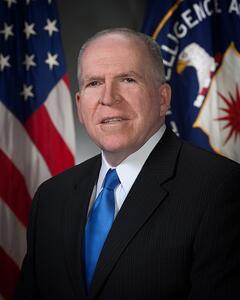
Barbara A. Perry
Just for the record, this is the Director John Brennan interview for the Barack Obama Oral History Project at UVA’s [University of Virginia] Miller Center, and it’s May 17, 2022. Good morning. Welcome virtually to Charlottesville and to the Miller Center. Thank you so much for doing this, and we hope at some point we can welcome you in person. I’m Barbara Perry, co-chair of the Presidential Oral History Program here, and I’m running the [Barack] Obama project. I know in our briefing book you have brief bios of Spencer Bakich, who is at Virginia Military Institute, and our colleague Mike Nelson at Rhodes College, the presidential scholar in political science around the country. Both are fellows with us at the Miller Center, so we enjoy working as a team.
Again, thank you, sir. We not only thank you for your service to our country, but we like to think that these interviews continue that service because you’re providing a service to history and time to come. We have all read your wonderful memoir. We so enjoyed it and thought it offered so many insights, not only into your life and career but into the Obama administration. But there were a few things we wanted to dig down on before we get to President Obama and your time in the administration.
One thing I wanted to go back to is the 1960s, and, as you were coming up, the assassinations, the war in Vietnam, the Cold War. What impact do you think all of that had on you as you came of age in the 1970s?
John Brennan
Yes, the 1960s certainly was a very rich decade in terms of developments, civil rights marches, and growing up in northern New Jersey, there were a fair number of clashes, riots, demonstrations in Newark, Plainfield, Englewood. This was the period of time with not just the JFK [John F. Kennedy] assassination in the early ’60s, but Robert Kennedy and Martin Luther King [Jr.]. But the other thing that I remember about the 1960s is the time when I used to watch old movies—Mr. Smith Goes to Washington, Meet John Doe, Grapes of Wrath—the number of things that made me think about my role in the country, being the son of an immigrant.
It was a formative period in my life, and being in Catholic school with nuns and Christian brothers, they really forced me, appropriately so, to think about life and the difference between right and wrong. It was a formative period as I was growing up in a rather blue-collar, middle-class, working neighborhood.
Perry
You’re pointing to the Christian brothers who educated you in high school. As we go through the briefing book, after I had read your memoir, I saw a number of references to the classical education you had at Fordham [University] with the Jesuits. The reason I bring it up is that when we get to the Obama administration and the very difficult decisions of life and death, you say in your memoir that at times of thinking about life and death, you had actually saved your papers. Those of us who are professors are so impressed that you saved [laughter] your term papers from college and would actually go back and look at them.
Any thoughts to add about that education? Others in the Obama administration were saying that they thought of you in kind of a priestly way. They thought these decisions of life and death were in good hands as you were talking to the President because of this educational background and the persona you must have revealed. Anything to point to that the Jesuits taught you at Fordham that you were able to carry through your career?
Brennan
Again, it wasn’t just the Jesuits at Fordham. I might have had a dozen or a dozen and a half Jesuits throughout the course of my college career, but there were the other professors as well. I think it was the Catholic environment in elementary, high school, and in college, with a very deep sense of morality—again, distinguishing between right and wrong.
I said in the memoir, as my faith tended to lapse over time, that strong moral upbringing, that North Star that guided me, became stronger as I was confronted with the day-to-day reality of having to make decisions with very important equities on the line, including life and death. As I mentioned in the memoir, things like the “just war” theory that my philosophy professors at Fordham taught me—
In fact, when I was at CIA [Central Intelligence Agency], I reached back to my philosophy professor, who was teaching at Emory University in Atlanta at the time, and invited him up. He wasn’t a Jesuit. In fact, at the time he was, I think, a doctoral student. But he had such a powerful impact on me. I mentioned him when I gave the commencement speech at Fordham in 2012.
There were certain individuals who impressed upon me the reality of having to deal with some very important life challenges and that it was ultimately going to be up to me to make the decision, based on that moral framework that I think was instilled in me as a result of the education I had and the very, very strong family unit at home. Again, my parents had a great deal of integrity from the standpoint of making sure that not only they did what was right but also helped guide their children in terms of doing right things as opposed to wrong things—not that I always adhered to their guidance. [laughter] It was reinforced, this emphasis on doing right, doing good, maintaining that very strong moral compass. It was reinforced at home, at school, and in my early faith.
Michael Nelson
The ’70s is the time you got interested in the Middle East. It wasn’t a time when terrorism was associated with the Middle East—that was the time of European terrorism—but people were thinking an awful lot about oil and about Israel in the ’70s, and I wonder what it was that attracted you to the Middle East as a subject of study.
Brennan
It was mainly a professor of mine, Professor [John P.] Entelis from Fordham University, who was teaching a course on Middle Eastern politics that I needed to take for my studies. He was very passionate about it and taught with real enthusiasm. He was the one who brought into the classroom the brochure for study abroad at the American University in Cairo.
I found the Middle East interesting and fascinating. I remember as a paperboy delivering the Hudson Dispatch, reading the headlines about the ’67 war and seeing the photos on the front page. So it had an allure. We were seeing Palestinian terrorism happening in the ’70s; that was starting to be a prominent feature of the Middle East landscape. So there were a number of things that, I think, just ultimately led me to becoming interested in the Middle East.
Also, once I spent time in Cairo and studied some Arabic, I became much more familiar with the issues, and visiting Jerusalem and Jordan, again, sparked what has become a lifelong interest.
Nelson
I would think that the CIA was really attracted to the idea of having an Arab-speaking applicant when you sought that position.
Brennan
Yes, and that’s why they wanted me to go into operations, because I had the Arabic. I had some Middle East street smarts from living and studying there. So I wasn’t at that time a normal graduate student, given that I also had traveled overseas in Indonesia. I had more than the usual amount of worldly experience as a 22-year-old.
Nelson
As you’ve covered in your memoir, at some point you become a part of the daily briefing for your first president, [William] Bill Clinton, and I wonder what that experience was like, what impressions you formed, not just of Clinton but of the presidency, because that would later become the recurring theme of your career.
Brennan
He was really the fourth president I served under: I served under, very briefly, [James Earl] Jimmy Carter, then [Ronald] Reagan, then George H. W. Bush, and then Clinton. Clinton was the first president I really spent any amount of time with, being his daily intelligence briefer. That also was a time when I very much had to expand my substantive breadth because up until that point I was working on the Middle East as well as terrorism. But when you’re the daily intelligence briefer for the President of the United States, you have to be ready to talk about virtually any issue that is addressed, either the PDB, the President’s Daily Brief, the document itself, or that the president might have a question on.
So it really did open up the aperture for me, substantively, but also it gave me much greater insight into a President’s responsibilities, the cadence. [laughs] Frequently, when I was outside the Oval Office, waiting to go in there, I would see this line of folks going in and out and various issues being raised. Sometimes the PDB sessions would be interrupted by the chief of staff, Leon Panetta, or somebody else who came in to raise another issue with President Clinton. So I understood better just how intelligence and national security was nested within a much broader array, a much more eclectic array of issues that a President had to deal with, which was a good experience for me in my later positions.
Spencer Bakich
How did President Clinton take his briefing? I have heard that he was a voracious reader and preferred to read the brief in total before hearing from you. Is that true?
Brennan
Well, back in the 1990s, when President Clinton was in the Oval Office, the PDB was only a written document, and it was always brought down to the White House by the President’s briefer. So when I would go into the Oval Office, it would be the first time that the President would actually see the PDB. He would read it while I was sitting there with him, and I would augment it with some comments or updates, or he would ask some questions.
But for those sessions that were in person—and President Clinton was a bit notorious as far as either postponing some of the sessions or being late—he wouldn’t see that PDB until I brought it in. If there wasn’t time for an in-person Oval Office briefing, the PDB would be delivered to his assistants or the national security advisor, who would then bring it in to him at some point during the day, when he would read it.
But yes, he was a voracious reader. On the days when the PDB was actually delivered to him, frequently it would come back with a lot of comments in the margins. He would write questions or underline things, and it was clear that he read every word in that PDB.
Perry
It just occurs to me, the writing in the margins: did those PDBs then stay in the Oval Office, stay with the President? Or, for security reasons, did the briefer take it away?
Brennan
Yes, I would bring the PDB back with me. Rarely, there would be a request to keep it, and so [Anthony] Tony Lake, who was the national security advisor, or [Samuel] Sandy Berger, I would need to get assurance from them that we could pick it up later in the day, but it wouldn’t overnight. And if President Clinton was traveling, it usually would be some CIA representative who would be going there and who would make sure that the PDB document was delivered and was retrieved because the last thing you want to do is to lose control of a PDB.
Perry
As political scientists and historians, we’re always fascinated by what happens to documents. Are all those still classified for years and years?
Brennan
Yes, the PDB is something that’s not subject to the regular declassification schedule, but some things have been declassified. There’s the infamous August 2001 PDB about the potential 9/11 attack that was referenced in the PDB, but it’s a rare occurrence.
Those PDBs are all retained, digitized, whatever else. But it was in President Obama’s presidency when the PDB then transitioned from being purely and solely a written document to being a document that was going to be uploaded on an iPad [Apple tablet computer]. In fact, I was part of that test project to see how the PDB could be, in fact, incorporated into an iPad that would also have on it some of the additional source material. So those iPads, during the Obama presidency, were delivered early in the day, and President Obama would have read the PDB before the Oval Office session with the director of national intelligence and personal staff.
Perry
You express in your book, for obvious reasons, your admiration for President George H. W. Bush, in part because of his having directed the CIA. But I was fascinated by your nonpartisanship, really, from the time you first voted in the 1976 election. You talk very openly about that voting decision you made in 1976. Were you just naturally not partisan?
Brennan
Well, my parents were registered Democrats, and we were certainly on that Democratic side of the ledger, but I never thought of myself as a partisan, especially since I entered government service at a very young age, at 24. Once you join CIA, the ethos, at least what I was taking, was that you leave any type of partisan sentiment at the door. So on social issues, I always considered myself very liberal. On national security issues, though, I was much more of a centrist.
I had a very early distaste for the hyperpartisanship that I saw and was not enamored with politicians overall, so I always tried to distinguish myself: I’m not a politician, I’m not a partisan; I am a national security professional, intelligence specialist, CIA officer. I never wanted to be tainted [laughs] with any type of partisan brush because I felt that would immediately raise questions about my objectivity. And whether it was the analysis or the intelligence I was providing, I didn’t want anybody to think I was shaping things in order to appeal to a certain political agenda.
Perry
Before we leave New Jersey, it just occurred to me last night—and I’m sure there are many Irish Brennans—did you ever know if you were related to Justice William Brennan of New Jersey?
Brennan
Well, yes, [laughs] I’m not certain. I’ve done a fair amount of genealogical research recently, and it was one of the things that was on the cutting room floor for my memoir. I talked about William Brennan, who was from New Jersey, former supreme court justice of New Jersey before he became a U.S. Supreme Court justice. His father had immigrated from Roscommon, which is where my father was born and raised. When I look at the photos of William Brennan, and I look at photos of some of my uncles and aunts, [laughter] I can see a very strong resemblance. I don’t know how far back it might go, but I suspect that we are related. It’s one of the things I need to pull the thread on. Because of the same name, I always had a special affinity for William Brennan and followed him very closely and was really quite impressed with his career. I think [Dwight] Eisenhower once said it was the great disappointment [laughs]—
Perry
Biggest mistake.
Brennan
Biggest mistake, right, exactly.
Perry
Well, that and [Earl] Warren, the two biggest mistakes he ever made as president, and I don’t see it that way. But yes, it’s so interesting that in terms of partisanship, appointed by a Republican but obviously became a key factor in the Warren Court and liberal decisions.
Bakich
A thread that runs through your memoir that I think would be worthwhile reflecting on is the effort you participated in directly, which was the standing up of TTIC [pronounced “tee-tick”; Terrorist Threat Integration Center] and the way that came about, the presidential imprimatur that came about in late 2003 for that effort.
One of the things I think is most important was, number one, the effort to streamline—in a communitywide way—getting good, solid, focused intelligence on the terrorist threat. But also it strikes me that much of that effort, the way in which you interacted with different agencies, different organizations, actually transcended your time in the first Obama administration and then, certainly, in some of the subsequent things that you did as the director of central intelligence
You spend a significant amount of time in the memoir talking about TTIC, but one of the things that I wanted to ask you is, to what extent did you see immediately the necessity of bringing together in a fusion center something on terrorism? Did that predate 9/11, or was that, for you, a function of 9/11?
Brennan
I think it really did predate 9/11. I was quite fortunate in my career to jump around, again, within the agency, starting out in operations but also going into analysis, having a rotation with Department of State, working overseas, and understanding and watching how a country team operates.
So I was fortunate that I didn’t grow up in a stovepipe. I had the opportunity to look at things from different perspectives, and in the early ’90s, when I was the head of analysis at the Counterterrorism Center at CIA, I also saw that power of integration, because in CTC [Counterterrorism Center] we had people from Secret Service, and we had other people as well. I had always been impressed with that, and I think I said in the memoir that I was very impressed with what happened with the U.S. military as a result of Goldwater–Nichols [Department of Defense Reorganization Act of 1986].
So in the aftermath of 9/11, when there was quite a bit of I think appropriate scrutiny on how the intelligence and law enforcement communities performed before and even after that, I started to emphasize the importance of trying to break down some of these walls between the different components of the U.S. government that had a shared responsibility for terrorism, for counterterrorism. I put together some briefings, and I told George Tenet that either we needed to make some changes ourselves or they were going to be made for us because, I think, of the general dissatisfaction with that lack of sharing of intelligence and information.
So all of 2002 I was the deputy executive director of CIA, and my responsibility was trying to bring together the different components of CIA to be able to effectively respond to the attacks of 9/11. But also I was working very closely with some of the other agencies within the intelligence community, particularly NSA [National Security Agency] and then FBI [Federal Bureau of Investigations]. That’s why George had appointed me to be the CIA rep [representative] on this interagency group the White House had convened in late 2002 about ways we might be able to improve upon the performance of the intelligence, law enforcement, and counterterrorism community. That is why, then, George W. Bush announced in his State of the Union address in January of 2003 that he was going to be setting up this TTIC, this fusion center.
I already had over 20 years of experience working in different parts of the CIA, in different parts of the U.S. government, seeing the White House, how policy and intelligence interact, and I felt as though I was a very, very fortunate beneficiary of all those experiences. I wanted to be able to apply that in a new start within the government, and so establishing a new entity, TTIC—especially one that didn’t have any type of legislative provenance, much to the chagrin and anger of some of the members of Congress—setting something like that up was a fascinating, [laughs] challenging but very rewarding experience that, again, shaped the way I looked at government service, public service.
Also, at that time when I was standing up TTIC, I did a lot of reading about systems engineering. I have said often that although I’m a very proud liberal arts major, I really have become quite fascinated and impressed with systems engineering in order to ensure that one’s understanding of the ecosystem that they operate within is optimal, that they’re able to design the system, whether it be the practices, the procedures, the protocols, the techniques, the expertise, the resources, all of that organizational structure, in an optimal fashion.
TTIC was the first real opportunity I had to try to put some of those ideas into practice and to see whether what I had been proposing up until then, which was the theory of more effective integration, could actually work in practice. Then TTIC and NCTC [National Counterterrorism Center] evolved. That was something that, again, if I didn’t have all those experiences in the 20 years prior, I do not believe I could have done what was being asked of me.
Bakich
With respect to those experiences, you hear often or read frequently that CIA is a house divided between the analytic and the operations branches. In your experience, was that true? Or were the antibodies between or within each of those organizations very difficult to overcome as you were thinking about creating a fusion center within CIA?
Brennan
Well, part of it is just sort of inherent in the intelligence business, especially in CIA, where there’s a real premium put on secrecy and protecting information so that there’s not going to be any type of leak or exposure that could, in fact, compromise programs or even the lives of assets. Certainly within the directorate of operations, there was a very strong sense of the need to protect information, including from exposure to analysts. I think there was a sense among the operations folks that the analysts should not be privy to certain information, despite the fact that the analysts had to take the same types of polygraphs and had the same security background investigation experiences.
I felt that the operational environment too often really did not take advantage of the capabilities, the expertise, that were resident in other parts of the agency, such as in the analytic area. Also, I think there was a sense among some within operations that there was a—I’m very much in favor of esprit de corps, but some of it just went into the area of arrogance. I think some CIA officers had a reputation of hiding information, certainly from some of their other government colleagues—Department of State and others—but also from fellow CIA officers. So, a fair amount of distrust was built up there.
Again, a lot depended on individuals. There were a lot of operations officers I worked very closely with, overseas as well as in Washington, who I believe were enlightened and understood how you can balance the need for secrecy with the importance of bringing in others within the intelligence community, within CIA, in order to be much more effective in terms of mission.
Bakich
One of the things I’ve thought about over the years is when you have an experience like 9/11 or when there’s a significant push to bring folks together from different organizations within the government—either across national security organizations or within them—to work together, to play well, to share information. I’ve always wondered what it takes to sustain that over time. And it strikes me, you’ve said two things so far that I think are important—I want to verify this with you. Number one, it’s the way you engineer the institutions and the way they interact, so there is kind of a structural component to it. But there’s also an individual or personnel factor. I guess management plays a significant role in this, right? Creating an overall ethos in sharing and in transparency and making sure that that information gets transferred timely. Did you run into that? Once these things are set up, is there a significant management component to it?
Brennan
Absolutely. There’s a very strong cultural element to all of this. I felt a number of times that you needed to change the organizational structure, the boxes of the organization, in order to break down some of those cultural barriers, because for people living within a very small component or dimension, their entire worldview or prism was shaped from inside that cubicle, and they weren’t able to understand exactly the benefits of that integration.
There were some folks through the course of my career that I felt were very parochial but yet still very good officers. I remember moving several of those people to serve outside their home component because, to me, the best experience is to see one’s component from outside and also, then, to experience another component from inside. You want to have people who are open-minded about how to evolve organizationally, but there were a lot of people who, again, had a very parochial perspective, that were very much opposed to something just on principle. That certainly was the case with the standup of TTIC and the NCTC as well as the reorganization I did at CIA.
I talk in the memoir about how the CIA was the biggest, biggest obstacle to the standup of TTIC because they were refusing to allow TTIC to gain access to the CIA networks and other types of things. I had to go to George [Tenet] and tell him that the DO [Directorate of Operations] is not playing, and I’m going to have to write a memo to George W. Bush because, as director of TTIC, I had a dotted reporting line to the President.
Again, some of it is, they had to be forced because I think they truly believed that the mission was going to be best implemented and prosecuted by their way of doing things. I think it really just required them to experience what a new system would look like and to dispel the fears that they had about the downsides of those changes.
Bakich
So, two of the principals that you had to interact with, that you interacted with at the time, Secretary [Donald] Rumsfeld and Secretary [Colin] Powell—you mentioned that Secretary Powell was a significant champion of TTIC. Do you have a sense as to why he was such a fan of the initiative?
Brennan
First of all, I think he was the quintessential public servant that didn’t have personal or partisan agendas. He looked at things in a very objective, practical way and saw the benefits. And as secretary of state, he didn’t have as much of a dog in the fight as some of the others. We did incorporate within TTIC a component of the State Department called TIPOFF. That was important, but I think some of the others—I got into some fights with [Robert] Bob Mueller because the FBI was opposed to some of the things that TTIC was planning to do; and Don Rumsfeld, as well, who was trying to set up his own intel shop; and CIA.
George tried to balance the equities of the DO along with TTIC, but I think Powell had a good sense of This is good government, and having had his own experience of Goldwater–Nichols implementation and the benefits of integrated efforts, I think he was able to see the value of this and also recognize that this was a presidential initiative and, by God, [laughs] he needed to support a presidential initiative.
Nelson
Was the creation of the Department of Homeland Security related to what you all were doing?
Brennan
It was, because it was incubating at the same time, and, fortunately, I had good relations with the individuals who were charged with standing up the Department of Homeland Security: John Gordon, who was the homeland security advisor at the White House and was the former deputy director of central intelligence, whom I had worked closely with, former Air Force general; and [Thomas] Tom Ridge, then former governor of Pennsylvania. I had a number of meetings with him, and he was very much a champion also of TTIC because he knew that a nascent Department of Homeland Security was going to be incapable, certainly early on, of fulfilling some of its responsibilities and was looking to have a place like TTIC that he could leverage for Homeland Security’s mission.
Along with [Richard] Rich Falkenrath, who was John Gordon’s deputy down at the White House, these were champions of TTIC because I think the plan of the Bush White House was that these new initiatives—Department of Homeland Security and TTIC—were going to be complementary, mutually reinforcing.
I spent a lot of time with Tom Ridge; Gordon England, who was Ridge’s deputy; John Gordon; and others because I felt that they were allies in the effort, because they were new and starting up, experiencing some of the same growing pains I was, and had to deal with some of the same challenges. I felt that there was more of a relationship with them than maybe some of the more established intel and law enforcement entities that felt threatened by these new organizations.
Bakich
Did you at all interact with the vice president or folks from the Office of the Vice President, in this time, as TTIC was being stood up and evolved?
Brennan
Yes, and there were representatives from [Richard] Cheney’s office that participated in the meetings. They were supportive as well because it was a White House–supported initiative, and so some of the folks there were interested in ensuring that TTIC was going to be a success. But yes, they participated in the meetings, both their lawyers and their substantive experts.
Bakich
My final stopping point is with the Department of Defense. You mentioned that there was some friction between you and Secretary Rumsfeld. To what extent did you see Douglas Feith’s office as an annoyance, or was it an actual threat to the initiative, as you saw it?
Brennan
Overall, I had a pretty good relationship with Rumsfeld. [laughs] He was a character, and he was very blunt and intellectually arrogant, but I didn’t feel as though he was seeking to undermine in any way the standup of TTIC and NCTC. Feith was really not focused on TTIC; he was more focused on Iraq. Again, remember this is the same time that DoD [Department of Defense]—Rumsfeld, [Paul] Wolfowitz, Feith, and others—with Cheney and [Lewis] Scooter Libby, were seeking to lay the groundwork and the premise and the pretext for the invasion of Iraq, so I felt that they were focused more on that than on TTIC and NCTC.
I felt that DoD was generally supportive. We had folks from DIA [Defense Intelligence Agency] who then came over to TTIC early, some good people. So, again, I didn’t feel that there were stiff headwinds coming from DoD.
Bakich
Good, good. Did you have in mind a set of criteria for how you could reasonably say TTIC was a success in those early days? Or was it more of an initiative, Let’s see where we’re going, where we’re evolving?
Brennan
Well, TTIC formally stood up in May of 2003, after we worked on putting together a design for the previous couple of months. Within the first year we had some fits and starts, certainly, but I also knew that there was legislation going through the Hill [Congress] that was calling for a statutorily based National Counterterrorism Center. I had a lot of interactions with folks on the Hill, and so my objective, really, was to ensure that TTIC was not going to fail and that it was going to provide the basis for the ultimate standup of the National Counterterrorism Center.
I thought it was important for us to have a defined mission. That’s why we had the President’s Terrorist Threat Report, the PTTR, delivered along with the PDB. I felt as though we needed to have a document that would go to the President and principals. We were the representative at a lot of the meetings, National Security Council meetings, principals meetings, and others, where we would do the integrated briefing about the nature of the terrorist threat. So we had an established presence there. We were still getting a lot of arrows shot at us, but I felt as though if we could survive that first year or so, then we were, again, going to be the platform upon which the NCTC was going to be built.
So I was not shy about pushing back against some of the adversaries that we had encountered, and I was pretty confident that the model we had put together was the right one. I was particularly focused on ensuring that we were going to get access to data, to networks, to systems. The legislation that came out basically said that NCTC and then TTIC was supposed to have access to all terrorism-related information.
My argument was, How do you know if something is terrorism-related unless you’re able to correlate it with something else? So that IT [information technology] infrastructure was very, very important. We were doing a lot of groundbreaking and cutting-edge integration of IT systems, pulling together information from disparate government sources. A particularly difficult one was on Treasury because a lot of the information that Treasury, as well as the FBI, collected was done under their own authorities, and putting together an architecture within the TTIC and NCTC to ensure that we had only role-based access, that the information that was available was not going to be accessed by everybody—because there was a lot of U.S. person information that was related.
I mean, these were very interesting intellectual challenges from a technical standpoint but also from a mission standpoint. How do you design the system, the systems engineering that is required, in order to benefit from the power of that integrated environment? I felt as though once we were able to establish some roots, the concept itself of NCTC made a lot of sense, and it was going to thrive as long as it wasn’t killed in the crib.
Bakich
Was there ever a point, or a couple of points, when you actually had to appeal directly to the President to help break any logjams?
Brennan
Well, when I was briefing the President, I would be at NSC [National Security Council] meetings or in the Oval Office, and he would frequently refer to me as “Mr. TTIC” and say, “So, Mr. TTIC, how’s it going?” I would always put a positive look on it because usually when I was there I was with George Tenet or with [Deputy Director of Central Intelligence] John McLaughlin, or somebody else, and you don’t want to air dirty laundry in front of the President and catch your other supervisor by surprise. I found that George and John were both very supportive of the concept and, again, were trying to balance the equities and concerns they had underneath them.
So, no, I never wrote that memo to Bush because George basically directed his folks at CIA’s counterterrorism center to open up the spigot of information and allow the systems and databases to be accessed.
Bakich
Sounds to me like you were paid the highest compliment by President Bush: you got a nickname. [laughter]
Brennan
Yes, because I think he forgot my given name. [laughter]
Perry
Before we get to the 2007 and ’08 period and actually get you into the Obama administration: the 2004 election, your thoughts about George W. Bush as President, what had happened in 9/11, the war in Iraq, which you would come to have grave reservations about. Did you have thoughts in 2004 about whether there should be a change in the Oval or move ahead for a second term?
Brennan
Throughout the course of my first government career, 25 years, I don’t recall ever having strong views about the presidential elections. I voted in the elections. I guess I had a preference, but in 2004, I knew George Bush. I respected him. I didn’t agree with a lot of his decisions, but I respected him as a person. I don’t recall, now that you raise it, whom I voted for in 2004. [laughs] I was so busy and focused on the responsibilities of my job, I felt that at least my bit of government service was not going to be affected all that much by the outcome of that election because I did think there was a certain continuity there. But in 2004, dealing with a lot of issues related to Iraq, obviously, the invasion there, I was not dissatisfied at all that George W. Bush was reelected. I wouldn’t have been dissatisfied if he wasn’t.
Perry
Shall we move to the 2007–2008 period? Clearly by then you begin to have thoughts about the person you think should be the next President of the United States, John McCain—obviously, with a lot of military experience and background. But thinking in terms of Barack Obama, we did want to know your thoughts about Hillary Clinton, then Senator Hillary Clinton, who had a lot of foreign travel experience and interest, obviously, in foreign policy from her time in the Senate and as First Lady.
Tell us where your thoughts are, given that, as recently as 2004, you don’t have severe thoughts about I have to have this person in the White House. You’re going along; you think President Bush would be OK for a second term. What causes that switch to go on for you, I guess would be the term, in 2007 and ’08? And then why Barack Obama and not Hillary Clinton, if you’re moving away from the previous party you have served for two terms?
Brennan
I guess the 2008 election was going to be only the second election I was going to vote in as a civilian. [laughs] The first one, I voted for Gus Hall. And by coming out of the government, I had more time to think about a lot of different issues, not just intelligence but other things. I had a lot of respect for Hillary Clinton. I don’t think I had ever met her by then. I might have seen her in the White House at some point; I don’t know.
But although I had a lot of respect for John McCain, I was very concerned about his worldview. He was pretty much of a right-wing hawk on issues. I felt as though he was an absolutist. He had very strong feelings about issues. I think in one of his campaign stops he was talking about “Bomb, bomb, bomb, bomb, bomb Iran,” and he frequently would miss the nuances of situations.
So I gravitated toward the Democratic side of the ledger, and I felt that both Hillary Clinton and Barack Obama were impressive individuals. I started to watch some of Barack Obama’s speeches, and I remember my cousin Tom, who was my early mentor—and still is— highlighted to me, “This guy Obama looks really quite good and impressive.” And the more I watched him, the more I felt that he was almost a kindred spirit [laughs] to me, that we had similar views about things, and some of the words and phrases and things that he said really resonated with me personally.
Maybe also there was the fact that he had spent some of his youth in Indonesia, and the fact that he was biracial. I read his book, a very thoughtful individual. He wasn’t a typical politician, in my mind. Again, it was that resonance that—when I started to see some of his victories in the primaries and watched his speeches in South Carolina and others—sparked in me a sense, Yeah, is there something I can do to try to promote his prospects, because he was fighting an uphill battle in the primary against Hillary, but then also he would have a challenge in the election.
That’s when I reached out to George [Tenet] and said, “If you know somebody who’s involved in that”—since George was in the Democratic arena. That’s when Tony Lake got in touch with me, and, again, I just was offering any of my experiences to the Obama campaign as they prepared for the general election.
Nelson
It sounds like part of what appealed to you about Obama was not just what he thought but how he thought about things, how he weighed and balanced and sought nuance.
Brennan
Yes, he came across as very thoughtful, reflective. There were things he did and said that I didn’t agree with, that I thought he—Talking about torture and the CIA, I think there were a number of things in his talking points that were really partisan and political, so some of those things I certainly did not agree with. But overall, in terms of his approach, there was a goodness there that I sensed.
He wasn’t feigning sincerity. [laughter] So many politicians excel at feigning sincerity. To me, he wasn’t the perfect candidate. There were things I disagreed with, but he offered a sense of hope, and there was a positivity that came from him. I remember early on telling my cousin Tom, “It’s too early for him to run for President,” because he was barely in the Senate a few years. I said, “Maybe 2012, not 2008.” Tom said, “I think he’s ready now. Now’s the time.” Then, finally, I was convinced that it was the time.
Perry
That the endorsement from Edward Kennedy and Caroline Kennedy were somewhat crucial in pushing you over the edge to think, Yes, this is the time? As I understand from Edward Kennedy’s memoir, there were a number of people saying, “Oh, it’s still too early for Obama,” and that he advised Obama, “Go ahead, go ahead. Grab the brass ring now.”
Brennan
Yes. To me, that was a pretty important milestone, in terms of his endorsement and Caroline Kennedy’s endorsement. I had met Edward Kennedy several times. He came over to TTIC. I had a great meeting with him and was very impressed by how nice he was to his staff and to other people but also the fact that he was a Kennedy, he was Irish, and the “lion of the Senate.” He was very powerful, and his very strong, full-throated endorsement of Obama, I guess, convinced me that, yes, now’s the time to make a run for it.
Bakich
The issue of torture versus enhanced interrogation techniques, which are considered to be, under the existing AUMF [Authorization for Use of Military Force] at the time, perfectly within bounds. I’m curious: as you were listening to candidate Obama reference CIA activities as “torture,” did that give you pause? I get a sense from you that this was a core issue for you, that distinction mattered, and it matters today, a significant amount. I’m wondering if, as you’re thinking about Obama and the promise he offers but also hearing him on the campaign trail refer to these activities as torture, were you deeply conflicted about this?
Brennan
Not really, because I understood people’s revulsion over the use of the EITs [enhanced interrogation techniques]—waterboarding and the like—and how it was just a catchphrase, “torture,” that really I don’t think reflected a very deep and carefully designed reference to it. So I knew where he was coming from. I didn’t like when he talked about CIA officers engaged in torture, and I think throughout the Obama presidency when he used the term “torture,” it was much more nuanced. But I agreed with his point, which was that these techniques never should have been used, that Guantanamo needed to be closed.
It was the overarching perspective that he had on the issue that I agreed with. Some of the details, some of the characterizations I didn’t agree with, but I felt as though he was in the right place thinking about the issue, if the terminology was not exactly what I would use.
Nelson
What was your role in the campaign?
Brennan
It was limited. Tony Lake asked me to head up what was called an “intelligence cell.” There were a number of people who were on an email list, and we would be in contact with one another. I would join some conference calls with others. There were a couple of times, I think, that I got on a conference call with some members of the press, on background briefings. I wrote some memos to give to Denis McDonough or others about Iran, terrorism.
So it was indirect. It was over the phone and email. That was it. Again, I never had any direct contact with Barack Obama prior to the election, but it was with Denis, Mark Lippert, John Podesta, Susan Rice, and some of the others who were part of that national security “kitchen cabinet” that had direct access to Barack Obama.
Nelson
Were there occasions when you could see that the work you were doing in this advisory role was having an effect on what Obama was saying in his speeches?
Brennan
To a very limited extent. I didn’t feel that anything that I did or said made a difference, although there were some times that Denis would call me up, or somebody else would call me up, to get my thoughts about it. Some of the things I said were consistent with some of the other views they were hearing, but I’d be hard pressed to point to something in particular.
Some of the things he said, and the campaign said, about Iran were reflective of some of the input that I had. But, again, I think it was more a part of the process of pulling information from these different advisors and pulling it together. I don’t want to take credit for anything that maybe shaped—I did talk about Guantanamo. I did talk about enhanced interrogation techniques. I don’t know whether or not any of my input there softened, maybe, some of the things that he said or how he characterized it. Might have been. I wasn’t tracking it to see whether my views were dispositive in the formulation of the speeches.
Bakich
And what was your position on Guantanamo at the time?
Brennan
That we needed to move beyond it. We needed to address the prison population there. I was always very supportive of prosecuting individuals, those that should be prosecuted, under Article 3. I was not a fan of military commissions at all, for the reasons we have seen over the last decade or more. I thought a lot of the individuals in Guantanamo should not have been indefinitely detained the way they were—we needed to have a process to reduce the population there—and that they shouldn’t be in this limbo. So dealing with it was something that I felt we needed to do, as opposed to just creating a Guantanamo—
I was in the early discussions about what should the government do with the individuals that were going to be captured, and all the different ideas about putting them on an island, or Uganda, and then Guantanamo. I remember some of the discussions. They were talking about, “Well, we’ll do this, and then—”
People were asking, “What’s the long-term plan?” And people basically said, “We’ll get to that later.” I think they were looking for that short-term solution and remedy, and also giving the CIA the authority to conduct those interrogations, and they didn’t want to have to address what ultimately would happen to those individuals. I was a proponent of pushing into the prosecution process those that deserved that but then also taking care of the others, either repatriating them to foreign governments or to their countries of origin.
Nelson
When he [Obama] added [Joseph] Joe Biden to the ticket, what impressions had you formed of Biden? Did you know him?
Brennan
I didn’t know him. I had, I think, some meetings with him throughout my career when he was on different committees. What I remember most is my father was always a very, very strong admirer of Joe Biden: “He’s a man of the people. He thinks about the working man.” So I always had a very positive impression of Joe Biden, having to deal with personal trauma, and medical challenges, and other things. He always seemed to be a very likable person, a good person, and a dedicated public servant.
So I was pleased when Barack Obama, the candidate, selected Joe Biden to be his vice presidential running mate because I felt that was a good balance of the new and the experienced and also two different types of people. I thought it was a good team.
Perry
When you retired from government service for the first time, in 2005, you were, certainly agewise, way under usual retirement age. Had you thought at that time that you might ever go back into government service?
Then, as you get into helping as an advisor to the Obama campaign, ’07–’08, were you really thinking, Well, not only someday I hope to go back into government service, but it’d really be great to go in with this candidate, should he win?
Brennan
When I retired in ’05—and I was just 50 at the time—I felt as though my career was, in some respects, unfinished. I didn’t really leave on a great high note. I felt good about TTIC and NCTC, but I wasn’t tapped—and I understand why—to be the Senate-confirmed director of NCTC. But I also needed to go into the private sector and try to make some money for children’s college education and those things. I think I had entertained going back into government because I was considered for the principal deputy director of national intelligence position under Bush, but that didn’t work out.
So when I decided to help Obama, I wondered whether, if he got elected, I might be able to go back into government or be asked to go back into government. It was something I had entertained, and my entire career, almost, or professional life was in government service. It was what I knew and loved, so I was certainly open to that.
Perry
Tell us about election night 2008.
Brennan
We had some of our neighbors over. People knew that I was working with the Obama campaign, and we had some very close neighbors, and they were basically split, Republican/Democrat. They came over to the house, several of them, for drinks and food.
I was very, very pleased with the way it was going and happy. My closest neighbors, who were also Obama fans, were happy as well. Even among the Republicans who were there, Obama was not their preferred choice, but I think they realized that he was a good person. Their biggest criticism was that he was not ready or that he may be a pawn of the liberals. But I didn’t detect any anger from those McCain supporters that were at my house that night.
Nelson
What do you think got you on Obama’s radar screen when it came to recruiting you for the administration?
Brennan
I don’t believe he was focused on who was going to be his director of national intelligence and director of CIA. He was so busy during the campaign and doing so many different things, focused on a lot of domestic issues and broader international issues, that I think he looked to some of his closest advisors to come up with that short list of names. And given that I had worked closely with Denis McDonough and Mark Lippert, in particular—but also Tony Lake knew me—I think there were a number of people who might have raised my name as a potential intelligence community official.
The fact that I started out with the campaign fairly early before Obama was the Democratic nominee gave me some cred. [laughs] There was a sense of, Yes, this guy is—I don’t want to say a loyalist—but at least, somebody who believed in us from the early days, which is why I think I was summoned to Chicago to meet with Obama shortly after the election. I don’t think he really knew me—He didn’t know me at all. I don’t know if, during the campaign, he knew of me. He might have heard my name talked about. But in the aftermath of the election, he had to go through this list of a lot of people for a lot of different positions, and I was one of many.
Nelson
Please tell us about that first meeting. For the first time, you’re seeing Obama in the same room—the impressions you’re forming there that either confirmed or fleshed out what you’d already thought about him.
Brennan
I had worked with a number of presidents before, but I guess I was nervous going into that meeting. I think I presumed it was not just a thank-you meeting; it was to take my measure and see whether or not he wanted to have me as part of his administration in some capacity. But I just felt that he was very personable. I was very pleased that it was a one-on-one meeting, as opposed to a group of folks around him taking notes. It was a very easy conversation. I felt as though he had no air about him, down-to-earth, and he asked good questions. He gave me an opportunity to share my thoughts about intelligence and CIA and counterterrorism, the EITs.
He didn’t cut me off; he listened. But I think I said this in the memoir: I could tell that he was a bit tired. I’m sure he was exhausted—it was nonstop. So at some point, when I was talking about some program or whatever, I saw that his eyes were drooping. [laughter] I would come to know that look, that I needed to do something differently to bring him back.
It was just a very pleasant meeting. I remember going in there saying, I’m going to be very honest with him about my views on things such as on terrorism, and let the chips fall where they may. I was not going to shape my comments just to try to curry favor with him. He was a good listener, and I could see that there were times when he would nod his head, and there were times that he would just take it in. So when I left there, I thought it was a good meeting, but I didn’t know if anything at all would come of it.
Perry
What were the times when he didn’t nod in the affirmative? Do you remember the things that you were saying when he was not nodding affirmatively along with you?
Brennan
I think it was talking about the CIA officers who were part of that enhanced interrogation program, that CIA officers have a real sense of saluting to mission and carrying out their responsibilities, and that given that Department of Justice basically said these techniques were lawful and the committees of jurisdiction, at least the ranking members and chairmen, were briefed on it—I went through that. He wasn’t going, “Yeah, yeah, yeah, I understand.” He was more, again, listening, and there wasn’t an affirmation there.
When I talked about the importance of ensuring that we’re not just going to be involved in attacking the downstream elements of the terrorist threat, that we have go upstream more, to address the causes of terrorism, that’s where I think he was much more nodding positively.
Perry
Talk about transitions, generally, what you had seen when you were in CIA of presidential transitions. They can be a time of peril for our country, could have people who want to hurt us and are up to no good taking advantages of that, and we were in a severe financial meltdown and crisis between these two administrations. So before we actually get to your nomination for CIA director, just give us your thoughts generally about transitions and the peril and the opportunities that they afford.
Brennan
They’re critically important periods and ones that can be fraught, both on the domestic stage and on the international stage. I had been through some transitions before. The one I was most closely involved with was in 2000, when we had this extended period of uncertainty about who was going to emerge victorious. I was in the intelligence community, in CIA at the time, so I was looking at it from the standpoint of intelligence and national security. And the fact that George W. Bush asked George Tenet to stay at the helm allowed that continuity, which was reassuring because transitions can be rather abrupt.
When I was then asked to be part of this transition team—and I knew that there were known people who were coming into the administration who were very much opposed to the things that happened during the Bush administration—I was concerned that there would be this interruption. But I was very pleased to see the mutual respect and support between the outgoing Bush team and the incoming Obama team. People on both sides were really trying to navigate these very dangerous shoals.
We had, I remember, the bombings in India at the time, in December of ’08, and as you point out, we had the domestic financial meltdown here. There were just a lot of things going on, but watching that, I was really, really impressed that it wasn’t Republicans turning over the reins to Democrats; it was Americans turning over the reins to the next group of Americans, passing the baton.
It was one of the most impressive experiences I had in my career. I think I said in the memoir, it was democracy in action: these were Americans who were trying to do their utmost to protect their fellow citizens and do right by them. So I felt very privileged to be part of that, and I knew the people in the intelligence community—and since I was heading up that intelligence transition team, knowing Mike McConnell, [Michael] Mike Hayden, and others, and really feeling as though the doors were open—I knew that people I would talk to were being honest.
Also, they knew they couldn’t pull the wool over my eyes since I was a former CIA official. So it was a very, very busy time, intense time, and that’s why I took a full leave of absence from the company I was with and didn’t take any pay, although I found out that other people were able to find ways to maintain their income from their private-sector job while still doing the transition. I wasn’t that clever.
Bakich
At what point did you get a sense that perhaps being tapped to be director of Central Intelligence Agency might be in the offing?
Brennan
I was director of TTIC and NCTC—nonstatutory director, interim director—but I always felt that the director of Central Intelligence Agency or director of national intelligence was too high for me. It was more of a political appointment; you needed to really have that type of political gravitas, so I didn’t think I was going to be tapped for it. I was surprised when I got the phone call from Barack Obama offering me the job. I was in D.C. walking out of the transition center. I was excited about it. I knew I was being considered for things. What level I didn’t know, but being director of CIA exceeded my expectations.
Bakich
Was there a moment of hesitation after you received that call, that it was still “too high”—your words—for you?
Brennan
I told him it was an honor and a privilege, and I said, “I want to talk to my wife,” and he said, “Yeah, you better do that [laughter] before giving a response.” I talked to Kathy, and I talked to George that evening, I remember. I think I expressed my concerns that this is too big or too challenging or whatever, and George convinced me that, no, I had the experience and also had the confidence of a president. He was asking me if I felt as though I could work with Obama as director of CIA, and did I feel that Obama would respect the CIA, the role, and I said, “Yes. I haven’t had all that many interactions with him, but I feel good about it.” I think Kathy, and then George, were the ones that tipped the balance for me to say, “OK, I’m going to give it a shot.”
Nelson
When you said you weren’t sure you had the political gravitas for that position, can you explain what you meant by “political gravitas”?
Brennan
Well, I was a lifelong CIA officer. Again, a lot of the people who headed up CIA had either personal relationships with presidents or were at senior-level positions. I didn’t walk the political corridors, and I wasn’t a Democrat or Republican. I worked with a Republican administration and with Democratic administrations, and I had watched confirmation processes for other people before. I watched Tony Lake’s confirmation process, where he was skewered, very unfairly. So I didn’t know whether people would feel comfortable putting me up, with my background and lack of champions in the Senate. I had a lot of engagements with members of Congress, and they ran the gamut from being good to being not very good at all.
Even people like George Tenet, who was the staff director of SSCI [Senate Select Committee on Intelligence] for a number of years and then also served as deputy before he got the nod as director—I just didn’t feel as though an interim director of NCTC in his past government experience would be catapulted up to be director of CIA. It’s a pretty big jump.
Perry
Take us through going from elation to disappointment, as it turns out, on this nomination.
Brennan
I started to become familiar with the ways of the political environment, and I knew that they were going to be floating some trial balloons in the media, as well as talk about it with folks on the Hill, and that’s when the antibodies started to crop up. As I was reading things, as I said in the memoir, I had a conversation with Denis, and said, “Listen, Denis, if this gets too hot—” He said, “Ah, don’t worry about it. The President is very comfortable and confident.”
But then it started to gain traction, and I can just presume that as people got together with Obama and were going through the various lists of pending appointments, they tried to limit those areas of friction with his Democratic base. And although I would have been confirmed that first time—I’m confident of that, Denis has agreed with that, and others have as well—I think there was an effort to try to reduce the number of “problem cases,” [laughs] even the minor ones.
When I offered once again to Denis, when he called me down to the transition headquarters on a Sunday evening, I think it was, I basically offered to step back, fully expecting him to say, “No, no, don’t worry about it”—I thought I was going through the motions. But when I looked at his face, I knew that the winds had changed significantly, which was a bit surprising and internally crushing, but I said, “OK.” I didn’t push back at all.
I spoke to Denis the following morning and said that I really would like to be able to put something out stating that I was pulling back, because I thought it was going to be subject to a lot of rumor and innuendo. He said, “Well, you haven’t been formally appointed, so it’s a bit unusual, but, OK, draft something, we’ll take a look at it”—which I did— “and put it out.”
Again, it was a bit of a hurried draft. As I said in the memoir, I think I would have changed some things, some language in that, but at that point I was a little bit angry, very much disappointed. But I continued on the transition effort, and at that point I just said, “Well, OK, if I’m not good for that, I don’t want to take anything.”
Nelson
I can’t help but wonder if you weren’t a casualty of the President’s decision to keep [Robert] Gates on. He did not have to go through a Senate confirmation because he was already in the position, but yours would, and so if someone is going to be the target from disappointed Democrats, there would be an occasion to fight you in a way that there wasn’t for Gates.
Brennan
Yes, and I think it wasn’t just about me. It was that a confirmation hearing at the time would have raised the whole specter of the enhanced interrogation program and techniques and torture and whatever else, shining a spotlight on the incoming Obama administration’s attitudes about this, and interpreting my appointment as Obama then going soft on this issue. I think by taking me out of play and then putting Panetta in there, they didn’t have to worry about that becoming an issue. That really could have led to confirmation hearings that would have been a bit ugly, maybe.
Nelson
You have to wonder, shouldn’t they have thought of that in the first place? [laughs] Right? I mean, your views, your experience should not have been unknown to them.
Brennan
No, but I think they were reassured that I wasn’t part of the program. Looking at it rationally and logically, I wasn’t in the chain of command. I had come out against it. But logic and rationality do not always prevail in the corridors of Washington.
Perry
Did you get the sense then, or since then, that it was the President-elect who made the final decision, that it moved up the chain to him, and then he was convinced, and so it came down the chain to Denis to tell you? Or that he started thinking there was a problem and it moved down that way?
Brennan
I have no idea, but my presumption was that it was teed up to him as, “Maybe it’s best we don’t go forward with Brennan,” and then he agreed. Again, I think he had some bigger fish to fry than Brennan and worry about me. Podesta called me afterward on his behalf; Obama didn’t call to say, “Can’t go forward with it.” He did ultimately call to offer me the other position, but I do think it was his advisors, as they were going through a list of the appointees, who made the recommendation to him, and he agreed.
Perry
We’re about halfway through. Shall we take about a five-minute break?
Brennan
OK.
[BREAK]
Perry
Tell us about the tabletop exercise. Did you participate in that, and was that after you had received the appointment to be assistant to the President for homeland security and counterterrorism?
Brennan
You’re going back a ways here in terms of timing.
Perry
[laughs] That’s why you get to see the transcript, and if you need to change a chronology, you can do so.
Brennan
Do you remember when that tabletop exercise was held? It was in January [2009], wasn’t it?
Perry
I think that’s right, during the transition.
Brennan
Yes, I’m pretty sure it was in January, not December, and by then I had agreed to serve as President Obama’s assistant for homeland security and counterterrorism, yes. I remember it was held in the Executive Office Building, and it was very, very, very well done. Again, the Bush administration did quite a bit of work to ensure a very smooth transition, but also they had some very competent, capable people involved, and there was really good interaction between people. I felt it was very effective and productive.
Perry
Who participated?
Brennan
It was a lot of the outgoing Cabinet secretaries and incoming Cabinet secretary nominees, the senior White House staff from the Bush administration, the senior White House staff for the incoming administration. I was interacting with my counterpart [Kenneth] Ken Wainstein. We were set up so that we would have the ability to be with the people we were going to be replacing.
It was a very large room with a lot of additional people. In addition to the people who sat around the table, there was staff in chairs on the side, again, that were going to be the incoming NSC staff or outgoing NSC staff. It was very well done. I remember there was a facilitator who walked through it, which was good because then it was seen as somebody who was not from either camp. Scenarios were posed, and listening to how the existing Cabinet or senior officials would handle a certain situation, again, it was very, very useful.
Perry
It was a variety of hypothetical scenarios: if this should happen, what would we do? Are you able to share what those were, or even just give a general example of the kind of thing that would be posed?
Brennan
I believe it was involving nuclear terrorism, if there was some event. That’s why as the incoming homeland security advisor—it was a nuclear terrorist event in the United States, and how the different components of government would respond, what would be done. If I’m remembering correctly, that was the scenario for that one.
Perry
Is it helpful to be working with counterparts from the outgoing administration? Vice President Cheney told us at a Miller Center event in Jackson Hole several years ago about the “A team” that was formed in foreign and defense policy for Bush 41—in fact, the Miller Center worked with a PBS affiliate in Richmond [Virginia] to do a documentary called Statecraft about that team. Cheney said as they were coming in, in the 41 administration, it was an A team, it set the gold standard, but they all hadn’t worked together before. Is your sense that another benefit of a tabletop exercise is just getting the new team together to start to think about how they would work together and getting to know people’s personalities and their viewpoints?
Brennan
Yes. There were some opportunities during the transition for groups of people to get together at transition headquarters of the incoming Obama team. But they were few, maybe three or four, where you had the broader national security folks get together to talk about certain things. It was mainly to talk about how things were progressing with the transition taking place with the institution that they were going to. It wasn’t so much on the substantive side, but there were some opportunities to interact, at least.
But during the first six months, if not more, of any administration, you’re still learning the system, the ropes, not just in terms of the people that you interact with but the processes, because there are going to be changes in the administration about the processes, including the nomenclature that is used for some of the gatherings and meetings.
But yes, the tabletop exercise was a good opportunity to see around the table the various people and to recognize that there may be reasons early on in the administration to have similar types of gatherings. But they wouldn’t be tabletop exercises; they would be real. So I think it was able to highlight early on the very important and critical nature of getting up to speed as quickly as possible and getting the team in place because by then, except for the White House staff, all of the Cabinet secretaries still had to go through confirmation. They were not going to be there yet, but they were going to be inheriting departments from the last administration and also in an interregnum period that when “actings” would have responsibility.
Also, I think it helped to have some of those incoming Cabinet secretaries and others talk to the people who were going to be at the helm while they awaited confirmation and maybe to make some points or emphasize certain things to them based on that tabletop experience. So, again, I think it was a very, very worthwhile exercise.
Nelson
Did things change organizationally or structurally from one administration to the other, or did the Obama folks pretty much accept the organizational apparatus that came out of the Bush presidency and just plug their own people into it?
Brennan
I think on the first day you have to use the system that’s in place. But early on there was an effort to try to “Obamasize” [laughs] the administration, the administrative practices. First of all, all of the presidential directives needed to be reviewed, all the covert action programs needed to be reviewed, and that would take place even before the inauguration so that on day one, the incoming President would sign to continue certain types of practices, policies, and programs, as well as to maybe rescind some or end some.
In the interagency process that the National Security Council was involved in, we basically took what the Bush administration had—I think they changed the names of the different policy committees. But then also, as I pointed out in the memoir, I was tapped to work with [James] Jim Jones to decide whether we were going to maintain two separate staffs, a Homeland Security Council staff and a National Security Council staff. I had a sense of where the Obama administration wanted to go on this. I was agnostic at the beginning, but then as we looked into it, I felt that there could be real efficiencies, not just in terms of resources but also in terms of work processes, that would be gained by combining the staffs.
I think early on in each administration they look at the things they inherit—programs, directives, policies—but then also the system that they inherit. I felt that in the Obama administration they did a very good job and a rather, I don’t want to say quick one—but early on in the administration, they took the appropriate actions.
My sense is that the incoming [Donald] Trump administration—because I was on the outgoing side at that time—was woefully unprepared to deal with what they were inheriting, both from the substantive standpoint, in terms of policies and directives and other types of things, as well as from a process standpoint. It really took them some time to even figure out what they should be thinking about doing, and it was, I think, more ad hoc than systematic.
The incoming Bush administration in 2000–2001 had really good people, a lot of them with in-depth government experience. It was not new to them, and so they were able to hit the ground running. In the Obama administration, we had people who also had experience in government—maybe not to the same extent that the Bush administration had, but a lot of good, experienced people. Again, I think that was not the case with what happened in the Trump administration.
Bakich
Just a point of clarification: you’re the advisor to the President on homeland security and counterterrorism. Now, is that at the deputy national security advisor level?
Brennan
Well, there are positions and then there are titles, and so I was assistant to the President for homeland security and counterterrorism. You have assistant to the President, you have deputy assistant to the President, and you have special assistant to the President. Assistant to the President is the highest level of the staff.
I was also deputy national security advisor, and also I inherited the title of homeland security advisor from the Bush administration. So assistant to the President for counterterrorism and homeland security, homeland security advisor, and deputy national security advisor, because they didn’t want to separate out the counterterrorism responsibility from national security. It was a host of things.
Bakich
Is this a matter of you wearing different hats, or are you fusing these together?
Brennan
They basically are titles. Again, the assistant to the President position is a rank, while homeland security advisor and deputy national security advisor are positions.
Perry
How did you make the mental shift from the disappointment of having the potential nomination withdrawn—and some anger, as you said, almost a sense of, OK, enough of this, I don’t want to have to deal with this—but then finding yourself in this senior position in the White House, where you had obviously been and briefed presidents but you hadn’t been working directly? How did you make that shift for yourself? Also tell us what you are seeing in the White House, in a perspective and in a place you haven’t been centered before.
Brennan
Yes, I really was not familiar with the inner workings of the White House, certainly, and so when Denis McDonough and Mark Lippert called, offering me the assistant to the President position, I really didn’t understand exactly how that fit in and what my exact role would be.
But being part of the transition, I was able to then understand better how it fit in. Also, Ken Wainstein, whom I knew somewhat, not really well, I was able to have a meeting with him and talk with him about the role responsibilities. Now I knew it was going to be different under the Obama administration, but also I saw that my office was going to be in the West Wing there, right underneath the Oval Office, and I was assured by Denis and Mark and then Rahm Emanuel, who was then the chief of staff, that this was an important position.
I talked to George and I think to Tony Lake about it. I knew the other people who were going to be part of the national security structure. I had a good meeting with Jim Jones. I didn’t really know him all that well, but I felt that he and [Thomas] Tom Donilon I could work with.
So you’re sort of sheep-dipped [laughter] into the environment. Again I had enough confidence that I would be able to work with Obama, that he was not going to be a standoffish, officious president. During the transition I had a couple of meetings with him, including over secure video teleconference. I briefed him on certain issues. So I had some interactions with him that were harbingers of what my interactions were going to be like with him in the White House. I knew it was going to be different than being director of CIA—I was going to be on the policy side of that fence—but I found it intriguing.
Also, it was involving counterterrorism, which I was pretty comfortable with. The homeland security bucket I really didn’t understand, but I figured, Yeah, I can figure that one out. [laughter] So, again, having more conversations with people, becoming more familiar with what my role was going to be, feeling comfortable working with the people that I would be working with in the White House, I was at ease with making that adjustment.
Nelson
Speaking of transitions, and speaking of counterterrorism, there is this late-transition, preinauguration scare—more than a scare, I guess—about a terrorist threat to the inauguration itself. How did that get handled? Bush was still President until noon, and yet it’s Obama’s inauguration. Surely you were involved in some way.
Brennan
Yes, quite a bit. I was spending my time either at the CIA or at the transition headquarters, and we had an office in the Office of the Director of National Intelligence at Liberty Crossing as well. So I was able to see the intelligence reports that were coming in. I was responsible for making sure that Denis and Rahm and the President were kept informed about it. It was kind of a curious report, but it was one that had elements of real concern in it, although questionable sourcing and reliability. But yet, given the serious nature of it, I certainly could not dismiss it and worked very closely with Ken Wainstein and the others.
The day before the inauguration—I think it was the day before—yes, it’s when I was at transition headquarters, and Denis and Mark and I jogged through the snow from transition headquarters to Blair House and jumped into the limousine with President Obama to give him the latest on it, telling him not just the nature of the threat but what we were doing to deal with it. We told him that we were going to be convening in the White House Situation Room on the morning of the inauguration, the outgoing team and the incoming team, making sure we understood exactly what our respective responsibilities were, how we were going to try to prevent any type of slips in between.
That’s when it was decided that [Michael] Mike Chertoff, as secretary of homeland security, would remain in that position during the day of the inauguration and would have the full authority of it. But we also had people who were going to continue: Bob Mueller, Bob Gates. We had, again, the incoming folks and some of the outgoing folks: [Joshua] Josh Bolten and Rahm Emanuel and myself and Ken Wainstein. And so from seven o’clock in the morning, we were able to monitor the intelligence but also to coordinate activities with the Secret Service and with others. So it was a full day. I never left the basement or the ground floor of the West Wing that day, just watched the inauguration on the television.
Then, as we got through the inauguration and into the Inaugural Parade and things seemed to be relatively quiet, I was increasingly confident that we had things under control. I forget when we found out that the intelligence was more bogus than real; it wasn’t that day. But again, it was very effective coordination, not just across the federal government and with the local authorities, the D.C. authorities but also very effective coordination between the outgoing team and the incoming team.
Bakich
I’m looking at your portfolio in the White House, and you describe it in a number of ways. I’m curious: as you’re thinking about the role of counterterrorism, you describe part of your job as to be a member of the counterterrorism board of directors, right? You hold weekly meetings, 30 to 60 minutes, with a number of key people, principals and deputies. To what extent would you label your effort strategic? To what extent did you focus on developing a counterterrorism strategy that’s whole-of-government and long term?
Brennan
In the first days and weeks, you’re really drinking from a firehose. There’s so much going on. You’re trying to maintain oversight and control of your inbox and what’s happening, and you’re realizing all the different types of things that you inherited or didn’t inherit, and the system that was in place, because the executive branch is running, irrespective of what happens at the administration.
Things that are going on in different parts of the counterterrorism community have a life of their own. So even though I had a good background in counterterrorism, I saw those first weeks and months as not just keeping up with the flow of activity but also taking stock and inventorying what’s going on, and also making sure that any actions that are being taken—or ones that needed White House attention or presidential approval—I was aware of. Again, I was trying to understand how best to ensure that the President was kept informed, or options were teed up, or whatever. It’s quite a frenetic pace, those early days.
As we convene meetings—deputies meetings or principals meetings or NSC meetings—we’re all getting to know each other. We’re all getting to know our briefs and portfolios. Having a background and experience in counterterrorism, I think I had a sense of the strategic landscape, but in those early days I was not thinking, Oh, well, let’s move this here and that there. I was trying to keep up with things.
But over the course of the months I was able to identify gaps or deficiencies or things that needed to be adjusted or refined or changed. Then I needed to figure out also how best to do that, recognizing that action and inaction have consequences. So it was a process that evolved over the course of the entire first term of President Obama. Some of it we learned by mistakes; some things we learned by reviews. It was something that in those early days was not a strategic review.
Bakich
What things jumped out at you early on—or, if you prefer, later on—that fell into the category of gaps or obstacles that needed to be overcome or things that needed to be changed? Which were the most important?
Brennan
Well, I think the notorious drone program was one. And it wasn’t just drones; it was taking lethal action against terrorist targets, whether it be with drones or fixed-wing aircraft or missile strikes, whatever.
I saw that there were recommendations or requests coming up from the different components. Especially on the drones, the capability was really emerging. Drone strikes in the last year of the Bush administration started to tick up. So we inherited a program, a great capability, an instrument of war, but we didn’t inherit a process.
It’s one of the things I was surprised at: things would happen, and it seemed almost ad hoc. There wasn’t a systematic and repeatable process. Things would come to me—I was kind of the gatekeeper [laughs]—and I was expected or asked to get the President’s approval or get him to agree to this. It was like, Whoa.
And there was always a time crunch. I knew I wasn’t smart enough or good enough to be able to do all of that review and processing and integrating, and I also felt that I needed to serve the President as best I could by ensuring that anything that was brought to him went through a rigorous review, both from a mission standpoint and from a legal standpoint, as well as from an administrative oversight standpoint.
So those were the things early on, but I couldn’t say, “Don’t bring me any requests or recommendations until we design the system and put it in place.” Things were happening, things were coming forward, and I would bring them to the President and give him my views and make recommendations.
Also, in those early days, I understood better what I needed to do to prepare for those sessions with him, anticipating his questions. I don’t think I made a recommendation to him and he decided the opposite. I would bring to him a situation with maybe the request or the recommendation that was coming up from a particular component, talk about the options available. When I would go into his office, sometimes I had a preference, but especially in those early days, discussing it with him and with Tom Donilon or Jim Jones or Rahm—we would arrive at a consensus view about what the appropriate decision or action should be.
Bakich
I think historians are going to look back and see the Obama administration as being notable for a number of reasons but for this reason in particular. I can’t recall a precedent in American history where there was a systematic process set up in the White House for deciding lethal action. I think it’s worthwhile pausing for a moment to ask: the four c’s in particular—conditions, circumstances, criteria, and consideration—were those your criteria, or were those the President’s criteria, for deciding when to strike and when not to strike?
Brennan
Well, they’re not criteria; they’re dimensions. Those were the things that needed to be taken into account, and then there needed to be the development over time of the criteria that we would use that would meet the threshold of action.
Early on, we were doing it on sort of an ongoing basis, and as I say in the memoir, over time, we tried to make it repeatable, and we decided then to codify it. It wasn’t all that refined early on, especially in the first weeks or months. I tried to think about the different dimensions because I knew that President Obama felt very strongly, as did I, that no innocent life should be taken. We needed to do everything possible to take action only when absolutely necessary and do it in the most careful, thoughtful, precise manner.
I try to do that by talking to people and having meetings. So by the time I brought something forward to the President, I was able to explain exactly the types of things that we talked about and discussed, and then he would ask questions. It was very much an iterative process, and that ultimately led to the Presidential Directive on Lethal Action that was promulgated in 2013.
Bakich
Can you reflect on the President’s demeanor over time as this awesome responsibility becomes routinized, just by virtue of the nature of the threat that’s out there? How did the President respond to this type of duty?
Brennan
He always, always took it exceptionally seriously. I never felt pressed for time when I went in to talk with him. I was always given ready access. People knew, Brennan’s calling, he has to see the President, and I would get in there and make sure that the right people were there.
When he became President, he certainly didn’t have the view that he was going to be authorizing or approving so many of these direct actions as he ultimately did. I think it was a period of learning for him, that nature and extent of the terrorist threat, and also weighing in his mind that there are consequences of taking action and there are consequences of inaction.
There was also his appreciation that one of the most solemn responsibilities of a president is to protect the lives of American citizens. So he, I think, felt that there was this obligation, and I don’t think it was ever one where he was thinking about his political equities. This is where I feel as though we shared very much the same perspective on the importance of protecting life. Unfortunately, sometimes you have to take life in order to protect innocent life.
There were times that we both agonized over things, and we decided, Well, let’s think about it some more, or Let’s ask some more questions, or Maybe we can wait, or not do it, or Let’s really find out whether this intelligence is as good as it appears to be. It was a rigorous and vigorous process.
The thing I really admire about Obama is that he was a real idealist, very much I think, especially when he first entered office. I think he continues to be an idealist. But at the same time, it’s been tempered by reality, and there’s a fair amount of realpolitik that has overlaid his worldview. He’s a very practical, rational person. It doesn’t mean that he’s less idealistic than he’s been before, but also I think he’s had to confront the realities of a world that has evil in it, for lack of a better term.
Bakich
In retrospect, as you look back on the procedures that you and he and the rest of the administration went through on this issue, were there things that you wish you had done differently, or quicker, or not done at all?
Brennan
Well, you look back on some of the decisions that were made and actions that were taken that were not perfect, that led to unfortunate civilian casualties. You operate at the time with the information you have and make the best judgment you can, but in retrospect, with 20/20 perfect hindsight, I would have not recommended certain types of actions or approved certain types of actions.
Would I have liked to have codified, as well as had that very mature system in place, from day one? Absolutely, but that would have been impossible. Should we have tried to accelerate its culmination and its maturity? We tried, but there was stiff resistance among certain elements of the counterterrorism community about the things that ultimately went in there, into the directive.
Moving from reasonable certainty to near certainty was a real challenge, but also trying to define exactly what that means. What’s the distinction between reasonable certainty of no civilian casualties and near certainty?
I was very pleased that neither President Obama nor I approved any action that we knew was going to result in civilian casualties. It was accidental. It was unfortunate. It was tragic. But, again, it’s one of the reasons why I felt so comfortable with him: we really didn’t have a difference of view about when and when not to use these instruments of war.
Bakich
I am assuming that the [Anwar] al-Awlaki case was different, because he was an American citizen. Did that process take longer than most of the other cases?
Brennan
It absolutely did, and rightly did, because, yes, it was going to be the intentional targeting of an American citizen who we knew was a senior member of al-Qaeda, who had directed lethal terrorist attacks against innocents, who was instrumental to the AQAP’s—Al-Qaeda in the Arabian Peninsula’s—capabilities to carry out terrorist attacks.
We wanted to make sure that we had the intelligence as clear as possible in our own minds but also to talk through it from a legal perspective, from an executive branch responsibility perspective, talking about the different types of options that would be available, whether we wanted to convene some type of outside group. These were very rigorously debated, and looking at the pros and cons, we ultimately made the decision that this was an executive branch decision, and it was the right one.
U.S. citizens should not be able to hide behind their citizenship when they’re engaged in act of war, basically, against the United States on the part of a terrorist organization. There was no recourse to that option. I think there was probably unease among some people in the room, but, like many of these decisions, there’s no perfect decision. There are decisions that you make because there is a responsibility to make a decision, which we did.
Bakich
Was there anyone in the room, or rooms, who was adamant that because al-Awlaki was an American citizen, he should not be targeted in this way?
Brennan
I do not recall anyone having that position. No. I think everybody recognized that it was a very, very difficult decision, but I don’t recall anybody saying, “Hell no, we shouldn’t do this,” when they knew what al-Awlaki was doing and had already done.
Bakich
Thank you very much.
Perry
This is the example that we talked about earlier of your faith-based education informing your decision-making. You talk about the law of war and the philosophy and the theory of that informing how you made these decisions. This is also where the background materials note Harold Koh, for example, indicating that he felt comfortable that you were in those meetings, and if you were the last person to talk to the President about this, he would be comfortable. He, again, used that priestly analogy about your background and how you went about it.
Anything to add to that, and/or did you talk about the criticism, either with the President or with the President’s other advisors and his team, that was inevitable to come from the ACLU [American Civil Liberties Union], for example, which, by the way, then seems quite similar to the kinds of criticism that you were getting, unfairly, about EITs?
Brennan
I think in the meetings that we would have before I would bring something to the President, I was known to challenge the intelligence agencies, or the Department of Defense, or the counterterrorism community. I would refuse to bring something forward to the President, just because I thought it was half-baked or whatever.
So I think that gave people a sense that I was not just going to be this revolving door that they would easily be able to get things through. I knew that the decisions we made were going to be criticized by both sides—either we were being too lenient or we were being too harsh—and that there would be public criticisms, including by the ACLU and others who had been fans of Obama and really felt that he was falling short in terms of what their expectations were.
It’s one of the reasons why I advocated for as much transparency as possible, and to be able to give speeches, and to talk about these programs, because I thought there was just so much mischaracterization, misrepresentation in the press about the criteria that were used, the results of these strikes. Obama agreed that we needed to speak out on that.
So I wish—and I’m sure President Obama wishes—I never had to make a decision or make a recommendation about taking such action. I never thought I would be in such a position. But if you’re going to hold these positions of responsibility, you have to recognize that there are certain responsibilities and things you need to do that come with that position. If you’re not able to do it, you shouldn’t be in the position. Again, over time, I felt very comfortable where I was, and I recognized that I was going to be hit from all sides, which I’ve gotten used to. [laughs]
Nelson
One of the, it seems like, almost universal assertions in the secondary literature on the Obama presidency is that Jim Jones, just for whatever reason, was not a good fit in that particular environment, in that particular White House. Was that your impression? And if so, why? What difference did it make?
Brennan
Yes, I have tremendous respect for Jim Jones and his service to this country; he has given a lot of himself to it. Yes, I felt that Jim did not fit in well with, for lack of a better term, the Obama crowd. I was not part of the Obama crowd either. I think Jim, coming from the military, a four-star general, was used to running the show, and there were people in the White House, some very much younger than him, who had more access to the President, more influence. And I think that was difficult for Jim. There were times that Jim and I crossed swords on certain things, but it was a very amicable difference of view. But it was, I think, pretty clear early on that Jim was not going to be part of that real inner circle.
Now the President valued his input, and Jim had a lot of very important perspectives and input. But I think he always felt that things were happening outside his field of view that he resented. I can understand his concerns because he was the national security advisor. When we clashed swords, I was doing some things on the homeland security side and the counterterrorism side, and maybe he felt he should’ve been the person to make some of these decisions or recommendations.
I tried to keep him informed of it, but again—especially in the first year of the Obama administration, where you have a lot of new people coming from the Chicago group and others—Jim Jones was not a neat fit within that constellation.
Nelson
How about maybe not the structural change but the change the President made in the composition of the National Security Council? Did that turn out to be a positive or a negative or just different?
Brennan
I don’t think it was really that major. For the National Security Council meetings, the attendee list would be put together based on the subject, the issue, the topic. Sometimes there was concern on the part of some members, Cabinet members or whatever, that they should have been involved in some of those meetings.
I know Janet Napolitano wanted to be involved in as many of those NSC meetings as possible—you touched upon the homeland—it would have been, I think, impractical to do. You don’t want to have Janet spending a lot of her time preparing for these meetings and doing that when there’s so much else on the homeland security front that she needed to be involved in.
So, especially in the first year, 18 months, those things were getting sorted out, and sometimes there were bumps. But I think overall the White House tried to ensure that the right folks that needed to be in the room for those discussions were there.
Perry
Tell us about your partnership with Secretary Napolitano.
Brennan
It was very close. I didn’t know Janet at all before then. In fact, I just saw her last week, and we were reminiscing. I think I talk about it in the book that we would have these Friday morning breakfasts at the diner in Adams Morgan. She was somebody I spent a lot of time with. My homeland security portfolio, much to my surprise, covered so much that I was unfamiliar with, and I felt that Janet was a tremendous partner to the White House and really had the type of leadership skills necessary.
She was put in a very difficult position because some of the things she had to oversee involved different departments and agencies that she didn’t have statutory authority over, but she was supposed to be coordinating efforts. So whether you’re talking about the Gulf oil spill, or H1N1 [flu virus], or the hurricanes and other types of disasters, there was just so much happening, and she frequently would be the person who had to chair some of these interagency meetings to coordinate actions. I think she did it very, very well.
Again, I found that our being able to spend time over breakfast going through our list of things—she had a list, I would have a list—I think she felt as though I was her partner, and maybe sometimes her advocate, within the White House, and I tried to be. I found Janet to be very, very important. And I think over time, as she got more familiar with the role, she was even more effective.
Perry
We should ask at this point about the Christmas Day terror attempt, the so-called Underwear Bomber. I’ve always thought that she got a raw deal about what she did say about the system working. Every time I read her quote, it seems that it was mistakenly taken. Your thoughts about that: You did a lot of media work, right? You mentioned speeches, but you also—as we see in the background materials from all the interviews you did—were put out to talk to media. What was that like? Did you take to talking to the media? Did you like it? Again, I think she was unfairly criticized, but the criticism, there it was. How did you deal with that?
Brennan
I had dealt with the media to some degree when I was in NCTC, but I had to do a lot more of it when I got to the White House, and we were confronted with some of these incidents, like the Underwear Bomber, [Umar Farouk] Abdulmutallab. At that time, when Janet said that, there was still a lot that we didn’t know about some of the deficiencies in the system. So when she said the system worked, she was talking about the macro system, in terms of the response on the ground to the plane, how he was handled—
Abdulmutallab was questioned before being Mirandized. There were a lot of mischaracterizations in the press. It was under the special exception rule of the Miranda. We subsequently found out that there was derogatory information in the file that had come from his family—I think it was his father or somebody—that was resident in a file in, I think it was in Khartoum, Sudan, the U.S. Embassy, that was not taken into account when he was given the visa. The review of what ultimately happened I think revealed those gaps, deficiencies, and led to a number of adjustments and changes that President Obama authorized.
Again, this was within the first year of the Obama administration taking over. The President was in Hawaii at the time, and so we were dealing with it long distance. That incident had congressional features to it because I was briefing them about what was going on, trying to give them insight, but also—and this is where I had sort of a confrontation with Peter King. I slammed down the phone at him because he’s somebody who looked for TV cameras in Washington, [laughter] used every opportunity to speak when that little red light was on.
But I think Janet—I always felt that whenever we had a problem like this, Janet and Bob Mueller, Leon Panetta, Gates, whoever else, would recognize that there was work to be done and not to try to focus on cleaning up what went wrong. It was, OK, what do we do now? I think whether we’re talking about that or the Times Square Bomber or other things, I was always confident that people would then go into action, go to battle stations, whatever else, and do the necessary. And I think that’s what Janet was thinking about: the systems worked. We’re responding to it effectively. We’re dealing with it. We’re trying to mitigate it and ensure that there are going to be no follow-on attempts.
But in Washington, nothing ever works perfectly, and the press will never let you—or your partisan opponents will never let you—get away with saying you did well. [laughs]
Nelson
The turf war between the DNI [director of national intelligence], Dennis Blair, and the CIA director, Leon Panetta, over who gets to appoint station chiefs: you were asked to somehow be the one who worked all that out. Could you talk about that experience?
Brennan
Yes, I knew Denny Blair much better than I knew Leon Panetta. I worked with Denny Blair when he was working at CIA as the associate director for military affairs and then also even when he was in the private sector. I had great respect for him. Now, Denny, as a four-stripe admiral, he was always in charge and enjoyed being in charge. I think when he was appointed and confirmed as director of national intelligence, he presumed that he would have a lot more control and decision-making authority on things that involved the CIA, which is the premier agency within the intelligence community.
Now Leon Panetta is somebody who also had strong feelings about what his prerogatives and responsibilities were. So I recognized pretty early on that it was not a match made in heaven. They’re two very impressive, accomplished individuals, and there were some points of friction. Leon, I think, was a much more adept operator [laughs] in the executive branch, as well as with the Congress.
Denny was not. Denny was much more by force of personality was going to try to get his way. So when there were these friction points, and when there were strong disagreements, given that I had my intelligence and CIA background and I knew both those individuals, I frequently was asked by Jim Jones or Tom Donilon or President Obama, or even Vice President Biden or Rahm, “Who’s right and who’s wrong here?”
Leon, although maybe the way he would do things was a little bit off-putting, I think had the stronger substantive argument, organizational argument, and felt that Denny was being rather stubborn. Also, there were some things that Denny was doing that went beyond what his authorities and prerogatives were, including an issue related to the French that I think I mentioned. He was trying to bring the French into the Five Eyes structure after being told not to do that.
So when I was asked for my view about if one of them had to go, who should it be, well, just from a substantive standpoint, I thought it was Denny. But also I thought that Leon was beloved by so many people—beloved by the CIA workforce, and by the Hill, and a lot of folks on both sides of the aisle—that it would have been much more disruptive and problematic. I think Denny was a very, very accomplished admiral and public servant, and it was unfortunate the way it evolved.
Nelson
It sounds like there might have been a problem at the appointment stage where both Dennis Blair and Jim Jones are sort of left to bring an understanding of what their role would be that turned out not to really fit the job. Why that wasn’t aired out in advance is a little surprising because both of them came in assuming they would have authorities. It turned out that it wasn’t clear that they would have those authorities.
Brennan
Well, I think they were presuming things that they shouldn’t have, and I don’t know whether or not it would have been possible to air out a lot of these unique issues or disputes. What I have seen in the past, where four-star generals, admirals, are outside that DoD chain of command, it’s a much different environment. And many of them that I’ve seen—and it’s not just Jim Jones and Denny Blair, I’m not going to name them but I can think of others too—came in with a DoD perspective. But the civilian world operates differently than they do, than they did within DoD. There isn’t that same type of, I don’t want to say discipline, but the salute, “Yes, sir. Yes, sir.” There are more challenges. There’s more questioning. There’s not the same type of authority that you have within a DoD structure.
I’ve seen it when people have come in with unrealistic expectations, and I think both Denny and Jim did. I’m not saying that that gives the Obama administration a pass in terms of trying to ensure that they had a good understanding of it, but I think there was also a sense that, well, these are very accomplished individuals, that they will be able to adapt to the realities.
Perry
Your chapter on “The ‘Pacer’ of Abbottabad,” getting us through the tick-tock of the [Osama] bin Laden raid, which is so compelling, is really gripping. But I’m sure we have questions, and, again, want to know, aside from what is still protected under national security and top secret, other things you might want to add about that.
Bakich
I found it’s such a good chapter that the portion where there’s a gap—and I was drawn straight to it—was the year between Director Panetta’s initial brief to the President, to everyone, essentially saying that the manhunt had dried up, to where they get the lead for the courier.
As the special advisor on counterterrorism to the President, did you have any interactions, or a series of interactions, with CIA during that interim period where you were briefing the President or relaying information to the President about the status of the CIA’s search?
Brennan
For that year, most of the searching ran into dead ends. There was really not much to report. I knew that they had put additional people on it. I knew that they were exploring different types of collection capabilities and sensitive collection systems, trying some new things. I had regular interaction with them, with the White House. I would go out to CIA, get briefings, whatever.
We were trying to not just find out where bin Laden was but where other senior al-Qaeda leaders were. So there was a lot that was going on there, but it wasn’t until the CIA had come up with the glimmer of hope about identifying a courier—Again, it’s a meticulous process that’s very slow-going, frequently, that takes a lot of analytic rigor. But then when Leon and [Deputy Director of the CIA] Michael Morell came down, right before the 9/11 anniversary, that’s when things really started to kick up. So there wasn’t really much to say about that previous year other than CIA was working on it, but frequently it takes that amount of time.
Bakich
I believe it was Peter Bergen, the CNN correspondent, who wrote in his book that a manhunt is among the hardest possible things that the government could do, specifically in the counterterrorism realm. It’s just extraordinarily difficult.
Brennan
Yes, especially when you’re talking about the Afghanistan-Pakistan area and an organization as insular and as paranoid, rightly, as al-Qaeda. Yes, it was really tough. Still is.
Bakich
I found it interesting that in Secretary Gates’s memoir, he was fairly explicit that he and Vice President Biden were less than enthusiastic about the possibility of a raid, largely from the perspective that they were concerned about the downstream consequences of conducting a raid in Pakistan on the ability to maintain main supply routes into Afghanistan and the effects that it would have on the American effort in that country. I’m curious if you could reconstruct these discussions for us, thumbnail sketches, if that’s possible, how those concerns were dealt with.
Brennan
Well, as I think the chapter of my memoir revealed, we had many, many, many meetings on this, both in terms of the intelligence—what we knew, what we didn’t know—and the different types of possible approaches to get him. And throughout the course of that, I think both Gates and Biden, as well as others—Clinton and all of us—would raise questions.
Bob Gates had a particular concern, since he was Secretary of Defense. He knew that putting a couple dozen Special Forces folks into Pakistan was going to be a risky proposition, even though he had great confidence in their skills. It weighed heavily on him. Especially since he had the experience of the failed rescue attempt in Iran in mind, he had more of a personal stake in it than others.
Biden’s MO [modus operandi] in a lot of these meetings was to intentionally be the contrarian in the room as a way to generate discussion, but also, I think, he was very mindful of trying to protect the President’s political flank. He knew, given the timing of this, that if it was a failed mission, it probably would have sunk Obama’s reelection prospects. So he would challenge, he would weigh in, and I think it was clear to us that he was not a proponent of it, at least in his comments. And as he has said, and I do not doubt for a moment, he frequently would go in and talk to Obama afterward.
So in principals meetings he was there, and in NSC meetings he was there, and he would take a certain position and a certain shtick, [laughter] which we almost anticipated he would do. But I think over time, as we got closer and closer to the date, people had to state whether or not they supported this, and I think they both were of the mind that it needed more certainty that bin Laden was there.
But I do think, as you point out, they were concerned about the reverberations. That’s why there were a series of intelligence assessments done about what the impact would be on al-Qaeda, what the impact would be on the U.S.-Pakistani relationship, on resupply flights to Afghanistan, whatever else. I do think that they were looking at this with a rather jaundiced eye, out of their concerns.
Bakich
We have, at least on the record, two assessments as to whether or not bin Laden was going to be at the compound. I believe it was CIA came out with 70 percent confidence. The NCTC had that the red team analysis was 40 percent. Where were you?
Brennan
I was probably at 90.
Bakich
Can you tell us why you were so confident?
Brennan
Yes. I had been following bin Laden for quite some time. I knew the people at CIA who were involved in this. I had tremendous respect for them, the analysts, the operators, the others that were involved. I had seen the footage of the Pacer. I had seen the footage back prior to 9/11, when we first had bin Laden on Predator [drone] video.
I reviewed all of the intelligence. I knew about the courier. All the pieces of intelligence told me that it was bin Laden that was there. I think CIA was appropriately cautious in terms of saying 70 percent because you want to get as much confidence as possible, but personally I felt really good. There wasn’t really countervailing evidence at all. I couldn’t find anything that really raised questions about whether it was him. I think the NCTC assessment was, it felt there was an insufficiency of intelligence, as opposed to any type of intelligence that was contrary to that assessment.
Also, the folks at NCTC—and I had respect for them—were given this red-team task, to do this over a period of several days, intensely look at it. The CIA folks and I had lived this for a long, long time. We saw it developing. We had intellectually challenged, reviewed, interrogated the information. We had a lot of time on target, basically, and so when the President asked me if I thought it was him, without hesitation I said, “Yeah. I am very confident that that’s him.”
Nelson
Can I ask you a really naive question? In terms of your areas of responsibility—counterterrorism, homeland security—how was the world a different place because bin Laden was dead?
Brennan
The world as a whole is not much of a different place. Al-Qaeda was already pretty decimated as a result of a lot of the strikes we took. Removing bin Laden very much disrupted things within al-Qaeda, even though he was not in regular touch with people. There was a courier system. But I think removing that very symbolic head of the organization did sap some of the momentum and adrenaline within the organization. [Ayman al-] Zawahiri does not have nearly the credentials, the gravitas, the respect within the organization.
I don’t think it really made a difference in our relationship with Pakistan. Who knows what bin Laden would have done if he remained alive, what difference it makes. That’s unknowable, so I’m only speculating this point, that I don’t think it was all that impactful from the standpoint of al-Qaeda.
I think it did have a deleterious effect, but it wasn’t an abrupt change. It diminished it because also at that time ISIS [Islamic State of Iraq and Syria] was growing up, so al-Qaeda was dwarfed in comparison. But I do think from a U.S. perspective, from the standpoint of the family of the victims of 9/11, it had an exceptionally, exceptionally powerful impact. Also it did send a signal that the United States will not forget and will carry out justice.
Nelson
Did you notice in the aftermath of the bin Laden assassination that over a period of time—I shouldn’t say “assassination,” the Obama killing—that over a period of time, the number and seriousness of terrorist threats declined? Or did it empower other terrorist groups that might have been overshadowed previously to emerge? I’m just wondering how this played out in terms of the overall threat environment.
Brennan
Well, bin Laden was not the day-to-day director of the terrorist attacks by the time he was killed, certainly in the years before. So it was more the franchises—the AQAP in Yemen, and inside Syria al-Nusrah and al-Qaeda, and in Iraq—but, as you point out, there was then the gravitational pull that ISIS had, and so al-Qaeda was overshadowed. Al-Qaeda is still a viable organization, but bin Laden helped to keep the organization as a whole together, at least in a figurative sense. I think over time things will move in different directions. ISIS grew out of al-Qaeda in Iraq, but it had its own set of circumstances that morphed it into what it was.
Now I do think it’s important that the leaders of these organizations, whether you’re talking about a bin Laden or a [Abu Bakr al-] Baghdadi or others, do tend to have a galvanizing effect on folks. If you take them off the battlefield, I do think it hurts these organizations’ ability to be sustained. This is totally off-topic, but the thing I keep worrying about is, are the Russians continuing to try to kill [Volodymyr] Zelenskyy, because Zelenskyy is the symbolic and actual reason why Ukraine is able to do what it does. You take away someone like that, it really can have a very, very disruptive effect. So I do think that’s something that holds true for terrorist organizations.
Perry
Since you brought up Ukraine and the ongoing war from the aggression of Russia, most recently here in 2022, that was also an issue for you while you were in the White House and for the Obama administration, with [Vladimir] Putin and Russia’s takeover of Crimea. So as long as you have raised it, shall we talk a little bit about that and the decision by the Obama administration not to send lethal weapons to Ukraine?
Brennan
Yes, I was at CIA at the time—that was in 2014, so I had already transitioned over to CIA—and I visited Kiev about six weeks or so after, eight weeks, the Maidan Revolution. Do you have a specific question?
Perry
Just your thoughts at the time, and if you would like to bring those up to date, feel free to do that.
Brennan
In 2014, when the regime of President [Viktor] Yanukovych was overthrown, the Ukrainians were sorting out their own house and trying to rid themselves of that Russian infiltration and penetration and almost control of their government. I had extensive interactions with my Ukrainian counterparts in the aftermath of Maidan—even before Maidan, but certainly afterward much more so—in an effort to try to ensure that, again, the Ukrainians could rid themselves of that Russian cancer that was within their intelligence and security and military services.
And the discussions that we had in the White House about how to support Ukrainians, a couple of things: one is that we really felt that we had to be very careful as far as providing them highly advanced weaponry with sensitive technology, such as the Javelin [Weapon System], because we didn’t want that to fall into the hands of the Russians. There were decisions made about what type of support should be provided, and despite what a lot of Republicans say, [laughs] it wasn’t just blankets and pillows. There were actual military-related equipment and things that were provided to the Ukrainians.
But also Obama did not want to engage in a proxy war at that time with the Russians. He wanted to bolster Ukrainian capabilities to prevent further encroachment by Russia into Ukraine, didn’t know how the Ukrainians were going to fare, because we didn’t know, again, how corroded the Ukrainian system was, including the military. The annexation of Crimea wasn’t like it was a military battle. They basically walked into Crimea. They were welcomed by much of the Parliament and others, and so it was almost a fait accompli.
Obama believed, and I think his national security team also believed, that this was not something to start a war with Russia over. We could punish Russia with sanctions, pretty significant ones, and provide support to the Ukrainians and try to build up the Ukrainian government. But we needed to stop short of something that would then lead to some type of confrontation there, recognizing that Russia could easily pounce into Ukraine at that time. I think the Russians’ ability to make greater military progress at that point was greater than it obviously has been over the last 10 weeks or so. What we didn’t want to do was to give the Russians the pretext to go into Ukraine in a larger way because they see the United States coming in, again, in proxy form.
Now, people can say that Obama didn’t respond forcefully enough. Again, a lot of the things that people are saying now are unknowable. What would have happened if he did X, Y, or Z? Who knows? But Obama, one of the things that I did respect and appreciate was that he would look at these situations, whether talking about this or talking about the infamous “red line” in Syria. He was somebody who tried to understand the short-, medium-, and longer-term impacts of these decisions, and he was always trying to make the decision that over the longer term would be better, that would involve less loss of life. It would be less disastrous for that region, that country, U.S. interest. It pursued certain paths.
I say in my memoir that President Obama was somebody who had this really innate ability to see all the different dimensions of something, and play that three-dimensional chess, and had an insatiable appetite for additional information. Sometimes he was criticized for delaying action because he was admiring or trying to understand the problem.
But, again, I think he made the decisions on Ukraine and Crimea based on what he believed was best from the standpoint of Ukraine’s future, the U.S. national security interest in the region, U.S.-Russian relations, and not doing something that might have been cathartic in the near term but, in fact, counterproductive over the longer term.
Bakich
Do you believe that type of diligence and analytical focus was on display in the decision to withdraw American forces from Iraq?
Brennan
I’d like to think so. I recently got together with Denis McDonough, and we were talking about that because in the book I say that I thought that was a decision that almost came out of left field; it was abrupt. Denis disagrees. Denis thinks they did everything they could to get [Nouri al-] Maliki and others to make some concessions on the issue of what rights and privileges the United States military would have over there.
Again, I still feel as though there was that analytic rigor. I don’t think that there was as much effort made to preserve our presence there. Yes, there were very stiff headwinds, and yes, the Iraqis and Maliki were objecting. I felt that we could have pushed some buttons and used some levers, but I do think that there was a fair amount of momentum on the part of some folks, looking at the upcoming election, to get U.S. forces out of there.
As I said in the book, we were looking at all the different scenarios in terms of how many troops should remain there—maybe 8,000, 5,000, 3,000—defining the mission. We really worked very hard on that, and then all of a sudden it was, Nope, we’re not going to keep any there. To me, that was an unfortunate development that contributed significantly to the growth of ISIS.
Bakich
Did the President step forward in a meeting and say, “No, we’re not having this discussion”? How did that decision happen?
Brennan
I don’t recall what the President said, let’s say, right in the immediate period of time before that decision was announced. I do believe that some of that decision was made, I guess, in the Oval Office with the President and some of his key senior advisors. I don’t recall being at a meeting where this was hotly debated and the decision was made.
I would attend all the NSC or principals committee meetings on these issues, but I might have been traveling, I might have been out, or whatever. My impression is that the decision was made in a smaller group. It could have involved Secretary Gates, Secretary Clinton, Tom Donilon, and others, but, again, there was quite a bit of effort made to try to get Maliki and the Iraqis to concede. But at some point they decided, No, it’s not worth it, let’s go.
Perry
In light of what we know happened with the withdrawal of U.S. forces from Afghanistan ultimately in August of 2021, and given your vast knowledge of that area, as well, at the killing of bin Laden, did you have a sense, as some people now look back—including now President Biden—that we should have said the mission was accomplished, we’re leaving Afghanistan, or we’re just going to leave a small presence there?
Brennan
Well, the numbers certainly did come down after that. I don’t recall any discussion, either in the Oval Office or in the Situation Room, where we said, Now it’s time to get out. I think there was always a sense in the Obama administration that it needed to be a slope coming down. How rapid, how steep that slope would be was subject to conditions on the ground.
Looking back on it now, I think there are a lot of people who feel as though that should have been a time to be much more earnest in trying to reduce numbers, but this was a perennial challenge with the military. And I can understand that they wanted just a little bit more time, additional troops, in order to achieve some of those objectives. I think there was always a sense in our gut that the Afghan government was not ready, that the Taliban was still strong enough, that the Haqqanis and others were a problem and a threat. And I think there was always a recognition that it was always going to be messy.
I don’t think anybody thought it was going to be as messy as it was last August, but throughout the course of the eight years—and I was involved in a lot of those meetings on Afghanistan and troop levels—we debated up and down how large a presence was required, how to refine or scope the mission, how to think about the footprint in the country. All of that overlaid against the intelligence community assessments about who had the upper hand in the different provinces, and again, there were no easy decisions, no good options out there. It was which is the least worst, usually.
All of these Monday-morning quarterbacks—my point is that if another course had been chosen, it is and forever will be unknowable what the impact of that course would have been. We can challenge it and raise questions and even make arguments against it, but it’s like Libya. Libya was one of the more difficult issues. I came out against the intervention there, and that was a tough one for the President. I think he recognized that, again, talk about options: they were all bad options there. But if we hadn’t intervened, what would Libya’s situation be like today? Would it be worse or better? I don’t know.
Perry
It is unknowable. You’ve given us so much knowledge in these three hours, we can’t thank you enough. We are looking forward, if it still works for you, another three-hour session to finish up your time at the White House and get you installed as director of CIA.
Brennan
Sure.
Perry
Thank you so much for your time.
[END OF INTERVIEW]