Transcript
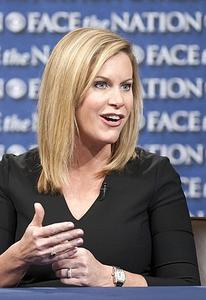
Stephanie Cutter
Hi.
Barbara A. Perry
Hi, Stephanie. I’m Barbara Perry from Charlottesville [Virginia], and my colleagues Russell Riley, also with me at UVA’s [University of Virginia’s] Miller Center, and Nancy Kassop from SUNY [State University of New York] New Paltz.
Nancy Kassop
Hi.
Cutter
Nice to meet you all. Good to see you again, Barbara.
Perry
All right. I don’t know how much of this you may have covered in the EMK [Edward M. Kennedy] process, but just to say that we know that you hail from a very historic area [laughs] in our nation’s founding and wanted to just ask you how that might have had an impact on your future career, and also just your family, and your mother, and their impact on you. Were they interested in politics?
Cutter
You mean my background like how I got involved? We’re from a town called Taunton, Massachusetts, which is a small town south of Boston—an old industrial town full of Irish immigrants and Portuguese immigrants. My grandfather was very involved politically, civically. He was the honorary captain of the fire station, honorary captain of the police, president of the bank. He was just very civically involved, so we were all—the grandkids went wherever he went and did whatever he was doing, so there wasn’t—
Perry
He was alive when you were growing up, and so you were literally following him around.
Cutter
Yes, he took all the grandkids with him wherever he went. He passed away when I was in eighth grade. But all of my young years were just going with him to people’s houses to check in, or going to a meeting, going to the firehouse. He wasn’t a trained firefighter. They just made him the honorary captain because he was just so civically engaged with the community. If you walk through Taunton now, people will still remember Daniel McNearney. So that was my first taste of it.
Then in junior high I got involved in things like mock trial and [American Legion Auxiliary] Girls State. There was a program where you could go be—I can’t remember the name of it—like student government day, where you went and shadowed somebody in government. I did it with the police chief in Raynham [Massachusetts]. I went to school in Raynham. All of this whet my appetite. Then in high school, it was the famine in—What was the country they did “We Are the World” [charity recording by USA for Africa] for?
Perry
Oh, was it Ethiopia?
Cutter
Ethiopia. Thank you. Anyway, I helped start a new organization to run money for famine relief, got involved in the World Affairs Council, and just got exposed to how activism and policy and government can deliver change. I continued that through college.
Perry
You went to Smith [College], correct?
Cutter
I went to Smith.
Perry
How did you choose Smith?
Cutter
I got a scholarship. I didn’t have a choice. [laughter] We all had to find a way to go to school for free, so my brothers went to military academies and I got a scholarship to Smith. Out of college, I moved to [Washington] D.C. Mario Cuomo was a hero of mine. I walked into his D.C. office of New York State federal [legislative] affairs and asked for a job. Got a job answering phones, moved my way up to being a speechwriter, and just went on from there.
Perry
What drew you to him?
Cutter
His ability to make sense of issues and make people think about what they wanted the country to be. He was a politician, but he didn’t speak politically. He spoke in a way that I think broke through to people who just wanted government to make sense and wanted their leaders to make sense, understanding what’s morally right and wrong, what’s at the heart of why something can’t get done, and challenging those people who may be blocking it to think about something other than themselves. You know? It was moral clarity at a time when I was young.
This was my first introduction to national politics. But it just made sense to me. I wanted him to run for President, which is why I walked in that door. Ultimately he didn’t, but it came down to the wire on the tarmac to take a plane to register for the primary in New Hampshire, but he couldn’t. The legislature blocked him in passing a budget, so he ultimately didn’t run. But yes, he was my first political hero.
Nancy Kassop
If I could ask—you probably were also drawn to him because of his great communication skills.
Cutter
Right. His ability to make it make sense and provide moral clarity.
Perry
I was going to say for people who are reading this at some point who maybe didn’t watch, as I did, his 1984 speech [“A Tale of Two Cities”] at the [Democratic National] Convention, please go and read that. And even better, listen to it because it just hits on exactly the points that you’re raising, Stephanie.
So that’s your first experience, then, as a speechwriter. Take us through that. How does one become a speechwriter and know how to express what you were hearing him express? Now you’re the writer of it. How do you take on that voice?
Cutter
I mean, I would like to say that I took on his voice, but I want to be very clear. I was a junior—you know, I was 22 years old. The things that I would write would be like going to a groundbreaking of something or the daily machinations of government, nothing of any real consequence. So I don’t want to overstate. I did other things too. Whenever he or his wife would travel to D.C., I would drive the backup car. [laughter] I handled some issues legislatively. I was there probably a year and a half, and I just dove in. It was a great first experience in government.
Perry
Then was it on to the 1992 campaign for [William J.] Bill Clinton?
Cutter
Yes, but I also started law school at Georgetown [University Law Center]. The summer before I started—let me see if the sequence is right here. I started law school in ’93, so I did advance and things like that on the campaign, and when I started law school, I worked out of a lobbying shop just doing policy research. The first summer in law school I interned at the White House on the health care task force [Task Force on National Health Care Reform] and stayed on through the fall. The health care task force dismantled.
From there I went to work in a full-time job at the Environmental Protection Agency because we lost the ’94 election. Governor Cuomo lost in ’94, and we lost the House [of Representatives] and Senate, and the Contract with America [legislative agenda] was rising up. EPA [Environmental Protection Agency] and [the Department of] Education were under attack, so I went to EPA and worked for Carol Browner, and I was there for four years, all through—went to law school at night. That was an amazing experience as well. We beat back the Contract with America, protected critical environmental programs, were a big piece of the ’96 reelect. I started as a deputy press secretary, worked my way up to press secretary, to deputy chief of staff and counselor, to the associate administrator for public affairs. From there, I went back to the White House as deputy communications director.
Perry
That covers a lot of ground, and we have, obviously, more to cover, so I don’t want to take too long. But I wondered, first of all, could we circle back to the health care task force and what you—
Russell L. Riley
Could I ask a predicate question for that?
Perry
Oh, yes, please.
Riley
You said you were doing advance work in ’92. Where were you physically located?
Cutter
In D.C.
Riley
OK. So you didn’t go to Little Rock [Arkansas].
Cutter
No. No.
Riley
Gotcha. All right, go ahead, Barbara.
Cutter
This is another case where I don’t want to overstate my role. [laughter] But all of this was opening up my eyes to everything.
Perry
Before we jump into health care, I will say, did you always know when you were in high school, in college, that you wanted to be working somewhere in the political realm, the civic space, and that a law degree would be helpful for that? Then once you started into Georgetown Law, what were you thinking law would do for your career in politics and government?
Cutter
I wanted to be a prosecutor, so that’s why I went to law school. But I went at night, so while this was all happening at night, I stayed in the Clinton administration, worked my way back to the White House. I had accepted a job at a big Boston law firm, and about a month before I was supposed to show up, I called and said, “I’m not coming,” and I stayed at the White House. [laughs]
Perry
That’s very helpful because all of us have taught students in prelaw and been prelaw advisors, and it’s just helpful to know these steps and how people make their choices.
So back to the health care task force, even if it’s at a junior level or a lower level. Obviously that’s a historic event, that task force. Mrs. [Hillary Rodham] Clinton leading the task force for health care reform but it not panning out. And then, as you say, losing the House and the Senate in ’94 in the [Newt] “Gingrich revolution,” the Contract—I say “on America”—with America. What lessons were you learning about the policy process and what ultimately would become one of your main areas, the communications process?
Cutter
At this point, I wasn’t considered a communicator. I was doing research on legal issues in health care, like malpractice and antitrust, and state-based insurance regulation, and things like that. It wasn’t until I went to EPA that I became a communicator. I mean, what was I learning? I was experiencing the workings of a White House; in the war room [Situation Room], how so much goes into positioning. There’s the legislative work. There’s the communications work. There’s the political work, policy. Seeing all that come together—and that’s basically what I do, is bring all of those things together. That’s what I’ve done in my other jobs in the government and political space. I saw that on health care.
I was also there when the crime bill [Violent Crime Control and Law Enforcement Act of 1994] passed and saw how that war room worked. I’m in touch with many of those same people today who were responsible for getting that done. To see that those kinds of things are possible when you bring all of these functions together, working and rowing in the same direction and leveraging each other, that was my first exposure to it.
Riley
Stephanie, that crime bill has a checkered legacy within the Democratic Party. Do you have observations about that?
Cutter
I know what it led to: overincarceration and lots of unfairness built into the system. When these things pass, it is a reflection of the time and place, and the country was in a very different place back then than it is today. I’ve been involved through President [Barack] Obama and my work at Precision [Strategies] on justice reform for many years to right some of those wrongs. As Senator [Edward M.] Kennedy said, “This is all part of the march of progress, [laughs] and we’re constantly trying to improve upon the system.” So we have been able to do some of that out of the crime bill, not all of it.
Riley
OK, thank you. One other question I wanted to ask was about your health care work, again, because those task forces have a kind of historical image as well. I was wondering if you had reflections on the efficacy of that process. Ira Magaziner’s reputation hinges, in some respects, on how you view those task forces. Do you have any observations about the process that went into creating the bill?
Cutter
I do, but they’re not observations that I made at the time. I just want to be clear. Because I was fresh out of school, it was hard for me to see anything at a 10,000-foot level, never mind even 5,000 feet. [laughs] But I think the learnings were absolutely applied to our work on the Affordable Care Act and what I saw Senator Kennedy do over the years—that health care is complicated. It’s one of the things in our system that impacts people most, and you have to keep it simple, and you have to break it down how it’s going to impact you.
It’s one of the reasons Senator Kennedy took a piecemeal approach, because he knew a big, comprehensive bill needed the exact right formula of politics, the country, what was going on in the health care system at the time. It wasn’t until President Obama was running did he get a promise from President Obama, then-Senator Obama: “If I endorse you and you win, I want health care to be your first legislative priority.” After lots of painful moments, that eventually got done, but it was messy. Anytime you go near that third rail of health care and politics, it’s always messy. Unless, you know, Senator Kennedy doing the piecemeal approach—whether it was malpractice, or the Patients’ Bill of Rights, or Mental Health Parity [Act of 1996], or the CHIP [Children’s Health Insurance Program] bill—where you’re slowly etching away at the problems. But until you do a big, comprehensive bill, you can’t really—even now, the system is not fixed. It’s better, but it’s not fixed.
Kassop
Can I just ask you? It sounds as if you moved through a succession of really interesting positions. How did you find the networking, in terms of finding one job to go to another, and the people you were meeting. How did that impact you?
Cutter
I was lucky in that—and this is advice that I give young people today. Don’t be looking for that next thing. Just do a really good job of what you’re doing right then and there, and people will notice. I moved over to work for Carol Browner out of the White House because of a mutual friend who knew somebody working for Carol who put my name in. I interviewed and I got it. I went back to the White House because Loretta Ucelli, who was the associate administrator for communications, education, and public affairs, went to be the communications director of the White House, and she recruited me to come be her deputy.
Out of the White House, I actually went to work at AOL [America Online] for six months and hated it. Somebody I worked with in the White House, Mary Beth Cahill, had become Senator Kennedy’s chief of staff. She was recruiting for a communications director, asked me to come meet with him, and that was it, which for me, as a Massachusetts girl, was a dream come true. I always joke, my mother never thought I accomplished anything until I worked for Senator Kennedy. [laughter]
Perry
We’re glad that you impressed her finally.
Cutter
Yes, finally.
Perry
Again, we know that you’ve interviewed for that work, so we won’t take too long with that. Before we do get to that—because you will end up in the Obama campaign working with Michelle Obama, a future First Lady—can you tell us about your thoughts, maybe looking back to Mrs. Clinton’s role in the health care reform space? And your ideas, particularly then as you become a communications expert, about how First Ladies or future First Ladies are viewed?
Cutter
My observations are not from my time working on health care because, again, I was a very junior person, but obviously I saw what happened and have seen the consequences since. It was the first time a First Lady came into office with her husband with her own established career. She was “Hillary Rodham Clinton,” not “Hillary Clinton.” She had substantial experience coming into the White House. She was a Yale Law School graduate and wanted to have a role.
She had a role in a lot of things, but the first foray was health care. Health care is hard no matter who it is, but when you’re a First Lady who is breaking new ground as a First Lady, it’s doubly hard. Layering on top of that the beginnings of what would become a right-wing media ecosystem going after the Clintons, it’s always easier to go after a spouse than it is the principal. And then layered on top of that were all the obvious things like Monica Lewinsky, and right-wing conspiracy, and all of that.
She stayed in the public eye. She ran for Senate at the end of the Clinton administration, won, was a great senator, and obviously then ran for President. She never took herself out of the public eye. How she was viewed in New York was completely different than how she was viewed nationally. She was never able to shake that baggage from the Clinton White House years. It’s unfortunate because she would have been an amazing President.
She cleared the way for women. Even though she lost by just 70,000 votes, she cleared the decks for women to run. Nikki Haley is not subject to the same treatment that Hillary Clinton had. The women that ran in 2020, whether it’s Elizabeth Warren or Amy Klobuchar, I think, didn’t have the same harnesses because Hillary Clinton had already gone through that and made the media, voters, operatives aware that this is what happens when a woman runs, and it’s called “sexism,” “discrimination.” It allowed Amy and Elizabeth and others to run without that lens. There’s always going to be some of that, and I’ve always thought the first woman President wouldn’t be a Democrat because of that. But she [Hillary Clinton], in addition to all of her other contributions to the country, did that for us.
So how does that impact Michelle Obama? That was the original question.
Perry
Right, right. But thank you, that’s very helpful looking back on Mrs. Clinton.
Cutter
I never considered myself the kind of person to work on the staff of a spouse. I hadn’t done that in any of the campaigns that I had been on or any of the work that I had done and was very resistant to it. Also, Senator Kennedy was really sick. It’s when he was first diagnosed. So I said no for a long time. Then they just asked me to come meet with her. Of course, she’s incredible. Leaving that meeting, I would have done anything for her. [laughs]
My role for her was to build, really, an infrastructure around her so that she could be who she wanted to be without being subject to that criticism. You could see what was starting to build against her. Some of it from Democratic operatives, but a lot of it from Republicans who knew they couldn’t go directly at Senator Obama on racial issues, but they could paint her as “a big, angry black woman,” and they would achieve the same goal. So I agreed to be her chief of staff.
We took her off the road for a little bit, put some plans in place. She was extremely interested in helping military families, particularly military spouses who have to hopscotch around the country, even the world, and put lives together for their families and oftentimes young kids while their spouse was deployed someplace. They were just plucked from place to place with no support system around them. She had been to, in the early primaries, a couple of bases and talked to these women and was really moved by it. So she wanted to do something on military families.
She also wanted to do something about working moms and how you create that good work-life balance and keep your kids healthy. That ultimately led to “Let’s Move!” but on the campaign she was really just telling her own story, and it registered with women everywhere. But figuring out the kinds of stories that we wanted to tell, what her role was on the campaign and not allowing anybody else to put a filter on it—we were going to tell it—was my goal between May and the Democratic [National] Convention. And then the Democratic convention, she basically had a national debut, and the rest is history. [laughs]
Riley
Stephanie, can I ask? Because you’d had experience in the Clinton White House, was there ever any approach to you about coming and working for Hillary when the Democratic nomination was still being contested?
Cutter
Yes.
Riley
What happened with that?
Cutter
I didn’t want to do it.
Riley
Do you remember roughly the time frame for the approach, just out of curiosity?
Cutter
It was before, so it would have been 2007.
Riley
OK. Can I bore down and ask you why you why you weren’t interested in doing it?
Cutter
I had sworn off doing presidential campaigns coming off of 2004. I don’t want this to reflect how I feel about Hillary, but I just didn’t think that she was electable.
Riley
OK. No, I just wanted to know.
Cutter
Coming out of 2004, I had also struck up a relationship with Senator Obama because I went to the Senate after the 2004 election in this hybrid role working for Senator Kennedy and for Senator [Harry] Reid. Barack was a freshman senator, and I was tasked with figuring out how to use him in a larger campaign to win back the Senate.
Riley
Gotcha. I don’t want to digress too much into this, but just to flesh out the picture, 2004 had ended up being a painful experience for you, not just because of the loss?
Cutter
Yes. [laughs]
Riley
Would you mind saying just a little bit about that? Because you took some arrows.
Cutter
I did. This is no reflection on Secretary [John] Kerry, but I went on that campaign without a relationship with him. I was asked by Senator Kennedy, “Will you just go get him through New Hampshire?” because he was 40 points down—and get through New Hampshire so he, as the favorite son, doesn’t have a humiliating experience. Never thought it would keep going. It was a running joke with me and Senator Kennedy. I came into that campaign when they were really down. There was a big staff changeover, so building relationships with the other senior folks there took a long time. I was basically sent on the road for a year with then-Senator Kerry. I didn’t have a strong relationship with him. There are lots of things in that campaign that were not operating the way they should. I was inexperienced in figuring out how to deal with that.
It just was not—I’m glad I did it. I wish he had won. But it was not a—I’m going to call it “fun.” You don’t do these things to have fun, but it was not a pleasant experience. And then after the campaign, Newsweek came out and torched me and Mary Beth Cahill and Teresa Heinz Kerry, which was odd given all of the men that were in charge of some pretty important things, including being the candidate. That ultimately had a backlash, not against me but just that it was so ridiculously written. After that came out, I took my few weeks to cry in my milk, and then decided that I was just going to go prove everybody wrong.
Riley
It doesn’t sound like the kind of experience you would want to live through twice, so thank you.
Cutter
I didn’t. The presidential campaigns take up your entire life. You put everything else on hold. I didn’t want to do that again. But I will say, my Obama experience couldn’t have been any more different than the 2004 experience. It was just a different campaign. People were in it for the right reasons. Nobody was jockeying for any particular position. People were just trying to do good, including the candidate himself and his wife. You definitely felt like you were part of something bigger.
Kassop
Can I ask you, did you take away any lessons about political communication from your Kerry experience?
Cutter
Yes. I mean, I didn’t think that this [laughs] would be so much about my history, that we were going to be—like, more Obama. I don’t want to be critical, but John Kerry is a lot of great things. He’s a really bad communicator, and you can’t teach somebody that. You can’t teach somebody the power of connecting. Candidates are what they are. You can tweak around the edges, put them in the right environments, do a lot around them, but ultimately, it’s the candidate.
That’s one of the reasons I didn’t want to do a presidential campaign again, and certainly not one for—I was very lucky that I had worked for Senator Kennedy and had a personal connection with him. As a tactician in the political world, being able to say that you had a connection like that with one of your bosses was both unusual—but once you have that, going to work for somebody else is just not the same.
I also learned that—you know, I had come out of the White House. This was my first presidential campaign in a very senior role. One of the things I did at the White House was try to demonstrate the President was moving the country forward despite impeachment. Having policy announcements and showing progress and impact on real people was basically my strategy, which I had adopted into the presidential campaign. But this was not the White House. It was a presidential campaign. It didn’t matter what policies we were rolling out. It mattered whether we were inspiring people to make a choice.
Then the Swift Boat [John Kerry military service controversy] drama. Did I learn something from that? I was an advocate for being really aggressive, and there were others—this is all written in so many books. [laughs] I don’t even want to get into it. We didn’t push back hard enough early. Part of that was a disagreement on the campaign. Part of that was also fog of war and the inability to remember things, and Senator Kerry not agreeing to let his Pentagon records be released. We were just fighting with both arms tied behind our back.
It was really the power of the internet that we couldn’t beat back. We eventually did and had three great debates where we reset the race. But my learning from that is, you got to speak up. When somebody says, “No, we shouldn’t hit back at that,” find a way to do what you think is right.
Kassop
Thank you.
Perry
Just before we leave the Kerry campaign, his problem with communication. First of all, did you discuss that with Senator Kennedy, who obviously was a veteran of many campaigns including presidential ones?
Cutter
Yes. He gave a lot of advice to Senator Kerry. I just think there’s a certain “it” factor, and you can’t create that.
Perry
When I think of particularly presidential or presidential candidate communications, I think of it both wholesale and retail. It just occurred to me, I took my father, a World War II veteran, to see Senator Kerry when he came to Louisville [Kentucky], our hometown, in the campaign. There was a rope line in a hangar. The World War II monument had just opened up in Washington D.C. I had visited the first day it was open and gotten my dad a World War II baseball cap, and he wore that. When Senator Kerry came to him in the line—you know, I had an old-fashioned cell phone that looked like a brick so no pictures of this. But I just remember Senator Kerry stopped and put his arm around my dad’s shoulder and they talked veteran talk, war talk. I consider that retail.
My dad was really impressed and very happy, and I was too, for him and for my candidate. Was he better at that?
Cutter
Oh, yes.
Perry
Oh, OK.
Cutter
Yes. Also, where he really felt like he could be his true self was around veterans because he had such a strong bond with his company, his platoon, his Swift Boat crewmates. They worked on every single campaign he was ever on, he ever ran in. He was able to make an instant bond with any veteran out there, so we always tried to make sure that some of those guys were traveling with him. We did those chili things at firehouses because it was always full of veterans, and the firefighters had endorsed him early. He was extremely comfortable in those situations, which was great. We tried to manufacture as many of those as possible.
I really don’t mean this to be critical of now-Secretary Kerry. Look, he ran in a crowded primary, came from behind, won Iowa, ran a great primary race. We were up against a powerful incumbent at a time of war. They had two years to get ready for that, for us to come out of the primary. We didn’t have two minutes. As soon as we came out of the primary, we got pummeled, and it took a while for us to build back from that.
But only because we were talking about the power of communications am I talking about then-Senator Kerry’s ability to communicate. Lots of things impacted that race. I think he would have been a great President. We’ve seen him be so successful on the national stage since. But we were running against an incumbent President. [Osama] bin Laden reared his head the Friday before the election, reminded everybody that we were still living in a 9/11 [September 11, 2001, terrorist attacks] world. What could have been a victory turned into a loss for us.
Perry
But even at that, a pretty narrow one.
Cutter
Yes, very.
Perry
Anything else, my colleagues, before we get to your meeting, Stephanie, of Senator Obama—your very first meeting with him? You just hinted already at your casting your lot with him pretty early on when he came into the Senate. But anything else, anyone?
Kassop
Yes, if I could just go back. I’m backtracking a bit to your time in the Clinton administration. Were you there for the Vince Foster suicide?
Cutter
That was the summer of ’93?
Perry
Correct.
Riley
Yes.
Kassop
OK, I’m not sure of the date, so yes.
Perry
Yes. Yes, I remember it well.
Cutter
No, I wasn’t.
Kassop
OK.
Perry
All right. When did you first meet Barack Obama?
Cutter
I met him at the convention in 2004. He was our keynote. Met him briefly backstage, stood behind him backstage while he was giving his remarks, and it was an incredibly unbelievable thing to watch. He obviously won, and I came back to the Senate.
We started working pretty early in 2005 on, What do we need to do to win back the Senate? I was working with Senator Reid, Senator Kennedy, and Senator [Chuck] Schumer, who was the head of the DSCC [Democratic Senatorial Campaign Committee] at the time. We put together a big policy platform. We called it “Six for ’06,” just in shorthand. There was an honest leadership plank, which was getting rid of earmarks, ethics reform, stopping the revolving door, things like that.
I thought, you know, Senator Obama had done some of that in the state legislature, in the state senate, and that he would be, as a freshman, a perfect spokesperson for that plank. Robert Gibbs and Pete Rouse were working for Senator Obama, and I knew both of them. I knew Pete Rouse when he was Senator [Tom] Daschle’s chief of staff, and Gibbs just in the aftermath of Kerry. I went to see them and talked about why this made sense for Senator Obama, and after lots of discussions, ultimately got them to agree to it, and then started working with Senator Obama on what it would mean for him to be leading this effort. That’s how I really got to know him.
Perry
What was his response when you offered this possibility to him? Obviously he took it, but was there a conversation about pros and cons?
Cutter
Not with me. I’m sure he did with Pete Rouse and Robert Gibbs, but I was not a member of his staff. There were conversations about things that he would like to see in there, which we accommodated. He also knew that I worked—I had this odd role where I was basically split between Kennedy and Reid. He and Senator Kennedy had struck up a friendship, so he knew me from that world too and that I was a Kennedy person. He tried to do what we asked him to do. There were a couple of things. Justice [John G.] Roberts [Jr.] was up for the Supreme Court, and it had been quite some time since a Supreme Court nominee had been filibustered, but a decision was made by leadership that we were going to filibuster Roberts.
We thought it was key for Senator Obama to be part of that. He ultimately was, but there was a process to get him there. There was also what is now known as the “nuclear option” that has blown up Senate rules for confirmations. Republicans were threatening the nuclear option back then. I was running the campaign to beat it back and asked Senator Obama to go to the floor to give a speech about the filibuster, about how it’s not always used for good and it was used for many years to prevent the march of progress towards equality, but that doesn’t mean we should get rid of the rule because there are times where the Senate needs to be the cooling saucer. He agreed to do that, and it was an incredibly moving speech and made a big impact. We ultimately beat the nuclear option back but had to agree to a bunch of judges, many of whom are still on the bench today.
Perry
When you were standing in the wings listening to Barack Obama in ’04 at the convention—I remember thinking, I can see the bumper sticker, Obama ’08. Did you think already at that point, This is presidential material, and did you in your own mind think of a time frame?
Cutter
I was so deep into the presidential campaign at that point—I was running the communications around the convention. I couldn’t think past [laughs] the next day. But I do remember, This is something special. I literally watched his feet dance behind the podium as he was speaking, and I had never seen anything like that, and the crowd going wild. I knew I was seeing something really special. It was one of the best things that came out of that campaign, which was putting Barack Obama on the national stage. But I didn’t—at that point, I wasn’t thinking, Oh, boy, he should run in ’08. I was trying to make it to the finish line [laughter] in ’04.
Perry
November ’04. Understood. Can you give us—before we get too much farther, that’s an unusual situation, it would seem to me. Maybe it’s not, but tell me if it is unusual, as you say, to have this split and working for Senator Kennedy, working for Senator Reid, being involved with Senator Schumer and the campaigns. Those are three powerful personalities [laughs] and three powerful leaders on the Hill [U.S. Congress]. However you would like to approach this, a little character sketch of—again, we know what you’ve covered for Senator Kennedy, but for Reid and Schumer, Schumer still being there—what are you seeing about them and their leadership on the Hill in the process realm, in the legislative realm, the policy realm, and campaigning?
Cutter
Reid was a Senate expert. He knew every lever to pull to get something done and really understood how to take care of his caucus. Schumer was still—this is 2005? When did he win, ’98? He moved up the ranks in the Senate pretty quickly. He was in charge of the DSCC, so he was always thinking about the politics of how things would play on the outside. He was really good at it. Then Senator Kennedy, you know, his entire time in Senate he was the shadow leader. If you wanted something to happen or to move something, you needed to make sure you were getting Senator Kennedy on board or he was driving it himself. At that time, he was seen as much more liberal than a lot of the people that we were electing. In ’04, wasn’t it [Jim] Webb and Obama, [Ken] Salazar? They were just considered to be more moderate. The folks that we were trying to get elected for ’06 were more moderate. The country has ebbs and flows, and oftentimes people learn the wrong lessons coming out of elections. One of the lessons coming out of ’04 was that we weren’t strong enough on security, and we were too liberal and progressive and on the wrong side of the war, all of that. Within six to eight months, that thinking had flipped on its head, but we were running in purplish states, so the kind of candidates that we were recruiting were more moderate. Each of them had a role to play, and they were all great to work for. They’re among the best of the best.
Perry
Colleagues, anything at this point, or Stephanie yourself, before we get to the ’08 campaign? I know one thing I want to ask you about is the endorsement [of Obama for President] from Senator Kennedy and Caroline Kennedy in January of ’08.
Kassop
I would just go back to your time working for Senator Reid and the other senators. Did you see any bipartisan politicking? Did you see outreach to Republicans at all?
Cutter
Yes. People treated each other differently back then. It wasn’t a flaw to work with Republicans. Certainly, in my experience with Kennedy, there was always reaching across the aisle to get things done, whether it was [John] McCain or [Orrin G.] Hatch, or [John] Boehner on the House side. [Mitch] McConnell was the leader then, right? [laughs] I’m trying to remember. No, he wasn’t. It was [William] Frist.
Perry
Yes.
Kassop
Right.
Cutter
First, it was Trent Lott, and then it was Frist, and then it was McConnell. Harry Reid had a very cordial relationship with Frist. They had an understanding of how things should work. There was a sense of decorum around it. It’s very different now where the leaders don’t even talk to each other and don’t hesitate to go after each other. But for Senator Reid in a leadership position, he wasn’t striking deals with Republicans because that just wasn’t his role. He would strike deals on rules, and what was coming to the floor, and amendments, and all of those things, but not in terms of crafting agreements.
Kassop
OK, thanks.
Cutter
Schumer, definitely not because he was in charge of the DSCC.
Perry
All right. Shall we get to early ’08? Did Senator Kennedy talk to you about his decision to endorse? And actually, as I understand it, it was both Senator Reid and Senator Kennedy encouraging their colleague, Senator Obama, to go ahead and run—that, Don’t wait any longer, and the pros and cons, mostly cons, of waiting another presidential cycle.
Cutter
Right.
Perry
Were you involved in any of those discussions with Reid or Kennedy about that and then the ultimate endorsement at American University by Senator Kennedy and his niece, Caroline, President [John F.] Kennedy’s daughter?
Cutter
I was very involved in Senator Kennedy’s decision-making around it. I knew that Senator Obama had come to ask what he should do, and Senator Kennedy had said, Your timing is only going to happen once, and it’s now. They kept tabs on each other, struck up a real friendship, very respectful.
Senator Kennedy had made clear in the early months of that race, so it would have been ’07, that he wasn’t going to endorse because he had a long relationship with the Clintons, and he was just going to stay out of it. The Clintons lobbied him really hard and continued to, even though he said he was going to stay out. Senator Daschle was the emissary for Obama, and he had a very light touch. He just kept in touch and made sure Senator Kennedy was kept up to speed.
Through the fall of ’07 going into the winter, the race really crystallized. I think a big turning point for Senator Kennedy in terms of his endorsement was watching Senator Obama on the night of the Iowa caucuses, and listening to him, and the message that he was sending to the country about unity and generational change and hope. I think it reminded him of his brothers.
That’s when we started having serious conversations about whether he should endorse. It was a very small group of people: me; [Victoria Reggie] Vicki [Kennedy]; Greg Craig, who had already come out for Obama; and [Robert] Shrum was brought in later. But there were, after Iowa, lots of phone calls from Bill Clinton. Daschle still had a very light touch. In the run-up to South Carolina, Senator Kennedy was talking to Caroline a lot, and Caroline had already made a decision, largely because of what she was hearing from her kids but also similarly struck by the night of the caucus.
I can’t remember the dates, but I remember Iowa and New Hampshire. New Hampshire is where things started to get really nasty, and Senator Kennedy was very aware of some of the dog-whistling that was going on. Was it [William] Billy Shaheen who kept saying that—God, this is really taxing my memory, [laughter] but I know you have this in the oral history for Kennedy—that Obama is living in fantasyland, and he’s just make-believe, and it’s not real, and what experience does he have?
President Clinton also engaged in that. I remember being in Nevada working the Nevada caucuses for Harry Reid and getting a phone call from Senator Kennedy about a conversation he had with President Clinton, who said—Senator Kennedy called me as soon as he got off the phone, and he was relaying it to me. It was, Who does Barack Obama think he is? He just got into town, put down his bags, got us a cup of coffee, and now he wants to be President? That’s not verbatim, but it was something like that. I know it’s in the oral history, and I think it’s in mine. Senator Kennedy was relaying that to me, and I just said, “Well, how does that strike you?” And he said, “I’ve heard this language before, and this is what southern Democrats did through the civil rights movement. This is dog-whistling.”
That was a real turning point after that. Then we got home from the Nevada caucus. We were meeting daily to figure out what to do and when to do it. I can’t remember the dates between Nevada and South Carolina, but I do remember South Carolina was on a Saturday or Sunday, and Caroline’s op-ed came out, which sealed it for Obama. Then right after South Carolina, before Super Tuesday [largest presidential primary election day], we did this speech at AU [American University] and told the campaign we were going to do it. We picked American University because of the symbolism with President Kennedy.
We had to fill the space, try to keep everything as much of a secret as possible because Senator Kennedy didn’t want the Clintons to be lobbying him. The night before—I think it was the night before—he called the Clintons and told them what he was going to do. It leaked pretty quickly, and a lot of the RFKs [supporters of Robert F. Kennedy Jr.] who had been for Hillary started calling. We were basically up all night working on the speech. Then the next day was the endorsement, and it was basically the passing of the torch and giving everybody permission to be for the next generation. That was basically it.
Riley
Can I ask one question about this? You had indicated, and I picked this up elsewhere, that Senator Kennedy’s, You got one shot, and this is it, the time is now—what was the underlying rationale that now is the time?
Cutter
It was an open race. I think Senator Kennedy thought, The longer you stay in the Senate, the more votes you have, which doesn’t always help a candidate, and that Obama represented something new and fresh and generational, and, Don’t become a creature of this place. You’ve got momentum behind you. It’s an open race. Don’t miss this shot.
Perry
That’s toward the end of January, and then you join as chief of staff to Michelle Obama. I have that as in April. Are we missing anything in terms of the timeline in between for what you’re doing?
Cutter
Senator Kennedy hit the road for Obama, and I just started informally advising the campaign. That’s when the race speech [“A More Perfect Union”] happened. That’s when the “proud of my country” stuff [Michelle Obama’s statement before 2008 Wisconsin primary] really picked up, and the cover of the New Yorker [July 14, 2008]. It’s just hard to remember the sequence of things.
The next big thing I remember happening is Senator Kennedy getting sick and that taking up everything. But as he was leaving the hospital, I got the call from Anita Dunn about this role for Michelle, and I said, “No, Senator Kennedy is sick. I need to see through this.” Ultimately, I talked about it with Senator Kennedy and Vicki and got agreement. You know, just talked it through, and they encouraged me to take it seriously. Then I agreed to go meet Michelle. Like I said, that was it.
Perry
So tell us a little—you had mentioned that, obviously, she was very impressive. Can you dig down a little bit? What about her impressed you in that meeting, so much to the point where you had said earlier that you really never wanted—had not wanted to be on the staff of a politician’s spouse. And now that I’m putting all this together, I can see from ’04 how Teresa Heinz Kerry was treated, how Elizabeth Edwards was treated in ’04, and you certainly had seen it, I’m sure, on the Hill as well. Something had to change, and you said it was because of your meeting with her. Give us your initial impressions.
Cutter
I have said this ever since, that I just related to her. She’s a little bit older than me, but we’re basically the same generation. We just hit it off personally before we talked about anything about the job or work. The more I dug into what was happening to her, but also how she was such an asset for the campaign, really credited with the Iowa victory. She spent a tremendous amount of time doing small living-room events, doing caucus events, and she earned the reputation as “the closer.” There was something about her that was just as unique as her husband.
But she also thought the same way I did, very methodical and organized. If you want x, y, z to happen, then you’ve got to do a, b, c, d, and we need to do that in a methodical, strategic way. I appreciated that about her. I’ve also said this before. I think she is, without wanting to be, the better politician of the two of them, and she’s never wanted to be a politician and never will be a politician. But she understood how people perceived things and lived things in a way that nobody else did.
I just saw a different kind of opportunity where working for a spouse, to me, was always like, “Oh, we’ve got to enter that recipe into Good Housekeeping,” and stuff like that, and that was not my deal. With her, it was something different. It was beating back what was happening to her but also presenting this incredible person to the country without a filter on it. There was no bigger asset than Michelle for Barack Obama. She humanized him. She brought him down from the clouds, made him real. There were lots of public complaints about her talking about him leaving his socks and his underwear on the floor, but that’s how people live their lives and she knew that. For the first time, I think, obviously in my memory, she became very quickly a cultural icon.
But there had to be a sequencing of that to create some cushion for her, and inoculation. That’s why we did the military spouses and found ways to really humanize her. She was very anxious about delving into any policy issues on that campaign because she saw what happened to Hillary. She talked about what her husband would do, but also lifting up some of the experience of military spouses or working moms and speaking about it from her own experience. Anyway, I’m going like this, [gestures in a circle] but after that meeting, I saw an opportunity to really build something.
Perry
Do you think your common law background—that sounds like a term of art, “common law,” but the fact that you both shared a law background and a law degree—gave you that sense of careful planning and strategic planning, “to get to x, y, and z, you have to do a, b, and c,” or that just happened to be your bent of minds? Both of you shared that?
Cutter
It could be. I also just think we think similarly. [laughter]
Perry
That makes sense. Back to my retail-wholesale, you’re taking her from the retail politician—you’re saying she was really a good, solid politician in the Iowa caucuses, in people’s living rooms—and you’re having to translate that to the wholesale, going state to state and then nationwide. I guess that leads us to the Democratic Convention and her speech in August of ’08 and how to project her to people who may be seeing her for the first time on the national stage.
Cutter
A big part of why I was brought on was because she was such a valuable asset, and it could have gone either way. She could have become a liability if whoever the opposition was that was doing it—Republican operatives; at the end of the primary, I think there were some Democratic operatives doing it; the right-wing ecosystem; there were racial motivations involved. If they were successful in painting her as an angry black woman, then that would have been a liability, and she knew that. She was wounded at the tail end of that primary because she saw what was happening to her.
This was a woman who never wanted the national spotlight, who never wanted to be a public figure, was just raising her daughters. She had a great job at the University of Chicago [Medical Center] hospital, liked what she was doing, had a great work-life balance because she created that. She was plucked out of anonymity to become this spouse of a potentially future President, and she had never had any infrastructure around her. The campaign really didn’t build infrastructure around her, so nobody told her what she should be doing. She felt like she was hung out there, so she retreated. That’s when I was brought in to show her how we can strategically build a narrative around her that would inoculate her from these kinds of attacks and create our own filter so that somebody else is not interpreting or trying to paint her in a certain way.
The convention—we were pretty far into the military-spouse thing at that point. She did a bunch of stuff on the ground at the convention with military families and saw the opportunity of her speech as a way to tell her story and her story with Obama. The film that we did to introduce her, we had her—everybody knows that she has such a strong bond with her mom, with both of her parents. Her mom narrated the video to tell Michelle’s story—there wasn’t a dry eye in the house—about this young woman who worked hard to get to where she was, never took anything for granted, and had a great older brother and they were thick as thieves, and how she met Barack, and her role as a mother. It was just incredible.
Then Craig [Robinson], her brother, came out and really, between Craig and the video that her mom narrated, it really humanized her. Then she was able to tell her story without anybody else casting a shadow over it. Talking about her father, who was diagnosed with MS [multiple sclerosis] but never missed a day of work until the day he died. Her mother creating a home and sense of values of hard work. It worked because it was all true. [laughter] But nobody had ever strung it together.
Perry
Is that you, Stephanie, putting all those pieces together and going to Michelle Obama and saying, It would be great if your mom could narrate this video and have your brother introduce you? And were you having to coordinate that with Senator Obama’s communications team?
Cutter
Yes. Really with [David] Plouffe and [David] Axe [Axelrod]. When I took the job, I had the title of Michelle’s chief of staff but also senior advisor to Senator Obama. So I sat in on all of the strategy meetings and had a good understanding of focus groups, and what registered, and where the vulnerabilities were for both him and her. They’re all well known now. It was Barack Hussein Obama. This was a first for the country. There was a very careful threading of the needle of positioning for Barack where he is, representing the historic nature of his candidacy but also not being defined by it. The same needed to be true for her, both in terms of humanizing him but also of herself, because we are not a postracial society yet and definitely were not back in ’08.
We had to think through how she was being positioned in a way where she wasn’t being defined solely by the color of her skin. Listening to her talk about her family and knowing her family, there was just an obvious story to tell. Mark Putnam did her video and did a great job. Then in terms of Craig and her speech, there was a lot of work and a process on that, and Axe weighed in and Plouffe weighed in, so we were not off operating on our own.
Perry
Stephanie, did you write the first draft?
Cutter
No, Sarah Hurwitz was her speechwriter at the time, who I had to convince to work for her because she didn’t want to work for a spouse. Sarah never left her after that. Anyway, that’s how her speech came together. Then lots of planning around that, of interviews to bolster it, validators that can help tell her story, just making sure that we were saturating everything possible coming out of the convention so that the story was set. And coming out of the convention, it was set.
From there, she got some of the biggest crowds a spouse has ever gotten. There wasn’t a battleground state she couldn’t go to and draw a big crowd. She also did lots of national interviews on—whether it was The View, or Kelly Ripa, or daytime TV, Ellen, where she could have fun and people could see this woman who could be your neighbor, your sister, your girlfriend, your coworker. She was just very relatable and really made America see that Barack and Michelle Obama were just like them.
Riley
I wanted to ask you a question about that because I’m wondering, was there anything specific or idiosyncratic about race that you had to educate yourself about coming into this role, and how did you go about doing that?
Cutter
Well, I would like to say I went about it methodically, but I didn’t [laughter] because we just got thrown in the frying pan. I didn’t grow up in a very mixed-race community. It was very white, and it was basically Irish and Portuguese as I said, and I was obviously just aware through my work and life experiences and things like that.
But I didn’t—here’s a great example. The Washington Post had been trying to write a story about where Michelle came from. Who were her ancestors? How did she get to Chicago [Illinois]? I came on in April. The Post had been trying to write that for over a year, and nobody on the campaign wanted to talk to Michelle about it. On the Senator Obama side of the equation, his staff were intimidated by her and never wanted to sit down and have what was a very tough conversation. I came on board. I knew the reporter who wanted to do it, Shailagh Murray, who was and is a good friend of mine. I saw this as an opportunity to provide more humanity around it. And also, if we didn’t tell it, somebody was going to.
I hired a private investigator to go to South Carolina, which is where her family originated, to go through old records, property records, school records, slave records, and we were able to trace back to—I can’t remember the names—but to her great-great-great-grandfather, who was the first freedman. He wasn’t educated, but he worked and, as a free person, bought property. It’s that buying of property that allowed generationally for that family to progress.
That was a huge learning experience for me, but it was also a learning experience in talking to her about it and asking a really dumb question one day. Like, “Where do you come from?” And she said, “Stephanie, where do you think I come from?” I’m like, Yeah, that’s a good point. I got her permission to do this research. I think, in the end, she was incredibly moved by it. She had heard stories and her mother and her grandparents talking about it, but nobody had ever laid it out.
At the same time, Shailagh was doing her own research in South Carolina, and we compared notes. Shailagh wrote an amazing story that didn’t get nearly the attention it deserved but was a story of an African American family whose ancestors were slaves; who, because of decisions of each generation, were able to build this life; and how Michelle ended up in Chicago with the Great Migration. That was all new to me. I was pretty ignorant about it.
Then other things, little things, like how black women do their hair, and building that into the schedule, and knowing not to put her in certain situations, weather, and things like that—the kinds of things that she had to think about that I never had to think about. There’s 20,000 layers in between those two things, from somebody’s ancestry traced back to slavery to what you need to think about with your hair. There’s tons of layers in between there. But it was a great learning experience for me as part of that.
Riley
Were there—
Perry
Related—oh, go ahead, Russell.
Riley
I was just going to ask if there were any members of the staff who stumbled in this process, people who didn’t manage to adjust to a culturally complicated environment.
Cutter
No, not that I can think of. I mean, there were things like one of the black sororities—and I am not going to be able to remember the name—but they wanted to make her an honorary member. I didn’t know the black sorority system, and neither did the former chief of staff—I can’t remember what her title became—who had been dealing with this issue. We made a decision to accept it, and Michelle went crazy. [laughs] She said, “You can’t do that. That’s not how it works. We’re in the middle of a presidential race. I can’t pick a side.” These sororities are incredibly competitive and powerful. Was that a stumble? We were able to figure it out. But for two women who had no experience, making that decision was probably not the right thing to do.
Kassop
Did you notice development and growth and a greater level of comfort in Michelle as she grew into the role of being a spouse of a candidate?
Cutter
I’m sorry, I got distracted by an email that just came in. Did I see her grow in the role?
Perry
I was going to say, Stephanie, do you want to take a break? Because we’re halfway through the session. Do you want to check your email or take a break?
Cutter
Do you mind if I just take 10 minutes and clear things out?
Perry
Not at all. And we’ll come back, Nancy, to your question.
Kassop
Yes, we can pick up with that. Thank you.
[BREAK]
Perry
All right. To your question Stephanie was just answering when we took a break?
Kassop
OK. My question, just to repeat, was, what kind of growth or development did you see in Michelle in her unusual role as being the spouse of a historic presidential candidate?
Cutter
I think her confidence grew, and she became more sure of herself. That took time. Even when she entered the White House, everything she did was extremely well planned out and thought through, and she was always overprepared because that’s how she did things. Her confidence grew over time and, certainly, over the course of eight years, she really made her mark.
Perry
There’s also another woman in this race on the opposite side, Sarah Palin, chosen as the vice-presidential candidate. I’m wondering how that fits into this narrative and discussion. There were all sorts of comments made, I remember, in addition to her not knowing facts as some thought she should, what she was wearing, and how she presented herself. You’ve mentioned hairstyles and hair treatments and things that oftentimes men don’t have to worry about, but I’m also thinking of fashion. I remember, once Mrs. Obama got to the White House, issues about her being photographed in sleeveless attire [laughs] that I thought she looked really great in. Are you having to think about those things as well and how this relates to Sarah Palin on the ticket officially on the other side?
Cutter
We never thought about how Sarah Palin impacted Michelle. We talked about it as part of a whole campaignwide situation in not letting her addition to the ticket eat away at our share of the women’s vote. Thankfully, she took care of that for us and imploded. But it was never part of the conversation around Michelle. It was things like—I remember the vice-presidential debate between [Joseph R.] Biden [Jr.] and Palin, sending me to go lead the “spin room,” putting a woman out there. It was that kind of thing. It didn’t rise to the Michelle level.
Perry
While I’m thinking of it, since you mentioned the vice-presidential candidate on your side, had you known Senator Biden working on the Hill? And what were your thoughts about him and the choice of him as the running mate?
Cutter
He was a good friend of Senator Kennedy’s, and that’s how I knew him. I always loved him. Still do. He was like home to me because he’s the same kind of politician that Senator Kennedy was. Senator Kennedy had been in the Senate longer, but Kennedy and Biden were always working together on issues, or just being of Irish descent was a big deal. So I was glad that he was chosen and helped staff his team.
Kassop
Were you in on any of the conversations about the vice-presidential choice?
Cutter
I was, but not in the final selection. It was really about developing plans, of looking at the research, at potential vulnerabilities, developing plans. Should it be—I can’t even remember who was in the mix back then. [laughter]
Kassop
[Janet] Napolitano, I think, was one of them.
Cutter
I don’t remember her being a vice-presidential pick. Anyway, I had done the VP [vice president] rollout in ’04, and so just figuring out how you would roll out certain people and the issues that you needed to take care of quickly, what to lift up, what to inoculate against, things like that, how you tell the story of the pick. But not until just the eve of the actual selection did I know it was Biden.
Perry
The debates. You mentioned being put out in the spin room for the vice-presidential debate. Thoughts about the three presidential debates and, of course, what is happening in the economy in the midst of the postconvention—certainly in September—the fall of the stock market [2007–8], being on the cliff of having our entire financial system lock up and freeze up, and going into the possibility of another Great, not just Recession but Depression; McCain’s choice to, at one point, say he wasn’t going to show up for one of the debates; the summit meeting that he called for at the White House. Any of those things that you’re involved in or want to comment on?
Cutter
I was involved in them in that I was in the meetings where we were discussing it and what to do. Those decisions were very much led by Barack, about, We’re going to go to that meeting. We’re going to go to the Hill. We’re going to rise above the discussion on this. I remember when McCain announced that he was suspending his campaign to go back to Washington. We quickly met and decided that we were not going to suspend the campaign, but we would go back to Washington. And we would debate because these were critical issues that the American people needed to know where we stood on them.
I remember being on lots of briefing calls for then-Senator Obama with an economic team including [Lawrence H.] Larry Summers and [Timothy F.] Tim Geithner. Tim Geithner was a Fed [Federal Reserve] official at the time, so less of him, but Larry ran these briefings so that—if you remember, Senator Obama had a Senate staff remaining. I remember the mistakes that McCain would make, and we just made sure that Senator Obama was always fully briefed and careful with what he said because the economy was teetering. I can’t remember more than that on the campaign, just that it was—we were campaigning in the midst of this crisis brewing, and McCain mishandling it, basically.
Kassop
I think I recall reading, too, that when President Bush called both of the candidates to the White House—I guess October of 2008—and explained just the severity of the crisis, that Obama came back and was just, to the degree that he could be, ashen at the idea that it was far worse than anybody had ever expected. Basically, Bush was saying, These are the plans we’ve put into place, and if you’re smart, you will continue them because we really literally are on the edge of a precipice. Do you recall Obama’s response or reaction when he returned after that meeting?
Cutter
I don’t.
Kassop
You don’t. OK.
Cutter
I mean, I remember after the election, reality slapping us all in the face. But I can’t remember exactly what he did or said coming out of the White House meeting.
Kassop
Then how did that factor into his efforts to want to get health care moving and to try to get his legislative agenda going at the same time that he had to try to keep the economy or try to get it back up in shape?
Cutter
It swallowed up a lot of the oxygen the early months of the administration. But we were doing economic meetings with the Bush people before he was inaugurated.
Perry
Was there also a line, Stephanie, that the campaign felt that they had to draw so that if he won, he wasn’t going to be saddled with decisions that were made by the previous President but that the soon-to-be-previous President and his administration were asking already for help, on the Hill, for example?
Cutter
I don’t remember them asking him that before the election. It definitely happened after the election. We were careful not to say, Yes, we approve of that, but to just be made aware of it. That’s when Bank of America was bailed out, and they were forced to buy Countrywide [Financial]. It’s when a lot of the money moved to the auto [automotive] industry. Also, I can’t remember when TARP [Troubled Asset Relief Program] passed. I remember it failing during the campaign in the fall. But just the framework of TARP and how it was interpreted, a lot of that was done before we took office. They would just brief us on it. It did tie our hands significantly. We started working on a financial stability plan immediately after being elected and also started working on a stimulus. Rahm [Emanuel] was still in the [U.S.] House [of Representatives]. He was named chief of staff. Phil—I can’t think of his last name.
Kassop
Schiliro?
Cutter
Schiliro was brought on board as head of leg [legislative] affairs, all during the transition. We were already negotiating a stimulus in the transition and also developing a financial stability plan of how to use TARP money to really stabilize—rather than just bailing out, but really stabilizing—the under[lying] elements of what was making the system unstable, like the toxic assets and the ability to lend. Yes, so lots of meetings with the Bush people, who were amazing to work with. The relationship was very strong. But we were hesitant to be making the decisions before he was inaugurated.
Perry
Russell, you had a question or point before.
Riley
I actually had one that predates where we are in the timeline. This is that I’m wondering, particularly when you’re working with Mrs. Obama in the campaign, the extent to which the President’s own personal security is a concern of hers, and particularly because you have come out of the Kennedy networks, where this is prominent American history. If you have any observations about—did she have anxiety about her husband’s safety? How did it manifest itself? Did you have discussions with your friends in the Kennedy networks about how this resolves itself?
Cutter
I didn’t have discussions with people in the Kennedy network, but she was extremely concerned. Remember the—I don’t know if this was at a Palin event, but somebody had a figure hung by a noose at a rally. She was extremely upset about that. She also knew what the threat level was because we were all made aware of the threat level, and it was extremely high. She didn’t worry about it for herself, but she worried about her husband. We had an amazing head of scheduling and advance, Alyssa Mastromonaco, who had done this before for Kerry and worked very closely with the Secret Service to make sure that protections were put in place. When he was doing big rallies, there was protective glass and sharpshooters and certain angles cut off and things like that. There was a big shift in the fall on security.
Perry
Did she speak to you about her concerns of the impact of the campaign and, maybe going forward, about the impact on the children?
Cutter
Absolutely. She wanted to give them as normal of a childhood as possible. I learned a lot of my lessons of motherhood from watching her. She was pretty strict with those girls. They had the same rules that they had before their father became this huge national figure: same bedtimes, schoolwork, and their manners. She was very determined to raise them in a normal fashion and that their schedules wouldn’t be interrupted. They always went to school. They never missed school, even on a big primary night or a big event. She kept them out of the spotlight except for big moments like the convention, or election night, or Fourth of July, which was Malia’s [Obama] birthday I believe. But she also kept them away from the media. She was very protective of all of that.
Perry
Can we speak about election night and your experience?
Cutter
Election night? Yes.
Perry
Where were you, and what did you feel?
Cutter
I was in Chicago, and I sat in a satellite chair all day and did TV interviews. So did Michelle. I told her that night that I thought I would be of more use doing something else for the administration than being her chief of staff, that she would move into this role in the White House where my skill sets weren’t really needed, and she agreed. But I sat in a satellite chair all day. Went down with the senior staff to the event. The crowd was unbelievable. It was very emotional for everybody. That night, it was a highlight of my career, of my life. But just seeing the national impact of it was incredible.
The next morning I was announced as the transition spokesperson, and I wasn’t made aware of it [laughter] until it was announced. My life just—I had to turn and start doing that, so I didn’t really have much time to reflect on things because we had to hit the ground running. I quickly moved back to D.C., and we showed up at the transition office. I didn’t have much time to sit back and collect my thoughts on it.
Perry
Well, it must have been amazing. I did want to ask the difference between ’04 and ’08. Did you have a time in the fall before election night where, for your mind, you thought, We’ve got this, or are you superstitious and don’t ever want to go there?
Cutter
I’m always superstitious and never want to believe that we’ve got it in the bag. It was clear looking at the numbers, but I was told that we were going to win in ’04 and I never believed it. Never believed it. And we didn’t. It just never felt right—2008 felt different. I was superstitious and never wanted to—some people would start talking about what jobs they wanted, and I never wanted to engage in any of that because I thought it would jinx the entire thing. When he was running for reelection, all the numbers said that we were going to win. Even on election night, until the race was called, I was doing interviews and working it because I didn’t think that we should let up until the last minute, until we were done.
Perry
Take us through the transition then.
Cutter
Well, the transition was like drinking out of a fire hose because you start operating like a government. The press are hounding you about who’s going to be what, and you’re trying to curtail leaks and correct misinformation. Also, you’ve got a stimulus being debated in the House. You’ve got an economy collapsing. We’re trying to develop this financial stability plan.
I was the spokesperson, but I was also put on the economic team because so much of what was happening at that point had to do with the economy. I remember the President announcing—was it called PRAB, the President’s Regulatory Advisory Board? Or it was an economic advisory board. The name changed when we took office [President’s Management Advisory Board]. But it was a group of CEOs [chief executive officers] and economists and labor leaders that he would meet with fairly often and was the sounding board of what a new White House should be doing to not just curtail the crisis but help the American people recover.
So we did that. I started doing daily briefings. Gibbs was announced as press secretary, and he would do some of those briefings.
Perry
You were based in D.C. at this time, but the President is meeting, for example, with those advisors and interviewing potential Cabinet members and senior staff in Chicago?
Cutter
Largely out of Chicago, yes.
Perry
So Pete Rouse, John Podesta, and Valerie Jarrett are the three leaders, right, of the transition team. You knew Pete from the Hill. Had you worked with John Podesta or Valerie Jarrett, or maybe knowing Valerie through Mrs. Obama?
Cutter
I got to know Valerie through my work with Mrs. Obama. John Podesta was the chief of staff at the White House when I was at the White House, so I knew all of them very well.
Perry
We haven’t mentioned Valerie Jarrett, and, obviously, such a close friend of and advisor to the President and the First Lady. Can you tell us about her?
Cutter
Valerie was like the happy warrior but also the truth teller to Barack and Michelle. She was very much a comfort to Michelle in her decision-making and just being a conduit to the senior leadership of the campaign. Before I started, Valerie really was the only conduit, and then when I started, I was part of the leadership of the campaign but also her chief of staff, so that helped. But she was and still is their closest, most trusted advisor and friend and had their backs. Michelle’s team worked very closely with Valerie.
Perry
John, as you say, has a lot of Washington experience, and people would call Pete Rouse the “101st senator” going back to the 1970s in his work on the Hill. How does Valerie be an advisor to two people who don’t have very much experience in Washington, and I’m thinking she didn’t either, really, did she?
Cutter
She didn’t. She didn’t have any. But she was making sure the right people were put in roles and that what was being created was still staying true to who the Obamas were. Honestly, I can’t remember how things divided up, but for the most part—Rahm was named chief of staff very quickly. I was still in Chicago when that announcement went out. He took over the building of the agenda and policy and things like that while Pete and John and Valerie worked on the staffing and the Cabinet. A lot of lists were already developed. And John, he already created CAP, Center for American Progress, which was basically a shadow White House during the Bush years for Democrats. He had everything ready and set up for whoever was going to walk in and take over. A lot of the work of a transition is the staffing of an administration. A whole confirmation strategy had to be built, and Pete was a big part of that. After we got to mid-December, there were daily announcements on Cabinet and staff and things like that.
Kassop
Could you speak about the interaction with the Bush transition people? [Joshua] Josh Bolten was the head of that. That particular transition from Bush to Obama has the reputation as being one of the smoothest—
Cutter
It was.
Kassop
—and most effective.
Cutter
Yes. Right at the beginning, Dan Bartlett called me and said, “Let me know when you want to come in.” At that point, roles weren’t set for the White House for us. Eventually, Gibbs was named press secretary and a woman named Ellen Moran was named communications director, which left me out. [laughs] It all worked out. But I had done the transition after Bush was elected in the White House, so I had called Dan. It was role reversal. But they were extremely accommodating, whether it was staff charts, the systems that they had built, pros and cons of them, reporters, how the briefing room works, all of that. They were just very open and wanting it to be as smooth as possible, which was great.
Perry
One nomination that didn’t quite work at the time was John [O.] Brennan for CIA [Central Intelligence Agency] director. Any thoughts about that? Since you mentioned Ellen Moran, do you want to tie that a little bit to perhaps what you hoped to do or why that didn’t work for you? She did not stay very long. Why was she selected?
Cutter
I don’t know. You need to ask somebody else that. [laughs]
Perry
John Brennan—how to deal with that when, again, it all worked out for him, I think, in the administration over time. But he had to withdraw his name from consideration for CIA director. Dealing with that as a transition team and communications—it might seem like a misstep to those on the outside, so how do you deal with that?
Cutter
I don’t remember. Did he have to withdraw because of torture?
Kassop
Yes.
Cutter
Yes. To be very frank, that wasn’t one of the bigger moments for me. I remember when Daschle had to pull out, and that was a big deal because of the role he had played for the President-elect and his stature.
Perry
Brennan ended up in the White House, so it all worked out for him. And then he ended up in the second term as director of CIA, so all went well. Let’s switch to the Daschle situation.
Cutter
The people I remember pulling out were Daschle—[Bill] Richardson was never officially offered something, but it was made clear to him because of vetting issues, he wasn’t going to be selected, so he pulled his name out, and we had to deal with that. Who else was nominated and had to pull out?
Perry
I don’t have anyone else listed.
Cutter
Daschle was the biggest.
Perry
That’s right. That garnered the most attention.
Cutter
He was going to play this dual role of HHS [Department of Health and Human Services] secretary but also running health care in the White House. It was a big blow when he had to pull out.
Perry
Correct me if I’m wrong, but it was over what was considered some misuse, I think, of campaign funds for—
Cutter
No, it was—he took a car and driver and never paid taxes on it.
Perry
That’s it, yes. I knew it had something to do with a chauffeur and car.
Cutter
This was back in the days when those things mattered—I wish we were still in those days where that was somebody’s worst offense. [laughter] The Hillary Clinton announcement as secretary of state was a big deal.
Perry
What did you make of that, having had our discussion about your time in the administration and then choosing not to support her in ’08? What did you make of it?
Cutter
That these were two people who were very comfortable with being around powerful people. They were comfortable in their own skin and knew that they could make it work. Obviously she was qualified. President-elect Obama was very intent on creating that “team of rivals” and not a group of sycophants, and he got it. She was a great secretary of state and held her own. Eventually, in the White House, I saw her in Cabinet meetings where she was just terrific.
Perry
How so? Describe how she was terrific.
Cutter
She just knew her stuff, whether—I’m trying to think of a subject to point to. If there was a heated debate over an issue, she just knew her stuff and knew how to be forceful enough. She also knew what her lane was. You know? She could have had any of those jobs sitting around that table, but she didn’t stick her nose into a discussion around agriculture [laughter] or housing because she knew that wasn’t her lane. She stuck to her lane. She was just great to watch.
She also was really supportive of women. In 2010 after the election, when [William M.] Bill Daley was coming in, the president was announcing his new team and we were in the Cabinet Room. It had been publicly announced, but he was announcing us to the Cabinet. It was Jay Carney as press secretary, Dan Pfeiffer as communications director. I was in a new role called “deputy senior advisor.” He introduced everybody, and when he got to me—I was the only woman—he said, “And of course you know Stephanie Cutter. She takes no prisoners.” I was the only one that was described. Everybody else was just by name and position, and I was described. Hillary swung around in her chair [laughs] because I was sitting behind her, and she looked at me and she just shook her head like, I can’t believe he just did that.
So little moments like that, you really noticed. Anyway, I don’t know how we got here.
Perry
I do want to circle back to Inauguration Day, but since you’re on this point—there are some stories, if you go back into the press at that time, of some women describing the kinds of things that women will often say they see. I have not seen this at the Miller Center, so I just want to say that, and thanks to Russell for his support and leadership and my other male colleagues there. But women will often talk about meetings, and certainly in Cabinet meetings or senior staff meetings, where a woman will say something and it’s ignored, and then a man will say it and people say, “Oh, what a great idea.” There are stories like that about the early years of the Obama administration.
My question is, did you see that, other than this example that you just gave, from the President himself? Did you see it? Did you hear about it? And there’s even in the record that, I think it was Valerie who went to him to say that there were concerns among women at the senior levels, and that he organized a dinner for them to talk about it.
Cutter
Yes. That’s all true. I was not at that dinner. At that time, I think I was either at [Department of the] Treasury or up in Massachusetts for Senator Kennedy. But yes, I know that dinner happened. It was a constant issue. It wasn’t the first time I had seen this. The campaign was like that, Capitol Hill was like that, the previous White House was like that. It was just very “bro-ey.” The President had a very—I say this with affection, but he had a very bro-ey way about him that Valerie would point out to him or Michelle would point out to him.
But then the people he surrounded himself with, Gibbs and Axe and Rahm, were all great guys and very good at their jobs. I had a good working relationship with them because I didn’t care. I wasn’t new to that scene. If they talked over me or repeated something that I had said that hadn’t been remarked on, I would just call it out. It would be a joke. That stuff, they didn’t do it intentionally. Once you pointed it out to them, they were more cognizant of it.
There were certain periods where it was worse than others, and I’m not going to go through those periods because I don’t want to speak—my intent of doing this is not to speak badly about anybody. Everybody served the President extremely well.
There was always an early-morning meeting in the chief of staff’s office for the seniormost staff, and the only women were me, [Kathryn] Kathy Ruemmler, and Alyssa and Valerie. It was always around communications. I would say something, and there would be silence. Then a guy would say something that basically said the same thing I said, and everybody would be like, “Yeah, right, yeah, we should do that.” So Kathy, Alyssa, and I developed a little trick to say, “Yes, that’s what Stephanie just said,” or, “Kathy just said that,” to speak up as soon as Alyssa or Kathy or I spoke to say, “I agree with you,” or something to mark the moment that one of us had just said that. We eventually told them about it. The more you called attention to it the less it would happen.
It’s all part of that “march of progress” like Senator Kennedy talked about.
Kassop
When you were talking about the bro-ey nature of Obama, I think one of the people, and I guess one of the first few appointments, was Attorney General [Eric H.] Holder [Jr.]. There’s been a very close relationship between the two of them. Can you talk a little bit about that?
Cutter
I know Eric, but I didn’t spend a lot of time with the two of them together. I don’t consider Eric Holder to be bro-ey. [laughter] That’s not the vibe I get from him.
Perry
Can I get a description of that, Stephanie? Don’t mean to talk over you. Let us hope someday men and women and those who aren’t even considering themselves binary are reading this and they think, I wonder what “bro-ey” means? I wonder what “bro-ey” meant back then in the old days? How would you describe it?
Cutter
Kind of clubby, you know? Like they just walked off the basketball court together. Honestly, I didn’t care about it. It’s not that I didn’t want to be his friend, but I wasn’t in there to be the President’s friend. That’s where a lot of this stemmed from, because women—except for Susan Rice—weren’t invited out to play basketball. I was perfectly fine with that. I didn’t want to play basketball. I didn’t want to be spending my free time with him because you had so little of it.
I don’t want to overemphasize this at all. It was a fine experience. It was just as good as my previous White House experiences. We were in the middle of multiple crises. We got a lot done. It wasn’t always clear that we would be able to get it done, so there were lots of harrowing moments. These people were the best at what they did.
Perry
Let’s get to that.
Cutter
Whether somebody talked over you was just not high on my list.
Perry
Yes. Inauguration Day.
Cutter
Again, obviously, amazing moment. Mine was a couple of things. Secretary Geithner’s hearing was the next morning, and it was going to be a rough hearing, so I spent a lot of Inauguration Day working. But also, if you remember, at the luncheon Senator Kennedy had a [grand] mal seizure, so I went to the hospital. After all of that, I went to a couple of balls but my head was not in that space. I didn’t go to the White House after the balls because I never—I wasn’t in the mood after seeing Senator Kennedy but also knowing that I had to be managing this hearing the next morning. I’m not all [laughs] glowing and marking the moment of that inauguration, unfortunately.
Kassop
Were you in on the terrorist scare?
Cutter
No, not until the week after. We had a dinner, Rahm, Axe, me—I can’t remember who else. Rahm told us about it. Rahm and Axe were in on it, and Rahm told us about it. It was shocking.
Kassop
Hillary was in on it as well.
Cutter
Yes, yes.
Perry
What was it like to manage, the next day, the Geithner hearing?
Cutter
If you remember correctly, he had been a public servant his entire career, yet people thought he was a Goldman [Sachs] executive. [laughs] He made one little mistake on his taxes one year because he used TurboTax when he was a consultant to the World Bank. You would have thought he had run over somebody’s dog or something, the way people were acting. He just took it in and weathered through it and was voted on. [laughs] I told the White House that it’s tradition for the vice president to come over and swear in the treasury secretary. It wasn’t, but I wanted something to honor this poor man who had just been through hell over a mistake on TurboTax in the middle of an economic crisis. He was voted on and sworn in the next day.
Then we hit the ground running. Most of those early months I remember the Senate not confirming any Treasury officials. It was me, and Mark [A.] Patterson, and Gene Sperling; and [Lewis A.] Lee Sachs, who was an investment banker who came and helped create the financial stability plan; and then career staff, trying to find a pathway out of the crisis. It was months before that place was staffed up.
Riley
Stephanie, did—
Perry
How did—Yes, go ahead, Russell.
Riley
I’m very cognizant of not talking over women. [laughter]
Perry
We didn’t mean to make you feel uncomfortable.
Cutter
I know. Honestly, I don’t—
Perry
Russell is never guilty of that.
Cutter
When we go back and edit this—
Riley
No, no, no, no. It should never be edited. In fact, when you said earlier that it was your intention not to impugn anybody, I thought, Well, we didn’t properly describe what we’re trying to do here, if that’s the case.
Did we hear from you about how you ended up in the position that you ended up in?
Perry
We did not.
Cutter
I mentioned that Gibbs was press secretary and Ellen Moran was made communications director, so there was really no role for me at the White House.
Riley
Exactly. But, I mean, you could have gone back into the private sector. You could have done—do you know how the matchmaking took place for you to take this role?
Cutter
I had mentioned that I was part of the economic team at the outset. I knew all of them, and I knew Geithner, and I helped do his prep. So it just kind of happened. My title was counselor.
Riley
OK. Another question on this is Geithner’s place in this universe. Is there universal understanding that because of what has just happened, he’s an indispensable creature? I could envision a universe in which this is a holdover from a disaster—Why are we saddling ourselves with somebody who’s implicated in this economic disaster that we’ve just inherited?
Cutter
Because he was at the New York Fed [Federal Reserve Bank of New York]?
Riley
Yes. Well, because he was a—the logic of Washington is not always logical, but because he had an association with trying to resolve the problems earlier, that he might have been tainted by that experience.
Cutter
He wasn’t.
Riley
OK.
Cutter
I don’t think there was as much knowledge at that point about that. Remember how quickly things were moving and the need to get somebody in that job quickly. There was more discussion about how he knew how the—he wasn’t a banker, but he knew how to keep them afloat and was an expert in monetary policy. He was extremely involved through that previous year, starting with Bear Stearns all the way through—what was the name of the one that went under?
Perry
Was it Lehman [Brothers]?
Cutter
Lehman. Where they couldn’t find a buyer, and it came down to Barclays, and Barclays pulled out at the last minute, which is what really triggered everything. He could walk into the job and know what to do, which was important.
Riley
All right. For you, could you walk into the job and know what’s important? It strikes me that this is a very rarefied set of questions that it takes people a long time to get their head around what’s going on. How complicated is your job when you first start? How do you get yourself educated to all of these environmental currents that are coming at you from different angles? Or is it that because you’re a trained communicator, you can listen to Tim Geithner tell you something and explain it to somebody on a network broadcast live?
Cutter
My education was just being in it. When I say there was no time for anything else, there really was no time. We worked 20-hour days, 7 days a week, for 6 months. The Treasury was hollowed out. There was nobody there. [laughs] There was a learning curve, but there was nobody that was going to sit down and walk you through it. You just had to learn. It was a learning curve for me for sure.
Perry
Where did you begin on developing the financial stability plan? How do you know what first steps to take?
Cutter
Let me be clear. I wasn’t the one developing the policy, but I was the one saying, “If we do this, here are the public consequences,” or, “Here’s how that’s going to play.” “Can we think about it a different way?” or “Can we do this in a different sequence?” There was a lot that we didn’t know. Remember when the AIG [American International Group] bonuses came out? We didn’t know that it was written in their agreement with Treasury that they could get their bonuses. I convinced everybody to break the contract and to cut them in half, but we couldn’t get rid of them. Cutting them in half did nothing for us because we were still giving them bonuses with government money.
A lot of what was happening was trial by fire for everybody because this was a serious crisis, and things were moving so fast. You never knew exactly what you were going to step into. While the financial stability plan is being worked on, and great anticipation in the market is building about what it is, and lots of people are leaking that we’re going to be buying up all the toxic assets, Geithner put the plan out. It crashed the stock market because we weren’t going to buy the toxic assets, because he didn’t think it was the right thing to do, because he had been through that in the 1990s with Japan where it created a bunch of zombie banks. It would be a short-term “sugar fix” with long-term damage to the system. He convinced the President that it was the wrong thing to do.
This has been written about. You probably have it in your notes. The development of that plan, it was—there were daily economic meetings between Larry, and [Christina] Christy Romer, Austan [Goolsbee], Geithner, and a few members of Geithner’s economic team, like Lee Sachs. Larry and Christy were in a different place than Geithner. They wanted to buy up the assets and basically take over the banks, and Geithner was against it. The President was getting frustrated. They would go in and brief him every morning and could never come to an agreement.
We all got called to the White House one Sunday, and it was the economic team plus me and Axe and maybe Gibbs? I’m not sure—Rahm. Again, the economic team couldn’t agree on what to do about the toxic assets, and the President, frustrated, said, “I’m going to go get a haircut, and by the time I get back, I want you to have a decision.” They argued it out, and Tim won the argument. Then the rest is history.
Riley
One of the messages that we’ve gotten from talking with others and from reading the books on this is that Geithner constantly felt compelled to steer the White House away from what he called “Old Testament justice.”
Cutter
[laughs] Yes.
Riley
I’m wondering, from your perspective as somebody who had deep roots in the more progressive wing of the Democratic Party, are you on board with Geithner on this, or are you thinking to yourself, Maybe this works well for the banks, but boy, it’s not going to sell very well with our constituencies?
Cutter
Yes, all the time. Geithner was not a political figure. He was a monetary policy expert, a financial expert, and the best person to be in that job. He knew exactly how tenuous this system was. At the same time, the banks were still giving out bonuses, they were moving into bigger office space, using helicopters. All of the bells and whistles of being on Wall Street were still being deployed. They didn’t understand how the public viewed them and the responsibility they had for being afloat with government money.
It was a tug and pull all the time where, as Tim is trying to negotiate with these banks to do certain things to get themselves out of the hole, somebody like me and Axe are trying to exert Old Testament justice, like the bonuses, or the White House making comments about CEOs’ abuses and things like that. Tim never would. It did politically become a big problem for us. Had we exerted a little bit more Old Testament justice, would it have changed the outcome of the stability of the system? I don’t know. Tim would, I’m sure, have an opinion on that, and it might depend on the specific circumstances. But it would have helped us politically. A lot of consequences came out of that. It was the beginning of the Tea Party [movement].
Kassop
Did Geithner confer with his foreign counterparts?
Cutter
All the time. Yes.
Kassop
For example, which treasury ministers would he speak to from which countries?
Cutter
You’re really pulling out of my memory.
Kassop
OK.
Cutter
The head of the central bank in Italy, whose name—I think he became prime minister at one point.
Kassop
[Mario] Draghi?
Cutter
Yes.
Kassop
Draghi? OK.
Cutter
Yes. Germany, because Germany, as I recall—I just remember Germany being ahead of us in enacting fiscal policies or monetary policies. Tim was very—we had a G20 [Group of 20 meeting] in that time frame, the first G20. We had what was then a G8, now it’s a G7. So we were traveling a lot. It was a constant discussion, and I believe—I would have to go back and refresh myself—we were trying to enact a global agreement, but I need to—
Kassop
OK. It’s just, it was such an international crisis and affected so many different countries that, of course, there would have been interaction among them.
Cutter
Yes, there was a lot. The UK [United Kingdom]. I can’t remember—Gordon Brown? Was he the finance minister at the time? [Alistair Darling was chancellor of the exchequer from June 2007 to May 2010]
Kassop
Probably, yes.
Perry
Russell?
Riley
I was going to ask a tradecraft question and that is, you’re in the department but right next door to the White House. How do you go about coordinating your messaging strategies with the White House while you’re at Treasury?
Cutter
Tim, Mark Patterson, Gene, and I would have a daily meeting over there in Rahm’s office so that they knew what was coming out of Treasury. They could let us know what they were up to, but we were so focused on what was happening at Treasury, we didn’t really weigh in. If we knew something bad was coming, like the AIG bonuses, or as we were developing the financial stability plan, what our plans were for rolling it out—things like that. Then after we roll it out, we have to implement it. Then amid all of that, we were developing a reg [regulatory] reform plan to prevent anything like this from happening again that turned into the Dodd-Frank bill. So there was daily coordination.
Riley
OK. Was this a morning meeting with Rahm?
Cutter
Not always.
Riley
You were over there every day, but it—OK. Were there routine things—all of our attention, obviously, is focused on the financial crisis because that’s where all the attention ought to be. But are there regular institutional things that you’re having to deal with that we’re unaware of that we should be aware of?
Cutter
A lot attached to the crisis. We did a housing policy to prevent defaults on mortgages. Then there were the—whether China was manipulating currency, the value of the dollar, all of the typical Treasury-related policies. But most of the oxygen was going to dealing with the crisis.
Riley
Gotcha. Is there an advantage to having the Treasury Building right next door?
Cutter
Sure. [laughter] It’s a quick trip.
Perry
The auto industry. You’ve given us such insight—
Cutter
Right, right, auto industry.
Perry
The auto industry. Same kinds of discussions?
Cutter
Yes.
Perry
Not that I anticipate, just knowing your personality, that you would want to say, “I told you so,” or Axe would want to say—well, maybe he would—[laughs] “I told you so,” as you see the Tea Party when it ultimately begins to rise up. Did you at least have that feeling of, This is what we were thinking could happen, in the grassroots politics response, Main Street’s response to Wall Street, and the perceived bailout of Wall Street?
Cutter
Yes. I mean, the President knew it too. But we were stuck because we had to do this to prevent a depression. There were no good choices. Politically, they were all bad choices. Tim would get dragged up to the Hill by Elizabeth Warren, who was on the Financial—what was it called? She wasn’t a senator at the time. She chaired a special commission created by Congress, and the name will come to me in a second. But she had authority to call him up there and would just go at him about bailing out Wall Street execs [executives]. He had to deal with reality every day where others could speak more aspirationally or politically. Nothing that ever happened up there was based in reality.
Tim did a great job as treasury secretary. He eventually got out from underneath all of that and is seen as being a hero during a very hard time. But I don’t want to gloss over how difficult things were for him in the early stages of the Obama administration because there was nothing but criticism of him, and he was trying to make the best of bad choices.
Perry
You mentioned the President’s frustration at that point, about just getting an answer and then being frustrated and saying, “I’m going to go get a haircut.” We all know about the label “no drama Obama.” How did he express frustration, and particularly in these months of the worst of the crisis, the so-called “drinking from the fire hose.” And back to Nancy’s question some time ago about his other priorities, including health care reform.
Cutter
At this point in the administration, health care reform is barely a topic. There’s a team working on it, but nothing has been unveiled. Really the only thing that the President is dealing with is the stimulus and getting that passed, which was, I think, beginning of February—I’m sure you have that on your timeline—but getting that passed was a priority. Getting the financial stability plan out was a priority.
Then starting that—Senator Kennedy passed away in August, so health care really got going that spring of ’09 but didn’t take up. And that summer was a tough summer, where the White House was pushing “recovery summer” with spending the stimulus money, and that’s when the town halls were happening on the “death panels,” and stuff like that. It snuck up on everybody. The House moved on health care. The Senate took too long because of [Chuck] Grassley. I’m just remembering all of this now. They didn’t start moving until the fall, but eventually nothing passed until March of 2010. Was it 2010? Yes, 2010.
Perry
Yes. Yes, that’s right.
Kassop
Yes, I think. Just chronologically, starting at the beginning of the administration and moving forward, the first real—the President has to start putting together a State of the Union message. How do you put together a State of the Union message at a time of extraordinary crisis?
Cutter
You don’t give a State of the Union your first year, but you give a speech. I don’t remember that process, to be very honest. I remember him giving a congressional speech on health care that fall. And remember, Joe Wilson said, “You lie.” It was a big moment. By the time we got to the fall of ’09, Senator Kennedy has died. The President is pretty much doing health care all the time now. He would have given his first official State of the Union that January of ’10, or early February, and it would have been all about health care and other issues. Also, we had the special election in Massachusetts taking place where Scott Brown is elected.
Kassop
There’s just a story that there’s the acronym AHC that Rahm would say, “after health care”—that everything else would be put on hold until health care passed. So all the other legislative agenda items were pushed to the background until you got success on health care?
Cutter
Yes. I mean, there were things happening. It’s not like the machinery stops. But in terms of trying to move something through Congress, all of the attention was there. If I remember correctly, didn’t we get Don’t Ask, Don’t Tell [Repeal Act of 2010] done? And in the lame duck [session] in 2010, we got a ton of tax breaks done, thanks to the vice president and Mitch McConnell. But I would have to go back and refresh the sequencing of things. There’s work happening, but you can only be pushing one big, comprehensive bill through Congress at one time.
Perry
Especially with this ongoing crisis. We’re coming down to our last few minutes, so maybe this can just be our last topic for today, and that is David Souter. Justice David Souter, announced that he is going into retirement in the latter part of the term, the spring of ’09, and then we have you leaving Treasury in May to become an advisor for that SCOTUS [Supreme Court of the United States] nomination.
Cutter
Yes.
Perry
Were you pleased [laughs] to maybe leave behind the crisis at that point, but to go back to something that’s different yet involves the Hill—and becomes a historic communications element of the first Latina justice to be nominated, Justice Sonia Sotomayor?
Cutter
In the spring of ’09—I want to say it was April, maybe?
Riley
Timeline says April.
Cutter
That it got announced?
Riley
Yes.
Perry
Right.
Cutter
Before the announcement, Senator Kennedy called me and said that he was going to stop treatment because it wasn’t working anymore, which meant he had anywhere between three to six months left. He wanted to know if I would manage all of that. I said yes, so I needed to get myself into a place where I could leave quickly, have flexibility. I got asked to do the Sotomayor thing. There was a natural end point to it. Then I had range to go to the Institute of Politics at Harvard [University] as a fellow, where I had planned on planning his funeral, rolling out his memoir, everything that was going to be needed.
He ended up passing away earlier than that, in August. We had been planning his funeral, but the day that he died, we were having a meeting in Hyannis Port [Massachusetts] to make the final decisions on the funeral. And he just happened to die that day. I got on a plane to come back here, got the call that he’s taken a turn, managed his passing from here, and then flew back up the next day to start working on all that.
All that being said, I needed to figure out a transition out. I’m not trying to underplay the importance of getting Sotomayor on the court. It was historic, and that was a wonderful experience working with her. But I saw that as a transition to be able to go do these other things at the time. I still count that as one of my big, big moments in my career.
Perry
It is high noon. I am such a Kennedy fan and aficionado that it even hurts to this day to hear, and you’re so strong to even be able to talk about it without—I would be boo-hooing. We always say, “Thank you for your service,” when we’re finished completely, but thank you for doing all of that. I know it must have been a great comfort to the senator and Vicki and the family that you did that for them. You have been so generous not only today but to offer another session, and obviously, we still have a little bit more to cover. Maybe we can just begin with your thoughts about now-Justice Sotomayor—
Cutter
OK.
Perry
—and what she was like. But so informative. We thank you, and we can’t wait to see you next week.
Cutter
OK, great. Well, I’ll talk to you guys next week.
Kassop
Thank so much, yes.
[END OF INTERVIEW]