Transcript
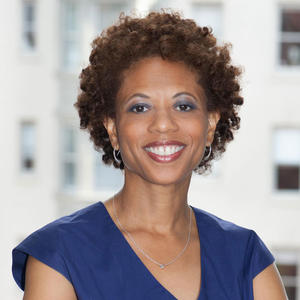
Russell L. Riley
Welcome.
Melody Barnes
Thank you. I’m ready to go when you are.
Barbara A. Perry
Melody, before I officially get the tape rolling, do you have any questions for us about process, about what’s going to happen? You’ve been through this before.
Barnes
I’ve been through this before.
Riley
All right. Terrific. This is the Melody Barnes interview, as a part of the Miller Center’s Obama Oral History Project. You’re one of our own, so we’re grateful to have you here—
Barnes
Thank you.
Riley
—and for your service and for your time here at the Center as a colleague. But today you’re here as our official resource about some things that we’re very deeply interested in about President Obama. So the first thing I need to do—because this will still go through an audio transcriber—is a voice ID [identification]. So I’m Russell Riley, I’m the cochair of the Presidential Oral History Program.
Guian McKee
I’m Guian McKee, associate professor of Presidential Studies here at the Miller Center.
Perry
And I’m Barbara Perry, and I cochair the Oral History Program with Russell.
Riley
And you are?
Barnes
And I’m Melody Barnes, and I was President Obama’s director of the Domestic Policy Council [DPC] from 2009 until January 2012.
Riley
Terrific. Thank you. All right. I had a look—a very quick look—at our friend Steve Knott’s interview with you for the Kennedy project, because I wanted to make sure that we didn’t duplicate anything, and he jumped right into your service with Senator Kennedy, but he didn’t do what we typically do, which is to get some biography as a start. So I’m wondering if you could tell us a little bit about your upbringing, particularly as it relates to how it is that you got to be interested in politics and your political inclinations—how those may have developed.
Barnes
Came about? Sure. I grew up in Richmond, Virginia—born there, went to public schools there. Soup to nuts, I would say the only time I didn’t go to a public school in Richmond was when I went to preschool, because the public pre-K wasn’t available to African American youth at that time—I was born in 1964 in Richmond—but from kindergarten all the way through high school. I always loved history—I think my relationship to politics in many ways comes through the lens of history—and was fascinated with past Presidents and the formation of the country—and love the stories—and the way that that informed my understanding of who I was and how I fit into a larger national story. For me, it really was a national story at that point, not a global story.
My parents also are from Virginia. My mother grew up in a tiny town, South Boston, Virginia, near the North Carolina border, which becomes relevant again in—well, for many reasons—but relevant for these purposes again in 2008, and we’ll get to that, I’m sure. My father grew up in Richmond, Virginia, and was in the Army and met my mother when he finished. They got married in 1960, had me in ’64, and my dad then went to college—after I was born. I went to my dad’s college graduation; because when he was finished, my mother said, “Oh, you’re going to walk across that stage. This is a big moment.” That’s also part of why I loved history, I loved the library, I loved books—because I’d go to the library with my dad. We would study together when I was a little girl.
I had a happy childhood growing up in Richmond, though now I look back and understand the many forces that were taking place at that point in time that shaped my interest in politics. Growing up in a place where segregation and desegregation were top of mind—I was, I guess, in my second-grade year, switched schools, because that was the year they started mandatory busing in Richmond. Watching the downtown area really decay and the bottom fall out economically and now understanding the forces that were at work, in many ways, for that to happen quite deliberately, as rising African American political leadership started to take over the city. All of those things shaped my interest in what happened in a community, what would happen to people when bad things were allowed to go untethered.
Then I went to college at the University of North Carolina, and chose that because I wanted to go to a place where I didn’t know anyone. I wanted to test myself, even though I wasn’t going terribly far from home, so I went to school in Chapel Hill and studied history. And then decided I wanted to go to law school—and I went to the University of Michigan.
Riley
Can I interrupt—?
Barnes
Sure.
Riley
—and ask about—Was there anything in particular at North Carolina that you remember—You said you studied history there—any particular influences, teachers that you might have gotten to know?
Barnes
Sure, absolutely. There was a professor, Lillie [Johnson] Edwards, who at that time—When you’re 18, all professors seem old.
Riley
Some of us are. [laughter]
Barnes
But I look back now, and Lillie was so much younger than I am now. [laughs] At that point, I think she was an associate professor of history, African American woman, and really took me under her wing and asked me if I wanted to come and be her research assistant. That was important to me. There was a big conference that we did on [Anna Pauline] Pauli Murray at that time, and I was the student representative in shaping that conference. So there were those kinds of experiences.
Again, I loved history. I tested the proposition—I was in a program called the North Carolina Fellows Program, and it was a competitive program—They’d select 20 freshmen every year. The leader of that program—I still remember her name, Marjorie Christiansen, and she was fantastic—Unfortunately, she retired after my first year in the program. She really pushed us to test ourselves: “Why do you want to do the things that you say you want to do? You’re 18 years old. Go out and explore and question those things.” So I tried political science; I looked at a lot of different things, and I just came back to history because I loved it so much. So there was that set of experiences.
There was also in some ways a negative experience, though for me it was a positive. I must have been a sophomore, and I signed up for some upper-level history class. Whoever the official was said, “You’re a first-semester sophomore. This is going to be a really tough class. You shouldn’t take this class,” et cetera, et cetera. I just kind of shrugged and went about my business—and loved it and did extremely well. It was the love of history, but also pushing and testing myself, even when others were pushing back in the other direction.
Riley
Did you feel like there was a race or a gender bias—
Barnes
I honestly don’t know. There very well could have been. But my memory of that—Whatever was going on then, I wasn’t sifting through it or filtering it or absorbing it in that way. And race was certainly very present. I mean, this was 1982 to ’86 in North Carolina, and when I look back now, with everything that’s happened with Governor [Ralph] Northam—I remember one of my good friends said, when that all came out this past year, she said, “Come on, Mel. We went to college with these guys.” You know, the Confederate flags hanging in rooms and all that kind of thing. So that was very much on the surface. There were Old South parties—you know, all of that stuff was happening.
Yet, I didn’t take those issues into consideration when I decided where to live on campus. I didn’t know the school and I didn’t know people who went to the school. When I chose where I wanted to live, I looked at the map and I thought, Well, that looks close to the classrooms, so I’m going to live there. I ended up living on North Campus, and very few black students lived on North Campus. Most black students lived on South Campus, where the newer high-rise dorms were.
In many ways, that’s emblematic of the path I chose there. I did the things that I wanted to do, and things that made sense to me. I had great relationships across the board—with white students, with African American students. My roommates were both white women from North Carolina. There were very few black people, as I said, who lived in my dorm, but that’s where I wanted to live. Why would I walk 20 minutes to get to class in the rain? [laughs] So that was my experience.
As a result, I also did other things—The organizations I joined, the places where I chose to exercise leadership and to have leadership—I think it was very different from many of my black friends at Carolina who heard about the challenges from friends and family members. For them, having grown up in North Carolina, there was a sense of what you could and couldn’t do and where you should live. I just didn’t have that. That was a good and healthy thing for me. There were challenges, but I had a very rich experience.
Riley
Let me ask you: Is this sort of the way that your upbringing at home—? Was it—
Barnes
Influenced me?
Riley
—was it kind of nonracial thinking in this way, or was it self-conscious? Forgive me—I don’t—
Barnes
No, no, no. I’m smiling. I’m thinking of a couple of examples in response to your question. And I’m sorry, I’m getting used to—it’s like, OK, so you really want me to go into all this detail? [laughs]
Riley
Yes, we sure do.
Perry
Yes.
Barnes
All right.
Riley
We sure do. And thank you.
Barnes
My parents were very focused on the challenges posed by race and gender, as well as region—what it would mean for me to grow up as a black, Southern girl in the 1960s. They wanted to prepare me for the hurdles and let me be a child. I must have been—I was still in nursery school, so I was four, probably. My mom said—and I don’t have siblings—and we were having dinner—as we did every day, except for Saturdays—together. We were sitting there, and I looked at my parents and I said, “What’s a white lady?” [laughter] And my mother said she and Dad looked at each other and were like, OK. My mother’s area of expertise was early childhood education, and she said they had been very conscious of not painting a racial picture for me at that age. They knew it would have to be painted, but that’s not what they wanted for me as a three-, four-year-old. But she said, OK. And she said she was thinking, Well, how do I explain this to a four-year-old?
My mother was more fair-skinned than I am; my dad is a little bit darker than I am. That becomes important because she said, “Well, sweetie, do you see Mommy?” I said yes. She said, “Do you see Mommy’s skin?” I said yes. She said, “And you see Daddy?” I said yes. “You see his skin?” I said yes. I looked at her and I said, “Are you a white lady?” [laughter] And she was like, “OK, let’s go back and go through this again.” [laughter]
But clearly something was going to happen—I think someone was going to come to our nursery school class, and she said for whatever reason this teacher decided she was going to say to a class full of four-year-old African American children, “A white lady’s coming.” I mean—And that’s the way race was very present at that time.
Similarly, I mentioned the mandatory busing order that took place—so this must have been ’71, ’72. I ended up going to a magnet school with a couple of other kids in my neighborhood. Before that, there had been voluntary busing in Richmond, and some of our neighbors who had kids a little bit older than I am had participated in that. My mom said, one, she and Dad heard the experiences of those African American kids weren’t good; two, my mother was in the school system, so she knew some of the things that were happening; and then they saw the busing patterns. The younger children who had to move across town were African Americans. They were moving the African American children longer distances to integrate those schools, and younger white children were being bused much shorter distances. And she said all of that combined meant they felt, This isn’t an experience that we want for Melody.
But there was a magnet school, John B. Cary, that some kids had gone to and had a great experience. It was one of, I think, the best experiences I had. I was very lucky to have it, because for that time in Richmond, it was pretty integrated. I had a lot of white friends, a lot of Jewish friends, but also a number of black friends in that school. Teachers, black and white—and Richmond was pretty black and white at that point. I was at sleepovers and birthday parties, and people were at our house and I was at their house, so my comfort level was high with people who didn’t look like me. I went to Jewish Community Center summer camp—You know, I was probably one of a few black children in Richmond with my dad every Thursday evening looking for kosher hot dogs [laughter] because we were going to have a barbecue on Friday at Jewish Community Center summer camp. And I could recite some prayers in Hebrew. That was just my experience.
So that followed me. That became a part of who I was at a very young age. So you fast-forward to Carolina and the experience isn’t abnormal to me. My friends, my friends in high school, in AP [advanced placement] classes—It was a racially mixed group. And again, we hung out—except we didn’t hang out on weekends. In many ways, that’s the point at which they—There were parties that the white kids went to and the parties that the black kids went to, but during the week, we all hung out together, and we might get together for lunch or something on a Saturday, but that was a point of difference.
From an early age, I was comfortable in diverse environments, although my parents—as a result of their experience—said, “We know that you’ve got all these friends and that is great, but your closest friends are going to be black.” You fast-forward, my best friend today is Patrice Alfano Keitt, Italian American, and someone that my parents adore. And I remember my mom saying to me later, “We were wrong when we said that to you, but that was our experience.” It was just a difference between their experience growing up in a very segregated Virginia and my experience as a result of all the opportunities they gave me and the environments in which I was able to go to school.
Riley
I hope you’ll indulge a couple of more questions about this—
Barnes
Sure.
Riley
—because this is really fascinating. Your father, you said, had been in the service. Could you tell us a little bit about that? Had he traveled a lot in his experience?
Barnes
So part of the reason he went into the service—I’m laughing thinking about these funny stories. Dad grew up in Richmond. We’ve talked a lot about what that looked like. He was the oldest of three. His parents divorced when he was a teenager—and as the oldest, he had lots of responsibility. When he finally retired—Mom said, “Well, you’re not just going to sit around this house, are you?” And he said, “I’ve worked every day since I was 11. I’m going to sit around this house for a while.” [laughter] Then he went on and did substitute teaching—and that’s its own funny set of stories—and other things in the community. But that’s the way he grew up.
So he said when he was about to finish high school, he and his best friend—whose nickname is Hamp—decided they were going into the service, because they wanted to see the world. But they wanted to go together. I think they started out at the Navy, but you couldn’t go together. Then they tried the Air Force, but you couldn’t go together. Finally, the Army said, “Sure, we’ll take you. We’ve got a buddy program, and you can go together.” It was kind of bait-and-switch. I think they did basic [training] together, and then they separated them. He then went to—
Perry
What year would that have been, Melody, that he would have gone in?
Barnes
Well, let’s see. Dad’s 83 now and got married in—I think it would have been around ’56 or so.
Riley
Pre-Vietnam?
Barnes
Yes. And I know you’ve heard me tell the story, Barbara, because he did basic training at Camp Jackson [South Carolina], where Kennedy was stationed a few years prior. I had a back-and-forth with Dad after reading the Kennedy oral history, Kennedy’s description of what happened to him there, and his belief that race took on a different dimension in the service because you learned who you could trust and who you could work with, and that was critical. I asked my Dad if he agreed, and Dad said, “Absolutely, that was my experience, too.”
Then he was shipped to Seattle, and from there he went to Japan. He was in Japan for a few years and then came back home through Chicago and then back to Richmond. He left the service as an enlisted person, but was a civilian, and all of his career was at Fort Lee, in Petersburg, Virginia. So he traveled in that regard, and we had family vacations, but he wasn’t a global traveler—nor was my mother. You know, more domestic and the Caribbean—that kind of thing.
Riley
Right. But he had the experience—You said Japan for four years?
Barnes
For, I think, two years. Yes, a couple of years.
Riley
But still, a significant time abroad.
Barnes
Right.
Riley
And your sense was that that had a pretty significant impact on the way he viewed life in Richmond when he came back?
Barnes
There are a few kinds of mantras that I live by, and one of them is something my dad said to me very casually one day. I was talking to him about growing up in segregated Richmond. One of the experiences he described was his time working at a drugstore, Jewish-owned, small—at that time, before big chains—and he said, “For whatever reason, they just really liked me.” They treated him extremely well. He did deliveries.
He said one day he went to do a delivery in the West End of Richmond, off of Cary Street Road. If you know Richmond, that area is a very wealthy part of the city. He went to the front door, rang the doorbell. The woman opened the front door, saw him, told him to go around the back. Dad said, “I got back in the car and I went back to the drugstore.” He said, “I don’t go in back doors.” He gave them the delivery and they said, “Fine, we’ll get it to her some other way.” Another time he went to pick something up—I think they had ordered lunch and they had the two-counter thing—and he went back and he said, “Don’t ever send me there again. I’m not doing that.”
This is what he said to me: He said, “I understood the rules, but I didn’t internalize them.” That is very much who my father is. He understood how to navigate the city and the circumstances in which he lived, but he never believed that about himself.
My mother [Mary Frances Rogers Barnes]—You know, South Boston is a place where you feel like you’re in the movie Pleasantville. Even when I was a little girl and we’d go visit my uncles and my grandmother, it was like driving into a black-and-white still photograph—and just outside of Danville, the last place the Confederate leadership was during the [Civil] war. It still felt like that in the ’70s and ’80s. Whereas my father can be combative, that wasn’t who my mother was, but she still had a very strong sense of agency and dignity. She was an advocate for me, and she was certainly—She was an advocate for children in general. That’s who she was.
All of that combined led to people who were very open and generous of spirit—even though they had segregated upbringings—and a love for community and engagement. And so through my childhood, they were always very active, no matter what situation I was in. My dad was PTA [Parent Teacher Association] president at John B. Cary, a very mixed, racially mixed, group of people. My mother was president of the band boosters when I was in the band. That’s just who they were.
It goes back to that story—until witnessing my experiences, they believed that you should be open, you should engage people, you should care about people no matter who they are, but your good friends are still going to be black people. And with their friends, I used to hear them sometimes, and I would laugh at them later—You know, they were in a conversation with a group of their good friends, talking in the same tone of voice I’m talking to you right now, and they would start talking about a story about race and talking, talking, talking, and then they would say, “And then, you know, she was [whispers] W-H-I-T-E.” I’m thinking, So you whispered and you spell the word “white”? [laughter] Is this a secret to anybody? [laughter]
But again, like all of us, they were very much of their experience, even though they were expansive in other ways, and their eyes were opened as circumstances allowed. I’ve always appreciated my parents’ capacity for growth. All of that translated into what our household was like.
Perry
So, Melody, could we go back another generation? You just briefly mentioned your grandmother and South Boston, but when you were in the White House—and I’m not skipping that far ahead; I’m just saying you talked about your grandmothers and what inspirations they were to you. Since we’re in that time period in your life when presumably they were having that impact on you, can you tell us about the two of them—their names and what they did and why they were so inspirational for you—and still are?
Barnes
My grandmothers were very different in personality, as you’ll hear. My father’s mother, Catherine Allen Barnes, was “Granny Barnes” to me—lived one block up and two blocks over from me my entire childhood, through the end of her life. She was just a pistol. She was tough and funny—and apparently she had a temper—and I say it that way because I never saw that. I was her only grandchild, and I could do no wrong, quite frankly. [laughter] My aunt, to this day, says, “What? That wasn’t my experience.”
She grew up in Richmond. Her parents had a farm that was on the East End of Richmond, where now there are some of the highest levels of concentrated poverty on the East Coast. It’s one of the reasons—and we’ll get to this later—that Marland [Buckner Jr.] and I, my husband and I, chose to move back to Richmond. A place that was fertile, literally, became a place where people lead such impoverished lives. But as a younger woman, her parents had a farm there, and my dad and his siblings would spend time there during the week and often on weekends when my grandmother was working, and when my grandfather was in the service and he was out in California—and then, obviously, when they were divorced.
She was a cook by training, and she was an amazing cook. She cooked at the bank—The main bank in Richmond at that time was Central National Bank. I think she also did some private cooking. She finished high school, but never had a college degree. But very active in her community and her circles and the church—I think in many ways very typical, when I think about the lives of African Americans at that time who had very basic service jobs and lived that existence. And at the same time, on weekends, she had a new hat for church all the time, and she was active, and she was president of this circle and that circle. And a very—As I said, a strong personality.
She had four or five brothers, and she had a sister who died, whom I never met. One of her brothers was quite an accomplished bassist, and played in jazz bands up and down the East Coast—played at the Savoy in New York and other places, and with some famous musicians as they would come through Richmond. I can remember other times [laughs] being in her kitchen and occasionally she would say, “Oh, he”—another one of her brothers—“drank too much. I’ve got to go pick him up. He’s in jail.” [laughter] You know, it was just kind of—All of the elements of life.
But as I said, she adored me, and we were very close.
My mother’s mother, Vercie Owen, was married and had three children: my mother’s two older brothers and older sister. Her husband went into the Army. At first she thought he was dead, and he came back and then just disappeared—and left her with three children. She remarried and had my mother. That husband died when my mother was still a baby, so my mother didn’t know her father, because he had passed. But my grandmother and her mother raised the four children. She worked in tobacco factories—in that area, there was a lot of tobacco. She also was a domestic. But growing up, she loved, loved, loved education—but did not have—[chokes up] Sorry.
Perry
It’s OK.
Riley
Need a second?
Barnes
Yes.
Riley
You’re really good to do this for us.
Barnes
Thank you.
Perry
It’s OK.
Riley
A couple of minutes ago, we were talking about changing the venues [in the Miller Center] from one place to the other. It’s a little bit unfortunate that we’re not sitting in the other room, because you’ve got Governor [A. Linwood] Holton’s portrait—
Perry
Exactly.
Barnes
Right.
Riley
—there, which we’re very proud of—those connections.
Barnes
Yes. I think the reason this story is hard for me is because—well, a couple of things. One, it is one of the reasons that I do what I do—because of the lack of opportunity that people have had. And two, because this was always upsetting to my mother. Excuse me.
Riley
Take a minute.
Perry
I’m going to need a napkin, too. [laughs]
Riley
OK. Why don’t you—I’m going to pause for just a second. Go ahead and keep everything going there. Let me go get some Kleenex—
Perry
If you can, Russell. I need some, too. [laughter]
McKee
I have some Kleenex in my office.
Perry
And same here, Russell—a pack in my office. Melody, I’m struck by—First of all, I had no idea in reading in the briefing book—and I’m just—so people will know—
Riley
If this is too rough, I can get—
Barnes
No, it’s fine.
Perry
OK, thank you. I was just saying, Russell, for people who want to find this in the briefing book—This is from Melody’s White House blog—or should I say it’s the White House blog—
Barnes
Blog, yes.
Perry
—and you were contributing to it?—It’s called “A Time to Reflect on Women.” And this is where I first heard about and read about your grandmothers, which is why I wanted to ask. For people who will see this at some point, they can find it online or when we post the briefing book—I think we’ll be able to post that—you know, we have to be careful of copyright. I knew that you had mentioned what difficult lives your grandmothers had had and why they’re such an inspiration for you, but I—and I couldn’t have known, because you didn’t have this detail.
I’m struck, again, of just single women, single parents, raising these large families in what must be the most difficult of circumstances, because not a lot of money in the jobs that they would have had, the backbreaking work to be a cook, to be working in a tobacco factory, and being a domestic. But I’m also struck by not only the public service of both sides of your family through the military but just that—First of all, those two grandfathers in that generation would have been in a preintegrated Army. Your dad would have been in the Army just after integration. My dad was a World War II veteran and served in a very segregated Army, and so had very different stories about what that was like—as a white man who was given the assignment to command an all-black unit—what that was like in the 1940s.
Barnes
Yes. Wow. Yes.
Perry
Off camera, we’ll exchange stories about that, but again, I’m just struck by the public service that runs through both sides of your family, but also the difficulties of these women, to have to face the hardships—and no wonder they are such an inspiration to you.
Barnes
Absolutely.
Perry
And then when we complain about the issues of the day—just even in the workplace, of, oh, this person isn’t—
Barnes
Right.
Perry
—getting along, or office politics, it just—It shames me to even think that I would complain about something like that.
Barnes
And in all honesty, that is—Again, that’s another of my little mantras or sayings. When things seem tough at work, I literally think, Your grandmothers were domestics. Your ancestors were slaves. You’re in an air-conditioned building. [laughter] Buck up. It’ll be fine.
Perry
Well, Melody, now that you mentioned that, we hadn’t—So what are the generations who were enslaved? How far back for you does that go?
Barnes
On my father’s side, we’ve done some work and can go back a decent number of generations. Less on my mother’s. I have tons and tons of documentation and paperwork at home. It is my goal to sift through it when I have some time and try and put the story together. And then my husband and I think about the different tests you can do, and all those different things, and what we might do to be able to put the story together. It’s so interesting—
By comparison, on my husband’s side, his father was black; he’s now deceased. His mother is white and Mennonite, and he can literally—He has a record in beautiful handwriting that goes way back into the 1700s of his family history. Being able to have that is such a gift.
But my grandmother, Vercie—large family, you’re thinking the early 1900s, lots of cousins, et cetera, but—she was an only child. But her father believed, at that time, what good is an education going to do a little black girl at this point living in Virginia? She can work and help make money for the family. And so she was pulled out of school, in spite of her love for education.
Perry
Pulled out of grade school?
Barnes
Pulled out of high school. She didn’t complete high school. And my mom would say that when she was in school, that her mother would sit next to her and ask her lots of questions, because she loved education so much. And even on the money she was making and raising four children, she saved enough to help my mother go to college.
Perry
Oh, wow.
Barnes
Including—My mother got a scholarship and my grandmother saved, because she wanted her to have that experience.
Perry
Where did your mother go?
Barnes
She went to a historically black college called Livingstone College in Salisbury, North Carolina. And that is why I always wanted to do civil rights work and do work on education—because it literally changes lives.
Perry
Now did they live to see your success in school and beyond?
Barnes
No. My father’s mother died actually quite young. I always think about that when I go to visit her gravesite. She was just 69. She died when I was 15. And then my mother’s mother died in 1993, so she was older, and she got to see me complete law school and those things, but not the later years.
Perry
But even that, that must have been really something for her to witness.
Barnes
Yes, yes.
Riley
It was also mentioned in one of the articles about faith and the church—and you haven’t talked about that—that was an important part of your upbringing, as well?
Barnes
It was—and in large part, kind of the social justice aspects of being in the African American Baptist church. It was just very natural for me and I understood that the church was an important institution in helping to shape and improve lives for people of color—and for the country as a whole. And that’s always the way I thought about the church and the role that the church can and should and must play. Certainly, then, as a student of history, you look at Dr. [Martin Luther] King [Jr.] and Wyatt Tee Walker—You know, the list goes on and on of African American leadership coming out of the church and helping to shape and drive the modern civil rights movement.
Later, when I was at the Center for American Progress, the first thing that I worked on there was building an initiative that focused on faith in the public square through the lens of progressivism. Because that was also at a time—not that it isn’t now—but there was a lot of debate about progressives disliking the faith, not having a faith tradition, and I just thought, This is inaccurate. This isn’t my experience. It isn’t the experience of lots of people. It isn’t accurate. And it’s a narrative that’s detrimental to us for so many different reasons.
But yes, the faith institutions played a strong role in shaping my view of fairness and justice—and who was active and who should be and could be active, and what those institutions could be a force for—and how they could be a force for change.
Riley
I took you on a long detour from the University of North Carolina.
Barnes
Yes. [laughs]
Perry
But I had two questions of that era. One is, did you do any internships in the public sphere during college?
Barnes
Yes. Let’s see—I’m sorting through college versus law school. I worked at the National Urban League after my sophomore year in college. Then after my junior year, I had a fellowship; there was a whole fellowship program that I was a part of. I keep merging college and law school—After my senior year in college, I went immediately to law school. I started—[the University of] Michigan [Law School] had a summer program, and they gave me some additional dollars, and I decided to start in May.
Perry
And then my other question from that era—You said you were at Chapel Hill from ’82 to ’86?
Barnes
Right.
Perry
You are right in the teeth of the [Ronald] Reagan years. Is that having an impact on you? Are you already thinking about Presidential politics and how different that administration is from what you’re doing and thinking and believing in?
Barnes
Well, backing up, the conversations about Presidential politics started early. Again, I mentioned that we always had dinner together. That was just natural in our household. And we’d often have the news on—And I do remember being little—I would have been, what, seven, eight? My parents were talking one day and the news was on, and all of a sudden, they looked at me—and [Richard M.] Nixon was President—and they said, “What’s the President’s name?” And I said, “Tricky Dick?” [laughter] And they thought, “OK . . .”
Perry
You were a precocious little thing, weren’t you? [laughter]
Barnes
We need to refer to him as “President Nixon,” apparently. [laughter] And I remember where we were when he resigned. We were on a beach vacation with several other families, and I remember all the kids were starving, and our parents were glued to the news: “No, we’re going to sit here and watch this.” I remember when [Jimmy] Carter won—and it must have been late, and I had my radio on by my bed, and listening to it—and I know my dad must have wanted to kill me, because I got up and woke them up to tell them that Carter had won. [laughter]
Yes, so Reagan was certainly present for me, and the shift in policies, and hearing conversations at home, but also observation—being on the college campus, there was that. There was the antiapartheid movement. In particular, that was a big, big issue on campus—and divestiture—that kind of thing was quite important.
Perry
So when you chose law school, it seems—Correct me if I’m wrong—that you probably already had a sense that you were going to be, in some fashion, in civil rights, in working for civil rights. Is that why you chose law school?
Barnes
Yes. It’s interesting, because certainly those issues were of great importance to me, and I think I went in with that lens. I got to law school, and I think for a couple of reasons—one, because I enjoyed the classes—I enjoyed my securities classes and my corporate finance classes; and two, because of the nature of those institutions—the top-ten law schools make it easy to go to a law firm. Everything else is much more difficult. It has, I think, gotten better now, but it’s still—I don’t think it’s great now, when I talk to law students who are interested in policy and politics. So I was interested in those classes, and my summer experiences were in firms, so I went to a firm when I came out of law school. But even then, I did that, and I remember thinking, I’ll do this for a few years; I think it’s really interesting, but at some point I might want to go back and get my PhD in history.
I started at the firm, and a couple of weeks in, it was just—Being at a big Wall Street firm was just insane. You’re a low person on the totem pole and sitting there until 2:00 in the morning waiting for faxes to come through; the hours are crazy. Then I also looked around—and I was at a firm of easily three or four hundred people—and I didn’t need all of the fingers on my hands to count the number of women who were partner; there were no people of color who were partners. There’s a winnowing that they count on to have people leave, and then have a small number of people who are up for partnership, and then make an even smaller number of people actual partners. So I looked at all that and I looked at the experience that I was having and I thought, This isn’t meaningful to me. While I enjoyed this in law school as an intellectual matter, this isn’t what I care about.
I went back to the University of Michigan, and they were having a black alumni weekend. [Theodore M.] Ted Shaw was there. At the time, he was an adjunct professor at the law school. He would later go on to become the head of the NAACP [National Association for the Advancement of Colored People] Legal Defense [and Educational] Fund. I started talking to him about my interests in constitutional issues and civil rights issues, and he gave me a person to call on the House Civil and Constitutional Rights Subcommittee. I called her—Her name is Ivy Davis—and she said, “We haven’t had an opening in ten years, but we’ve got an opening.” I literally ran home and FedExed my résumé. [laughter] Literally.
That must have been early October, and I moved to Washington right before Thanksgiving; that’s just when the stars aligned. It was exactly what I wanted to do. That’s how I got my first job in D.C.
Riley
And how long had you been in New York by that time?
Barnes
I moved to New York in August of ’89 and started work in September of ’89, and I left in October of ’92. So I was there—
Riley
Three years?
Barnes
Yes, yes.
Riley
OK. Very good. Are you OK to continue? Do you want to take a break?
Barnes
Oh, sure. No, I’m fine.
Riley
All right. So you’re working for the House at that point?
Barnes
Yes, the House Judiciary Committee.
Riley
Tell us a little bit about your experiences there. I’m looking at the timeline, because you’re not there very long, right?
Barnes
Right. So I go in. Jack Brooks from Beaumont, Texas, is the chair of the committee. I went in to work for the subcommittee, for [William D.] Don Edwards of California—just an amazing man. He was a former FBI [Federal Bureau of Investigation] agent who was a real civil libertarian—[J. Edgar] Hoover hated him. Edwards had this great framed piece on his wall at home where clearly—Someone had told Hoover that after one term, Edwards had lost his reelect—they sent him a telegraph, and Hoover had written on it, “Good riddance.” But that information was wrong—
Perry
This is J. Edgar?
Barnes
Yes. [laughter] That information was wrong, and Edwards actually won. He was in Congress for 30 years. And he ultimately had oversight over the FBI because of his subcommittee chairmanship, [laughter] so it was funny. The chickens do come home to roost. But from California, as I said, a real civil libertarian, stalwart civil rights advocate. I’ll never forget, one day he looked at me—We were talking about something, and he said, “Melody, have you ever gone to jail?” I said, “No, Mr. Chairman, I’ve never gone to jail.” And he said, “Everybody ought to go to jail at least once.” [laughter] I think he had gone for protesting with regard to South Africa.
The first thing I worked on was a Voting Rights [Act of 1965] reauthorization bill that focused on providing greater support for language minorities. I also worked on the Religious Freedom Restoration Act [of 1993], which had this wild and crazy, across-the-board, hard-left-to-hard-right coalition supporting it. I came in and got dropped in the middle and was his lead staffer on those two bills. So I worked on that. That was ’92.
As they approached the election of ’94—At this point, he would have been in his late 70s or 80s; I mean, he just died within the last couple of years, and he was 100, 101—he decided to retire. He said, “You know, people don’t know that they should go out with their boots on, and that’s the way I want to leave.” He also had a degenerative eye disease; we were printing things in fonts this big so that he would be able to read them. He was also an amazing golfer. This connects, because he could still golf when he was basically blind—and he had played in pro-ams [professional-amateur tournaments] and all kinds of things. But he decided he wanted to retire.
At that point, I was lucky in that I was so new to the Hill and so naïve that I thought—Like any normal person, I would think—OK, if your boss retires, you need a new job, so I started going about the business of finding a new job. That’s what led me to the Equal Employment Opportunity Commission as their director of legislative affairs. What I didn’t realize was, no, you actually technically work for the committee, so I could have stayed on, even though my boss was retiring. However, then the election of ’94 happens. I had just moved to the EEOC [Equal Employment Opportunity Commission], and lots of Democrats are now out of jobs, because for the first time in forever, the Democrats have lost the House.
So I narrowly escaped that one and went to the EEOC. They had a new chairman, [Gilbert F.] Gil Casellas. It was an interesting experience. He was trying to reform the agency, which was a really new agency as compared to others—born out of the ’64 Civil Rights Act—but not highly functional—huge backlogs, et cetera, so I spent a lot of time working with the senior leadership, trying to address those issues and to reform my department.
Somewhere along the way—I guess maybe again it was October-ish—September or October—I get a call from Senator Kennedy’s office. I thought, We’re in trouble. His chief counsel, Ron Weich, who’s now a very good friend, said, “We’ve got an opening and we’d love to have you come and interview for it.” One of Don Edwards’s colleagues had recommended me to him. So I went over and I interviewed with Ron and the legislative director, chief of staff. They then wanted me to meet with Kennedy—which, by that time, you’re—They only send one person to Kennedy. It was during the government shutdown or right around the time of the shutdown—
Perry
In ’95?
Barnes
Yes, ’95. So I met with Kennedy in his hideaway—no, off the Senate floor. We had a nice conversation. He kind of knew his role. [laughs] He said, “Basically, they’re telling me they think you’re great, and I’m the rubber stamp.” [laughter] But we had a really nice conversation and he offered me the job. And that’s how I moved from House Judiciary to the EEOC and then to Senate Judiciary [Committee].
Riley
Any questions about the EEOC? I’m mindful of time and the fact that our good friend Steve Knott had covered the Kennedy years, so I think we’ll probably pole-vault over that—unless there’s anything that’s particularly relevant to your later experience in the White House, because when that interview was done, you weren’t—
Barnes
Right, I was still at the Center for American Progress. There probably is, but I think we’ll get to it when we talk about the later years—
Riley
Yes. That’ll be fine.
Barnes
—the pieces that are really relevant.
Riley
All right. So you’re there until 2003, and then tell us about the departure and what happens after that.
Barnes
So I decide—I had been there for eight years—that as a professional matter, it would be a good thing for me to move on. I also had the sense—I had tried to pass a hate crimes bill more times than I could imagine. There were things I had just been working on and working on, and it almost, in some ways, felt like Groundhog Day on some pieces of legislation—even though the experience of working for Kennedy, which will always be a highlight of my career, was never dull. That experience was never Groundhog Day, because he was always in the thick of things. But I just felt like I needed to stretch, and I also needed to come out of the experience of just being the staffer whispering in someone’s ear.
But leaving was very hard. I remember where I was when I told him. I remember walking to that conversation thinking—literally thinking, It’s him or it’s you. It’s him or it’s you. It’s him or it’s you. I knew it would be hard, because I did—and do—just adore him. I loved working with him, I loved working for him. But as I said, I thought it was important. And Kennedy does the thing that Kennedy does. He was very sweet. First, he looked at me, and he said, “Has something happened to you? Has somebody done anything?” I said, “No, this has been great, but I need to move on.” And then there is the full-court press, and his LD [legislative director] talks to me, and I kept saying, “I really have to do this.” And then at that point, he is so generous—and was, until the end of his life—in supporting me in my career.
So I leave in March. Then I took a couple of months off. Then I went to the Raben Group, a consulting firm. Robert Raben had been a friend and colleague from the Hill. He worked for Barney Frank and was his chief counsel for many years and had started a small consultancy. At that point, there were four of us—I think he’s got 60 people or something now—and we started working together. At the same time, I started working as a senior fellow at the Center for American Progress. I was doing those two things and had this idea about launching a new initiative at CAP focused on religion. Then I was working on another project. I remember I was at home visiting my parents one weekend and almost typing with my toes. I mean, there were so many things I was trying to juggle at the same time. My dad looks at me and says, “You know, it would probably be easier if you just had one job.” [laughter] And I said, “Good point.” I decided that I would leave the Raben Group and go to CAP full time, as a full-time senior fellow, and get this program up off the ground.
I started to do that, and then John Podesta approached me—I can’t remember now how many months after that—and said that he needed to restructure the organization, because it, intentionally, was growing very quickly, and he just had too many direct reports, et cetera, so he was creating an executive vice president for policy position that he wanted me to take. I ended up taking that job about a year later. In that capacity, I was to manage all the policy teams and the senior fellows.
In retrospect, it was such great experience in preparation for the White House, because John’s thinking was very much that of a former chief of staff in the White House. So CAP was set up that way. There was a domestic team, there was an economic team, and there was a national security team. I remember someone saying to me once, “One day I want to work at a think tank like you do where you can just sit and really think about things.” I said, “I don’t know what think tank that is, but that’s not this one,” [laughter] because again, John ran it like he ran the White House. We had a big communications arm and a big and growing policy arm—and again, all of this by design. You know, Herb Sandler just died a few days ago. He and Marion Sandler were the big philanthropic forces behind it, along with [George] Soros and some other big philanthropists. The idea was grow big and grow fast—and that we needed progressive infrastructure to compete with the conservative infrastructure.
So I did that work and worked closely with John and others. The other reason why it’s so important for the later years is because the relationships that I developed there—I had no idea, but these would be future White House colleagues, and also people who had worked in the [William J.] Clinton White House who would be really helpful kitchen cabinet support, support and friends. So those new relationships started to grow and develop for me. Also, I was exposed to an even broader range of issues than I had worked on when I worked for Kennedy on the Senate Judiciary Committee.
I was there, happily kind of chugging along from, what was it, 2003, full-time 2004? And then 2007 comes. I keep mentioning this program I had built called Faith and Progressive Policy [Initiative]. I got a call one day from then Senator Obama’s office saying, “This is an issue that’s really of interest to the Senator; would you come over and talk to us, just to kind of hash through some ideas?” So I did that. And then he was doing an event in Chicago for—I guess he called it—Was it the Hope Fund? It was something like that. They invited me to come and participate on a panel with him and a couple of other people on these issues; it was kind of the intersection of progressivism and faith. That was when I first got to know him and first met some of his staff. Again, some of them would be future colleagues in the White House. Pete Rouse, at this point, is Senator Obama’s chief of staff. Pete had been a friend when he had been [Thomas] Daschle’s chief of staff.
Riley
When you were at Kennedy’s?
Barnes
When I worked for Kennedy. I can’t remember who called, but they said, “The Senator is thinking about running for the Presidency and would love to have a conversation with you.” And I said OK. My thinking at that point was, one, I’ve had the job that I loved in government—you know, working for Kennedy—and two, I’m not a campaign person. You all have heard me say this, because it’s true—My vision of campaigns is 20-year-olds sleeping on floors, roaming around the country. I can’t do the quick math—I’m in my early forties, and I thought, I want a life. [laughs] I need some balance in my life. I’m single; I’d like to meet someone; I want to get married. I just want some normal, and campaigns are not—that’s not the place to go for normal.
Riley
That’s a pullout quote—
Barnes
[laughs] Right. So I go into all this thinking, Really interesting person, this Barack Obama, but no, I’m not going onto a campaign. So we have lunch at Bistro Bis on the Hill. At that point, there was already a buzz about him, but it wasn’t a crush—I mean, we could have lunch, and a few people would come by and say hello, and I think the chef may have come out or something like that, but it still wasn’t anything like it would be even six months down the road. I remember talking to him and asking him lots of different questions about his thinking on the Presidency and all that kind of thing. We had a nice lunch and parted. That was around January. I think Congress was still in recess for the holidays.
Not long thereafter, they announce, and things are going forward. His campaign is being headquartered in Chicago. Pete calls again; I think I met with David Plouffe. They ask me to come on board to be the domestic policy advisor to the campaign. At that time, I knew or thought I knew several things: One, this was a really interesting, charismatic, smart man. Two, America is never going to elect a black President. Three, I’m not a campaign person. So I was going back and forth and wrestling with that, and I remember a guy I was dating at that time saying to me, “If you do this, though, your family will be really proud of you.” And that—I thought, My family is already really proud of me. [laughter] I don’t have to do anything extra.
But I wrestled with it, and I ultimately landed with: I need normalcy in my life, and I don’t want to move to Chicago, and I don’t want to work on a campaign. I’m a policy person; I’m not a campaign person. And I was taking acting classes at the Studio Theatre Acting Conservatory and I was taking painting classes—I was just trying to be normal and do normal things. Because working for Kennedy—You’re not working in the White House, but Kennedy—People on the Hill would talk about “Kennedy time”: he didn’t want work done now; he wanted it yesterday. After all of the years of that—and CAP was busy enough—I said, “No, I’m not going to do this,” but I wanted to be helpful, because I really liked this person and I was excited about his candidacy, even though America was never going to elect a black President. There was an event that took place in Richmond, and I helped them with that and introduced them to some people there. I would do things like that.
I was in California for CAP, and Michelle Obama was speaking at a lunch. And this is about the power of Michelle Obama. I remember sitting there, a brightly lit room—and I’ve heard a million political speeches, and she is speaking, and—Well, as you can tell, I am a crier, I got weepy. My reaction was, I know her. What she describes—her upbringing, her parents, her values—that’s my family. It was such a deep sense of connection, really beyond anything I had ever experienced before. Afterward she said to me, “We’d love to have you come on the campaign and would love to have you be a part of this.” I said, “Oh, I’d love to be helpful.” [laughter] And I was sincere about that. But I just didn’t want to go on the campaign.
So that’s moving forward, and I guess Labor Day of 2007 takes place. There’s a personal pivot with a guy I had known for 10, 11 years—All of a sudden, the light switch goes on for both of us, and we’re literally sitting there eating hard-shell crabs, and we start dating a month later and—He’s now my husband. [laughter] That’s important because that happens Labor Day, and then there’s the campaign and the primaries. They’re going on and on and on and on and on—and finally, it’s clear—May, June—that Obama is going to be the Democratic nominee. Pete Rouse called me and he said, “OK, let’s have this conversation again.”
At that point, I couldn’t not do it, you know? It was just—For someone who loves history, for someone who had always respected this person and his intellect—and what he was espousing, which was very much a community organizer’s lens on this, that power and activity come from people. Those who are in positions of leadership are there to execute based on the demands and interests of the citizens who elected them. And that is my philosophy. That’s what I cared about and that’s what I believe in. So to have this person on the trail who’s going to be the Democratic nominee—I was compelled to do it.
And in all honesty, my personal life had taken this great pivot. Marland was a political person—He had worked on the Hill, et cetera—and he was extremely supportive. He kind of became my, as we called him, my traveling chief of staff. I’d be stuck in an airport and I’d call him: “Every plane has been canceled.” He’d say, “OK, I’ll call around and get you out of this.” [laughter] Or, “My dry cleaning’s still there. I’m not going to get home tomorrow.” “OK, I’ll go pick up your dry cleaning.” [laughter] He was incredible.
I went on the campaign and I found out I was a campaign person. Now, granted, no, not the sleeping in sleeping bags on floors, but I loved being on the campaign trail, and I loved doing it in that moment. It was just—There was a power and an energy behind this candidacy like nothing I had ever witnessed before. It was so in sync with my own philosophy and my own set of values. And engaging with people everywhere—It was just phenomenal. Hearing what they cared about, what they wanted, their concerns, what they were angry about, their stories was just the most powerful experience. I was in North Carolina, I was in Pennsylvania, I was in Colorado, I was in Montana—which became a joke, because for whatever reason, when I joined the campaign, I remember looking at Marland and saying, “OK, I’ve got two goals: I want to help Barack Obama become President, and I want to go to Montana.” [laughter]
Perry
Why Montana?
Barnes
I don’t know. [laughter] You know, Big Sky Country, never been there—for some reason. So one day the campaign called me and said, “We need you to go to Montana to talk about women’s rural issues.” And I said, “Absolutely. What are they?” [laughter] Which is, in part, a joke—I mean, I grew up fishing and that kind of thing, but—so they sent me out to Montana.
I just got to travel all over the country and talk to people. And at the same time, the other piece of my job was working with John Podesta to set up the transition. I had the best of all worlds, from my vantage point: I was still based in D.C., I was working with John on the transition, and I got to travel and to speak and to do debates and do media and talk about the issues of the campaign. So actually, I loved it. And realistically, I also wasn’t doing it like many of my colleagues had been doing it, for two years.
Perry
So maybe what you are is a general election campaigner. [laughter]
Riley
There you go.
Perry
You’re not a primary campaigner.
Barnes
Right, right. Exactly.
Riley
I’m long overdue in calling us for a break to give everybody a chance to escape for a bit, so hold your thought. De-mic yourself before you depart, and we’ll come back in about five or ten minutes and we’ll find out about Montana—
McKee
Montana.
Riley
—and the rest.
Perry
And rural issues—
Riley
And I actually have a starting question before that—if I can unleash myself from the table—
[BREAK]
Riley
We’re going to go about an hour and a half, Melody, and then they’ve got—Looks like the lunch has already been—
McKee
Can we circle back into the early life—?
Perry
Oh, yes.
Barnes
OK, thank you.
Riley
Sure, any of that. But let’s wait and make sure we get the high sign from upstairs.
A/V Tech
All right, I’m going to give you a thumbs-up from the window.
Riley
All right. You set?
Barnes
Yes.
Riley
All right, I’m just going to come back to Guian, because since he’s behind me, I can’t tell when he has an interest in something. So, go ahead.
McKee
A little out of sequence, I guess, but just a few points on your early life I wanted to touch on, just to flesh out a little bit more. You mentioned going to the magnet school in Richmond, John B. Cary, I believe. I was curious simply what the grade range of that school was—whether it was all the way through or more elementary age?
Barnes
Sure. No, it went to fifth grade. I think it was K through five.
McKee
OK. And then where did you go to high school in Richmond?
Barnes
I went to—always a complicated question [laughter] and here’s why.
Riley
An excellent question.
Barnes
I started at Thomas Jefferson High School, but then, because the school-aged population in the city had declined so dramatically, they combined the seven high schools into three complexes so that they could maintain AP classes and put resources into three football teams versus seven—that kind of thing. So I graduated from Jefferson-Huguenot-Wythe, the combination of those three high schools. They’re now broken apart again, so Thomas Jefferson is now a stand-alone high school again.
McKee
So you really lived through that process of urban change as it played out in the schools very directly.
Barnes
Right. Exactly. Exactly.
Perry
I didn’t get to ask, but just to follow up to Guian—In my hometown of Louisville, they were going through the same process of starting busing in the ’70s, and there was violence—broke out in the white sections, the white working-class sections of town against it. I don’t know the history of Richmond busing enough to know, was there any violence?
Barnes
I don’t remember that. And even in my reading of history, I don’t think so. I think there were protests, but the main actions that were taken were flight. I mean, the population not only ended up dropping dramatically, but the racial demographics shifted dramatically, within three, four years. There was lots of movement to the suburbs, to private schools and academies. People kind of voted and acted with their feet.
Riley
Go ahead.
McKee
Just one other follow-up about your parents. You mentioned some of their community engagement. Were they politically active at all as you were growing up?
Barnes
They were always voters, talked about the issues. They didn’t work on campaigns or those kinds of things. They worked on more community-oriented volunteer activities. So they were active in the community, but I wouldn’t call them politically active in the way that I think about that—people who go down to campaign headquarters and stuff envelopes and that kind of thing. They weren’t doing that.
Perry
You talked about your blurting out “Tricky Dick,” so we know, I guess, how they felt about Richard Nixon, understandably. Did they have political heroes that they talked to you about or get you biographies of?
Barnes
Well, John [F.] Kennedy was a huge hero. I can still hear and see my mother the first time she met Senator Kennedy, talking to him about what his brother had meant to her and their entire family. She saved magazines, the time of Kennedy’s assassination—like, Life magazine, those magazines—for me, because they wanted me to know who this person was and what a great person they thought that he was. I even remember when my father’s mother died—Catherine Barnes died—and my aunt, the night before the funeral, spent the night with us. She was married at the time, but she spent the night with us. It was really—As you can imagine, all of us who had been through it, very upsetting—and I can still hear my mother looking at her and saying, “Remember Jackie Kennedy and how graceful and composed she was.” That whole family—That’s the way it just kept showing up in different places in our lives. So he was certainly a hero.
Other Presidents—I don’t remember them talking about other Presidents in that way. No. They were kind of stalwart Democrats and supported Democrats, but there was a passion that went to John Kennedy and the Kennedy family. And they loved Senator Kennedy—but I also think, in large part—it was part of that, but also—because he was so good to me.
Riley
You mentioned your mother was the head of the band boosters—
Barnes
Yes.
Riley
But you didn’t tell us which instrument you played.
Barnes
Well—
Riley
That can’t be a complicated question. [laughter]
Barnes
No, but it’s a funny question. As I say to people, it’s no mistake my name is Melody. [laughter] There was love for music in my household. My mother had a beautiful singing voice and played the piano, and she said she always dreamed of being able to play the guitar with her children at school. And so she—I don’t know—That never quite happened, but—[laughter] I started out taking piano lessons—and violin lessons. And then I got to high school and I had a crush on a boy—I was a freshman—I had a crush on a boy and I wanted to join the band, because he was in the band. I thought, OK, I can’t march with a piano; I can’t march with a violin . . . Flute. [laughter] So I went to my mother, not disclosing that part, and said, “I would love to learn how to play the flute.” My mother, loving music—I mean, my dad loves music, but my mother loves music—said, “OK!” [laughter]
So I had private flute lessons—because I needed to progress very quickly if I was going to get into the band [laughs] and sure enough—That was my freshman year; by sophomore year I was in the band and playing the flute. Then, to my credit, I loved the instrument, and I ended up playing in All-State concert bands—regional concert bands, that kind of thing—loved it, stayed with the lessons, and played the piccolo. I ended up being the drum major of the band my senior year in high school. But my sweet mother never knew this until my husband outed me. [laughter] I’m 43, 44, and my husband looks at my mother and goes, “You do realize why she wanted to take private flute lessons?” I said, “Really?” [laughter]
McKee
The things we don’t know about our children. [laughter]
Riley
We do a better job of maintaining confidences than your husband does—
Barnes
[laughter] Thank you.
Riley
—so until you tell us otherwise, that stays with us.
Barnes
Thank you.
Riley
There were a couple of questions I had as we got into the campaign.
McKee
Russell, can I ask one more? It’s about the CAP years.
Riley
Yes, please, go ahead.
McKee
You mentioned the goal of CAP, to build a progressive infrastructure. I was wondering if you could give us a little bit more of the context of that project during the George W. Bush administration, and maybe your sense of how well it succeeded or not.
Barnes
Sure. We were very successful in building forceful, full-throated opposition and starting to serve as a creator of new ideas that also linked those ideas to a robust and modern communications arm. I say it that way because there were certainly—and are certainly—other think tanks in town that are big, robust, and generate a lot of great content. I think about Brookings [Institution] kind of on the center-left side. But CAP was intended to be scrappy and kind of dive into the fight. Now that also meant that there is a perception of CAP that is different from the perception of Brookings. Brookings is viewed as, I think, more—I’m trying to pick a word that captures it. They’re more deliberate than I think CAP is perceived as being, but CAP is perceived as being unafraid of engaging in or even starting a fight. And that was all quite intentional, and the idea—When you think about 2003, having a blog and putting out information instantly, and training people to go on TV [television], not just the people who worked there, but others in the progressive world—
I think CAP did a very good job of that, and of growing at the rate and the pace that they wanted to. Even at times, I think, there was some sense of, we don’t want the outer world to know just how big this has become quite so quickly. And trying to play fairly with others, so we incubated new entities and new organizations. We weren’t trying to crowd other people out of the field, but we also—John firmly believed we’ve got to be big and aggressive and use that to leverage larger progressive infrastructure. That was also at the same time the Democracy Alliance was growing—this large group of progressive funders that were looking to build progressive infrastructure—so very much part and parcel of that.
Riley
All right. One of my questions about the 2007–08 period is, you had mentioned that your CAP experience put you in touch with kitchen cabinet–type people from the Clinton years, but Mrs. [Hillary Rodham] Clinton was an active candidate in 2008. Were there ever overtures from her camp to you? And did you have any kind of relationship with the Clinton universe apart from what you were doing through John Podesta?
Barnes
That’s a great question. I don’t think so. It may have been—Well, there could have been a couple of reasons. One, because Hillary Clinton really had her infrastructure. She had her people. They had been with her for a long time—senior, experienced—so the degree to which they needed other, more senior people may have been a reason. Who knows? Maybe they didn’t like me. I don’t know. [laughter] But I don’t remember that. And then early, fairly early on, I started to have an association with the Obama camp, so even though I wasn’t on the campaign, I was doing things to be supportive of them. And John certainly would have known that, now that I think about it—Memories are coming back. So John knew about it, and obviously he was quite—and is quite—close to her.
There were groups of us in CAP who were in different camps. If you think about the early part of this, there were [John] Edwards people there and Clinton people, Obama people. In fact, one of the things that CAP did was host a health care forum. I’m trying to remember if it was ever in—I think our goal was initially to have a bipartisan forum on health care, with all of the Presidential candidates. Those who accepted were all center-left, so—I’m trying to envision this picture—I think I’m right—I remember Edwards being there, because I remember sitting beside Mrs. [Elizabeth] Edwards, and I think Obama and Clinton—and we probably—You know, we had a pretty large debate on health care in Las Vegas. This was with an eye toward the Las Vegas primary. At the same time, there were different camps inside CAP. And I use the word “camp” in a loose way; there wasn’t hostility, but people knew there were people supporting different candidates.
Perry
As a potential other reason, were you also pretty open about, at that time, saying I’m not really a campaign person? Or were you just thinking that to yourself when the Obama people would approach you?
Barnes
Yes, that was more thinking to myself. My close friends may have known, but I wasn’t out on the street corner saying, “Not a campaign person.” [laughter]
Riley
I’m curious about how John Podesta is managing this, as somebody who clearly had a foot in the Clinton camp. Was he eclectic enough in his approach to the party that he was willing to facilitate not really competing, but alternative, camps within CAP in service of the larger cause? Or did you get the sense that John was trying to manage the process in a way that would ultimately benefit the Clintons?
Barnes
I think that he recognized that different people were going to have different points of view, and he certainly had his. If you know John, John’s not afraid to tell you, but at the same time, he is not going to try and force anyone to do anything that they don’t believe in. And he ultimately wanted a nominee who was going to win. If he could persuade you or bring you into the Clinton camp, he’d have been happy to do it. But there were very senior people—Denis McDonough was early working on the Obama campaign, for example—who were actively involved.
And then, obviously, John made that transition quite smoothly himself—when it was clear who was going to be the nominee, not only was he going to support that person, he was going to work for that person—as he did for President Obama. I think there were probably discussions around the building about, OK, as we do this, that, or the other, does that have a Hillary tilt or does it not? But ultimately, as I remember it, not only were we trying to manage our nonpartisan 501(c)(3) status, but at the same time, allow a playing field that would be supportive of progressive ideas, no matter where they came from.
Riley
Gotcha. OK. It may be hard to put yourself back in the mindset of 2007 and 2008, but how were you viewing Mrs. Clinton as a possible future nominee for the Democratic Party at that time? Was she somebody that you had a strong level of support for, or not?
Barnes
I knew her—obviously knew her as a public figure, but then in the Senate—She was in the Senate when I was still working there, and I knew people who worked for her at the most senior levels—good friends—after I left the Senate. So I had a favorable view of her as someone who is highly accomplished, extremely smart, who over the arc of her career had worked on a number of issues that I care deeply about. But then there were things that happened—certainly on the early part of the campaign, there was South Carolina and the “fairy-tale” story and some of that language—
Perry
From her husband.
Barnes
Right—that was off-putting. And then the world—Democrats did seem to start to fracture into their two camps. My feeling was, I support Obama, I want Obama to win. Ultimately, I want a Democrat to win. I had reservations and concerns about the way that the public in a general election would respond to her, and if the eight years of the Clinton Presidency would—the degree to which that, including impeachment and everything that surrounded that, would be a drag on her candidacy, and if the public had just said, “Enough,” and as a result, if she would be able to win. I certainly recognized the historic nature of her candidacy and found that exciting, but those concerns—as I said, some of the off-putting language and posturing during the campaign—as a woman, yes, but as an African American, was disturbing to me—and frustrating to me.
Perry
Did you talk to Senator Kennedy about his ultimate endorsement in March, I think, of ’08, of Senator Obama?
Barnes
I didn’t. I wrote him afterward, and he wrote me a nice note back, but I didn’t talk to him about it before. I wasn’t surprised, but I recognized the challenge for him in doing that, because he had had good and long-standing relationships with the Clintons, with both of them. To make that decision, I could imagine how he was processing it—because I know he’s a very—He’s a loyal person. I think about how he managed the [Edward William] Ed Brooke [III] races—when Democrats were running against Brooke—given their relationship. If that’s the way he thought about and handled that, I knew this was probably—It wasn’t a decision that he was going to make lightly.
Riley
Do you know ultimately what it was that—I mean, should we turn to his public speech on this?
Barnes
That is my sense. That is my sense—that he really saw that as—He was looking toward the horizon, and a fresh, young, historic leader. He was someone who cared so deeply about civil rights and that obviously encompasses women. But given our country’s struggle with racial bigotry and how he felt about that—he was really catalyzed by the opportunity.
Perry
Speaking of race and the campaign, there’s this fascinating article in the briefing book on—I think the term they use is “deracialization”—and they go back, really, through the history of the victories of African American mayors in cities where they either had to appeal to the majority of African Americans in their city, and then that’s how they won, through a more, I guess if you use this terminology, a more racialized appeal, or in cities that were more integrated and they felt they had to cross the racial lines, would deracialize their campaign themes. So they use that as a basis to discuss the Obama race—pardon the pun, but—particularly in 2008—the election.
First of all, do you have a thought about that? Because as you said all along, you wanted this person to win for the history of it, as you’re describing Senator Kennedy’s view, as well. At first you thought, There’s no way he’s going to win. How did you want him to think of race and use race in his campaign themes and in his policies, and what are the conflicts that are involved in an African American person running for the highest office in the land?
Barnes
Wow. Great—
Perry
There’s a lot to unpack there. [laughs]
Barnes
Great questions. Yes, you might have to remind me of some of that as we go through. Well, certainly, as one who loves and is a student of history, the path was and remains fraught. In politics and campaigning, it’s a numbers game, right? You’re counting votes. I think different candidates of color, over time—African American candidates—have looked at their potential voter base and made decisions about, how am I going to get to a plurality or get to 51 percent and navigate that, which is obvious, but which also causes such great conflict? And you certainly heard it and hear it with regard to President Obama: on the one hand, you’re not black enough; and on the other hand, you’re so black as to be threatening to the rest of the population and potential voters. I think candidates have done different things based on the circumstances that they were in to try to navigate that and to try and win.
And then, winning and governing are often two different things. When governing and faced with big complex decisions, you know—given demographics, you will disproportionately affect people of color even though the policy is intended to be universal. Health care is one example. Simultaneously, that may not be enough in those communities—communities in which people feel unseen, unheard, unrecognized, uncared for, and therefore want to hear you say it. All of that creates a very complicated stew.
I wasn’t on the campaign at the time, but I continue to believe that then candidate Obama’s speech in Philadelphia on race was not only a great speech but I think it was an important act of political courage given our environment. People have conflicting reactions to the issue of race, and candidate Obama actively called attention to it, in the midst of the Jeremiah Wright debacle. So many people thought he was about to commit political suicide. But at the same time, I think he rightly believed the only way to address the issue was to take it head-on. I found it to be a very honest expression of his experience, of his history and what he hoped for for America going forward. And then he translated that into a broad swath of diverse Americans responding positively—it was just virtually impossible.
I think about the day that [Henry Louis] Skip Gates [Jr.] was arrested on his porch. President Obama’s reaction was my reaction. It was my father’s reaction—I remember my dad called me after the President made a statement and said, “You tell him, don’t back off of that statement. He’s absolutely right.” And my father went through a litany of his own experiences—being stopped for the “broken tail light” and all of those things. But his reaction was the reaction of someone who had had the experience of an African American man with friends who were African American in the United States of America. A lot of America responded differently. The immediate reaction was so swift and so angry. And then, President Obama, as the President of the United States, who has a lot on his table and a lot on the agenda and a lot that has to get done, had to pull back from that statement. So you have him pulling back from that which we know—and data supports—as being true. His comment wasn’t even that inflammatory. But he has to keep his eye on moving forward, saying, OK, all right, I’ve got to pull back from this.
Then there was the “beer summit,” which, to this day, is an annoyance to me. On CNN [Cable News Network], there was a clock ticking down to the beer summit. Because we’re going to, again, have a “conversation about race.” But it was America’s instant and short-lived reaction and attention span to this issue, before we moved on to another issue, without really digging into what had happened, why, why the President said what he said, and what actually needs to be done going forward.
That instance showed the complexity of trying to navigate and govern as an African American President. Everybody wants something different, and lots of people fear something—things that are very different. Threading that needle is very, very hard. I don’t think people also understand the magnitude of the things that are sitting on the President’s desk. All that he has to have—allies, political capital, et cetera—to get things done, which means that you don’t always get to say or do that which you want to say or do—even if it’s true. So it’s hard.
You asked, how did I want him to govern? I wanted him to govern as the President of the United States, for all of the people who live here, and at the same time, as best he could, articulate a set of experiences that he knows as an African American man, and to bring that lens and that empathy to the table so that it can help move the nation forward. I think he navigated it extremely well. Were there times when, like the beer summit—I thought, Do we really have to do that? But particularly in the later years—after Trayvon Martin, after the shooting in South Carolina—that was, I think, a very transparent and open and honest articulation of what he felt and what he saw, and he was trying to connect with the American public and be true to himself. I think that’s absolutely what we saw. But it’s impossibly hard.
And I knew—and it was quoted in the New York Times, and I know some of my colleagues bristled when I said it—I knew going in, in the transition, that there would be a point at which those who were with us and so full of joy about the election would be so angry and would, in some cases, despise us, because you could never live up to all that was desired, and you could never avoid—Well, I shouldn’t say it that way—The rise of the Tea Party and the rise of the level of anger that we now see in America in a very full-throated way isn’t surprising. It was a lot for a lot of people to digest.
Riley
We’ll want to dig into all of that. I still sort of want to systematically go through what you were doing during the campaign and so forth, but because we’re on this topic, I want to ask a difficult question, and that is: President Obama had, by conventional American standards, an unusual growing-up experience. Was that unconventional experience—Did it in some ways miscue him about what was possible? Or did it have a way of shaping his view of politics and policy that may not have been what one might have expected from somebody who had a more conventional growing-up experience as an African American in American society?
Barnes
And by that, do you mean, did it miscue him, did it shape the way he looked at what was possible in terms of kind of a unity message, or working across the aisle? Say more about what you mean by that.
Riley
I’m trying to figure out how best to phrase the question, and so I’m grappling with this myself, but it is that, in dealing with questions of race—Let me step back, just so that we’re starting from the same vantage point on the question. This is a man who is coming out of a mixed racial environment: his father is African rather than African American; he spends a good deal of his childhood abroad; comes back and then is in Hawaii, which is an atypical experience, as well. I guess what I’m trying to get at is—It’s a more open-ended question about whether, in your view, the atypical character of that experience affected him politically—affected his outlook on politics—either for better or worse.
It’s a kind of charged question to ask, but I’m not coming at it with a presumption one way or the other. It’s just that I’m observing this person who has—All of our experiences are unique, but this one is genuinely atypical, and I’m trying to figure out, from somebody who’s close—and your experience is, I would think, more typical of what most African Americans experience in the United States—whether from your viewpoint, that did have an effect on his view of the possible and what politics was like.
Barnes
Yes. I absolutely think that it does—and in different ways. One, for anyone who has the opportunity to see and experience more of the world, it opens you up to new things, new ideas, new people. It broadens the aperture in that way. I’m no psychologist; I took one psych class [laughter] in college—but I—
Riley
So did I.
Barnes
I would imagine that all of those experiences and moving through them—The process of moving through them, and being successful when you do it, give you a sense that you can, that—as has been written about him—“Give me the ball; I can make the shot”—because you’ve had to navigate so many different kinds of circumstances. It’s almost like when you do exercises—It’s something I do—and you stand on a surface that’s not stable; you’re constantly—you’re strengthening your core because you’re finding your balance. Being able to find your balance as you’re moving in different places—and when your parents are separating, and your relationship changes, and you have a loving relationship with your grandparents—there are lots of different things, and seeing lots of different parts of the world—your core, I think, gets stronger and stronger and stronger. And it gives you the sense—Again, when you are successful—I mean, there are people who have lots of different kinds of experiences who aren’t successful, and it’s highly destabilizing—but I think in this instance, it gives you the sense that, I can make this happen, and I know how to work with lots of different kinds of people—and that also certainly was an experience that he had in the state house and had in the Senate.
I also view this through the lens—which is a personal one—I think about my husband, whose father was black, whose mother is white, Mennonite, Canadian. He grew up with that side of his family, in a very white environment, in the prairie of Canada, before he moved to the States to do his doctoral work. Again, successful, but in lots of different kinds of circumstances, and, certainly in America, not viewed as being “like us.” You may look like us in many ways, but you’re not quite like us. Your perspective is a little bit different.
That brings along a creativity and a way—When you’ve lived in this environment all your life and you’ve been subject to all of its messages, you learn how to navigate it, but sometimes you don’t necessarily learn how to color outside the lines. I think—with my one psych class—all of that gave him that set of experiences and also, potentially, that sense of being an outsider. For good and for bad, you act and react when you’re an outsider, when you have yourself to rely on, when people tell you you’re different or you feel that you’re different. So I think potentially all of those things, wrapped together, gave him that set of characteristics or qualities.
Riley
Thank you. That’s—Go ahead.
McKee
You describe it as—You came out of the election with that almost sense of foreboding, that a percentage of these people who are so happy will turn against us. Given that background that you’ve just described—maybe even a flip side to the openness—would he have shared that sense that this was coming down the road, or would he have potentially missed that?
Barnes
One, he wanted—not because it was a fun thing, but because it was an important thing—he wanted the difficult things, and he wanted to do difficult things, and he wanted to accomplish difficult things. And with full knowledge that that means you’re going to—You’ll pick up some friends along the way, but you’re going to pick up a lot of enemies along the way. He is certainly a student of history and understands the American story—as an African American, as a political figure, as a political leader. I don’t think the backlash would necessarily have surprised him.
And perhaps—Well, I’ll speak for myself; I certainly felt this—even going in and knowing how high the expectations are and that you can’t fulfill them, what is a little bit of a shock to the system is the fact that people think that you don’t want to. That may have been a difficult thing for him to swallow; I know it certainly was for me—that your values get questioned. “You don’t want to do X on immigration because you don’t care about us. You don’t want to help us. You don’t want to help these people. If you did, you would.” I think there are times that that took him aback a bit.
On the other hand, I also remember, after we got rid of “don’t ask, don’t tell,” and there was a bit of a bumpy road to doing that, he was very clear that he wanted to get it done and we were working on it internally, but there were differences of opinion about the strategy between us, the White House, and the LGBTQ [lesbian, gay, bisexual, transgender, and questioning (or queer)] community. There was anger and frustration—I mean, it’s all natural. When it was over, though, I remember him saying—and I’m pretty sure he said it to some of their leaders—he said, “I told you I was going to do it.” And I think he told them then, “I’m telling you now, I’m going to get this done. Just watch.” And when it was over, he reminded them, I think, of that. Because again, it’s a questioning of your commitment to something that not only you said you were going to do, but something that’s a matter of values that you said is important, is a matter of fairness and justice that you think is important. So those were some of the difficult things.
Riley
One of the things that we’re always interested in is how a candidate or President uses staff, relates to other people who are the main sources of guidance and so forth. Let’s go back to the point at which you’re entering the Obama orbit in 2008. You’re doing some consulting with them, right? But then you come on board after—
Barnes
Yes. In June of ’08, I join the general and start working on transition.
Riley
Paint a picture for us of what you’re finding out when you walk through the door. I’m guessing you have some perception because you’ve been on the close periphery for a good while, but who are the key actors, and how do they interact? What looks familiar and what surprises you about what you’re finding?
Barnes
I should preface this by saying that they’re all in Chicago, and moving about the country; I’m in D.C., moving about the country and working on the transition. I think I went to campaign headquarters twice; there was no need, no reason for me to be there more than that. But what I observed—which I think is pretty accurate—David Plouffe was a highly valued advisor to President Obama, very close to him. And Plouffe—famously, he’s not a chatter, he’s not a talker. He has a very methodical mind. He’s processing and he’s making decisions, and just an extraordinary strategist. By my observation, he and the President are very well suited to each other—again, methodical, clear decision-makers—funny and engaging, but not big, yuck-it-up-with-everybody kinds of figures.
Similarly, David Axelrod, also a key player, but a different personality, more joking and convivial—a warmer personality. I like Plouffe a lot, but he’s a cooler cucumber. Valerie [Jarrett]—obviously, extremely important, trusted, I think instrumental, as I understand it, in that Philadelphia race speech happening. She is constant eyes and ears for the President and for the First Lady. So those are key figures.
And you’ve got people like Joel [Benenson], who’s a pollster, also very close and well liked. I didn’t get to know him that well, but he was central. He was always in the close-in orbit. Even then Denis McDonough, who had been early on the campaign staff, was someone who was also close to the President, trusted by the President. And there had been a domestic policy advisor—the first person they hired—Mark Alexander—and that just didn’t work out. I don’t know all the nitty-gritty of that. Heather Higginbottom then took over in that role—and, by my observation, highly regarded, well liked, and considered to be highly competent. And people like Jon Favreau, Dan Pfeiffer—those guys, Ben [Rhodes], Susan Rice—in that close-in circle of people who were liked, listened to, considered to be valued advisors.
Again, just because of the role that I played, I wasn’t there. But it’s my sense that some Presidents like to be surrounded by lots and lots and lots of people and to hear from lots and lots and lots of people, and that wasn’t this candidate or this President. He wanted a diversity of ideas and opinions, and he would seek that out, but there wasn’t a felt need to be surrounded by lots of people. He wanted to get information, he wanted recommendations, and he wanted to talk to and probably bat ideas off of those with whom he was closest—and Pete Rouse certainly fit in that category as a really trusted advisor.
Riley
OK. I’m a little confused—maybe because of the entry in the timeline. So the basic work that you did on the campaign was almost exclusively toward the transition, is that correct?
Barnes
If I had to divide percentages, I would say probably 60 percent transition, 40 percent campaign trail.
Riley
Campaign stuff. OK. Because one of the entries indicates senior domestic advisor—
Barnes
And that was my title, so that’s accurate.
Riley
OK, that was your title?
Barnes
Yes.
Riley
But roughly 60 percent of your time was focused on—
Barnes
Getting the transition stood up.
Riley
—what we’re going to do. All right. With that as the predicate, maybe you could tell us a little bit about what you did in each of those clusters as the senior domestic policy advisor. You come on just before the convention?
Barnes
I came on board July 1.
Riley
I don’t remember what date the convention was.
Barnes
It was in August.
Riley
OK, so if you had a role there, it would be great to hear about that, but tell us what the major pieces of your portfolio were on the domestic side as the campaign advisor. We’re political scientists, Guian apart, so we’re sort of junkies for transition planning, which is a cottage industry. [laughter] We may spend the rest of the day talking about that. [laughter] That’s a wordy question, sorry.
Barnes
Well, I’ll start with the campaign piece of this. My role was to be out in the country, giving speeches, doing panels, press interviews, TV, radio, et cetera, for the campaign—hence the traveling here, there, and everywhere. They would give me an assignment and send me out— “You’re going to go to Montana and you’re going to do four events over two days in Montana.” One was at the state party leader’s house—a dinner where I don’t eat beef and I’m in Montana and they’re passing the beef around. [laughter] I thought I could get away with it—I just kept passing the platter and filling up on other things—and someone called me out on it.
Those kinds of events—a big event at a school where I’m speaking and doing Q&A [question and answer]—doing a couple of radio programs and a few TV hits while I’m there. I’m there to espouse the objectives of the candidate and the campaign and to meet with people. In some instances, I’m on versus [John] McCain’s domestic policy guy and we’re debating some issue. And talking to people afterward. Large events like that that are being organized by the campaign and by the Democratic Party, or by some media outlet, all around the country. That’s that part of it.
On the transition side, we had to stand up the whole thing. As you well know as transition junkies—there’s the cute game we play in America of, Oh, no, no, we’re not doing a transition. One of us is going to take over our government in 87 days, but we’re not planning for that. [laughter] I think we leaned in a little bit more, but there’s always the challenge, Don’t look like you’re measuring for the curtains. John [Podesta] is the lead person in D.C., and then Lisa Brown, who became staff secretary; Don Gips, who did Presidential Personnel [Office] for a bit before he became the U.S. Ambassador to South Africa; and I are the trichairs of the agency review process. [Christopher] Chris Lu is executive director. Our objective with agency review is to design the process through which we’re going to send teams into the agencies the day after the election. The initial goal, which is laughable when I think about it—I can still hear John saying it, “We’re going to keep this small. This isn’t going to be huge. This is not going to be huge. We’re not going to have five million people.” It’s impossible to do it without five million people.
We started that work, and then McKinsey [& Company] came on board pro bono to work with us. Because we had to figure out what people we were going to bring on board for these teams; we had to determine what it is that they were going to do when they got into the departments and agencies—what product, what deliverables, were they going to produce that would serve multiple purposes: one, for confirmation background for secretaries and agency heads who had to go through a confirmation process; and two, for the leader of those organizations and the sub-cabinet, so when they walked in, they would know what was going on.
For us, that included everything from literally how many people are here and how many are political—those kinds of things—to what are the big pieces of litigation, what are the big regulatory matters that are making their way through the system that you need to know about, which ones might you want to stop, could you, and how would you go about doing that—to what are the big issues that are facing these agencies and departments. For example, food safety was an issue that was of concern to us. There are—fewer now, I think—recalls of all kinds of things and people getting sick and people dying, but the power to investigate and to review food, et cetera, was spread over multiple departments and agencies, none of which wanted to give up jurisdiction, and people had tried this all before, so what do you do?
So, what are those big issues? How might we go about tackling them? Litigation, regulation, personnel decisions, personnel challenges. And then, given all that, on day 1, day 5, day 10, what is it that new President Obama should be doing? Are there new announcements? Is there some Executive order that he wants to issue? We had to organize for all of that.
We started to pull names from past administrations—experts in the field, lots and lots of people that we started to amass—and then identify who could be on these teams, who would be leaders of those teams. We made templates for these documents so they all looked the same and they all had the kind of information that we wanted in them. And then we started to reach out and build the early infrastructure, because we also did pretransition work. What is it that, without walking into the department or agency, you could learn—by going through Google, through just basic information—so you could start to populate these documents and get a head start? We knew 87 days is not a long time.
That’s what we spent our time doing. And we had three meetings where we brought everyone together. Pete and Valerie—They were both chairs, along with John, I guess—and it was one of the chairs and other people who were heading clusters, if I’m remembering correctly. We formed clusters—a national security cluster, an energy cluster, et cetera—where we’d bring them in to work through these issues and to start to build up the staff so we would be ready to go if we won the election. Literally, everybody parties election night, and everybody gets up the next morning and starts working. If I remember correctly, I had a meeting that next afternoon. We wanted teams ready so as soon as we got the clear from the Bush administration, we would be able to walk in the door.
John and I, early in the process, also had meetings at the White House—with Josh [Bolten] and with senior White House staff. They were fantastic. They were absolutely fantastic. If you want a vignette of how America should work and what was intended in the peaceful transfer of government, that’s what they did. They were clear that whoever wins, we’re going to be supportive and we’re going to provide the information needed. That came from the top, and they acted on it. The planning of it went quite smoothly.
Now the election happens, I don’t know, November 6, November 7, whatever Election Day was that year. By, I think, November 25—and yes, this was helpful for reminding me—
Riley
November 4, I guess.
Barnes
November 4, and then I think—
Riley
Is that right?
Barnes
On the 25th, I’m announced as—
Riley
On the 24th—my son’s tenth birthday.
Barnes
Oh, really? [laughs] Wow. He’s 20 years old now. So he’s announced his team, and I’m DPC director, so I move out of that role, as one of the three chairs for the agency review process on the transition, into the DPC director role, and required to consider, as part of his senior White House team, how do we think about what’s going to happen next? That includes everything from How am I going to staff out the DPC? to We’ve got a stimulus bill to pass; we’ve got other bills that we want to pass early and fast, and thinking about it through that lens, so the agency review work—The bulk of that work happened, and after months of working to get it set up, I never actually got to see it work.
Perry
We also want to circle back to the 40 percent of your policy work in the campaign and any role in debates and prep and that sort of thing, but before we do, we’re already jumping into election night—where were you on election night and what were you thinking and feeling?
Barnes
This ties back—I mentioned, when we first started talking, about my mother’s hometown of South Boston and the big city next door, Danville. I was campaigning in Virginia, and the weekend before, the campaign had me go to several churches in Richmond, so I was staying at my parents’ house. My then boyfriend was in town, and a bunch of other friends—There were a bunch of friends that were in Richmond, and they were going to do Election Day work in Richmond, Chesterfield, that area. So I did that work on the weekend, and then Election Day, I got up and I drove south. Two things: The campaign asked me to go to some election sites—and you know all the rules about that and how far you have to be from the site, et cetera—and then Tom Perriello’s campaign asked if I would do some work with him, because he and I had been friends from my days at CAP.
So I drove south and I went to South Boston and Danville. I went to a polling site there. I’m pretty sure, no matter how old I live to be, I will never forget this. It was a drizzly day, and this really old car—I don’t know if I mentioned this to you ever before—but this very old car pulls up. The driver’s side door opens, and this elderly African American woman gets out. If I had to guess, she was probably in her mid- to late eighties. She gets out and she goes inside and she comes back with an election worker. Consistent with the law, if you’re too frail to go in and vote, the election worker will come to your car. Then the passenger’s side opens and this even more frail African American man pulls himself up and he votes. I remember looking at that and thinking, Could these two people have ever imagined—I’m assuming things, but I’m guessing I’m right—ever imagined that they were going to vote for an African American man to be President? It was just—
Perry
And they voted in their car?
Barnes
Yes. She may have voted inside, but he voted at the car.
Perry
She brought out the election official?
Barnes
The election official comes out. That’s a way to ensure people who are, as I said, too frail to make their way inside can vote. I was there and observing and saw that. It was extremely moving.
I left there and I drove to Charlottesville and I did a campaign event with Tom Perriello and his campaign. Then I drove to D.C., and that’s when I met up with friends, my boyfriend, at a big campaign event in D.C. I can’t remember which state put him over the top, but I do remember hearing the announcer call it.
Perry
Was it Ohio? Did he get Ohio?
Riley
It was pretty early.
Barnes
Yes, it was pretty early.
Perry
Yes, it was before midnight.
Barnes
Yes, it was definitely early. Well, I guess actually even before that—because I wanted Virginia to go for him so badly—Virginia and North Carolina—that felt personal. [laughter] Thank you. And then just watching the big head shot flip around and hearing, “Barack Obama will be the 44th President of the United States”—and the room just goes crazy. My boyfriend, now my husband—as I mentioned, he was born in LA [Los Angeles], grew up in Canada—I think he was just, tears came to his eyes. We were just—What? It’s like, you couldn’t imagine it, and this has happened? As I said, I started out saying I want him to win; he’ll never be—and here this is happening. It was incredible. And the room goes crazy.
To watch it on TV—But then making the way home, D.C. was just crazy. People were just running up and down the street screaming—Literally, just running up and down the street screaming. People at the White House gate were chanting, and horns honking. It was as though the entire city had won something big—Like they had won Powerball or something. [laughter] It was just, like—
Riley
No, it’s not that big. [laughter]
Barnes
But it felt that personal to people, like everybody had won Powerball. [laughter] It was just—It was joyful. And you can’t sleep, and then going to bed and waking up—Waking up to the excitement, but also waking up to, We’ve got a lot of work to do. And you flip into all the work.
Now for those of us who had been working on the transition, we realized what lay ahead. My heart went out to people who had been working on the campaign for two years nonstop. Most of them had moved to another city, primaries were hard, an election—general—is tough. And many of them had planned—Oh, I’m going to take a vacation. I knew people who had vacation plans—We’re going to Mexico; I’m going with my fiancée/boyfriend/spouse I haven’t seen in so long. And then Podesta had to say, “Actually, you’re not. Actually, you’re going to come to Washington, because we’ve got a transition to run.” People responded, What? OK. And there we were, back at work again.
The transition isn’t a campaign, but it’s hard. It’s a different kind of hard. There we were, working against the clock to try and not only organize government but also organize in the middle of an economic crisis. I’d be curious to know what other transitions look like when it’s “normal”—you know, switching parties, but there’s no crisis—because I will always be shaped by that experience.
Riley
We want to dig into that.
Perry
Oh, it’s lunchtime.
Riley
Yes, almost, but are you OK for another five or ten minutes?
Barnes
Oh, yes, sure. You can go on.
Riley
I think we can finish off the other part of the portfolio, which is the 40 percent part. In conversations from earlier projects, one of the things that the Domestic Policy Advisor would do is sort of—whatever the pop-up crisis of the day is on domestics, particularly when the candidate’s out on the road—to be there to say, “This is the best way to answer this question”—or not. It struck me when you were talking about your portfolio that by the time you come in, many of those decisions have already been taken—This is what the candidate’s position is. But I’m wondering: Are you involved at all in sort of fine-tuning these things—
McKee
That’s a good question.
Riley
—and are there any specific recollections of instances where people are phoning you to say, “This has come up; what do we say?”
Barnes
You’re right. The big decisions—A, by the time I had come on board; and B, given the role I played; and C, I didn’t have relationships with lots of those people.
When you think about it, they had been working together for a year and a half or so at that point, generating policy content and just going through fire together, and I didn’t have that relationship—nor was I going to develop it then, because I also wasn’t there. So I was on—God, I guess they were daily—daily domestic policy calls that Heather Higginbottom would lead. She and I would talk—She and I knew each other from the Senate. I could drop in information based upon an experience that I was having in a particular place. There were times that I would review things and comment on them, but I wasn’t—The way policy content got generated was a big idea would come up, midlevel staff would start generating, based on a framework, and it would move its way through and get refined and finalized. And in many ways, it’s kind of the way that we did it in the White House.
But also, on a campaign, everything is happening like that. [snaps] It’s lickety-split, all the time, because you’re in a constant race against the November 4 deadline, and a candidate that needs to be somewhere or make some announcement—or you’re responding to something.
We also had any number of volunteer clusters of experts who were supporting the campaign—and they were quite active. I don’t know that this is common for most campaigns. And I know in some instances, those groups of people—It can be a place where you put people because you don’t really want to hear from them but you’ve got to find something for them to do, [laughter] but that’s not the way these folks were treated. These were high-level, really smart people who added a lot of value and content—and some of them were hired. I hired the person who led the immigration group to come into the DPC; he’s now a California Supreme Court Justice—just really fantastic people, and good relationships that were developed. So they were also contributing content and reviewing and helping to shape policy, as well.
But I wasn’t at the conference table, kind of battling through content development then.
Riley
I’ll ask this, and then we’ll break. Do you remember there being any specific policy areas that you had some discomfort with coming in? Or was everything, if I were writing the policy it would look exactly like this, from soup to nuts?
Barnes
That’s a great question. I’ll continue to think about it. My feeling state and memory on that is that there was nothing that I thought, Oh, I don’t want to say that. Might I have tweaked or jiggered something? Sure. Probably. Possibly. But there isn’t anything that I can think of that gave me discomfort.
Riley
OK. All right. Very good. Then let’s take a break and have some lunch and get the sustenance level up, and we’ll come back and put the camera on you for the rest of the afternoon.
Barnes
Sounds good.
[BREAK]
Barnes
OK, we got the thumbs-up.
Riley
All right. We’re back. You look different now, because you’ve got something to keep you warm with.
Barnes
Yes, yes.
Riley
All right. I’ve got two questions about where we left off. Let me deal with them one at a time rather than two. The first one is: Tell us about your designation as the head of the Domestic Policy Council. How did that come about, and what were your understandings about what your job would be and what your role would be in the administration as a result of it?
Barnes
Sure. Well, remember when I said I’m not a campaign person; I’m never going to work on a campaign? Well, similarly, I said, I’ve had a great job in government; I don’t need to work in a White House. [laughter] So even after going on the campaign, I was focused on the campaign and President Obama winning, and then it was the transition and getting things set up, and in all honesty, I wasn’t focused on that. I’m sure I was thinking about what I would do next, but I had been at CAP; I knew I could go back to CAP, et cetera.
John Podesta came in my office, in the transition headquarters, and he said, “Has anyone talked to you yet?” I said, “About what?” And he said, “Well, my friend, President Obama wants you to be his domestic policy advisor and the director of the DPC.” I said, “Oh, OK.” [laughs] And in some ways, I hadn’t been focused on it, so it was a surprise in that way; in other ways, it felt like a natural outgrowth of what I had been doing. Pete Rouse and I had a conversation, as well. This was probably on a Thursday, maybe—I’m not sure, but I think that’s the case—
Riley
Between the election and—
Barnes
No, this is now—If the announcement was on November 24, 25, which I think was Tuesday, perhaps—I’m not sure—this happened right before the weekend.
Riley
OK. So it was after the election by—
Barnes
It was after the election.
Riley
—a couple of weeks.
Barnes
Yes, a couple of weeks after the election. And the plan was to announce the economic team—again, the economy is crashing—to announce the economic team. And the President wanted me and the domestic policy role to be included in that team, so it would be Larry [Summers] as head of the NEC [National Economic Council], [Christine] Christy Romer and—
Perry
Tim.
Barnes
—Tim Geithner—yes, I guess the head of OMB [Office of Management and Budget] wasn’t in there. It was going to be the four of us.
And it was then—Everything moved very quickly, because I had to go through the first level of a background check, and the announcement had to be prepared, and all of a sudden, we were in gear. As I said, I spoke to Pete Rouse, as well.
The conversation at that point was heavily focused on the economy and a number of things that the President had been talking about on the campaign trail. He had been talking about education, both K-12 reform as well as higher education and debt—because again, aligned with the challenges facing the economy, the credit markets were seizing up—people were struggling and concerned that they weren’t going to be able to get loans to go to school. And so he had been talking about that, K-12, health care, immigration, but the economy was really sitting front and center.
At that point, the flurry of activity was around the process that I had to go through so that this announcement could be made. I had interviews and talked to people based on the public background check they had been able to run.
I called home to tell my parents, and I remember my mother saying, “Oh, sweetheart, we’re so proud of you. What is that?” [laughter] Because the White House senior policy jobs are not necessarily—You know, Henry Kissinger is a household name—
Riley
Sure, yes.
Barnes
So I went about explaining that to my parents. I talked to Marland. I really didn’t have the opportunity to talk to many people before that. I literally had very dear friends, one of my closest friends—her oldest son is my godson, that’s how close we are—she said she was walking across the street in New York and her phone rang, and someone said, “Mel’s on TV,” and she went into a bar where a TV was. We were just kind of scrambling to do things necessary for that announcement.
We flew to Chicago, and the announcement is made. I was thinking about this recently, because I was at my parents’ house—I was visiting my dad; my mom has since passed—and there are framed pieces from the Richmond newspaper, all of these things—and I thought, What a surreal moment that must have been for them. Because I’m in this mode of campaign and transition and working nonstop, and all of a sudden, this bursts onto national news. I have to say, my parents—particularly, my mother was just loving it. [laughter] No one enjoyed the White House more than Frances Barnes.
So that was the process and the announcement. My understanding of the job at that moment was, we were focused on the fact that we had to get a stimulus package put together. So that was one of the first big announcements, sets of announcements.
But as that team was coming together, we then started meetings during the transition, both in D.C. and one big meeting in Chicago. A group of us flew up there to meet with then President-elect Obama. That was an economic briefing. That was the meeting where Christy Romer famously said, “Mr. President, this is your ‘oh shit’ moment,” and she lays out just how bad the economy is at that particular point in time. Then we just started having meeting after meeting after meeting, and then—based on what our roles were—putting the pieces together. I was predominantly focused on education. Carol Browner, who was there as a so-called “czar”—an energy czar—was focused on the energy pieces and things like high-speed rail. The dominant question was, what could we get done in a stimulus package?
The other thing that happened was that Pete Rouse said to me, “Heather Higginbottom has been acting as Domestic Policy Advisor for the campaign. This is purely your choice, but would you consider her as your deputy?” I leapt on that immediately. I knew her a bit—I knew her by reputation given our work in the Senate, had worked with her during the campaign, and I knew she was exceptional. Immediately I reached out to her to be my deputy. Then we also started focusing on how we were going to put together the DPC. The Bush Domestic Policy Advisor and his deputy were quite helpful. They invited us to the White House for lunch, and we went to lunch at the White House Mess, and then we went to their office and they showed us around a bit. They walked us through how they had organized the DPC, to give us something to consider as we planned what we were going to do.
Then it was just flat out for the remaining period of time, between putting together the stimulus package, thinking about what would happen in those first few days of the Presidency, and starting to staff the DPC and do as much of that as quickly as we could during the transition.
Perry
Anything that you learned from the Bush model that you didn’t want to do or said, “Yes, let’s replicate part of that”?
Barnes
Well, I remember they had these really big charts that they were pulling out for us, and they organized around subject matter issues in a particular way. Heather and I talked about it, and we didn’t quite organize the DPC in that way, but we used some elements of their structure. Our issues were different—and that’s natural. Every President has different priorities.
So we used some threads of that as we started to create a different set of offices in the Domestic Policy Council based on what the President had identified as his top priorities. We also created a new office in the DPC that focused on social innovation, and out of that office came the Social Innovation Fund—also, the work that we did on national service and the Kennedy Serve America Act. So that was something very new to the White House. Then the education office, which wouldn’t be surprising. The Bush people I think may have had one focused on transportation; we did not do that, but we had one focused on economic mobility. We—Wow, it’s amazing what you forget. [laughter] I’d have to go back and think it through some more, but we had about four or five offices.
[TWO PAGES REDACTED]
McKee
Can you give us some sense of the substantive policy debates about the stimulus bill? There’s sort of the classic public story—was it big enough; and obviously, Congress was a constraint. What were the discussions like within the White House on the stimulus?
Barnes
There was an effort to meet economic and policy demands: how creative could we be, knowing that we wanted policy that didn’t have a tail because this was onetime money, but it was also a moment when there was going to be a lot of money, it needed to simulate the economy, and we might be able to do more. Given all the things that the President-elect had talked about on the campaign trail, how could we advance his agenda in keeping with the parameters of stimulus without a tail? So there was a lot of creativity. People were trying to think about big ideas that we could advance. For example, can we get high-speed rail done? [laughs] I remember Vice President [Joseph] Biden and the President saying to the senior staff, “You’re telling us there is no way we can get this done?” Regulatory issues, jurisdictional lines, all of those things were challenges in that particular example. But we went through a process of putting things on the table and pushing them as hard as we possibly could to see what would emerge from that. That was the initial phase.
Then we started to focus on our policy buckets. As I said, I was really focused on education and negotiations on the Hill and elsewhere—moving formula funding forward. But again, how could we use this as a moment on education reform? Hence, Race to the Top—that emerged out of the stimulus. We wanted more, I think $10 billion, and we got $4.3 billion, and then with a little bit of extra, I think that topped us off at $5 billion, with that additional money for some additional innovation work in education. So, we worked our way through that and there were policy fights—I remember one Sunday, Phil Schiliro, Rahm Emanuel, and Congressman [David R.] Obey and I were on the phone, and I thought Rahm and Obey, if they could have reached through the phone and strangled each other, they would have, because we were advocating and pushing for more resources for education reform, and Obey was focused on formula funding. And there were people who disagreed with our education reform efforts, so we were having those kinds of fights. But I don’t remember those as intra–White House fights; they were more with each of us moving and dealing with our constituencies on the Hill to try and get this package put together. We’d had internal debates about the size of the bill, and while we considered a larger bill, we landed on a bill that we thought we could pass.
There were those kinds of considerations, and then through it all, thinking about the way that we could execute on this well, and then prove the law’s effectiveness. There was that kind of thinking. There were certainly debates about the tax provisions that were put in the bill—middle-class tax cut and education tax credits. We were debating—inside the parameters of the how big is the stimulus—how much of it would be cash going out, how much of it would be in the form of tax cuts, and how to get that balance right. Those were the kinds of things that we were discussing.
Riley
So you’re a party to the conversation about the overall size, and also to the component pieces within?
Barnes
Yes.
Perry
As a nonpolicy person, I had never heard that phrase, “policy without a tail.” Could you explain that, define it? Does that mean it’s a one-off, it’s in the stimulus—but I wonder how that relates to wanting to have the education component of the stimulus related to reform—other than the David Obey—David was his name?
Barnes
Yes, Obey.
Perry
Congressman Obey. Here’s a package, but you wanted it to have more substance than that in terms of education reform—
Barnes
Well, we wanted it to try and drive some of the reforms that we wanted. A tail would mean that the policy would require resources over an extended period of time. We were doing, what, an $800 billion stimulus package that was designed to give the economy a boost and to stimulate, to get it working again, but when that $800 billion was gone, it was gone. There wouldn’t necessarily be resources to follow behind to support policy ten years from now—or even five years later—so we had to think about ways to kick-start things, but not put in place policy that then would get starved because there would be no money for it.
With Race to the Top as an example, it was for a planned period of time, and we were, in many ways, trying to encourage policy reforms—some of them, yes, that require resources, but to get jurisdictions, to get states, to think differently about education policy so they would make those kinds of reforms. We were also trying to encourage and to incent constituencies that may have been at odds with one another to sit down together, so when states sent us their proposals, we wanted to see that, for example, the unions and parents’ groups and the business community and the Governor—that all these different actors had worked together to come up with an idea based on the outlines that we were providing. We were trying to encourage an additional focus on STEM [science, technology, engineering, and medicine]. So there were different things like that—new approaches and ways of thinking, some of them that didn’t require—It was a shift in a frame, not just a policy change that required additional money.
So that’s part of what we were trying to do and the way that we were thinking about it.
Perry
Was your hope that at least we’ll get this one—this opening shot—that is, the stimulus—with this up to $5 billion for Race to the Top? And then to add the tail part, is it your hope, then, that we’ll hope to continue this content part of the reform, and yes, if it does need a tail at some point, we’ll go back and hope for that? And then I guess this also now relates to the question about, you’ve got these supermajorities in both Houses of Congress, so do you also have this sense that not only do we have to rush this along because the economy is failing and the credit markets are seizing up, but this is our time—not only is it our first year, when we can get a lot of things done, but we’ve got this Congress that’s on our side?
Barnes
Right. That was definitely a significant factor. We had majorities, we had national enthusiasm, we had political capital, we had a crisis. So how do you move forward? And all of that tells us that this is urgent and time’s a-wasting.
At the same time, we had majorities, but if you looked behind the curtain of those majorities, because of the Obama wave, there were people who won in places where Democrats normally don’t win, hadn’t won in a long time, and they were sitting in precarious positions. The Virginia-5 [congressional district] is one of them. Tom Perriello was a one-term Congressman for a reason. This is a tough district for a Democrat to hold onto, particularly a Democrat who has to vote on health care and who has to vote on financial reform and who has to vote on TARP [Troubled Asset Relief Program]—who has to vote on all of these things that are not met with enthusiasm in a moderate or center-right district. So even with a majority, it wasn’t easy—but certainly easier than if we hadn’t had 59 or 60 votes.
Perry
So this is that realism that you talked about for the President himself on race and disappointing some people but also trying to walk fine lines—that you had people in Congress who were having to do the same thing—maybe not on race, but on other issues.
Barnes
Right, right.
Perry
The realism of the political situation.
Barnes
Right. You are elected and you want to do the right thing; you also—The reality is that you have to count votes. Passing legislation is a numbers game.
Riley
Melody, one of the things that I’m still trying to get sorted out is, the economic problems of the day are largely a product of a very unusual set of financial market circumstances, and it has side effects beyond. I guess what I’m trying to sort through and to learn from you is the extent to which the administration’s response is driven by people on the economics team. You’ve talked already about the issues that you’d had with Larry wanting to assert sort of his dominance—part of which we know is Larry Summers’s mode of operation, but part of it would seem to be rooted in a realistic sense that, because it was a financial crisis and we’re trying to resolve that, that the economist might have a first call on what the policy would be. I’m wondering if you could help me understand, if there was a division of labor here, how strong was it? Did you feel that you were in some ways secondary to the economics team in trying to resolve these things? Or was it your sense and the President’s sense that no, there are so many other domestic consequences here that I’m not going to allow the economists to tell me how to solve this problem?
Barnes
Well, I’m not—and you should press me on this, because I’m not sure if I’m going to answer your question. On the one hand, yes, the economists—and the tip-of-the-spear economics team, in spite of the fact that I was included in that first announcement—so Christy, Larry, Peter Orszag, Tim—did dominate, because it was a crisis, and they had their hands on the levers of the machinery that focused on those issues. At the same time, the President wanted—and I mentioned this before—opinions and ideas coming from lots of different quarters, so even if you aren’t head of the Council of Economic Advisers or head of OMB, he wanted to know what people thought about those issues.
And sitting beside that was the reality—and this is one of the things that I think makes the White House different from other places, different from working in Congress—is that even as that’s chugging along and you’re trying to hold the tiger by the tail and tame him, there are other big issues that are underway. The President had been clear that he still wanted to move forward with health care. One, he thought, even before the economy started to tank, that was a huge issue, given the amount of GDP [gross domestic product], et cetera. And then, related to that, he did see it as an economic issue, and if we can’t try and get our arms around this, it’s going to further exacerbate the economic woes of the country. So we have to focus on that. We need to focus on education and education reform, because as people are suffering through this economic crisis, we know what this means as a demographic issue for those who don’t have high-quality education. That list goes on and on. So we need to solve those problems.
So everyone had responsibility for something that was relevant and important for the day—and also, as a general matter, attached to this large economic issue that we were dealing with. We made the argument to the public that by working on health care and passing the Affordable Care Act [ACA], we were focused on the economy—because we were getting criticism: Why aren’t you just focused on the economy? Focus on the economy, focus on the economy. Our response was: We are. Maybe it’s just that people just didn’t believe us, or it wasn’t—I don’t know. They just didn’t believe it.
Riley
I’m thinking, as you’re talking, that my approach to this issue may be biased by what went before. We’ve done lots of interviews with Bush administration people, and it’s very clear that for the last part of 2008 going into 2009, that the center of activity was in the Treasury Department—Hank Paulson and Tim Geithner at the Fed and [Benjamin] Bernanke, who I guess was at the Fed also. That’s almost entirely financial market–driven, so my default setting in thinking about this era is, that’s where all the energy was. Now we’ve had an election, and you’ve got a very different kind of President coming in who has a very different kind of agenda, a more traditional Democratic agenda, which would include things well beyond financial markets. And you seem to be confirming, then, that your President is both sharing the wealth and sharing the pain by getting people outside Treasury actively involved in trying to find a solution, because he sees a bigger role for this White House in resolving lots of problems rather than just one big problem.
Barnes
Yes, I think that’s true. And given the expertise and the personalities of the people there: Peter Orszag, deep economic background and years of experience through CBO [Congressional Budget Office], et cetera, so he understands that institution, the Legislature, and he understands the economy; Larry, former Treasury secretary, now sitting in the White House. And then you’ve got Tim at Treasury, who was the only cabinet member who participated in our daily morning meetings. That started out for the reasons that you would consider obvious: we’ve got an economic crisis; we need to have that kind of coordination and alignment for the day to begin. And then Christy, whose area of expertise is the Great Depression, so—
McKee
There you go.
Barnes
—understanding those forces and what worked and what didn’t and why. So you’ve got a lot of people sitting in the White House with highly relevant expertise—not only subject matter but also of institutions. So I think that makes a difference.
And at the same time, I want to be clear: This was the dominant issue. Even as we were doing other things—and sometimes I will forget and go back and look, and see that we passed a lot of legislation in the first few months of the Obama Presidency. But I think for people it feels like a speed bump because of the magnitude of the economic crisis and ultimately the size of the stimulus bill to address it.
Riley
I know in talking with some other people—and I can use Sheila Bair as an example, because she’s published on this, although we’ve interviewed her; I’m not betraying any confidences—but it’s clear that she sort of was aggravated, maybe at the time but certainly in retrospect, that more wasn’t done for a resolution to the financial crisis problems from the bottom up. Her concern was that the Bernankes and the Paulsons were worried about saving Wall Street rather than Main Street, which was, I think, her characterization. It strikes me that we’re entering a different era now, where the concerns are more Main Street than Wall Street. Does that resonate?
Barnes
Yes. I think about some of the debates that took place in the White House. I would say there was healthy and vigorous debate over some of those issues. Certainly that was the President’s lens and reflex. At the same time, we have to recognize that much of the public probably looks at it and says, “No, you all bailed out Wall Street one more time.” A lot of that may stem from the fact that no Wall Street guys—I don’t know if it’s none or very few—or one—were led off to do some time somewhere. I think there’s a lot of the public that feels left behind as a result of that.
Perry
Well, and then that fed into the argument that we’ve mentioned, about people feeling that there wasn’t—Guian mentioned—not enough in stimulus—not enough money, or not enough focus on—what you said—not enough focus on the plight, as opposed to, then, but why are you spending this time on health care? I just can remember hearing that over and over again at the time. That was just an ongoing meme in the mainstream, and the media picked up on that.
Barnes
Right, right. And it’s an easy one for people to repeat and to accept. I don’t think it was fair. And we didn’t go as far as many people would have liked. But we didn’t have the votes in Congress for more, and there was, at the same time, a lot there for—certainly if you were middle class, lower middle class, but even if you were poor or working poor—there was the EITC [earned income tax credit], for example. Part of the problem is that for people who were already in tough shape, it just became crushing. And then there were the issues around Wall Street bonuses—and again, no one goes to jail, and people see banks getting bailed out. It just felt unfair to people. I’ve heard the President mention this—our ability to articulate what we had done, and for whom, was—whatever it was, people didn’t really hear it.
Riley
Melody, were these debates being played out in your staff meetings and in the cabinet meetings? I mean, are there people who are voicing frustration that you’re doing too much to save the banks and not enough to save—and if so, can you help us—Can you sort of reconstitute some of those arguments and help us understand what was happening?
Barnes
Well, I remember one in particular—It’s a little hazy. I can’t remember if it was around bonuses or CEO [chief executive officer] pay issues. There was a real vigorous debate, and there were some who were pushing to be tougher and others who were saying, “These are contractual relationships; once you start to renege on a contract . . .” And everybody can get dramatic during an argument; people were saying, “Who are we if we start to renege on contracts?” [laughter] For some people, it just felt out of touch. And then on the housing policy, it felt like we were working and working to try and get that right. People had friends who were being negatively impacted by what was going on and recognized what we were suggesting isn’t going to even fix these problems, not to mention those in far more challenging circumstances—and using that as a barometer. In fact, in some ways, the President used those ten letters that he always wanted to look at as a barometer. So yes, there was back-and-forth on those issues, and they were tough.
Riley
Was there any suspicion about Tim Geithner having been held over? Did you detect any sense that this guy you have to keep an eye on especially because he had roots in the previous administration?
Barnes
I’m hesitating, because my first reflex is no, but then I’m just trying to—I don’t think that there was suspicion—kind of holdover suspicion. I’m trying to think if that’s true. [pauses] I think that there were probably some who may have wondered if he was part of the problem—meaning, not that it was just holdover from a previous administration, but he had been a part of the crafting of that policy. So it was less suspicion, maybe, and wondering, Are you going to be able to help us find the right answer?
Riley
All right. Yes?
McKee
Going back to the question of explanation—Do you think, given the complexity, given the constraints, the time pressure, was there a clearer, more politically compelling way to articulate it, to explain it to the American people?
Barnes
I don’t know. I’ve since heard the President talk about this and express his belief that we could have done, we should have done, something more. Internally, we were confounded by things; on the one hand, as Axelrod would say, you can always find a poll that gives you an answer to what you’re concerned about or that tells you what you want to hear. You know, Mrs. Smith’s second-grade class believes . . . And I say that because we were confounded by a period of time when, if the President was articulating a particular message, it might be to great effect, and then other times when it wasn’t helpful, and so how should the President be used as a communicator of these ideas? He’s got the biggest bully pulpit, but it doesn’t necessarily always get you where you want to be. So we were trying to figure that out.
We were also heads down, just in the middle of this crazy swirl of complex, ugly issues, difficult solutions to those issues, and trying to find a good, clear message was hard. And then that also requires significant repetition to get it going, and I think—I think—there were times when we would do something and we moved to the next problem: OK, got that done. Now what’s next? But the public needs to hear it and hear it and hear it and hear it and hear it—and hear it from a voice that they like and trust. And at different points in time, that became more challenging than others.
Riley
Do you want to add something? Go ahead.
Perry
Can we circle back? These are really interesting examples of how things were running. Can you pull your camera back just a little bit to talk about how the White House itself was organized coming in, and in those first few months in the first year? You’ve obviously mentioned Rahm several times, but chief of staff, organizing all of these constituencies within the White House, and then how the President worked within that organization, how he saw himself. Usually it is said he’s centralized and liked flows of information; how did he like that information coming to him? How did you meet with him? How did you get him information?
Barnes
OK. Let’s see.
Riley
We’ll remind you of some of these questions.
Barnes
Yes. [laughter] So we had the three policy councils. Then there was the communications operation. The two lead people there were the press secretary and the communications director. In addition to that, we had, for most of the time I was there, two senior czars—I struggle not to use that term, but it’s the best one to describe it—one focused on energy and the other focused on health care, Carol Browner and Nancy-Ann DeParle. Then the President also—Well, in the chief of staff’s office, the chief of staff, but then a deputy chief of staff for Policy and one for Management. And also his senior advisors: Valerie, Pete—
Riley
Axelrod, right?
Barnes
—and Axe. Yes, I was hesitant because he was also communications director. And then when Axe rotated out, then Plouffe. And Legislative Affairs—and that office included House people and Senate people, and Phil Schiliro sitting on top of that. The President always received his daily brief—the national security brief—but again, given the crisis, started receiving an economic daily brief, as well, so that was added. And he’d meet with his senior advisors, a smaller group that consisted of the three senior advisors, plus his chief of staff and the two deputies to the chief of staff. [pauses] I’m trying to think if I’m missing anyone. He’d have that meeting daily, as well.
I would see him when I became part of the economic daily brief, and then when I had something to brief him on—if there was a policy question or we were going to do some kind of an event that had a policy element to it, those kinds of opportunities. I remember when I was leaving and we were talking one-on-one and he said, “I’m thinking about how to find the right person to replace you; your landscape is really broad.” And he said, “And also, there are people who just seem to want to be in my office.” [laughter] And he said, “And really, people just need to go to their desks and get their work done—and people who are comfortable with that.”
Perry
And he was saying thank you for being one of those people who—
Barnes
Yes, I would hope so. [laughter] I hope he didn’t wonder, “Why are you in my office?” Yes, I mean, a sensibility of just getting things done. And this in some ways goes to your point—Because the economic issues were so dominant, in the instances where I wasn’t in an economic brief or not necessary there, I was doing other things. We were focused on food safety and the work on childhood obesity and health care and education, civil rights issues like “don’t ask, don’t tell.” And after all those years of working on hate crimes in Senator Kennedy’s office, we finally got a hate crimes bill passed and signed into law.
Because his time is so precious and because the demands are so high—I think, quite frankly, he didn’t even realize—and how could you?—what that was going to look like until he became President. You need people just to go get it done. The time on his calendar is pretty precious. So memos were a good way to have a conversation with him about the issues that you needed to brief him on or get his opinion or his recommendation on.
McKee
As you’re developing that kind of a briefing memo, what does that look like within the Domestic Policy Council? How much of it are you able to really get into the meat of it, or do you just not have time because of the different strands you need to be managing and overseeing?
Barnes
And focused on? Well, the way that the DPC was organized, Heather Higginbottom was my deputy, I had a chief of staff and an assistant. The four of us sat in our core office together. Then in our other offices, there were special assistants to the President [SAPs] who ran those different offices. And there were people who didn’t have those designations who worked with them, as well.
To prepare a memo or to work through an issue, it would start with those offices. After I spoke to the President or had a new idea or whatever the catalyst was, Heather and I would then discuss the issue, and it then would get translated to the Special Assistants, the SAPs. They would start to develop those ideas and develop the memo, which then would go to Heather for review and back-and-forth and refinement, and then it would come to me. I’m sure there were times when I had to sit down with a clean sheet of paper and start tapping out a memo, but it’s like any other large organization that has that kind of hierarchy—ideas and deliverables start to get shaped and make their way through the process.
“Running the process” in the White House would often lead to a conversation and briefing with the President after ideas were generated in the way that I described. But before the meeting with him, the Assistants to the President would then sit down, work through something, hash through something. Maybe it’s that we all reach a decision, we tie it up with a bow, we send the President a memo and say, “Here you go, we all think this is done,” and he would say yes or no. Or we send him a memo and say, “These are the pieces that are done; this is what you should know about that. Here are the outstanding issues and questions, and here’s where we fall on these questions.” For example, “Peter and Melody believe X and Mona [Sutphen] and Larry and Nancy-Ann believe Y”—and describe that, so he has a clear sense of the lay of the land before walking into a meeting. In some cases, maybe we don’t have to have a meeting, but typically, in those kinds of situations, we sat down and walked through a briefing with him. He gets to ask questions, push on it, and make a decision.
Perry
And all of those people would be at the meeting to present their views?
Barnes
Yes. Yes. The beauty of the White House and the White House process—which is why I believe in process and White House process—is that it’s designed to bring everyone with equities to the table. Do people try and work around that? Absolutely. There are the memos that people try and sneak in and all of the other things that people try and do—side conversations with the President—but the system is designed to include all of the different offices, the different perspectives that sit in the White House, represented in what the President reviews. He believed that every person on his team brought something important to the table—a set of professional experiences, personal experiences, a lens on the way they look at the world—and that gave him a very robust sense of an issue and the facets of the debate.
Perry
And you had how many Chiefs of Staff during your tenure? Rahm and Bill?
Barnes
Rahm, Bill—
Riley
I think there were three, weren’t there?
Barnes
Oh, there were three, because Pete—
Riley
Rouse was there for a while, yes.
Barnes
Yes. Pete.
Perry
The literature always talks about, are they an honest broker? Did you feel that all three of them—Did they fall into that category in terms of information flow and doorkeeping?
Barnes
They were all quite good at doorkeeping, to my knowledge. Yes, I think that they were fair. They weren’t trying to keep a particular perspective out.
Perry
So the palace intrigue that people write about for Bush 43, at least in the first term, would say Dick Cheney would be in the meetings and he wouldn’t say anything, but then everybody knew that he would be one of the last voices that the President would hear on a topic. And given how you described the orbits around President Obama—well, before he even got to the White House, and in the White House—Is that inevitable, I suppose, is my question. There are always going to be people who are in a President’s inner orbit—not to mention the First Lady, who’s going to be there every night talking to the President, and when they have a partnership that it seems the Obamas have—I guess what I’m asking is, did you have that sense, that the good news was the information flow worked well in this process, the Chiefs of Staff were honest brokers, yes, there were these people in the inner orbit, but that’s just the way it is, and so you knew that your point wasn’t going to be the last one the President heard, but you still felt that the process was a good one?
Barnes
Yes. As an overarching matter, I think all of that is true—that it was a good process. You would have to be naïve to believe that there weren’t others who, because they were senior advisors, because they were close friends, because they would have dinner or drinks or whatever together, that they wouldn’t comment on an issue that you were working on.
The only instance that stands out to me as an example of a challenge—There were times that we were working our way through immigration issues. Literally, we would sit in a room and have a meeting and discuss issues and work through issues, and at various points in time say, “Are we in agreement with this? Is there anyone who disagrees with this?” And people would say yes, and you’d work your way through. Then someone would leave the room and move things in a different direction or try and pull the plug on something that had been agreed to. My frustration with that is, if you feel that strongly about it, then say it inside the room, and let’s be honest about it. And maybe it’s because they were concerned about leaks and a leak on their perspective—I don’t know. But that’s the issue for me, many years later, that still stands out as one in which the process didn’t always work as it should.
Riley
Melody, to what extent did you think your job was being an honest broker as opposed to being an advocate?
Barnes
I believe that it was absolutely essential with the cabinet secretaries, with whom I worked closely, that they saw me as an honest broker. Because by sheer nature of proximity—I was the one inside the White House; I could walk around, I could—there were all kinds of things I could do, and if they saw me as a competitor or as a point of friction in the system, then from my perspective, things were not going to work well for the President or for the outcome. I thought that was important, because it also was important to trust. And that was important, because inevitably, there are going to be days when really bad things happen—and people would do crazy things inside the White House; people would do crazy things outside the White House. I remember Bob Gates in a cabinet meeting once looked at the President and said, “Mr. President, it’s a big government. Someone somewhere out there is doing something stupid.” [laughter] And inevitably, that’s going to bubble up and appear on the front page of the Washington Post or the New York Times.
If people see you as an honest broker and if they see you as a partner and a collaborator, they will call you and tell you what stupid thing has happened so that then we can work on it together. I saw it as part of my job to encourage that kind of relationship. In turn, people would call me and say, “OK, let me tell you what’s happened,” and then we could figure it out. Otherwise, I’m on my heels, which then has Communications on its heels, which then has the President—That’s just bad. So I saw that as an important part of my role.
I also, however, believe that for things that I believed in, positions that I believed in, that I was an advocate—and the President wanted me to be an advocate, because of a whole series of experiences that I’ve had, over many, many, many years, not just professionally. But I think you can be—and I thought it was important to try and be—fair with my advocacy. So I’m not going to sit in the meeting and smile and nod and then advocate elsewhere for something different. Let’s have a robust discussion about this.
They may tell you something different when they talk to you, but I feel as though my relationship with Arne [Duncan] was an extremely strong one for that reason—and the same thing with Kathleen [Sebelius] and with Shaun Donovan and others. And they, like I, fostered those relationships. I also didn’t put them in the position of feeling as though they had to do a workaround—you know, There she is in the White House. Let me figure out how to get around her so I can try and get to the President.
Riley
Did you have a specific conversation with the President about your role as you got started? Did he give you any instruction about how he wanted you to serve, or was there just a tacit understanding, based on your common experience on the campaign, that that was kind of going to be what you intended?
Barnes
No, we didn’t have that kind of conversation—nor did I with Rahm or with Pete.
Riley
OK. Let me ask you this—because one of the other things that’s a little bit puzzling is—How to phrase this? The organizational chart for this administration looks a little unorthodox. In the conventional political science model of a White House staff organizational chart, obviously we have the President in the Oval, and then the chief of staff, and then everybody sort of reporting up through a strong chief of staff. You admittedly have strong Chiefs of Staff with deputies, but then you’ve got senior advisors layered sort of in there somewhere, and particularly in your area of domestic policy, you’ve got czars who have policy responsibility who are somehow layered into this organizational chart. How does all of this work? Or did it work? Or was it more chaotic than it needed to be because you don’t have that sort of streamlined organizational chart?
Barnes
Well, to some degree, because I didn’t experience anything any different, I’m not sure how it works in comparison—but your question is still a good and valid one. It worked, from my vantage point, for a couple of reasons. One, because the two people sitting in the czar chairs had such depth of expertise in their subject matter, and they also weren’t trying to creep into all kinds of other areas.
Riley
They stayed in their boxes.
Barnes
Yes. Carol was energy—energy, environment. That’s her expertise; that’s what she was trying to get done. Nancy-Ann, health care. Plenty to do—I’m not trying to butt in there. And they were both collaborative. Nancy-Ann and I would talk a lot. She knew that there were things that I was trying to get done and to move as part of the Affordable Care Act, and she was an advocate on the Hill for those things if I wasn’t up on the Hill working on those things. So in that way, we worked well and collaboratively with one another. In fact, after the first two years, Nancy-Ann goes on to become deputy chief of staff for policy, and health care—at this point, now it’s a matter of doing the health care regs [regulations]—that gets moved into the DPC—and the same thing with energy as Carol leaves the White House. So that’s one.
Then with the senior advisors, they, as a general matter—I mean, Pete—I’ve always loved working with Pete. He’s really easy to work with—again, great depth of expertise. And he was making sure that the mechanics of all this worked, while wearing and having a very substantive policy lens. He listened to what the challenges were as a substantive matter, and he also took steps to make it work. He was kind of a fixer. And he also is such a low-ego person. He’s not a public person. He doesn’t want to deal with the public—He affirmatively [laughs] does not want to deal with the public—so he’s not trying to elbow his way to talk to reporters and do some of those kinds of things. He just wants to make it all work well.
Axe was focused on communications. And again, depth of expertise there.
Riley
He was also communications director?
Barnes
Yes.
Riley
OK, so there’s not a—
Barnes
Wait, wait, wait. Was he?
Perry
There was a person who was named communications director, and it just said it didn’t work well.
Barnes
Yes. I’m trying to think what her name—Was it Ellen Moran?
Perry
Yes, that’s it.
Barnes
Yes. Right. So I guess that’s when Axe became communications director. Is that right?
Riley
But what you’re describing is that whatever we call him, that effectively he was the communications director.
Barnes
Yes.
Riley
Did he stay in that box, or was he like Pete—he had—
Barnes
Yes, I mean, he had opinions across the board, but Axe didn’t want to be a policy guy. And neither did Valerie; she had responsibility for public liaison, public-facing, and the business community [Office of Public Engagement and Intergovernmental Affairs]—with one exception, which was the urban affairs work, because of her experience in Chicago. During the transition, we sat down and threaded the needle to determine how we were going to both work on it, because this is a substantive policy issue, and she said, “But I also have background on this issue.” I said, “Well, if we move the policy into your office out of mine, that doesn’t work.” So we kind of found a dance that we could dance on that issue, and then she and I would confer on it. But other than that, she was focused on the business community and the public liaison work.
Riley
But that’s a really interesting exception. Did it work because you both agreed to be in harness with one another? Did it work because she’s Valerie and everybody knows you don’t screw around with Valerie? Or do we only learn later that you don’t screw around [laughs] with Valerie?
Barnes
Well, I think you know early on—She is the President’s very close friend, so poking at the President’s best friend is probably not [laughter] your very best professional strategy—to your point. And at the same time, we work through it and we figure out—Let me put it to you this way: You wouldn’t choose that structure if you were mapping out an organizational chart.
Riley
That’s exactly right. That’s my point, is that if you’re coming to this from the outside and you’re looking at the organizational chart, you scratch your head and you say, “Boy, that’s got to be a problem.”
Barnes
Yes. Why would you have two dotted lines to different people? Right. You wouldn’t choose to do that. But again, she’s done this work in the city of Chicago; she cares about it deeply. I have substantive policy background; I’m hiring people who have deep policy background. We’re not going to move the policy out of the Domestic Policy Council, so we’re going to have to figure out a way to have this work. That being said, we then moved forward.
Riley
And in your judgment, it did work?
Barnes
There was a personnel problem that was the real challenge. This is the hesitancy you hear in my voice—The person—and I honestly cannot remember why he was the candidate to be the urban policy [Office of Urban Affairs] guy—Adolfo Carrión [Jr.], from the Bronx. I honestly can’t remember why someone wanted him in that position. I didn’t think it was a good idea then. I was right. I don’t even remember exactly what Valerie thought. But the way that it worked is that he sat in her office—the policy person who was a Special Assistant to the President, Derek Douglas, sat in my office—and they worked together. Derek was excellent on policy. Adolfo was to have a more public face, in keeping with the public liaison work, to mayors and other local elected officials, but he just was not good at the job. He was affirmatively bad at the job. The structure, again, was not an ideal structure, but he also exacerbated and made that worse.
Riley
So if I’m hearing you correctly, if you’ve got good people who are agreeable and sort of understand one another, then you can have an oddly shaped organizational chart that will allow it to work, apart from what the business analysts might tell us—what Bob Bruner would tell us from the outside.
Barnes
Right. Yes, yes.
Riley
So then the question is, did that continue after your departure? You’re there for not even the entirety of the first term.
Barnes
Right. I’m there for three years.
Riley
Are your successors able to make this work?
Barnes
Yes. I think in part. My successor, who served the final five years, Cecilia Muñoz, had been a direct report to Valerie previously. She ran state and local external affairs in Valerie’s office. And Cecilia substantively is one of the foremost experts on immigration in the country, so we would work with her on immigration, even when she was still sitting there. When I left, she became DPC director. And we had also by that time—So Adolfo is gone. Derek [R. B. Douglas], who had done a very good job running urban policy, I think by that time had left and gone to the University of Chicago. I think Racquel Russell, whom I had hired, who was terrific, began to do that work. After the initial brouhaha, “Obama elected, Obama focused on urban America, Obama has urban czar”—blah, blah, blah—after all that kind of died down, it left us with a person leading that office who had the chops to do it and could just focus on the policy. Then she, along with Cecilia, would also discuss it with Valerie, who still continued to have a substantive interest in the issues.
Riley
A couple more questions, and then we’ll break before we come back for the rest of the afternoon. I particularly want to save the last segment to let Guian get into lots of questions about health care. How did the President like to be briefed? Did he read? Did he want things in one page? Did he want to see the background stuff? Did he like to see people argue in front of him, or did he want you to drop a paper off and leave him alone in his office so he could read it and get on with it?
Barnes
No, not the latter. He did like to read. He did read. It didn’t have to be a page, but we were all cognizant of how much paper he received. The staff secretary tried to control and manage that, both the content—Has everyone who needs to see this reviewed it and commented on it and provided their input?—and the length—Here are ways we can tighten this up. Then we would brief him—If there were outstanding issues that we needed to discuss with him, we would brief him.
I’ve read that some Presidents loved to see people argue and debate. I’ve always taken that to mean that some of them—I think FDR [Franklin Delano Roosevelt] may have been one of them—liked to see the tension and the friction and exacerbate that and thought that would make things better. I don’t believe that President Obama was looking for that, but he did want to know if there was a difference of opinion, and he did want to hear the arguments so they could shape his thinking.
And then he was a really good decision-maker. By that I mean, he listened well and carefully, and he didn’t act reflexively. Sometimes he would say, “I need more on X or Y. Go back, and then let’s come back tomorrow and talk about it.” Or there were times—I remember once Mona and I had a real concern about something, and when the memo went back to him, we flagged that. We came in the briefing and he said, “OK, I want to talk about this. This is a point that also concerns me.” So he would do that. But then once he listened and considered, he was clear, “OK, we’re going to do X, Y, and Z.” And there wasn’t a lot of, Oh, and then the day after tomorrow, we’re going to be back on this again. There wasn’t that. He is a very good decision-maker.
Riley
And how did that get executed? In other words, there’s one thing for the President to say to you, and maybe two people or three people in the Oval, “All right, I’ve decided this is what we’re going to do”; it’s another thing for what the President decided to get out to the proper parties and for it to be understood widely as an edict that’s not to be challenged and to be executed. How did that happen? How do we get from point A to point B?
Barnes
Probably most often, when we were physically briefing him, he would conclude the meeting with, “OK, this is what I want to happen.” You know, boom, boom, and boom. If it was a paper briefing, then he would write on the memo: “Yes, I agree with this, but do this.” Or, “Get back to me with that, and then . . .” So he would handle it that way. Sometimes it might come to you—Maybe he had a conversation about something in the senior advisors’ meeting, in which case the chief of staff or the deputy for policy would call and say, “We had a meeting, and the President wants to X or Y.”
Riley
OK. And that actually gets me to where I thought we probably would end up, which is that the chief of staff would be ultimately the one responsible for execution. But that may not be the case—One of the things that we used to always hear about President Clinton was that you had to have a very delicate ear to know when he had made a final decision on something, because he was inclined to revisit things and then—
Barnes
Right.
Riley
—there was a flaw in execution. George W. Bush, a different kind of President, partly because he had both Andy Card and Josh Bolten, who were very buttoned-down in terms of paperwork. So I guess I’m trying to figure out: Are the Chiefs the ones who are charged with making sure that nothing is lost in execution after a decision is made?
Barnes
Correct. Yes.
Riley
All right. Anything else?
Perry
This is probably a quick question with a quick answer. One thing you mentioned about President Obama coming in—and you said, how could he have known, he had never been President before—was the drinking-from-the-firehose analogy. But I do think we have this tendency, at least in modern times, to choose Presidents who have very little experience in Washington, much less with the Presidency. Did you see other examples of that? Jimmy Carter talks in our oral history about what that was like, to go from being the Governor of Georgia to being President. Did you see any other examples where that was problematic or a handicap—or just a bit of a challenge to overcome—along with the people who came with him from Chicago—or maybe even the Senate, but also had just come with him to the Senate and didn’t have much very much experience in Washington or with the ways of Washington or the press or the other branches of government? And by the way, the American people typically think that’s a good thing. [laughs]
Barnes
Right. Right. Until they don’t. [laughter]
Two things jump out at me. I remember it must have been, I don’t know, Day Two, Day Three. The inauguration is always right before the anniversary of Roe v. Wade. In transition, we had been preparing—and it is perennial, whether it’s a new Republican or Democrat in the Oval Office—to address the global gag rule. So during the transition, we had been working our way through an Executive order to overturn the Bush position on the global gag rule and do that in time for the Roe anniversary. I believed all of that was moving along. We had written memos and all of that was making its way through the transition.
But then it came to the President’s attention, and he was unhappy. And he was unhappy not because he disagreed with the policy, but, as he told me, “I want to know about these things. I want you to bring these things to me. I’m not a President who’s just going to rubber-stamp things. I want to be a part of these decision-making opportunities.” I said OK. So again, this isn’t a question of substance; this is a question of process. And he also, I think, wanted to try and approach this issue of reproductive health differently. Can we find a way to bridge some of the gulf on this issue? So I thought, OK. Now I had worked on these issues for a while, and had a number of scars and bruises that go along with these issues, but I heard him on it.
What I think, though, is if you had presented that situation to him two years later, his reaction would have been, “Give me the brief, let me know, and go forward.” I say that not because he didn’t continue to believe the issue was important, but given all the things that he has to focus on, did he want to place time on his calendar to go back and forth on that issue? And also, quite frankly, after the experience of going through health care and trying to negotiate health care and issues of reproductive health—and living the friction and the delta between the camps on reproductive health. I could be wrong but that is an example of just not knowing what your schedule is going to look like, and all of the demands that come with the Presidency. Plus, he had been focused on a set of issues during his tenure in the Senate and in the statehouse, and not necessarily years of experience dealing with the animosity and intractability that sits around that issue. So I think he would have not said to me, “Bring me those issues all the time,” if he had known that day what he would know later on.
Perry
The way you described his response sounded a bit—that it was a bit pointed.
Barnes
Oh, yes. He was really unhappy.
Perry
And what is that like? What is that like when President Obama is unhappy?
Barnes
He’s not a yeller and a screamer. It’s never that. It’s more terse. It’s just more terse. And also, for me—because again, this is Day Three—it was also surprising. I was used to working on that issue. I was also used to working on it with Senator Kennedy. There was a rhythm about it. Plus, in transition we had worked, and senior staff had been working on this, and we had a path forward, so I think I was surprised that he was surprised, and then I was also surprised by his reaction to that issue and how he wanted to handle it.
But again, there are no histrionics at all. As I said, it’s just terse. [laughs] Then I think Denis and Axe both said to him, “Look, we thought we had this handled and this was the process. We were doing what we had agreed to do, and Melody was doing what we all agreed.” He said, “I’m not mad, I’m just telling you.” [laughter] And part of that was just our finding our way for how we were going to work together.
Riley
All right. Why don’t we take a break, give you a chance to catch your breath for a second, and we’ll come in and do the last little bit.
Barnes
All right.
[BREAK]
Riley
OK. You ready?
Barnes
Yes. Let’s do it.
Riley
All right. We’re good for about another hour and ten minutes. Guian, do you want to start us down health care road?
McKee
Yes. I do want to be cognizant of our time, but I also wanted to get your background on this. To begin, if you could tell us to what degree, if any, you had worked on health care in your earlier career, whether with Senator Kennedy or at CAP or anywhere else along the road.
Barnes
All right. With Senator Kennedy, all of his health care work was housed on the HELP [Health, Education, Labor and Pensions] Committee—Senate Labor or HELP Committee. I would come in to work on pieces of it—the reproductive health issues, certainly; if there were privacy-related issues—health care issues that had a judiciary, kind of legal overlay, then the judiciary staff would act on those and support him.
Then when I got to CAP—again, I was EVP [executive vice president] for policy, so I was in more of a management position. We had health care experts on staff and recognized that it was a significant issue. We looked at the politics of it, the polling. What was it that Americans really wanted? It was top-line, a huge issue; many want to fix it in some way. Then you start to work your way through how, and the numbers shift and change. Again, I was working on it in more of a managerial perspective.
I had never spent considerable time in the heart of health care before getting to the White House. And then even after being there, Nancy-Ann DeParle came on board and led that office [Office of Health Reform], and then Kathleen Sebelius, given her background on these issues, once she became HHS [Health and Human Services] secretary, had that expertise. Then we had others—some through an economic lens—who had worked on health care. We had tip-of-the-spear policy health care experts—Jeanne Lambrew and others. And I, consistent with the role I had played in the past, either worked on some very specific issues and specific aspects of it, or in a more managerial position.
McKee
OK. Now thinking a little bit about the campaign, you came in in July of ’08, is it?
Barnes
Yes.
McKee
So you’ve had the primary debate among the major Democratic candidates, and Obama with a little bit of a different position in terms of the individual mandate. Where did the issue stand at this point where he secured the nomination, as you’re looking ahead to the general election?
Barnes
It was certainly an issue that we were talking about, and one of the main points that candidate Obama was making on the trail. I remember doing debates and town halls, and not only was it an issue I was talking about but it was an issue that those in the audience were raising with me. So it was dominant.
By the time we get past the conventions and it’s early fall and the economy is really starting to tank—and you’ve got McCain and the suspension of his campaign, all of those things—the economy was taking front and center stage on these issues. So it was definitely still a part of what we talked about, but it really was becoming an economy-centered debate.
McKee
What was your sense of, in that period where it was still front and center of the campaign, where was the public on that? What was the feeling that you were getting out there on the trail?
Barnes
As a general matter, what we had seen, or I had seen, in the past continued to hold, which was that the public was really desperate for some kind of health care reform. Health care costs were eating up family budgets. People had one horror story after another about their ability to access care. The big themes in health care—preexisting conditions—were top of mind for people. That said, having had the experience of being at CAP and seeing years of polling data on this issue, I also knew that people become more squeamish about exactly how you’re going to go about getting it done, but there seemed to be building momentum for finally moving this forward.
McKee
How much response did you get, beyond the sense of the crisis, of the problem, when you started getting into those messy details? In terms of the campaign and the nominee talking about it on the campaign trail, to what degree did he get into the messy details? Did you start to see that squeamishness once you got past highlighting the problem itself?
Barnes
To your point earlier, there was differentiation—certainly during the primary season—across candidates. People understood from the primary season where Obama was going. But there wasn’t a lot of talk—up to and including debates—about the granular details. I was going to say for better or for worse—for worse, I think, in American politics, in American campaigns, that’s not the place where people go deep on those kinds of details. Now there were certainly policy papers and other information that we had put out and that was available to people, but was the public doing a deep dive on that? No. The industry was; those kinds of stakeholders were looking at these issues. But the campaign had also—and the President—tried to stake out a path that would allow us to benefit from past battles, to borrow from and think through some ideas that had come from the other side of the aisle in an effort to get a bill passed.
I don’t remember there being hair-on-fire moments as we were discussing health care. My memory is of more of an insistence coming from the public that we do something about this.
Riley
Let me ask a nonexpert question: What were maybe the three or four big pieces of reform that you had committed to that you felt like, OK, this sets the parameters for what it is we’re about to do? And what were the two or three open-ended pieces left un-dealt with because they were too thorny to deal with at that time, and unnecessary in a political campaign?
Barnes
The idea that the approach was going to be universal in nature—now we know that ultimately there wasn’t a universal package, but universal in nature—to try and bring as many people as possible under the tent. As Guian was saying, Obama had staked out a position in the debate around the individual mandate. We were going to, as many had, leave off the table the reproductive health issues. That’s going to be a complex, difficult situation, negotiation. And you’re asking, during the period—throughout the campaign, not during the—
Riley
Basically up until Election Day. Somebody who is knowledgeable about American politics, going into the voting booth, what were the two or three big-picture items that they knew that they were going to get from an Obama Presidency on health care, and what were the two or three things that were left off that were still to be litigated out and decided?
Barnes
You would know that he was going to try and pass legislation that would get as many people as possible under the tent, and in turn, that would be a way to try and drive down the cost of care, which also would allow us to address the challenges faced by those with preexisting conditions—those kinds of issues, where you just need size, you need scale, to be able to address them. You wouldn’t have known exactly how the reproductive health issues were going to play out—abortion, contraception. That’s always a flashpoint. That just brings things to a grinding halt.
In part, I’m hesitating because now I’m mixed on timelines and thinking about issues like Cadillac tax and those issues, and I can’t remember the point at which that discussion was part of the public debate. Yes. That dividing line is a little hazy for me.
McKee
A single-payer approach, for example, is clearly off the table, even during the campaign, correct?
Barnes
Yes. Obama believed if he could construct a health care system from scratch, then let’s talk about single-payer, but that’s not what we have; we have a complicated system that Americans have bought into for generations. Deconstructing that to construct something completely different seems like political folly, so let’s determine the best way to build on what we have.
McKee
So as you move into the transition period, obviously you’re dealing with the economic crisis and simply the mechanics of getting the administration up and running. What level of discussion happens about a health care package during the transition?
Barnes
Health care is definitely being discussed during transition, because we knew that we had to start that process early. It’s a priority for the President. We’re going into this in the best possible political situation; in transition, we know we’ve got both houses of Congress. It’s political capital that we’re going to have to spend, and this is a place where he wants to spend it—in addition to what has to happen as a result of the economy and moving stimulus. Again, he really, very sincerely, sees those issues being tied together and the importance of moving forward on health care also as an economic issue. And then we had a list of other things that we were trying to move. Aligned with health care, we were also going to get reauthorization of CHIP [Children’s Health Insurance Program] done—child health care—and move from that to a big reform bill.
There was discussion in the transition about all of those things. Phil Schiliro was trying to map out a strategy and a process so that we could accomplish all of those things as quickly as possible.
McKee
How did the team come together—people like Nancy-Ann DeParle? What was the process of choosing that group of people?
Barnes
The original plan was for Tom Daschle to run HHS. He’s got a group of people—Jeanne Lambrew, Mark [B.] Childress, others—who know the Hill, who know health care. That would, I think, have been the center of gravity moving the effort forward. When the Daschle nomination starts to get wobbly and eventually doesn’t happen, a collection of White House staff working on this issue with Peter at OMB and Larry at NEC hoping to own the issue. I never was part of a conversation with the President about this, but certainly in my conversations with Rahm, we’re thinking that we needed someone to come in—This would be their sole focus—wake up in the morning thinking about it, go to bed at night thinking about it—and that we would create a position inside the White House to do that.
In conversations with health care experts about town who were close to the campaign, Nancy-Ann’s name comes up—as someone who had worked on these issues during the Clinton administration; who had had a senior post in Tennessee, her home state, on these issues; and she had been at CMS [Centers for Medicare and Medicaid Services] during the Clinton administration. This is someone who knew this cold.
So we decided that I was going to cold-call her. I knew her name; I had never met her before. I think it was a Sunday evening. I call her cell phone, and she’s in the car with her husband and her two boys. I think they’re coming home—They had been skiing for the weekend or something in the local mountains. So I said, “Hi, it’s Melody Barnes from the White House. I know we haven’t met, but I’m hoping that you have a moment and we can talk.” And I’m on speakerphone in the car. [laughter] She says, “OK. Hold up, wait a minute. Let me take you off of speaker.” So we talk for a bit as she’s—Her husband’s driving—they’re heading home. I lay out what it is that we’re thinking. She said that she would be open to considering it.
We next have her come to the White House, and she meets with Rahm and she meets with me, and she met with a couple of other people. Ultimately, I think she meets with the President. We decide to bring her on board to do that.
In the meantime—We have identified her, she has agreed, but she has to go through whatever background check—She’s not on board at this point, but we’ve already scheduled a White House summit on health care, where we’re going to bring everyone together. Again, this is an effort to avoid the mistakes of the past. We’re going to bring in all the relevant stakeholders, bipartisan Members of Congress; the President is going to speak and to lay out what his vision is; we’re going to do a breakout session where people meet in different rooms and talk about these issues. It’s an opportunity for the American people to hear about the importance of the issue and to see all these different stakeholders working together to begin this process.
Riley
Is this before or after the inauguration?
Barnes
This is after the inauguration. I can’t remember what month this is.
Perry
It’s March—March of ’09.
Barnes
OK. I was going to guess it was about March.
Perry
Early March is when it happens.
Barnes
Yes. I was asked to be a convener, leader on this effort, so I opened the convening, turned this over to the President. He speaks, then we do these breakout groups. And then we’re coming back together at the end of the day, after the breakout groups, and unbeknownst to people, Senator Kennedy is going to come. At this point, he’s, obviously, able to be in public, but frail. He comes in the room and the room just erupts—standing ovation.
Perry
This is in the East Room of the White House?
Barnes
Yes. I’m sitting with him. I think Michael Myers had come in with him. I’m sitting beside him, and his son Patrick [J. Kennedy] is sitting right behind us. He stands and waves, and I think he says a few words. He sits down next to me, and I think he says something like—It wasn’t a question; it was, like, “We knew I could do it,” or something along those lines—because things were challenging for him at that point. But it was also a really—He wanted to be there, and it was a really important moment that spoke to the historical—the legacy of trying to get this issue done.
From there, we then start—Nancy-Ann soon comes on board. She takes the helm, and we begin with a blueprint of our ideas, and start to negotiate to move this through the various committees. And the process goes from there.
McKee
Let’s see. A couple of directions to go. One thing you mentioned is the effort to learn from the mistakes of the past. That’s one of the really striking things about the Obama administration process—I think maybe not unique, but certainly one of the strongest examples of that. Can you talk a little bit about what that involved and—to put it bluntly—how much it helped to look at the history?
Barnes
Right. To your second question, it’s an example of the difficulty in proving the opposite. If we hadn’t done it, would we have been able to get to a point where we passed a reconciliation bill on a party-line vote? That certainly wasn’t the goal going in. The goal going in was to try and craft a bill that would draw bipartisan support—the individual mandate, fresh from the Heritage Foundation—these various ideas that we wanted to incorporate. And the idea of bringing PhRMA [Pharmaceutical Research and Manufacturers of America], hospitals, patient groups—bringing all of those stakeholders to the table and trying to demonstrate from the beginning a level of transparency, such as it is when you’re negotiating legislation, to the American public.
None of this is being done in secret; we’re not trying to hide anything. And to include Congress from the beginning—We’re not doing something here that we’re going to send to you in a bow and ask you to pass, but we want you to make this your own. Here are principles that are critical to us, and let’s work together to try and get this done.
I do think it made a difference. It allowed for the negotiation of extremely difficult issues. And while any number of people will say, “Yes, you were in the room with the lobbyists, and pharma got its deal and the hospitals got their deal,” but that’s what negotiation looks like. That is the way you go about creating a bill that doesn’t have everything you want in it and has things in it that you may not want, but can garner the votes to take a step forward. Signaling that at the beginning was important, and something that we could draw upon going forward, even when all of the things that happened, happened along the way. It became a soap opera—Senator Kennedy passes in August; his seat then goes to a Republican—all of these things shift the dynamic that made it very difficult to get a bill passed.
And then our desire, in spite of what people believe, to get Republican votes—and Max Baucus really believed, because of the way the Senate Finance Committee had worked historically, that he could get Republican buy-in there. We danced the dance with Republicans for a very long time—and many people would argue, for far too long. But there was always the hope just hanging out there that we were going to get Olympia Snowe or we were going to get Susan Collins—We were going to pick up some Republicans. Obviously, that didn’t happen. But going into that, Phil Schiliro, very smartly, believed, we have to create a pathway for ourselves to win with a simple majority.
Preserving reconciliation as a way to move that legislation not only meant that we were able to pass it, but we also passed another significant piece of legislation that garnered far less attention because we were finally passing health care—but one of the most significant reforms of the higher education system since probably the original higher education bill [Higher Education Act of 1965] passed in the ’60s. It gave us an opportunity for change, and we hoped that once people started to get these benefits, they wouldn’t want to relinquish them. We believed support would be built as a result of people having an experience with a reformed health care system.
McKee
And of course, that’s just what the Republicans feared, too, at some level.
Barnes
Right. Right. I think exactly right.
McKee
Russell or Barbara? I don’t want to monopolize—
Riley
Was there ever any serious discussion within the White House of delaying consideration of health care because of the financial crisis?
Barnes
There was consideration of so many things—delay, make the bill smaller—a lot of conversation about making it smaller. I remember sitting in the Roosevelt Room in a meeting, and Rahm raising the question, Do we take a more piecemeal approach? And the President said, “You know, Rahm, if it were up to you, next week we’d cover somebody’s big toe, and the week after that, we’d cover their arm, and then we’d cover their leg.” [laughter] He just had a strong belief that this was the time. We had to—We had been doing incremental for a very long time, and the stars were aligning to try and get universal passed. So even with the fights that we were having over the economy, we had to move it forward.
You can see how it creates a fertile environment for the Tea Party—on the one hand, $800 billion, government-driven economic stimulus, and then on the other, a reform of the health care system—even though that health care reform included Republican ideas, and the idea was not to create a public option. There are lots of things that weren’t going to happen, but it set up the big “intrusive government” argument that helped to drive the creation of the Tea Party.
Riley
Was there a prevailing wind on Capitol Hill on this? And if so, was the President acting consistent with that prevailing wind, or was he leaning into the wind by saying, “We’ve got do something comprehensive now”?
Barnes
Well, I think definitely coming out of the Senate HELP Committee—This is Kennedy’s committee, and [Christopher] Dodd is leading the charge, since Kennedy is out—there’s a desire to go for a big bill. I’m positive, without knowing names at this point, that there were others who wanted to pull back and do something that was more conservative, that was more modest. But I don’t remember those voices being dominant voices.
Riley
OK. The only other question I guess I have is, you had said when you got started down this road that Larry Summers had made a pitch for this to be in his portfolio. Why do you think Larry wanted health care in his portfolio?
Barnes
Well, I’ll start by answering that question in this way: I’ve been working on this podcast on LBJ [Lyndon B. Johnson], and listening to some of the tapes, when they’re working on Medicare—yes, I think it’s Medicare—and on the one hand, as he’s fighting it out with the Hill, at the same time, the battles that he’s dealing with inside the executive branch, where all of a sudden, everybody’s calling saying, “Hey, when this is done, I sure would like to run it.”
In some ways, it is a natural reflex, I think, for people who are real policy wonks, on the one hand, who have type-A personalities, and who like to be in charge. So if this is a historic thing that can be transformative for the country and have significant economic implications for the country—If you’re Larry, you think, I should run it—in the same way that Peter Orszag might say the same thing—I don’t think there’s anything—I don’t think it’s unusual. I think it’s part of the DNA of people who operate at that level.
Riley
Gotcha. OK. So your answer was one of the two that I thought I might hear, which is that it’s just conventional—That’s where the action is if you’re a type-A personality, which Larry’s probably type A+ in bold, right?
Barnes
Mm-hmm.
Riley
So he wants to control the action. The other conceivable answer is, If I get control of this, I’m then in control of the sequencing. I’ve got other, bigger things that I need to deal with, and if I put this in my portfolio, then I can kind of keep it in my back pocket until I tend to all of the other things that I think are actually more important.
Barnes
No. I don’t—
Riley
You don’t think that that was—
Barnes
No, no. This is too big. It is a Presidential priority. The eyes of the nation are watching. No.
Riley
Gotcha. OK. All right.
McKee
You know, we’ve said a number of times, health care is an economic issue, and I think around the table we all understand that. It might be worth stepping back from our expert position—just give us the administration’s explanation or understanding of exactly that point, just so we have it in the interview.
Barnes
Sure. What the nation was seeing, year after year after year, is that the cost of American health care was starting to gobble up—I don’t know where we are right now, but—significant portions of GDP. I’m not yet focused on “kitchen table” concerns—but what we are paying for health care as a country, and the outcomes that we’re getting at the same time. We’re spending a lot and not getting everything that we should. And if the cost to the country continues to increase—we see this playing out in our hospital system, we see it playing out in the pharmaceutical industry, we see it playing out in long-term care, we see it playing out across the entire health care system—that it’s going to crowd out the opportunity for the economy to be its most vibrant, and for the economy to allow for innovation and creativity in other places.
On a micro level, you look at people’s budgets, and you look at individual and family budgets, and you also look at industry budgets, what employers are spending. The costs continue to climb, climb, climb, and that affects profitability, it affects the ability—I’m speaking for companies now—to invest in other things, for growth. For individuals, it means, in many ways, the same thing—more and more of your household budget is now going to cover the rising cost of health care and squeezing out other things and other opportunities. In many cases, it’s an untenable situation for families—as it is for businesses, for employers, when the costs are so large that they tip families into bankruptcy, into financial crisis, and with employers, with businesses, do much the same thing.
So if you’re looking at that at every level, we’ve created a situation where we’re paying more than we should for a product that isn’t as good as it should be—and hence, both the economic concerns as well as the health care and patient care concerns.
McKee
How did the administration understand the cost problem? That is, why is health care so much more expensive in the United States? This has been a long debate among economists, and it’s actually changed over time. I’m curious what the thinking was in the executive branch as you moved into the issue.
Barnes
Yes. Now I’m sitting here trying to disaggregate my thinking and the main arguments that were coming from the economists at that time. We saw bad incentives—a misalignment of incentives and a misalignment in the overall system—woven into lots of different systems. So you’ve got Medicare, you’ve got Medicaid, you’ve got a private system—a private, employer-based system—you’ve got people operating outside the employer-based system. And you’ve got lots of people who are trying to access the same kinds of benefits, but you don’t have alignment across the system, nor do you have the incentives to try and drive costs down and provide a more coherent health care product for people.
And some of the things rarely discussed in the public debate, because of the complexity and they are less interesting politically are the levers we put inside the Affordable Care Act to try and create greater alignment in our health care system to produce better outcomes and at the same time drive down costs—so you don’t have lots of different actors working toward different kinds of incentives and outcomes.
McKee
OK. So fee-for-service medicine, for providers; cost shifting across different payers based on different plans—those kind of things?
Barnes
Yes.
McKee
Right, right. Was there any sense of tension between cost control and the political reality of needing to bring industry into the negotiations so that they wouldn’t go “Harry and Louise” on you again and sink the whole reform, but at the same time, the excess costs are essentially going, in large part, to those providers?
Barnes
Yes. [laughs] That’s the nature of the beast. Policymaking and politics work hand-in-glove. Deals are made for constituencies or even a single constituent. We knew that we were going to have to navigate and negotiate through that, even as we were trying to create the best possible policy.
Riley
Let me ask a follow-up in relation to that, something that I’ve been wanting to ask you for a little while, and that is: Give us an assessment of President Obama’s ability to read Congress. I mean, he had been in the Senate for not very long. You’d been there longer—not serving in the body, but you’d been a staff member in the Chamber, and you had worked with arguably the person who was the best able to read that Chamber of anybody around. What was your assessment of President Obama’s ability to look around the corners or to understand these political dynamics? Did he have a really good understanding, or was it what you would expect from a two- or three-year-old in service?
Barnes
I think he had a good understanding. Obviously, the U.S. Senate is its own special body, its own special place. [laughter] But in addition to serving in the U.S. Senate, he had served in the state, so politics was familiar to him. He understood that. He had—Though not the relationships you would build over 15 years or 30 years in the body, he built those relationships. He’s a good judge of character, meaning understanding human frailties and foibles and what incents people, motivates people. Obviously, the more time you are in the body or around people, you understand specifically what motivates a particular person.
But I think he was also smart enough to recognize that you’ve got to then build a team that helps you in the places where you have less knowledge. So if I don’t have 30 years of experience in the Senate or 20 years of experience in the House, let me bring on people who do have that experience. So I’ve got Pete Rouse; I’ve got Phil Schiliro. I’ve got people who understand how the body works, how the rules work, the personalities. And along with his own knowledge and experience and strong barometer, he tapped the experience of others to do exactly what you describe.
Riley
OK. And is it possible to assess how big a loss it was not to have Daschle at the helm on this, as opposed to somebody who was not Tom Daschle?
Barnes
It’s interesting. You don’t get Daschle, but you get Sebelius. Daschle obviously knows that body—He had been majority and minority leader; many of those people had been his friends, and they had been his friends for a long time. And I believe that he and the President still spoke—They talked quite a bit—and there were other people who were working on these issues who were close to Daschle, so having the benefit of him as kind of consigliere on some of these issues—but obviously, not the secretary.
At the same time, Kathleen Sebelius knows health care extremely well—and had relationships with many of those individuals, because she had been Governor. Washington wasn’t new to her. But yes, losing Daschle, losing Kennedy—Those were people who brought years and years and years of experience, not only on the issue, but also inside those institutions.
McKee
Just to follow up with Kennedy, on the same theme—It’s obviously one of the tragic elements of the whole story. His skills, his relationships, versus the structural features of the debate, the political incentives for the Republicans—Had he stayed healthy for another 18 months, where would the balance fall between what he could have done versus how difficult this problem was?
Barnes
Again, you don’t know. I also know I’m biased, but my bias comes from having watched him do his work. The obvious thing that we do know is, you still hold the seat.
McKee
Right, there’s that. Right.
Barnes
But his touch and feel and knowledge of that issue and of that institution is just—It’s stunning. And no one’s perfect; we all make mistakes. But I think his intuition—It’s not just knowing the rules—and he knew the rules—but his intuition about when to go, when to hold, when to push—he was a great negotiator—all of those things are helpful. And then just the relationships—Again, we go back to the relationship issue, and 40-plus years of relationships with people—and knowing what animates them and motivates them and what ticks them off—knowing, for example, what Max Baucus may or may not do and what he may or may not be able to produce. It was just a huge, huge loss in so many different ways. I can’t help but think it would have made a difference; you just don’t know to what degree.
McKee
Right, right. And certainly, that vote would have been important, as you say. How was his relationship with Baucus?
Barnes
I think they had a strained relationship. [laughs]
Riley
Strained or strange?
Barnes
Strained. And I don’t want to get this wrong—There are things that we would do with Baucus’s office to move things forward—but I don’t think they were buddies. I’ll have to go back and double-check that—for editing purposes.
Perry
Did you think that the legal challenges in the courts would come so swiftly—legal challenges to the ACA—once it passed?
Barnes
I wasn’t surprised. It seemed like the natural order of things—and something that we knew would come and had been preparing for. So I wasn’t surprised by that.
Perry
If I remember correctly, the administration was pretty aggressive on—I don’t want to say “allowing” the cases to go forward, but going ahead and saying, “Well, bring it on.” You know, “Bring on the challenge. We’ll fight this out in the courts.” Maybe I’m thinking through the Justice Department and the Solicitor General, but obviously it works its way all the way up to the Supreme Court eventually.
I have two questions that are related. One is, you had said that from the very beginning, you all held off on the reproductive health areas of what would become ACA, and yet that does become part of a legal challenge—I’m thinking of the Little Sisters of the Poor. Even by not trying to touch it but by having health insurance available, you end up getting crosswise with a religious element that says, “Ah, but if this plan allows for contraception, then we can’t be a part of it.”
Barnes
Right. And to be clear, during the campaign, we weren’t saying, “And this is what we’ll do on reproductive health.” We knew that was going to be a significant issue; we knew we were going to have to negotiate that issue, and that it would be very difficult. So again, that also wasn’t a surprise.
Perry
But was that part of the—You’ll just have to fill me in—Was that part of the negotiation as the legislation worked its way through—
Barnes
Yes.
Perry
It was going to be clear that, even if the legislation didn’t address reproductive health in a way that was going to be upsetting to people, you thought by having health insurance that covered contraception—
Barnes
Well, we knew—There was the negotiation around the legislative language, and then there were the decisions that had to be made as we were working on the regulation. So we cut a deal in the House to move the legislation forward. And that was challenging. But we knew, as with all of the bill, that we were going to have to come back and sort through the regulatory provisions. We didn’t realize that was going to be as challenging as it was, but any time you touch these issues, it’s like poking a bear. So it was more complex than we anticipated, even knowing that it was going to be hard.
Perry
Right. And you mentioned the Tea Party before. I’m just always taken with the vehemence of the blowback—the rise of the Tea Party, the anger, the virulence of it—that some people say, in addition to ACA, is also a populist response to TARP and a populist response to the bailout of Wall Street and, in their minds, not bailing out Main Street. This is one of those “what if” questions—taking us back to race, as we began our discussion today, and talking about President Obama. If he had looked like his mother’s family from Kansas, would the vehemence have been there, do you think?
Barnes
There would have definitely been anger, but I think it was stoked to another level by race. Absolutely. The language and the caricature of the President—race just sat right beneath, and in some cases, not even beneath, that. That kind of anger, I think, is almost inevitable—sadly—but it made it far worse. It brought two big planets together—It’s like two planets collided—this idea of big government, as was characterized by the Tea Party, and the role that so-called big government has played in race in America. So that this man is President and leading the government that is creating these kinds of policies just brought together a stew of everything that serves to ignite that part of the American population.
Riley
Guian, you were proceeding—I didn’t know whether there were more questions you had about health care before—
McKee
Yes, there are a few more technical points we should probably hit—specifically, the politics of the individual mandate and the public option. Let me start with the individual mandate, following up a little bit on Barbara’s question. It was something of a surprise to a lot of commentators when the Court ruled it constitutional on the grounds of Congress’s power to tax. Was that something that the White House had consciously thought of in the development of the individual mandate as a key piece of the legislation—that that might be a constitutional defense when it reached the Court?
Barnes
I’ll be honest—I don’t know. I don’t know if the White House Counsel’s Office and the Justice Department folks were thinking about that in the negotiation or crafting of legislative history. I don’t know.
McKee
All right. I see. In terms of the larger politics of it, obviously, that’s one of the key points, where the big government fear hits, as Barbara just raised. And there’s an obvious policy logic to why the individual mandate was there. Looking back on it, given the low penalties, the potential attractiveness of coverage itself, do you think it was worth the political cost of including it in the legislation for the policy gain—and frankly, I guess, the fact that industry, the insurers in particular, wanted it—versus that blowback?
Barnes
There’s a reasonable argument to be made about higher penalties, but in part, one of the things that made it so attractive was that it was a Republican idea. [laughter] Part of the goal was to identify things that would be attractive to Republicans, so the idea that all of a sudden they looked their own idea in the face and rejected it and pretended like they had never met it before—[laughs] Really?
So one, the hope was that there would be good politics there. And two, aligned with the good politics was that as a policy matter, it helps to bring everyone under the tent to get to the scale that I was talking about so that you can then do things like preexisting conditions, et cetera. It is hard to do one without the other. On the one hand, even if there were attractive coverage provisions, counting on people to say, “Yes, sure, I want to do that,” is a gamble—particularly younger people. On the other hand, creating those attractive benefits is harder when you don’t have scale because everyone is in the system. So it seemed to make policy sense and to make political sense, except I guess, perhaps the penalties issue is one that’s to be revisited.
Riley
Looking back on it—a two-pronged question—are there elements of the development of the health care plan that you look back on and think, Boy, we got that exactly right—the politics, the policy, and so forth? And then the flipside of the coin is, looking back on it, are there readily identifiable, from your expert eye, significant mistakes that were made in the crafting or the selling of the bill?
Barnes
OK. Preexisting conditions, kids on until you’re 26—I think those are some of the things that just keep people awake at night.
Riley
Yes. My son is 20, and I’m already worried about it. So—
Barnes
Yes. And I remember, after the court case, a young woman who was working for me and at the time was maybe 23, 24, sent me a thank-you note. It said, “Thank you. We’re so glad that the courts upheld this”—for those reasons, for the young people and their parents. Preexisting conditions—huge. The prenatal care. The ways to try and incentivize preventative care. The things that were done to try and encourage a whole-team approach to health care, to decrease incentives for hospitals to kick people out after too short a period of time there. I can go through a list of those things.
On the other hand, there was our unsuccessful attempt to address long-term care. It’s a significant problem—and the older I get, the more I realize [laughs] the problem it is. I think about my parents—what my mom went through; I think about my dad. And I also look at my husband’s family—which is the side of the family in Canada—and the way they very naturally move into a system and have long-term care, and what happens to people in our country without it. So all of the policy reasons are there; we just—The policy just didn’t work. We had to pull the plug on that quickly. So that’s an example.
I don’t know; it’s maybe a battle that you never win—but thinking about how we articulate the argument for individual mandate is something that we could have done—should have done better.
One thing that we didn’t anticipate—and perhaps we should have—There was a real hope that the state exchanges would be robust, and the number of states that said, “We’re out”—which is the irony of ironies: so you’re for states’ rights, but you won’t set up a state exchange, and you want people on a federal exchange—those things.
And then obviously, what led to the debacle around the website and getting people signed up.
Riley
Do you have any insight into how that happened?
Barnes
No. I had been gone for a while at that point. Because I left January 3, 2012, and I can’t remember—
McKee
That’s sort of fall of 2013, I think.
Barnes
Yes, so I had been gone for some time. Except I will say, our healthcare system is complex and composed of lots of different kinds of systems bolted together—one. Two, building the expertise to work on IT [information technology], technical issues of that level, is a challenge sitting inside the federal government. That’s a good example of a place where having people, as was ultimately done, from the private sector work with the government to get that done was extremely important. But you’ve got a lot of legacy systems that you’re trying to create a whole system out of.
Riley
Exactly. We’ve only got about five more minutes, and I would be remiss—You mentioned once or twice before, your pride in passing a hate crime bill [the Matthew Shepard and James Byrd Jr. Hate Crimes Prevention Act]. Do you want to say a little bit about your experience there?
Barnes
Well, I am proud of that having happened. The thing I was really focused on and alluding to, in part, was the amount of time that it takes to move legislation. I started working on that legislation with my then colleague Tom Perez in 1997, ’98, and—
Riley
Where was he then?
Barnes
Tom had been at the Department of Justice. He was a prosecutor at the Department of Justice in the Civil Rights Division, and he was detailed to Kennedy’s office, where he was for a couple of years, which is where we met. We started within a couple of months of each other, and became extremely good friends. Because of his experience as a prosecutor, he knew we needed to reform the existing law. So we worked on it. And then he left—His detail was up—and I continued to work on it. So, what, it’s 2010 or so that it finally gets signed into law? That’s 13 years of trying to get that done.
Perry
It included not just racial animus, but LGBTQ—
Barnes
And gender.
Perry
—and gender.
Barnes
Yes.
Riley
And that was something that was on your plate during a good part of that time—in the White House?
Barnes
Yes, yes.
Riley
Any particular recollections of key moments in that narrative?
Barnes
It’s so interesting; the debate had also shifted. It went from something where every year we were trying to push it over the finish line—gender was actually a real sticking point there—and finally, not only did we have a President who would sign it and Congress that would pass it, but I think the idea of it had become more common for people—that we could reform, we could improve our existing hate crimes laws. When it passed, it actually felt more like, Finally! It’s good to have that one done.
Riley
Yes. Terrific. All right. I think we’ve exhausted our time. Let me say, first, thank you very much for this, which has been exceedingly illuminating. There are bits and pieces—and some significant pieces—that we haven’t gotten to. Don’t say anything—All I’m going to say is, if at some point you want to come back for a couple of hours and let’s deal with immigration and some other things, we’d be happy to do it, but I know that you’re busy, and we’ll defer the decision on that for your availability.
Perry
Can I ask one more—just a broad question?
Riley
Sure. Yes, go ahead. We’ve got three minutes, I think. You’ve got two minutes and 28 seconds. Go ahead.
Perry
Legacy—we always talk about Presidential legacies, and here we are now past the decade mark of the President’s election, and in a very different time. What are you seeing now of the President’s legacy? In terms of what you accomplished, you’ve just mentioned one very important one—and ACA, obviously. Disappointments, though, of things that didn’t come to pass or things that have been diluted or, in fact, abolished?
Barnes
It’s definitely a mixed bag as a policy matter—although I’ll mention in a second something that transcends the policy. But on the one hand, you always know, as administrations shift, that things that you worked on, that you cared about, will be dismantled or diluted. That’s part of the system. That’s part of the choice that the American people get to make. But even with that, one, I think there were areas where we were smart and we found homes outside of government for some of the work—recognizing that government is important, but it’s also important to work outside of government, because you never know what’s going to happen and who’s going to attack. So work on childhood obesity—even the pieces that have been dismantled—continues. Different aspects of the work on education and building education-to-employment pathways for young people who have had some of the most challenging lives in the country—that work continues. I could go through a list of things like that that go on.
People, particularly in the first year, would say to me, “Wow, it must be so painful for you to see this work being attacked and the policies being made.” My reaction—my honest reaction—was, no one likes to see their work get dismantled, but the more fundamental thing for me was knowing how people were being hurt.
Perry
This was in the first year of the [Donald J.] Trump administration?
Barnes
Yes. So that’s the thing that worries me the most.
I chafe at what happened to Merrick Garland and the way the Supreme Court was handled. And now, for me, watching this President get opportunities to nominate members to the Court—particularly the first nomination, when that vacancy was allowed to sit on ice so that a Republican President, perhaps, would have the opportunity to make that nomination—that’s really frustrating to me. And the shape of the Court—That’s a legacy. Every President has an opportunity to create legacy with the Supreme Court, and I feel as though there was something that was stolen, by nature of a process and the way that the Senate should act. Vote him up or down, but move it through. That one is also a particular frustration, and I could go through a list of things like that.
But the thing that I also think about with legacy—and I think that many people in the nation are responding to now—is the legacy of a President. We had a Presidency that was dignified and intelligent and thoughtful, that was admired, as a general matter, on the world stage, and a person of character. And I think Americans—hopefully—want that from their President. It is disturbing watching what’s happening right now, but I know that President Obama left a legacy of those things that future Presidents can aspire to, and that history, I think, will look favorably upon. That, along with the lack of scandal, is also a legacy to be proud of.
Riley
All right. We’ve reached our appointed hour. Thank you so much for all of this today. It’s been fascinating for us. You’ve done us quite a service.
McKee
Thank you.
Perry
So enlightening for history.
Riley
And we’re delighted to have you as a colleague here down the hall.
Barnes
Oh, well, I’m delighted to be here as a colleague.
Perry
Thank you for your long service in government, in the White House and on Capitol Hill.
Riley
All right, thanks, Melody.
Barnes
Well, thank you. Thank you. It’s a pleasure to be here now working with you all.
Perry
And going back and rereading your Edward Kennedy interview to get ready for today just makes me sad, as well, that he’s gone. And his legacy—
Barnes
Yes. Yes. Ten years. It’s hard to believe.
Riley
Oh, is it? Really?
Perry
Ten years in August.
Barnes
It will be ten years in August.
Riley
My goodness. That seems impossible.
Barnes
Yes.
Perry
So thank you again.
Barnes
Great, thank you.
Riley
All right, we commit you back to the custody of your office [laughter] and your family.
[END OF INTERVIEW]