Transcript
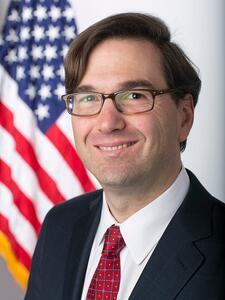
Russell L. Riley
We’re going to get underway, then, with the Jason Furman oral history, as a part of the Miller Center’s Obama Oral History Project. I understand we’ve got you until five o’clock. I just want to verify that. OK. If you need a break at any point during the proceedings—Because we’re starting a little late, I won’t schedule an official one, but if at some point you feel like you need five minutes, just say, “Let’s take a break,” and we’re fine with that. Normally, in a three-hour session we would do that.
Let me begin by asking you: We’re always interested in the political development of people that we interview. There’s a good deal about your family history in the briefing materials, but it doesn’t speak very much to your political interests. We know that you’re a juggler, and evidently a very accomplished one, but your upbringing was happening at a fairly fertile time in the Democratic Party. They were in the wilderness in the ’80s. I guess the question is: Is this registering with you? Were you and your family [Mario] Cuomo Democrats? Were you New Democrats? Atari Democrats? Help us understand who this person is that’s emerging later at Harvard. And we’ll want to talk with you about your education too.
Jason Furman
Great. I grew up in New York City in the 1970s and 1980s. To be very precise, I grew up in Greenwich Village, New York City, in the 1970s and 1980s. My parents were both very politically active, toward the hippie end of the spectrum, the further left end of the spectrum, probably, in the late ’60s, and then moderating continuously in the period that followed. I’m not sure there was a single Republican living in Greenwich Village when I was living there in the 1970s and ’80s. That’s probably a problem with my upbringing, and one that has only been very, very partially fixed [laughter] in the decades since then.
In 1976, we had to vote in my first-grade class on who we’d vote for for President. I voted for Jimmy Carter, and, when asked to explain it, it was because he cared about endangered animals. I think the Endangered Species Act was an issue of debate then, although I’m not sure. It’s possible I was misinformed, as a six-year-old, about what some of the major issues in our country were. [laughs] In 1984, I volunteered for the [Walter] Mondale/[Geraldine] Ferraro campaign. I handed out leaflets in Greenwich Village. I’m pleased to report that the two of them won Greenwich Village. [laughter] I’m not sure how they did in the rest of the country, but the area I was responsible for, they did quite well in.
Over the course of high school, I would say I was curious about further-left ideas, never overly further-left myself, but I also read The Economist magazine pretty much every week from age 13, so I’d read Karl Marx, and I’d read The Economist magazine, so probably was confused, and still am. [laughter]
Riley
All right. You get to Harvard. Why Harvard in particular?
Furman
It’s obviously a good university. [laughter] I was leaning toward Stanford, and I met someone who had gone to Harvard, and she told me about a major called social studies that was interdisciplinary, that was politics and economics and social theory. To me, that was really exciting. She also told me about a course called Ec 10. That’s the introductory economics course at Harvard that had all these great guest lecturers, including John Kenneth Galbraith, who I had read, and I was really excited about the opportunity to attend one of his lectures. That’s probably why I went to college. I should say as a sidebar I’m now the co-instructor of Ec 10, that course I was so excited to be taking.
Riley
So you ended up doing the social studies major. Were there particular professors who influenced you while you were there?
Furman
A range of professors did. I had what’s called a tutor, somebody who taught a seminar who was a graduate student named Danny Goldhagen, a political scientist whose research was on the Holocaust, and he had a big influence on me. [Martin] Marty Feldstein taught the introductory economics class, Ec 10. That had a really big influence on me in terms of introducing me to economics. He’s someone that I’ve had a lifelong friendship with. He had my job in the [Ronald] Reagan administration, and we debated over the course of a lot of our relationship. We disagreed on a lot of issues, but agreed on a lot too, and that’s a perspective that, in my head, I often hear his dissent, and sometimes I agree with his dissent, and sometimes I figure out the reasons why I think his dissent would be wrong, so he’s been banging around in my head my whole career.
Michael Nelson
And Russell mentioned the Democratic Party’s travails in the ’80s. You were a senior, I guess, when the ’92 election occurred. Did you get involved during your time at Harvard at all in politics, or in that campaign in particular? Did you have a candidate in ’92 that you favored?
Furman
Yes. Interestingly, I had done campaigns in 1984. We have at Harvard the Institute of Politics, and that’s where the students tend to go when they’re really interested in campaigns and politics. I don’t know that I ever set foot in it; I don’t know that I ever set foot in the Kennedy School. I wasn’t doing summer internships. I was much more intellectually oriented, was planning to be an academic, was learning economics, learning social theory, learning political science, and had a sort of bigger and more, probably abstract—almost happier in a café chatting about stuff than on the street, handing out leaflets, as I had done a decade before.
In terms of a candidate, I don’t remember passionately supporting any of them in the primaries, but I always liked Bill Clinton a decent amount. He had a certain charisma, a certain sort of younger and new Democrat. I remember also liking—Who was the Colorado Governor?
Nelson
Gary Hart? Senator Hart?
Furman
Yes, Senator Hart—and there’s another one who’s also interesting and quirky—He might have actually run in ’88, not even in ’92.
Nelson
Bruce Babbitt?
Furman
Yes, thank you. I was attracted to him for a while; he was really interesting and different. But certainly in the general election, I was passionately for Bill Clinton, but didn’t do any work for him, and by the time the election actually happened, I was living in London.
Barbara A. Perry
So, Jason, when you’re coming of scholarly age in this time period, and you’re preferring to be in café society, chatting about theories, you’re just at the intersection of Reaganomics and small government and lower taxes and presumably lower government spending, and then Bill Clinton and that moderate Third Way Democratic Party, Democratic Leadership Council of “smaller government.” But this all comes back, as we get to your career in government, to have these same kinds of debates. Are you involved in your debates and conversations with professors and students along these specific lines, that then has an impact on you as you go into government eventually?
Furman
To some degree, yes, and to some degree, as I said, it was sort of an oasis that wasn’t part of the debate over Atari Democrats and the like, and was in almost a different plane of existence that was more oblivious to what was going on. Now, it wasn’t completely oblivious. I probably had more passion around the Iraq War than I did around tax policy in the year 1991, for example, but definitely on economic issues, President Clinton’s investment agenda was appealing to me, and education and investment and the like.
Perry
Can we ask what your view was of that war? Because that has an oil-based economic component to it.
Furman
I was against the Iraq War. I thought that we should be trying harder to resolve the obviously wrong thing Iraq did differently than we did it. A decade later I was in favor of the Iraq War, and I might have gotten them backward and been wrong on both of them, in retrospect, but I don’t do foreign policy, so I’m happy to have you declassify this part as soon as you want to.
Nelson
You were thinking of becoming an economics professor, is that right?
Furman
Yes, I knew I wanted to do political economy, so I didn’t know if I wanted to be in a political science department or in an economics department, but, either way, I knew I wanted to do some combination of studying politics and studying economics.
Riley
The briefing books indicate that you got a master’s degree at Harvard in government?
Furman
Yes. After college I went to the London School of Economics for a year, so I was there in 1992 and 1993. I was living in London, paying as much attention to the collapse of the European exchange rate mechanism and the debates on the devaluation of the pound, which left it, and the franc, which didn’t, and observing firsthand what was going on with exchange rates in Europe and the like, paying as much attention to that as I was to “Would President Clinton pass his first economic plan?” in 1993. I was there in LSE [London School of Economics], did a master’s in economics. I had been accepted to the PhD program in government at Harvard, so I deferred that for a year to do my master’s degree in economics. Over the course of that year, it was clear to me that I loved economics—I loved the math; I loved the economics; I loved the topics—and that that’s what I wanted to do my PhD in. But when I got back to Harvard, I applied to transfer to the Economics Department, and while that transfer was waiting, I did my government courses for a year, and I did enough of them that even after I transferred, I still got a terminal MA [master of arts degree] in what we call “government,” what other people call “political science,” and then went on to do my PhD in economics.
Riley
And was Larry Summers on the scene for you during this interval, or does he only come on later?
Furman
Only during the Clinton administration. It’s weird. We were in the same place, same time. We’re so close now, but didn’t know him then.
Riley
OK.
Perry
But you do this year, correct, with the Council of Economic Advisers in 19—?
Furman
Yes. For me that was the huge change, as I thought I was on a completely academic track. Since ninth grade, since age 14, I hadn’t done anything in terms of campaigning, working in Washington, summer internships, et cetera. Paid some attention, but not obsessive attention, to government shutdowns and that sort of stuff. What happened was my advisor, somebody named John Leahy—He had been a student of Joe Stiglitz, and Joe Stiglitz was the Chairman of the Council of Economic Advisers, and Joe asked John, “Hey, do you know any students who could come work here for a year?” And John said, “Oh, I think Jason would be great for that,” so the Council of Economic Advisers contacted me. I had an interview over the phone with Joe Stiglitz. This was somebody we all knew would win a Nobel Prize—I’d studied a lot of his papers—and was a huge, epic presence in economics. I did a half-an-hour interview, and for half an hour he told me: “Here’s my theory on unemployment. Here’s my theory on interest rates. Here’s my theory on economic growth. Here’s the political debate I’m in now. Here’s why I’m mad at the Treasury Department. Here’s why the World Bank—” At the end of it, he asked what I thought; I said it all sounded quite interesting to me; and he said, “Great. Well, I’d love to offer you the job.”
It was the easiest job interview I’ve ever had. I’m not entirely sure what I could have done to have messed it up. I guess if I had told him I wasn’t interested in what he had to say, he might not have offered the job to me. Even then I wasn’t sure that I wanted to go away for a year. For me there were really two attractions to going away for a year: One was that I might get better ideas for my research, and the second was there was a woman that I was in love with at the time, and she was going to work on the Clinton campaign, based in Washington, and I thought I’d want to go follow her there, and this would be a good excuse to move there, so I took the job. I’m skipping some steps, but I married the woman, and we can get back and unskip the steps on the professional part. [laughter]
Nelson
The Clinton administration is when the National Economic Council is created, and the CEA [Council of Economic Advisers] had been around for quite a while. What was your sense going in of what does the CEA do, and what does the NEC [National Economic Council] do? Did you have an understanding of what the CEA was all about at this point?
Furman
Yes. It’s very prestigious within the economics profession. Marty Feldstein, who taught me my first economics class, had been chair of it. We had all been taught that was an important thing he did. It was only later I learned that he’d lost most of the arguments he was in during the Reagan administration, and left not completely thrilled with how it all turned out. There were a lot of famous economists who had been there, so I knew what that was. In the course of thinking about the job, I read the reflections of a number of economists who had served at the CEA. There’s a number of great papers. People have written articles, speeches: “Here’s what the CEA is; here’s what it does; here’s why it was meaningful to me,” so I certainly steeped myself in that. I don’t think I was aware that he had created the NEC and how the two related.
Also, as I said, I was excited to contribute to public policy. Being in Washington was exciting to me. But for me, this was intended to be a year that would also help me come up with better research ideas. [Nicholas Gregory] Greg Mankiw, who was my main advisor at the time, had, when he was in graduate school, spent one year at the CEA, and came back with great research ideas. Larry Summers and Paul Krugman had both spent, I think, one or two years at the CEA as grad students, and it had helped them inform their thinking. I was, again, thinking about it as much in an intellectual, not quite café—I think I was out of the cafés by then—type of way, as I was, “Here’s how I want to fit into the current debates on economic policy.”
Nelson
And what was your experience there like?
Furman
It really changed me, in a huge way, and very rapidly put me on the track and mindset that I have now. I love dealing with a diversity of issues. In grad school, you’re much more specialized, especially in the research phase, which I was in then. I got to CEA, and I worked on the budget, and tax policy, and labor markets, and climate change, and particulate matter. I just worked on everything. And I loved the challenge of “you can’t always do the first-best policy”—in fact, rarely can you do the first-best policy—so figuring out the sort of art and science of how to combine politics and economics, and figure out a better way to describe the best policy, or what the third-best policy is.
I ended up interacting a lot across the White House, and there you’re interacting with noneconomists—the people at the NEC mostly weren’t economists—and to explain to them, and to learn from them. Some of them actually knew a lot about policy because they’d been thinking of public policy a lot longer than I had at that time, but explaining to them the economics, and this sort of give-and-take that you have between economists and noneconomists, rather than just speaking your own language to your own people, to me was really, really exciting. I discovered, I think within months of being there, that I just loved all three of those activities.
I was involved in what became the negotiation over the 1997 Balanced Budget Act, especially on some technical aspects of it, like originally it was going to include a change to CPI [Consumer Price Index] indexing. That was, in some ways, very academic, but also mattered a lot in the real world. It ended up not happening, and fine that it didn’t happen, but it seemed like a good idea at the time. I became our staff person for our relationship with the OECD [Organisation for Economic Co-operation and Development]. I remember normally a member of the Council went. The member didn’t want to go, so she wanted to send me instead. Larry Summers was at the Treasury Department and he completely freaked out and said, “You can’t send someone this young to head the U.S. delegation to the OECD.” They ended up sending me, and I headed the delegation, and had a Federal Reserve Bank Governor as a member of my delegation at age probably 26 at the time, so I got involved in some of the international discussions that I had learned about and been interested in from my time at the LSE.
My plan had been to come back to Harvard after a year, and my plan didn’t work out. At the end of a year, Janet Yellen offered me a job. She had become Chair, replacing Joe Stiglitz. She offered me a job as her senior advisor, just sort of working with her minute-to-minute on every topic, and I accepted that. Then Joe Stiglitz, who had gone to be Chief Economist of the World Bank, called me and said he wanted me to come and be his senior advisor. And with a lot of sheepishness, I went to Janet and explained to her that I was really sorry. She understood. I then called my advisors at Harvard and said, “I’m going to take just one more year in Washington; then I’ll be back.” And they said, “One year’s a good idea, but two years is a bit of a mistake, and you’ll get rusty, and you’ll lose your math skills, and you’ll have a hard time reintegrating back.” And I said, “That’s OK, I’ll take my chances.” I ended up staying basically for two more years, and by the last year I stayed in Washington, I think I was too embarrassed to even call them and tell them I was extending for another year.
Riley
And you were at the World Bank this entire time?
Furman
So I went to the World Bank, and I was there during the East Asian crisis, and that was a really interesting time to be there. I was working for Joe Stiglitz, who was a real critic of the IMF [International Monetary Fund], and we were doing work on how premature fiscal austerity was hurting the economies in East Asia, how overly aggressive monetary policy was hurting them. Ultimately, the IMF basically apologized for what it did in East Asia. It has three quarters learned the lesson, and I think that was an important fulcrum of it, an important debate. Those types of debates over austerity have very much been with me, and I’ve been a part of them, since then.
I also worked on the issue of inequality and growth. Joe Stiglitz and I did, together, a paper in the Jackson Hole Fed Conference [Jackson Hole Economic Policy Symposium] in, I think, 1998, basically saying that inequality wasn’t good for growth. Now that’s a common idea; at the time, the reigning idea in economics was that there was a tradeoff, and that inequality was good for economic growth. We were one of the early papers questioning that, both theoretically and empirically, in a variety of ways, and that debate about the interplay between inequality and growth is one I’ve been in continuously since then.
I then went to the National Economic Council, where I worked for Gene Sperling, who was the director, and in that job was much more in the belly of the beast. I spent less time doing regressions, and more time writing talking points, than I had ever done before. I was very engaged in the budget battles over “Were we going to preserve the budget surplus? How were we going to spend it? How were we going to counter the Republican tax cuts that we viewed as regressive and didn’t like very much?” I spent more than a year pretty immersed, especially in fiscal debates, and some of that was, to our earlier discussion, an outgrowth of the appropriate size of government. We, at the time, were very excited about the Social Security Lock-Box. I came up with the idea of a Medicare Lock-Box, expanding it, having even more deficit reduction than we otherwise would have had. And I gave that idea to a friend of mine, Sarah Bianchi, who was working on the [Albert] Gore [Jr.] campaign, and Al Gore ended up announcing that, and being made fun of on Saturday Night Live for that announcement.
I started spending more and more of my time effectively volunteering for the Gore campaign. There were a set of rules—you had to work at least 40 hours a week for the government; you couldn’t do certain things on your computer; et cetera—but I was working more and more for the Gore campaign. At first I think we were using Hotmail, or one of the internet-based emails, to communicate. Then the White House shut that down for security reasons, and we switched.
Ultimately, I think one of the dating sites had some way to communicate with the person you wanted to date, and that’s how we were communicating over the White House computers to the people on the Gore campaign, and then the Gore campaign rented, fully legally, an office in what was then called the Old Executive Office Building, and it was for campaign work, and it had campaign computers, and you were allowed to go in there. In end of August, I moved to Nashville and joined the campaign for the last two months.
Nelson
Did you spend any time with President Clinton, or have opportunities to sort of assess his Presidency while you were there?
Furman
Yes, I was in probably about a dozen meetings with him over the course of my time at the National Economic Council. When I was at the Council of Economic Advisers, the only one was a handshake when we did the economic report for the President, but did not have any direct window into him. But when I was at the National Economic Council, yes, I was in probably a dozen meetings, maybe even more. I really saw someone who was into the details of policies, but also relished the politics. He would speak in a very colloquial—I remember once he was talking about a toilet filled with excrement, and the Republicans were diving into it, and if he needed to dive into it and swim with them and then get out and shower off, he was willing to do that. I don’t even remember what the issue was; it’s just a metaphor like this doesn’t leave your head long after the topic, the idea that he was diving into this toilet and then showering.
That was a way of talking and a way of being really political, but then there were times we were talking about making college tuition tax deductible, which interacted with his Hope Scholarship college tax credit, which he had gotten, and he was interested in talking about the relationship between a tax credit and a tax deduction, and how the two of them would interact on a tax form, and how it would be different if you set different rates for the tax credit. He was conversant in that form of conversation, and also conversant in a more salty, colorful, political conversation, and could move back and forth between the two of them.
I don’t know if you’re supposed to go chronologically, but as compared to President [Barack] Obama: President Obama definitely preferred engaging at a little bit more of a philosophical level, little bit more of a “first principles” level. When it came to the rate that we would set the credit at, or how the credit would interact with the deduction, or whether to make it a matching grant or a competitive grant or whatever, he almost always said, “You all know more than me on that, so I don’t want to waste our time talking about that. You all should figure out those details.” President Obama was very, very substantive, would read our memos beginning to end, but engaged in the substance less in the “dials of the program and how it was designed” and more sort of how the program fit in and what it was trying to accomplish.
The other big difference is meetings with President Clinton moved back and forth from economics to politics, quite fluidly. President Obama generally tried to begin his meetings with, “I just want to hear from the policy people about the policy, and what the best policy is, and how the different policies compare.” Then, after he had had that conversation, he’d bring the political people in to talk about the strategy related to “Is what they just said possible?” or “If it’s not possible, is the second thing possible?” He had more of a dichotomy and expected to hear economics from his economic advisors and politics from his political advisors. President Clinton was more of a free-for-all, with people offering both economics and politics, and him talking about both economics and politics.
Riley
Can you say which of those is easier to staff as a staff person to the President?
Furman
I don’t know. The most important is that you know which one it is. In the Obama administration, for example, Gene Sperling, who had spent eight years as an advisor to President Clinton, and was very used to doing both politics and economics—and Gene is brilliant at both politics and economics—I think President Obama sort of was rubbed a little bit the wrong way, and certainly some other people were, by Gene’s politics. It was sort of like, “You should do economics; we’ll figure out the politics.” I think for him, that was a little bit of a disconnect. He had been raised in this, “Let’s do politics and economics,” and he was in a place where people wanted to hear economics from him and didn’t want to hear the other part. The important thing is to know what’s needed.
I guess the Obama format worked well for me. I like to think, “What’s the first best? What’s the second best? What’s the third best? What’s the fourth best?” And then, if we can’t do the first best, that’s fine with me. We can do the second. Or, can’t do the second? We can do the third. I’ve sometimes made my peace with doing the 12th best. I’ve never gone as low as 14th best. I would not countenance that ever. [laughter] But I like to be sort of open-eyed about it, and I think sometimes when they mingle too much, there’s the risk that you convince yourself that the 12th best was really the first best because you’re able to do it, as opposed to you’re wide-eyed and you made a rational choice understanding the upsides and the downsides.
I prefer what I view as the Obama approach of separating the two. Then he brought them back together and synthesized them. At the end of the day, absolutely you need both. If anyone ever listened to and followed all of my advice, it would have been a total disaster and failed Presidency, but you want to make sure they’re getting both.
Riley
Based on what we’re hearing, typically President Obama ran a more disciplined process overall than President Clinton?
Furman
Oh, yes, absolutely. I remember one meeting in the Oval Office. I don’t remember what the topic was, but it was me; Gene Sperling; the Secretary of Labor, Alexis Herman; and one other person, and we waited outside the West Wing for this meeting for over an hour, and about an hour into my wait I looked at my watch and told everyone this could have been an entire episode of The West Wing, just us sitting in the lobby and making random conversation, waiting for this meeting with President Clinton to start. So, yes, you really saw that, the difference in discipline, the famous differences. There’s a reason that people think that: Because it’s true.
Riley
OK, thanks. Let me ask you to think in more macro terms. You’re in the Clinton White House when we get a balanced federal budget for the first time in forever. You have any reflections on the process that created that outcome, and on the importance of that at the time? It seems like a completely different era from where we are now.
Furman
Yes. I was very excited about it at the time. In retrospect, I have some doubts that it was the right approach—and we can talk about those—but at the time, we were creating jobs at an incredibly fast rate. We were in the longest economic expansion ever; the lowest unemployment rate, I think, since the 1960s. Don’t fact check me on any of this; I’m not making a speech here. [laughs] I think that’s right. There was a little bit of an “everything’s great and we’re balancing the budget.” And obviously some of the economics stuff I talked about caused the balanced budget, partly. But partly it seemed that the deficit reduction in ’93—also in 1990, which President Clinton hadn’t done—and also a little bit in 1997, may have made a contribution to the good economy, as well. It seemed like the causal arrows went both directions: fiscal responsibility, good economy; good economy, lower budget deficit.
I certainly worked on a lot of events; one of them President Clinton walked out into, I think it was the Rose Garden, and said, “I want to announce this year’s deficit,” and he had a blank poster board next to him and he took out a pen and wrote the number zero on that poster board. For me, that was an exciting moment. We hadn’t balanced the budget in the country since the 1960s. Under Reagan, he ran up the deficit, and as somebody who didn’t like Reagan, that was one of the things I didn’t like about him. Now, in retrospect, I think your position on the deficit depends on what party’s in power. I don’t think I had a deep-seated conviction the deficit was a bad idea; it was just I didn’t like Ronald Reagan, for all sorts of reasons—probably because I grew up in Greenwich Village and was either well-informed or misinformed—he increased the deficit; therefore, increasing the deficit is bad. Because when you don’t like someone, most everything they do you end up not liking. Under Reagan, I had definitely been schooled on the deficit being a bad idea.
Under Clinton, you saw this conjunction of a great economy and a low budget deficit, so I very much linked those in my head and was very excited about our Social Security Lock-Box, expanded it with the Medicare Lock-Box. I think it was my idea to have Al Gore call the elimination of the debt cutting the second-largest government program, which was interest on the debt. In retrospect we overshot the mark. I don’t think we needed to run as large a surplus as we did, and I wish we had taken that surplus and spent one third of it on Democratic priorities, one third on Republican priorities, and saved the other third, rather than preserved all of it and then it ultimately all got spent on Republican priorities, mostly tax cuts.
Nelson
I wonder what your thoughts are about how the NEC looked from the vantage point of the CEA, and then vice versa, since you were one of the few people, I think, who had experience in both institutions during a formative period.
Furman
Yes. I think I’m the only person that’s worked at both of them twice, [laughs] and not many people have worked at both of them once. For me, it’s just been different hats. When I’m at the NEC, taking into account politics more, strategy, interacting with the press office and the leg. [legislative] office and the people responsible for groups, and trying to be an honest broker, of “Here are the different economic views, policy views, and political views,” and, “How do we put them together? What are the different options? What are the pros and cons of the options?” When I’ve been at CEA, I’ve just had a much more analytic hat on. I’ve spent much less time talking about political considerations, and much more time delving into the statistical robustness of a regression and figuring out some empirical strategy for estimating something. It’s different hats.
When I was at CEA, all of our analysis was always macro analysis; we would use the period of a business cycle: “What was productivity growth over the course of this business cycle? What was job growth over the course of this business cycle?” When I was at the NEC, we used the Presidential terms as our dates for economic analysis: “How many jobs did Clinton create? How did that compare to [George H. W.] Bush? How did that compare to Reagan?” I’m happy to say I’ve evolved maybe back to something like my—not quite café—intellectual days, but something closer to that. I felt I was more political at the beginning of the Obama administration, and I was one of the economists in government that became less political over the course of it, and less interested in politics, and more interested in economics, so I was quite happy to be back at the CEA for the second half of that administration
Nelson
What did Harvard think about all this? It sounds like they thought, Oh, a year at CEA, fine, that’s part of an academic career. But by now you’ve really strayed two or three iterations away from that.
Furman
Yes. That four-year period—It was hard when I got back to graduate school in 2001. Most of my cohort had graduated. There was a new group of people who I didn’t know; my math skills definitely got rustier; and it seemed really trivial to me. I had written lines that went directly from my pen to Al Gore in a national debate that was watched by 100 million people. I had come up with the idea of a Medicare Lock-Box, which was made fun of on Saturday Night Live. Now I was back trying to write a chapter of my dissertation that no one would ever read, and certainly would never be made fun of on Saturday Night Live. For me, coming back to Harvard to my PhD was an adjustment. I definitely don’t recommend to most people that you take four years off.
What made it work for me is when I first got back I stayed engaged. I wrote articles about how President Bush’s tax cuts were terrible. I was on conference calls about his Social Security plans. I was still engaged. And Greg Mankiw, who was by then my main advisor—We had lunch at Bartley’s Burgers and he was really thoughtful, and said, “Jason, you could be a great economist, but not if you keep writing articles about George Bush’s tax cuts, which, by the way, I like and you don’t. That’s fine. That’s not what this is about. But you need to focus.” And he told me, “Don’t answer any phone calls from Washington. Don’t be involved with anything there. That way you’ll finish your PhD. And you might want to become an academic economist. You might go back to Washington, but Washington will still be there two years from now, and my guess is that they’ll still remember you two years from now.” And it was great advice.
I felt bad. I told friends of mine, “I’ll speak to you socially”—it’s not like I was cut off—“but I’m just not going to be on these calls. I’m not going to write these memos. There’s a whole team working on stuff, and I’m not going to be a part of it.” And so from mid-2001 through mid-2003, I pretty much took a pass from active engagement in policy and focused on my research.
Perry
What was your dissertation topic?
Furman
Well, in economics we staple three papers together, so, broadly speaking, it was monetary economics, and exchange rates, and international finance. Some of those exchange rate issues I mentioned when I was in the U.K. came back in my research. I ended up not working on them in public policy very much until 15 years later.
Perry
But your dissertation supervisor didn’t encourage you to have a topic or topics that were closely related to what you were obviously interested in and writing about?
Furman
Yes, I don’t know why, because—Exactly, I was interested in tax policy and Social Security and fiscal policy, so in some ways that going to Washington to find research topics, at least for my dissertation phase, isn’t at all what happened. Yes, I don’t know why, and I don’t know why I hadn’t thought about that until now. [laughs] I don’t know. I did no monetary policy in Washington. That’s something the Fed does. It was independent; we didn’t comment on it. And that ended up being what my research was about.
Nelson
Can you talk a moment: Al Gore, as you observed him as Vice President and then as a candidate?
Furman
Wait, what about Al Gore, as I observed him?
Nelson
As you observed him in the White House, and then as a candidate.
Furman
I think I observed the things other people did. I found him a little bit more prone to sort of chase after ideas that were pretty crazy. He had one: that the different pieces of government were going to all be in different places and rotate every six weeks to be closer to citizens. I don’t think he ever announced that. But I felt like he was constantly toying with ideas that were just sort of—you didn’t want anyone to hear them—and much less practical than what you heard from Clinton. But I liked him. I thought he would have been an excellent President. But yes, he had a sort of—And maybe that served him well—He actually did contribute to the internet. I don’t know the full history of that; I wasn’t with him then. He obviously didn’t invent it—I don’t think he ever said that, either—but he did contribute to it. The techie, climate change, alternative side created sort of high variance of some big ideas and some crazier ideas, and more of the big ideas happened than the crazier ones, so that’s good.
Riley
Jason, was it always the case that you were going to go back to the Economics Department? I think about the Kennedy School being right there, and you had a policy interest. Was that ever an idea that you kicked around?
Furman
No, and I probably should have, but I’d never been to the Kennedy School as an undergraduate or a graduate student at Harvard before going to Washington, and then when I came back, Greg Mankiw was sort of like, “Lock yourself in the Economics Department, and our seminars, and writing.” And I think that was good advice. I didn’t have a mentor at Harvard—and, for whatever reason, didn’t seek one out—who was doing issues like tax policy and Social Security that had been my focus of my political work.
I might have also been a little bit worried that—I don’t think research should be advocacy. I much prefer economists where I don’t know what they’re going to find, rather than the ones who I know before they wrote the paper what they’re going to find. I might even have been a little bit nervous that I could do advocacy about “Republican tax cuts bad, Democratic tax cuts good,” but if I wanted to go into something not knowing the answer—“How do U.S. monetary policies affect Canada and affect the exchange rate?” I didn’t have a huge political stake in what the finding of that paper was. But I continue to have a belief in scientific enterprise, where you don’t know the answer, so I’m not positive, Barbara, if that’s why I didn’t go back to the topics I had been working on, since it might be a rationalization, but it might be the reason too.
Riley
You get married in this interval someplace?
Furman
I got married in 2002, so after I had returned to graduate school, while I was making sure not to talk to any of my old friends.
Riley
And she was a help in that?
Furman
Yes, my wife—or, well, then she was my fiancée—was living in New York City, so I was doing some commuting back and forth between Cambridge and New York. A very close friend of mine was living in, actually, Somerville at the time, so I had a room. We shared an apartment that I had a room in, so I was commuting, and yes, she was very supportive, and definitely I had come pretty far in my PhD. It was very clear that whatever path I wanted in life, a PhD was an important part of it. And I actually thought I was going to go on the academic job market.
Riley
And what happened?
Furman
And then what happened was, in 2003, the Democratic primary field was in disarray. I didn’t like Howard Dean at all. I thought he’d be a disaster for the Democratic Party and represent a real leftward lurch that both wouldn’t get elected and, if he did, would have bad policies. John Kerry had sort of imploded and it looked completely impossible that he could ever win the nomination. And there was this white knight that was emerging named [Wesley] Wes Clark, who had been the general who had commanded U.S. forces in Europe. My wife, interestingly, was really into Wes Clark, and, in 2000, she had been in favor of Al Gore picking Wes Clark as his running mate. She had been a long-standing fan of Wes Clark. And Ron Klain, who’s now [Joseph R.] Biden’s Chief of Staff, who I knew through the Gore campaign, called me up in 2003 and said, “Jason, would you just help for a week? He’s entering the race. He has no idea what he’s doing, and we need to put together a jobs plan.” And I said, “OK, I’ll take a week off to do that.” And I worked with Gene Sperling and one or two others of my old confederates, and we spent—
Riley
And this is 2003, so you’re one year into your pledge then, right?
Furman
No, I’m two years into it. I was thinking of going on the job market in the fall of 2003, and this was probably around August or something, and we spent a week, and we developed a whole economic plan for him. Then he said, “Oh, he’s going to do a debate, and he doesn’t know what he’s doing in the debate. He doesn’t know anything. Would you just fly down and meet with him for two hours to talk to him about his debate?”
They flew me down, and at the time I wasn’t used to anyone flying me anywhere. This was this exciting white knight savior for the Democratic Party, and it was only going to be a day, so I went down to debate prep, and I really liked Wes Clark. He was really smart, and really seemed like he had a shot at winning, and could sort of restore the party, and he was a blank slate on economic stuff, which was exciting too. He didn’t have this whole big track record and tons of policies that you had to contend with. There was another thing, and another thing, another thing, and they needed a policy director. And I remember I called two or three friends of mine, one of them [Jonathan] Jon Orszag, and I said, “Why don’t you be the policy director? You’d be a great policy director.” And he’s like, “No, I’m not going to do it.”
Partly it was exciting to me. Partly, my wife was really, really excited, and really believed in it. And partly, I had a slight attitude: “Somebody needs to do this. It’s really important for the Democratic Party. This might be our best hope, and there’s no one else who’s going to do it. I can’t find anyone else, so I guess I’ll have to.” So I moved down to Little Rock and joined his primary campaign as policy director, where I was responsible not just for economic issues but all issues, the foreign policy only nominally so—he obviously had very strong views on that—but all domestic issues. And once I moved to Little Rock for that campaign, then it was clear I was not going on the academic job market that fall, and, in fact, that was my real love, and was on a different track in terms of my life.
Riley
So you were with him for how long, then?
Furman
I was with him until he lost. He withdrew, I think, in February 2004, something no one predicted would happen. National Journal used to poll the 50 top experts on politics, and I think he was their number one prediction for President, and Kerry was dead last. And what happened was Howard Dean imploded; Kerry came in first in Iowa; Wes Clark had skipped Iowa; and Kerry just rose and rose and became the candidate. Wes Clark dropped out, and I got a call—I think, as he dropped out, right after he dropped out—from Sarah Bianchi, who was the policy director for the Kerry campaign. We had been friends through the Gore campaign, where she was the first person I gave ideas to there, and she said, “Jason, you have to come here.” I did a bit of hemming and hawing—I wasn’t eager to do it—and then, again, it seemed like my country needed me. He was the right candidate. I was the only person who could do it. I’m sure that wasn’t true, but I think I convinced myself of that, so I went to be director of economic policy for the Kerry campaign.
Nelson
Working for Wes Clark, you were very impressed by him, and others you knew were very impressed by him. What made him a poor candidate, and did it shape your ideas about what you need to be—not only a very impressive person but also a good candidate?
Furman
Yes. It’s really hard to go from something other than politics to politics, and there were a number of places where he was politically tone deaf, or didn’t—Sometimes he was actually overly pandering, sort of agreeing with whatever audience he was in front of and not knowing how to say tough things, which is weird. And he was a little bit erratic. Going forward, I would generally be much more comfortable with somebody who had served in elected office and had faced voters. President Obama did a fantastic job, so I wouldn’t limit myself to people with executive experience. President [Donald] Trump, there’s more than enough reasons why I wouldn’t like him, but if I were choosing among Democratic politicians, I wouldn’t want the Democratic version of Donald Trump, either.
Riley
With Wes Clark, you used the term “a blank slate.” How do you go about developing a policy platform for somebody who is a blank slate?
Furman
I don’t know. I mean, he was interested. He was a very smart guy, very high-IQ [intelligence quotient] guy, and literally no track record, so he was unencumbered by any past track record on the economy. He had views. And I’d say he was eclectic. We proposed a plan that raised the top rate to 50 percent, and used it to do greatly expanded child tax credits, build it as a tax reform plan that was going to eliminate taxes for some large fraction of families with children. That was sort of not obviously right, not obviously left, and framed more as tax reform than what Howard Dean was framing his things, or John Kerry his things. It enabled us to be a little bit more innovative, a little bit more experimental and eclectic.
Riley
Where do you go then?
Furman
So the Kerry campaign ended. Once again, I’d been on a Presidential campaign that did not succeed, so when that ended, I knew I wasn’t going to be a pure research academic. I had done four years away from it, two years getting back, fell off the wagon again, so at that point, embrace it. That’s what I’m going to do with my life, and hopefully there’re exciting things one can do with that.
And I wanted to live in New York because that’s where my wife was living; that’s where my family was from; that was the city I was most attached to. I found, essentially, an adjunct affiliation with NYU [New York University], which gave me an office, and I taught a class there. But my main employment was at the Center on Budget and Policy Priorities in Washington, which made me a senior fellow, and my main activity in 2005 was working on Bush’s Social Security plan—and when I say “working on” it—working on finding all the flaws with it [laughs] and clearly analyzing and explaining those.
Bush people did me a huge favor, which is that they never, ever, put out any analysis of their plan. I was probably the only one doing any numbers on their plan—They were just doing concepts—so journalists would go to me and to the Center on Budget to say, “Oh, what are the numbers? How do they add up? Do they not add up?” That was a combination of research and advocacy, very much of the “knowing the conclusion before we start the project” form, not what I think actual research should be. I spent 2005 very much enmeshed in those debates over Social Security.
Now, I should say I believed in Social Security reform. I think there were some people on the Democratic side who were like, “This is a made-up problem,” but I was of the view this actually is a real problem, and it does need to be solved, but this isn’t the right solution. I testified to Congress for the first time in 2005, in a six-hour hearing, where there were something like four or five Republican witnesses and two Democratic witnesses. I got more questions than anyone else. The best one I got was from a Congressman whose name I didn’t know at the time. My wife thought he was really, really impressive—and it was Paul Ryan—because he was one of the few—Usually they ask their question and they think they’ve trapped you, and then you say something and they’re not prepared for it and they don’t have a follow-up—and he had a follow-up, and boxed me in in a clever way.
Over the course of that year I became really good friends with a couple of Republicans on the other side of the debate: [Charles] Chuck Blahous; Andrew Biggs; a woman who was Lindsey Graham’s staffer, [unclear]. And some of them are lifelong friends of mine—Andrew Biggs and Chuck Blahous. And I came to respect a certain amount of the honesty of what they were doing. They weren’t taking the easy way out and doing a sort of free-lunch plan where they faked it all. I testified that we needed to have sustainable solvency, that we needed to make tough choices in Social Security. And I did a lot of flying around the country doing debates with different people, and some of them on the Republican side I thought were total hacks, dishonest, didn’t want to share a stage with them, and some, I thought were of enormous integrity, really sincere, really trying to do something good, but misguided about it.
That year, in sometimes debating with people on Social Security, has been really important to me. My advisor was Greg Mankiw, who is a Republican, but I made, in some ways, more friends doing economic policy for the Republican side that year. To this day, I think one of the important things is I have a lot of really good relationships, go to AEI [American Enterprise Institute], speak there, and have a little bit of an open mind on some questions about who’s right and who’s wrong.
In 2006, or maybe it was the end of 2005, Bush came out with a tax reform panel, conclusions, and I publicly wrote articles agreeing with some of it, and agreeing with some of what they did on the low-income side, some of what they did on the mortgage interest credit. I came out with a plan that would limit the tax deductibility of health insurance that probably had more Republican fans, including Marty Feldstein, my first teacher of economics, than it had Democratic fans. President Bush came out with a plan that limited the tax deduction, and I wrote, “It’s half good, half bad,” and was in regular touch with people in the Bush Treasury in 2006 and 2007, even as they were developing the proposal, who wanted to know what I thought about it. So began a much more bipartisan conversation and debate—but also mutual understanding about economics—than I’d ever had before over the course of those years.
Riley
Can I ask you what the core of your main idea or recommendation was in 2006 about putting Social Security on a sounder footing?
Furman
Yes. It was sort of a combination of the relatively standard elements: to do tax increases, both payroll tax and raise the cap, and benefit cuts. The specific proposal I came up with—I called it dependency indexing—I really liked. It still hasn’t caught on, but we haven’t solved Social Security yet, so there’s still hope. Some people talked about linking things to life expectancy, like the retirement age. But Social Security’s challenges, a lot of them aren’t that people are living longer; it’s that people are having fewer babies. It’s the ratio of working-age people to retired people getting worse and worse, but a lot of it is fertility. The way you want to solve the fertility issue is more on the tax side than the benefits side. My idea was to make the program link both taxes and retirement age, or benefit levels, to the dependency ratio, to the overall ratio of retirees to working-age people, and it would bring in both fertility and life expectancy. That was the idea I was pushing.
I view that debate this way: There were sort of dishonest Democrats who were saying there was no problem, dishonest Republicans saying there’s a solution that’s painless, and there were Republicans who liked individual accounts plus some pain, and there were Democrats who didn’t like individual accounts but thought you did need to have some tradeoffs and some—“pain” is the wrong word, but anyway, some—cuts somewhere. Anyway, that’s what I was pushing at the time, and in some ways it was sort of eclectic. My health idea of reducing the health exclusion also embodied that eclecticism of—The policy was actually quite progressive but yet it was taxing health insurance, which labor unions particularly hated because they’d gotten these great health plans for their members, and the like.
Nelson
When did you start thinking about 2008? Because it was clear that Bush was not going to be on the ballot again, and the Democrats were eager to put in somebody of their own persuasion.
Furman
By the way, just to add one more thing into the career list—Sorry, there’s too many jobs here so it’s taking forever—I went in 2007 to head the Hamilton Project. Peter Orszag had been running it. Bob Rubin and Roger Altman had formed it. Peter went to run the Congressional Budget Office and they brought me in, and I became a senior fellow at Brookings and the director of the Hamilton Project. The Hamilton Project at the time was the sort of centrist wing of the Democratic Party, but more the wonky wing of the Democratic Party—not like a political theory of the case but a sort of economics: “Let’s stick to the policy, figure out the best policies.” I was developing there, and leading people on developing policies on everything: energy, health care, taxes, infrastructure, poverty, et cetera. I was just loving that job. I was loving being at Brookings. My wife and I had our first child in 2007 and our second child in 2008, so I said there was no way I would go to another political campaign. I’d done it twice before. I’d lost twice before. Both times I had to sort of pick up the pieces afterward and figure out what I was going to do next, and I wasn’t going to go through that again.
I loved Obama during the primaries. To me, he was a really exciting, inspirational figure, with a great sensibility around a range of issues. And my wife loved him. During the primary campaign, I was happy to talk to anyone that wanted to talk to me from any of the campaigns, but I definitely put more effort into talking to Heather Higginbottom, who was Obama’s policy director, and was my friend from 2004, where she was the deputy policy director for the Kerry campaign. They asked me a couple of times if I wanted to go over to the Obama campaign, and I told them, “No way. I have children. I have a great job. I would love to go into the administration, if there is one, but I can go from Brookings to a job in government. I don’t need to go to the campaign.”
I really didn’t want to go to the campaign, and one day I was sitting outside at—not a café—a restaurant, sitting outside in Greenwich Village with my wife and our two babies, one of whom was probably four weeks old. It was around May of 2008, and Obama was guaranteed to get the Democratic nomination, even though Hillary Clinton hadn’t withdrawn yet, and it was David Axelrod calling me. It wasn’t someone I knew. To me, he was a quite famous figure. And I took the call. I came back to my wife, and I said, “I can’t do this.” And she says, “You have to do this, or you have to find out about it. He may need you. I can handle it. You should consider going off.” And so David Axelrod told me, “I know you don’t want to do this, but why don’t you come meet him and just talk to him and see what you think? And you don’t even have to take the job,” et cetera.
So I flew to Chicago in June of 2008. It was the day that Obama came back to the headquarters, right after Hillary Clinton had dropped out, to give his speech to his campaign staff. Before that, he interviewed two people for jobs on the campaign. One of them was a completely different job—speechwriter? I don’t remember. The other was me. For almost everything else they were hiring, he said he didn’t need to meet the person. We had a conversation for half an hour, and we talked about a paper I had written about Walmart being a progressive success story that was quite controversial among Democrats. We talked about the relationship between pretax inequality and posttax inequality, and whether it was better to address inequality on a pretax basis or a posttax basis. We talked about whether you should start with the market and then figure out ways to correct it, or start with the corrections and then add a bit of market. It was a discussion of the philosophy and philosophical approach to economic policy.
It was just a great, great conversation: really substantive; really intellectual; really, really interesting and exciting. At the end, he said that I had to work for him. I certainly was not in the position to say, “But David Axelrod told me I could come meet with you and I didn’t need to work with you.” I figured I had him in a pretty good position. He seemed sort of, frankly, desperate, so I bargained. My bargain: I took out two photos of my children, pulling the lever in the primary—my son; my daughter hadn’t been born in the primary—and a picture of her with an Obama sign. I told him if he signed the two pictures, I’d be willing to work for him, [laughter] The negotiation didn’t last very long. He caved instantly. [laughter]
Nelson
I’m interested in the substance. For example, from your Walmart piece, I get the sense that you’re a “Let the market work and then correct it,” rather than a “correction and then market.” Is that right or wrong? Did you and he see things the same way?
Furman
By the way, I’ve changed on this some over time, but certainly in 2008, yes, I considered myself, “Let the market work, and then it’s not going to give us the outcomes we want, so you want higher taxes on high-income people, more benefits for middle- and low-income people, and that’s how you get the distribution,” as opposed to focusing primarily on minimum wage, labor unions, monopoly, power structures in the economy. And I think that was broadly where his head was. I think he very much believed in markets. He liked free trade. You saw that over the course of his administration. I think he sort of started with markets and then asked how to correct them, as opposed to starting with power relations or some other paradigm for thinking about the economy.
Nelson
So he liked your Walmart piece. Is that right?
Furman
We talked about it, and there were people who would have thought that was disqualifying. In fact, one friend of mine, after I wrote that, said, “That was a great piece. I never would have written it myself because I want to work in Democratic politics in the future.” I thought it was true and that it needed to be said, so I wanted to say it, and wanted to be a truth teller. And so I’m not 100 percent sure whether Obama agreed with my argument or wanted someone he thought was a truth teller. I’m positive he appreciated that he thought I was going to give him my unvarnished opinion, something that when he nominated me for the Council of Economic Advisers he cited as one of the things he liked about me, so I’m not sure whether he thought I was going to be an honest person or a person with the correct views, but he certainly didn’t think that view was so incorrect that he didn’t want to have that person on his staff.
Perry
Jason, you said on that day that you were one of two people, maybe the only two people he called in to interview in person. Does that tell you that it was about you? Was it about how important economics were, and particularly at that time as things are beginning to collapse? Do you have a sense of that?
Furman
I was told it was the latter at the time, that the economy was beginning to collapse, and he thought it was really important who was managing economic policy for his campaign in the middle of an economic crisis. So, yes, there’s somebody doing domestic policy, but he trusted the judgment of whoever was hiring on that, but on economics he wanted to meet the person.
Perry
And there’s a little bit of a theme. We mentioned that we had interviewed Cecilia Muñoz, and in her book she talks about how she had young children, and was saying to the people calling her that she didn’t know if she wanted to go into a White House pressure cooker. And just what we read, too, about the President and persuading Hillary Clinton to come into the Cabinet, that he does pride himself on being able to convince people who may have reasons, family or otherwise, not to go into the administration. I guess that’s part of the explanation, as well, that this was such an important area: He obviously wanted you. I’m sure Axelrod had reported to him the conversation, that you had some misgivings, and that he thought that he could make the difference. And he did, obviously.
Furman
Yes. I promise, promise, it was not a strategy, but playing hard to get [laughs] I think did work with him. I think Tim Geithner genuinely was ambivalent about being Treasury Secretary. He was genuinely unsure about whether he’d do a great job in it, and thought he was doing a critical job at the New York Fed. That, I think, really appealed to Obama, and helped Tim Geithner become Treasury Secretary. It goes along with—I don’t know—He just didn’t love the Washington nonsense, and professional Washington people, and wanted people who were less “time in, time out, always showing up” because that was the current game in town, and more thinking a little bit independently, or of some independent stature or knowledge. That’s part of it too.
Perry
That’s interesting. They weren’t aspiring to be in his administration, or anyone’s, at that point, perhaps.
Furman
Yes. He liked idealists, too, who were sort of his people. But I don’t think he loved the professional Washington conventional wisdom: “Always do it as it’s been done, et cetera,” and saying you weren’t desperate to work for him was a signal that you weren’t that type of person. Saying you’re desperate to work for him was a signal that you were that type of person. Didn’t mean you were that type of person, and there’re great people who work in Washington for decades, but yes, that was part of it for him, would be my guess.
Nelson
We haven’t asked about this, but it seems like at every stage of your career the woman who became your wife and then was your wife is a significant force in terms of what ends up being your own career trajectory. Can you tell us more about her?
Furman
Well, first of all, I should tell you her name: Eve Gerber. And yes, at a time when I was much more purely interested in economics, in 1996, she was going to work on a political campaign, and that got me excited, not just about following her, but it got me more excited in the campaign, and more excited in doing something related to it. She was a big fan of Wes Clark, which helped influence me there. I never would have gone to the Obama campaign if she hadn’t, to my surprise, told me she wanted me to.
She is not someone with a lot of economic policy opinions. Being married to me has probably discouraged her from having them—I hope I don’t close them off, but maybe I’ll have to seal this part of the interview for who knows how long—so we rarely discuss and debate very specific economic policy issues. We constantly discuss the politics, including the politics of economic policy, and on the role I should play. “How much should I just be pure economics? How much should I combine economics and politics? What should my profile be in the world?” Those types of things, she’s been a wonderful sort of soulmate and advisor on.
Riley
It’s striking to me, Jason, that given the experience that you had in the ’90s, that Hillary Clinton was not somebody that you naturally gravitated toward and found yourself in her orbit. All of the stars seem to have aligned. As an outsider, I’m reading the Walmart piece with this in the back of my mind. Is that completely separate from—
Furman
Oh, that was separate from the Clintons, yes. That had nothing to do with the Clintons. Obviously, they’re from Arkansas; they’re probably sympathetic to Walmart, but I have no idea. People close to her didn’t think that piece was going to serve me well politically, so that was definitely not a strategy vis-à-vis them. I really like her. I met with her a couple of times over the course of 2005 and ’06, and was part of small groups of people briefing her and discussing different economic policies, so I quite liked her. But Obama just had a certain inspirational aspect to him that, given my age, appealed to me, seemed something fresh and new. She seemed encumbered by a lot of stuff. I certainly had a lot of friends working in her world. I think she would have been a great President in 2009 or in 2017, but, yes, I just didn’t have the same emotional excitement that I had for Obama.
But I didn’t endorse. I don’t think anyone would have cared if I endorsed anyway because I was running the Hamilton Project at Brookings, and I had a very good excuse: “Oh, because of this I can’t take sides.”
Nelson
When you became economic policy director of the campaign, what sort of understanding do you have about the shape the economy was in then? Did you see any of the storm clouds on the horizon that would later break in the fall?
Furman
Yes. In January 2008, I had written a paper at Brookings with Doug Elmendorf, my colleague at the time and my colleague now—my dean now—on fiscal stimulus, calling for fiscal stimulus. We saw the economy going into, at the time, what looked like it might be a short but relatively sharp recession, and that fiscal stimulus should act quite quickly to respond to it. We wrote that before Bear Stearns failed. By the time Bear Stearns failed in February, I think everyone was increasingly terrified. I was ahead of the curve in the macroeconomy understanding, I think, of the dynamics of GDP [gross domestic product] and unemployment. I was behind the curve—not behind the curve; I was sort of with the curve—on the financial system and the plumbing of the financial system and how important that was going to be for the macroeconomy.
I was certainly reading and talking to people. I’m friends with Nouriel Roubini, who was warning about the sky falling, and you thought, Oh, there’s a chance that’s going to happen, but there’s a chance he’s sort of a crazy person, and time will tell. But on the campaign, what made that campaign so different from Kerry and Gore was we were working on the financial crisis in real time, almost like we were in the government. Normally, in a campaign, what you do is say whatever your opponent says is terrible and will destroy the world, and whatever you do is miraculous and will save the world, and you spend time either figuring out the terrible things that your opponent’s doing or the miraculous things that you’re doing. This was different. I was spending lots of time trying to understand, “Is it better to do equity injections or buy toxic assets?” and which of those two policies is better, not which is going to win in the election but which would save the financial system.
I was in touch with the Assistant Secretary of the Treasury, [Phillip] Phill Swagel, to talk about how they were seeing the economy and how we were seeing the economy. He was from the opposing political party. Obama was regularly talking to Paulson and sometimes talked to Bernanke, and even went to one meeting with George [W.] Bush and John McCain at the White House, so it was almost like a dress rehearsal for how you would govern in a crisis situation. Hank Paulson told someone that he thought that Obama was much more reliable than McCain, and much more on top of the issues than McCain. I was on a call with Obama and his communications team and others, and that came up, and one of the communications people said, “We have to get a reporter to write a story on that,” and Obama said, “Paulson is having a hard-enough time preventing a second Great Depression. I don’t need to make his life any harder by having that news story out there, so you cannot put that out,” and that story never appeared anywhere.
Obama spoke to McCain about how to handle the situation because he didn’t want to irresponsibly contribute to it. Obama called me and said he wanted me to reach out to Doug Holtz-Eakin, who was the economic policy person for McCain, so that we could have a communications line between us about the financial crisis. I was with Obama during debate prep in Michigan when he alternated between doing debate prep and making phone calls to the Congressional Black Caucus members, telling them to vote for TARP [Troubled Asset Relief Program]. TARP, at the time, was incredibly unpopular; perceived to be a bailout. It was proposed by a Republican. Obama could really easily have come out and said, “You know what? We need to rescue the economy, but I have a better way to rescue it, so let’s vote against TARP and do my better way to rescue it.” He didn’t do that. He was running on a campaign that was about change, and yet the least popular economic policy of the other political party, he embraced. By the way, I think he also hated debate prep, so he was happy to have the excuse of getting out of debate prep to make phone calls [laughter] getting people to support TARP.
This wasn’t an obvious decision for him. Where he made the ultimate decision to support TARP, we were all on a phone call with him, and he went around on the phone. He wanted to hear every single person on the call’s opinion on this question. Most of his political advisors said, “Oppose it, or support it but support it with conditions that they can’t meet.” You know, “I’ll only support it if you do these five things,” and those five things wouldn’t happen, and then you can be against it but it’s not your fault it failed because they didn’t meet your conditions. That’s what every political advisor recommended. I recommended he support it. I told him it was just economic advice; I didn’t know how you win the Presidency. And he decided to support it. That was a really courageous decision at the time.
We would do phone calls where half the agenda of the phone call was whether to run an attack ad on John McCain’s entanglement with the savings and loan crisis, and half the call was whether to do equity injections or toxic asset purchases. It was just this surreal thing where he was processing both of these sets of issues simultaneously. Anyway, I think he ended up being really well served by that position. The country got to see what he would be like as President. It was a little bit like a dress rehearsal for the Presidency. By being responsible, rather than being populist and popular at a time when people were really scared and really hoping for responsible leadership to get out of this, that ultimately helped him win. John McCain acted more erratically in how he handled it, and that hurt him in his chances of winning. But at the time it was courageous.
I remember the night TARP passed. He called me like 12:30, after midnight—and I still have his old phone number in my cell phone, in my contacts, so it would come up on caller ID [identification], but I think he has not had that phone for a very long time—and he was just almost, again, philosophical. “Jason, will this work? Is this enough? Should we have done something different? Can I use this?” My main message to him, by the way, was that TARP is really flexible, that the legislation was written at the time for toxic asset purchases: “Don’t worry, Senator, if you’re elected, you can redo what it’s used for. They did not put a lot of conditions in it. There’s a lot of flexibility there, and, if you get elected, we can figure out the best things to do with this.” That was the conversation we had, and ultimately, of course, that is what happened. We used it somewhat differently than the original idea when it was passed, but yes, I told him, he’d have an amazing tool if he was President that he could really, really use in the way he wanted.
I told him we don’t need to figure out exactly how to use it right now, so maybe he should focus more on—I sort of agreed with David Plouffe and David Axelrod. Every call I’d sort of apologize: “The fact that we just talked for 20 minutes about technical economic things, I’m sorry. I realize where to run ads is much more important than anything I’m talking about, and that none of this matters if he doesn’t win, and I’m sorry.” They’d say, “It’s not your fault. He’s the one who wants to talk about it. You can’t not talk to him about the thing he wants to talk about. We know it’s not you dragging these conversations out. We know it’s him.”
Perry
So, Jason, you’d said that as TARP was coming along that there were conversations about the politics of it, and whether that was good or bad, and probably bad. As he’s getting closer to, and then goes ahead and embraces it, and encourages people in Congress to vote for it, you just said you were playing a role of “This is really flexible, and if you’re President this will be very helpful,” but were you also putting on your political hat and your policy hat and thinking down the road? Because it does come back to bite, doesn’t it? The Tea Party rises up against it, and the President.
Furman
Yes. Some issues on a campaign definitely had a big political hat because the political people don’t pay much attention to policy on campaigns, so you have to internalize the politics. I felt like if they said, “Come up with a jobs plan,” I had to both guess at the economics and guess at the politics, and the politics were probably more important than the economics because he needed to be elected, so I would internalize that.
TARP, the political advisors were paying intense attention to, so I felt that freed me up to make the economic argument and let them make the political one and have the debate out, so I probably internalized less politics on that. I also was internalizing Obama’s attitude, which was the country might collapse, and I don’t want to contribute to the collapse of the country, and it felt like there was something bigger than winning at that moment. That was his attitude, so I internalized it. When we were in office, we can come back to, “Should we have used TARP differently? Should we have done more popular things or are there things we could have done to restrain the Tea Party?” It’s possible sort of ex-post “mistakes were made,” but I don’t think his support for TARP was a mistake, and, in some sense, he got elected, so it can’t have been an electoral mistake, and I think it was critical to saving the economy. It, on its two most important things, I think did well.
[BREAK]
Riley
We’re in good shape because we’re headed into the financial crisis, and can get deeply into that, which is going to be what most people will be most interested in, but no doubt you are aware we’re political scientists, not economists, and so a lot of what we want to ask you is about the operations of the White House and so forth that we can get into later. Let me begin by posing this question to you: Presumably, the outgoing Bush White House and the incoming Obama White House had the same goals throughout 2008, which is basically to save the financial system from collapsing, so my question to you is this: If you begin with essentially the same goal, can you maybe highlight for us two or three places where you feel like the preceding White House did particularly well in responding to the crisis, and, in fairness then, two or three instances where you feel like they did not do well, or they could have done better, or maybe even an administration would have done better had your President Obama been there a year or two earlier.
Furman
Those are great questions. In some ways the response to the financial crisis was continuity. If you didn’t know who was inaugurated when and stuff like that, and you just observed the actual policies being done from January 2008 through December of 2009, you wouldn’t necessarily have noticed that there was a big change, as opposed to, say, the Affordable Care Act. There was a large change from Obama to Trump on the Affordable Care Act. You would just, by looking at health policy, have known the Presidency changed. Or looking at environmental regulations, you’d know the Presidency changed. You wouldn’t have necessarily known it. I think it was more continuity.
I certainly have always, including when I was in government, talked about President Obama building on Bush’s response, and gave credit to President Bush. And that’s, I think, very different. For example, Biden now sort of blames Trump’s mishandling of COVID [SARS-COV-2 (COVID-19)], and frames all of his COVID stuff as, “Trump did it badly; here’s how I’m changing it.” That was not Obama’s framing. That wasn’t the way Obama thought about it. In fact, two of the three key people under Bush were Geithner and Bernanke, and they were two of the three key people under Obama, so it wasn’t a radical change.
In terms of three things that he did well—Number one: The fiscal stimulus in February 2008 was about as well-timed as a fiscal stimulus ever has been in American history. It was early on. It wasn’t clear we were going into a recession or crisis at the time. In retrospect, it turns out we actually were in recession then, the very beginning of it, so that was very well timed. He handled it well economically but also politically. He sent Paulson to negotiate with Nancy Pelosi, and the two of them did a very professional job on it.
Number two is I think TARP was really, really important. The original idea around TARP was a mistake. They wanted it to buy up the toxic assets. They stuck with that as their idea through December. That’s what they wanted the money and the legislation for, but they were wise enough to make the legislation really broad. Originally, they made the political mistake of giving, I think, a four-page bill to Congress with completely no strings attached to the money, no conditions. Congress exploded, both failed, added some conditions, and passed. But having that money, and having it be flexible, and having it be that really large size relative to the problem, was very good.
And then, third, is—I think just politically—that the administration engaged with Obama, that it engaged with Nancy Pelosi. Hank Paulson was just outstanding. I didn’t deal with him then; I’ve worked with him a lot since then. But this is the view of Nancy Pelosi, Obama, and others have told me he was working directly with them. He was treating it not as something political but as something economic. Again, just think of the huge contrast to COVID last year. President Trump was using, “You’ll get a vaccine by Election Day. Vote for me.” Biden was using, “He’s killing people. Vote for me.” There’s no communication, even after the election, for a while between the administration and Biden. We just had this seamless communication, as did the Hill. That was the third thing.
In terms of what was done badly: financial regulation. They turned a blind eye to a lot of these issues, and I don’t think that 100 percent caused it. If somebody else, Kerry, had been President, the same thing might well have happened, but I think that raised the risks in the economy. The deregulatory approach raised the risks, number one. Number two, at first they were a little bit slow in figuring out how to deal with it. There was a super sieve, and there were a couple of different Paulson ideas that I remember looking at him coming up with them—They had a large voluntary component and underfunded component, and it wasn’t sort of the overwhelming force, “Let’s get ahead of it.” It was being a little bit behind it.
Then the last one is sort of a technical mistake, but they thought they could buy up these toxic assets, and there was no way to price them. It also meant that the financial institutions, if the assets rebounded, collapsed, could end up having made a big profit. It didn’t get money to the places that needed it most, and that was the wrong approach. By mid-December they had changed their approach, after the election.
Riley
In your experience during the transition period, there was a smooth functioning of the transition. Did you find that they were accommodating and cooperative by and large, or were there issues where that was not true?
Furman
They were extremely cooperative and really, really good. That was my experience. President Obama told us that over and over again, a year or two before his transition, that he thought his transition was perfect. He wanted us to do just what the Bush people had done.
For me, the transition began at 9:00 a.m. on the Wednesday after the election. I went into campaign headquarters. I got in probably an hour and a half later than I normally got into campaign headquarters. I was pretty happy. Brian Deese came in that day. He was my deputy on the campaign. And this other guy name Bryan Jung came in that day. I had never met Bryan Jung before. To this day I don’t know why he was there, but it was basically just the three of us in campaign headquarters, and everyone else was still happily asleep.
Brian Deese and I got Bryan Jung and said, “We don’t know what you’re doing, but you need to work for us because we’re going to be doing the economic stuff, at least to start out with, for the transition.” He became the third member on the transition team, and we went right into planning on that Friday. We named an official board of super senior poobahs to be his advisors for the transition. I can’t remember what we called it—Transition Economic Advisory Board, something like that. He had a sort of potted plant meeting, where they all stood behind him for the photo thing, and a real-ish—not overly real—meeting with them. I just immediately was working on what we were going to do.
Again, there wasn’t that much of a transition between that and what I was doing before. Gone was the—every now and then McCain would come out with an “Obama’s going to prevent everyone from working with a tax credit that penalizes this or that,” and what’s the response? I was doing some of that in October. That part [laughs] of the job was gone, but I felt like half of what I was doing on the campaign just went seamlessly to the transition. [Jacob] Jack Lew headed the outside transition advisors. Then Dan Tarullo was named the inside head. At first I was working on everything, then there was a division of labor and I ended up primarily with the Recovery Act, the budget, and the economic side of the Affordable Care Act. Brian Deese ended up with autos. Austan Goolsbee ended up with housing. And Dan Tarullo ended up with the financial system. I started dividing it up, so instead of working on all of those, I was much more in-depth on the Recovery Act.
And, yes, I met with Chuck Blahous. I got to know him in 2005, during the Social Security debates. He was the Deputy Director of the National Economic Council. That was the job I was going to take. I sat down with him. He just opened the books. “Anything you want to see? Anything you want to know? Here are some of the ideas we’re working on that never came to fruition.” My perception with some of the Bush people—and I’m not saying this was true of Chuck Blahous—had the attitude, “You know what? We’re sort of exhausted. We actually like you guys [laughs] more than we like McCain, and we just want to see some of our work continued; we’re glad somebody else is taking over and having a shot at this.” Phill Swagel, who was the Assistant Secretary of the Treasury, who’s a good friend of mine, we talked a lot. Everyone else was cooperating with their counterparts.
The main tension we had was the opposite of the usual tension, which is, they wanted us to make more decisions than we wanted to make. We had a “one President at a time” mantra. Unless we can do everything, we don’t want to do some things and be blamed for part of it and not see how it all fits together, so there were things related to the auto industry. They’d call up and they’d say, “Hey, the auto industry’s about to run out of cash in three days. We have this choice. What do you want us to do?” And there were some others related to banks, and particular issues. We just resisted that. If they had a complaint about us, it’s that we wouldn’t take responsibility fast enough, and hid behind the “one President at a time.”
Riley
Are you getting that instruction from the top?
Furman
Yes, very much so. There was a bit of a debate right after the election; it was viewed as the [Franklin Delano] Roosevelt strategy of “One President at a time. Until I’m President, I’m not going to make decisions and I’m not going to take responsibility for them. He’s still the President; he’s going to take responsibility. Get the upside. Get the downside.” That’s versus, “Oh, no, this is going to be our thing to inherit; we want to start putting it into as good shape as possible, plus for the sake of the country.” Rahm Emanuel, who’d become the incoming Chief of Staff, and Obama very much decided on this “one President at a time” strategy and approach, so we were not collaborating and solving the crisis. We were learning about it; we were putting together our plans so that we could deploy them after we got into office.
Riley
Were there any particular disappointments in the Electoral College outcome?
Furman
I don’t think so. I don’t even remember it exactly. We thought maybe we’d win Georgia, and we didn’t win Georgia, but that was a pie-in-the-sky hope. He won, which is the main thing, and he won with a pretty decent majority.
Nelson
I want to ask a question to take advantage of the fact that you were involved in two consecutive Democratic campaigns, and that is this: In ’04, it’s a close election all through the campaign, and you’re running against an incumbent President. In ’08, the widespread understanding is Obama is probably going to win, and you’re not running against an incumbent President. If it was a 2004 kind of situation with a financial crisis going on, would it have been conceivable that you could have worked as well with the incumbent President in a close election where he’s seeking reelection. In other words, did we sort of benefit here from the two-term limit, and the fact that Obama probably was thinking, I’m going to be President, and I’m going to inherit whatever we decide to do now?
Furman
Definitely. Yes. I don’t know how much of it is we were running against the Republican Party but not against the actual incumbent versus the nature of the crisis versus the personalities of really, ultimately, the two men: Bush and Obama. I certainly think the first—that we weren’t running against Bush—helped, but I don’t think that was enough. With two different people, we might have had a very different situation. With someone with a different personality than Hank Paulson, you might have had a very different situation. Yes, it might be that even if it was Bush and Obama and Paulson in COVID, first-term reelect, that they still would have had it. But even there I’m quite confident that the day after the election [laughs] the incumbent President would have cooperated well. So, yes, it was all of those. I don’t know the right ratio, and unfortunately we can’t do actual science on something where there’s two data points of crises during elections. I guess we have three; we have 1932, also.
Perry
Jason, at this specific point are your thoughts about the market changing? You mentioned getting the Bush people to call up and say, “The car industry is failing; [laughs] what do we do?” But are your thoughts already beginning to evolve?
Furman
I don’t think so. My version of economics very much encompassed this philosophy: “There are times when there are crises we’ve seen periodically, and the government needs to play a big role, whether with macroeconomic policies or specific bailouts and rescues.” I had lived through the East Asian financial crisis, and in some ways this felt like the East Asian crisis; we wanted to make sure the United States isn’t doing what Indonesia was doing as its banking sector was going under in 1997. So yes, I knew we could have crises, and knew the government needed to play a big role in crises, so I don’t think it was a big philosophical shift for me.
Perry
You said at the top of your list, after you all divided up for the transition team, was the Recovery Act. Can you walk us through the details of how you come up with that kind of legislation? Because you want to hit the ground running on January 20th with that.
Furman
Yes. Obama had come up with a stimulus plan in January of 2008 that was similar to what was passed in February of 2008. It was clear that more was needed, so we came up with another plan in June or July. It was clear that our plan in June and July wasn’t enough, so we came up with a bigger plan that we announced in Ohio in September of 2008. After the election, it was clear that wasn’t big enough, so we sat down at first in a meeting with Obama—Jack Lew was leading the meeting—Dan Tarullo, and others, and talked about the need for it to be bigger. That was before Larry Summers, Tim Geithner, Peter Orszag, [Christina] Christy Romer were picked. When they were picked, we had another big meeting in December ’16, and it was clear it needed to be a whole lot bigger.
The biggest challenge we had was no one had done a huge fiscal stimulus. Even in the New Deal, actually, the fiscal stimulus that Roosevelt did was smaller than what we were contemplating, what we thought was needed. We did calculations. Larry Summers was obsessed with the idea that we needed to do something huge, and he asked [Christina] Christy Romer to do a calculation about the size. I think he framed the question in a way that he knew exactly the answer that would come out, or very close to the answer that would come out. Christy did it. Originally she came up with a number: $1.3 trillion. I worked with her, and it ended up being $1.6 trillion was her number. That was the economic need.
Now, we weren’t sure that you needed to pass all $1.6 trillion right away because we thought you could come back and pass a second law, especially if there were problems; thought TARP might count for some of the $1.6 trillion. But whatever it was, we knew it needed to be large. Now, to put this in context, Democrats on the Hill were talking about $300 billion. Jamie Galbraith, who’s a very progressive economist, who always loves using really active fiscal policy, was meeting with the House caucus. He and I had coffee at the Au Bon Pain next to the transition building, and he said, “I’m going to go to the House caucus and tell them it needs to be huge. It needs to be $500 billion.” I said, “Jamie, you’re always the upper limit of what can be done. People think you’re a little nutty. If you say $500 billion, that’s now the ceiling. You have to say a trillion. Otherwise, we’ll never get what we want.” He said, “OK, I’m happy to say a trillion.” So he went and said a trillion. [laughter]
I called Joe Stiglitz, who was a good friend and mentor of mine from having worked for him, and he told me $500 billion. We actually did a memo where we wrote down different numbers that people had for stimulus, and the goal of the memo was less to find out what we should do—because we thought we had thought through it more than most of the people we were calling—and more to build support, partly internally and partly externally: “I’m doing this memo. It’s a survey. We’re going to write down the numbers different people want. What do you think?” He said, “Five hundred.” I said, “Joe, can I put you down for a trillion?” And he said, “OK.” And I put him down for a trillion in the memo.
There was a group of all the most progressive-left economists in the country, who at the end of November wrote a letter to us calling for, it was either $300 to $400 billion or $400 to $500 billion of stimulus; I can’t remember the number. Paul Krugman came out with the number $600 billion, so we were sitting there, thinking we needed a trillion just for starters, and then we’d need to come back and do more, and that everyone, lots of people out there were putting out smaller numbers. No one was putting out the number that we thought was needed, so we were trying to get people to go public with a larger number. At the same time, with this internal memo, we ended up circulating that, and then the press people wanted to leak it. Before we had a chance to say, "We need to check with people and think about that,” they had leaked it. Unfortunately, the Federal Reserve had told us what they wanted, and they’d put it in the memo, and the Fed was really mad at us, and I was mad at us, and felt like I had been part of betraying a confidence. But the press people thought this is how they’re going to build support for a bigger number.
This is something I think the judgment of history has mostly gotten wrong. All these people now say, “Why wasn’t it bigger? It should have been a trillion. It should have been a trillion and a half.” I agree. Obama agrees. Larry Summers agrees. Christy Romer agrees. Everyone agrees with that. It was just at the time the idea that you might even pass $500 billion felt large. After President Obama decided on the size, we decided on a strategy to get there, and the strategy that the political advisors came up with—mostly Rahm Emanuel and Phil Schiliro—was don’t go in with a trillion because if you do you’ll scare people in Congress. Go in with something smaller and then move it up. Let the House and Senate pass different bills, and then do the union of their bills, and that’ll get you to a trillion dollars. I did the first meeting—Phil Schiliro, Rob Nabors, and I—to meet with, at first congressional aides and then a group of Members of Congress, to tell them, “Hey, here’s what the President-elect wants. Here’s the size he thinks it should be.” To a person, they were flabbergasted, and were like, “We don’t know that we can do anything that big. We don’t know if we can write the legislation. We don’t know if we can pass the legislation. We’ve never heard of anything that large.”
Ultimately, the political strategy to get to a trillion didn’t work. It got up to $900 billion in the House, but then in the Senate, four Senators ended up shrinking it, plus adding the alternative minimum tax, which isn’t really stimulus, so what passed was smaller than what we wanted, but still bigger than anything that had ever happened before in the history of the country.
Riley
Jason, can you tell us what the source of the disparity was, why they were coming up with $400 and $500 billion? Was that the outcome of some formula where they were using just a different set of assumptions? Was it pulled out of thin air? Were they trying to determine what was politically feasible, and was that the source of the limit?
Furman
Most of the people doing this weren’t doing math. They just wanted large. Joe Stiglitz and Jamie Galbraith weren’t calculating the output gap and the multiplier and doing a forecast and running it through a model. They just knew they wanted it to be large, and if Congress was talking at $300 billion, to say $500 billion put them on the large side of Congress, so it was more an adjective than a number. We had done a lot of time working through the number, so when they went higher, I explained to them both, “Here’s the output gap, here’s—” And they were like, “Oh, yes.” It wasn’t just that they were happy being large; they saw our logic. Most people, most of the time, with policies actually aren’t spending a lot of time quantifying. They sort of know something’s needed but they’re not trying to do the math to figure out what the tax rate should be, what the budget target should be, what the fiscal stimulus numbers should be. Yes, I think most of them weren’t doing the math.
Paul Krugman did some back-of-the-envelope math, and I think he might have been too optimistic about the multiplier, thought fiscal policy was better than it is. If you think you get three dollars of GDP for every dollar of stimulus then you’re not going to need as much stimulus. I’m not saying that was his assumption—I don’t remember his assumption—but I think I remember him having a multiplier on the high side. I think our multipliers were too high. In retrospect we thought $1.6 trillion, and we were too optimistic about a rebound in the economy, and I think too optimistic about how large the fiscal multipliers were. The right number, when we were saying 1.6, was really three.
Now, if we had known three, would that have changed our strategy? I think not. I think it’s still the case that we had the best strategy to get the most money, and the constraint was politics, not economics. Is it possible that you run history and Obama comes out with a $2.5 trillion plan and Congress is so shocked that they pass all $2.5 trillion? Yes. Is it possible we come out with a $2.5 trillion plan, Congress is shocked, and they cut it in half, and we end up with $1.25? Yes. But it’s also possible that you come out with $2.5 trillion and people are like, “What the heck?” They don’t trust you at all. It seems completely crazy, and you spend six months wrangling, at which point you get something much smaller. And so, ex post, it always looks like something passes; what should it have been? Ex ante, when you’re in the moment, you’re terrified it’s not going to pass. You’re terrified it’s going to fail. You’re terrified you’re going to do something that’s going to blow it up.
As I said, our economic analysis made two errors in retrospect. I think they were reasonable thoughts at the time. They were within the mainstream of views at the time. Ex post, they weren’t correct. Our political strategy: I don’t fault it. People like Rahm were just brilliant at doing this, but we’d never tried the “ask for something huge and negotiate halfway” strategy. Maybe that would have worked.
Then the last thing that we definitely got wrong, politically, was we thought if things were worse than expected, or even if they weren’t, the Democrats were incumbents, and Democrats were not going to want to run for reelection on something they did in February 2009 when the next election was in November 2010. We thought this wasn’t going to be the last one, that we were going to do this, and then they were going to want to be seen doing it multiple times. Now, that’s not a crazy political theory to have. There were things that were sort of called stimulus in 2001, 2002, 2003, and 2004. There was a big piece of tax legislation that passed in 2004, shortly before the election, when the economy was mostly fine. So the idea that the economy’s really bad, the Democrats are the incumbents in the House, the Senate, and the Presidency, that they’re going to want to have something to show for it, other than reminding people, “Oh, a year and a half ago we did blank”—that theory had a lot going for it.
What that theory didn’t have going for it was the economy got much worse over the course of 2009. The unemployment rate went from 7.8 percent on Inauguration Day—or inauguration month; we don’t know what it was on the actual day—to 10 percent over the course of the summer, so the public had a reaction: “They passed this; everything got worse after they passed it, therefore we don’t want any more of it.” A little bit like, “I had a fever. I took aspirin. I still have a fever. I’m never going to take another aspirin again.” As opposed to, “You know what? I think I need more aspirin.” The public had something that, ex post, is completely understandable, sort of psychology, political, et cetera, reaction, but, ex ante, was not at all what we thought. We didn’t think this was our one shot. It wasn’t completely our one shot—We did get some additional things later on—but we never got anything like that again.
Nelson
Apart from the number, what about the components that made up that number? Are there things that were particularly controversial at the time, or that in hindsight you wish you’d done differently? A mix of tax cuts and relief to government, et cetera?
Furman
Yes. I started to put it together by building on the campaign plans. I also looked at other nonstimulus campaign plans to see if there were parts of them we could peel out and front-load. For example, he had a climate change plan that included something like $100 billion of clean energy investment, and I said, “Oh, rather than that be in the climate plan, can we move that over and put that in the stimulus plan?” So we started with a campaign stimulus plan. We started with those.
At first, there was an idea that we were going to keep it focused on a few big things that would work well and be noticed. What happened is as each new person came onto the transition, and Cabinet appointees, nominees, we sat down with them, and they had their three things they really wanted. We sat down with the chairs of the congressional committees; they had the things they wanted. The leadership had the things they wanted, and so the list grew. Some of that growth wasn’t really a problem economics-wise, but was a problem message-wise. Some of the things we included were low bang-for-the-buck fiscal stimulus and poor in a cost-benefit sense. High-speed rail would be the biggest example of that.
Now, high-speed rail was 1 percent of the package. It got outsized political attention, but it took forever to spend out. It didn’t actually make high-speed rail. It was sort of too little to accomplish its goal and too much to go unnoticed. The electronic medical records and broadband and all that, I have mixed feelings about whether that was the right time to do it. Those were designed hastily. They worked OK. They didn’t spend out quickly.
There were a few big ideas that we had that ended up being rejected, that might have worked well. One was a new jobs tax credit that would give employers a tax credit if they added jobs, or if they even retained jobs and didn’t lose them, so it would be directly linked to what you did on jobs. That would have gotten us more jobs per dollar of GDP than we got. Number two is we thought of a sales tax holiday. Now, you may be puzzled because you might not be aware of the federal sales tax, but the proposal was that we would have state grants, and basically every state would get a grant in proportion to its population, only if they cut their sales taxes to zero, and if a state didn’t have sales taxes, they’d have to design some income tax cut or credit or rebate for their citizens that used that money. We had that idea. What was neat about that was it would be very visible and cause people to pull up their expenditures and accelerate them. That’s definitely an idea worth considering in the future.
The last one we had was an expiring debit card, where everyone would get a $2,000 card, and it would expire at the end of the year, so you needed to move the money right away. We explored with Treasury the administrative feasibility and cost and all of that. We got nervous about it being gimmicky and not working. I’d still be worried about it being gimmicky and not working, unlike the sales tax thing—that’s super easy for a state to do if they wanted to do it. But I still think it’s intriguing that when you want people to spend money quickly—now, money’s fungible—you could spend out your debit card and save more that you would have spent from some other source. That doesn’t guarantee a higher bang for the buck, macro-wise, but it would be interesting to see if that was feasible.
Those were my three favorite big ideas that we considered, and, in one case, Congress really didn’t like the new jobs tax credit; we couldn’t convince them of it. The other two, we ultimately got sort of cold feet, or we couldn’t fit the numbers into the size of what we were doing.
Riley
Jason, we skipped over your appointment. You made a fleeting reference to it by saying you went to see the person who had the position that you were obviously going to have, but it’s not obvious to us from the outside that that’s the job that you were going to get. Did you know in advance of the election where you were going to be slotted?
Furman
I didn’t know. I wanted to be either deputy at the NEC—and I’d been at the NEC in the Clinton administration. When I was there, most of the time there wasn’t a deputy, and I was acting already as a de facto deputy. Usually at the end of administrations you’ll sometimes have sort of battlefield promotions, and I was one of those people. That was one thing that was exciting to me, but deputy OMB [Office of Management and Budget] was very exciting to me too because that was the budget, and I was very interested in the budget.
And Peter Orszag got named to be the Director of OMB. I thought of him a little bit more like a peer, and similar in age to me. I’d followed him in the previous job, so I thought we’d be more duplicative. Larry Summers, somebody I love, think he’s just amazing intellectually, and there’s no danger of me being confused for him, so I thought I might have a bigger role, especially since he’s not into every detail, so it would be better to be his deputy, getting to do a lot of the stuff that he doesn’t like to do, rather than being duplicative of Peter. They asked me what I was interested in, and I told them those were the two main jobs. I also told them I liked Assistant Secretary for Economic Policy at Treasury. This was a meeting with John Podesta, who was heading the transition. This time, I didn’t directly make my case to Obama. I think he wasn’t filling the deputy slots directly, or I assume he was consulted and cared.
In my first meeting, I said those were the jobs that interested me, and then once they picked the top people I circled back and said, “Hey, this is the one I want.” At first I wasn’t given a 100 percent guarantee of it, and with Larry’s background and profile they definitely needed a woman working for him as deputy too. He hadn’t quite found that person, and then he found Diana Farrell, who was excellent. Once he picked her, he could pick me. He couldn’t be out there in public with me as his first one. I don’t even remember that there was an explicit day the job offer came; it just became increasingly assumed, and—
Riley
All right. Here’s maybe the most important question I’ll ask you, which is: How do you work with Larry Summers? [laughter]
Furman
I once guest-taught in his class, and he introduced me by saying, “Not everyone who has worked for me has gotten along with me. Not everyone who’s worked for Joe Stiglitz has gotten along with Joe Stiglitz. There may be only one person who’s ever worked for both of us and gotten along with both of us, and that’s Jason.” That tells you what you need to know about him.
I’m relatively easygoing. I get along with most people. I haven’t had a lot of infighting and conflicts in the administration. I had some with Peter Orszag in the first year and a half, but beyond that I don’t think I have had that—turf battles, et cetera—with everyone. I think Larry respected me, and a lot of people actually do like working for him. He has a lot of people that are very loyal to him, and that have loved working for him. He’s a huge challenge. You learn a huge amount in the process too. He just makes it easy to—He sort of challenges you on every stage, and I love that.
He still does. When I was CEA Chair, I had an email list where I would send out my speeches and things like that that I did, and usually three or four people would be like, “That was fantastic. I love that.” I got 30 critical emails when I sent things around in those three and a half years. I think 29 of the 30 emails were from Larry. “This was wrong.” “Why did you say that?” “I disagree with this.” Whatever else. If he thought I was an idiot, I don’t think he would have sent me those 29 emails. I knew that was a sign of respect, and, conversely, of the other 499 people who never sent me a single criticism, I don’t think it’s because they all agreed with everything I said; I think it’s because they almost weren’t showing me the respect to disagree or to care.
Those are not precise numbers, but [laughter] they are the flavor.
Riley
Was there concern within the networks about the designation of Tim Geithner as Treasury Secretary?
Furman
It’s amazing that we’re at this moment in history, but Obama, during the campaign, would appear with Bob Rubin and Larry Summers and Paul Volcker [Jr.]. Now, there were a group of people on the further left in the party who thought these were the people that had done the financial regulation; these were the people that had worked at Citigroup; these were the people that had caused the crisis, but he didn’t care. We didn’t care. We just felt like we were in the middle of a war and needed the best people to deal with the war, so there was some squawking from some on the left. It was much more muted than it would be at a different time because of the crisis and because of a certain deference to authority in a crisis—right or wrong, by the way; I’m not saying the authorities are always right. But it was also just Obama didn’t care.
Again, that’s so different from the way Biden just picked people in 2020. There was a huge balancing of this political group and that political group, and this interest group weighing in for this person, and wanting a person who had the respect from the range of the party, et cetera. He just did, for better or worse, a lot less of that. That mostly was a crisis situation, and it was partly Obama’s attitude, that he didn’t want representatives of the different interest groups. That wasn’t his main goal. He wanted, to some degree, independent thinkers, and people that had accomplishment in some sphere other than just being successful at getting themselves political jobs.
Nelson
Speaking of Biden, either during the campaign, the transition, the early administration, is he playing a role, or are staff people of his playing a role, that is worth discussing?
Furman
I spent a lot of time with him during the campaign because when he was chosen I went to his house in Wilmington and spent, I don’t know, eight hours with him over the course of two days to get him up to speed on our economic policies so that he’d know how to talk about them. Then I was there for all of his debate prep, as well, and spent a lot of time with him in his house in Wilmington. Most of what he was trying to do during the campaign was to learn what our policies were, what the arguments for them were, what the arguments against McCain’s were, and how to rebut them, and he was not trying to play a big role in shaping the policies. There was a sense that most of them are done; I now just need to go and be a surrogate for them.
In case it’s of interest, debate prep with him was the scariest experience I’d ever been in. I felt like he wasn’t reading all the briefing notes; he wasn’t listening to exactly what we were saying. He, in practices, did all sorts of crazy arguments and whatever else. I went to Ron Klain, who had known him for a long time, and said, “Ron, how is this going to work? This debate, it’s going to be—” And Ron’s like, “Trust me, this is how he learns. He talks through things. He sort of likes to learn by talking more than by listening, but he’s also listening, and he’s absorbing it, and it’s coming in, it’s fitting together. Don’t worry.” And I’m like, “I’m terrified.” [laughter] By all accounts he did great in that debate, and did great in the debate in 2012, as well, and his Presidential ones he did perfectly well, so he definitely had a very different learning style, and did throughout the administration, from Obama.
In the transition is where he started to engage on policy, and trying to shape it. At the December 16th meeting, for example, which was about a four-hour meeting in what was then where Obama maintained his office in Chicago—he hadn’t moved to Washington then—Biden there was really pushing us on the composition, and wanting to have a legacy out of the composition. He was less concerned about the macro side. I’m not saying he thought it wasn’t important, but he probably thought we knew what we were doing on that. But he was pushing us on things like smart grid: What you could do to have a smart grid. How you get electricity from wind in the Midwest to where the people need it in the Northeast, and “Can we have things like the Hoover Dam out of this money that people remember later on?” He particularly was pushing on the intersection of green and infrastructure; that was what he was most passionate about. We added some things to the Recovery Act based on that, although some of what he wanted on smart grid, we came to the conclusion the problem wasn’t federal money—The private sector was willing to pay for it; they just couldn’t get things like permits—and that it was much more complicated getting each state to agree to permit these high-voltage or whatever lines was the bigger issue. There wasn’t a whole lot we could do on that.
Autos, he also played a big role, was a big champion of the auto industry, not letting it go under, and making sure we were supporting it, which we laid the groundwork for during the transition; then it was a big debate in the administration about whether or not to let Chrysler fail. I don’t remember him on banking issues and housing issues in the transition. He might have engaged on those, and I was in those meetings but I wasn’t central to them, so I just may not remember. I don’t remember him engaging. But definitely green infrastructure during the transition, and infrastructure in general, was his big thing.
Riley
Do you have anything else to say about that December 16th meeting? It sort of has a featured place in the received history about the transition period.
Furman
And it deserves it. We met with Obama less during the transition than we had during the campaign or we did in office. During the campaign, in September and October, I was on a phone call with him probably at least five days a week. There was a daily campaign call, and almost always one of the two topics on the agenda was the financial crisis. When he came into office, we set up a daily economic briefing. It had never happened, to my knowledge, before for a President. It was modeled on the national security briefing, and it was: “We’re going to meet with you every morning to update you on the economy and talk about it.”
Between Election Day and Inauguration Day, we had four meetings with him in person; we had about four phone calls with him and we had a lot of communication through Rahm Emanuel. The reason was he was picking all the Cabinet and interviewing everyone. He had a lot of things to do. He always had a lot of things to do: national security, et cetera. In some sense, the few meetings we had, of which that was the most important, were of outsized importance. That one, we wrote a 56-page memo for him. Pieces were written by Christy Romer, by Peter Orszag, by Tim Geithner or Tim Geithner’s team—I don’t think Tim actually did the typing; Christy and Peter did. But it was mostly written by Larry and me, and we synthesized the other pieces, and ultimately decided to put it under his name in the first paragraph saying it came from the others, as well. I think that pissed them off a bit. That was not meant to take credit but meant to be “Here’s the honest broker.” In some ways, it’s gotten Larry into trouble because it had some sentences that he didn’t agree with that were there for Peter, for example, and warning about the deficit causing problems in financial markets. Larry wasn’t worried about that at all, but he was being the honest broker, and this was meant not to be his personal opinion but his speaking on behalf of the team as NEC Director.
It was the longest memo I certainly ever was involved with with Obama, the longest meeting—It was four hours—and a lot did get stored up. A lot got decided, and after that, at least on the fiscal side, especially, it was mostly implementation with Congress; and on the financial side, we didn’t really come back to it in a big way until after he came into office. What to do with TARP and the stress tests and all that, that was rolled out no more than a month, I think, after he was in office, so a lot more meetings went into that with him, but that was after he was in the White House.
Riley
All right, we have reached our appointed hour. Let me check with my colleagues to see if there’s something hanging here that we shouldn’t let go over.
Furman
Yes, I’m happy to spend a bit more time now if it’s something hanging that’s not leftover. Otherwise, I think we’re at a nice stopping point, and I also have to go on and do other stuff, so if there’s stuff hanging, let’s not be constrained by time, but if there’s not, let’s not open a next chapter.
Riley
OK. Mike, have you got anything? Because I don’t believe Mike’s going to be able to join us tomorrow, if I recall correctly.
Nelson
No, and I’m afraid I have to get on another Zoom link right now related to the end of the semester. Thank you so much, Jason, for letting me be a part of this for as long as I have been. I know you’re going to have a great conversation tomorrow, and I regret not being a part of it. But thank you.
Furman
Well, I loved your questions. They made me think about things I hadn’t thought about.
Riley
Well, that’s terrific. We always hope to be able to do that. We’re set with the schedule. Tomorrow, Barbara and I will be back with you, so why don’t we give you the rest of your day back, and we’ll come back fresh in the morning and see if we can’t finish this off tomorrow.
Furman
Great. And if we remember things related to what we’ve just been talking about, we definitely can start there, but then otherwise we can go on to everything else.
Riley
It usually happens. Usually my first question the second day is “What did you think about last night that you wish you’d said today,” so—
Furman
I’ll worry about it all night too, then. [laughter] Wonderful being with both of you.
Riley
And with you. Hope you and your kids have a good evening. Bye-bye.
Furman
OK.
Perry
Thank you. See you tomorrow. Bye now.
Furman
Yes.
[BREAK]
April 27, 2021
Riley
I don’t want to take us too far back in the campaign because there’s still lots of ground to cover ahead, but I did just want to touch base on a couple of things. One is: Is it the case that you are largely preoccupied with troubleshooting the crisis during the course of the campaign, or are you finding that there’s enough oxygen in the room for you still to be dealing with a wide cross-range of issues that you’re going to have to deal with if you get elected?
Furman
It was three quarters economic crisis and one quarter the usual back-and-forth: Obama would have a plan to raise taxes, and the other side would say the plan would destroy the economy, and you needed to go back and forth debating that. Most of the policies were set on issues like taxes and health care and climate change by the time I got there in June, so it was more the back-and-forth defending them. The area where there was new policy that we were making continuously in real time was on the financial crisis.
Riley
The crisis, OK. Was it the case, particularly on health care, that most of the big pieces were already set in terms of how the President would approach these problems when they came in? I don’t remember enough about how health care emerged to know whether we said, “We’re going to fix the health care system but the particulars come later.”
Furman
The broad approach, which was a model that was largely based on Massachusetts, and I would call it a “filling in the cracks” model. He said, “If you like your plan, you can keep it.” That became a very controversial statement. He regretted making that statement, and thought it was a lie. It’s actually reasonably true, in that for roughly 99 percent of people, if you liked your plan, you got to keep it. It wasn’t an absolute ironclad guarantee, and probably we shouldn’t have phrased it that way, but philosophically there’re lots of approaches to health care.
His was the closest to building on the existing system and filling in the cracks, and in particular creating a marketplace where you could buy plans and regulate it to make the prices affordable; give tax credits so that you could get them; and have a mandate; and then also have Medicaid; and that everyone else would keep what they had. That’s very different from the [William J.] Clinton approach in ’93, which would have upended coverage for a lot more people, or than some conservative approaches that would blow up employer-sponsored insurance and move people to the individual market. That was set in the campaign.
What’s interesting is his two biggest health debates in the campaign, during the primary, were with [John] Edwards and [Hillary Rodham] Clinton, and they were in favor of a mandate for everyone, and Obama was only in favor of a mandate for children. The second big debate was during the general election, where John McCain had a plan to make health insurance benefits taxable income. That was an idea I had supported, and written articles in favor of, prior to joining the campaign, and Obama was very strongly against it in the campaign. Now, I happen to think he was actually right because it matters how you do it and what you combine it with, and I think McCain never had a plan—He would have disrupted employer insurance and not had an alternative, so it was important to have the alternative. But he sounded 100 percent against it in the campaign, and I can tell the story of these in a little bit more detail, if we want to get there now. When he came into office, he ended up adopting the Hillary Clinton position on the mandate and the McCain position on taxing expensive health insurance plans, and basically went back on his two big campaign debates. Maybe I’ll tell you a little bit more about that.
On the second one, which I was more involved with, we were very concerned with—The phrase was “bending the curve”: lowering the cost of health care, slowing the growth of health costs. Everyone thought they were too high; rising too quickly. We went through every idea you could possibly imagine, no matter how controversial or not controversial. One that I was a big fan of was taxing people on the income they get from their employers in the form of health insurance. We tax people on the income they get in the form of wages, not in the form of health insurance. That was considered too unpopular. People would hate it. McCain had been for it. We were against it.
Somebody else—It wasn’t me; I can’t remember who—came up with the idea why don’t we tax the employers, rather than the person, and tax them just on the expensive health care plans, not on the whole thing. That became called the Cadillac tax. I called [Jonathan] Jon Gruber, who’s an economist outside the administration, and said, “You and I have been big fans of ending the exclusion tax in health insurance. What would you think of this version? It’s a little bit Rube Goldberg, not very direct, but politically it might be easier to defend and explain. It’s less inconsistent with what he said. Do you think it would work?” John Gruber definitely thought it would work, maybe not quite as well as doing it directly, but, like a lot of things, better to do something three-quarters as good that can get done, rather than the perfect thing that can’t get done. And Obama was really sold on it. He really liked the idea. He could see that this gave businesses an incentive to find better health insurance plans, and cheaper health insurance plans.
David Axelrod, I think doing his job correctly, was terrified that this would be described as a reversal of a campaign plan, and he sat down the policy advisors to the President—The President wasn’t present for this—in the Roosevelt Room, in the West Wing, and made us watch the campaign videos that we had done against John McCain. I had seen some of them before; I don’t think I’d seen them all on the campaign. A lot of the advisors hadn’t seen any of them, because unless you live in Ohio or a state like that, you weren’t seeing these ads. It was like every one of these arguments applies to what Obama’s doing now.
Now, our argument was, “It’s very different if you do this as part of a bigger plan that’s fixed coverage rather than on its own.” And the President decided he wanted to do this, and that it was really important to him, so it ended up the House didn’t pass it. On our encouragement, the Senate passed it, and I can talk to you about how I was the main person dealing with the Senate on tax provisions, and this was a tax provision. The Senate passed it, then when it came to putting the bill together, and reconciling the House and Senate drafts, the AFL-CIO [American Federation of Labor and Congress of Industrial Organizations] said they’d come out against the Affordable Care Act if it had this in it, and that would doom the whole thing. Obama designated Biden as his negotiator with the labor unions, and we got together in the Secretary of the Navy’s room, in what, during the Obama administration, is called the Eisenhower Executive Office Building. On one side of the table it was Rich Trumka, who is president of the AFL-CIO, and several other labor presidents. On the other side of the table was Vice President Biden, Deputy Chief of Staff Jim Messina, Nate Tamarin, who was our labor contact person, and me. We had sessions that went on and off all day. At some point, the Vice President left in the evening, and we went until late at night, past 11:00 p.m., trying to hash out some negotiated version that would keep the Cadillac tax but slim it down and reduce the number of businesses and workers that it applied to.
At the end of it we came to a deal, and they said, “If you cut the tax back in these three ways, or five ways, make this adjustment to where it starts and how it gets phased in, et cetera, we’ll support the Affordable Care Act.” We’d given away about half of it, but we still had half of it, and we had the support of the AFL-CIO, which meant we could pass the Affordable Care Act. The next morning I saw Christy Romer at the morning meeting. She was the CEA Chair. And I told her, “Christy, I feel bad. We did this negotiation, and we gave away half of it.” She looked at me, and said, “I thought the whole thing was dead,” and gave me a hug. [laughter] “I’m so thrilled you managed to keep any of it.” It ultimately was in the Affordable Care Act when it was passed. Unfortunately, Congress delayed it twice, and under President Trump they got rid of it permanently, so it never actually went into effect, but I hope it comes back at some point. It’s an idea that economists from across the political spectrum support, and one that politicians across the political spectrum don’t support.
Riley
What I’m trying to get a picture of is the extent to which the conditions of the financial crisis are imposing on your ability both to shape the Affordable Care Act and to enact it. In other words, I’m assuming that if you’re operating in a political and economic environment outside the context of the financial crisis that it must have some perceivable impact on what ultimately happens, and it’s a hypothetical—We can’t know—but I’m trying to get your reading about how are you feeling the imposition of those forces on the politics and economics of the Affordable Care Act, and what might things have looked like in the absence of that crisis. Does the crisis make Affordable Care possible, or is it complicating matters? That’s a lot of questions.
Furman
Those are such important questions that I continue to grapple with. There’s one view that a crisis is an opportunity to do things related to the crisis; another view of crisis is an opportunity to get all sorts of stuff done. [Abraham] Lincoln during the Civil War created land-grant colleges. I don’t think that helped him win the Civil War. The most important thing he was dealing with in 1863 was winning the Civil War. Did that distract him from it? I don’t know. Did that make America a much stronger country over the hundred years after the Civil War? Absolutely. And then just sort of, “Do you do a worse job on the crisis if you’re distracted?”
I think Obama’s judgment was he was elected not just to clean up a mess, and didn’t want his legacy to be the person who cleaned up a mess, but wanted his legacy to be the things that he originally chose to run because of, like getting health care for more Americans, so I don’t think it was a close call ever from his perspective that we were going to work on multiple tracks and get more things done. Everyone knew that it might be just a two-year window, given what could happen in the midterm election, and what historically had generally happened in midterm elections.
The other thing about a crisis is—It’s interesting—it’s not a war where every day there’s a new battle and new decisions need to be made. There are some things where you do something and then you have to sort of wait. There are different parts of the crisis. One part was a fiscal policy response. That’s what I was most intimately involved with. That was the Recovery Act that we spent a lot of time talking about. Once that was passed, you weren’t going to pass a new fiscal plan the next day. In my ideal, we would have passed one six months later, and unfortunately we didn’t. But you wouldn’t do one the next day; you have to sort of wait for that to work. The Fed is doing a decent amount of crisis fighting. They obviously have nothing to do with the Affordable Care Act or anything like that.
Now, there were some things. Issues kept popping up in different places; the auto industry was a really consuming issue. I just ended up, by division of labor, not doing very much on the auto industry in those crucial months in the first half of 2009 because I was working on the implementation of the Recovery Act, working on the Affordable Care Act, working on the budget, working on our tax proposals, et cetera. Autos was Brian Deese at the NEC, under Larry [Summers]. There was housing, which ended up being Diana Farrell; she worked on that, under Larry. And there was the financial rescue, the administration of TARP, the stress tests, and the like. I was somewhat involved in all of that, but a decent amount of that was led out of the Treasury, and by Tim Geithner.
The President had to divide his time between these different topics. He was a phenomenal multitasker. Just to give an unrelated example, many years later I had a one-on-one briefing with him on the jobs numbers, and there had just been just a horrific school shooting or mass shooting. I don’t remember which one it was, but just a heartbreaking one. He was in the briefing room, giving an emotional response to it. He walked out of the briefing room. I was waiting for him in the waiting room of the Oval Office. We walked into the Oval Office, and we talked for 10 or 15 minutes about the economy. I myself couldn’t focus on the economy because my head was on the people that had just died in this gun violence, and I felt distracted from that. I saw no evidence whatsoever that President Obama was distracted by that.
Did the multitasking take a toll on him? He’s an impressive person; he’s not superhuman, obviously. He has constraints too. I don’t know. Did it on someone like Larry Summers, who was working on every one of these topics I just said? I think it helped that Nancy-Ann DeParle was the czar for health care. Carol Browner was the czar for climate change. I was the deputy assigned to some topics but not every single topic, so the staffing and organization of the White House I think itself was both a signal of where the President’s priorities were on health care and the environment, and on how he could make sure he got them done without hurting his response to the crisis or being hurt by his response to the crisis.
Riley
How much pressure are you encountering? Again, I’ll start with the campaign and then bring it forward to your opening months in the White House. I’m interested in what Tim Geithner used to call Old Testament justice. My sense is that, particularly among more liberal Democrats, there was some considerable interest in punishing people who were responsible for creating the crisis at the outset. To what extent is that intruding on your portfolio, and how are you managing to balance those political pressures for Old Testament justice, again, from the campaign into the early months of the administration?
Furman
During the campaign, in debate prep one day, someone gave a mock question to Obama about how he was going to deal with the financial institutions that caused the crisis or something like that, and he gave a pretty bloodless, technocratic, nonpunitive answer to it, and David Axelrod said, “You’re going to be killed with that answer. People are so angry. People are furious, and you’re not doing anything that’s responsive to the fury that people have, so why don’t you do a better answer that is responsive?”
And President Obama said—I’m paraphrasing from memory; this isn’t remotely exactly right, but the key parts are—“How’s this as an answer, David? What I’ll do is buy capital in the distressed firms in an attempt to recapitalize them to start lending again, and then I’ll take their CEOs [chief executive officers] out of the banks, and I’ll parade them in front of the White House, and I’ll cut their heads off. I’ll put their heads on a stick, and I’ll parade around with their heads on a stick so everyone can see it and throw things at it, and then I’ll leave that stick in front of the White House.” And “David, was that a better answer? Did you prefer that answer to the previous one?” [laughter] By the way, he did have “heads on sticks” in his answer. It was just a parody, obviously; needless to say, that was not his policy. He was saying, “If that’s what people want, should I do that? Of course I shouldn’t do that just because that’s what the masses want.”
He just, instinctively in the campaign, when it almost would have been easier to actually talk about heads on sticks—There was early on a huge, huge political blowback over people at AIG [American International Group] getting to have their bonuses, and someone in Congress proposed a law that there would be a—I can’t remember if it was like a 90 or 100 percent—retroactive tax on their bonuses. This is a law that would have been flatly unconstitutional; you can’t, after the fact, pass a law that targets a very specific subset of people, and, I would argue, is inconsistent with s rule of law in the country as a whole. Our press secretary announced that the administration was in support of that law without ever checking with anyone on the economic team, and we were livid. [laughs] “You have to check with us. You can’t do the unconstitutional rule of law,” et cetera. And the press secretary was like, “People are furious. I’m sure Congress will figure out some way not to pass it if it’s unconstitutional, or the Court will strike it down. It’s never going to happen, but we need to be in favor of it.” We partly were mad about it, but partly understood that in some ways it made our lives a little easier if it wasn’t quite an official position that we had done and signed off on, but maybe our heads would end up not on sticks if we created some permission structure for that.
David Axelrod was the main political person who was attentive to the politics of these things, and he was always pushing for more limits on executive pay, more limits on what you could do with the money, more oversight, and the like. Ultimately, we ended up in the worst of all worlds politically—and probably a decent place economics- and policy-wise. The worst of all worlds politically, which is that the bankers thought that Obama was a deranged socialist who hated them and actually did want to parade around with their heads on sticks. He famously called them “fat cats,” and that resonates to this day. At the same time, the public thought he was broadly in bed with the bankers, and bailing them out, and supportive of them, so I don’t know.
Tim Geithner did a very good job of managing the issue. In meetings, he would refer very derisively to a lot of the financial institutions and to their leaders. “They’re terrible, this bank. This banker’s awful. He’s a greedy lizard, just trying to profit off of others, doesn’t care what he’s doing. But if we try to punish that greedy bastard right now, he’s also, out of his greed, going to stop lending to a million people, and those million people all have businesses, and a tenth of those businesses will fail, and when they fail, other people will lose their jobs. I hate him, I hate that company, but—” And I think he meant it. I don’t think he hated all bankers and all banks, by the way, but he had a lot of credibility, as someone who is not captured by Wall Street, on the inside. I think Obama really did not look at him as, “He’s trying to do this to help banks.” He really believed that, in fact, the helping banks part of it was an unpleasant side effect.
Now, of course, all the policies we did on banks were effectively loans with warrants that went up in value if they were successful, and we made a profit on what we did with banks. It was sort of win-win: The economy was better and the taxpayer made a profit. Effectively, it’s like what JP Morgan did in 1906 or whatever it is: “If you have deep pockets at the time of a panic, you can really clean up by giving people money when they’re desperate for it and then collecting it later when things get better.” A lot of the public was—It was sort of a false narrative. But we were also concerned if you made the executive comp [compensation] rules too strict, a bank wouldn’t take the money. If one bank didn’t take the money, it would create a stigma for another bank, and then the other bank wouldn’t want to and they’d cut back their lending. We were constantly balancing between—I think a lot of the things we thought we needed to do for the politics would hurt the economics, so how do you find the thing that really helps the politics a lot and only hurts the economics a little bit, as opposed to the opposite?
The one debate I never, ever, heard in the White House—I’d be surprised if it happened, and it certainly didn’t happen with me present—was whether anyone should be arrested, or go to jail for what they did. It’s possible the White House counsel was involved. It’s possible the President talked to Eric Holder, his Attorney General, about it. It’s possible. I have no idea. But there wasn’t a meeting in the West Wing to say, “Should we send people to jail or not?” That was law enforcement. We were really petrified and keeping a line. But I don’t even remember it being that much of a public issue at the time. In retrospect, that’s what I hear all the time: “No one went to jail.” “Why did no one go to jail?” “Eric Holder had this ‘too big to jail’ policy or view.” I don’t even remember hearing that criticism much in 2009 and ’10. Even if we had, we wouldn’t have talked about it. But yes, those are some examples.
Riley
OK, terrific. Barbara, is there anything you want from this period?
Perry
One thing we haven’t talked about, Jason, in the mix of all of this detail, is the deficit and attempting to balance what you needed to do in stimulus and job creation and ACA [Affordable Care Act] with Blue Dog Democrats or conservative Republicans always talking about the deficit.
Furman
That was the issue, that there were really two warring camps in the White House on the economic team. And Larry Summers, Christy Romer, Jared Bernstein, Austan Goolsbee, and I were all, “This is not the moment to worry about the deficit. This should be the furthest thing from our mind. We should be about saving the economy.” And Peter Orszag and Tim Geithner were very much on the “We really need to worry about the deficit” side. By the way, history sort of records this as a fight between competing economic ideas, and misses out that, like everything in a White House, there was also politics. It turned out the political people, like David Axelrod, were pretty concerned about budget deficits, and they were concerned about budget deficits because they were, I think correctly, reflecting the views that the American people had at that point in time. Obama once or twice in speeches said, “When times are tough, a family tightens its belt. We’re going to need to tighten our belts too.” And economists like Paul Krugman went nuts, like, “How can you say that? That’s the exact opposite of Keynesian economics. Keynesian economics is when times are tough the government’s the only institution that can afford to borrow and spend more, and it needs to do that, not tighten its belt.”
I agree with Paul Krugman on the economics, and I didn’t like those lines in the speeches. They were there because the political people put them there, and they put them there not because they had some ideological aversion to deficits but because they were correctly channeling what they saw as the views of the American people. Then, legislatively, there was such a big Blue Dog coalition in Congress that if you sounded utterly unconcerned about the deficit you couldn’t get anything done, so it was important to be seen doing things related to the deficit. That was either because you thought that was important economically, which Peter and Tim did—I think they were mistaken; because that was the only way to pass things through Congress, which I think was correct; or because there was only so much you could change the minds of the American people and educate them about Keynesian economics. To some degree you just had to go with the flow and what they thought, which is what the political people were channeling.
This manifested itself in a lot of different ways. One of the terrible moments of policy making—and there weren’t many like this—was we discovered that Peter Orszag had sent a secret memo to President Obama—Peter Orszag was the Budget Director—with “Here’s why the deficit’s a big problem; here’s my plan to deal with the deficit.” The memo didn’t go through any NEC process, wasn’t seen by us. Normally, any economic policy would go through an NEC process, and any memo that went to the President would go to the staff secretary, where everyone gets to see it before it goes in to the President. It’s one of the only ones I remember in my time that didn’t go through either of those processes.
Riley
The timing of this probably is—?
Furman
This was sometime between the passage of the Recovery Act—This was in February, March, April, or May of 2009—early 2009 but after the Recovery Act. This memo went in to President Obama, warning about the deficit, and saying we need to do big things on it. Larry and I found out and flipped out about it. It was a total violation of process, and we thought it was the wrong policy, and we thought that the White House functions best when the President’s getting the different opinions together with a common set of facts, maybe a different set of pros and cons, but not a White House where this person grabs you in the hallway and says this, that person grabs you and says that, that person grabs you and says that, and everyone’s suspicious because they’re not sure who said what to who or learned what from who.
Once it was discovered, we protested to Rahm Emanuel, the Chief of Staff. He said there could be a process, led by Larry and Peter, to study the problems of the deficit and debt, and to come up with solutions to it. Some of that was coming up with specific limiting principles and ideas: “We should balance the primary deficit”—that’s the difference between noninterest spending and taxes; it excludes interest, unlike the regular deficit. Some of it was processes, like the fiscal commission, that ultimately we had to support because [Gaylord] Kent Conrad wouldn’t support raising the debt limit without it. And some of it was new proposals that were more aggressive to deal with the deficit in areas like taxes and Medicare.
At the time, I thought this was a bit distracting to be worried so much about the deficit when the unemployment rate was 10 percent, but I wasn’t 100 percent objecting to it, in that it was a little bit the zeitgeist. A lot of people were worried about it. This was unprecedented territory. We hadn’t, in the United States, experienced something like this, outside of World War II, in terms of deficits. And it seemed politically necessary to buy space for the other things we did.
In retrospect, the idea that in June of 2009, as the unemployment rate was 10 percent, we were having meetings about the deficit and debt, and a lot of meetings about it, is just sort of crazy and almost hard for me to understand. I’m not sure whether my sitting-there-in-the-moment view of being concerned, wanting to be on this side of the issue, not that side of the issue, but not questioning the whole paradigm, was correct. Maybe that in-the-moment view was correct because in the moment you can only sort of push things a bit in one direction, and you have to accept the constraints, to some degree, imposed by Congress and public opinion, while then trying to relax those constraints and change them. In retrospect, part of me says, “Why didn’t we scream, ‘This is crazy. Let’s just stop. We’re not going to have another meeting on this. We’re not going to even talk about it or worry about it for another year and a half, until the unemployment rate comes down.’”
But it constantly bedeviled us. It affected the size of the Recovery Act. To get a debt limit increase, Kent Conrad, who was the Chairman of the Budget Committee and very fiscally conservative, insisted that we launch a fiscal commission. There had been a statute to launch one that [Addison Mitchell] Mitch McConnell and others had supported. They all stopped supporting it when Obama was President, so we did it by Executive order. When that commission reported, we then ended up living within the debate framed by that commission for at least a year afterward. And while Obama came out with proposals that were in the neighborhood of the commission, and the Republicans came out with proposals that were light years away, Obama kept being blamed for turning his back on it. And the Affordable Care Act, some of it was less popular because it was paid for, so the deficit just kept coming back, showing up everywhere, in everything we did, as, I think, too big a constraint.
Riley
Your description of Rahm Emanuel’s reaction when you went to him calls to mind the dog that didn’t bark. Rahm was sort of famously volatile on violations of things that he felt intruded on his turf. Am I misreading that? Is it the case that he truly was offended by the approach of this memo, or was it your sense that maybe he had helped facilitate this?
Furman
Right. Oh, he helped facilitate it, and then he got caught. [laughter] And Rahm is a fearsome character. Rahm gave a decent amount to the squeaky wheels. A surprising amount. If you squeaked a lot as a wheel, you got oiled. I didn’t observe what Peter did, but I’m sure he was complaining a lot about Larry, and the process, and “I can’t get my ideas through.” Rahm probably said, “OK, don’t worry, I’ll get him a memo,” and then Larry blew up, “I can’t be your NEC Director if things like this happen,” and then Rahm went back the other way.
Rahm was much less of a sort of all-powerful dictator within the West Wing than you would think. First of all, his own MO [modus operandi] was to understand that he was a political person and not a policy person. This is a little bit of a caricature, but he would have a policy idea that was good politics. He would say, “Hey, this is my idea.” We’d say, “That’s bad policy.” He’d yell and scream for five straight minutes about how it was good politics and we should do it. If at the end of five minutes you were still standing, and you were like, “Nope, it’s a really bad idea,” he’d give in; and if at the end of five minutes you had caved, we would do it. [laughter]
This was actually some way of finding out how bad the policy was. If it was a terrible policy, he didn’t want to do it. If it was only a slightly bad, imperfect, a little bit annoying, aesthetically unpleasing policy, but amazing politics, he wanted to do it, so he was trying to weigh the politics and the economics. He effectively gave veto power on most policy issues to the policy team, but reserved the right to put massive pressure on them while vesting them with the veto. And I think that worked OK as a system for testing: If it’s a big problem, we won’t do it; if it’s not a big problem, we’re going to, and here’s how I’m going to find out.
Now, it’s a little bit imperfect because different people stand up to him to different degrees, and some of the yelling was sort of performative too. In the morning meeting in the Roosevelt Room, Tim Geithner always had a certain chair. I was in those meetings. I usually stood. I was one of two deputies in those meetings for the first six months of the administration, before they opened it up a bit. Rob Nabors was the other. One day Tim wasn’t there, and I sat in Tim’s seat. We went around the table, giving updates, like we always did. We went through the first five or so people, and then he got to me. It would have been my turn to give an update. He looked at me, and he just started screaming at me about something the Treasury had done the day before, just screaming and screaming. At the end of it, he said, “And I know you had nothing to do with it, and it had nothing to do with you. It’s all Tim’s fault, but he was supposed to be sitting there and he wasn’t, so I just wanted to yell in the direction he would have been in.” [laughter] But it was only at the end of his yelling that he told me it wasn’t about me.
I didn’t find it that hard to push back. There was another time when he got really mad at us for not including the Labor Secretary, Hilda Solis, in some important topic, and then three hours later he called a meeting on the Affordable Care Act that didn’t have Kathleen Sebelius, the Secretary of Health and Human Services, and I’m like, “Rahm, what about the whole yelling at people when the Cabinet Secretary isn’t present for the important decision?” And he’d reply, “Fuck you, Jason,” [laughter] so I think some of it was like a theatrical thing that served a purpose.
I think of Rahm as the same person, by the way, who’s a variants generator. He had ten ideas a minute, and eight of them were terrible and two of them were brilliant, and he was pretty good at letting you kill his eight terrible ideas. If you have a variants generator in an organization, it’s a good thing, as long as you can filter out the bad things and keep the good things.
Perry
Is that a good or bad thing, to have a person like that? Do you presume that people who are brought into the White House to work can all stand up to that kind of bluster and performance? And that if he’s offering, as you say, these other things that are helpful—? Some have said, “Gosh, if it hadn’t been for him, we don’t know whether ACA would have passed.” Do you just say, “Eh, we all put up with the screaming”?
Furman
There’s a lot of affection in between the screaming, a lot of affection, and a lot of support for the team, so I think he was a great Chief of Staff: really brilliant, really driven, driving all of us. And, yes, the screaming—I think some of it was performative. Some of it, at least you knew where you stood. It wasn’t like someone was saying a bad thing about you behind your back. [laughter] You knew exactly what your problem was in real time. Maybe it was worse for some people; it probably was. Maybe I can put up with it better, and I knew that he appreciated and respected me, even if one day I gave him my analysis of an idea he had on covering children for health insurance—It looked terrible when you did the numbers on it, and he really liked it, and he accused me of faking the numbers because I never liked the idea, and I never wanted it to succeed, and—“You made up the numbers.” “No, these are the numbers, Rahm. Sorry.” On that one he gave in too.
Just a decent fraction of the ideas we came up with in the White House were his. And the Affordable Care Act? He didn’t love it, at all. He thought it was killing us politically. He would have loved in August of 2009 to throw in the towel and fall back to something smaller, like children only. That wasn’t because he didn’t want to cover people. I think he thought it would fail, thought the law would fail and it wouldn’t even pass. He had been there for Hillarycare [proposed Health Security Act of 1993]. I think he was there in ’93, or at least if he wasn’t, he certainly knew about it. It wasn’t that he was an evil person; it was he thought we had a choice between covering children or having a huge political defeat that didn’t cover anyone and lost us the midterm election to boot.
And the President—and I’m happy to describe the decision-making process—disagreed. There was actually a meeting in the Oval Office. He went around the room, got all of us to give our advice, and almost all of the political people said, “Don’t go ahead with it.”
Riley
The timing on this meeting is—?
Furman
This was in August of 2009. It was after Members of Congress had gone home to their town hall meetings, and the town hall meetings people had erupted against the Affordable Care Act, and there was a question of would we continue to go forward with it? It was a real question as to whether we continue to go forward with it, and Rahm, David Axelrod, they were against going forward with it because they thought it would fail, or because they thought the cost of success would be too high.
Perry
And, Jason, this is even before Senator [Edward M.] Kennedy passes away, right?
Furman
I think it was after.
Perry
Oh, well, yes. That would have added another wrench.
Furman
But we had the Senate seat and didn’t think we’d lose the Senate seat. No one thought that would become a Republican seat. I think it was after. Larry Summers in that meeting said, “Mr. President, Presidents have been trying to do this since FDR [Franklin Delano Roosevelt], and they’ve failed, and you have the best shot at it of any President in decades, and you might have the best shot at it of any President for many decades to come. It would be a shame to squander this opportunity. This is why we got here.” He wasn’t the only one that said something like that, but I happen to have remembered his.
There were about ten of us in the Oval Office, and President Obama sort of listened to all of us and said, “You know what? I’m feeling lucky.” He said, “The last time I had this feeling was in 2006, when I was deciding whether or not to run for President. I just started feeling lucky, and I knew I’d get lucky and it could work for me, and that’s the way I’m feeling now.” I remember thinking, I’m so happy he made this decision, but if he’s making this decision because he had some weird lucky feeling of the type he had in 2006, if he doesn’t understand luck is not serially correlated, and lucky once doesn’t make you more likely to be lucky the next time—[laughter] This is a crazy way to make this decision. But I’m glad he made it anyway. He made this “I’m feeling lucky” decision.
I don’t think there was anyone in the White House who worked harder and more effectively to implement a decision than Rahm did on getting the Affordable Care Act done, and he did it even though he disagreed, but 100 percent all in on implementing and executing. There were other people around that dragged their feet. David Axelrod didn’t believe in it and didn’t get that engaged in making it succeed. Peter Orszag ultimately became disillusioned with the whole thing, thought it was going to fail, and checked out entirely, wasn’t involved in the negotiations.
Riley
Who’s carrying the ball in their absence?
Furman
Well, Nancy-Ann DeParle was the senior-most principal. Jeanne Lambrew was the key staff person for the health stuff, and then taxes, which is a nontrivial part of it, I was the key staff person for, and then [Jim] Messina was the political person under Rahm. When we had meetings on merging the House and Senate bills that took place in the Cabinet Room with the Democratic leaders, the Democratic committee chairs from both the House and the Senate, it was President Obama presiding, and Phil Schiliro, Nancy-Ann DeParle, myself, Jim Messina, and Rahm were in all of those. It was amazing to see the petty fighting between the House and the Senate drag on up until we lost the Senate seat, and President Obama just—
I can tell you the story of one of the two times I saw him lose his temper in my eight years, which was when they could not come to an agreement, the House and the Senate. It was around 8:00 or 9:00 at night. They were still meeting in the Cabinet Room. We retreated to the Oval Office, and the President said, “What can I do? These people—I can’t get them to agree. This is so important. The House and the Senate can’t agree. They’re all Democrats. It’s ridiculous.” And Rahm replied, “Well, you need to just get really angry at them.” And the President said, “Well, I’m not that angry at them. I have time and patience. I don’t mind working with them.” Rahm retorted, “Yeah, that’s the problem. [laughter] They all know you have time and patience. You need to get really angry at them.” “But I’m not that angry.” And Rahm said, “OK, then, you need to fake it.”
We walked out of the Oval Office, into the Cabinet Room. The President sat down in his seat, and I don’t remember, again, the exact words, but it was something to the effect of this: “You’re all acting like children. None of you have any ability to agree on anything. I’d stay with you until midnight—I don’t mind; I stay up late—but it’s a waste of time because you’re all a waste of time and you can’t get this done, so I’m just leaving and I’m going to sleep because I’m not wasting any more of my time with you.” He just got up and left. And everyone was stunned because I don’t think any of them had ever seen him do anything like that.
It wasn’t the world’s most convincing performance to those of us who were in on it—[laughter] in fact, it was pretty unconvincing to me—but I think it was convincing enough to the people in that room that Rahm then took over the meeting in the Cabinet Room. It took them about an hour and a half to get people to sort of a hypothetical agreement by saying “Hypothetically—” This was about, by the way, getting the offsets to line up with the spending. The problem was you needed to have everything in the bill paid for, and to a first approximation when the two sides came together, all the things that cost money that were in the House or Senate bill everyone liked, and anything that saved money, they only liked it if it was in both bills. You got the union of the things that cost money, and the intersection of the things that saved money. And so, even though the House and the Senate each individually added up, when you combined them in this way they didn’t add up anymore, so you need to get them to add up.
Rahm said, “Hypothetically, what if we took this thing that was 30 billion and lowered the cost to 20 billion.” And Senator [Charles] Schumer would say, “Oh, I hate that idea.” And Rahm would say, “I’m not saying you have to agree to it, but just, if we did that, what would happen to the gap?” And Senator Schumer would say, “What do you mean?” [Rahm:] “Would the gap be bigger or smaller?” Senator Schumer: “It’d be 10 billion smaller, but I don’t like it.” Rahm: “OK, 10 billion smaller. Next: This thing that saves 30 billion, what if it saved 50 billion? Nancy [Pelosi], how much would that save?” And she’d say, “What? I don’t like that idea.” He’d say, “What’s 50 minus 30?” She’d be like, “Twenty, but—” “OK, 20, great.” And then he’d say, “No one’s agreeing to anything. I’m just trying to figure out.” He got it so the numbers all lined up, and the offsets equaled the costs. No one had agreed to any of it. Took about an hour. And he said, “OK, why don’t tomorrow morning we start our argument from this? This adds up, and then I know everyone hates it, and no one likes it. Tomorrow morning we’ll bring President Obama back and we’ll start our argument from this as a starting place.”
The next morning, everyone came together in the Cabinet Room. President Obama walked in. We gave him, “OK, this is our starting point for the argument.” Pelosi and Schumer were both like—Oh, no, [Harry] Reid. I said Schumer. Actually, Schumer was one of the people. He was in the room, and he actually was one of the people with the numbers because something related to Medicaid for New York State was a big issue for him.—But Pelosi and Reid were like, “OK, this is fine. Let’s just stick with these. We don’t need to argue about it anymore.” The hypothetical plan became the real plan, and Rahm landed it, but he only landed it with this tag team.
I said that was one of two times I saw the President get upset and lose his temper. The other time was—The economic team on the topic of the deficit had, once we started meeting together, come up with a proposal. I actually don’t even remember what it was on. It was a very delicate compromise in putting together the budget that we were going to release in February 2010, so this was meeting in the fall of 2009. This was the compromise proposal that no one really liked, but had a little bit for everyone. What happened in the meeting was people defected from the thing that they agreed to. They sort of agreed to this compromise, and Peter said, “Actually, I think we should do something more like this,” and I said, “Well, we should do something more like that,” then it turned into a really disorganized and chaotic meeting. President Obama stood up and said, “This is a waste of my time. I don’t want to be here for this discussion. Once you guys get your act together, figure out what you’re for, and stop talking over each other”—whatever, I don’t remember exactly what—and he walked out of the Roosevelt Room and went back to his office.
That led to something very productive, which was—Well, it led to fighting, like huge screaming at each other—Peter, Larry, Christy, everyone—standing up, screaming at each other. But then—I can’t remember if it was a few hours later or a few days later—we all got together and got on the same page, and wrote a memo that went in under the names Peter, Larry, Christy, and Tim, with a unified recommendation, and had another meeting, and this one was much better. The only two times I saw him lose his temper, one time I know for a fact he was faking it, the other time, to this day I’m not sure whether or not he was faking it, and in both cases it worked. I don’t know if it would have worked if he had done it every day of his administration, but certainly to do it occasionally was a useful technique.
Riley
Yes. Do you think that it was a factor of his innate temperament not to get angry, or is it a function of his own personal discipline? Is there a race issue in this because of concerns about how his race is perceived by other people? Can you tease this out a little bit, as somebody who observed him over a long period of time?
Furman
I don’t know exactly. Partly, he just has a cool temperament. Somebody would be freaking out about a story on cable news, and he would be likely to say, “That’s just cable news. They’re going to be on to another story 24 hours from now.” Partly it’s a thick skin, which you mostly need to have as President. Not every President has been thick-skinned, but I think it’s sort of hard to be a functional one without one.
He was good at seeing different sides as people were fighting; it’s not like one is all wrong and one is all right. He had sympathies with the perspectives of the different sides that were saying the point, and so then—But I didn’t sense there was some control. In fact, it was almost the opposite. One of the two times I saw him get angry, somebody had to tell him to do it, [laughs] and he had to go out and fake it. The other time, even if he wasn’t faking it, I don’t think it was a temper tantrum. I think it was If I don’t show these people a little bit of a show of force on my part, they’re never going to behave. If anything, it wasn’t that he was constantly controlling himself; it was that he had to force himself not to be under control on occasion. I’m sure he did it in other settings that I wasn’t in. I can’t imagine he did it a whole lot; otherwise we would have heard more about it. But I’m sure there’s at least a half dozen other examples during his eight years, beyond the two I witnessed. But my guess is most of them were an effort on his part, as opposed to controlling himself being an effort.
Riley
Sure. Had you known Rahm when you were working for Clinton, or had he already gone?
Furman
I didn’t know him when I was working for Clinton, but I got to know him—I can’t remember when—maybe during the Social Security debates. In 2005, I spent a bunch of time in the House, and he was a House Member then. And I remember he told me at some point in 2007 that he was neutral, but Obama was great and I should go do economics for him or something. I can’t remember why he told me that, even though I didn’t know him super well.
Riley
OK. This is a terrific portrait of the first Chief of Staff. There’s a succession of them that you work with, and I wonder if you could do a similar portraiture for us of each of those successive chiefs—what they brought to the role, where their strengths and relative weaknesses were—in relation to what we’ve just heard with Rahm.
Furman
Yes. The second, unless my historical memory’s wrong, was Bill Daley. I think Pete Rouse was briefly Acting Chief of Staff. Bill Daley was a little bit out of touch with the vibe in the West Wing, and a little bit out of his league, probably, even sort of intellectually, CPU [central processing unit] horsepower-wise. He was more business-oriented, older, and to a young, more idealistic West Wing staff—It’s not that Rahm was young and idealistic, but he commanded a certain respect that Bill Daley never did. It was sort of clear that Bill Daley was not perfectly in sync and clicking with the President, maybe not instantly but after a bit of time, that also causes people to listen to someone less, if they think they’re not being listened to by their principal.
For example, he just didn’t really understand the way the press functioned. There was a problem with leaks, there definitely was, but one day Politico had a story: “President Obama in his State of the Union address is expected to unveil his vision for America and what he’s going to do to accomplish it.” Bill Daley called a meeting, handed out the article, “Who leaked this?” “Bill, it doesn’t actually say anything. [laughter] It’s what journalists do: They write setup articles, and they make it sound like they know something insider-y. Read through this; there’s nothing in this that the whole world wouldn’t know and be able to write. There probably are leaks, but this isn’t an example.” I wasn’t the one speaking, but I was one of the ones in the room, because he summoned all of us to yell at us. It just was this ineffectual—How does somebody have credibility on plugging leaks when they can’t even recognize what is a leak and what isn’t a leak?
On the policy side, I don’t even—I guess he was 2011? All the debt limit stuff was him. But so many of the fiscal issues were outsourced to Biden.
Riley
Oh, is that right?
Furman
Yes. He became head of what was called the Biden group. We set up a process to resolve the debt limit, and it was chaired by Biden, and it included designees from the House and the Senate, Democrats and Republicans: Eric Cantor; Chris Van Hollen; [James] Clyburn, maybe; Jon Kyl; and I can’t remember who the Democratic Senator was. And we had a lot of meetings.
They were in Blair House. It felt like on the fiscal issues—which were some of the big ones I was dealing with, with the debt limit in 2011—that the Vice President was playing the role that Rahm had played in the Affordable Care Act and the Recovery Act and things like that.
On Jack Lew? Jack was good. He was very calm, a very good manager, trusted person. He was less of a source of ideas, and he was there during the campaign year, so a lot of the shots and big things were happening elsewhere, in some campaign context, not in the West Wing. I felt he was more a “safe pair of hands looking after the shop while some of the bigger things are happening elsewhere” type of thing. I don’t think there was some big accomplishment he had, but I don’t think he could have had a big accomplishment. I don’t think that’s what the job was set up for.
Last was Denis McDonough. Denis, the opposite of Bill Daley in that he completely resonated with the people that worked for Obama. He was a similar age, a similar amount of idealism. He was incredibly close to the President, and that’s why he was picked. He had a similar mentality on things, they went for their walks together, et cetera. He did quite well in that regard. I was nervous about his understanding of economic policy, and he was thrown right into issues around government shutdown and budget and debt limit and all that right away. He picked that up super-fast. He worked incredibly hard, in an incredibly disciplined way, got in really early, read his briefing books all weekend. He really did his homework, so I was super impressed with his picking everything up.
He had a sort of “bro”-y attitude to things—a lot of sports metaphors, and if you didn’t understand sports metaphors, which I didn’t, and a lot of the women didn’t—so you could feel a little bit left out. This was a certain male bonding he did with the President, and he did with certain other, mostly men, in the White House. But at the same time, the entire National Security team was women, except Ben Rhodes; the top five people at the NSC [National Security Council], five of the top six, were women, so in some ways the White House was probably less “bro”-y overall under his tenure, even if maybe he was more so.
He did a lot of coach type of stuff. I can’t remember if it was him or President Obama who said, “Big things happen in the fourth quarter.” [laughter] And he had a card made up, White House stationery card, that just said in big letters, “Big things happen in the fourth quarter,” and he handed it out to all of us. “Keep this in your pocket. Every now and then, take it out.” This was in the last year of the administration. Maybe it was in the last two years of the administration. “Don’t lose your energy. This might be your last 126 days in the White House. You’re going to look back on it and say, ‘I could have done something in that 126 days,’ and big things happen in the fourth quarter.” Lots of coach motivational type speeches.
Denis could lose his temper. Less famous for it than Rahm, did it less often than Rahm, but did it a certain amount, and in quite a big way. I put it down to sleep deprivation. [laughter] He did it to me once or twice, and apologized every time.
Denis had a sort of instinctive mistrust of Republicans, probably, and didn’t love—By then we all did to a greater degree than in the beginning, but I think he was quite happy to channel the sort of—“Ratfuckers” was a word he used for many different types, and sometimes it would be reporters, sometimes it would be Republicans, sometimes it would be others, so I don’t think he was doing a whole lot to try to “Let’s have a bipartisan negotiation over the budget, over immigration.” Some of that I probably would have tried more. Yes, there’s a good chance Paul Ryan just kept talking about immigration but wasn’t ever going to do anything, but you know what? If there was a one-in-five chance, it would be a huge accomplishment, so let’s compromise a bit more and try to see if we can get to that one-in-five chance.
That was the mentality the White House had in the first four years, in the debt limit negotiations in 2011 and the fiscal cliff negotiations in 2012. Obama sort of held on to that a bit into 2013, with [Robert] Corker and various people on the Republican side on budget issues. I’d say by the middle of 2013, the President was mostly finished with it, and I think Denis was quite happy to be finished with it, as opposed to Rahm, who was more of a wheeler-dealer with anyone, without really passing judgments on them, or even Bill Daley, who sort of had even some sympathy for Republicans, probably, and was coming more from the center.
That would be my concern, that Denis, and other people like [Howard Daniel] Dan Pfeiffer who became really key, important communications people in the White House, liked a little bit more a sort of glorious. “We’re right, they’re wrong,” even if that meant something didn’t happen, as opposed to “Let’s get half a loaf and not feel quite as good about ourselves.” There was a little bit less of a satisfaction. Now, I think their judgment was “You could only get one hundredth of a loaf, and everyone would hate you, and you can’t really feed yourself for very long on a hundredth of a loaf,” so I don’t think their view was crazy, but that was definitely a difference of approach.
Riley
There’s a series of questions about relationships. Mike Nelson did ask you a question yesterday about the NEC/CEA relationship, but I think it was with respect to the Clinton administration when you came in. I wonder if you could tell us a bit about the relationship between the CEA and the NEC in the Obama administrations. Did everything work well? Is there a good relationship? Is there tension there?
Furman
There are so many different chapters to that relationship, and it’s just a good example of it really depends on who those two people are, and it depends on what’s going on. For the first year and a half, you had Larry Summers as NEC Director, and Christy Romer as CEA Chair. That was a hard job for Christy to be in because Larry was more accomplished as an economist than her. Larry was more experienced as a policy maker than she was. Larry was more plugged in and had better relationships with everyone than her. Partly, Larry had a little bit of a personality that wasn’t as difficult as people think, but could be difficult: He would tend to call Christy and ask her to research a project for him, rather than ask her what her opinion was.
At times they were real allies, Larry and Christy, because they were both coming at it from an economic perspective. They were allies on the size of fiscal stimulus, on not concerning about the deficit, on some of the things in health reform, but there were just a lot of personality clashes, and I think Christy felt there was sort of a boys’ club that had been friends with each other for decades, and played tennis together, and she was left out of it. Partly she was right, that there was a social club she was left out of, and I think partly she just didn’t recognize “You know what? Forget whether these people know each other, gender, anything else; they’ve worked for dozens of years in government on these policy issues,” and she hadn’t, so I think there were a lot of issues around dignity and turf and whatever else.
Then, on Gene Sperling as NEC Director and Alan Krueger as CEA Chair—They also didn’t get along that well, and it was that Gene sort of liked to be seen as an economist. He has pretty good policy instincts, but he’s superlative in his political instincts and he’s pretty good at economics. Alan Krueger is an outstanding economist, but one that actually didn’t work on every area of economics. He worked on very specific ones, like labor, but wanted to be seen as an economist on everything. Every time Gene sort of pretended to be an economist, it drove Alan crazy. And every time Alan sort of gave his economics on something that he didn’t agree on with Gene, and hadn’t thought about it that much, it would drive Gene crazy. And, actually, oh, there is a second secret memo. I wonder if I’ll think of a third if we keep talking. [laughter]
Riley
We hope so.
Furman
At the end of 2012, for some reason—I don’t know the process that brought it out—Alan Krueger sent a secret memo to the President—Denis McDonough knew about it—on the minimum wage, recommending that President Obama come out with a proposal to raise the minimum wage to $8.75 an hour. Alan Krueger was the leading researcher on minimum wage in the country, had just made his name on that research, changed the way everyone thought about it, changed the way they did empirical research. But in his memo he wasn’t even aware that Obama in the campaign had proposed $9.50 an hour, so this would mean four years later proposing—And we, by the way, didn’t actively do anything on it in 2009, ’10, ’11 because the economy was in deep recession, and also the minimum wage actually went up in three stages in 2007, ’08, and ’09, so it had just been increased, and didn’t need to increase right away again—but he didn’t know that.
And, now, you might know that and decide $9.50 is so bad for the economy that even if you campaigned on it, we don’t need to do it, but you need to balance the politics and economics. I also thought, as good as Alan was at his analysis, that some of it, I disagreed with. I thought the research didn’t strongly distinguish $8.75 from $9.50, and you couldn’t really tell that one of those was good and one of those was bad. I thought it was a lot blurrier than that.
In this case, Gene and I discovered this memo had gone to the President, and they were going to be moving ahead with this plan on $8.75, and we flipped out. There were a whole bunch of meetings that Denis McDonough chaired. He didn’t let Gene chair the meetings because he didn’t sort of trust it, and he wanted to be the referee, not have it be an NEC process. And then we went to President Obama.
In the course of the meetings, by the way, Alan Krueger went up to $9 an hour, up from $8.75. Gene and I were at $9.50. We wanted higher but we thought that was OK because it was consistent with the campaign. The President decided $9, and that’s what he announced in his State of the Union in 2013, and I actually think it was a political mistake. At the time the left was for $10.10, and it sort of deflated them and almost made it harder to get done rather than easier to get done. If we had said $10.10, it wouldn’t have ended up there; it would have been a compromise anyway. I think it was something where we got the combination of economics and politics wrong, but anyway, that was sort of emblematic of the Alan/Gene relationship.
Then when I was CEA Chair, I had a great relationship with Gene. I had worked for him in the Clinton administration. We were good friends, and I could hold my own, and he could sort of appreciate what it is I had to offer. We didn’t overlap that much, but for the last, I think, three years it was Jeff Zients as NEC Director—maybe it was the last two and a half—and I was CEA Chair. That was a perfect relationship, literally perfect, from my perspective. Maybe years from now we’ll unseal what he says to you [laughter] and I’ll find otherwise.
He was a manager. He is one of the best managers I’ve seen. He’s one of the best pickers of talent I’ve ever met. He did not think that he was an economic policy expert. He wasn’t trying to be an economic policy expert. He wasn’t trying to impress anyone with that. He was trying to impress people by the people he summoned and brought to meetings, and the way he brought the best out in everyone around him, and followed up and executed on things, et cetera. Most memos, where in the first two years they’d be signed by Larry Summers alone—There were rare things like that joint four-person memo that was designed to send a certain type of message, but mostly it was Larry Summers speaking on behalf of everyone—Jeff Zients and I cosigned, I’d say, a decent fraction of memos to the President that were decision memos and policy memos, and often he would say, “Let’s do it alphabetically: Furman, Zients,” and I’d say, “No, you’re the NEC Director. You’re speaking on behalf of the process. This should be your memo, and if you want to have my name on it, OK, but my name needs to be after yours.” The arguments were as likely to be that as the opposite.
He also was very encouraging of me to send memos directly in to the President—that went through the staff secretary process; everyone got to see them—that stopped short of a policy conclusion. “Here’s a problem with poverty. Here’s the analysis of the problem with poverty. Here’s the way economists are changing the way they think about poverty. No!—and here’s what you should do about it” in the memo. I started doing more and more of those. Partly I wanted to; partly with Jeff’s encouragement; partly President Obama was an avid consumer of them and would underline and write on them, and sometimes call us in to talk about them. There were some NEC Directors who probably would have been worried about the CEA’s doing a memo. Jeff knew three things about me: One is he wasn’t trying to pretend he is that person, but he also knew that I knew my lane. My guess is if you look through those memos, there’s nothing threatening in terms of I’m trying to run a policy process, or take over the policy process. Because I’d been at the NEC, I had a lot of respect. There’s no way we should do that. The White House is chaotic if anyone does that, other than the NEC. You need to do that, so I’ll do analysis and analytics that will help feed in and support, ultimately, a policy discussion. In our case, the relationship worked well.
What’s the lesson of all of that? I think, in general, when these two people are complements it works well, and when they’re sort of substitutes and don’t quite know their different roles, it doesn’t work as well.
Riley
And it sounds like, based on your description, that the honest broker role in the NEC, if the Director latches on to that, may be the secret ingredient to making it work well from the perspective of the CEA.
Furman
Yes, definitely. Jeff Zients is a 100 percent, consummate, honest broker, and both Gene and Larry had a lot of views on a lot of things. That’s definitely part of it.
Riley
OK. Is it the case that by the time you go into the CEA that—I don’t know exactly how to put this—the battles have been fought and either won or lost, so is there a contextual difference about serving in the fourth quarter that creates a different dynamic in that relationship than could exist in the first quarter when all of those battles are being furiously waged?
Furman
There were bigger stakes in the first quarter because we had control of Congress, and because we were in a crisis, and that leads to bigger disagreements. Disagreements, by the way, can be healthy, as long as they’re channeled and managed properly. You don’t want conformity and uniformity of thought. That’s part of what happens in the beginning. In part, the President is figuring out his own views on a lot of issues, and, by the end, it’s easier to predict what his view is and to know what his view is and internalize it. You’re not battling over shaping it; you’re figuring out how to internalize it. Those things help too.
In any organization—Universities are no exception—there can be rather small stakes sometimes, and people can get very worked up over the issues that have very small stakes, and one of them had a pretty decent-sized stake: a set of debates, when I was Chair, over the tax credits we had originally done for mostly low-income households, mostly with children, in the Recovery Act, which we extended for two years, through 2012. Then we extended it for three years—a few years, five years maybe even—in the fiscal cliff deal. I wanted to make sure they were permanent before Obama left office. There were other people who didn’t. They either didn’t think it was a priority or didn’t think we could get it done, or thought we’d have to compromise and give up too much to the Republicans, or just thought they weren’t even that popular because they were for poor children. We had a lot of debates over whether or not to make these permanent.
We sent a memo to the President. We had a meeting with him. He decided on—This one I personally led the charge on—There were a set of business tax credits, of which the research and development one, technically called the research and experimentation, was the most popular, and Congress was going to make that permanent and last forever. We had proposed to make it permanent; we supported that too. I happened to be traveling with President Obama that day—I don’t remember where—and it was evolving quickly. I was in touch with everyone but I definitely talked to him about it, and then we talked as a group, and we came out with a veto threat. It was a very unusual veto threat because Senator Reid was the one who wanted to make the R&E [research and experimentation] credit permanent because Democrats liked the R&E credit, and Democratic donors liked it. Republicans liked it too; it was a business tax cut. And we said we’d veto it.
His tax staffer, Cathy Koch, called me up, livid: “Why are you possibly vetoing this? This is great. We’ve wanted to do this. We’re delivering for businesses, and it’s so important to our members.” And I said, “We love it too, but if you do this permanent and the things for poor children are temporary, they’re going to be all out there on their own, and they may not be made permanent. We want it all to be together, so you have to stop and do it all together.” And first they were furious. We had a debate. Denis McDonough actually did not want to make it permanent. Again, not that he didn’t like children; I think he just didn’t think we could succeed, or we’d have to compromise, whatever it was.
Anyway, we set up a plan. We met with the President. He agreed. He agreed that we were willing to pay a price in terms of making business tax credits permanent. The bulk of the cost of making the business tax credits permanent were things that Democrats supported and were in our budget. In this case I was actually one of the main people negotiating for us, which is a rare thing for a CEA Chair, but I had helped design these tax credits when we did the Recovery Act. The EITC [earned income tax credit] one was taken directly from a proposal I had published in 2005, so I was dealing with the Ways and Means Chairman, Kevin Brady, and with the people in the Senate, and all of that, as we went back and forth through multiple rounds. We got a deal that ended up being included in the PATH [Protecting Americans from Tax Hikes] Act, and it made those credits permanent. It meant 16 million children were less in poverty than they had been, and that has lasted to this day, and, in fact, we’re building on it.
I say that in part because I didn’t describe in detail, but it was a pretty big internal battle, and Denis was on the other side of it. I don’t remember who else was on the other side of it. Some on the economic team were concerned about it increasing the deficit, and whatever else. Yes, there were still debates, but none of them as epic as the first two years.
Riley
Gotcha. I owe you a five-minute break. We’ve reached halftime.
Furman
Yes, I was about to say, we should do that.
Riley
Let’s take that and come back in five, and we’ll continue on. Thanks. Terrific, Jason.
[BREAK]
Riley
In these interviews, even when they run two full days, we never cover everything, so maybe at this point, the thing for me to ask you is this: If you’re looking back on your experience, what are the two or three most important things beyond the Recovery Act? And did we get your full story on that? I don’t know that—
Furman
We didn’t get the full story on that. We got a lot of it. We probably got a much smaller fraction of my story on the 2010 tax deal. We didn’t get any of the story I’d love to talk about. As CEA Chair, a lot of what I was trying to do was actually intellectual, and the way we think, so, to some degree, why don’t I talk about the experience of CEA Chair, and some of the things that weren’t sort of a continuation of the previous role?
Riley
That’d be terrific because people coming to this interview, they will recognize your titles, and it’s the CEA Chair that probably will most draw them in, and therefore it’s really important for us to have as full a portrait there as we can.
Furman
Yes.
Perry
Can you start with your appointment?
Furman
Yes, I’ll start with that. My wife, Eve, had been wonderful. She had put up with a lot in the first four years of the administration. The hours were terrible; the pressures were terrible; et cetera. She was of the view, “I’ll put up with more, but it needs to be for a once-in-a-lifetime opportunity, and if you’re just staying in your same job, sure, it’s a great job, but I don’t want to put up with more years for this.” I probably mostly had that attitude too. I had been a contender—a possibility, not a lead candidate—to be the NEC Director when Larry Summers left, and if I was passed over again when Gene left, that would have been pretty disappointing to me and sent a bit of a signal.
In November of 2012, the President called me down. I didn’t actually have any notice, just got a call from his secretary, “Are you available to come down now?” And once you answer the phone, the answer is obviously that you are available. I walked down, walked into the Oval, and he was sort of laid back, relaxed. He had been reelected recently. “Jason, you’re wonderful. Love having you here. I really want to make sure you are here, want to keep you, want you to be happy, want you to be contributing in the best way you can. Tell me what you’re interested in. I’m not making any promises—I’m trying to fit everything together, so I’ll have some pieces—but I wanted to hear directly.”
Riley
Are you in the Oval alone? Is it just the two of you?
Furman
Just the two of us, alone, so this did not go through the Chief of Staff. I told him there were two jobs I was interested in. Actually, I think I said three: NEC Director, CEA Chair, and then I told him FCC Chair, Federal Communications Commission Chair. He was a little surprised about the third, and I told him I had gotten increasingly interested in the tech issues, and interested in a number of issues that were in the FCC’s jurisdiction, and to me it would be a new challenge, learning a new area, managing my own domain, and I wouldn’t be around every flame but I’d have a topic, et cetera. I don’t think he was expecting to hear that one from me.
About a month later—Actually, I don’t think it was even a month later—And, by the way, we applied our children to schools in New York because we thought we’d move back to New York City if I didn’t stay in the administration. Then when Denis McDonough was becoming Chief of Staff, he said something like, “Jason, we’re working on it. It’s going to work out. We don’t know exactly who’s leaving when. We need to figure those things out.” And I told Denis that my children—We needed to tell their schools by March 10th or whatever the date was, to let them know; and if I didn’t know by then, that was fine, but I’d go to New York, because I needed to take care of my children and move to New York.
The issue was they just didn’t know if Alan—Denis said, “The President wants you to be his next CEA Chair, but we don’t know when Alan Krueger’s leaving, so whenever he leaves you can be CEA Chair.” That wasn’t a great option for me because people make promises and don’t always keep promises, and maybe Alan would stay for years or something like that. And I thought Alan was great. It would have been great if he wanted to stay. Alan himself was pretty seriously thinking of leaving, so I told Denis that if I don’t know by March 10th, the school deadline, I’m going to go to New York, and that would be fine.
Riley
Were you expecting any signs of Alan’s illness?
Furman
No. No, Alan was a good friend, and Alan was doing a great job. Most people do CEA Chair for two years, so he was telling me he was ready to move on. He was telling me he thought I would be a great successor, so this is sort of out in the open between us. This was not me trying to take something from him.
Riley
Oh, no, I understand.
Furman
Yes. It was sort of like, “Hey, Alan if you’re staying on, that’s great. I need to know that. I’ll make one set of plans. If you’re leaving—” The one thing I had that probably might have annoyed Alan—Alan probably would have loved to have waited to decide, like, “I’m probably leaving but I don’t want to decide for sure now.” And I think—I’m not sure—he was told, “You can either commit to another year, which we’d love to have you, or tell us now that you’re leaving because we have this replacement,” et cetera. I think that’s what happened. I don’t know exactly. But no, I didn’t see anything. When Alan—It was a complete shock to me, and it was a complete shock to almost everyone I know.
Riley
OK, well, forgive the question; I just wanted to make sure that that wasn’t somehow a factor in the story. Anyway, continue, Jason.
Furman
Not at all, not at all. No, it’s just he was nearing the end. He had also been at Treasury in the beginning, so he had been there for nearly four years. It’s quite rare for an academic, I’d say. By the way, Alan did something rare for a CEA Chair: His research when he left continued to be really good. Most people, when they leave CEA, are sort of on a new plane; they’re pontificating about public policy, and grand poobahs, and whatever. He did that, but he did really technical, excellent academic work, and got right back to it. He loved that, so I think for him part of it was he actually missed that, the research side of his job.
Anyway, Denis was like, “Wait, what day was it exactly?” And I’m like, blah, blah, blah. Roughly around the same time as my deadline, the President called me back in and said, “I’d like you to be my CEA Chair, be a member of my Cabinet, be by my side, and I’d like you to do that for the rest of the term, the rest of my time as President.” Of course, I very enthusiastically said yes, and was completely thrilled, because this was where I had started my journey in government.
I got the support of—It was a little bit unusual: Most people that had had the job in recent years had been highly regarded academics. My life was much more in public policy. I had a lot of people that I think respected me in academia, and historically there had been a lot of nonacademic CEA chairs, people who had come from think tanks, or Alan Greenspan didn’t even have a PhD when he did the job, so I was in some ways a return to an earlier model, but not the one we’d had in recent decades, so I was thrilled when a group of Republican economists came out, on their own initiative, with a statement in support of me that was very positive. And [Nicholas Gregory] Greg Mankiw—I can’t remember if it was before I was confirmed or after, but he wrote a whole New York Times article about me, and his relationship to me, and how we had different views on things, and how much he respected me, and differences in views, and how well served Obama would be, or something like that, and our picture together was in the article. Maybe it was my picture with Obama. I think it wasn’t my picture with Mankiw. Anyway. That was really nice too.
I was nervous about the perception. I really, really didn’t want people to think I was a political person and a campaign person doing a job that should be a serious economic job. I spent a bunch of time asking Greg and Marty Feldstein, “Can I even do this?” This was actually before I told the President I was interested. “Can I do this? Would you respect me?” And I said, “Part of me thinks I shouldn’t do this job, that you should find a pure academic.” The argument that people came back with was, “One, you know a lot about public policy and economics, as much as anyone that’s held the job; and two, they actually listen to you, and you know how to work there. We’d much rather have somebody with fewer peer-reviewed papers who the President listens to, and is sensible, than somebody with many more peer-reviewed papers, who may or may not be more sensible, and won’t be listened to,” so I felt pretty good.
Now, there were probably some people who questioned my choice, and I mostly didn’t hear from them. I mostly heard from the people that didn’t question it. Larry Summers was very supportive, Greg Mankiw, Marty, others. Anyway.
The President did an event to announce me in the State Dining Room. That was just an incredible thrill. My wife was there. My children were there. My parents were there. He had really nice things to say about Alan, who was leaving, really nice things to say about me, who was coming in, and a bunch of my friends from the White House and the top people from the White House were there. It was just such a thrilling, thrilling moment.
My confirmation hearing, I did a lot of work for it, mostly wanting to learn all the economic issues I didn’t know. I hadn’t worked on financial regulation at all in the first two years, and Dodd-Frank [(Christopher) Dodd-(Barney) Frank Wall Street Reform and Consumer Protection Act], and it was the Banking Committee. I’d always wanted to know that issue, so this was a good excuse to study it, and I didn’t want to get a question by the Banking Committee of “What’s the economics of the Volcker Rule?” and be like, “Well, I don’t know what the Volcker Rule is.” That would be sort of embarrassing. But I did a bunch of studying, mostly on financial regulation, and on some international issues, trade and the like because I had just worked on domestic issues, not in my life—I had done international work—but in the White House this time around.
But I studied a lot. The studying was totally irrelevant. My portion of the hearing was really easy, and I was confirmed by voice vote, so effectively unanimously, and started in August. My brother is a federal judge. My father was dying of cancer at the time, and when I was confirmed he was in the hospital in New York. I went up to visit him, and my brother put his robe on, and we went to the end of that wing in the hospital. There was an open area, and my brother formally, legally swore me in, and I took the oath there, with him, and we took some pictures of it and all of that, so it was very meaningful for my father, very meaningful for me. It sounds like it should be some sort of nepotism conflict of interest, but my brother didn’t give me the job; he just made sure I said the oath. I could have asked for a formal swearing-in by the Vice President—I was entitled to that based on my rank—but I didn’t do it because I just found the one that I did so meaningful I almost didn’t want to do a second one. I wanted to make that my real swearing in and my only swearing in.
I went back. I felt like I took the train up to New York as not the CEA Chair, and I took the train back down from New York, and on that train ride I was the CEA Chair. I somehow wasn’t getting any more respect from the people on the train [laughter] than I was on the way up.
Perry
Hope you upgraded to business class.
Furman
Well, it was probably the Acela, which is only business class, but I don’t remember exactly. That would be the main one I took. I felt I had put a different hat on, that I had an office. It was no longer in the West Wing. I no longer had a tiny office in the West Wing; I had a huge office in the Eisenhower Executive Office Building. I had a staff of 35 people. A third of them were PhD economists, a third of them wanted to be PhD economists one day, and a third of them were something else.
I sat down with them in the first meeting—I had a conference room that was like a shared conference room, but obviously mine whenever I wanted it. I sat at one end of the table. At the other end is a wall, and on the wall are pictures of all the former CEA chairs, from the very first up until Alan Krueger, my immediate predecessor. Every time I had a meeting in that room I would look up at the wall—Marty Feldstein was the first person who taught me economics, who was Reagan’s CEA chair; Greg Mankiw was my lead advisor for my thesis—and I just couldn’t say anything that I was aware of to be nonsensical. I’m sure I said various things that were nonsensical that I wasn’t aware of, but I felt like they were watching me, and if I said something partisan that departed from economics, or something purely political or hack-ish, or like you would do on a campaign, that they’d be watching, and they would be judging. For me, it just mattered a lot, just for my own sake, but also for wanting to overcome that perception of being a campaign staffer.
I brought in people from AEI, and conservative economists a lot. I regularly would go to AEI meetings and the like, and those relationships were very important to me, in part because I agreed with them on some issues. I learned from them. In part, I learned by learning to disagree, and “Here’s why I disagree,” and I’d have better arguments from my point of view.
As an aside, while I was CEA Chair, we once had a brainstorming meeting in the White House on what we can do better as an organization. I said to Denis and the people assembled that we often just decided the other side was wrong and then decided to figure out why they were wrong, as opposed to asking could they possibly be right. I understood that sometimes—when the other side was saying you’re an illegitimate President because you weren’t born in the United States, or you belong to a different religion, which is a wonderful religion but not the religion you actually happen to belong to—you probably don’t want to spend a lot of time thinking, Might they be right? Do they have a point? Should I engage with them? You probably want to just come down on them like a ton of bricks. But if a new study came out that said the minimum wage was bad, rather than immediately discrediting the author—discrediting the study; wow, we care about poor people—let’s read this carefully. What if it’s right? Or what if it’s partially right, and it says don’t do this with the minimum wage but do that with the minimum wage, and there’s a way to solve the side effects or something? It’s really important to listen to and engage with your critics.
We had to do a weekly report in the White House, where usually it would be written by the chief of staff of the office in the White House. Every office in the White House had to do it, so CEA did one, NEC did one, DPC [Domestic Policy Council] did one. It would be “Here’s what we’ve worked on in the last week. Here’s what we’re planning to work on. Here’re some notable upcoming speeches”—those types of things. And Denis said, “Jason’s right. We should be listening to our critics more, and engaging with them, and not just shutting them down, so I want everyone in their weekly report to include a paragraph listing one critic by name that they engaged with, and whether they agreed with the critic or they disagreed but they learned something new in their disagreement or something.” I dutifully did that, and most weeks there was a critic that I was naturally speaking to. There was probably once or twice an Oh, no, the report’s due in six hours and I haven’t spoken to a critic this week. [laughter] Find someone on the far left or the right and I’ll call them up, and I can put them in my report.
Anyway, after about two months, Denis told me that I was basically the only one who was actually including this in their weekly report, and that he found them interesting; I was welcome to continue, but I no longer should feel obligated to because no one else had really complied, and he hadn’t tried that hard to get them to. That was a little bit my attitude throughout.
I sat down with staff for the first time in this room, with these pictures, and I said to them, “I am less accomplished in terms of research than some people that have been Chair”—I just addressed that head on—“but I think I’m more accomplished in terms of understanding how the White House functions than maybe anyone who’s ever had this job, given that I’ve been sitting in the West Wing for four and a half years. My goal is to make this organization function as well as it could possibly function, and sort of channel you.” I don’t know that I said this in my first meeting, but my attitude to staff was, “I want you in meetings taking a position. I don’t want you to wait to find out what my position is. I want you taking a position that’s based on economics, based on research, when you’re in interagency meetings, NEC meetings across the administration.” And I said, “If you know my position, I want you to advocate my position. By the way, if you know my position, you probably agree with it. If you don’t know my position, advocate yours. And 90 percent of the time, you will have thought it out, you will persuade me that that’s the right position to have; and 10 percent of the time we’ll have the awkward situation where my staff person in the deputies meeting was advocating policy A and I go to the principals meeting and say, ‘You know what? I don’t like policy A.’ That happens, but I’d much rather make errors of commission than errors of omission.”
I tried to create an atmosphere there where anytime there was a meeting with me within CEA, you had to bring the research assistants that worked on the topic. Not only that, but I wanted to hear them speak, and if you were talking the whole time about your work on the report, or your policy view, or your memo, I would call on them and say, “What do you think? Do you think something different? Do you agree? How would you approach it?” We did regular brainstormings where people would send in their ideas for the State of the Union, their ideas for reports, and I wanted the bullet from everyone on the staff, including the admin people, and would include them in the meetings.
I tried to create a place that was flatter, that was more entrepreneurial, that let people take risks. I told people my mantra was, “You either want to make a big contribution to a small issue”—like spectrum allocation, I did a lot of work on, we did a lot of work on—“or you want to make a small contribution to a big issue”—you know, immigration. CEA as an organization, and me as an individual, didn’t have that big an impact on immigration policy, for the reason that we just thought more immigration was better, and it’s so politically complicated. Are you doing it for this group or that group? And how do you pair the groups together? What can you do administratively? What will cause political blowback? I had nothing to offer on any of that. So what did we do? We did one or two reports on how great immigration was. Hopefully that helped the cause a little bit. I don’t think it helped it a lot, but it helped it a little bit. It was such an important cause. If I could help it a little bit, I was happy to do that.
Another thing I loved about CEA Chair is I did not need to chase every ball. If they were coming up with a veterans’ small business jobs program, that’s a great thing to do; that’s a politically important thing for the President; people cared; that’s fine. They didn’t really need my help designing that, and I didn’t need to work on it. When I was at the NEC, I’d need to work on that because I’d need to help execute and make sure it got done. That freed me up that I wasn’t chasing every small issue. I got to work on almost all the big ones to varying degrees—immigration much, much less; climate change much, much more. We had Jim Stock, who is an outstanding Harvard economics professor, was a member of the Council, and he just was so good at climate change that we ended up having a really big role in shaping things like the administration’s Clean Power Plan. There we had actually a medium-sized impact on something big, and then on spectrum policy, we had a big impact on something small.
The other thing at CEA—and we can get more specific, and I could obviously talk about this for days—is you’re in some ways the chief economist for the country, and you can put things on the agenda for economic researchers too. In the first two years, if I had been CEA Chair, we were in the middle of a crisis; there wouldn’t have been time for that. In the last three and a half years, my view was, “I have a great set of researchers; I have a great bully pulpit; we’re going to try to change the way people think about some things, get them to figure some things out that we don’t fully know the answer to.” One big puzzle was “Why is the labor force participation rate falling, and what can be done about it? Then it became more specific about male labor force participation, which had been falling since the 1950s. We did two big reports on that. I, in both cases, pretty much came up with the idea. I was getting the question a lot, and it was sort of almost back to research days. I didn’t know why. I wanted to find out the answer. This wasn’t “The administration has an immigration plan; let’s do a report to convince people it’s a great plan.” This was, “Why is this happening?”
We did two reports. I did a speech on it. And it got a lot more press attention, a lot more research attention, a lot more debate in the years that followed. I did something similar on competition. There, there was an event to honor the 50th anniversary of Joe Stiglitz’s teaching. He was a mentor of mine, my first boss in government, and he had done work on both inequality, which I had done with him, and also on competition, which I also had done with him. I had the idea with Peter Orszag, another person who was a mentee of his, that why don’t we do a paper that combines these two, looks at the relationship between inequality and competition. I gave it as a speech at his thing, and it helped inaugurate a lot of research on the increased monopolization of the economy, and the consequences that had.
It broke down a field that had traditionally been industrial organization. It brought in a whole new set of people from macro, labor, looking at these issues, and it’s been a fertile area for policy. We did an Executive order in 2016, asking every agency to do more on competition, to do more to bring competition. It had a not-obviously-partisan narrative because some of the obstacles to competition were excessive government regulation, so you needed to reduce them, especially in areas like occupational licensing and land use restrictions. And it helped cause research on it.
Occupation licensing and land use restriction—those are both topics where I did speeches. We did reports on both of them. And we would get President Obama, when he would have mayors or Governors there, to raise the issue and talk about it, because a lot of the policy was in their area. We got some things done on occupational licensing, working, actually, with Joe Biden’s office on the Joining Forces campaign around military spouses, so that when you moved—If you were a trained hairdresser or licensed hairdresser in one state, and your spouse moved, you weren’t allowed to cut hair lest you seriously injure someone in a different state. Maybe you should have that credential recognized from one state to another so we got some limited progress there, but raised the profile of the issue.
I tried very hard to make sure, again, that a lot of these wouldn’t be overly political. For example, Steve Braun, the outstanding director of macroeconomic forecasting, who I had worked with when I was there in the ’90s, had a better way of understanding GDP growth, and a measure that combined the official GDP number with the gross domestic income number, and it was just a more accurate measure. I wanted to unveil it, but what I wanted to do was wait for a moment when this number was actually a little bit lower than the official number, so that when I put it out into the world and told people about it, and why it was good, they wouldn’t have the suspicion Oh, he’s only doing it to make Obama look better. It didn’t look way worse, by the way, but it was sort of a tiny bit worse. Now, sometimes it looked better, by the way. Half the time, it looked better; half the time, it looked worse. I literally waited an extra three months because the first time I was going to come out with the report it looked better, and I though, Oh, I don’t want this to be mistaken for me spinning up the economy. I did it when it looked worse.
I then did another editorial, after I left office, in the Wall Street Journal. In this case, the opposite: I waited for it to actually look better with this measure, and I said, “Last quarter, [Donald] Trump’s economy was even better than the headlines would tell you because the headlines looked at GDP. GDP’s a bad number. We should look at this one.” And then I said in the body of the article, “Over the last year it’s about the same, so this isn’t saying Trump is better or worse than you thought. This isn’t about spinning the numbers; it’s about reading them better.” I looked for opportunities like that because I love reading economic data. We did another one, private domestic final purchases. We got very interested in that as a way to predict GDP, and put out a report. Every month when the GDP numbers came out, we put this number out.
Both of these numbers, private domestic final purchases and the average of GDP and GDI [gross domestic income]—The Bureau of Economic Analysis added those numbers to their releases, so to this day you don’t need to calculate it; they calculate it for you. It’s right there on the main table, memo line on the main table. Most people still look at the top line in the table. I go straight to the memo line. I haven’t convinced everyone to go straight to the memo line, but one day.
There were just lots and lots of things like that that you could do at CEA that you couldn’t do as a private economist, and you couldn’t do in a more political job in the White House.
Riley
Are you, at CEA, also being a participant in the ongoing budget discussions and things of that nature, or are you pretty much leaving all of those partisan battles behind?
Furman
Internally, within the White House, 100 percent in every policy process. Externally, I left it behind, with the exception of in 2015 there was a negotiation over these tax credits, and I was partly reenlisted to do that. I actually apologized to my chief of staff and my assistant because for a week my phone was ringing off the hook with Members of Congress and their staff, and I was ignoring all of our analytic work at the CEA: “I’m sorry, for this week I’m actually the Deputy Director of the NEC again, and I’ll resurface, and I’ll be the analytic person you know and maybe love—maybe don’t love—again.” But yes, so for a week—It might have even been two weeks—it felt like I had my old job back, and it was all wheeling-dealing stuff, but other than that one exception, yes, I did the role.
Now, in the policy process, actually, to give you a good illustration about how it worked—This is with the DPC, not the NEC—the DPC Director was Cecilia Muñoz, [laughs] and she was enthusiastic about an idea to expand overtime protections. To me, that was an idea that sounded good on paper—You want to protect people on overtime—but I thought it would have major unintended consequences of leading employers to cut hours and cut base pay, and that for a lot of the workers, they weren’t actually low lifetime income; they were temporarily low income because they were in their 20s and getting trained, and were going to have good incomes in the future, so I thought for many of them actually salary is better. Our own research assistants were salaried. They didn’t keep track of their hours. They worked quite hard, but if you’d made them keep track of their hours, we’d actually tell them, “You know what? You have to go home now. You can’t work anymore.” So Cecilia and I strongly disagreed on this. She partly disagreed on the policy, and she was more attuned to the politics. That was her job: to be more attuned to the politics.
We had another issue around the same time that we strongly disagreed on, which related to a college scorecard. President Obama had committed to coming up with a college scorecard. One of my staff, Jordan Matsudaira, was coming up with it, and we thought it was junk. We thought it wasn’t very predictive of things, that it was very sensitive to assumptions, that putting it out would actually be worse for people because it would mislead them and also create a U.S. News–type algorithm that people were trying to game. We thought we should put out the data underlying it—Here are the five different ingredients in the scorecard—but we shouldn’t weight them ourselves. Cecilia thought we had promised to do a scorecard; people wanted a scorecard, and it would be really disappointing if we came out with a website with five different things rather than a really cool scorecard.
These issues were both around the same time. In both cases, I spent a bunch of time in her office. Other people were in her office around the table too, debating these questions. In both cases, she said, “Let’s take it to the President.” And in both cases, the memo—by her choice, not by my insistence—was co-authored by her and me, and had both of our names on it. The overtime meeting, I was passionate about that issue. I did a lot of work on it, and I ended up being on family vacation that week, so my Deputy, Betsey Stevenson, represented us with the President in the meeting, which was in the Roosevelt Room, and it included the Labor Secretary and everyone. In some ways, I was sort of lucky she was there because she had very good credibility as a progressive voice, and she had exactly the same view. She thought it sounded like a progressive policy but actually had unintended consequences and wasn’t progressive.
In that meeting—I got a blow-by-blow; I was not present, so this is secondhand, but I heard it in great detail because I really cared—the President decided against us. I think he was sympathetic to our substantive arguments, but labor really cared. Elizabeth Warren really cared. He was having a big fight with the same people on the Trans-Pacific Partnership at the same time, and he didn’t want to have two fights and jeopardize some other issue he wanted to work with them on.
Oh, and let me just give you the other one, and then I’ll give you my perspective. The other one was the college scorecard. Cecilia thought it would be a disaster if we didn’t put out a college scorecard. I thought it would be terrible to put one out and keep our promise that was actually bad. We met with the President, and he actually went through and tried to understand some of the details, and why it couldn’t work, whatever. At the end of it, he said, “You know what? I’d rather people criticize me for not following through on a promise than put something out that will lead people to make bad decisions, and I believe Jason tried—He wasn’t trying to kill it—and that it can’t be done, or that we can’t do it in the government. Let’s put the information out, and then maybe some smart person out there will figure it out and come up with their own scorecard using our data, our inputs.” So he decided, with me, against Cecilia.
My attitude on both of those decisions—and I’m pretty sure it was Cecilia’s too—was the process worked. On overtime, if he had decided, without ever hearing my view, that it was a good idea, I would have been pretty mad. If he took in my view and decided he disagreed with me substantively, or took in my view and decided he agreed with me substantively but it wasn’t that important and politically there was something going the other direction, I have 100 percent respect for that. I think Cecilia on college was like, “Ooh, that wasn’t the decision I wanted, but he heard my argument, and yes, by the way, I was worried about what it would look like for him when he didn’t follow through on his exact promise. If he doesn’t mind, how am I to mind more than he does about him?”
Those were a good example of an honest broker—Neither of them was the highest-stakes decision in the world—I don’t think there’ll be a lot of historians poring through the debates over the overtime rule or the college scorecard—but I think I played my part in both, which was to give him economic advice and opinion. I think Cecilia played her part in both, which was to do some combination of policy and politics and process. In both cases, there were multiple meetings. In both cases, a memo went to the President. In both cases, he made a decision. In both cases, everyone respected the decision.
And there were never any leaks. Somebody could have put out there—because the left and the progressives really liked overtime—“Oh, Jason’s the one who’s stopping it from happening. Go blame him,” and no one did that. Again, that’s sort of a good example of how mutual respect can work, and those were probably both the right decision, everything considered. As I’ve said before, if President Obama took my advice on every topic, it would have been a completely disastrous Presidency, because I was trying to give him, especially in my time at CEA, economic advice, not political advice.
Perry
Did the President make the decision at the table where the meeting was being held? Part of the reason I ask that—and I’m sure this wasn’t the case for Obama, but you hear in Bush 43 world that Dick Cheney was in the meetings, and didn’t necessarily say anything, but people knew that he was the last voice, probably, that the President heard. It didn’t mean he was always going to follow him. One way you know that the President’s not listening to somebody else outside the circle is that he announces to that group, to the meeting, what his decision is in real time.
Furman
Right. President Obama generally—and you saw this more in the first four years—liked to have as much time as possible, so I saw a lot of meetings where he did not make the decision in the meeting, and it was because he wanted more time, more information, didn’t want to be pressured. I certainly assumed he was talking to Rahm about it more, or somebody like that about it more, but it didn’t feel like there was some big relitigation outside of the room. But it did sometimes feel like the memo for extra information was as much an excuse to not make a decision in that moment as it was, “I need that information.” And nobody loves to have to make a decision when you don’t have to. I felt I observed, in the first term, some of that.
By the second term, maybe it’s that these issues weren’t quite as big, and they were discrete issues. On both of these, he decided it right on the spot. The overtime one—again, this is secondhand, but I think I have pretty good secondhand information—it went long, like an hour and a half, and it was a very, very spirited and full discussion, and he heard a lot of economic perspectives, a lot of political perspectives. The college one, that might have been half an hour. I don’t remember exactly, but it wasn’t an epic discussion. But yes, in those he made the decision. And a lot of the decisions would come to us through the Chief of Staff.
The Chief of Staff had a daily wrap with the President. Actually, that was one thing Denis was good about: He had one-on-one time with the President every day, and he’d often invite others in. “Oh, you two have an interest in this issue? You come with me to wrap.” Sometimes the wrap was tiered: I’d be there for the first part of wrap, then somebody else would come in for the second part, and the third part would be Denis alone. He’d sort of try to have a subset. It wouldn’t be the big, formal pomp and circumstance, Roosevelt Room, Cabinet Room, Oval Office meeting, but it would be sort of representatives of the two factions or something like that. But Presidents don’t have time to make meetings in front of big groups all the time, so definitely with all of our chiefs of staff we’d hear, “Hey, I talked to him last night. He’s going to do your thing.”
Again, you didn’t need to be there for every stage. There were relatively few times when I felt, If only he knew this he might have made a different decision, as opposed to He knew this and he chose not to believe it, or chose not to think it was important, or factored something else in. But there was rarely How did that happen without him even knowing the information he needed to make the decision? I’m sure there were some cases like that, some things like the bonuses where to this day I don’t know if it was the President who decided that and told his press secretary to say it, or Robert Gibbs, who was the press secretary, decided, Screw it. I’m not going to say anything other than this. Anyway—
Riley
Was face time a problem when you were at CEA with the President?
Furman
Not at all. Any policy meeting I was a part of, I had quarterly time that I controlled, and, again, I was disciplined. It was not a policy time. It was, “Here’s new thinking about inequality,” “Here’s new thinking about education,” or something like that. I would often try to bring in a senior economist. And the NEC Director would be there, but it would not be his meeting. He’d participate, he’d ask questions, but he wouldn’t be running it.
I had quarterly meetings. Several of those ran late, a little bit like the campaign. I remember after one of them ran ridiculously late—These were only supposed to be half an hour, the policy time ones—It ran I think over an hour, and afterward I went straight to Denis McDonough, the Chief of Staff, who was in the meeting too, and said, “I’m sorry. I didn’t want to take up his day with that.” He said, “It’s not your fault. He’s the one who would rather talk to you than whatever ceremonial thing was next, or tough foreign policy decision”—I don’t know what it was. But he was having a great time talking to us about the economics of inequality. So I had that.
With the jobs numbers, I got all the economic data a day in advance. For all of those data, we wrote a memo to the President about them. With the jobs numbers, I would go in and brief him on them one on one. Sorry, I’d be the briefer; the NEC director would be there and the Chief of Staff would be there, but it would be my thing. I got the numbers around 2:00 p.m. on a Thursday. The numbers always come out on a Friday, so sometime between 2:00 p.m. and 7:00 p.m., I would go over in person.
I would get them the day before, so usually it wasn’t scheduled—I’d get a call—but in that case I’d pretty much try very hard not to schedule anything that afternoon because I had other stuff to do to analyze the numbers and produce things related to them, and I’d go running over. Sometimes it would be a four-minute meeting, like, “Hey, those jobs numbers sound great, really happy to hear them,” or, “Oh, they’re terrible, but we’ll get through it.” Sometimes he would be like, “Oh, yes. And why did you think they slowed? Is there something you think we should be doing about it? And there’s the thing they’re debating in Congress.” And he’d turn it into a 25-minute discussion. It would be sort of an option for him as to whether he had time or interest to talk about something else, or didn’t. Two thirds of them were pretty short, and one third were not.
I remember one of them we had recently sent him a memo that had research related to a Ban the Box thing, where you don’t let people ask about whether somebody has a criminal background before you hire them, and this research found that when you banned the box that employers continued to have racist stereotypes; they could no longer find out who had a criminal history, so they ended up dramatically reducing the number of black people they hired because they made the mistaken assumption, the way-exaggerated assumption, about differences in criminal background. Anyway, I told him about that study. It was a research study we’d included in a note. “Oh, wait, you sent me that thing last week; I’m really worried about that,” and he just started a conversation about it, and what it meant.
Yes, and then there were the DPC meeting, or the NEC meeting—far more NEC than DPC—where we’d all be there. Then other things, like he’d have five of us over for lunch. He had lunches and dinners. He actually had me organize a group of Democratic economists and a group of Republican economists because he liked to hear different perspectives, and had fancy lunches with both of them; I obviously was there for those. It probably averaged out to twice a week, but there could easily be a week with four meetings, and three weeks where he was traveling and nothing was coming up and there wasn’t a meeting.
Riley
We haven’t asked you: We’re curious about his own economic understandings and instincts. Neither Barbara nor I are practicing economists, and President Obama was trained as a lawyer and didn’t have any business experience. How did you find his grasp of economic issues as somebody who hadn’t been immersed in those things in a way that might have naturally educated him?
Furman
Really impressive. Two things: One is he’s really smart; and two, he read. He read everything we gave him. Early on, I was one of the people sort of in charge of the economic memos that went to him. People would write a really long memo. I’d say, “This is not a good use of his time.” And they’d say, “Oh, but it’s really important.” “Not a good use of his time.” “OK, compromise; we’ll make a bunch of it an appendix.” I’d end a four-page memo with a six-page appendix, or something like that, and it would come back underlined, and he would have underlined the appendix, and I’d be like—[sighs] The appendix was like a “Do not read me” sign, unless I’m writing a research paper on this particular topic. And I basically stopped that compromise with people because it was like he’d be making a decision about Afghanistan.
It wasn’t just our stuff. He wasn’t sitting there, waiting for us. He spent a lot of time reading news, but also reading things on the internet, reading articles, calling his buddies for input, some of them in finance, a few of his donors, who were not arguing their book very much: Mark Gallogly and Robert Wolf sort of had opinions about the world, and knowledge about Wall Street, and the like. He consumed information in a lot of ways.
We had, which I told you about, the daily economic briefing for the first two years. We ended up dropping it because he didn’t need a daily economic briefing. National security—there’s a lot of secret information that only you can get and that you can actually act on on a daily basis. The economy, most of the information’s public, and you can’t actually act on it on a daily basis, so you don’t need one in normal times. But for the first two months, that meeting was like how to deal with the crisis every day: “Here’s the latest bank to fail,” or whatever. But then there wasn’t a bank failing every day, so we started to fill it with what Larry Summers derisively called liberal arts. I was responsible for it, and I always had it on tap.
It wasn’t always me—It might be Alan Krueger; it might be Jeff Liebman; it might be Christy Romer—The economics of disability insurance, I remember that one quite well, or economics and the minimum wage, or whatever. Some of them I would do. I had these ready, and that morning it would be, “Oh, there’s a bank that just failed; we need to talk to him about that,” so we’d use our time for that. Or, “Oh, there’s no bank that failed. Jason, do you have some liberal arts thing ready? OK, great, let’s just do that instead.” It became, at first, one quarter liberal arts. Eventually it became three quarters liberal arts, and that was when it ended up, rightfully, stopping.
But those liberal arts economic daily briefings were a great way to tour the horizon, and for him to learn, but also us to learn what his perspective was. What was his perspective? On disability insurance, I remember that one quite well. The Democratic orthodoxy was “Do not question disability insurance.” He was worried about people committing fraud in disability insurance, and that a bunch of it was that; and that people might not get a job because they had disability insurance. He was also worried that people with disabilities that prevent them from working get the money. I’m not saying he just wanted to cut people off, but he was much more sort of open. In that case, we had had some proposals that were compliance proposals, that one of his staff, Gene Sperling, a Treasury staff person, had killed, and he wasn’t in this meeting. He asked, “Why don’t we propose something?” We replied, “Well, we had some ideas, but somebody really hated them, so we didn’t do them.” “Who?” We said, “Somebody really hated them, so we just decided not to do them.” He’s insisted, “Who?” Finally, “Well, it was Gene Sperling.” He said, “Why? That’s ridiculous. Why can’t we propose things? I don’t care if people get mad at me.”
He had a little bit less of an investment in the “Democrats have always been fighting on this side; we should be on that side.” That wasn’t a left/right thing. I don’t think it was a more centrist inclination; it was just “Just because Democrats have been pushing this for 20 years, and just because the groups think this, doesn’t mean I need to think it.”
On deficit, he sort of alternated between being worried genuinely about the deficit and, “Why are we worried about the deficit?” That partly reflected the tensions among his advisors, the tensions among the politics, and, just, it was confusing to all of us. It was uncharted territory. He had probably less fondness for tax and transfers as a solution to inequality than I had, and more of an interest in “What can be fundamentally done to restructure and reshape the market?” It was more like the person being paid higher wages and less “We’ll give them a tax credit to make up for the wages.” That would be a matter of emphasis. Obviously, he liked the tax and transfer programs. He presided over a very, very large expansion in them. But I think there was a bit of less enthusiasm for those and more for “What can we do to reshape the marketplace, create higher-paying jobs?”
He was more inclined toward industrial policy than is my own personal taste; less orientation around manufacturing than his successors, Trump or Biden, but I think more than the small fraction of GDP represented by manufacturing warranted. I never even knew if the politics were there for it because so few people are manufacturing workers. Now, they are concentrated in certain very important states, but a bit more fun—I don’t think that was a lot of it, but—to set up a manufacturing hub, or a tax credit for manufacturing, or something like that; more inclination than me. But, broadly speaking, he was very enthusiastic about the Trans-Pacific Partnership, very enthusiastic about trade agreements, and fundamentally having the market in the economy.
Over the course of his Presidency, he evolved a little bit more in the “Let Obama be Obama” direction, and that was what he himself said, “Oh, I’m free I can speak my mind now after the reelection.” But you saw that more on social issues, where he came—Gay marriage would obviously be the most famous example where he evolved, but I think “evolved” is a not entirely honest account of something where—I actually don’t know this firsthand, but my guess is that wasn’t exactly his view before, either, what he said it was at the time. I think he saw it on social issues especially. Economic issues, I saw more of a strategic evolution. In the beginning it was “Let’s try to do big things with Democrats.” Then “Let’s try to negotiate with Republicans.” And then “There’s no way we’ll be able to negotiate with Republicans, so let’s figure out what we can do administratively.” I think that was more of a tactical and strategic shift than an evolution in his economic thinking.
This is one I am going to keep sealed for a very long time: On Black Lives Matter in 2015, I happened to be in a few rooms where he was discussing it. I was in rooms where all sorts of topics were discussing it. I was not a participant, contributor, to these discussions. He had mixed feelings. He had not said much about Michael Brown’s shooting, and that was controversial, and some of his advisors, like Valerie Jarrett, who was a close friend of his, a black woman, was “You have to go out there. This whole movement is forming.” And he said that Michael Brown looked to him like he had fought with a police officer, and that he wouldn’t have been shot if he hadn’t done that, and maybe he shouldn’t have been shot, probably shouldn’t be so quick to shoot, but if he was innocent, he wouldn’t have been dead. If he was fully innocent, he wouldn’t have been dead. And he said it in pretty stark terms, in a way that I think was pretty disappointing to the sort of more woke, BLM-sympathizing [Black Lives Matter] advisors that were in the room with him.
And it wasn’t a political calculation. It wasn’t “If I say this, it’ll upset white voters and hurt the next election.” In fact, if anything, he was getting political advice that it is costly to you—your base is sort of mad at you—that you’re not speaking out about Black Lives Matter. And he did speak out in different ways. He definitely spoke out about Trayvon Martin, said if he had had a son it would have been like that. But he had sort of a more nuanced view than, as you might imagine, the heads of the Black Lives Matter movement. And when the Michael Brown issue became the central one, he just didn’t fully resonate to it. He sort of understood the side of law enforcement, and he was the Commander in Chief of the military, and he had sort of the both-sides-ism, in a good way.
Perry
In that setting that you’re just describing, you said people were making their case to him, and he made his case. Then did people press back, or did they back off?
Furman
I don’t remember exactly. They pressed a bit. It was more than a “Hey, maybe you should.” It was definitely some pressing. And I’m sure that pressing happened in other rooms I wasn’t in. The vast majority of discussions on this topic I was not present for. Just sometimes in a meeting we’d cover three topics, one economic and other things, or something would come up. Actually, I saw this; this did interact with mine. The college ratings we were doing, they were very inconsistent, depending on the methodology you used. Colleges could go from one to ten and back again. That wasn’t true of all of them. The HBCUs [historically black colleges and universities] were consistently rated badly, no matter what methodology we did, because part of what we were looking at was value—how much it cost you for what you got out of it, and how much debt you accumulated. HBCUs accumulate a lot of debt and a lot of them don’t have great outcomes. A lot of them actually are from even decently well-off parents, so you don’t see the mobility benefits that you’d like to see from other schools.
They did quite badly in our measures, and that was in the decision about whether to put out the college ratings. That was one part of it. I said, “By the way, if we do put these out—I think they’re junk, but—one thing they will show is that HBCUs are terrible.” He said, “Well, they are terrible, they have so many problems, and they need to up their game, and shaming them will help them up their game, and we don’t want to go easy on them. That would be bad for black people, to go easy on HBCUs. We want to be tough of them because they have real problems, and they need to admit it and get better.” I got the sense again that some of his more liberal advisors were advising, “These are wonderful. They’re institutions for black people. You can’t criticize an institution for black people.”
Those were probably the only two times I remember hearing him speak about race. There probably were others, but part of why I remember both of those times, the HBCUs and Michael Brown, was that it went against a dominant liberal/progressive narrative of the time and had an aspect of accountability to it. Of course, we saw this in public many times.
Riley
I wonder if you could talk a little bit about 2016. I know you’re at the CEA, and you’re focused on economic issues, but the election is mounting. How much attention are you paying to what’s going on out in the country? How soon are your anxiety levels rising about what might take place in November?
Furman
Let me do a cultural aspect of this, by the way, and then let me answer your question, but it’s related to the previous. The transgender bathroom issues were coming up in North Carolina, and we were deciding whether to weigh in or not. Again, I was not a participant, didn’t say a word, but I was in the room when people were discussing this. Our pollster, David Simas, our political person pollster, who I viewed as really, really good at his job—because I don’t think he came from the left wing of the Democratic Party or the center wing of the Democratic Party; I think he came from the “Let’s figure out what people think” wing. Sometimes you listen to the people and do what they say. Sometimes you don’t, by the way, but you do it with eyes wide open, and you know you’re taking on political heat to do something that’s right.
He said if you poll Democratic voters, 70 to 30 they’re against the federal government intervening in North Carolina, even though, by the way, they’re very supportive of transgender. Many of them even think the bathrooms should be “Anyone can use them,” but when you then go one step further and have the federal government telling a state school to do something—that, by the way, Harvard and Berkeley weren’t doing a year ago, [laughter] but within the space of a year, Harvard does it and Berkeley does it; and a year later the government’s making a school in North Carolina do it—the vast majority, 70/30 or 80/20, of Democrats are against you. This was not a meeting with the President. He may have met and discussed it; I wasn’t present. This was in the Chief of Staff’s office. The attitude in the room was “But it’s the right thing to do, and we need to speak up for our people, and the groups will be really mad at us, and I have lots of incoming, and we’re going to be getting tons of criticism if we don’t.” I think the Education Secretary spoke out on that topic.
I did feel like I was watching, in real time, on cultural issues where he was incredibly cautious in 2008, where he was somewhat cautious in 2012, caution was thrown completely to the wind by 2016. There was a very big leftward move on cultural issues over the second term, and—
Riley
Because he didn’t feel constrained by the politics anymore? Is that what I’m hearing?
Furman
Partly he didn’t, because he would say, “Let Obama be Obama.” Partly, the advisors were getting lots of incoming from the left-wing groups, and there wasn’t a figure like David Plouffe or David Axelrod: “We don’t care what the groups think. We have to look to the country. We think about more than just the people phone-banking us because they’re unrepresentative.” They definitely had the attitude that the people phone banking were unrepresentative: “Let’s listen to the people more broadly.” It was more of “Let’s listen to the people phone-banking us.”
He didn’t do this on everything. Again, these were overheard conversations in a few cases with me present; in other cases, it was me just talking to colleagues in the West Wing. He was against the death penalty, and considered coming out against it, and considered even commuting the death sentences of every federal prisoner on death row to life in prison. I was really for that. I didn’t express that to the President; I just told my friends that. I hated the death penalty personally, not an economic issue. He ultimately didn’t do that. I was a little bit sad, but the reasoning, as I understood it—again, I got this secondhand—was that most prisoners on death row were in states, not federal. A lot of states were banning the death penalty, or phasing it out, and that it wasn’t actually a partisan issue at the state level. And if he did the federal commutation, it would draw so much attention to it that it would polarize the issue; and if it was polarized you wouldn’t make progress.
By the way, the states that execute people are Republican states, so once you polarize the issue, the cause is over for 90 percent of people or whatever on death row. That probably was the right judgment, by the way, of him. It probably would have cost more lives to commute sentences than not. I feel like if I were there, though, I just would have said, “I can actually do this and to hell with the consequences.” But that was a case where he, as I understand it—again, I wasn’t present, but it was people talking to him—made the case “I believe in X, morally, but the consequences of my expressing that view would be negative, not positive.” On the social issues, you saw that.
In terms of the election, there’s probably a lot of things to say about it. The first thing is I barely, barely got involved. In 2012, I definitely did a bunch for the reelect campaign, completely ethically, under the rules. In fact, some of it, you actually had to use your White House computer and use official email, so there’d be a record of it because there were supposed to be consistent policy positions between the campaign and the administration. You were allowed to tell them your positions. Anyway, 2016 I had very, very little to do with it. Occasionally I would call and gossip with a friend of mine on the Clinton campaign, but it was more like “Who’s arguing with who?” or whatever, type of stuff, not “You should propose this or that.”
I was actually quite worried about the economy in 2016. A number of measures of growth were slowing, and manufacturing was being hit. We always had a monthly economic briefing. We had a daily, weekly, and monthly. They were all different forms. The daily one was a page or two. The weekly was sort of four pages. The monthly was a deck that was a lot longer. I stood up a separate one, a risk monitor, that was sort of off-cycle, once a month but on the middle of the month rather than the end of the month, off-cycle of our monthly one. We had a few chances to talk to the President about the mounting economic risks, a lot of it emanating from—China was going into a slowdown that was reducing U.S. exports to China. That was hurting global manufacturing. There were still some aftershocks related to the Euro area we were concerned about. Oil price declines. First oil prices were too high, [laughs] and then oil prices were too low, and we were worried about that, for good reason.
So I was very, very worried about the economy that year. The fact is, growth was slower in 2016, and especially in manufacturing, and that probably was enough to make the difference in that election. The problem was, we were really worried but there wasn’t anything we could do. It wasn’t like the Republicans in Congress were going to pass a fiscal stimulus, and it wasn’t so obvious that you could pass one anyway, so it was a monitoring in nervousness with a “nothing is bad enough to motivate anyone to act.”
In terms of the election itself, I was a big believer in Five Thirty-Eight and their odds. Their odds were, I think at the best, 15 or 20 percent for Trump, the best for him. I think on Election Day they were 30 percent for Trump. Most of my colleagues were treating the election like it was over the whole time. I remember our political advisor in the White House, on the day of, telling people, “You should have your champagne ready. I predict you’ll be able to uncork it at 9:30 because blah, blah, blah states will come in by then, but if some of the states are close or it takes longer to call, you might have to wait as long as 11 o’clock when this state comes in, and then it’ll definitely be done.” That’s what we were told on Election Day.
On Election Day, I told my chief of staff that I want us to have a meeting on the calendar for the next day for all of our staff. If Hillary Clinton wins, we probably might even cancel, or we don’t need it. If Donald Trump wins, they’re going to be so traumatized I want to be there to talk to everyone. She said, “But Donald Trump isn’t going to win.” I said, “It’s probabilities. If there’s a 30 percent chance of something happening, it’s not actually that rare an event. It’s not that freakish an occurrence to happen, even if some of the other odd sites were at 15 percent. Even those things are pretty common, happen 15 percent of the time.” I felt like personally—and I even joked to a friend of mine a week before the election or something—that if somebody offered me Marco Rubio or [Willard] Mitt Romney as the next President, I would take that guaranteed and cancel the election, rather than take my chances on probably Hillary Clinton but might be Donald Trump. The downside, to me, felt so large that it was worth—It was a joke, but it was a way of thinking about it.
Anyway, so I always thought it was real. That didn’t make it any easier for me. I was rather upset about the outcome of the election. Almost everyone I knew was rather upset about the outcome of the election. The next morning, the morning meeting that the Chief of Staff held, was everyone just depressed, upset, shell-shocked. Jack Lew was in that, as Treasury Secretary, and gave a nice little speech: “I was there when Reagan won. I thought we’d never get back on our feet. You sometimes win. You sometimes lose. By the way, think of all the things we haven’t gotten done. Trump’s going to not get lots of things done that he wants to get done too, and we’ll have our turn again. This is life.” It was somewhat reassuring.
There then was always a meeting after that for the principals and deputies in the White House. These were the standing daily meetings. The second one was in the Roosevelt Room. That meeting got bigger and bigger as the administration went on, and ended up standing room only. That one—everyone dejected, depressed—and President Obama walked in. I wish I could remember exactly what he said, but it didn’t matter what he said—His face—He looked cool. He looked calm about it. He looked mature about it. He just looked so much better than any of us felt. And that sort of got us back on our feet. I went back to the meeting I had scheduled with my staff.
Most of the CEA staff are hired for one- or two-year terms, and they don’t coincide with Presidents; you stay on for the next President. My staff were probably all Democrats. I would have hired a Republican, but you tended not to get many applications, and most economists are Democrats, which I think is a problem, but that’s a separate issue. And they were young. The young ones had never known a President other than Obama they’d paid attention to, and they were crying. They were devastated. I felt like I did a sort of halfway imitation of Jack Lew and Barack Obama, and for all I know one of them will tell you [laughs] the story of “I was devastated, and Jason was only slightly crying. He wasn’t copiously weeping, and that made me be able to get through it.”
It was interesting. I told them, “You’re going to have a choice to make. You generally stay on. I 100 percent respect that choice. You will be able to benefit your country, do work for your country. You didn’t sign up to work for a party.” I said, “Others of you have a moral objection to this person and you aren’t going to want to work here, or it’s really hard work in this job and you just won’t believe in it, and won’t be fun to do. Whatever choice you make, I support, and I’m happy to talk with anyone one-on-one about this decision, or to talk with anyone one-on-one about your other options if you choose to leave.” It ended up that almost everyone chose to stay. One person chose to leave on principle. And I was really pleased with that, frankly. I didn’t put a thumb on the scale either way, but I think the professionalism of our staff really came through.
They didn’t appoint someone for CEA until, I don’t know, March, April, May, and they weren’t confirmed until much later.
Why don’t we do two hours? We’ll put down two hours.
Riley
That would be terrific. This is always music to our ears. The only issue is scheduling and technology.
Furman
OK, I’m not going to do the scheduling. My assistant will. I’m very flexible if you’re able to do it in those next two weeks, but she’ll figure that out with your team.
Riley
Let’s provisionally say we’ll shoot for that period. This has been enormously interesting, and we look forward to coming back and doing another couple of hours to get this done completely.
Furman
OK, great.
[END OF TRANSCRIPT]