Transcript
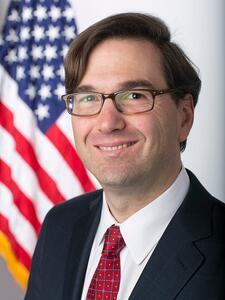
Russell L. Riley
Thanks for doing this. You will recall when we last spoke, we were getting toward the end, and we were rushing through some stuff. I had hoped that maybe you might scribble a note or two down about where we wanted to pick up and what we were missing, occasioning the session. I’m odd as an oral historian in that I have a terrible memory, [laughter] which is actually good for security purposes because I can never tell anybody what happens in an interview. I don’t remember ten minutes after it happens. so maybe I should come back to you with this, in general, to see what you were contemplating as we were leaving last time about some of the loose ends that we wanted to tie up in this third session.
Jason Furman
Sure. Unfortunately, I had a better thing in my head then too, [laughter] and I thought about jotting it down later in the day and then I ran to three other things, so I didn’t get that down, either, so it’s possible I’ll start repeating myself about some of the things we covered last time, but it’ll be completely new and exciting to you.
Riley
Exactly.
Barbara A. Perry
We’re like cats, Jason. It’s always new.
Furman
One thing would just be just going into the way CEA’s [Council of Economic Advisers] research can make a difference, change the way we see issues, and have an impact, maybe, that goes even beyond the immediate time, so why don’t I pick up on the topic of antitrust. Again, if you feel like you heard this, move me along.
Riley
No, I don’t recall antitrust being mentioned at all last time, so you have an open field on that.
Furman
OK. In the end of 2015, there was something for the 50th anniversary of Joe Stiglitz’s teaching; Peter Orszag and I did a paper together that combined studying inequality with studying lack of competition. We found provocative evidence that a lot of what was going on with increased inequality related to large, persistent differences in rates of return across firms, and that those related to a reduction in competition. We originally floated this as an idea to be thought about, but then I went to my staff at the Council of Economic Advisers and said, “Hey, let’s put out more on this.” We did an issue brief that documented the increase in concentration throughout the economy. More and more industries were a monopoly, one or two, three major players.
I got invited to give a speech on this at a major antitrust conference, which I did, and then the White House got very interested, and we ended up doing an Executive order that came out in the first part of 2016 that tasked every agency in the government with coming up with steps that they could take, without legislation, to increase competition. One of them was, for example, the FCC [Federal Communications Commission] on set-top boxes. It used to be that the cable companies required you to use their box. This let you basically get cable TV without using their box, opening up more options, more choices, and, ultimately, the option a lot of consumers have taken of not using a box at all.
For me this was important because in the economics community at the time, issues of competition were studied in a very specialized field called “industrial organization,” and it hadn’t really been linked to what was going on in the macro economy, with productivity growth, with inequality, and with changes in competition policy. In fact, people in this field missed entirely that there was a reduction in competition throughout the economy. They were measuring individual industries and not aggregating them up. By doing this, we’ve contributed to what is now a very large academic literature that combines industrial organization with these other fields, like labor or macroeconomics or finance. It’s helped us better understand the world, but also the [Barack] Obama policy steps at the end of 2016 were not that huge—We didn’t have a lot of time for them—but the idea has only grown, and President [Joseph R.] Biden [Jr.] started from a much more aggressive stance on antitrust and competition than when Obama left office.
It’s a good example of how the Council of Economic Advisers can supply thought leadership. It can be at the intersection of academic research and public policy. That research translated into an Executive order. That Executive order itself motivated more research and more researchers to do things. What you want to do at CEA, I think, depends a little bit. If we were in the thick of a really heavy budget negotiation or an economic crisis, it would not have made sense to spend the time on this intellectual project. In the year 2015, the year 2016, I think this was a very good use of the time and energy of people.
Riley
OK. Terrific. Go ahead.
Perry
Russell, did you want to follow up?
Riley
I was going to move in a slightly different direction, so if you’ve got a follow-up on this one, go ahead.
Perry
I do. As a noneconomist and a noneconomic historian, this may be a naïve question, but I am, as a political scientist, interested in the politics that is surrounding this very point that you have just raised about antitrust and monopolies and lack of competition leading to inequalities because I’m thinking of the political tides that are flowing at this time we’re talking about. First of all, the loss of the Senate in the 2014 midterms and the continuing rise of the Tea Party, which we’re going to see sweeps through populism to 2016, and eventually gets [Donald] Trump into office, so I’m thinking back through history. Were you thinking about the political possibilities of what your economic research was showing you, not just its impact on the economy but, as you say, this intersection with public policy? I know you knew there was a Tea Party, but were you aware of the tide that was going to sweep with this populism? Does it also relate to the populism of the trust-busting periods of the 1880s and ’90s and then the early 20th century?
Furman
Yes, to all of that. [laughs] First of all, just an incredible crude, simplified, short intellectual history. There was trust-busting, which was essentially this idea that anything big was presumptively bad. Then economics came along with the Chicago School Revolution in the postwar period, saying, “You know what? Big is not always bad. Often big is efficient. Even if it’s big, someone else can come in, so let’s not worry too much about bigness.” That pendulum swung—in my view, too far—in that direction, and we were part of—and an early part of—swinging it back, not all the way back to where it started, saying the economic analysis is the right way to do it, but when you do the economic analysis right, it turns out “big” is a problem more often than you thought with the University of Chicago. Definitely it’s not automatically bad. You need to do your homework and draw the links and all of that. Yes, this is a corrective in that long arc of history around all of it that we were trying to contribute to, and now the ball’s rolling in a big way. And we weren’t the only ones, but I think we were among the earliest ones from the economics side.
Second is, I don’t know that I was thinking, Populism is rising and Trump is about to come and we need to get ahead of it. In fact, I’m pretty sure I wasn’t thinking that. But if you have a place where you actually can talk about—you know—big business is never super popular, and sometimes it’s economically illiterate to be against big business, but if you find places where it’s not, that can be a political, potent thing.
The other interesting thing is part of the growth of monopolies isn’t just lack of antitrust. In some cases, it’s actually government regulations that create them. A hospital needs a certificate of need to open up; it makes it hard to open a new hospital and have competition. That’s because the government has a regulation it shouldn’t, so there was also a little bit of a cross-partisan appeal, and in some cases this was an argument for deregulation. So, definitely.
Then the very last thing to say—and it’s actually worth probably doing a little bit more depth on this—is the relationship of our administration and our country to big tech changed a lot in those eight years. It started out in 2009, really, really positive, and by 2015 or ’16 it wasn’t negative, but the tide was turning. The tide only definitively turned after Donald Trump won, but that gave more of a permission structure to do it.
Riley
And why is that, Jason?
Furman
Because there were more concerns being raised about the big tech companies, and they weren’t treated as just purely heroic and purely doing wonderful things for everyone, but it was understood that there was a downside to them. The arc of the relationship to the tech companies is also an important part of the narrative of the Presidency. Eric Schmidt was the CEO [chief executive officer] of Google in 2008. He spent a day or two every week in campaign headquarters, working with the campaign, as a volunteer, not using any special Google anything, and was working on the data analysis, election analytics. I don’t know—I had nothing to do with it—but I saw him in headquarters and talked to him there a number of times.
To me, that’s amazing because if, today, the CEO of a major tech company were volunteering two days a week in the headquarters of a political campaign, that would be beyond scandalous. In fact, it should have been beyond scandalous then too. One, from the perspective of, you’re a Republican: “Why is it this search engine is helping this party, not that party?” The second is: It really did give him more influence after the election. He was around the White House a lot. President Obama really liked Mark Zuckerberg. He really liked Steve Jobs. He was sort of thrilled that he could get an early preview of the next iPhone, have amazing dinners in Silicon Valley. A bunch of them were around the White House a decent amount, of which Eric Schmidt, who at some point became executive chairman of Google and not CEO, but I think it was several years after the beginning of the administration.
I never, ever saw this as—We hired a lot of people from Google into the administration too because they seemed like the best and the brightest. Google was to our administration what Goldman Sachs had been to the [William] Clinton administration: [laughter] The best and the brightest, aren’t we lucky to be able to get these people. And they had great projects, like open data, and solving different computer problems, and GovTech, and the like, but it also came with a bit of an orientation. Now, it wasn’t a one-for-one quid pro quo. The FTC [Federal Trade Commission] did an investigation of Google’s search practices or shopping—anyway, shopping or search; doesn’t matter—and they cleared them. I am pretty sure that no one in the White House weighed in in any way, shape, or form through that process. I know I met Google at various times during that, and they never even raised the issue with me because they knew it was an enforcement issue, and they knew I wouldn’t call the FTC. They came in to talk to me about things like patent reform, where they were cooperating with us on what we were doing.
But do I know for sure that when the FTC clears Google on something that maybe they looked and saw that we were hiring lots of people, and the CEO was around, and there’s a little bit of a flavor that, “They’re the good guys,” and we’re contributing to that flavor? Could that have been part of it? Maybe. I don’t know. I wasn’t at the FTC. I didn’t see the evidence base. It might be that they made the right decision on the evidence. That’s, of course, just one particular case but, in general, I think it made it not impossible. This isn’t like if you tried to go against a union, the union leaders would complain to the White House about it, and you might have an answer to it, and be able to do it. You might not have an answer and not be able to do it, but it would be very noticed, and there would be a cost that you would pay for doing a policy that a union didn’t like. That wasn’t true with Google. There was no, “Explain yourself. Why did you upset Eric Schmidt?” But, again, there was that ethos, and that ethos changed over the course of the administration.
Part of that ethos was that Obama used technology well, and that was part of what helped him get elected, so in 2009, there was a little bit of an idea that things like Facebook—Twitter was around, but it started being used more a couple years later—that those were great ways to communicate with the people directly, and to mediate the press, and have people get true, unvarnished things from their government. Of course, with the election of Donald Trump, people decided—on the left, at least—that this communications medium was less than perfect, and so I think that was the final straw. But there was sort of an interesting arc in that respect over the eight years, and it fit in with his work on competition.
Riley
Were there any other industries beyond big tech where there were important historical trends emerging or developing in your eight years that’re worth commenting on?
Furman
There’s fracking and oil, another place where things evolved. At the beginning of the administration, he had what was called an “all-of-the-above” energy strategy. The energy strategy was in part about mitigating climate change but it also was very much motivated by reducing our dependence on oil from the Middle East as a national security argument. Producing oil in the United States was something that you didn’t want to do for climate change necessarily, but you did want to do for independence from Middle East oil, and they went in opposite directions.
After the Deepwater Horizon well exploded in 2009, there was a huge oil spill. It was all-consuming for a month and a half. It was all that the administration could get any attention on or basically do, and that dented some of the enthusiasm around oil. But as much as a few years later, we were continuing to do what we could to make it possible to do more oil drilling. At some point—I think I only found out a year after the change—I was still using “all-of-the-above energy strategy,” and I was told we don’t say that anymore [laughter] because the climate community doesn’t like that, and maybe even doesn’t like it for good reasons, and so we stopped bragging about that. But we did see a remarkable change in those eight years, which is I think around 2015 or so: the United States produced more oil than it imported for the first time since the ’70s, or something like that. Now you don’t hear about dependence on Middle Eastern oil and oil as a national security issue pretty much at all—or not at all; you hear it very little. And you hear it very little for good reason, because the United States is a major oil producer, and our consumption of oil has fallen. I wrote a report while I was at CEA that documented that, actually, the biggest surprise was in part that the United States produced more oil, but also that we used a lot less.
Obviously, a lot of this is tied up with fracking. That was a new technology, and our administration debated it. There were some people concerned about the environmental consequences, the climate change, the earthquakes, things like that, but by and large President Obama embraced fracking and decided it was an important part of our energy independence. Even oil exports—The United States had had an oil export ban for decades, and we realized that we could lift it administratively. We decided that would be a good idea because U.S. oil was actually a little bit less carbon-intensive than foreign oil, and there was a lot of just oil getting messed up that we could produce but we didn’t have enough refinery capacity, so it made sense to export crude.
We had a meeting with President Obama in the Oval Office, a small group. He ultimately decided that he was in favor of lifting the oil export ban, but that we shouldn’t tell anyone because the Republicans were even more in favor of it, and that they should have to pay something for it. At the time I was slightly frustrated because I thought, Oh, this is a great idea, and he agrees that it’s a great idea; why can’t we just do it? It turned out he had more wisdom than I did, as happened so many times, because about six months later we were in a tax negotiation with the Republicans that I’ve actually already talked about, and we ended up getting renewable tax credits for wind and solar, which Republicans didn’t like and we did, and they agreed to do that in exchange for us lifting the oil import ban.
That’s a good example that the naïve “just always do what’s right” isn’t going to get you the best outcome. If we had given that away, we probably wouldn’t have gotten the subsidies for solar and wind, which I think are important for dealing with climate change, and certainly, politically, were important to the White House. That would be another good example of the way President Obama—In that meeting in the Oval Office, he listened to his economic advisors, and we all said, “You should do this.” He listened to his political advisors, and they said, “You’ll blow up politically.” And he said, “You know what? I’m convinced I should do it. I’m convinced it should happen, but let’s try to make the Republicans make it happen rather than me make it happen.” Even when we gave it up, they thought that it was a concession on our part. They had no idea that our concession was something that the President himself thought was a good idea.
Riley
I may have asked you this question last time, and if I did, tell me and we can move on, but it’s about the President’s own economic thinking, his economic brain, if you will, and your evaluation of his fundamental understanding of economics as somebody who was trained as a lawyer, instead, whether there were any blind spots in his vision of economics.
Furman
It was very, very good. He was thoughtful about economics in 2008. He read our memos really carefully. He read a lot of other stuff; as an economic advisor, one always had mixed feelings about that. You wanted him just to believe what we said, not be listening to all sorts of other people that he had access to through his iPad and other devices. We had the daily economic briefing in 2009 that really was almost like a discussion session of the full waterfront of issues.
Broadly speaking, I’d describe him as someone who was market-oriented, who really believed in markets, believed in free trade, believed in capitalism, but definitely didn’t trust that those resulted in the right outcomes, so of real importance was the tax system, the regulatory system, transfers, and the like. He was a little bit more enthusiastic about industrial policy and the government picking winners and losers than I was, not to a big extreme. A little bit more enthusiastic about policies for specific places. I understand the incredible political appeal of them. I wish we could have better place-based policies, but I think, in practice, the ones we’ve developed actually have never been very good, and we haven’t figured out how to do very good ones.
Over eight years—It’s interesting. On social issues, he only became more progressive over the course of those eight years, more and more so, in part as the society did, in part as the Democratic Party did, in part as he didn’t have to face reelection after 2012. You saw that on gay marriage and trans issues, and a range of others: on guns, on race. On economic issues, that wasn’t what happened, because he spent a lot of time in his last couple of years working on the Trans-Pacific Partnership, a free trade agreement. He spent a lot of time working on corporate tax reform. Neither of those came together. That was less about a philosophical shift and more he wanted to get things done, and if Republicans were in power, the only things he could get done legislatively were things where there was overlap between what the Democrats and what the Republicans thought, and those were areas that there was overlap, so in 2009 and ’10 he did legislation. Most of it was party-line Democratic vote; it was pretty liberal. In 2015 and ’16, he pursued—and mostly didn’t succeed, although on the tax deal did succeed, and infrastructure, actually, a highway bill did succeed—legislation that was much more centrist, not because he had become a centrist economically but because he would rather get something done than just grandstand and blame the other side for things not happening.
Riley
Did we talk about your engagement on the Affordable Care Act?
Furman
We talked about the Cadillac tax, and Biden meeting with the labor unions, and all of that. We talked about the meeting where he pretended to be upset at the Members of Congress. I think we got the highlights of the Affordable Care Act.
Russell
Terrific. Let me ask you, then, about the other members of the Council, what they brought to the table. Any particular areas of agreement or disagreement there during your time as Chair? Lay out for people who will come to the transcript your sense about maybe what the ideal balance is in the construction of a Council, if such a thing exists.
Furman
Yes. Sometimes the members of CEA are chosen by the White House. They’re someone who was close to the President in the campaign. They’re someone who someone in the White House wants for whatever reason, and sometimes that can create tensions and problems. The members of the Council, they’re called members of a council, but it’s not like the Council sits around and votes. They’re effectively deputies, and as deputies they report to the Chair, and they do what the Chair says they do. It can sometimes be a bit of a problem because they’re called members and they come from academia where they don’t have any bosses in any important respect, at least not on substance, one hopes, so they get there and they’re in a more hierarchical place than they quite realized they were.
I didn’t have that problem at all, but I’ve seen it many times with other CEA chairs. Part of it was I picked everyone who was a member. I interviewed. I hired. It had to officially be signed off on by the President, but a memo went to him that said, “Jason thinks this person should be a member. Here’s a little bit about this person and why they’re great. Check yes or check no.” Of all the weighty decisions he had in his eight years in office, I doubt he spent a whole lot of time worrying about those decisions, but he did check yes in the memos. They were Presidential appointments, but they were, effectively, my choices. That helped a lot.
That also meant I could pick people with complementary skills, so there was always a labor economist, first Betsey Stevenson and then [Sandra] Sandy Black; and a macroeconomist, first Jim Stock, then [Maurice] Maury Obstfeld, and then Jay Shambaugh.
The second thing I’d say is that labor is just such an important issue, such a large fraction of, certainly a Democratic administration but I think in general, what one grapples with is: “Do people have jobs? ? How does one want to change the rules around those jobs?” and the like.
Another thing about a member of CEA—and I’d say the same thing about chair—is you’re not looking for the number one best academic person in the country. You’re looking for someone who can function in an organization, someone who has creativity, someone who’s interested in public policy, not just in research. It’s a different set of skills. It’s not always the very best economist is the very best member of the Council of Economic Advisers.
This was my view toward staff in general: I tried to get the members into as many meetings as possible, tried to have them speaking as much as possible. If we disagreed, it was my view that prevailed, not theirs, but I tried as much as possible to encourage them to voice their views. Most of the time if they thought something, they’d persuade me, and that would be my view, and so there wouldn’t be any tension at all, or they’d figure out my view and internalize it. That made it easier—I ended up doing a lot of traveling, especially in 2015 and ’16, a lot of global engagement. I’d miss meetings in the White House when that happened, and Betsey Stevenson or Jay Shambaugh would show up at the meeting for me. People knew them, and people respected them, and knew they were politically savvy and the like, and good at economics. That both enabled me to do more, and enabled our team to do more. Sometimes there’s been a dynamic where the members are kept locked in a corner, and then you get less done as an organization and the like.
It helps when you’ve picked people, and they’re complementary, and they’re the right people. If I had had terrible members, I might have locked them in a corner also, but I didn’t.
Riley
Are there parallel organizations in allied countries with whom you would have regularized relationships, or is this generally encompassed within the, whatever, G20 meetings or whatnot?
Furman
That’s an interesting question. There’s not anything like this almost anywhere. India and Israel arguably have something like this, but most other countries don’t. There’s one model in Germany, something called—translates very closely to Council of Economic Advisers—and they’re five people and they’re a council, but they’re not in the government. They’re full-time professors who meet periodically and release a report periodically, and every now and then get to meet with people in the government.
That is useful in some respects, but when I was CEA Chair I would go to the President’s scheduling meeting. I would bring a stack of papers with me to the Chief of Staff, to go over his schedule for the next week. For three quarters of the meeting I’d be paying very, very little attention, but then they’d say, “He’s going to a steel factory,” and I’d perk up: “Wait, he’s going to a steel factory? [laughter] Steel’s gone way down in the last four months, and there’re all these problems there, and this is going on with this thing in steel.” And they’d be like, “Oh, that’s useful input.” Or maybe I wouldn’t even say anything, and I’d go back to my team. “He’s going to the steel factory. Is there a blog post we could do that highlights what’s going on in steel? Should we start putting together information for the speechwriters before the speechwriters the night before call us up with ‘Wait, where’s all this information that we should have asked you for earlier?’” et cetera. Being embedded in the government gives you something that you can’t get when you’re on the outside.
The other model that you have in other countries is the top economist is the economic advisor to the Finance Minister, rather than to the head of state or head of government. In the U.K., they have a very good chief economist of the exchequer. And the exchequer in the U.K. is very powerful. In fact, they make a lot of economic policy, in some sense without the Prime Minister. My counterparts were partly those chief economists to the finance ministers; partly, especially for a medium-sized country or smaller country, it would be the Finance Minister, because they are the top economic advisor to their leader. And if you’re the Finance Minister of Sweden, you’re not going to get a meeting with the Treasury Secretary, but you could get a meeting and develop a relationship with me. And CEA also interfaces more through the OECD [Organisation for Economic Co-operation and Development] process. It’s basically the lead U.S. government agency for the OECD. I would chair the economic policy committee of the OECD. Then there was always a ministerial meeting of the OECD every year, and usually I would be the U.S. minister that would go, and it would be, usually, a commerce/business secretary would be the representative from other countries.
But I did think that the international part—I didn’t do that in the first four years of the administration—was an important topic in the last three and a half, in part because the President can still do things internationally, even if they’re constrained by Congress, in part because we were trying to get other things done, like trade. Also, on the thought-leadership part of the job, the United States is a really influential voice. I did research, for example, on budget deficits being less of a concern than people had previously thought, and I presented that research to the OECD. I gave an international speech on it. I went to France and presented it to a lot of people. I was trying to influence the way fiscal policy was conducted in a place like Europe, not by a negotiation of this for that but by persuasion: “Here’s a good idea.” “Here’s a bad idea.”
The interesting thing about international economic policy is, in some respects, countries do different things because they have different interests but, in some respects, countries do different things because they have different theories of the world. Especially with a country like Germany, so much of the difference between U.S. policy and German policy, really centered around the different ideas that the two countries had. Now, their ideas were part economic. In part, they were what the public in Germany thought, and how the public was going to vote in the next election. And it’s a little bit harder to influence the German public than to influence the German Finance Minister or the chief economist to the German Finance Minister.
Perry
Jason, anything to offer in the lead-up to the Brexit [British exit from the European Union] vote, and what you were hearing as you traveled around in those years leading up to it?
Furman
Yes, I remember being in Europe, in Berlin, at a beer garden, eating sausage. I don’t drink much beer, but I probably had a beer in front of me that I was barely drinking. This was in early 2016, and I said, “There’s a one third chance Donald Trump wins the Presidency; there’s a one third chance Brexit happens; and there’s a one third chance that Italy has a populist government. The really important question isn’t what these three probabilities are independently but whether they’re correlated, because if all the events are separate events, then the chances of all three happening is one in a hundred. If all three are perfectly correlated, then it’s a one-in-three chance that all three of them happen.” I had this theoretical conversation; the people I had that conversation with, years later, mention it and credit me with making them see how real it was that these could happen.
So I certainly, in the run-up to Brexit, thought that there was a very real chance it could happen. The night it happened, I was just on the phone with everyone I could be on the phone with internationally, at the IMF [International Monetary Fund], outside observers of all of this, the Treasury. I came in the next morning to—I’m trying to remember; it’s all a little bit blurry because I didn’t sleep a lot that night, but just I can’t remember if the President was there and we met with him, or if we just met with everyone else. The pound had depreciated a lot. There were a lot of worrying signs. My view was, “Who knows, but certainly anything could happen here.” And before the Presidential election, my view was about a one-in-three chance Trump would win, and so anything could happen. In that case, be prepared, personnel-wise, to handle people who would be uncomfortable in that situation.
Riley
Did you have any informal relationship with Mrs. [Hillary Rodham] Clinton’s campaign?
Furman
All of the people doing economics for her were my good friends. Several of them had worked for me in the past. But I did 90 percent gossiping or process advice: “When you set up a campaign, here’s how to manage a policy team and here’s how to get something out,” sort of management process; I did very little of substantive coordination with them. I legally could have—There’s a whole set of rules under which I could have done that—but I did very little. I think there was relatively little of that coordination happening out of the White House in general. Every now and then, there’d be a decision and it would be slightly mysterious how it was made, and you suspected it was Hillary Clinton speaking directly to Obama, and Obama making the change, and you couldn’t really discuss why it had happened, but that happened very rarely.
One of the places that happened, by the way, was Jim Kim’s selection for president of the World Bank. He wasn’t the first choice of everyone involved. President Obama really wanted him, and, it turned out, it seemed as if Hillary Clinton was very supportive of him, and called, and Obama did that. Now, that obviously isn’t related to the campaign. That wasn’t a campaign issue in 2016, but just she sort of operated in a different way and different level than mere mortals like me.
Riley
Right. As the campaign was unfolding in 2016, can you tell us about your own reactions to what was going on in the campaign? Did you feel that things were relatively well in hand? Were there concerns, either from your political senses or your economic senses, about faltering?
Furman
Right. The first thing you should realize before I get to the campaign is Denis McDonough, as White House Chief of Staff, was incredibly focused on us squeezing the most possible out of every day we had left. We’d constantly say, “We have 262 more days here. You may never in your life again be in a position to have as much influence as you have now. Even on January 19th, in a lame-duck Presidency, you might be able to get more done than you can on January 21st in wherever you are next. Don’t squander this time. Big things happen in the fourth quarter, et cetera.” I felt myself, in my job, just manically obsessed with “What is it we can do?” Antitrust would be one example of that, and the Executive orders around it. “What could we do on climate change? What could we do on helping people rethink the way GDP [gross domestic product] is measured?” We did a whole study on that.
In retrospect, what I don’t know is this: Is that what a White House should do, sort of do their jobs? Or was that a mistake in that it was implicitly taken for granted that Hillary Clinton was going to win, and that if we didn’t take that for granted, is there something we could have or should have done? I’m not sure there was something we could have or should have done. My main thought was that it was on some of the cultural issues where he did “let Obama be Obama” rather than do what the political people were saying was the right attitude to take on it. It’s possible that there were a few places where had there been a little bit more discipline of the type there had been earlier, that maybe that would have been politically better, but I’m not sure.
In terms of economic policy, we were pushing the Trans-Pacific Partnership, so I was putting out stuff about how great the Trans-Pacific Partnership was, which is certainly something that I think—Hillary Clinton, who had said it was the gold standard when she was Secretary of State, came out against it. Was that a political mistake, if Obama hadn’t been pushing TPP? If we thought Trump might win, would we have not pushed TPP in the same way? Maybe. Just in terms of the ethos, day-to-day working, day-to-day jobs, it definitely wasn’t “The most important thing you’re doing today is figuring out how what you’re saying will affect the probability that Hillary Clinton wins.” It was “The most important thing you’re doing today is finishing everything Obama is doing.”
Personally, I thought she wasn’t the best candidate. I thought that both candidates were bad. I thought Trump was a bad candidate and Hillary Clinton was a bad candidate, and I wasn’t sure which of their badness was going to shake out in what way. And I always thought that people make the mistake of speaking in probabilities of one and zero—“Someone will definitely win; someone will definitely lose.”—and I always knew the number was between one and zero, and, in fact, that Donald Trump was a real possibility. But there just wasn’t much you could do about that real possibility.
Also, it was the case that even when Donald Trump was the nominee, that Obama thought he had such a good transition from [George W.] Bush to him—we all did; everyone, no matter what their level, thought they had had a great transition from Bush to us—it was drilled into our head that we were going to do a great transition for Trump, or for whoever was next, whichever party they were from, so there was just a “Yes, let’s not get in the way of this” attitude, as well.
Perry
Do you want to say a little bit more, for history, about why you thought Mrs. Clinton, Secretary Clinton, was a bad candidate?
Furman
I don’t have any particular special insight into that. She would have been an excellent President because she’s very good at substance and has a really wide range. She gets along really well with Republican Members of Congress, or at least Republican Senators, and gets along really well with Democratic Senators, and can sort of work something out with a group. Maybe those skills themselves, the flip side of them, was not being as good in a big room, in a big rally, and the like. That’s an important part of being President, but it’s not as important a part of being President as it is in campaigning. Conversely, being able to have a civil conversation with Republican Senators and find common ground is utterly irrelevant to running for President and is essential if you want to get anything done as President. So I always thought she’d be a better President than she was a Presidential candidate.
Some of that is probably sexism on the part of people that treat certain traits in women differently than they treat them in men. Strength in a woman, it can be a problem for people for all the wrong reasons, of course, so that was part of it. I don’t think that was the only part of it, though, because, again, I do think she had less skills as a politician and more skills as a, I don’t know, not executive but a leader, a something else.
Riley
Jason, what do you think were the opportunity costs of the focus on the Trans-Pacific Partnership in 2016? Were there missed opportunities to do other things that might have succeeded, even going into a different administration? Another way of phrasing this: Were you all in on trade in 2016, or were there other elements of an agenda you were pushing that didn’t get picked up?
Furman
Legislatively, the things we thought we could get done with Republicans were trade, first and foremost, and then corporate tax reform as a possibility, and then criminal justice reform. We had mostly given up on immigration by that point, but at some point earlier the thought was you could do that with a Republican House. Certainly trade crowded out corporate tax reform. There’s no doubt in my mind if he had prioritized corporate tax reform he might have gotten it done; by putting it behind trade, and trade ended up taking so long, he couldn’t get it done. I don’t think it crowded out a lot because there’s not a whole lot you can do with a Congress from the other party, and different committees and different people are doing different things. We did get a highway bill done in 2015. We got a tax deal that was quite important—extending provisions—done. It’s more the political message that it sent.
You have to do a cost-benefit [analysis] when you send a political message: Is it really, really good for the world and it hurts a little bit politically? Then definitely do it. Is it only a tiny bit good for the world and it’s devastating politically? Then don’t do it. And TPP economically was good but not great, and it didn’t happen, which meant it wasn’t even good; it was zero, literally zero, because it failed. It probably had something on the minus side of the ledger politically. By the way, the minus side of the ledger normally doesn’t matter. If you switch 1/100th of the votes in the Midwest, that’s not going to change an election—unless it was the 2016 election, in which case it very well might have changed it. That would be an example of if you were constantly incredibly laser-focused and paranoid about how everything was going to affect the election by even the tiniest bit, you might not have done that. If you were focused on getting things done, and you were probably going to win the election, then you would do that.
I certainly never, ever said, “Hey, are we worried about TPP being a political liability?” That wasn’t really my job to do that. My job was to supply the economic analysis and advice, and the President was pretty all in on it.
Riley
Right. Did you get called in much to do Congressional relations?
Furman
I did a lot as Deputy Director of the NEC [National Economic Council]. I did a decent amount as CEA Chair. The biggest one was over the tax deal in 2015, where I basically negotiated it for us. But I would speak to Members of Congress. I would testify. There were a number of them I had good relationships with. We’d have a new proposal, and they’d create a list of who would call who, and I’d get Amy Klobuchar because we got along well. And I’d get to call her and tell her what we were thinking about and what we were doing, et cetera.
Riley
OK. What about the outgoing transition? You said that the President had indicated abstractly before the election that you want this to be a smooth transition. It’s in your mind. Walk us through what it’s like transitioning into a Donald Trump Presidency.
Furman
First of all, there was the issue of our staff, and whether they wanted to stay on or not. We’ve talked about that already. Second, there’s trying to get everything done, and lock it up as bulletproof as possible before the next people come in. You have a lot of meetings about that, and you quickly realize there’s almost nothing you can lock in that’s particularly bulletproof, and especially—and appropriately so—if you do things in the last two months, it’s much easier for the incoming administration to block the implementation of the rule, to do the Congressional Review Act to overturn it. That makes sense, but I think it also made sense for us to try to do what we thought was right during that time.
Then everyone was waiting for a call from their counterparts on the Trump administration, and I think eagerly waiting for calls, because I had eight things I was worried about and watching in the economy. I wanted to make sure they knew about that. I put a lot of effort into it. I’d also figured out a better way to run CEA, I thought. I wanted to share that with the next person so they could continue it, et cetera. In my case, no counterpart was named until months into the Trump administration. No CEA chair was named, so I never had anyone who reached out to me. I ended up deciding that there was no one person on my staff who I thought could be good in an acting capacity after we left, and there were two people who I thought combined the set of skills, experience, respect, et cetera.
Steve Braun was one, and the other was a woman doing environmental economics, Sheila Olmstead. I went to the two of them and said: “Are you interested in being acting heads?” They said yes. I said, “I have no power to make you acting head, by the way. That’s up to the Trump people.” I brought the whole staff together a day or two before the end and said, “I’m not going to be here a few days from now. I have no say over anything in this organization a few days from now, so if you hear anything from the Trump people, you have to listen to what they say. You’re working for them. That’s your job. You’re not working for me anymore. But if they don’t say anything to you, and if they seem to forget about you, then what my own advice is, and my own recommendation is, that you treat Steve Braun and Sheila Olmstead as the acting heads of the organization.”
It ended up after I left that for the next seven or eight months they were the acting heads of the organization. The Trump people never cared enough, at least initially, to pick someone, try to take it over, and they sort of did the best they could to run it. That’s unusual. Normally, first of all, somebody’s named to head it, and if they’re not, they try to figure out what they can do. Gary Cohn was the incoming NEC Director and he was meeting quite frequently with Jeff Zients. Gary Cohn I think is a registered Democrat, and certainly was quite at home in New York, sort of “normal” circles, as opposed to Trump circles. Maybe “normal” is the wrong word, but whatever it is, something closer to ours. He was cooperating quite extensively with Jeff Zients, and I had one or two conversations with Gary Cohn. I said to Gary Cohn, “My staff is really anxious. They don’t know what’s going to happen. They don’t know if anyone’s going to pay attention to them. Is there anything I can tell them?” And he very graciously said, “You want me to come by and speak to a staff meeting? Would that make them less anxious or more anxious?” I said, “It’ll make them less anxious, put a face, et cetera. They’d love to see you.” He said, “Great. Tell me when. I’ll be there. I’ll spend as much time as you want.” And he came and spent an hour, talking about the way Trump saw things and answering questions and the like.
I don’t think it was a million percent reassuring—He did a certain amount of “And Obama did all these terrible things—oh, wait, sorry, I shouldn’t be saying that right now.” He did some stuff like that, and some stuff about their priorities that rubbed people a little bit the wrong way, so it wasn’t politically perfect—but I thought it was really gracious, and the right thing to do. On balance, it helped quite a lot and was human and relatable and sort of, “You’re not going to all be forgotten.”
Riley
OK. Mistakes made by the next administration because of this?
Furman
I don’t know. People try to link—I don’t work on it; I don’t have any inside insight into this. The Pandemic Response Unit they got rid of, and got rid of the playbook and all of that. I don’t know if they would have done that eyes wide open anyway. I don’t know if that mattered or didn’t matter. It may have mattered quite a lot, by the way. I’m not ruling that out; I just don’t know enough to have a strong opinion. On economics, the lack of a handoff isn’t that much of a problem because they were doing a 180-degree different trade policy, a 180-degree different tax policy. There actually wasn’t a whole lot of continuity. On the national security side, maybe that’s more consequential.
Some of my colleagues—I remember the Education Secretary just never heard from his counterpart. Maybe he did a few days before inauguration—I don’t know that I checked back in—but certainly as of some late date, like January 10th, give or take. [Elisabeth] Betsy DeVos had not reached out to John King, who was the Education Secretary. Other people had that experience, as well, where the person replacing them just didn’t reach out. I just can’t imagine in a normal transition that anything like that would happen.
Perry
Jason, you don’t strike me at all as a regretful person or a bitter person, or even one who entertains a lot of frustrations, but I did want to ask: Was there any sense of frustration? Not just that Donald Trump was elected, but that all of the good that you and the administration had accomplished in those eight years in the economy—getting through the Great Recession and creating jobs and getting the unemployment rate down and getting ACA [Affordable Care Act] passed, and getting millions of people signed up for health insurance—and I’m seeing here in the briefing book, in December of 2016, you released the report that talks about these things that were done. Was there any sense of frustration about what was it about these good things that had been done that didn’t somehow translate to or relate to the kinds of people, as you say, that small percentage of people in the heartland or in Pennsylvania or Michigan or out in the Midwest who voted for Donald Trump?
Furman
I don’t know. I’m sort of inured to the fact that what’s the best economic policy and what’s the best politics just can be very different a lot of the time, also what’s the best politics when you’re debating it and proposing it may be different than after it happens. There’re some things that aren’t that popular when you propose them but they’re really popular after the fact, and there are some things that are the opposite.
For me, the Affordable Care Act wasn’t a political theory everyone will love it and thank us for it. In fact, if anything, it was “People won’t appreciate it,” because before the Affordable Care Act, senior citizens were covered in Medicare, children were covered in CHIP [Children’s Health Insurance Program]. Who was left? Childless poor people and young people who didn’t want health insurance. Those were the two main groups that were left, and they were the ones that were the politically hardest, politically least sympathetic, because they either didn’t vote or they didn’t actually care that much about their health insurance or whatever else, and that’s why no one had dealt with them before in health reform. And we did. I didn’t think that it was going to be obviously popular.
So I don’t know. On behalf of the administration, I feel almost every time we did a bipartisan compromise, it was decently popular, both the process of seeing us do it and the outcome, and I wish we did more of that. We can spend all the time in the world talking about how crazy Republicans are, and how they’re totally uncooperative, and it’s all their fault—and I agree with a lot of that on substance—but you’re also the President, and it’s your responsibility to figure it out. Does that mean you need to get half as much as you wanted and give up twice as much as you think is reasonable? Maybe that’s what you do. I wish we had, on things like immigration and maybe some fiscal issues, been willing to compromise more, take more heat from our own side, knowing that the long view of history would add up the set of responsibilities.
When I deal with somebody in another country, my view is that when you hear a foreign leader say, “Oh, I can’t get stuff done because of my legislature,” your attitude is, “That’s your fault. Manage your country. Figure out how to get stuff done. Things need to happen. Don’t give me the little details and stuff’s going on there and your problems. You’re the leader; take responsibility.” Sometimes we didn’t have that attitude for ourselves.
Would that have helped us politically? I don’t know, because the Republican Party was in the midst of a big realignment. It might be that our deals would have involved compromising with the old Republican Party, and that would have been even more unpopular with Donald Trump’s Republican Party. In this case, politically, I don’t know if that would have worked or not.
Riley
Jason, I want to ask a question that’s a little bit off our portfolio on Obama, but it will relate to lessons learned. We met at an event at Yale where you were a participant in a sequence of meetings that had been put together by [Ben] Bernanke and [Henry] Paulson and [Timothy] Geithner to create a playbook for economic emergency. We’ve been through a global pandemic that is unlike anything most people had thought possible. People who study these things understand that we were probably overdue for some sort of pandemic, but the question that I have is this: Based on your experience in that exercise, were there lessons learned from the Great Recession that had applicability economically to dealing with the pandemic? Do you see either at the end of the Trump administration or the beginning of the Biden administration signs that there were, in fact, lessons learned from that—both the successes that you had and, if there were shortcomings, compensating for those shortcomings?
Furman
Great question. I did a paper for the edited volume put together by Bernanke, Paulson, and Geithner. It was my retrospective on the fiscal response to the Great Recession, what the lessons learned were, what it would mean for next time. That put me in a position where I wrote an op-ed in the beginning of March 2020 calling for a big fiscal stimulus, and saying, “It should look like this,” and I was one of the very first people to do that. Some lessons were learned. Acting early, acting large, erring on the side of too large—I think those were learned. Understanding that states can cause a big problem, and if you don’t give them enough money, they’ll cut back when the federal government isn’t—that was learned. That you need better automatic stabilizers—that was learned, but not learned well enough that we passed it. That you need to focus on, where you can, preserving jobs—that was learned.
I did see a lot of the things we got wrong dealt with in the COVID [SARS-COV-2 (COVID-19)] crisis. In some cases, I think there was an overcorrection. Ultimately, we did too much on fiscal policy in responding to COVID, and I think that was, in part, because people correctly remembered we did too little last time, so they wanted to do too much this time, and they ended up maybe overdoing it. But I did just endless interviews in 2020 with the media, discussions with Members of Congress: “You were there last time. What did you get wrong? What did you learn? What could we do differently based on it this time?” The fact that I had just, even myself, systematically sat through and talked about my views on that made it easier for me to do that.
Riley
All right. We’re getting close to our appointed hour. Anything that’s come to mind to you as we’ve talked? Any of those mental notes that you made [laughter] come surging back to the surface?
Furman
We covered some of the types of things about the trajectory of the administration that I wanted to cover and make sure you had, so yes, we’re in good shape.
Riley
I can’t thank you enough. This has been both enjoyable and illuminating. My only regret is that we’re looking at you in a little box there [on Zoom screen], and that deprives us of the privilege of coming to Cambridge and visiting with you in person. You have a standing invitation to visit the Miller Center. We have a beautiful facility here, and I’m sure Bill [Antholis] would want me to reiterate his thanks and his extended invitation to anything. You’ve done us quite a service by allowing us to avail ourselves of this advanced technology for these rather primitive purposes, and it’s been really terrific. We’ve got a lot of really rich material for people to rely on, so thank you.
Furman
Great.
Perry
Thank you so much. And, Jason, I wish I had had you as a professor for an undergraduate course in economics. I actually liked my professors I had for both macro and micro, but you have such an easy style of speaking for the layperson in this field, and tying together very complex economic subjects and concepts with public policy. I get the latter usually but I don’t always get the former, so thank you for that, for me, anyway. Russell was a top-notch economics undergraduate major, so I knew he would get it, but I was a little bit concerned. But I did, and that means that people like myself, who are laypersons in this field, reading the transcript one day will be able to understand it too. Thank you for that, and, as we always end, thank you for your public service. Thank you for your service to our country.
Furman
Well, thank you for taking the time, for being so thoughtful about this.
[END OF TRANSCRIPT]