Transcript
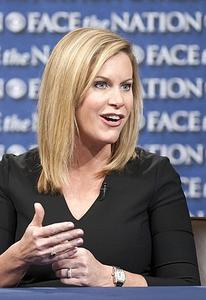
Stephanie Cutter
Hi there.
Russell L. Riley
Good morning.
Barbara A. Perry
Hi, Stephanie. Good morning. Thank you. We know you’re busy this morning. Thank you for taking the time.
Cutter
Sorry I’m a little late, and then I have to end earlier than I thought. Things are sort of blowing up. [laughter]
Perry
Yes, we understand. We understand you have a hard stop at 11:00?
Cutter
Yes.
Perry
OK, all right. And let us know if anything happens before then. Just to jump right in, we wanted to tie up from the last meeting that we had with you last week. You had just moved over from [Department of the] Treasury back to the White House as an advisor on special projects. One of those was the Sonia Sotomayor appointment, and you did mention that you enjoyed working with her. It’s such a historic nomination that we wanted to get just a little bit more about what you did with her and about her.
Cutter
I actually don’t remember my title.
Perry
Yes, we’ve got it: assistant to the President for special projects.
Cutter
I think that came later, after when I went up to Boston to manage Senator [Edward M.] Kennedy.
Perry
Right. We’ve got that as April of 2010. That sound right?
Cutter
Yes, so in the summer of ’09, spring/summer of ’09, I went to the White House to run the Sotomayor confirmation. Cynthia [C.] Hogan and I did it together. And my rank was a deputy assistant at that time, but I don’t remember any specific title because I knew I was just there to do that and then I was leaving. When I moved over, the President hadn’t made his choice yet. We had narrowed it down to four candidates and spent most of the time trying to think through what the vulnerabilities were, how we’d roll somebody out, the richness of specific stories—and obviously Sonia Sotomayor’s story was the richest. So when he chose her, we were ready to go and knew which family members we wanted. I had already written the narrative on her, knew about the vulnerabilities. And I was able to pen—
Perry
And what vulnerabilities did you prepare for?
Cutter
She was a first. Our record of getting anybody through the Senate in the first year of Obama wasn’t great, so we wanted to go hard on her criminal justice record because she had been a prosecutor. And we wanted to work hard to get the police unions behind her, or at least keep them neutral, which doesn’t normally happen for a Democrat nominee.
We also needed to mobilize the broader Latino community. She’s Puerto Rican, and the Latino community supported her, but lots were thinking that it should have been a Mexican American or—anyway, there was a little division there, and it was hard to pull them together and mobilize them. They got there, though.
And then there was, frankly, just a fear that Republicans would not give her as serious of a look as a white male, for instance. And obviously she had been a successful district court judge—I think she was unanimously confirmed—and then a circuit judge, but she hadn’t really distinguished herself. She was well liked. The chief judge on her court really liked her. All of the judges really liked her.
We just had to kind of go heavy in certain areas out of the gate, which would be telling this incredible story, really an immigrant story. Her mother didn’t speak English, she grew up in the Bronx [New York City], found her way to—did she go to Yale [University] or Princeton [University]?
Perry
Princeton undergrad.
Cutter
Princeton. And then to Yale Law School? [laughs] Or Harvard [Law School]?
Anyway, it was quite an inspirational story, not unlike Barack or Michelle Obama’s. And through hard work and perseverance and overcoming obstacles, here she had become a Supreme Court nominee, and that was the greatest encapsulation of the American dream. So heavy on the personal storytelling, but also really putting together a narrative on her criminal prosecution history, and working the police unions very heavily, and the Hispanic advocacy organizations.
Nancy Kassop
Stephanie, did you coach her on how to respond at the Senate confirmation hearings on the “wise Latino” comment? “Wise Latina,” yes.
Cutter
Yes. I can’t remember exactly what I said, but yes. “Wise Latina” was a big vulnerability. She was also a member of Bohemian Grove. Is Bohemian Grove the female organization?
Perry
I think that’s the male.
Cutter
I’ll think of the female version in a second.
Riley
Didn’t know there was a female version.
Cutter
Yes. [nods head]
Perry
I didn’t, either. [laughs]
Cutter
And I asked her to resign from it because it was a woman’s-only organization, and we just didn’t need to have to explain why that was OK. So we tried to get rid of all of or answer and extinguish any of those problematic issues before her hearing. “Wise Latina” stuck with her till the end, and it didn’t hold her back, but it was a talking point for those who opposed her.
Riley
Stephanie, are you at liberty to say who the other people being considered were?
Cutter
If I can remember. I mean, Merrick Garland. He was always on the shortlist.
Kassop
And Diane [P.] Wood?
Cutter
Diane Wood. She had some abortion issues.
Riley
You mean in terms of her decisions?
Cutter
Yes, and writings. Back in ’09, President Obama and the vice president were not where they are today on abortion, and neither was the Democratic Party. They didn’t want to make the entire discussion about abortion. And the whole way you calculate how you’re getting through is to show that you hadn’t put your thumb on the scale on any jurisprudence question. I can’t remember the other one.
Riley
OK.
Cutter
I still have my books somewhere. I’ll look at it.
Perry
You can add it in on your transcript if you like.
Riley
In fact, we would love it if you would just put an appendix with any of these documents that you’d like to share with us. We’d love to have those. [laughs]
What about other people in the White House who were involved in this process? You mentioned two of you.
Cutter
For choosing?
Riley
Yes.
Cutter
It was really Bob Bauer; Ron Klain, who helped narrow the list; and I think Cynthia Hogan, towards the end. But they had started working on What if there’s a vacancy pretty early on? and had briefed the President on what a shortlist would look like. And he had to approve of the shortlist, so he wasn’t starting from scratch, but as soon as there was a vacancy he had to do a number of different interviews, and I think he knew Diane a little bit. Wasn’t she University of Chicago [Law School]?
Perry
Yes.
Cutter
He didn’t know Sotomayor, at that point did not know Merrick Garland, and whoever the fourth was.
Perry
He was a constitutional law professor at Chicago Law, so presumably he had fairly strong opinions or at least had a sense that he felt comfortable making this choice, I presume?
Cutter
Yes, he was pretty comfortable making the choice.
Perry
I think I also remember that you mentioned that she was U.S. district court judge and on the court of appeals when she was appointed but that she had been a [William J.] Clinton appointee to the court of appeals and a [George H. W.] Bush 41 appointee to the district court, which I would have thought would help a little bit with Republicans.
Cutter
[shakes head, laughter] You’re assuming it’s a rational process. It used to help with Republicans, but everything changed as soon as President Obama was elected.
Perry
Interesting. Anything else that you would want to comment on related to that? Going up to the Hill [U.S. Congress]? Did you go up to the Hill with her? Were you a part of any of the interviewing process before that, before the President made the choice?
Cutter
I wasn’t part of that process until he made the choice. As soon as he made the choice, I met with her and told her what this was going to be like, what we were hoping to do on the rollout day. And the thing is once the President makes his choice, you roll out as soon as possible so you can control it. He made it, I think, over the weekend, and we rolled out on a Tuesday maybe. And we had to get her family here. She was extremely close to her mother, and she was also very much part of the story that we were trying to tell.
So I met with her, everything from walking through how it’s going to go to just really kind of grilling her. Who are your validators? Who can I go to from all aspects of your life? Is there anything that we don’t know that could be a problem? And there were a couple of personal things that I don’t want to get into, because they’ve never been publicly discussed, that we had to take some special precaution on. Nothing that would implicate her or cause any problem of her being a justice. It’s not her problem, it’s an association she had a long time ago. And everything from what she should wear, her remarks—again, those validators. How quickly could I get Robert Morgenthau? Could I call him today? [laughter] Things like that. And she was great to work with. Just fantastic to work with.
Kassop
Did you take her to senators for meetings?
Cutter
Yes, and she’s charming. The senators, they mostly treated her with great respect. Some people, like Senator [Orrin] Hatch, were a little, I don’t know, patriarchal? Sat in a meeting with her and then would go and do a press conference and blast her, mostly around “wise Latina.”
Perry
And we should just say that that came out of Justice [Sandra Day] O’Connor’s comment, right? That a wise woman and a wise judge would make the same decision in her attempt to show that there’s not really a gender difference. And then this reference to “wise Latina”—that part of the reason she was being nominated is she would bring a different perspective, right?
Cutter
And she would reflect a [Supreme] Court that reflects the fabric of America, yes.
Perry
Right. But there was controversy that she would point to that and that she would see herself as different and perhaps, in the eyes of opposition, would not be the neutral judge that one is supposed to be, in their minds.
Cutter
Yes.
Perry
Am I stating that correctly?
Cutter
Yes.
Riley
Stephanie, what difference did it make that Senator Edward Kennedy was not there anymore?
Cutter
Well, he was not the chair of judiciary; that was [Patrick J.] Leahy. I mean, he would have been a champion for her, and a loud one, and would have taken on the “wise Latina” thing in a much more aggressive way. This was still back in the day where senators didn’t announce their support for someone until after they were voted out of committee. And you generally don’t speak about the person other than a meeting where you say you look forward to studying the record, and blah, blah, blah. Senator Leahy was very much about that process.
In another time, that process served everybody well because it showed there was lots of deliberation. But in ’09, the process really started to change, and now you see what it is, and it’s a total farce. And there were lots of Republicans that went out and announced that they weren’t supporting her, and Democrats, being Democrats, wouldn’t counter that. So we were pushing them, like, We can’t let opposition announce their opposition without demonstrating real support, so it was always a tug-and-pull.
If Senator Kennedy had been alive, he would have gotten that and would have found way to signify support. He also would have been instrumental in getting the police unions and pulling the Latina groups together and saying, “It’s not going to get much better than this. This person is hugely qualified, and this is a big part of our march of progress, so let’s get behind her.”
And while all that was going on, we were also pulling out bits of her bio to do network packages, profiles, taking Good Morning America through the Bronx, a day in the life of Sonia Sotomayor growing up in the Bronx. All of that personal storytelling just made her into an incredibly, I’m going to say, sympathetic figure. But more people could really relate to her, and there was an emotional connection, which is really hard to do for a Supreme Court justice [laughter] and had never really been done before. And she kind of became this cultural icon very quickly, and she still is, and it’s great to see.
Perry
She played quite a role last week, in fact, in the Donald [J.] Trump case involving the Colorado ballot access issue [Trump v. Anderson]. Anything else to tell us about that?
Cutter
Her hearings were starting right after the Fourth of July, and we had some pretty intensive sessions to get her prepared. She is a diabetic, and a bad diabetic, and we had to time everything just right. There were certainly days where she had a hard time concentrating because of her diabetes, so it took us a little bit longer to get her prepared. And even going into that hearing we were a little worried, not that she didn’t understand the law or didn’t have the capacity to do it, but dealing with a disease like that as you’re on—with bright lights in your face—live TV, being peppered by sometimes not-very-friendly questions, we were nervous. But she handled it amazingly.
Perry
Yes. And when you say “bad diabetic,” she has a serious case of—
Cutter
Serious case.
Perry
Yes, yes.
Kassop
But she convinced you that although she had this serious illness, you could be confident that she would live out her term and all that? I mean, you had to go into her medical background, and was that an issue that gave you pause?
Cutter
No. Lots of people live for years with diabetes, and she had had it since she was a child, so as long as she managed it—and she was very careful about it. But as we’re keeping her in a mock hearing room for 10 hours a day, you could see how it took a toll.
Perry
One last question. This isn’t meant to probe into those issues, as you say, that aren’t necessarily public at this point, but she is divorced. There have not been a lot of divorced Supreme Court justices, and she was only the third woman nominee at that time—well, third woman who would ultimately end up on the Court. Did that ever come up as an issue, or was that a source of controversy or feared as a controversial point?
Cutter
The fact that she was divorced?
Perry
Yes.
Cutter
No.
Perry
Good. All right, then we shall move on. The ACA is signed—the Affordable Care Act is signed in March of 2010. How quickly do you move over from working on the—and presumably that was full-time for you—working on the Sotomayor nomination?
Cutter
Yes—
Perry
And she’s confirmed, and then you come on, and working on ACA, and working on implementation, and presumably trying to get over the bumpy rollout with the issues related to the website, et cetera.
Cutter
After Sotomayor I was doing Senator Kennedy’s funeral at the same time, and—
Perry
He passed in August.
Cutter
Yes. I was about to move up to Boston [Massachusetts] and just before I did, he passed away. So I went right from Sotomayor into his funeral, and then changing the law in Massachusetts, and then rolling out his memoir. And by the time January 1st, 2010, came, I was exhausted and just drained.
I decided to come back to [Washington] D.C. and just pick up some contracts, do some consulting, and just take some time. I helped behind the scenes to get health care passed. We did a great op-ed from [Victoria Reggie] Vicki Kennedy and worked the media. We just reminded everybody what Senator Kennedy had fought for, really as a tool to drive a media narrative but also to get Democrats over the line. And health care passes in March. I am doing my thing, very happy on the outside, and the President wants to see me. And the other thing, actually, I was doing—I forgot about this—was Let’s Move! So the First Lady—
Perry
For Mrs. Obama.
Cutter
Yes. The First Lady had called me that fall of ’09, while I was up at the [Harvard] Kennedy School, and asked if I could help develop this and roll it out. They had been working on it for a year, but nobody knew how to move it forward. They needed somebody to cut through and figure out what this is, and then roll it out. So I started consulting to the White House, in addition to other things I was doing, to develop Let’s Move! And when I was doing that, I would run into the President and things like that. We rolled Let’s Move! out in February, early February, and Michelle being Michelle, and me being me, it was a very detailed, thought-through, successful rollout. We literally had thought of every potential angle that could go wrong to get out ahead of it, and it was a huge success.
The President saw that and felt like he didn’t have that on the West Wing side. As soon as health care passed, I got calls from Pete Rouse, “The President would like you to come in and see him.” And I knew what he was doing, [laughter] and I didn’t want to go into the White House full time. So I said no, and—no, first I said no to meeting with the President, and then Pete said, “Well, why don’t you come in and see me and Rahm [Emanuel]?” And I said, “No. I know what’s going to happen, and I don’t want to be put in that position. I don’t want to say no to the President. I don’t want to do it. I don’t want to come in and do health care.”
And so a couple of months pass. They’re still working it. Finally, I agree to come in and see him, and it’s just the two of us, and he’s like, “I know you don’t want to do this, but will you just do it until the end of the year?” After going back and forth, I said yes because you can’t say no to a President, which is why I didn’t want to meet with him in the first place. [laughter]
Riley
Can I intrude and ask why didn’t you want to do this?
Cutter
Because I had worked in the White House for President Clinton. I had just come through a very tough year. I had some personal things that I wanted to accomplish in life [laughs] and working 24/7 in the White House would not have allowed me to do that. And I told him that, and he convinced me that I could put all of that off until the end of the year, which led to me staying on as a senior advisor and then going to his campaign, so it wasn’t just until the end of the year.
Perry
But when he said, “Oh, just come till the end of the year and you can then do these other things you want to do,” in your mind were you thinking, I’ll probably end up staying?
Cutter
No. I’ll tell you, I wanted to start a family, and you can’t do that from the White House. So I was pretty adamant that I was going to leave at the end of the year. I think he took me seriously. He invited me to the Fourth of July party at the White House pool with his family because that would be the last Fourth of July I was going to be there, things like that.
Anyway, long story short, I came on to help change the narrative around the Affordable Care Act and ensure that it implemented in the right ways, and it was me and Nancy-Ann DeParle, who is such a phenomenal person. It wasn’t easy because it was a pretty complicated bill, and the narrative on that was so set in stone. We could start doing little things, especially on Medicare, where seniors didn’t have a negative opinion of the Affordable Care Act, but they didn’t really know what was in it, and some of the Medicare provisions rolled out faster than anything else. So that’s where I first concentrated and got—what’s his name? Who was the guy in Green Acres?
Riley
Which one? [laughter] Eddie Albert or Mr. Haney [Pat Buttram] or—
Cutter
I’ll think of it. Anyway, I tracked this person down, got him to agree to do a Medicare ad—
Riley
Oh, no, Andy Griffith.
Cutter
Andy Griffith, yes.
Kassop
Oh, right, right.
Perry
Oh, from The Andy Griffith Show.
Cutter
Yes, yes.
Perry
And Matlock, as a senior.
Cutter
And Matlock, right. And he did this great ad for us, helped break us through with seniors. We were able to really solidify seniors and how they felt about it. They didn’t really think about it as the Affordable Care Act. They thought about it as Medicare. And then we started to break down the bill to figure out how to talk about certain things, what the time frame would be for rolling certain things out. And all of the great things about the bill were still a couple years away from being rolled out, so the President wasn’t spending much time on health care.
There was real fatigue in the West Wing on health care, so it was really difficult to get anybody to pay attention to it, which frustrated Nancy Pelosi, who was the Speaker [of the House] at the time. She felt like she muscled this thing through and now the White House had to make it popular before the 2010 election, which was an impossible feat. But I don’t blame her for pushing us for it. So there was this friction with the House [of Representatives] and what, if anything, the President would do.
The election rolled around. As the President said, we got a shellacking. Sometime in that fall, September or October, Axe [David Axelrod] asked me to move over and be a deputy for him because we saw what was going to happen with the election. We knew it was going to be bad. We were trying to make it less bad. And so David Simas and I just did the polling, briefings, tried to help the committees where we could, individual candidates where we could, and tried to position the President in the right way to be helpful in driving the right narrative, but that was the first full Tea Party election. We had the ’09 special election where Scott Brown was elected, but this was the first Tea Party election, and we just got killed. After the election—
Riley
Stephanie, can I intrude with a question about Scott Brown? Because you’re from Massachusetts. Was that avoidable?
Cutter
Yes, I think with a different candidate. She [Martha Coakley] was just—she’s apparently a great attorney, attorney general. I don’t mean any disrespect to her capabilities to do the job, but she was a terrible candidate. And they didn’t take it seriously until it was too late. She went to the Bahamas or something right when the race was starting to turn. And I got sent up there, actually, by the White House. This is before I agreed to come back to the White House. I got sent up there to try to rightsize that campaign, and it was nothing anybody could have done at that point. It was like two weeks before the election.
So, yes, I think Scott Brown was a good candidate because he didn’t say anything. He just drove his truck around and positioned himself as a change agent, showing that he was sort of in touch with the average voter. And Massachusetts is a weird place. It’s not a liberal bastion that people think it is. Some areas are purple. Some are really blue. Some are libertarian. Some are just hard Republican. So you have to think about all of that as you’re running, and that’s what Ted Kennedy was so good at, especially with the labor vote. So yes, I think it was avoidable, but by the time the White House got involved it was way too late.
Perry
Do I remember correctly that there was some talk, and maybe she was approached—Vicki [Kennedy], the senator’s widow—about running for that seat for that special election?
Cutter
Yes.
Perry
Did you talk to her about that?
Cutter
Yes.
Perry
And was it just still too raw, her grief?
Cutter
Yes.
Perry
Do you think she could have won?
Cutter
Oh, definitely. [laughter] Definitely, but that was a hard period for her.
Perry
You haven’t mentioned the disaster of the website rollout for ACA. We talk about strategies for communications, when you’re looking ahead—
Cutter
That was later. That—
Perry
You didn’t have to deal with that?
Cutter
No. That was, I think, in the second term. Let me—
Perry
I thought it was for the—oh, that could have been for the purchasing.
Cutter
The website, when it crashed, was the one so people could sign up.
Perry
That’s it.
Cutter
Yes, and that crashed.
Perry
Presumably, as I say, when you look at communications, and you’ve been saying, whether it was Sotomayor or Let’s Move!, looking ahead at what could go wrong, I presume that wasn’t something that was foreseeable or it would have been handled.
Cutter
That was 2016. No, no, 2013. October of 2013, so I was long gone. From what I understand, that was foreseeable, that it wasn’t progressing. There were flaws in the system that they knew about. I think the contractor who was doing it wasn’t transparent on some of that. I think there was a story behind it, and when it crashed it was a big deal, obviously. That’s what Jeff Zients was sent to go fix—and led to Jeff Zients being White House chief of staff today—and he did a great job. But that was not a great time for the White House.
Perry
For sure. You had mentioned about Axelrod asking you to come over and help on the election, the midterms in 2010, but obviously those didn’t go so well, and then we have you on the timeline, by January of ’11, now becoming assistant to the president and deputy senior advisor. And we wondered what your portfolio was. Surely that was expressed to you, what your portfolio would be. Given that you had thought you might leave, what caused you to stay on?
Cutter
Axe was leaving, [David] Plouffe was coming in. I was approached about the press secretary position, and I ultimately said, “That won’t work for me.” And so—
Perry
Why was that? What were your thoughts about that?
Cutter
I just don’t have the temperament to—I don’t suffer fools well, [laughter] and over my many years, I have come to know that, and I don’t put myself in positions where I show it.
Perry
So just not wanting to go toe-to-toe every day with the press.
Cutter
I could go toe-to-toe, but the stories would be about “Stephanie Cutter slamming so-and-so,” and I was not ready to do that. But the President wanted me to stay, and he used to say to me, “I want you to stay here because I know you don’t want to be here, which means you will always give me your best advice and do what you think is right.” And that was true. There was nothing holding me back to say what I thought.
And so [William M.] Daley came on as chief of staff and Plouffe as senior advisor. They came up with this new position called “deputy senior advisor.” I had wanted to be a third deputy chief of staff to oversee planning because nobody was doing long-term communications planning or strategy, and that was a problem. And the, you know—
Perry
You could say there was a problem in not doing that, just in general, but what were you seeing as the problems for day-to-day tactics, if there’s not a longer-term strategy?
Cutter
The day-to-day tactics were solely resting on the President. You have an entire federal government apparatus at your fingertips, and it wasn’t being utilized, and it wasn’t—nobody was thinking about the state of the union. The policy people would be thinking about the state of the union and did lots of long-term planning, but nobody was at the nexus of policy, communications, politics. And we were on our way to, at that time, what was going to be a really tough reelection. We got killed in 2010. We were entering a debate over the debt limit. And we had no power in the House or the Senate.
There needed to be more emphasis on pulling all the spokes of the wheel together and not doing just traditional comms [communications] but real strategic planning. And that’s not what Axe does. That’s not what Plouffe does. That’s not what Dan Pfeiffer did. Nobody was doing it, so I said, “I’d like to be a third deputy chief of staff and oversee this and work very closely with Nancy-Ann DeParle,” who was the deputy chief of staff for policy at that point. We had a good working relationship, and she would defer to me on that stuff anyway, but there were—How much do people go into the inner workings and personalities and stuff in their interviews?
Riley
A lot, when it’s going well. I hope you, with the understanding, as you’ve seen with your Edward Kennedy interview, if you want to bracket this stuff and hold onto it for 10 or 15 years, then it’s your right to do that. We’re intensely interested in how this unfolds. I’ve got one question but I don’t want to intrude on your train of thought.
Cutter
Daley did not agree to that because he had a person that he brought in with him who he thought should have it, but other powers that be said, “If you’re not going to give it to her, then you’re not going to create it,” so that’s how I became a deputy senior advisor. I was essentially doing the same thing but without the rank. But I was an assistant to the President, and I was included in every meeting, and Daley relied on me. But anyway, you had a question.
Riley
This is really interesting, and it gets to the heart of what we hope to accomplish in these interviews, which is, largely, figuring out how every White House works; and when it doesn’t work well, what failed it; and how do you account for these things in the future.
My question was, you’re somebody who’s had significant experience in and around a White House. Who were you thinking about as your role models for this particular aspect that wasn’t getting done within the White House? I’m thinking as you’re talking, where do these roles typically get invested in a White House? I’m not sure I have a very good answer, so that’s why I’m posing it to you directly. Was there somebody in your experience that you looked back on and said, Oh, this—
Cutter
Yes. When I was in the Clinton White House, the deputy communications director, Loretta Ucelli, played that role. And she was the communications director, and I was her deputy, so I played that role.
Basically you pulled scheduling and policy and intergovernmental [Office of Intergovernmental Affairs] and leg affairs [Office of Legislative Affairs] and Cabinet all together to say, “OK, over the next three months, here are our strategic priorities. Let’s think through how we’re going to achieve these goals.” And you meld everything that’s going on together under an overarching strategy and make sure that, if something has to be done—because he’s still the President of the United States, and there’s always things that you’re not planning for—if something like that happens, how do we do that in a way that doesn’t interfere with this?
Just thinking through, “Where do you want to end up in December?” We knew we were entering these debt limit talks, so if we’re doing these debt limit talks, and we’ve got Simpson–Bowles [National Commission on Fiscal Responsibility and Reform], and we know that this is not rocket science, there are only certain ways to reduce the deficit. We need to figure out what we’re going to agree to before we start negotiating because you can steer the negotiations, figure out what you need to get out ahead of, or start laying the groundwork on something that is really a political third rail, like raising the age of Medicare or raising the income tax bracket for taxes for Medicare and Social Security. But none of that really was occurring. And—
Riley
And what—forgive me, I’m stepping on your lines.
Cutter
Just, the White House became consumed by debt limit.
Riley
OK, so my question was, when Rahm was chief of staff, was this getting done?
Cutter
Yes because Rahm would do it. [laughter]
Riley
OK, and that’s what I expected to hear, but it was not getting done when Daley took over.
Cutter
No.
Riley
It’s, if you will, a deficiency in a role that a White House chief of staff might otherwise play.
Cutter
It’s a role that Rahm Emanuel played. It’s not a role that all White House chiefs of staff play.
Riley
OK, so I’m also thinking, and I’ll look to Barbara on this because she’s been in these interviews too—we do these for every administration, and there is a—I’m thinking as you’re speaking, OK, Karl Rove in the [George W.] Bush 43 White House was doing some of this. [Joshua] Josh Bolten, in the Chief of Staff’s Office—we hear about the whiteboards in the Bush—
Cutter
Yes.
Riley
Are you aware—are you cognizant of that and thinking in those terms, or are you basically drawing on your own experience from the Clinton White House as to how this ought to look?
Cutter
I am drawing on my experience from the Clinton White House but also my experience as this is the way I do my job. This is what I did for Michelle Obama. At any point in time in my career, this is what I did. And unless you are pulling all of these pieces together to make sure that they are moving in sync, and you are getting the most out of every single piece, then you’re doing a quarter of what you need to do.
And here we are. President’s numbers are in the tank. We just got killed in the election. We used every political chit to get the Affordable Care Act passed. We’re not able to turn the narrative on the Affordable Care Act quickly, and nobody wants to talk about health care, which doesn’t help the case. Now we’re entering the reelection period. There is intense focus on demonstrating that the President is fiscally responsible because we’ve just spent all this money on the economic recovery. Part of the reason we lost in 2010 was not just the Affordable Care Act but bailing out the banks. People couldn’t afford their mortgages and took out too much in jumbo loans to buy these big McMansions, and there was a real resentment, which led to the growth of the Tea Party. It was out of control.
We had to move it back and demonstrate that, particularly for independent voters, the President was fiscally responsible, and if it weren’t for a once-in-a-century economic crisis, we wouldn’t have this problem. That’s how Simpson–Bowles got created. That’s how we spent so much time demonstrating this. The debt limit talks went spring and summer. We get to the fall, and the small group would go negotiate on the Hill, and then there would be a hastily called meeting in Bill Daley’s office, and we’d all run in there, get the latest, give our advice. And we were having those summit meetings with Eric Cantor, and [John] Boehner was dealing with a caucus for the first time that he couldn’t really control.
Everything blows up in the fall with Boehner going out and saying he’s not agreeing to anything at eleventh hour, and everything falls apart. Our numbers bottom out. So I, and Gene Sperling, [laughs] really pushed to start talking about something else, and the job numbers were still not great. Even if we couldn’t get something through Congress, we needed to show that we were for something, which led to the American Jobs Act. I led a daily meeting on it, both in terms of its development but also getting the House and Senate Democrats onboard. And it didn’t make me popular because it wasn’t the way things were done in terms of pulling the House and Senate down to the White House to say, “We’ve got to get onboard here.” But that’s essentially what I had done in ’06 when we were trying to win back the House and Senate, and this was going to benefit everybody.
We put together the American Jobs Act, and we had these meetings in Daley’s office to go over what would be in it, and [Timothy] Geithner would come over from Treasury. [Lawrence H.] Larry [Summers] would be there. And it was all about tax cuts. The President felt like that wasn’t creative enough—people don’t get energized by tax cuts—and he was right. And it was another moment where certain members of the economic team didn’t see eye to eye, but also people like me didn’t see eye to eye.
I said, “We need something that our supportive stakeholders can grab onto, like unions, school construction—that means jobs. Something that puts them to work and that they can go rally behind because we can’t do this by ourselves. We need to build people that are working for this.”
“Well, that’s not going to grow the economy.”
I’m like, “This thing is not going to pass. [laughter] This is not for real. This is a vehicle for us to show that the President is fighting for working Americans, and while Republicans want to cut your Medicare, he’s trying to put you back to work.”
So that got us through the fall, and it was seen as a successful effort. Even though we weren’t going to pass something, we finally had something that showed the difference between us and the House majority.
And then in early November, I decided that I didn’t want to stay and thought a good way out, to kind of see things through, would be to go to the campaign because things were going to shift to the campaign very quickly and already were. I told the President that I wanted to go do this, and he agreed. He wanted to know what could be changed internally at the White House. I didn’t really—Daley was still there, and Daley was just not going to do the things that were needed and—
Perry
And why was that, Stephanie? Was that just a bad fit for him?
Cutter
Yes, it was a bad fit.
Perry
For him to be in that role?
Cutter
Yes. And he was all about protecting his guy, David [J.] Lane. I will probably scratch this from the transcript, but he brought in his guy, David Lane, who he was really trying to position, but David Lane didn’t have any of this experience and didn’t know how to do this. I was tired of fighting it. I was tired of bumping up against Dan Pfeiffer and just wanted to go to the campaign. I thought I could do a really good job there. They needed somebody more senior than they had. [Jim] Messina had tried to recruit me at the beginning of that process. So I went there as a deputy campaign manager, overseeing comms, press, strategy, policy, and research.
Perry
Just “bumping up against Dan Pfeiffer.” In his role as director of communications, was it because you had different views about which way to move, or simply because he was in that role and you were also taking over—wanted to be and were doing well in—this communications strategy? Or was it because you had differences of opinion, or both?
Cutter
Really both. And there was a territory issue where I didn’t really have any territory other than me trying to herd a process and push people to do certain things. He did have a territory that I had to rely on to make my efforts successful, so it just wasn’t going to be a good thing forever.
Perry
May I also ask a question focusing on jobs? I remember, at the time, the administration getting criticism from the Left about why not do more on jobs to help the economy, to help the common man and woman, because so much effort was put in on health care, because that was the number one priority coming out of the original campaign.
So when you said your numbers were tanking, I can remember reading in one of our briefing books a New York Times piece by Peter Baker a year out from the 2012 reelect saying, “Things are really looking pretty difficult and dire for the President.” Presumably you’re reading those numbers. Was it the public criticism that the President and the administration were getting that made you realize, at the very least, Let’s pick up this other topic and attempt to move forward, even though we know it’s not going to get through Congress, but to focus on jobs and, as you say, on those stakeholders?
Cutter
Is that why I suggested the [American] Jobs Act?
Perry
Yes. In other words, were you seeing this, at that point, as what seemed to be handwriting on the wall that things were not going well as the reelect was coming on and—
Cutter
Oh, yes. That’s the entire reason I did it. And we had been talking about cutting the budget for six months. That’s not popular, and we weren’t successful at it. We didn’t get a deal. We ultimately agreed to a sequestration deal. That’s really hard to explain to the American people of how it benefits them, particularly when Democrats run continuously on The deficit doesn’t matter, what matters is how you pay for college, or the job you wake up to go to, and how you make ends meet—the more human element of economic policy. So, yes, that was the whole reason behind the Jobs Act.
Perry
You have described the headwinds internally very well: Daley, Dan Pfeiffer. Did you feel successful in persuading the President that this is what he needed to be thinking about strategically headed towards the campaign the next year?
Cutter
Yes.
Perry
He was buying what you were selling.
Cutter
Yes.
Perry
Shall we get you to the campaign, unless my colleagues have anything?
Kassop
One other thing. After the shellacking in the 2010 elections and Obama’s comment about, “Well, I’ve got a phone and a pen,” were you involved at all in the executive orders and the idea of trying to rely more on that than on going to Congress?
Cutter
Yes, the “We Can’t Wait” campaign. Yes, that was another one of mine, and I combed the place for executive orders and tried to organize them in a way that fit with the thematic. And I have got to remember what some of them were, but there was one on student loans, there was one on welfare reform—or student scholarships. I can’t remember, sorry.
I had this office in the basement with a big conference table, and we would just meet around that conference table to go over executive actions, whether it was part of the Affordable Care Act, or something out of USDA [U.S. Department of Agriculture] that helped farmers, or something that. There was also a lot still left to be implemented out of the Recovery Act [American Recovery and Reinvestment Act of 2009]. We were really searching for things that the administration could do on their own without Congress.
Kassop
Did you reach out to agencies and departments and ask them for suggestions, or were these—
Cutter
No. Through DPC [Domestic Policy Council], OMB [Office of Management and Budget], NEC [National Economic Council], you would kind of get your arms around it.
Perry
A related point: you did mention, Stephanie, just a bit ago about saying within the White House you have a whole federal structure that you could use. Sort of related to Nancy’s question on these executive orders and pushing them forward from the White House, but then did you reach out to the agencies and the departments to say, “Run with this now. This is—”
Cutter
Yes.
Perry
And did you find that to be useful? Did they take up the challenge?
Cutter
Yes.
Perry
Good.
Cutter
Yes. I mean, they hadn’t really been paid attention to, and that was another thing that struck me. The Cabinet wasn’t really used or lifted up. And there was all this concern about whether [Kathleen] Sebelius would step into something if she did an interview, so they didn’t put her out, and, as a result, nobody was going out. And that mentality took over the first 18 months of that administration, and the Cabinet was upset. And I remember I would do these Cabinet meetings, and everybody was just eager to help. I just remember [Tom] Vilsack being irate, both about how our language was alienating rural Americans, how we don’t concentrate on things that really matter to them—I’m trying to think of others.
Perry
But saying this in Cabinet meetings with the President present?
Cutter
No, not with the President. This would be a meeting I was holding.
Perry
OK. And those first 18 months of this administration, was it that, We here in the White House have gotten the President to the White House, we know best, and we’re not going to rely on these people outside, even the department heads, Cabinet members?
Cutter
There was a little bit of that. There was also just a lack of experience of what it means to be in the White House. And there was also a fear factor, such fear about somebody making a mistake, that it just created a muzzle and didn’t help the President, to be honest.
Kassop
Stephanie, [Christopher P.] Chris Lu is the Cabinet secretary. Did you work through him?
Cutter
I worked with him, yes.
Kassop
But he was not able to coordinate among the Cabinet members to try to stem some of this lack of ability to rise to the occasion?
Cutter
I don’t want to put it on Chris.
Kassop
OK.
Cutter
I don’t really remember what he was doing or advocating, so I don’t want to, and I don’t really mean to—I’m not at all denigrating the job he did. It was more the small core around the President that was risk-averse and didn’t have the experience of having been in an administration and understanding how a Cabinet is used.
Riley
When you say that this wasn’t occurring during formal Cabinet meetings, are you convening subgroups of the Cabinet for this purpose?
Cutter
Yes, for the Jobs Act, and giving them an update on our planning or—whatever it was, just kind of keeping them in the tent and then trying to get their ideas and things that they can do to amplify.
Riley
Gotcha, OK. So you mentioned [Department of] Agriculture in particular as one. I’m just sort of going through—Department of Commerce—
Perry
[Department of] Labor.
Cutter
Yes. [pause] Yes, I don’t remember anybody else really distinguishing themselves.
Riley
OK. And you mentioned Sebelius. I just want to bear down on that for a second. Is it just because of the polarizing nature of the issues that she’s dealing with? Is this a commentary on an individual? Is this another one of these cases where the men are denigrating the potential role of women to help out in these instances?
Cutter
Apparently she had made some mistakes early on in the health care debate, and I don’t know what they were, and I’m also sure that they weren’t huge mistakes, like misspeaking during an interview or something like that. This is the former governor of Kansas, a well-known insurance commissioner. She knew what she was doing, but the White House communications apparatus—and this is not on one person—was always anxious about whether to put her out. And yes, what she was talking about was polarizing, and that’s not her fault, but the only way to make it less polarizing is to get out there and talk about it.
Riley
And one other question, and that is your earlier experience with the First Lady’s Office. Are you still having a lot of contact with Mrs. Obama, and is she expressing to you frustration about what her husband’s staff is doing for him?
Cutter
Yes. And for the 2010 elections, for instance, she just didn’t have confidence in some people, and so I had to put together what her political plan would be and go with—I don’t remember who at the time, maybe [Patrick] Gaspard, who was the head of the political [affairs]—and present it to her to get her sign-off. I became known as the “Michelle whisperer.” And there are plenty of people that she had confidence in. I’m not trying to position myself as the only one. Certainly Valerie [Jarrett] played an important role. But yes, she didn’t think there was enough support around the President and better positioning him.
Perry
What was your plan for her, for the reelect campaign?
Cutter
I can’t remember. [laughter] I mean, it was where she was going to go campaign, and for whom, and when, and why that all made sense. And beyond that, signing emails and robocalls and things like that. And she was obviously vested in making sure Democrats did well, but she didn’t consider herself a political person, so it just took explanation, data, and a plan. She was great—she always is—but that was the way to get it done.
Perry
Before we jump right into the campaign, you had mentioned, of course, the Tea Party and its rise and its role in the 2010 midterms. [Donald J.] Trump and birtherism is also rising at that point, and I think it’s in the White House Correspondents’ Dinner speech by President Obama in April of that year [2011] that he directs his comments, his humor, at Mr. Trump, who’s in the audience. Were you a part of writing any of that or thinking in terms of how to deal with birtherism?
Cutter
I was not. I saw copies of the speech and things like that, but it was really a small group of speechwriters and Axe who did that, even though Axe was gone at that point. I wasn’t there at that dinner. I got really sick that Friday night and lost my voice and couldn’t go, so I watched it on TV, so I wasn’t there. And then the next day was the [Osama] bin Laden and—
Perry
The raid that killed bin Laden, yes.
Cutter
Yes. And that I wasn’t involved in until my phone started blowing up, and it was such a small group knew about that. And then I got a call, “Why don’t you come in here because we’re about to make a statement, ” and I said, “I’ll just watch it from here.” Then the next day—I think it was the next day—they put John Brennan out in the Briefing Room, and then the story started becoming about “Who got shot when?” and “Who fired the bullet?” and “Did you shoot at the wife and kids?” and all of the stuff that wasn’t necessary.
I was sitting in Plouffe’s office because [Seamus?—unclear] and I would go in there every morning and every afternoon. At the end of that—Brennan’s briefing—I’m like, “Why are we doing this? We don’t have to answer these questions. Why don’t we let it sit that we killed this guy, and have a spokesperson answer these questions so that they can say, ‘I don’t know’?” John Brennan can’t say “I don’t know.” It was just not handled well. I’m not going to point fingers, but for something that should have been a national moment—and it was—the story turned too quickly to stuff that shouldn’t matter.
There was a big deference to the NSC [National Security Council] on all of that, and I convinced Plouffe that we should take ownership over this and not let the NSC make these decisions, and we eventually did. And the same thing happened when we were pulling troops out of Iraq: We cannot let NSC do this in a silo. We need to be on top of this. This is a huge moment. So we took that over too.
And what else happened that spring? Oh, and then the birth certificate. I was not involved until I got called to a meeting in Plouffe’s office, and Bauer was explaining to us that somebody had flown to Hawaii to get the long-form birth certificate. They had been working with the governor, and they were going to put the long-form birth certificate out that day. The President was going to speak to it and take Trump on, which was great, but I wasn’t involved in the decision-making.
Perry
Any role in the campaign video for 2012, which I just watched the other day, and it seemed quite good.
Cutter
To launch the campaign?
Perry
I’m not sure of the timing. This is the one that’s about 10 to 15 minutes long looking back over the first term. Vice president is interviewed, et cetera. I guess I should just ask, did you have any role in any of these videos that came out for the reelect?
Cutter
Yes, but not until I was on the campaign, so I just don’t know what video you’re referring to. Could it have been a convention [Democratic National Convention] video?
Perry
It could have been. Russell?
Riley
Yes, so what do you find when you go to the campaign? Does it look like you thought it would look, or in better shape, or in worse shape?
Cutter
I didn’t really have any preconceived notion. It was November of ’11, so a year out from the election. The big hiring hadn’t started yet, and the President wasn’t campaigning yet, so that didn’t start in earnest until the following April-May. We were mainly focused on getting his argument ready of why we had more work to do, no time to change paths, and also watching very closely what was happening in the Republican primary and trying to shape that behind the scenes.
I started pulling together a deck where we could do a road show of how we were going to win, which was really helpful, given the numbers, and also to start painting the potential Republican nominees. We always thought [Mitt] Romney was going to be the nominee, and he was the toughest to run against. But then [Rick] Santorum had the brief moment when he won Iowa, [Newt] Gingrich had a turn around the sun for a while, so we tried to make it look like we were worried about running against Gingrich and things like that, which we weren’t. And then when Santorum got out of the race, we did some back-channeling with Santorum on Romney, which was helpful.
Perry
Can you talk a little bit about that?
Cutter
Yes, I’m just trying to think about—it was helpful, it wasn’t monumental. Sharing research, mostly oppo [opposition] research, stuff like that. And it was done through an intermediary. And this would be early on, the general election, not into the fall. Honestly, I don’t want to overplay that. And I’d have to think about what piece of research we either got from him or they helped us place.
Perry
This is, I’m sure, my own naivete about campaigns at that high level: Why would someone of the opposite party to the President who’s running want to offer that? Is it just We have lost to this guy and we don’t like him, so we’re happy to turn some of this over to you?
Cutter
Yes, basically.
Perry
OK. Well, I’m not as naive as I thought. What are your thoughts about Romney, particularly the Massachusetts connection and your connections there?
Cutter
Well, I knew him. I didn’t know him personally but had been with Senator Kennedy during a lot of the health care stuff and had always heard Senator Kennedy talk about him. And the research automation—sorry?
Perry
What did Senator Kennedy say when he would speak about Romney?
Cutter
He liked him. He was glad that he got health care done—would have been shocked at how Romney ran away from it. But he used to make a joke about running into Romney in the airport, and he had perfectly coiffed, dark brown hair with just a little gray at the right places, and he’s like, “That’s not natural.” [laughter] You know, jokes like that.
Perry
Just those temples, that little graying at the temples, is fake—he thought was fake.
Cutter
Yes. One of the things that we started in earnest, and the research team had already started this, is to really go deep on the Romney research to figure out how we—there were three phases. There was what he did at Bain [Capital], what he did as governor, and what he did at the Olympics [Salt Lake City 2002 Winter Olympics]. And we had to think about how we were connecting those dots: that Bain is where he showed his true colors; he pulled that through to being governor, and his policies and decisions demonstrated that; and now he’s going to do the same thing for the country.
The Bain thing was the first thing that we wanted to start to dismantle because the only thing Romney was running on was his ability to create jobs and took credit for creating a certain number of jobs at Bain. And I thought, If you’re going to take credit for the good, you need to take credit for the bad, and you can’t have it both ways. And so we started to go hard on the number of jobs that he sent overseas, and companies that he took over that went under, or jobs that he lost, and things like that.
Before the campaign went up with the heavy advertising in the summer, we had started these videos where—I had kind of done them in the White House. They were called “whiteboards.” And then, on the campaign, they were basically explanatory videos that walked through whether it was a Bain investment in a company that sent X number of jobs overseas, and it would be me speaking to the camera but overlaid with graphics and things like that. Those were really helpful for our base and for driving a media narrative to get people to focus on Bain.
But still, Bain was a hard thing to unravel because private equity companies don’t talk, and the companies that they’re invested in are bound by NDAs [nondisclosure agreements], so media didn’t do their own legwork to uncover anything. It was up to us. And coming out of the Republican primary, they weren’t kind of going at it. It took us a while to get them there. We eventually got them there, and at one point, we were doing a press call and I thought, We needed to really crystallize this argument because he is taking credit for all these jobs. He is the signature line on all of the deal documents and the signature line on what’s being filed with the SEC [Securities and Exchange Commission], but he is saying that he’s not responsible when a company goes under, or people get laid off, or all of the bad.
So we did this press conference—it was me and Bauer—and the whole point of the press conference was to show that he was signing these documents that he was filing with the SEC, so he is responsible. And I said, “Either he is a felon because he’s signing documents that are untrue, or he’s lying to the American people. Which is it?” And that took off, and the President wasn’t very happy about that. [laughs] It ultimately worked in our favor because Romney went out there and did an interview to react to it, and to try to shame the Obama campaign, and shame me for calling him a felon, but he couldn’t answer the question of “How are you not responsible?” So the entire thing became about him not being able to explain why he was the signature on all of these documents but it wasn’t his fault, and it really blew back on him.
Now, could it have gone another way if he didn’t screw up that interview? [laughs] Yes, but it didn’t, and from that point, people saw the vulnerability of Bain and started digging into it. But the President was not happy, and that was very well made known to me that he was not happy.
Riley
How do you find that out? How does he express his displeasure?
Cutter
Plouffe called and told me.
Perry
And he was unhappy because he thought it was too negative?
Cutter
Yes. I was calling Romney a felon. [laughter]
Kassop
So you were really impugning his character?
Cutter
Yes, I was.
Kassop
But then that also tied into the Bain issue about him not reporting when he actually left Bain and when he was still getting compensated. That was another example of, essentially, being less than truthful.
Cutter
Yes. But remember, we’re all thinking of politics today where—I mean, that’s just another day on the campaign trail, and that would be soft compared to how people campaign today. But back in 2012, you didn’t call somebody a liar, and I called him a felon or a liar. It couldn’t be both. Which was it? Was he lying to you or is he a felon? And the President wasn’t happy that I did that. I thought we needed to do something like that to change the dialogue. It was a risk, obviously. It worked out, but I was spoken to.
Riley
Stephanie, was there ever a chance or was there significant concern about any in-party challenge in that election?
Cutter
Any third-party challenge?
Riley
No, any in-party challenge? In other words, a primary.
Cutter
Oh. Bernie [Sanders].
Riley
That was it?
Cutter
Yes, just Bernie.
Riley
And that didn’t rise to a very high level of concern?
Cutter
No.
Riley
OK. Then the other question I had about this stage was when you come in, are you thinking just clearly nationally, in terms of your work, or do you come in and are you operating with an electoral map in mind?
Cutter
Yes, I was operating with an electoral map.
Riley
OK. Where did you consider to be your critical focus areas on the electoral map that year?
Cutter
The battleground states, [laughter] which is not too different from where we are today. We did have Arizona on there at the beginning. It wasn’t a real battleground. But North Carolina. We still had Indiana on there, but that wasn’t at that point, a real battleground. And then just all the states that you would imagine today. We still played hard in Florida. We won Florida. Florida is gone for Democrats now.
So I used to tell everybody, “Keep your cable news off because that is not the news we’re driving,” despite me and [Ben] LaBolt and, somewhat, Messina were sitting in that satellite chair every day doing interviews. I didn’t want us to get caught up in the cable news cycle. The only reason we did was to try to screw with Romney, but that’s not what was shaping votes on the ground, and we needed to keep that focus, so—
Perry
And what was shaping the votes on the ground?
Cutter
Depends on the state. We did a lot of work around the auto [automobile] bailouts in Michigan and Ohio. And before the President could start campaigning in earnest, we had the vice president go out and do a series of events and speeches, and the auto bailout was a big part of that. I put it together, and I traveled with him, and he called me the “babysitter,” [laughter] which I understood, and I wasn’t—basically, Axe said, “You have to go do this with him because you need to keep him on script.” And he was wonderful, and he was great, and he did exactly what we needed him to do, so I really wasn’t babysitting. [Joseph] Joe Biden was doing what Joe Biden does best.
Perry
And that is?
Cutter
We would put together a day that included meeting with auto workers, stopping by a diner, giving a speech on investing in working Americans, doing local interviews. He just has an ability to connect on those issues and with those demographics, and he was great.
Perry
And the alert to keep him on script, keep him where he needs to be. Any gaffes occur during that time?
Cutter
Not while I was with him.
Perry
And you also—oh, go ahead, Russell.
Riley
I was just going to ask you about the convention, but if you have another, more generic question, then go ahead.
Perry
I have just one before that, and that is you get a “gift” from the Supreme Court in the summer, where they uphold the ACA’s individual mandate [National Federation of Independent Business v. Sebelius, 2012]. Were you able to focus on that? Did you want to focus on that?
Cutter
We did, and we actually talked about the Affordable Care Act a lot because at that point—and this is how quickly things change—all the polling showed people might not support the Affordable Care Act, but for a variety of reasons. One, they don’t know what’s in it. Two, maybe they think it didn’t go far enough. So those numbers didn’t really tell the story. But what they didn’t want, overwhelmingly, is to start over. They didn’t want that repealed because they didn’t want to go through that again. So we hit Romney hard on repealing the ACA, and that’s really what started to turn the dialogue around Obamacare.
And we embraced the word “Obamacare,” and it fit into a larger narrative of We need to continue moving forward, building upon what we’ve done, making it better to do XYZ, and this is no time to go back to the same policies that crashed our economy, et cetera. And repealing the Affordable Care Act would do that. It would take away your health care.
Riley
That’s a really interesting topic. You just said that you embraced the characterization as Obamacare because there’s been some research later that suggested that that was problematic based on America’s unresolved situation on race, and I’m wondering if you could illuminate for us why you leaned into that.
Cutter
Because there was no way to lean against it. [laughter] It was what it was, so rather than fighting a fight over what it’s called, let’s fight over what it means and just be more strategic about how we’re doing this. And over time, it didn’t become a negative. Sure, there were people that were never going to be for Obamacare because it started with Obama, but no matter what we did, they weren’t going to be for us, so they were not our focus. Our focus was our base, and left-leaning independents, and even some right-leaning independents who just didn’t want to go back on anything, name your topic. They didn’t want to go back.
Did anybody tell you guys about this meeting we had done with—actually, Daley put this meeting together, and I thought it was really useful—so going back? And I see the time, we don’t have much time left but this is—somebody may have already mentioned this to you.
In the spring of ’11, we did this senior staff retreat—and not all of the senior staff, just the core senior advisors. [Michael] Beschloss came and spoke to us and went through the strategy of every President who ran for reelection. Their strategy was always some form of We’re on a road, we can’t stop now, no time to turn back, this person will turn you back, and we have made progress but we have more to do. Something that is showing that you’re able to talk about your record, but you’re not saying that we are where we need to be: We need to keep fighting for it, but if you elect this other person all of it goes away. And that was very instructive, and that’s ultimately our core argument against Romney.
And the other thing: I’m sure somebody has spoken to you about the meetings that Axe, Messina, and I would fly back for, for the President, every two weeks. We would talk about his agenda, we would talk about—and also in the meeting were Anita [Decker Breckenridge], Plouffe, Joel Benenson—
Kassop
Valerie?
Cutter
And Valerie, yes. And we had those about every two weeks, and they were an update on the campaign, an update of what’s going on at the White House, but also strategy development and making sure that we were all on the same page. Those meetings used to be a little bit bigger—and I think Pfeiffer was in there too, actually—they used to be a little bit bigger, and something leaked to Mark Halperin and John Heilemann, who at the time were writing those books about what the President wanted his second term agenda to be, and it included gay marriage.
Basically, he wasn’t happy about his position on gay marriage, and some of his advisors were telling him, “You cannot come out for gay marriage. We will alienate African American pastors, some independents.” But he was for gay marriage, and he’s like, “The argument I make about it, that it’s a state issue, it just doesn’t make sense. Somebody’s going to call me out on it, so I would prefer to get ahead of that before somebody calls me out about it.”
That leaked. It didn’t end up in the [news]paper because they were writing a book, but word got back that it had leaked, so he really shut down those meetings to just a few folks—to the group that I just mentioned. And I’m sure somebody’s talked to you about gay marriage, and the vice president, and his coming out for gay marriage on ABC [American Broadcasting Company], and then our quick work to get the President out there on it.
Perry
We’re happy to hear your thoughts about it.
Riley
Yes, we have—
Perry
Before we end today.
Cutter
Just that the President knew that his position was not tenable, and it wasn’t what he believed, which really bothered him. And we didn’t know the vice president was going to do that, but I got a call from his communications director, Shailagh Murray, after the interview was taped to say, “We’ve got a problem. Here’s what the vice president did. It’s going to come out tomorrow morning.” I was in Chicago [Illinois], and so she and I worked on a holding statement. We got it around. We socialized it. There was a quick call the next morning, I believe, to figure out, Well, what does the President do? And we knew we weren’t going to be able to hold him back, and why should we?
And so I suggested a friendly interview for him to just talk it through and talk about his journey to get to this point. And it was a journey that the whole country had been on. He was no different than anybody else. I suggested Gayle King. Later that week, maybe by Thursday of that week—but it was that same week—he did a walk-and-talk interview with Gayle King and came out for gay marriage.
Riley
How quickly was he told about the vice president’s interview? Was it before the interview was made public?
Cutter
I don’t know.
Perry
Russell had raised the convention, and I’m noticing my note about former President Clinton’s speech at the [2012 Democratic National] Convention. Any role that you had in making that decision or calling upon the former President?
Cutter
We knew we had to have him, and there wasn’t really a debate about it that I remember. There was a lot of effort to get him to keep his remarks to a certain length. [laughter] Gene Sperling, Bruce Reed, and I spent a couple of hours on the phone with him listening to how he was thinking about it, and you could literally hear him ripping pieces of paper to paste it together. Bruce or Gene got dispatched to go sit with him in writing it—I can’t remember who—and then we saw a copy of the speech. He got up there to give it, and he ad-libbed and added like 30 minutes to it, but it was one of the best speeches of the convention in crystallizing the argument for Barack Obama. It was a great speech.
Perry
It did go really well. The “47 percent” comment by Romney. I’m just thinking maybe that’s a way to bring us to an end because it does relate to your previous comments about how to portray him.
Cutter
Yes. So the 47 percent comment, I think somebody saw it on Twitter [social media company] first. Ben LaBolt, who was the spokesperson, and [Elizabeth] Liz Jarvis-Shean, who was the research director, came into my office and said, “Romney just said this.” And I said, “Don’t do anything.”
I ran down to Axe’s office to let him know, and Axe is like, “We should just hold. Let this sit out there. Let’s not get in the way of it.” So we sat, and it grew and festered. I can’t remember when we interjected ourselves into it but in a way to make it unavoidable for them to have to manage it. And then, of course, we used it in advertising and everything that we had.
Perry
And the rest is history. We are at the appointed stopping point for you, Stephanie. We cannot thank you enough for taking time out of your very [laughs] busy life and career to meet with us and just to speak to history. Thank you for that.
Cutter
Yes. I’m sorry I cut it short. If there’s anything that comes up that you think I can be helpful in—as you can see, my memory is not great. [laughs]
Perry
We would not say that. Yes, if there is anything, we’ll certainly circle back to you. We’re just very grateful, and again, as always, thank you for your service to our country.
Riley
Thank you, Stephanie.
Cutter
Great. Well, thank you for doing this.
Kassop
This has been great. Yes, thank you.
[END OF INTERVIEW]