Transcript
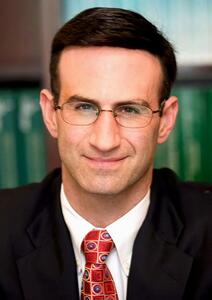
Rachel Augustine Potter
Last time when we met we talked a lot about your stepping into the role at OMB [Office of Management and Budget] during a time of financial crisis and just being really in the hot seat. That was more focusing on the budget side. Today we want to spend a little bit of time thinking about the management side and what your experience was like there. Step back and talk about what the administration’s priorities were in terms of management when you were at OMB and what your own priorities were in terms of the management agenda.
Peter Orszag
Sure. There were a couple of dimensions to that. Coming into the job I even remember I had very little anxiety about my confirmation hearings on what I’ll call the budget side or the policy side. But on the management side there had been a series of failed attempts, frankly, to improve management in government, so I remember preparing more on that than on what is at least seen as the more traditional part of the job, in part just because of where I had been coming from.
We also had an unfortunate set of circumstances with regard to the Deputy for Management, where, in my opinion, somewhat unfairly, Nancy Killefer, who had been a senior consultant at McKinsey, who was the first nominee for that slot—Her nomination didn’t go through, so we got off to a little bit of a slower start, while we ultimately wound up with Jeff Zients, who has gone on to other great things.
I’d say a few things. One is this is a great example of the urgent always crowding out the important, and it’s always easy to say, “I’m sorry, we can’t get to that.” Secondly, on the personnel side, it took us a little bit of time to get up and running. But having said that, the biggest set of changes—and it morphs in between the management and policy sides, or management and budget sides—involved performance measurement and trying to pay for what works and what doesn’t. Ron Haskins, who is a senior fellow at Brookings, as you know, has a great book on what we did and didn’t do, mostly giving us better grades than maybe we deserve—but I’ll take it, because that almost never happens—on pushing forward on the Moneyball for Government kind of agenda, which was certainly part of the management side of things.
The second thing is that Jeff, once he was in office, started to do the basic blocking and tackling of best practices across agencies, and the bread and butter of trying to make government a more attractive place, which is, I’d say, the second layer.
Maybe the way I would think about it is there was the sort of Moneyball for Government agenda. Just to simplify it, there were the nuts and bolts of just good management technique and practice, then there was the agenda around making government an attractive place for people to work. This is more the Partnership for Public Service type of agenda, but there was a bunch, for lack of better phrasing, a [Barack] Obama cool factor around whether it was possible to attract really talented people back into the federal government.
Potter
OK. Diving into that a little bit more deeply, I’m wondering, coming in at the beginning of the administration, when the [George W.] Bush administration had pushed PART, or the Program Assessment Rating Tool, so heavily, was there an immediate consensus that the new administration would not pursue PART? Or was this evidence-based policy making, or Moneyball for Government that you’re talking about, from the outset the agenda?
Orszag
By the time I got there, I think PART seemed I don’t want to say discredited, but there were questions about it. It was easier to pivot to so-called new approaches around the Moneyball for Government or evidence-based approaches, because it seemed so much like common sense. Now in fairness, if you go back—The terms changed but the substance was somewhat similar—it’s almost a little bit like waste, fraud, and abuse: we’re going to focus on effectiveness.
Clearly, part of the narrative, definitely during my previous stint in the [William J.] Clinton administration, was Reinventing Government. So again, this is not a new theme, but there’s always a desire to give a new shine to it, or put a new gloss on it. That combined with the fact that there was new funding available where we could actually do some things, and then I’d say better infrastructure, as data infrastructure got built out, expanded ability to be measuring things. One of the stunning things is just how hard it is to actually conduct the analytics in a nondigital world.
Potter
If you’ll humor me just a little bit more on the management questions.
Orszag
Of course.
Potter
Coming in at the beginning of the Obama administration, it’s following two administrations where contracting out services has been really advanced by both the Clinton White House and then the Bush White House through competitive sourcing. You oversaw the issuance of several memos that pushed agencies to insource more and bring contracting in. Could you talk about that and how that came about, and whether you think the efforts that the administration started were effective?
Orszag
Yes. It came about because the pendulum tends to swing, and it was, in our opinion, swinging too far toward higher-cost principal agent problems, where it’s harder to align incentives properly with outside entities. This is mostly just, again, the pendulum swinging back and forth, as it tends to do. That is a really interesting question that I would love someone to be able to give me an empirical answer to. I don’t know how much progress we wound up making. I know we tried. I just haven’t, frankly, looked at—I haven’t, to my memory, seen evidence on how that turned out.
Potter
Yes. The data aren’t that good. [laughs]
Orszag
I’m not surprised.
Potter
All right, one more, and that really focuses on regulation. You came in and—
Orszag
Cass Sunstein.
Potter
Cass was right behind you. Could you talk a little bit about Cass, your relationship with him, and your priorities in the regulatory arena?
Orszag
Yes, and there’s a broader point here, which is there was a broader effort to just try to bring in a variety of talented outside people. It was also the moment that—again, I’m coming back to Obama cool—It was a recruiting environment in which a couple of phone calls could get really, really talented people excited about coming into government, some of whom have now gone on to senior jobs in the [Joseph R.] Biden [Jr.] administration, like my former special assistants are now senior people at the White House. Cass may have been one of the leading embodiments of just bringing in a supertalented person who had studied the regulatory environment for his entire life, admittedly as an academic, but still was extremely well known.
We all had our detractors, too. Cass—It took a little while to get used to a different—It’s not an academic seminar, and at one point I had to tell him to stop reading the comments on the Washington Post blog site or whatever, because who spends their time really writing in comments, and it can create a bad mental frame. But there was a lot of that. I remember there was a Lyndon LaRouche set of protestors outside the White House who would protest against me, and they’d protest against him a lot, too. The opposition could be vitriolic, but he was also very inspiring for a lot of the OIRA staff, to have a scholar of his stature doing the nitty-gritty of running the office.
Potter
It sounds like you had a pretty good relationship and were kind of comfortable, since you were in the hot seat dealing with budget issues, with letting him run the regulatory stuff.
Orszag
Yes, and I was quite interested in a lot of it: the shadow price attached to carbon emissions and the discount rate. I’ll tell a quick story on the discount rate in a second. Having been an economist, these were things that I was very curious about, so I felt comfortable having Cass in that position, but also, perhaps relative to OMB Directors, interested in the analytics of what OIRA’s doing, a lot of which was not too dissimilar from CBO-type analytics, also. Choosing the right discount rate for government projects is something that is at the heart of a lot of economic theory, as an example.
Potter
OK. And the discount rate story?
Orszag
Oh, sorry. The discount rate story. This is actually a Clinton administration story, but in 1995, ’96, ’97, Joe Stiglitz’s top objective—I might have gotten the years slightly wrong, but it’s approximately correct—was to stop the privatization of the U.S. Enrichment Corporation, which, as predicted, wound up being a very terrible idea to privatize. It’s a company that enriches uranium for use in nuclear reactors. It also had this exclusive right at that point to import Russian highly enriched uranium and blend it down into reactor fuel.
The heart of the question—There had been legislation about how to privatize it—was whether the cash flows as a public corporation were higher or lower than what the privatization price would be. The discount rate is right at the heart of that, because you’ve got these cash flows, and what is the discount rate.
Joe had a view. The bankers that were associated with the privatization had a different view. I went into this meeting and they surprised us by having hired Bill Sharpe, who was a Nobel Prize–winning economist, citing him to the effect that our discount rate was theoretically flawed, and this and that, and blah, blah, blah. I said, “I’m sorry. I have to excuse myself for 20 or 30 minutes.” I went to Joe’s office. We called up Bill Sharpe, and we said, “Well, here’s why we think this. Here’s why we think that.” And he said, “Oh, yes, you’re right.” We went back into the meeting and said, “We just got off the phone with Bill Sharpe, and he doesn’t agree with what you just said.” After the meeting, this guy from—I won’t name the bank—pulled me aside and said, “You might think you were clever today, but I’m going to tell you you’re never going to get a job on Wall Street.” And I said, “That’s totally fine with me.” [laughter] So here we are.
Potter
Words he’s eaten since.
Barbara A. Perry
Rachel, other things?
Potter
No, that was it for the management, unless Peter wanted to add anything else to the perspective on the management side.
Orszag
No, It’s a constant struggle, especially at OMB, to get the oxygen to focus on the management side. It’s why having a Deputy who is strong both for the management Deputy slot and for the OIRA slot is so important, because the Director’s job is so in flux every day.
Then there’s the management of OMB itself, which is a different discussion, especially around transitions. It’s much different than most of the rest of the White House jobs, where you’ve got a complete new set of people, and they’re all, I don’t want to say loyalist, but they’re all kind of directionally aligned, and they tend to all be new in their jobs. OMB is different because you’ve got that permanent staff there. It’s a much different management job, and a much larger organization than anything else in the White House complex.
Perry
Before we dive into health care as a policy topic and a budget topic, my ears perked up when you talked about people protesting against you and sometimes—
Orszag
Yes, Cass.
Perry
Yes. These are people outside, on Pennsylvania Avenue—
Orszag
They would stand on 17th and G, outside the White House, and they had a picture of me as [Adolf] Hitler. It’s the typical thing: it makes no sense. The things that they would protest against—I remember one was on NASA [National Aeronautics and Space Administration]. The space shuttle program was ending because there had been no investment and they were getting dangerous, frankly, so we had two basic alternatives: rely on Russian rockets or try to open up to what became SpaceX and the other private sector U.S. companies.
It was just bizarre: part of the protest was, you are destroying the U.S. space initiative, and you’re in favor of big government. I’m thinking, We’re trying to rely on the private sector. At one point, just to be amused, I stopped for about two minutes. I said, “By the way, I’m that guy. What is the problem here?” It didn’t go well, so I just walked off, but yes.
Perry
What did they say to you?
Orszag
It was mostly just screaming. It wasn’t rational, really, so it was hard to engage with, because, again, in that particular incident, I was in favor of big government because I wanted to, instead of relying on a foreign set of rockets, open up to private sector enterprise. That’s also part of the job.
I remember landing at [Ronald] Reagan [Washington National Airport] with my two younger kids at the time. I forget where we were coming from. I’ll tell two quick stories on this. We were landing and someone just started going off. I said, “I’m sorry, my kids are here. Do you mind just stepping back?” He looked at me. He looked at them. He looked at me. He looked at them, and he finally said, “I don’t care,” and he kept going. I thought, OK, we’re out of here.
My favorite story on all of that is there was another airport—I was walking by someone and they grabbed me, and said, “We just wanted to thank you.” I thought, What are you talking about? And they said, “We just wanted to thank you for your public service.” And now I’m thinking, Wow. That never happens. Why don’t I stop and kind of breathe this in? [laughter] It’s this elderly couple. That had been the husband. Then the wife says, “So, Mr. [Eric] Cantor, what’s your favorite part of serving in the government?” I had heard a similar story about one of the Supreme Court justices. I’m never usually this quick, but without missing a beat I said, “Oh, that’s very easy: the opportunity to work with Peter Orszag,” and then I turned and walked off. I heard the wife turn to the husband and say, “Who the hell is Peter Orszag?” [laughter]
Perry
I had a friend who was at a health club one day and literally saw Justice [Antonin G.] Scalia cycling, and my friend, somebody who covered the Supreme Court, not wanting to impose, said, “Excuse me, aren’t you Justice Scalia?” And he responded, “No, he’s thinner than I am.” [laughter] I thought that was a good response.
I consulted with my colleague Guian McKee, who is an expert on all things health care related, and I said, “We’re going to be talking to Peter. This is not my area of expertise. What kinds of questions are you interested in having more information on?” He gave me three; some are multipart. The first one is: how did your understanding of health care economics shape your views of what health care reform should accomplish, particularly in relation to cost control? How well do you think the ACA [Affordable Care Act] did in those areas?
Orszag
What became really clear, maybe with the eyes of an outsider, not having spent 20 years in that literature, was how much health care was just, “That’s just what we do here,” almost quasi-random. We do it this way here, and we do it another way there, and it wasn’t consistently high quality. It wasn’t consistent in the practice norms. There was a lot of random variation. There had been, as is well known, a lot of literature coming from Dartmouth and elsewhere on this kind of variation.
I found that really interesting because the combination of all this unwarranted variation and really high cost suggested that there was something that could be grabbed. Higher spending leads to better outcomes over some range of spending, but then it flattens out. If we were really on that flat of the curve, you could restrain spending, or maybe at least cut back spending growth and not harm health outcomes. That was sort of the golden objective.
We started to do a bunch of research at CBO about that, and then, as I transitioned into the administration, it certainly became one of the big themes. There was a lot of pushback. There were people who said we should just be focusing on coverage expansion. Why are you bothering at all with anything involving making the delivery system more efficient?
There was also a CBO problem, because at the end of the day CBO gets much more comfortable with what I would call the simplistic “just ratchet down prices,” so the price per procedure gets reduced, as opposed to changing incentives for doctors, or changing the way in which we deliver care, which is a little bit more indirect. It’s a bank shot.
The problem with the direct approach is they tended not to work over time. Take, for example, the so-called sustainable growth rate formula for physicians, where you just ratchet down the pricing. But if you don’t do anything to change the underlying incentives or the emphasis that’s put on quality or the other outcomes, you just wind up pushing down on one part of the balloon and it blows up later in some sense.
We tried to do three things at once, which was really complicated: expand coverage; do some work on delivery system reform; and then do enough of the traditional offsets, the kind of blunt instruments, that we could pay for the coverage expansion just through that with the delivery system stuff being the gravy or the extra. A lot of it didn’t wind up working. Some of it didn’t even wind up coming into effect—the Cadillac tax and the so-called IPAB, the Independent Payment Advisory Board—but if you look at the cost per beneficiary in Medicare from 2000 to 2005, to 2010, and then for the five to ten years after the implementation of the ACA, there was a really dramatic deceleration in Medicare cost per beneficiary, with actually Medicare cost per beneficiary on an inflation-adjusted basis being negative for a significant period of time.
Having spent a lot of time in health care, a lot of that came from not one thing, but the theory of the case we had, which was to throw a lot of stuff up against the wall and see what sticks, what worked. The reason it worked was that it sent a signal to providers that their world was changing. It wasn’t one thing. It wasn’t the changes in Medicare Advantage payments. It wasn’t trying to create the IPAB. It wasn’t the Cadillac tax. It was this whole collection of small things, which added up to more than the sum of the parts because of two things: it changed expectations, and there’s a lot of inefficiency in health care.
How would I grade things? Judged from that perspective, what’s happened to cost per beneficiary, at least in the aftermath, it’s pretty good. On an individual-by-individual provision basis, not so good. Most of it kind of faded by the wayside or didn’t even come into effect at all. And some of it we don’t even fully notice. For example, on electronic health records, it wasn’t part of health care, but it was part of the stimulus bill to create first incentives and then sticks.
I don’t know about you, but the chances that when you go into a doctor’s office today you have to fill out an annoying set of papers is much lower than it was a decade ago. People don’t even really think about that, but a lot of the stuff we’re now able to get on our phones, and the opportunities to start doing a whole variety of different things that I could talk about in a second, really comes from having that data infrastructure. That’s not technically part of the ACA, but was there within a year or so of enactment.
There was significant progress, but it wasn’t perfect. We kind of lost our way. This was one of the biggest things that [Donald J.] Trump’s HHS [Health and Human Services] Department really set us back on, because they clearly were not particularly interested in continuing to move these things along.
I was just in D.C. earlier this week, and one of the key things I think now is how the Biden administration can reawaken that sense that we’re going to be moving in a particular direction, instead of just a lot of empty talk about value-based care and the buzzwords. There was progress, then I think some slippage, and they’re trying to get it back on track.
I would say, though, that if you looked overall at how the world has turned out after—just stepping back for a moment—there were all sorts of wild predictions: the end of employer-sponsored insurance, the end of health care as we know it, the end of the world.
Medicare Advantage is a great example. Medicare Advantage—the private insurance plan under Medicare—was predicted to plummet, because we cut back the payment rate for Medicare Advantage plans relative to fee-for-service traditional Medicare. All of the CBO projections suggested a marked reduction in MA [Medicare Advantage] enrollment. What’s happened instead is that more than a third of the program today is in Medicare Advantage. It’s the biggest source of growth, basically, over the past decade.
All of the most dire predictions—the death panels, the end of Medicare Advantage, the end of employer-sponsored insurance—none of that happened. And there was a period in which costs grew more slowly. There are millions and millions more Americans who have health care today than would have had it without the ACA. It’s pretty good, all in all.
Perry
Well, for the record, we’re doing the second interview, generously offered by Peter Orszag, on the 14th of April 2022. You probably saw this yesterday, that Senator Charles Grassley said if the Republicans take back the Congress in the upcoming midterms, they will not attempt to repeal ACA. [laughs]
Orszag
What progress.
Perry
Exactly. I had never heard them say that before, so I thought that was interesting.
Orszag
Yes, because the first round of repeal and replace went so well.
Perry
Exactly. Go ahead, Rachel.
Potter
Were there any provisions—I’m thinking about the public discussion about the public option—anything that you feel like if it had made it in that we would have a fundamentally different outcome today if we had had X?
Orszag
First of all, it’s really easy—and this applies to the stimulus and also the ACA—to forget how heated the political battle was. I have the scars. I was in the room. I was going back and forth with a lot of the swing votes. It’s one thing to sit at a think tank or in academia and say, “Oh, if they only did this or that.” It’s another thing to know how close these votes were, and winning by the barest of margins.
Were there things that I would have liked? Yes. I’ve spoken publicly before about a good example being medical malpractice reform, which is something that was dropped from the legislation. There’s a significant misunderstanding, to my mind, in the literature about the effects of potential legislation, at least done the way we would have liked to do it. Just briefly, although you don’t hear it as much today, it used to be the case, especially around the time of the ACA, that if you asked most doctors why is health care so expensive, they’d say, “Malpractice.” That’s one set of facts.
Then if you look at the academic literature, pretty much every academic says that’s just factually wrong. The reason they say it’s factually wrong is that if you come back to that variation that I was talking about before, cost per beneficiary being much higher in some parts of the country than in another, and you look at where the medical malpractice laws are more restrictive or less restrictive, there’s basically no correlation between cost per beneficiary and the restrictiveness of med mal [medical malpractice] laws at the state level. The conclusion from the academic literature is the practitioners don’t know what they’re talking about.
My take on this is the problem with medical malpractice is not the liability, should you be found liable, which is where most of the med mal reforms focus—so it would be a million-dollar maximum liability, or $5 million, or whatever. Instead it’s the basis for being found liable in the first place. In most states—not all, but I think it’s about half now; I haven’t looked at this in a few years—the basis for being found liable is customary local practice.
So what does that mean? Who the heck knows what it means? It means if everyone else in your local area, all the other docs, start doing X, you’d better start doing it, too, because that’s then customary local practice. What happens in terms of this variation in practice norms is that some doctor somewhere figures out that you can start charging a lot of procedures to do X, and spreads that to the next doctor, and all of a sudden you’ve defined customary local practice, and you better do that or else you could be found liable.
It doesn’t really matter whether you’re liable for $500,000 or $1 million or $2 million or $5 million, which is why all these studies find no correlation between the restrictiveness of the local law and cost per beneficiary. They’re typically looking at that liability limit and not studying the basis for being found liable in the first place.
We could have tackled that issue. Of course when I say that, I’m committing the same sin that I just accused others of, because I am conveniently ignoring all of the political pressure around that particular topic. I guess we’re all allowed to be completely academic for at least part of a discussion.
Perry
Absolutely. Well, this is somewhat related in terms of pressure from, in this case, outside groups. Guian McKee’s question was: how would you describe the negotiations between the White House and key health care interest groups like insurers, hospitals, providers, drug companies, unions, et cetera?
Orszag
It, like any set of negotiations, kind of went in cycles. I still remember flying with President Obama somewhere in the Midwest to launch the health reform discussion at the American Medical Association, and it was all hugs and kisses and love and isn’t this great and we’re all good, because you’re operating at one level of generality.
We were really careful, for example, in terms of that first budget that we put out, to put out a revenue-neutral health care reform placeholder, and the balance between enough specificity that you look serious, but not all the gory details where you’re just getting attacked from Day One, before you’ve even had a chance to lay out the arguments. This was a constant source of tension, and it fed into the difficult summer of 2019, where we were waiting for Godot in terms of a congressional legislative package, especially from the Senate Finance Committee, that never ultimately arrived. All of the interested parties were, of course, very active in that process.
Like anything that affects a lot of people, and like anything that affects the bottom lines of powerful entities, it had its moments. Typically in these things it’s way easier at the beginning, when you’re operating in generalities. Then it gets really hard in the middle of it, as you get into the detail. When you’re on the tail end and it’s almost done, everyone comes back together again and says thumbs up because you’ve got a deal.
Perry
Can you apply that maybe a little bit more specifically to Congress? Your point about the margins to achieve victory were just so narrow, but there is the famous bipartisan meeting that the President convened—Was it at Blair House, or in Lafayette Square?—to try to bring members of both parties from the Hill to talk about this. I believe I read somewhere that someone reached out to one of the Republican Senators and said, “If we ended up giving you everything you’re asking for, would you vote for this?” and the person said no.
Orszag
Right.
Perry
So how do you deal with that particularly, and what we were seeing at that time with the opposite party just saying, “No, we don’t want this”?
Orszag
This was one thing that I think if I had read the political science literature a little bit more carefully before entering the administration, personally I would have had a different perspective on. It was only after I left office that I read up on what I’d call the “Stanford versus other” debate on the cause of polarization in the Congress, and the degree to which it had really widened, with the middle just falling out, before Obama took office. I’d say the press corps at the time—Now it’s recognized, but it was evident in the bimodal graph of voting preferences, especially in the Congress, but even in the Senate, too, by the time President Obama took office. What that suggested is it was sort of delusional to think any of this stimulus or health care was really going to be bipartisan.
You could pick off the moderate Republicans from Maine or somewhere, but the thought that Eric Cantor or Paul Ryan or any of those people, some of whom are friends or colleagues, were going to vote for an important piece of legislation from President Obama was not likely to be the case. You could just see it in the data. You could see the two parties just growing apart on—I haven’t looked at this in a decade, but I think it was the DW-NOMINATE index or something. That’s right? OK, boom. There we go.
Perry
A+!
Orszag
I remember, yes. A lot of that was the conventional wisdom in D.C., President Obama needs to be better at just LBJ [Lyndon Baines Johnson]-like cajoling, and I thought, Well, OK. But LBJ had that dense middle to go try to cajole people with. When there is no middle, it’s almost like there’s no point. Maybe there was still a point, because you had to get caught trying, but I, for one, really at the time thought it was still possible that we would have bipartisan legislation out of the Congress, and the political science literature would have suggested that was extremely unlikely.
Perry
Do you think if Senator [Edward M.] Kennedy had lived into the teeth of the negotiations it would have helped? Or would it have been already too late? Because as you say, this movement was occurring before the President even came in.
Orszag
I think there were some people motivated by his passing to try to create something that was appropriate to honor him, almost. But the more important point was a lot of the desire to be bipartisan was coming from moderate Democrats in states where they were worried about seeming too partisan. The chasm was too big for anyone to bridge. No one could have done that, again, just looking at that bimodal distribution in voting patterns. It’s hard to tell.
Perry
Yes. Can you talk about the role of President Obama in all of this? What were you seeing? And feel free, then, to go beyond the health care debates, because when we ended our first interview we had just gotten you into your position as Director of OMB, so I don’t think we really had a chance to talk about your working with the President. We always like to ask the senior officials what was that like, working with the President? What was his leadership style? What was his learning style? What are his personality traits that you saw specifically? Again, it can be related to getting ACA passed, but anything else that you want to relate it to would be helpful.
Orszag
I always have been really impressed with President Obama. This goes back to my days at Brookings and CBO. When I interacted with him, he was the inaugural speaker at the Hamilton Project.
I was in the West Wing when he came back from the unsuccessful attempt to win the Olympics for Chicago in 2009 toward the beginning of the administration. He flew to Europe to appeal to the Olympics Committee, and they said no. This was just an enormous waste of time and was embarrassing for the President of the United States. I can guarantee you that many other Presidents, walking back off of the West Wing lawn from Marine One that had just landed from this global trip, would have gathered anyone in the line of sight and just started screaming or saying, “What the hell was that?” He just walked in and said, “We were robbed,” and then went back to his job.
On health care, the one thing that really stands out in my mind—There’s a photo of this somewhere. In Phil Schiliro’s office—[Ezekiel] Zeke Emanuel was there, and I think Bob Kocher, Nancy-Ann DeParle—a few of us were talking about being in the death throes of the summer of ’09 and the pathway forward on health care. It was pretty depressing, because it was Senate Finance Committee rope-a-dope and what have you. The President walked in—which is unusual, because Phil’s office was on the second floor of the White House and the President doesn’t usually venture up there—and just plopped himself down and started talking. He said, “Let me just summarize this: I’m feeling lucky. This is going to happen,” and I thought, You’re kind of delusional, but he was right.
Perry
What would have caused him to think that and say it and be right? What was it about his mind and how it operated?
Orszag
Because he likes to say, “My name is Barack Hussein Obama, I am a black American, and I am the President of the United States of America.” [laughter]
Perry
Well, I know that answer, but what—
Orszag
That was basically it. He just kind of—
Perry
It wasn’t something that he knew?
Orszag
No, he just kind of felt the moment and said, “I just have a gut sense.” It wasn’t like we were counting votes or anything like that. He just said, “I have a gut sense this is going to happen.”
Perry
That’s pretty amazing.
Orszag
Yes.
Perry
How about the night it passed? Were you there for the celebration?
Orszag
Yes. That’s an emotional night, because a lot had gone into all of that effort, and you look back on various moments in time, and I think again about the passage of that. For me, also, the stimulus was a huge effort, where it was just so early in the administration. Those two things right there are my time in government.
Perry
[laughs] Indeed. Before we leave health care, Rachel, anything else to ask? And then I wanted to ask about the Defense budget.
Potter
We’ve covered everything I’ve got here, so we can move on.
Orszag
The defense budget?
Perry
The defense budget and working with the President, working with Secretary [Robert M.] Gates.
Orszag
Yes. Early on—In fact, I remember this meeting, and there is a photo from the Oval Office with Obama and me. I’m in my shirtsleeves, and we’re looking at a piece of paper; it was on the Defense budget. He said, “I’m feeling like I’m getting jammed,” so I put together a very simple chart that showed we were getting jammed. They were looking to take a new President and add a significant amount of expenditure at a moment when there were lots of other priorities.
Perry
At this point “they” being? They, the jammers?
Orszag
The Defense Department. We had a thing in the budget process, and what I would say to Cabinet Secretaries, including the important ones—They’re all important, but—
Perry
[laughs] We know what you meant. We call those “the inner Cabinet.”
Orszag
Yes. Obviously, they have their own relationships with the President. They can always appeal budget decisions, but if they did that, we weren’t going to just present the President with that part of the appeal. It was going to be zero-based budgeting. We would go over the whole thing. And the President, on Defense, saw this and said, “I’m not comfortable with that.” He actually cut it back relative to the initial number for the Defense Department.
Gates was fine. I always found Gates a very good partner, except I would say they put in the SUV [sport utility vehicle] that drove me around one of those secure phones, and whenever Gates would call he’d always use the secure phone, even if it wasn’t classified information, and the thing just did not work that well—or maybe it was operator error on my part. It’s really hard to hear. You had to punch in all these—I’d say, “Can I just call you on my normal phone?” [laughter] the three times I used that phone.
On appeals, the only person who did appeal once was Secretary [Hillary Rodham] Clinton. It’s interesting because the press presented this as State was able to jam the White House into succumbing to her budget. The real story was that there was a kabuki dance where, on purpose, we did ax, knowing that we’d have to give something back to them, and it was all kind of preprogrammed. There wasn’t anything that special that happened at the State Department, other than letting the President of the United States be the one who gave to Mrs. Clinton an extra give on purpose. That was one appeal that was planned. That was the only actual appeal that happened while I was there, and that one doesn’t even really count because it wasn’t really an appeal.
Perry
We’re also doing an oral history project, separately from the Obama Project, for Secretary Clinton on her four years in the State Department. The Miller Center’s doing it, and we’re focusing on particularly women, peace, and security, so I feel duty-bound to ask all of the other people we’re talking to for the Obama Project: was that something that you discovered in the budget? Was that ever something that she was making a case for specifically, to try to help women and girls around the world?
Orszag
I’m sure, but it doesn’t stick out in my memory prominently.
Perry
OK. You were very generous to offer us another hour, and because you started early we are at that hour point. I’ll just ask Rachel: Are there any other questions you have? Or, Peter, anything that you’re thinking, Why didn’t they ask me about this? Or someone who’s reading this ten or twenty years from now saying, “I can’t believe they didn’t ask Peter Orszag about—?” Anything coming to mind for either of you?
Potter
I would just ask the total step-back question: What is your legacy, as you see it, from your time at OMB? I can answer that from having spent this time with you, but I’d be curious to hear your perspective on it, just as a recap and summary.
Orszag
Obviously, it’s for other people to judge, so this is just what I hope it would be. Let’s put it in four buckets. First is legislative, so stimulus and ACA were two significant things. One can debate their imperfections, but I still think the world was much better with them than without them. The second is something I mentioned earlier: a lot of the people around OMB at that time have gone on to bigger and better things, so there’s some ongoing legacy there, too. The third is probably a little bit of what I’ll call the Ron Haskins stuff on Moneyball for Government and just pushing that rock up the hill ever so slightly. And then fourth, whenever I’m asked this question I like to say—although I’ll tell you why I can’t say it anymore—that faceplate near the fireplace that says, “This fireplace is not operational” in my old office is my true legacy. [laughter] However, they have now turned that office into a TV studio. I was at the White House last week or the week before and we went by the old office. I did not see that plate, so even that part of my legacy has now been scrubbed from the historical record.
Perry
But it’s good that we did this, and it is now captured for all of history.
Orszag
Perfect. Well, thank goodness for that.
Perry
Having said that, unlike the couple you ran into on the sidewalk in New York who thanked you for your service, we know who you are, and we do thank you for your service. And we not only consider it as your time on the Hill, your time as Director of OMB, but also this project. We know that that’s also a public service to our country, so thank you for, again, the generosity of your time, and for just being so open and wonderful with us. We so appreciate it.
Orszag
Thank you so much. It’s good to spend time with you.
[END OF TRANSCRIPT]