Transcript
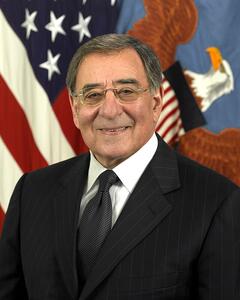
William J. Antholis
Thank you so much for spending some time with us. We appreciate it. Thanks for your service, first and foremost, including the book [Worthy Fights: A Memoir of Leadership in War and Peace], which is an incredible service.
Leon Panetta
My memoir pretty much summarizes a lot of what I went through.
Antholis
We’re all in the business, including yourself still, of teaching public service, and encouraging public service. What you’ve done in your whole career and life and in this book, and in meeting with us and doing this today, is a real public service. We thank you for it.
This interview is confidential. We’ve all signed nondisclosure agreements. You own these words until you sign over a deed to us. Between now and then you’ll get to review the transcript and make any edits and changes you want before it gets released publicly.
It’s almost exactly a year ago that Brent Scowcroft passed away. When he passed away, he had done an interview with Philip Zelikow, one of my predecessors as director, not to be released until his passing. It was really quite revealing about the first Iraq War, some of the things that he did not want to be revealed until he passed. We encourage that kind of candor here. We should do voice IDs [identifications], not just for yourself, but for our other participants.
Panetta
I’m Leon Panetta, former everything. [laughter] I served in the Congress as OMB [Office of Management and Budget] Director, Chief of Staff to President [William J.] Clinton, and then served as CIA [Central Intelligence Agency] Director, and as Secretary of Defense in the [Barack] Obama administration. Now I’m chairman of the Panetta Institute for Public Policy.
Markos Kounalakis
Markos Kounalakis. We’ve met a number of times over the years. I’m currently at the Hoover Institution.
Scott D. Sagan
I’m Scott Sagan, codirector of the Center for International Security and Cooperation at Stanford. I’m a professor of political science and work mostly on nuclear weapons issues, but also on the laws of armed conflict. That’s one issue I think we’re going to get into today.
Antholis
I’m Bill Antholis. I’m the director of the Miller Center and served for four years in the [William J.] Clinton administration, two years at the State Department when you were the Chief of Staff. Then I started at the White House on the NSC [National Security Council], working for [James B.] Jim Steinberg, who had been my boss at the State Department in the first two years of the second term.
I spent five years at the German Marshall Fund, a decade at Brookings as [Strobridge] Strobe Talbott’s managing director. I’ve been at the Miller Center for about seven years now. I’m an alum of the University of Virginia; like you, I found a convenient way to come home and get to do this kind of work.
You did this with us once before, in January of 2003. In addition to reading your incredible memoir, I went back and looked at that. What’s really quite striking in it is that it was a very comprehensive oral history, including your growing up, a lot of the things that you cover in your memoir. That was for the Clinton project, and there were wonderful things in there that were not in the memoir.
So as a framing for today, since the difference between this one and that one is that was a prememoir oral history and this is a postmemoir oral history focused on the Obama Presidency, I’m going to encourage you to do what President Clinton does in the interviews we’ve been doing with him. He will often point to his book, and he’ll start telling a story, and he’ll say, “But that’s in there. Let me tell you what’s not in there.”
That’s how we’d like to frame today’s conversation. There will be certain parts of the chronology and policy decisions where getting the rudiments that are in here [gestures toward book] will be helpful. But we’d really like to encourage you to go off the script, or to add to the script, or add back stories where you think it’s relevant. We have a whole set of different topics we’d like to get into, but maybe that’s a way to start framing it.
This book was now written almost a decade ago. Memories happen in context; they don’t happen in a vacuum. A lot has happened in the world on the topics you cover that were of great importance when you wrote the book, both in the world and in American politics. There’s a budget fight going on in D.C. today. Afghanistan was in the news just weeks ago. For purposes of those listening, this is about a month after, finally, the U.S. pullout from Afghanistan.
But a lot has happened in American politics, as well, in the last seven or eight years, so I’ll stop talking and ask you to reflect, as you think about this memoir, what jumps out at you that’s either not in there, or maybe even that’s in there and feels even more right seven or eight years later.
Panetta
It’s hard to reflect on my history, both in Congress and the Clinton administration and in the Obama administration without looking at the present, and the challenges we’re confronting now in terms of our democracy. I’ve often said that in my almost 50 years of public service, I’ve seen Washington at its best and Washington at its worst.
The good news is I really have seen Washington work, from my earliest days back in Washington as a legislative assistant to Tom Kuchel, who was Minority Whip under [Everett] Dirksen. Kuchel came out of the Hiram Johnson tradition in California, and there were a lot of Republicans in the Senate who had the same background, whether it was [Jacob] Javits or Clifford Case or George Aiken or Mark Hatfield, or Hugh Scott. Even though they had their political differences, the whole thrust of why they were there was to deal with issues and to work together on issues.
There were statesmen on the Democratic side as well, whether it was Henry Jackson or a [Warren] Magnuson or a [Stuart] Symington or [William] Fulbright, Dick Russell, Sam Ervin. There was a greater willingness to try to work together on major issues and to try to resolve the issues. There was a certain amount of trust in their ability to sit down and be able to frame consensus, find consensus.
Even when I was elected to Congress, [Thomas] Tip O’Neill, who was the Speaker, a Democrat’s Democrat, had a great relationship with Bob Michel. Again, they had their politics—They fought each other in elections—but they had the fundamental attitude that when it came to major issues facing the country, whether it was a Democratic President or a Republican President, they would work together.
That was the message they sent out, whether about education or energy. In the [Ronald] Reagan administration, we passed Social Security reform, bipartisan; immigration reform, bipartisan; tax reform, bipartisan. There was a real willingness to sit, negotiate, and be able to find compromise.
What I’ve seen happen in these last 10 or 12 years or more is Washington at its worst because of the divisions—the political divisions, the partisan divisions—and the inability and unwillingness to sit down and try to resolve issues, to govern. To govern.
My sense was that the Presidents I’d worked for—whether it was Bill Clinton or Barack Obama—believed in that process, and believed that it was important to be able to find solutions, to be able to give and take, and to be able to make our democracy work. And whether it was Bill Clinton or Barack Obama, I honestly believe that their fundamental decision was based on what they thought was in the best interest of the country. That’s important. They had their politics, they had their different way of approaching things, but I really think they were driven by what they believed was in the best interest of the country.
I worry that what I saw developing at that time—and I saw it beginning to happen in the Congress with [Newton] Newt Gingrich, and with the Republicans, the whole Contract with America, and I also saw Democrats, frankly—beginning to pull back in terms of willingness to really work together to get things done.
In some ways, my memoir is based on a period of time when, indeed, the ability to govern really did work, and Presidents could work with the leadership in the Congress, and Members work with each other. You were able to keep our democracy on track.
My greatest worry now is that I see these huge divisions occurring within our country, to the point that parties will take positions, not in terms of doing what’s necessary for the country, but rather what’s necessary for their political base. But now decisions are made that could really hurt the country, and there’s no sense of responsibility that you have to do what’s right for the country.
I keep saying this to my students here at the Panetta Institute: in a democracy we govern by leadership or by crisis, and during a great deal of the period when I was in Washington, there was leadership. There was a willingness to take risks. There was a willingness to do what was necessary, sometimes knowing full well that it would have political consequences, but that it was right for the country. And if that leadership’s there and willing to take the risk, you can avoid crisis, or at least contain it. But if that leadership is not there, then we govern by crisis.
The greatest concern I have today is that we are caught in this process of governing by crisis, and that it really does threaten the stability of our system of government. Having been around for 50 years, having seen how the system can work and can really serve our country, and having developed a great deal of trust in the elements of what our democracy is all about and the institutions of our democracy, when leaders are elected who are not committed to leadership or the institutions of our democracy, I worry about the survival of our democracy itself. January 6 [2021] was obviously the ultimate reflection of that.
I ask myself: in the time that I was there, did I see this coming? This didn’t happen overnight. It happened because in many ways the political leadership allowed it to happen. It wasn’t willing to take the risks that are required of leadership. If you’re going to be a leader, you have to take risks. Now there’s almost an unwillingness to take those risks. Our democracy cannot function by Executive order; it has to function by legislation. I worry about our ability to be able to confront the challenges that exist. That’s probably the biggest thing I worry about.
I’m the son of Italian immigrants. My parents came to this country, and when I asked my father, he said, “The reason we came to this country is so we could give our children a better life.” That’s the American dream, and I worry about whether we’re going to give our children a better life.
Antholis
Can I ask a follow-up? That’s a wonderful framing and reflection, particularly given January 6. Until you mentioned January 6, I was wondering how that general trend from the Gingrich revolution forward—which you chronicle so well in the memoir—affected your time as CIA Director and Defense Secretary, since the phrasing since the George Washington administration has been that debate should end at shore’s end.
What January 6 made me think about is flipping it and asking the question in a slightly different way: did the lack of faith in American governance start partly because of the wars that you inherited? When you were running those two very large, complex national security organizations, how much were you aware, as a former politician, that people didn’t trust what you were doing because of how badly those wars had gone before the Obama administration?
Panetta
Well, look: the shadow of Vietnam has been with us a long time. And, in many ways, we came to a realization in this country that mistakes were made in fighting that war. We took a lot of it out on the people who were fighting that war, and that created a lot of wounds within our own society. But then somehow we were able, with time, to heal.
Then what happened was 9/11 came along, and 9/11 represented a real shock to the system, because we never anticipated that we would face another Pearl Harbor from terrorism. In some ways it unified the country. It did something that leaders had been struggling to do for a long time: the crisis of 9/11 did help bring the country together. There was a recognition in this country that we could not just turn our backs on those who attacked our country and killed almost 3,000 people. We had to go to war.
President [George W.] Bush basically said that—“We’re going to war against terrorism”—and we did. There was a sense that it was the right thing to do and that men and women in uniform would put their lives on the line on this issue. It was recognized that they were doing what was necessary to protect our country and try to make sure that another 9/11 never happened again. There was a recognition that if we were to live by our oath to the Constitution, we had a responsibility to protect this country, and therefore our willingness to go to war and to go after terrorism was right.
When I became Director of the CIA, I had that fundamental feeling, that this was the right thing to do; that my job, as CIA Director, was to protect our country from the ability of al-Qaeda or other terrorists to conduct another 9/11 attack on this country. I viewed that as a higher calling, and I think President Obama shared that view, that it was important that we not allow terrorists to have the opportunity to attack our country again, that we have a responsibility to go after those who would plan another attack. So I felt very comfortable, frankly, with the responsibility I had, because I really did feel that my primary goal was to protect the American people.
I was working in an Agency in which it wasn’t Democrats, it wasn’t Republicans; these were professionals who had committed themselves to the challenge of going after terrorism and protecting the country. That combination of working with an Agency that was totally devoted to that cause—This was not an Agency where there were qualms about what the hell we were doing. They were fully committed to what was happening, fully committed to going after the enemy, and I shared that.
My approach to intelligence when I came in was very much based on the intelligence I had been a part of, going back to when I was an intelligence officer in the Army, but also at the time when I was Chief of Staff to the President and had intelligence provided to the President on the threats that were out there. I knew that side of intelligence because I’d seen it, both in Congress and in the administration.
At the moment when I went to the CIA and sat down with the former Director, and he looked at me and said, “You understand you’re going to be a combatant commander,” I honestly did not know what he was talking about. But he briefed me on that, and soon after I became Director, I found myself having to make life-and-death decisions on the operations we were involved with. It’s often said that intelligence is the point of the spear. We were truly the point of the spear in terms of dealing with al-Qaeda and with the terrorists who’d been involved in 9/11 and were continuing to plan attacks on the United States.
Frankly, it was a lot cleaner than the military mission in Afghanistan. In the military mission—while I think a lot in the military thought it was important to go after terrorists in Afghanistan—there was also a sense that they had a responsibility to train the military; they had a responsibility to try to work with the government there, and also to try to build an Afghanistan that would not become a safe haven again for terrorism.
I didn’t worry about that. I worried about the mission I had, which was to go after the bad guys. In many ways, it began in the Bush administration with [Michael] Hayden. I was put in charge of an operation that was targeting those who were involved in 9/11 and Pakistan. They had made efforts to put boots on the ground, or to use fighter planes, but the Pakistanis made it clear that was not going to happen. In many ways, it was the only way we were going to be able to go after those involved.
We had people on the ground. We had almost 300 spies on the ground, working in those tribal areas and working to identify the targets we were after. We had a list of who those targets were and, using our operations, we were going after those who’d been involved in 9/11. Frankly, we did a damn good job in terms of going after the leadership of al-Qaeda.
Sagan
This is a good segue for a set of themes I wanted you to reflect on, if you would. Every CIA Director and Secretary of Defense brings a unique background to his or her job, but one thing that you brought—which is relatively unusual for a CIA Director and highly unusual for a Sec Def—is being a lawyer. Understanding the laws of armed conflict is important with respect to your decisions on interrogation, on targeting—what you were just talking about—and even on the [Osama] bin Laden raid.
So I wanted to walk through and have you reflect on that. You were talking about the use of drones in Pakistan. Can you tell us about how the rules of engagement were developed and whether you think they hit the right balance between being too restrictive versus being excessively open, in terms of who was attacked and collateral damage, that kind of thing?
Panetta
We were addressing it on several levels. I, as a lawyer, asked for the legal justification for what we were doing. Legal justification had come from the previous administration, but was also confirmed by the lawyers in the new administration. The targeting of the individuals we were going after had been done by both intelligence and the Justice Department working together to identify who those targets were and putting them on a list of people we were to go after.
To be truthful, I didn’t spend a lot of time going through all the documents in terms of who was identified and why. I felt pretty comfortable—particularly with my general counsel—that he was making sure that we were operating within the boundaries of the law.
Because I’m a Catholic, I believe in the importance of life, and now having the ability to decide between life and death, I really felt that it was important that we not be irresponsible. And by the way, what happened recently in Kabul with that drone strike is a perfect example of how not to do it.
Antholis
This is a reference to an incident after the suicide bomb at the Kabul Airport, when the U.S. retaliated with a drone strike that turned out afterward to be wrong.
Panetta
As I said, we had spies on the ground. We had eyes on the ground. Secondly, we did very heavy surveillance, so that when we thought we had a target, it was not as if you have a target and they’re going to hit the target. No. It was you have a target, and now you have to do sufficient surveillance to prove that you have a target, so there was a tremendous amount of surveillance involved, using drones to make sure that that, in fact, was a legitimate target.
Then, secondly, we had to make sure that if we had the opportunity to take a shot, there were no women and children in the shot. I’d ask that question when I’d get these late-night phone calls. They would say, “We have a target.” They would identify who the target was. They would describe the basis on which they had come to that conclusion. I would ask, “Are there any women and children involved in the shot?” If they said there were, then we pulled back. If there weren’t, I asked, “Are you sure that we have no collateral damage here?” Then I’d give them permission to take the shot. That happened a lot. [laughs] When I came home to Carmel Valley, in the middle of the night I’d get those calls, and I’d have to make that decision at that time. But I never had the sense that they were being careless or reckless about the process.
A lot of these targets had been worked on for months. A lot of surveillance had been done, and there was a real sense that we just have to have as close to absolute certainty as possible that we’re hitting the right targets. There was a lot of work involved.
Sagan
Do you recall any instance in which you either regretted not taking a shot, because of later actions, or regretted taking the shot because the proportionality calculation turned out to be wrong?
Panetta
Yes, there were times when we didn’t take the shot because there were women and children, and I worried that, not having been able to do that, the son of a bitch was going to go out and continue to go after our forces, or go after our troops, or continue planning for another attack.
We had a rule, or an exception—depending on where the leader was—If he was in the highest levels of al-Qaeda, I had the flexibility to be able to take that shot, even if there were children or women in the shot. That was not an easy decision.
Antholis
You opened the memoir with one of those cases.
Panetta
Yes, it’s just a very tough decision. I remember talking with John Brennan, who was at the White House, and basically saying, “Look, we have this guy. This is the situation.” I felt it was important, not just when you have to carry that burden. I wanted to make sure that others agreed that the circumstances required making that decision.
Antholis
Did you ever have those conversations with President Obama himself about that framework?
Panetta
No, we described how it worked. We described the situation, and he understood how the process worked. He had a lot of trust in what we were doing. I sometimes got the feeling that there are those who believe you’re out there doing whatever the hell you want. No.
We have a responsibility to do this, and to make sure that proper oversight is done by the committees in the Congress. So every time we took a shot, we briefed the Intelligence Committees in the Senate and in the House. Obviously, we briefed the President, briefed his Chief of Staff. Rahm Emanuel was very interested in what we were doing at the time.
We briefed them, but then we went up to Capitol Hill and briefed Members of the Senate Intelligence Committee and the House Intelligence Committee on the operations we were doing. They asked questions if they had any. We’d respond to those. They were fully aware and supportive of the operations.
There are checks and balances in the system. I’m often asked, “Do you have to make a choice between security and freedom?” I’m not so sure you do. I don’t think you should have to. You can provide security, but you can also adhere to our freedoms. The way you do that is by making sure that you report to those who are elected to do oversight, so they’re fully aware of what you’re doing. Assuming they support it, and that they’re willing to give you that support for what you’re doing, you have a sense that, I’m not just out there on my own. I really have the full weight of our democracy behind me. The President was there. The chairmen and the members of those committees were there. There’s no question that that gave me a comfort level in terms of what we were doing.
In many ways, [Joseph R.] Joe Biden [Jr.] believes, because of our careful oversight, that, rather than engaging in an insurgency, it would be better if the CIA—using our approach to going after targeting—were able to expand that approach as a way to go after those involved. During the time the military was asking to add troops to Afghanistan, we sat down and used that as an opportunity for the CIA to ask for additional resources so we could conduct additional strikes, and I got full support for that.
Sagan
To what degree did these kinds of considerations influence the choice to use SEALs [Sea, Air, Land troops] rather than Air Force attacks or drone attacks to go after bin Laden? Your book chapter is one of the best analyses of that, but it’s still not clear to me the degree to which seeking evidence from captured documents versus having a completely positive ID of who “the pacer” was, versus collateral damage of the women and children there, drove the decision. Obviously, it was President Obama’s decision, but do you recall your advice about those three options? On what basis did you make your recommendation?
Panetta
The fundamental breakthrough here was identifying the couriers. By the way, there’s no question that the evidence on the couriers came from some of the techniques that were used before I became CIA Director. Some of that information had been gathered using those techniques.
That was the ability to be able to identify who the couriers were and assign a name to them and then be able to put a face to the name and then locate the couriers in Peshawar and follow them using surveillance. When they followed that white SUV [sport utility vehicle] they were driving—and, by the way, there are a lot of white SUVs in Pakistan—to Abbottabad, and then located the compound there, that was clearly a breakthrough moment.
They described the compound: it had 18-foot walls on one side and 12-foot walls on another side, and it had a seven- to eight-foot wall on the third floor in a place that—while it’s not Lake Tahoe—is considered an area for retirees to look at the mountains. Why the hell would you have an eight-foot wall on the third floor? And there was a mysterious family living on the third floor. You began to start putting the pieces together.
A lot of it related to the fact that they were the couriers to bin Laden. Why would they have a family on the third floor that never came out? Why would they go 90 miles away from that compound to make phone calls, exercise that kind of security? Then, when we did see the pacer—As I’ve said, I pushed our intelligence people at the time: “Look, we have a guy who’s out there walking in circles. We need a facial ID. I need to get a telescope. I need to get a camera. I need to be able to see this guy.”
They said, “There’s just no way we can do it, because of the walls, because of the approach. We just can’t get it.” I remember telling them, “I’ve seen movies where the CIA can do this.” [laughter] They all laughed. They never really got that picture, but we saw this guy a number of times going out, like a prisoner or a prison guard, circulating.
So how do you piece all of this together? You have the couriers. You have this high security. They go 90 miles to make a phone call. There was one phone call I recall where they were 90 miles away, and he was talking to a friend, and the friend was asking him in Arabic, “What are you doing now?” He kept dodging the question, and finally the guy came down hard, “No, what are you doing?” He said, “I’m doing what I did before.” And the answer was, “Go with Allah,” which made it clear: before, they were couriers to bin Laden. Putting those pieces together in this large compound with all the security, there was a good chance that bin Laden was there.
The next step was when the President said, “You have to put together an operation to go after this.” That, then, is your “come to Jesus” moment, because this is now no longer just doing surveillance over a compound; this is about whether you’re going to take action on that compound.
I remember saying to [William] McRaven, who was obviously very excited by the opportunity to do it if this was bin Laden—He had SEAL blood in his veins—“I want you to look at several options.” He did, and one of those options was to just take a B-2 bomber and blow the shit out of the place. That had a certain attraction, because you didn’t have to go 150 miles to deliver a commando raid. But we also knew that it would require so much heavy power to turn that place into dust that it would level other villages nearby.
We debated that issue. We debated the issue of whether we would ultimately use the drone. The Deputy Chief of Staff of the Military is the guy who said, “What about a drone strike on this guy who’s walking in circles?” At the time I said, “Having done these strikes, I have to tell you, you don’t always hit the target, and the stuff sometimes doesn’t explode, and we may not know whether it was really bin Laden.”
Then going to the commando raid, the issue there was whether you do the commando raid working with the Pakistanis so that you wouldn’t be [laughs] going that distance into a country with the potential that you could find yourself at war with the Pakistanis. Interestingly enough, it was the President who said, “We have a history here. We just don’t trust the Pakistanis.” I had shared targets with their intelligence service about where the targets were, because they always were bitching that they wanted to be part of the game. I would give them targets, and within a couple of days, the targets would disappear. So there was a history here of not being able to trust the Pakistanis.
Then it’s taking two teams of SEALs 150 miles into Pakistan at night—two helicopters—and rappelling down and going after the people there. I guess it really came down to two things. Number one: I developed tremendous confidence in the ability of the SEALs to do this operation, because they were doing similar operations in Afghanistan, sometimes six and seven times a night; they really knew their stuff.
But number two: McRaven didn’t take anything for granted. We built a model of the place. They practiced on that model. It was not as if they took the attitude, Oh, shit, we do this all the time; why do we have to go through this? No, they really did have to go through the practice, and we had people observing the practice and how they were doing it, with the model.
Thirdly, the Special Forces teams themselves did not go into a place blasting away. They basically went after a target, and if there were civilians there, they would generally push them aside in order to go after the target. That’s what they did in that raid. I remember we were briefing the Congress on this with McRaven, and a Senator asked, “What made the SEALs push the family into a corner?” McRaven said something like, “Look, these are people who really do respect life, really do. And yes, if they’re bad guys, they’ll kill them. But they also respect human life.” It was an amazing response in that setting, to have him say that.
So I had a lot of trust, I think is the best way to say it, in the capability of the team to be able to do this. It really came down, then, to when we did the National Security Council meeting. As you know from the book, a lot of people on the National Security Council raised questions about it. Bob Gates raised questions about it, partly because he had been there when the [Jimmy] Carter helicopters that went in and crashed in the desert. I can understand that. That’s something you worry about. So they were fully justified. Biden said to me that we probably needed to gather more intelligence.
I guess my approach to it—and I told this story in the book, but it’s true—I said, “You know, Mr. President, I had an old formula I used when I was in Congress and faced a tough vote. I pretended I was asking an average citizen in my district, ‘If you knew what I know about this issue, what would you do?’ What would an average citizen do? And if an average citizen in my district knew we had the best information on the location of bin Laden since Tora Bora, I think they would say, ‘You have to go,’ and that’s what I’m saying to you. I think you have to go.”
I have to tell you; I didn’t struggle with that. [laughs] I felt comfortable that it was the right decision.
Sagan
You talked about Pakistan just now. How did you pass on the news to [Ahmad] Pasha and others, and how did our successful raid influence your relationship with the Pakistanis afterward?
Panetta
Well, [laughs] it’s always a difficult relationship with the Pakistanis, although Pasha and I had good relations, and we talked. I kept trying to get Pasha to play more of a role. But I also found out that they play both sides of the table, and that Pasha and others had a relationship with the Haqqanis and terrorists. They were using terrorists as leverage in dealing with India, primarily, and probably had a little to do with Afghanistan, but they were using them there. There was always this strange relationship. Nevertheless, he was, for all intents and purposes, an intelligence ally, and I spent a lot of time sitting down with him and telling him exactly what we were doing, the targets we were going after, et cetera.
What concerned me was there was a moment when we were doing surveillance on the compound, and, as you may know, their West Point is in Abbottabad. There’s an intelligence headquarters there and other military units there. We were doing surveillance, and a Pakistani helicopter flew right over the compound. They showed me—it was from a drone.
When I saw the Pakistani helicopter fly directly over the compound, I said to myself, You can’t tell me that somebody doesn’t know about this compound that’s three times the size of other compounds in the area, has 18-foot walls, 12-foot walls, barbed wire at the top. You can’t tell me that the Pakistanis don’t have at least some awareness that something strange is going on there. I didn’t know at what level that would have been known, but it was clear that, for that setting, they had to know.
Antholis
That’s very helpful, because someone mentioned that. But I interpreted it as, “Well, it wouldn’t have been surprising to bin Laden if a helicopter was coming near, because a lot of them were flying because of the proximity to the base.” I hadn’t thought about in the other context, which is if they have helicopters going over, they must know that this is a strange building [laughter] in an otherwise retirement community.
Panetta
Yes, yes, and this retirement community had this compound. So there were concerns, and I think the President, to his credit—because he was aware of those concerns—is the one who said we shouldn’t work with the Pakistanis on the operation.
Then, when I called my counterpart that night and told him what had happened, my gut reaction was that it was not a shock for him. [laughs] It wasn’t like, “Oh my God! Is that right? What the hell’s he doing? Where was he?” It was like, “Ah, OK.” I remember Mike Mullen called his counterpart and told him, and it was interesting that the first thing the general said was, “It’s really important for the United States to announce this.” It wasn’t “No shit, really? How did it go? What did you do?” It was none of that.
Antholis
They weren’t surprised that he was there, and they weren’t surprised that you would go in and take him out.
Panetta
That’s right. They always knew. By the way, we used to say, “If we find bin Laden, we’re going in.”
Antholis
Right. But there’s nothing in your mind that they actually knew he was there. You don’t feel you were lied to or deceived by the Pakistanis that—
Panetta
No, I’ve never seen any absolute evidence that they knew that bin Laden was in this compound in Abbottabad. As I said, I find it very difficult to believe that somebody in Abbottabad in a military capacity did not know about this compound, and whether that information was kept at that level, who the hell knows.
The other thing I will share with you is that one of the biggest worries we had in going in on the operation was that bin Laden had done several things: number one, booby-trapped the whole place—If you ask Bill McRaven what his biggest worry was, it was that he thought the place would be booby-trapped, and that if they went in, mines would go off. Secondly, that there was a tunnel that bin Laden would go into and get the hell out of there.
None of that was the case, and that told me that bin Laden believed that he would get enough warning if there was going to be a potential attack to get the hell out of there, and that people at that local level—whether they were in the military or otherwise—were enough sources to be able to be comfortable [laughs] that he would have time to get out of there if he had to.
So it’s hard for me to believe that we’re the only ones who realized that there was this large compound in the middle of Abbottabad, and that all of the military in the area, or all of the intelligence people in the area, were not aware that that compound was there, nor that they weren’t aware of the fact that the couriers lived there. When you piece all of that together, there had to be some awareness. Whether it went to Pasha’s level, or whether it went to the generals’ level—I don’t believe it did. My gut feeling is that they really didn’t know.
Kounalakis
If there’s no more on the bin Laden raid, I’d like to talk about how you described your time at the CIA as suddenly being advised that it was the role of combatant commander. The President made it clear that the War on Terror and bin Laden were his priorities. You were, from everything you’ve just told us, clearly allotting a lot of resources—time, effort, focus, energy—on this war and on this effort.
But when you expend that many resources on something, there are things you can’t do, and you’re someone who understands budgets and time and figuring out what trade-offs are. As you look back on it, what efforts did you have to move to the back burner that now in retrospect you perhaps would have moved further up in the priorities, whether it’s China or Russia or any of these other—?
Panetta
Well, the greatest fear you have as Director of the CIA is that you’re going to get surprised, and if you get surprised, the country’s going to get surprised, the President’s going to be surprised, and that’s trouble. In many ways, our responsibility is to make sure that the President is never surprised, so one of the things I had to stress was that we can’t afford to be surprised.
I remember something happening in South America where something took place and we had no advance notice of it. I remember coming down hard on the station chief, saying, “What the hell happened that you didn’t have any kind of knowledge about that?”
So the first thing is, we have stations and operations around the world, and they have a job to do, and they’re going to continue to do the job, to be able to do it. And, frankly, if you look at the PDB [President’s Daily Brief], it’s full of that shit. I don’t blame [Donald] Trump for not reading it, because it’s a horrible read. You read a PDB, and it’s about every son of a bitch in the world who wants to come at us and do something. Some of it’s credible, some may not be credible, but it’s a bad read for the first thing in the morning, to figure out what all that’s about. A lot of that is coming from intelligence.
Having said that, there’s no question that a big focus of what we were doing, obviously, was on those operations and going after bin Laden and the leaders of al-Qaeda. Probably the reason it was on the front burner is that I did not—the President did not—want to have another 9/11 attack take place. When we had the suicide bomber get on the plane and his shoe went off or something, the President really got worried, because that’s the kind of thing: Wait a minute, the plane could have gone down. He did not want to be surprised, and I didn’t want to be surprised, so we spent a lot of time on that. Why? Because this is about the real possibility that Americans could get killed. You really have to devote yourself to making sure that doesn’t happen.
Having said that, the result is that you sometimes don’t create the focus that you should on other areas, like Iran. Now, we had a special section that was set up to look at Iran. The Israelis clearly look at Iran, and we had a very close relationship with Mossad in looking at Iran, and particularly looking at what they were doing on nuclear power. We did a lot of sophisticated stuff on technology to try to inhibit them from getting ahead. Maintaining a heavy focus on what Iran was doing—to some extent, Israel was helping us with the challenge.
North Korea and the possibility of a missile firing a nuclear weapon was always a concern. Again, we had ways to try to bring those missiles down, but I was always nervous about whether we were really fully prepared to be able to pick up that kind of intelligence. North Korea’s a very hard target, and we just did not have very good intelligence on what was going on at the highest levels in North Korea. China, too, was a hard target. We had some pretty good assets there, but China is tightly controlled.
I’ll mention one other thing: it was during this period that the Arab Spring occurred, and I don’t think we had a good handle on the potential for what happened in the Arab Spring. The frustration in young people and their ability to use social media—to be able to put together revolutions—was in many ways a new phenomenon. And for something like that to happen in so many different countries, whether it was Egypt or Libya or whatever, I don’t think we had a good handle on it.
Kounalakis
So even though the focus really was on that region, and the goal was to prevent strategic surprise in every case, there were still these other areas of concern—and I think that’s inevitable. You do what you can under the circumstances.
Panetta
[laughs] What happened with Afghanistan would just emphasize that you cannot take the position that some mistakes are just inevitable. Bullshit. What you have to do is be aware of it and take steps to make sure it doesn’t happen. I felt very strongly about that: every time you miss something like that, it’s something you have to fix, and you cannot afford to just simply say, “Well, we were too busy.”
Kounalakis
Right. Did you see that it was a change in the role, in some ways, for the CIA?
Panetta
Yes. Our role is obviously to make sure we’re collecting that kind of intelligence and that we’re providing that intelligence to the President, but when you’re involved in actual combat operations, it’s natural that you spend your time worried about people who are putting their lives on the line.
Kounalakis
Absolutely.
Panetta
That’s just it. I spent a lot of time in Kabul, and I spent a lot of time in Iraq. I actually was there when missions were being conducted. We had these counterterrorism operations with intelligence people on the ground, Special Forces, working together as a unit to go after the enemy. But no question, these people are putting their lives on the line, and you sure as hell don’t want to have a screwup where a lot of our people get killed because we didn’t plan effectively or sufficiently to make sure that wouldn’t happen. Yes, when lives are on the line, you, by nature, pay a lot more attention to what’s happening.
Antholis
Talk a little bit about the transition from being the Director of the CIA to being Defense Secretary. First of all, it gets raised—if I understand the chronology right—after you’ve identified that this could potentially be bin Laden, and also raised after you’ve reached out to the SEALs. In other words, you didn’t reach out to the SEALs because you were thinking, Oh, I’m going to be Defense Secretary next, right? You didn’t know that that was coming.
When did you start wrapping your mind around—Bob Gates announces his retirement, and they offer you the position before the raid happens. Can you talk a little bit about that mental transition? You’re the CIA Director, thinking about being the Defense Secretary while you’re planning this very important raid.
Panetta
Yes. I don’t think there was any question that my total being was focused on the bin Laden situation, and the idea that we had finally, possibly, located the number one criminal that we were after, and that he might be located there, and that we had a chance to get him. It was pretty consuming.
It was also consuming because you had to be very careful about how you handled that kind of information. You could not be careless, which adds additional pressure, because you obviously go up to the Hill all the time and talk to a lot of Members, and your first instinct is to say, “You’ve got to know what the hell I know.” [laughs] But you have to keep your mouth shut, although I had to brief the leadership on what was going on, so I was pretty focused on the bin Laden thing. I knew the rumors. I think the Chief of Staff had said, “The President’s thinking about this [appointing Panetta Secretary of Defense], and you should think about it.” I actually had said, “I’m really focused on this right now, and I’m not interested. Go to Colin Powell, or go to somebody else to look at that possibility.”
First of all, I enjoyed the job of being Director of the CIA. It’s extremely interesting and also extremely rewarding because of the people you’re working with, and you’re involved in every major issue that the country needs to know about. It’s a special place. I developed a pretty close relationship with the people at the CIA, and that kind of close, personal relationship, plus the trust, you don’t get a lot in government. [laughs] It was a special place to be.
So the answer to your question is that I didn’t focus on that possibility. It was not a job I was seeking, which, by the way, kind of represents a model for my whole career. [laughs]
Antholis
I did think about that. Deciding to run for the House seat here seems to have been the last job that you had to fight for and lobby for.
Panetta
Yes. Actually, it was going back to when I was a legislative assistant for Kuchel. You have to establish, what do I want to do in this job, and what do I want to achieve? I never really spent a lot of time thinking, Oh, what’s the next job I want? How do I work myself up the career ladder?
I always had the attitude that the most important thing is to do your very best in the job you’re in. And you know what? If you do the very best in the job you’re in, opportunities will come along. I saw that on Capitol Hill when I was working for Kuchel and doing a lot of different tasks for him. And when Kuchel got defeated in the primary, other Senators came to me and said, “Gee, we’d love for you to work for us and do that.” That’s what led, ultimately, to the job at HEW [Health, Education, and Welfare] with Bob Finch.
That’s been true most of my life. I was OMB Director, and the President said, “I want you to be Chief of Staff.” I knew how screwed up the White House was [laughter] because I’d been going over there for meetings in which large numbers of people in the Oval Office were all gathering. Clinton had these huge meetings. It was chaos.
I was OMB Director. I did the budget. We got the budget passed. We got it done. I was doing appropriations. I had everything under control at OMB. I just didn’t want to suddenly walk into that chaos with the White House.
Frankly, at CIA I really thought, If this mission works and we get bin Laden, there isn’t a lot more I can do. It’s probably not a bad idea to go back to California [laughs] after that, because you should always leave Washington on a high. Never leave Washington because you stayed too damn long.
Antholis
And yet, by the time you get to the raid, when it actually happens, you’ve committed to this new job. I think that was in the sequencing, but it’s fascinating that you wouldn’t remember.
Panetta
I guess you’re right. I think they made an announcement that I was going to be Secretary of Defense and David Petraeus was going to take my job.
Antholis
So this is just a person—both years away from it and several steps away—When they go around the table, and everybody says how they view whether to go forward, Gates says no and you say yes. You weren’t thinking, Easy for him to say, he’s leaving the job?
Panetta
[laughs] No, I had a lot of respect for Bob Gates. I thought he always spoke from his guts and what he believed was right, so, no, I really didn’t.
Antholis
What was that transition like, less in terms of the mechanics, but more you’re coming in and trying to wrap your head around this enormous institution?
Panetta
It’s like going from the corner hardware store to Home Depot [laughs]. I went from a small operation at CIA that was tight-knit, where I knew everybody who was doing everything, to taking over a place that has three million people, two million in uniform and almost a million civilians? It’s huge.
John Kelly came over to the CIA and briefed me on the Defense Department. It wasn’t as if I didn’t know, having worked in the Congress with Defense, having worked on the budget with Defense, having been OMB Director when [Leslie] Les Aspin came over and talked about budgets. I kind of knew what was involved here, but the toughest thing is when you’re dealing with a bureaucracy that’s that big—
I’d been at OMB, I’d been on the White House staff, I’d been at the CIA, and now suddenly I have this huge responsibility, particularly on the military side. These guys were located all over the world in bases and were facing all kinds of issues, and I was having to work with, obviously, the military community to make sure that their goals would be heard and, if approved, effectively reached.
The greatest fear I always had in the jobs I was in was that some son of a bitch I never knew or met was going to screw up, and I was going to get blamed for it. [laughs] It’s the nature of work in the government: in many ways, your ability to do a good job hinges on the lowest-level bureaucrat, and whether they’re going to do something stupid, so I really wanted to make sure I had the right people.
I’d been blessed because Gates had very good military leaders in each of the branches. They were good people. They were experienced. They were really good. He had appointed Martin Dempsey as Chairman of the Joint Chiefs. Just going down there to the tank and meeting with him and getting a sense of who was there gave me a sense of comfort that I had good people who were in charge there. That’s important.
Secondly, the main game of dealing with the Hill and dealing with people is something I have been doing all my life, so that part of it came very easy. I immediately developed a good relationship with [John] McCain and [Carl] Levin, and the same thing was true on the House side. One thing I had to teach other people at the CIA, frankly, was to be forthright about telling the Congress what the hell’s going on, not try to bullshit them, not try to hide things. Unfortunately, at CIA there was a mentality, “I’m not going to tell them anything unless they ask me a direct question.” I had to move them away from that mentality, because I really do believe that Congress is a partner, and should be a partner, in these issues. So that part of Defense I could handle.
The real issue was dealing with Iraq and Afghanistan, because, again, we’re at war, and making damn sure that we were keeping our hands around what that mission was about. That required that I spend a lot of time going abroad, spend a lot of time with NATO [North Atlantic Treaty Organization]. There was a lot more travel involved as Secretary of Defense than even as CIA Director, just to be able to meet with the troops, to see where we were, to see the issues that were going on, and to make sure that, again, we’re prepared to do what we have to do in the event of crisis.
Bottom line is this: in almost every job I’ve had, I thought it was important that you develop goals that you want to achieve, number one. What is it you want to do in the job? It isn’t just about moving stuff from the in-box to the out-box and protecting your ass. I really felt that whatever job I had, there were certain things I wanted to get done.
Two, you have to build a strong team. And to do that, I was a believer in staff meetings. That went back to Congress, went back to all the things I’ve done. At CIA, they didn’t have daily staff meetings. And that was true for Defense, by the way: they didn’t have daily staff meetings. But every morning, I had a staff meeting with the principals: Chairman of the Joint Chiefs, the deputy, all of the Assistant Secretaries that were responsible for different areas. We sat at a table, like this, bigger, and went through what are the issues we’re dealing with? If there are deployments involved, what are the deployments we’re dealing with? What are the issues on Capitol Hill? What are the funding issues? What are the areas we have to focus on? I made everybody a part of that, so that if they have something to say, they say it. What that does is it builds a team sense: we have somebody who’s being very forthright about the challenges we’re facing and who does what.
As Secretary of Defense, I had to cut $500 billion from the Defense budget. That’s what I was handed. And in many ways, one of the things that worried me about being Secretary of Defense was, am I being set up to go over to Defense at a time when we’re going to cut the shit out of Defense? Because everybody knew I’d been involved in budgets and had dealt with tough budgets in terms of deficit reduction, so I thought, Is that why I’m getting this job? [laughs]
Antholis
So your willingness to do that is, at some level, a vote of confidence, not just in the President, but the broader team or teams that he built and involved. You speak quite positively about Secretary Gates, whom you replaced, and Secretary [Hillary Rodham] Clinton, but now you’re approaching the second term. Tom Donilon is still National Security Advisor. Chiefs of Staff are starting to change. Can you talk about that a little bit, about the Obama team and his leadership role?
Panetta
Yes. There’s a broader picture here that I think you guys are aware of, that has been going on for probably 50 years. It probably started with [Henry] Kissinger: the development of a powerful National Security Director and a National Security staff. What was happening—It began when I was Chief of Staff in the Clinton administration—is that the members of the Cabinet in many ways were more props than anything else.
This was not [Abraham] Lincoln’s time, not even [Franklin Delano] Roosevelt’s time, but what was happening is that the Secretaries were doing their job in each of their departments, but the President, because of a building staff within the White House, and because proximity becomes so important to a President being able to—Instead of having to call the Secretary of State or the Secretary of Defense, or call a National Security Advisor—come in, and the first one he sees is somebody who’s telling him about a crisis. So that’s who you talk to; that’s who you rely on.
The staff had built up in National Security over the years. At the time I was there, it was probably about 400 or 500 people on the National Security staff, all replicating stuff at State and at Defense. What happens is that the policies are more and more decided within the White House and less and less through the Cabinet Secretaries—whether it’s the National Security Council or other things that have been set up to try to arrive at decisions for the President.
There’s less reliance on that. I understand. I’ve seen it. I saw it in the Clinton administration. I saw it in the Obama administration. You have people close to you, near there, in close proximity. Who do you first turn to? You’re going to turn to people there.
You always sense that the staff—which doesn’t have responsibility for that bigger picture that you have at Defense or State or whatever other department—is involved there. They’re focusing on, What is it I can do to please the President? So there’s a lot of game playing within the White House.
I saw it. I was Chief of Staff, and I knew that’s what happens: people get assigned to the White House, and they suddenly realize that they have in their hands a great deal of power, because they’re the ones who can sit down with the President of the United States. The President can be very frank with them about how he feels about an issue, and they can say to themselves, “Now I know what the President’s thinking,” and go back and then say, “Because I know what the President’s thinking, I know what he’s going to decide.” That’s dangerous.
That kind of thing develops within the White House. Bob Gates talked about this, just having to have these staff people on his ass, and trying to make clear: You don’t call anybody in the Defense Department; you talk to me. It’s important to have that chain of command.
And it’s important, frankly, to have a National Security Council where you have the principals at the table being able to say what they think is the best approach to dealing with a crisis or dealing with a particular issue. You do have the benefit—if you’re a Secretary, and you’ve gone out in the world, and you’ve met with leaders, and you know who the players are—you’re bringing experience to the table, and the President needs experience. He doesn’t need a staff person who’s trying to figure out, “What is it you want to do, Mr. President?” You have Cabinet Secretaries who are going to say, “What’s right for the country? What’s the right decision here?” That’s an important process.
When I became Secretary, I thought it was really important that—It started with Bob Gates, but I wanted to make sure it continued—I have a weekly meeting with the President, where I could sit down, and the Chairman of the Joint Chiefs could sit down, and really present the things we were worried about that were going on, and get his input.
I always felt it was really important that the Secretary of the Department of Defense and the Chairman of the Joint Chiefs of Staff be the ones providing advice to the President about what is the best approach. I know that there were some games where people thought, This is where the President wants to go; this is the way we have to try to make this happen. And yet, sometimes at the National Security Council, the President, listening to the principals, would decide very differently.
Presidents, in the end, have to try to get the best advice they can on what to do, and to make a very difficult decision, even though their guts may want to do something else, even though their guts may say, “No, no, that’s not a good thing to do.” But to be there and to hear what these experienced people believe is in the interest of the country, good Presidents will listen to that. They should. Obama did that. He listened to that.
Antholis
Did the National Security Advisor join your weekly meetings?
Panetta
Good question. I know the Vice President did.
Antholis
That was my next question.
Panetta
No, the Vice President did, and I think Tom came in.
Antholis
Did Susan [Rice] take over while you were still Defense Secretary?
Panetta
No. That was after. Yes, and I had a good relationship with Tom Donilon. Tom really did a good job. Tom understood how to try to let everybody say their piece, and then try to work the decision in the right direction. That’s what a good National Security Advisor should do.
Sagan
Can you tell us more about your personal relationship with the President? To what degree did he surprise you? To what degree did you understand his decisions? What are examples where you disagreed, and how did that work?
Panetta
Well, certainly, as CIA Director, there wasn’t a lot of friction, and the President was very supportive of what we were doing. I never felt that he was going to make a decision that was contrary to what I thought was the right thing to do. I had been through the policy discussions on troop deployments to Afghanistan. You sit in a room, but as an intelligence/CIA person, you don’t join that debate. You listen.
Sagan
But you describe a classic DOD [Department of Defense] tactic, which is to present three options, one of which is really weak, one of which is way over the top, and [one is] natural. You were aware, even when you were at CIA, of how a bureaucrat thought.
Panetta
Yes, you’re absolutely right. What you’re supposed to do is present options to the President. I felt that when I was Chief of Staff to the President; I told people, “I want you to present options here. Don’t just come in and tell me, ‘I have an answer.’ Give the President three different options to try to get a sense what the range of decisions is, and the President makes the decision.”
I could see Obama’s mind worked the same way in terms of trying to decide. I have to say that I don’t know what happened on the decision with regard to Syria. I wasn’t there. But there was nothing like that that I can remember in the time that I was there, because I felt the President weighed all of the issues and then made the decision, and the decision was usually in the right ballpark.
The one thing I didn’t agree with him on—and I told him that—was Simpson-Bowles [National Commission on Fiscal Responsibility and Reform, named for sponsors Alan Simpson and Erskine Bowles]. It had nothing to do with security, but because I was an OMB Director and Chairman of the Budget Committee, I said to him, “Look, Simpson-Bowles is a real opportunity for you. You have a bipartisan recommendation on the deficit. We haven’t really confronted that issue in a long time. You need to be on the right side of the issue. You ought to embrace Simpson-Bowles. I realize that Congress may not do anything about Simpson-Bowles, because it’s a different time, but you need to be on the right side of history on this one.”
I’m not sure whether it was liberal pressure or what, but he decided not to embrace it.
Sagan
Back on the Afghan decision, though, did you agree with the final surge decision, and the way in which it was structured with respect to potential withdrawal?
Panetta
I didn’t like deadlines. Deadlines always are trouble, and when you say, “Yes, we’re going to do this, and then at a certain time we’re going to start withdrawing,” that’s a terrible signal to send. Now, I understand the politics of it, and I understand that he was trying to say to people, “This is not going to be an endless war situation.” But I think you’re asking for trouble, and you also send the enemy a message that emboldens them.
Sagan
Did you say that to the President?
Panetta
I don’t know that I ever really said, “You’re making the wrong decision. You shouldn’t have a time frame.” I probably said in some of the discussions, “I think the idea of a deadline is going to create trouble, because you’re sending the wrong message. You may want some flexibility.”
But it’s a kind of trade-off. In a political mind you make those trade-offs: “OK, I’m going to go with the military guys, but I’m going to in some ways restrain them a little bit by putting [laughter] a deadline on there, and that’ll take care of the critics who think I’m doing the wrong thing.”
Sagan
We’re doing this interview in September ’21, and clearly the elephant in the room is what finally happened in Afghanistan this summer. Does knowledge of what happened influence or shape your sense of past decisions that were made?
Panetta
Actually, it was even before what happened there that I thought the bin Laden raid would be an important point at which to stand back and say—having really weakened al-Qaeda’s leadership, having gotten rid of their leader—in many ways we had taken care of a key part of this, which was to go after those involved in 9/11.
The real issue now is the safe haven issue, and what is our mission, how do we accomplish it, and how can we have an endgame here, which is the Colin [Powell] doctrine. But I would have applied that at this point in Afghanistan, which is to ask the question.
My sense always was—and this is after bin Laden, after I became Secretary of Defense, and I was seeing this—that there was a sense that the Afghan military was getting better. That was always the sense. I have to tell you, from my experience going there and seeing some of the Afghan units, yes, there were some pretty good units there. But I was also aware that there were some problems, that there was high AWOL [absent without leave], that these guys would just take off and leave, that there were some foundational problems there that were troublesome.
[Mark] Milley addressed it yesterday or the day before—or I guess it was [Kenneth] McKenzie; I can’t remember. Yes, we trained these guys. We trained them well. They did a good job, but they did a good job with our support, our technology, our air support, and, in many ways, the leadership that we helped provide. We made them dependent on that, and we never created their ability to be independent, both in terms of leadership, as well as the support system.
I say that on reflection because, I have to tell you, at the time your sense is, well, they are moving in the right direction, so we must be doing something right here in terms of where they’re going.
I saw the same thing on the intelligence side. I think we had built a pretty good intelligence force in Afghanistan, on the Afghan side. They were working with us. They were giving us good information. They were in a good place. But I was also aware that the government was corrupt, and, in some ways, we fed into that corruption.
CIA was giving [Hamid] Karzai money, and Karzai was doing all kinds of things to pad his pocket. Also, he’s a tribalist. He knows how you survive in a game. You could see that the core weakness of building a central government there where you really had tribal leaders. Some of the military leaders and others who were the power centers in some of these provinces were not part of that bigger goal, and that was trouble. We never really found an effective way to crush the corruption side of Afghan governance.
Kounalakis
I know [Richard] Holbrooke was a part of this, but was there ever—especially, also, in reflecting on the success of the bin Laden raid—the ability to come up with some level of negotiated solution, rather than a continued military presence, that was taken seriously, or—?
Panetta
Yes. Well, Holbrooke was about trying to develop negotiations with the Taliban, but he got marginalized in that process. From the very beginning, what happens—when the military is there running these operations, and they’re going after terrorists and doing CT [counterterrorism] operations—is that they see the incompetence of the Pakistanis, they see the incompetence of the people in Afghanistan who are running the government, and they say, “If we’re going to cut a deal, we can’t afford to really include all these other people, because they’ll just undermine it,” and to some extent, that’s a bad mistake, because it’s better to have these people at the table to make you aware of where the traps are. I think Holbrooke felt he could make this happen, and he didn’t have to have Karzai there; he didn’t have to have anybody there. He could do this. That’s the way Dick thought, and we paid a price for that.
Antholis
We’re coming up to the end of the time, and clearly you’re going to have to go, but there are two quick things that maybe we could get in, one, because we have one of the leading scholars in the world on nuclear weapons, so particularly since you’re Secretary of Defense, if you might reflect on that. And then I’ll bring it home with a broader reflection on the Obama Presidency, since you’ve worked for other Presidents. You’ve worked with his Vice President, who is now the President.
Sagan
I have two questions on the weapons issues. You talk in the book about both North Korea and Iran, but can you say a little bit about why you think—or if you think—that they are more dangerous as a possessor of nuclear weapons than the Soviet Union was. There’s a big debate in political science about whether we’re thinking about this correctly, and I’d be very interested in your views.
And second, you worked for Presidents who we did not worry would make a rash decision. The most recent President had many people worried, including [James] Jim Mattis and now the Chairman of the Joint Chiefs. What does this mean about the American system of having a President have sole authority over these nuclear weapons? Should the Sec Def be in the chain of command more directly?
Antholis
Or Congress, if I might throw that in there.
Sagan
Or Congress, too, with [Edward] Markey and [Ted W.] Lieu.
Panetta
I don’t think there’s any question that you have to develop more checks in the system. It just cannot rest with the President. And if it were not for Trump, I’d probably still feel Presidents ought to have that say, but I think the fact that we had somebody like Trump be President of the United States just tells me that there’s no question we need to have those checks in there.
To some extent, having been involved in the process, I know you could probably say, “We’re just not going to proceed with that decision,” and you could block it. But the bottom line is you really don’t have that authority, so I really do think that they have to develop a better process here that has checks and balances in it, number one.
Number two, on the issue of nuclear threats—The one thing I remember we worried about a great deal in Pakistan with the nuclear weapons is that terrorists would get hold of one. The reason we were so worried about it is that terrorists don’t give a shit. If they have a nuclear weapon, they’re going to blow it up and kill people, and that’s OK. And, to some extent, when you have a rogue nation like North Korea—or, for that matter, Iran—the fear is that because they aren’t part of the international community, they’re going to go off and do their own thing. That’s what scares people about having them have nuclear weapons.
Russia, to some extent, in many ways, has proven that, while it has a hell of a lot of nuclear weapons, it also has shown some responsibility in the way they’ve handled them. And that’s true for others that have nuclear weapons. But with regard to Iran and North Korea, nobody quite knows what the hell they’ll do.
Deep down I always thought that President Obama wanted to take steps to try to control what was happening with nuclear weapons. But he also knew that in a world in which there were a lot of threats out there, he did not want to be viewed as doing anything that would weaken our nuclear triad and our capability to be able to have that deterrent.
Antholis
Give us a two-minute President Obama in context of history. You had this extraordinary run. The last President you worked for: we would love to have you put him in the context of the one before, and the one who followed, whom you also worked closely with.
Panetta
Yes. There are clearly similarities between Clinton and Obama, in the sense that they both had very fine minds. They both asked good questions. They both cared about substance. They wanted to know these issues inside out. And I felt that there was a real effort by both of them to make the right decision on behalf of the country.
The big difference between them was that Clinton loved politics. He loved the ability to try to work something through the Congress. President Obama—whether it was the law professor in him or just the way he approached these issues—really felt that if you make the right decision on an issue, people ought to embrace it, because it’s the right decision, that that should be enough to make it go forward.
In the world of Washington, if you aren’t willing to roll up your sleeves and get involved, and work every vote, and negotiate and wheel and deal, things are not going to happen. He himself has identified that weakness. It was obvious he loved the substance, he loved policy, he loved trying to do the right thing, but the ability to then negotiate through the politics of what you have to do in order to make it happen was something he found distasteful. And that was a weakness.
Antholis
Well, thank you very much.
[END OF INTERVIEW]