Transcript
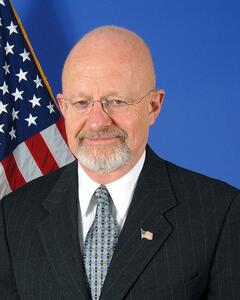
Russell L. Riley
General, thank you for your time and your patience. We thought, as the best way to wrap things up and make sure we covered everything, we would talk about the 2016 election, and the transition in particular, thinking that there may have been some things you might not have committed to publication earlier. Think about whether there were some things that perhaps were too sensitive to publish at the time that you’d feel comfortable talking about and holding onto.
Let me begin by asking this question: traditionally how much attention has the intelligence community paid to the prospect of foreign intervention in American elections?
General James Clapper
Truthfully, not much. In fact, we did a PDB [Presidential Daily Briefing] article for President [Barack] Obama about the history of interference, notably by the Russians, and we have records going back, not surprisingly, to the ’50s. The Russians were pretty ham-handed about it. It involved money; this was particularly true in an election involving Adlai Stevenson. I don’t remember which one that was, but by and large, it was fairly obvious and ineffective.
The difference, of course, was in the exploitation of the cyber dimension, specifically social media. That was the big difference in 2016. There are records going back to the election of 2012, but nothing, I can assure you, on the scale, the magnitude, the scope, depth, aggressiveness, and sophistication of what they did in 2016.
Michael Nelson
You mentioned in the book RT [formerly known as Russia Today], Sputnik [news agency], and then the various trolls. How do you think the Russians developed enough intellectual capital about Americans that they could put together newscasts, web posts, that didn’t look like some foreigner trying to sound like—?
Clapper
Exactly. Frankly, that certainly took me aback, personally, and others: the degree of sophistication and the apparent insight the Russians had gained about our whole political landscape. The Internet Research Agency, which is this subordinate contractor of the Russian GRU [Main Intelligence Directorate of the General Staff of the Armed Forces of the Russian Federation], must have made a study of it. I thought the appeals they made—and they were very skillful at—had messages for everybody: Black Lives Matter, white supremacists, Nazis, anti-Nazis, pro-Jewish, anti-Jewish, pro-Muslim, anti-Muslim.
Whatever grievance any of these groups had, the Russians somehow knew how to exploit them. Unfortunately, as we saw, the United States is a ripe target for them to take advantage of the divisiveness in this country. They did it to a fare-thee-well and were very successful—and, when you think about it, with minimal resource expenditure.
Nelson
What about RT and Sputnik? Were Americans the newscasters and producers?
Clapper
Yes. I don’t know if you ever watched RT but, again, it’s not like Pravda. [laughs] It has very slick and sophisticated production quality, and RT, surprisingly, has a large following in the United States, larger than CNN [Cable News Network].
Nelson
These folks know they’re working for the Russian government in some—
Clapper
Oh, I’m sure they do, yes. The head of RT, the CEO [chief executive officer] of RT is a confidante, associate of [Vladimir V.] Putin, so, yes, there has to be.
Nelson
But I mean the journalists, the on-air personalities? It sounds to me like they might be violating some law if they’re agents of a foreign government.
Clapper
There was some action taken to make sure that RT was registered and all that properly. I can’t attest to how much personal knowledge the correspondents—the talking heads you see on their network—how witting or knowledgeable they are of the real connection to the Russian government, but since RT funding comes from the Russian government, I would think they would know that.
Barbara A. Perry
On the history of this interference from the Russians, particularly: was there ever any sense you got from history and looking at that information that there were any connections from the American side? That is, any candidate or candidate’s campaign?
Clapper
I honestly don’t know the detailed history of these. I suspect there were sympathizers in the U.S. We’ve always had that issue with sympathizers. In the heyday of the Cold War, they believed in communism and were sympathetic to the Soviet Union and its causes.
Nelson
One thing that comes through in your book is that there was something of a break between the Soviet era and the Russian era. My sense is that you see a lot more continuity in terms of the strategies they were using, their interests, their relationship to the United States.
Clapper
I think so. There was a period right after the fall of the [Berlin] Wall in ’89, maybe to ’93 or so, or ’94, somewhere in there, and then it seemed like Russia got its feet underneath it again and assumed the characteristics of the Soviet Union, just on a smaller scale.
Riley
At what point did your level of concern begin to elevate in the 2016 election cycle about there being something different?
Clapper
That’s an FAQ: a frequently asked question. I’ve been grilled by many journalists: “When was the exact moment you realized that this was something different?”
I can’t point to a specific—August 23 at 3:15 in the afternoon. I can’t do that. It was just an evolving thing over the summer and into the fall of ’16. Typically intelligence revelation doesn’t occur in one day anyway. It was a gradual buildup: the more and more insight we gained, the more we understood about their reconnoitering voter registration rolls, the more we understood about what they were doing on social media.
The parallelism was evident—which I talk about in my book—between what the Russians were doing and saying and what the [Donald J.] Trump campaign was doing and saying, particularly with respect to Hillary Clinton and her health. Then, of course, we had the exposure of the emails, so it was a gradual thing as we collected more, gained more insight, more understanding. That’s why in the late summer and early fall it was quite alarming.
That led to a series of meetings in the White House, and then the tasking by President Obama—around December 5—that we put together an assessment of this activity. He specifically directed that we gather together all the reporting we had, whatever classification, and compile it in one consolidated report that he could provide to the Trump administration as well as the Congress. He also directed that we declassify as much as possible to share it with the public, which is what we did.
Nelson
One of the points you make about the Russian spy agencies is that they were trying and, to some degree, succeeding in hacking into all sorts of national party organizations, lobbying groups, think tanks, candidate campaigns. I put that together with your point that the Russian agenda was really twofold: one was to cause disillusionment and chaos with the political system, in the political system; the other became to elect Trump.
They got into the Democratic National Committee. Do you think if they had gotten into the Republican National Committee instead, they would have gone with that? Or were they really interested in getting Trump elected even—
Clapper
Oh, they were clearly interested in getting him elected, and this stemmed, first, from strong personal animus for Hillary Clinton—for both Clintons, but particularly her. Putin blamed her for instigating the “color revolution,” or trying to, in 2012 against him, so, as we laid out in the assessment, the Russians essentially had three objectives. One was to sow doubt, discord, distrust in our system and in each other, which they certainly did. Second was to demean, marginalize, and hurt Hillary Clinton and her campaign.
The Russians didn’t take Trump seriously either, like anyone else, during the primary phase, but as things evolved, they certainly did when he became the Republican candidate. They found him a more appealing choice than Hillary Clinton, for lots of reasons. Those were the three basic purposes, as we laid out in the assessment in January of ’17.
Riley
Talk a little bit about your working relationship with the members of the Republican Party before the election cycle in 2016. It’s an important predicate for us to understand how you were dealing with members of the party, presumably through things like the Intelligence Committees. I’m interested in knowing your own assessment, as well, of whether those committees serve any useful purpose, or generally get you to reflect about that. It’s important for people who are going to come and read and understand your critique of the Trump administration to know something more about what that relationship was like with mainstream Republicans beforehand.
Clapper
Forgive some ancient history here. I was around when the two committees were stood up. I was part of the intelligence community, a young pup at NSA [National Security Agency], and in “my war” with Southeast Asia, I went through all the Vietnam-era upheavals we had, the Church-Pike hearings and all that.
So when the two committees were stood up, I think in ’77 or ’78, the initial approach that almost all members took at the time was This is a sacred public trust. This is above politics. It’s not related to my home state, my home district, or my party. And in the early years of the committees, that was the case.
Well, over time, partisanship crept into the committees. As a general observation, when the committees behave on a bipartisan basis, they’re effective, and they’re viewed as credible by the men and women of the intelligence community. When they are partisan, they are dysfunctional, and they are not viewed as credible.
The modern high-water mark of bipartisanship, particularly with respect to the House Permanent Select Committee for Intelligence, was when Congressman Mike Rogers, Republican from Michigan, and [Charles] Dutch Ruppersberger, Democrat from Maryland, were Chair and ranking, respectively. They put aside their partisan differences—not that they didn’t disagree; they did—but they ran the committee on a bipartisan basis. The stark contrast, of course, was when Devin Nunes became the Chairman. He is, frankly, an arch partisan. That compromised the Committee’s credibility.
There was friction anyway with the Republicans, and it was more evident on the HPSCI [House Permanent Select Committee on Intelligence] than the Senate Intelligence Committee—mostly because of resentment of Obama. Anything Obama did was by definition bad, and anyone who worked in the Obama administration was by definition incompetent and un-American, et cetera. The atmosphere was poisoned.
I’ve been critiqued as the DNI [Director of National Intelligence], titular head of the IC [intelligence community], because the intelligence community assessment was politicized. Well, had we not done anything, had we ignored the Russians—I don’t know that we would have done that assessment on our own had President Obama not actually tasked us to do it. But he did, so we did. Any finding that was, air quotes, “anti-Trump,” “anti-Republican,” was, by definition, political. The whole well was poisoned. I remember one team we sent up to the Hill to brief a group of Senators. The Republicans took the team to task, accusing them of letting themselves be used as political tools for the Obama administration to take down Trump, even though what we were trying to do was present the intelligence facts as best we knew them and understood them. So very, very political.
The committees, if they work right, are a necessity in our system; there needs to be that outside oversight to make sure that what the intelligence community does is legal, moral, and ethical. When they approach it that way, it’s effective and credible, and the intelligence community will respond to that. But when they don’t—the IC responds accordingly.
On the Senate side, it’s been different because the people in charge made an effort to keep it bipartisan, and, accordingly, the SSCI [Senate Select Committee on Intelligence] did some very good work in their follow-on studies—exceptional work, in fact—because of that. I really credit Senator Mark Warner from Virginia for going more than the extra mile to make bipartisanship work.
Perry
General, could I back up to 2016 and what you said about the Russians, and how effective they were in their goal to demean and denigrate Secretary Clinton? They certainly succeeded there, but she had enough people in the United States who were ready—
Clapper
Yes, and they fed that. They just amplified that.
Perry
Exactly. But looking back, is there anything that she could have done, or her campaign could have done, to counter some of that? Given that she only needed 70,000 to 80,000 votes to go differently in three states, some fine-tuning or something that she did do but shouldn’t have, or didn’t do and should have, that you now look back—
Clapper
Well, the obvious thing was the emails. That really hurt her, and it was the wrong thing to do. It just was. I don’t think it was pernicious on her part, but it was, I think, an administrative convenience for her that was just wrong, and it really came back to haunt her.
Perry
So then once that had happened, your sense is that there probably wasn’t much she could do?
Clapper
I agree. I don’t think she could unring that bell. By the way, just a small footnote here: it was the ICIG [intelligence community inspector general] who actually made the referral to the FBI [Federal Bureau of Investigation] that prompted the FBI investigation.
Nelson
One thing you mention in the book is that regularly you offer briefings to Presidential candidates. I have a couple of questions about that. First, how are those briefings different in content from the briefings that the President gets on an ongoing basis?
Clapper
I just coincidentally had lunch with [Edward] Ted Gistaro last week. Ted was the briefer. He got his reward: he’s now the chief of station in Canberra. [laughter] He was back. We replowed the ground, some of which I’d forgotten about. We appointed him, largely because of the position he was in, to the same position Robert Cardillo had for the election in 2012.
When the winner of the election is the President-elect, he gets the PDB. We had some discussion about whether there was anything that was particularly sensitive that should be filtered out before he became President. I don’t think we did. At Ted’s suggestion—The night before the election, I hand-wrote two notes, one to Hillary Clinton, one to Trump. It was a good idea. We had two different teams deployed, depending on the outcome of the election. We ended up, of course, dispatching only one team, which was to Trump. That was headed by Ted, and then Ted stayed on after the inauguration; he was the first briefer for President Trump.
The way they differ is they’re more generalized intelligence briefings. We often will ask if the candidates have particular interests. The proviso is that we tell the other candidate what we’ve briefed, so the candidates know what each other’s getting. It was not just me; I think my predecessors, DNIs and DCIs [Directors of Central Intelligence] did the same thing: all of us tried to be as even-keeled and balanced about it as possible so there was no criticism or chance of being accused of favoritism.
Nelson
Knowing that you can redact for as long as you want, is there anything you can tell us for the historical record about the briefings that took place in 2016 for candidate Trump and candidate Clinton?
Clapper
She took only a couple of briefings. She was pretty up to speed, pretty knowledgeable, whereas Trump had never been exposed to intelligence before, so he took a lot of briefings, two or three a week. Our team was pretty busy with him.
We had some jockeying when Mike Flynn was involved, being a former denizen of the intelligence community, trying to prove he was the smartest person in the room. That [laughs] resulted in one case where Governor [Christopher] Christie—then intended to be the Chief of Staff, I guess, which fell through—shut Mike up, but, by and large, he was an interested student of the subject.
Nelson
In your book, you say that there was a contrast between the Trump you saw in these briefings and the Trump who would then go out on the campaign trail.
Clapper
Yes. I guess the starkest was when we briefed him at Trump Tower on January 6 [2017]. Actually, it went pretty well, I thought.
It’s an interesting thing, though, [laughs] when you read my book versus Jim Comey’s book versus John Brennan’s book. There’s a little different slant in each one. Jim Comey, for example, was taken aback by Trump’s lack of curiosity. He didn’t ask as much as he thought he should have. I took that as just Trump as a novice to the whole business. I noticed it, but I didn’t find it worth commenting on. I didn’t comment on Trump’s hairdo, even though I could observe it since I was sitting right next to him. It was kind of the eighth wonder of the world for me, being a bald guy. But I just didn’t comment on it. I thought it was interesting, the various things that Jim and John and I each observed and thought important enough to write down for our books. But our accounts were a little different.
Anyway, for my part—We all agreed I’d be the lead talker—I felt very strongly we needed a standard set of talking points, because we were going to do this many times over. We had to brief the Gang of Eight [leaders within the Congress who receive intelligence briefings] that morning, had to brief Trump, had to brief each of the committees, had to brief all Senate and all House sessions. We were going to have a real ordeal briefing this intelligence community assessment.
My point to the others was this is a case where we have to have our points down, as in “that’s our story and we’re sticking to it.” We needed to be consistent from briefing to briefing, which we were. I was anointed as the lead talking point reciter, and then John, Jim, and Mike Rogers would chime in at appropriate points. We preorchestrated this, to embellish with specifics that we didn’t want to write down in talking points, some of which were quite sensitive. One of the reasons we all had—I certainly had—a very high confidence level in the evidence was the access we had, as well as the congruence, if you will, the correlation, between and among the separate sources, the streams of information we had.
I thought, by and large, to my great relief, that it went pretty well. I had no idea how it was going to go, whether he was going to throw us out of the conference room, because he’d been sending out some badmouth tweets that week—He accused us of delaying a day because we hadn’t got our story straight yet and that sort of thing—so we were a little apprehensive about just how he was going to behave.
But he was on his best behavior, turned on all the Trump charm, which can be effective. When it was time to leave, and we had agreed also—Jim and I had originally—he and I were going to do the [Christopher Steele] dossier thing. But Jim thought at the last minute, the last time we had a run-through, “It may be better if I do this alone.” [laughs] I was happy with that.
When we finished, the three of us got up and left. As soon as my armored SUV [sport utility vehicle] was moving, I called my public affairs chief, Brian Hale, and told him, “Go ahead and release the unclassified version.” Originally we were going to wait until over the weekend but decided, to avoid leaks, we’d just do it right away. That was the right thing to do. We flew back to Andrews, and I called Denis McDonough, who was then Chief of Staff, and told him how it went, and he was a bit surprised, but pleased.
Fast-forward to the next Tuesday, January 10, and Trump has this bizarre press conference and calls the intelligence community Nazis, because, of course, the dossier got released. There were two reasons why I felt we should brief Trump on the dossier: first, to let him know it was out there. Two, to try to educate him a little bit about the things the Russians will do to generate kompromat, whether it’s real or not, a point many people on the right forget or ignore. That was the purpose, and if we had to do it over again, I’d do it exactly the same way.
I later learned I got used by Bob Woodward. He intentionally went on FOX News and badmouthed the intelligence community for briefing Trump on the dossier. I believe he did that to ingratiate himself with Trump in order to get his interviews with him. Woodward interviewed me for three of his books, and I was very eager to talk to him to point out the rationale for briefing Trump on the dossier. He just dismissed me; it was “garbage” and all that. But once his book came out, and he started doing the publicity stuff on the talking-head shows, I understood what he had done with me, personally, and with the IC. He just used us, by publicly criticizing us, as a way to ingratiate himself with Trump. That’s not in my book, by the way. [laughs]
Riley
Did you have an independent assessment of the validity of the dossier?
Clapper
No, that’s why we didn’t use it, thank God. There was a lot of discussion about it, whether and how to use it. The FBI wanted to include it in the ICA [intelligence community assessment]. They considered Steele a credible source. He was a professional intelligence officer with MI6 [U.K.’s Secret Intelligence Service], had a senior position there, and was a Russian expert. They had used him as a source for about three years and considered him credible. My fingerprints are on the infamous National Intelligence Estimate of October 2002, dealing with weapons of mass destruction in Iraq, and one of the lessons learned from that was not corroborating sources, like “Curveball” [Rāfid Aḥmad Alwān]. It was a big shock to me when I learned about the actual pedigree of Curveball.
Well, I remembered that, as did others, and when we could not corroborate the second-, third-order assets that Steele had apparently used for the 17 memos that comprised the dossier. The FBI, fearing the J. Edgar Hoover ghost, wanted us to draw on the dossier as a source, a footnoted source, in the body of the intelligence community assessment. The agreement that was ultimately struck between Andy McCabe and Stephanie O’Sullivan was that we would include a description of the dossier as an annex to the highly classified version of the ICA. That’s what we did: a one-and-three-quarter-page summary, which also explained why we didn’t use it as a primary source.
Perry
Could I have you circle back to a comment you made about Trump’s charm? For history, people will want a description of that. How would you describe his charm?
Clapper
Well, he’s an imposing physical presence. He’s about 6′2″, so he was not as tall as Jim Comey. Nobody is as tall as he is. [laughter] When he came in, we were waiting around the small conference room. I was the lead of our delegation, so I hung out by the door. He walked in and stuck out his hand, and I said, “I’m Jim Clapper, DNI.” He said, “Oh, I know you.”
I had just, coincidentally—which I didn’t want to do, but I had to—testified the day before, before Senator [John] McCain and the Senate Armed Services Committee on the subject of cyber. I did not want to do that and tried to get out of it. He threatened me with a subpoena—and this was in the day when subpoenas meant something—so I appeared before his committee. Of course, what I was concerned about was premature revelations about the ICA, which we were going to brief out the next day. In fact, we didn’t get a chance to go over it with President Obama until after this hearing, so we delayed the Oval briefing because of my testimony. President Obama didn’t need a briefing on it because he’d read the draft we sent over to him, about January 4, I think.
The President-elect made a comment about how great I looked on television or something like that, and I said, “No, I have a face made for radio,” [laughter] so we had a little rapport going. He likes to be buds with people. That’s the way he comes across, and he’s effective at it. Given what I was prepared for, he was on his best behavior.
There was some back-and-forth discussion; he asked for clarification of some things. He was very disparaging—in the course of the briefing—of HUMINT [human intelligence], didn’t believe that people should sell out their country and thus shouldn’t be trusted. We tried to point out, “We have some sources here. The information they provided has been corroborated over a period of many, many years.” That didn’t sway him. I didn’t feel it was any benefit to have a peeing contest with him. I just wanted to get through the briefing and get out. Then the following Tuesday was this bizarre press conference in which he characterized the intelligence community—accused us of leaking the dossier, which is ridiculous because it was all over the place. Not to mention, how do you “leak” something that’s unclassified? I felt very strongly I had to say something or do something about what was a huge insult to the IC.
I asked my secretary to see if she could track down a phone number for him at Trump Tower,” and she did. Surprising to me, he took the call that afternoon. I tried to—naïve me—appeal to his higher instincts, if you will, by pointing out that he was inheriting a national treasure in the form of the men and women of the intelligence community, who were eager to help him, support him with all the difficult decisions he was going to have to make, and to reduce as much risk and uncertainty as possible.
He said, “Yeah, yeah”—sort of “Yes, thanks”—but it was very transactional. What he really wanted me to do was release a public statement that completely refuted, rebutted, the dossier, which I couldn’t and wouldn’t do. By the way, some of what was in the dossier—not all of it, certainly none of the salacious stuff, but some of it—was corroborated through separate sources in our intelligence community assessment.
Nelson
In the exchange you had with Trump, I’m thinking about his reaction, dismissing human intelligence. Did you get a sense from him that he was seeing things through the prism of his own business experience?
Clapper
Oh, yes, I think so. The whole subject of “spying” was anathema to him; he didn’t have any understanding of intelligence. He’d never been exposed to classified material before, as far as I know. A lot of that is skepticism, particularly about human intelligence, and his values stem directly from his business experience.
Nelson
You mentioned also his transactional approach to things. It’s like he wanted to strike a deal with you of some kind?
Clapper
Yes, that’s kind of, “Oh, I’ll make a deal with you,” you know? Like we were big buds, and he just had to whisper in my ear, and I’d do what he wanted.
Riley
I want to go back and ask a question about President Obama. There was a lot going on in the 2016 election that seems to show Russian fingerprints. What I’m trying to get a sense of is the opportunities for retaliation or combating this, if not in real time, at least in a proximate way, rather than the kinds of things they ultimately did. What’s the dynamic at play here? Is he asking you for guidance, or is this wholly a political problem for him to deal with?
Clapper
It was all of the above. This general subject area is another FAQ [frequently asked question]. We deliberated long and hard and had many meetings about what we should do about this. The President had reticence about it on a couple of levels. I remember distinctly speaking to him during one of these meetings. I said, “Mr. President, at some point you’re going to need to go on prime-time television and lay this out to the American public.” He didn’t respond when I said that. [laughs]
One, he was worried about if he were to do something like that, it would only serve to amplify—amp up, magnify—what the Russians were doing. I think, as well, given the politics, he didn’t want to be seen as putting his hand on the scale in favor of one candidate and to the disfavor of the other. Now, with the benefit of 20/20 [hindsight], you can critique until the cows come home whether that was the right stance to take.
We had a huge debate about the statement that Jeh Johnson and I were eventually authorized to put out on October 7, which is a fairly straightforward statement. Jeh and I exchanged notes across the Sit Room table. I suggested this to him: “Why don’t you and I do a joint statement?” The others agreed to do that. Jim Comey didn’t want to participate. He didn’t want to join in, because the obvious question is, “Should we make this a DNI/FBI/DHS statement?” and he didn’t want to play, so Jeh and I did that on our own, with the concurrence of the group and the President. Of course, unfortunately—We got all coordinated and got the lawyers to approve it and all that—that was the very day that the Access Hollywood tape came out, so our message to the American public about the interference of the Russians was completely emasculated.
Those were the reasons, I think, that the President was reticent. The more compelling one was what you call the political one: he thought it would do more harm at the time if he weighed in on this with the public, and made the point that the Russians favored Donald Trump. That would set off a political firestorm.
We debated all kinds of things, some pretty drastic, draconian, that we could do to the Russians, like, for example, cut them off from the international financial system, which the U.S. could do if it wanted to. That would be very damaging to Russia. The obvious question the President might rhetorically ask of his intelligence officer, “If we do that, how will the Russians react? What will their counterretaliation be?” You don’t know, and, worse, you don’t know how well we could absorb it, and how resilient we might be if the Russians were to counter our retaliation.
Those were the factors in play, and, of course, people since have critiqued the President and us collectively because we didn’t do more earlier. I was glad we did what we did, but December 29th was a little late. It was after the election.
Riley
There was a moment, as I recall, when the White House approached [Addison Mitchell] Mitch McConnell about issuing a joint declaration. Were you engaged in that?
Clapper
No, not really. Denis McDonough was the lead for the White House, and he reached out to McConnell and to Paul Ryan as the Speaker. The objective was a joint legislative branch/executive branch statement about the Russian interference. They wouldn’t do it. He tried for a period of six weeks to come up with wording that would have some teeth in it that they’d sign on to. No takers.
Riley
Was there anybody on the Republican side you could work with in this interval, or is the atmosphere so poisonous that—
Clapper
Richard Burr was the Chairman of the SSCI, and he was pretty good. He’s a Republican, but I think he showed his independence later. I had known him from before, and I’m a property owner in North Carolina, so we had that going. I got on with him pretty well, and I thought he did a pretty good job. It was just a fortunate happenstance that he was Chair of the SSCI and Mark Warner was the Vice Chair. Just the chemistry there was good enough to keep it bipartisan.
But Republicans—well, I had a [laughs] strange relationship with John McCain. We had a lot of nasty exchanges at hearings. Well, he was nasty; I just sat there and took it. Finally, I had him out to dinner one night at ODNI [Office of the Director of National Intelligence], just him, Stephanie, and me, and his staff director. It was great. That changed the atmospherics with him a little bit, and I commented to him that we had a lot in common, actually: We’re Vietnam veterans, we’re both old, and we’re both crotchety. He agreed with that. [laughter] I’m just trying to name people who—
Angus King, an Independent from Maine, caucuses with Democrats. He’s superb, and I had a great relationship with him. He’s the only Member of Congress ever to call me up and apologize for something he said to me in a hearing. Never had that happen. No other Member ever did that. [laughs]
Perry
What had he said to you?
Clapper
Actually, it wasn’t a hearing; it was a phone call, a conference call we had when we were going to put out a threat assessment of what the world reaction would be to the torture report, or EITs [enhanced interrogation techniques], that Dianne Feinstein had led, her $40 million study. We were particularly concerned about how the Muslim world would react to it. As a courtesy, we called Members of Congress to let them know what we were going to say when this thing came out. King questioned my personal integrity in the course of that phone call. The next day he called me back and apologized for it.
Nelson
When you and Jeh Johnson were trying to get Comey to sign on with you, what explanation did he give for not doing it?
Clapper
He didn’t see at that point where it would do any good. It was too late in the process. He didn’t say this, but at this point they had an investigation going, which I didn’t know about. I think he wanted to stay out of public statements because of that. I didn’t know about the initiation of the counterintelligence investigation in July. I didn’t learn about that until March of ’17, after I was out of the government. And, as I testified on May 8 of 2017 before Lindsey Graham, the Subcommittee of the Judiciary Committee, it was my policy, both with [Robert] Mueller and Comey during the six and a half years I was DNI, to leave it entirely up to the Director of the FBI whether, when, and what to tell me about any counterintelligence investigation, particularly if and as it involved U.S. persons.
Perry
Can you tell us, if you’re able to share with us, the discussion you had with the President about retaliating against the Russians? There was, I think you said, a conversation about what their response would be. Are you able to share what those could have been?
Clapper
Well, they could take down our infrastructure if they wanted to. You want to paralyze our financial system, paralyze our electrical grid, paralyze our water supply? They could do that if they wanted to, the Russians could. Do you want to risk that?
That tempered the ardor of the conversation about doing something to the Russians. We still have this dilemma today: how do we do something that will cause pain for the Russians but will not induce a severe counterretaliation? I was not smart enough to figure out what such action might be.
Riley
One of the other things I’m interested in is how you were setting up your agency or your office and the intelligence community for this new world they were going into. Were you making conscious efforts to try to harden the administrative apparatus to deal with what clearly was going to be a very different kind of environment, with a President who didn’t have that kind of demonstrable respect for intelligence that you had gotten accustomed to?
Clapper
To be honest, no. I started a countdown clock about 500 days out. Stephanie O’Sullivan and I kept it. [laughter] I just wanted to get to the end of a job I didn’t want in the first place. So, no, I wasn’t doing that. I just wanted to finish, to be quite honest with you. Probably all kinds of stuff I should have done. There’s many coulda, woulda, shouldas. I did what I could in the time I had remaining.
Riley
Nobody had expected anything like this, right?
Clapper
I don’t think we did. I still, as did others, harbored hope that when Trump actually became the President, he would assume a Presidential-like mantle. In fact, I had that call on January 10, and then the next day heard that the White House was doing an advance at the CIA [Central Intelligence Agency] for Trump to visit. An intelligence facility was the first place he was going to visit after his inauguration.
I thought, Gee—naïve me—maybe I got through to him. He’s going to go out to CIA and OHB [Original Headquarters Building] and kiss and make up with the intelligence workforce. No, I was completely wrong. I think we all had some—probably unrealistic—hope that it would all change when he became President, that the behavior he had exhibited during the primary season was over with. Now he’s going to be Presidential. We were all wrong. Accordingly, in the 10 or 15 days I had left as DNI, I didn’t do much to fortify the IC. There was concern, I can tell you that. I did some farewell town halls, and people asked, “What’s going to happen to us after you leave?” I said, “It’s going to be OK.” Well, I misled them. It wasn’t OK.
Nelson
One of the things you discuss in your book is your changing view of Mike Flynn, from a highly respected, highly accomplished intelligence leader to the kind of person who, in the White House, would fuel Trump’s prejudice against being a traditional President. Can you talk about why you think that happened, and when it became clear to you that it was happening?
Clapper
The short answer is he just became an angry man. Mike Vickers, who was my successor as Under [Secretary] for Intelligence, and I both came to the same conclusion, for different reasons, that Mike had to go as Director of DIA [Defense Intelligence Agency]—and, by way of background here, I was a co-officiant at his promotion ceremony at the Women’s Memorial near Arlington Cemetery in July of 2011. I had known Mike for some time. He was a really capable intelligence officer, particularly in the tactical context. He had his name on an article published in a think tank journal earlier, when I was Under Secretary and [Robert] Bob Gates was Secretary of Defense. Bob and I had some discussion about it, and he didn’t really object to the article—jut the means of publicizing it. I talked to Mike about it afterward. I said, “You know, Pogo syndrome is at work here: ‘We have met the enemy; it’s ourselves.’” The things he was critiquing the intelligence community for were things he actually had control over as the senior intelligence officer in Afghanistan.
But that article aside, Mike asked me to help at his pinning when he became a three-star, which I did, along with Mary Legere, who was the G-2 [director of military intelligence] of the Army. And then for 11 months he worked for me on the ODNI staff. He was head of what we called partner engagement. He was fine. He did a good job.
Then we all agreed—It was unanimous—when General [Ronald] Burgess retired as Director of DIA that his successor should be Mike. Both Vickers and I agreed with that. Well, as sometimes happens, military officers, when they ascend to those lofty positions as agency Directors, where most of the workforce are not military—Some military officers are very used to saying something, and they get all uniformly, “Yes, sir, yes, sir, three bags full.” Well, with civilians, sometimes they’ll say, “We’ll think about it,” [laughter] and you have to learn to deal with that. Mike was very erratic. He became famous for “Flynn facts”: “Here’s my conclusion. Go find the evidence to fit my conclusion.” I invariably got very nervous with him when he was at the witness table with me, because I never quite knew what was going to come out of his mouth.
For Mike Vickers, it was a case of direct insubordination. Flynn just wouldn’t do what Mike told him to do; and, in my case, I was very concerned about the morale impacts on the workforce. We came to the same conclusion for different reasons. We agreed that Mike had to go. We were going to curtail his normal three-year tour to two.
We met with him in February ’14 in Mike Vickers’s office. We cleared what we were doing, by the way, with [Martin] Marty Dempsey, who was the Chairman of the JCS [Joint Chiefs of Staff] at the time. Mike took it pretty well. We told him he could stay until the following summer of ’14. He would get his three years in so he could retire as a three-star. You have to serve in the grade three years in order to qualify for that, so we let him stay for six more months. But at least the workforce knew the end was in sight.
Then Mike Vickers and I were both present and participated in his retirement ceremony in the DIAC [Defense Intelligence Analysis Center] lobby, and it was fine. Mike Flynn spoke a long time, 55 minutes. He was thanking the cafeteria workers, [laughter] and everybody was tapping their feet and looking at their watch thinking, When is this going to end? But his overall demeanor was fine.
I think what happened is his curtailment ate at him, and he became an angry man, and then latched onto Trump. Of course, he was anti anything Obama and blamed Obama for firing him. Obama didn’t know Mike Flynn. Flynn never set foot in the White House during the Obama administration. When Mike Vickers and I took the action we did, we told Susan Rice about it, just so she would know, and I’m sure she conveyed that to President Obama. That’s what occasioned his warning to Trump when they met in the Oval Office after the election.
But to answer your question, I think Mike became an angry man. He’s a completely different personality now than when I knew him.
Riley
Were there people the new President surrounded himself with whom you had confidence in at the outset?
Clapper
I met Vice President-elect [Michael] Pence for the first time when we went to Trump Tower. I didn’t know him, but was very impressed with him. He asked good questions, clarifying questions, during the course of the briefing. The reason I wanted to engage with him was to suggest that he keep Nick Rasmussen as Director of the National Counterterrorism Center, which he agreed to do.
[Michael] Pompeo was there. I thought he was a smart guy, but he was very doctrinaire, very ideological when he was a HPSCI member. He had only certain interests, certain questions he wanted to ask. He’d walk in, ask his questions, and leave, so I was ambivalent about him. Tom Bossert was there, who was a good man. I certainly had confidence in him, and we’re still in contact today. Yes, there were a few people. I had my misgivings then about Mike Flynn as National Security Advisor. I didn’t think he’d last a year, but I certainly thought he’d go longer than 23 days. [laughter]
Riley
You mentioned Pompeo. I don’t recall us asking you about [Joseph R.] Joe Biden [Jr.] in the first session. Do you have any remarks about Biden as Vice President, your sense about his importance to the administration?
Clapper
He was very important. He had a very influential voice. I can tell you it came as absolutely no surprise to me when he made his announcement about pulling out of Afghanistan. That was a long-held, consistently held, position of his, all during the Obama administration. He’s a very astute and voracious consumer of intelligence. I knew that about him. He’s just a decent human being, so I have great admiration and respect for him. I didn’t have that much interaction with him, other than in the Oval or in National Security Council meetings. I didn’t have any interaction with him beyond those two fora.
One good, nice story about him, now a family legend, is he officiated at my formal swearing in, which is the custom, where the Vice President does the swearing in. I actually started the job in August of ’10. In October we had a ceremony across the way in the Eisenhower Old Executive Office Building, in some conference room there. My wife, Sue, and I were waiting in the hallway to greet him. He was a few minutes late. He came down the hall and ignored me and went right to her. He gave her a big hug and said, “I want to thank you for your service.” Of course, my wife—long suffering for 50-plus years, 34 years in the military, 23 moves in 32years—she kept the home fires burning. I was impressed with that. Then he turned to me and said, “Oh, yes.” [laughter]
He was magnificent with my family. My nephew was then an Army major, had just returned a week before from Afghanistan. The Vice President spoke with him one-on-one for about 20 minutes. He took the time with each of my family members. This is why he’s successful as a politician; he’s a great human being. He called me recently, out of the blue. I think it was a mistake. [laughter] Somebody gave him the wrong phone number. We had a wonderful conversation; it was very nice.
Nelson
You mentioned the various accounts of the January 6 [2017] meeting by people who were in the room. Could you elaborate some on that, and maybe explain—
Clapper
You mean in Trump Tower? Well, it was a small conference room, which was allegedly a SCIF [sensitive compartmented information facility]. I don’t really believe it was, but that’s what the Secret Service told us. There was a table set up in it. Trump was at one end, and I sat to his immediate left. John Brennan sat to my left, and then Reince Priebus sat next to John. At the other end of the table was Vice President-elect Pence, and to his left was Mike Flynn, and then Admiral Mike Rogers, Director of NSA, and Jim Comey. Jim and I sat to his immediate left and right. In the bleacher seats they had a few chairs. It was a very small room. It was Pompeo, Tom Bossert, and K. T. [Kathleen Troia] McFarland was there.
Who was the first press secretary? I can’t think of his name.
Nelson
Sean Spicer.
Clapper
Yes, Sean Spicer was there, and Ted Gistaro, whom we all protected by not naming him, but he was there. I think that was everybody in the room at the time. It was tense. Trump himself broke that with his debonair manner when he first came in, and the little exchange we had. Then we sat down and went into the briefing. We—the four Directors— had agreed ahead of time what the talking points were going to be, and that we were going to recite them every time we gave the briefing so that we did the same thing for any audience. So I did that; I was the lead talker. Then when we’d come to various parts of the briefing, Jim or John or Mike would jump in with amplifying sometimes technical, very sensitive data on how we knew what we knew.
I guess it ran 45, 50 minutes, something like that, maybe an hour. Then, oddly, Priebus started drafting a press release while we’re still sitting there. He wanted to say that we said that the Russian activity had no impact on the outcome of the election, which we didn’t say. We weren’t charged to look at that. I tried to remind him, politely, of that twice. I guess at some point—Jim and I had preorchestrated this—one or the other of us would pipe up and say at some juncture, a break in the conversation, “Mr. President-elect, we have another matter we want to talk to you about that is sensitive, and we would prefer to neck down to just you and Jim Comey.” I think Jim initiated that in the end. That ended the meeting there, and all of us left, and Jim and Trump stayed for the discourse on the dossier.
Nelson
Other than Comey’s thinking that Trump just wasn’t interested, can you think of any other points of disagreement between your account of the meeting and his?
Clapper
Well, there really wasn’t any—He would interject. He’s famous for getting off on tangents, so he’d get off on how secure the Republicans were, and how insecure the Democrats were. Whenever he could make a case for incompetent Democrats and competent Republicans, he’d make interjections like that.
Riley
General, is the protocol at this stage that you report the substance of these conversations back to the White House?
Clapper
I just called Denis after we flew back to Washington. The White House was trying to be circumspect. It’s an awkward situation. You’re sort of working for two Presidents at the same time.
Riley
Right. You can help us understand that, because we don’t know—
Clapper
Certainly, I’d never been through the experience before, but I understood the sensitivities. I thought it was appropriate to call Denis. I said, “We got through it. He didn’t throw us out of the room. He listened to the briefing, and it was a pretty good exchange,” words like that. I didn’t go into a blow-by-blow, who said what.
Riley
Do you remember when you last saw President Obama as President?
Clapper
It would have been the last week, when I was still doing Ovals. I would guess the Thursday before the inauguration, whatever date that was. The inauguration was on Friday, the 20th of January, so Thursday, January 19th, would have been probably the last time I saw him. I haven’t seen him since.
Riley
Do you have any recollection of his state of mind at that time? Is he shell-shocked, or is he tired, or—?
Clapper
This is just my own extrapolation, nothing I recall him saying or anything: I think he was apprehensive. He was apprehensive, but I think he, too—even he—harbored the great hope that the inauguration and the ascendance of that heavy burden laid on the new President’s shoulders would somehow transform him. As naïve as that sounds now, a lot of people harbored that hope, and I think President Obama did, too.
Riley
I’m actually glad to hear you say this, because I went abroad in the first week of December and gave that very same lecture to a group of people in Austria, and have forever thought, I must look like the most foolish human being on the Earth for having made that claim. It’s good to know I’m in excellent company. [laughter]
Clapper
Oh, you’re in good company. Hope always springs eternal. Certainly, I was quite buoyed when I learned that Trump was going to visit CIA, his first place to visit after the inauguration. He was OK for a couple of minutes, but then it went to ground, and really turned off a lot of people in the intelligence community, just using that hallowed wall with the stars on it as a political prop.
Nelson
A lot of people have made the observation that that meeting went wrong. Other than just the setting, which you’ve mentioned, what was it that he said that caused people to—
Clapper
Well, who voted for him, and how many of you voted for him. I suspect you all did. His railing about the media, railing about the size of the crowd, the inauguration crowd, stuff like that, which is just inappropriate for that setting. For intelligence people, not just CIA people, that wall is spiritually meaningful. And, by the way, a little-known fact is NSA has a similar wall, which has more stars on it.
Perry
Did you hear any discussion about the President not attending the inauguration?
Clapper
No. No. You mean the inauguration in ’17? Oh, you mean President Obama not attending, or the 2020 inauguration?
Perry
President Obama. I can remember hearing shoptalk about, “Oh, this is such an unusual person coming into power in 2017, would President Obama go to the inaugural?”
Clapper
Oh, no, I never heard any discussion about that whatsoever, and I don’t think there was any. I think it was a given that President Obama and Mrs. [Michelle] Obama would attend. I never heard that.
Nelson
This might be too broad a question, but when you read the Mueller Report’s account of the Russian role in the election, how would you assess that?
Clapper
Well, the first thing, [laughs] I was blown away by the level of technical detail that was included in that report. Traditionally, the intelligence community is very conservative about exposure of sources and methods and techniques of tradecraft, and they were exposed to a fare-thee-well. I thought that was the right judgment. Somebody decided to do that, and it was the right thing to do to make it convincing to the American public.
Of course, that was a critique of our assessment. The three key judgments we reached were identical to that which was in the highly classified version with eight annexes, the very same wording. But, of course, the substantiating evidence was not, and, not surprisingly, we got criticized for that.
Well, the Mueller Report more than compensated, overachieved compensating for that. I acknowledge the need for transparency and openness with the American public, but my concern was, of course, that the Russians would go to school on that and back-engineer every single sentence in the Mueller Report and figure out where they got that, and make it tougher the next time. I think that’s what happened in the midterms in 2018 and then in 2020. One of the reasons it didn’t appear the Russians were as aggressive is that we may not have seen totally what they were doing because of what they learned from reading the Mueller Report.
Riley
I would like to hear your general assessment of where you think Russia is headed. Are we locked into a situation where one of these catastrophic responses that you’ve said is a possibility could actually happen? Are there avenues for figuring a way out around that? That’s not really a part of our direct portfolio, but I’ve got you on the hook and I’m curious.
Clapper
Well, I had some engagement with CNN about this. I thought, frankly, the most important purpose served during that summit is something nobody talks about—The media didn’t pay attention to it—the fact that the two nation-states that possess over 90 percent of the world’s nuclear weapons, the heads of state met, and apparently agreed to do some consultation about strategic arms control, reduction.
To me, that is the most important thing that happened. We wouldn’t be paying too much attention to Russia if it weren’t for the fact that they are truly an existential threat to the United States. They can destroy us, and no other country can inflict the amount of damage on the United States that Russia can. For that reason, and that reason only, in my mind it was important to have that summit.
Arguing about who won, Putin or Biden, is ridiculous. I guess they both won. Certainly from Putin’s standpoint, meeting with the President of the United States, he lusts for that recognition. It was important to Biden to do it, too, if for no other reason than to draw the stark contrast with Helsinki. So, as I said on CNN, I thought from a form-and-process standpoint it was a success. Substantively, it remains to be seen. Putin’s not going to change his stripes, and if he changes his behavior it’ll only be because he views it as in his interests, and those of his other oligarchs, to do something that works out for Russia and for them.
My concern—and I’ve said this on CNN, too—if you’re going to take a stand on cyberattacks, whether they’re controlled by the government officially or not—which is a meaningless distinction in Russia’s case—the point is you better back it up. You’ll need to do something that genuinely inflicts some pain on Russia. They’ll respect that, but empty bluffs won’t do anything.
Riley
The other thing that I want to remark on, again, General, is your book is genuinely an extraordinary contribution, and one of the reasons we’re able to accomplish, in a relatively short period of time with you the contributions we’ve made is the fact that you’ve written so ably about your experience. By closing, anybody who will read this interview transcript will be directed back to a book that you clearly spent a lot of time working on and including a lot of stuff that we would normally cover in great detail. You just short-circuited it. We’re grateful for the time. It’s been deeply illuminating, and, as always, a lot of fun.
Clapper
Thanks for having me. Thanks for the extra time, and I appreciate the feedback on the book. I will never write another one. [laughter] I’m one and done.
[END OF INTERVIEW]