Transcript
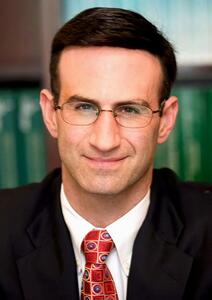
Russell L. Riley
All right, we shall begin. You come from a really interesting family, and we’re curious about your biography. There are very few places where the sociology of an administration comes through really clearly, and part of what we try to do is to get that story as well, so tell us a little bit about your upbringing. It sounds like there were a lot of interesting minds in your family.
Peter Orszag
There were a lot, and still are, I hope, but yes. I grew up outside of Boston. The dominant figure in our household was my dad, who was an MIT [Massachusetts Institute of Technology] math professor. Like many math professors, he was very focused on academic rigor, to the exclusion of pretty much everything else. I’m one of three sons, “the troubled middle son,” as our pediatrician liked to put it. It was a very academically oriented upbringing with a lot of emphasis on excelling at school.
Riley
Yes. And you did excel at school.
Orszag
I did my part. I tried to, at least.
Riley
Before you went to college where were you?
Orszag
Actually, the longest I ever spent at one educational institution was at Princeton, my undergrad, because I moved through a couple of public schools every couple years as we moved houses. Then I went to a private school in Belmont, Massachusetts, called Belmont Day School, then Belmont Hill. Belmont Hill was quite formative. I remember to this day that on the first day in seventh grade Latin Mr. Edward Gallagher, who is a force of nature, said, “There will be one excuse for not turning in your homework on time. That would be a death in the family.” Then he paused and said, “your own.” [laughter] I went to Belmont Hill for a few years.
My parents moved to Princeton. I went to Princeton Day School and did not like it. We had turned down Phillips Exeter, but somehow my mom convinced them to take me in the middle of the year. A quick aside on that: it was highly unusual to turn them down and then somehow change your mind. I don’t know exactly what my mom’s powers of persuasion over the phone were with Jack Herney, who was the director of admissions, but it worked.
I showed up in January for the very first class on the very first day, and it was English, not my best subject. Kenji Yoshino, who’s now a world-renowned law professor and is absolutely brilliant, was the first student to speak. We had to analyze a poem. To this day I remember thinking, Oh my God, what have I done? because he saw things that I was just—[laughter] So I guess after all that, what an embarrassment. Luckily, the second student spoke and I was OK again.
But that connection with Jack Herney turned out to be important, because I always had been interested in public policy. Exeter did an Exeter-Andover Washington intern program, and I figured the spring semester of senior year, after I was already accepted into college, was probably not going to be the most productive period of my life. I was really eager to get to Washington.
Jack Herney was very close friends with Pete Rouse. Pete Rouse was the chief of staff to a new, little-known Senator, and I got placed in that office. I got teased a little bit by my fellow interns because they were working for Senator [Edward M.] Kennedy and all these fancy offices, and I, of course, was working for a brand-new Senator no one had heard of, named Tom Daschle. But it was a fantastic experience because the office was brand-new and no one knew what they were doing, so I got to write speeches and help on legislation. And of course everyone in the fancy offices wound up stuffing envelopes, so anyway, it all comes full circle. Then I spent, I guess, two and a half years at Exeter, and then into university.
Barbara A. Perry
Peter, where did your interest in public policy come from?
Orszag
A lot of that had come from the schools that I attended. Especially by the time of Belmont Hill School there’s very much the sort of “in the nation’s service” type of motto or the gestalt of the place, definitely reinforced big time at Exeter and Princeton, where that’s very transparently part of the way in which the school operates, or the underlying kind of motto. I just always found it interesting.
In eighth, ninth, tenth grade my dream was to become Secretary of Defense. I thought that was the super-cool thing. I was studying all these Secretaries of Defense and devoured The Wise Men and other books like that. By the time I got to college my interests had changed a bit, but that underlying north star of public service was imprinted very early.
Rachel Augustine Potter
You said that English was not your best subject.
Orszag
No. [laughs]
Potter
Were you solid in math at this time, given that your father was a math professor?
Orszag
Everything’s relative in life, so I was pretty good at math for a high school student, but I was not pretty good at math relative to someone who got their PhD at whatever age my dad got his. I knew that I was doing fine but that there was a whole other level of mathematical ability that was beyond me.
Riley
What about your family’s politics? Was that an important factor in your household, as it often is, or was it not in your case?
Orszag
Not really. I’d say both my parents voted Democratic. But if you have this image of dinner discussions, debating, the [Joseph P.] Kennedy grilling kind of thing, that didn’t happen. The intellectual energy of my father was so focused on his work that there wasn’t that much other interest. On the other hand, I had adopted the habit—something that one was expected to do at Exeter, and I started it before at Belmont Hill—I read the New York Times every morning, which was not a common thing for a lot of high school students, or junior high school students, so there was clearly an interest.
Also I used to fall asleep to talk radio. I think the guy’s name was David Brudnoy on WBZ radio in Boston. I’d fall asleep, even in sixth or seventh grade, listening to talk radio, so there was a very heavy political and government focus.
Riley
All right. We get you to college. What are you interested in studying there?
Orszag
I clearly was interested in public policy. I went to Princeton because I wanted to major in what was then called the Woodrow Wilson School. Freshman year I took a course, which was then also important—It’s funny how these serendipitous events kind of string together—with Alan Blinder, in which he was not only the professor but also my preceptor. It was like Econ 101, intro economics class, and he was the preceptor. That meant that I was in a twice-a-week setting with Alan Blinder with 20 other students.
We all had to write a final term paper. I’m sure my mom has it somewhere. We had to analyze a Wall Street Journal editorial, and in the middle of that editorial there was just a huge non sequitur. It was like argument, argument, argument, and then boom, and it made no sense. We were allowed three pages. I laid it out, and then I said, “In a monumental non sequitur—” Apparently no one else in the class caught on to that. I still remember getting the paper back, double underlined, “It sure was,” A+. Alan Blinder started looking out for me. That turned out to be important when he was part of the [William J.] Clinton administration. He was the person who brought me into the Clinton administration.
My undergraduate experience was fantastic. The focus on teaching undergrads was phenomenal. This obviously has a sad ending to it, but I got to know Alan Krueger quite well there, too, who turned out to be important later in the policy circles, so it was great training.
Riley
The one thing that I had neglected to ask you about in the previous life was baseball. Was that an important part of your—
Orszag
That got played up a little bit. I glanced through some of the articles you sent. I don’t know exactly where that came into the narrative, but in my memory it is not quite as dominant, and my current nine-year-old will tell you that I know nothing about baseball. [laughter]
Riley
All right. I didn’t know whether we might have caught you after a long night last night [2021 World Series Game 6], if you had dared stay up until—
Orszag
No, I was actually in California yesterday, so I did have a late night last night, but it was because we were flying back.
Riley
All right, terrific. Colleagues, questions?
Perry
Carry on.
Riley
All right, so we get you to Princeton.
Orszag
Princeton, right.
Riley
And then you had, I guess through Alan Blinder, the position—
Orszag
OK, so just quickly on the interregnum there. I didn’t know what I wanted to do after college. I took the LSAT [law school admission test], thinking that law school would be a great delay tactic. I then interviewed for the Marshall Scholarship, and won it, after absolutely thinking that that was a zero-probability event, having walked out of the interview thinking it went very badly. I wound up going to the London School of Economics on the Marshall, which was also a very good experience.
One of my professors there—I guess there’s a theme of serendipitously getting kind of adopted by and mentored by some of these leading academic lights—[Peter] Richard Layard was working in Moscow with a team of advisors in 1991–92 and asked me to join him there. I’m one of the only Marshalls who only did one year instead of two. I went to Moscow. It was a very intense experience because they were battling hyperinflation and lots of other transition problems. We had one team, and then there was another team that was around Jeff Sachs. That team did more privatization, and some of them got into some complicated situations. But our team was in the Ministry of Finance.
Alan Blinder called me up and said, “I’m going into the Clinton administration. Would you like to join me?” I also had an offer from Treasury. I look back and I realize how superficial this decision was, although it turned out to be the right one. At CEA [Council of Economic Advisers] I was going to be a staff economist; at Treasury I was going to be the Special Assistant to the Deputy Assistant Secretary. And when I paused and realized that that acronym spelled out “sad ass” [laughter] I said I really didn’t want to do that.
I went to the Council of Economic Advisers, where I also met Laura Tyson and Joe Stiglitz. It was a great experience. I was in the same bullpen, so there were three of us in one room, three staff economists, with Jeremy Rudd, who just made a little bit of news because he’s the Fed [Federal Reserve] staffer who wrote this paper that got a lot of attention about two or three weeks ago about inflationary expectations. We were all together for a period of time, and that was fantastic.
The thing that sticks out most clearly in my mind is we’re in that bullpen, and it would get hot. When you’re doing the Economic Report of the President, where you fact-checked every single statement, the nights would be long. There was that bullpen, and then a little area where the secretaries sat before you hit the main hallway in the Old Executive Office Building.
It was very hot in the bullpen, and in the hallway it was cooler. We would open the door from the bullpen so that the air would come in from the hallway, and then the secretaries would close it, and we’d open it and they’d close it. They realized that they were permanent employees and we’d be gone after a year, so they didn’t really care. Then one night at like one a.m. we took the door off the hinges and moved it down the hallway—If you’ve been in the Old Executive Office Building, you know these are very tall doors—so it became a whole thing. They wanted to file a complaint that we had defaced government property, et cetera. I still remember Joe Stiglitz when hearing this just burst out laughing. In any case, that was my time with Jeremy Rudd.
Riley
And your career almost ended prematurely.
Orszag
It almost ended. I don’t know what would have happened. As you know, which we can get to later, I’ve had various difficulties with the infrastructure at the Old Executive Office Building, but that was, I guess, my first run-in.
Riley
All right. We’ll get to the fire later.
Orszag
Yes, exactly.
Riley
You took your degrees in economics, is that correct?
Orszag
I did, and very quickly on that, it was a little bit unusual. I did the master’s [degree] before I went off to Russia. I debated whether I needed to get a PhD or not, because I didn’t really want to be an academic. I also realized, back to the question about math—At the time, my impression was that economics was a little too obsessed with fancy math, and I realized if I just did some fancy math I could get a PhD pretty quickly. I came up with the idea of just applying stochastic dynamic calculus to problems like hyperinflation and privatization, and figured out a way to do my PhD really rapidly. In terms of time actually enrolled at the London School of Economics, it was under a year and a half, but there were gaps where I would go to the Council of Economic Advisers and then back and forth. I didn’t wind up getting my PhD until ’96 or ’97.
Riley
And that was from LSE [London School of Economics]?
Orszag
Correct.
Riley
Just out of curiosity, because I know Oxbridge PhDs are slightly different. There’s a different process. The process at LSE pretty much mirrors the process—
Orszag
It’s a U.S. process, where you write a dissertation and defend it. I was back at the Clinton White House when I needed to fly over and defend my dissertation. I did that and got permission from Gene Sperling to make the trip. But it’s similar to the U.S. The only caveat—and this actually came up about six months ago, because someone came to me and said an advisor we were planning to hire claimed to have a PhD from the London School of Economics but they couldn’t find documentation. As you know, today this is something that firms like Lazard and others pay a lot of attention to.
I pointed out that I took a picture of my PhD, and that technically it’s from the University of London, not the London School of Economics, and they should go check there. That resolved the issue. That’s the only complication. The degree-granting institution is the University of London.
Riley
The only other question was about your slice of the economics profession. It sounds like your interest in quantitative methods was more purposive than some are. A lot of people gravitate to economics because that’s where they get their jollies, and it sounds like it’s different for you, that your interest in economics was more policy based.
Orszag
I’d say it was more policy based. There were parts of math and econometrics that I really did enjoy. It gave a rigor to things that I thought was fun. My wife makes fun of me because I still will occasionally take part of the LSAT exam, the logic part, for fun, because it’s the same kind of thing. There was a part of the math and econometrics.
There’s a famous book by Alpha Chiang called Fundamental Methods of Mathematical Economics. I just love that book. It was absolutely amazing. There were clearly parts of the quantitative stuff that I did really enjoy. Even, I remember, into my early 30’s I would still lug around math or statistics books just to keep sharp, even though I was not really using it in any professional way.
Riley
It wasn’t self-defense at the Thanksgiving table that you had to do—
Orszag
It might have been. I’m sure at some deep, subconscious level it must have been.
Riley
Anything, Barbara or Rachel, on this?
All right, tell us about your experiences, then, in the Clinton administration, because you come and go two or three times, right?
Orszag
Yes, I do. I start at the Council of Economic Advisers and have a great experience, clearly just total Potomac fever, and, by the way, that started with that internship with Tom Daschle. I was smitten at that point. I just thought it was so cool to be walking the halls of the [Philip A.] Hart Senate Office Building. The CEA was a fantastic experience.
I worked very closely with a senior economist named Bob Cumby, who’s now a professor at Georgetown. There was one time when I sort of scared him because I mentioned the late nights. I’m not an all-nighter type of person, but there were a couple of late night, early mornings. I once fell asleep on his couch. He walked in in the morning and there I was, which I don’t think he had been expecting. There were a lot of people around the Council of Economic Advisers who are still—Lael Brainard was there at the time, for example, but there are lots of examples of people who have remained very prominent in the policy world.
I was there, then I went back to LSE to do some of the coursework for a PhD. Then Gene Sperling got elevated to the Director of the NEC [National Economic Council]. He called me and said, “You have to come back,” and I was ready to come back. I had only been at LSE at that point maybe another seven or eight months, but I said, “OK!”
I came back to the NEC. I was at the NEC—You probably have the dates even better than I do—for a year, maybe almost two years, and then moved to California, I believe in ’98. I thought I wanted private sector experience. During that time I had the shortest tenure of anyone who’s ever voluntarily ever left McKinsey.
I had decided I wanted private sector experience, and I went to the McKinsey San Francisco office. I hated it, and I told them after about two weeks that I had made a mistake. After three weeks I finally just left and started teaching at Berkeley. I started a consulting firm with my younger brother, which turned out to be a great experience. But I still remember my 30th birthday, which was sort of the low point of that process. I’m not in the White House. My life is over. [laughter] Things are dismal. McKinsey’s a bad experience. But everything tended to turn out OK afterward.
My younger brother and I had worked together at the National Economic Council. He had also been in policy circles. I started this little consulting firm with just a couple of little projects, because I was 30 years old and it wasn’t that hard to sustain myself. I was also teaching at Berkeley. Then he decided he wanted to leave and join me. I remember my parents saying, “You shouldn’t take him on. It’s too much of a burden. You don’t know what will happen.”
Of course he was fantastic at the business, and it started growing really rapidly after he joined. But we did have problems—This was 1998, ’99—we were basically two people, and we needed to seem larger than we were. At the time it was not very easy to avoid, “For Peter, press one; for Jon, press two,” which was not the look we wanted. Today it’s a lot easier with technology, so we had to spend an inordinate amount of time. I can tell you, for example, that the rules around whether a P.O. [Post Office] box can be listed as a number or P.O. box—which was important to us because if it said number, it might look like it might be an office. We spent a lot of time researching questions like that. It then grew, and those problems were obviated. But that takes me to 2001 and moving back to Brookings.
Riley
Let me ask you about what you’re finding out about politics that appeals to you. You’ve just explained to us this very logical dimension to the way that you process things, and particularly to outsiders, politics looks to be a not particularly logical exercise in that sense. How do you find this to be an appealing career choice, given what you’ve just told us about the way your brain operates?
Orszag
I would often point out to people the difference between government and politics, and I was interested in government and not politics. I was located in a part of the political process that was very analytical. The Council of Economic Advisers is very comfortable for an academic type or a—I never really wanted to be a pure academic, so I would say the think-tank type, the Brookings type, fits right in at the Council of Economic Advisers. There’s no culture shock there whatsoever. It’s a very similar feel. If I had been on the legislative staff or the political staff at the White House, that probably would have not been a great fit. We’ll get to it later, but I’d say that’s one of the inherent difficulties or tensions built into the OMB [Office of Management and Budget] Director job, much more so than the CBO [Congressional Budget Office] job.
Riley
Right. OK. Questions? Rachel?
Potter
I was just wondering if you could talk a little bit about working at Berkeley, because it sounds like it’s almost like you’re flung off to the far lands when you’re in California and away from D.C. Is that how it felt?
Orszag
Yes, it totally felt like that. What am I doing? Oh my goodness! But the Berkeley experience was fantastic, and I learned something very important there, which was—I was teaching the Intermediate Macro course, 100B. I’m very proud that my teaching scores were pretty good. I had to get up in front of three or four hundred students, at least a quarter of whom, or maybe even half, did not want to be there, and I had to figure out how to make economics seem alive and relevant and interesting. One of the things that I have found is that when I look around at the people who wind up being effective in government, coming from academia, it’s usually the people who are first-class teachers as opposed to those who are first-class researchers who thrive.
[BREAK]
Riley
Rachel had posed a question about Berkeley.
Orszag
Yes. Getting up in front of that many people twice a week and trying to motivate them that this might be interesting and relevant to them was fantastic. Taking questions from students and having to explain the intuition and why that might be the right answer all made me realize later that if you had one metric to evaluate whether an academic would be good in government, don’t look at their number of publications, look at their teaching scores. The good teachers are quick on their feet, they can explain intuitively, and they’re clear in their communication styles, and that’s going to turn out to be really important when you’re explaining, whether it’s to the President or testifying before Congress or whatever.
Those communication skills and clarity of thought and quick-footedness are probably more important than being in the 85th percentile versus 95th percentile on the number of citations.
Riley
Is your previous government experience an important factor, offering a reality check and a source of anecdotes?
Orszag
Yes. I probably overplayed, as one does at 30 or 31—There was one photo of President Clinton and me at a Social Security event where, for some reason, at the last minute the slides were messed up, so we had poster boards that we used—This is the ’90s—and we were worried about the flow. I just said, basically, “Forget it. I’m going to do it. I will move the poster boards.” There’s one photo that the White House photographer took where it really looks like Bill Clinton is moving my poster board, rather than I’m moving his, just based on the angle, so I used that. There’s a great, similar photo of Air Force One, where it may have been Laura and Larry Summers. I don’t know. It looks like there’s a picture of us, and the President is speaking with me and ignoring them, so I had that photo. They all thought that was a riot. There are things like that, any trick of the trade you can use.
Riley
All right. Are you in residence at Brookings?
Orszag
Roll forward to 2001. I wanted to go back to Washington. I was debating between going to the Center on Budget and Policy Priorities, where Bob Greenstein and I had done some work together, or Brookings.
I wound up at Brookings and was still doing some things with the Center. I also started testifying a lot before Congress. This was on a whole variety of things, but really beginning with individual counts under Social Security, and then it went from there. I did a lot of work with Bill Gale and others.
I was a Senior Fellow at Brookings. For the first couple of years I was just pumping out papers, which is what one does at Brookings, but then I started getting interested in a few particular topics, and we started some new projects. We started the Retirement Security Project. We started the Hamilton Project, which turned out to be quite important for a variety of reasons, especially the community around that project, and Senator [Barack] Obama, at the time, came to the kickoff of that group.
I started having a bunch of managerial responsibilities too. In fact, I remember Strobe Talbott walking down to the area of Brookings where we were, and he said, “I’m glad to be entering Orszagistan. Can we talk about all the things going on over here?” [laughter] because we had funding streams building up and different things going on. It was a good intellectual period, very close colleagues, especially Bill Gale, but the economics studies program at Brookings was thriving at the time.
Perry
What were you learning about Congress from testifying on the Hill?
Orszag
I always had an old-school view, and this was the norm at Brookings, of taking congressional testimony really seriously, so my testimony would have footnotes, and it would be fact-checked, and I’d be uber-prepared. I’d have these big binders, and I’d go in. That, I think, served me well later, because I’ve always found the best way of dealing with a hostile Member of Congress is to just be super prepared, and that was the attitude that I adopted.
Also, going back to some of the stuff we had talked about earlier, this was sort of “now we’re talking.” The crash and burn at age 30—This is what at Belmont Hill School I sort of dreamed of doing, testifying before Congress and being prepared, interacting with Members of Congress, especially on the Senate side. I think [Gaylord] Kent Conrad told me that—I don’t know that this is true, but I remember him telling me—I was the person who testified the most frequently before the Senate Budget Committee in it must have been in 2003–06, or some period of time like that, which turned out to be important, because that’s what led to the CBO offer, I’m convinced.
Riley
Was Bob Rubin somebody who was an important—
Orszag
Yes. Bob Rubin was absolutely, crucially important, especially during that period of time. He provided—
Riley
Before, Peter?
Orszag
Not really. I knew him barely during the Clinton administration, but it was really after he left government and I left government, so in the 2000s, where that became a more prominent part of my life. Before that, yes, but not dramatically so. In 2001 I started to interact with him more frequently, and then obviously with the launch of the Hamilton Project, where he was really—Effectively, if I were the COO [chief operations officer] or the CEO [chief executive officer], he was the chair. That was a very close relationship, and there was a lot of interaction. I got to know him quite well.
I remember when my older daughter, who’s now 21—She must have been five or six years old at the time—picked up the phone. I talked a lot about Bob Rubin, and he had been the Secretary of the Treasury. I don’t know how she wound up answering the phone, but she did, and he said, “Can I talk to your daddy?” And she said, “Daddy, it’s the Secretary of the Treasure Chest,” [laughter] so there was a lot of interaction, and he’s been an important part of my life since then.
Riley
I was partly moved to ask—He’s not trained as an economist, but the way you explained your turn of mind reminds me of what we’ve heard about Rubin and—
Orszag
Yes. There was a natural affinity there. There was a bit of a mind meld, absolutely. He was also just generous with his time and guidance, and I have no doubt, now knowing how he works, that many things that I thought happened serendipitously actually happened because he was planting the seed in people’s minds and the rest ensued from there.
Riley
Do you have anything more you want to offer about the work of the Hamilton Project or its consequences?
Orszag
Maybe the Obama part’s important. I had, I believe before the launch of the Hamilton Project—It might have been after, but I believe it was before—been invited to go see then Senator Obama in his office. I remember walking in, and I remember two things about that meeting. The first was most Senators have their seat, so you have to be very conscious; you don’t want to sit in that seat, because that’s awkward, so you are looking for where the Senator tends to sit so you don’t sit there. He could see that I was looking around a little, and he said, “What are you doing?” I said, “Well, where do you sit?” He said, “I sit anywhere, so just sit down.” [laughter]
The second thing was he had been on the Brookings website—Something came up spontaneously; there’s no way that it could have been staff preparation—and he grabbed onto it and said, “Yes, I was just reading this.” I had not interacted with a Senator who had just been scrolling through the Brookings website on unrelated topics and had read the Brookings working papers. So there’s that piece.
Then I’d say the Hamilton Project was also important because there was an intellectual perspective in which we were trying to lay out a lot of specific policy ideas. Many of these were then important in office, because you don’t really have time to think all that through, so to have a whole series of different preprogrammed proposals that we could grab from was really important. That also gave me the idea when I was at the Congressional Budget Office—and I guess we can get to that in a second—of trying to lay out on health care what all the options actually were. That really came from the Hamilton Project perspective. Then the people are really important. Almost all of the characters that wound up being important on the economics team early in the Obama administration were part of the Hamilton Project.
Riley
Peter, there was one piece of this that we really didn’t ask you about, and that is your working for Democrats. Where are the roots of that? A lot of economists are Republicans or conservative, and you’re clearly not on that team.
Orszag
It’s interesting. It’s a little bit serendipitous that just like Paul Krugman worked in the [Ronald W.] Reagan administration, I think if I had come out at the right moment and there had been some moderately right-leaning Republican economists who invited me in instead of Alan Blinder, to the CEA, I’m pretty sure I would have gone. In some sense, I just got lucky, because where my mentors were on the political spectrum turns out to be where—I guess you can argue cause and effect, who knows?—later in life I realized I wanted to be, but at the time, at 25, it was more about intellectual ability and insight and what have you, which is the way economists typically view the world, than it was about ideological outlook, so I’ll chalk that up to luck.
Riley
OK. Anything else about Brookings? I’m looking to my colleagues to see.
Perry
Well, I guess I’ll follow up on health care, because, Peter, you said from the Hamilton Project that you’re learning about the pieces that you’re putting together about health care policy. What are you learning? What’s coming to you?
Orszag
Yes. I would say around 2004–05 two things happened. One is I had done the book with Peter Diamond on Social Security reform. After you write a book, you’re sort of thinking, I’d like something else to think about. I also just got a little sick of the somewhat lazy approach of, “We know that if you’re worried about fiscal problems, health care’s the big issue, but we don’t really know what to do there, so let’s just talk about pensions and Social Security.”
It increasingly struck me as such a punt that it wasn’t really OK, so I did what I normally do when I want to go learn things. I had these massive binders of everything that had been written on health economics, and my experience was that if you really study hard, after some period of time—and the amount of time depends on the difficulty of the subject—you start to get some confidence because you think, Wait a minute, I already saw that. It starts clicking, and then you feel like you can maybe not reach the level yet of testifying, to come back to that example, but I started putting my toe in the water, getting more comfortable that I at least knew the state of the debate and where the empirical evidence was, et cetera.
At about exactly the same time I had a personal health scare, a bit of a wake-up call that got me more interested in a lot of health care topics. It sounds crazy, but my strategy up until then on my own health was to take out term life insurance policies on myself, because the doctor would come see you, and I didn’t have a primary care physician. I finally got one. There were all sorts of things that the life insurance docs, who are just trying to make sure you’re not about to die, don’t test for but that you should, in terms of your overall health, have a better grip on. There were all these indicators that were not great. That’s when I started running.
I had always exercised, but that’s when I started running more seriously. I paid more attention to my diet, and I got more interested in health care, both personally and professionally. I just started ramping up my knowledge base. Maybe two or three years later, by the time of being CBO Director, even if I wasn’t really contributing to the literature, I had a good understanding of the empirical evidence and what was out there.
Perry
Did you have a sense that, despite the collapse of the Clinton attempts to reform health care policy, we had to get another bite at this?
Orszag
It was very clear by the time I was CBO Director that there was going to be another bite, that the pressure was just building, and this is why I moved to build up the health care staff there. There are many things that happened during the Clinton attempt at health care reform, but one of the things that happened is that the CBO scores—First of all, CBO was scrambling because they really weren’t prepared for comprehensive health legislation, to evaluate it, and I didn’t want to put the organization in that position again. I thought it was dangerous for the organization, and also unfair to legislators and the White House.
It was clear that something big was coming and that the CBO should be better prepared than it was last time, and that we should be more transparent than we were last time so that people weren’t surprised, so we did a lot of prep work, which wound up being to some degree helpful, although obviously it’s like with Mike Tyson: everyone has a plan until they’re punched in the face. It’s helpful only up to a point, because once you get into the legislative process, the proposals change, and things change, and it was useful but might not have been as useful as I hoped it would have been.
Riley
Was there anything else going on in the [George W.] Bush years that you were paying particular attention to?
Orszag
Well, by the back half of the Bush years I was in CBO, and I still remember this quite clearly because in 2004—I was 35 or 36 years old—I got called. They were selecting a new CBO Director, and I got called to interview, but the way the CBO process worked at the time was that it would alternate between the House and Senate in terms of who got to choose the Director, although the other side had veto power. It was clear, back to your earlier question about the slight partisan tilt, that it was a Republican turn.
Senator Conrad wanted me to be in the mix, and I said OK. Then I got called by the staff director, and he said, “I guess we have to interview you, but we all know that this is a total waste of time because you’re not going to get it, so do you still want to do it?” I said, “If you guys think it’s not really worth your time, that’s fine.” I may have interviewed because Senator Conrad insisted on it, but I don’t remember for sure. In any case, it was clearly not relevant.
Then after the 2006 elections, I remember I hadn’t really been thinking about this, because we were launching the Hamilton Project; I had a lot of other things occupying my mind. I woke up and thought, Wait a minute. The Democrats took over the Senate, and I realized it was the Senate’s turn, which means it was going to be Kent Conrad’s choice with regard to who ran the Congressional Budget Office. It was like three days later that he called and said, “Would you be interested?” There was some kind of interview process, but this time there was a much more auspicious set of facts, for me, at least.
Potter
Did you have any hesitation about taking on the CBO Director job?
Orszag
Yes, I did, but it was also a dream job. The hesitation was mostly personal, which was I was divorced. I had two young kids that I had custody of half the time, and I had figured out at Brookings how to be home for dinner all the time and all of that. I didn’t know how I would make it work. I wound up making it work, but that was my biggest concern, because they were still pretty young.
Riley
Where were you living when you were working at Brookings?
Orszag
In Chevy Chase, D.C. Actually, I just sold that house last summer, so this was bought in 2001 and sold in 2020. It’s funny that you mention that because we were just talking about this: I had not been in the house in about nine months or a year. The real estate agent emptied it out and staged it. First of all, it looked gorgeous. My wife was looking at it and said, “We should buy that house.” I thought, That’s our house. It looks amazing when you don’t have to live in it.
Someone saw the moving truck, and in the crazy real estate market tracked down who our agent was going to be and made an offer before it was put on the market. But yes, it was right off the Chevy Chase Circle, a great neighborhood, right near Lafayette School. I would run home from Brookings, up Connecticut. I did that I’d say maybe a quarter of the time at CBO—It’s a bit longer run—and then I would do it at the White House too.
Riley
That’s how long a run?
Orszag
From the White House to that house it was about five miles.
Riley
That’s serious running.
Orszag
The only hard part is right north of Dupont Circle Connecticut has a bit of a hill to it. That’s the only challenging part.
Riley
All right. I’ll take your word for it. What’s life like at CBO?
Orszag
I loved it. It was stressful, busy, tons of testifying, tons of interactions with Members of Congress. I was surprised, because even at Brookings, if you write something, say, on individual accounts, the press is a little skeptical, or the reception is mixed—but at CBO, it was remarkable. At the time—It’s still largely true, although in today’s polarized world it’s a little bit harder—You’d put something out and people would just say, “OK.” I thought, What? [laughs] It had that much authority. Alice [Mitchell] Rivlin built a phenomenal culture, such that it was quasi-judicial. I had my share of Members of Congress who would scream and rant and rave and what have you, but it was relatively limited.
Perry
Who were they? Who were the screamers and the ranters?
Orszag
I’m not going to name names. There were some from Texas in particular that I remember. There was one episode—This was about physician-owned health centers. CBO, I think correctly, noted that if you have a financial incentive for more volume, even if you’re a doctor, the evidence suggests that you wind up with higher volumes. It would be almost superhuman to think it didn’t. We pointed that out and someone really didn’t like it.
This illustrates the point, though, because one of the CBO staff got a call from that office, saying that as a result of this “analysis,” as they put it, in quotation marks, the CBO budget was going to be zeroed out. They came panicked to me and said, “What should we do? This is terrible.” I said: “The Congress created us. The Congress can uncreate us. The only thing you can do is go back to that person and explain very clearly that that’s totally fine. It’s the congressional prerogative. We stand by our analysis, and if they zero us out, the first thing I’m going to do as a private-sector citizen, hopefully back at Brookings or wherever, is make sure the world knows exactly what happened here.”
I got a call from the Member of Congress/Senator two hours later, saying, “There clearly is a bad misunderstanding. No one meant to threaten anything.” It was interesting because CBO on paper should be feckless. The Director’s chosen by the Congress. Budget is set each year by the Congress. The Director can be dismissed by a simple majority vote in either house. It’s got no institutional protection, but in reality it does because of the norms.
Riley
Is that a term appointment, or is it at the pleasure of the Members?
Orszag
It’s effectively at the pleasure of the Members, because you can be dismissed by a simple majority vote in either house, but the expectation is four-year terms, which then got a little awkward when the Obama job came along, because I was only two years into my term.
Riley
Is there anything historically notable about your tenure at CBO?
Orszag
A few things. One is, it was helpful that we bulked up the health staff, because even though, as I said earlier, things got a little messy later, without that additional staff I think it would have been impossible for CBO to process the throughput of things that were being thrown at them later.
I also think that there was a different way of interacting with Members of Congress. My perception was that the organization was at some risk of political backlash, because—People at CBO hated when I said this—the budget scoring process was a little like the game of Battleship. A Member of Congress would say, “Here’s my proposal,” and CBO would say, “No,” or, “No, it doesn’t work in terms of being net zero on budget.” Then it was like B42, hit, C43, miss, but no one knew why. There’s a danger of too much transparency, but one thing we tried to do was to provide a bit more transparency. I personally believe that that was important in at least pushing off the day in which CBO was too much of a political target to survive. There’s still some risk of that, but I think that was important.
Then for me personally, I got to know lots of Members of Congress. People don’t remember this today, but Paul Ryan introduced me at my OMB confirmation hearing, and that all came from the types of interactions we had at CBO.
Riley
Let me ask you a question sort of at 10,000 feet, and that is that you’ve got these two organizations in the government with budget focus: OMB and CBO. What should we know about the relationship of those two organizations, both from your perspective as the Director, first, of the Congressional Budget Office, and then later as the OMB Director?
Orszag
They’re often kind of lumped together, but they’re much different. Let me just highlight a few of them. And then the Director’s job is much different, too. Again, if people at the Council of Economic Advisers would feel comfortable at a think tank, or even a university, same thing with CBO. When I was there, out of roughly 250 people there were maybe 70 PhDs. It’s a lot. And that’s kind of the heart and soul of the place: get the analysis right, be insightful. That’s CBO. I can come back to it, but think of it as really the norm that people often thought that it was tilting one way or another. You can tell a lot about a place from the internal culture, what gets mentioned at staff meetings and where the heart of the organization is. CBO prided itself on outstanding analysis.
OMB is a different place because it’s more operational, and I’ll come back to the Director’s job in a second, but as one example, there were perhaps 70 PhDs out of 250 people at CBO. OMB when I got there had about 500 professionals; I believe there were three PhDs, one of whom was me, and one of whom was Jeff Liebman, who I brought into OMB, and one of whom was on the staff, so that gives you some sense for the differences.
I also believe—and this obviously is a little sensitive—that the quality of the staff at CBO may have held up better over the past 20 years than at OMB. At OMB, the quality got run down—I’ll just be blunt—especially during the Bush years, and thereafter, and it was hard to change that trajectory. That, in turn, led to a bit of tension, because I saw that quickly and I brought in a bunch of very high-powered people, in terms of intellect, at least, some of whom are now back in government, like David Kamin and Mike Pyle as two examples, superstars, and not surprisingly the more permanent staffers were like, What is this? But that was not necessary at CBO because the quality of the people there was phenomenal.
At OMB, the job is different. There’s much more program implementation. And then the Director’s job is dramatically different. The OMB Director’s job has had two types of people occupy it: one is former politicians, and the second is more analytical types. The more analytical types are rarer. Alice Rivlin is an obvious example. Other than me she’s the only person who’s had both jobs, or she was the only person who had both jobs.
The analytical people tend to have more trouble in the OMB position because it’s got this overtly political piece to it, but it’s still wrapped in at least some of the same norms or vibe as CBO. The reality is much different. The OMB job is very clear: you are really there to implement the President’s agenda, and to some degree there’s kind of an analytical piece, too, but at CBO the mission is fundamentally analytical.
Perry
Can you speak a little bit more about the quality issue that you ran into that you noted from the Bush years? In what way had it declined?
Orszag
Writ large there’s a problem throughout government where two things have happened. One is the outside opportunities have exploded, so to be a top-notch academic or economist or whatever at CBO is challenging from a compensation and other perspective relative to a lot of outside jobs, but then even within government, the Federal Reserve was able to increase its salary structure and attract a lot of highly talented people. CBO’s culture was strong enough to offset many of those countervailing forces, and we did a variety of things to try to increase the compensation that was available to the CBO staff, including that I personally would go to Nancy Pelosi and others and ask for compensation increases.
At OMB I think you had that same challenge, but then coupled with that was a little less respect for the organization during some years where administrations don’t put an emphasis on the, quote, “bean counters.” CBO didn’t have that problem, because the internal culture was so strong that there was still an esprit de corps. It’s kind of an amorphous thing, but when that gets frayed a bit it can fall apart, and that’s partly what happened at OMB. There are other Directors who disagree with that, but I guess I am now the only person who’s run both organizations, and there is a quality difference.
Potter
Can I follow up on that? There are, I guess, a couple of different ways a political scientist might think about OMB in this role, and one of them is it’s one of the most politicized agencies in the executive branch, so it has the most political appointees compared to career managers of any federal agency. I wondered if you could talk about that versus also this part of OMB where it has the management and the budget functions. Is that where part of the tension came in, too?
Orszag
At my confirmation hearing and elsewhere I emphasized the management piece, but in reality, day to day, that’s a smaller part of the Director’s focus. What I would say is the OMB, again, is an odd mix because on the one hand—Let’s just take the OMB Director as an example. You’re a member of the Cabinet, or at least by appointment, or whatever they call the special not by statute but by Presidential writ. On the other hand you’re a member of the staff of the White House, and that’s unusual. To your point about the political appointees, part of this is OMB is partly White House staff and it’s partly a, quote, “agency,” but not really, so it’s sort of this odd mix.
Therein is part of the inherent tension, because if it were totally independent—or not totally independent, but clearly just on the Cabinet side of that divide—the norms would probably be somewhat different. It did lead to some difficulties sometimes, because being Senate confirmed meant you got called up to testify in ways that some White House staffers could invoke Presidential prerogatives to avoid, and it also means schedules and other things are public in a way that is not true for parts of the rest of the White House, so it’s an unusual mix.
Perry
You were chosen quite quickly, it seems, as the transition moved out of Election Day in the year 2008.
Orszag
Yes, that was unusual. [laughs]
Perry
Tell us about that.
Orszag
Well, look: I had known Senator Obama. It was very clear that we had—I don’t want to call it a close connection, but we clicked. Maybe that’s the right way to put it. We clicked well. I knew Rahm Emanuel from the Clinton White House. I would occasionally get calls from Mike Froman and others, and during the summer I kept saying, if and when the time comes we can talk, but I’m in this job right now and I want to focus on that. They said, “Should we take you off the list?” I’d say, “I don’t know what list you’re talking about. Don’t take me off. Don’t put me on. Can we wait?”
By the time it seemed clear that Obama would win, Rahm was calling fairly regularly. I remember him saying, “You can’t stay on the sidelines.” I’m like, “I’m running the Congressional Budget Office. I’m not on the sidelines. I’m not on the beach here.” But it seemed pretty clear that this was something that I should do, and there was ambiguity about whether it was OMB or NEC. Until maybe a week or so before the appointments were announced, it was heading more toward NEC than OMB, but it was clear that there was going to be something, so I started mentally preparing for that.
I’ve publicly relayed the trip to Chicago about a week after the election, but I’ll just quickly repeat it, just to have it in this setting, too. I got called by Pete Rouse and he told me that they were considering me for a senior job. I said, “Well, does the President-elect want to speak with me?” And he said, “Let me check. Yes, that’s probably a good idea,” so we set an appointment for I think it was eight-thirty or nine o’clock in the morning Chicago time.
It was late November in Chicago, and I got worried about flights. This is the freaking President-elect of the United States and it’s a big deal. I flew out the night before just to make sure I was there. I landed at eight or eight-thirty, and I get a text—I think it was from Pete—saying, “The President-elect’s looking over his schedule and he thinks he’s all set on you. You don’t need to come.” I said, “I just landed. Do you want me to turn around?” [laughter] They said, “Please hold.” They waited and said, “Oh, if you’re here, sure.” I spent about an hour with him, and the rest is history, I guess.
Riley
Do you recall anything about the discussions, what you were focused on?
Orszag
Oh, yes, I remember a few things. I told him—and this was sleeves off a vest, because it was where he was going anyway—that I thought it would only make sense to have me in this role if he really wanted to do health care, because there were better people he could find, depending on where his priorities were. He made it very clear he was really serious about doing health care. I said, “Well, if that’s true, and you think I’m a good fit for that, then let’s go.”
Other than that, I spent time unsuccessfully lobbying him on having his daughters come to Georgetown Day School, which is where my kids went. He did ask about a few other people, some of the other members of the team, but it was a lot on health care, a bit on the crisis and what we would need to do, and then some informal, quasi-personal stuff, I’d call it.
Perry
The headline from one of the pieces that we have in the briefing book from the Washington Post, Ceci Connolly, from November 26, 2008, says: “Orszag will be Director of OMB. Position expected to have broader role.”
Orszag
OK. [laughter] Yes, I saw that. I don’t know. Maybe I should just talk quickly about some of all of that. A couple of things happened early in the administration. One is they had trouble filling the HHS [Health and Human Services] slot, coming back to my former boss, Senator Daschle, so there was a bit of a hole. People may not remember this, but the first Senate Finance Committee hearing on our health care proposal, which the Secretary of HHS always does, I did that testimony in February or March or whenever it was, which was a reflection of the hole that existed. Part of it was the new administration.
Then I think there was also—I’m jumping ahead a little bit, because if that article was in November, the timing’s off, but part of the dynamic around the first few months was they also had some trouble with the external-facing stuff. Tim Geithner, who was a great Treasury Secretary, in my opinion, got put in an unfair box in his first speech about how we would respond to the financial crisis, so he was seen as not a great communicator, even though that wasn’t, I don’t think, his fault. He was put in a box this big, and it’s very hard to feel natural when you’re kind of like this and what have you, so they started having me do more of the external things. If that article had been written in February—I don’t know why Ceci wrote that is the true answer. [laughs]
Perry
Well, that’s helpful, but part of my reason for asking and following up on your conversation with the President-elect that wasn’t it part of your conversation with the President-elect, where he said, “Oh, I think I’d like you to—especially since we’re going to focus on health care, and you’d have that knowledge, why don’t you have a bigger role as Director of—?”
Orszag
Well, yes, I guess. It depends on what you mean by bigger role. If you thought that the OMB Director was just sort of passive, very limited just to the budget, it was clear it’s impossible to do health care if all you’re doing is putting together the budget documents. Yes, that’s fair.
Rahm probably—It was objectively fair to assert that the Hill connections were actually something else that they were interested in. I knew all these people, especially the Blue Dogs and the centrists and some of the moderate Republicans, so maybe that also was part of the thinking. I don’t know for sure, but most of the people coming into these jobs, at least on the econ team, came from more academic or other worlds, and they didn’t have as much congressional connectivity.
That also faded quickly. I remember at my confirmation hearing—This was in one of your articles—Judd Gregg saying, “I don’t even know why we’re having this hearing.” I don’t remember if it was in the article or not, but the part I remember about that is he said, “How long do you think that’s going to last?” Which was true. [laughter]
Riley
Peter, how much of your time at CBO was taken up with the financial crisis?
Orszag
Not that much. It was obviously something that for the economic forecast we had to weigh in on, and some of the scoring around TARP [Troubled Asset Relief Program] obviously received a lot of attention, but it wasn’t as large a focus as, perhaps looking back, it might’ve, should’ve been.
All the macro forecasts—This bleeds a little bit into the Obama time, too—were just wrong. Coming back to Bob Rubin, Bob would say, “You don’t understand. All my friends are panicked. This is going to be bad.” And the Fed, CBO, all the macro forecasters said, “Eh, it’s going to be fine.” There was a pretty big disconnect. Part of the reason for that was that the econometric models that the economists were using did not have a detailed financial sector built into them, so they were really missing what was happening. They were treating the housing bust as if it were the IT [information technology] bust from a decade earlier, and the economy bounced back quickly after that.
That didn’t happen in the Great Financial Crisis, and the reason it didn’t happen is in the IT bust was that those losses were broadly dispersed and largely equity. Here, they were very concentrated, and usually in the form of highly leveraged institutions, so there was a propagation mechanism that was much different, and that was just missed. I probably was a little too complacent, because the people in my world were like, “This is going to be fine, just like the 2001 recovery was.”
Riley
And were there missed opportunities, from your perspective, in terms of issuing a response? I guess I’m asking the economist here, rather than the CBO Director.
Orszag
Yes. Boy, things, in retrospect, are so much easier than in the fog of the time. What I would say—and I’ve said this before—on what we ultimately did in 2009, which I just fundamentally reject this revisionist history that we could have gotten a lot more than we did, because I was in the room. I was negotiating with the Blue Dogs. I was negotiating with Kent Conrad. People should go and talk to them. It’s just not right to say that that was going to be possible.
What I think we did miss was there was an opportunity—We probably could have done this, and we should have done it—of building up the automatic stabilizers, and by that I mean I still believe the fundamental problem with the 2009 stimulus was not how much assistance was delivered in the fall of 2009, but rather how little was delivered in the fall of 2010 and ’11.
We could have automatically tied how much assistance was provided to the state of the economy. Because the CBO and others were assuming that the economy would bounce back quickly, the cost of doing that would have been very low because they would have said there’s almost no chance that would happen, so it wouldn’t get scored as costing very much. It would have turned out to be extremely valuable. In that sense the critics are correct that it could have been much larger, but the way, in my opinion, to have done that was what I just described, instead of thinking we would have gotten two or three or four trillion dollars, or whatever people are now wishing we had gotten.
[BREAK]
Riley
You made a reference to being in the room when the decision was made about the size of the stimulus package. We’ve gotten various accounts, and the published accounts have some debate about the objective size needing to be in excess of a trillion dollars. Can you walk us through your recollections of those?
Orszag
Yes I can, to some degree. First I should say there wasn’t one moment when everything was decided. There were a series of more and less important moments. The meeting that most people are referring to is the December 16th meeting in Chicago, but there were subsequent meetings and things were revised, and it was the art of the possible, so I think to some degree that meeting was somewhat exaggerated.
A little bit of context: what was very clear was that the depth of the problem was increasing. It was becoming apparent that the problem was much larger than had been thought earlier in the summer. Typically, the political debate lags a little bit in that reality, so it was very clear the hole was getting bigger. I’m sure someone’s documented all this. My friend Joe Stiglitz and others, the numbers they were throwing out there were creeping up, but they weren’t anywhere near $2 trillion, at least as of September, October.
I don’t remember exactly where they were by December, but there’s a little bit of a lagging indicator there. It’s also clear that at the time, while the depth of the problem was becoming larger, we didn’t know how bad it was, because a lot of the econ statistics were subsequently revised to make it clear that the situation was significantly worse than a contemporaneous set of indicators indicated. That’s all context.
The basic contours of this debate are pretty clear: that the CEA, in particular, was in favor of a bigger punch, a larger number. It’s also clear that Treasury was not. I was closer to Treasury, but I think this was all an academic debate because—It’s been more than a decade, so it’s a little foggy, and I’m hoping I’m not being too generous to myself—we were all above what was politically feasible, and then we all kind of drifted up a little bit, or drifted around, depending on what the congressional reality suggested.
Rahm, who probably had the best sense of the congressional mood, was absolutely clear that we couldn’t go above a trillion, and I, based on my interactions with the moderate, the swing votes, concurred with that judgment. There was the what’s ideal—That’s a little bit more where CEA was coming from—and then there was what’s the art of the possible? I’ve read various accounts of how various people are changing their perspectives on what side of that debate they were on, but I think the binding constraint was always going to be what you could get through Congress as opposed to how much we wanted.
Potter
How much did it matter that all this negotiation is happening during the transition?
Orszag
It mattered. People forget this: there’s a lot going on during a transition, and I still find it amazing that we got the Recovery [American Recovery and Reinvestment Act of 2009] bill done so quickly. Alan Blinder’s historical complaint about discretionary fiscal policy was that it takes too long to get done, and we got it done really fast in the middle of a transition. There are multiple elements to that.
For most of the period of planning the Recovery bill, we didn’t have access, really, to the OMB staff, or to the other staff, so we were doing it off of campaign spreadsheets, and that is hard. A lot of us, including me, had confirmation hearings and things going on. We had the mini-stub budget that we had to produce, which, at least in my world, was a big deal, so there’s that. It’s not like this is happening in the midst of a well-oiled machine. There’s a crisis going on, a new President getting his sea legs, and a new team that’s coalescing, some of whom have to get through confirmation hearings and other complications, too, all of this happening while you’re effectively negotiating with Congress.
Perry
Did you have much interaction with the outgoing Director or others in the administration? They pledged to be helpful.
Orszag
Not really. Jim Nussle and I spoke at least once. I remember going to visit him. He was perfectly pleasant. I don’t think we got all that much assistance in reality, but there were smiles throughout. He and I have interacted since then too, but I wouldn’t say that there was overwhelming support. It was not like what you would have if it were from one Democratic administration to another. There was enough that no one can complain about it, but in the middle of a financial crisis it’s an extraordinary time.
Riley
You mentioned a couple of members of the team earlier in some of your responses. I wonder if you would give us a thumbnail sketch of who these people are.
Orszag
Sure. This is my least favorite part of all of this, because it just gets into—Well, here’s what I would say: Christy Romer is a fantastic academic. Some of the hard parts of being in government were new to her. The CEA job is often a difficult one to navigate.
Riley
And why is that?
Orszag
Because CEA doesn’t actually have a line responsibility; it’s kind of a consultant, and when you’re a consultant, you’re always trying to find your place. And because the staff is more academic, it tends to be a little bit on the edge in terms of if the center’s here, it tends to be out here. And that can be an awkward place to be, especially if you’re new to this world.
Riley
Can I just clarify?
Orszag
Yes.
Riley
On the edge or on the periphery?
Orszag
Periphery. I didn’t mean it in a negative way.
Riley
I just didn’t know whether you meant it as being “edge” as in the sharp end of the spear—
Orszag
I mean periphery.
Riley
All right. Forgive me.
Orszag
Tim, who obviously was really experienced, coming from the New York Fed, had a great rapport with the President. He had a challenging or complicated relationship, vis-á-vis Larry, because Larry had had that job and presumably wanted that job again. They’ve known each other for a long time, but there are some complications built into that. Austan Goolsbee was someone I knew very well, but I think early in the administration he was even more on the periphery, typically, although someone I personally always thought was quite insightful.
Then there’s Larry. Larry and I have known each other for a long time. I don’t want to completely go over everything that happened. What I would say is I understand why the President needed, or wanted, Larry’s advice. He is a brilliant economist. At the same time, I don’t think the NEC job is best suited for Larry’s skill set.
With a decade more maturity, but definitely experience, I would respond differently to that dynamic than I did at the time. I’m not entirely proud of the way I responded. I understand why the President wanted him somewhere, but the NEC may not have been the best fit. I didn’t respond well to that, so I own that part of it.
Riley
Thank you. That’s very helpful. Your image of that position would be a kind of Bob Rubin?
Orszag
I’d say those who occupied it in the past—Bob Rubin, Laura Tyson, Gene Sperling—they tended to approach the job with the emphasis on process. My younger brother and I wrote a chapter about the NEC for a book that Jeff Frankel and I edited—Actually, my younger brother and Laura Tyson, if I remember right, wrote a chapter about the NEC. The emphasis was on fair process and making people feel included, because a White House naturally has this kind of outward pressure, knives-out type of phenomenon. It takes a lot of counterweight, counterpressure to offset that, and that’s what Bob in particular, for example, did so effectively. It’s easy to not appreciate how important that is.
Riley
OK, if I could press you just a little bit on this—If you’ve got a different type in what could be a well-balanced machine, if you’ve got one piece of that that doesn’t function the way that it typically does, help us understand how that throws the smooth functioning of the normal operation of the machinery off.
Orszag
Well, in fairness, I’d say before I answer that, that early in an administration there are always people settling in, so there’s that phenomenon. Then in a crisis, let alone if it’s at the beginning of an administration, there are always some underlying challenges.
If I go back to that chapter that we did for the American Economic Policy in the 1990s, you’ve got these distinct objectives and interests—Treasury, the other agencies, OMB, CEA—and you need some place where they all feel like they can get a fair hearing, their views expressed, a fair process, facts put on the table, decision made, no end runs, no special games, what have you, and it’s all kind of tied up. I guess when that doesn’t happen, people find other ways of making sure their views are expressed, and that can cause problems, because it’s a little bit more chaotic.
Riley
Rachel, I want to turn to you as somebody who understands the OMB a lot better than I do, and see if you’ve got some commonplace questions about the operations of the organization that Peter can help us understand.
Potter
Maybe you could just talk about that first budget that you put together. I’m interested in this idea that you brought your own team in, because I can imagine—You already mentioned it didn’t go over well with the career staff.
Orszag
No, it didn’t, and that was exacerbated by the fact that at the tail end of the Bush administration they had been in office for a while and they sort of had the systems down. Jim Nelson would have people over for beer regularly on an afternoon. They’d sit out on the patio, and I wasn’t doing any of that, so I’d say the pressure of Who’s this guy? What does he know? And who are these people?—The combination was not to everyone’s liking, which is fair enough.
That first budget is always hard. It was particularly hard for us because we had this dilemma about this balance, having enough specificity on health care that people would know that we were serious about it, but not so much specificity that it would get shot down before we had a chance to get it off the ground.
That was the line that we were walking, where we wanted to put in enough on the offsets for a special kitty for health care reform without completely stopping everything in its tracks because we put out too much detail too soon. That was the biggest challenge, probably, for that first budget, because that’s a complication that, frankly, most administrations don’t face, which is we couldn’t turn right to health care because we had to get the stimulus done and therefore we wanted to provide some guidance on health care but not the full proposal.
We also wanted, to our detriment later because we waited too long, to avoid what were seen as the mistakes of the Clinton approach and let Congress get more involved, and not dictate everything, and let them write the bill, as it were.
Potter
Yes. One question I have is we’re putting back on our 2009 hats, and we’ve got the financial crisis we’re dealing with, we’ve got health care on the table. What were the other issues that really were third, fourth, fifth on your agenda?
Orszag
There was a whole bunch. We talked about management, but I’d say the performance evaluation structure across the government was broken. There was a lot of desire to build up evidence-based policy making. I had, within OMB, all the regulatory, the OIRA [Office of Information and Regulatory Affairs] stuff, so there was that. Getting Cass Sunstein through confirmation. We had a bit of difficulty on the first nominee for the Deputy Director for Management, so that took up time. And there was the general day-to-day of the financial crisis roaring, where I was personally expected to be in those meetings, understandably, but they would take a lot of time.
When you put all of that together, there was a lot going on, beyond just health care and the stimulus. There was also, as I mentioned before—I don’t want to say a vacuum—but there was also the desire to be communicating with the Hill and the outside world on a regular basis. I spent too much of my time, frankly, doing that stuff for the first three or four months because there was a little bit of a gap. Testifying on the health proposals before Senate Finance is one of many examples.
Riley
Did you have any organizational goals when you came in? You were familiar with how this was set up. Or was your time so occupied with the financial crisis that the rest of these things just got set on the shelf for you to come back to if you can’t—
Orszag
It was a combination. Ron Haskins does a nice job of laying out the evidence-based policy-making agenda. We made more progress there than many people appreciate. I wouldn’t say it was my pet interest, but I had a long-standing interest in behavioral economics. We made some progress there. But I’d say, in general, that a lot of the day-to-day was dealing with incoming.
I still have a set of my schedule cards, where from eight o’clock the night before, ten o’clock the night before, six a.m., eight a.m., ten a.m., noon, whatever—I forget the exact date—and this was not that uncommon: the only thing that was constant across those cards was the date at the top. The entire schedule would just get blown up and reoriented and what have you, and that was not atypical. That makes it often hard to prioritize. It’s easier later in an administration after things have kind of settled in, but the first six months especially, when you’re in the acceleration part of the tractor pull that Colin Powell talked about, before the sled settles, you’re just doing whatever needs to be done to keep the tractor moving forward.
Potter
Since you brought up the evidence-based policy-making stuff, I’m curious how much of this was the President pushing this versus your own initiative to encourage—
Orszag
That’s a little bit of the clicking. Obviously, he had other things he had to be dealing with, but whenever we spoke on this topic, he was right there, and this was something he really liked. It was very much aligned with his way of thinking, so it was, I’d say, an implementation. Some people would speak of—and I think, to some degree, Cass said the same thing—a bit of a mind meld with the President, but that’s because it was pretty obvious what he liked and the way he liked to approach things, so if you were already kind of there, that’s what led to the clicking.
Potter
I had another question, too, since you brought up Cass Sunstein. Obviously, the President had a relationship going back, but how much of a role did you have in getting his confirmation through, since you said it was—?
Orszag
There was a fair amount of work there, but he’s a fantastic intellect, and it was a great coup. He tells this story of when he first started dating Samantha [Power]: She would typically ask on a first date, “What’s your dream job?” and would get answers like backup guitar for [Bruce] Springsteen, or left fielder for the Red Sox, and Cass Sunstein said, “I want to be the administrator of OIRA.” And she said, “Three hours later I knew exactly what OIRA did, and I did not want a second date.” [laughter]
Potter
What was the work, then? Just working the Hill to smooth things over for the—?
Orszag
There were a lot of calls. Time with him, too. It’s difficult to go from a towering role in academia to a Wait a minute. Why doesn’t everyone love me? kind of thing. This was the beginning of a social media experience, where it could be a little rough, so it was time with him. I don’t remember exactly making calls on his behalf, but I’m sure I did. I do remember it occupying time, either with him or externally.
Riley
Peter, did you have an inauguration story for us?
Orszag
Well, after the inauguration, the fireplace story is well known. I was very pleased that my confirmation went smoothly. So no, the inauguration for me was exciting, obviously, but there wasn’t anything that stood out, other than my calling in the Washington Fire Department soon thereafter.
Riley
That was Day One?
Orszag
That was the first weekend, so I think it might have been the Sunday, weekend one.
Perry
You made a reference earlier. You said, “If I had maybe been a decade farther along”—
Orszag
Yes. How I would have responded differently?
Perry
Yes. And I won’t say how long ago I turned 40—[laughter] It seemed ancient back then—
Orszag
I was young! I was young!
Perry
Well, now it’s really young.
Orszag
I know. I look back—I’m very self-critical on some things. I give myself a little bit of slack because I was CBO Director at 37. I look back and I think, What were these people thinking? But that having been said, there are substantive things. I put too much weight on the macro econometric models, and I’d be more skeptical of those now with a little bit more experience. I don’t believe in point estimates of this false precision. Similarly, in the budget process itself, I really believed the nine-year-out budget forecast was going to be X, and I now would view that with a very healthy degree of skepticism.
Probably the most important part, I fell into a tit for tat, where if I felt like there was a process foul I’d kind of hit back in a—I can understand it, and being inside the White House, it can get a little rough, but I wouldn’t do it now. I would laugh it off more. I should have, and I didn’t. A lot of the outside attention, honestly, just created problems, so I probably would have pushed back harder on not doing that, even though I understand a little bit of the hole or the gap that was being filled. But I think I would have resisted that a little bit more. I can keep going if you’d like me to. It’s a lot easier with a little bit of history and perspective, and, frankly, growing older.
Riley
We got you to give us the thumbnail sketches of the critical people on the economic team. What about the other major figures in the White House in the inner circle? What can you tell us about the folks who may not have had a principal economic portfolio but who were important, particularly in these early stages, in dealing with the crisis? What were their roles, strengths, and weaknesses, from your perspective?
Orszag
Well, first and foremost, there’s Rahm, who was just a force of nature, and, especially during the acceleration part of the tractor analogy, hugely important to getting that all done in a timely way. Obviously, a ton of interaction with David Axelrod and [Robert L.] Gibbs and Valerie [Jarrett], who were all important, and the Vice President [Joseph R. Biden Jr.]. I always felt a special bond with him. He was very good at seeing some of the other dynamics. He knew what was what, and he was just always very kind.
I’ll share this story. My son is now 19 years old. The Vice President would see me on the phone saying, “I’m sorry I won’t make the soccer game,” and he’d pick up the phone and say, “Let me talk to him.” He invited my son and a friend in for I think it was his seventh birthday, sat him in his seat and had some cupcakes brought in or whatever, and wound up spending way longer with him than I would have thought. Then when they were leaving he said, “Hey, Josh [Orszag], what’s the name of your teachers?” Josh looked at him and said, “Todd and Nicole.” He still has this Vice Presidential stationery: “Dear Todd and Nicole, I’m so sorry Josh had to miss school today. He was with me in the West Wing doing very important business. Hope you don’t mind. Yours, Joe.” [laughter] He would do things like that that make a difference.
Riley
That’s a terrific story. We’re getting to the point where—
Orszag
OK, yes, keep me out of trouble. Thank you.
Riley
I hope that you might be amenable to coming back and maybe spending another hour with us at some point, because we’ve gotten you into office, but there—
Orszag
Sure, we can make that work. We haven’t done anything, I know! [laughter]
Riley
We haven’t done anything yet, and you’re such an action-oriented person, we wanted to make sure that that—
Orszag
All right, we can make it work, and we can do the Zoom more than ten minutes at a time. It’s OK.
Riley
That sounds terrific.
Orszag
Perfect. Well, thank you for your time. It’s good to see you.
Perry
Thank you, Peter.
[END OF TRANSCRIPT]